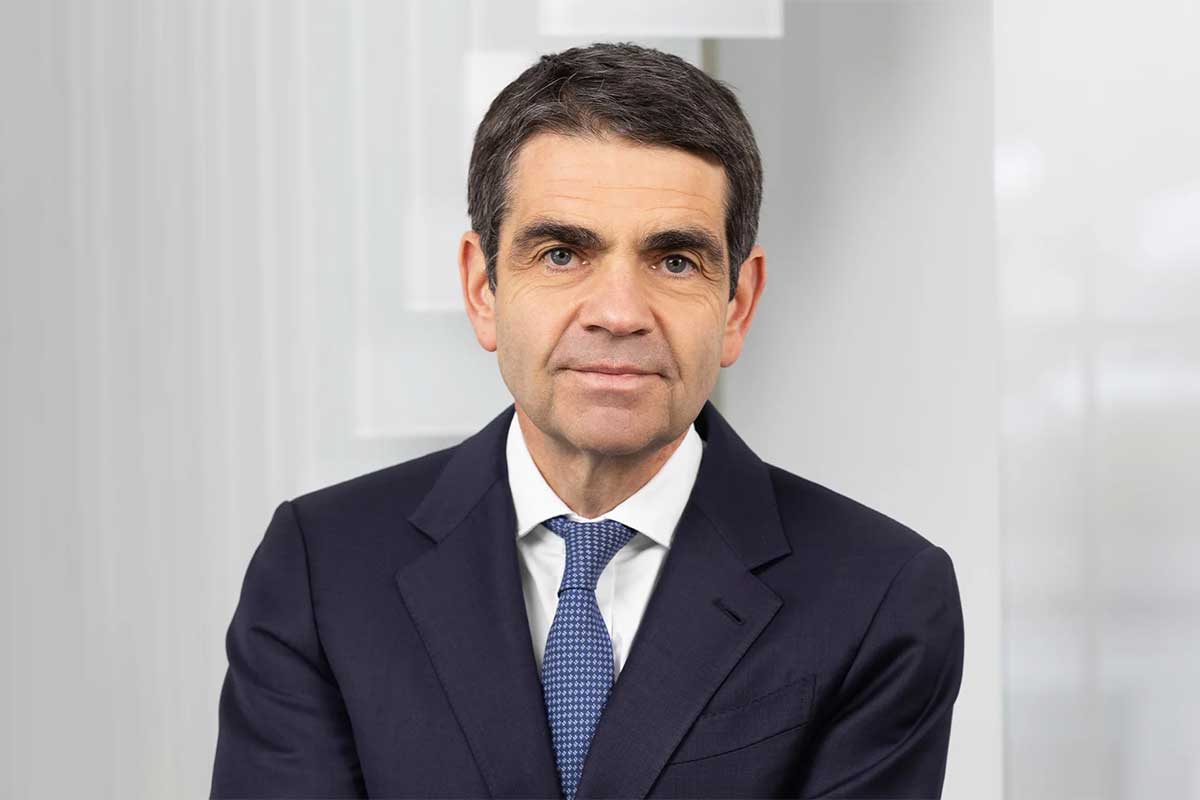
Jérôme Lambert, CEO of Jaeger-LeCoultre, explains the new Master Control Collection
Interviews
Jérôme Lambert, CEO of Jaeger-LeCoultre, explains the new Master Control Collection

The new Master Control Chronomètre appeared on the wrist of Robert Pattinson at the Oscars before its official release at Watches and Wonders. Was that a calculated move?
It was not orchestrated in the sense people might imagine. We had someone close to the maison who was willing to wear a completely new watch — something that had not yet been presented publicly, not photographed, not discussed. That requires a certain confidence, both from us and from the person wearing it.
There was enthusiasm around the piece, and a willingness to show it in a natural setting rather than a controlled one. Sometimes those moments are more telling. You see how a watch behaves when it is worn, rather than when it is explained. In this case, it allowed the piece to exist immediately in the real world, rather than being introduced only through presentation. Of course, once it happens, people interpret it as strategy. But in reality, it came from a relationship and a shared interest in the watch itself. And perhaps there is something quite honest in that — allowing the watch to speak first through wear, not through narrative.
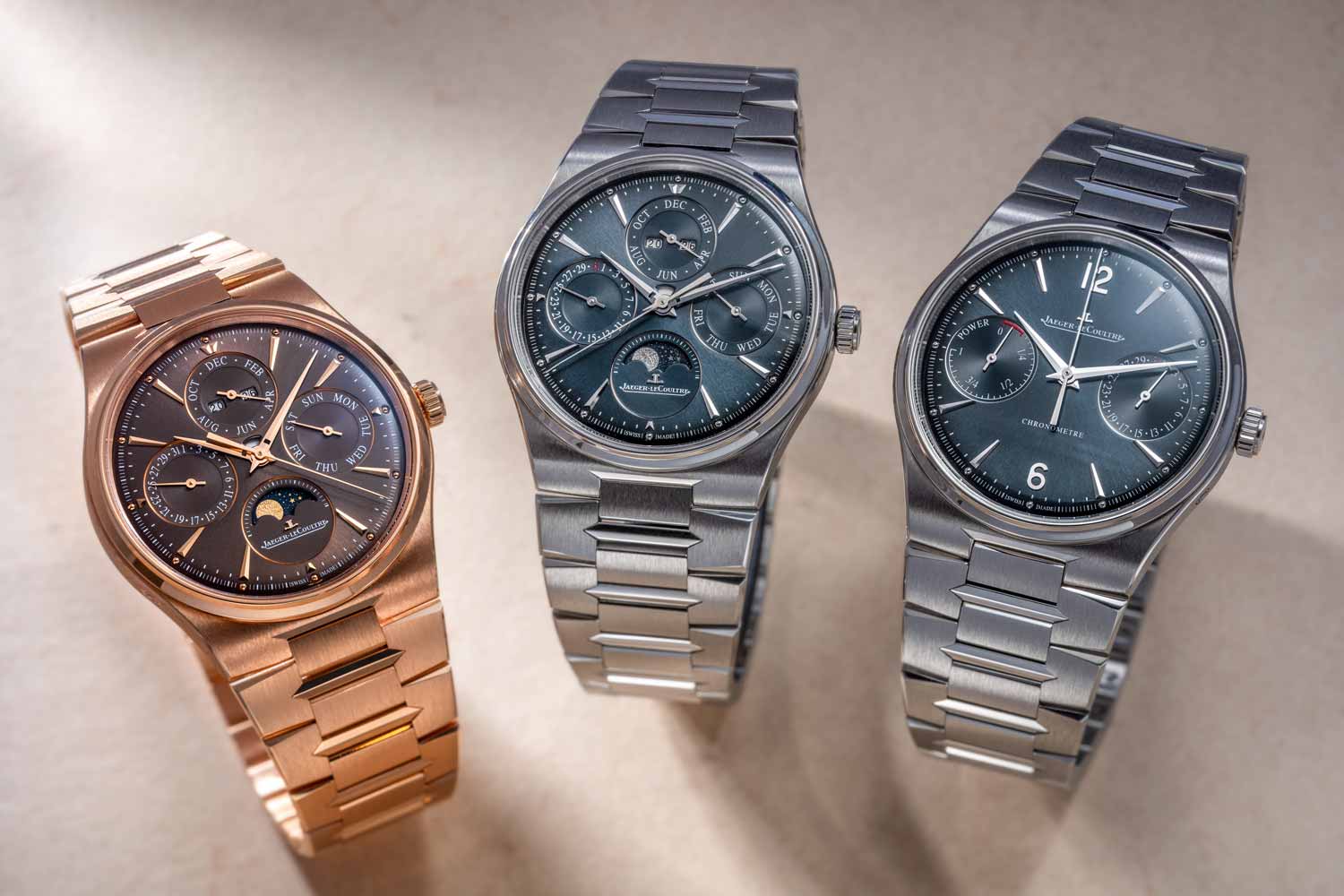
Master Control Chronomètre Collections
Let’s talk about the watch itself. Where does the new Master Control Chronomètre sit within Jaeger-LeCoultre’s line-up?
The Master line has always been about precision, reliability, and a form of restraint in how that is expressed. When we worked on this collection, we did not try to redefine that. Instead, we went back to the origins of the line to understand what made it relevant in the first place. If you look at the early Masterpieces, and particularly developments through the 1970s, there was already an interest in integration — how the case, the lugs, and the bracelet relate to one another. That is something we wanted to revisit, not as a stylistic exercise but as a question of comfort and wearability.
The result is a watch that remains very much within the Master Control family, but with a clearer sense of how it sits on the wrist. The proportions are deliberate — around 39mm, with a very controlled thickness — and the integration of the bracelet is designed to feel continuous rather than added on. At the same time, we have worked on the dial, with a sunray finish that captures light in a way that reinforces the centrality of time display without adding unnecessary elements. Itis not about making the watch more expressive, but about refining what is already there.

Master Control Chronomètre Perpetual Calendar
You’ve placed strong emphasis on chronometer performance. What is different in your approach here?
Every watch in this line is delivered as a COSC-certified chronometer, which means it has passed testing through an independent organisation. That is important because it establishes a recognised level of performance that is not defined by us alone. But we did not want to stop there. So we introduced what we call the High Precision Guarantee — the HPG — which is an additional layer of testing carried out internally. The key difference is that we test the watch in its entirety as a complete object, not only the movement.
This allows us to evaluate performance under conditions that are closer to real use. We look at variations in temperature, exposure to shock, and changes in position, among other factors. These are not theoretical parameters; they are the conditions a watch will encounter over time. The tolerances we apply are more demanding than standard chronometer certification. But more importantly, the methodology is broader. It reflects a belief that precision is not only about rate in a controlled environment, but about consistency across different situations.
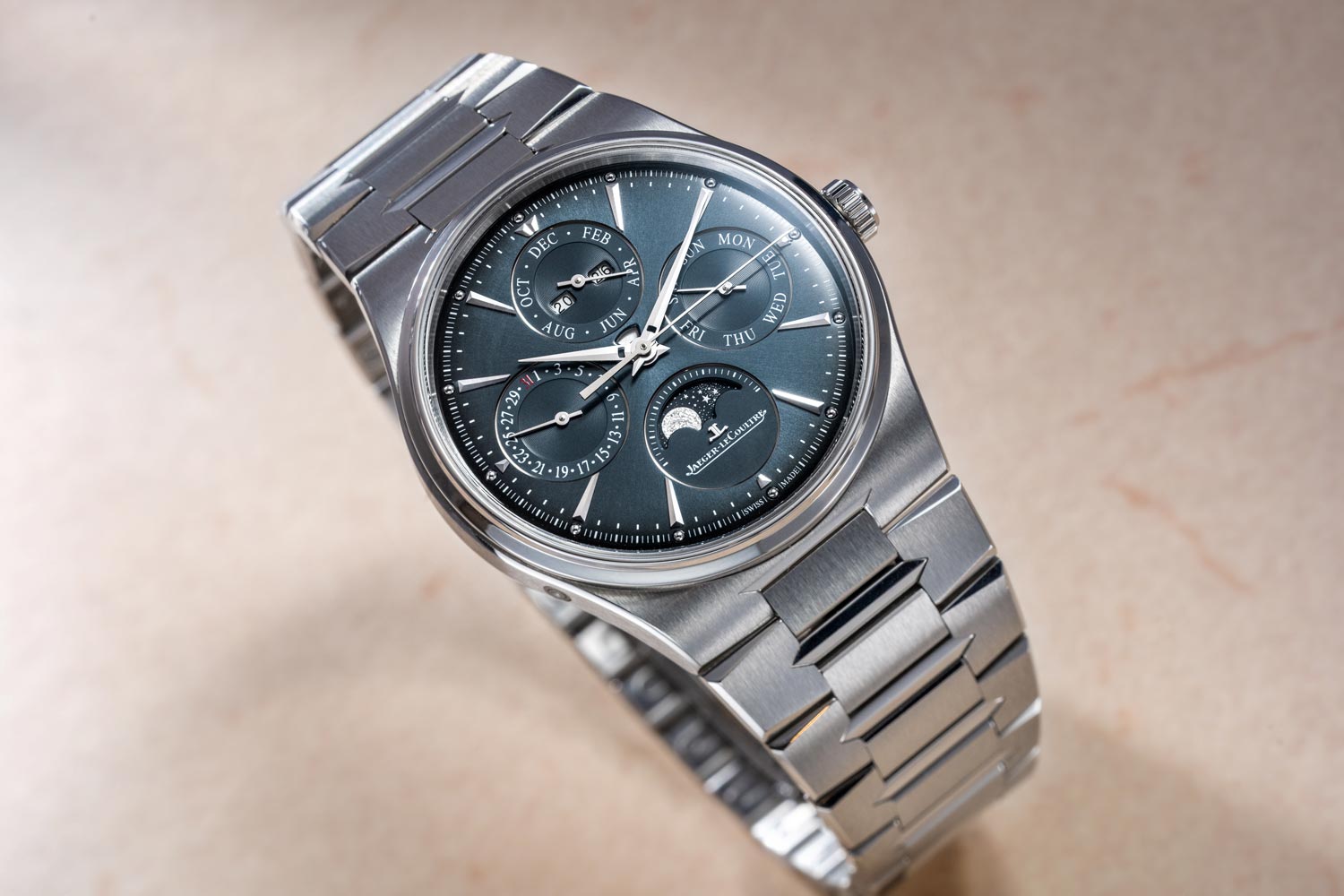
Master Control Chronomètre Perpetual Calendar
Internal certification can sometimes be viewed with skepticism. How do you ensure credibility with your testing?
That is precisely why we maintain external certification as well. If we relied only on internal testing, the question would always remain—how do you measure yourself? By combining the two, we establish a clear reference point. The external certification confirms a recognised standard. The internal testing builds on that, adding parameters that are not covered externally. We also had to invest significantly in the infrastructure behind HPG. You cannot claim additional performance without being able to demonstrate how it is measured. That meant designing new testing protocols and developing machines capable of reproducing conditions such as temperature variation and simulated altitude in a consistent way. It is not a communication exercise. It requires changes across the manufacture — in how watches are tested, but also in how they are assembled and regulated. When you raise the level of requirement, it affects everything.
Beyond precision, there is a clear focus on wearability — particularly with the bracelet. Why has that become so important?
Because the way people wear watches has evolved. The fundamental principles of watchmaking have not changed — we are still working with mechanical systems, with the same pursuit of precision and reliability. But the context in which watches are worn is different. Today, clients want to wear complicated watches more freely. They do not reserve them for formal occasions. They expect them to adapt to a wider range of situations.
That is where the bracelet becomes important. It is not only about aesthetics; it is about comfort, flexibility, and ease of use. We developed a system that allows for adjustment — including a small extension that can be activated simply by pressing two buttons. It is a practical feature, but it also contributes to the overall experience of the watch. The objective is simple: a perpetual calendar, or any sophisticated piece, should be wearable without constraint. It should not impose a certain way of dressing or behaving. It should integrate into daily life.
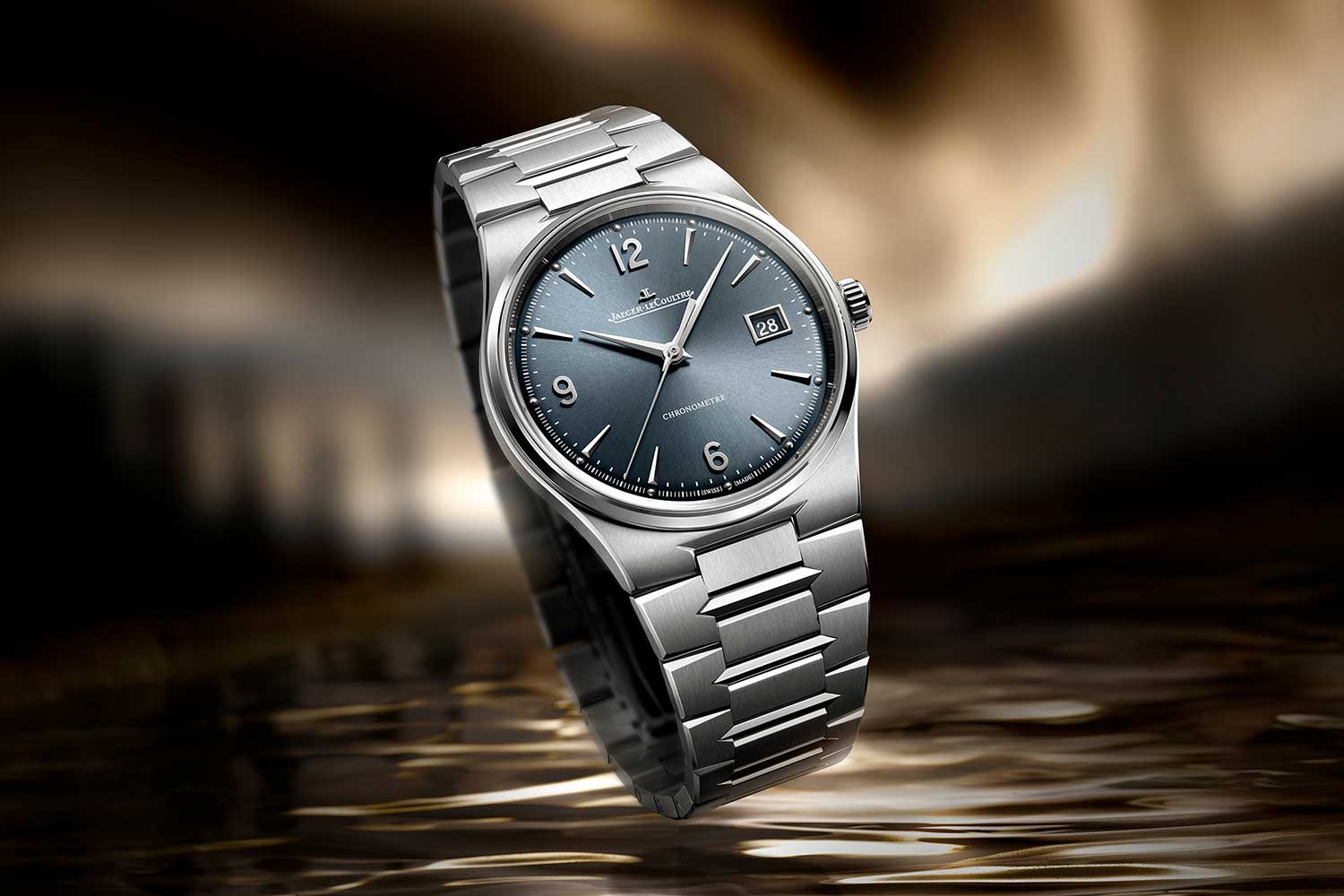
Master Control Chronometre Date
You’ve been back at Jaeger-LeCoultre for just over a year. How does this collection reflect your direction?
It reflects continuity more than change. When you come into a maison like Jaeger-LeCoultre, you are not starting from zero. You are working with nearly two centuries of accumulated knowledge — hundreds of calibres, dozens of métiers, a very strong internal culture. What we have done over the past months is to bring together several developments that were already in progress. The bracelet is one example — it took years of work to arrive at the right design and the right feel. When we reached that point, it became clear that it should be integrated into a broader expression of the collection. At the same time, we introduced the HPG standard, which required a different kind of effort — more structural, affecting how the manufacture operates. So what you see in this collection is not a single idea, but the convergence of several strands of work. It is about coherence — ensuring that design, performance, and wearability move in the same direction.

This year, there’s a perception of renewed energy around the brand. Where does that come from?
It comes from the workshop. From the people who are making the watches. Jaeger-LeCoultre has always had a strong product culture. The challenge is to maintain that over time — to keep questioning, to keep refining, to avoid becoming static. When you introduce something like HPG, or when you rethink how a watch is worn, you are effectively asking the entire organisation to operate at a higher level. That creates momentum. It is not something you can declare. It has to be lived internally — in the way watches are conceived, produced, and tested. If that is done properly, it becomes visible externally.
Finally, what defines Jaeger-LeCoultre in 2026? It is all about the breadth of what we do. We are able to work across very different areas — from high complications such as the Gyrotourbillon, to chiming watches, to decorative crafts, to objects like the Atmos clock. That diversity is not accidental; it is part of the identity of the manufacture. At the same time, there is a common foundation.
Whether it is a simple time-only watch or a highly complex piece, the same principles apply — precision, reliability, and a certain discipline in execution. If I had to summarise it, I would say this: the values remain consistent, but the way they are expressed continues to evolve.
Jaeger-LeCoultre
You may also like
Editorial
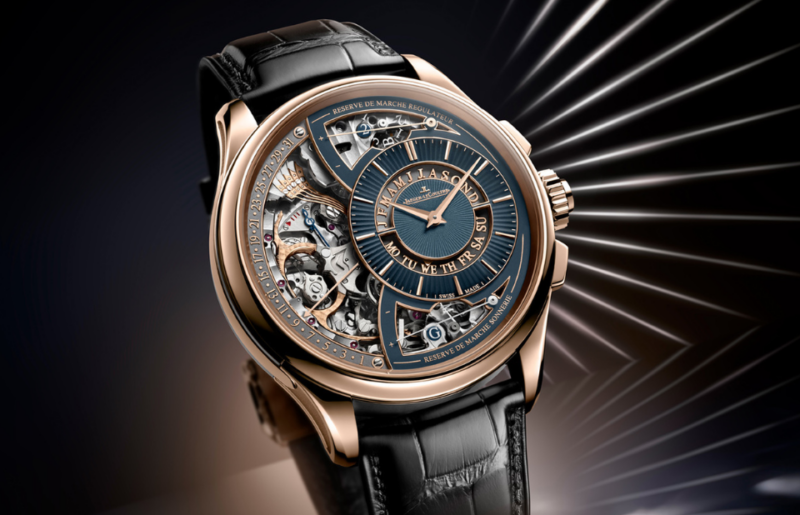
Last Week In Watches: TAG Heuer Carrera, JLC Grande Sonnerie, Louis Vuitton Spin Time and more
Sep 15, 2026
Editorial
Last Week In Watches: TAG Heuer Carrera, JLC Grande Sonnerie, Louis Vuitton Spin Time and more
Sep 15, 2026
Editorial
Instruments of individuality in the Patrick Parrish Collection
May 25, 2026
Editorial
Instruments of individuality in the Patrick Parrish Collection
May 25, 2026
Reviews
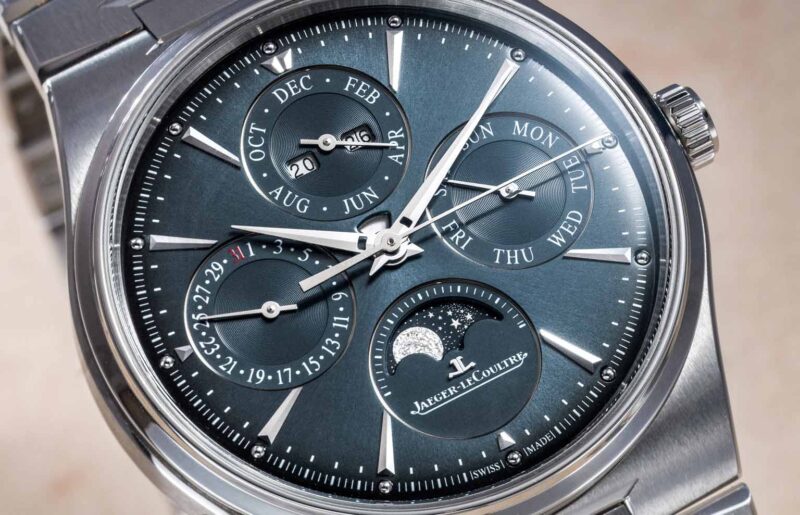
A Closer Look: Jaeger-LeCoultre Master Control Chronometre Perpetual Calendar
May 20, 2026
Reviews
A Closer Look: Jaeger-LeCoultre Master Control Chronometre Perpetual Calendar
May 20, 2026