Roger W. Smith Series Seven: His Own Chapter
Editorial
Roger W. Smith Series Seven: His Own Chapter

Roger Smith is characteristically calm. We are speaking a day after his return from IAMWATCH in Singapore and just hours before his 25th-anniversary Owners’ Dinner at the Victoria and Albert Museum in London, where he is about to present his Series Seven watch for the first time. One of the two prototypes was finished only last week, and the price has yet to be settled. When I tell him how much I like the images I have seen, he sounds almost relieved. “I’m a bit nervous about it,” he admits. Thinking about the reception ahead, he offers an analogy: “It’s the second album kind of thing, isn’t it?”

Roger W. Smith
It seems a strange declaration from a man who has been making watches under his own name for a quarter of a century, but Series Seven is more than just a new model. Not only does it mark 25 years of Roger W. Smith Ltd, it is also being unveiled in the centenary year of George Daniels’ birth. Daniels, of course, is the father of modern independent watchmaking, the inventor of the co-axial escapement and Smith’s mentor. The new watch contains a movement Smith has designed from the ground up, rather than one adapted from an existing caliber, and at the same time pays tribute to some of the watches that have helped establish his career.
“It’s very much a reflective piece, and it’s bringing in many threads of my career,” he says. “So yes, it nods to Pocket Watch No. 2 when George told me that I was a watchmaker, but also that moment when I walked into George’s workshop and saw the prototype Millennium on his wrist. It’s kind of all in there.”
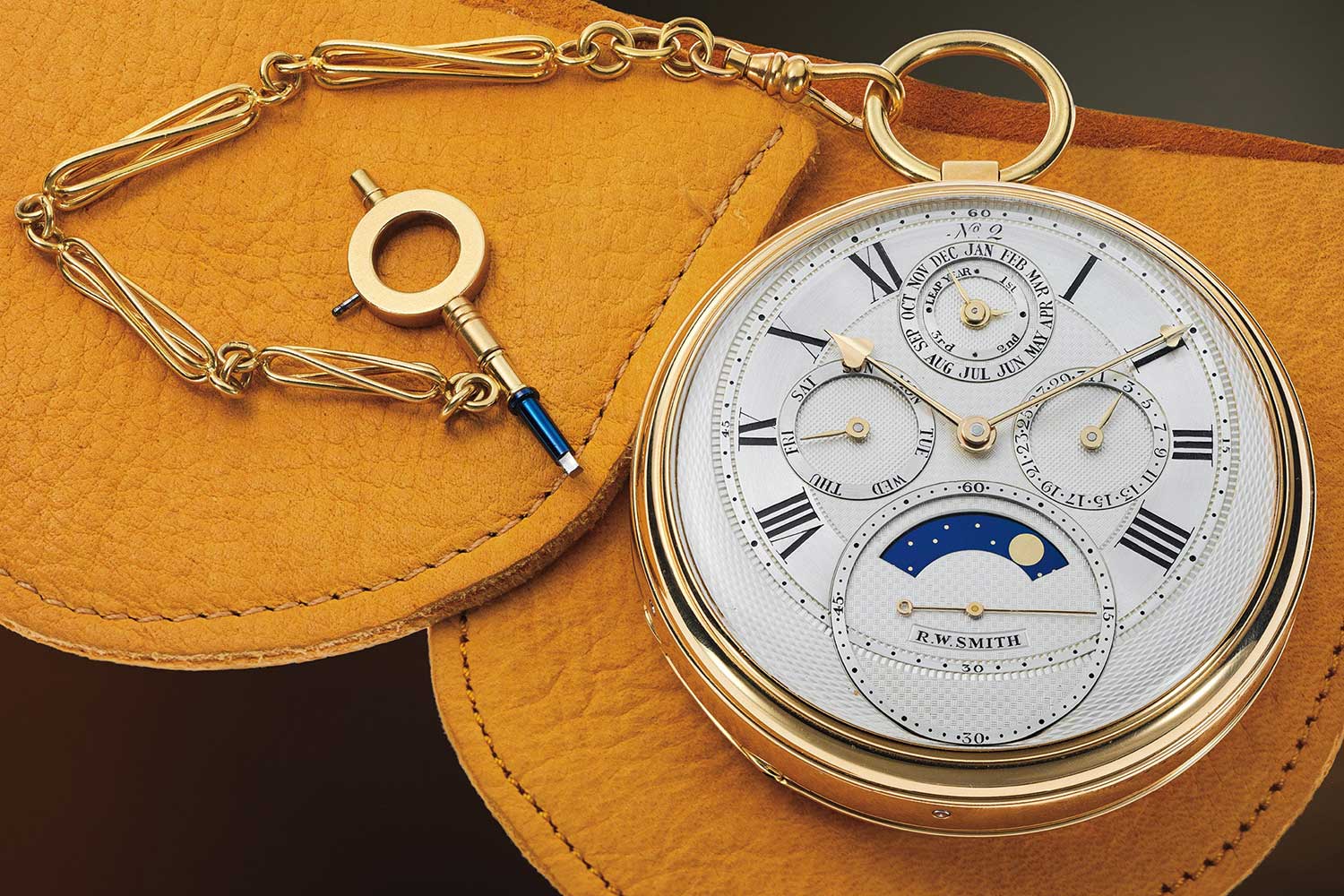
Roger Smith Pocket Watch No. 2. After George Daniels rejected his first pocket watch, Smith spent five and a half years and four iterations on his second, a one-minute tourbillon with a detent escapement and a perpetual calendar (Image: Phillips)
This references the moment in 1997 when Daniels, having rejected Smith’s first handmade pocket watch, examined his second piece with its tourbillon and four-year perpetual calendar, and finally gave him the approval he had been working towards. In 1998, Smith joined Daniels in his Isle of Man workshop as his apprentice and there encountered the offset dial of the Millennium prototype. The double-signed wristwatch is one of their defining collaborations, and nearly three decades later, the Series Seven gives an unmistakable shout-out to both of these watches, although Smith is clear that it is not a reproduction of either.
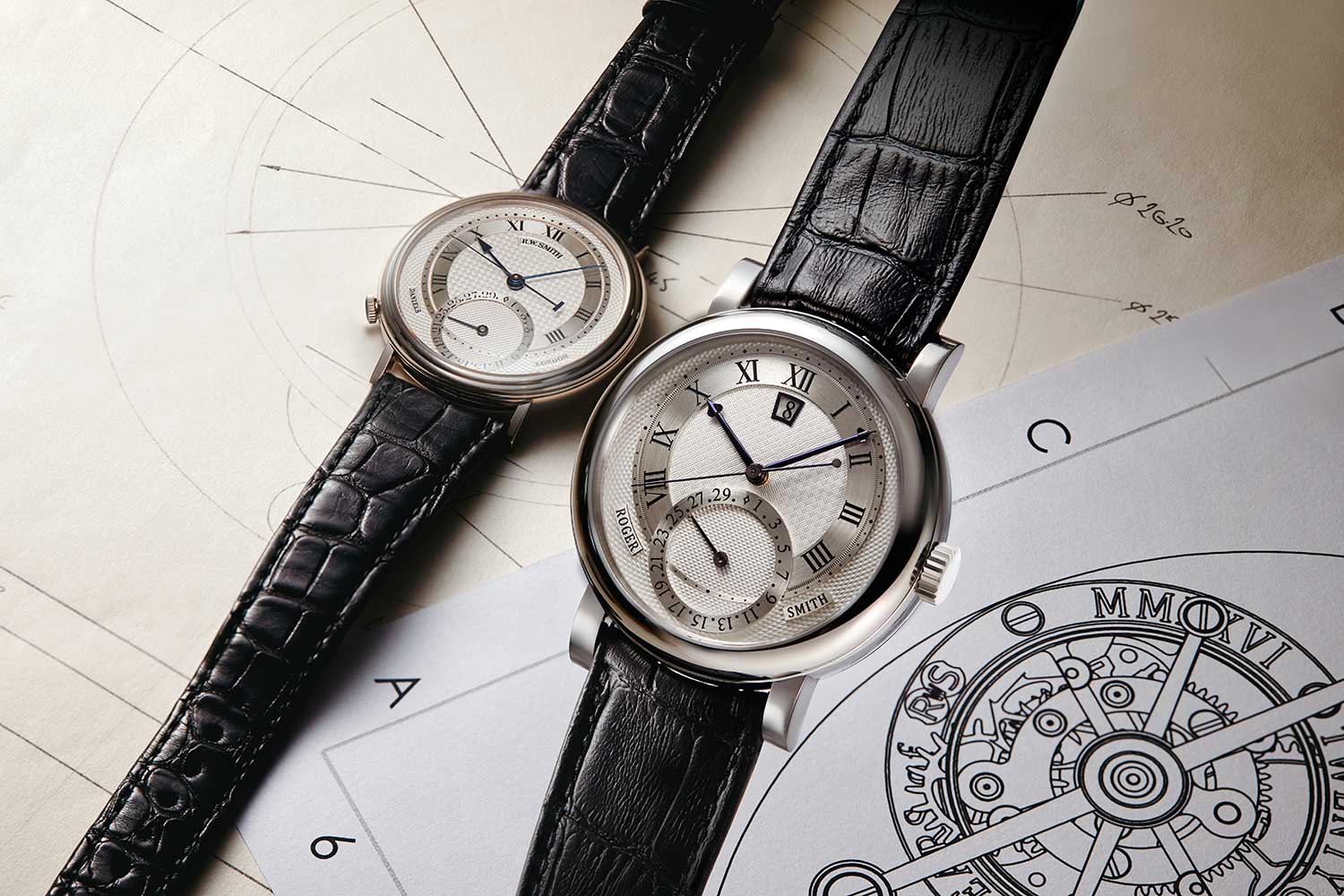
Series Seven with Daniels Millennium
“I wanted to do another tourbillon. That was the thing,” he explains of the project, which began taking shape during lockdown. He had worked on the Blue and White Tourbillon wristwatches under the Daniels name in the early 2000s and subsequently accepted four commissions for individual tourbillon wristwatches. “I just felt it was time that I needed to create a new series with a tourbillon. So I started playing around with designs, and it kind of morphed into something different.”
Why return to a tourbillon? “I don’t know if I should be saying this, but they’re not really needed in a watch,” he laughs. “But there’s something quite mesmerizing about them when you’re seeing them rotate once per minute. They’re a technical challenge, and I think they’re just a great way of a watchmaker demonstrating their artistry and their making.”
But he does not intend for the tourbillon to be seen every time the wearer looks at the time. It may be one of the stars of the show, but it sits on the movement side where it is visible through a sapphire caseback rather than via a dial aperture. “The tourbillon is for the owner. That’s the purpose,” he says. “Some people do put them on the dial, but that’s for everyone else. My approach to watchmaking has always been fairly restrained, so I’d never have one visible through the dial.”
The dial comes first
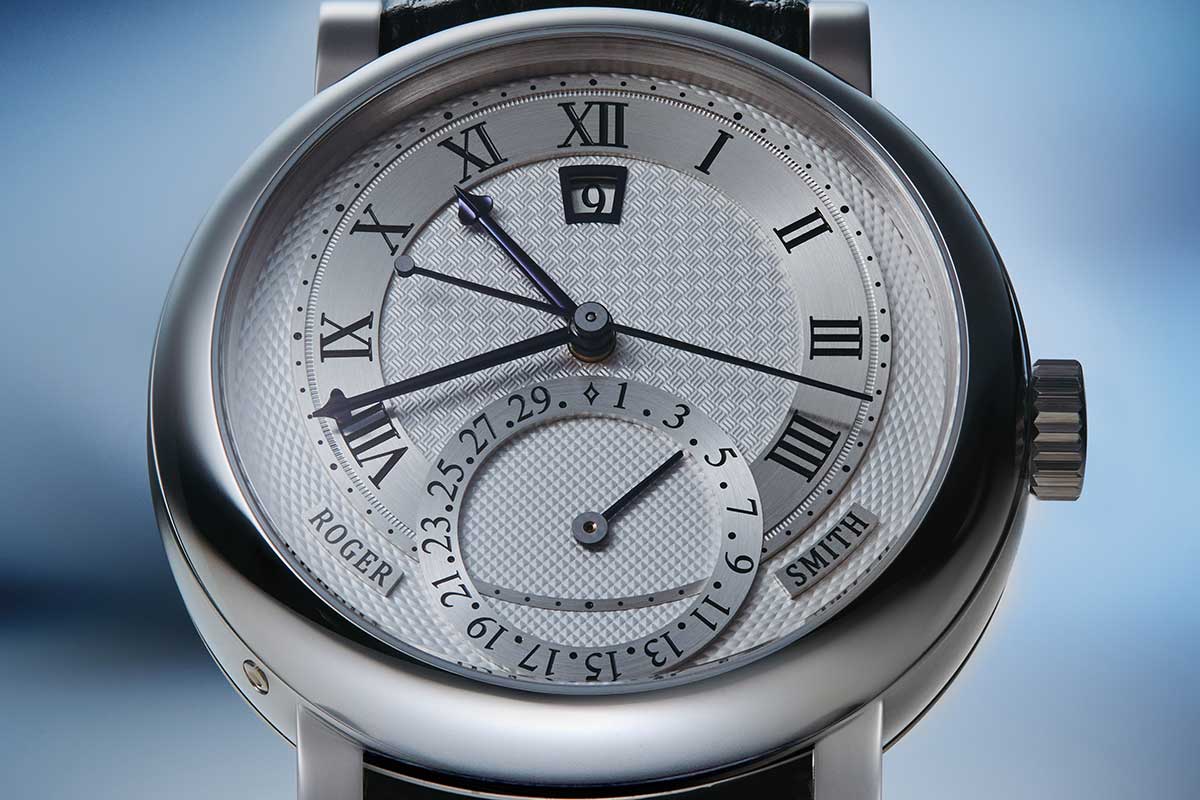
The Series Seven is deceptively simple from the front. Its offset dial provides hours and minutes, with a long central seconds hand dissecting the composition. A date subdial sits at 6 o’clock, while a small aperture beneath 12 displays the month digitally. The first prototype has a silver engine-turned dial and a 40mm platinum case. The aesthetic is simple and straightforward, although achieving it was anything but.
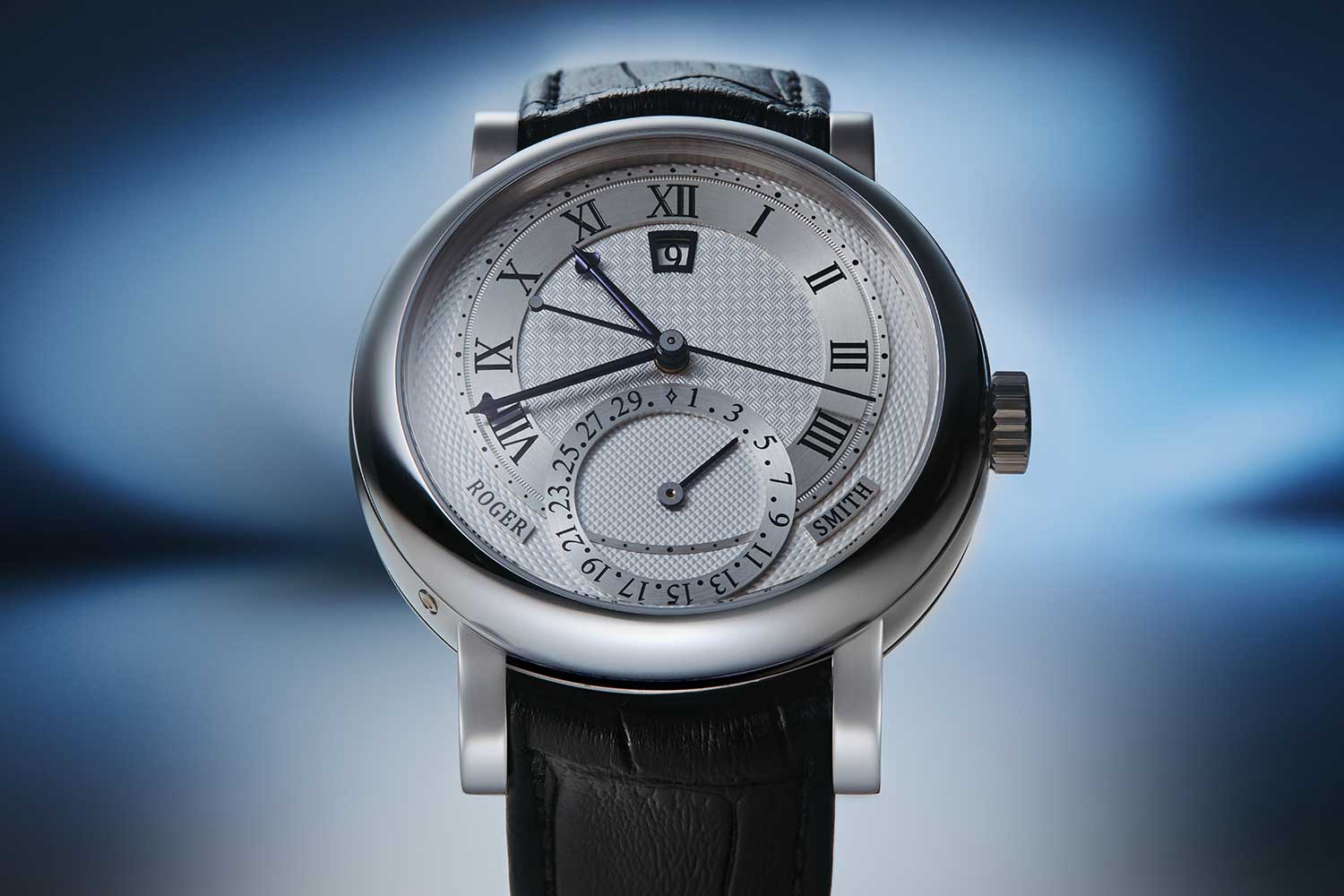
Roger W. Smith Series Seven. The solid silver dial is subdued in appearance but intricate in execution, with applied chapter rings and three different patterns engine-turned by hand. It finished through depletion gilding, otherwise known as bleaching. The sterling silver is heated to draw a thin layer of copper oxide to the surface, then immersed in a sulphuric acid pickle to dissolve the oxide. Repeating the process several times leaves a white layer of nearly pure silver
The new caliber is smaller and slimmer than the movements of Smith’s four earlier, individually commissioned tourbillons. The case is 14.6mm thick, a depth that he sees as well-proportioned rather than a number to be reduced at all costs. He says the offset layout helped to keep the caliber more compact.
“When you’re designing a watch, you should always start off with a dial,” Smith tells me. “The dial is the most important feature of any watch. That’s what the eventual owner sees day in, day out, and so the dial leads the design of the movement.” In this instance, that meant placing the month and date displays far apart. “I didn’t want a cluttered layout. I could have had another dial with a hand that pointed to the months, but I just wanted to free it all up.” A long lever connecting the calendar indications made the mechanism difficult to perfect, but he was reluctant to compromise the layout.
The decision to use a central seconds hand played an equal role in the development of the movement. Although Smith worked on central seconds in the Daniels Millennium, this is the first time he has used it in a movement for his own series. The earlier tourbillon movements could not simply be reduced to the required size. Adding central seconds to them would, he explains, have made the watch thicker. At the same time, the proportions of his later Mark II movements could not be adequately adapted to the proposed tourbillon architecture.
“I wanted a center seconds, and that’s really how we ended up with a completely new caliber,” he says decisively. “It’s a very big hand. It’s a very dominant, bold hand. There’s something quite dramatic seeing the hand sweeping round. It’s just me having fun, I think.” He is quick to add that this does not necessarily signal a change of direction for the rest of his collection.
The inaugural annual calendar
Series Seven is also Smith’s first annual calendar, despite his long standing interest in the complication. His Pocket Watch No. 2 incorporated a four-year perpetual calendar, while later wristwatches explored other ways of displaying calendar information. The Series Seven pairs a pointer date at 6 o’clock with a digital month indication at 12. Smith says its attraction is, for him, as much in the complication’s construction as it is in the information it provides.
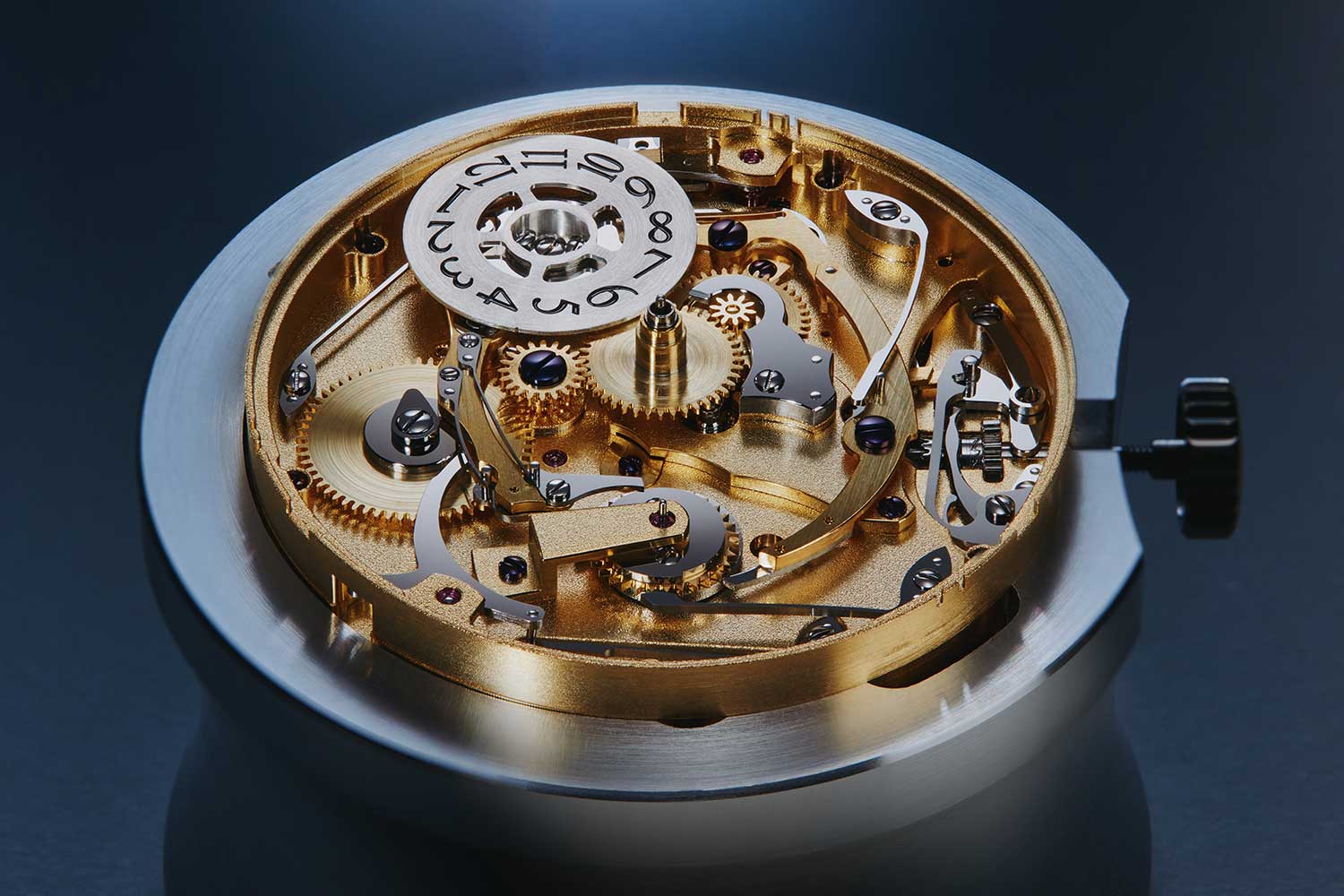
The keyless and calendar works are exceptionally beautiful and three-dimensional. Even the 31-tooth date star and its snail are supported by a stepped finger bridge
“I just wanted to explore that particular calendar, and I love the three-dimensionality that it gives to the movement,” he says. “Even though nobody will ever see it, it’s under the dial.” The calendar is not instantaneous. Smith explains that a sudden jump was less important than a mechanism that would operate consistently and precisely, particularly given the length of the lever connecting its displays. “I wanted something that is going to be very reliable, and that’s how we ended up with that,” he says.
The movement’s twin barrels have both an aesthetic and functional purpose. While they help balance the forces acting on the center wheel, Smith is equally vocal about the visual effect and the connection to English watchmaking. “There’s something quite majestic about them,” he says. “It adds this layer of symmetry to the movement that you obviously don’t get with a single barrel.” He points to the earlier pocket watches of makers such as Dent and Arnold. “Not everything’s for technicality. I’m designing something which is very three-dimensional.” For all that architecture, the finished watch has a stated power reserve of 48 hours and beats at 3 Hz.
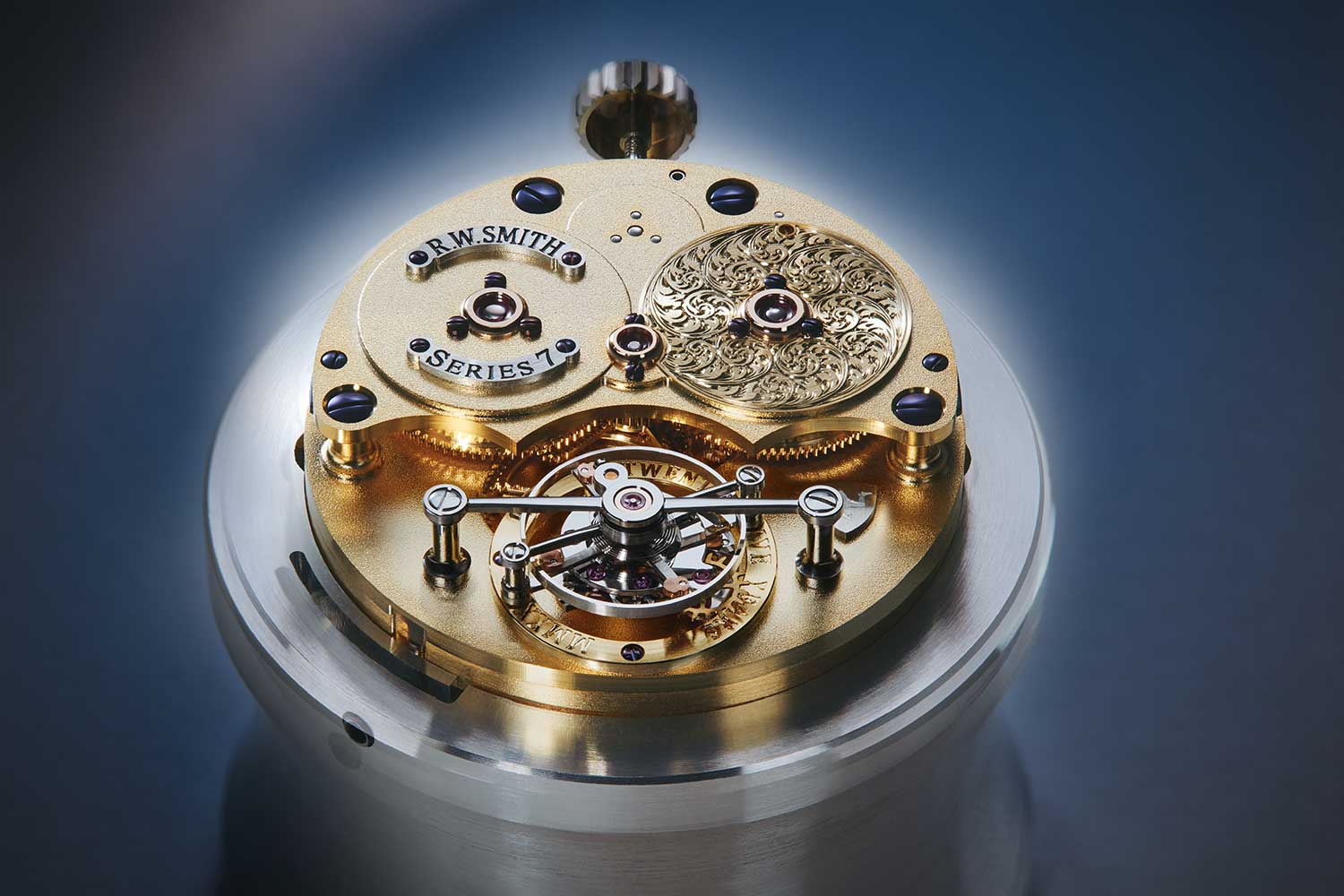
The gloriously three-dimensional movement showcases a traditional English architecture, utilizing turned pillars to elevate a large barrel plate above the mainplate. Unlike Swiss movements, there is no anglage, perlage or striping. Instead, the plates are frosted and gilded, with screwed-in gold chatons for the pivot jewels and intricate floral engraving on the barrel cover. The tourbillon carriage is fully black-polished.
Then comes one of the most interesting details of our conversation. When I ask Smith which version of the co-axial escapement is fitted to the Series Seven’s one-minute tourbillon, he answers with typical frankness. “I don’t know if I should be telling you about this, but anyway, just to be open, this is from an Omega wristwatch.” At this scale, he says, the co-axial escapement components are too small for his workshop to manufacture. It is a pragmatic decision for the man whose career has included substantial development of his own single-wheel co-axial escapement.
Beyond practicalities, the decision is also a nice link to Smith’s past work. He explains that he and Daniels faced the same problem when they developed the Millennium wristwatches, and used the small co-axial components associated with the early Omega watches. “We got some extra escapements at the time, so we used those,” he says. “It links back to there, really.” He tells me that he is happy for me to mention this detail, seeing it as a connection to a formative chapter in his career rather than an incidental detail.
What the owner sees
While certain aspects of finishing are now the main feature for many watchmakers, for Smith, everything has a purpose – even when it has significant consequences at the bench. “The tourbillon carriage is completely black polished, and the idea with that is really to try to reduce its visual impact,” he explains. “If the black polishing doesn’t work, you may go through several components before you actually achieve one that’s right.”
The result is that production will be extremely limited, although Series Seven is not strictly speaking a limited edition. “We may be able to make one a year, maybe two,” he tells me. “It’s going to be a very rare watch from the outset.” Two prototypes have been made, one in platinum and the other in red gold. The platinum example has the silver engine-turned dial signed simply “Roger Smith”. On the prototype movement, the third-wheel bridge carries the inscription “MMXXVI Twenty Five Years of RWS”, while the case has an exhibition back and London hallmark. Prices have not yet been finalized and all inquiries will be handled individually.
One of the most interesting aspects of the new movement is what it says about Smith’s Isle of Man workshop. He has spent 25 years building a team capable of designing, making, finishing and assembling watches according to his standards. “It’s only really due to that that we’ve been able to produce a watch like this Series Seven,” he says. “We couldn’t have done this several years ago.” He credits both the watchmakers at the bench and the engineers making the high-precision components. “I’m so proud of the team that we have built up over the last 20-odd years.”
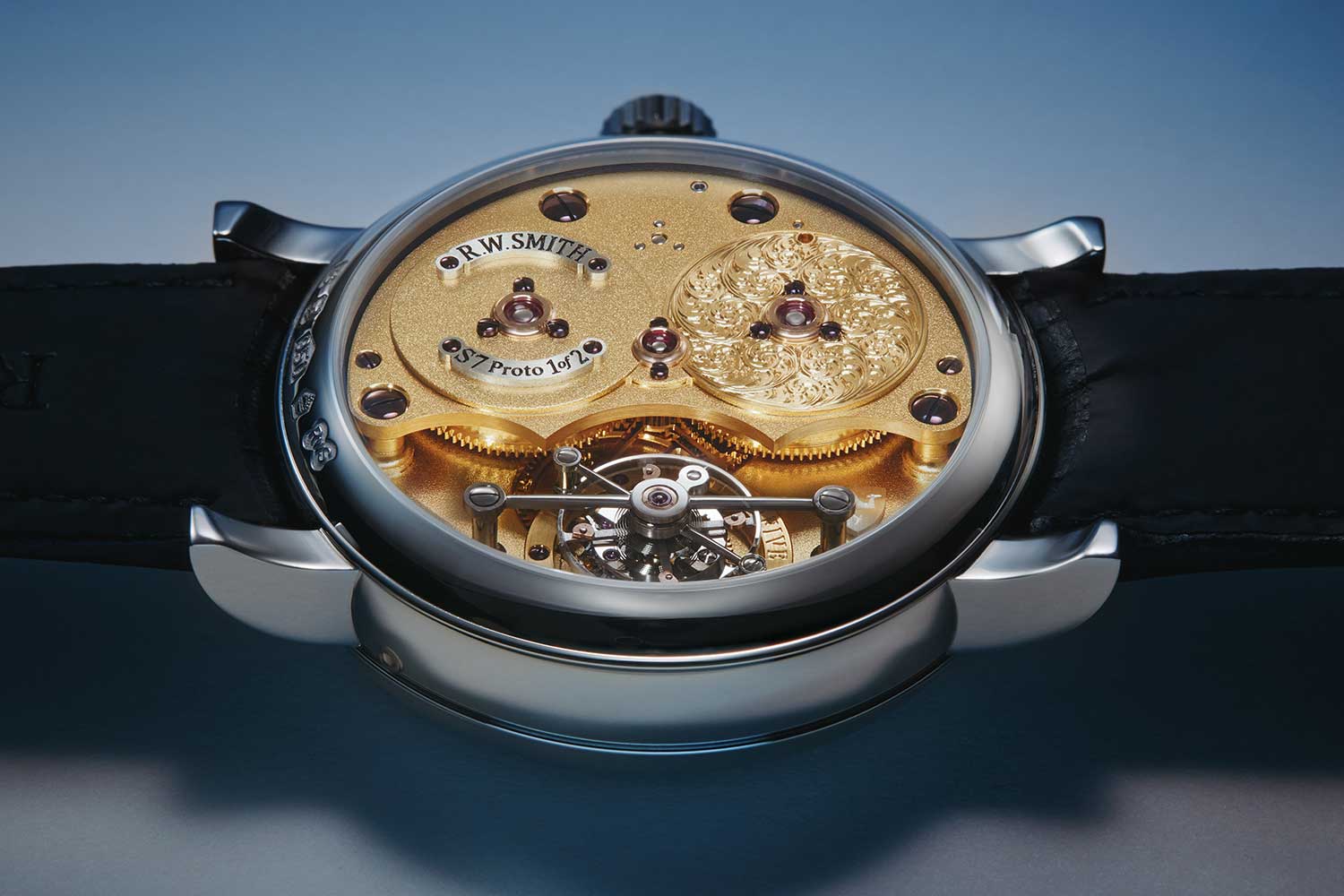
The platinum case measures 40mm in diameter and is 14.6mm thick. The thickness is well earned given the depth of the movement and the quality of the work on its individual components
There is also a typically British note of self-deprecation. “I always think that the Swiss must be laughing at us in some respects because this is bread and butter to them. But for us, this has taken years to really hone and perfect, to get to this point.” In that sense, Series Seven is not simply a personal milestone for Smith, it is a statement of what his workshop has learned to do.
His own chapter
With the last Daniels Anniversary watch completed in 2025, there is an obvious temptation to see Series Seven as a new beginning. Smith explains it more subtly. “George was always adamant from day one that I needed to develop my own style and approach to watchmaking, and I think I have done that,” he says. “It’s always been about putting the making back into watchmaking. That’s been my goal, to try and bring some of these qualities back that have simply been lost through mass manufacture of the wristwatch.”
He describes Series Seven as “very much my own chapter,” but makes clear that his involvement with Daniels’ legacy is not finished. He has ideas for another watch but is not ready to talk beyond that. “These projects just bubble away quietly in the background,” he says. “George’s work deserves to carry on.”
As we finish our conversation and Smith prepares to head to the V&A unveiling, I ask him what Daniels might have said on seeing the Series Seven. Almost 30 years have passed since he pronounced the young Smith a watchmaker, and the two relevant watches could scarcely be more different. “I think he’d love it,” Smith replies. “He’d recognise that development.” The foundations laid by Daniels’ may still be recognizable, but the decisions are now entirely Smith’s.
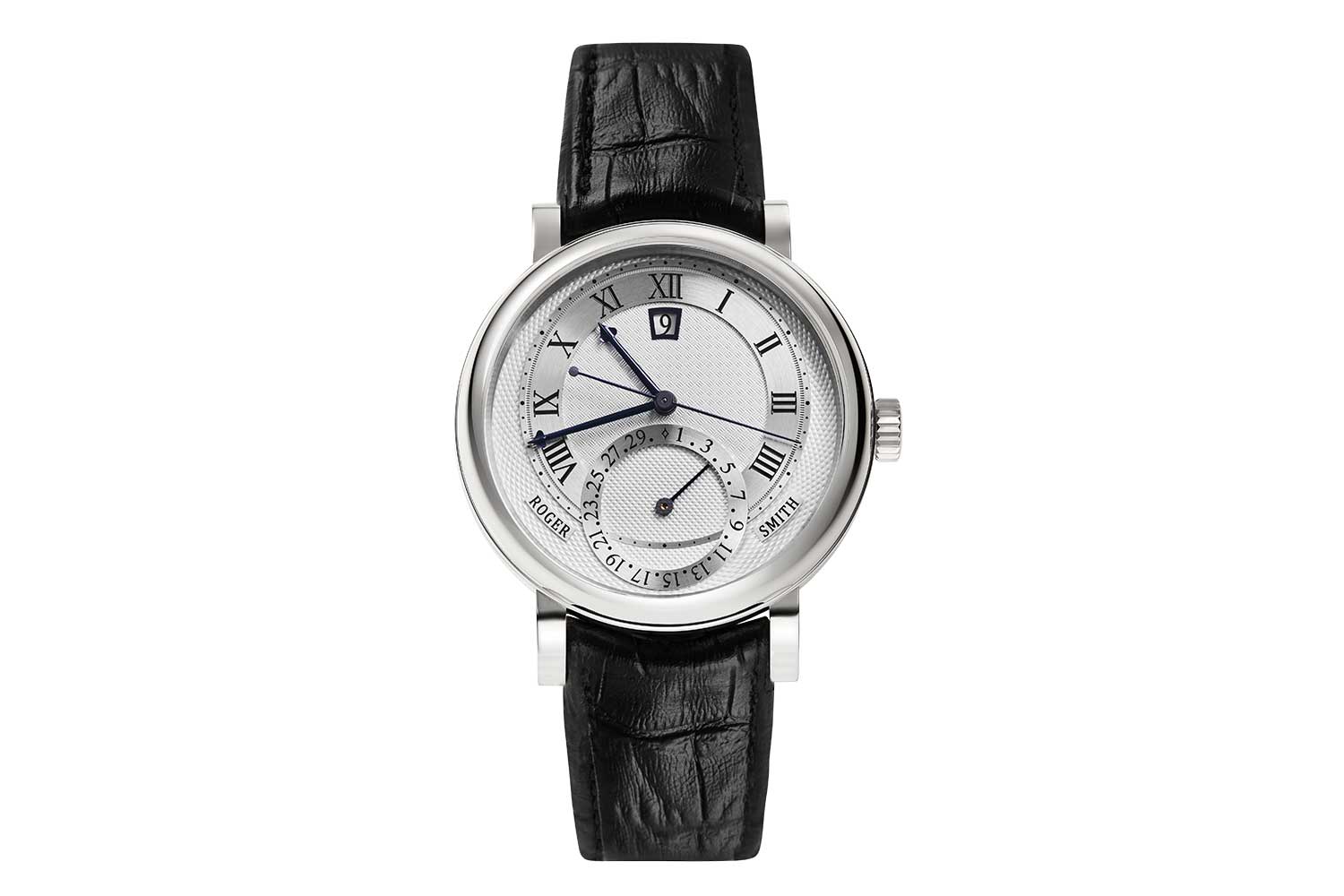
Roger W. Smith Series Seven
Tech Specs: Roger W. Smith Series Seven
Movement New British-designed calibre; one-minute tourbillon with co-axial escapement; fully black-polished tourbillon carriage; twin barrels; 3Hz (21,600vph); 48-hour power reserve
Functions Hours, minutes, central seconds, annual calendar with date at 6 o’clock and numerical month display beneath 12 o’clock
Case Gold or platinum; 40mm diameter; 14.60mm thick; exhibition caseback; London hallmark
Dial Offset dial centre; launch prototype in platinum with silver engine-turned dial signed “Roger Smith”
Strap 20mm lug width; 18mm buckle width; gold or platinum buckle engraved R.W. Smith
Special details Prototype third-wheel bridge engraved “MMXXVI Twenty Five Years of RWS”
Availability Two prototypes, one platinum and one red gold; no fixed edition size; expected production of approximately one or two watches a year
Price Not announced
Roger W. Smith