Parmigiani Fleurier and the Art of the Invisible
Editorial
Parmigiani Fleurier and the Art of the Invisible

There is a useful test Guido Terreni applies to watchmaking. At a fair such as Watches and Wonders, a journalist can see close to a thousand watches in a week, but a year or two later, how many are still remembered? “If you can forget a thousand watches within two years, it means there’s something wrong in the industry,” he says. “So if you are launching something, you better have something new to say, something memorable. That’s what we want to do. We want to be interesting.”
Parmigiani Fleurier certainly achieved that this year. The Tonda PF Chronographe Mystérieux was one of the watches that stopped people in their tracks at Watches and Wonders, although initially there is very little to explain why. At rest it looks remarkably like a handsome but simple three-hand Tonda PF. But press its monopusher and the entire character of the watch changes.
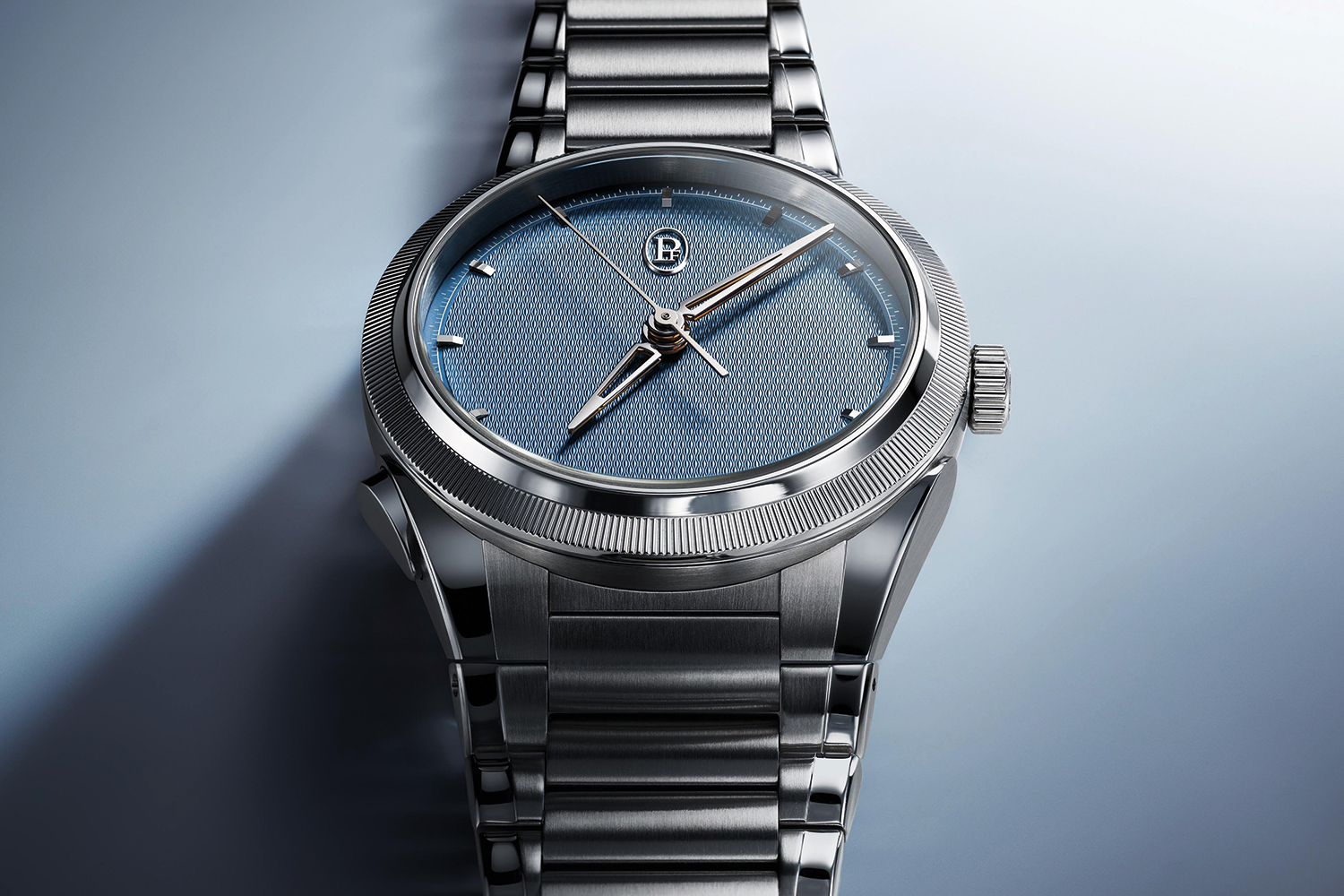
Tonda PF Chronographe Mystérieux
Five hands sit co-axially at the center. In normal use, they are superimposed to display civil time. There are no subdials or permanent chronograph furniture — nothing on the dial gives it away. But activate the chronograph and three rhodium-plated hands fly to 12 and begin measuring elapsed hours, minutes and seconds across the entire dial, while the rose gold hour and minute hands continue to show the time. Press again to stop the chronograph. Press a third time and its display returns to current time, with the chrono hands disappearing back into the civil display.
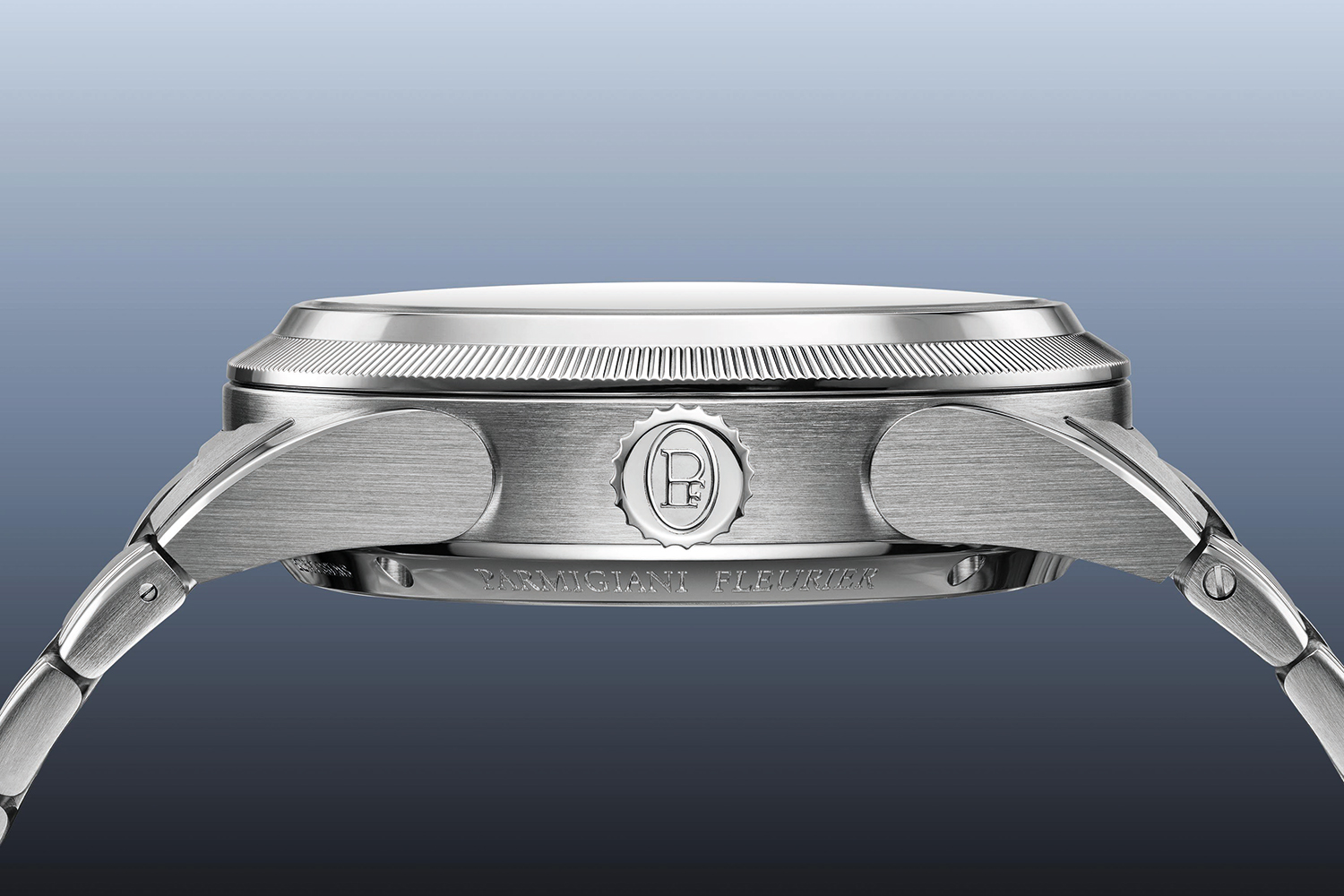
The Chronographe Mystérieux shows just three hands giving civil time, until the magic starts at the press of a button. Despite the complexity of the movement, the case is just 13mm high
Achieving that “simplicity” required an entirely new movement. Caliber PF053 contains 362 components and uses a combination of one vertical and two horizontal clutches to manage the changing roles of the hands. It runs at 4Hz, offers 60 hours of power reserve and comes in at just 6.9mm thick. But for Terreni the attraction is not in its complexity. “You have two magic moments — where the function appears and where it disappears,” he says, although he admits that some will always need to know how the “illusion” happens. “It’s incredible that levers, pivots, wheels make that magic happen. And in such a small space. That to me is fascinating. That is true innovation. You’re using tradition in a different way. You’re mixing things that were invented in the past, but never used in that way.”
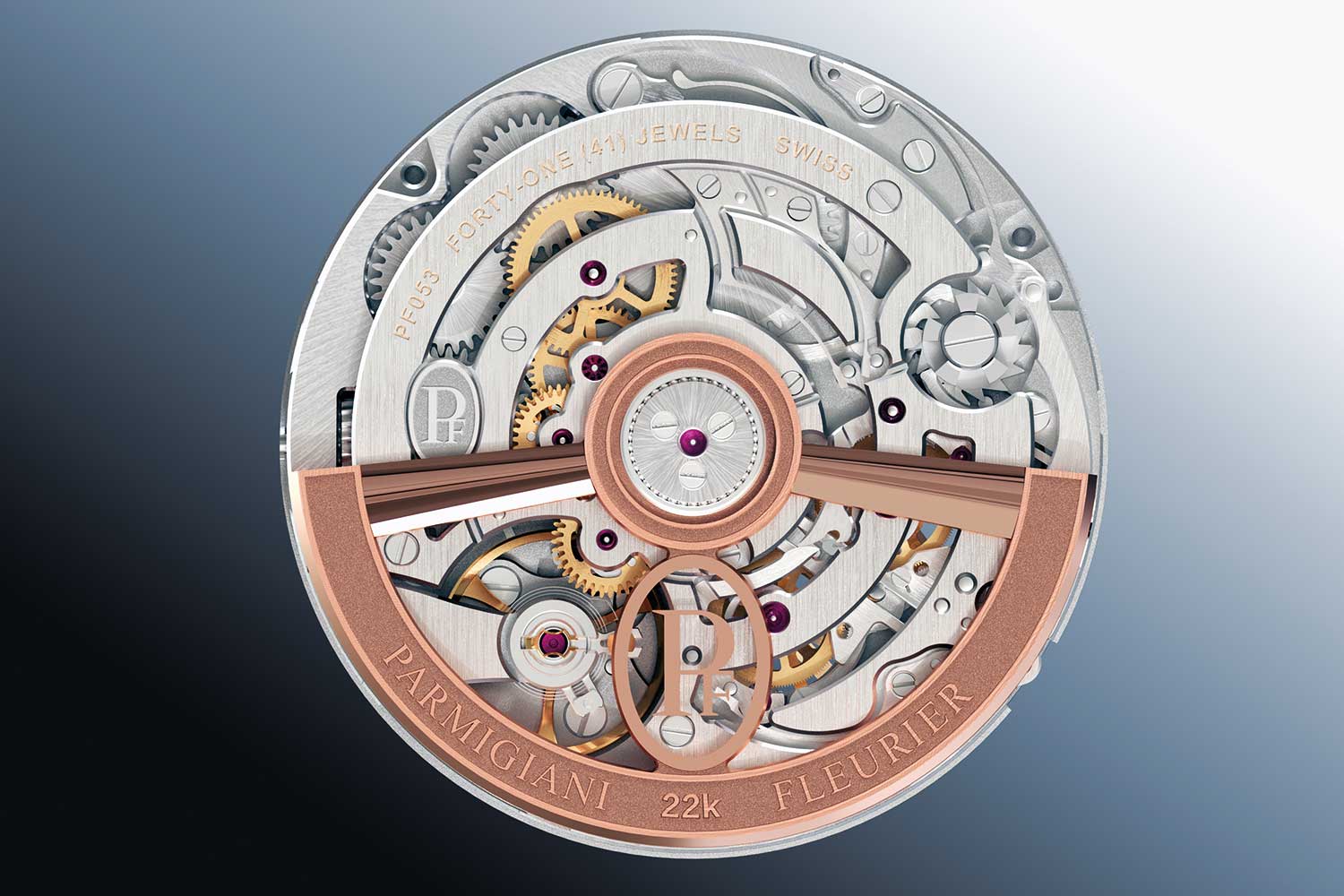
The PF053 caliber was created specifically for the Chronographe Mystérieux, rethinking the chronograph function from its foundation
That final thought is at the heart of Parmigiani today. The Chronographe Mystérieux is the third in a series of watches that the brand describes as its “invisible complications.” It follows the Tonda PF GMT Rattrapante of 2022 and the Minute Rattrapante of 2023. A trio of watches based on familiar horological ideas, but stripped of the assumption that because a function has always been used in one way it cannot be repurposed.
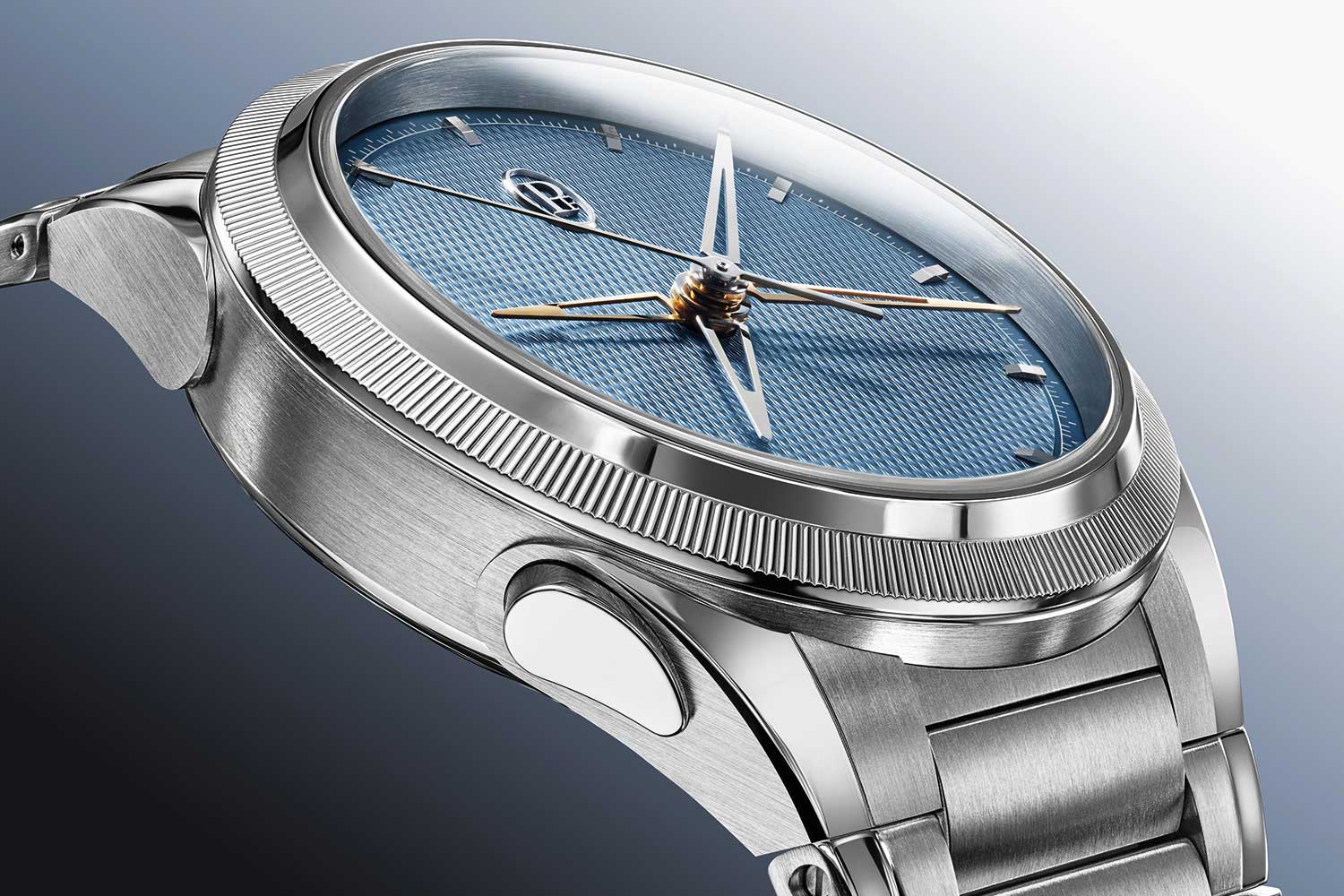
The Tonda PF Chronographe Mystérieux with all five hands in action
The Tonda PF GMT Rattrapante was One of the most astonishing launches of 2022, revolutionizing the dual time concept with an ingenious mechanism and a dial representing pure minimalism
Understanding Before Creating
Crucially, the philosophy behind the invisible complications reaches far beyond Terreni’s appointment as CEO. Michel Parmigiani founded his maison in 1996 after two decades spent restoring historic watches and clocks, experiences that formed the intellectual basis of his future company.
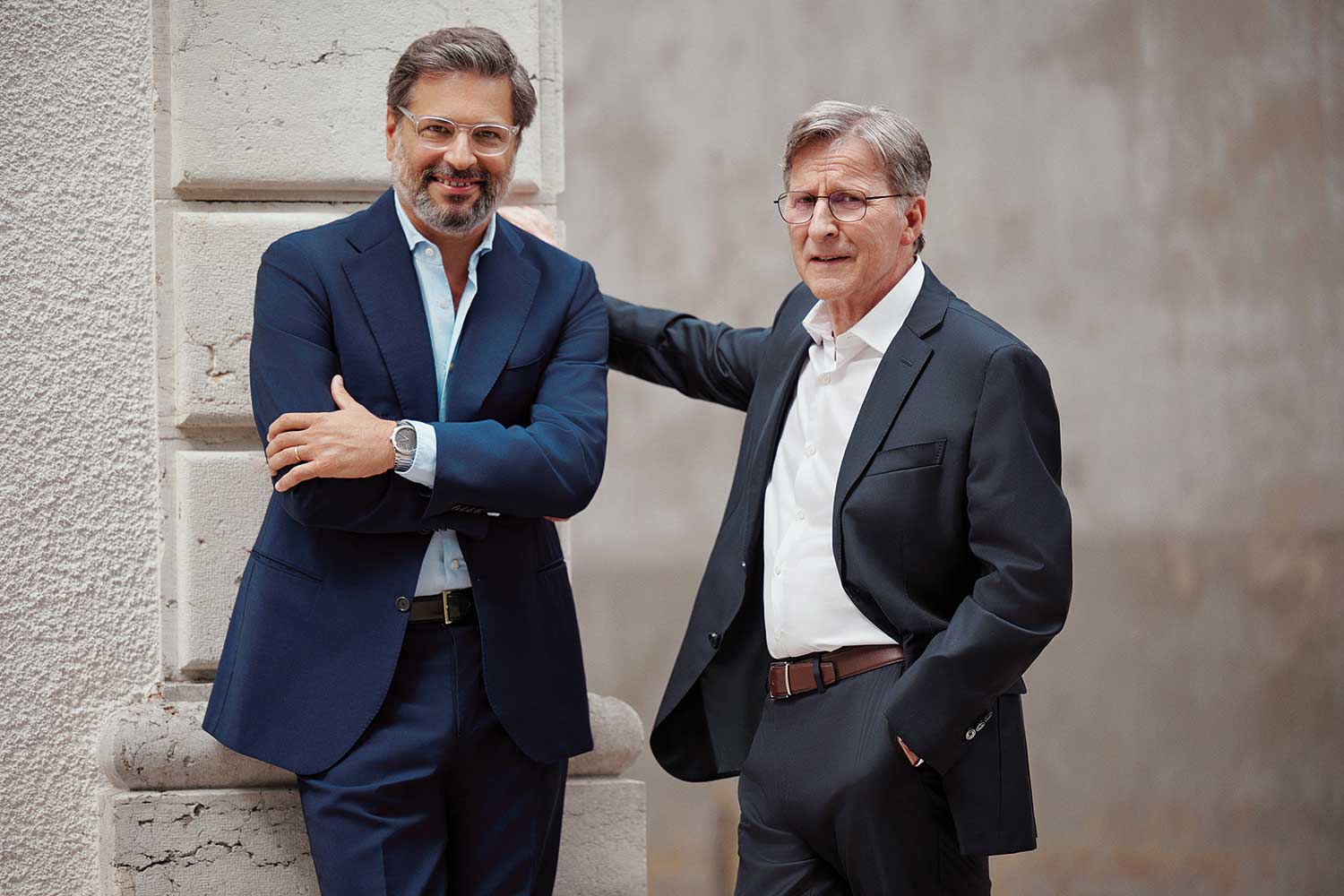
Guido Terreni and Michel Parmigiani
“What Michel wanted to do was to continue his mission and to perpetuate the mechanical art that he witnessed in restoring ancient watches for 20 years,” Terreni explains. “This is very important because it’s the foundation of the understanding before the creation. He always says that restoration is the source of knowledge to move you forward.”
For Terreni, the independence that continues to characterize Parmigiani begins there. “This forward thinking comes from Michel. The independent mind of the brand comes from him. When everybody was going to quartz in those years, he was restoring watches to preserve the cultural patrimony.” And that understanding led to the creation of some extraordinary watches.
The original Toric arrived with the founding of the maison in the 1990s and established the fundamentals of Michel’s watchmaking. The Ionica followed, its eight-day power reserve already signaling an interest in solving mechanical problems differently. Then came the Bugatti Type 370, which turned the movement through 90 degrees, allowing the watch to be read from the side of the wrist while driving.
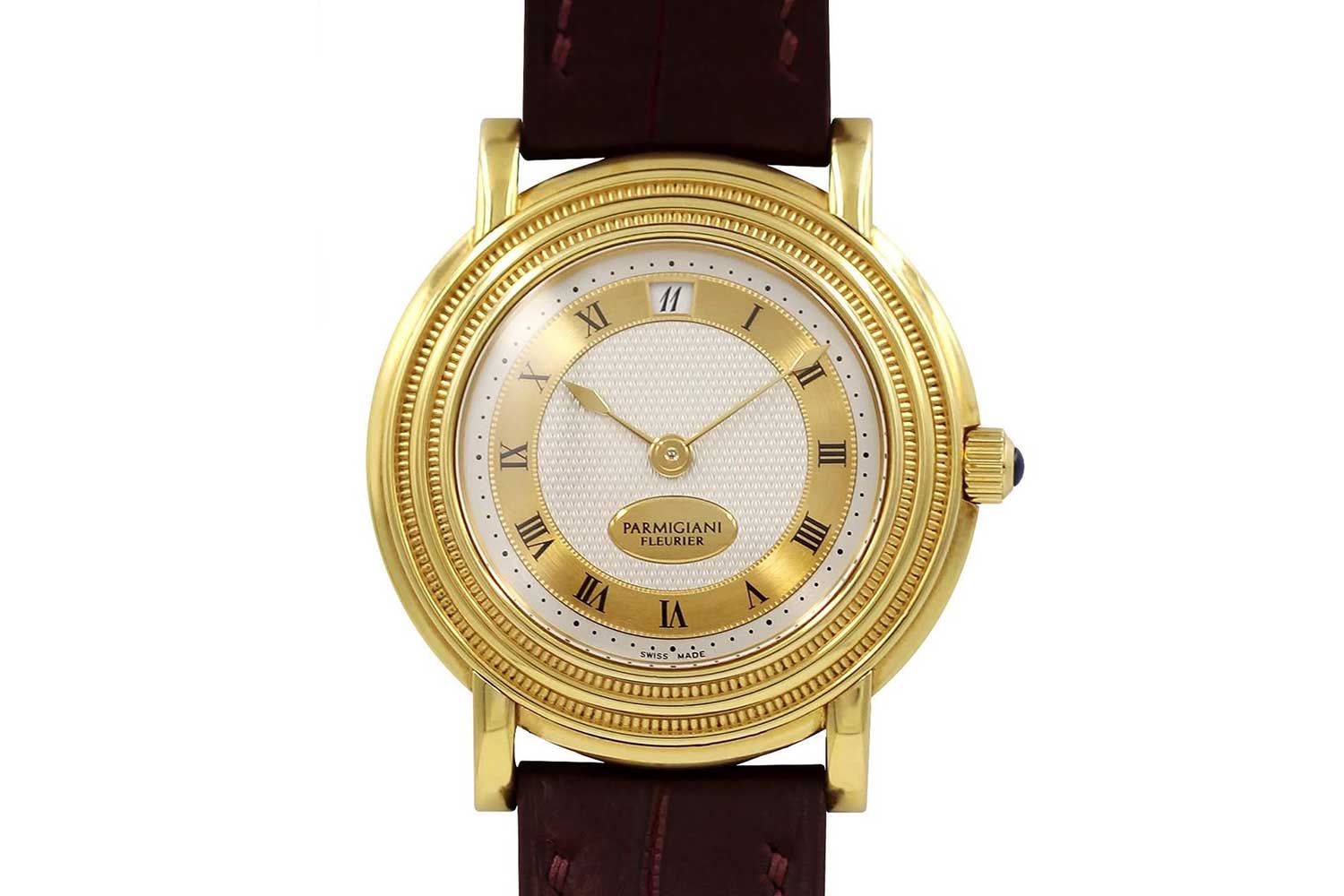
Parmigiani Fleurier Toric (Image: FHH)
Elsewhere, Michel looked directly to his restoration work. The Ovale Pantographe referenced an historic system of telescopic hands that change length as they travel around an elliptical dial. The Tonda Hémisphères enabled two time zones to be adjusted independently to the minute, accommodating places where the difference from GMT is not a neat whole hour. The Hijri Perpetual Calendar challenged the traditional idea that a perpetual calendar should always observe the Gregorian calendar.
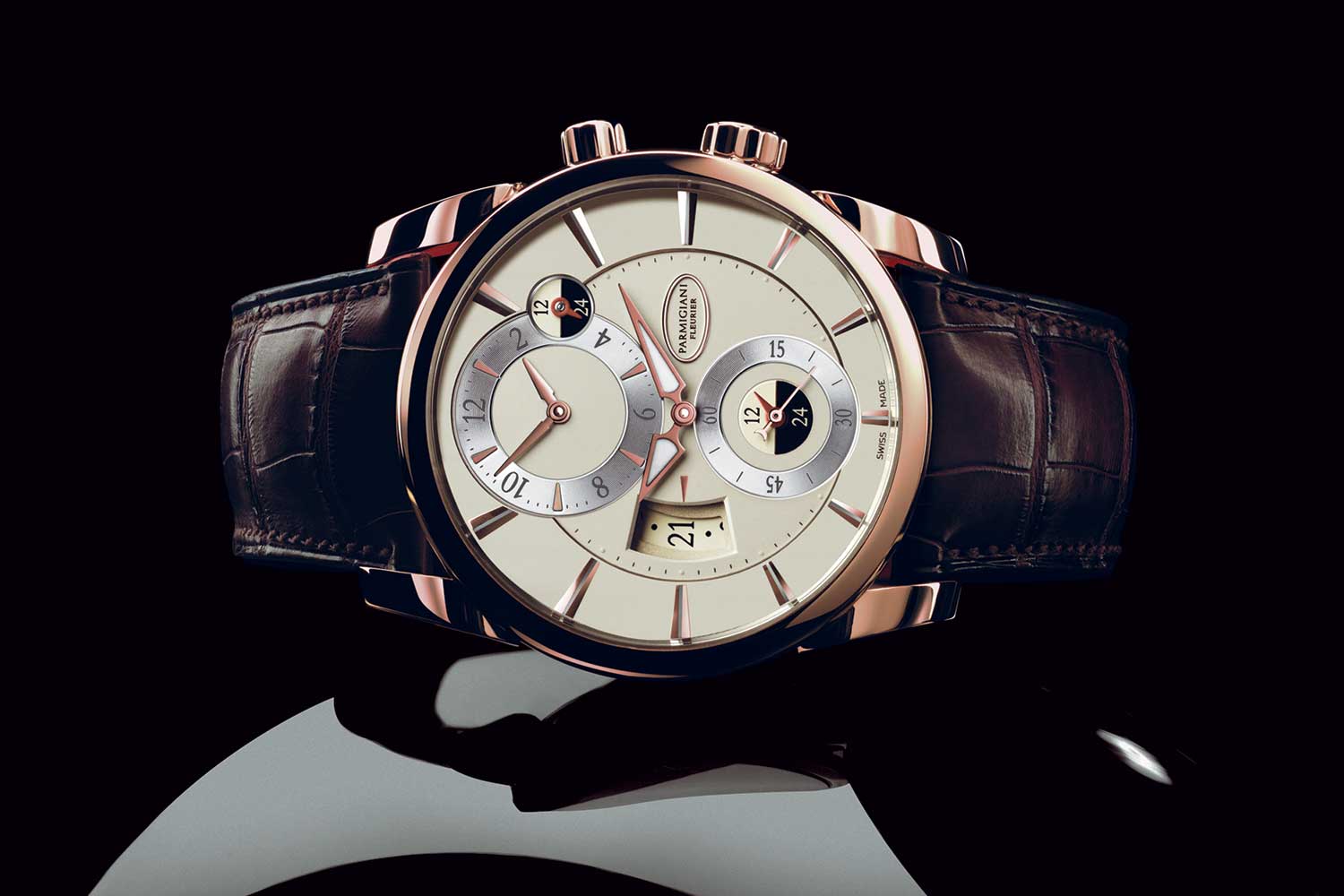
Tonda Hémisphères
Michel’s biggest contribution was knowledge. Like all of today’s greatest horologists, he had spent decades taking apart the work of watchmakers who came before him, understanding why they made particular choices and learning where future potential lay. “He spoke with them through touching their work with his fingers,” says Terreni. “Michel used restoration to learn, and to perpetuate an art through people. And he was very generous in sharing his knowledge with the watchmakers that passed through his atelier.” Terreni sees a direct line between that experience and Parmigiani today. The challenge was how to translate all of that into a maison that made sense to a new generation.
The Missing Piece
Parmigiani Fleurier did not lack watchmaking before Guido Terreni arrived in January 2021. It had movements, manufacturing expertise, finishing, history and one of the most knowledgeable founders in contemporary horology. What it started to lack in its mid-twenties was a clear identity, and Terreni makes no attempt to disguise that.
“The brand got a little bit lost in the creative direction and lost a little bit of contact with the clientele,” he says. “Michel was less involved in the company in those years due to internal decisions before me. And then, when I joined, I had the mandate to clarify the positioning.”
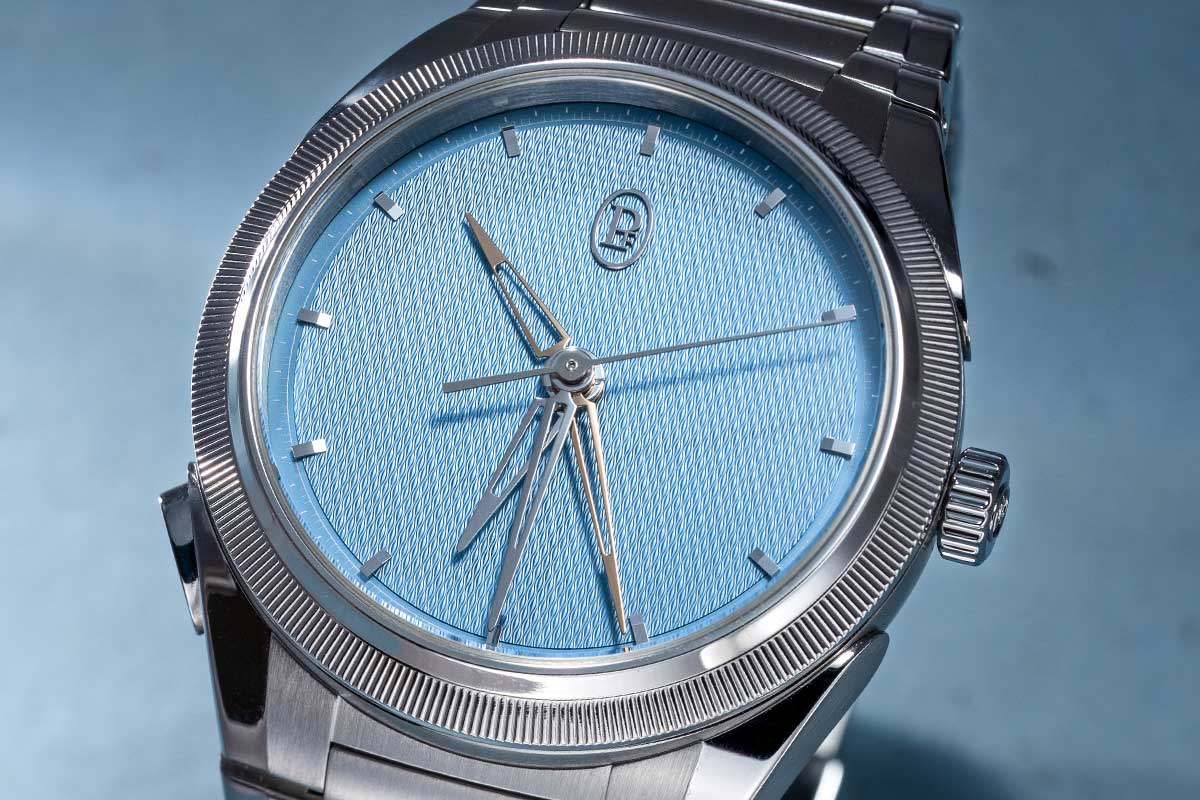
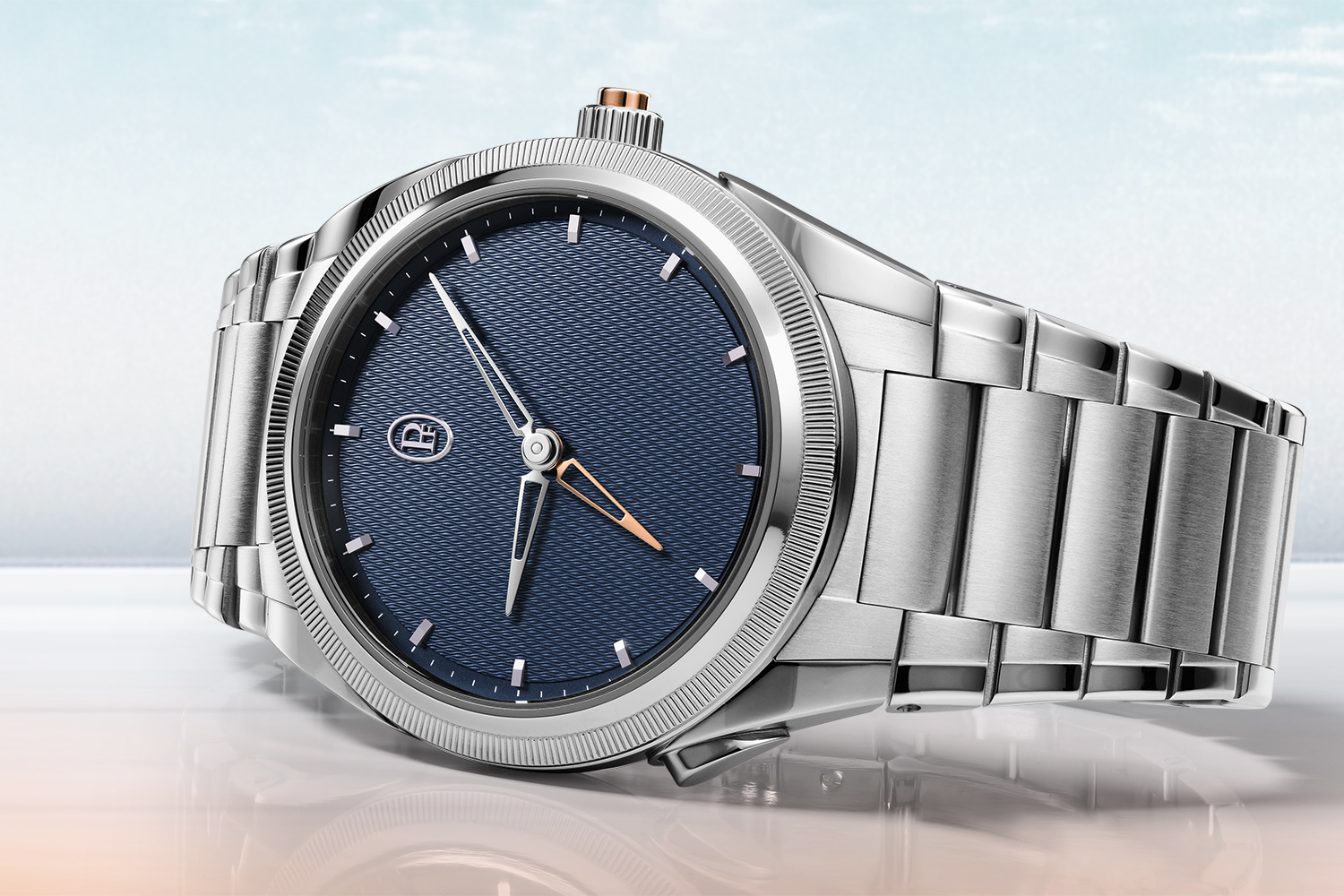
His starting point was not to replace Michel’s direction with his own but to try and understand what Michel’s values were, and who the client was that made the brand so prestigious in its early days. Launched in 2021, the Tonda PF was made to define Parmigiani’s visual identity. Its knurled bezel, integrated bracelet, and guilloché dial created an instantly recognizable design language that Terreni referred to as “private luxury” and that was aimed at a specific client. “Mature — not in age, but in style — with the goal of enjoying luxury without trying to please others. This is private luxury.” And it is hard to think of a phrase that better describes the watches that followed.

Parmigiani Fleurier Tonda PF
Tonda PF was the piece of the jigsaw Parmigiani had been missing. While Michel’s experience resulted in watches with deep horological substance, Terreni’s business expertise helped to shape those foundations into a stylish modern brand. Crucially, he recognized that neither good design nor mechanical excellence was enough on its own for a successful relaunch.
“I remember the day,” he says, referring to his Eureka moment. “It was the 29th of January 2021, three days after I joined. We were stuck in the pandemic, and we were deciding what to do. I had an idea to design the Tonda PF, but I knew it had to be a relaunch with a technical innovation.”
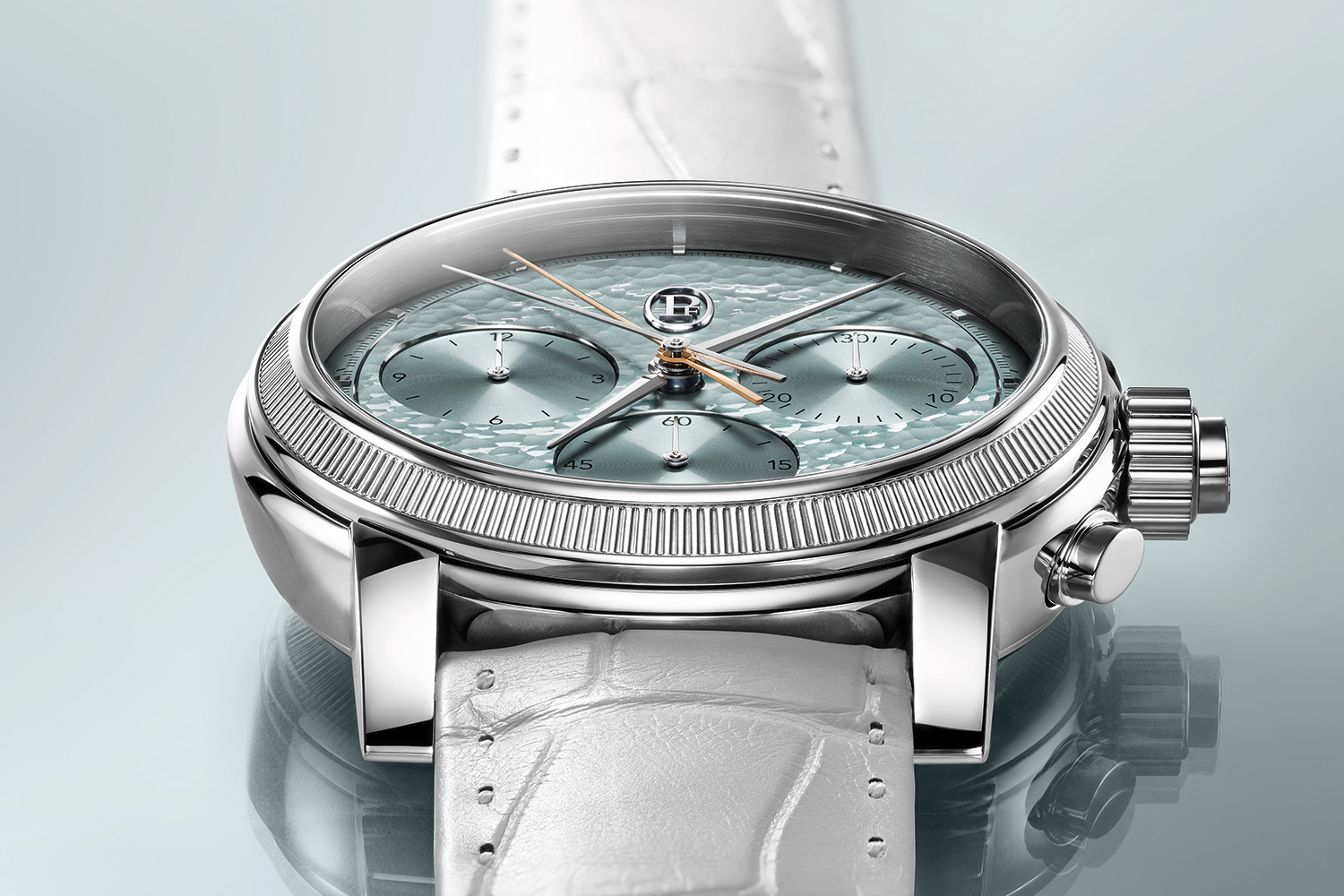
The Parmigiani Fleurier Toric Chronograph Rattrapante Platinum Anniversaire with hand-hammered white gold Agave Blue dial and 42.5mm platinum case is a high-frequency split-seconds chronograph celebrating the brand
GMT Rattrapante
The starting point for Terreni was travel. “I said let’s do a GMT because everybody would want to travel after the pandemic.” He disliked the conventional process of changing local time via the crown, particularly if there was a risk of disturbing the minute hand. He also wanted setting home to require almost no thought, saying, “when I want to come back, I want to do it as quickly as possible.”
Parmigiani’s solution saw its engineers adapting the split seconds chronograph mechanism and applying it to home and local time. Rather than using two seconds hands to measure split times, the new GMT applied the rattrapante concept to dual hour hands. Superimposed at rest, the rhodium-plated local hour hand hides a rose gold home time hand. Pressing the pusher at 8 o’clock advances the local time in one-hour jumps, uncovering the rose gold hand, which remains anchored to home time. A push of the button integrated into the crown sends the local hand instantly back to its position over the home hand.

Tonda PF GMT Rattrapante
“The initial brainstorming was done in just five minutes,” Terreni says. “We were building on each other’s thoughts. It seemed right and I said, ‘Yeah, that’s it. Let’s do the brief for the developer and let’s get it done.’ A year and a half later, it was ready.”
Terreni remains fascinated that the rattrapante had existed for generations without anyone separating its fundamental action from the chronograph. “That tells you a lot of the rigidity of this industry, of this nerdiness. That was specifically born for a seconds hand of a chronograph, and nobody thought about using it for a travel watch.”
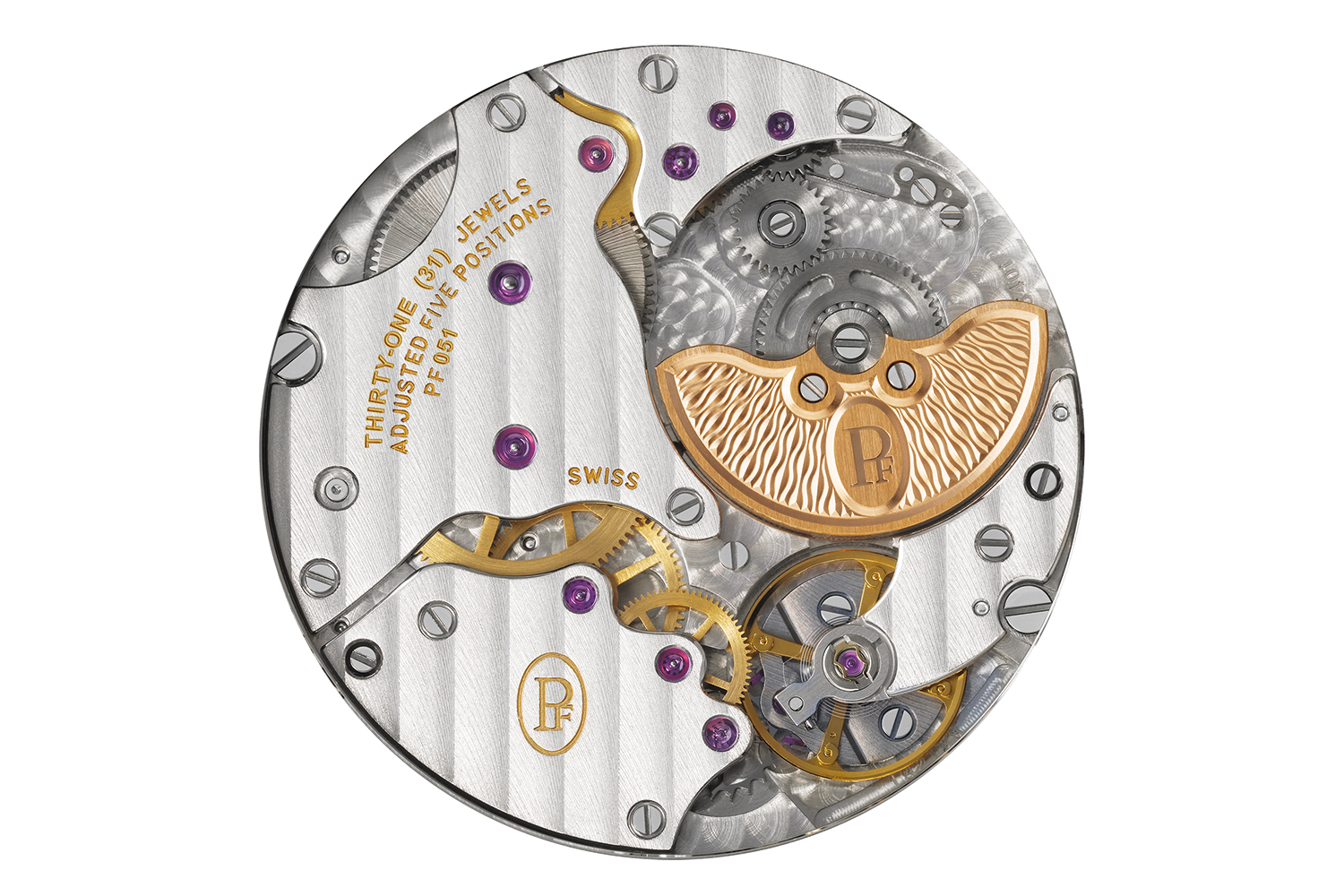
The PF Tonda GMT Rattrapante houses the PF501 Caliber with a 22ct rose gold microrotor. The split GMT function is a world first
Again he comes back to Parmigiani’s founder. “That’s part of that thing that Michel always says: restoration is a source of knowledge because it has to give us the understanding to move forward and to use the art of mechanics in a way which is fresh. Because we refuse to believe that everything has been already done in watchmaking.”
There is also an emotional detail in the GMT that could easily be missed. Home time is displayed in rose gold. “The fact that you have a link with your home time is a nice feeling when you’re traveling to have, you know, where your family is and the family is the most precious thing. That’s why it’s in pink gold, and the pusher that sends you back home is also in gold.” Even the micro-rotor is rose gold “because it’s the energy source, and the life of the movement comes from there.”
Minute Rattrapante
The second watch began somewhere far more prosaic. Instead of looking at another grand complication, Parmigiani looked at the bezel of a dive watch. A rotating timing bezel lets its wearer establish a point against the minute hand and track the interval between them. Parmigiani moved that idea inside the movement.
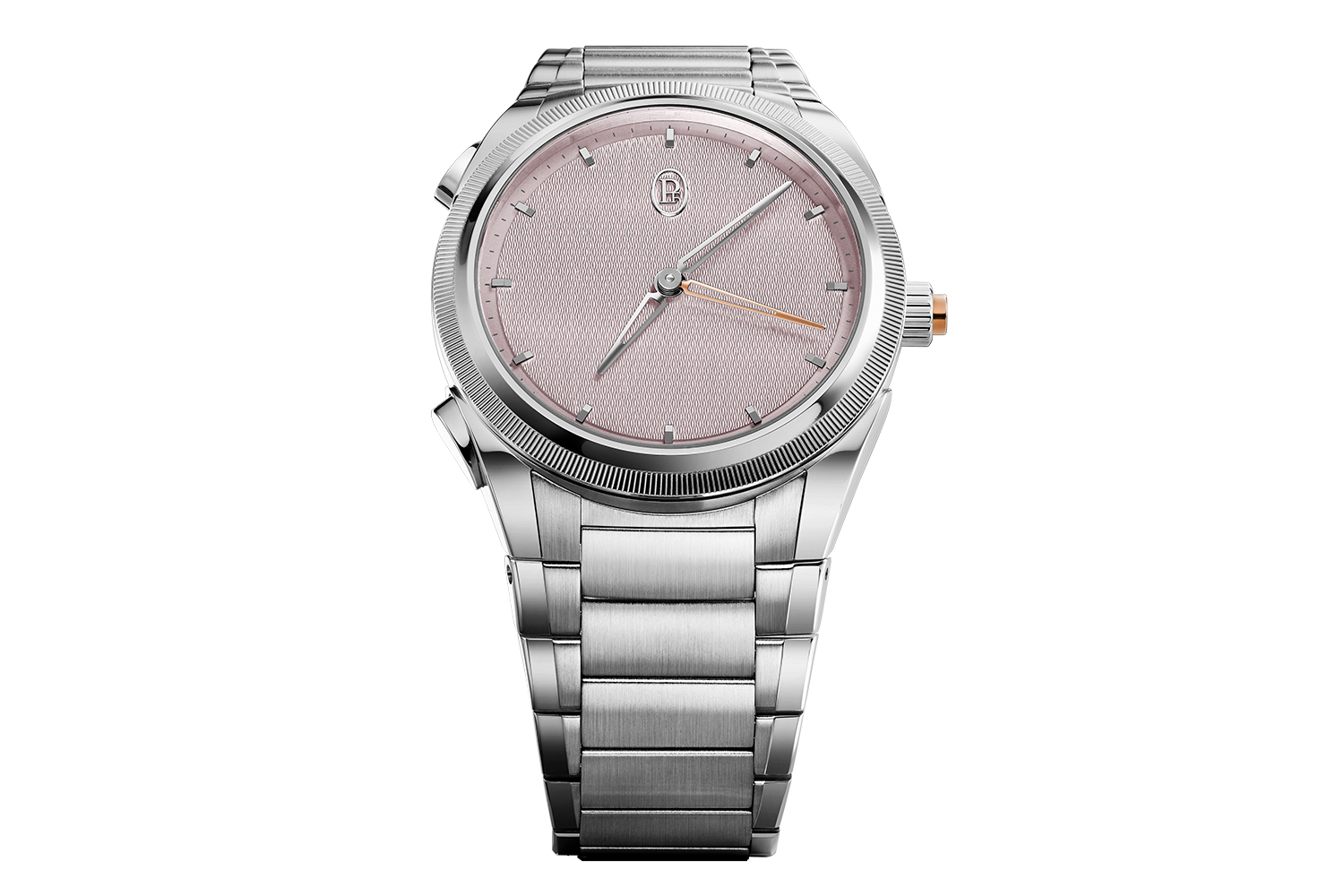
In 2023, Parmigiani Fleurier unveiled another invisible complication in the form of the TONDA PF Minute Rattrapante, a world first that lets its wearer add time on demand. The watch is shown here with its Arctic Rose dial from 2025
The Minute Rattrapante uses two superimposed minute hands. One displays civil time. The rose gold hand beneath can be advanced in five-minute steps via the pusher at 8 o’clock or single minutes via the pusher at 10. Set the desired interval and the standard minute hand gradually catches the gold marker. Once the two meet, the selected period has elapsed. The crown resets the gold hand beneath the standard minute hand. The idea sounds extremely simple but it took 271 components to execute in Caliber PF052.
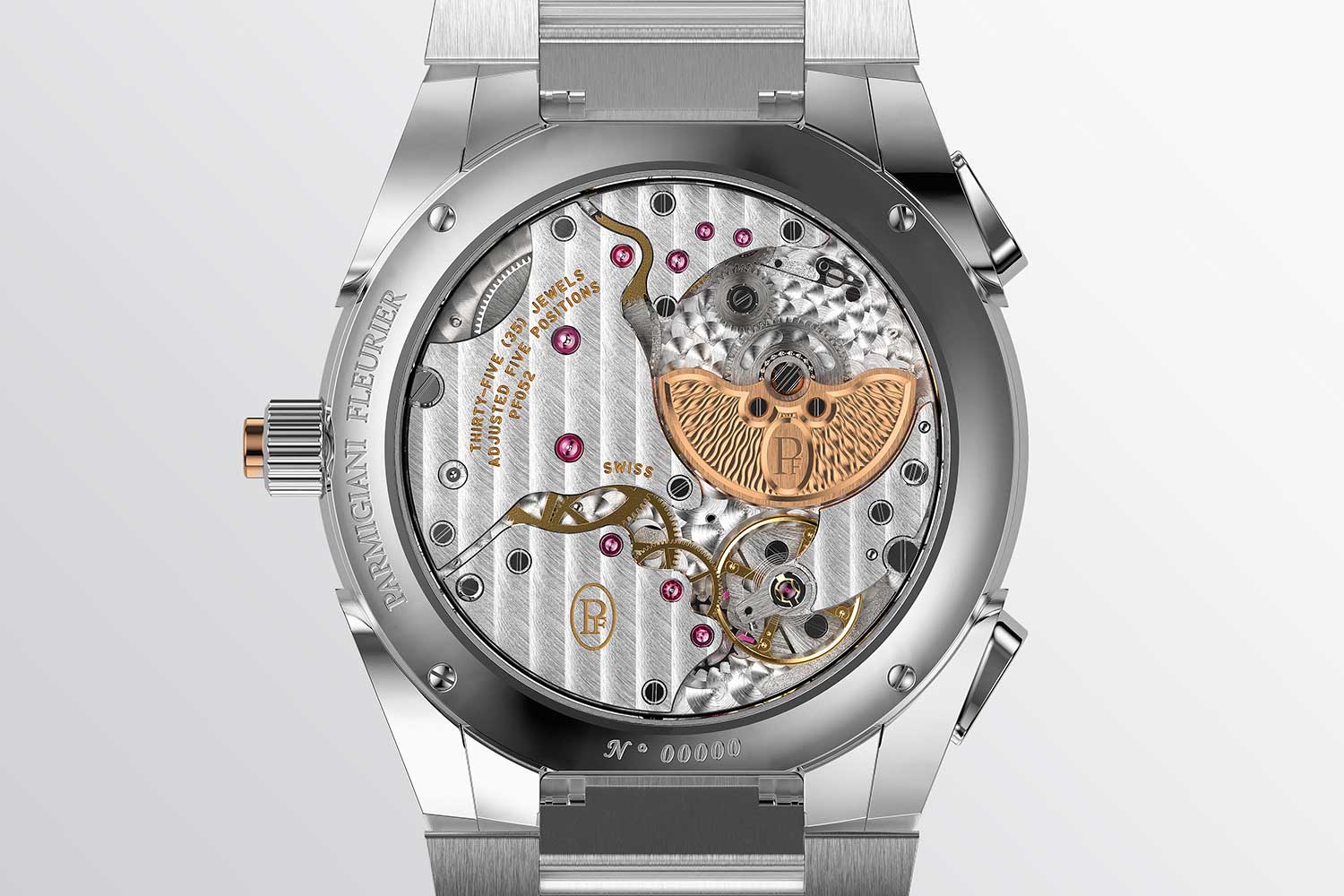
Caliber PF052
“The Minute Rattrapante seems as easy as the other one, and in reality, it’s not. You have significantly more components because you have two pushers, and the minute hand has to stop and then has to fly back. So it is more complex than the GMT.”
Terreni is amused by the uses owners find for it. “With that watch, I learned that lawyers invoice every six minutes. It’s a 10th of an hour. The unit is the hour and the 10th of an hour is six minutes, so you can push one pusher [to advance by] five and one pusher [to advance by] one [minute]. You’ve got your invoicing going, and then you can see how many minutes you are exceeding that invoice. Somebody else told me they use it to count time-outs for their children. So really, you can use it for anything.”
The humor disguises quite a serious argument about the purpose of a mechanical complication today. There was a point when GMTs, chronographs, dive bezels and other complications were useful because mechanical watchmaking was the only available technology. Electronics changed that. “I think functions in watchmaking have lost their function if you will excuse the play on words,” he says. “The function of a mechanical watch today is to bring back what electronics cannot, which is the emotion of a luxury experience through exquisite mechanics and also through ideas and executions that bring back that pleasure of discovering the magic of the mechanics.”
Chronographe Mystérieux
By the time Parmigiani reached the third watch, that thinking had become recognizable. One watch might be an isolated invention. Two suggests a connection. With three, there is a pattern. As Terreni says: “One watch is a watch. Two watches are a couple. Three watches. You understand what we’re doing.”
Having taken the rattrapante out of the chronograph for the GMT, then translated the simple action of a dive bezel into the Minute Rattrapante, Parmigiani turned its attention back to the chronograph itself. Why should the complication dominate the look of a watch even when nobody is using it?
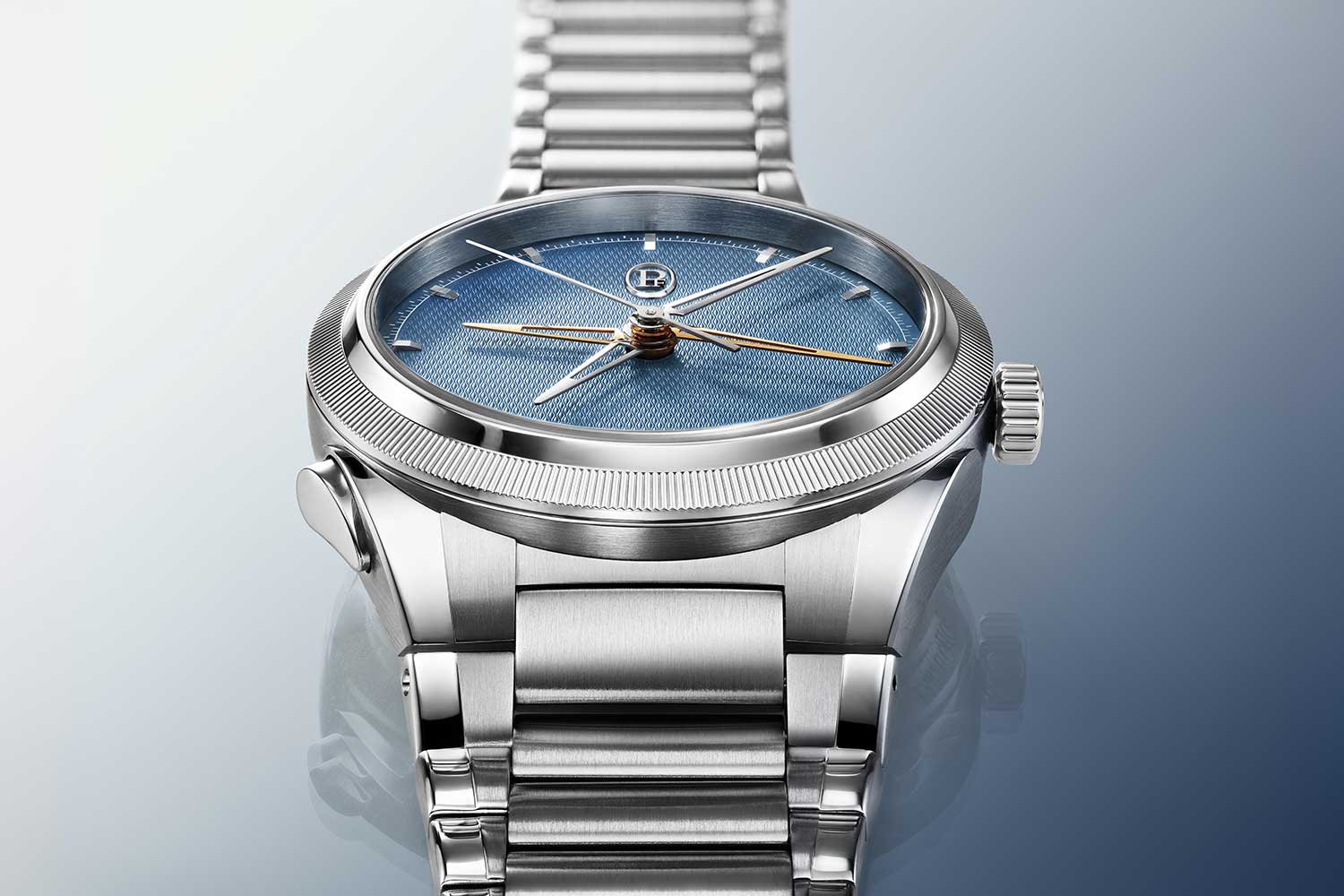
Tonda PF Chronographe Mystérieux
The Chronographe Mystérieux was in Terreni’s head almost from the beginning. “The idea was exactly how you see it. There’s nothing different from how I thought about it five years ago. It’s that moment of magic at the center where you see those three hands giving civil time. They transform themselves in the same function, but applied to a start, a flyback start.”
Even the choice of a single pusher added difficulty. “We could have done the traditional configuration for start, stop, reset, but because Parmigiani is Parmigiani, we went the hardest way and we put in a monopusher sequence.”
And here the idea of invisible complications reaches its fullest expression. The movement has become considerably more complex precisely so that the owner experiences less visual complexity. Terreni is clear, though, that additional components are never the objective. “Many components to address an idea is not my purpose. I would love to have fewer components, but if you need all of them, it’s because the idea is more complex to address. The idea is really to simplify the complication from an owner’s point of view.”
There are limits to how far Terreni would take simplification. During development, Parmigiani could have added further elements to perfect the synchronization of the Chronographe Mystérieux, but doing so would have made the movement bulkier and commercially impractical. “You have to understand when it’s worth it and where to stop,” he says. “Because otherwise, it will never end.”
The achievement is not that the owner spends every moment contemplating the triple clutch beneath the dial. “You don’t think every time you push the pusher what’s beneath. You do sometimes end up wondering how it works, but the beauty is really the surprise. Probably you will never have heard in your life somebody asking you, ‘Do you want to try my chronograph?’ You will with this one.”
That may be the best thing about all three watches. They take incredibly complex mechanisms and make them enjoyable at the simplest level.
Toric and the other Parmigiani
The invisible complications may be the stars of Parmigiani today, but they are not the whole story. Toric provides another link between Michel’s original vision and the maison Terreni is building around it. The name goes back to Michel’s first wristwatch of 1996, and its revival has given Parmigiani a dressier counterpoint to Tonda PF.
Though the invisible complications often take the spotlight today, they represent just one chapter of Parmigiani Fleurier’s evolution. The Toric provides a deeper link of continuity, between Terreni’s modern ambition and Michel’s original 1996 masterpiece. Reimagined for a new era, it stands as an elegant, dressfocused counterpart to the sports luxe Tonda PF — softer, more traditional, and rooted in artisanal craftsmanship.
The Toric Perpetual Calendar is the perfect example of how Terreni’s pursuit of clarity can transform a watch without needing to reinvent it. Where perpetual-calendar indications often clutter their own dials, here they are concentrated, enabling the time to remain instantly legible.

Parmigiani Fleurier Toric Perpetual Calendar (©Revolution)
For this year’s 30th anniversary, the Toric pays direct tribute to Michel. It combines hand-hammered dials with classic finishing, applying historic decorative arts to a modern design. “The hand-hammered dials gave a totally different look to a celebrative piece,” says Terreni. “So it’s not in opposition to today’s collection, but it’s really a celebration using Michel’s sensitivity on finishing to celebrate the brand and his heritage.”
Each is an opportunity to explore something closer to Michel himself, whether an old movement, a historic craft or the sort of exceptional mechanical object that connects the modern manufacture with his life in restoration. The tradition makes a useful counterpoint to the invisible complications. One looks deliberately back to Michel. The other takes the knowledge he accumulated and pushes it forwards.
Beyond the core collections lies a personal tradition: a one-of-a-kind watch unveiled each December to mark Michel’s birthday. Free from commercial constraints, the only goal for these creations is to pay tribute to the visionary whose knowledge underpins the maison. Each piece reimagines a vintage movement, honors a forgotten technique, or celebrates a historic mechanism. While the modern lines chart the future of the brand, these special editions look back to the traditions the house is built on.
Thirty Years Young
“What we always say is that we are 30 years young, and not 30 years old,” says Terreni about the anniversary year. “And I think that statement says everything about those years — they are the foundation, but they are not the arrival point. They are much deeper than 30 years of another brand because they come after centuries of horological history embodied in the mechanical objects that have been restored by Michel. So that understanding gives a completely different depth to those 30 years for our company.”
This anniversary is a celebration of horological tradition and the values of Michel. Yet it also arrives at a point when Parmigiani finally appears to have found its own place in contemporary watchmaking.
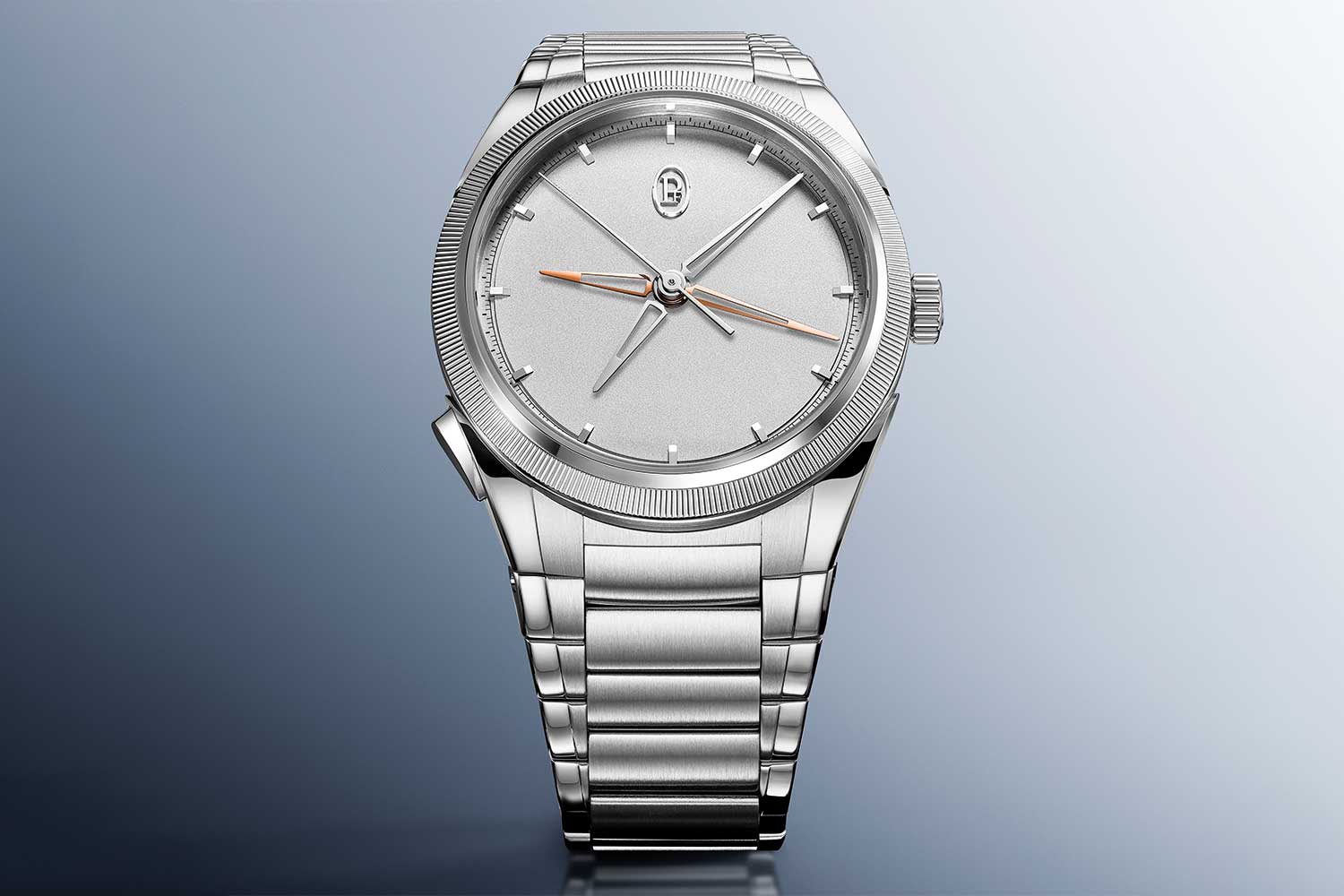
The Tonda PF Chronographe Mystérieux Platinum Anniversary watch is a limited edition of 30 pieces
The change after 2021 is difficult to overstate. Tonda PF gave the maison a new visual identity, the invisible complications gave it a unique technical story and the renewed Toric collection has put an emphasis on the codes established by Michel. Recognition followed, from collectors and from an industry that suddenly began looking towards Fleurier again.
There is no suggestion that the maison began in 2021 with Guido Terreni. Quite the opposite. Much of what makes Parmigiani so special is that he had such rich material to work with. At a point when so many brands were competing for greater visibility and new complications, there was space for a maison built around the opposite instincts.
Parmigiani Fleurier’s success now produces a different problem. “The bar is rising because every time we do something, people are asking what’s next,” Terreni says, adding with a smile, “please enjoy four years of work before asking that question.”
There is, Terreni says, plenty still to do. “There’s a lot to do in the grand complications. There’s a lot to do in the ladies’ watches that we haven’t yet started. I mean, there’s plenty of things that we still have to work on.” And Parmigiani will continue to look at historical watchmaking without treating tradition as a boundary. “We will continue to be consistent with this philosophy,” he says, “because these are the underlying values of the brand.”
Tech Specs: Parmigiani Fleurier Tonda PF GMT Rattrapante
Movement Self-winding Caliber PF051, with 22K rose gold micro-rotor; 48-hour power reserve
Functions Hours and minutes; split GMT; local hour adjustable in one-hour increments; rattrapante returns to home time
Case 40mm × 10.7mm; polished and satin-finished stainless steel, with knurled platinum 950 bezel; water resistant to 60m
Dial Milano Blue with Grain d’Orge hand guilloché; rhodium-plated applied 18K gold hour markers
Strap Polished and satin-finished stainless steel bracelet
Price USD 35,400
Tech Specs: Parmigiani Fleurier Tonda PF Minute Rattrapante
Movement Self-winding Caliber PF052, with 22K rose gold micro-rotor; 48-hour power reserve
Functions Hours and minutes; minute rattrapante; one pusher advances the rattrapante hand in five-minute increments, a second in one-minute increments, with reset from the crown
Case 40mm × 10.7mm; polished and satin-finished stainless steel, with knurled platinum 950 bezel; water resistant to 60m
Dial Sand Gray with Grain d’Orge hand guilloché; rhodium-plated applied 18K gold hour markers
Strap Polished and satin-finished stainless steel bracelet
Price USD 36,600
Tech Specs: Parmigiani Fleurier Tonda PF Chronographe Mystérieux
Movement Self-winding Caliber PF053, with polished and sandblasted 22K rose gold oscillating weight; 60-hour power reserve
Functions Hours, minutes and small seconds; monopusher chronograph; five co-axial central hands, with chronograph hours, minutes and seconds revealed when the function is activated and concealed again on reset
Case 40mm × 13mm; polished and satin-finished stainless steel, with knurled platinum 950 bezel; water resistant to 100m
Dial Mineral Blue with Grain d’Orge hand guilloché; rhodium-plated applied 18K gold hour markers
Strap Polished and satin-finished stainless steel bracelet
Price USD 44,600
Parmigiani Fleurier
You may also like
News
Last Week in Watches: Patek Philippe Takes Milan, G-Shock Turns to Blue Sapphire
Oct 5, 2026
News
Last Week in Watches: Patek Philippe Takes Milan, G-Shock Turns to Blue Sapphire
Oct 5, 2026
Editorial
The Tonda PF Skeleton Reveals Its Inner Beauty in Milano Blue and Gold
Aug 31, 2026
Editorial
The Tonda PF Skeleton Reveals Its Inner Beauty in Milano Blue and Gold
Aug 31, 2026
Reviews
A Closer Look: Parmigiani Tonda PF Chronographe Mystérieux
Jul 14, 2026
Reviews
A Closer Look: Parmigiani Tonda PF Chronographe Mystérieux
Jul 14, 2026