Vacheron Constantin Miniaturises Six Crafts for the Animal Kingdom
Editorial
Vacheron Constantin Miniaturises Six Crafts for the Animal Kingdom

Vacheron Constantin has long maintained workshops dedicated to the very delicate and traditional métiers d’art of watchmaking. These include specializations in engraving, enameling, guilloché work and gem-setting. Its latest project now looks further afield, commissioning six independent artisans to translate their practices, which are rarely associated with horology, onto the miniature scale of a watch dial.
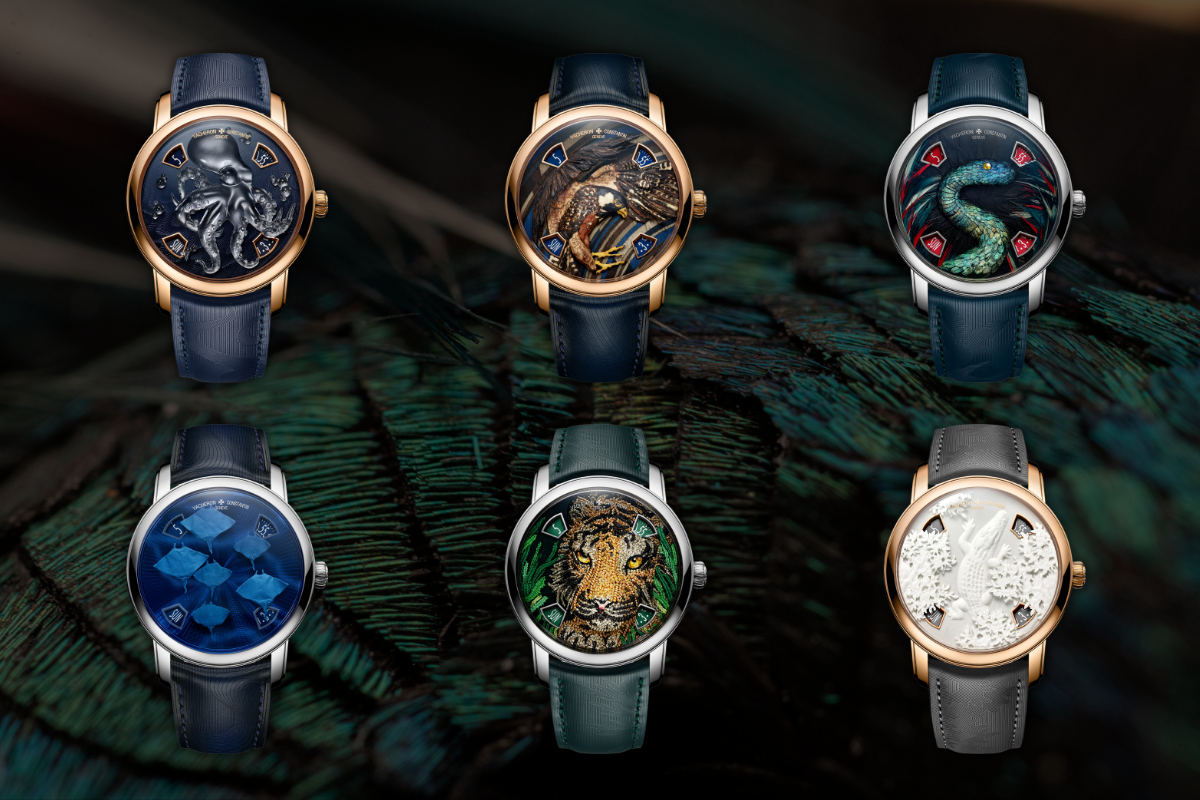
These watches are presented under the Maison’s “One of Not Many Crafts Programme” and are labelled as the Métiers d’Art Tribute to the Animal Kingdom. This set of incredible pieces comprises six concept watches, each interpreting a different animal expressed through a corresponding craft. In brief: featherwork depicts a serpent; transparent glass forms an octopus; micro-origami creates a group of manta rays; gold embroidery renders a prowling tiger; cotton paper becomes a crocodile; and wood marquetry shapes a falcon.
Each artist worked directly with Vacheron Constantin’s watchmakers and métiers d’art specialists to adapt their materials and techniques to the physical and functional constraints of a wristwatch. With no more than 4mm separating dial surface from the crystal, the restricted dimensions required the development of dial structures, mounting methods and working processes from the ground up.
All six watches house the self-winding caliber 2460 G4, created by Vacheron in 2005 and found in their other Métiers d’Art tribute projects including the one for the Louvre. Time is told through four color-matched discs that display the hours, minutes, day of the week and date through apertures around the dial’s perimeter, leaving the central area free of hands and numerals.
Feathersnake
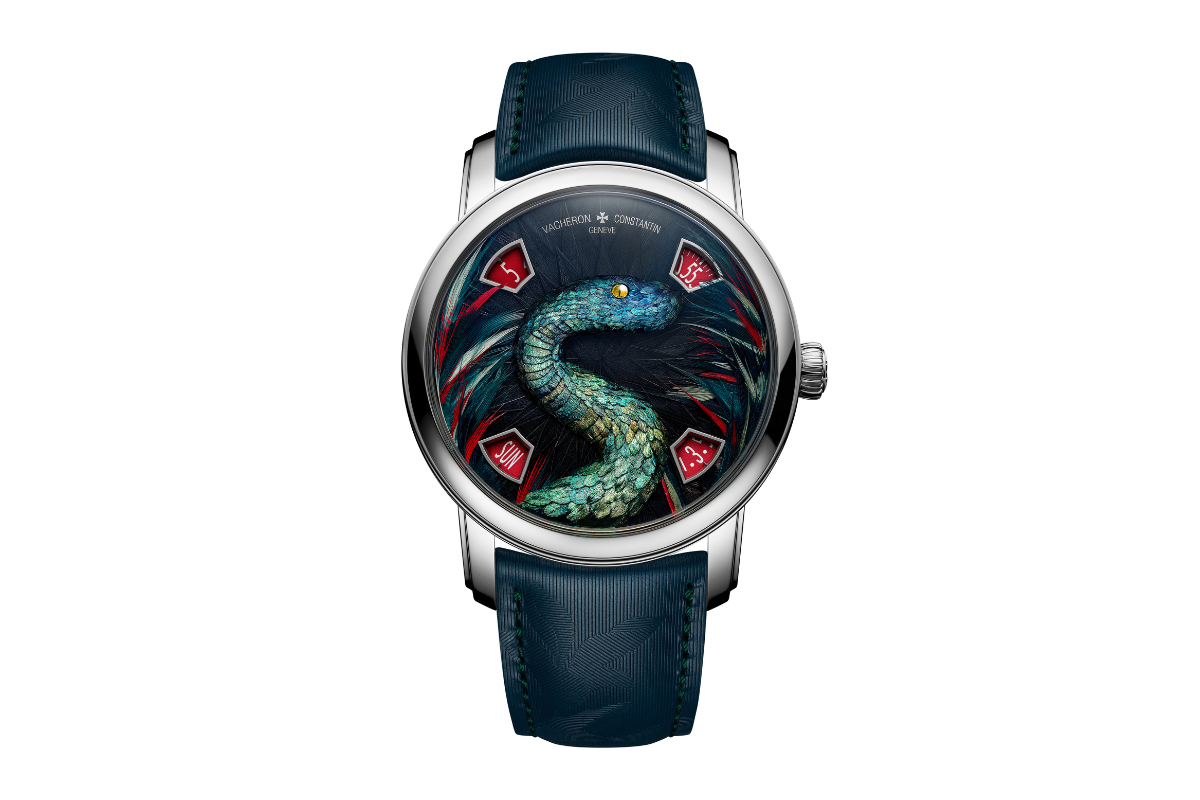
Métiers d’Art Tribute to the Animal Kingdom – Feathersnake Ref. 7630A/000G-H206
Created with feather artist Julien Vermeulen, the Métiers d’Art Tribute to the Animal Kingdom – Feathersnake Ref. 7630A/000G-H206 displays an imaginary serpent coiling through a landscape of grassy foliage.
The snake, which looks incredibly lifelike, rises around 3mm above the dial, and is supported by a specially developed metal appliqué that provides volume for the body. Its shimmering blue and green scales are made with more than 200 individual fragments, all cut from seven lophophore feathers, and mounted on silk paper. The eye of the snake is fashioned from 18K gold and enamel, while goose feathers were used to form the surrounding vegetation.
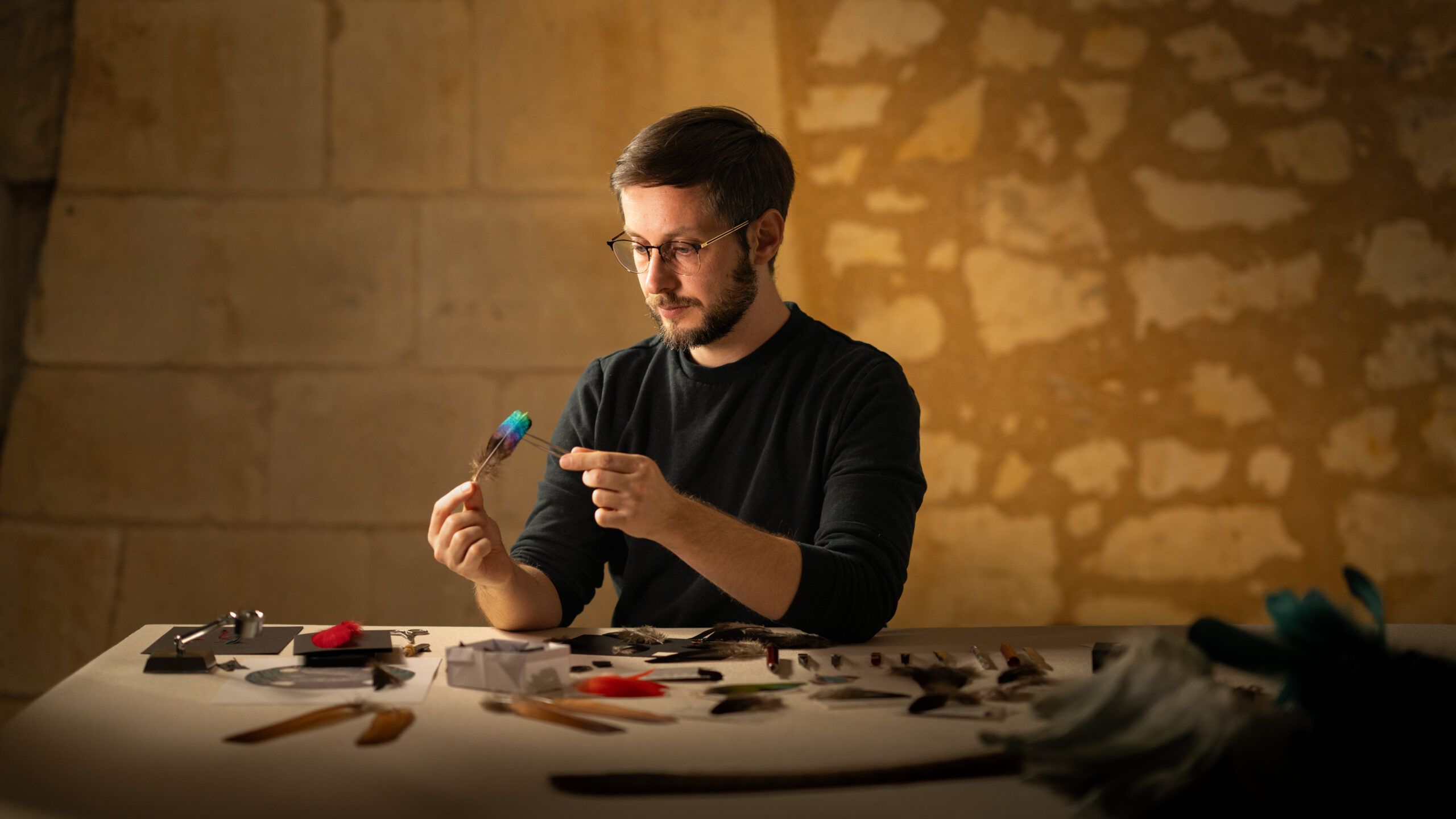
Julien Vermeulen
Working at this minute scale required Vermeulen to create a micro-scalpel from a reshaped needle, along with another modified needle capable of applying microscopic quantities of adhesive. Approximately 250 hours went into the project, including its research and prototyping stages.
This composition is housed in an 18K white-gold case and accompanied by a green calfskin strap embossed with a leaf pattern to complete the look.
Glassoctopus
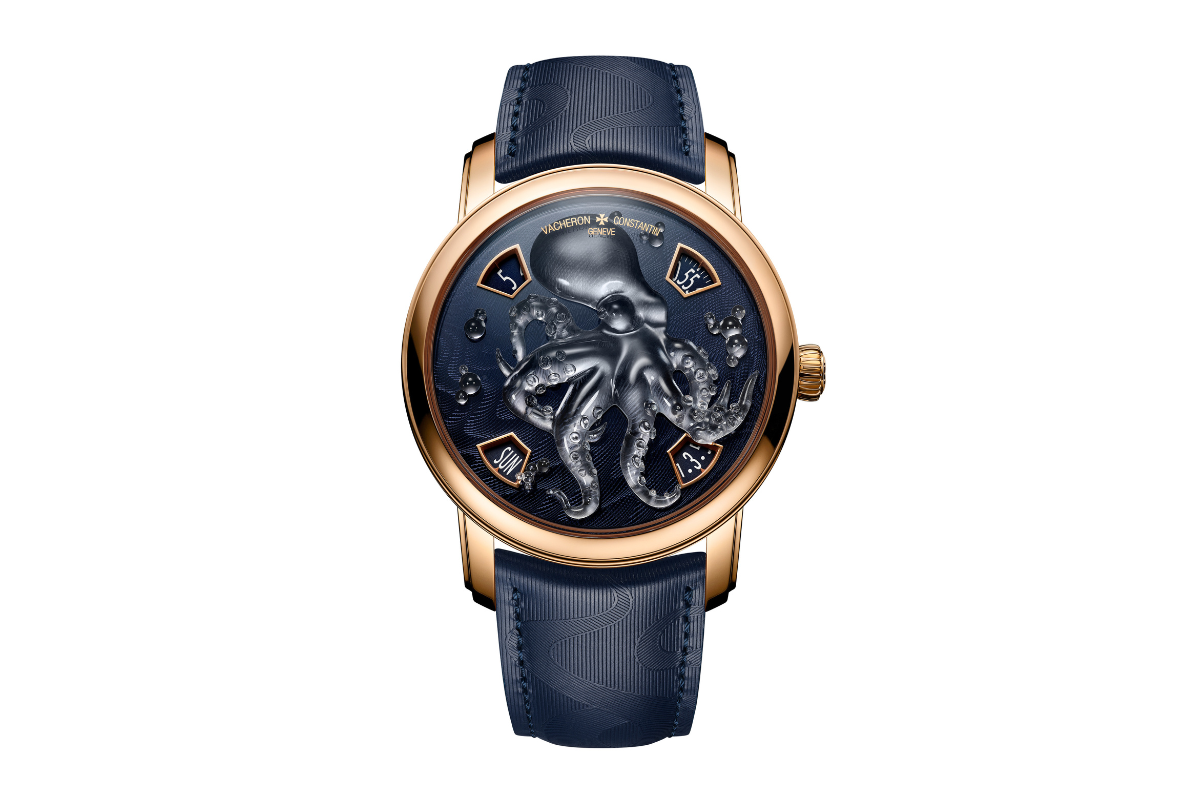
Métiers d’Art Tribute to the Animal Kingdom – Glassoctopus Ref. 7630A/000R-H205
Italian glass artist Simone Crestani created the transparent creature at the centre of the Métiers d’Art Tribute to the Animal Kingdom – Glassoctopus Ref. 7630A/000R-H205.
Measuring 3.5mm in height, the diaphanous glass octopus is suspended above a deep blue, hand-guilloché gold dial base. Crestani constructed the octopus progressively from tiny glass rods, melting and reshaping the material using tungsten tools. Each tentacle and sucker was meticulously formed dot by dot, as reheating such fine strands would cause the glass to contract under surface tension.

Simone Crestani
Working with glass, transparency was another challenge. Since every overlap could potentially magnify or distort the guilloche details beneath, Crestani used optical illusions to suggest tentacles that cross one another without excessively layering the miniature glass sculpture.
Development lasted for at least a year, culminating in four slightly different octopi from which the final one was selected. The watch has an 18K pink-gold case and a blue calfskin strap embossed with tentacle motifs.
Oraygami
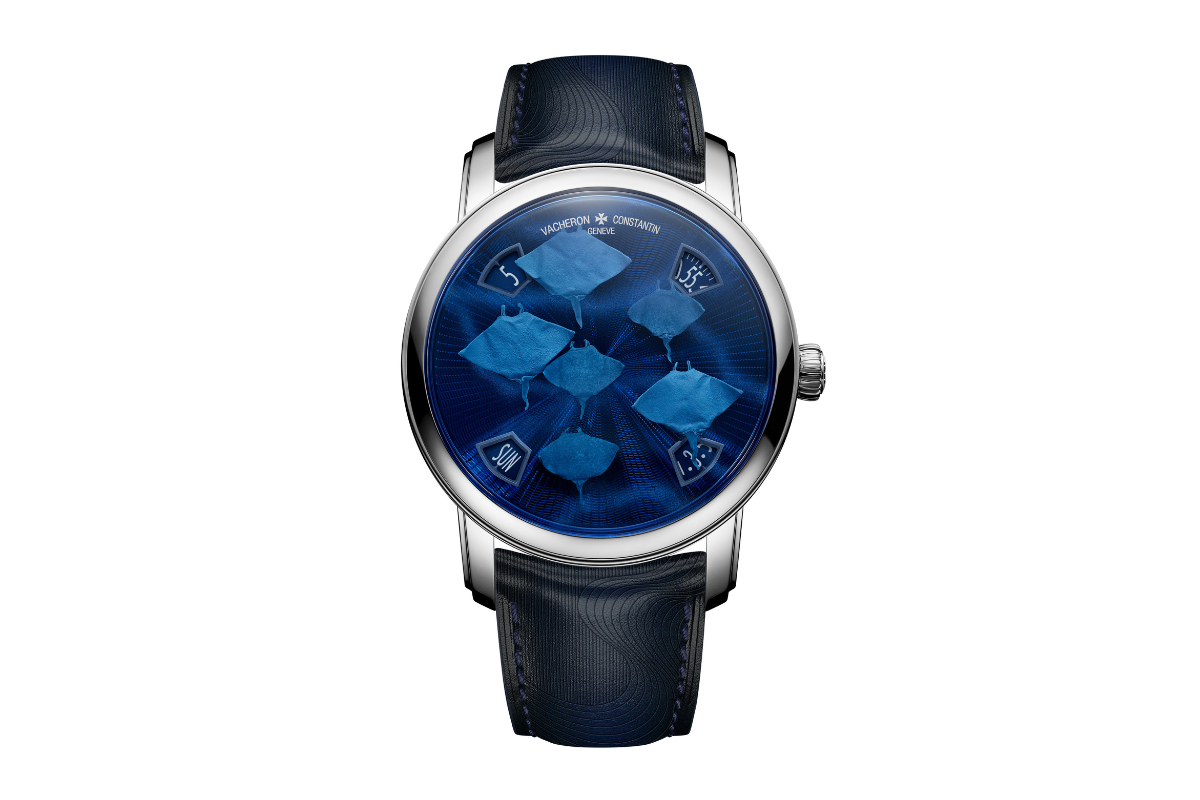
Métiers d’Art Tribute to the Animal Kingdom – Oraygami Ref. 7630A/000G-H204
Six miniature manta rays circle the dial of the Métiers d’Art Tribute to the Animal Kingdom – Oraygami Ref. 7630A/000G-H204, created with Germany-based micro-origami artist Anya Midori.
For this project, Midori developed a completely new folding sequence, closely studying images and footage of real manta rays to understand their proportions and movement. Each ray is folded from specially dyed Japanese paper and supported on a fine brass stem, each with varying heights, that help create a dynamic impression of a group gliding through the water.

Anya Midori
The rays were all folded using only Midori’s fingers, fingernails and the tip of a toothpick, all without magnification. The rays swim across a hand-guilloché gold dial base coated in a dark ocean blue. There’s also this stunning moiré effect on the crystal which evokes the distortion of light beneath the water’s surface.
The project painstakingly developed over more than two years, with some early rays requiring 6 hours to fold. An 18K white-gold case and blue calfskin strap embossed with waves are supplied with the watch.
Tigerbroidery
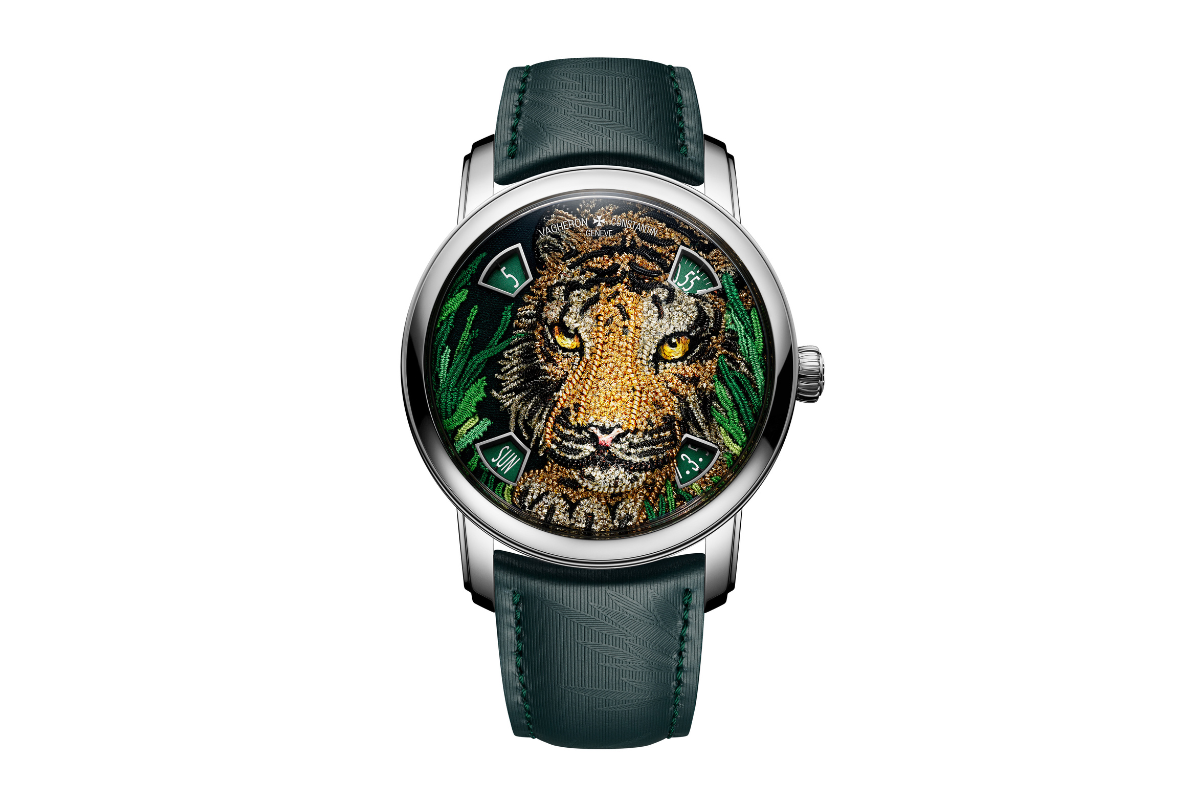
Métiers d’Art Tribute to the Animal Kingdom – Tigerbroidery Ref. 7630A/000G-H207
Goldwork embroidery is brought to watch scale in the Métiers d’Art Tribute to the Animal Kingdom – Tigerbroidery Ref. 7630A/000G-H207, produced with hand embroiderer and textile artist Laura Baverstock.
The tiger is formed from individually cut segments of ultra-fine 9K yellow- and white-gold wire, each measuring less than a millimeter. Ceramic-coated copper wires create the creature’s black stripes, while ten shades of silk were used for the eyes alone. For the surroundings, they’re embroidered onto specially dyed green silk, with Japanese silk threads recreating the grass and vegetation of its habitat.

Laura Baverstock
The use of high gold content presented a difficult challenge compared with gilt wires more commonly used in traditional goldwork embroidery. It required new tools to twist and coil the material into a form that could be stitched. Baverstock used bespoke needles measuring only 0.25mm that were also specially developed for this project.
Approximately 210 hours went into preparing, embroidering and mounting the completed composition. The watch is presented in an 18K white-gold case with a green calfskin strap embossed with foliage.
Papercroc
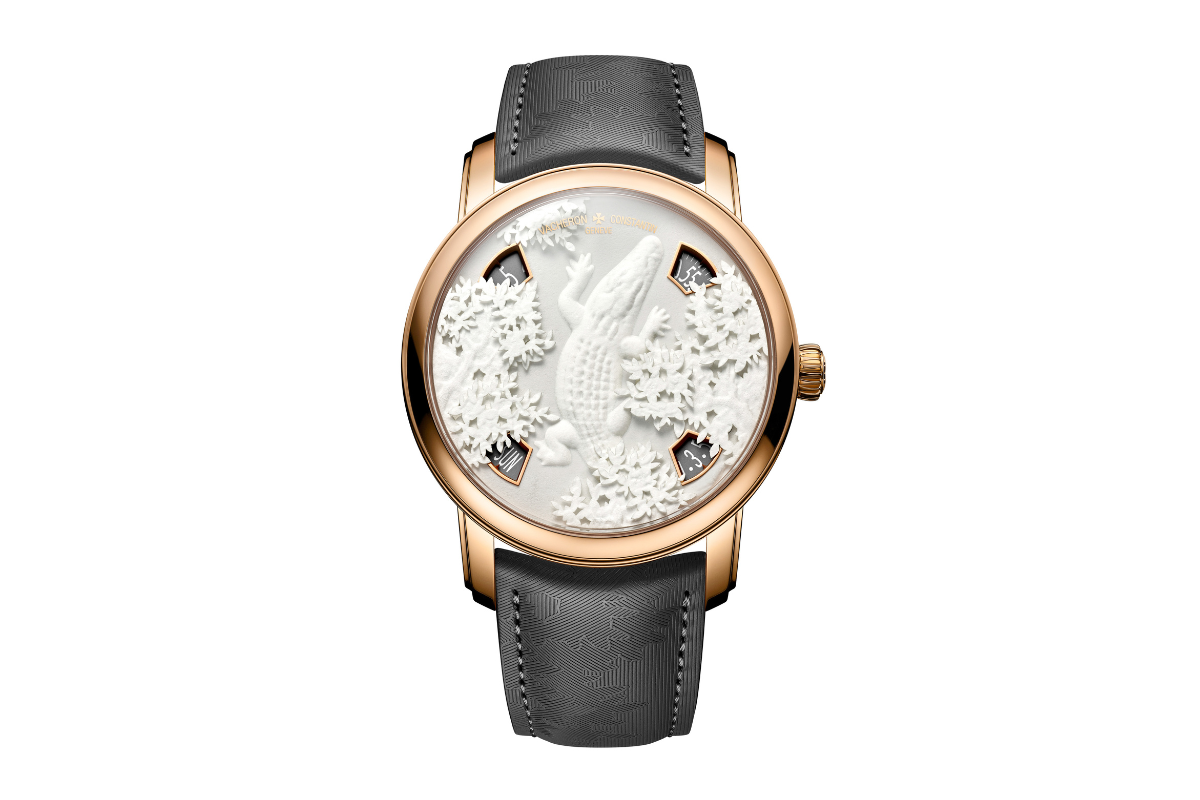
Métiers d’Art Tribute to the Animal Kingdom – Papercroc Ref. 7630A/000R-H202
Marianne Guély’s Métiers d’Art Tribute to the Animal Kingdom – Papercroc Ref. 7630A/000R-H202 transforms white cotton paper into a crocodile moving through an equally monochromatic landscape.
At first glance, it’s an incredible-looking piece and even crazier once you realize that this almost alabaster-like croc sculpture is really made from paper.
The composition uses paper of two different weights: 300gsm cotton paper for the crocodile itself and 250gsm paper for the foliage. Embossing, laser cutting and hand assembly produced a final product that measures approximately 3mm high, allowing light and shadow to define shapes and depth to this entirely white scene.

Marianne Guély
To create the crocodile scales, and its surrounding tiny leaves and branches, engraved brass matrices were heated between 60°C and 70°C before being pressed into paper. Special acid-free white cotton paper had to be used to withstand the intensity of the embossing process without tearing or warping.
The Papercroc is housed in an 18K pink-gold case and paired with a grey calfskin strap carrying an embossed foliage pattern.
Woodenwings
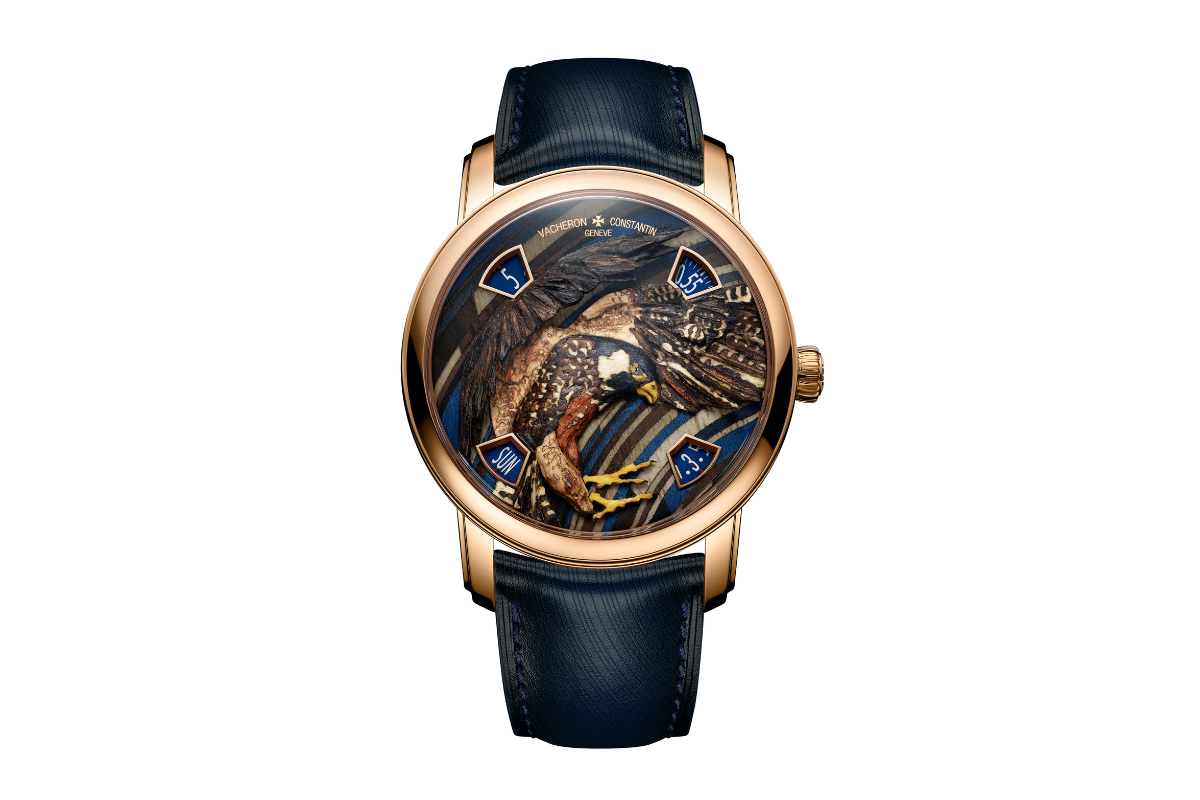
Métiers d’Art Tribute to the Animal Kingdom – Woodenwings Ref. 7630A/000R-H203
Last but not least, a falcon poised to take flight occupies the Métiers d’Art Tribute to the Animal Kingdom – Woodenwings Ref. 7630A/000R-H203, created with marquetry artist Anna Le Corno.
Twelve different woods were carefully considered and selected according to their color, grain and ability to withstand carving at microscopic scale. The dial makes use of three forms of marquetry: circular marquetry adapted from furniture making for the background, layered veneers that were assembled and hand-sculpted for the falcon’s body, and a feather-by-feather construction developed for its extended wing.
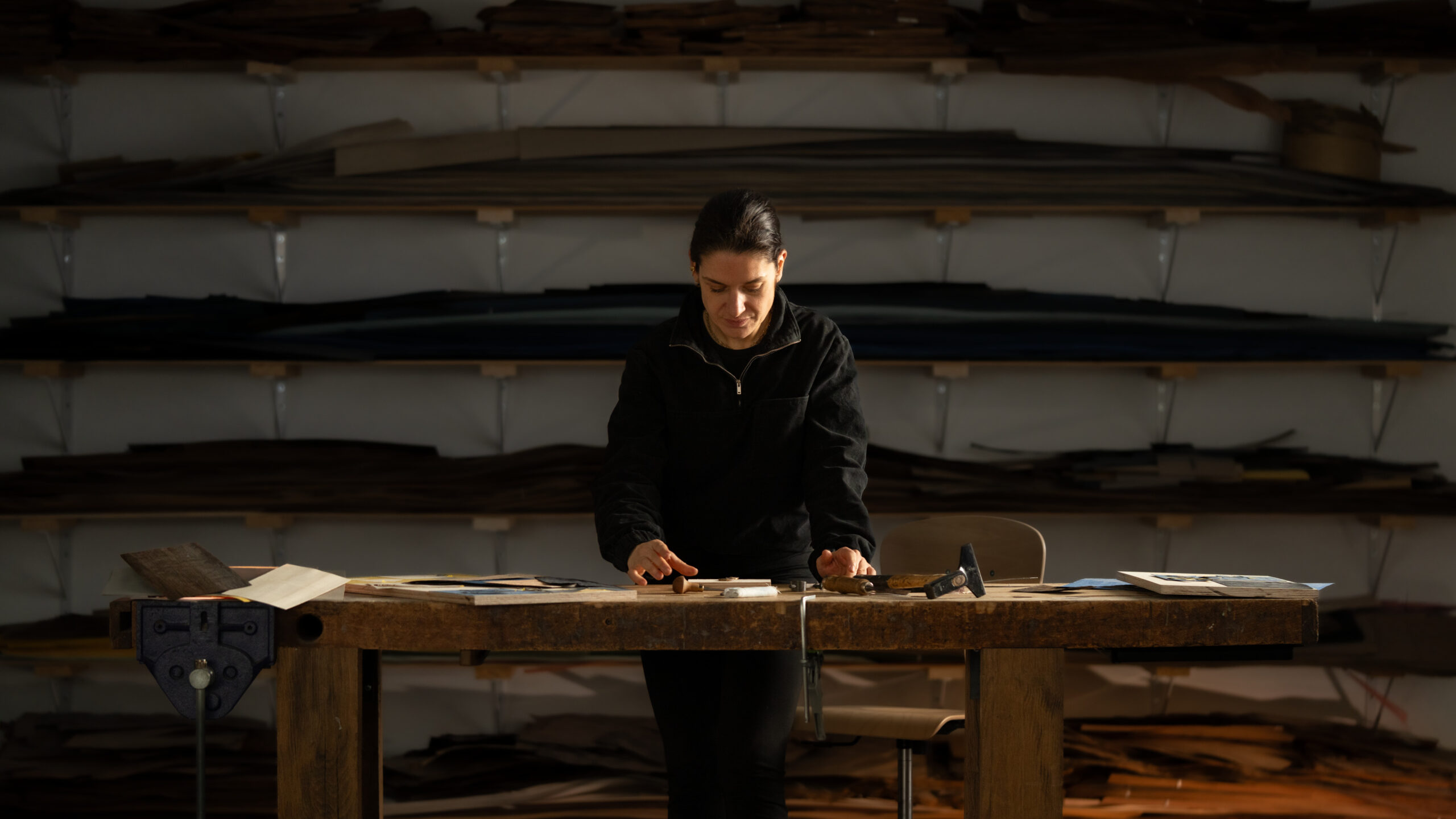
Anna Le Corno
The wing cantilevered above the dial, with its feathered tips actually reaching very close to the underside of the crystal, really enhancing the three-dimensional perspective. Le Corno had to use precision scalpels similar to surgical instruments, microscopic carbide bits and handmade sanding tools – a completely different set of equipment from her usual woodworking equipment for furniture and larger sculptural objects.
An 18K pink-gold case surrounds the dial, complemented by a blue calfskin strap embossed with a striped pattern.
A shared mechanical canvas
Beyond their common movement and dimensions, the six watches are linked by a specially designed 22K gold oscillating weight. Visible through the sapphire caseback, it is hand-engraved with motifs inspired by artisans’ tools as a broader tribute to craftsmanship. Calibre 2460 G4 operates at 4Hz and offers a power reserve of 40 hours. All six cases measure 42mm in diameter and 12.9mm thick, with water resistance tested to 3 bar.
Animals have also actually appeared throughout Vacheron Constantin’s history, from an enamelled serpent pocket watch created in 1826 and a scarab pendant watch from 1910 to the Audubon-inspired enamel watches of 1996 and the unique Les Cabinotiers Tourbillon Joaillerie – Hippocampe of 2022.
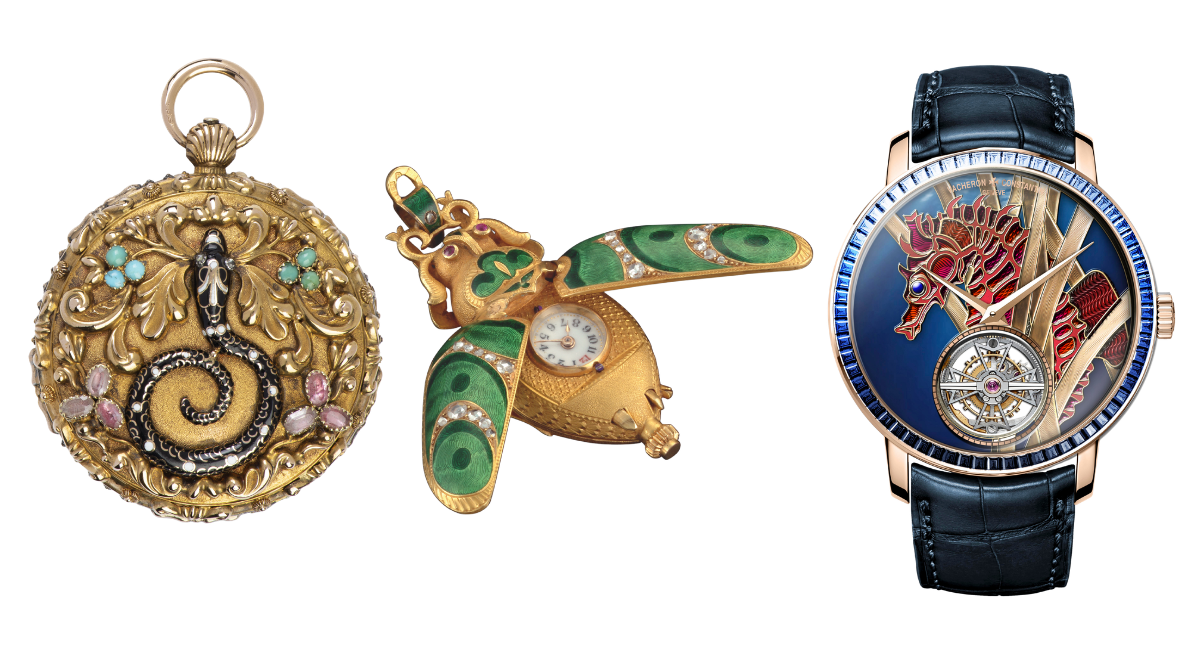
Vacheron Constantin’s historical enamelled serpent pocket watch (circa 1826), scarab pendant (circa 1910), and the unique Les Cabinotiers Tourbillon Joaillerie – Hippocampe (2022)
Métiers d’Art Tribute to the Animal Kingdom continues that lineage through a very different set of materials and collaborators. Vacheron Constantin describes all six as concept watches; the supplied release does not disclose pricing, production quantities or commercial availability.
Vacheron Constantin

You may also like
News
Last Week in Watches: Moser Goes Off-Grid, the Vacheron Constantin Overseas Turns 30
Sep 28, 2026
News
Last Week in Watches: Moser Goes Off-Grid, the Vacheron Constantin Overseas Turns 30
Sep 28, 2026

Editorial
Last Week in Watches: New Releases Ahead of Geneva Watch Days 2026
Aug 31, 2026
Editorial
Last Week in Watches: New Releases Ahead of Geneva Watch Days 2026
Aug 31, 2026
Editorial
Museum Piece
Jul 30, 2026
Editorial
Museum Piece
Jul 30, 2026