A. Lange & Söhne Unveils a Platinum Triple Split and a Pair of 37.5mm 1815 Up/Down
Editorial
A. Lange & Söhne Unveils a Platinum Triple Split and a Pair of 37.5mm 1815 Up/Down

A. Lange & Söhne has chosen this year’s Concours of Elegance at Hampton Court Palace to unveil two models, each arguably in its most attractive form to date. A no-nonsense, dignified hand-wound watch and the simpler of the two by some distance, the 1815 Up/Down returns in a more compact 37.5mm case, offered in white or pink gold in a limited edition of 300 pieces each, with an ink-blue dial and silver subdials, while the Triple Split appears in platinum for the first time with a panda-style dial, limited to 100 pieces.
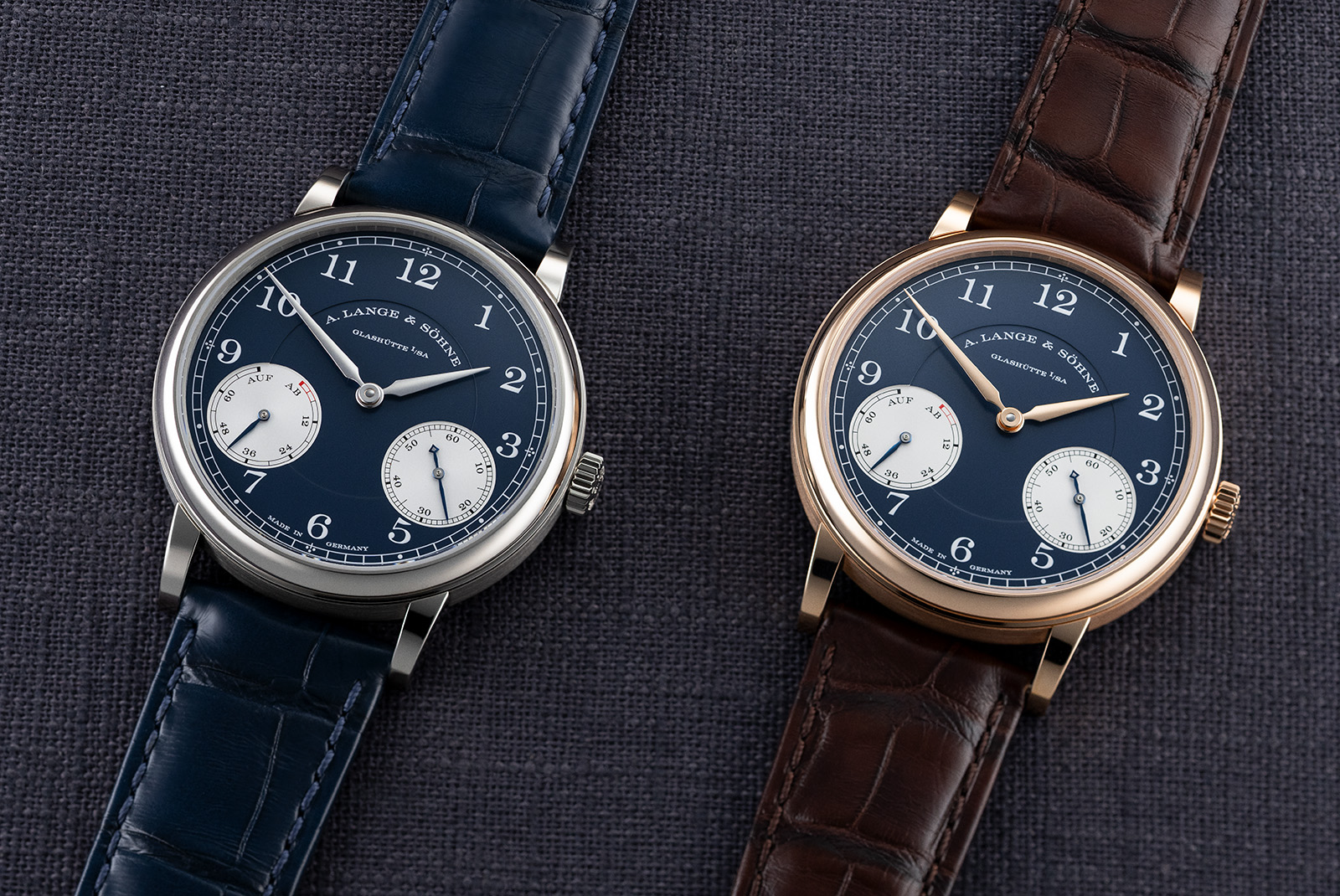
A. Lange & Söhne 1815 Up/Down 37.5mm (Image courtesy of A. Lange & Söhne for Revolution)
Platinum Triple Split
Most watches and complications have a way of eventually finding company, but both the Double and Triple Split have remained genuinely peerless. Introduced in 2018, 14 years after the Double Split, the Triple Split is the only split-seconds chronograph capable of recording intermediate and comparative times for up to 12 hours. The rattrapante mechanism extends beyond the central seconds hands to the minute and hour counters, which means that six chronograph hands must start, split, reunite, stop, reset and restart in perfect coordination. More than that, it is also a flyback, which means that timing can be reset and restarted instantly, even if the hands are held in split.
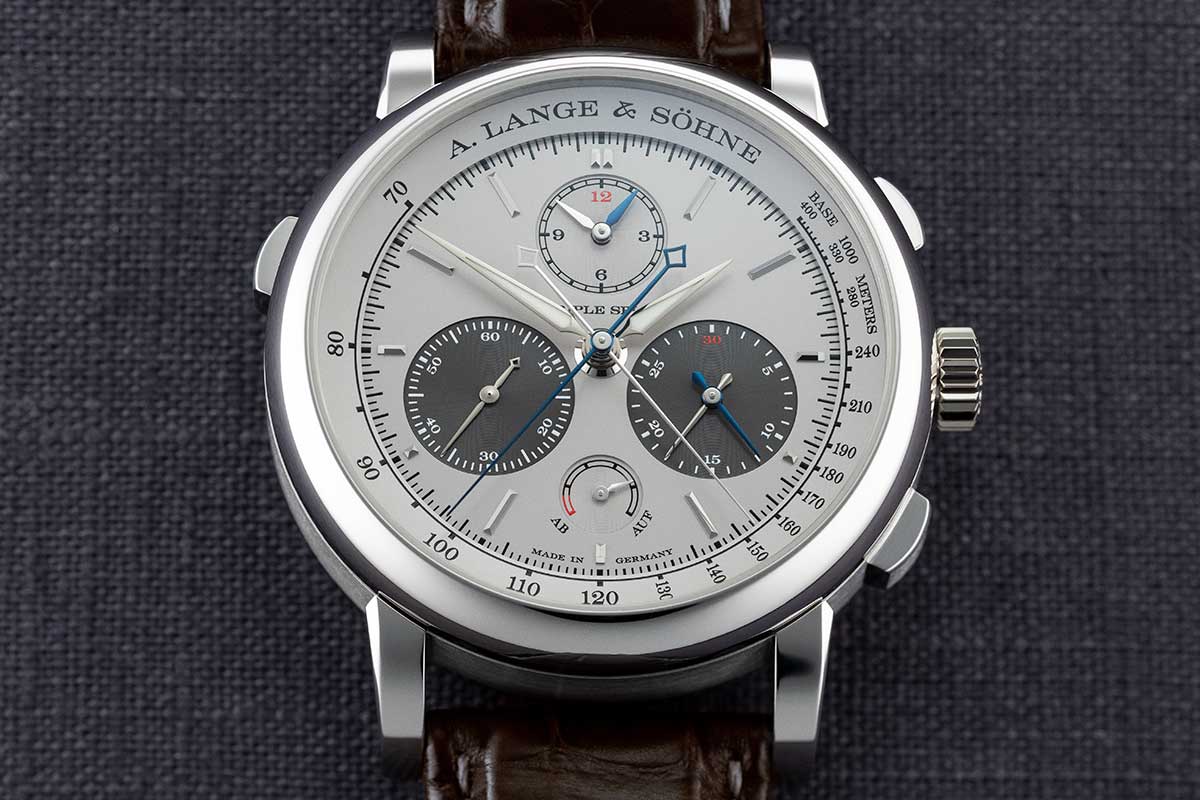
The original version of the watch paired a white gold case with a grey dial and silver registers. It was followed in 2021 by a pink gold edition with a blue dial and rhodium-colored subdials. The new platinum edition reverses the tonal scheme of the original, with a rhodium-colored dial with darker grey registers, and the result is, to my eye, the most compelling version yet.
-
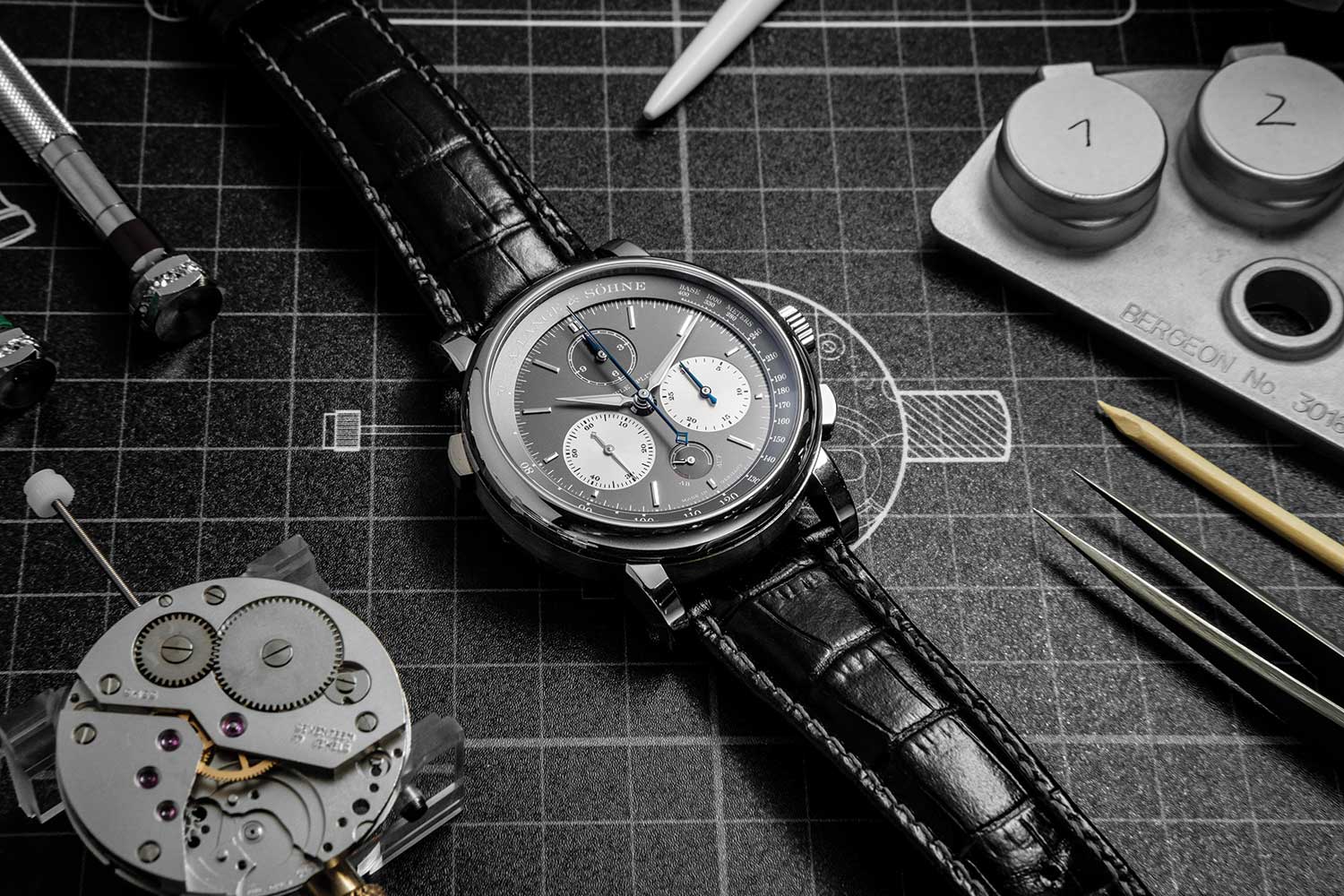
- 2018: A. Lange & Söhne Triple Split in white gold with a grey dial and silver registers (©Revolution)
-
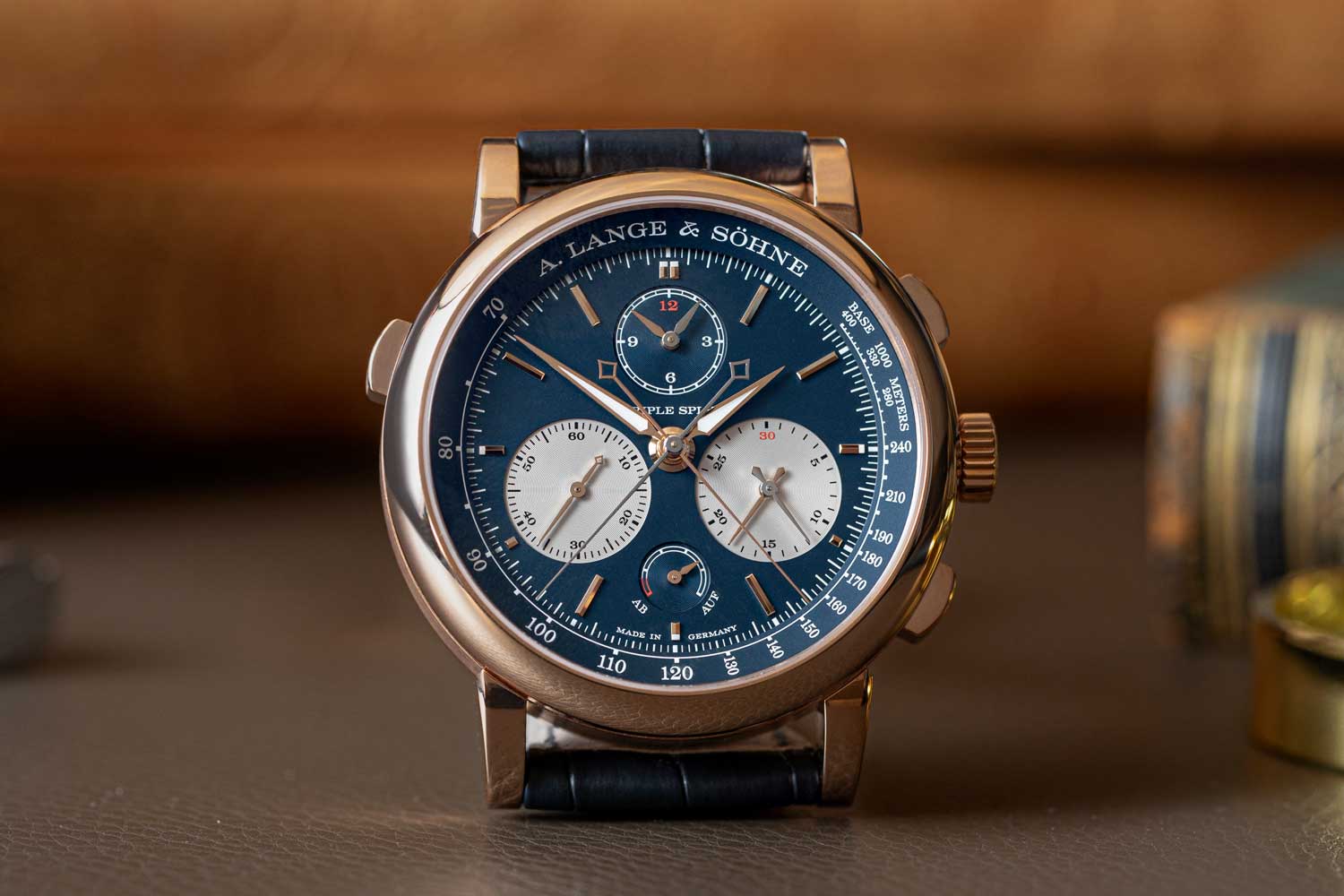
- 2021: A. Lange & Söhne Triple Split in pink gold with a blue dial and rhodié registers (Image: Revolution)
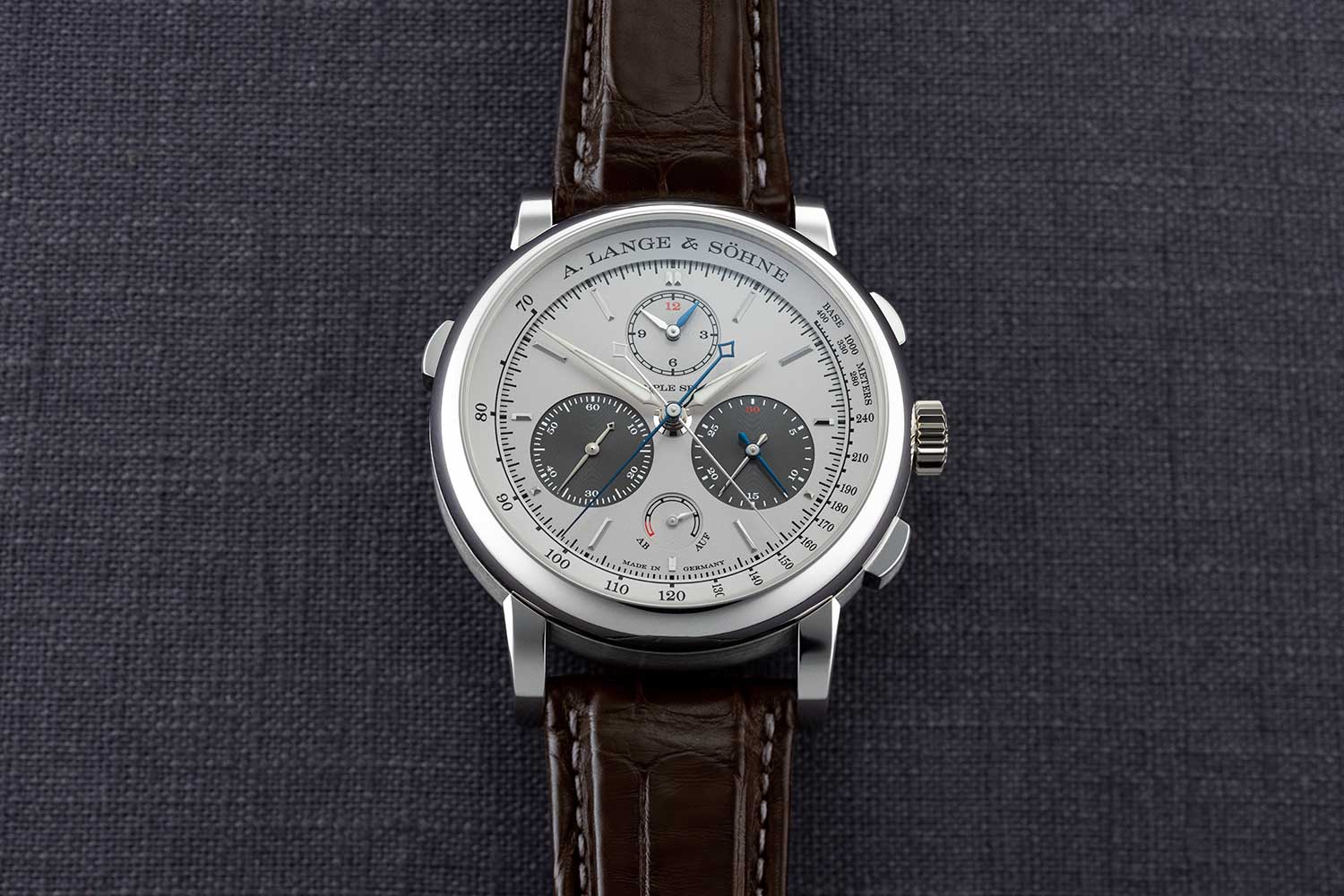
The latest Triple Split in platinum with a panda-style dial (Image courtesy of A. Lange & Söhne for Revolution)
Platinum is arguably the most natural case metal for such an unapologetically complicated watch. The rhodium-coloured solid silver dial is paired with darker grey registers in a restrained yet refreshing take on the traditional panda. The blued rattrapante hands remain readily distinguishable from the rhodiumed chronograph hands, with touches of red confined to the minute and hour counters and the power reserve display.
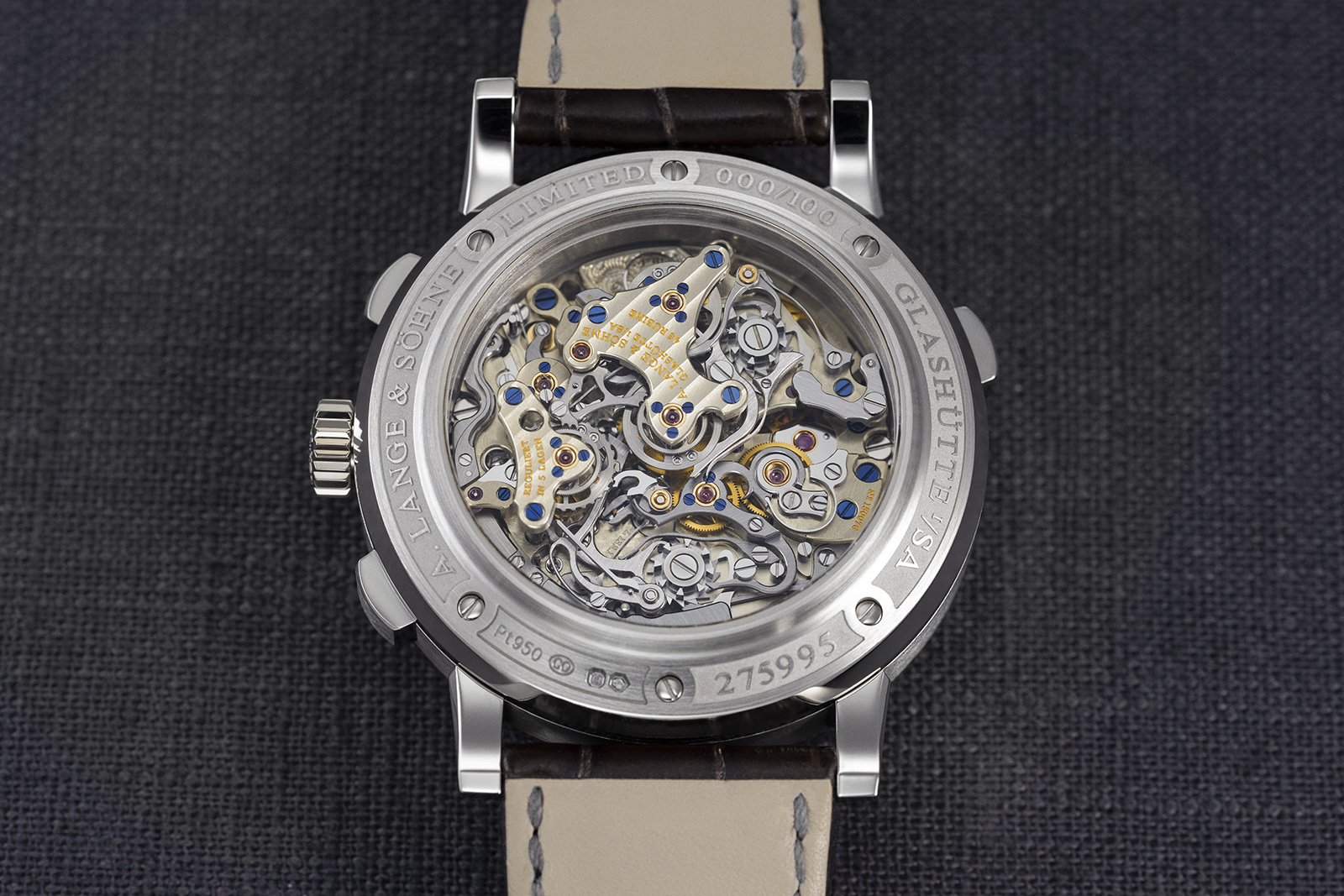
The case remains 43.2mm in diameter and 15.6mm thick, identical to the Double Split, and platinum will add serious weight to a watch that was hardly a lightweight to begin with. Lange watches have always worn their solidity well, and while the dimensions are an honest expression of the machinery inside, the additional heft seems entirely appropriate to a watch of this mechanical ambition. The watch uses the same manually wound Calibre L132.1 as the previous versions, comprising a staggering 567 parts. At its core, the movement must coordinate three rattrapante mechanisms, two isolators, a precisely jumping minute counter and a six-hand flyback.
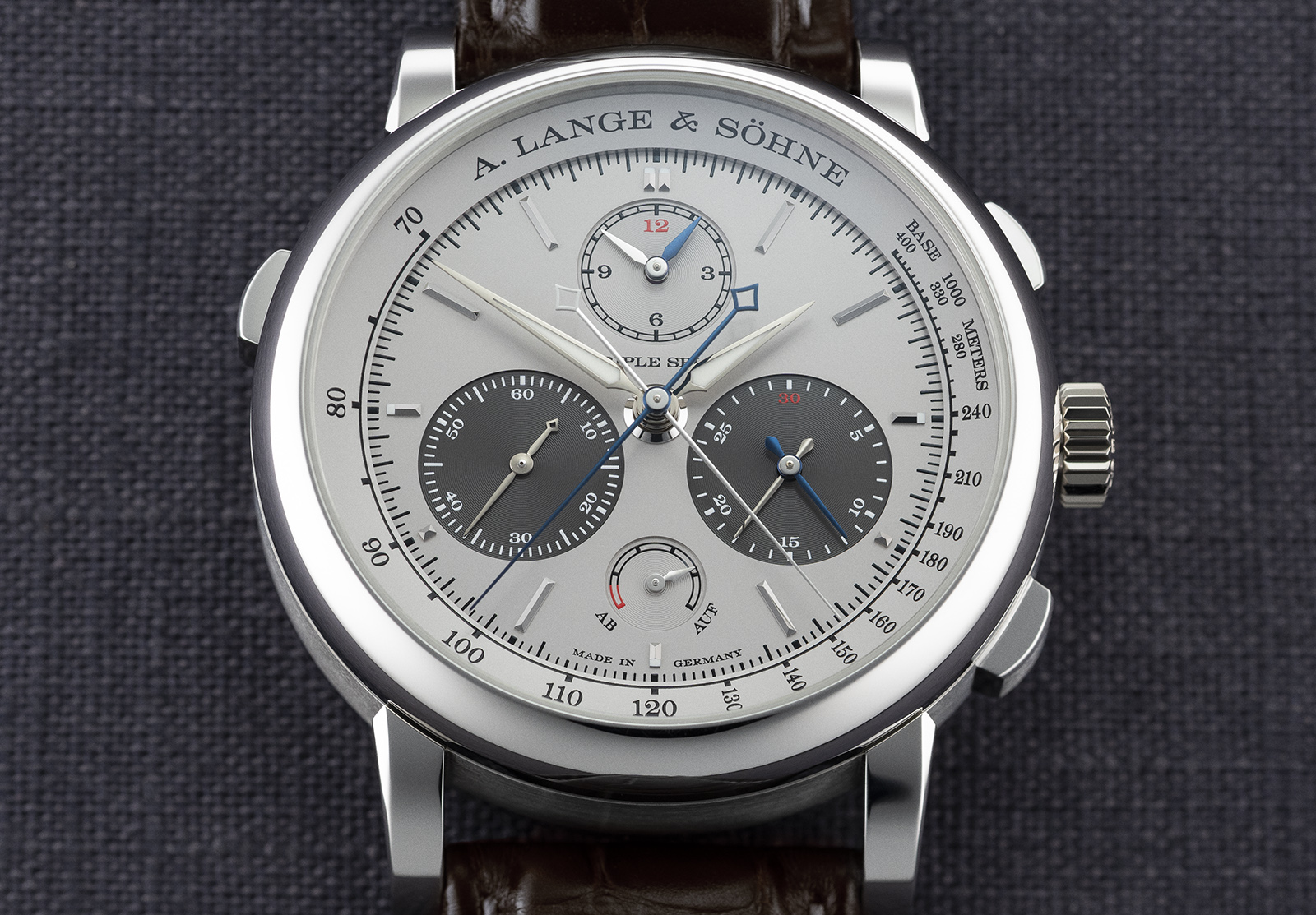
(Image courtesy of A. Lange & Söhne for Revolution)
(Image courtesy of A. Lange & Söhne for Revolution)
Its fundamental construction essentially repeats the same rattrapante setup at three different speeds. At the centre, the split-seconds wheel turns on a hollow arbor concentric with the ordinary chronograph seconds arbor. A drive lever attached to the split wheel is held against a heart cam fixed to the chronograph wheel, which keeps the two wheels, and therefore the two seconds hands, together. The same coaxial arrangement is reproduced in the minute and hour counters, creating three superimposed pairs of hands governed by the rattrapante column wheel.
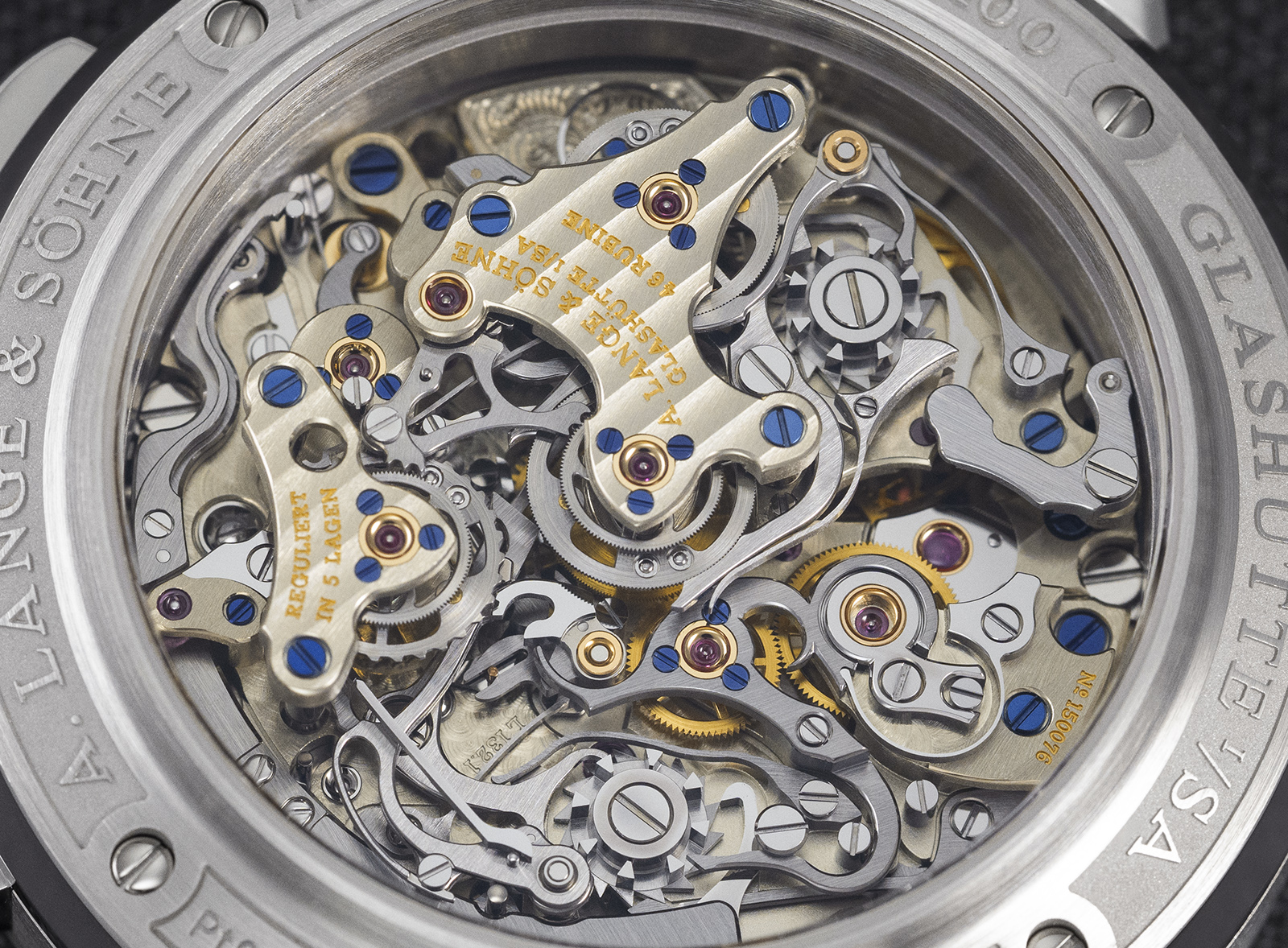
Calibre L132.1 (Image courtesy of A. Lange & Söhne for Revolution)
When the rattrapante pusher is pressed, the three blued split hands stop while the corresponding chronograph hands continue to run. The split-seconds wheel is arrested by conventional clamps, while the split-minute wheel has 30 recesses around its rim into which a spring-loaded catch drops. Since these recesses correspond to the 30 discrete positions of the precisely jumping minute counter, the hand is arrested exactly on a minute indication rather than somewhere between two increments. The hour counter, by contrast, advances continuously and its split wheel is stopped at whichever position it has reached by a separate arresting lever.
At the same instant, isolator wheels lift the drive levers away from the heart cams on the seconds and minute-counter arbors. This completely separates the stopped split wheels from the running chronograph wheels, preventing the friction of the stationary rattrapante mechanisms from drawing energy from the movement. No isolator is required for the hour counter because its arbor turns much more slowly and produces substantially less friction.
A second press of the rattrapante pusher reverses the sequence. The clamps and catch release the split wheels, the isolators allow the drive levers to fall back against their heart cams, and the cams draw the three rattrapante hands into alignment with the still-running chronograph hands. The seconds and minute hands catch up instantaneously, while the hour pair is reunited through the same concentric shaft-and-heart system.
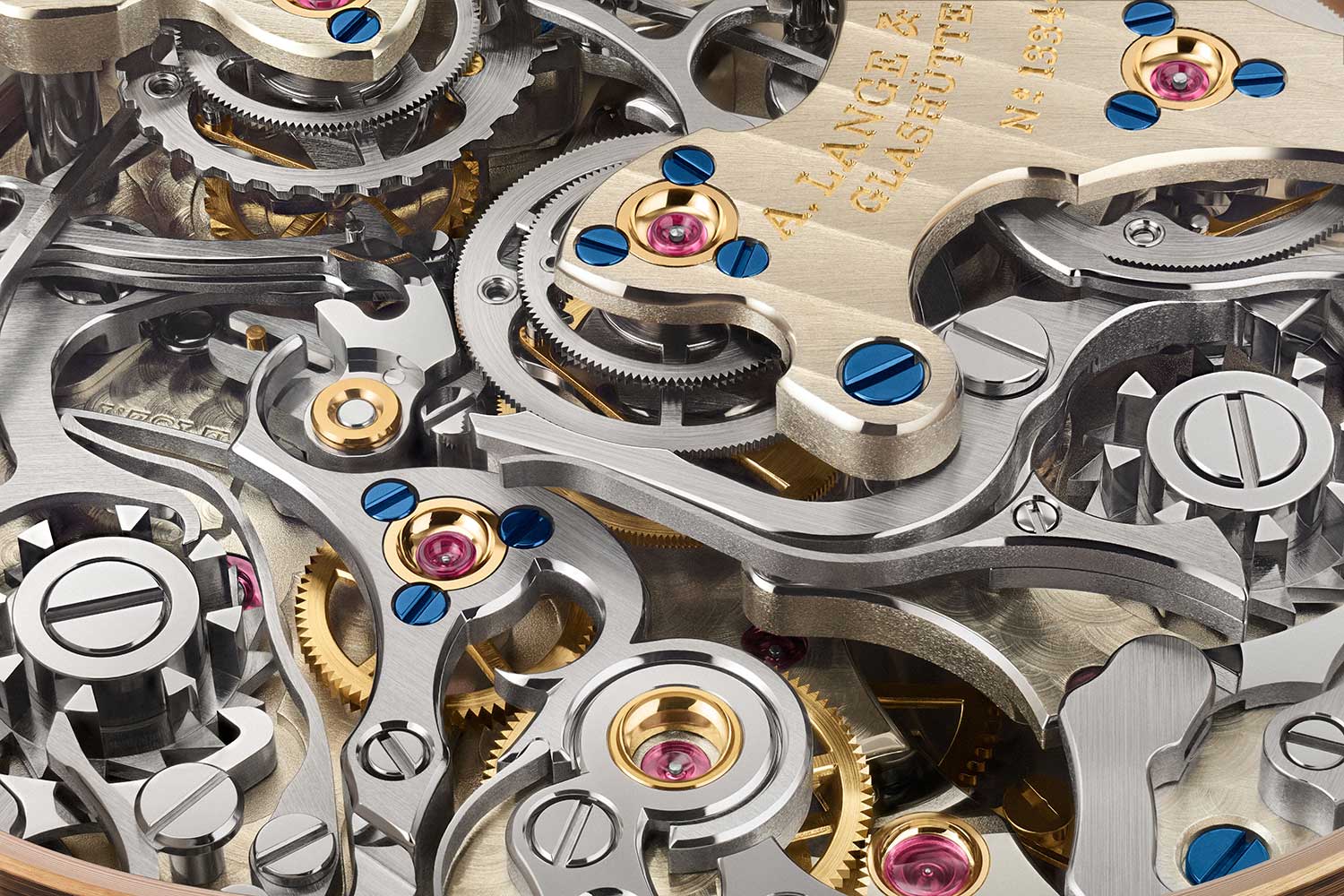
The rattrapante column wheel on the right controls the clamps, isolating and arresting levers acting on the split wheels, while the chronograph column wheel on the left controls the clutch lever. The central stack comprises, from bottom to top, the chronograph seconds wheel, split-seconds wheel and isolator wheel, while the minute-counter stack at upper left comprises the saw-toothed chronograph minute wheel, the split-minute wheel with its 30 arresting recesses and the isolator wheel
The flyback adds considerable complexity because it must operate across all three counters. Pressing the lower pusher returns all currently active chronograph hands to zero, and releasing it immediately starts a new measurement. When all three hand pairs are united and running, all six hands will reset and restart together. Both as a feat of engineering and as an exercise in finishing, the Triple Split is a masterpiece, and the fact that no other manufacture has attempted anything comparable is perhaps the clearest measure of the difficulty involved.
1815 Up/Down
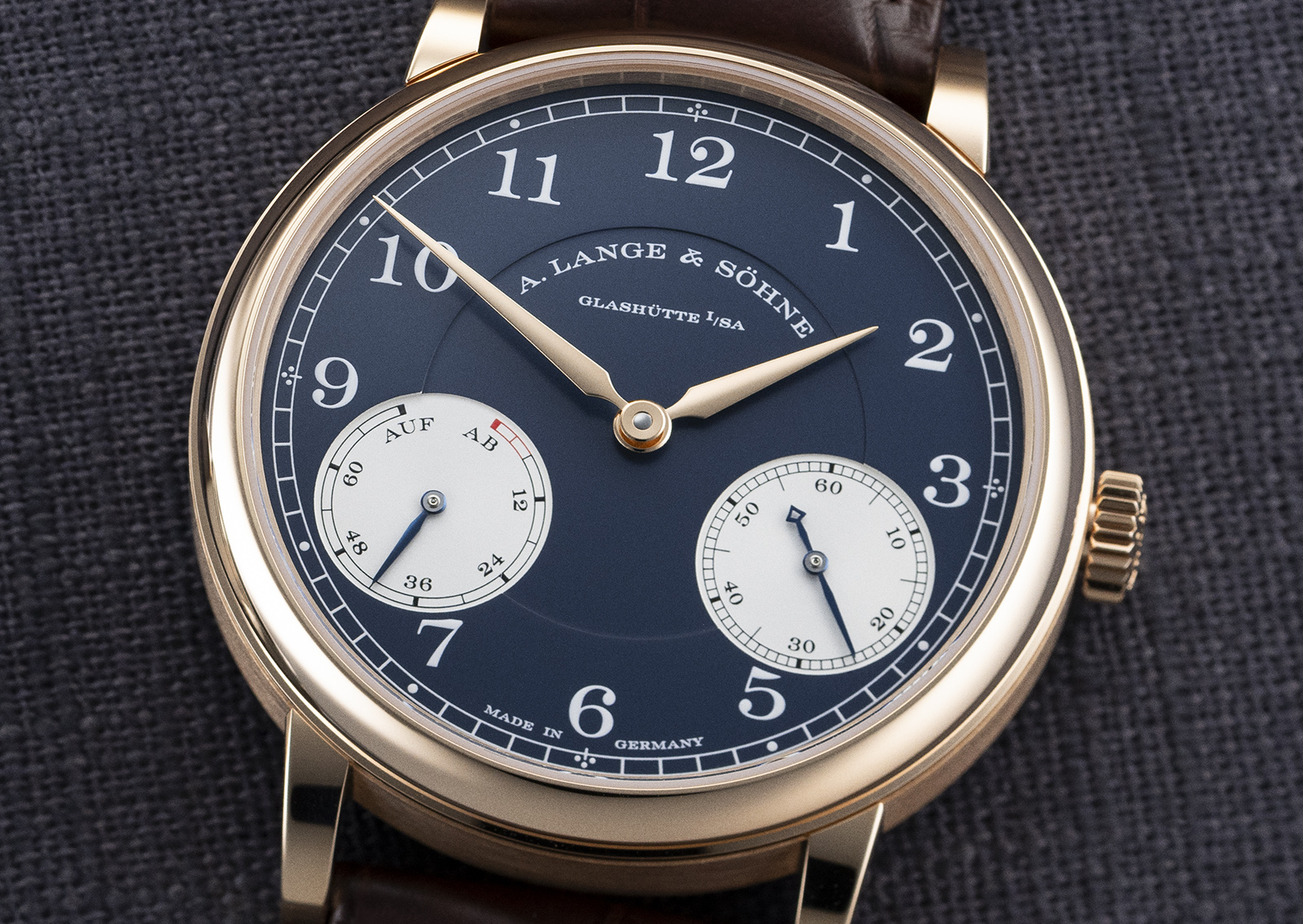
The 1815 Up/Down was first launched in 1997 and does what it says on the tin. At 8 o’clock, a small hand travels between AUF and AB, indicating whether the mainspring is fully wound or approaching exhaustion, while the sub-seconds at 4 o’clock provides a visual counterweight. The display reaches back to a patent granted to A. Lange & Söhne on 18 May 1879, for a power reserve differential, with the hand sweeping almost 300 degrees across roughly 30 hours of running.
The first generation measured 35.9mm in diameter and 7.9mm thick and was powered by the manually wound Calibre L942.1, which offered a 45-hour power reserve. It was initially available in yellow gold and platinum with argenté dials, as well as white gold with a blue dial, and each of the first two could also be had on a matching gold or platinum bracelet, although those versions lasted only until 1998. A pink gold version with an argenté dial joined the range in 2001, the same year the blue-dial white gold was discontinued. The remaining references ran until 2008. In 2006, offered solely through American retailers, the 1815 Up/Down Homage to Walter Lange appeared in all three golds with a larger 37.5mm case and a hinged cover over the caseback engraved with Walter Lange’s signature.
-
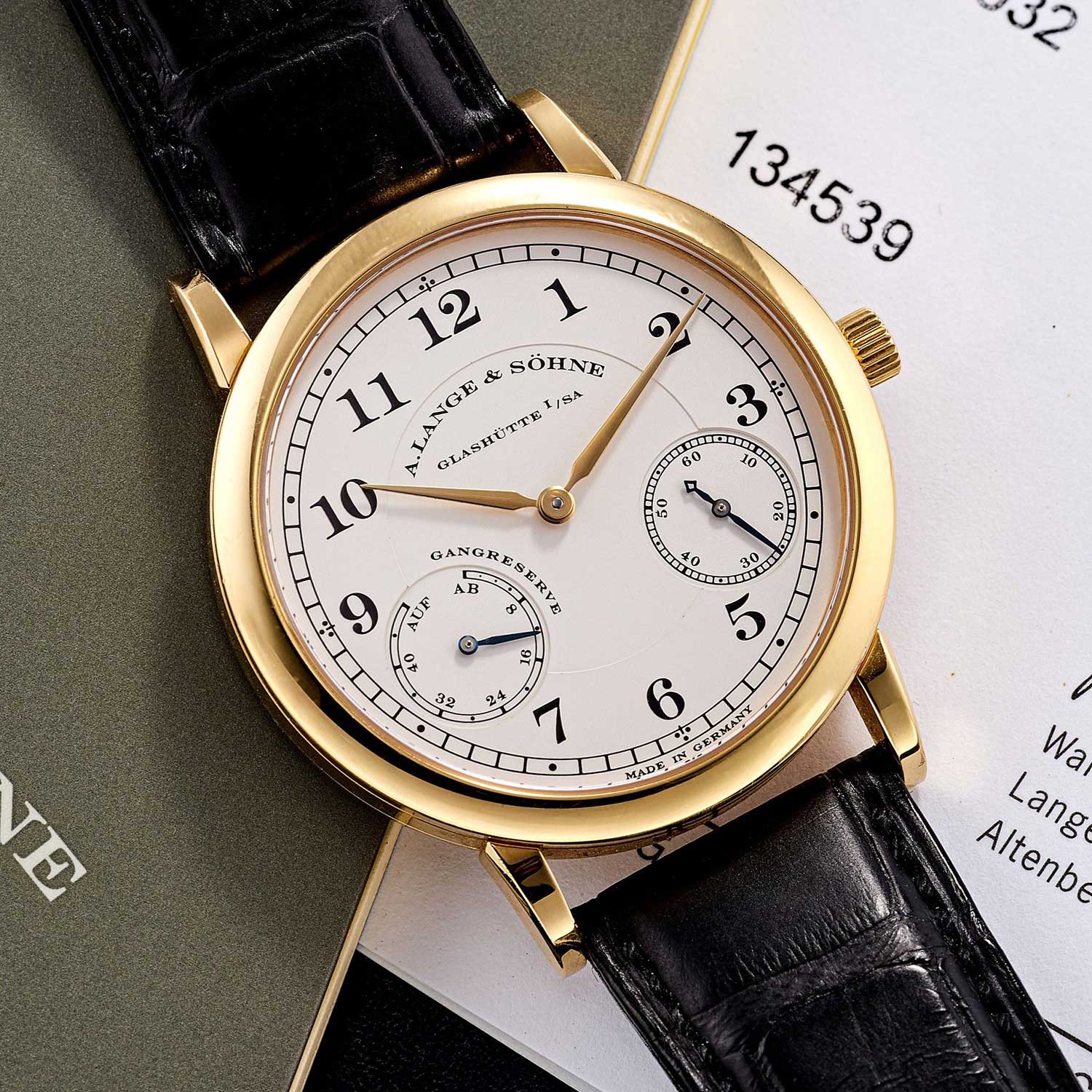
- A. Lange & Söhne 1815 Up/Down, circa 2005 (Image: Bonhams)
-
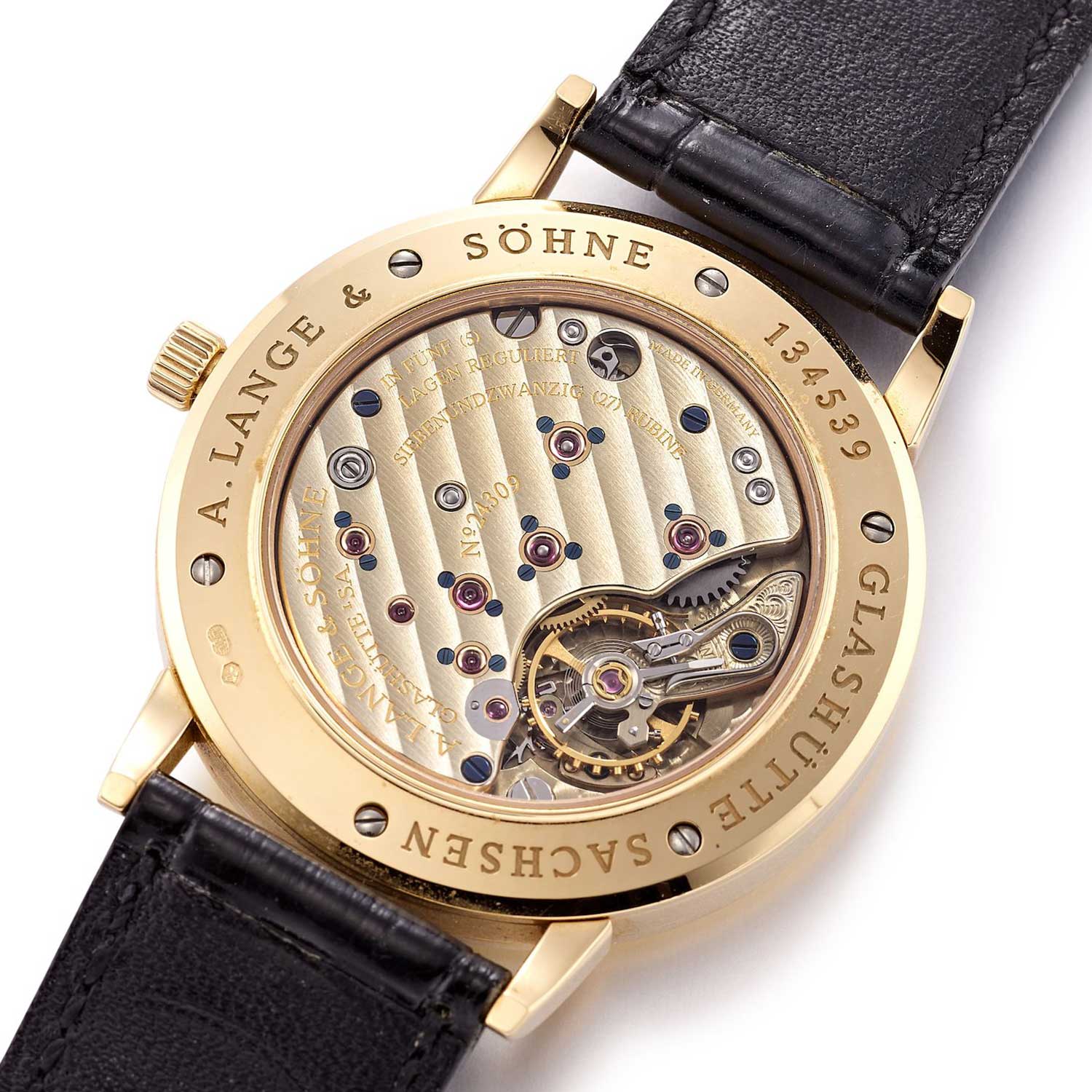
- Calibre L942.1 (Image: Bonhams)
The 1815 Up/Down returned in 2013 in substantially revised form. The case expanded to 39mm while remaining a slim 8.7mm thick, and the new Calibre L051.2 extended the power reserve to 72 hours. The regular collection comprised yellow, pink and white gold models with argenté dials, although the yellow gold version was later discontinued, leaving pink and white gold as the core references. Along the way, three retailer editions followed.
The new model is available in white or pink gold, both with solid-silver dials in ink blue and contrasting silver subdials. The central hour and minute hands match the respective case metal, while the power reserve and sub-seconds hands are blued steel. More significantly, the case has been reduced from 39mm to 37.5mm while retaining the same 8.7mm thickness and Calibre L051.2. The previous watch was hardly oversized, but the reduction feels just right, restoring some of the delicacy of the original without sacrificing the technical improvements and practicality of the second generation. The subdials sit ever so slightly further apart, but overall, the layout has been rescaled with care.
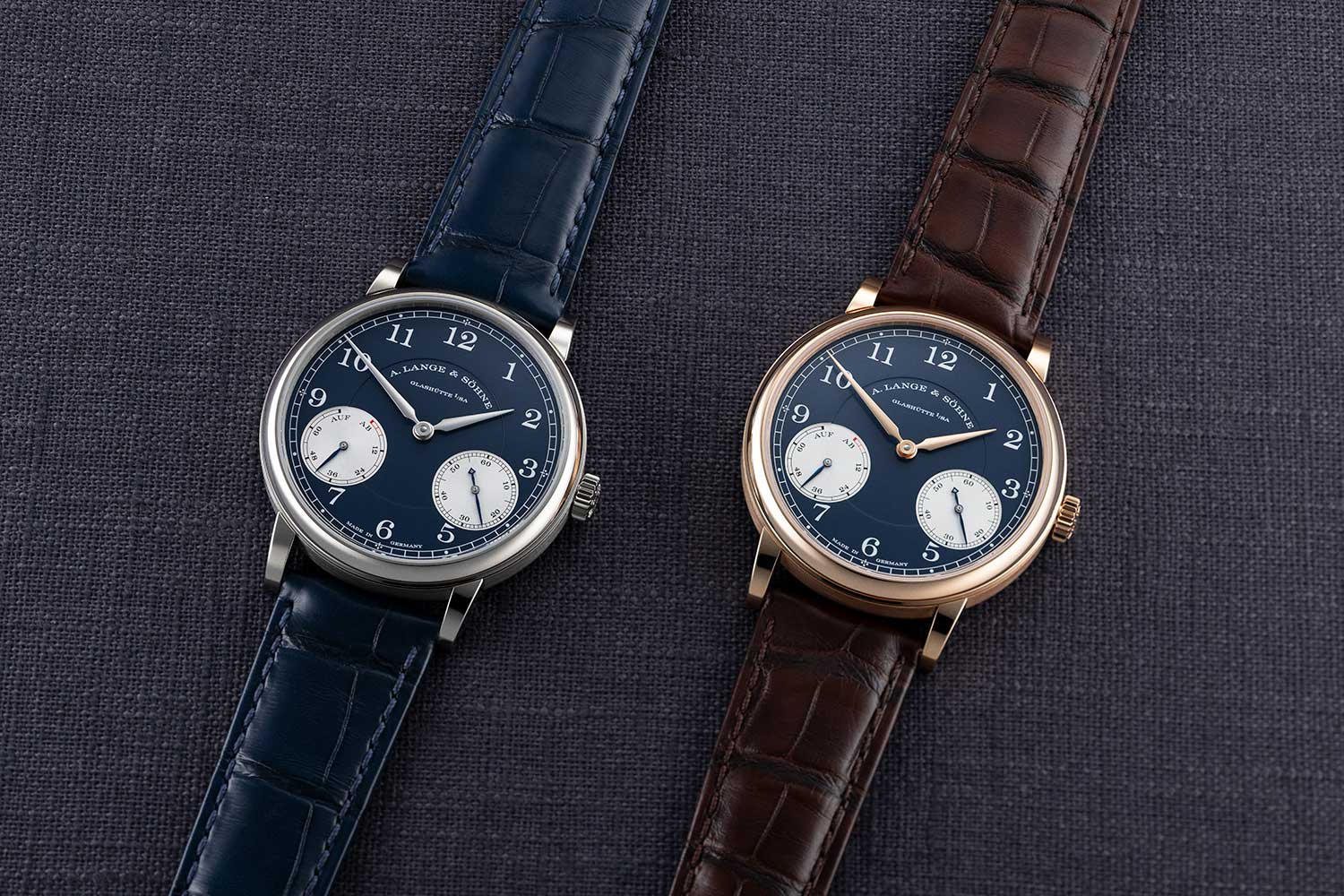
A. Lange & Söhne 1815 Up/Down (Image courtesy of A. Lange & Söhne for Revolution)
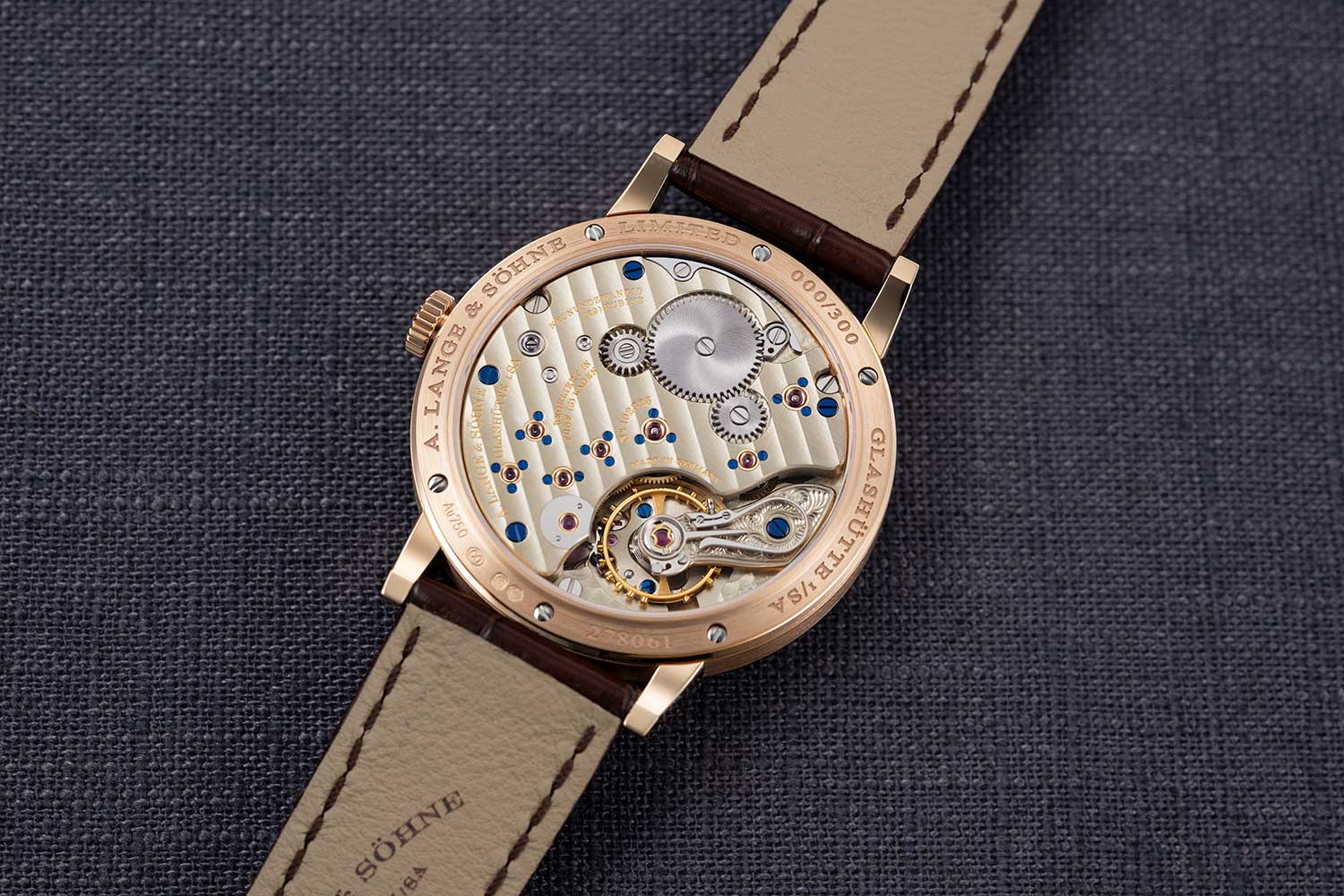
A. Lange & Söhne 1815 Up/Down (Image courtesy of A. Lange & Söhne for Revolution)
Blue with silver subdials is not entirely new to the 1815 Up/Down. A pair of Wempe editions in white and pink gold were produced in 2019, each limited to 25 pieces and fitted with blue dials and rhodium-coloured subdials. The new watches, however, bring the combination to a smaller case. They are also, it must be said, exceptionally handsome and unusually sporty for an 1815, while somehow preserving its customary formality.
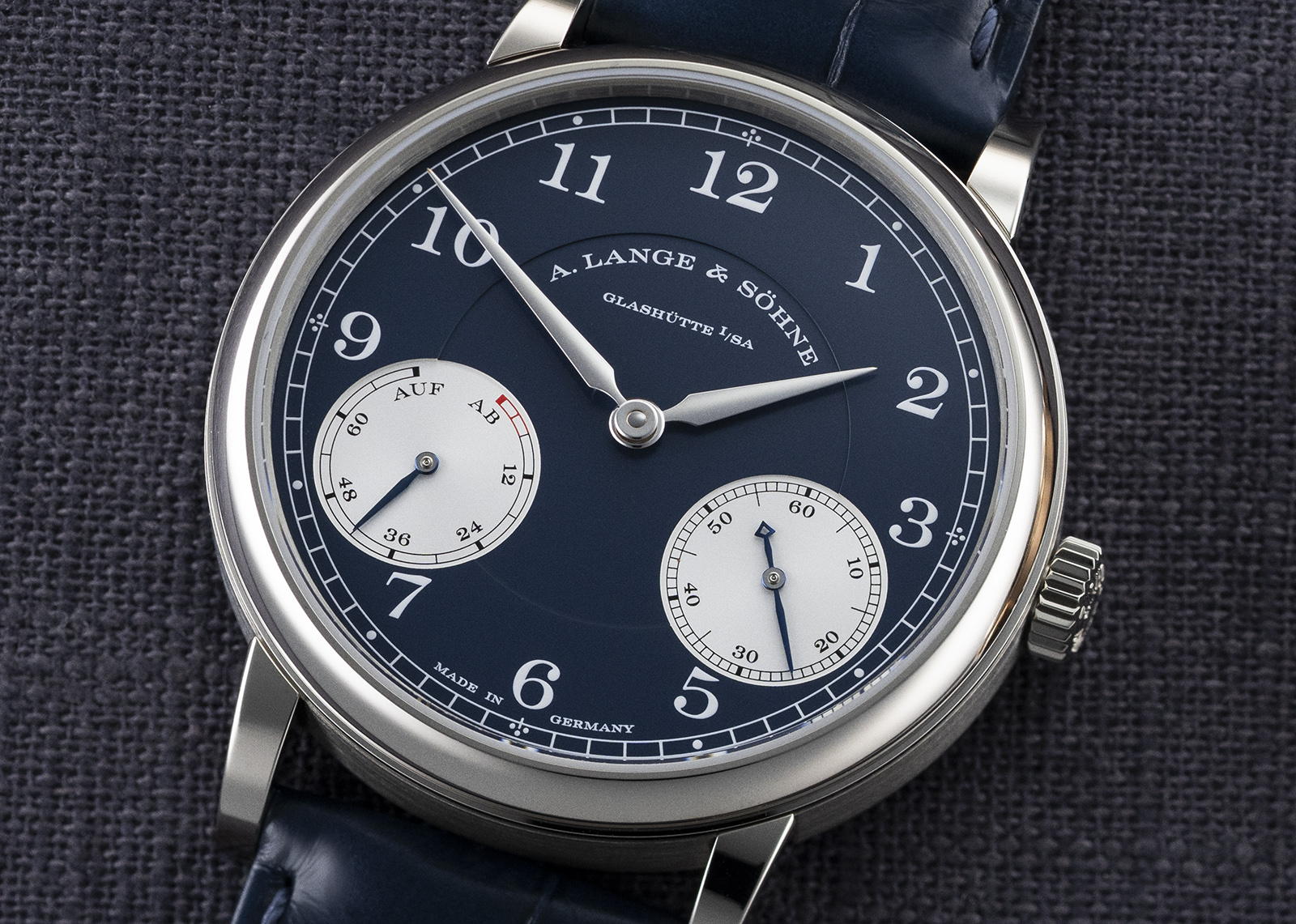
(Image courtesy of A. Lange & Söhne for Revolution)
(Image courtesy of A. Lange & Söhne for Revolution)
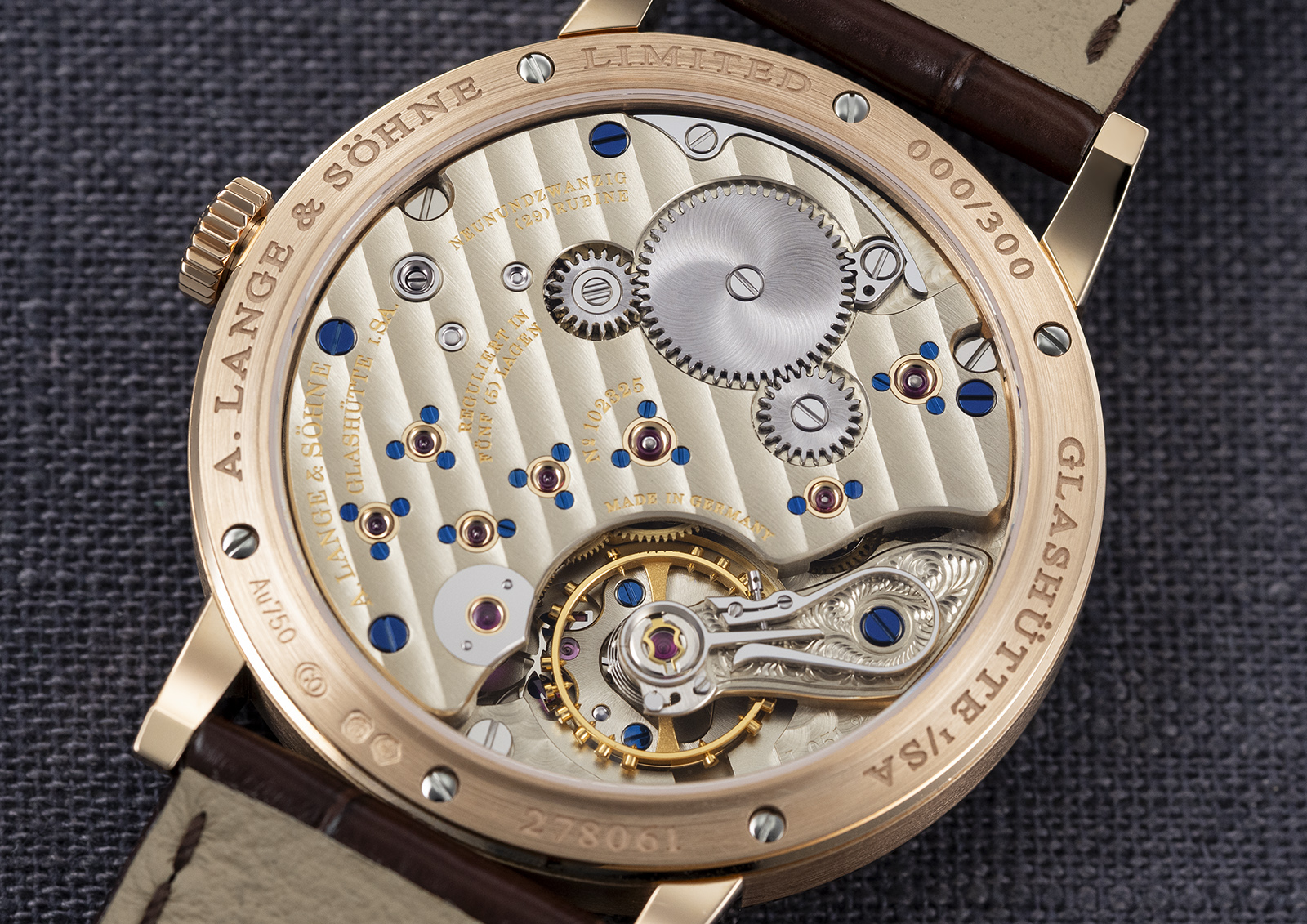
The power reserve mechanism uses a compact planetary differential used to translate the changing state of wind into the motion of the hand. The Calibre L051.2 also has a stop-seconds function and is equipped with a hairspring made in-house at the brand’s manufacture in Glashütte. For all that it is a simple, solid movement, it has all the theatre of traditional German watchmaking, including a three-quarter plate in untreated German silver, an abundance of gold chatons thanks to the indirect sub-seconds and power reserve trains, blued screws and a hand-engraved balance cock. The exposed winding wheels, polished click spring as well as the black-polished steel cap that retains the cap jewel on the escape wheel pivot give the otherwise broad three-quarter plate a little more visual activity.
(Image courtesy of A. Lange & Söhne for Revolution)
Tech Specs: A. Lange & Söhne Triple Split
Movement A. Lange & Söhne calibre L132.1, manually wound, 55-hour power reserve; 3Hz (21,600 vph)
Functions Hours, minutes and subsidiary seconds with stop seconds; flyback chronograph with triple rattrapante for intermediate and additive timing from one-sixth of a second to 12 hours; precisely jumping minute counters; continuous hour counters; tachymeter scale; Up/Down power-reserve indicator
Case 43.2mm x 15.6mm, platinum
Dial Rhodié-coloured silver with grey subsidiary dials
Strap Hand-stitched dark-brown alligator leather with grey stitching; platinum quick-release deployant buckle
Availability Limited to 100 examples
Price Upon request
Tech Specs: A. Lange & Söhne 1815 Up/Down
Movement A. Lange & Söhne calibre L051.2, manually wound, 72-hour power reserve; 3Hz (21,600 vph)
Functions Hours, minutes and subsidiary seconds with stop seconds; Up/Down power-reserve indicator
Case 37.5mm x 8.7mm, pink gold or white gold
Dial Blue silver with argenté-coloured subsidiary dials
Strap Hand-stitched reddish-brown alligator leather with pink gold pin buckle, or blue alligator leather with white gold pin buckle
Availability Limited to 300 examples in each metal
Price Upon request
A. Lange & Söhne

You may also like
Events
A. Lange & Söhne Brings Challenging Chronographs to Singapore
Oct 13, 2026
Events
A. Lange & Söhne Brings Challenging Chronographs to Singapore
Oct 13, 2026
News
A. Lange & Söhne Unveils the Cabaret Tourbillon Honeygold
May 16, 2026
News
A. Lange & Söhne Unveils the Cabaret Tourbillon Honeygold
May 16, 2026
Reviews
A Closer Look: A. Lange & Söhne Lange 1 Tourbillon Perpetual Calendar “Lumen”
May 7, 2026
Reviews
A Closer Look: A. Lange & Söhne Lange 1 Tourbillon Perpetual Calendar “Lumen”
May 7, 2026