A Closer Look: Vacheron Constantin Overseas Perpetual Calendar Ultra-Thin “30th Anniversary”
Editorial
A Closer Look: Vacheron Constantin Overseas Perpetual Calendar Ultra-Thin “30th Anniversary”

Integrated-bracelet sports watches are now more than half a century old. As watches have grown bulkier over the years, one of the defining qualities of a true luxury sports watch may have been forgotten by both watchmakers and collectors: the wonderful contrast between a wide, majestic case and an ultra-thin profile.
One brand, and one model in particular, has held on to this quality: the Vacheron Constantin Overseas Perpetual Calendar. Compared to the time-only model and other complications in the collection, the Perpetual Calendar feels closer to the spirit of the 1970s, with its wide case and surprisingly slender profile, for reasons we shall discuss below.
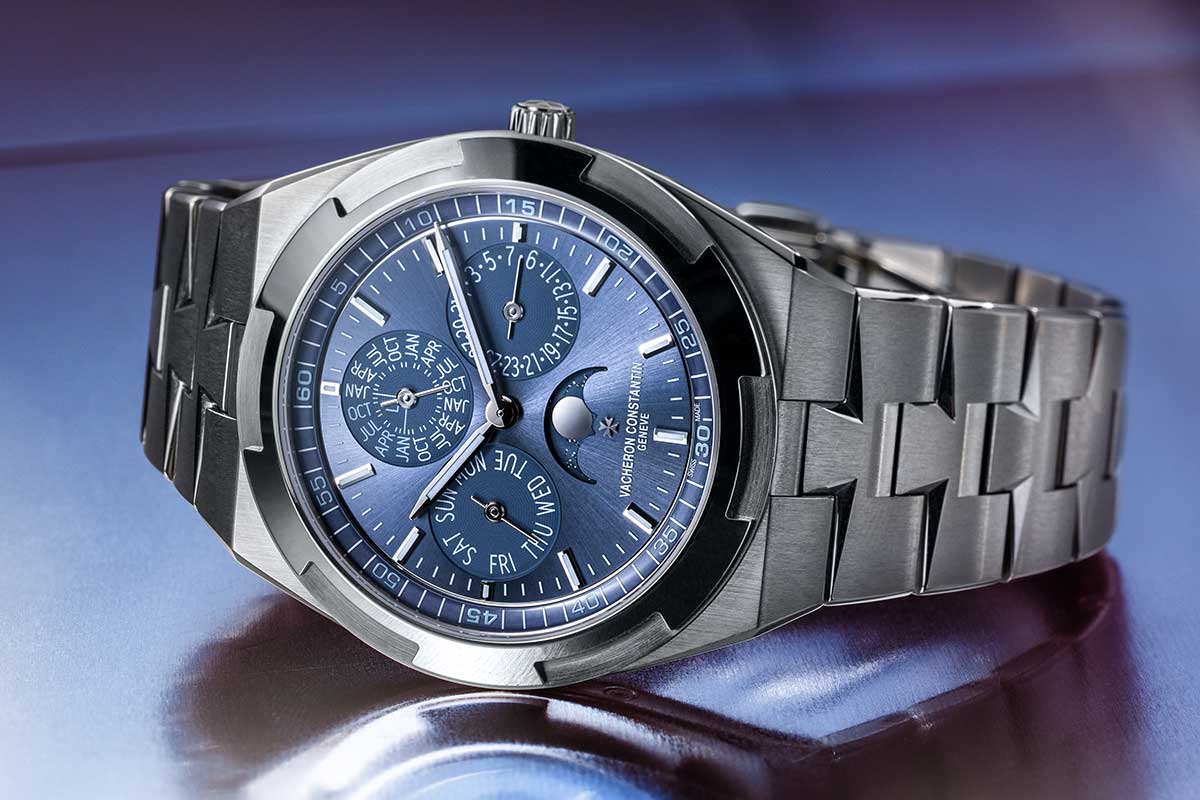
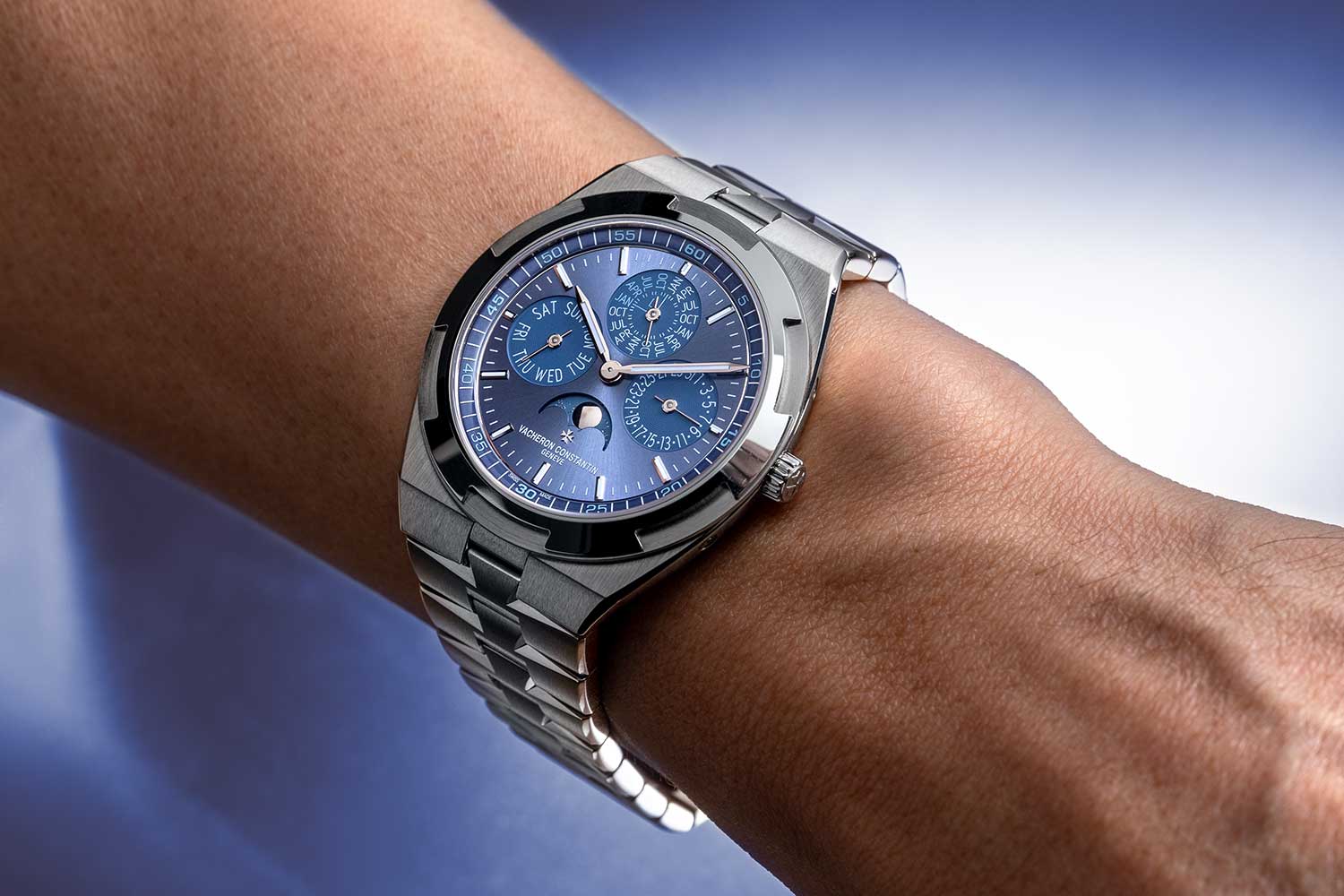
This year, for the 30th anniversary of the Overseas, Vacheron Constantin has chosen the Perpetual Calendar Ultra-Thin for a special edition. Limited to 200 pieces, the watch returns in the exact same colour as the original Overseas from 1996: an electric azure blue, lighter than the sunburst blues commonly seen today, with a distinctly 1990s feel.
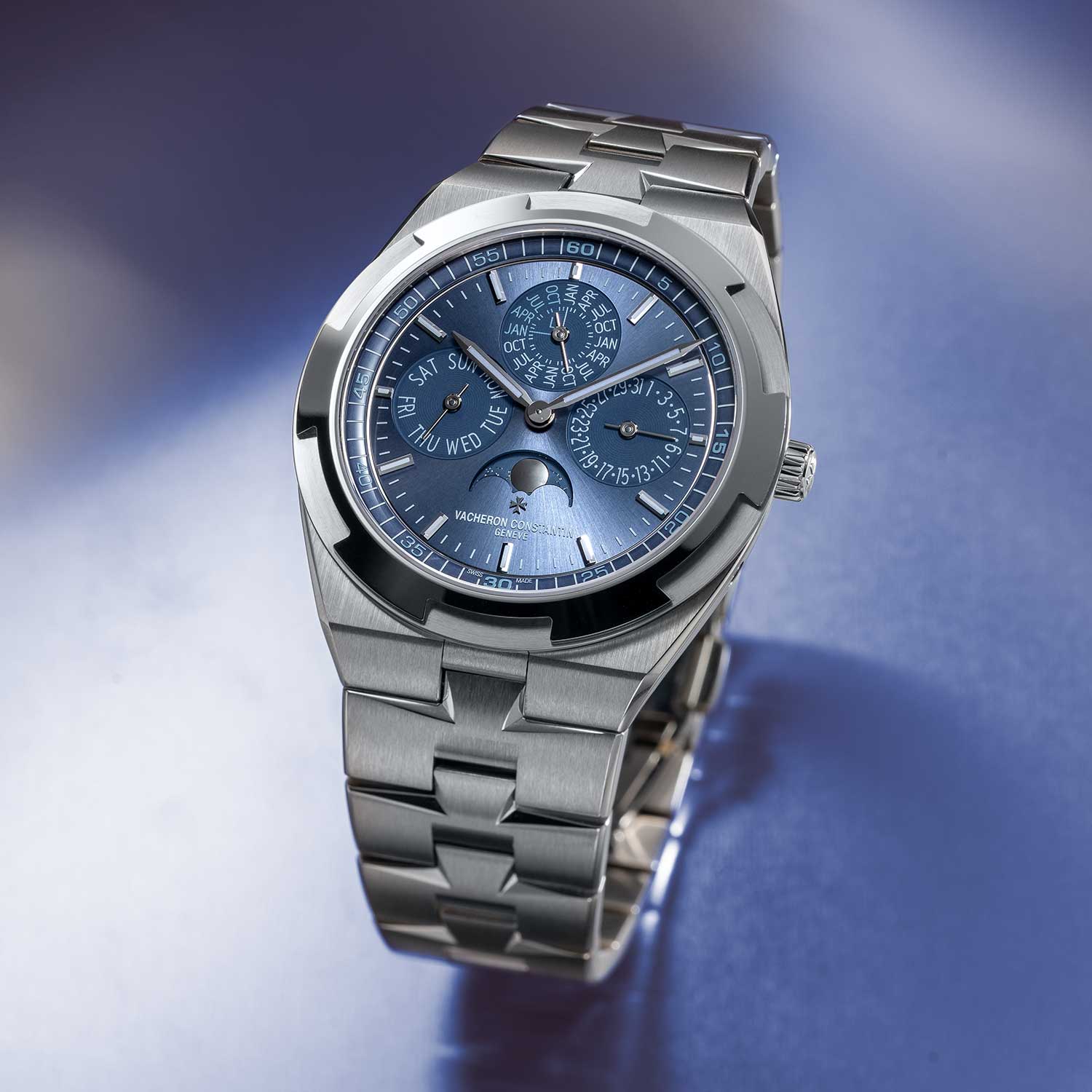
Vacheron Constantin Overseas Perpetual Calendar Ultra-Thin Azure Dial (©Revolution)
30 years of Overseas
As a member of the so-called “Holy Trinity” of watchmaking, alongside Audemars Piguet and Patek Philippe, Vacheron Constantin is something of an unconventional player when it comes to luxury sports watches. This goes some way towards explaining why the Overseas is celebrating only its 30th anniversary, despite the brand having entered the luxury sports watch genre back in the 1970s.
Rather than approaching Gérald Genta, who had already designed the Royal Oak Ref. 5402, launched in 1972, and the Nautilus Ref. 3700, launched in 1976, Vacheron Constantin turned to a young designer, Jörg Hysek, to create the 222 in 1977. The watch was named after the year, which marked the brand’s 222nd anniversary.

(From left) 1977 Vacheron Constantin 222 “Jumbo” and Vacheron Constantin Historiques 222
The 222 is a decidedly old-school watch, and all the better for it. Perhaps because of this, it received a complete redesign in the 1990s by Dino Modolo and was relaunched as the Overseas collection in 1996. Now in its third generation, the Overseas looks quite different from the original, but remains recognisable thanks to its Maltese cross-inspired bezel.

The Historiques 222, an 18K yellow gold re-edition
The first Overseas, the Ref. 42040, was launched with a sunburst blue dial that may have seemed simple and elegant at the time. Looking back today, however, the colour feels rather unusual, and all the more striking for it. This is partly a reflection of how market tastes and colour palettes among dial makers have evolved over the years (as an aside, I recently bought a new example of a watch I first owned 20 years ago, only to find that the blue dial was completely different). That light, almost purplish blue is now rarely seen, with deeper, richer blues having become more fashionable.
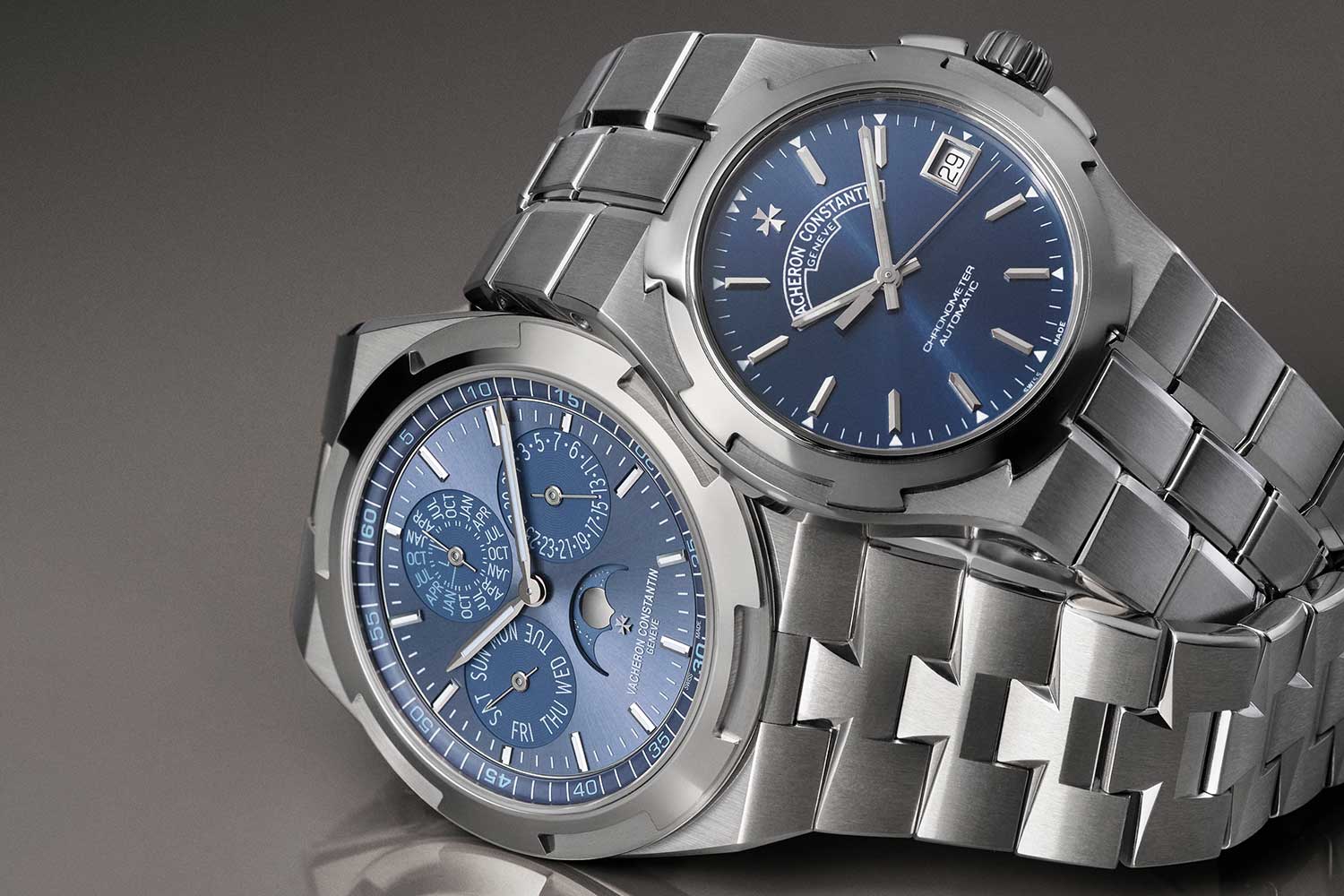
Vacheron Constantin first Overseas Ref. 42040 (top) and Overseas Perpetual Calendar Ultra-Thin Azure Dial (©Revolution)
Vacheron Constantin has taken note and brought the colour back for the Overseas’ 30th anniversary, this time on the Perpetual Calendar. The collection also has a dark blue version, introduced a few years ago, and the contrast between the two makes the new (or rather, old) shade all the more apparent. The azure blue is so light that it almost blends with the white gold case and bracelet, creating an almost tone-on-tone effect.
Vacheron Constantin Overseas Perpetual Calendar Ultra-Thin Azure Dial (©Revolution)
Old-school perpetual calendar
The Overseas Perpetual Calendar wears beautifully, largely because of its ultra-thin profile. I remember trying on both the Historiques 222 and the Perpetual Calendar Ultra-Thin when the former was relaunched at Watches & Wonders 2022. I was immediately struck by how wide and thin the Perpetual Calendar was. It had a wonderful presence on the wrist.
Vacheron Constantin Overseas Perpetual Calendar Ultra-Thin Azure Dial (©Revolution)
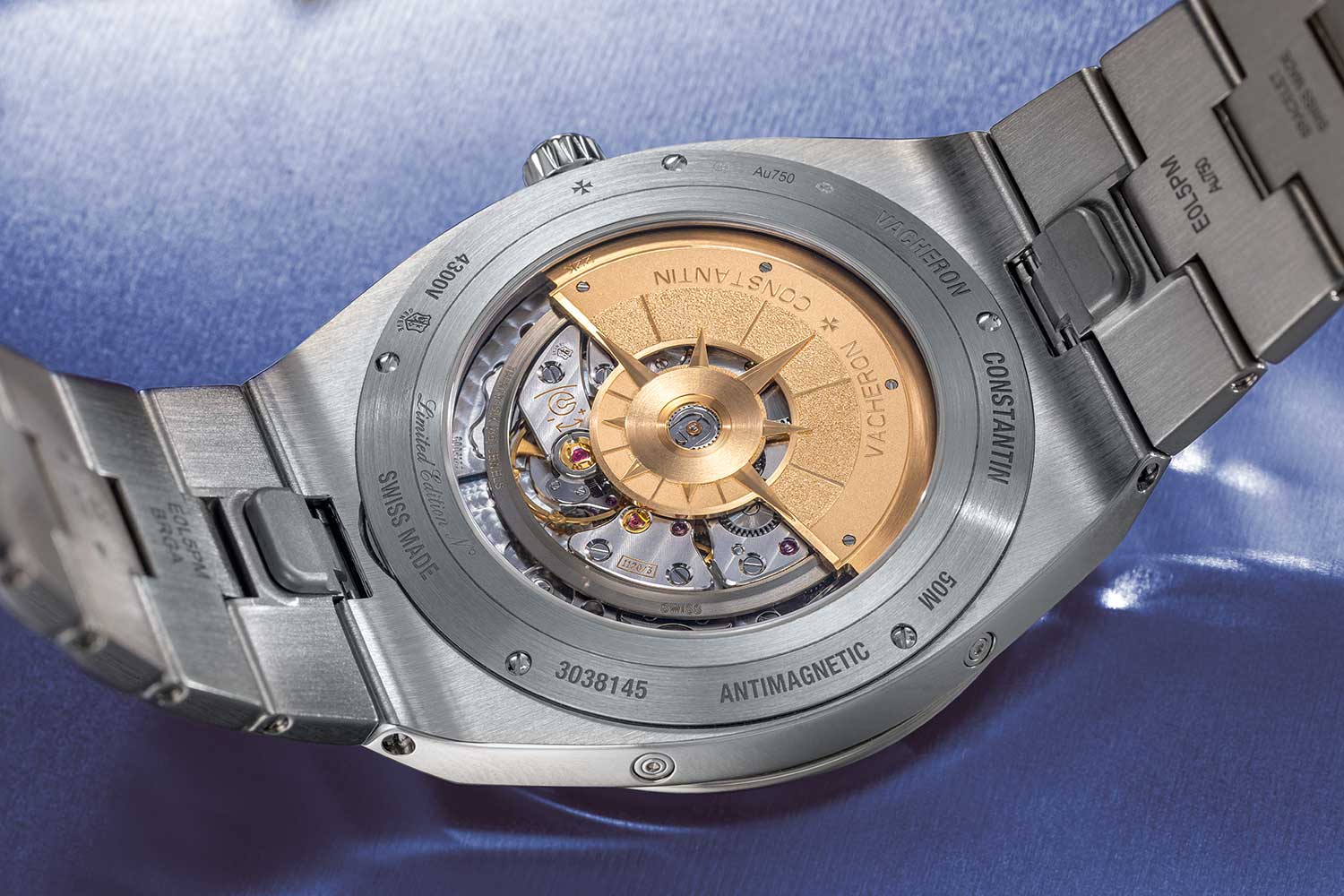
The reason lies in the movement within. The Perpetual Calendar is something of a living fossil, powered by the Calibre 1120, which is based on Jaeger-LeCoultre’s Calibre 920. Interestingly, Jaeger-LeCoultre never used the movement in its own watches, but it found its way into some of the thinnest and most celebrated sports watches of the era, including the Patek Philippe Nautilus Ref. 3700 and Audemars Piguet Royal Oak Ref. 5402. The Overseas Perpetual Calendar is one of the few watches still on the market to use this half-century-old base calibre, which is part of its appeal.
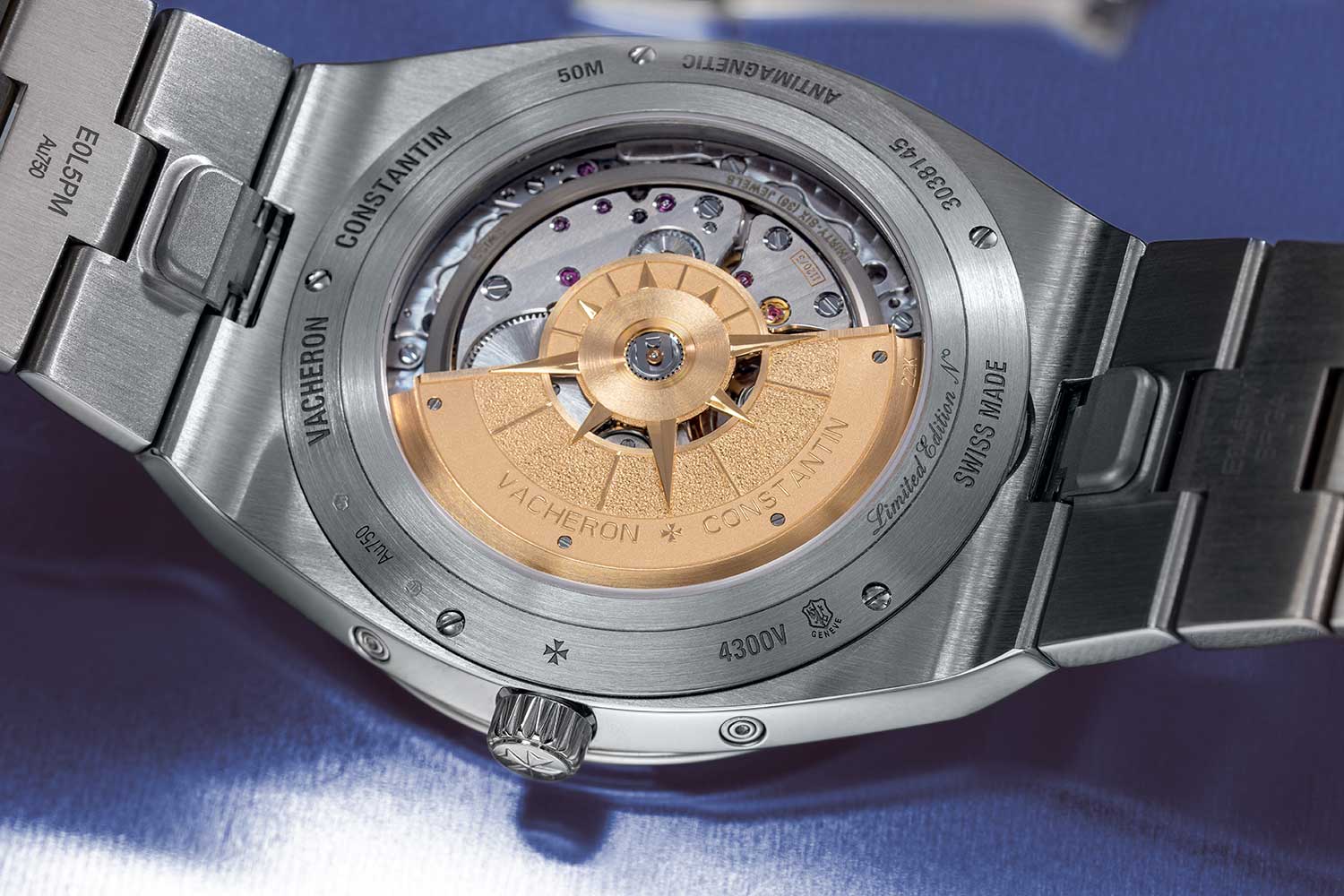
Vacheron Constantin Overseas Perpetual Calendar Ultra-Thin Azure Dial (©Revolution)
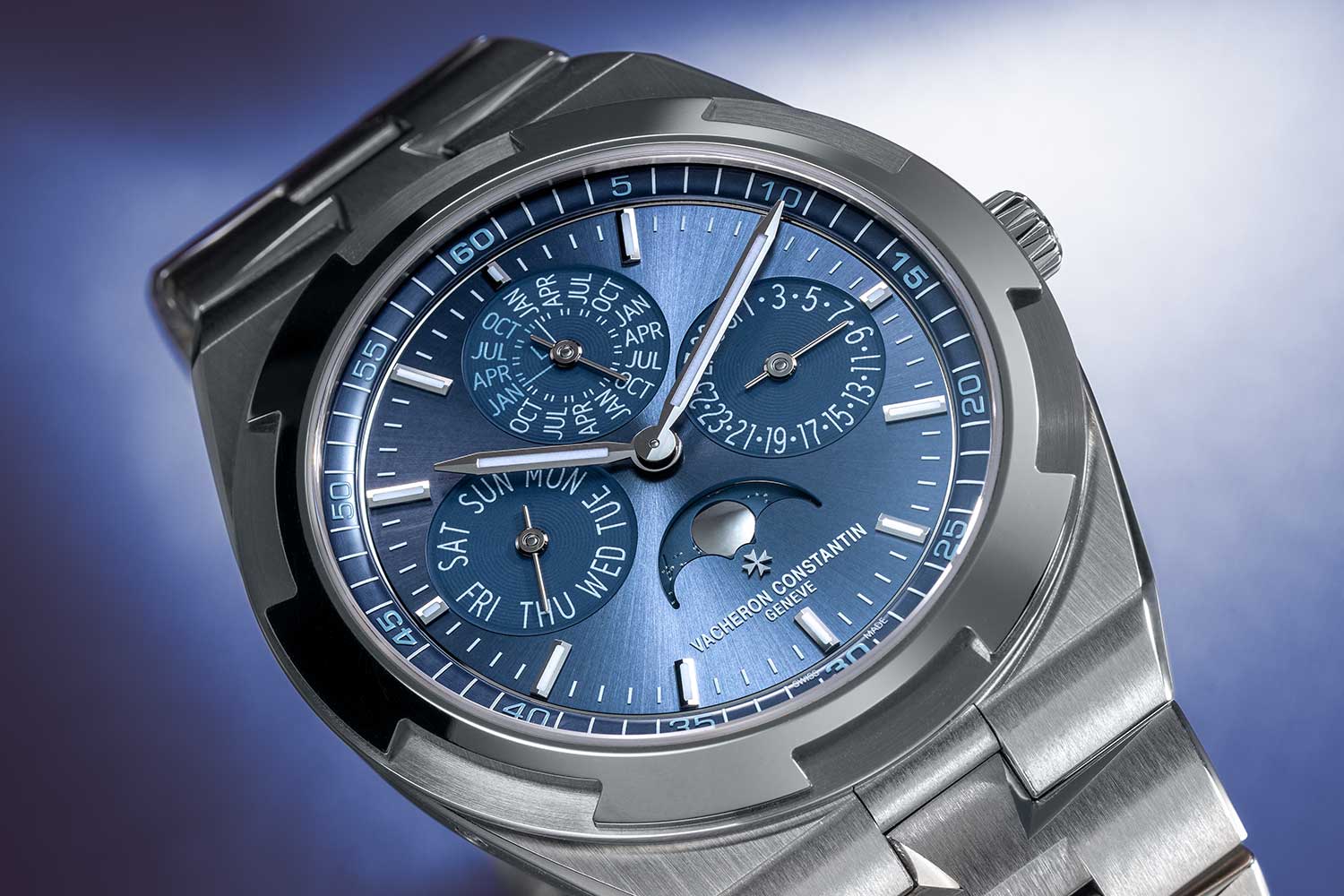
The old-school approach extends to the perpetual calendar module itself. The first thing to notice is the four-subdial layout, but the real highlight is the month display at 12 o’clock. Rather than the usual 12-month indication, it has a 48-month display, divided into four quarters of 12 months each. The blue quarter at the top left indicates the leap year. In other words, the display combines the month and leap year indications, with the hand completing just one rotation every four years.
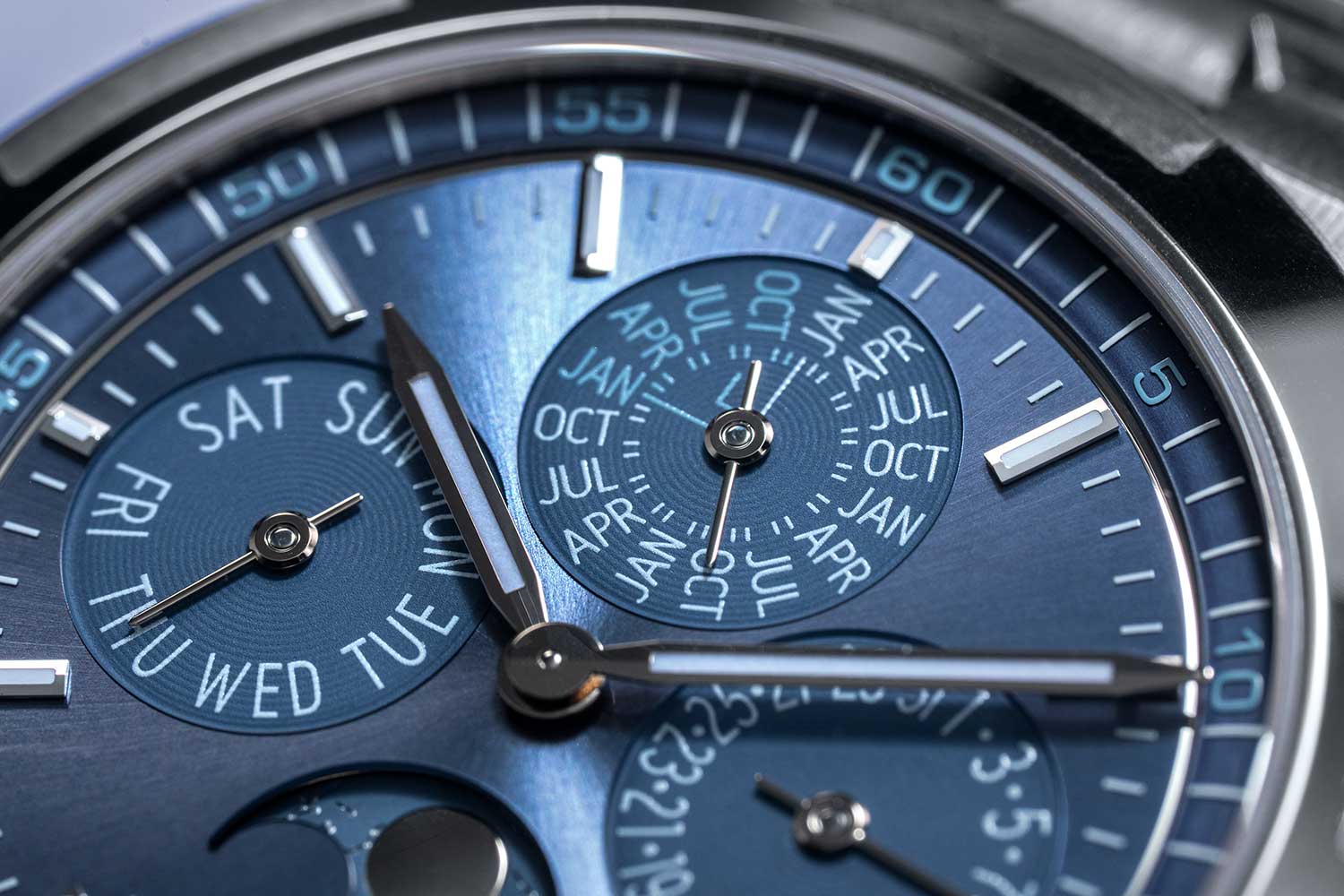
Vacheron Constantin Overseas Perpetual Calendar Ultra-Thin Azure Dial (©Revolution)
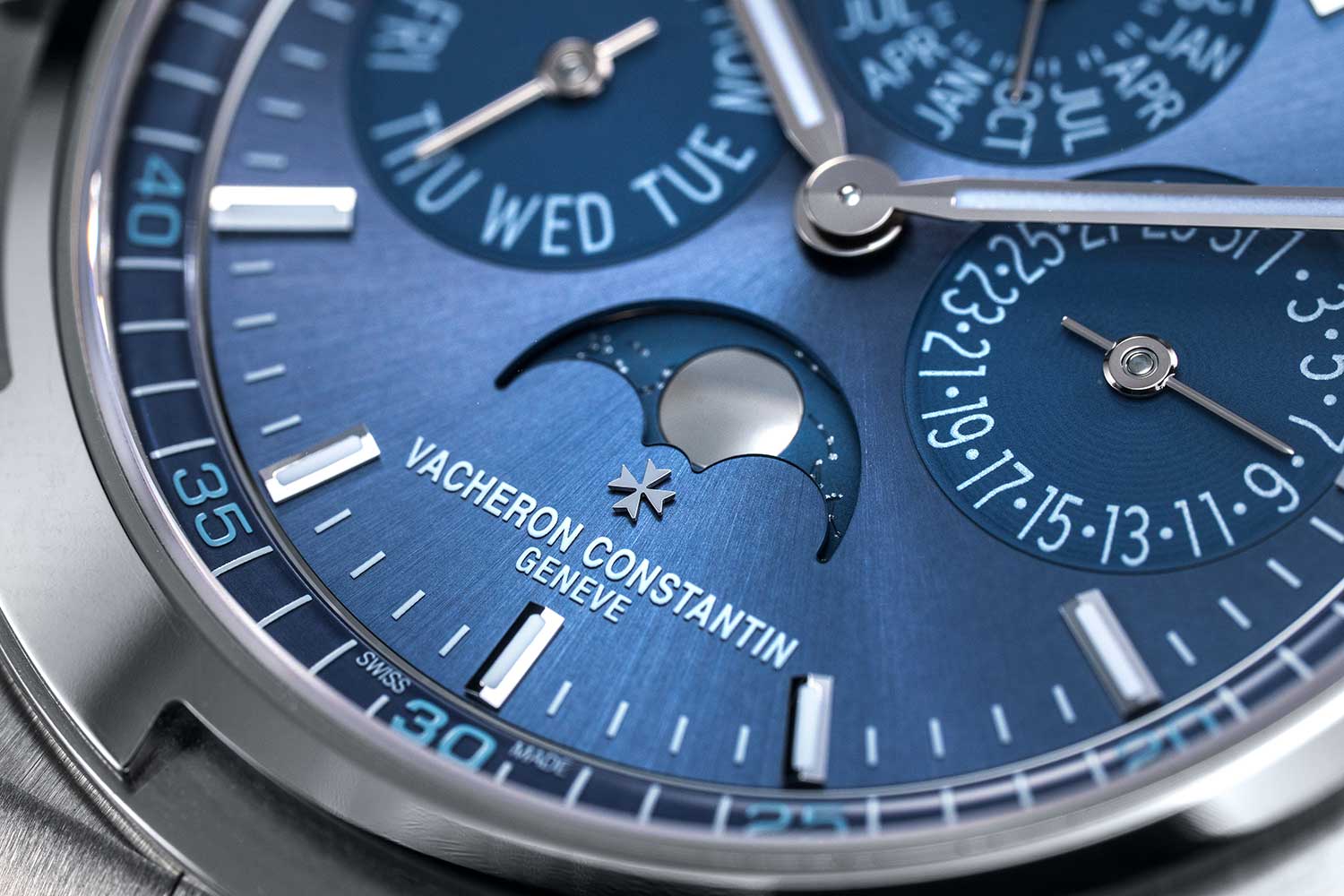
Vacheron Constantin Overseas Perpetual Calendar Ultra-Thin Azure Dial (©Revolution)
The 48-month display is unusual today. There are only a handful of examples, including the A. Lange & Söhne Grand Complication. It is, however, part of Vacheron Constantin’s own history, having appeared in vintage models such as the Ref. 43031 from 1983. Its origins go back even further, to the Audemars Piguet Ref. 5516, launched in 1955 as the world’s first perpetual calendar wristwatch with a leap year indication.
Interestingly, Audemars Piguet also supplied movement blanks for this watch to Vacheron Constantin, perhaps explaining why the 48-month display appears in both brands’ vintage watches and has found its way into a modern Vacheron Constantin. This little detail is not only pleasing to look at but also a reminder of a bygone era, when “in-house” wasn’t a thing and Swiss watchmakers freely supplied movements to one another and worked together.
Fit and finish
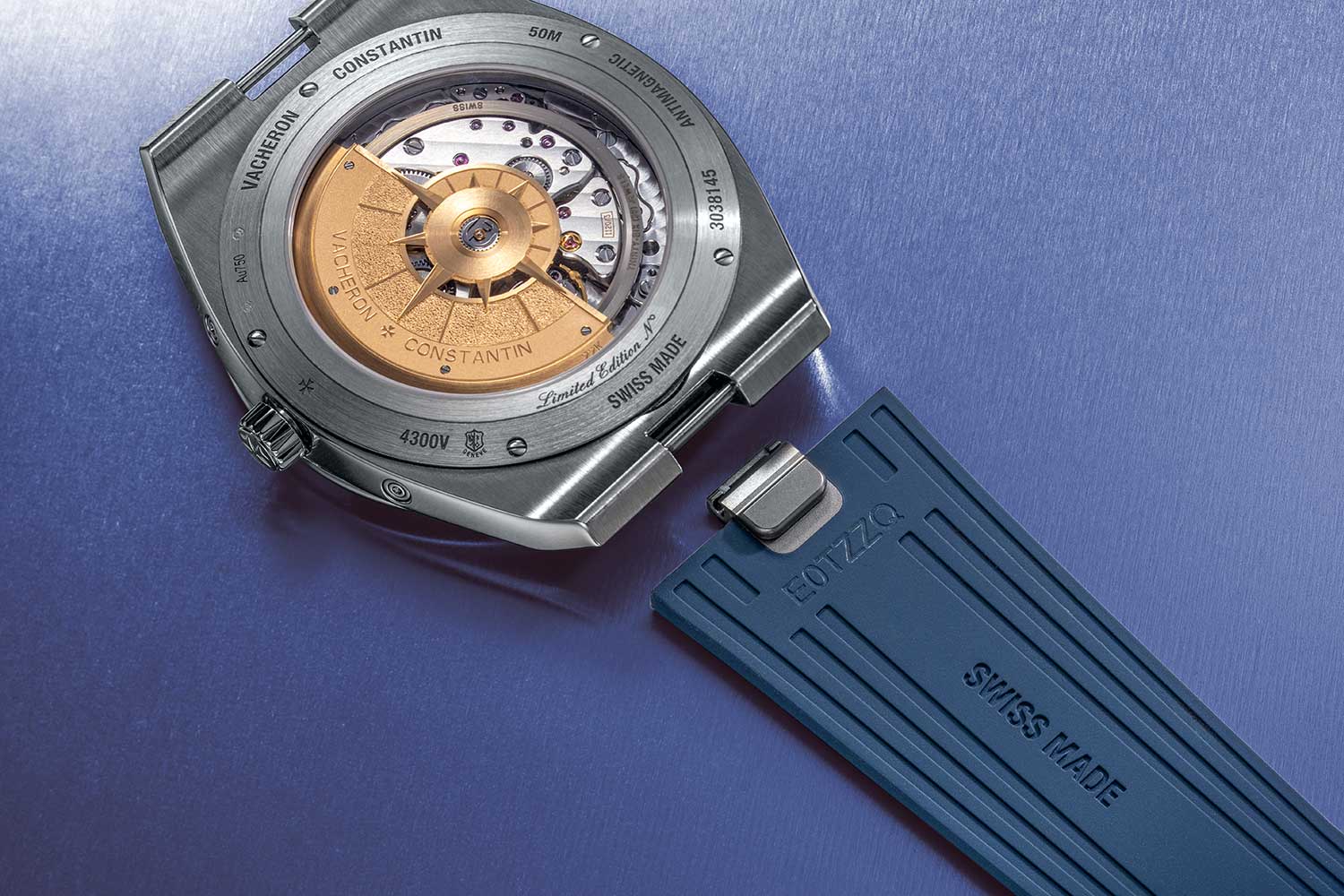
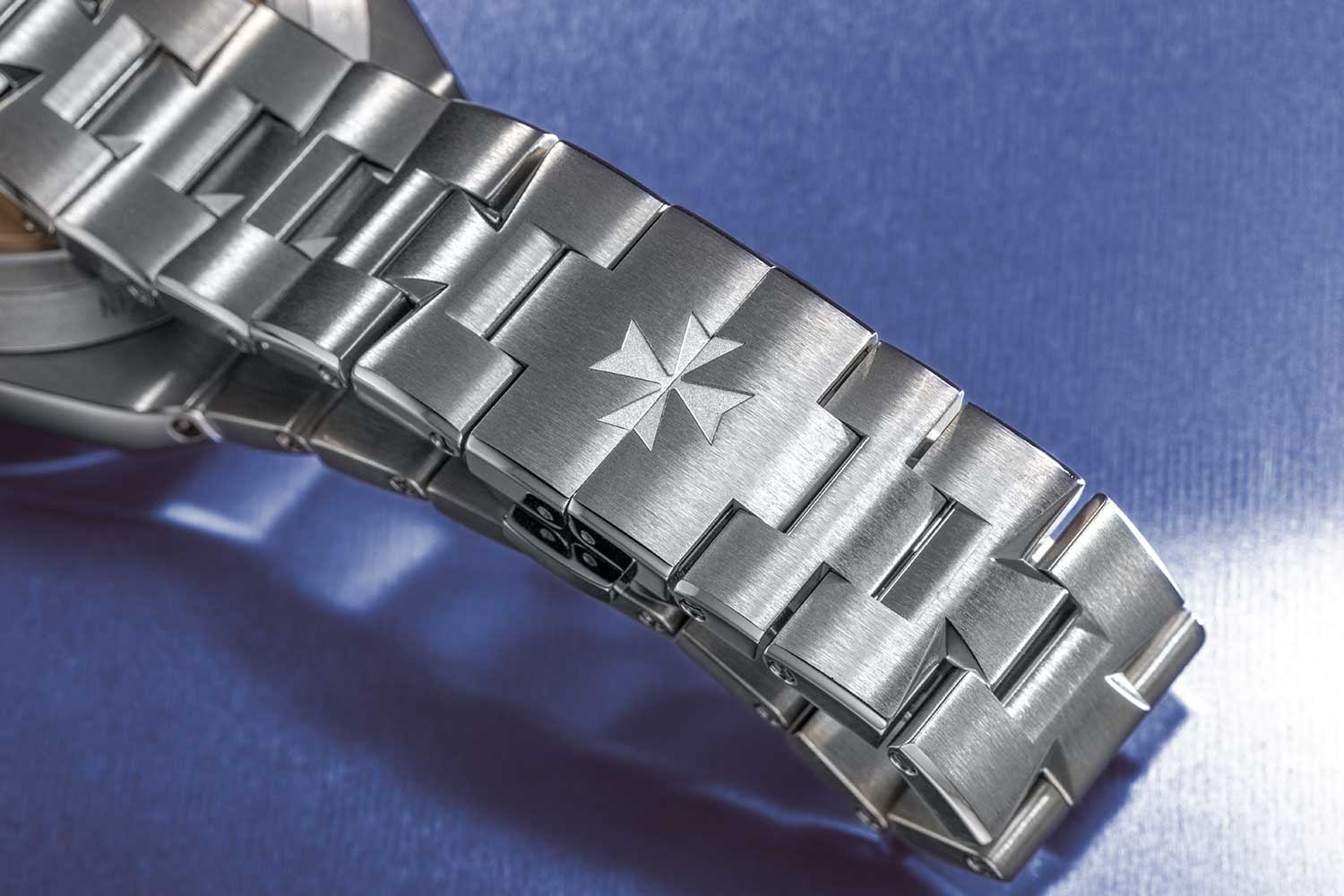
Other than the new azure blue dial, the rest of the watch is unchanged from the previous iteration: a solid white gold case and bracelet, and a movement that is beautifully finished.
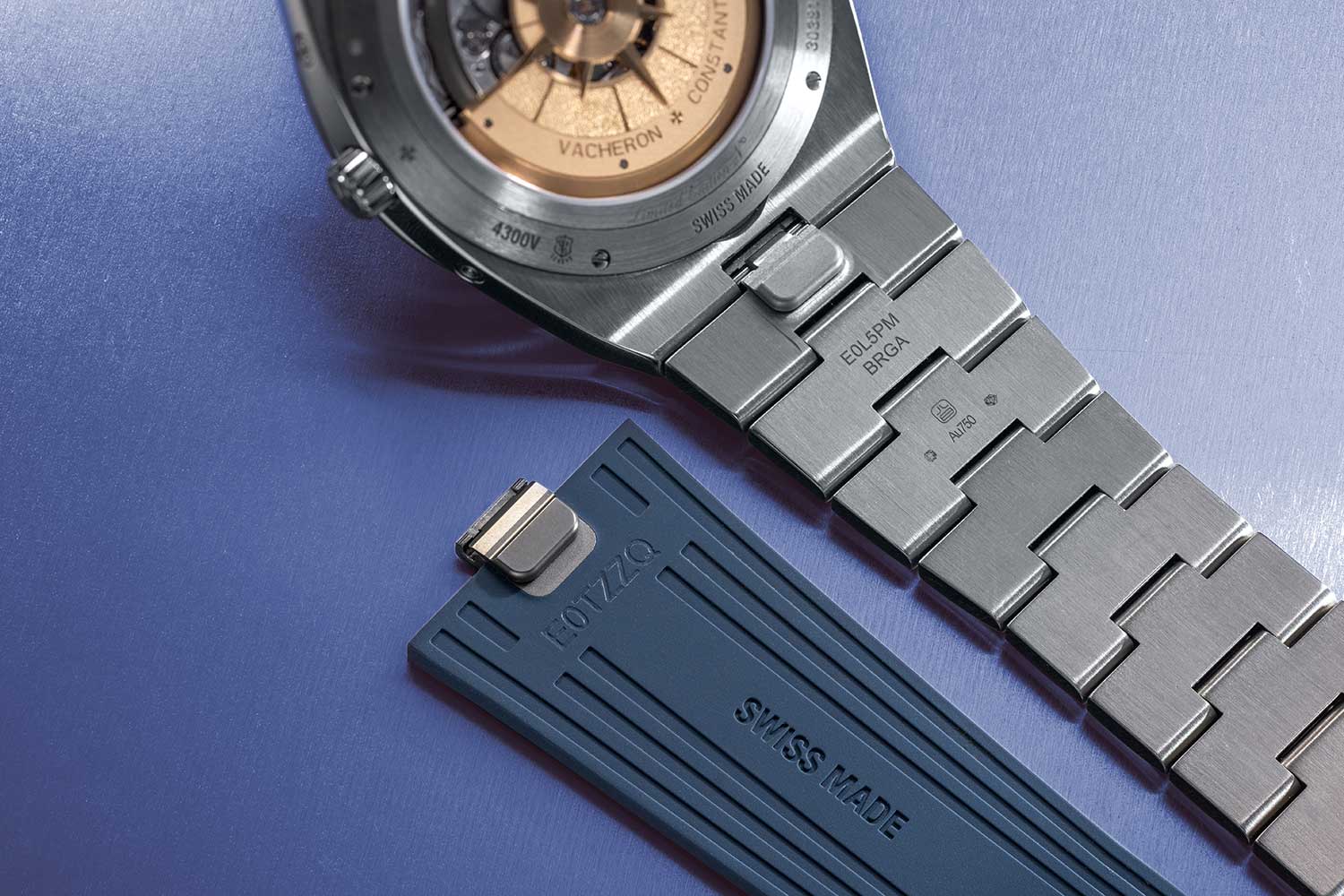
Vacheron Constantin Overseas Perpetual Calendar Ultra-Thin Azure Dial (©Revolution)
Vacheron Constantin Overseas Perpetual Calendar Ultra-Thin Azure Dial (©Revolution)
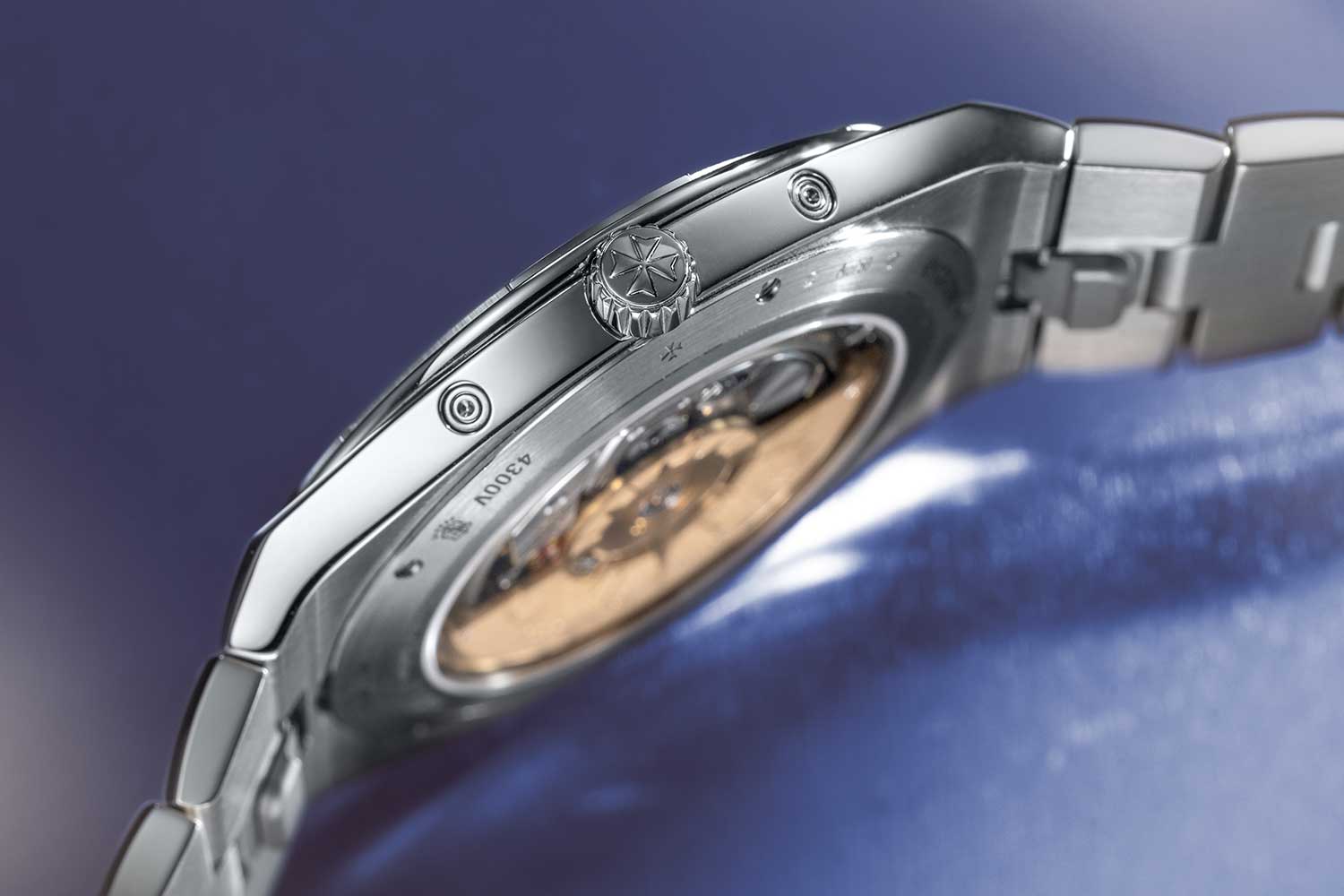
Usually, the case and bracelet finishing is the highlight of a luxury sports watch, but here the movement takes centre stage. That is not to say the case and bracelet are lacking. They have all the details one would expect, from brushed and polished facets to bevelled edges along the bracelet links, and more. These details, however, are executed with considerable subtlety and elegance.
Vacheron Constantin Overseas Perpetual Calendar Ultra-Thin Azure Dial (©Revolution)
It is the movement’s finishing that really sets the watch apart. The bridges feature rounded bevels, a technique that is uncommon today even among the top watchmaking maisons, let alone in a sports watch.
Vacheron Constantin Overseas Perpetual Calendar Ultra-Thin Azure Dial (©Revolution)
Concluding thoughts
The Overseas Perpetual Calendar is a wonderful watch in many respects. It is beautiful and elegant, with an unusually old-school character thanks to the movement within, which gives it such a strikingly slender profile. Being a limited edition for the Overseas’ 30th anniversary, with a special dial colour to mark the occasion, only makes it more attractive. If you are looking for a Vacheron Constantin Overseas Perpetual Calendar but are not quite taken by the equally attractive skeletonised version, this is the one to own.
Vacheron Constantin Overseas Perpetual Calendar Ultra-Thin Azure Dial (©Revolution)
Tech Specs: Vacheron Constantin Overseas Perpetual Calendar Ultra-Thin Azure Dial
Reference 4300V/220G-H119
Movement 1120 QP/1; automatic; 40 hours power reserve; 19,800 vibrations per hour (2.75 Hz)
Functions Hours, minutes, perpetual calendar
Case 41.5 mm x 8.1 mm; 18K white gold; water resistant to 50 m
Strap 18K white gold bracelet; additional white and blue rubber straps
Available Limited edition 200 pieces
Vacheron Constantin
You may also like
News
Last Week in Watches: Zenith Teams Up with J.N. Shapiro, Murakami Makes His Move
Nov 16, 2026
News
Last Week in Watches: Zenith Teams Up with J.N. Shapiro, Murakami Makes His Move
Nov 16, 2026
News
Last Week in Watches: Moser Goes Off-Grid, the Vacheron Constantin Overseas Turns 30
Sep 28, 2026
News
Last Week in Watches: Moser Goes Off-Grid, the Vacheron Constantin Overseas Turns 30
Sep 28, 2026
Editorial
Last Week in Watches: New Releases Ahead of Geneva Watch Days 2026
Aug 31, 2026
Editorial
Last Week in Watches: New Releases Ahead of Geneva Watch Days 2026
Aug 31, 2026