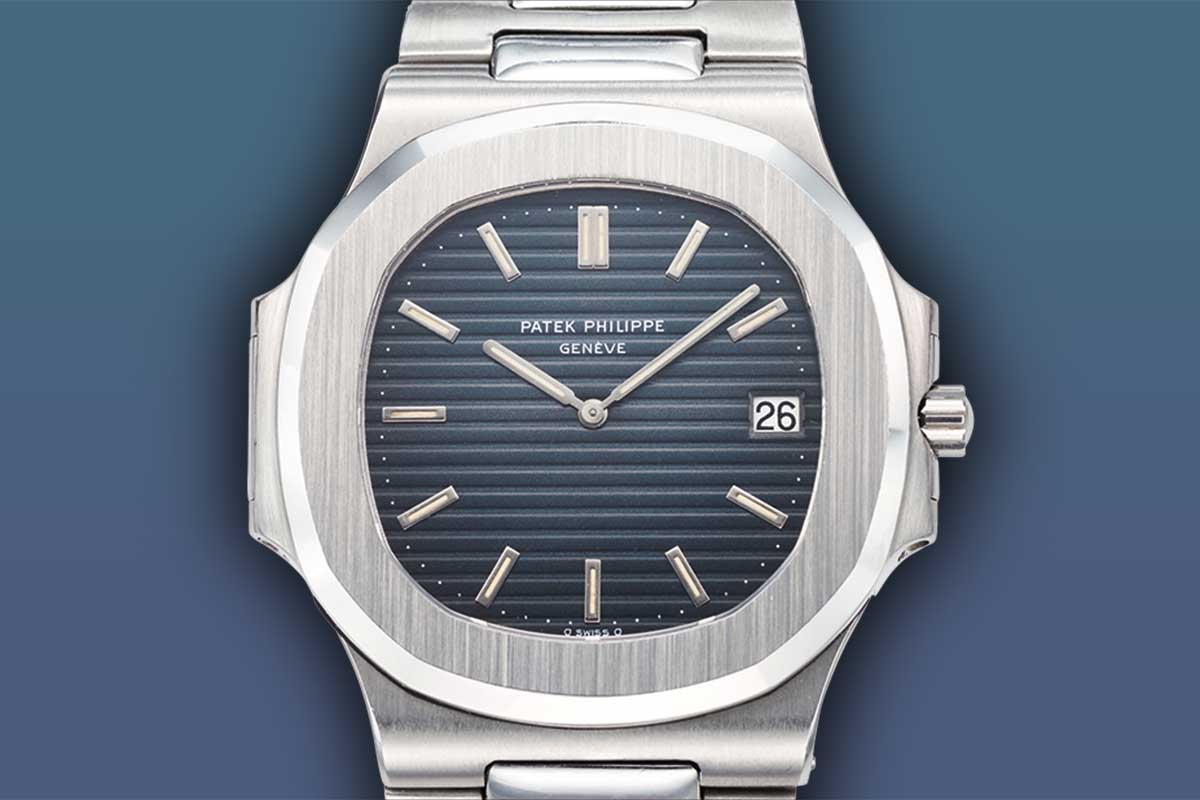
The Unlikely Icon
Editorial
The Unlikely Icon

“Modest.” This is how Philippe Stern, former President of Patek Philippe, described demand for the Nautilus at its launch in 1976. Many would consider this an overstatement. When Patek Philippe presented a large sports watch to a world that expected ultra thin gold timepieces, the reaction was closer to bewilderment than enthusiasm. The Nautilus was provocative: not only was a stainless steel watch being presented as the embodiment of luxury, it also broke established rules in design and construction. Retailers didn’t want it. The press didn’t cover it. Today, its look and concept are instantly familiar, almost self-evident. In 1976, this was not at all the case.
What followed was a journey of perseverance, quiet refinement and the occasional bold bet — a near half-century arc in which a watch went from oddball to icon, from sitting unwanted in showcases to commanding years-long waiting lists. Along the way, it reshaped not only Patek Philippe’s identity but also the very idea of what a luxury watch could be.
This is the story of how the time-only Nautilus “Jumbo” got there: from Gérald Genta’s initial design, through decades of incremental evolution and fluctuating demand, to the cultural phenomenon that surrounded its discontinuation in 2021 and what it means today, as it approaches its 50th anniversary.
Ahead of its Time
When Patek Philippe presented the Nautilus Ref. 3700 at the European Watch, Clock and Jewelry Fair (later renamed Baselworld) in 1976, retailers and press barely acknowledged the new model. It looked nothing like anything Patek Philippe had ever made and was huge at 42mm, hence its “Jumbo” nickname. It was met with a mix of incomprehension and indifference. Retailers, who served as gatekeepers between the brand and end-clients, didn’t want to tie up inventory; they simply didn’t think clients would go for it. The press barely picked up on the launch either; many magazines and newspapers didn’t even bother featuring it in their columns.
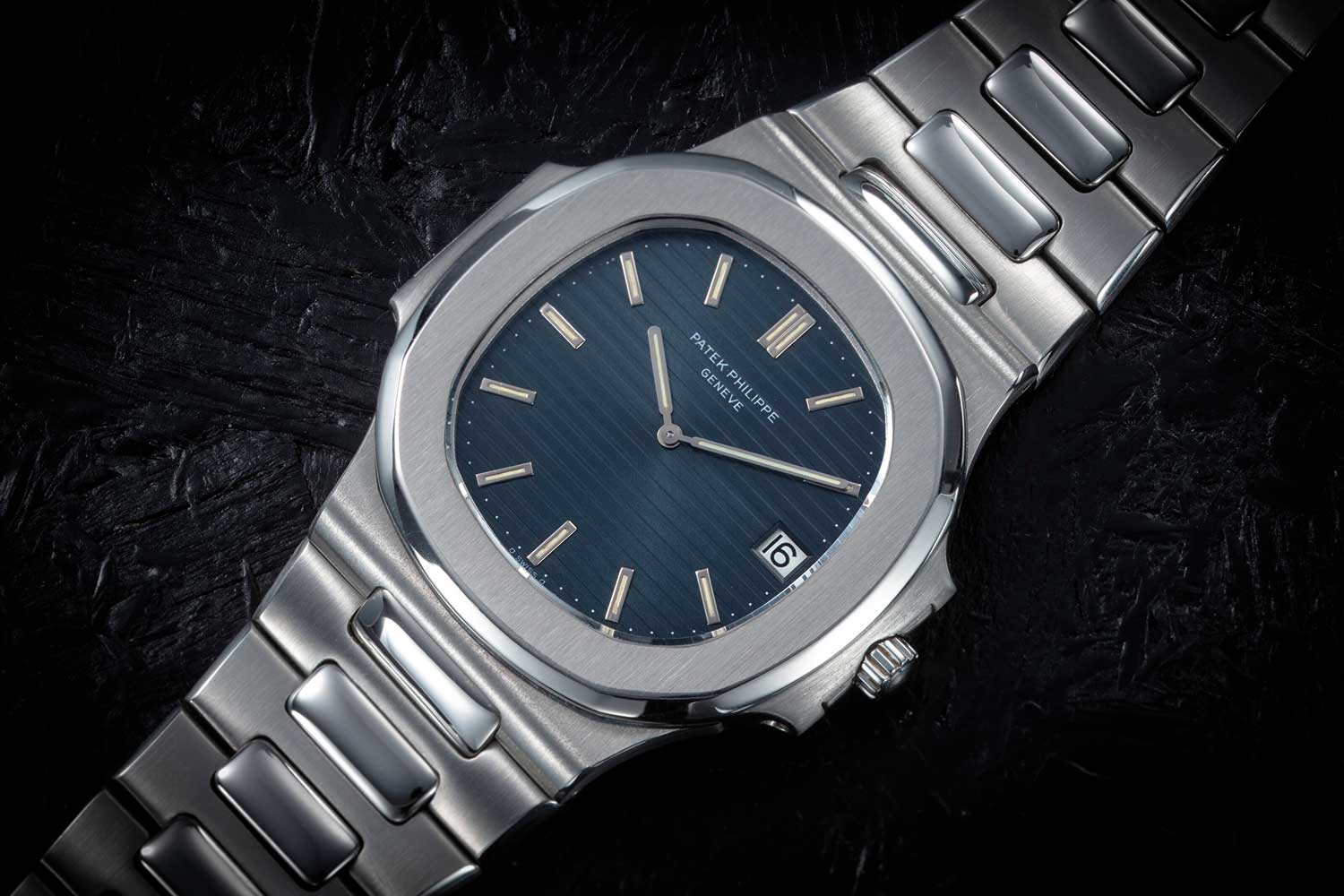
The initial Patek Philippe 42mm Nautilus Jumbo Ref. 3700 in steel (Image: Christie’s)
The specialized watch magazine La Suisse Horlogère described the current trends in its June 1976 story, “The Fashion in Watches for 1976,” as: “cases remain thin and very thin; overall looks are clean, smoothly flowing and devoid of superfluous ornamentation; dials are broad and rimmed by small ‘bezels’; both Breguet and Roman numerals are back again; men’s models tend to be somewhat smaller than in recent years.”
And indeed, when reviewing Patek Philippe’s 1976 catalog, this is exactly what you would find: several variations of the Ellipse, many with plain blue-gold dials; several elegantly shaped watches, mostly in yellow gold, some with stone dials and chain bracelets; a few round ultra-thin Calatravas and a few complications made in limited numbers. All in all, an archetypal classical offering for those with refined tastes and the means to afford gold watches that signified status.
The Nautilus could not have been more at odds with that catalog. It was the equivalent of wearing a tuxedo with sneakers to a state dinner — a complete oddball. Sporty vs elegant; rugged vs delicate; steel vs gold; large vs small. And yet, at the same time, it reflected the first signals of changing times. The 1970s marked the rise of individualism and the “me decade,” a generation that increasingly defined itself through personal choices rather than inherited codes.
Lifestyles were shifting toward health, activity and the outdoors, and with that shift came a quiet but profound change in how people dressed: fashion was becoming more casual, even among the affluent. The idea that a luxury watch could, and perhaps should, accompany its owner from the boat to the dinner table rather than be reserved for formal attire was a bold one. Not everyone was ready for it, but the culture was moving in that direction.
Where Patek Philippe stayed entirely true to itself was that it made no compromise in the quality of execution of the Nautilus Ref. 3700. Genta sketched the Nautilus taking inspiration from portholes on boats, in a way, revisiting his 1972 Audemars Piguet Royal Oak vision. Both watches undeniably bear his signature and reflect a shared vision. Intense internal debates followed over whether to introduce such a radically new concept. Before greenlighting the project, the design was refined, particularly the bracelet. Technically, new machinery had to be made for the case to be water-resistant to 120 meters, a rare feature at the time. In hindsight, the Nautilus seems like an obvious choice, but in the moment, its future success was far from evident.
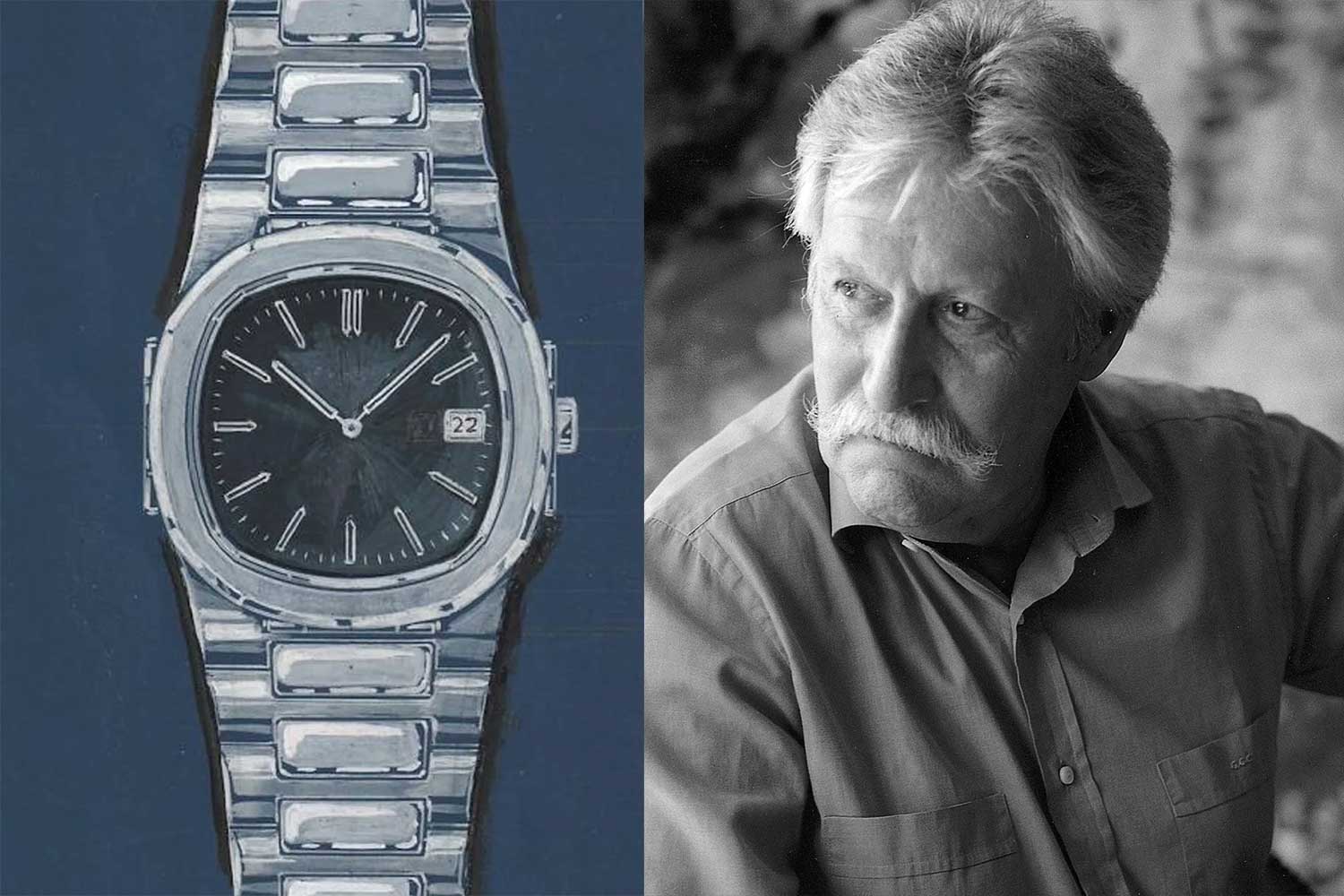
Gérald Genta and the original sketch he approached Patek Philippe with (Image: Gerald Genta Heritage)
The case is characterized by its soft, rounded octagonal bezel, the prominent “ears” on both sides and the seamlessly integrated bracelet. After Gay Frères had initially worked on the case design, the two-part case construction was produced by Favre-Perret and was the result of both a functional and aesthetic choice. The solid base, machined from a single block of metal, receives the movement from above and is sealed by the bezel module, which features the crystal and the distinctive hinges. A gasket sits between the bezel and the case body to ensure water resistance.
The bracelet flows from the case and features an H-link construction with screw assembly. Particular attention was given to the finishing of the alternating brushed, satin-finished, polished, angled and rounded surfaces — a level of detail that is notoriously difficult to get perfectly right. The first years of production were not entirely straightforward, and the manufacturing process had to be improved several times.
The dial, with its characteristic horizontal grooves and blue-black color, was made by Stern Frères. The grooves create a “maritime deck” effect, continuing the nautical theme. The hour and minute baton hands with luminescent material are both elegant and functional, echoing the hour markers on the dial. The 28-255 C movements used in the earliest examples are based on the legendary Jaeger-LeCoultre Caliber 920, reworked by Patek Philippe to meet its stringent standards.
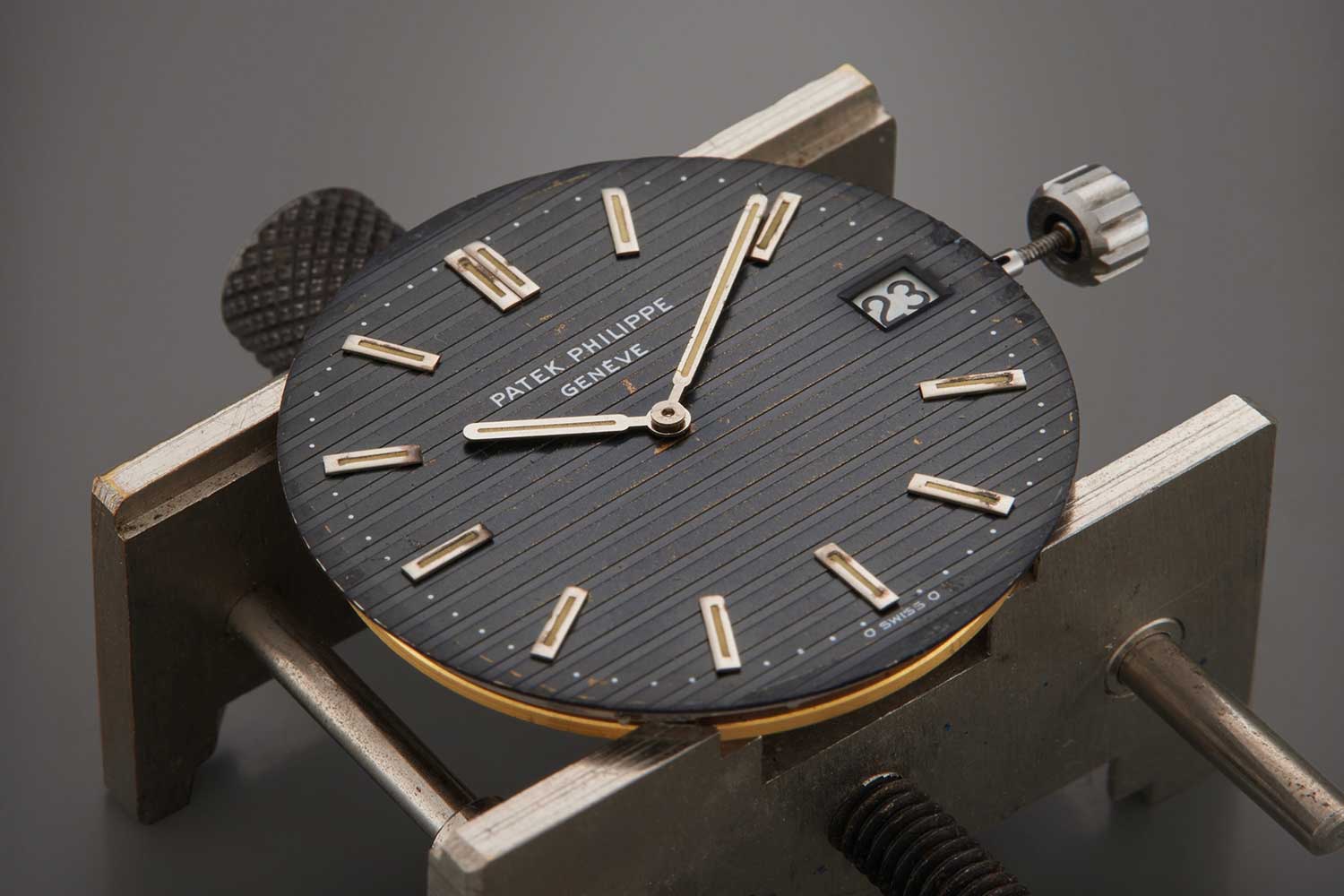
Patek Philippe Ref. 3700 dial with its characteristic grooves and blue-black color. Note the light patina throughout (Image: Sotheby’s)
The result was what many people today believe to be one of the most elegant and immediately recognizable watches ever made. The bracelet is so supple and comfortable that it feels like a silk band on the wrist, each link settling quietly into the next. The case, while relatively large at 42mm, is kept very thin at 7.5mm and easily slides under a shirt cuff so that you almost forget it’s there until you glance at it. The grooves on the dial catch and play with light, making it shimmer and shift with every movement of the wrist, from a deep blue-black in low light to something almost alive under direct sun.
The early marketing around the Ref. 3700 emphasized craftsmanship, hand finishing and water resistance, and presented the watch as one of the costliest steel watches ever made. It was also introduced as a watch that “works as well with a wet suit as with a dinner suit” and this dual casual-formal use was systematically emphasized, perhaps as a way to bridge Patek Philippe’s identity as a classic watchmaker with a new sports-oriented segment.
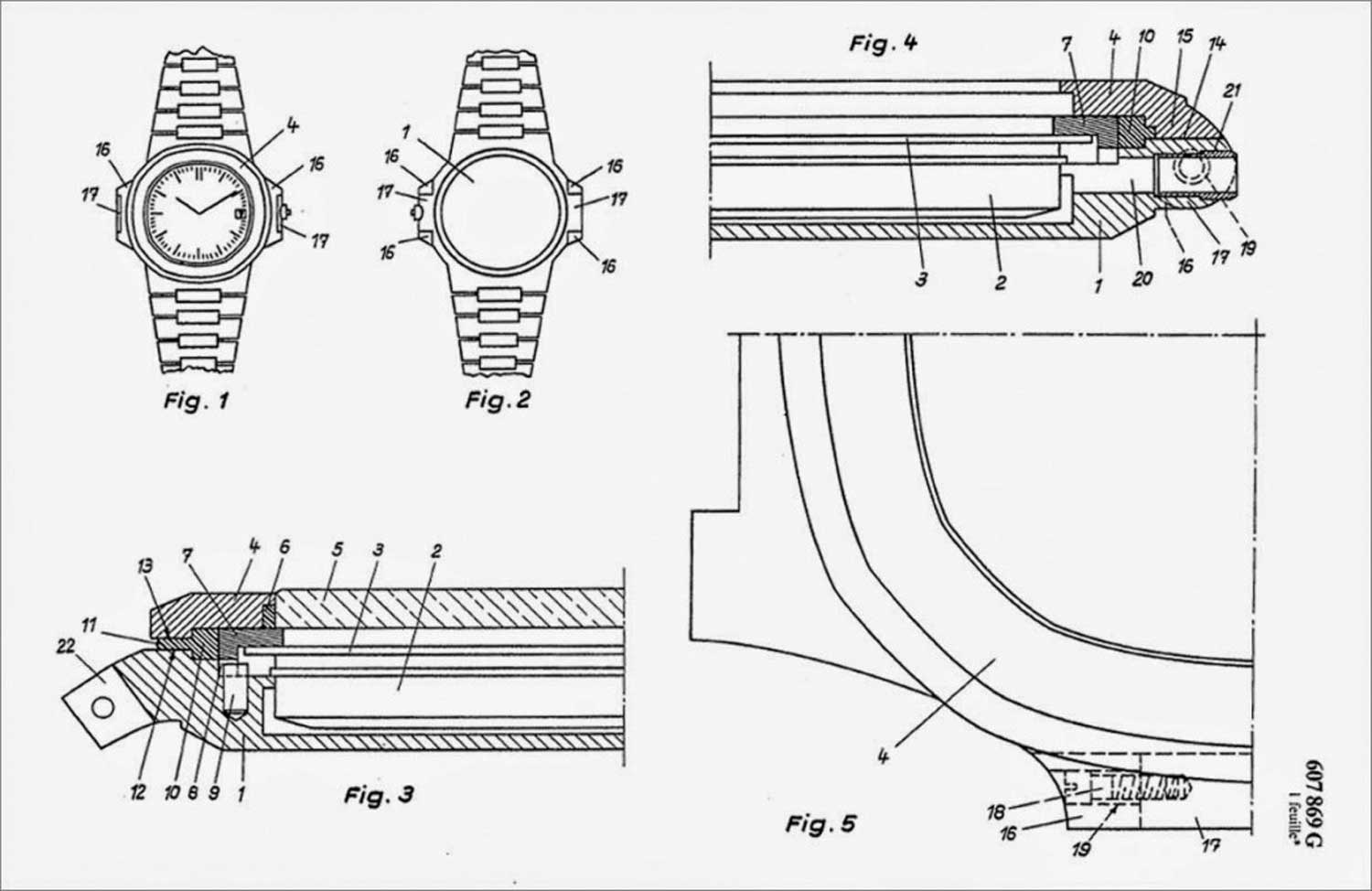
The 1976 patent application for the Patek Philippe Nautilus
While presented in 1976, the first models left the manufacture in 1977 under the reference 3700/1. The watch was available in steel and in yellow gold from 1977, while a bicolor steel and yellow gold version was introduced in 1980. Very few white gold and platinum examples are known. The first notable evolution of the Nautilus design happened around 1981 when Patek Philippe chose to manufacture the cases in-house at Ateliers Réunis. The bracelet was reworked to be thinner with more slender links and a more tapered design, and the reference was changed to 3700/11.
Rarity and Collectibility
Since 2000, 368 unique Ref. 3700 examples have appeared at the four major auction houses — 269 first-generation Ref. 3700/1 and 99 second-generation Ref. 3700/11 examples across all metals. If we estimate that 15 to 20 percent of total production has appeared at auction over these 25 years, approximately 2,000 to 2,500 watches would have been made in total, with only about 70 to 75 percent of these being first-generation models and 25 to 30 percent second-generation models.
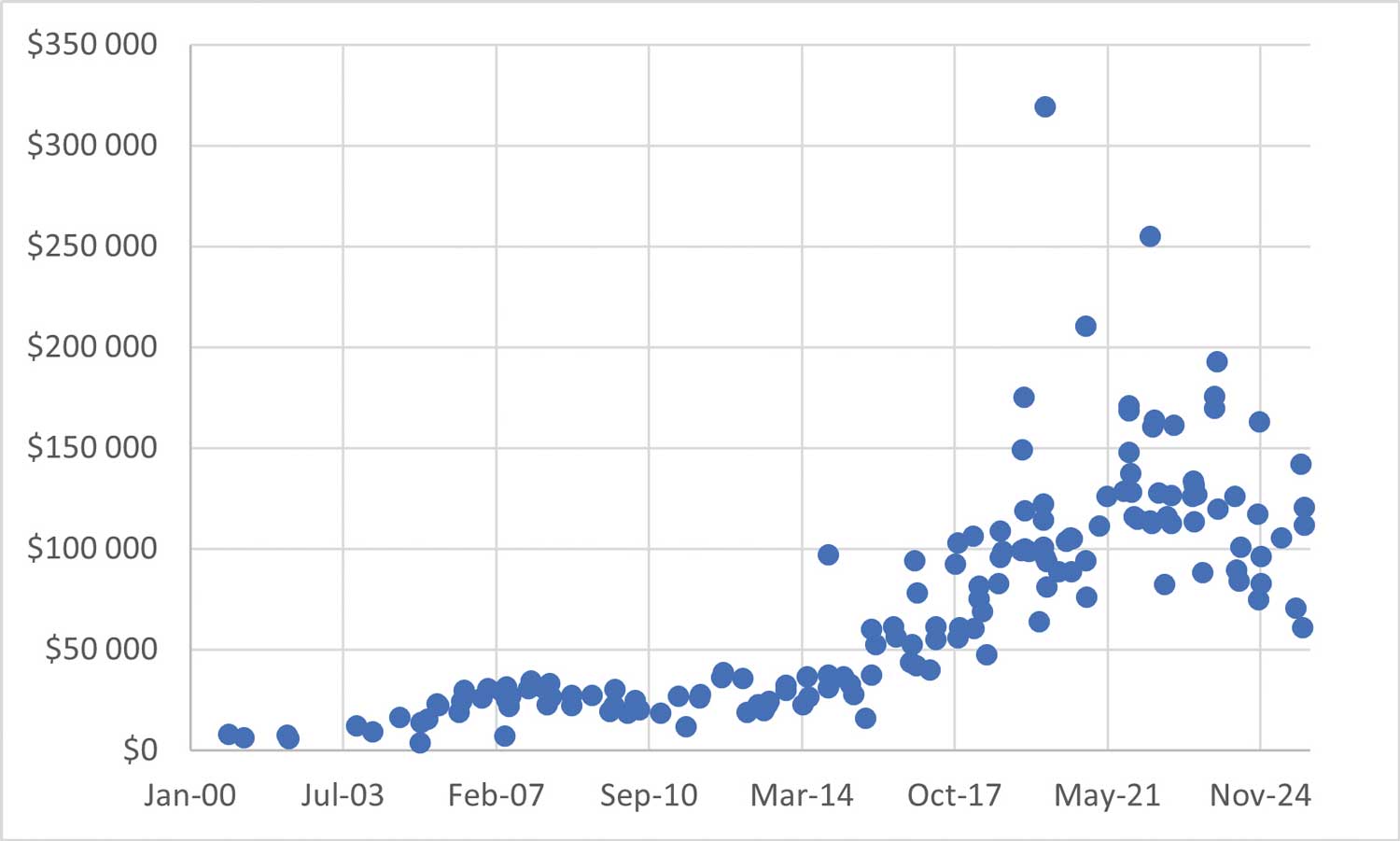
Ref. 3700/1A and 3700/11A auction results from 2000 to 2025, excluding Khanjar and double-signed dials
Based on auction occurrences, it can be extrapolated that for the first generation, about 70 percent were made in steel and about 20 percent in yellow gold, with the rest being gem-set versions and other metals. For the second generation, these numbers are about 35 percent in steel and 25 percent in yellow gold. In this regard, the Ref. 3700 is a rare example of a reference where the later generation was produced in lower quantities than the previous generation. However, the market as it stands today does not distinguish between the two generations in terms of value, despite the second being significantly rarer.
The steel Ref. 3700 started selling above the price of a new Ref. 5711 as early as 2006. That trend continues to this day and, as such, both the vintage and modern Nautilus “Jumbo” command comparable interest.
Standout models in the Ref. 3700 are the exceedingly rare white gold and platinum versions, which are estimated to have been made in less than 10 examples each. Other notable models are those bearing special dials, whether the “Omani Khanjar” (made in steel, white gold and platinum) or double-signed dials with an added retailer signature, such as Tiffany & Co., Beyer, Gübelin, Howes and others. All command premiums.
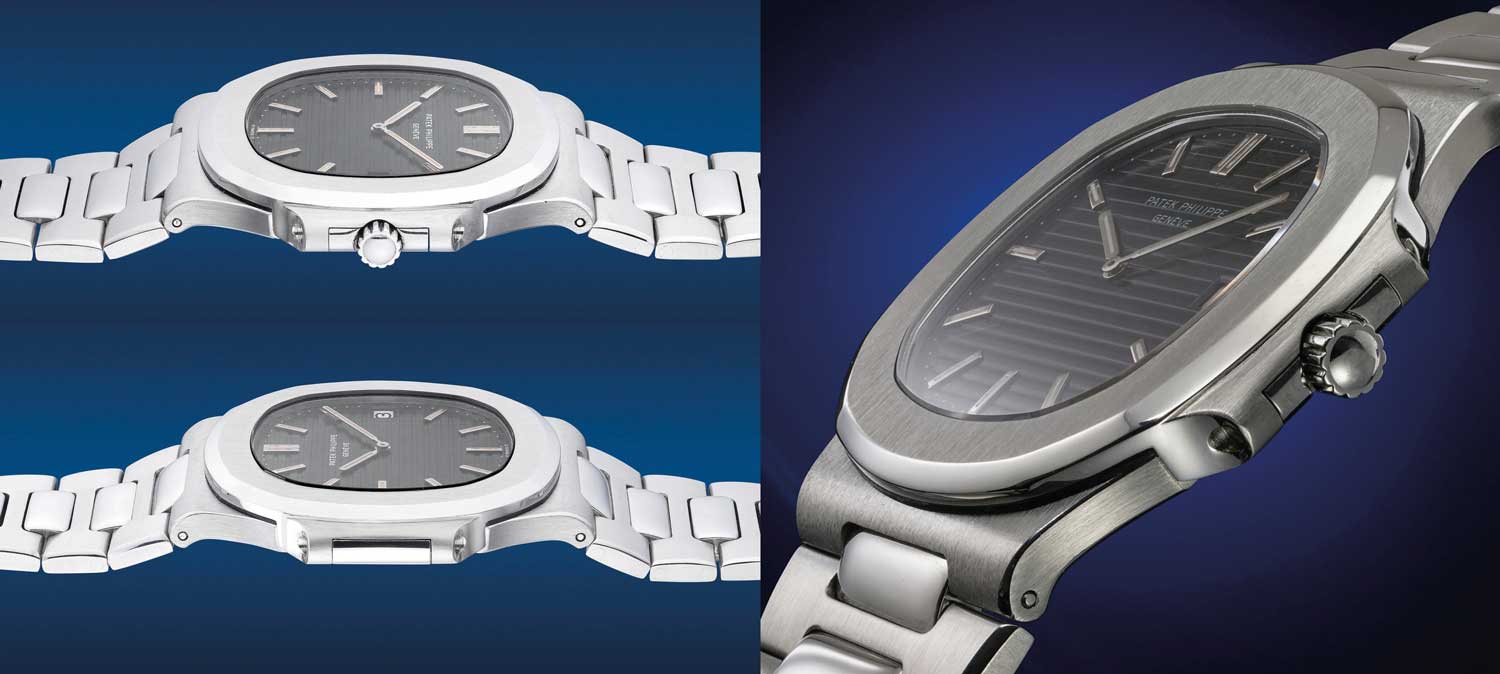
Patek Philippe Ref. 3700/1A profile views (Image: Phillips)
As always with vintage watches, collectors are highly encouraged to request an “Extract from the Archives” from Patek Philippe to understand the watch’s history and confirm which dial it was originally delivered with. Because Nautilus watches were designed for an active lifestyle and are notoriously difficult to polish, examples in great original condition are exceedingly rare, worth searching for and rightfully command a premium.
The Quiet Refinement
At its launch in 1976, the 42mm Nautilus was a radical departure from every other model in the catalog — maybe too radical, actually. What followed was not a revolution but something arguably more telling: three decades of quiet, steady commitment to a watch the world had not yet learned to fully appreciate.
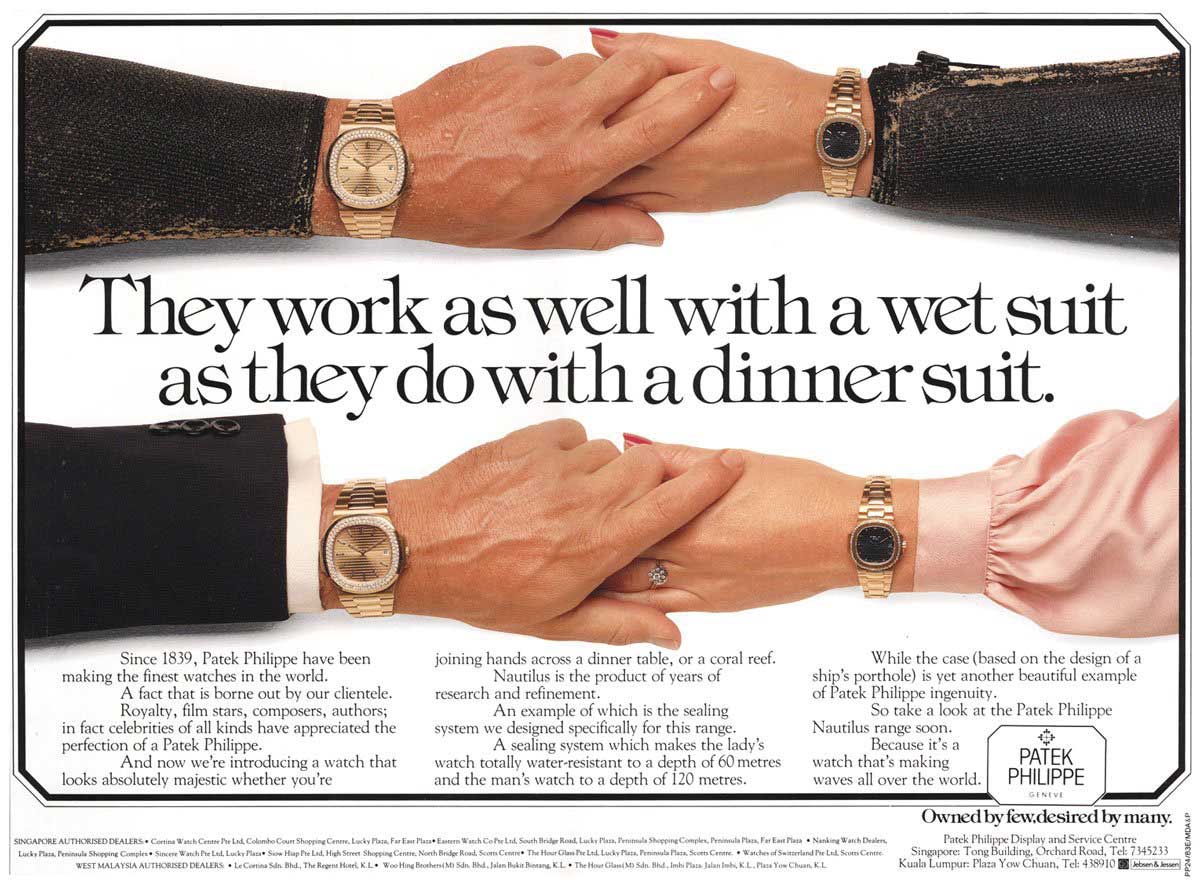
Early advertising praising the Nautilus’ versatility (Images: Collectability)
The Nautilus line was rapidly extended to comprise three pillars. The Ref. 4700 was introduced in 1980 as a smaller ladies’ version with a 27mm case, powered by a quartz movement. In a way, it was the very opposite of the initial Jumbo version: a classic watch with an integrated bracelet that was ideally suited for women. Advertisements from the time started to feature both Jumbo and ladies’ models on the same page, presenting them as “you and me” watches.
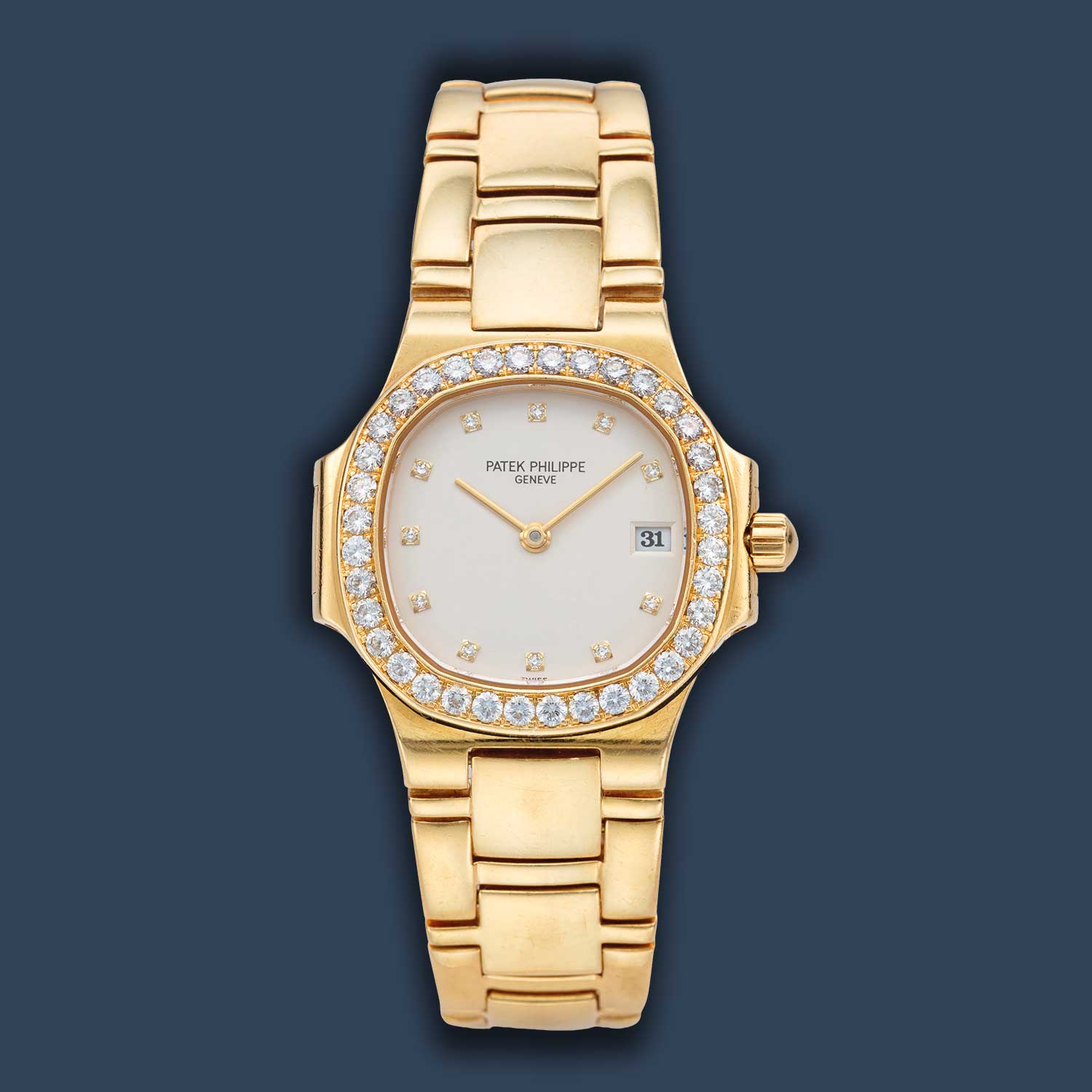
The demure 27mm Ref. 4700 (Images: Collectability)
The Ref. 3800 was introduced the following year, in 1981, in a midsize 37.5mm case, a significantly smaller option for men, more in keeping with the tastes of the time. This model is also notable as it features Patek Philippe’s in-house 335 SC automatic movement — departing from the Jaeger-LeCoultre ébauches used in the Jumbo — and a central seconds hand.
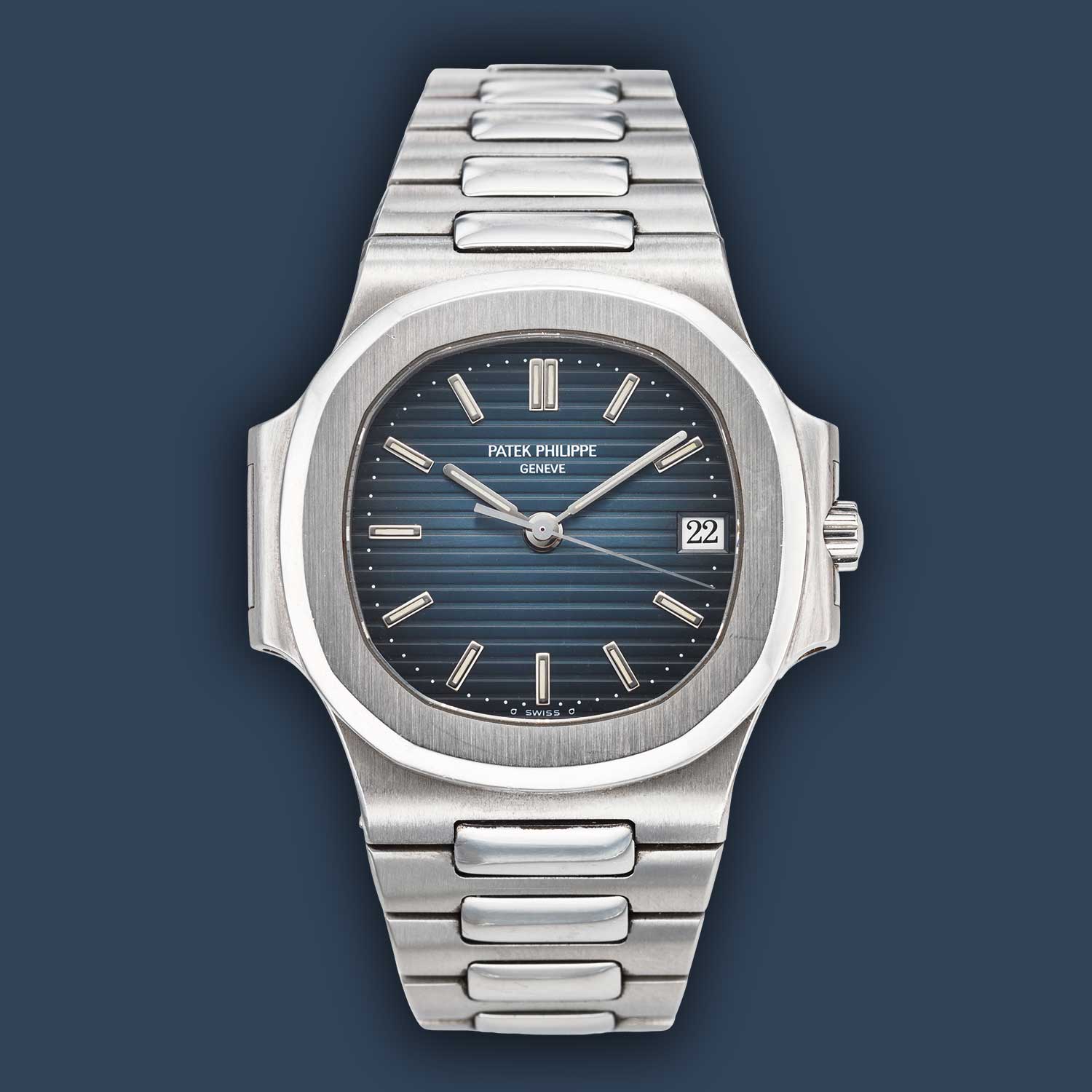
The 37.5mm-wide Ref. 3800 (Images: Collectability)
It was during this period that a young Thierry Stern chose a Ref. 3800 for his 20th birthday in 1990, a two-tone model he would wear frequently, especially as his sporty, active lifestyle made it a natural fit. No frenzy, just a young man and a watch that suited him. The same man would, decades later, make the decision to retire the Nautilus’ most famous successor.
Both the Ref. 4700 and Ref. 3800 came in a large variety of metals, such as steel, bicolor, gold and platinum. They also came in an even larger array of dial variants — ranging from plain grooves to highly gem-set examples — as well as various hand types. All in all, dozens, if not hundreds, of variations were made over the years.
Sales of the initial Ref. 3700 started declining with the introduction of the Ref. 3800, so much so that it was discontinued in 1990, one year after Patek Philippe’s 150th anniversary. Today, the midsize model is generally less sought-after than its larger Jumbo counterpart, although with the renewed appreciation for smaller watches, both men and women are paying closer attention to this model.
In a constant search to refine the Nautilus collection, after eight years of absence from the catalog, the Jumbo size returned in 1998 with Ref. 3710, the first Nautilus to feature a complication other than the date: a power reserve indicator between 11 and 12, alongside a matte black dial with Roman numerals, which departed significantly from the original. The exact reasons for the reintroduction of the larger size are unknown; however, it also coincided with the introduction of Ref. 5070, Patek Philippe’s bold 42mm twin-counter chronograph. While Patek Philippe is very much known for having its own agenda, it was not immune to general trends and, by the late 1990s, large watches like the Royal Oak Offshore and various Panerai models had begun to dominate collectors’ conversations.
It took another six years for a simple time-only Nautilus “Jumbo” to reintegrate into the collection, ending a 14-year hiatus in 2004. The Ref. 3711/1G returned to a design that was much closer to the initial Ref. 3700, sharing the same size and dial design language, this time in black. The watch housed the self-winding 315 SC caliber, thus introducing a central seconds hand. Its movement could be admired through the sapphire caseback, a first in the Nautilus line. Unlike the original Nautilus, however, the Ref. 3711 was exclusively available in white gold. At the time, it wasn’t an easy sale: it was expensive (in 2006, it retailed for around CHF 41,300) and from 2005, it would be in direct competition with the Ref. 3712/1A, which was not only more affordable in steel, but also featured additional moonphase and power reserve indications. Both watches were discontinued in 2006 and, as such, had some of the shortest production runs of all Nautilus models. These watches could be considered test runs, or pre-series models, for the much bigger launch that would follow with the Nautilus’ 30th anniversary in 2006 — one that would forever change the trajectory of the collection.
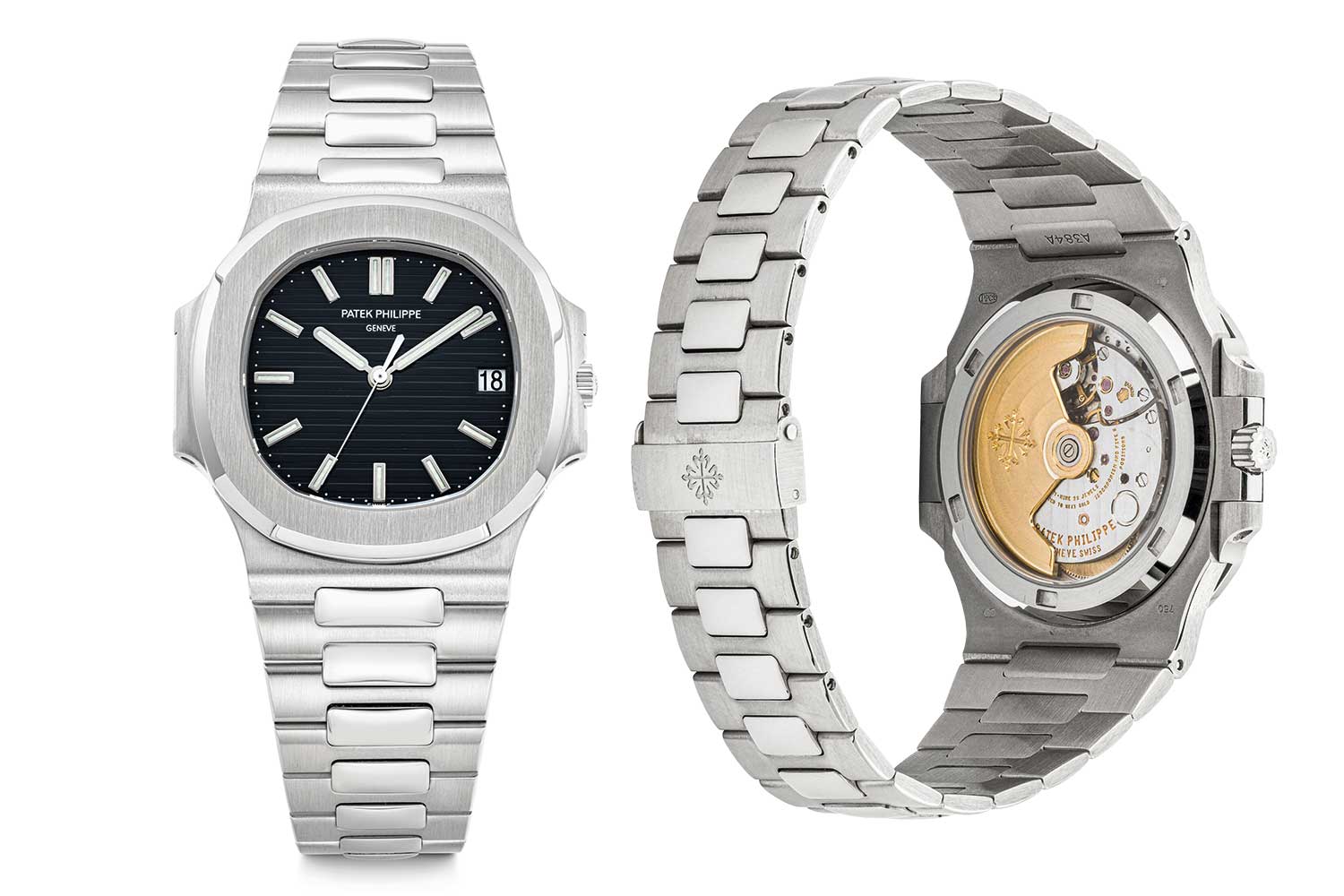
Ref. 3711/1G marked the return of the time-only Jumbo within the collection in 2004, 14 years after the discontinuation of Ref. 3700. It was the f irst Nautilus model to feature a sapphire caseback (Images: Phillips & Christie’s)
Rarity and Collectibility
Among time-only Nautilus “Jumbos,” the Ref. 3711/1G is still often overlooked by collectors. On the wrist, it has that extra heft and presence that only gold provides. It is also remarkably understated, in fact easily mistaken for a steel model, and due to its rarity, not all collectors are even aware this reference exists.
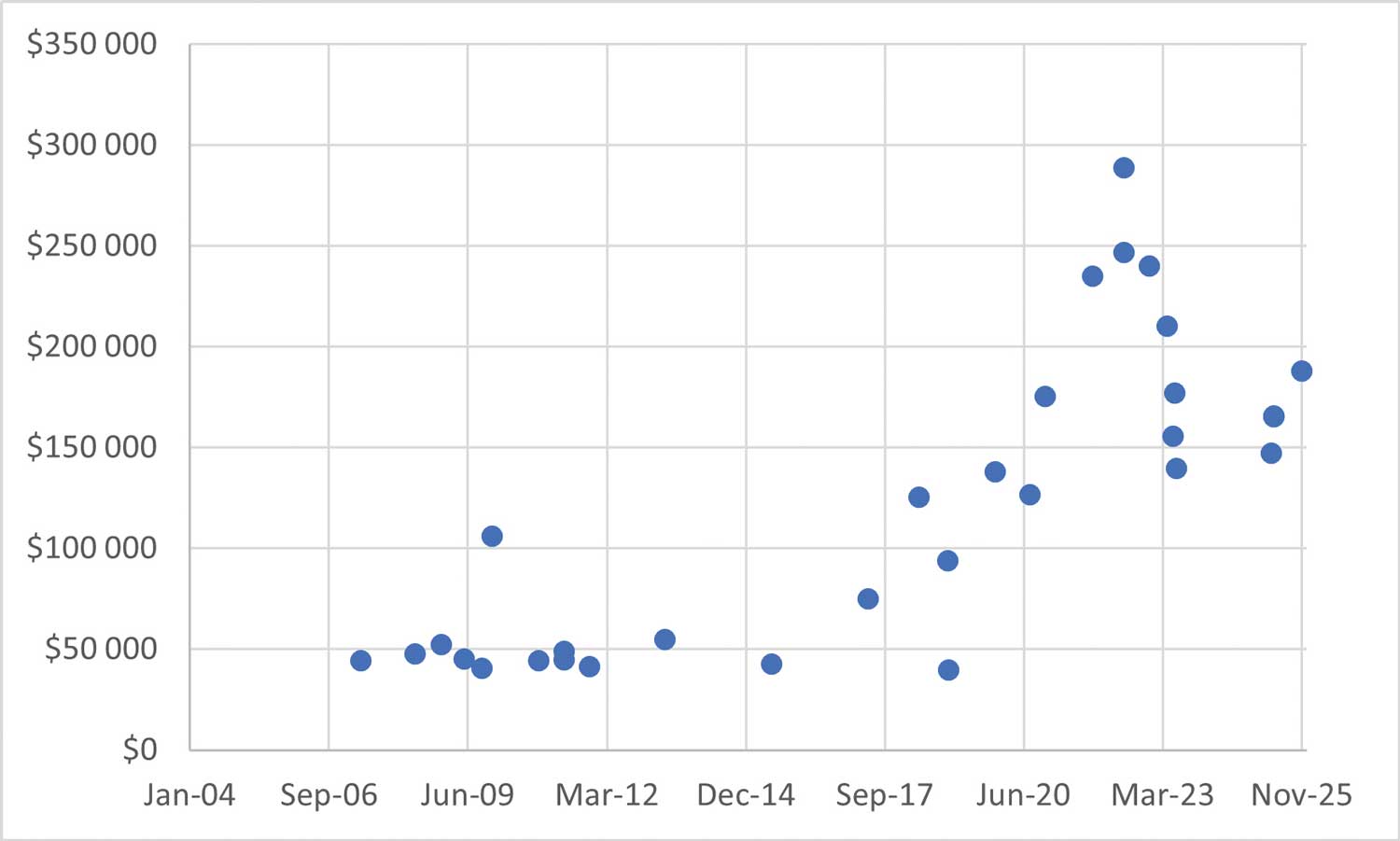
Ref. 3711/1G auction results from 2004 to 2025, excluding double-signed dials
Only 33 unique examples have appeared at the major international auction houses since 2004, and based on this, we can estimate it was one of the lowest production runs of any Nautilus reference. While collectors have begun to appreciate the Ref. 3711/1G more — a trend reflected in recent auction results — it remains one of the best-kept secrets within the Nautilus collection.
The Rediscovery
Thirty years on, a radical decision was made. On the occasion of the 30th anniversary of the Nautilus in 2006, Patek Philippe discontinued all existing Nautilus models. This symbolic act marked a tabula rasa — a fresh start.
Confident in what had been learned over the years and with a keen understanding of broader market demand, Patek Philippe presented a redesigned Nautilus line. Beyond the flagship Jumbo Ref. 5711/1A time-only and the midsize Ref. 5800/1A, it introduced the Ref. 5712, featuring moonphase and power reserve indications, available in steel on a bracelet and in gold on a leather strap. It also launched the Ref. 5980/1A chronograph with an in-house movement. Further complications, up to a perpetual calendar, would be introduced in subsequent years.
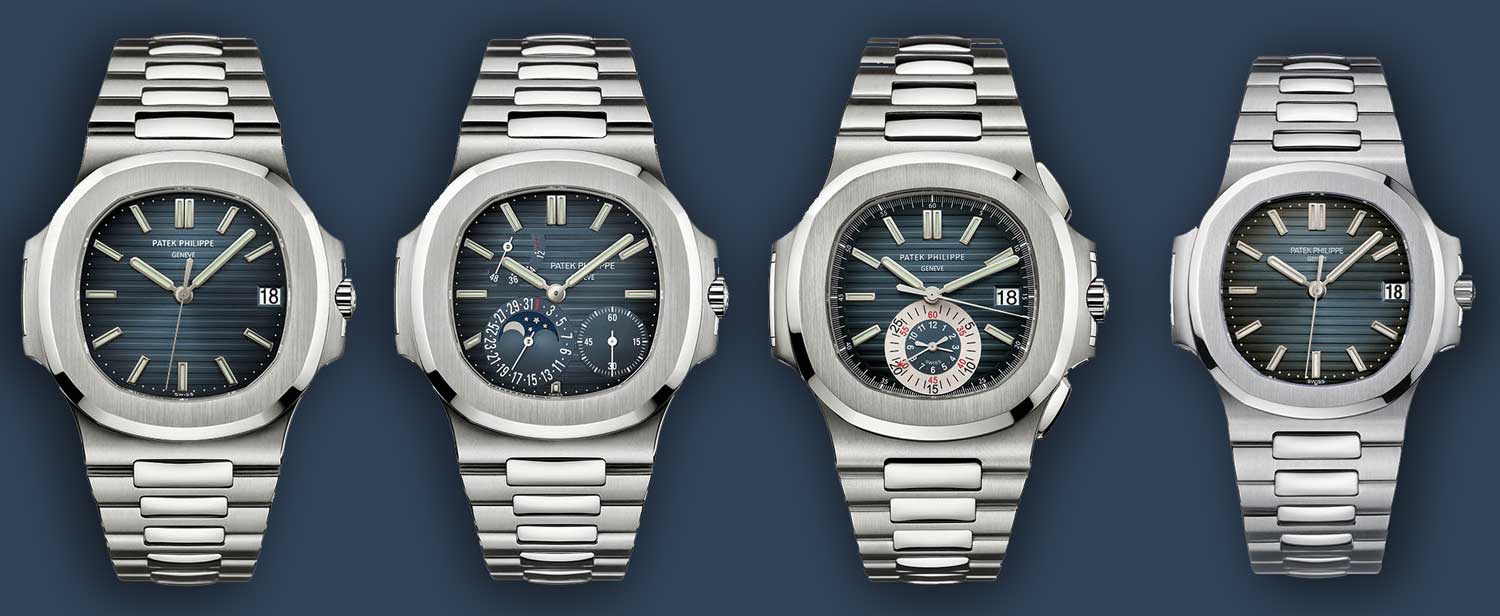
The four steel models of the 30th anniversary relaunch in 2006 (from left to right): Ref. 5711 time-only Jumbo, Ref. 5712 moonphase and power reserve, Ref. 5980 chronograph, Ref. 5800 time-only mid-size (Images: Patek Philippe)
The design of these new models evolved both aesthetically and technically, though the changes are incremental and calculated. The most notable design change in the new collection are the rounded hinges on both sides of the case, replacing the straight ones of the 1976 original. This gives the watch an ever-so-slightly softer, rounder feel. As a consequence of this redesign, the case grew from 42mm to 43mm, though this was due to the reshaped hinges rather than any intention to increase the proportions. On the wrist, both watches wear very similarly in terms of size. The case is now made of three parts, which reflects improved manufacturing techniques without compromising the 120m water resistance.
The bracelet proportions have been slightly refined to better complement the case, ending in a new three-part foldover clasp. All models now feature a sapphire caseback that allows a view of the movement. The dial largely stays true to the original with its distinctive blue-black color and grooves, while the hands and hour markers have been ever-so-slightly enlarged.
The finishing remains as exacting as with the previous generation, with a delicate interplay of satin-finished and mirror-polished surfaces on both the case and bracelet. This is a particularly demanding task for the polishers, who — while often taking second place to watchmakers — play an instrumental role in crafting the watch. The level of handwork, training and experience required to finish Nautilus cases and bracelets is mastered by only a handful of polishers, making it a genuine limiting factor in production.
An iconic watch had been redesigned to the highest standard, and this time — unlike in 1976 — the market responded enthusiastically. Sports watches and larger cases were what clients wanted, not just from Patek Philippe but from all brands. Shortly after its release, the Nautilus Ref. 5711, which retailed for around USD 17,200 at launch, could not simply be purchased by walking into a boutique; the watches were allocated to customers on waitlists. Sure, occasionally someone might get lucky and find one in a showcase, but most of the time, it meant waiting a few months.
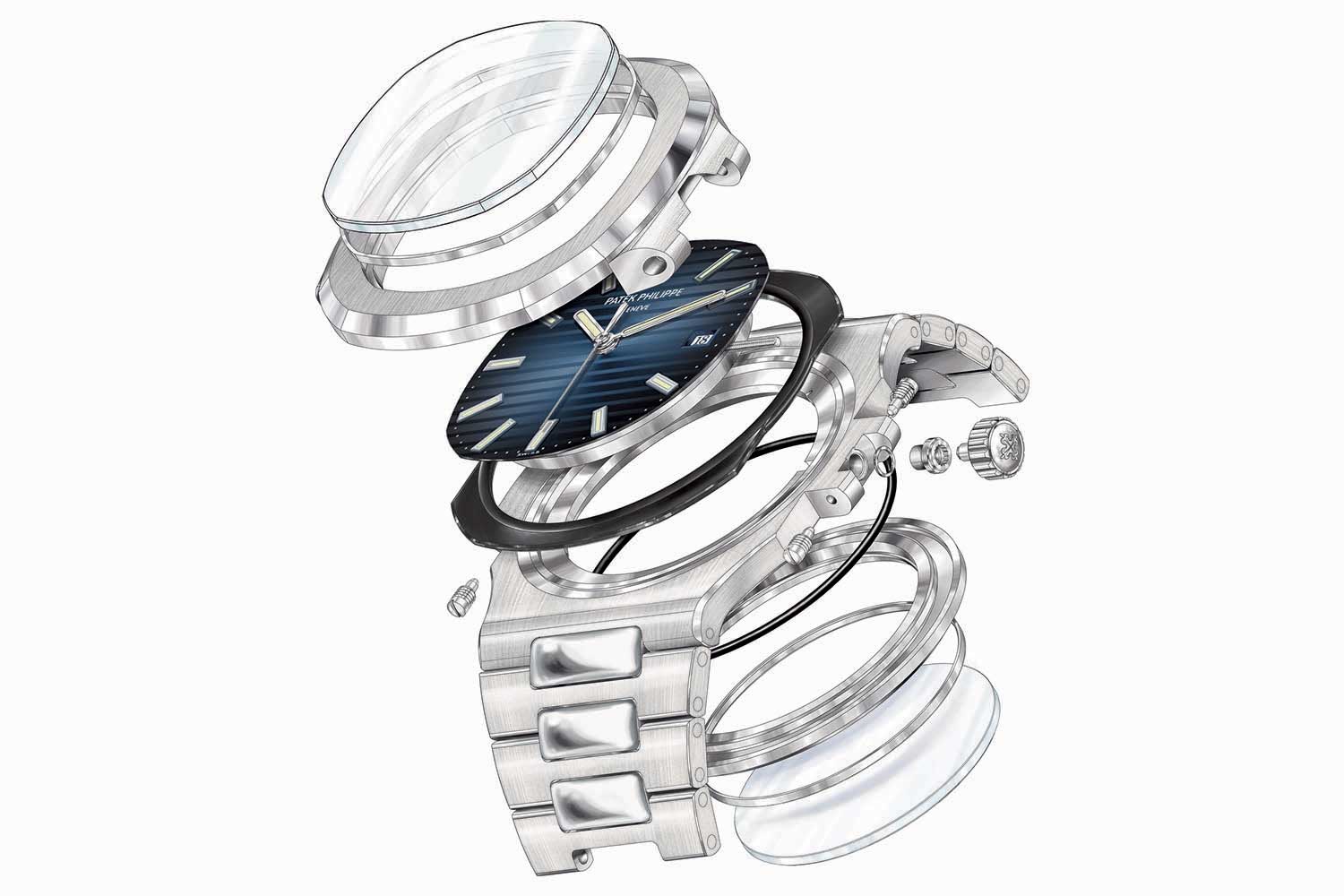
3D view of the Ref. 5711 construction (Image: Patek Philippe)
The most in-demand model was the Ref. 5712/1A in steel with moonphase, which started selling for 30 to 40 percent above retail on the “gray market” (what is now referred to as the secondary market) as early as 2007. The demand for the time-only Jumbo also exceeded production around the same time, particularly as the Ref. 5712 became harder to obtain and the Ref. 5711 retailed at a lower price. The Ref. 5711/1A appeared at auction from 2008 and has consistently sold above retail ever since — not by dramatic multiples but reliably above. Until then, only the Rolex Daytona in steel would consistently resell for more than retail.
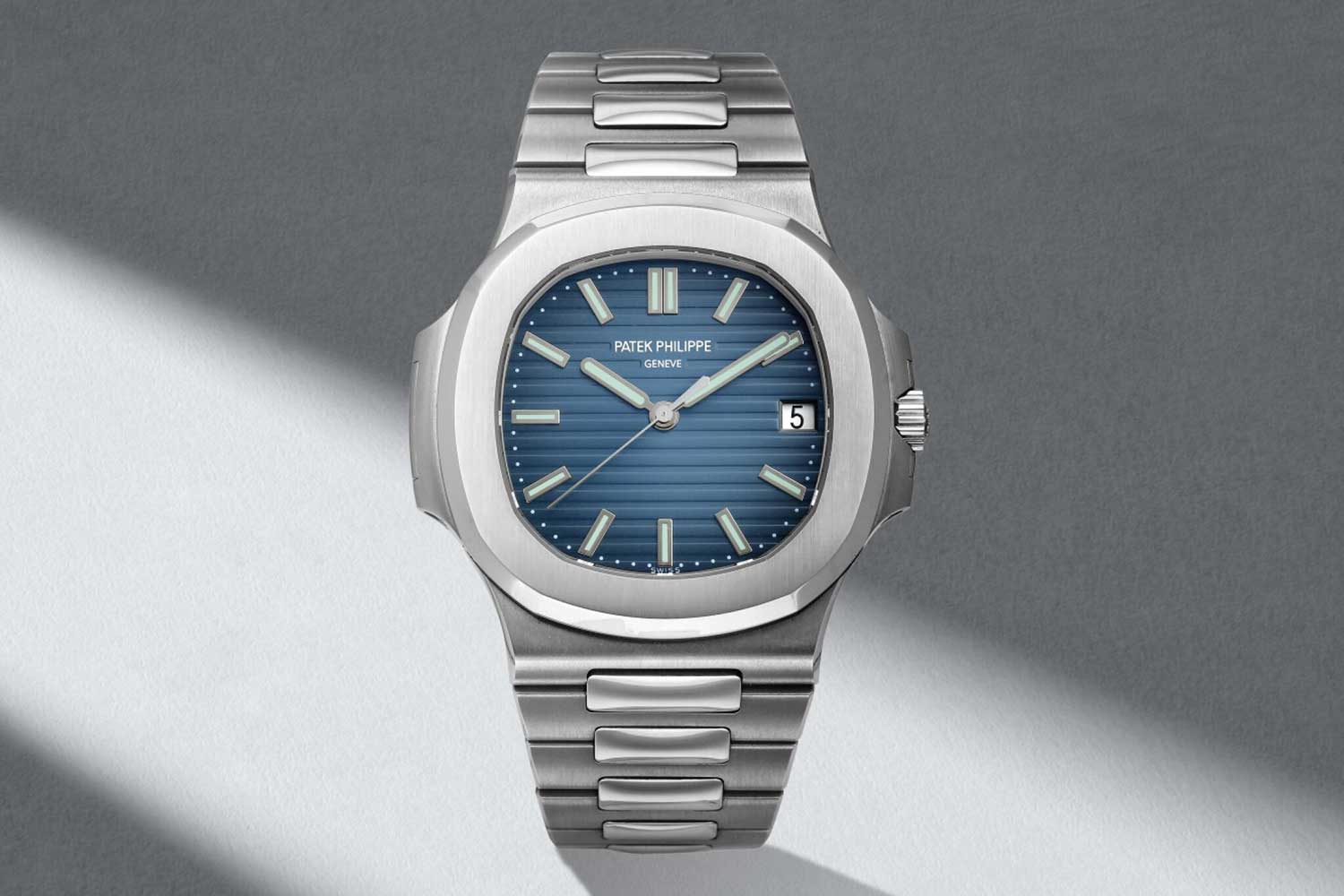
Patek Philippe Ref. 5711/1A (Images: Sotheby’s)
Auction results for the Ref. 3700/1A followed the same trend, and as early as 2006, examples were selling above the retail price of a new Ref. 5711/1A — vintage models commanding more than their contemporary equivalents was almost unheard of at the time. Patek Philippe had landed a bestseller straight out of the gate. Little did they know what would lie ahead of them and that the Ref. 5711 would become one of the most sought-after watches on the planet.
The Cultural Icon
The bombshell was delivered as a simple footnote: the Ref. 5711 appeared on the discontinuation list shared with retailers in February 2021, with no further announcement. It had been rumored for years; now it was official. Patek Philippe would retire its most in-demand model and one of its all-time bestsellers. This sent shockwaves through the watch world. Thierry Stern was even interviewed by the New York Times to explain the decision.
What had happened? The Ref. 5711 was a textbook case of a demand flywheel. The initial scarcity, whether due to limited production capacity or a conscious decision to cap the Nautilus’ share of sales, meant early adopters couldn’t get the watch as easily as they were used to, which made it feel special rather than frustrating.
From there, each force fed the next. Scarcity bred desire: people want what they can’t have. As more collectors talked about trying to get the watch, social proof compounded and signaled value. Successfully obtaining a Ref. 5711 became a badge of honor. Secondary market prices kept climbing above retail, which validated the hype but also attracted speculators, removing even more supply from legitimate buyers. And the press, which had once written about a beautiful watch, now wrote about an impossible-to-get one. The flywheel kept spinning because each element reinforced the others. The brand was not pushing; the market pulled.
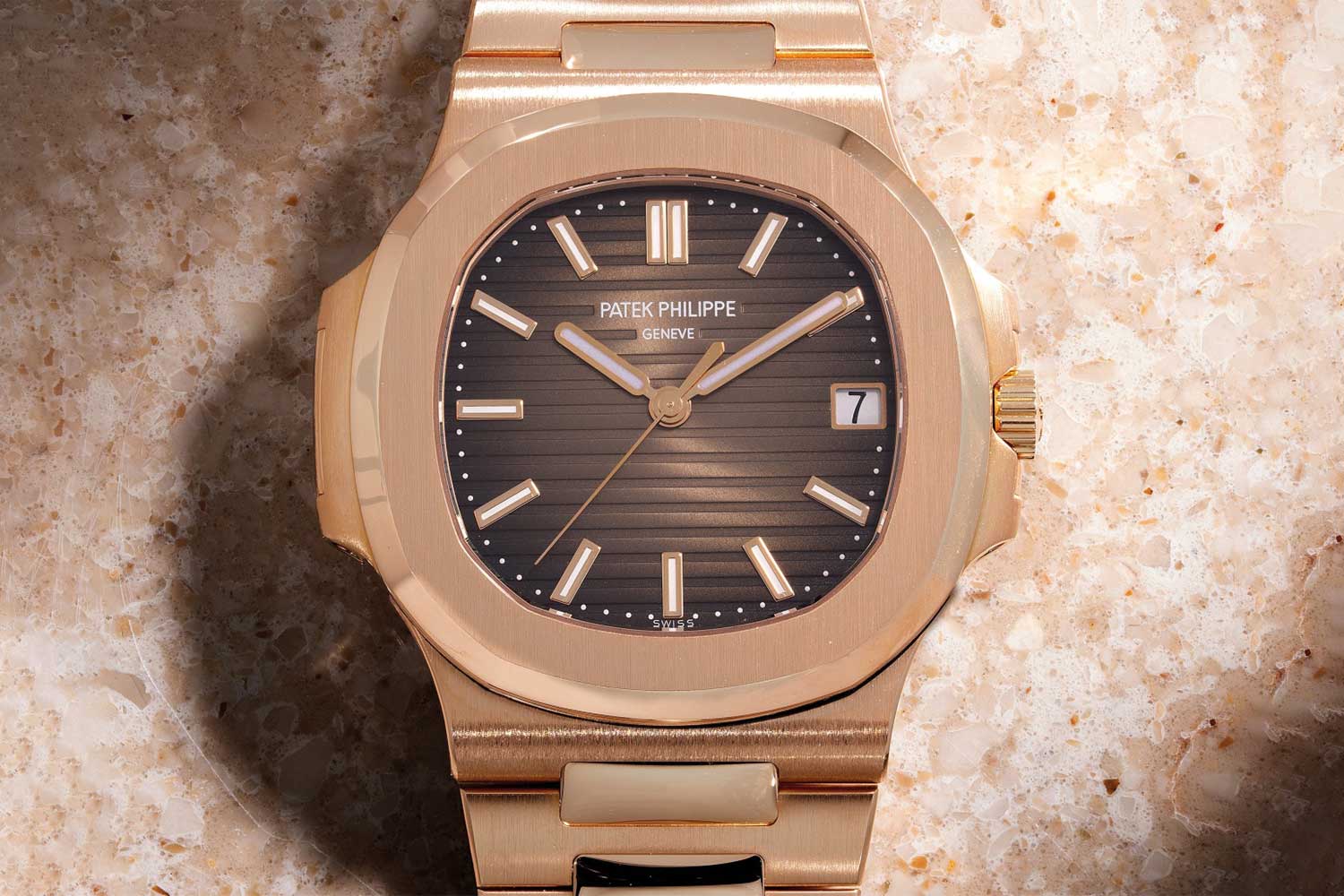
Patek Philippe Ref. 5711/1R available from 2015 to 2021 (Images: Phillips)
While this was happening, Patek Philippe was actually benefiting very little from the excess demand and inflated prices: it kept selling the watch at a fixed price to its retailers, who were left to manage waiting lists and client frustration. The inflated secondary prices benefited only the clients who resold their watches and the intermediaries who facilitated those sales and took their cut.
Patek Philippe had chosen to mark the 40th anniversary of the Nautilus in 2016 with two special models: the oversized chronograph Ref. 5976 in white gold and the Ref. 5711 in platinum and a blue dial with baguette diamonds to mark the hours, as well as the “40 1976–2016” inscription. After initial controversial reception, this model has proven to be particularly sought-after by collectors.
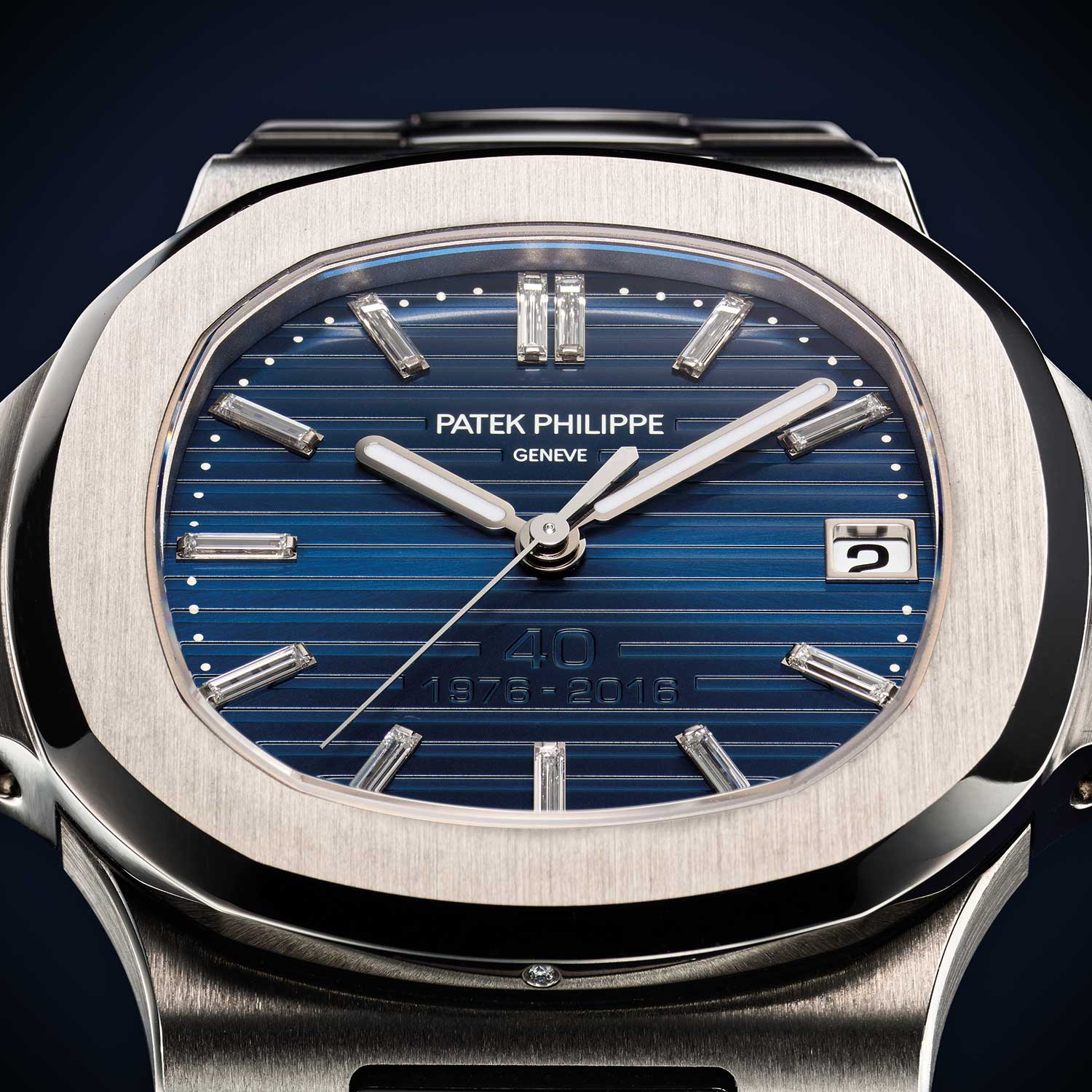
Ref. 5711/1P-001 made to commemorate the 40th anniversary of the Nautilus (Images: Collectability)
When releasing the Ref. 5711/1A-014 with a green dial and the Ref. 5711/1A-018 with a “Tiffany Blue” dial as a final celebratory run in 2021, Patek Philippe knew demand would exceed supply. As such, these releases could fairly be described as “manufactured scarcity.” Not all clients reacted well; the conversation focused more on scarcity than on the product itself.
Discontinuing the Ref. 5711 in 2021 and progressively phasing out other Nautilus models signaled that the era was over. This also meant forgoing significant sales in annual revenue, a decision that probably only a privately held company focused on the very long term would make. In doing so, Patek Philippe protected the brand as a whole.
The Ref. 5811/1G was introduced in 2022 as the new time-only Nautilus “Jumbo” in the collection. Its case grew by 1mm to 44mm and returned to a two-part construction as a nod to the original Ref. 3700, with the characteristic blue-black dial intact, though it is available exclusively in white gold, not steel. It embodies a classic incremental evolution, and one that was warmly received.
Prices on the secondary market retreated from their 2022 highs and, as auction results show, have now stabilized, or even ticked up slightly. Nearly five years after the discontinuation of the Ref. 5711, all bracelet models sell for several multiples of their original retail price, proof that the model struck a particular chord that keeps resonating with collectors. Patek Philippe has created long-term value not only for clients who purchased at retail, but also for early adopters who bought on the secondary market.
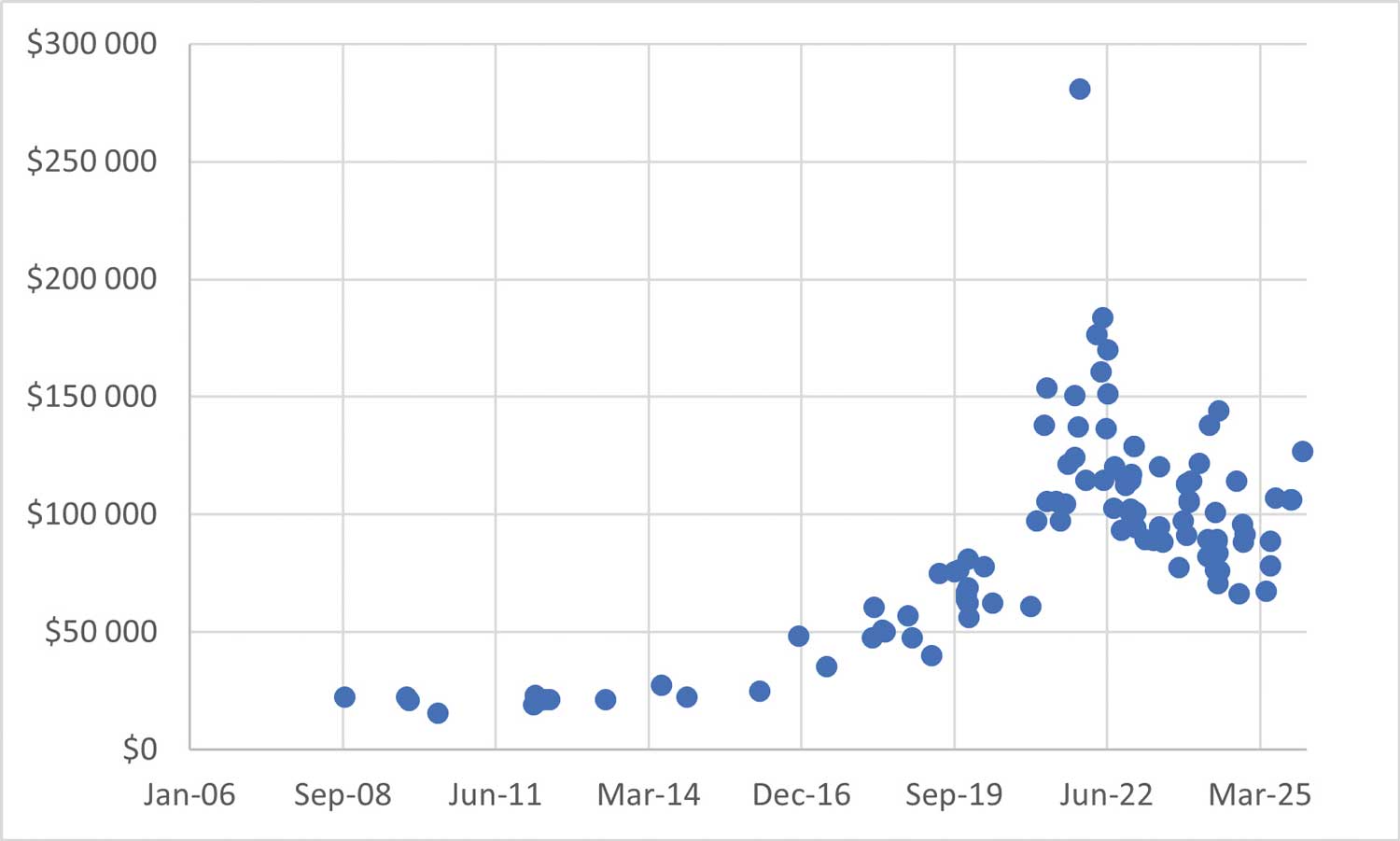
Ref. 5711/1A-001 and 5711/1A-010 auction results from 2006 to 2025, excluding double-signed dials and double-sealed examples
Conclusion
With the Nautilus and the desire it has created, Patek Philippe has gained enormous visibility, and brand awareness stands at unprecedented levels. This attracts many new clients, who now explore the entire catalog — complications, classic and sports models from both current and past offerings — and come to understand what Patek Philippe represents beyond a single model or collection. Today, it is one of the richest manufactures in watchmaking, with a storied history, the finest products, a diverse design and movement portfolio, and genuine innovation. All of this is held to the highest standards and rightly celebrated for countless achievements.
But the Nautilus did not become an icon because of scarcity or hype. It became one because of what it is. As it approaches its 50th anniversary, the Nautilus remains arguably one of the most beautiful watches ever created. It is meant to be worn and enjoyed, day in and day out. And when sunlight catches the dial and plays differently across the satin-finished and polished surfaces of the case and bracelet, you understand why.
Market data is based on the analysis of auction results of all watches that have appeared at the major international auction houses: Antiquorum, Christie’s, Phillips and Sotheby’s between 2000 and 2025. Prices include all fees and have been converted to USD at the exchange rate on the day of each sale. Indicative production numbers are based on back-to-market coefficients and remain estimates, which Patek Philippe will not confirm, and may be revised as new information comes to light.
Patek Philippe
You may also like
News
Patek Philippe at Watches & Wonders 2026: An Automaton, Celestial Sunset & Sunrise, Time-Only “Jumbo” and Midsize Nautilus
Apr 14, 2026
News
Patek Philippe at Watches & Wonders 2026: An Automaton, Celestial Sunset & Sunrise, Time-Only “Jumbo” and Midsize Nautilus
Apr 14, 2026
News
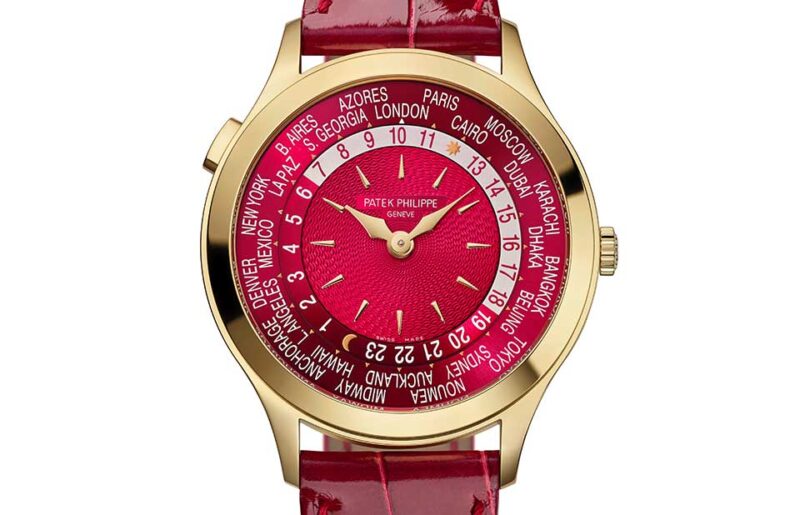
Patek Philippe at Watches and Wonders 2026: Annual Calendars Mark 30 Years While World Time Returns in New Colours
Apr 14, 2026
News
Patek Philippe at Watches and Wonders 2026: Annual Calendars Mark 30 Years While World Time Returns in New Colours
Apr 14, 2026
Editorial
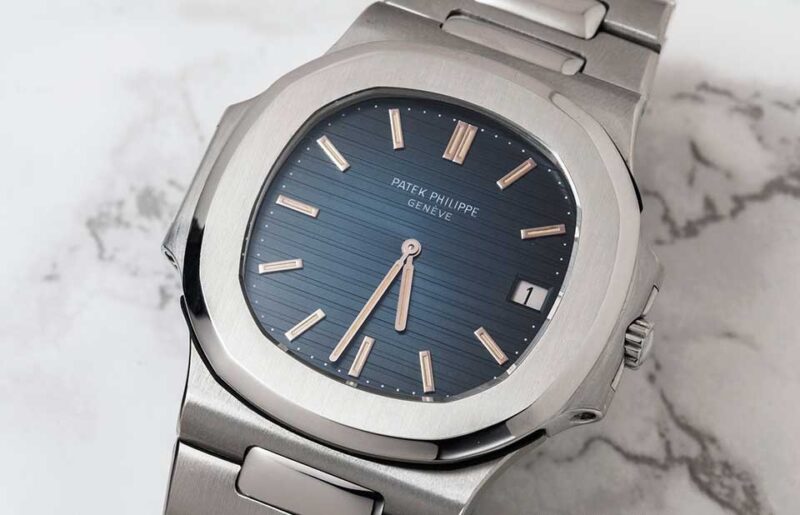
The Nautilus is About to Turn 50: Here’s How Patek Philippe Might Celebrate
Mar 25, 2026
Editorial
The Nautilus is About to Turn 50: Here’s How Patek Philippe Might Celebrate
Mar 25, 2026