Piaget at Watches and Wonders 2026
News
Piaget at Watches and Wonders 2026

Piaget’s fascination with ornamental stones goes back to the 1960s when its new collections in gold asserted a new era for the maison – launching jewellery-style watches in precious materials at a time when many were turning to sporty steel. Piaget declared that a watch is, first and foremost, a piece of jewellery, and its icons blurred the line between timepiece and jewel, often with a contemporary style that looks deceptively simple. But the ornamental stone dials that have defined the house’s visual language since 1963 require cutting material to 0.4mm, no mean feat. The gadroons that ripple out around Piaget bezels since 1979 are individually etched by hand. The gold chains from which the Swinging Sautoirs hang are all painstakingly forged by hand by skilled artisans.
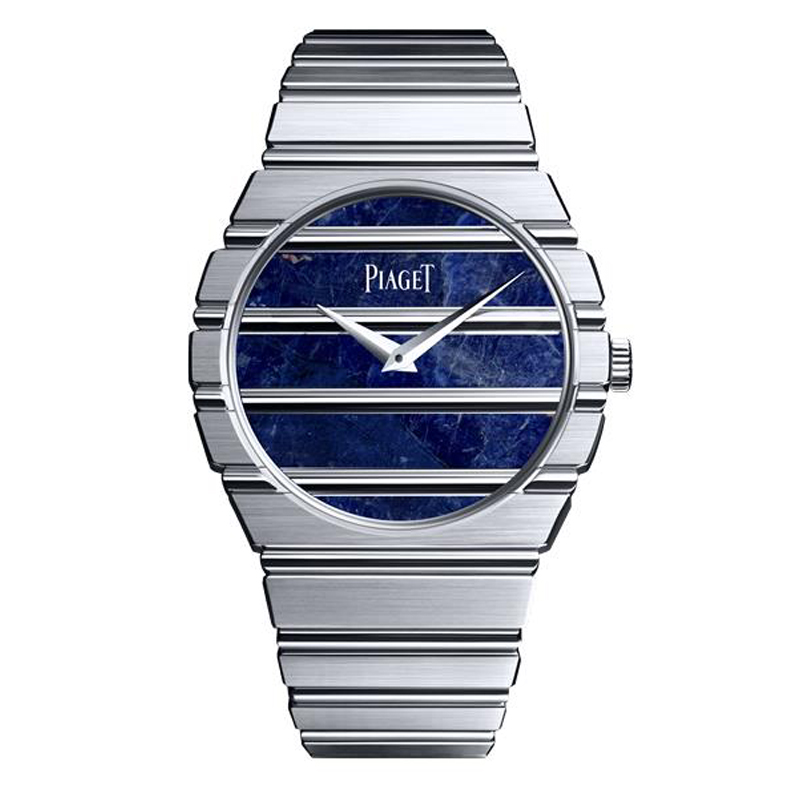
Piaget Polo 79, 38mm; 18K white gold satin finish case and polished gadroons, 18K white gold dial with polished gadroons and sodalite
Piaget Polo Signature
For the 2026 edition of Watches and Wonders, Piaget applies the charm of its signature gadroons to its Polo watches
The gadroon might be dismissed as a decorative flourish – a series of incisions running around the bezel or over the dial surface, but the interplay of surfaces brings signature sophistication to Piaget watches. When the original Polo launched in 1979, fully forged in gold and worn by everyone from Andy Warhol to Ursula Andress, the gadroon was what made it unmistakable from across a room.
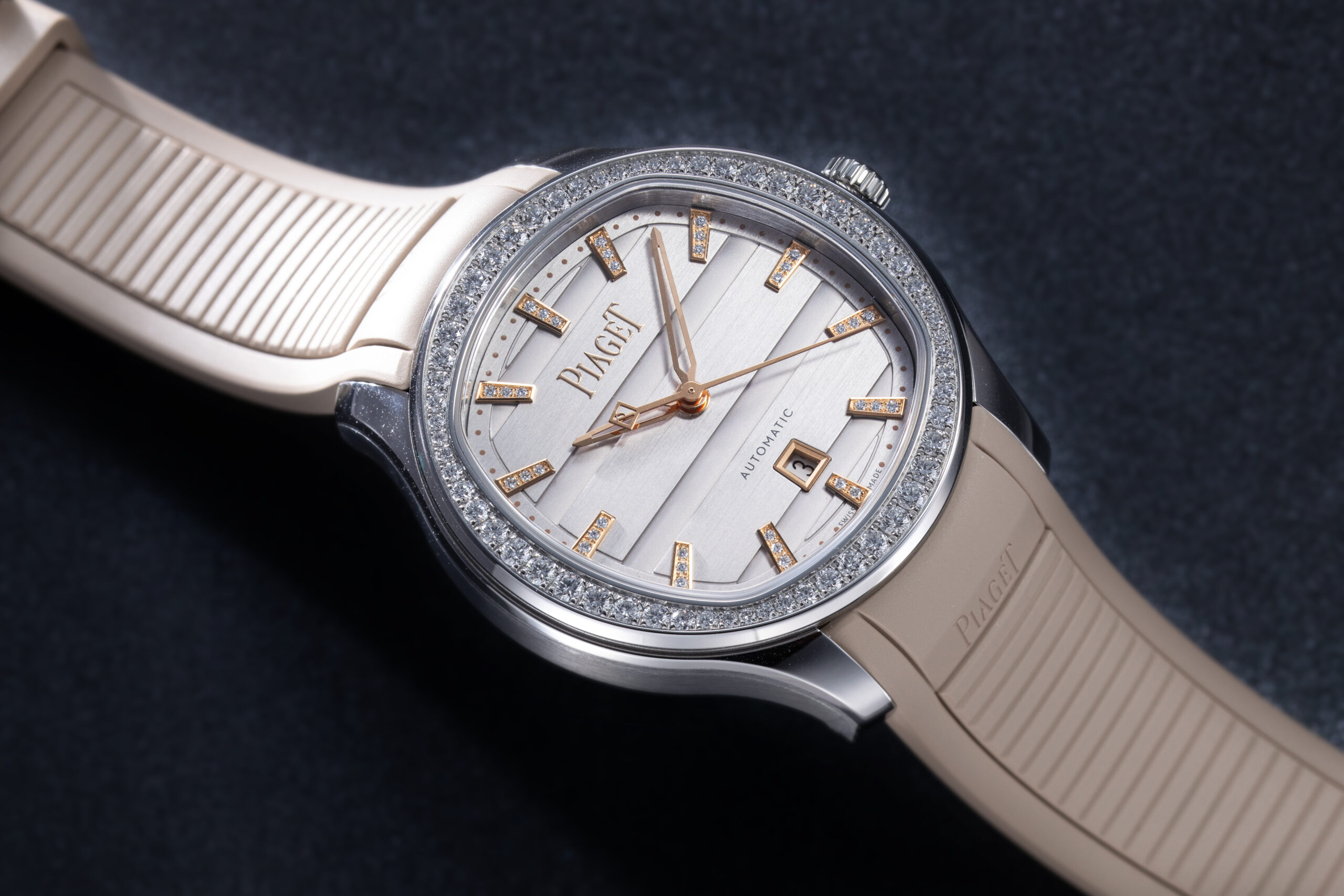
Piaget Polo Signature 36mm, steel case with diamond set bezel and silver signature dial with polished gadroons and 36 brilliant-cut diamonds (Revolution©)
For 2026, this decorative flourish is expressed across a series of Polo watches. A new white gold Polo 79 arrives with a sodalite dial – the first time this blue-grey ornamental stone has appeared in the contemporary Polo range – the contrasting mineral dial highlights the uniqueness of the gadroons. The gadroon also makes its debut on the Polo Date, revisited as a couple’s watch with the design codes of the Polo 79 applied to a more everyday proposition. The 36mm version carries 96 brilliant-cut diamonds and an interchangeable beige rubber strap; the 42mm is presented in khaki green. Both share a silver dial that echoes 1979 design codes. Six further blue-dialled extensions complete the Polo Signature range – with versions in steel, rose gold, gem-set and plain, bracelet and strap.
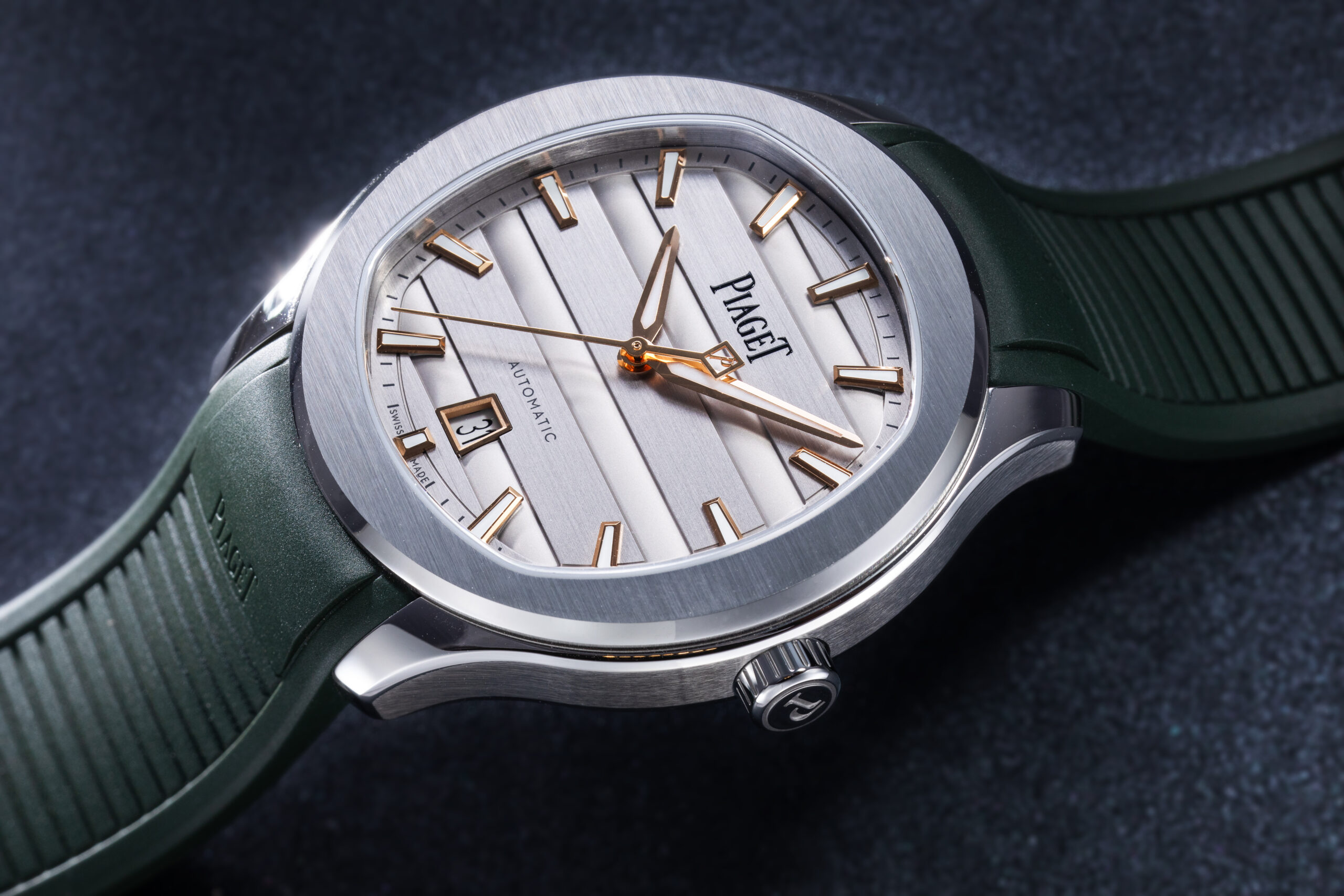
Piaget Polo Signature (Ref. G0A51012) in steel introduces a refined, everyday take on the gadroon motif, paired with a silver dial and green rubber strap (Revolution©)
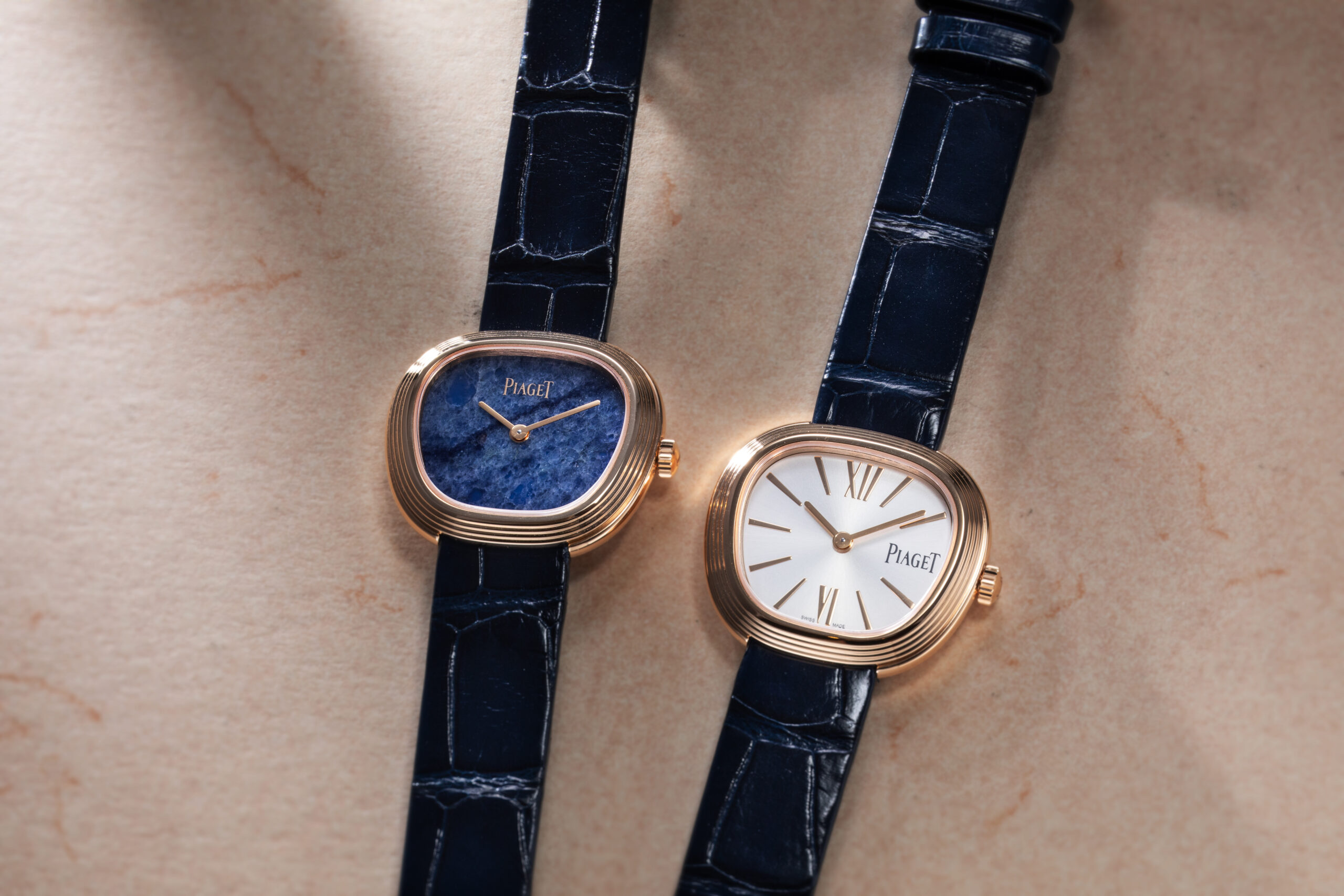
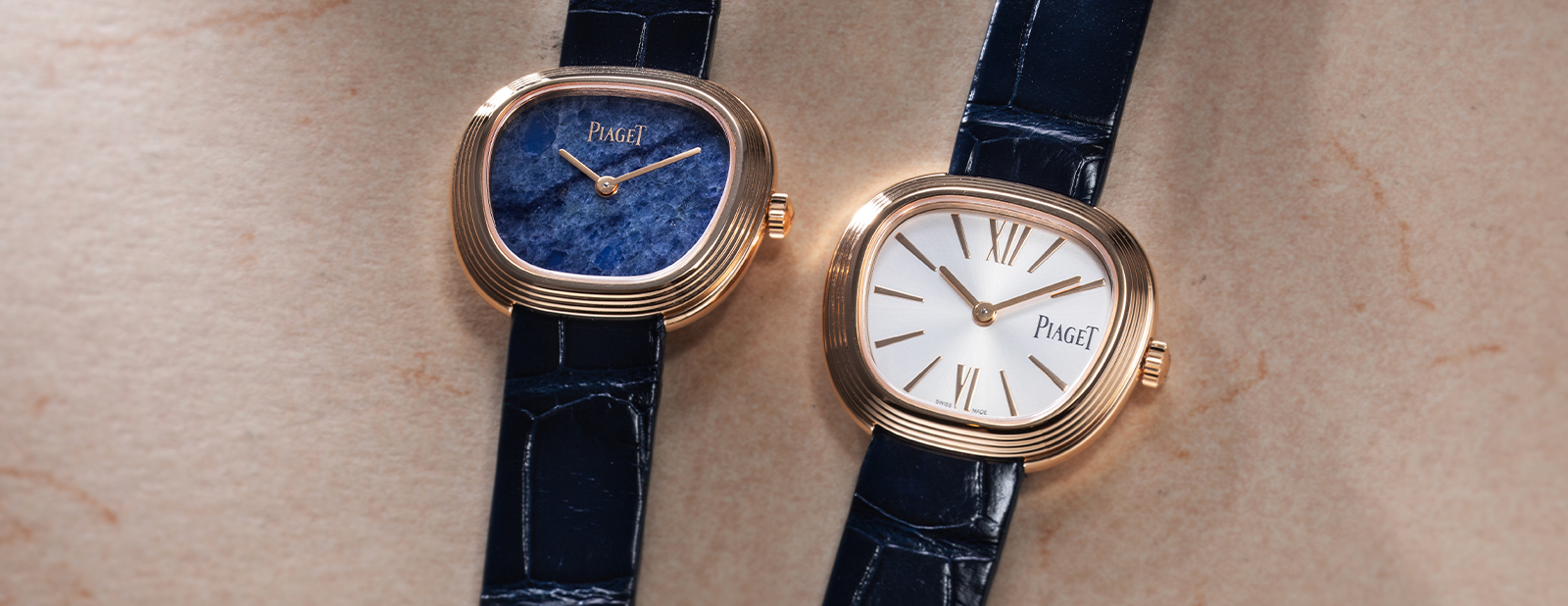
Piaget Sixtie (29mm) in 18K pink gold with blue quartz dial and blue alligator leather strap, alongside the Piaget Sixtie (29mm) in 18K pink gold with silvered solar satin-brushed dial on a matching blue alligator strap (Revolution©)
Piaget Sixtie on Strap
Piaget’s jewellery watch Sixtie enters a deep blue territory – and evolves onto a strap
When Piaget launched Sixtie at last year’s Watches & Wonders, it revisited the trapezoid case – a shape first seen in the 1960s jewellery-watch designs of Jean-Claude Gueit when the distinction between a timepiece and a bracelet had become genuinely blurred. The Sixtie arrived as a new creation that expressed heritage without nostalgia. It established itself as one of the most distinctive watch silhouettes of the year. This year it evolves againwith two new versions on deep blue alligator. The strap’s depth of colour makes the pink gold gadroon-etched bezel stand out against the blue and even the ardillon buckle is trapezoid-shaped, gadroon-decorated, a neat consistency in design.
The dial choice is where the two versions diverge in character and apearance. One boasts a silvered solar satin-brushed surface with golden Roman numerals – light, classical and clean. The other puts blue quartz stone centre-stage, with each dial unique because the stone itself is natural and unique. Getting quartz to 0.4mm without it breaking is a task in itself and that challenge is part of what makes them so interesting. The Sixtie on strap is more accessible than its bracelet predecessor, and it is also more compelling.
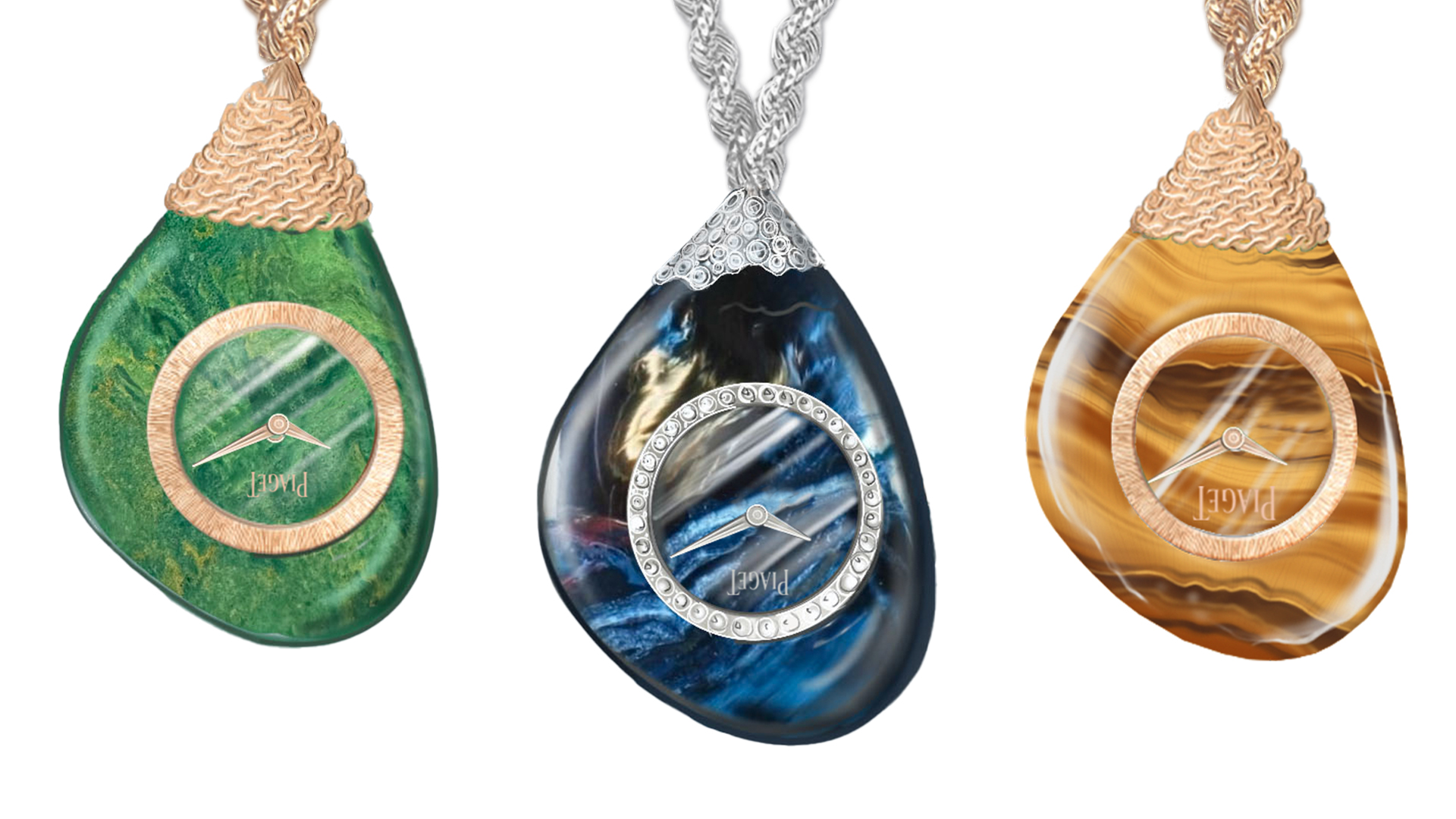
Piaget Swinging Pebbles sautoir in verdite, Piaget Swinging Pebbles sautoir in pietersite, and Piaget Swinging Pebbles sautoir in tiger’s eye — each carved from a single ornamental stone and suspended from a hand-crafted gold chain
Swinging Pebbles
Piaget presents an update of its iconic Swinging Sautoirs, carved from ornamental stones and suspended from gold chains
The Swinging Sautoirs that Piaget introduced with the 21st Century Collection in 1969 were, at the time, a fairly radical proposition. A watch that wasn’t worn on the wrist but that swung from a chain and was somewhere between jewellery and sculpture. For 2026 Piaget evolves with the Swinging Pebbles: new sautoirs in which the entire pendant — case, dial, the watch itself – is carved from a single piece of ornamental stone.
Three stones: tiger’s eye, verdite, pietersite offer different interactions with light and colour. The movement is hollowed from within the stone, sealed inside, and then hung from a hand-twisted gold chain. Twisted gold chain is a specific craft at Piaget and the way it moves – the fluidity, the way light runs along it – is the product of decades of chainmaking expertise that sits entirely within the maison.
The pebble form references the Kimono pocket watches Piaget made in 1974: smooth, organic, made to be turned over in the hand. There is something pleasingly at odds with the industry’s current preoccupations in an object that communicates time by inviting you to pick it up: watches which celebrate shapes, craftsmanship, and freedom. The seamless harmony of gold, ornamental stones, and timekeeping reflects Piaget’s mastery of each.
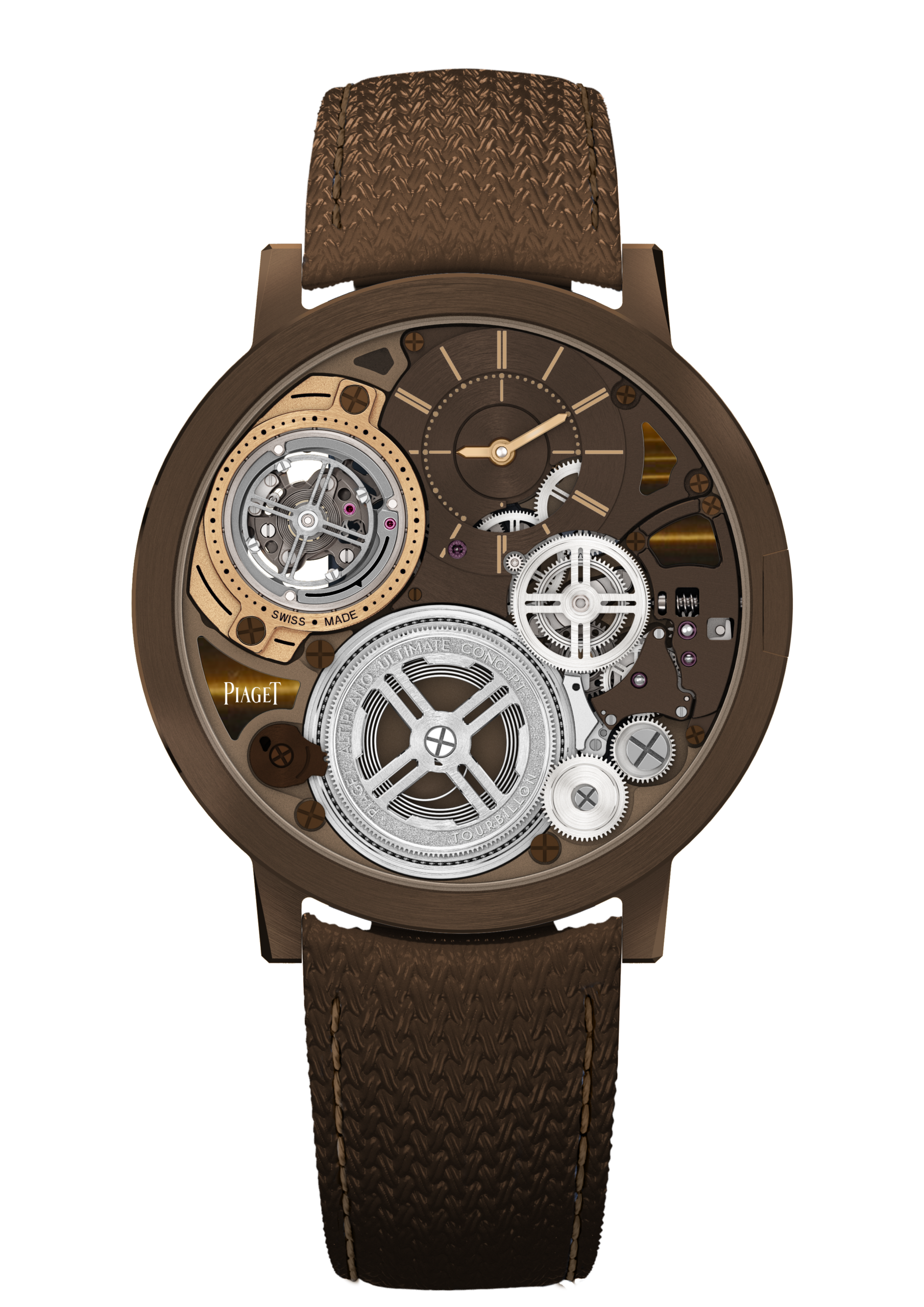
A 41.5mm brown cobalt alloy case houses the Ultra-thin manual-winding mechanical 970P-UC Piaget Manufacture Tourbillon caliber of the Altiplano Ultimate Concept Tourbillon
Altiplano Ultimate Concept Tourbillon
High watchmaking integrates an ornamental stone into the record-breaking 2mm profile
The ornamental stone dial was made possible by the 9P ultra-thin movement of 1957, whose dial design developed a case thin enough to accommodate a larger decorative surface without compromising the watch’s finesse. The dial became, as the Maison itself described it, the “new territory of creative expression.” For 2026, the Altiplano Ultimate Concept Tourbillon, already a record at 2mm total thickness, now integrates ornamental stone into its architecture, assembled in an operation requiring a 0.15mm needle and a level of care that makes the process, frankly, a little alarming to contemplate.
A menu of four stones – tiger’s eye, blue sodalite, jade and onyx – paired with four case options and further personalised details consciously echoes the original Style Selector, Piaget’s proto-bespoke service from the mid-1960s that gave clients the ability to compose their own jewellery watch from a palette of dials, bracelets and bezels.
Piaget
You may also like
Editorial
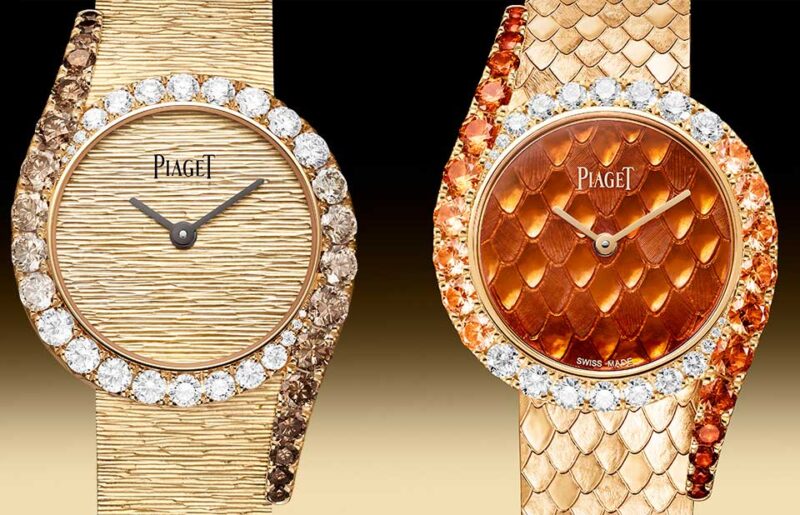
Piaget’s Duo of 2026 Limelight Galas
Feb 26, 2026
Editorial
Piaget’s Duo of 2026 Limelight Galas
Feb 26, 2026
News
Two-Tone Fanfare: Piaget Polo Hits the High Notes
Jan 28, 2026
News
Two-Tone Fanfare: Piaget Polo Hits the High Notes
Jan 28, 2026
Editorial
Revolution Awards 2025: Iconic Watch — Piaget Andy Warhol Watch ‘Collage’ Limited Edition
Jan 27, 2026
Editorial
Revolution Awards 2025: Iconic Watch — Piaget Andy Warhol Watch ‘Collage’ Limited Edition
Jan 27, 2026