The Bravest Watch in History: F.P. Journe’s Chronomètre à Résonance
Editorial
The Bravest Watch in History: F.P. Journe’s Chronomètre à Résonance

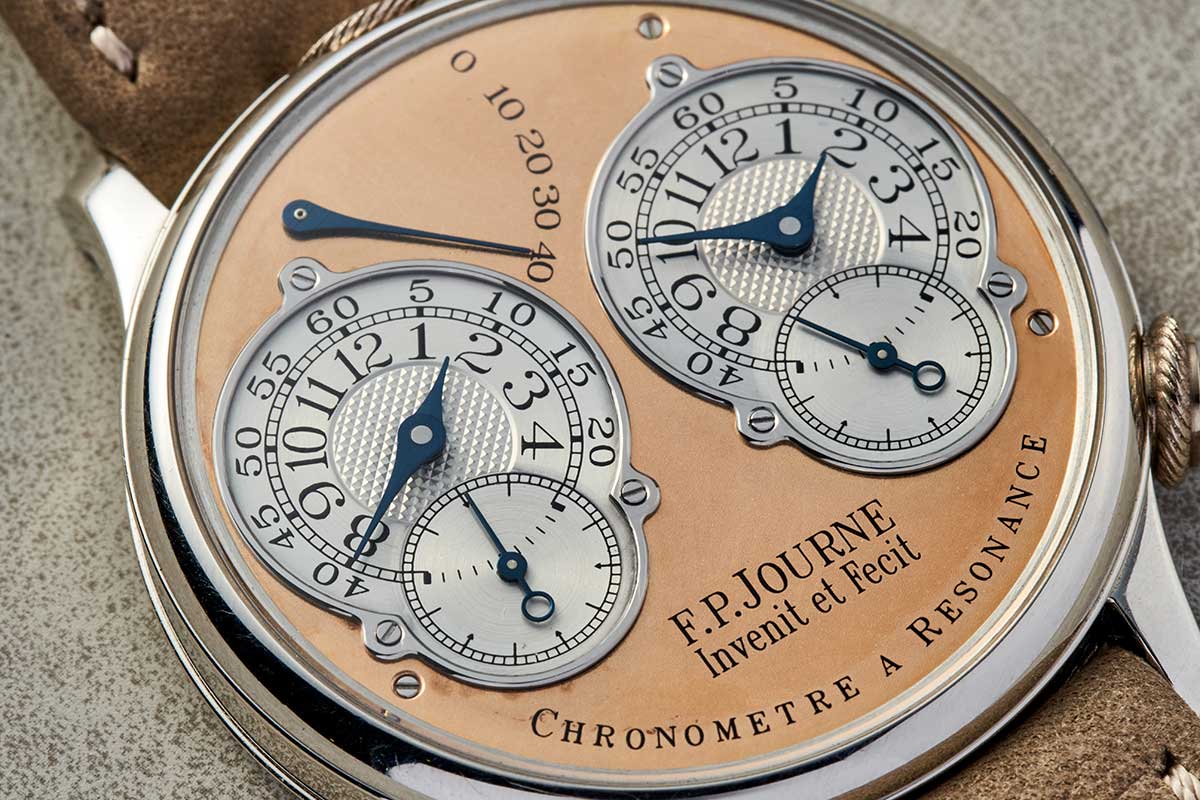
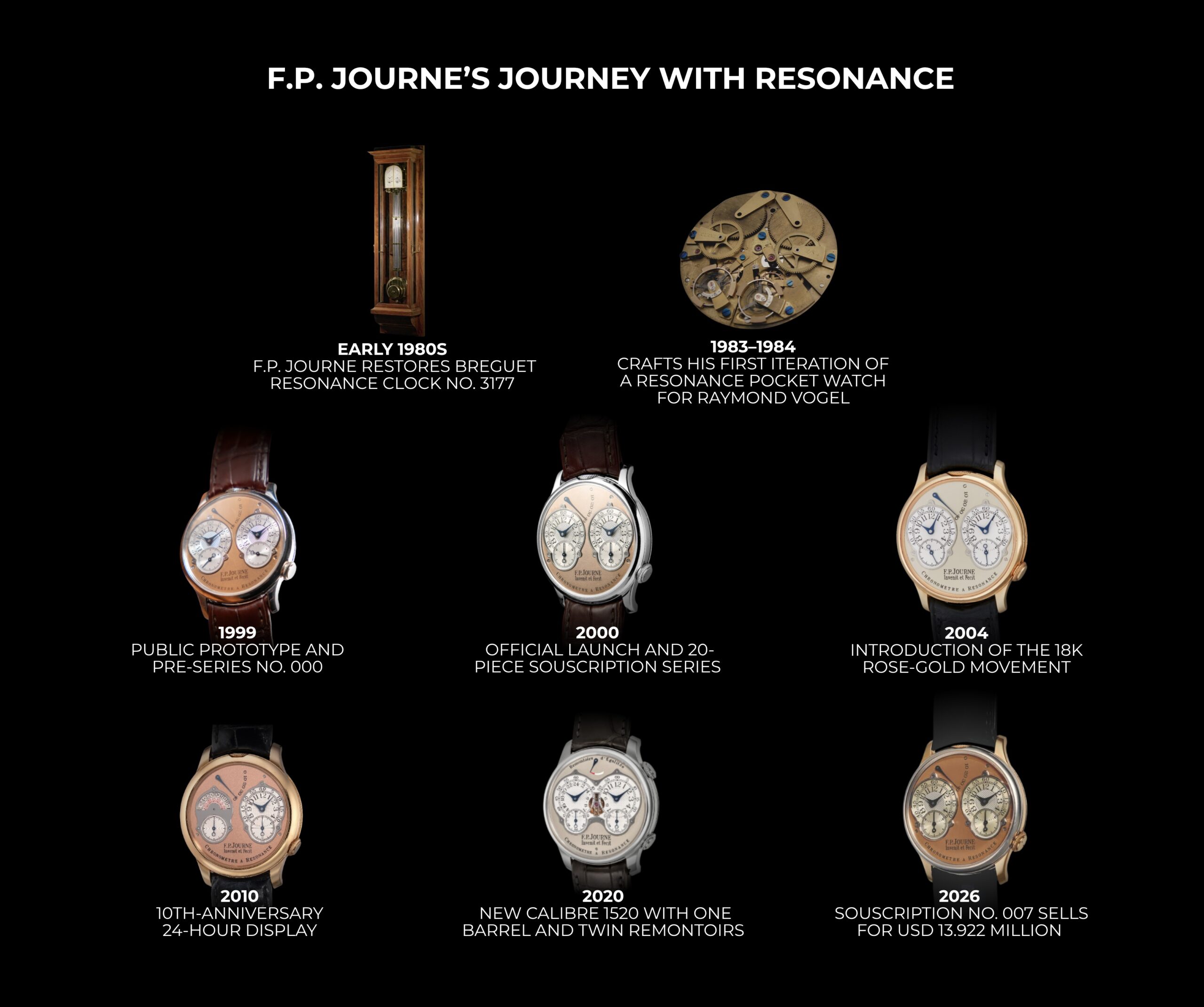
On June 14, 2026, at Phillips New York, a watch sold for USD 13,922,000. It was an F.P. Journe Chronomètre à Résonance “Souscription, No. 007,” made around the year 2000. Nine minutes of bidding turned a watch estimated at more than USD 1 million into the most expensive watch ever sold by an independent watchmaker, and the most expensive watch of the 21st century ever sold at auction, full stop. The objective of this article and its accompanying video is not to focus on the result, impressive though it is, but to look at the reasons why someone would be willing to pay such a sum for this watch.
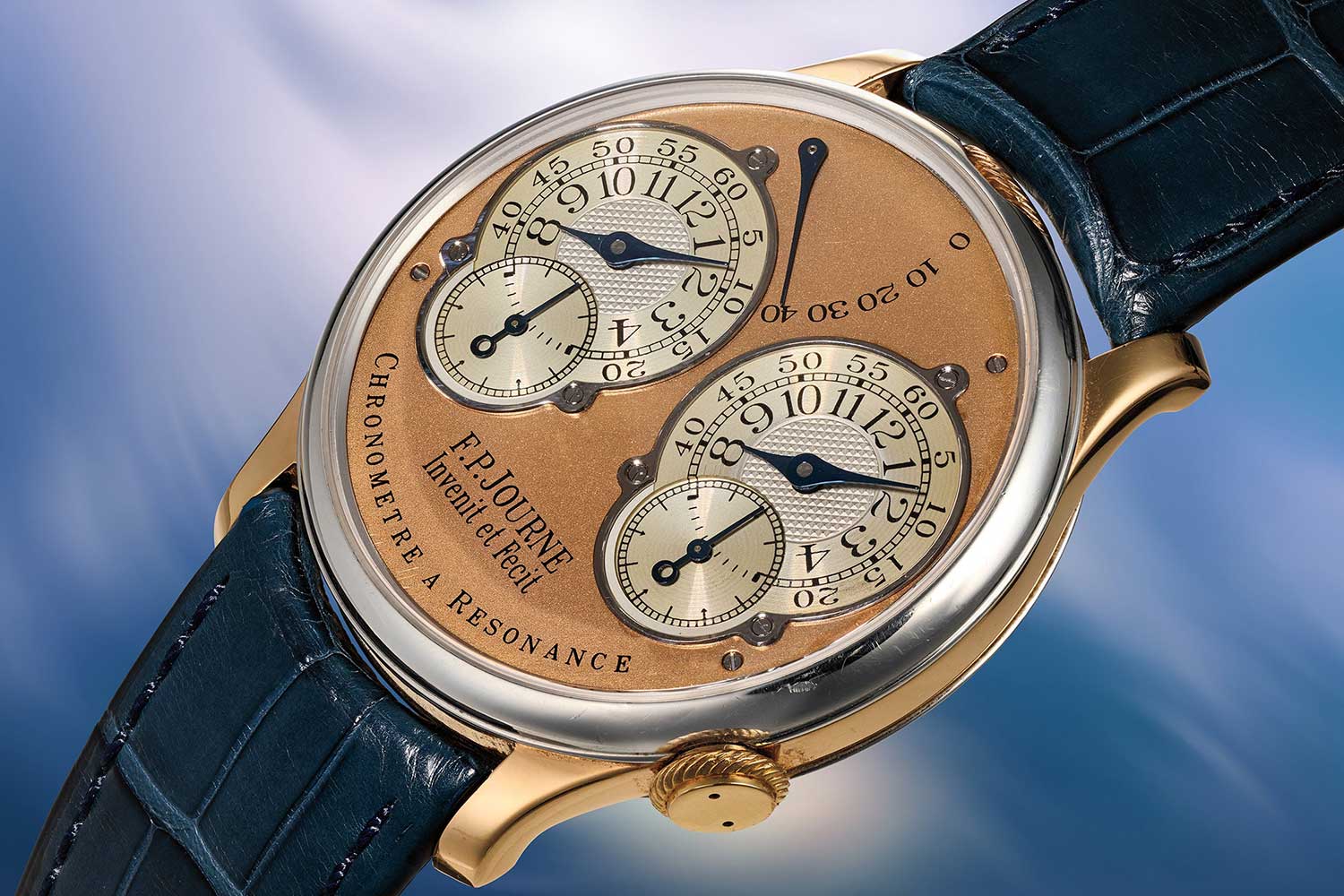
F.P. Journe Chronomètre à Résonance “Souscription, No. 007” (Image: Phillips)
To understand why, you need to understand three things about this specific watch — and a scientific phenomenon that dates back nearly 400 years.
Firstly, the Chronomètre à Résonance is of immense historical importance. It demonstrated that resonance — a phenomenon where two balances enter into the same frequency through the shared transmission of vibrational energy — could work on the wrist. Before Journe, resonance — which was previously known as Huygens synchronization — had only ever lived inside all of six known clocks (one of which was destroyed) and three known pocket watches. That’s nine resonance timepieces in all of history (though there have been some homage watches made by quirky autodidacts, such as Buchanan of Chelmsford and David Walter). Imagining that the principle could work in a tiny object that swings around on the end of a moving arm, all day, every day, was considered somewhere between improbable to impossible. The fact that Journe, at the very beginning of his career, staked his entire reputation as a watchmaker on his Chronomètre à Résonance speaks of his extraordinary testicular fortitude.
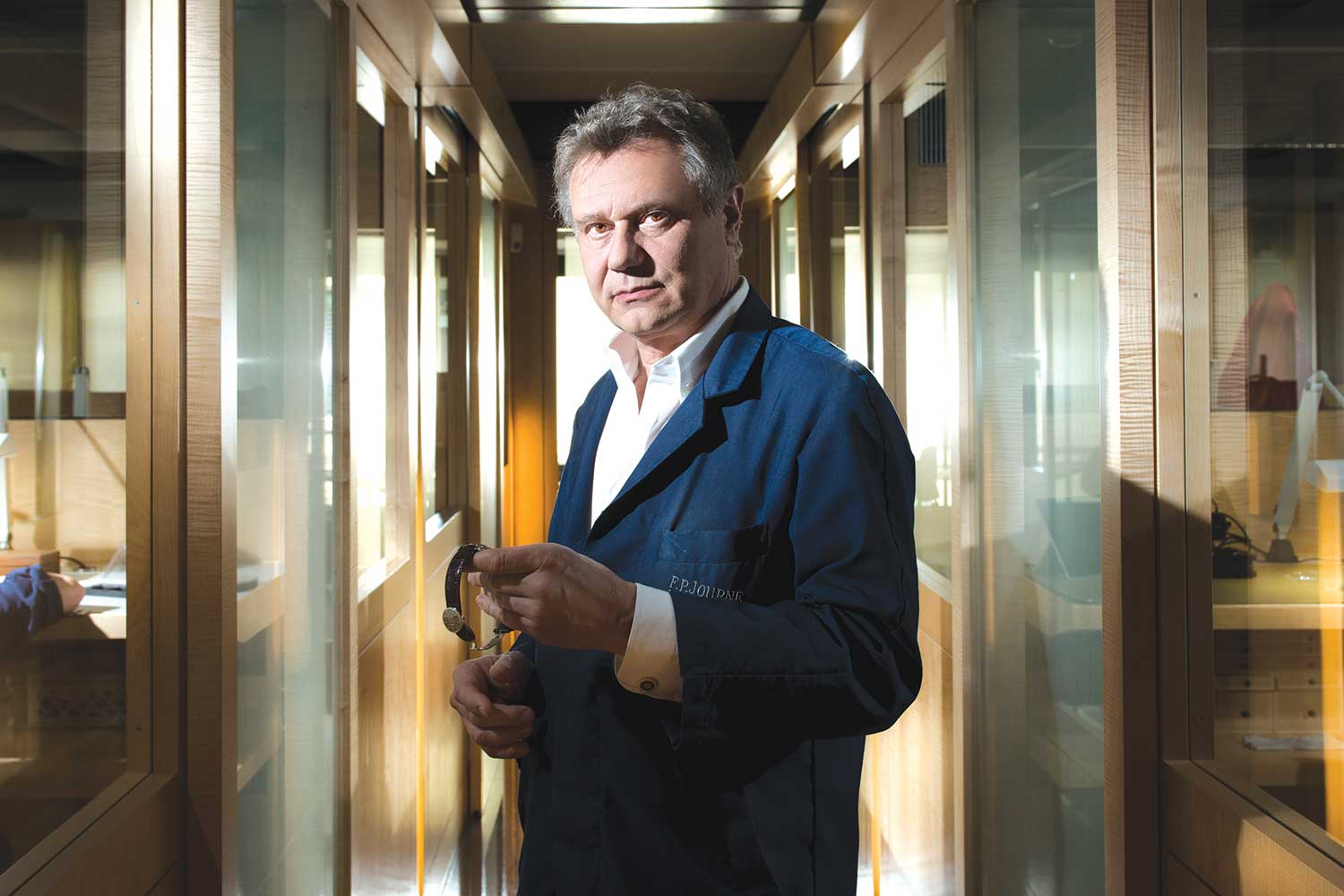
François-Paul Journe
George Daniels would later tell him, “You have a lot of courage,” because the risk of failure was immense. The fact that Journe was willing to risk his entire reputation on his conviction that he could make resonance work in a wristwatch will be forever recognized as one of the bravest acts in watchmaking. Even better, as he explains, resonance has its greatest application in wristwatch format.
He states, “Resonance is most useful in a wristwatch because it helps the balance wheels recover from the almost constant shocks that they are subjected to. A clock or even a pocket watch receives far less frequent disturbances than a wristwatch. A clock is completely static. A pocket watch is either worn, hung on a pedestal or placed on a desk. In contrast, the life of a wristwatch is chaos — it is constantly in motion .”
Secondly, this is one of the earliest and most significant watches Journe built with his own hands, before he became the single most collected living watchmaker on the planet, before “F.P. Journe” meant anything to anyone outside a small circle of collectors who believed in him. Today, he runs one of the industry’s most successful businesses, with a turnover estimated at over CHF 100 million a year by Morgan Stanley’s report on the Swiss watch industry, despite producing fewer than 2,000 mechanical watches per year. But Journe doesn’t personally assemble all of the watches that bear his name. Indeed, he is well known for stepping away from the bench once he has perfected a mechanism and taught its construction to his watchmakers. He explains, “To me, the challenge has been met and it is time for a new challenge.”
But No. 007 was personally assembled, regulated and finished by Journe during the founding years of the manufacture. Between 1999 and 2000, Journe needed capital to start his own manufacture. So he asked 20 clients to pay in advance, on trust, for a watch that didn’t fully exist yet — the Tourbillon Souverain. When Journe introduced the Chronomètre à Résonance the following year, those same supporters were offered the first 20 examples. No. 007 is the seventh of those 20 watches, known today as the Souscription Resonance series (Journe scholarship recognizes the existence of a pre-Souscription series).
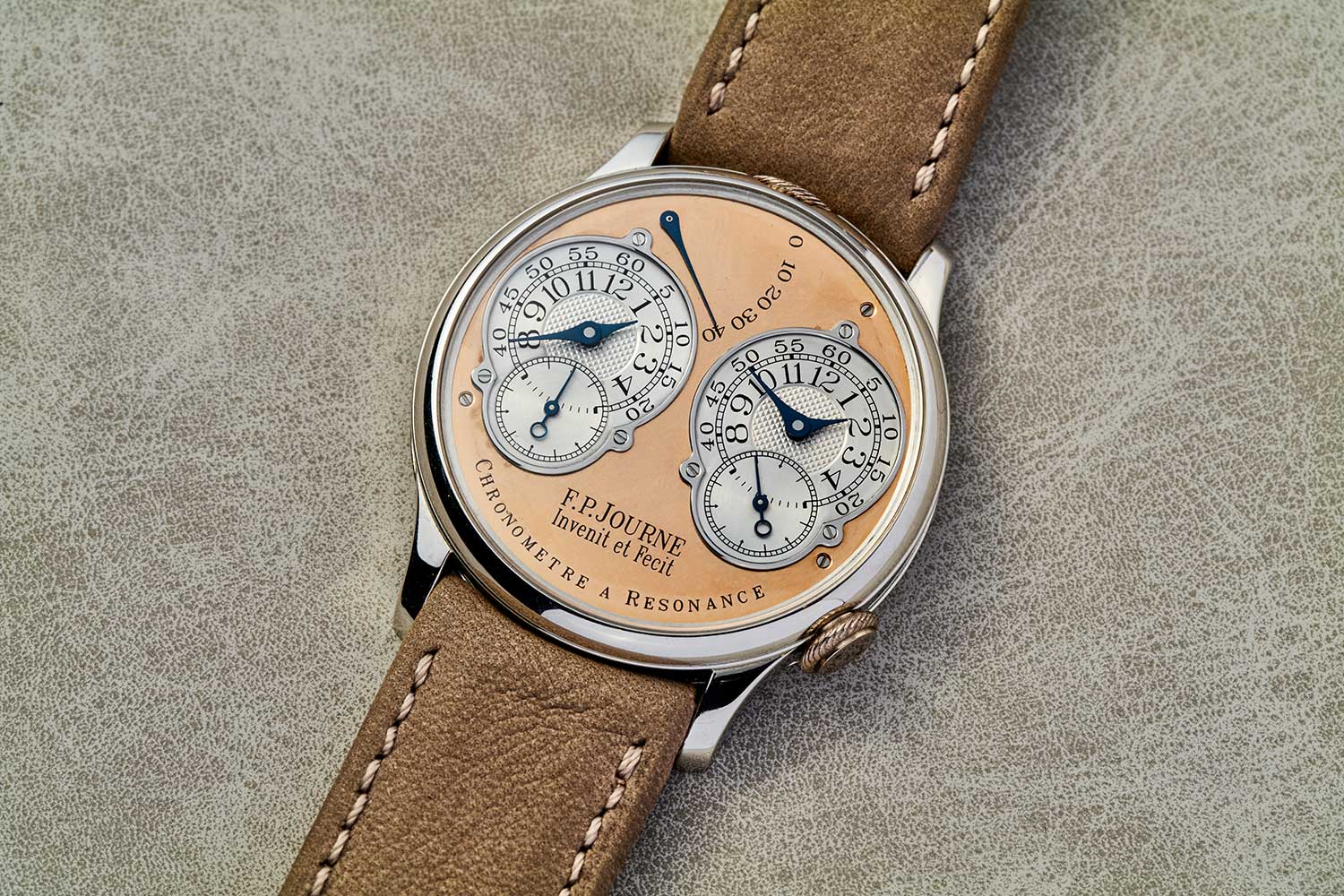
An example of the Chronomètre à Résonance Pre-Souscription auctioned by Christie’s in 2025 (©Revolution)
Thirdly, 007 is simply very rare. Out of the 20 Souscription Résonance watches made, only five were cased in two-tone platinum and pink gold rather than platinum alone. Of those five, only two carry a matching pink gold dial. No. 007 is one of those two watches. The other, in this exact configuration, still belongs to François-Paul Journe and appears in my television series Man of the Hour. Needless to say, that watch will never come onto the market.
That’s the watch. Now let’s go back nearly 400 years and find out where the idea came from.
Watch Masters of Chronometry Ep. 2 on Resonance, where Wei Koh and Constant Kwong examine the phenomenon and Journe’s defining creation.
Huygens and the Odd Sympathy
Our story starts with Christiaan Huygens, the Dutch scientist who invented the pendulum clock and patented it in 1657. In February 1665, Huygens was sick in bed at his home in The Hague. To pass the time, he was watching two of his pendulum clocks, which were hanging side by side from a shared wooden beam supported by two chairs.
-

- Christiaan Huygens
-
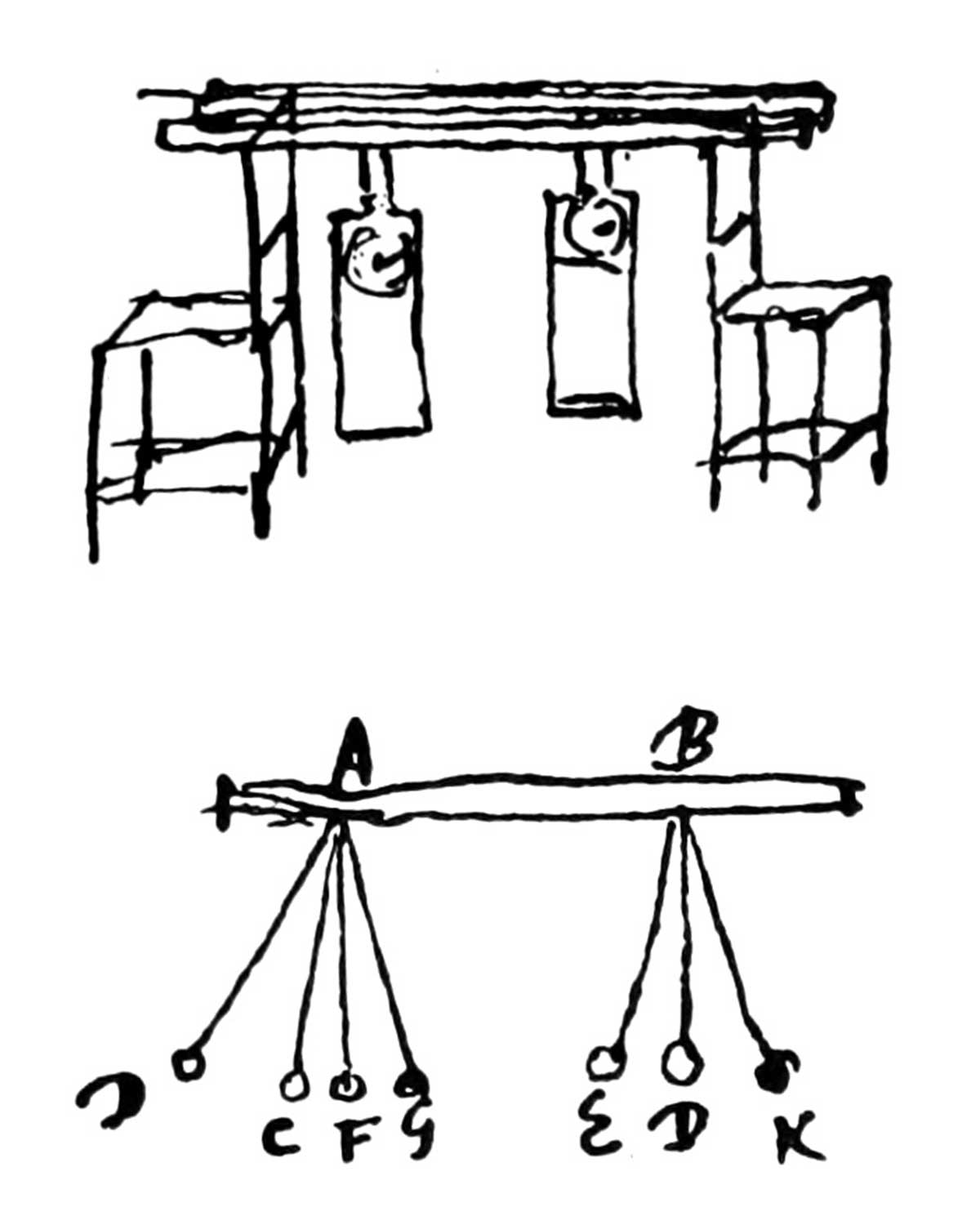
- Christiaan Huygens’ sketch of an experiment with a pair of pendulum clocks (top) and his attempt to understand their synchronization (bottom). This drawing is preserved in Oeuvres complètes de Christiaan Huygens, a massive 22-volume collection of his scientific writings, correspondence, and sketches published by the Dutch Society of Sciences
He noticed something strange. No matter how he started the two pendulums, within about half an hour, they would always settle into swinging in perfect opposite directions to each other, locked together as if they were talking to one another. If he disturbed one of the pendulums by hand, the pair would drift apart and then, within 30 minutes, snap right back into that same opposite rhythm.
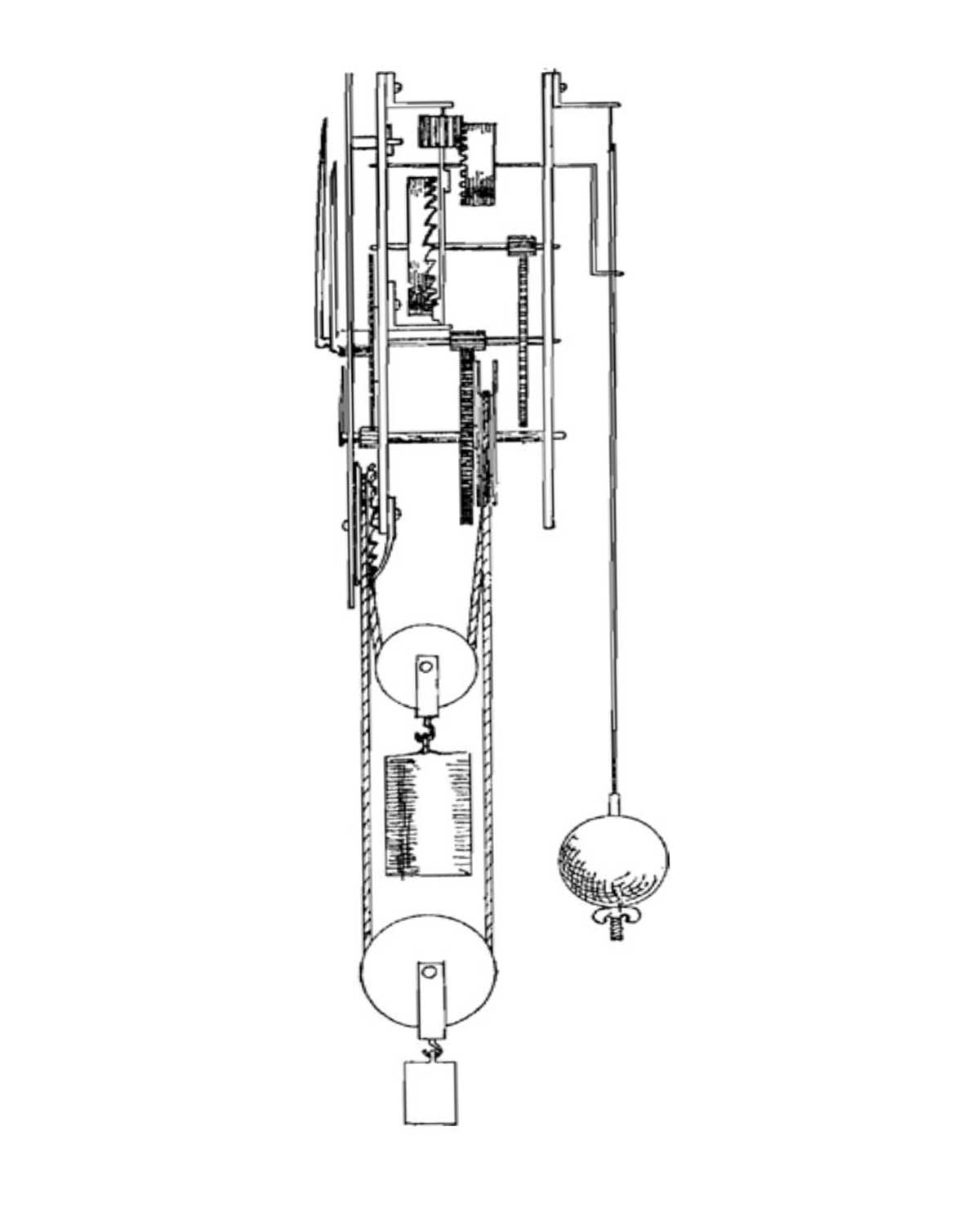
This drawing is from Christiaan Huygens’s treatise Horologium Oscillatorium, published in 1673 in Paris. It records improvements to the mechanism that Huygens had illustrated in the 1658 publication of his invention, titled Horologium
Huygens couldn’t fully explain what he was witnessing, but he correctly guessed the underlying principle: the two clocks were passing tiny vibrations back and forth through the wooden beam they shared. He called it an “odd kind of sympathy” and wrote about it to the Royal Society in London. Today, we call it Huygens synchronization, and it’s recognized as the first scientific description of what watchmakers now call resonance.
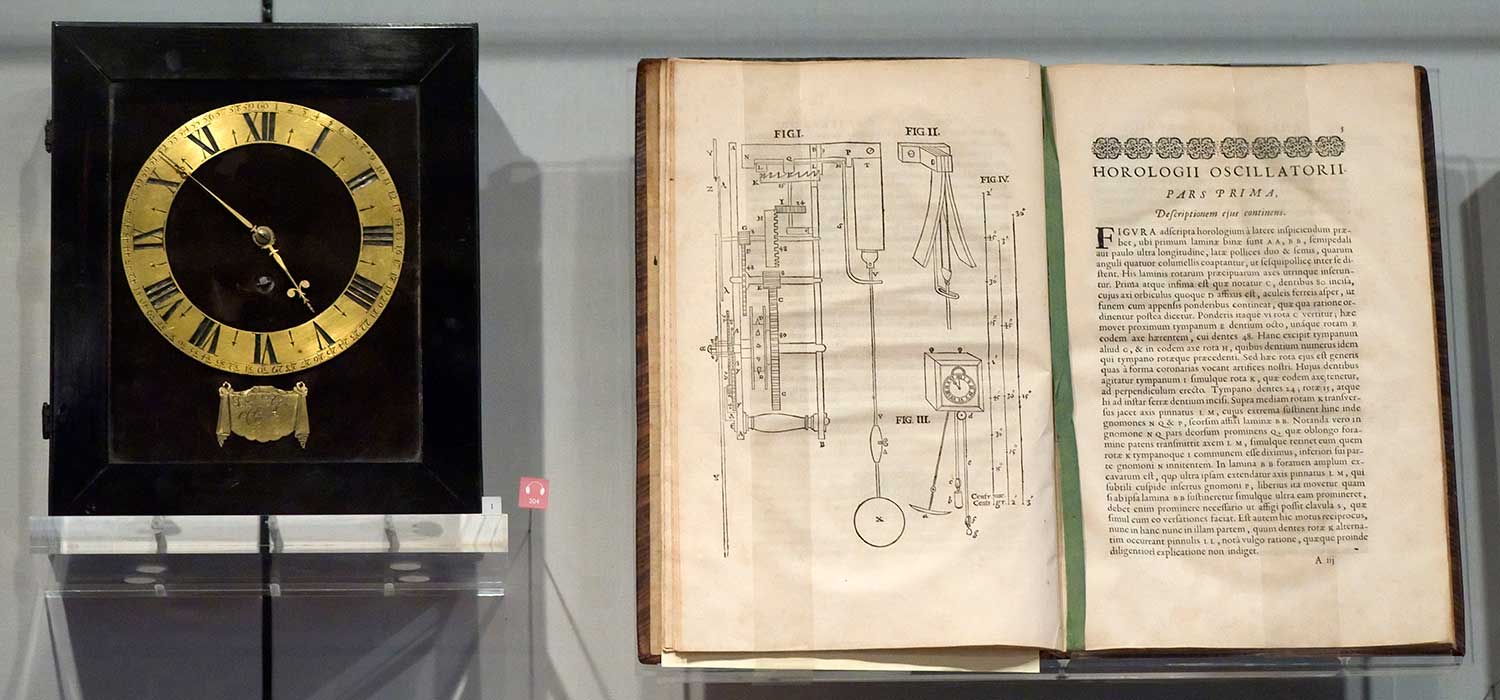
One of the first pendulum clocks designed by Christiaan Huygens, and his treatise on the pendulum, Horologium Oscillatorium published in 1673, on display in Museum Boerhaave in Leiden, Netherlands (Image: Wikipedia)
Antide Janvier: The First Working Resonance Clocks
For over a century, Huygens’ discovery stayed a scientific curiosity rather than a watchmaking tool. That changed with Antide Janvier, a French clockmaker born in the Jura region in 1751, who became royal clockmaker to Louis XVI. Janvier is credited as the first person to actually build working clocks that used resonance on purpose, to make them more accurate.
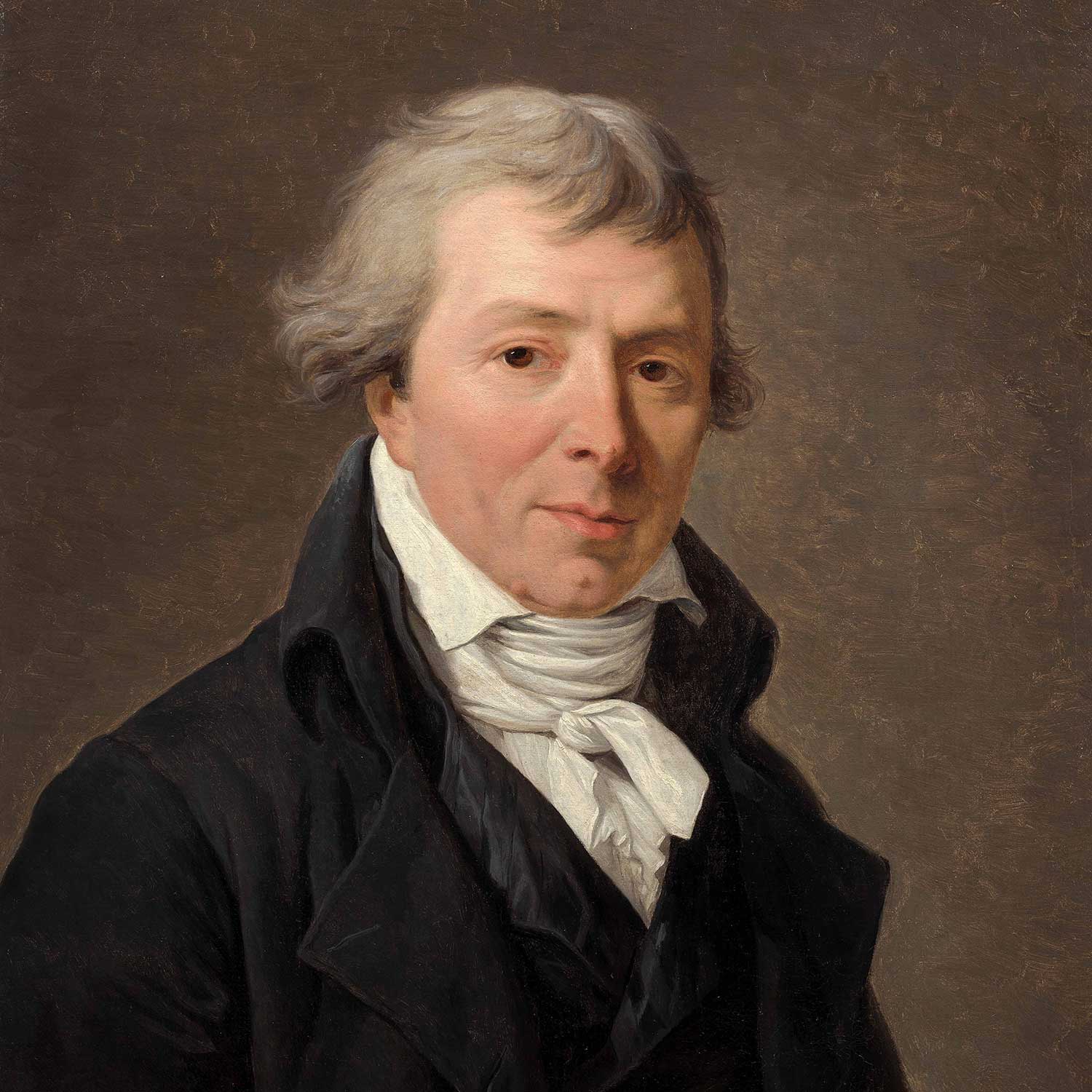
Portrait of Antide Janvier by Marie-Gabrielle Capet (Image: Wikipedia)
His idea, developed around 1780, was simple in concept but very hard to execute: build two complete, separate clock movements, each with its own pendulum, and mount them close together in the same case. If any outside disturbance nudged one pendulum off its rhythm, the other pendulum, coupled to it through their shared frame, would help pull it back into line. Janvier built at least three of these double pendulum “resonance clocks,” known by their case numbers: a long case clock (No. 400) located today at the Musée Paul-Dupuy in Toulouse, a wall regulator (No. 453) found at the Patek Philippe Museum in Geneva, and of course the stunning coupling regulator (No. 470) now at home in Journe’s Geneva manufacture.
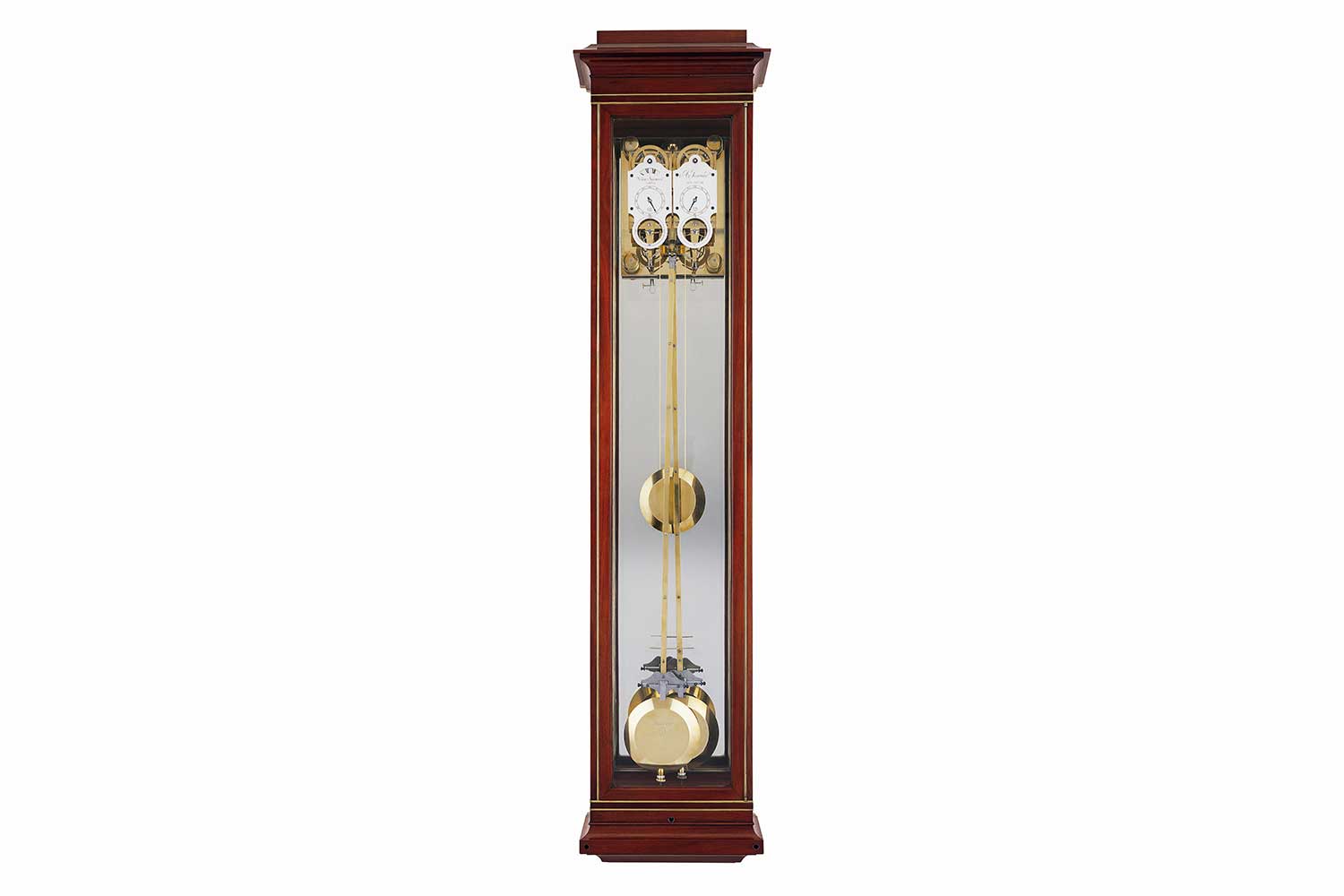
Resonance Regulator by Antide Janvier
Janvier’s life had a hard ending. He fell into serious financial trouble, was imprisoned for a time after the French Revolution because of his ties to the royal court, and eventually lost his workshop, tools and stock. The man who acquired them was a younger, ambitious watchmaker named Abraham-Louis Breguet.
Breguet: From Clocks to the Pocket
Breguet picked up where Janvier left off and then went much further. He built his own double pendulum clocks using the same resonance principle. His most famous surviving example, No. 3671, was made for the future King George IV of Great Britain and remains in the Royal Collection to this day. Another, No. 3177, is on permanent display at the Musée des Arts et Métiers in Paris — and, in a detail we’ll come back to, it was restored in the early 1980s by a young apprentice named François-Paul Journe. It is believed Breguet made a third clock that was lost during the fire that destroyed the Palais de Tuileries in 1871.
-
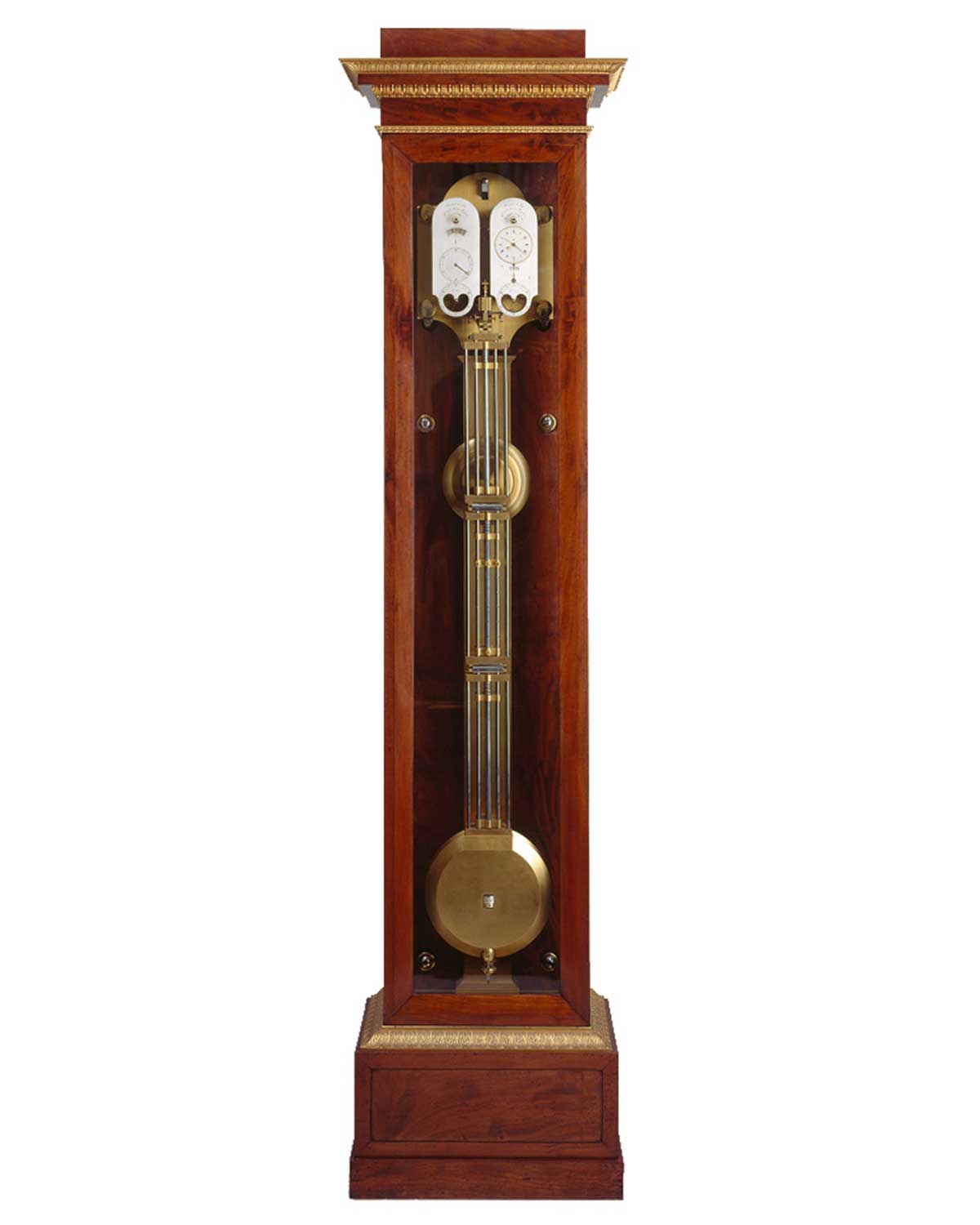
- The Breguet No. 3671, also known as the double pendulum clock (Image: Royal Collection © HM Queen Elizabeth II )
-
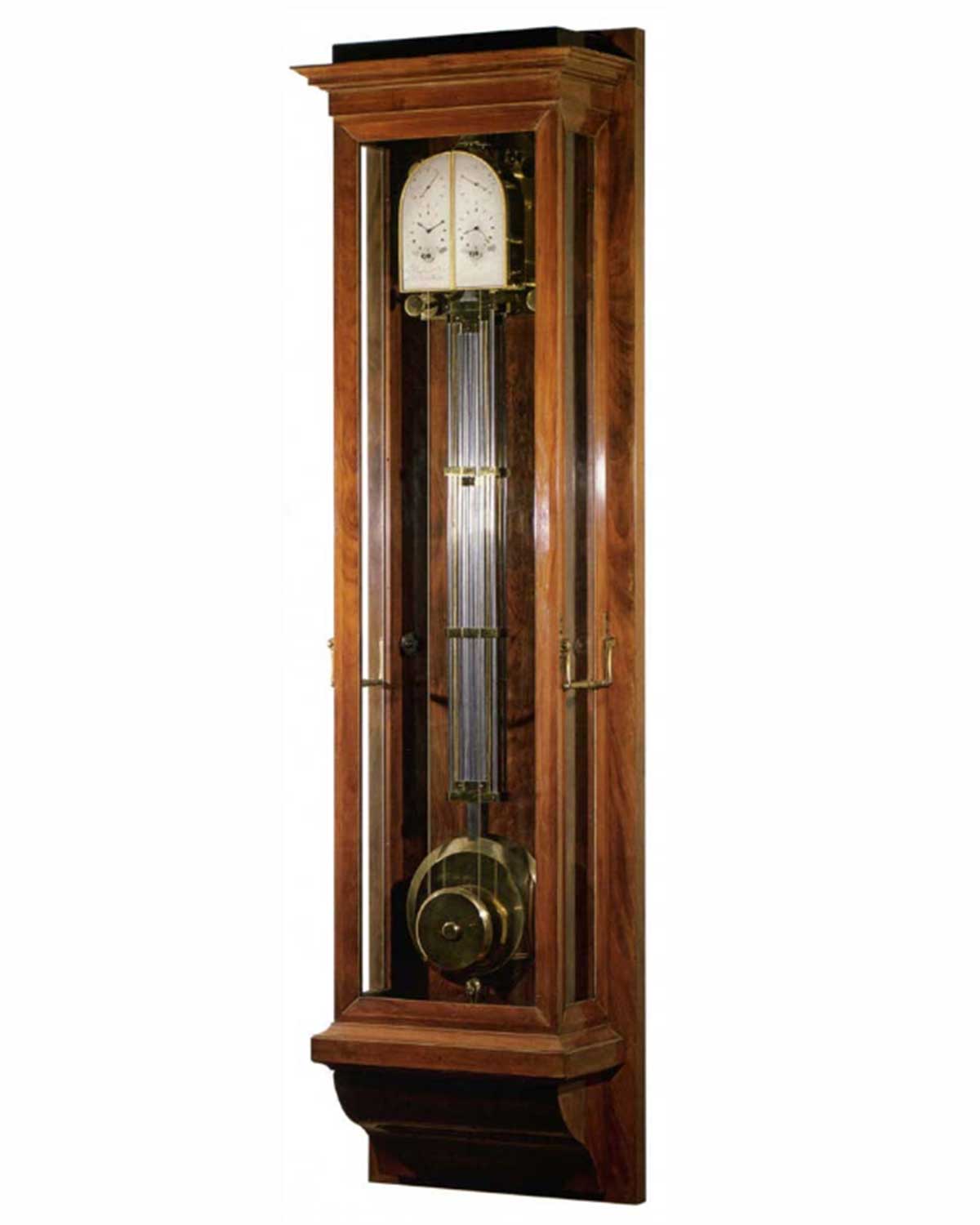
- Breguet N. 3177 (Image: John Kirk’s Compilation)
Breguet’s real breakthrough was asking a much harder question: could the same trick work inside something you carry in your pocket? A pocket watch’s regulating organ isn’t a swinging pendulum; it’s a small balance wheel spinning back and forth on a hairspring. Breguet suspected that if two pendulums could talk to each other through a shared wooden beam, two balance wheels might be able to talk to each other through a shared metal plate.
He built at least three watches to test the idea, known today by their movement numbers: 2667, 2788 and 2794. Each contained two complete watch movements side by side in one case, each with its own balance wheel, positioned close together so they could influence one another.
-
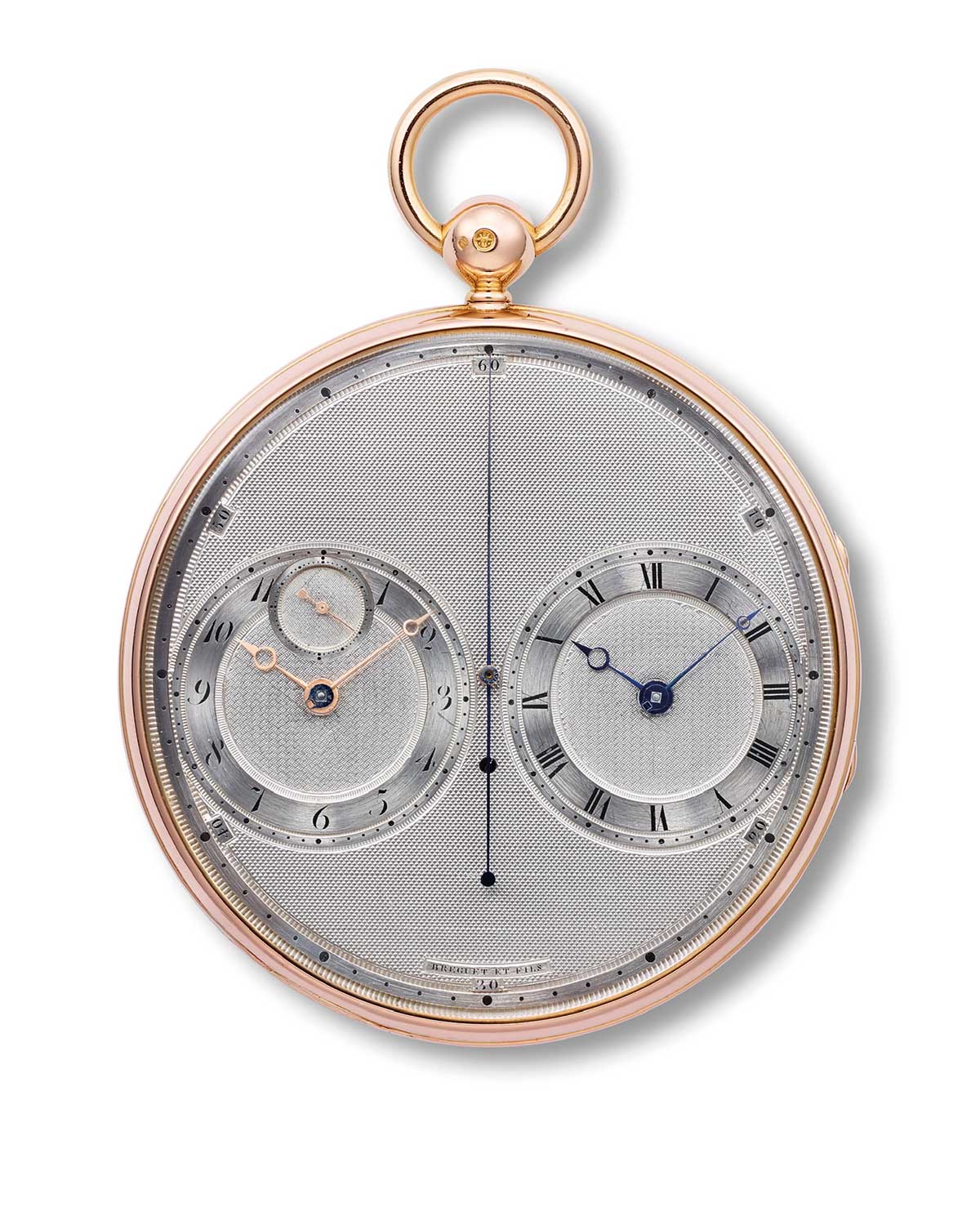
- “Breguet et Fils” No. 2667 (Image: ©Breguet Museum Collection)
-
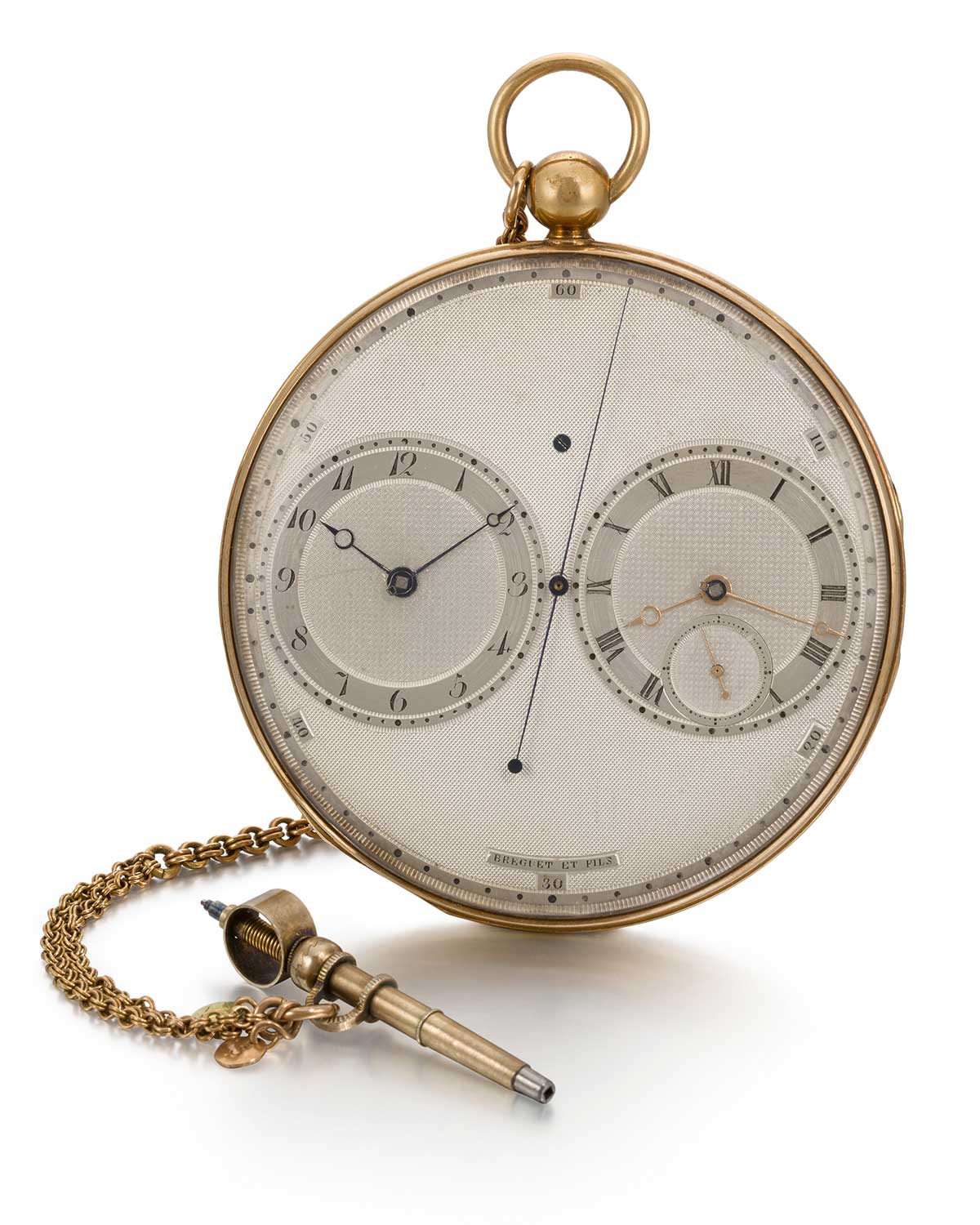
- Breguet No. 2788 (Image: Sotheby’s)
Breguet was worried about one thing in particular: was the coupling really happening through the metal of the watch, or was it simply the two balance wheels stirring up the air between them and pushing on each other that way? To test this, on watch No. 2788, he built a thin, pierced steel guard completely surrounding each balance wheel, like a tiny wall, specifically to block any air movement between them. If resonance still occurred with the air blocked, it would prove the coupling was mechanical, traveling through the watch’s frame, and not simply a breeze passing between two spinning wheels. He also went further and sealed the watch inside a vacuum chamber, removing the air entirely. In both cases, the two balances still fell into sync. Breguet concluded that the connection between the balances mattered far more than any disturbance from the air. Satisfied, he didn’t bother including the steel guards on his next watch, No. 2794.
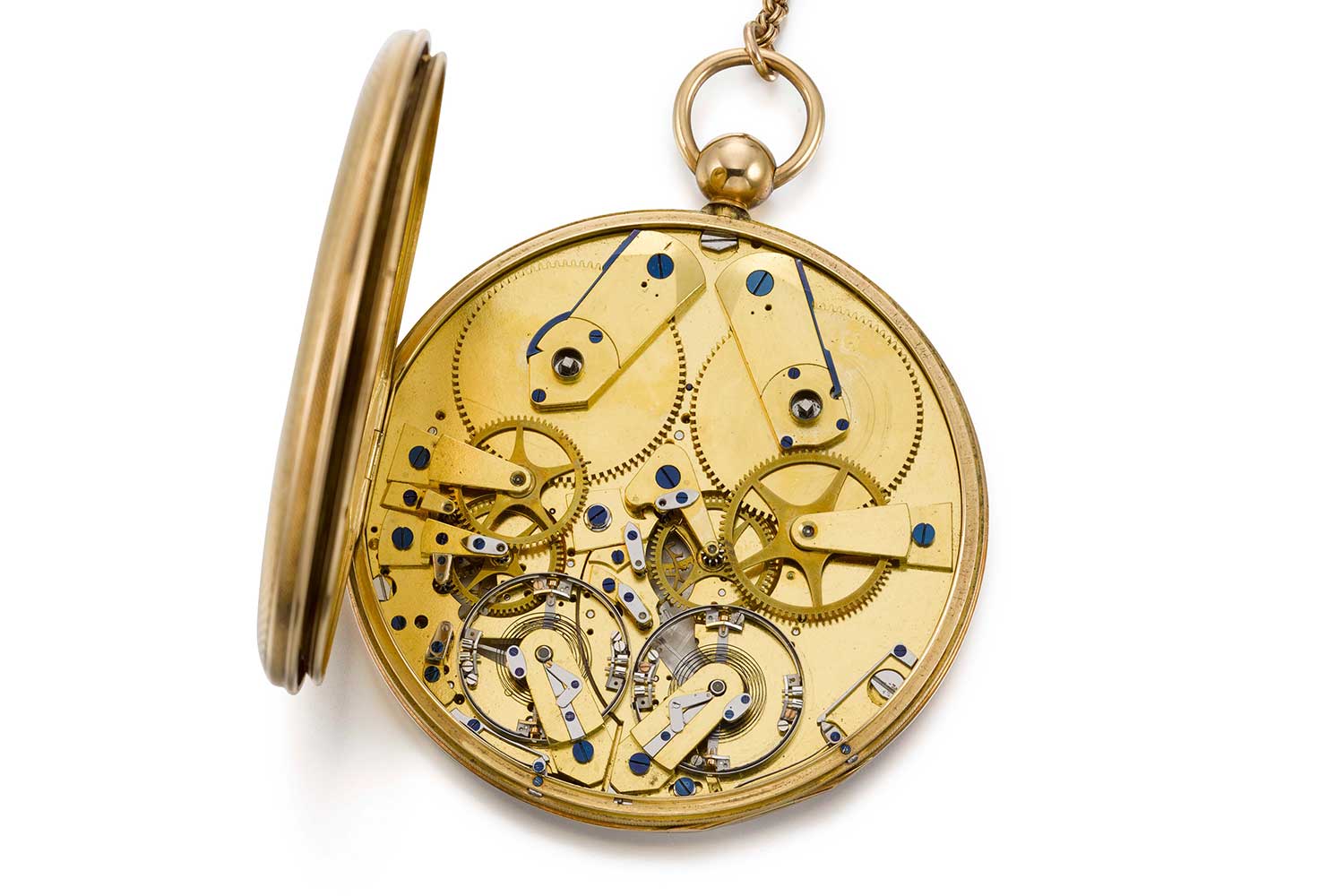
The movement of Breguet No. 2788; note the thin steel guard around each balance wheel to block any air movement between them (Image: Sotheby’s)
Says François-Paul Journe, “It seems he did this because someone told him that the sharing of energy was coming from the aerodynamic turbulence produced by the oscillations of the balances. The reality is that I always tell my watchmakers to be careful about placing the balance wheels together, because if they get too close, the watch works much worse.”
Presumably the aerodynamic turbulences work against the actual phenomenon of resonance caused by shared vibrational energy. For this reason, Journe’s resonance timepieces feature a mobile bridge for one of the balances so that it can be placed as close as possible to the other, while just far enough away to avoid this issue. Journe says, “In principle, movements that are sealed in a vacuum could function even better.”
These three Breguet watches are, as far as anyone knows, the only ones of their kind ever made, and all three still exist. No. 2667 was sold to a Mr. Garcias in London in 1814; it resurfaced at Christie’s Geneva in 2012 and sold for CHF 4,339,000. No. 2788 was bought by the Prince Regent (later King George IV) as a gift for his father, King George III, in 1818. After passing through private collections, it entered Sir David Salomons’ collection and is now associated with the L.A. Mayer Museum for Islamic Art in Jerusalem. No. 2794 was sold to King Louis XVIII of France in 1821 and later also became part of the same Jerusalem collection. After Breguet, nobody seriously pursued watch resonance again for close to 175 years.
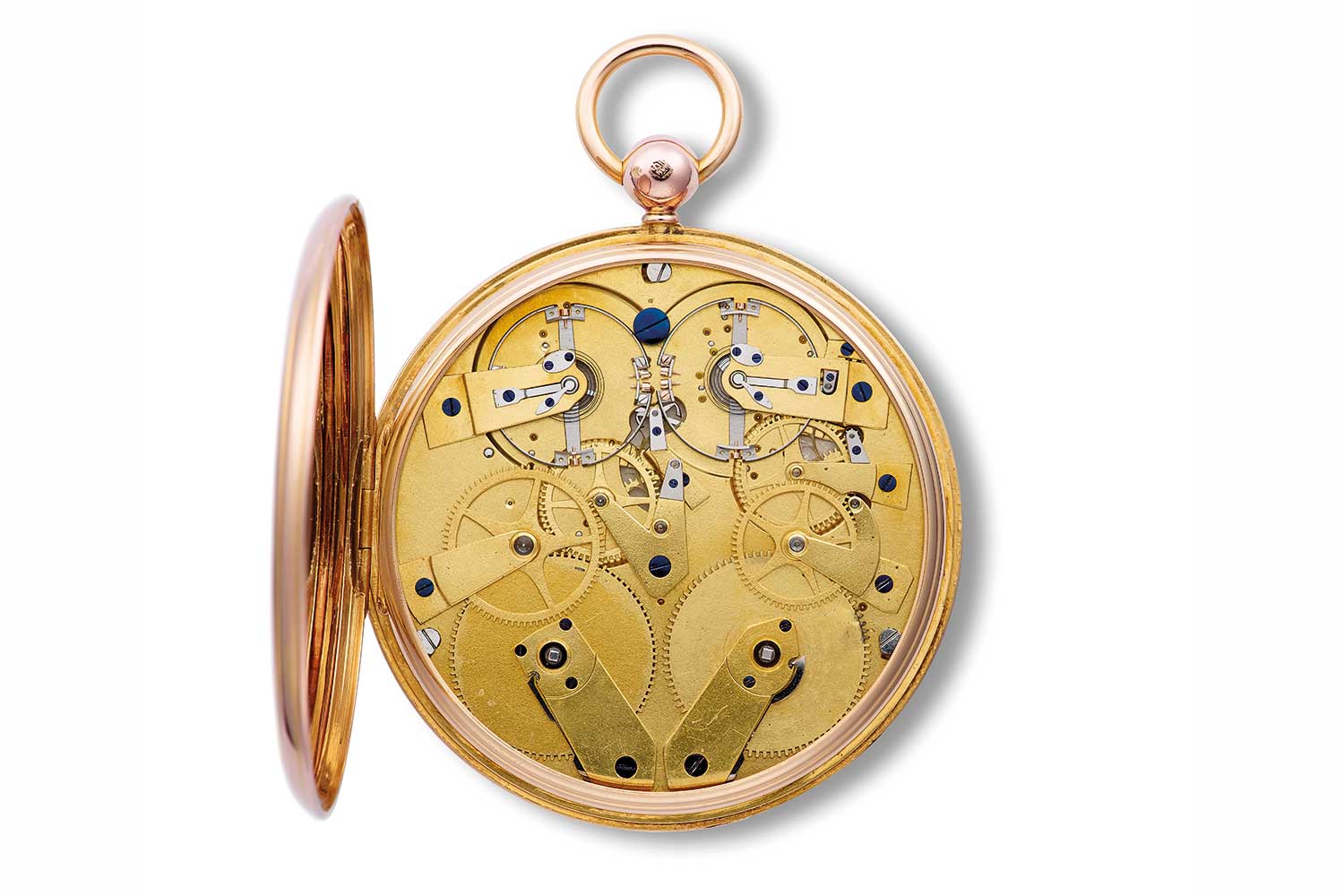
“Breguet et Fils” No. 2667, sold to Mr. Garcias in London in 1814. The two movements are incorporated into the same movement plate, each with its own train of wheels. The free-sprung balances are adjacent to one another at the top of the movement, and parachute suspension can be seen on both balance cocks (Image: ©Breguet Museum Collection)
Journe Picks Up the Thread
François-Paul Journe was born in Marseille in 1957 and, as a young man, went to work in the Paris restoration workshop of his uncle, Michel Journe, one of the few people in Europe who restored museum-grade antique clocks and watches. It was here, around 1982, that F.P. Journe was handed the job of restoring Breguet’s double pendulum clock No. 3177, the one now on permanent display at the Musée des Arts et Métiers. Nobody had seriously studied or written about resonance in almost two centuries. Journe had to work it out largely from scratch. It was during this experience that he became fascinated with resonance. He even went so far as to purchase old notebooks written by Breguet where he discovered the great watchmaker’s fascination with the science underlying resonance.
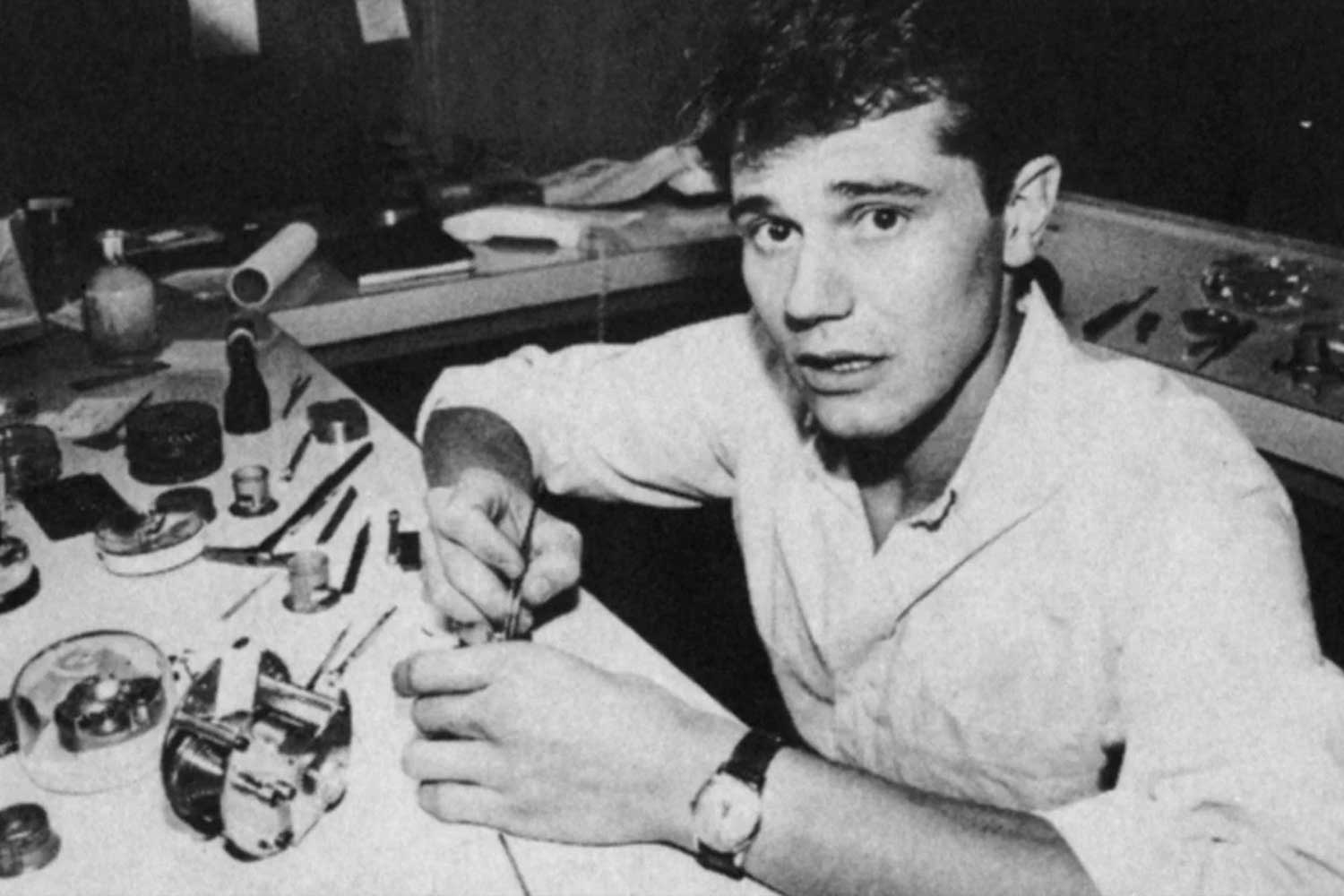
A young François-Paul Journe (Image: Oracle Time)
Says Journe, “It was hard to read [the notebooks] because Breguet’s handwriting was hard to decipher, but I realized that he was, beyond a watchmaker, also a scientist very interested in the idea of vibrational energy. When I had the opportunity to restore his double pendulum clock, I became more and more fascinated by this principle.”
Journe would later co-author an article on resonance with the watch journalist Christian Pfeiffer-Belli for a German magazine. Says Journe, “The article was picked up by a horological society in Paris, which reprinted the article. Inside, I detailed the experiments I made with the double pendulum to see if the oscillators would still synchronize, even if one was intentionally made to be 10 seconds slower than the other. I saw that the balances would eventually resynchronize. Since that experience, I always knew I would create something related to resonance.”
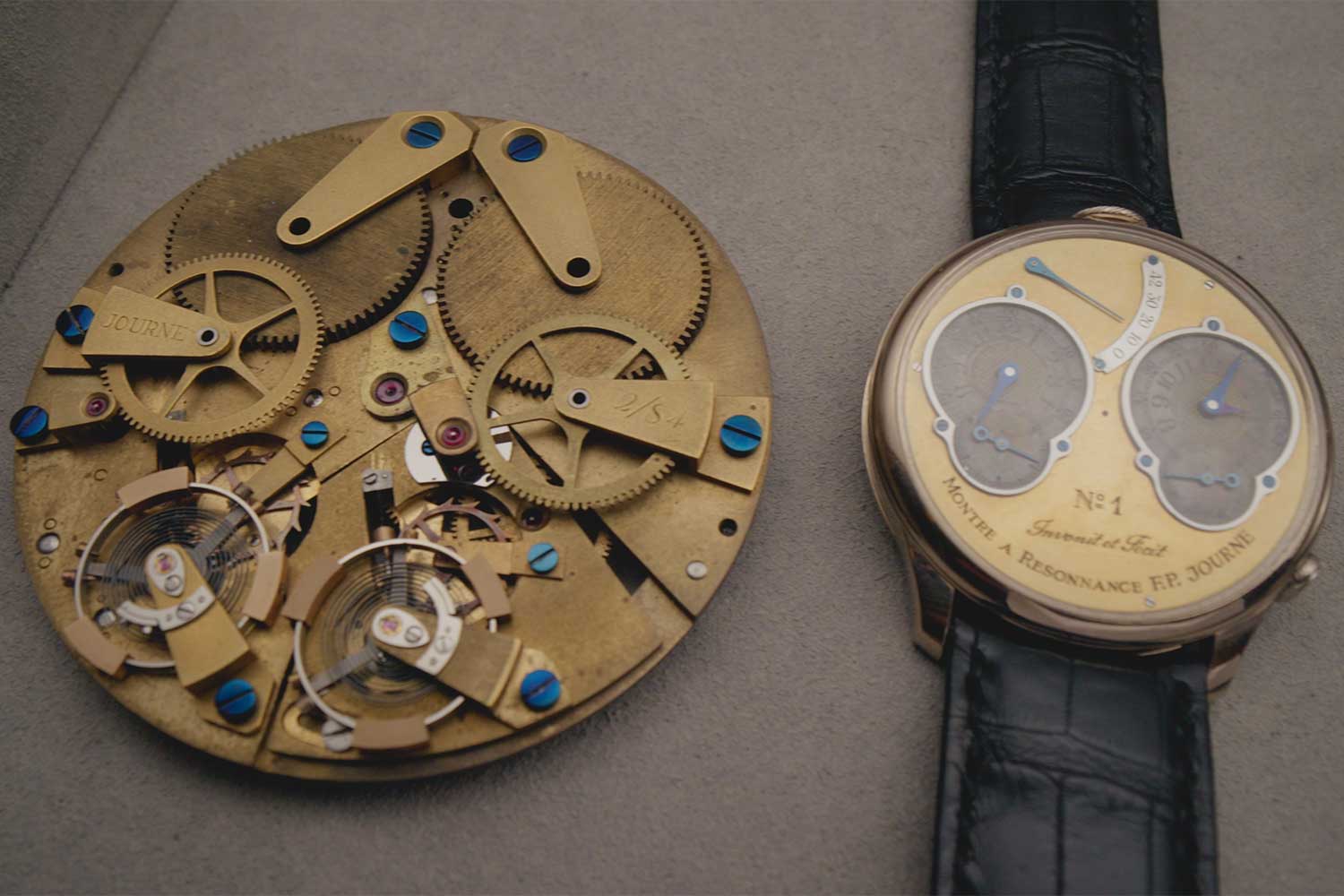
Journe’s pocket watch movement, pictured here with the Chronomètre à Résonance No. 1 (Image: Man of the Hour)
In 1983, a collector named Raymond “Bill” Vogel commissioned Journe to build his first pocket watch. Journe immediately proposed to make a watch with two movements featuring resonance. Says Journe, “I knew it was possible to attain resonance in a portable timekeeper because of the pocket watches made by Breguet that were in the David Salomons collection.”
Though he was able to read about these timepieces, Journe was never able to study them in the metal as they had already been stolen from the L.A. Mayer Museum in Jerusalem. The theft of 106 watches from the museum in 1983 included some of the most important Breguet watches, among them the two resonance pocket watches, No. 2788 and No. 2794. The watches were not recovered until 2006. Journe eventually befriended the museum’s curator, who, while passing through Paris, told him stories of the two watches he affectionately called his “babies.”
Journe finished Vogel’s resonance pocket watch but wasn’t satisfied with how it performed, and by 1985, he had set the idea aside. The young watchmaker was, of course, frustrated that he couldn’t get his pocket watch to function up to his expectations. He explains, “I think I was not adequately experienced in watchmaking at the time. Now I realize to get a resonance watch to function, you have to be incredibly serious with each component, the tolerances you have to work at are extreme. You cannot make any mistakes anywhere. I realized that the pocket watch had issues in the gear train at the pinions in terms of too much play.”
In the end, he built a different pocket watch for Vogel with a tourbillon and remontoir d’égalité of the type that he first created for Dr. Eugen Gschwind. He would only return to resonance more than a decade later, this time with a much bigger goal to create a watch that nobody had ever managed to build: not a pocket watch, but a wristwatch using true resonance.
Says Journe, “In 1996, I saw my friend Philippe Dufour’s Duality, and it made me think of picking up the idea of resonance once again, but this time in a wristwatch.”
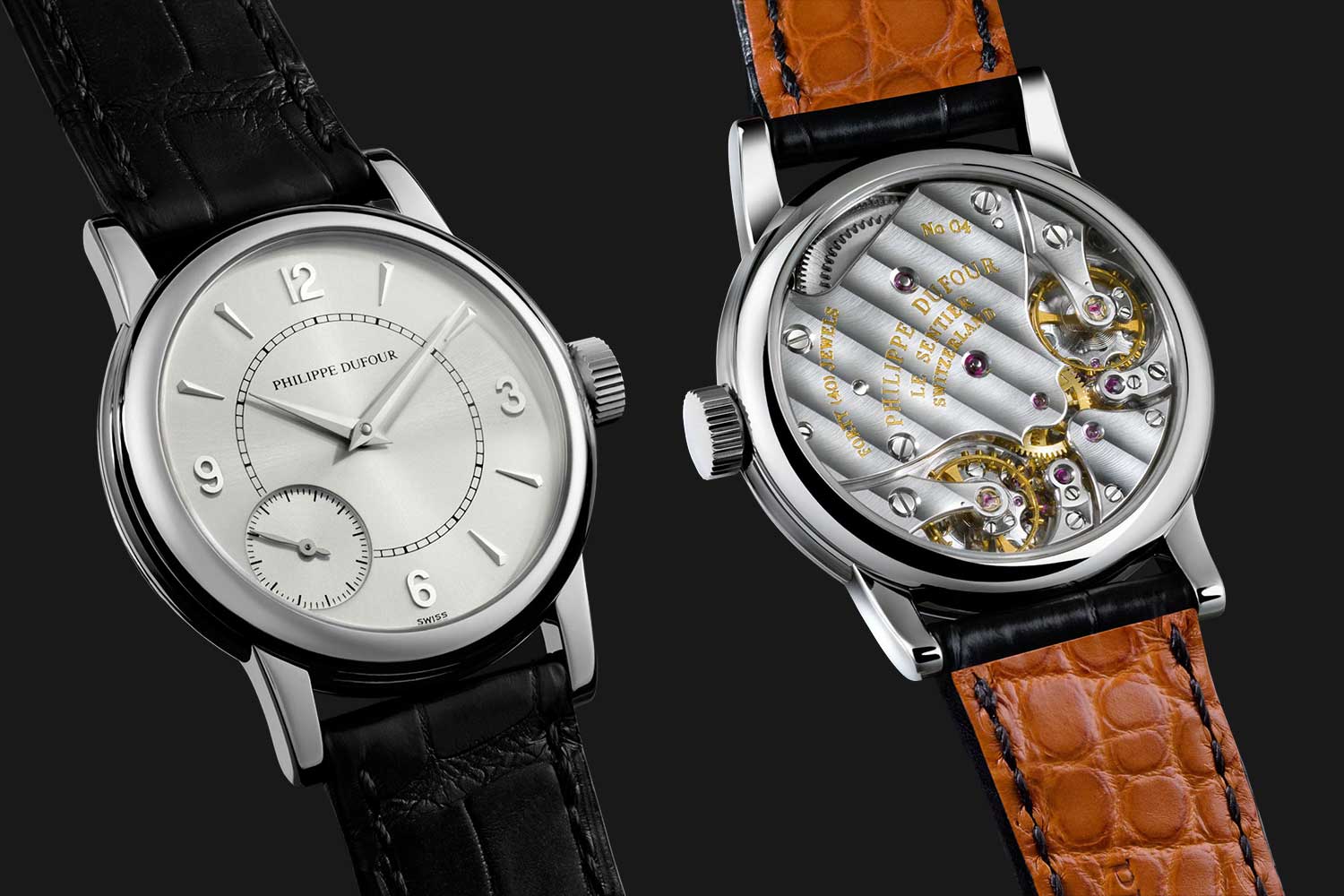
Philippe Dufour Duality
For the sake of clarity, it is important to understand that Dufour’s Duality and Journe’s Chronomètre à Résonance could not be more different despite both timepieces having two balance wheels. The Duality features one movement with two balances coupled mechanically through a differential. For that watch to function properly, the two balances need to beat at different frequencies, one slower and one faster, and the differential averages these rates. The Chronomètre à Résonance features two completely different movements built into the same plate: two barrels, gear trains, escapements and oscillators. Because of shared vibrational energy, they enter into the same frequency. But inducing resonance to occur was the ultimate challenge.
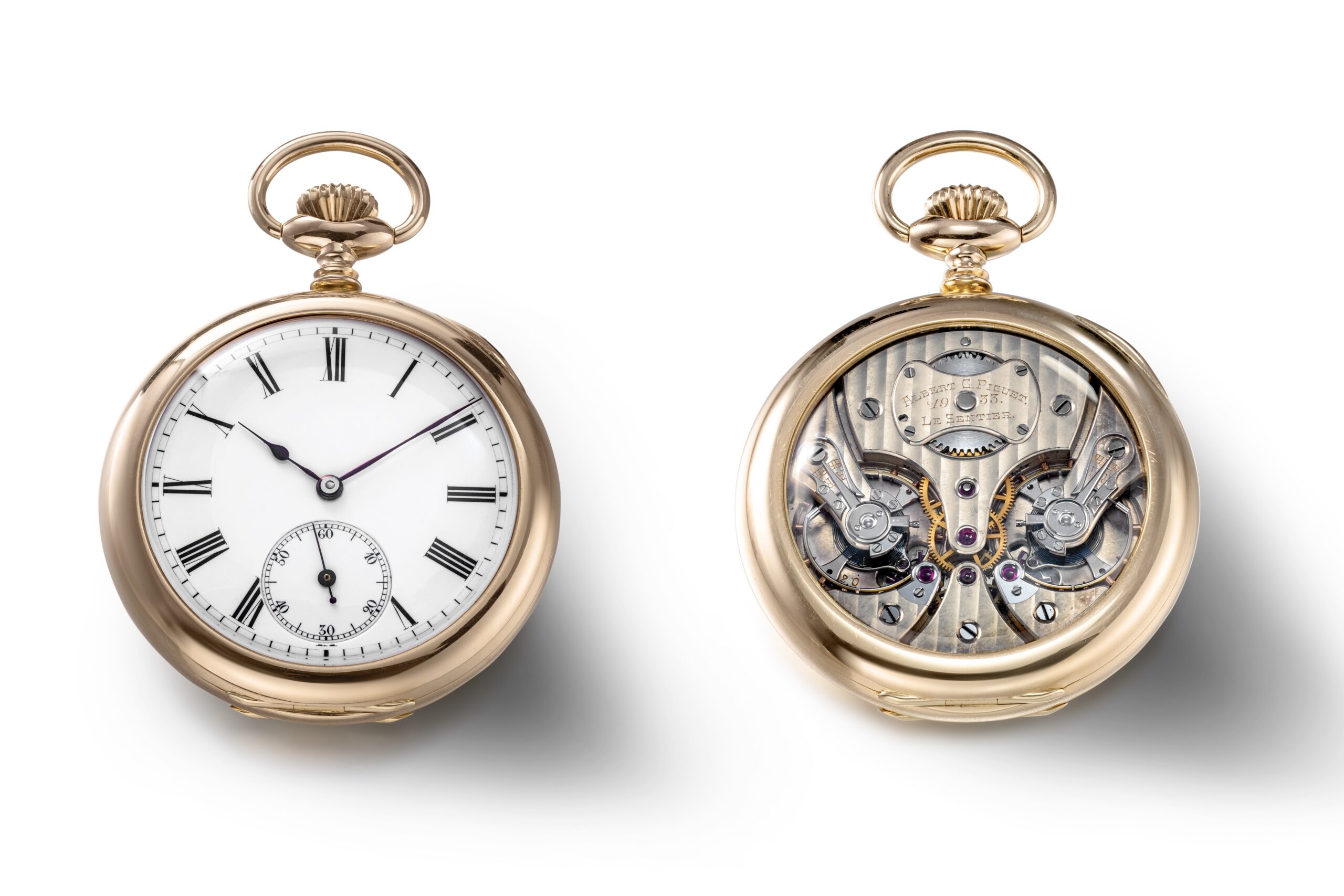
Dufour’s Duality uses two escapements averaged by a planetary differential, the first wristwatch to do so. This same layout can be found in Albert-Gustav Piguet’s 1932 pocket watch pictured above, which he created as his graduation project at the Vallée de Joux School of Watchmaking. It features two split bi-metallic balance wheels averaged by a differential (Image: Revolution)
Says Journe, “I asked Philippe [Dufour], are the balances in your watch synchronized? And he said no, so I knew I still had an opportunity. I restarted and designed a new movement. I carried it around in a small plastic box just to test it. It would be in my pocket and I would walk around [with it]. I took it out and listened to the balances to see if they were synchronized or not. Honestly, I was not sure it would work, because no one had ever attempted to make a resonance watch in a size that small.” Journe told his concerns to a friend, who replied, “But it’s fine even if you can’t achieve resonance. It’s a pretty movement with two gear trains and two time indications.” Journe answered, “No, that does not please me at all.” He knew he had to make it work.
By 1998, Journe had a working prototype, which he wore quietly on his own wrist at that year’s Basel watch fair. The finished watch, the Chronomètre à Résonance, was properly unveiled in 1999 and 2000, sold first through a 20-piece Souscription model that helped fund his young manufacture.
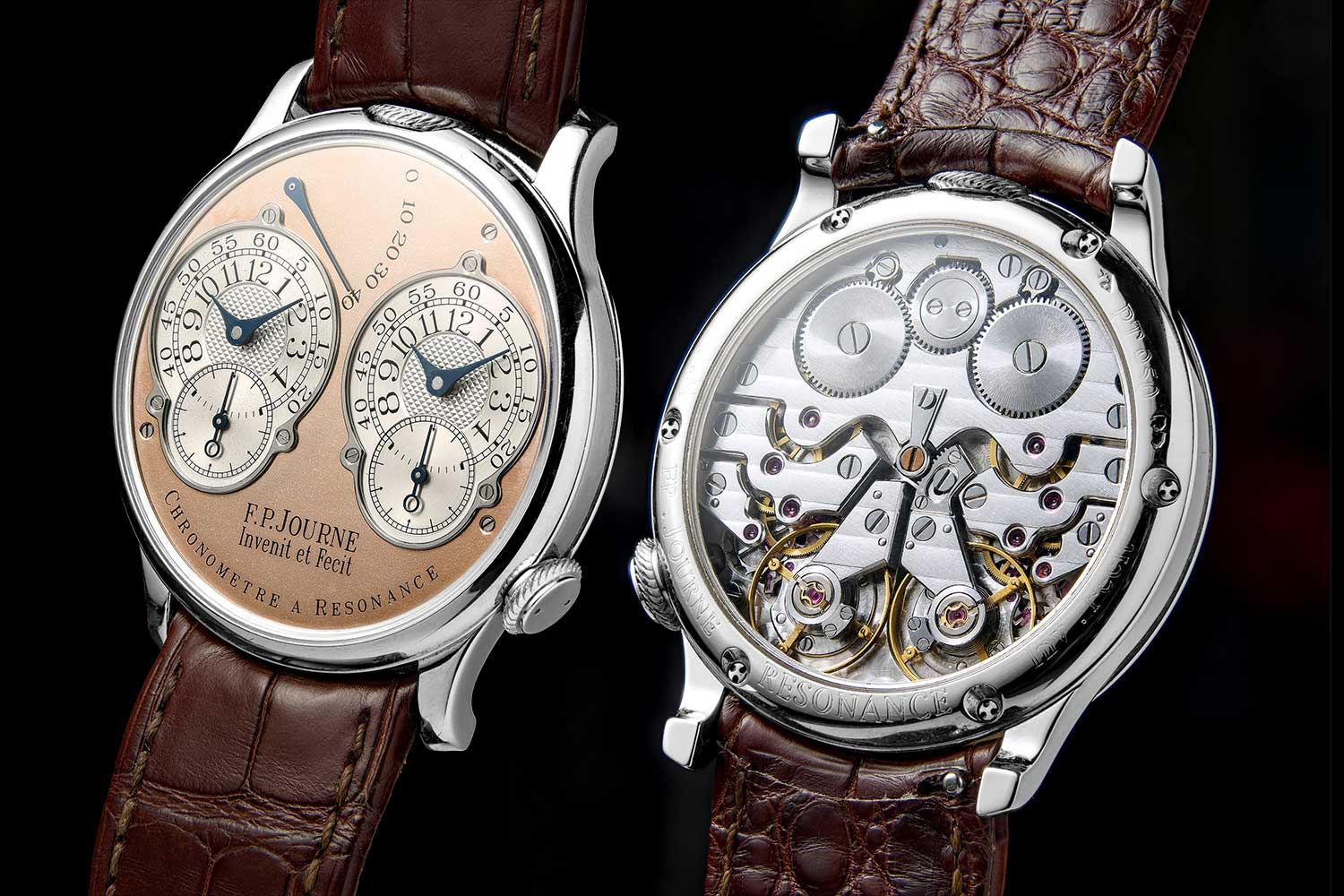
Phillips will be offering this ultra rare pre-production Chronomètre à Résonance at the Geneva Auction XXIV with caseback engraving 022/99R. 022 is the earliest commercially numbered Résonance, while /99R denotes a case ordered in 1999 (Image: Phillips)
What was Journe’s greatest challenge? Presumably it was to create two movements with enough precision that the oscillators were already beating in frequencies that were very close. Both movements needed to be precise and stable enough that they didn’t deviate in these frequencies, despite being placed in different positions and being subjected to shock. Once they entered into resonance, the fact that they were now coupled provided greater stability.
Journe explains, “When the first balance receives a shock, the other balances will react in the opposite way and pull the first balance back into sync.”
Mechanically, Journe’s watch does exactly what Breguet’s pocket watches did, just built to survive the war against constant shock on someone’s wrist all day. Two complete, separate balance wheels and hairsprings, each with its own gear train, sit close together on a single shared plate. There is no spring, no bridge, no wire physically connecting the two balances to one another. There is zero mechanical link between the two oscillators. The only thing connecting them is the plate itself, through which tiny vibrations pass back and forth — the exact same resonance phenomenon that Huygens observed in his sickroom and Breguet later demonstrated on his workbench. Given enough time, usually a matter of minutes, the two balances lock into a shared rhythm and help stabilize each other’s rate.
Once the Chronomètre à Résonance was commercialized, Journe sent the first watch to his retailer Les Ambassadeurs in Geneva. His friend Patrick Cremers, who was managing the shop at the time, called him shortly after the watch arrived to tell him that it had already been sold. Journe asked who the client was. Cremers replied that he didn’t know him. It was an Englishman who had passed by the shop and seen the watch in the window and bought it. The client contacted Journe a few days later saying, “I am the person who bought your watch.” It turned out to be none other than the legendary British horologist and inventor of the multi-axis tourbillon, Anthony G. Randall. Incredibly, Randall still owns the watch to this day.
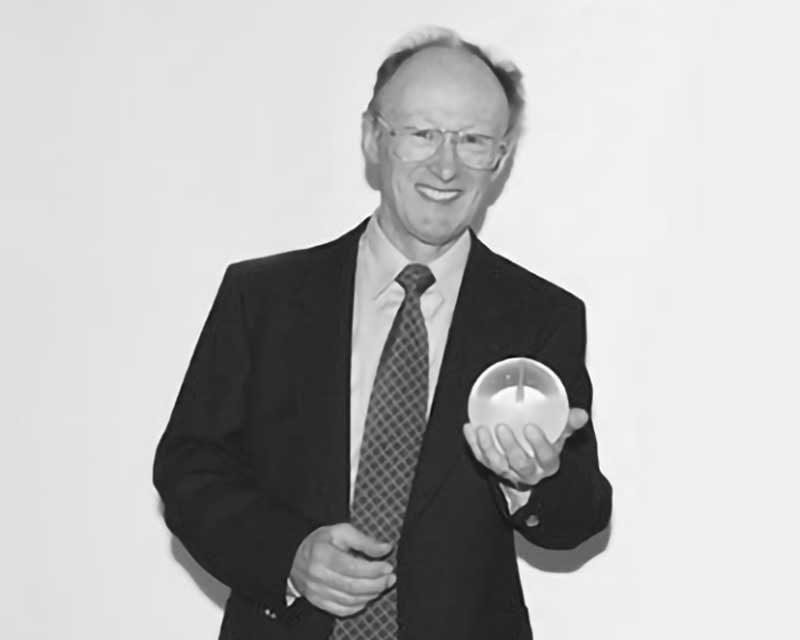
Anthony G. Randall (Image: Musée international d’horlogerie)
Says Journe, “I think he might have told George [Daniels] about the watch because, in 2002, George came to visit me here in Geneva. He told me, ‘I really love the Chronomètre à Résonance, because it took incredible courage [to build the watch]. I want to order one in platinum with a gold dial.’”
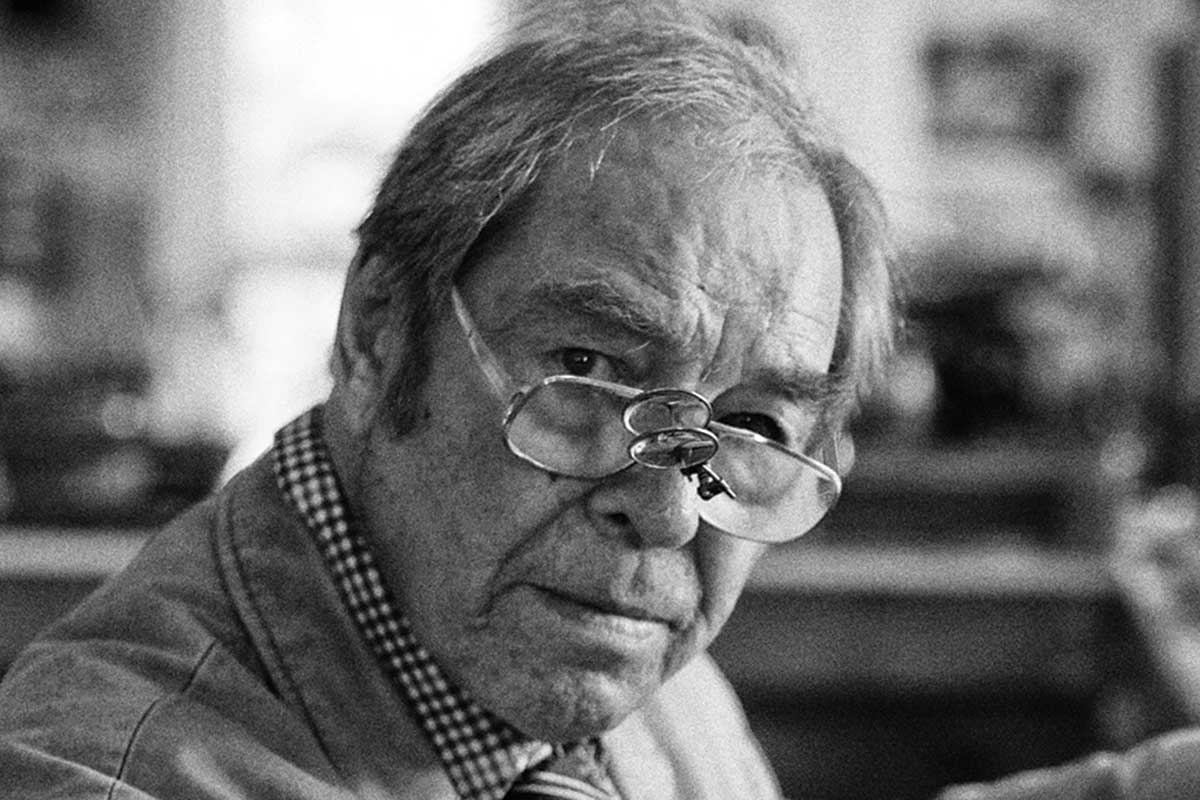
George Daniels
Journe replied, “I don’t want to sell you a watch, but could we make an exchange instead?” Daniels accepted and they shook on it. But upon returning to the Isle of Man, Daniels wrote Journe a letter saying, “I’m sorry but it’s difficult to make a new watch because Roger [Smith] has left and I don’t have the capacity anymore. I’m alone and I’m not really working anymore. I don’t want to let you down but I can’t make the exchange.”
As a touching follow-up, eight years later, François-Paul presented George Daniels with a watch during a dinner celebrating Daniels’ career, hosted by John and William Asprey at The Lanesborough in London in 2010. He said to Daniels, “Thank you, George, for being the best.”
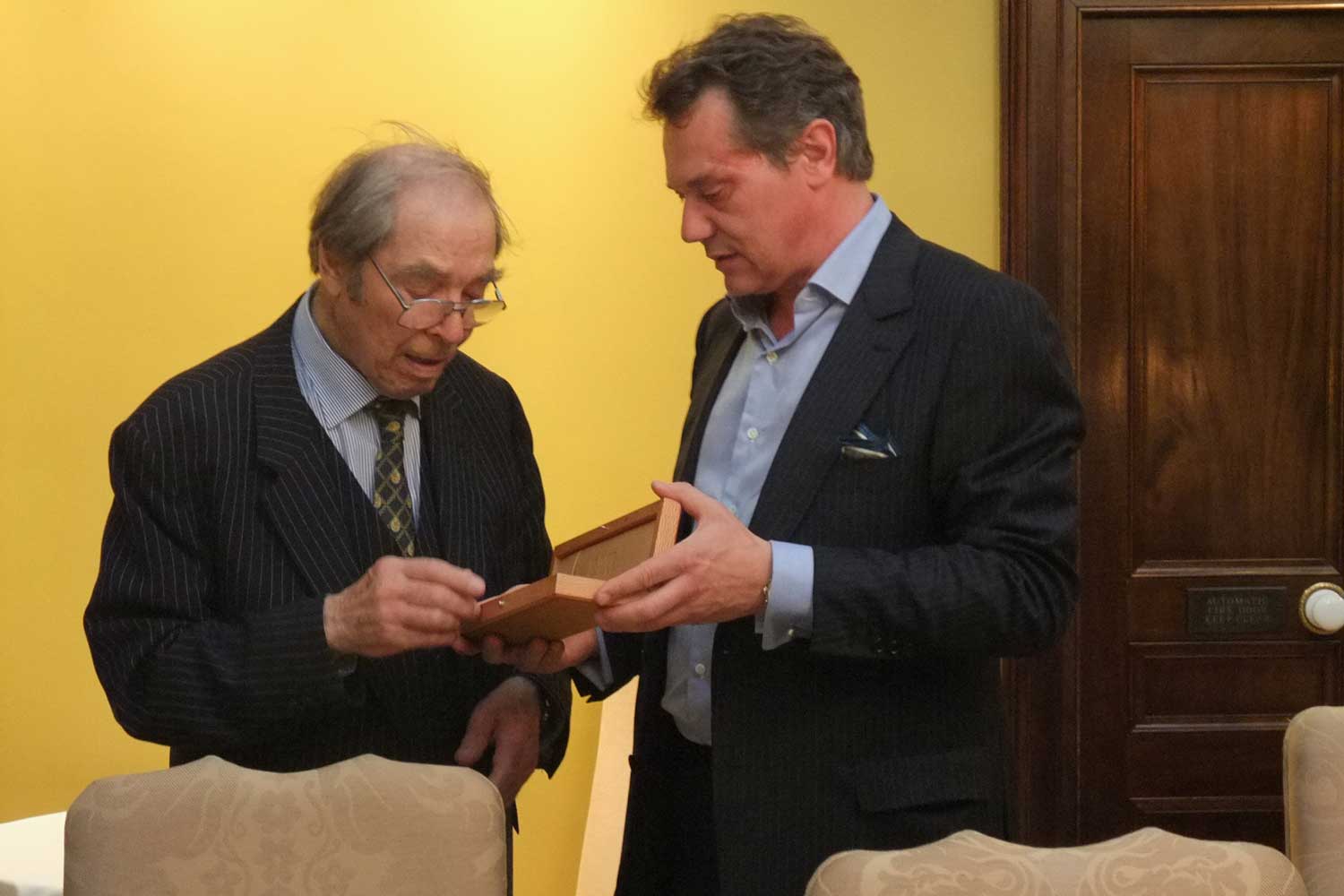
François-Paul Journe honouring his mentor George Daniels with a special Chronomètre Souverain during an intimate dinner organized by John and William Asprey in 2010
To which Daniels replied, “I’m not the best anymore, François-Paul. You are.” And with these words, the passing of the torch from the greatest living watchmaker of the previous generation to his successor in our generation was complete. For the young watchmaker who was inspired to create his own tourbillon after reading Daniels’ books Watchmaking and The Art of Breguet, it was an immensely poignant moment. The watch that was gifted to Daniels — a platinum Chronomètre Souverain with the engraving “FP to George Daniels my Mentor 2010” — was sold from Daniels’ estate in 2022 at Phillips’ New York Watch Auction: Six for USD 1.48 million.
-
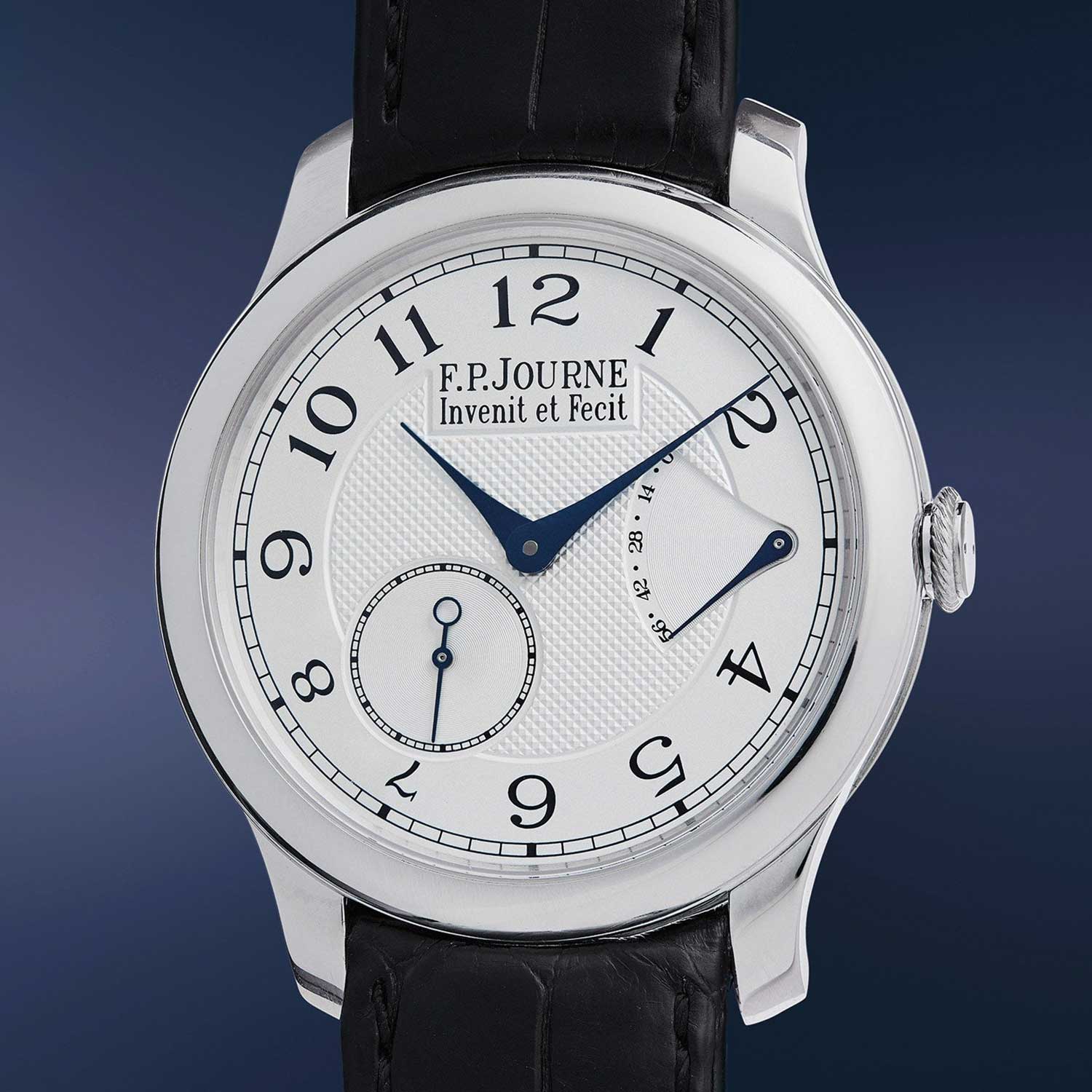
- The F.P. Journe Chronomètre Souverain gifted to George Daniels (Image: Phillips)
-
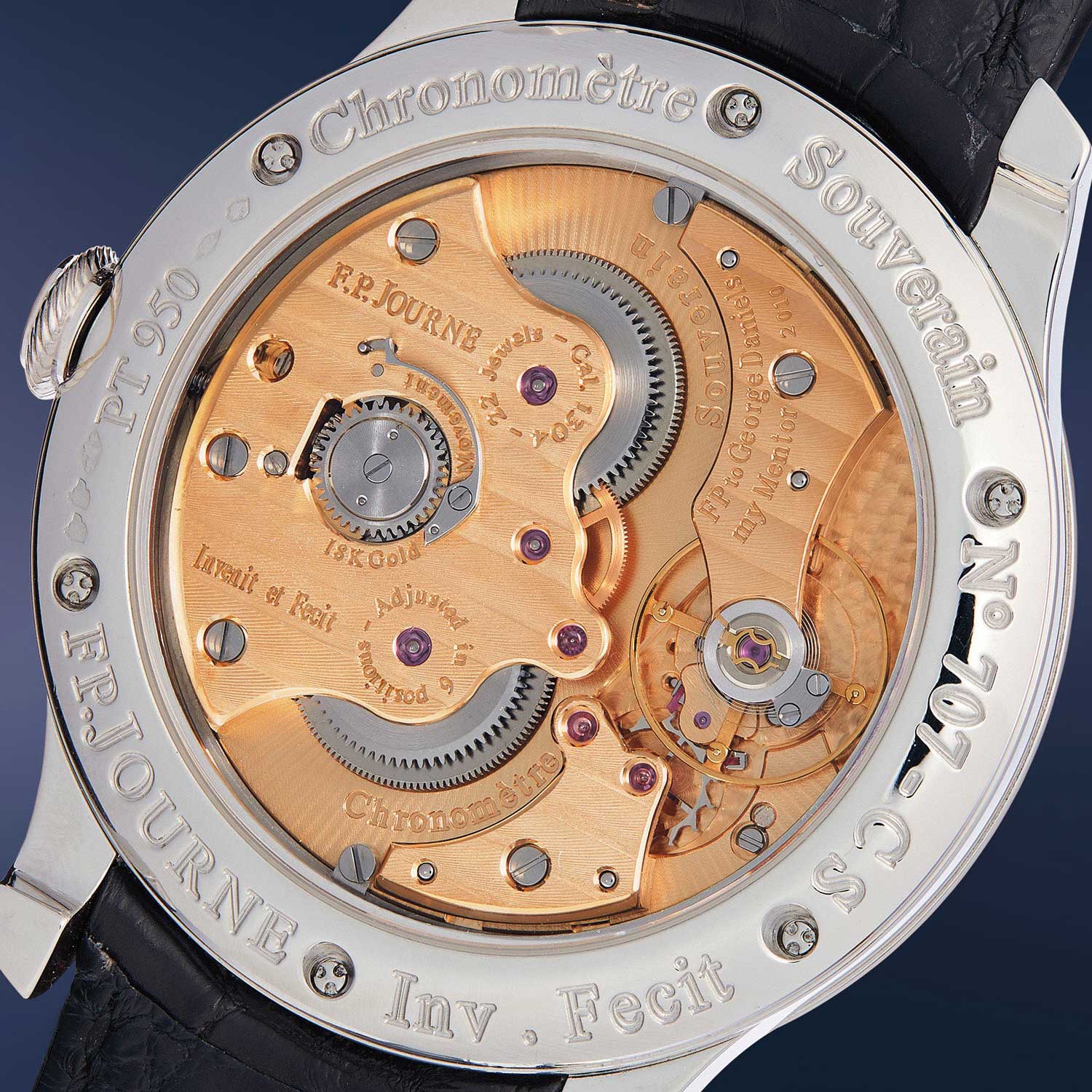
- Engraved “FP to George Daniels my mentor 2010” (Image: Phillips)
Initial reactions to Journe’s Chronomètre à Résonance included some amount of incredulity. Journe recalls, “I remember posts on Purists.com saying ‘this can never work.’ At the end of the post with 20 replies was an image accompanied by a comment that read, ‘I don’t know what you guys are talking about. I have it on my wrist and it works perfectly.’ After this, people started to understand what the watch was about. It has remained essentially the same throughout the last 26 years.
“In the latest version [featuring the Caliber 1520], I have added two remontoirs d’égalité, one for each going train. The reason was that in previous versions, resonance functioned best if we regulated it at about 14 hours of power reserve. We checked that the two balance wheels, the two spirals were 100 percent together. Because at 14 hours, there was an issue with isochronism with the spirals in relationship to the force of amplitude of the balances. With the new version and its two remontoir d’égalité, we are no longer obligated to search out this point.” By delivering constant force throughout the approximately 28-hour operating window, the remontoirs make the watch much easier for watchmakers to regulate and create a watch that is more stable. This demonstrates that Journe is constantly seeking to improve his timepieces’ performance, even through marginal incremental gains, in his pursuit of perfection.
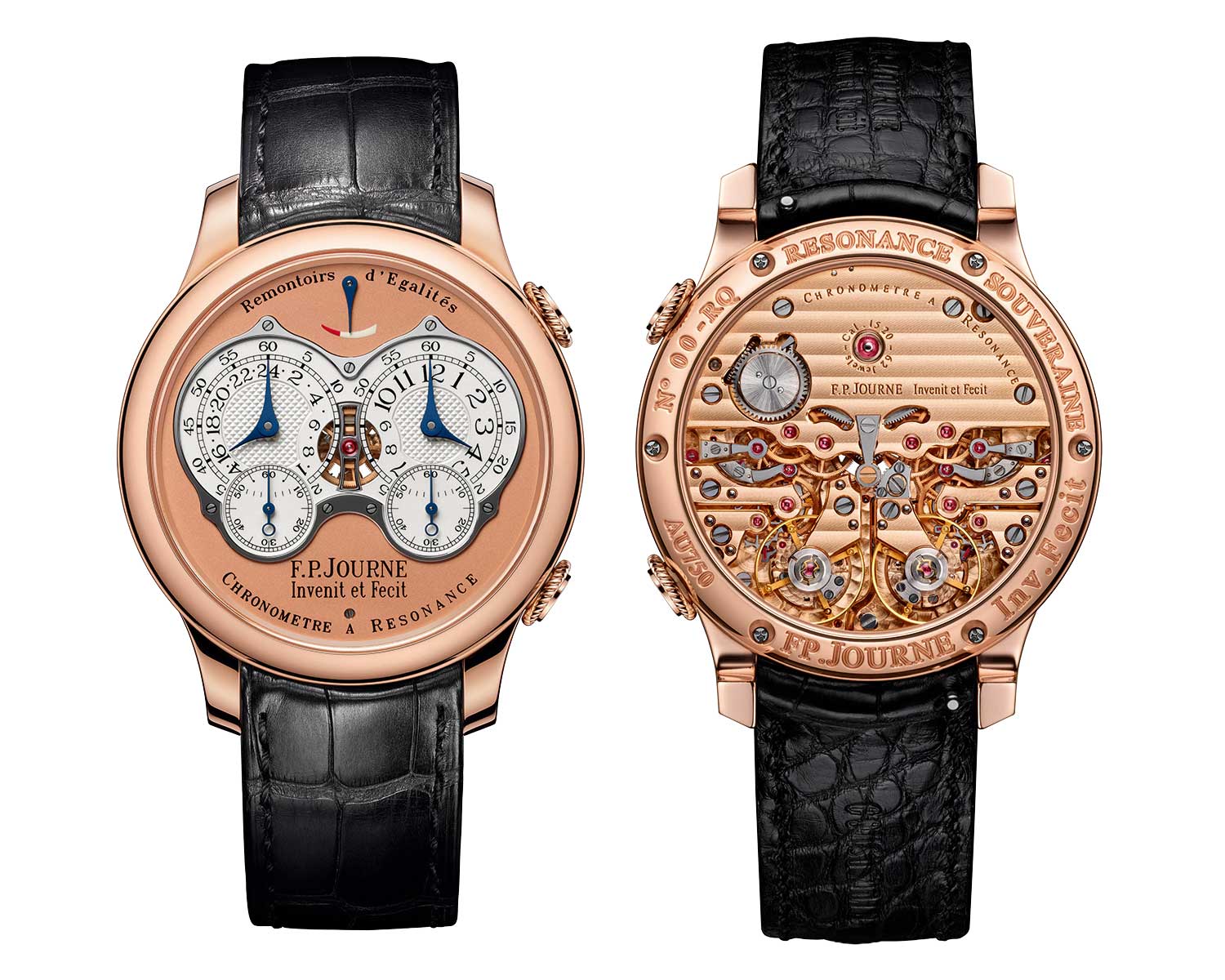
Chronomètre à Résonance Ref. RQ Caliber 1520
While Breguet might have taken resonance from a stationary clock to a portable timekeeper in the form of a pocket watch, Journe’s successful creation of resonance in a comparatively tiny wristwatch was arguably an even greater achievement. However, it is in the wristwatch format that resonance — which has a stabilizing effect on the two balance wheels and offers faster recovery from shock — has its best application.
Says Journe, “A clock is inert; it doesn’t receive shocks. A pocket watch moves a bit, but it is not in constant motion. The wristwatch is in constant motion. It is for this reason that the resonance system functions better in a wristwatch than it does in a pocket watch or a clock. So for a clock, it doesn’t offer any major performance advantage. It’s perhaps beautiful to look at. The utility is not absolute, but it is theoretically interesting as a demonstration of the phenomenon. It doesn’t bring a lot of precision for a clock, but it showcases that the principle works. A pocket watch is also a demonstration of it but it probably doesn’t bring a huge gain, considering how difficult it is to implement. Which is perhaps why there are only three pocket watches in existence. Now when it comes to resonance wristwatches,” Journe says with a laugh, “well, there are a decent number in the world now, because there is a very real benefit in this format.”
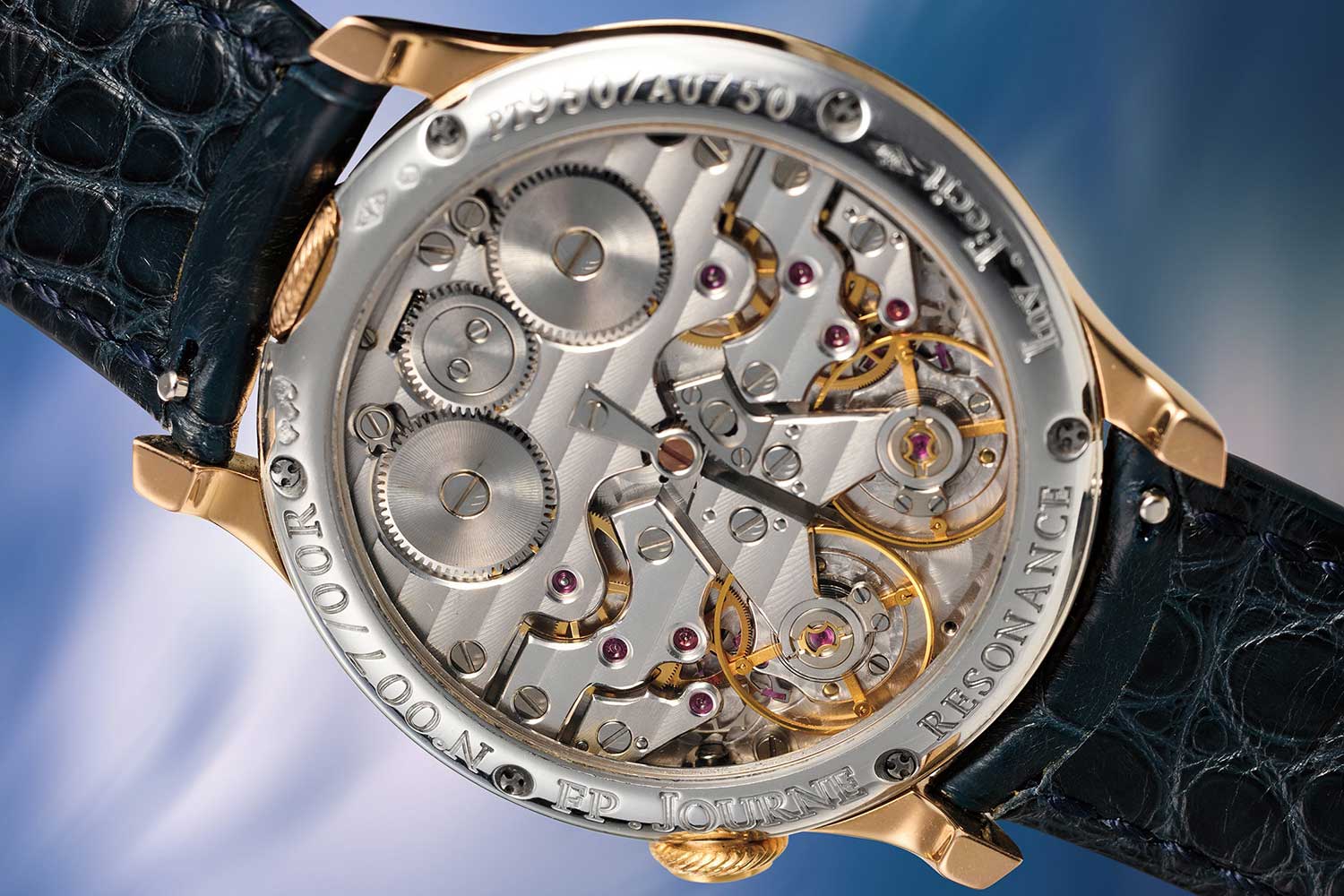
F.P. Journe Chronomètre à Résonance “Souscription, No. 007” (Image: Phillips)
Other Implementations
Journe’s success naturally inspired other independent watchmakers to try their own versions of resonance. It’s worth looking at what each of them actually built, because the differences matter more than they might seem to at first.
Antoine Preziuso, the Geneva-based watchmaker, introduced a triple tourbillon design around 2005 that he called a resonance watch, later refined into the Tourbillon of Tourbillons. Three separate tourbillons are mounted on a rotating plate and linked through a central mechanical differential, a gear system that physically averages out their three individual rates into one combined output. It’s a genuinely brilliant piece of engineering, but it’s worth being precise about what it is: a differential is a forced, geared connection, not the same phenomenon Huygens and Breguet described, where two oscillators spontaneously fall into rhythm on their own.
-
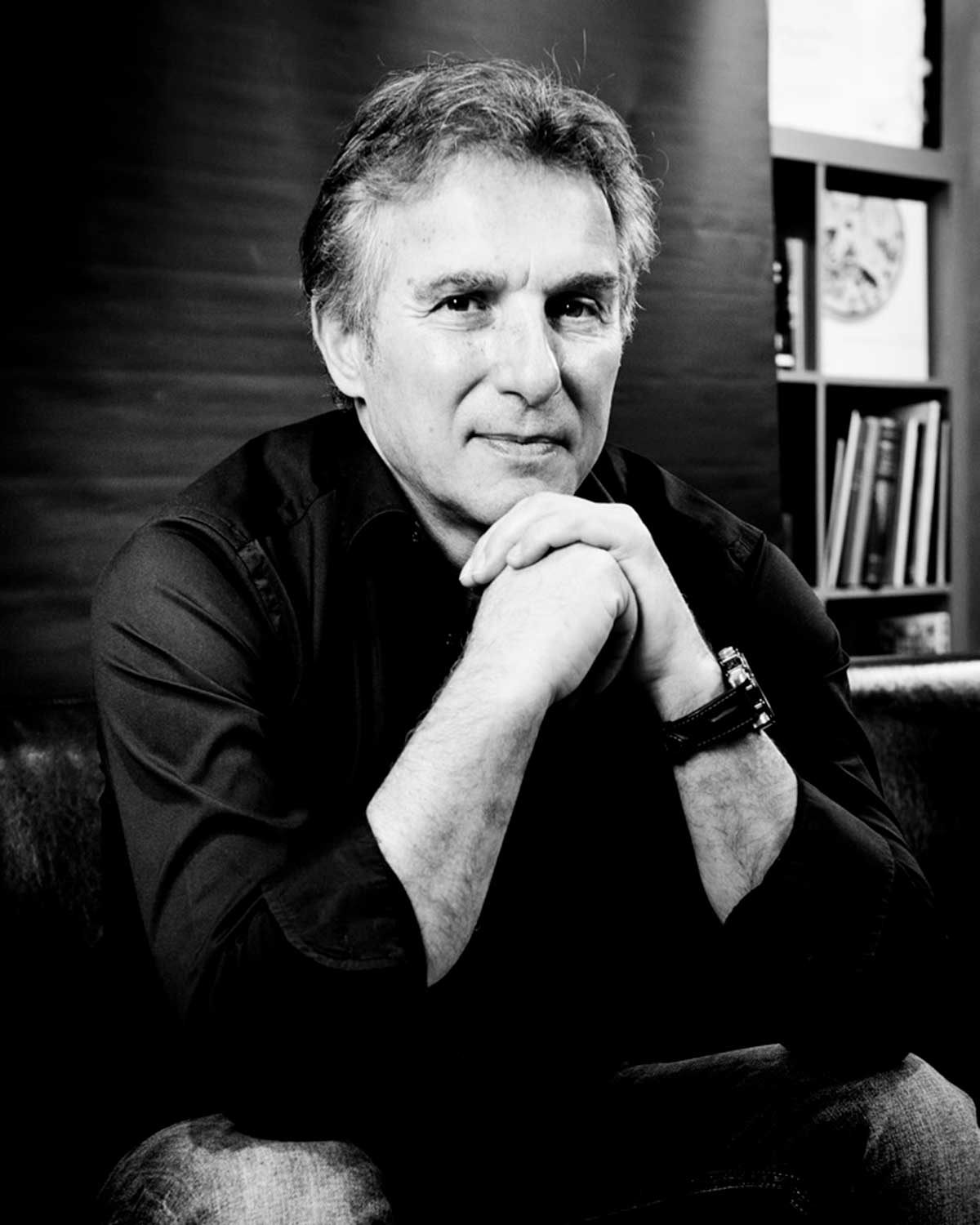
- Antoine Preziuso
-
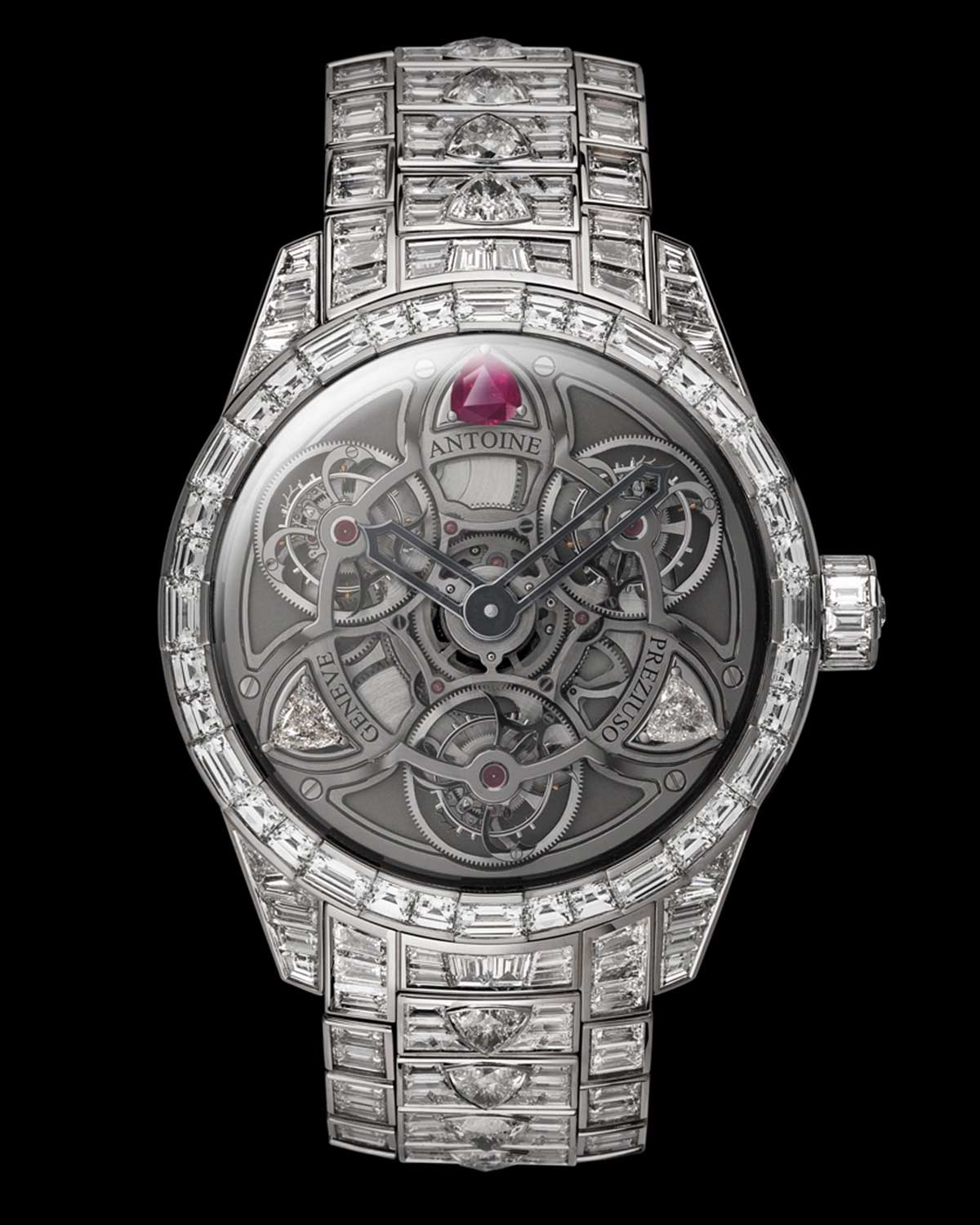
- 10th year Anniversary of the Tourbillon of Tourbillons, TTR3 – Trillion Radiant
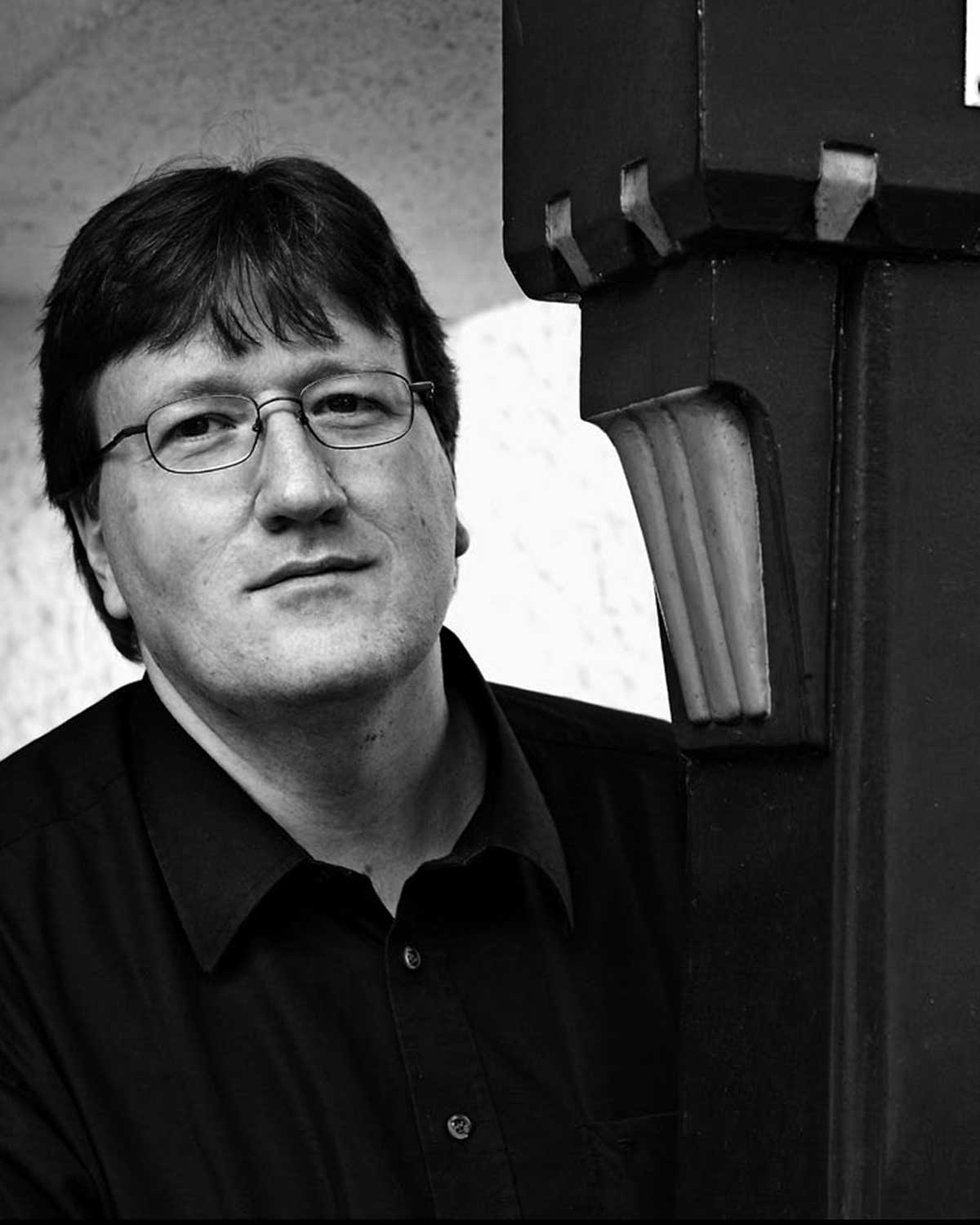
Beat Haldimann, the Swiss watchmaker, released the H2 Flying Resonance in 2005. It houses two balance wheels inside a single tourbillon carriage, and because a flying tourbillon has no rigid plate for vibrations to travel through the way Journe’s watch does, Haldimann connected the two hairsprings directly with a thin, flexible bridge called a resonance coupling spring. The two balances are physically tied together at the hairspring.
-
- Beat Haldimann
-
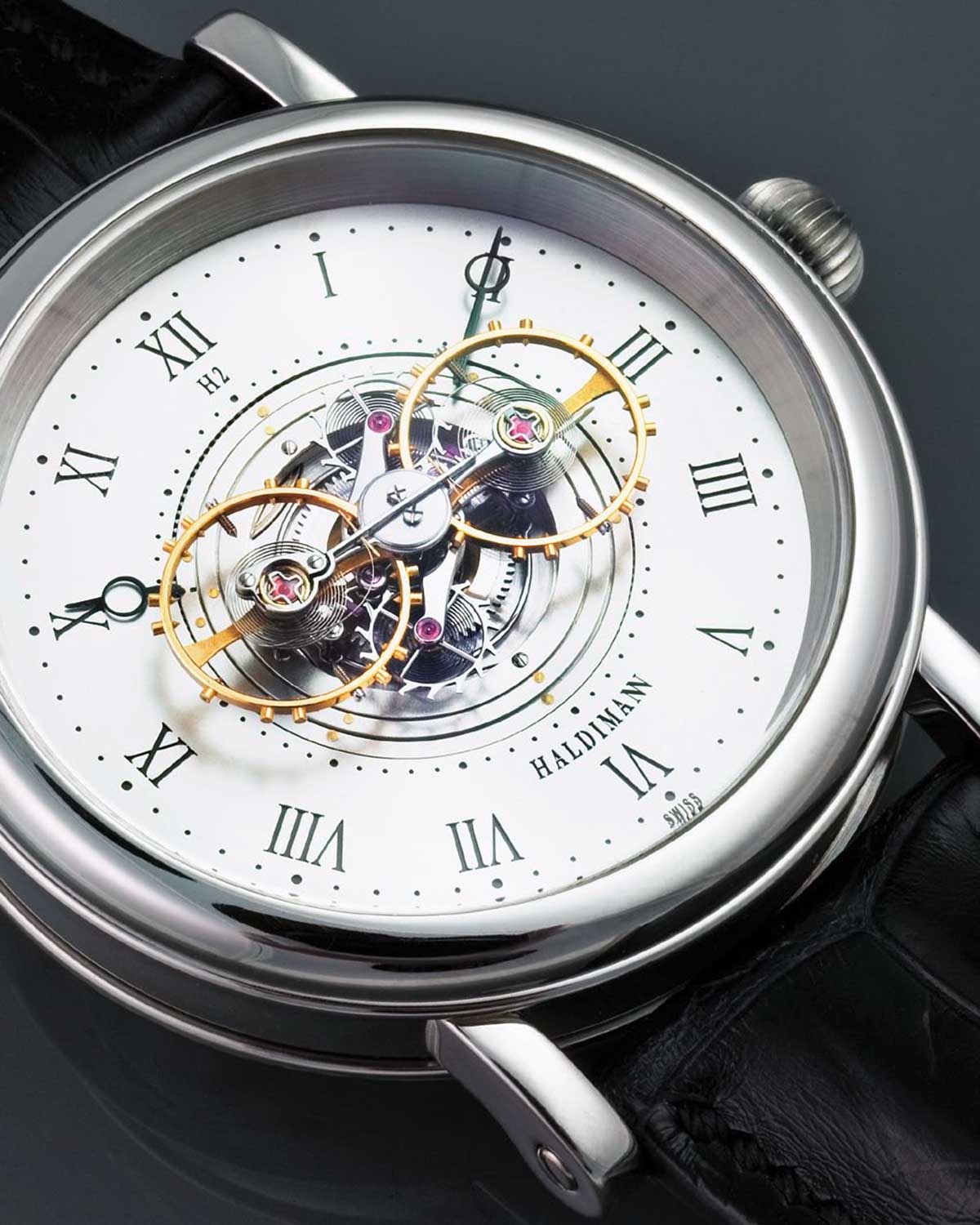
- H2 Flying Resonance
Vianney Halter built his own resonance tourbillon, developed through the 2010s and shown in finished form as the Deep Space Resonance. His two balances sit on a shared stud holder, a piece of metal that both hairsprings are pinned to directly, creating a physical, structural link between the two oscillators rather than a connection made purely through the surrounding plate.
-

- Vianney Halter
-
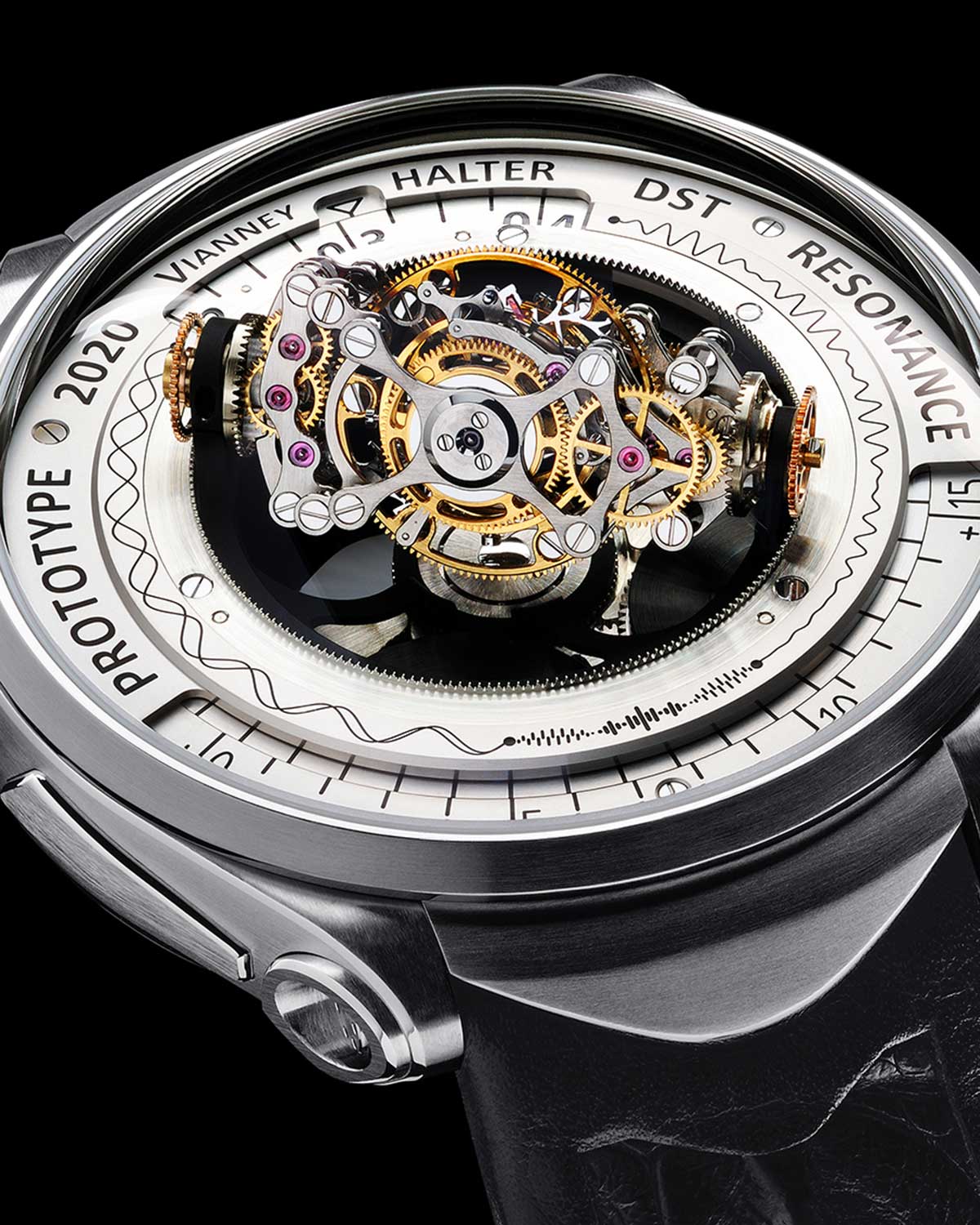
- Deep Space Tourbillon Resonance
Armin Strom introduced its Mirrored Force Resonance in 2016, which has become the brand’s signature complication. It uses a patented clutch spring, a single, carefully shaped piece of metal that physically joins the outer end of both hairsprings together. This is, by design, the strongest and most direct link of all the modern resonance watches, and Armin Strom is upfront that this is a deliberate choice, built for very reliable, near-instant synchronization rather than for replicating Breguet’s original experiment exactly.
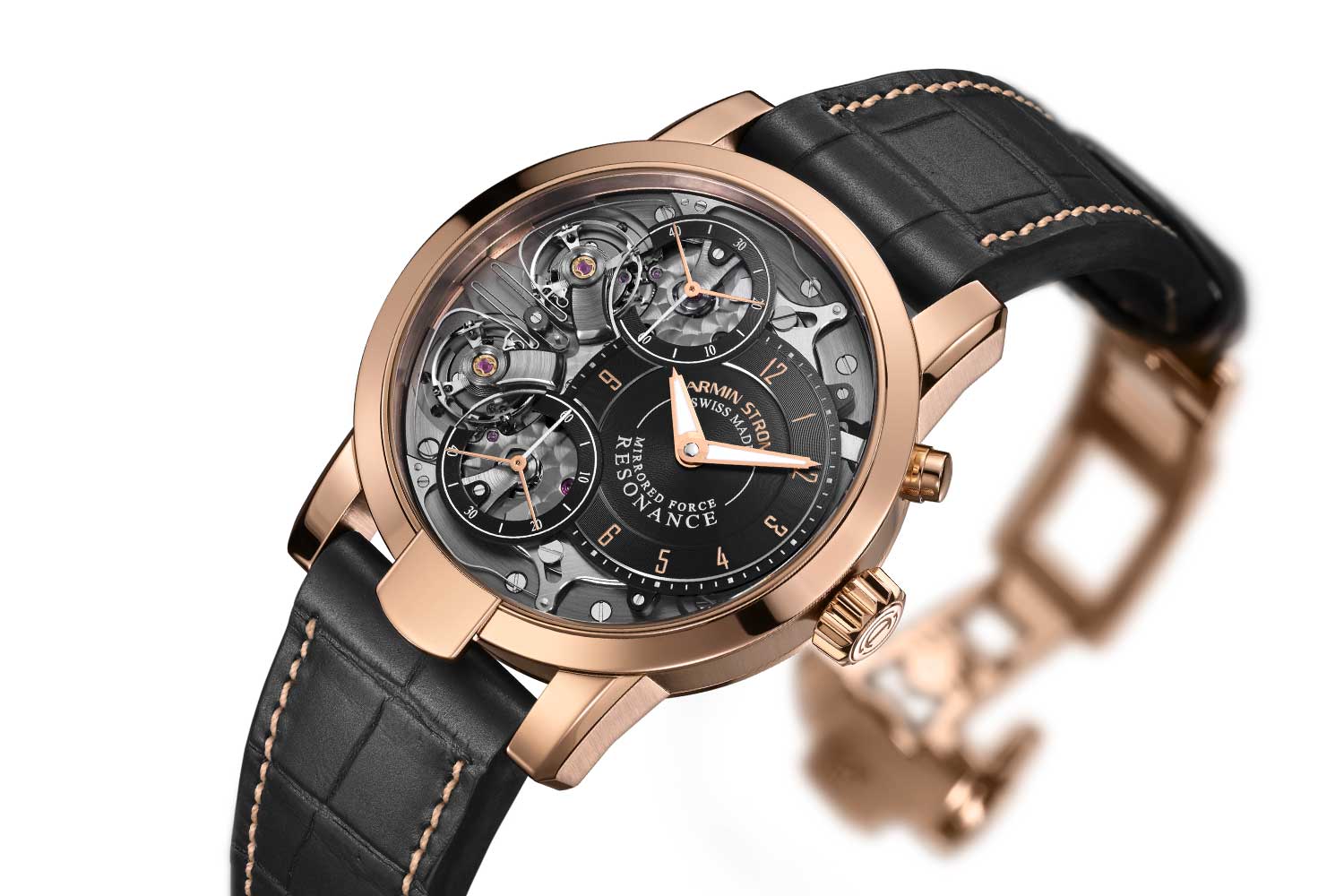
Mirrored Force Resonance
Ondřej Berkus makes a resonance watch with what he calls a Frequency Unification Accuracy System. Here, the studs of both balance springs are fixed to either end of a mobile bridge that tilts one way then the other as the hairsprings breathe like a miniature see-saw.
-
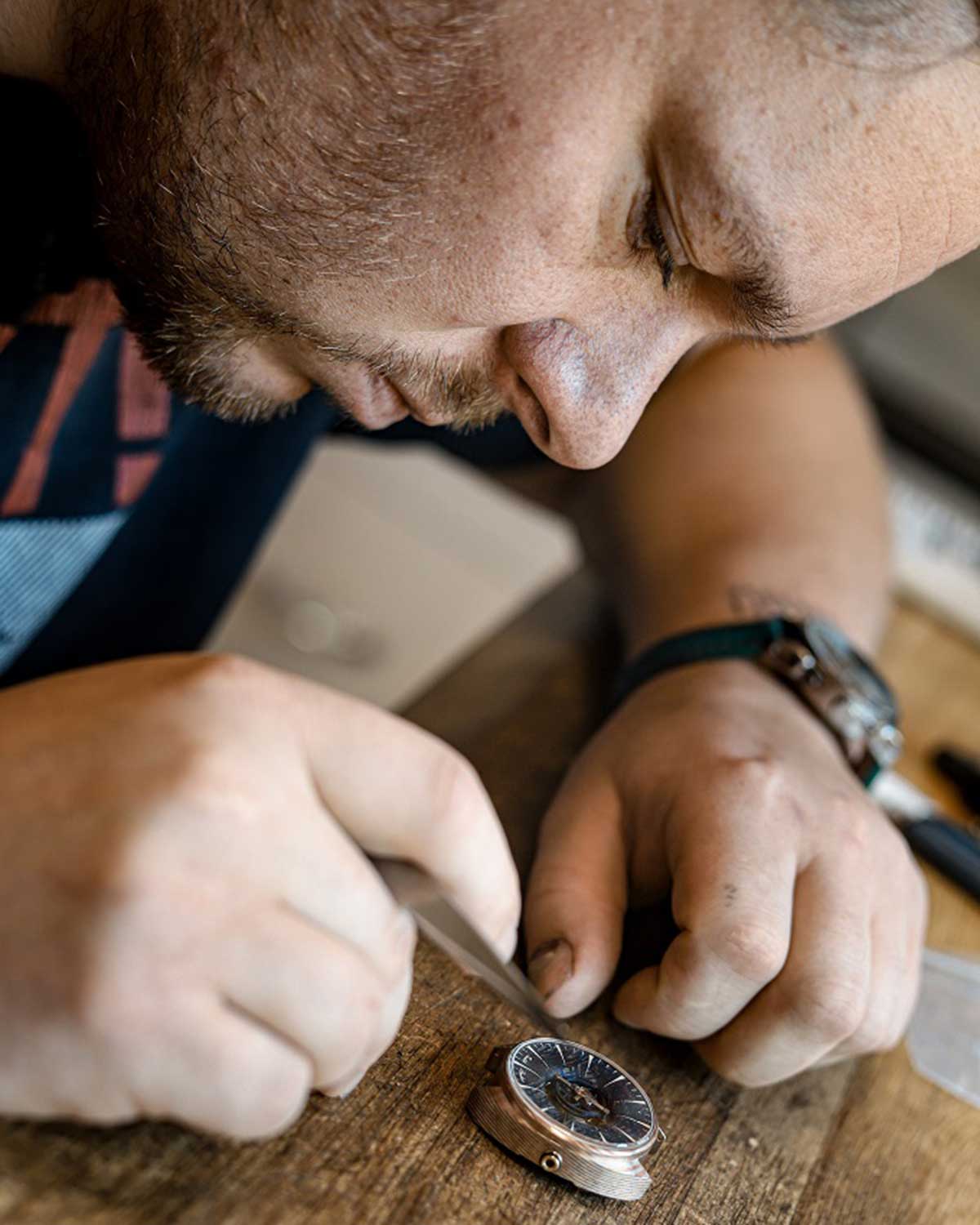
- Ondřej Berkus
-
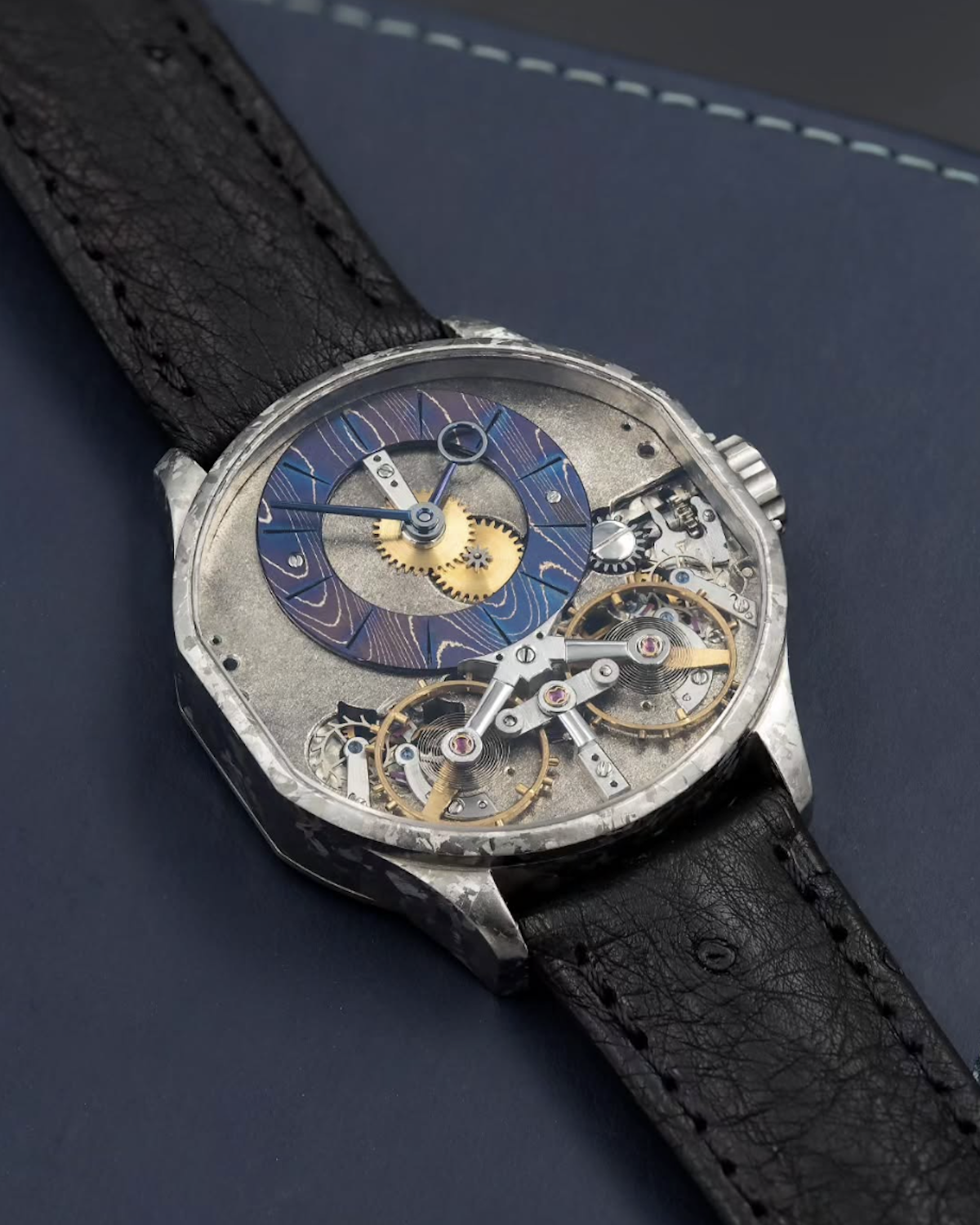
- Ondřej Berkus’ resonance watch with Frequency Unification Accuracy System
Notice the pattern. Preziuso’s tourbillons are geared together. The studs of Haldimann’s hairsprings are joined by a bridge. The studs of Halter’s hairsprings share a mounting point. The studs of Armin Strom’s hairsprings are joined together by a dedicated spring. Same for Berkus. Every one of these approaches uses some form of direct, physical connection between the two oscillators to help force them into sync, or in Preziuso’s case, to average their rates by a gear train.
A Pure Expression of Resonance
Journe’s watch has none of that. Its two balance wheels are not connected to each other in any way. They sit on the same plate, and that’s the entire relationship between them. Whatever coupling exists has to travel through the plate itself, as tiny, almost immeasurable vibrations, in exactly the same way Huygens’ two clocks passed information through a shared wooden beam, and exactly the same way Breguet demonstrated his own balance wheels were talking to each other in 1818. That makes the F.P. Journe Chronomètre à Résonance the first, and still the purest, expression of the phenomenon in a wristwatch: the only one where the two hearts of the watch find their shared beat entirely on their own.
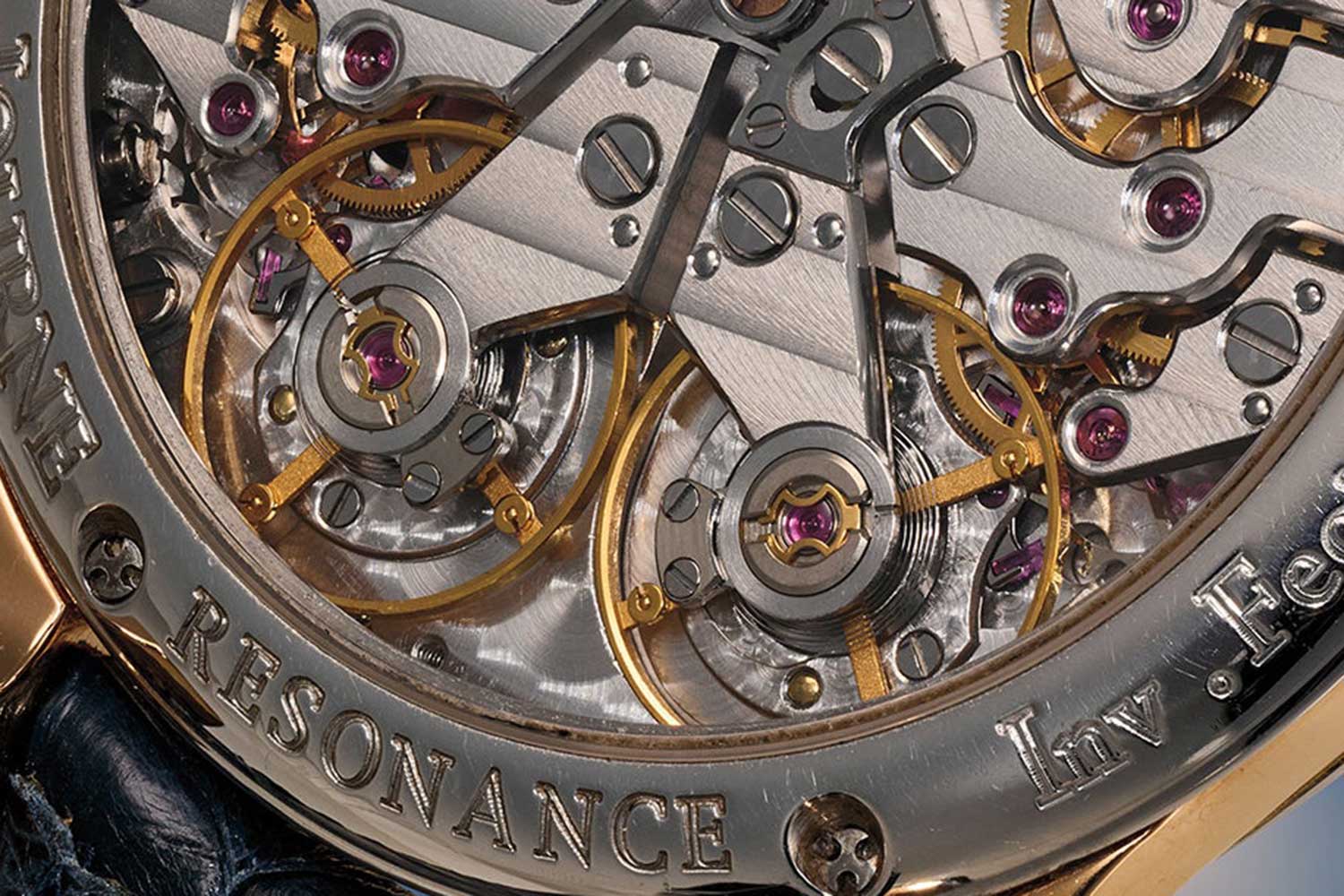
F.P. Journe Chronomètre à Résonance “Souscription, No. 007” (Image: Phillips)
In conclusion, I go back to Journe’s story about how the first production piece of the Chronomètre à Résonance was placed in the store window and purchased that same day. He would later discover that it was bought by none other than the famed British horologist Anthony G. Randall, who designed the first multi-axis tourbillon. Later, George Daniels would visit him and upon seeing the Chronomètre à Résonance, said to Journe, “Mr. Journe, you have a lot of courage.” This is tremendously meaningful. Daniels, who was the ultimate student of watchmaking history and in particular Breguet, understood the immense reputational risk that Journe took by forging a unique path in the modern history of watchmaking.
To this day, the Chronomètre à Résonance may well be the bravest watch ever made, and François-Paul Journe modern horology’s most courageous soul — though one who charmingly never takes himself too seriously. I once explained to Journe that the Chronomètre à Résonance was also a profoundly romantic watch, because it is about two oscillators, two living beating hearts, if you will, that enter into the same frequency with nothing tangible connecting them until they stabilize each other. Like two human beings in love. Journe quickly replied, “Yes, that is what my friend, the famous musician Keith Jarrett, said about his resonance watch. He said it reminded him of his wife and him and even inspired some compositions.” Journe gives me his characteristic cheeky look, then adds, “But, of course, then he got divorced.”
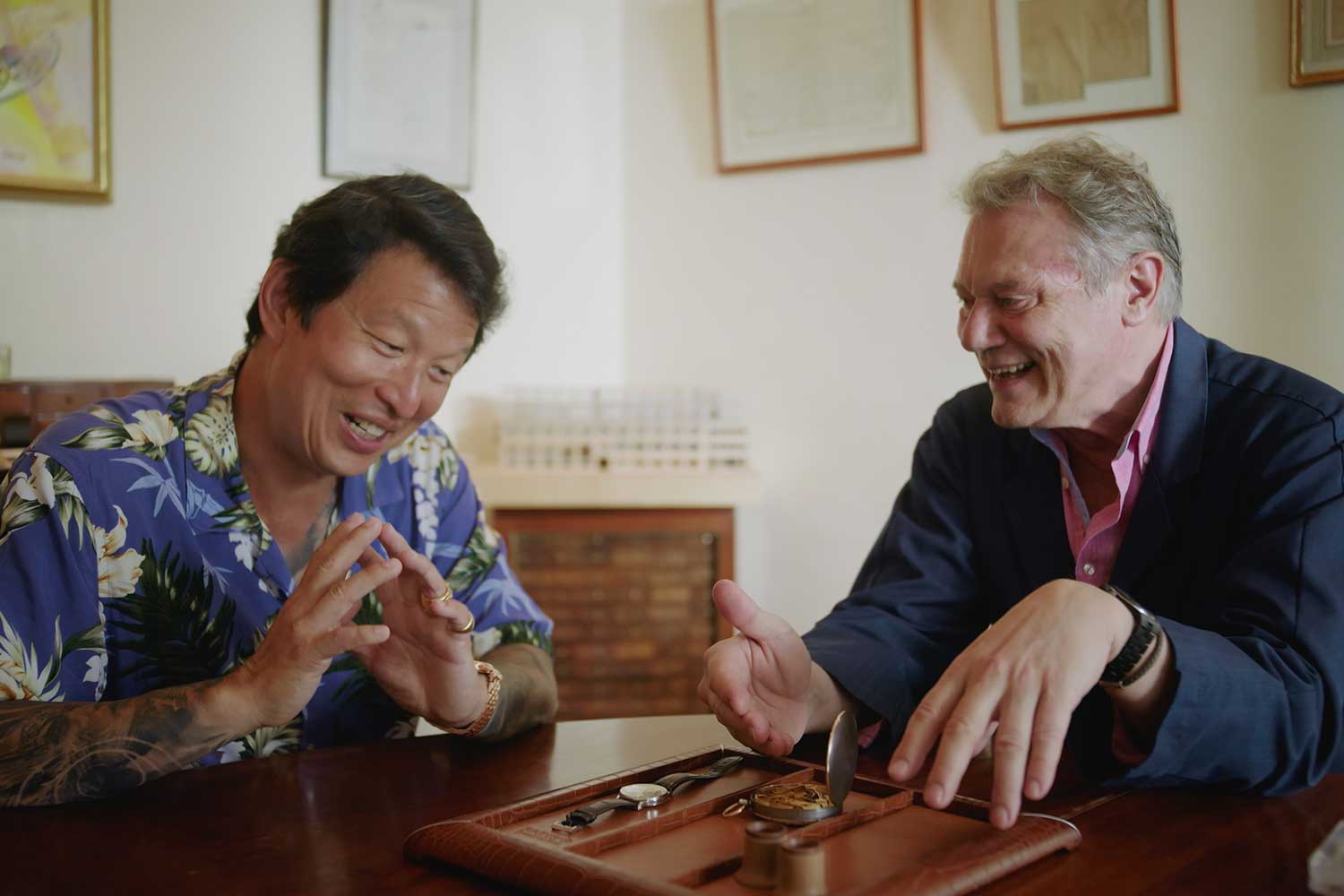
The author Wei Koh and François-Paul Journe in a scene from Man of The Hour
This exchange reminds me of something that many people don’t realize about my friend François-Paul Journe: while he is singularly focused on horological achievement in a way no other mortal on the planet is, and even though he is the bravest amongst us, he is at the same time innately human, warm and a superb human being.
F.P. Journe
You may also like
Editorial
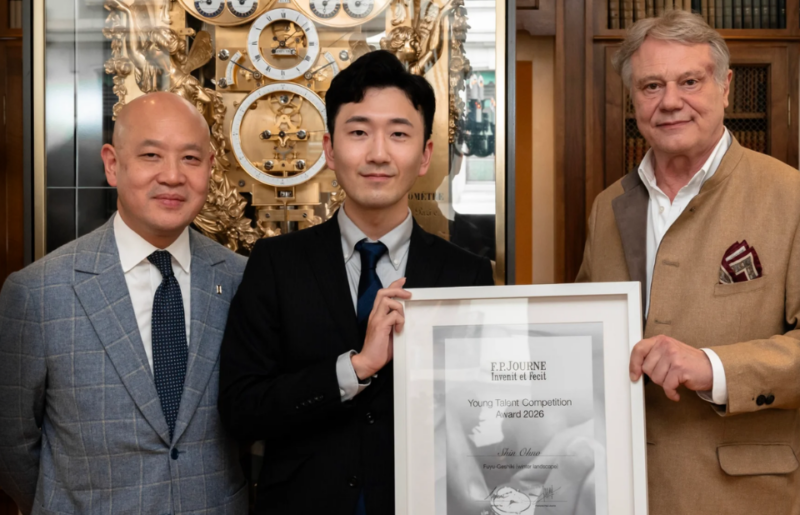
Shin Ohno’s Fuyu-Geshiki Is a Portrait of Obsession in 395 Parts
May 14, 2026
Editorial
Shin Ohno’s Fuyu-Geshiki Is a Portrait of Obsession in 395 Parts
May 14, 2026

Editorial
The Revolutionary List: 25 Watchmakers and Construction – François-Paul Journe
Dec 15, 2025
Editorial
The Revolutionary List: 25 Watchmakers and Construction – François-Paul Journe
Dec 15, 2025
Editorial
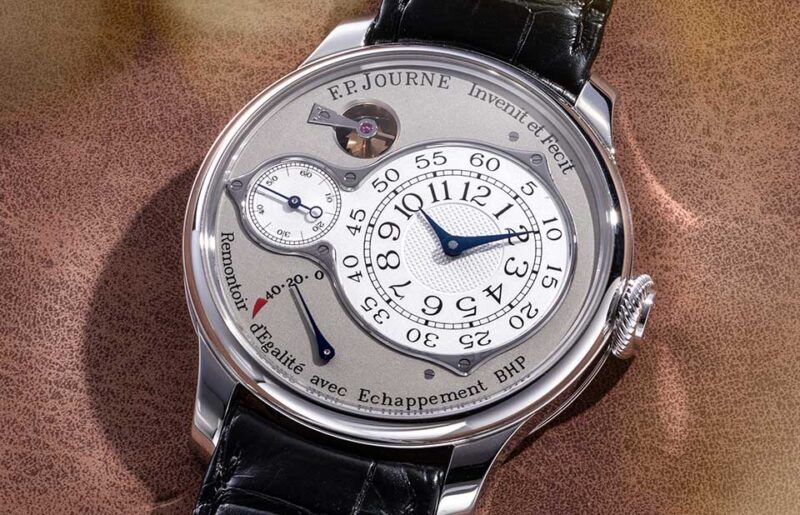
The Revolutionary List: 24 Technically Brilliant Watches – F.P. Journe Chronomètre Optimum
Dec 12, 2025
Editorial
The Revolutionary List: 24 Technically Brilliant Watches – F.P. Journe Chronomètre Optimum
Dec 12, 2025