Shin Ohno’s Fuyu-Geshiki Is a Portrait of Obsession in 395 Parts
Editorial
Shin Ohno’s Fuyu-Geshiki Is a Portrait of Obsession in 395 Parts

There is a madness in independent watchmaking that is difficult to explain to anyone outside the field. It is not glamorous, neat or theatrical. And once in a while, it looks like a young watchmaker waking up at 5 a.m. to work for two hours before heading to office, returning home after a full day’s work to sit at the bench again from 7 p.m. till midnight. It looks like weekends disappearing into fine-tuning tolerances, failed assemblies, sound trials and an endless discipline that’s just borderline unreasonable.
This is Shin Ohno’s Fuyu-Geshiki, the horological creation that won him the 2026 F.P. Journe Young Talent Competition.
Ohno is 27 years old, from Matsumoto in Nagano, Japan, and a graduate of the National Institute of Technology, Toyota College. His winning creation, the Fuyu-Geshiki, or “Winter Landscape,” is inspired by a wintry scene in Nagano. We’re looking at mountains, clean air, spring water and melting snow. Ohno has translated that scene into a grande and petite sonnerie, quarter repeater and tourbillon, comprising a total of 395 components, without using a base movement. All parts were designed and manufactured by Ohno himself, with the exception of 68 rubies, 11 ball bearings, crystal, three mainsprings and a hairspring.
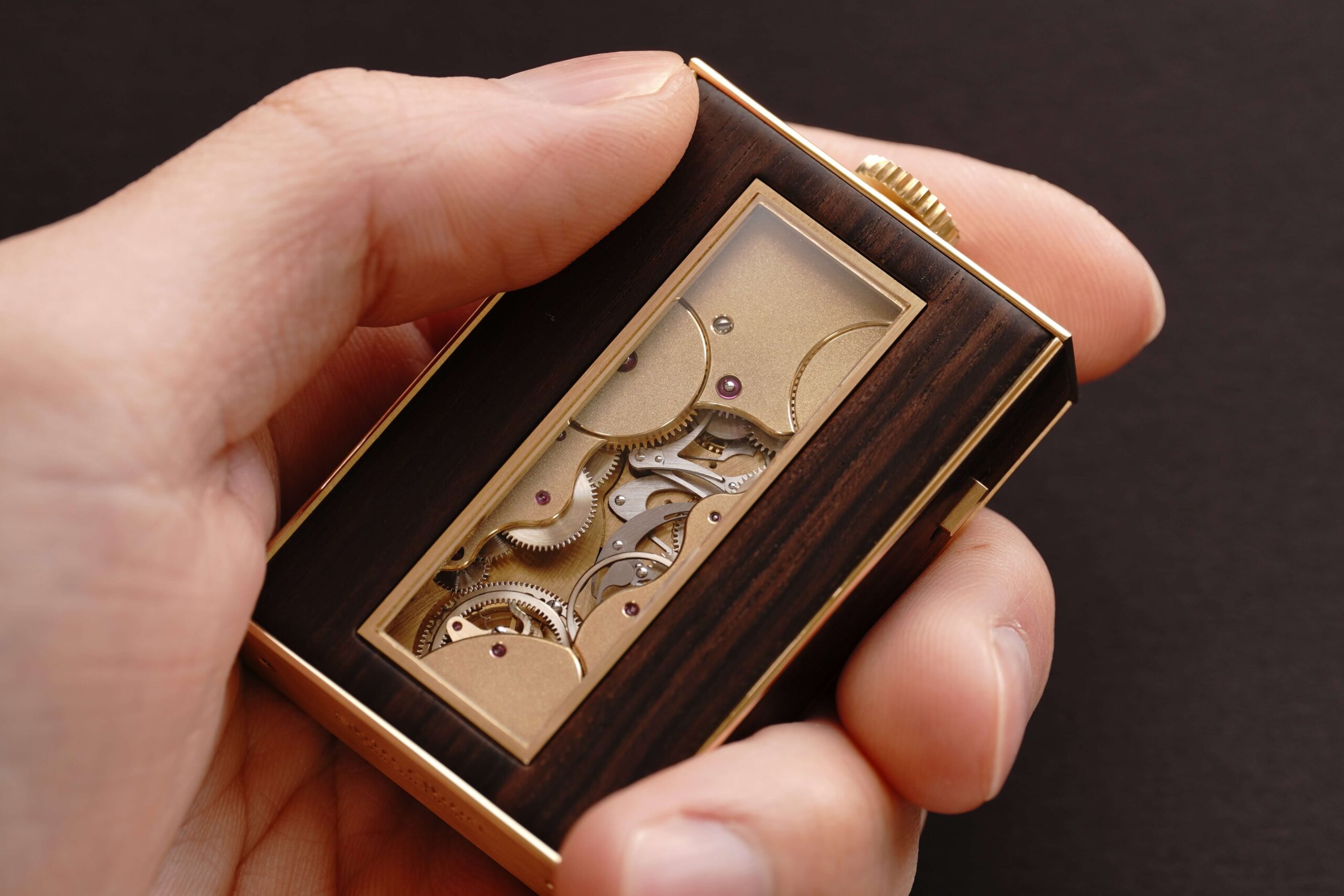
All 395 components were designed and manufactured by Ohno himself, with the exception of 68 rubies, 11 ball bearings, crystal, three mainsprings and a hairspring
A Project Driven by Rigor and Purpose
The development took around 11 months, with the first two spent on researching and documenting the idea behind striking mechanisms. Four months went into design. Another four were devoted towards manufacturing the different components. The final month was spent stabilizing the striking mechanism and refining its sound.
At first, Ohno considered making something simpler — only a petite sonnerie — in order to meet a one-year deadline. But as the project developed, he felt that a work conceived through compromise had no true value and ended up pursuing it further.
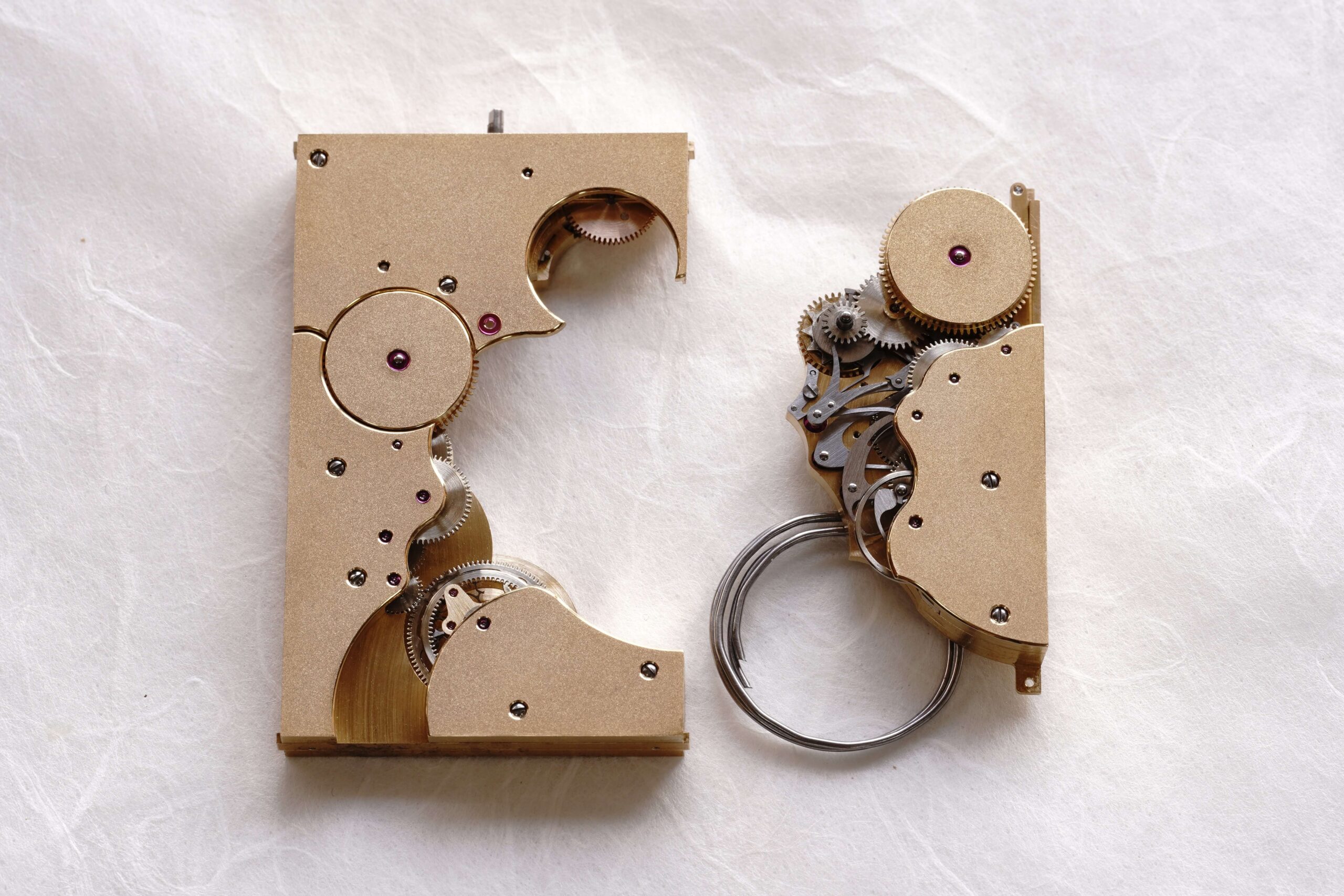
The Fuyu-Geshiki features a grande and petite sonnerie, quarter repeater and tourbillon
Ohno’s professional background makes the story even more interesting. He was no stranger to the theoretical foundations of mechanical watchmaking and design while working as an engineer at Seiko Epson Corporation’s Micro Artist Studio. But his work there mainly focused on computer-aided design, and because he had no opportunity to learn practical component manufacturing within the company, he taught himself through YouTube videos and by cold calling teachers from Japanese watchmaking schools. He built the missing parts of his education himself — especially the tactile and deep knowledge needed to make components.
Behind the Poetry
Fuyu-Geshiki is a poetic object born from the difficulty of bringing it into existence. The acoustic complications are meant to evoke the sound of moving water, while the tourbillon represents the continuous movement of a stream. The dial and movement are both structured around the textures of snow and water, the shimmer of a stream, and the dynamics of a winter landscape seen from indoors through a window. The case, made of ebony and brass, is the house that frames the view.
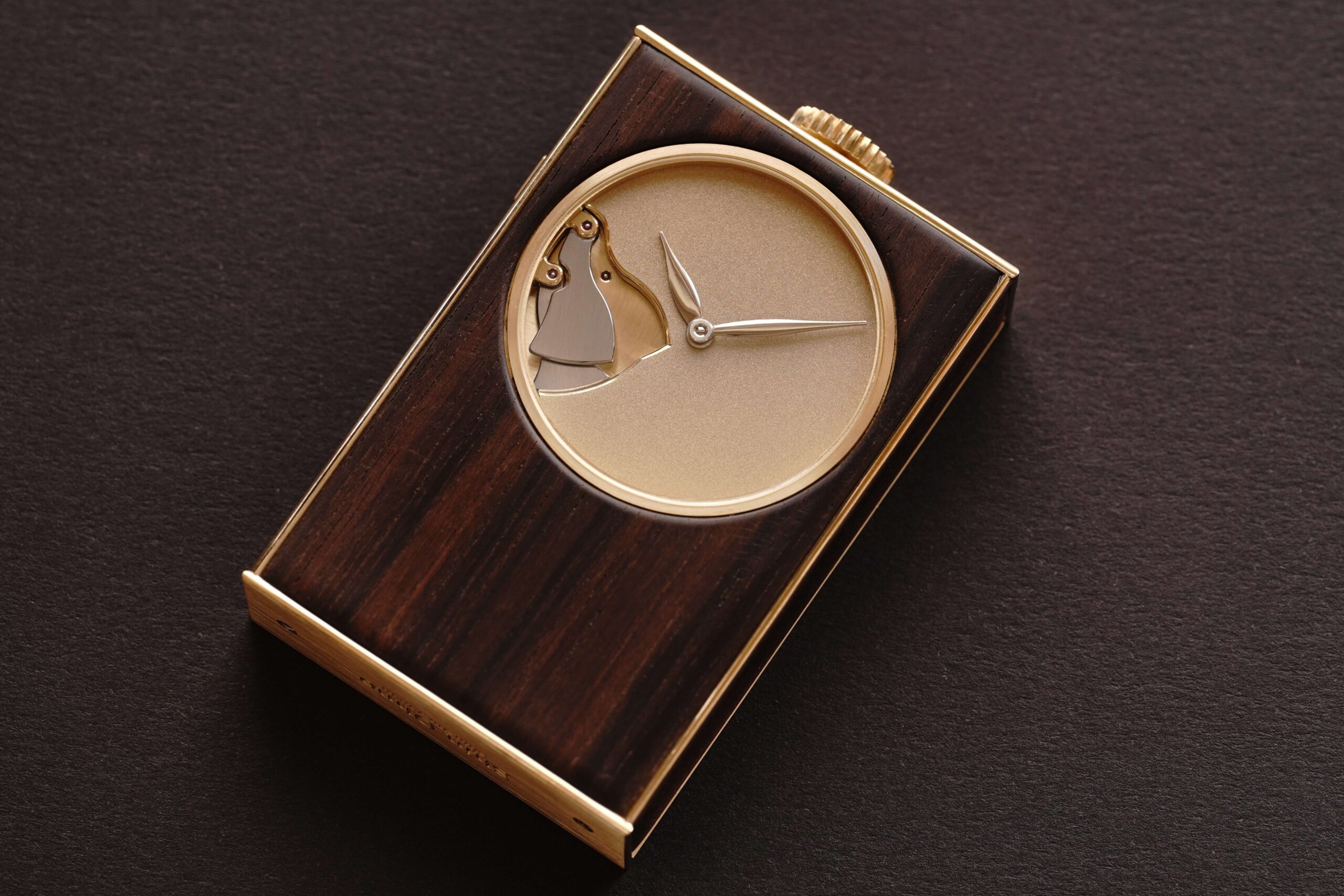
The dial and bridges are frosted by emery blasting to mimic the softness and light-diffusing quality of snow
The finishing follows the same idea. The dial and bridges are frosted by emery blasting to mimic the softness and light-diffusing quality of snow. The wheels and plates are satin finished just like the steady flow of water. The tips of the wheel teeth are painstakingly hand-polished one by one to a mirror finish, recalling sunlight catching the surface of a stream.
Ohno identifies the precision of each manufactured component, the greatest challenge of the project. At the center of the movement, more than 10 components sit on the same axis, including an hour snail cam, quarter snail cam, surprise piece and star wheel. Initially, the mechanism did not work at all due to small errors in each component. Each minute inaccuracy accumulated into a larger functional problem, forcing him to rethink the process before achieving a stable ticking watch.
For a striking watch, the sound is not just a function. It’s the soul of the watch. Ohno used a piano wire for the gongs, chosen for its peaceful tone. He also notes that the sound changed completely depending on the movement of the hammers, the way the gongs were fixed, and the shape it was contained in. It sounded completely different lying flat on the bench than when held by hand.

A safety system automatically deactivates the striking mechanism once the power reserve runs too low, while a locking device prevents pressure from being applied to the crown once it is engaged
The Fuyu-Geshiki also features a modular construction that separates the timekeeping function from the striking mechanism. The quarter repeater is activated through the crown rather than a different pusher, preserving the look and purity of the case, while also allowing the mechanism to be operated when placed on a desk. He also built in a safety system that automatically deactivates the striking mechanism once the power reserve runs too low, while a locking device prevents pressure from being applied to the crown once it is engaged.

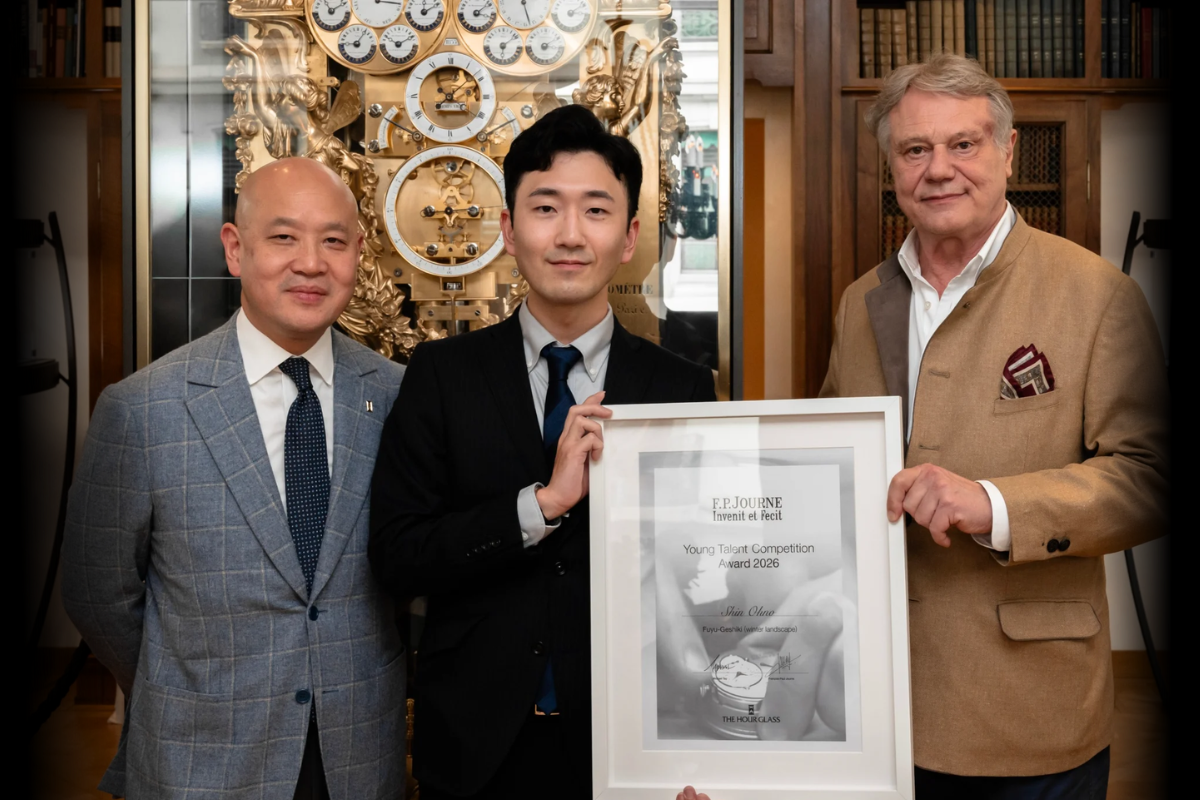
Shin Ohno receiving his award from Michael Tay and Francois-Paul Journe
There is a small temptation in watch writing to reach too quickly for superlatives — there are certainly so many pieces out there that are exceptional, extraordinary and important. But with Fuyu-Geshiki, the sense of awe comes from the totality of Ohno’s self-driven effort: his ambition for complications, self-taught manufacturing, the personal workshop, the full-time job, and the refusal to stop at a simpler idea.
The F.P. Journe Young Talent Competition, organized with the support of The Hour Glass, was created in 2015 to support young watchmaking students and recent graduates as they step into the world of independent watchmaking. The winner receives a CHF 50,000 grant to purchase tools or finance a horological project.
F.P. Journe
You may also like
Editorial
The Bravest Watch in History: F.P. Journe’s Chronomètre à Résonance
Jul 31, 2026
Editorial
The Bravest Watch in History: F.P. Journe’s Chronomètre à Résonance
Jul 31, 2026

Editorial
The Revolutionary List: 25 Watchmakers and Construction – François-Paul Journe
Dec 15, 2025
Editorial
The Revolutionary List: 25 Watchmakers and Construction – François-Paul Journe
Dec 15, 2025
Editorial
The Revolutionary List: 24 Technically Brilliant Watches – F.P. Journe Chronomètre Optimum
Dec 12, 2025
Editorial
The Revolutionary List: 24 Technically Brilliant Watches – F.P. Journe Chronomètre Optimum
Dec 12, 2025