
A Closer Look: Remy Cools Tourbillon Atelier
Reviews
A Closer Look: Remy Cools Tourbillon Atelier

The world of independent watchmaking is exciting for many reasons, one of which is seeing young talents carry forward the traditions of legendary watchmakers, often at an impressively high level. It’s always fascinating to see craftsmanship passed down through generations, especially when blended with originality rooted in the present era.
Born in 1997, Remy Cools is just 28 years old and already one of the rising stars in this space. He graduated from Lycée Edgar Faure, a renowned watchmaking school in France, where Theo Auffret is among the alumni and Florent Lecomte among the faculty. After six years of study, Cools joined Greubel Forsey before returning to France to establish his own workshop.
Some of his most notable creations trace back to his school years. As a student, he built the Mechanica Tempus Pendulette Tourbillon desk clock, which won the F.P. Journe Young Talent Competition in 2018. His graduation piece, the montre d’école, was a tourbillon wristwatch that he has since fine-tuned into subscription and production models. The subscription version has sold out, but the production model is still ongoing – and well worth a closer look, having won the Horological Revelation title at last year’s Grand Prix d’Horlogerie de Genève (GPHG).
The newest Tourbillon Atelier

Continuity and evolvement
Cools’ first watch for sale was the Tourbillon Souscription, a 40 mm wristwatch that was nearly identical to his school watch – featuring the same backwinding and setting crowns – except for being slightly smaller than the original 42 mm case. Announced in 2020, only nine pieces were made, all of which have been delivered.
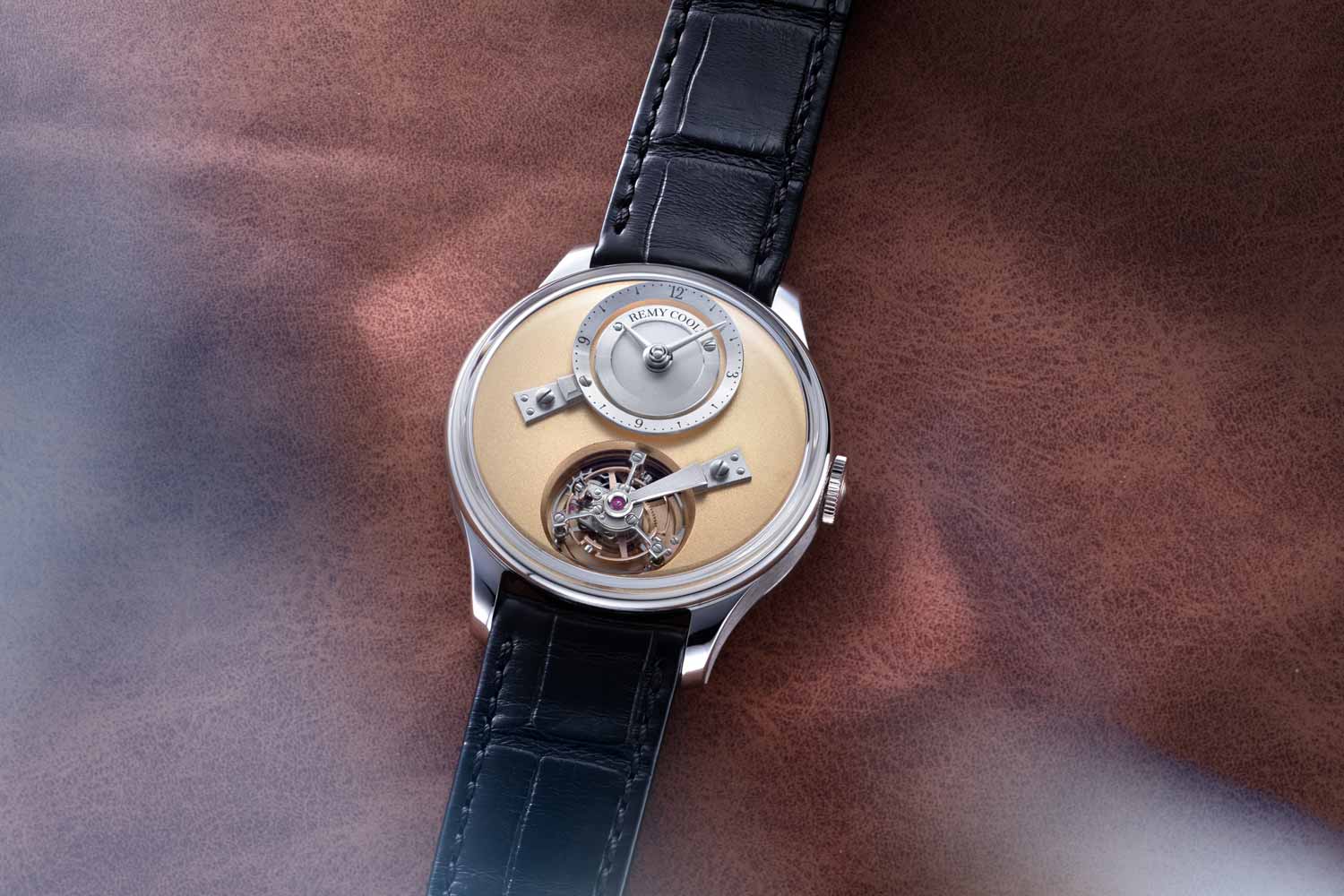
Last year, Cools introduced the production version, named the Tourbillon Atelier. Now smaller, thinner, and significantly more wearable, the latest Atelier is perhaps the best iteration of his school watch to date.

The differences between the Souscription and Atelier models are profound in the details, yet the design language maintains a strong sense of continuity, which contributes to the brand’s image and recognition.

Still featuring the time-telling sub-dial at 12 o’clock and the tourbillon at six, the new Atelier differs from the Souscription only in the details. One such change is the cleaner dial, now without the large engraving on both sides of the tourbillon. The bridge for the tourbillon is also less tall, with the tourbillon itself more recessed within the dial plate to reduce its height.
As a result, the watch is three millimetres slimmer than its predecessor. Now standing at just 12 mm tall while still offering plenty of visual depth, the Atelier has addressed one of the Souscription’s key issues – proportion. It is also one millimetre narrower, bringing it down to 39 mm.
On the topic of the case, it’s worth noting that the material is now platinum instead of the steel used in the Souscription. This is also one of the reasons the production model is significantly more expensive, in addition to the fact that the Souscription was deliberately priced lower to reward early supporters of the brand.
That said, these differences may be subtle enough to go unnoticed at first, but turning the watch over makes it clear that this is indeed a different timepiece. Gone are the twin flaps for winding and setting – which previously blocked half the view of the movement – replaced by a regular crown that is exceptionally thin and wide, giving it a sleek and sophisticated appearance.

In addition, the movement’s layout and construction have also been updated. The barrel, for example, has been relocated to 12 o’clock. More plates are now used on multiple levels, not only enhancing visual depth but also offering a clearer view of the components positioned at different heights. For instance, the underside of the tourbillon is now visible.
Modern and traditional manufacturing
Cools has set up his workshop near Lake Annecy in France, just a short train ride from Geneva, Switzerland. His team consists of just two people, himself and his girlfriend, a size he is content with as he looks to grow, but not too quickly.
Interestingly, Cools has an old soul, which is reflected in his passion for collecting antique watchmaking tools. He once drove four hours to inspect a wheel cutter, only to discover it was new old stock. Perhaps due to his love of both hunting and watchmaking, his workshop is filled with a variety of traditional tools, perfect for working in the old-school way.
But in today’s world, Cools must keep up with the fast-paced demands of collectors, and not everything can be made entirely by hand, especially when it does not add meaningful value to the appreciation of the watch. For prototyping, he relies largely on handcrafting, except for the jewel and mainspring, which have to be outsourced.
For production, he turns to suppliers for more parts, including plates and bridges in addition to the jewel and mainspring. He also receives wheel blanks that are cut by CNC but still profiles them the traditional way, cutting the blank and shaping the teeth by hand. In other words, most of the movement’s parts are produced industrially but are, of course, finished in the traditional haute horlogerie style.
As a result, Cools can produce up to 12 watches a year, compared to over a year just for prototyping (not only because of the handwork but also due to the natural back-and-forth of the development process). Notably, his partner also plays a significant role in the workshop as she handles assembly and finishing.

Cools in his natural habitat. Image by EsperLuxe.
Exterior flair
The design of Cools’ watch is simple but effective. Its most distinctive feature is the dial, which not only has a pleasing layout but is also painstakingly executed for a refined and luxurious look.
The dial itself is plated in either yellow or rose gold, with a fine frosting that gives it a traditional touch, reminiscent of vintage pocket watches rather than the glossy, colorful dials of modern times. The highlight of the dial finish, however, is in the two registers. The time-telling subdial stands out with two beautifully polished hands, particularly around the pivot.

Another example of classical finishing is the tourbillon, which has wide, rounded polished bevels on the cage, even incorporating exterior angles in some areas. Notably, the balance wheel with four screws is Cools’ own design. One could nitpick – the tourbillon cage itself is rather generic and could be enhanced for a more upscale and distinctive look.

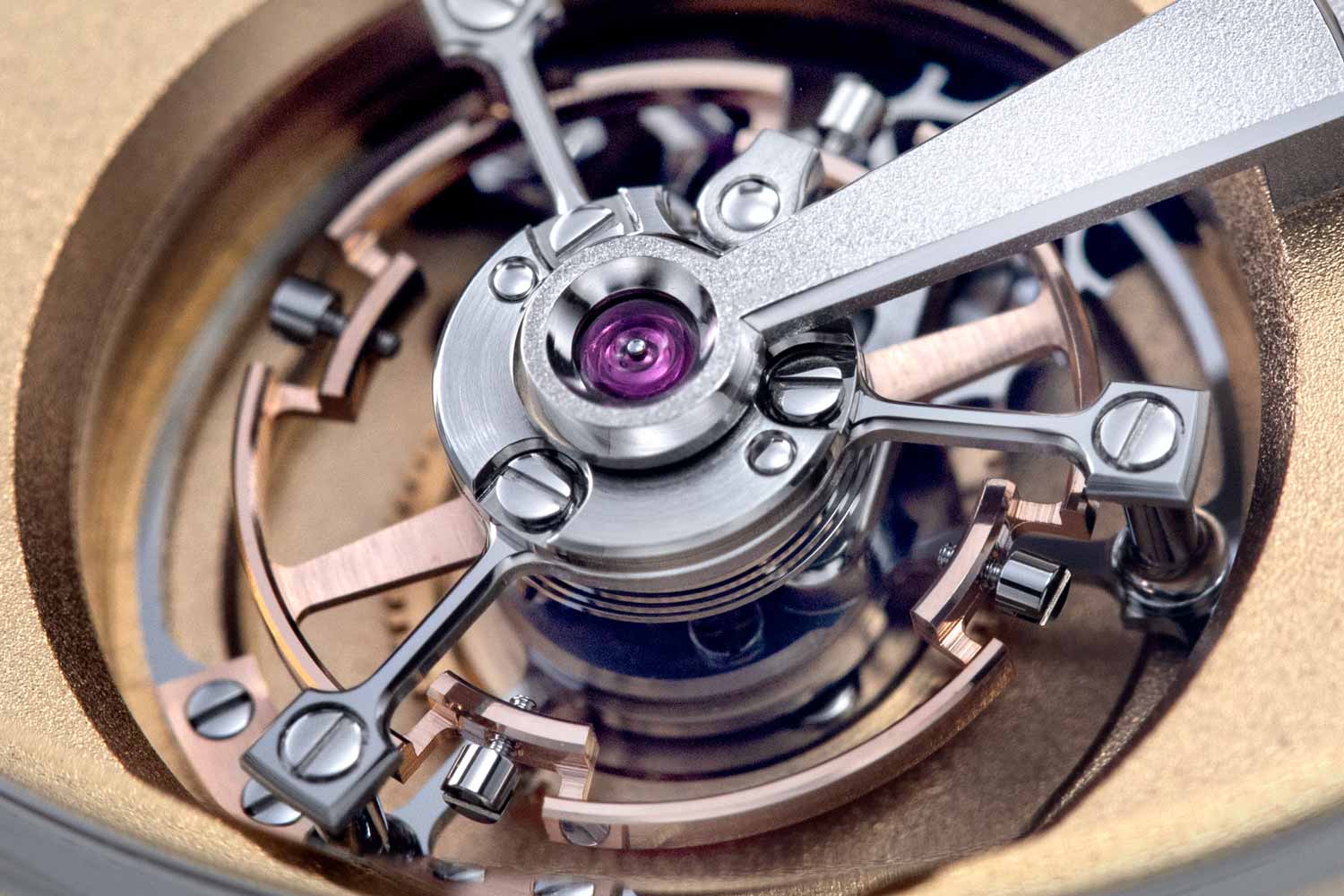
Another area for improvement is the time-telling rings, which have simple, flat bevels rather than the rounded finish seen on the movement components. The font also leans slightly too much towards a computerised look, feeling somewhat cold for a watch of this nature. And the screw on the outer track seems a bit out of place – a slanted slot would have been a better choice.

While the dial design is striking, the case is less so. It serves its purpose with a clean, understated look – it’s quite handsome – but lacks distinctive flair. This could be an area to refine if the brand aims to establish itself not only through traditional techniques but also through memorable design, much like F.P. Journe.

Interior flourish
What truly stands out about the movement is its refinement without excess. Too often, modern movements go all-in on showcasing traditional finishing techniques, with polished bevels widened to the point of losing elegance. And too many watches today focus so heavily on finishing that it no longer feels rare or remarkable.
What’s more compelling is the thought behind a watch’s construction and decoration. This is where an independent watchmaker’s personality comes through. Unlike finishing – which, given enough time and patience, is essentially a technician’s task – design is deeply personal, emotional, and unique to the creator.

The Atelier’s movement – especially compared to Cools’ earlier watches – has a clean, sparse design with a clear focal point: the vertically aligned gear train at the centre. To create visual intrigue, Cools has carefully shaped the movement plates and bridges, using multiple levels and independent cocks for the second and third wheels. The result is a geometric layout reminiscent of old-school pocket watches, yet softened by enough gentle curves to avoid looking too rigid.
The only area that could be improved is the rounded section just above the winding click, where the line appears slightly too industrial and less graceful than one might expect from a high-end watch.

When it comes to finishing, there’s no doubt that every component has been meticulously executed, down to the rounded and polished screw heads. A mix of techniques – frosting, polishing, and brushing – creates a varied and refined texture throughout the movement.

Cools also makes clever use of depth to enhance the finishing. The tall, straight winding click, for example, catches the light beautifully from an angle, while the barrel rachet wheel, with its deeply rounded and polished recess, is especially striking. These are details not often seen in a typical wristwatch, reflecting the thoughtful approach behind the movement’s construction.


The barrel ratchet wheel is nearly perfect – if only the teeth had a slight bevel
Concluding thoughts
It is clear that Remy Cools is on the right path to becoming a great watchmaker, with his Tourbillon – whether the school watch, Souscription, or the latest Atelier – demonstrating his keen eye for design and deep appreciation for traditional watchmaking techniques. His latest Atelier also proves his maturity in refining both design and construction, as it feels meaningfully different and improved from its predecessor.
Cools has a long journey ahead to establish himself as a truly distinctive and historically significant watchmaker—a potential he undoubtedly possesses. While some elements, such as the case, font, and certain movement components like the tourbillon cage and plates, still carry a somewhat generic industrial feel, refining these details and infusing his designs with a stronger identity will further define his signature style. With time and continued evolution, his watches have the promise to be recognized as unmistakably Cools.
Remy Cools
You may also like
Reviews
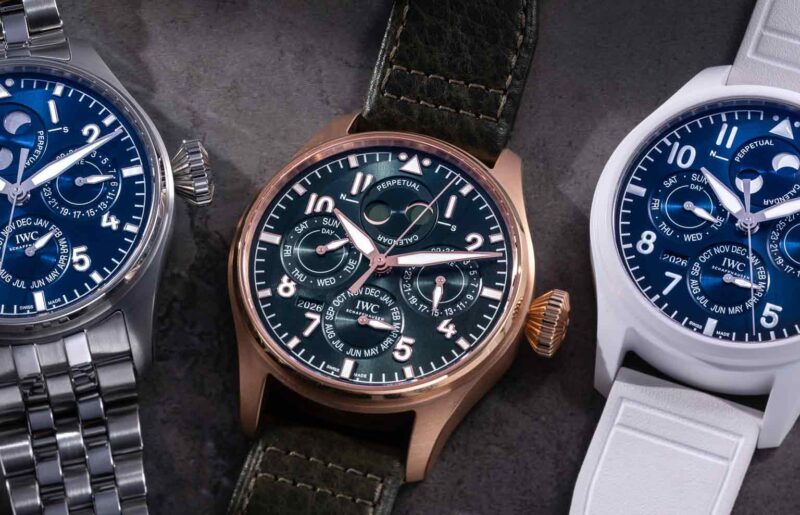
Up Close: IWC Big Pilot’s Watch Perpetual Calendar ProSet Le Petit Prince
Sep 23, 2026
Reviews
Up Close: IWC Big Pilot’s Watch Perpetual Calendar ProSet Le Petit Prince
Sep 23, 2026
Editorial
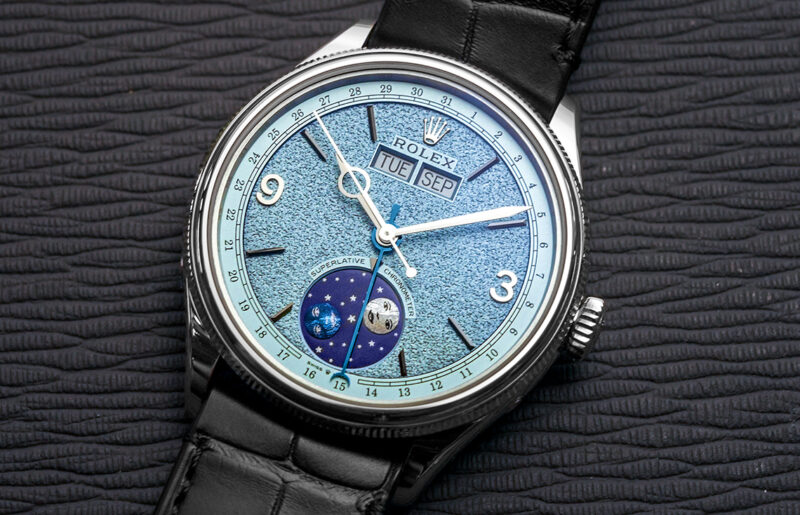
A Closer Look: Rolex Perpetual Padellone
Sep 22, 2026
Editorial
A Closer Look: Rolex Perpetual Padellone
Sep 22, 2026
Reviews
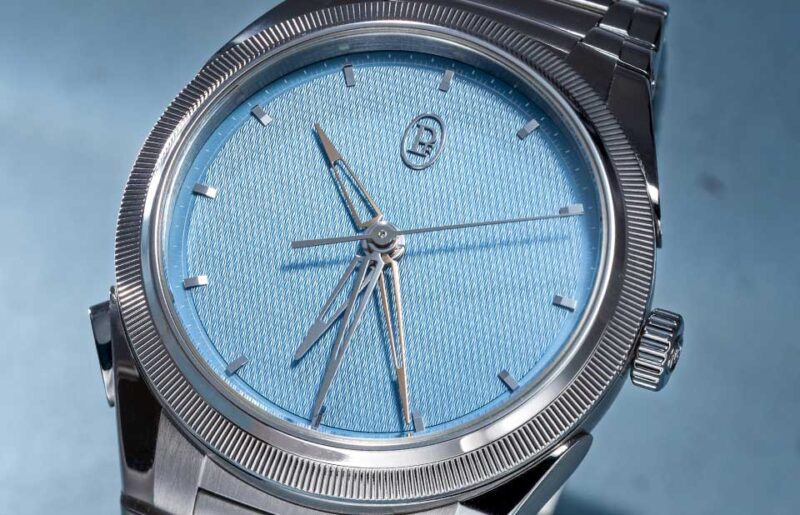
A Closer Look: Parmigiani Tonda PF Chronographe Mystérieux
Jul 14, 2026
Reviews
A Closer Look: Parmigiani Tonda PF Chronographe Mystérieux
Jul 14, 2026