Recalibrating Hublot
Editorial
Recalibrating Hublot

CEO Julien Tornare does not try to diminish the scale of what Hublot has achieved. He describes it as “probably one of the biggest successes in the watch industry of the past 20 to 25 years,” a brand that moved from relative obscurity in the early 2000s to global recognition at a speed few companies in Swiss watchmaking have managed to match. That rise was not built on caution. Hublot grew by doing what established maisons either could not do, would not do, or did not need to do. It pushed materials, embraced size, built an instantly recognizable case architecture, and entered cultural spaces that much of the watch industry kept at arm’s length. Football, art, music, celebrity, motorsport, boxing, fashion — Hublot went where the crowds were and brought watchmaking into those arenas.
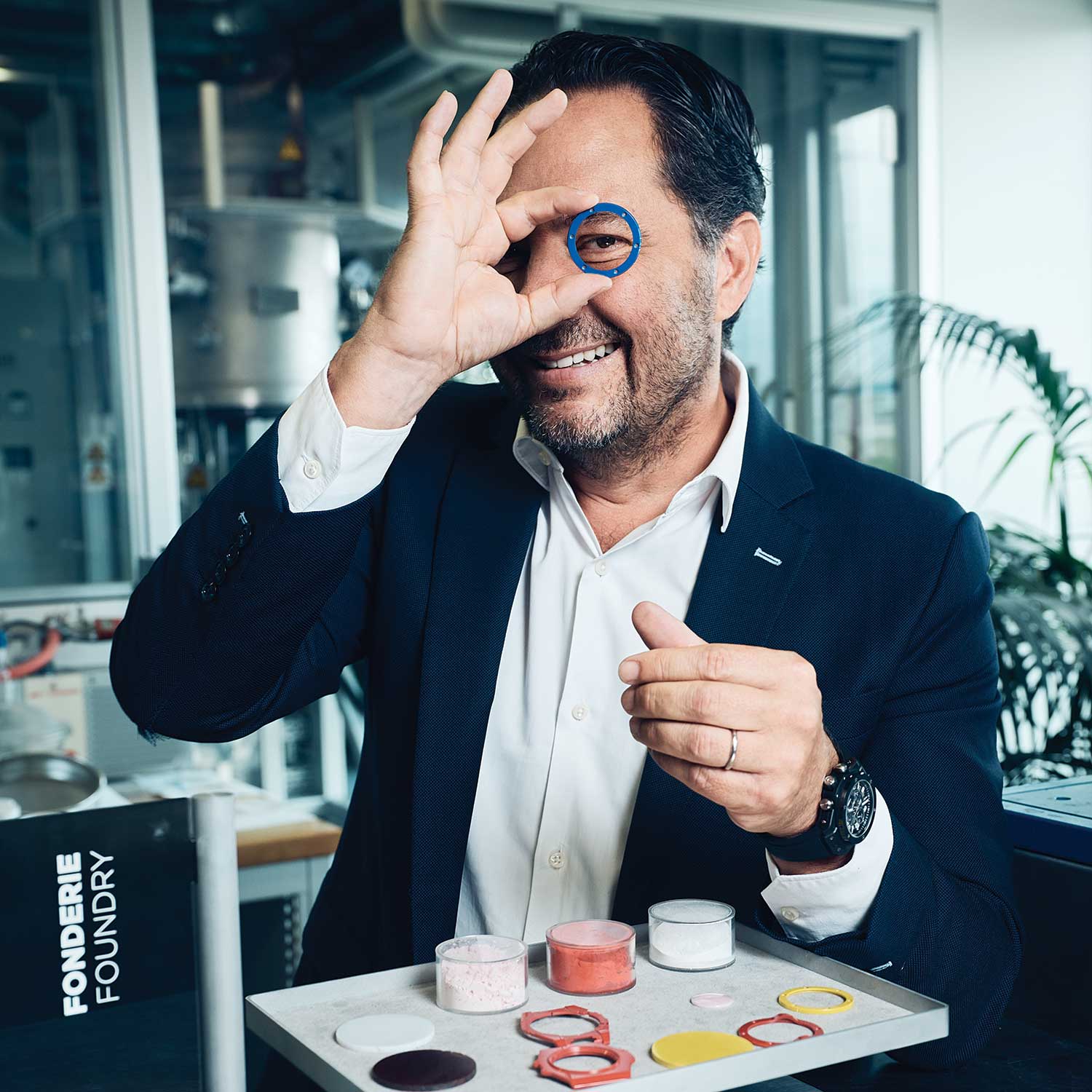
Julien Tornare, CEO of Hublot
That strategy made the brand visible, but it also exposed it to misunderstanding. Hublot became associated with impact over depth and mechanical excellence that existed was largely ignored. Tornare saw that and also appreciates that changing the perception of a brand is not the same as changing the brand itself. “When you grow fast like Hublot, at some point you need to rethink where you’re going… you can have some growth issues to fix,” he says. It is not a rejection of what came before. Tornare repeatedly gives credit to his predecessors, and rightly so. Without that first chapter, there would be no modern Hublot to recalibrate. But growth at that speed leaves unfinished work, and his question is now the obvious one: “You exploded into this space. So what’s next? What do we do now?”
His answer is built around a word that he returns to again and again: fundamentals. “Hublot was so focused on innovation and creativity that at some point you have to say, okay, I will continue to go with creativity, but I need to fix some fundamentals,” he says. It is an interesting phrase from someone leading a brand that has spent two decades being rewarded for refusing to behave like the rest of the industry. But Tornare is not trying to make Hublot orthodox, he is trying to make it harder to dismiss. The creative energy will remain, as will the material experimentation and the collaborations. But the engineering, finishing, quality control and after-sales commitment are being brought forward in a way they have not been before.
At the center of this is the simple belief that Hublot has not been given enough credit as a watchmaker. “We are known for impactful and dynamic marketing. We are known for the new materials and the creativity, but we don’t get the credit we should for watchmaking,” Tornare says. That is the point on which this new phase turns. The capability, he insists, was already there. His job is not to invent it, but to make it visible. “I saw it immediately. It’s not something new, but it is something I’m working on,” he says.
Watchmaking First
This is most clearly expressed through the Big Bang. The collection has always carried the force of Hublot’s modern identity, but Tornare wants the latest generation to be read differently. He talks about the new Big Bang Reloaded as a watch that finally places the Unico movement at the forefront of the conversation. “We really want to bring the Unico to center stage,” he says, adding that Hublot has increased the level of finishing dramatically, with “three times more attention than we used to do on this Unico movement to really make it outstanding.”
The Unico is no newcomer to Hublot’s arsenal. Born in 2010, it was the brand’s first caliber designed, developed and manufactured in-house, and the current HUB1280 Unico remains a serious integrated flyback chronograph, featuring a dial-side column wheel, silicon escapement, 72-hour power reserve, 354 components, 43 jewels and a frequency of 4Hz. It has five patented innovations, including the oscillating clutch, anti-shaking chronograph hand system, “zero friction” ratchet wheel blocker, fine-adjustment system and highly shock-resistant time-setting. For years, however, these details were not necessarily what people talked about first when they talked about Hublot.
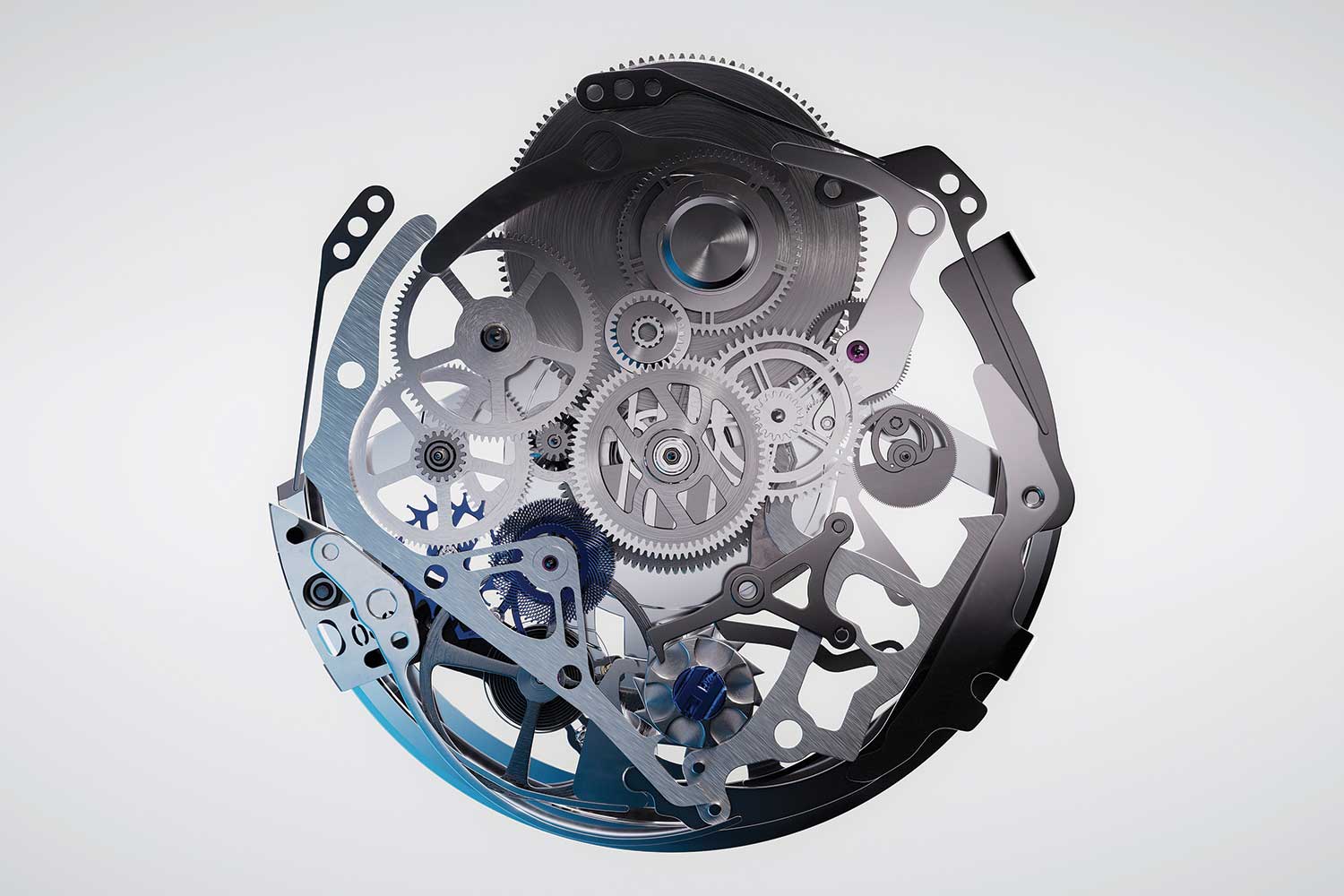
The Hublot in-house Caliber HUB1280 Unico
Sadry Keiser, Hublot’s Chief Product Officer, elaborates on the movement saying that “the Unico base is a strong benchmark.” In other words, the caliber becomes the internal measure and gives the product team a technical standard against which future work can be judged. “When you reach that level, in fact, you also educate yourself,” Keiser continues. “I’m talking about the team, the way they think, the way they develop the things to the next level.” So while Tornare is speaking about reputation, Keiser relates it to practice. Together, they describe the same correction from two different angles.
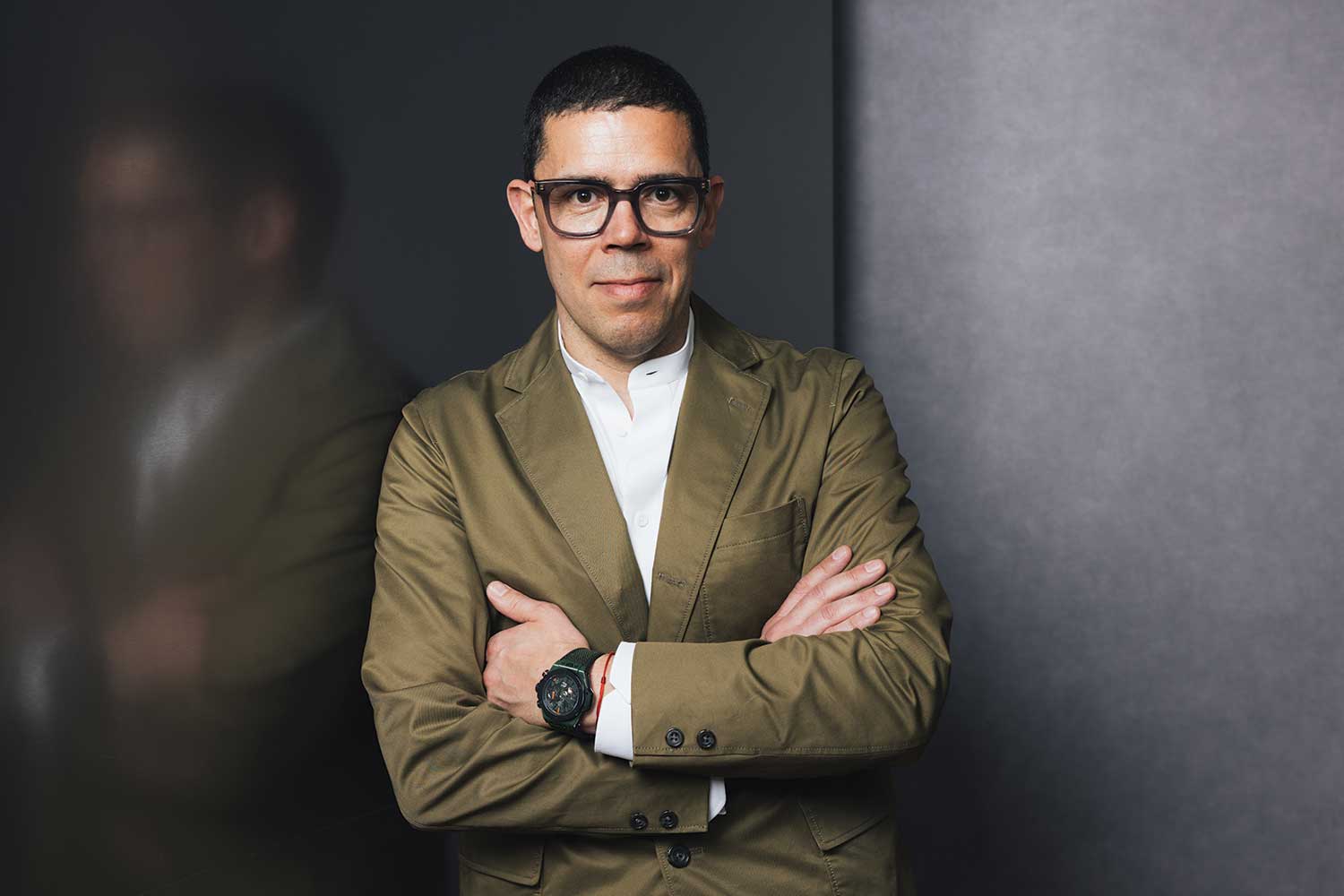
Sadry Keiser, Hublot’s Chief Product Officer
The other visible expression of that correction is the warranty. Hublot is moving from a two-plus-one structure to a five-plus-five offer — five years as standard, with the possibility of extending to 10 years through the Hublotista community. Tornare is passionate about the scale of the statement. “Being at 10 is something super strong. We are above the industry standard,” he says. “But we are confident that these watches will have no issues for 10 years at least.”
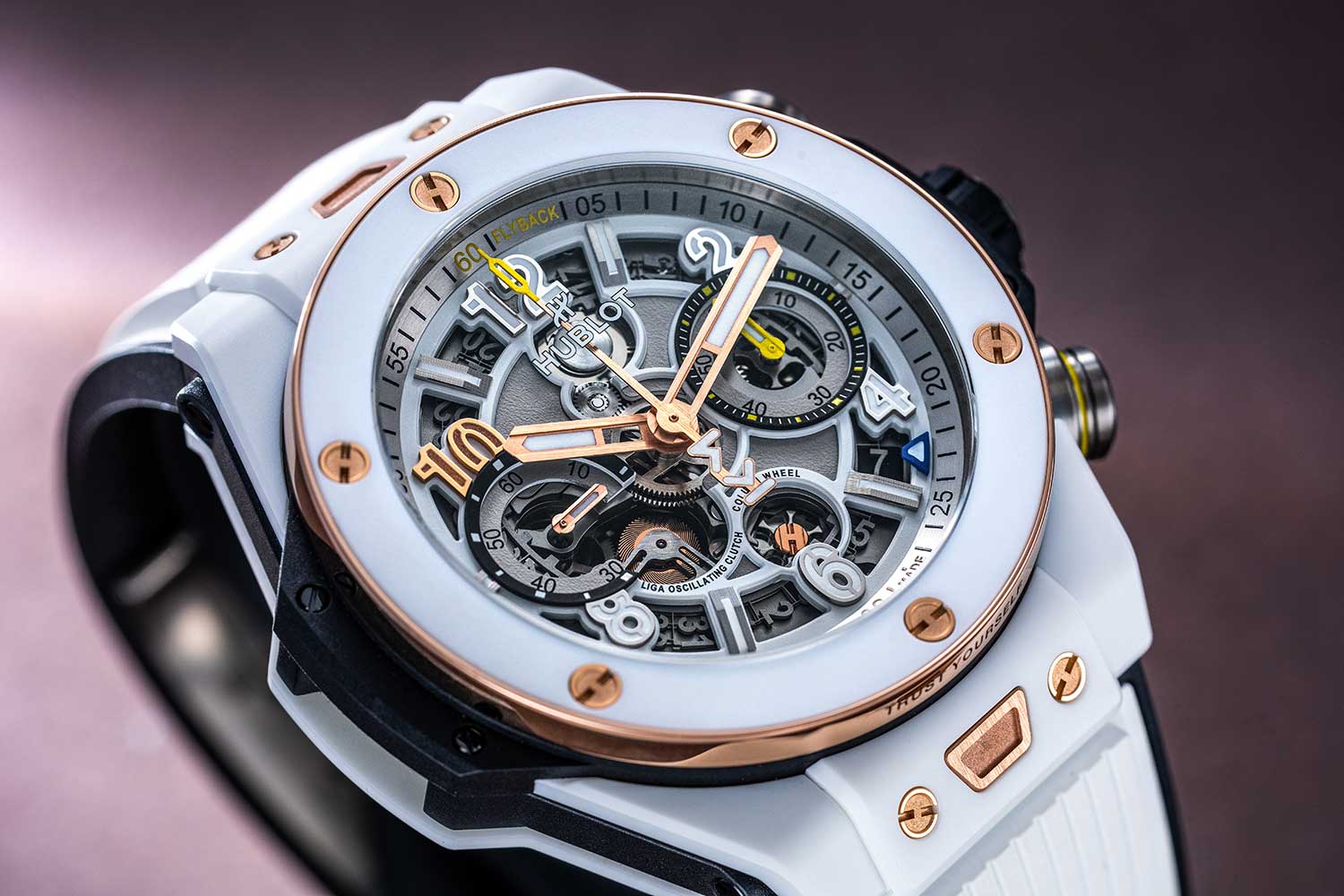
Hublot Big Bang Reloaded Kylian Mbappé White Ceramic (©Revolution)
Keiser’s description is even more revealing, because he sees the warranty less as an after-sales proposition and more as a new operating discipline. “It’s just the visible part of the iceberg,” he says. “It started from a technical perspective.” Once a brand commits for 10 years, he explains, the internal mindset changes. “Quality is something that we are paying attention to on a daily basis,” he adds. “If that was not the case, we as a company would have a super large challenge ahead.”
For Hublot, this is more than a service promise. It is a way of forcing the brand’s critics to engage with the product on different terms. Tornare knows the line about Hublot relying too much on design, size, color, ambassadors or limited editions. His response is not to argue taste. “If you tell me, ‘I hate green,’ that’s fine,” he says. “You don’t have to like the design choices of Hublot.” What he will not accept is the suggestion that the watches are not mechanically serious. “Don’t tell me the movement is not good,” he says. “This is simply not true.”
Hublot’s new manufacture, due to open this year in Nyon, sits behind much of this. It is not being presented as a symbolic expansion, but as a practical one — the space required to support tighter control over production, finishing and quality. For Tornare, it is a necessary tool rather than a statement. If the brand is going to insist on a higher level of watchmaking, it needs the infrastructure to deliver it. The move also reinforces the direction set out across the collection: more control, fewer compromises, and a clearer link between what is made and how it is perceived.
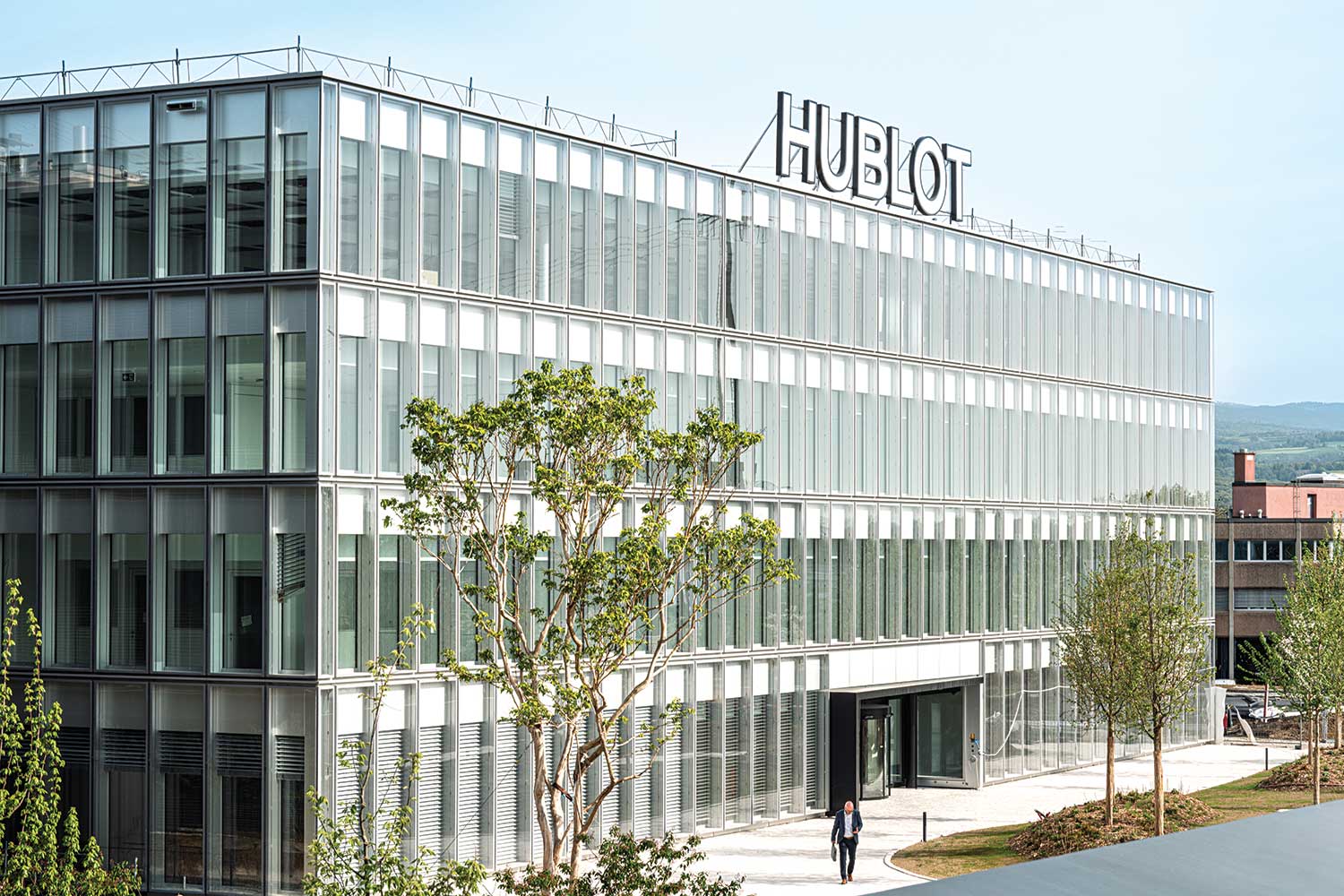
Hublot’s new manufacture will open later in 2026 with an emphasis on serious watchmaking
That is also why movement strategy is changing. Tornare says Hublot is moving away from industrial movements and towards in-house ones. “I only want proprietary calibers, not movements that you can find in any brand,” he says, although he is careful not to define this too narrowly. Working with Zenith inside LVMH, for example, remains part of the plan. The point is not a simplistic in-house claim, but a move away from generic off-the-shelf movements. And while Hublot’s expertise in ceramic and sapphire can support other group brands, movement expertise can move in the other direction. Tornare is not pretending that modern watchmaking happens in isolation. He is arguing that Hublot’s watches need mechanical content specific enough to support their price, their visibility and their ambition.
The Beautiful Game
Keiser’s comments on size and ergonomics show that the recalibration is not confined to movements. Hublot has long been associated with large watches, but he rejects the idea that as 36mm to 39mm cases occupy the sweet spot, the big statement watch is dead. “I’m not sure that oversized is over,” he says. “I would much more say that it has to be rebalanced between what people expect and how we can express ourselves in the best way.” The Big Bang Reloaded sits at 44mm, but the argument is not only about millimeters. Keiser says that “only talking about absolute measure” is reductive, because what matters in wear is the relationship between diameter, thickness and integration.
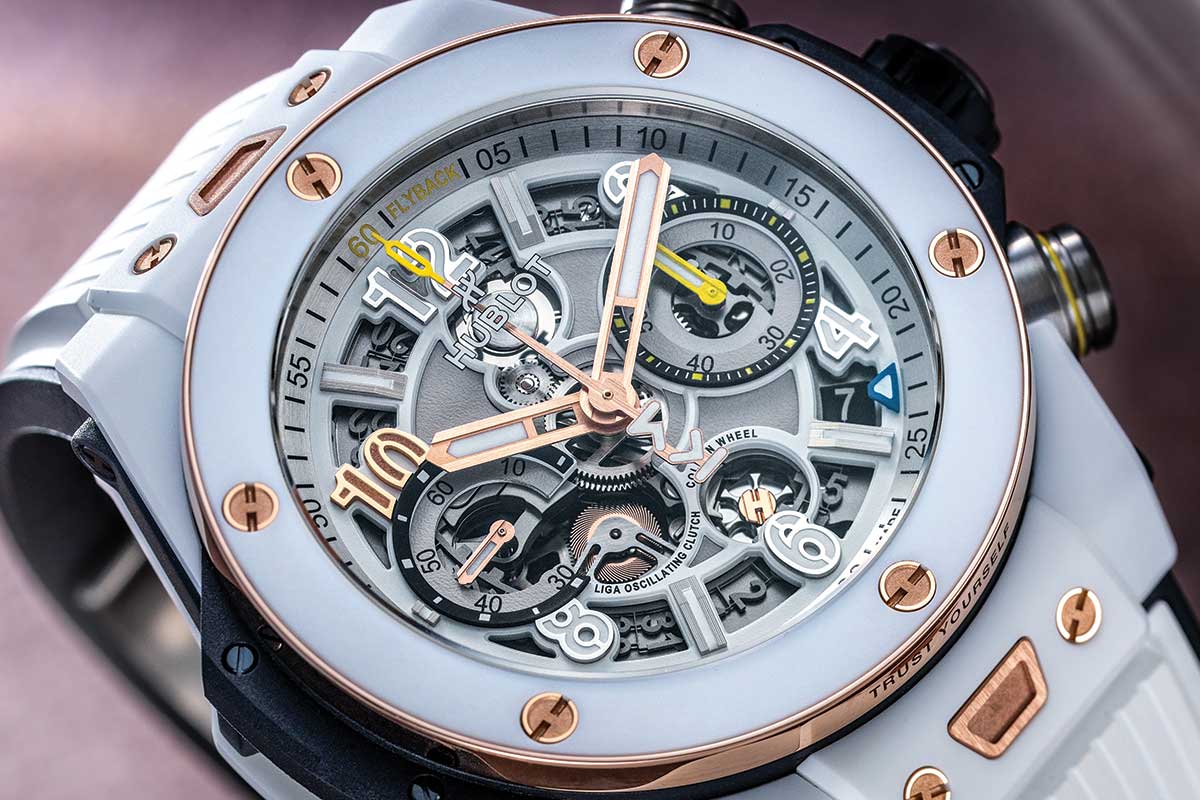
One of this year’s big launches, the Big Bang Reloaded Kylian Mbappé White Ceramic, is a prime example because at 44mm and 14.5mm thick, it remains a substantial watch but its proportions, construction and material contrasts keep it from feeling heavy-handed. The case combines polished and micro-blasted white ceramic with 18K King Gold, the bezel carries the “Trust Yourself” engraving, and the watch is supplied with two interchangeable straps via Hublot’s One Click system: a King Gold-colored fabric Velcro strap and a black-and-white rubber strap with KM detailing. The technical package is also not to be sniffed at. The watch uses the HUB1280 Unico Manufacture flyback chronograph caliber with dial-side column wheel, 72-hour power reserve and 100m of water resistance. It is limited to 200 pieces and priced at USD 30,000.
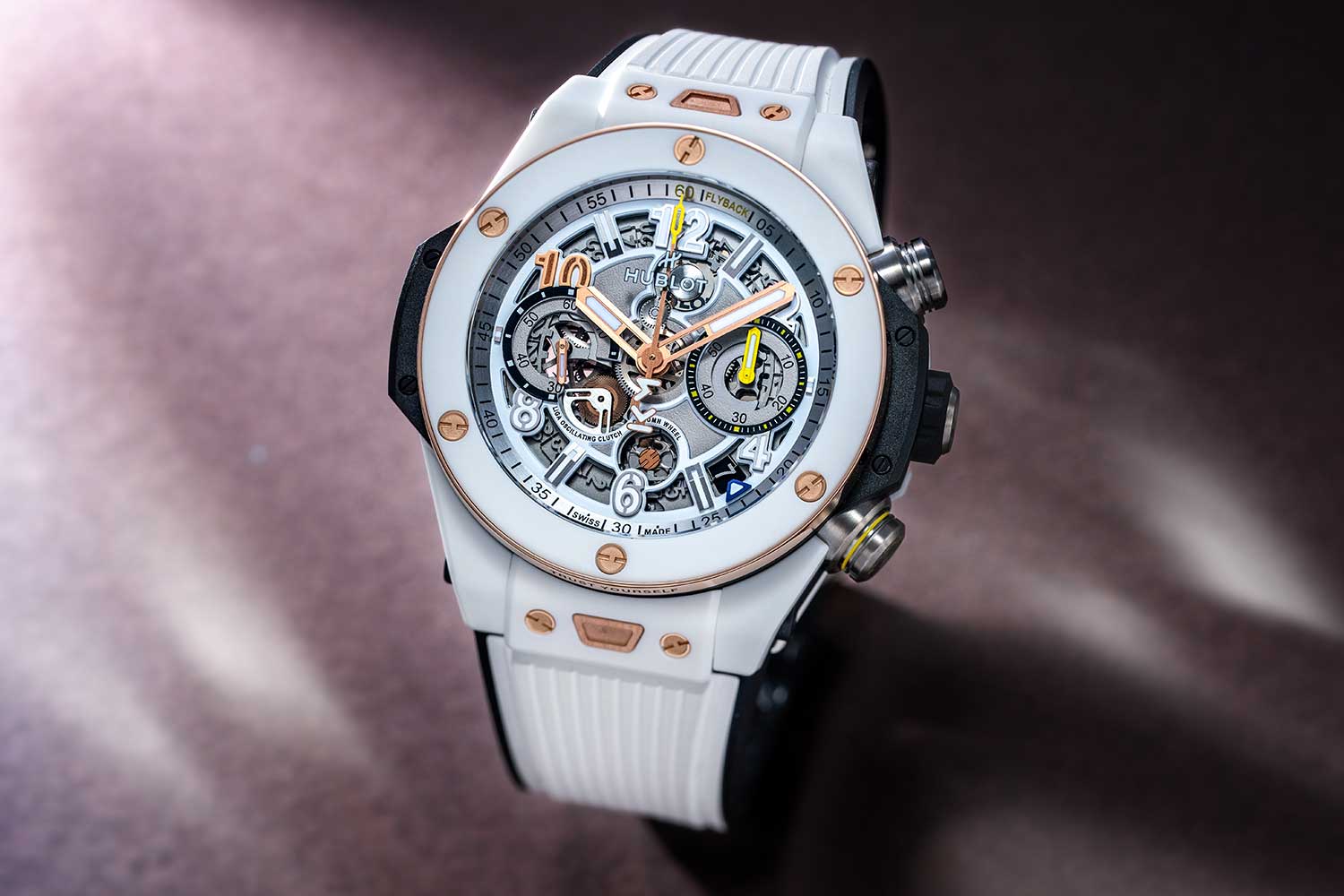
The golden “10” of the Big Bang Reloaded Kylian Mbappé special edition marks the 10th anniversary of Mbappé’s first professional goal (for AS Monaco) as well as represents his shirt number (©Revolution)
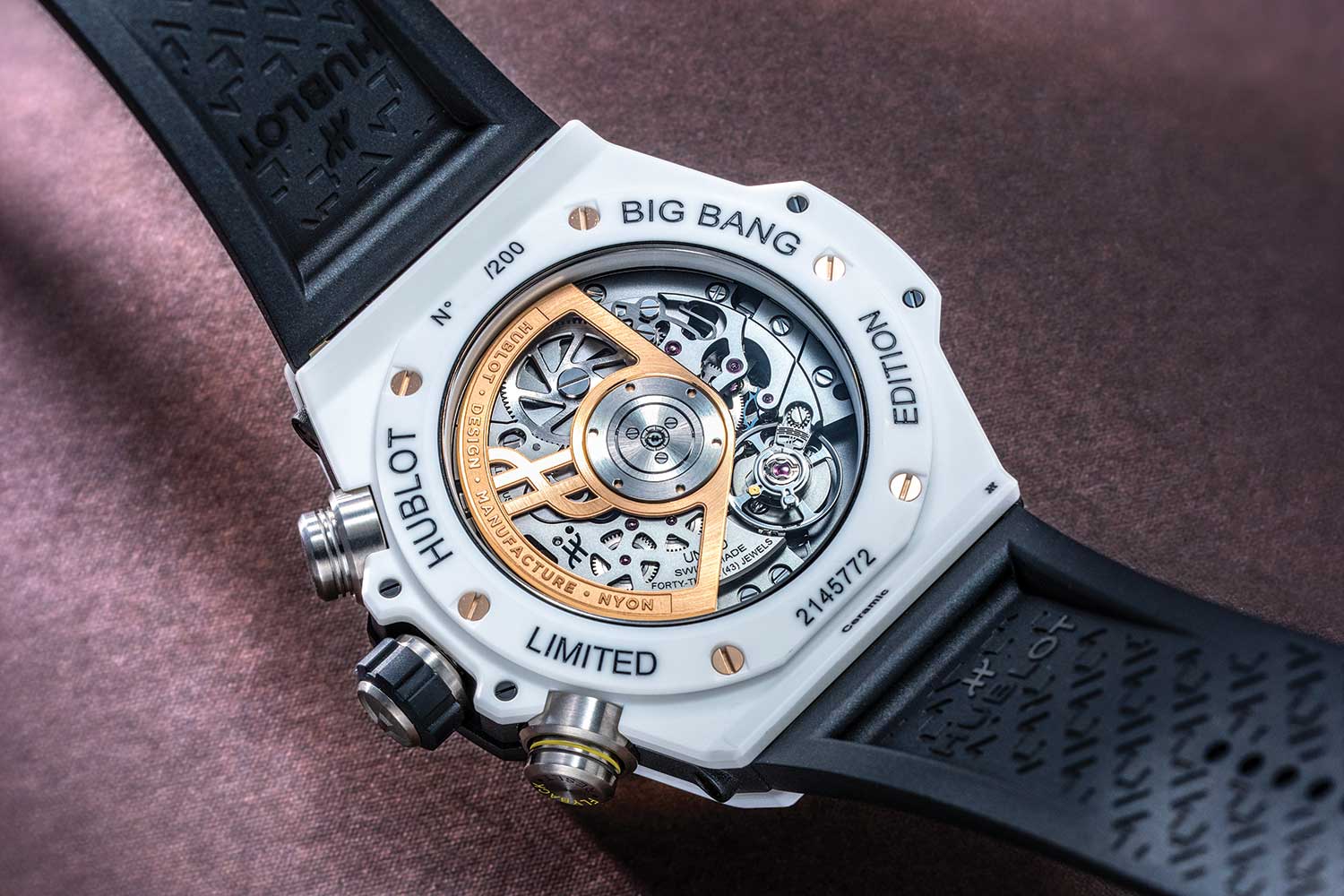
Hublot Big Bang Reloaded Kylian Mbappé White Ceramic (©Revolution)
In previous eras of Hublot, the temptation might have been to make the Mbappé watch more literal with more football imagery and overt symbolism. Instead, this feels comparatively controlled. The number 10 is present because, as his shirt number, it is central to Mbappé’s sporting identity. White and King Gold bring contrast without turning the watch into a costume. The strap options add flexibility. The skeleton dial keeps the Unico visible. It is still recognizably Hublot, and it does not depend solely on the fact of Mbappé’s name.
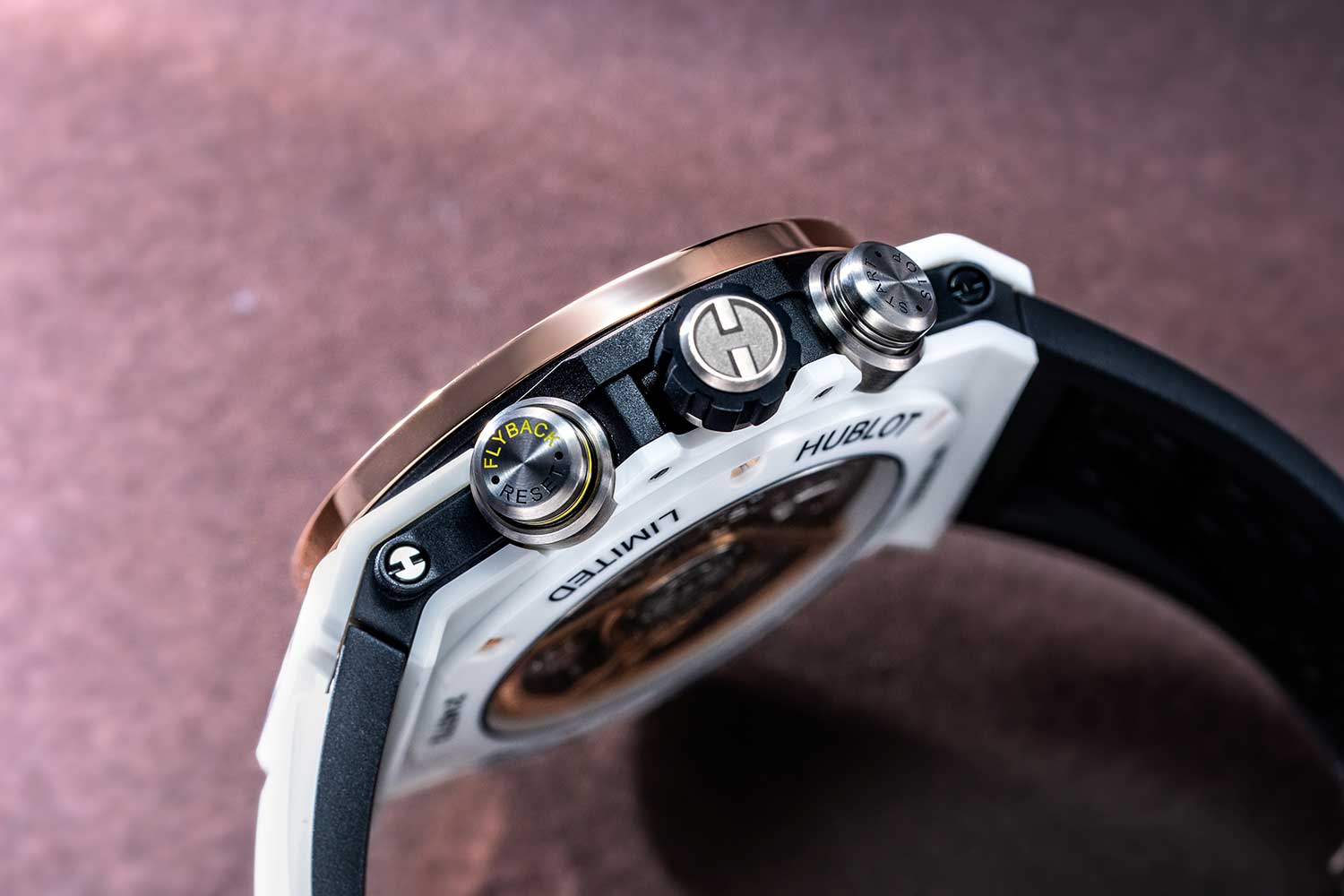
Hublot Big Bang Reloaded Kylian Mbappé White Ceramic (©Revolution)
Mbappé himself speaks about the watch in a way that avoids the usual ambassador language. He says the project had been in his mind for a while, but “really needed time” and came as “the logical evolution” of his relationship with the brand, which began in 2018. “I wanted to create something that characterizes both me and the brand, a watch that tells a story and inspires people,” he says. He is careful not to describe it as a piece made only for him. “I wanted people to be able to identify with it,” he says. “Because I think if you make a watch only in your image, people like you a lot, but they can’t identify with only one person.”
That makes the watch more interesting than a standard celebrity limited edition. It is not just a player’s colors attached to an existing model. It is built around the idea that the buyer has to see something of themselves in it. The bezel engraving is part of that. Mbappé explains that “Trust Yourself” was chosen because a watch is personal and the message should belong to the person wearing it. He calls it “motivating and inspiring,” adding that belief in oneself is not only about achieving great things, but also about being happy and liberated.
Mbappé: The Right Fit
This is where Mbappé becomes more than a cover star. He also represents the new Hublot that Tornare is describing. The brand’s old ambassador strategy was sometimes read as pure visibility: attach Hublot to the biggest names in sports, culture and entertainment, then let association do the work. Tornare is more direct about what ambassadors provide. “They help us to raise awareness. They help us to raise desirability of the brand,” he says. But he also insists that cannot be the only objective. “We have to make sure that they are in line with our values,” he adds.
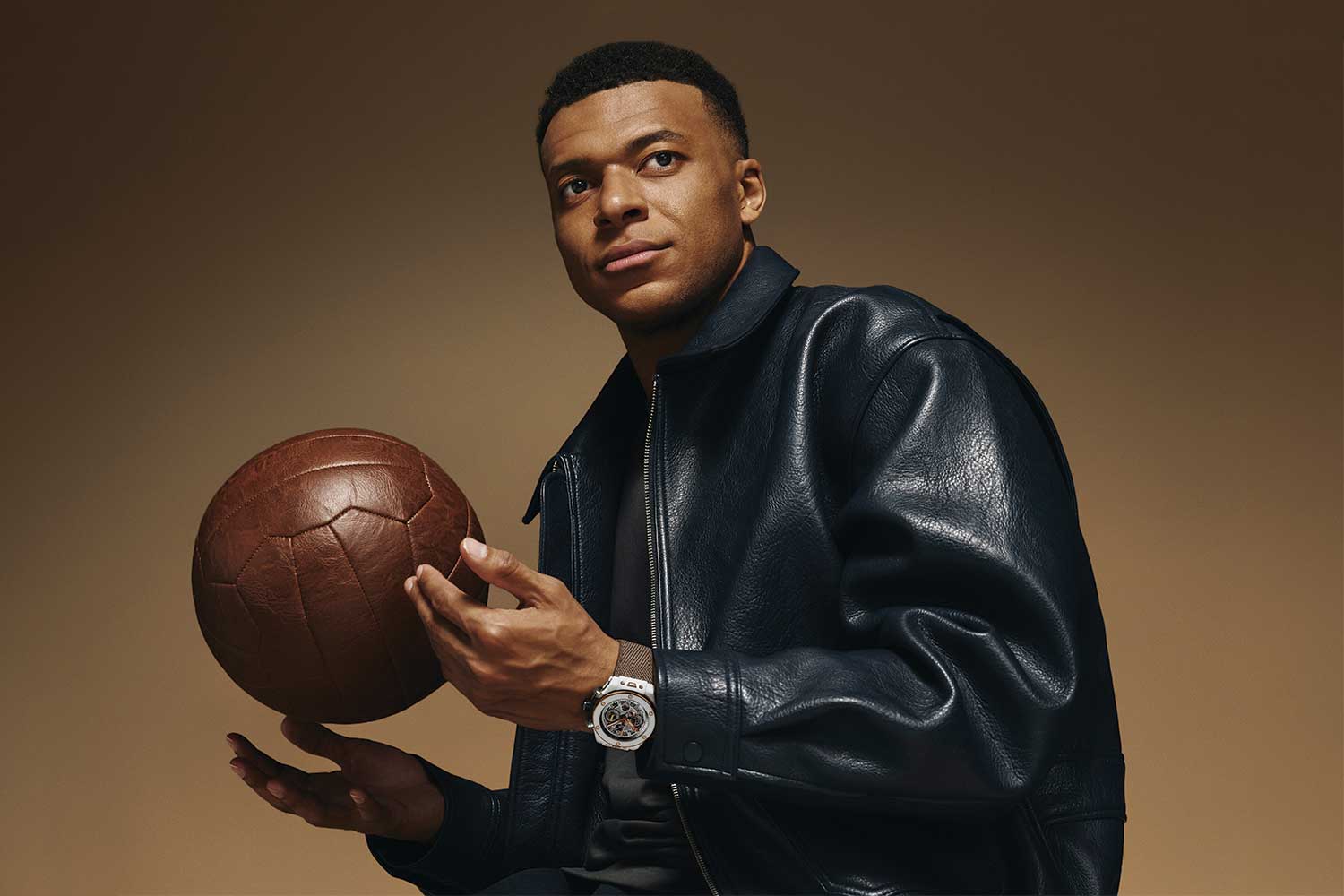
Mbappé as the Hublot Ambassador wearing the Hublot Big Bang Reloaded Kylian Mbappé White Ceramic
Keiser makes a similar point from the development side. He says successful collaborations depend on “mutual vocabulary” and “a willingness to co-develop a project.” If that exchange is missing, the work becomes superficial. If it is present, the product has a reason to exist. “The moment the conversation gives sense and meaning to what we are doing together, then, for sure, there is a value,” he says.
The Mbappé edition arrives at a particularly important moment for Hublot. This is a World Cup year, and football — or soccer, in the American context — remains the only sport with true planetary reach. Hublot may no longer be the official sponsor of the FIFA World Cup, but the brand remains connected to football through UEFA, clubs, national teams and, most importantly, players whose own reach exceeds any single tournament.
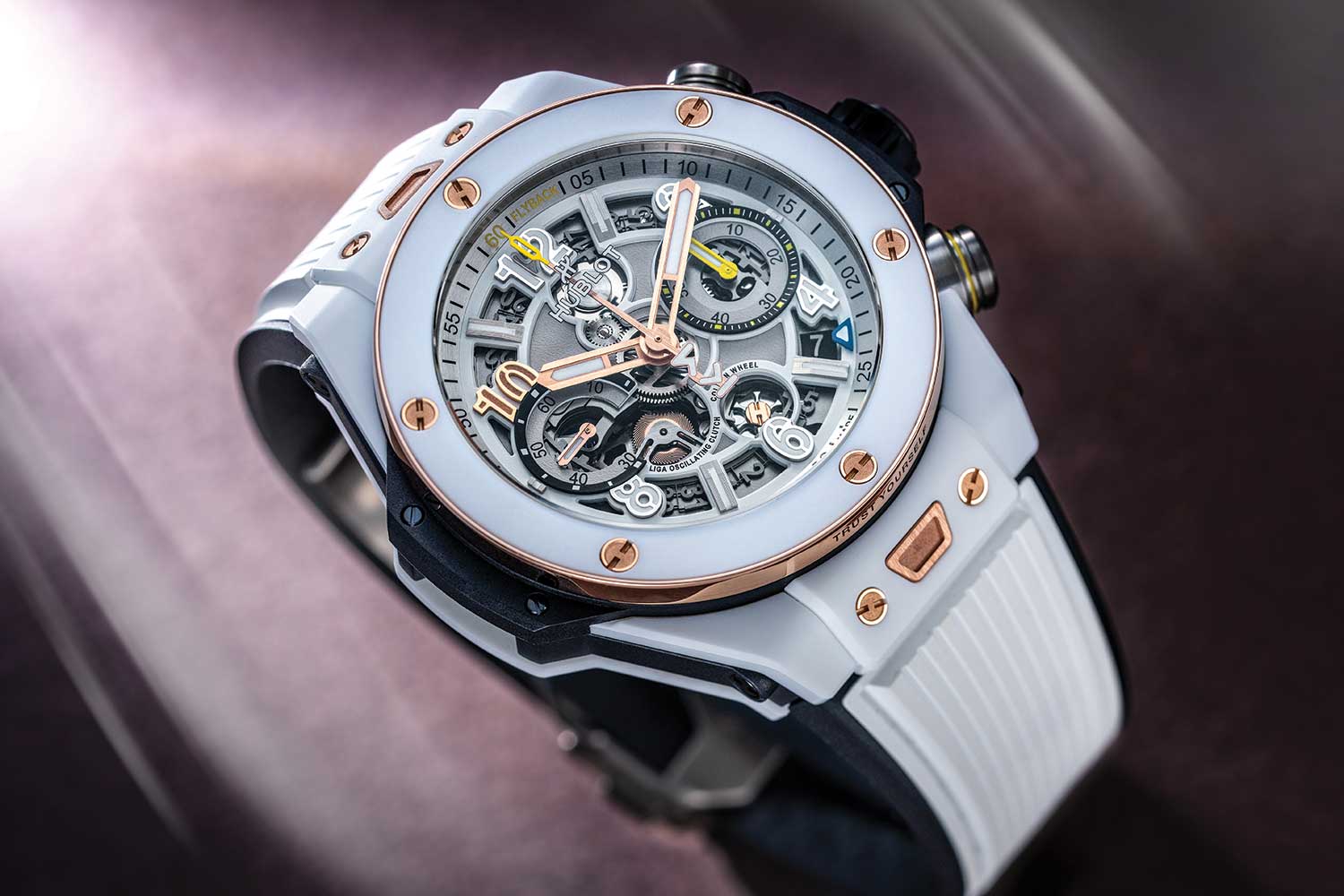
Hublot Big Bang Reloaded Kylian Mbappé White Ceramic (©Revolution)
Mbappé is the most obvious example. He is part of a Hublot line that includes Pelé and Maradona (who incidentally also wore a number 10 shirt, like Mbappé) — figures who allowed the brand to enter football not as a peripheral sponsor, but as a participant in the game’s mythology. Tornare recalls Mbappé telling him that one of his strongest memories with Hublot was meeting Pelé and taking the famous photograph with him. For Mbappé, making his own watch with Hublot follows from that. Tornare remembers him saying that Pelé had worn a Hublot watch, “and now there is myself.”
-
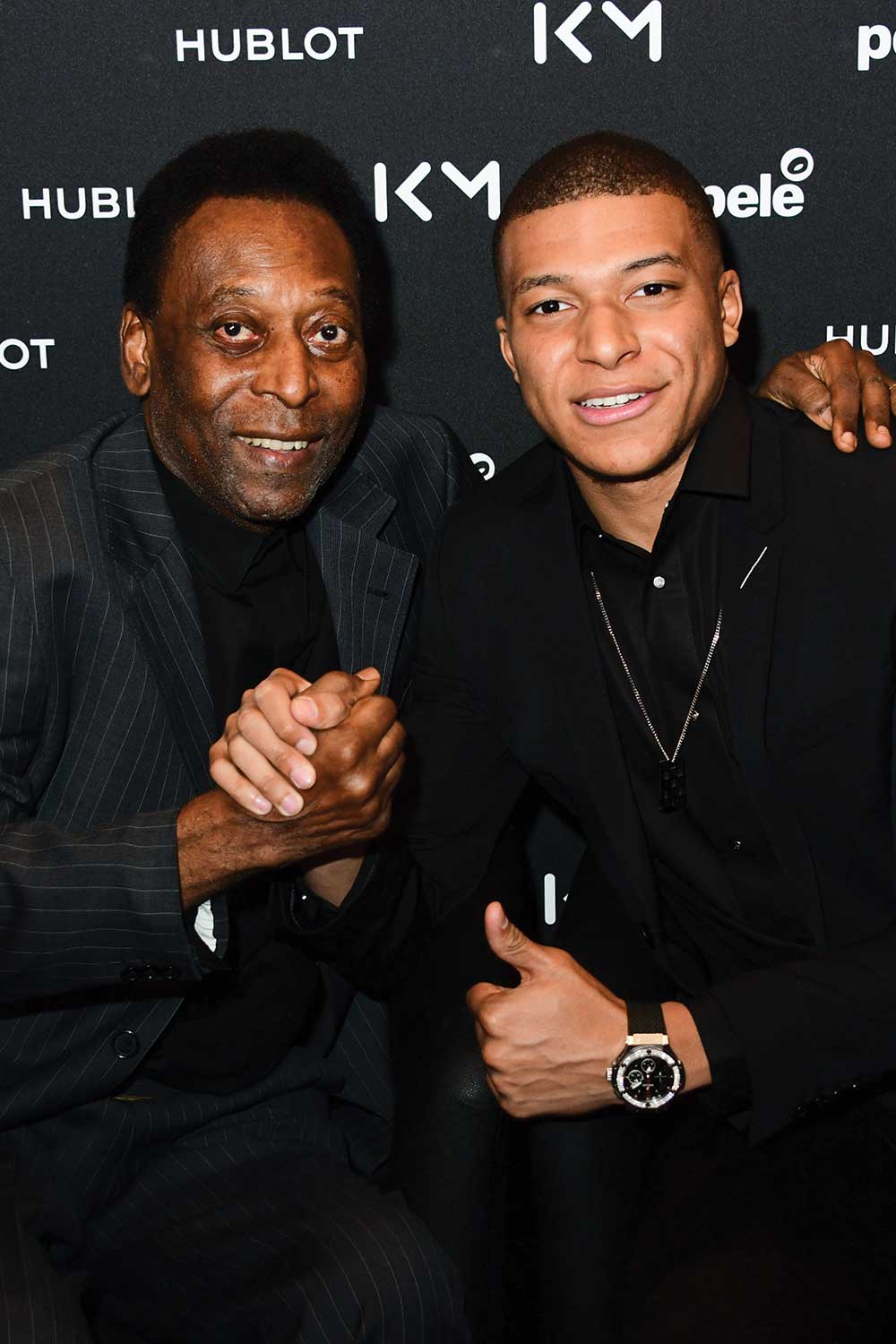
- The moment Hublot brought together two footballing legends, Pelé and Mbappé, in 2019
-
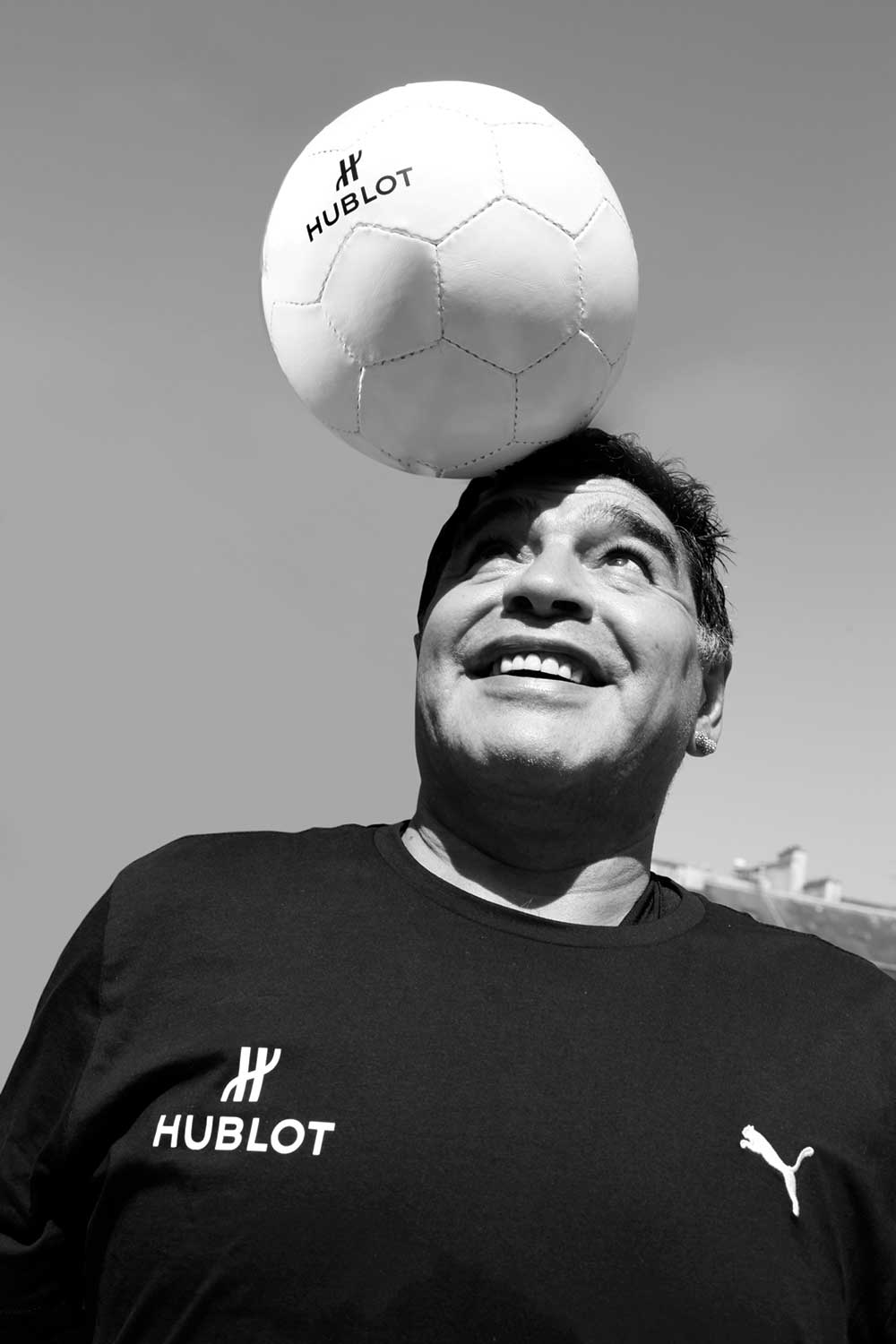
- As a Hublot ambassador, Mbappé follows in the footsteps of some of the game’s true greats, including Diego Maradona
That could sound grand if it came from almost anyone else. With Mbappé, it is simply the world he inhabits. He was a World Cup winner at 19. He scored in two World Cup finals. He is now approaching another World Cup with the stated aim “to win” and, in his words, with the motivation of the previous final loss spurring him on. He also speaks about wanting to win another World Cup and potentially break the all-time leading scorer record at the tournament.
What is notable is that Mbappé balances that ambition with an insistence on the present. “A career never unfolds exactly as one imagines,” he says. “There are things you control, others you don’t.” He says he is in the environment he dreamed of as a child, but that the hardest part is not arriving there; it is staying there and continuing to improve. That idea connects neatly with Tornare’s work at Hublot.
Mbappé also says that football, even at the highest level, “must remain a game.” That softens the watch’s motivational language. “Trust Yourself” could easily become a throwaway slogan but in Mbappé’s voice, it is less about triumphalism than the ability to act under pressure. He talks about talent not being enough and consistency making the difference. That is also what Hublot is trying to demonstrate mechanically — not one-off impact, but repeatability.
There is another reason Mbappé works for this moment. He is not a retro choice. He follows Pelé and Maradona, but he does not represent the past. He belongs to the social media generation, the fashion generation, the player-as-global-platform generation. Asked for his definition of elegance, he says that “[as French people] we often associate elegance with simplicity,” while allowing that there are moments to be more creative. That is exactly the balance the watch attempts — to be recognizably Hublot, but more refined than some previous ambassador pieces.
Tech Specs: Hublot Big Bang Reloaded Kylian Mbappé White Ceramic
Reference 421.HX.2019.NR.MBP26
Movement Self-winding Unico Manufacture Caliber HUB1280; 72-hour power reserve
Functions Hours, minutes and small seconds; date; chronograph
Case 44mm × 14.5mm; polished and micro-blasted white ceramic, with polished 18K King Gold bezel engraved with “Trust Yourself” and micro-blasted white ceramic upper bezel; water resistant to 100m Dial Matte gray plated and white skeletonized; applied Arabic numerals with Super-LumiNova coating
Strap King Gold-colored fabric with Velcro fastener; additional black-and-white structured lined rubber with white ceramic sport buckle
Price USD 30,000
Availability Limited edition of 200 pieces
Coming of Age
This also connects with the wider product strategy Keiser describes. He speaks of the Classic Fusion as the brand’s second strong pillar, and says Hublot is reconnecting with its early years through conversations with Hublot founder Carlo Crocco. “When you are young like Hublot is, it’s super interesting to understand your roots,” he says. He is careful not to frame any of this as “vintage”; the point is simply to bring the past into the present in a way that feels modern.
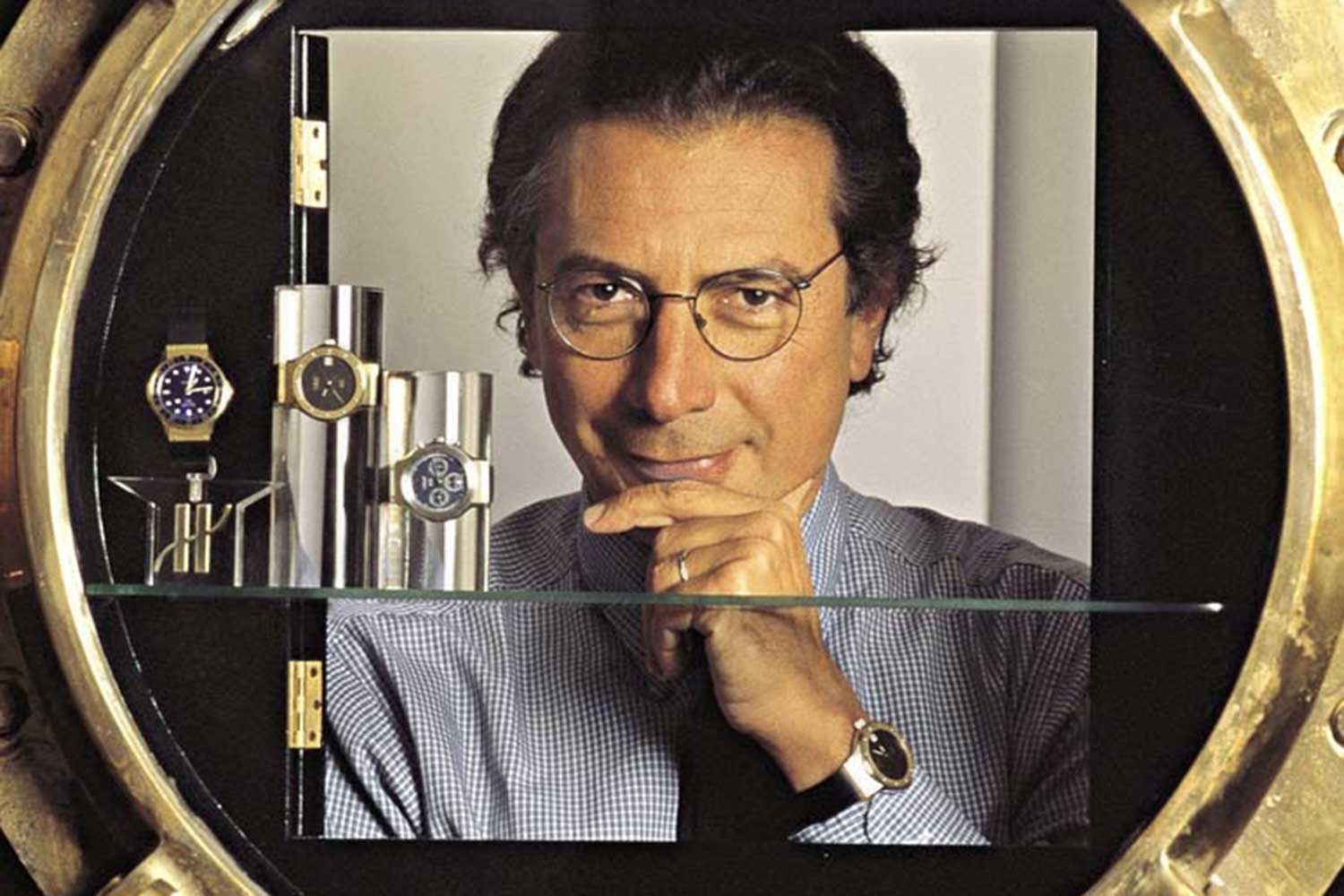
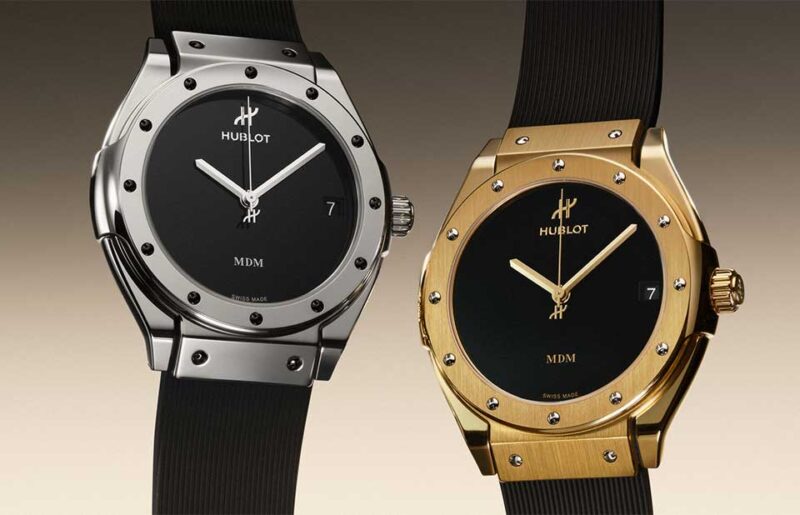
Italian gent Carlo Crocco, who established the brand MDM Geneve and gave the world its first luxury sports chic watch on a rubber strap, the Hublot in 1980
For a brand born in 1980, this is a delicate moment. Hublot is no longer the new disruptor, but it is not an old house either. Keiser describes this almost personally: when you reach your mid-forties, “you start collecting your childhood pictures.” History begins to have value, but it cannot become a cage. Hublot’s early act of placing gold on rubber remains foundational, but it has to be evolved rather than reproduced.
That approach also extends to materials. Hublot has long claimed territory here, from colored ceramics to sapphire and proprietary gold alloys. Keiser says the next stage is not simply finding one new material after another, but working out how materials can be combined. “If you have gold and ceramic and you find a way to mix those two, you create a third material,” he says. The point is not novelty alone, but composition and durability. “If it’s too fragile, then it’s counterintuitive to what we want from a watchmaking perspective,” he says.
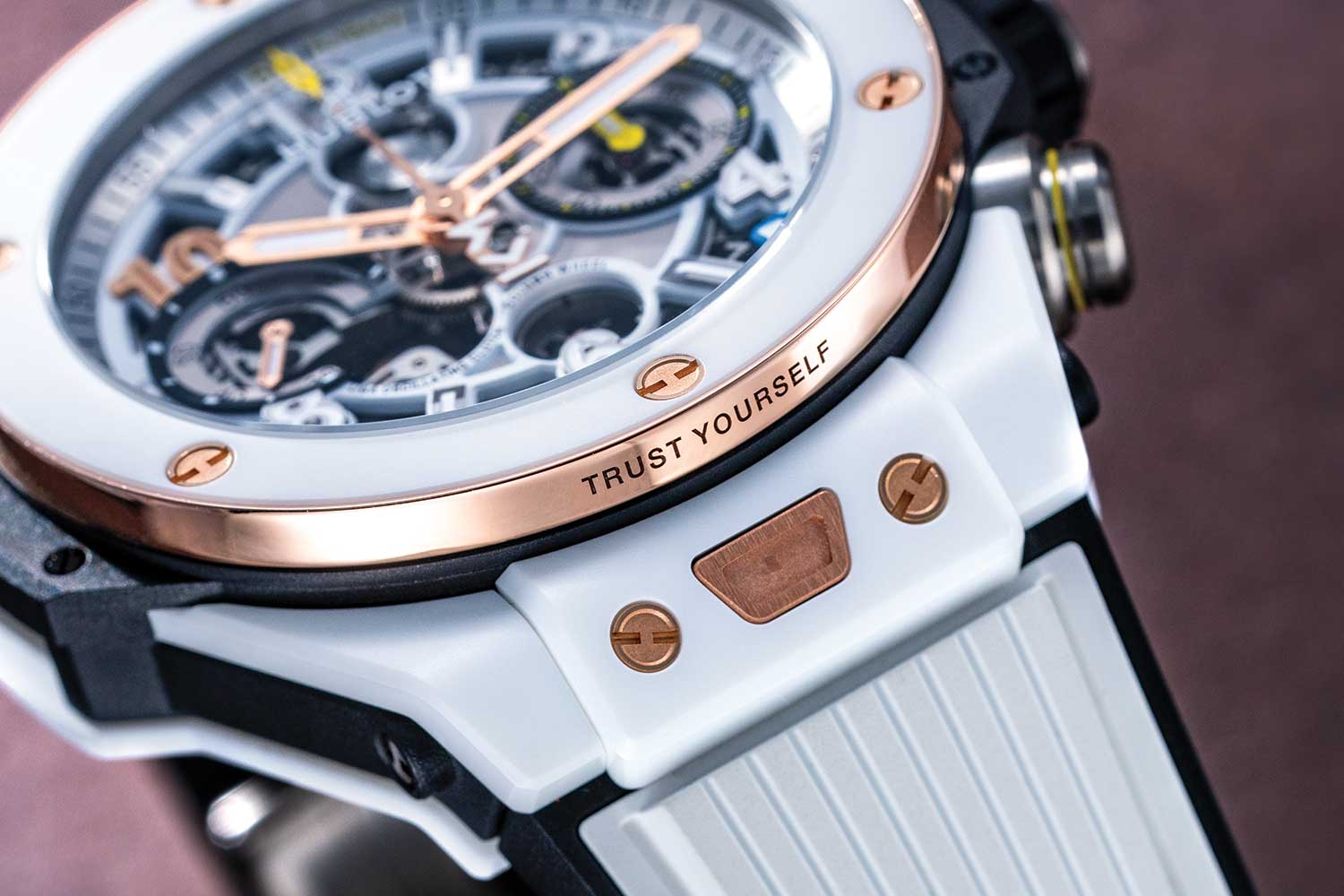
Mbappé’s mantra is engraved on the case of the watch and is as relevant to Hublot as it is to the football star — a reminder of the importance of confidence, freedom and bold decision-making (©Revolution)
Ultimately, the product remains the point of focus. Hublot can still be experimental, but not at the expense of longevity. It can still produce limited editions, but not so many that scarcity loses force. Keiser acknowledges this directly. “Too much is too much,” he says of limited editions. He is not against them, in fact, he argues that rarity may now be “even more valuable than the price.” But the flow has to be controlled.
This is the point at which Hublot’s various threads begin to connect. The 10-year warranty answers doubts about quality. The Unico answers doubts about watchmaking. The refinement of the Big Bang answers doubts about size and wearability. The Classic Fusion work answers the need for historical continuity. The material strategy keeps invention alive but ties it to durability. The Mbappé watch shows how an ambassador piece can be personal without becoming gimmicky. The football strategy keeps the brand in a global conversation without depending on a single tournament rights package.
Tornare also understands the wider luxury context. He describes 2021 and 2022 as “crazy years” and acknowledges that the post-Covid surge had elements of a bubble. The lesson, for him, is restraint. Luxury depends on rarity, not simple availability. If a brand overproduces or becomes omnipresent, it damages the emotion around the product. This is another reason Hublot’s correction makes sense now. In a hot market, visibility can carry almost everything. In a cooler market, a product has to do more.
That does not mean Hublot wants to become traditional. Tornare is emphatic on that point. “If we become ‘normal’, we will lose market share,” he says. He accepts that the brand has haters because it is different and, in some ways, an easy target. But he is not interested in making Hublot less Hublot. The aim is to ensure that the arguments against it become less credible.
This is why Mbappé works so well as a face for this particular moment. He is globally famous, but still young enough to represent what comes next. He carries the weight of football history without belonging to the past. His Hublot watch is not the wildest object in the brand’s catalog, but neither does it try to go under the radar. It is white ceramic, King Gold, skeletonized, limited and built around a serious chronograph caliber. It is exactly the kind of object Hublot should make in this phase: expressive, but with enough product behind the expression.
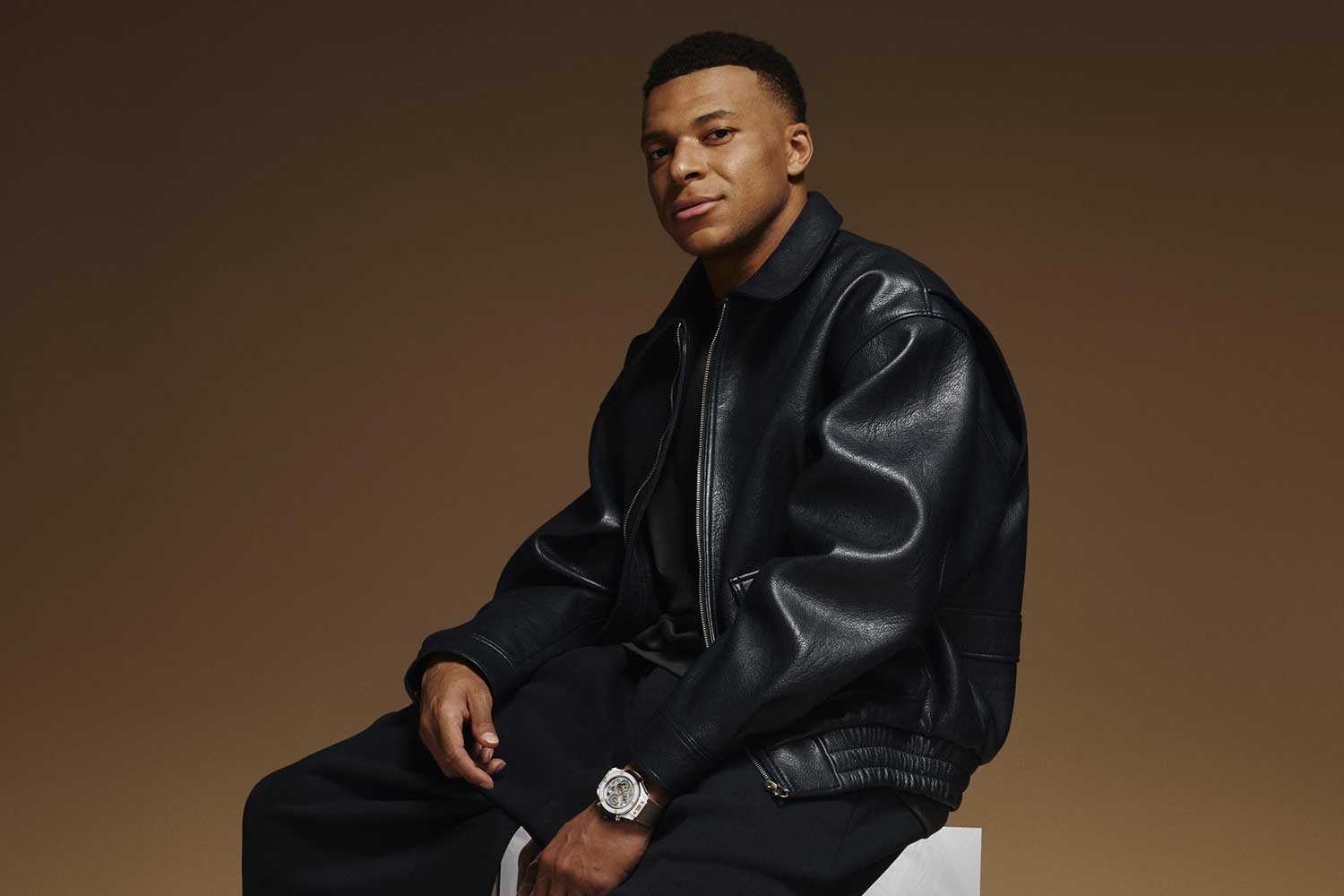
Mbappé as the Hublot Ambassador wearing the Hublot Big Bang Reloaded Kylian Mbappé White Ceramic
Mbappé says he imagines wearing it during the World Cup “with the trophy.” It is a line that could only come from someone with a realistic right to say it. For Hublot, it also places the watch inside a year when football’s cultural gravity will be impossible to ignore. Even without World Cup sponsorship, the brand remains present through the people who define the game. For 2026, the message is remarkably consistent. Hublot is not retreating from visibility, it is trying to earn the attention it already knows how to attract by emphasizing the work that goes on behind the image.
Hublot
You may also like
Editorial
Hublot Hits Rewind
Oct 15, 2026
Editorial
Hublot Hits Rewind
Oct 15, 2026
News
Last Week In Watches: Rolex Revives the Padellone, Hublot Goes Full Koons
Sep 21, 2026
News
Last Week In Watches: Rolex Revives the Padellone, Hublot Goes Full Koons
Sep 21, 2026
Editorial
Balloon Dogs, Tourbillons And The Art Of Acceptance
Sep 16, 2026
Editorial
Balloon Dogs, Tourbillons And The Art Of Acceptance
Sep 16, 2026