
Chopard’s Scheufele Family Explain the Art of Chiming Watches
Interviews
Chopard’s Scheufele Family Explain the Art of Chiming Watches

We are all used to noisy notifications today. We think of them as something invented in Silicon Valley. But is that really true?
Karl-Friedrich Scheufele: Not at all. Long before phones and digital alerts, there were striking clocks and chiming watches. They began as early as the 15th century, at a time when not everyone had direct access to the time. Imagine traveling by carriage at night. You could not simply look at your watch dial in the dark. So, with certain clocks, you could pull a cord and the mechanism would chime the hours and quarters. Some even included an alarm to wake you. In a way, those were the first notifications. A sophisticated traveling clock could be the most expensive object in the carriage — more valuable than the carriage or even the horses.

Karl-Friedrich Scheufele and Frédéric Brun
What are the different chiming watches today?
Karl-Friedrich: A passing strike chimes once on the hour. A minute repeater is a watch that repeats the time on demand. You press a button or activate a lever, and the watch strikes the hours, the quarters, and then the minutes. The hours are usually struck in one tone, the quarters in a double tone, and the minutes in another tone. So instead of reading time visually, you hear it.
Karl-Fritz Scheufele: And then there is the grande sonnerie, which is really the summit of chiming watchmaking. Unlike a minute repeater, which chimes when you ask it to, a grande sonnerie strikes the time automatically. It is one of the most complicated things you can make in watchmaking. Very few manufactures are able to produce one, especially as a wristwatch. We often speak about movements and engineering, but there is a reason we call ourselves artisans of emotion. A chiming watch is beautiful to the eye, but also to the ear. It gives you a different relationship with time — almost a romantic one.
The birthplace of Chopard’s chiming story is Fleurier. What makes that place so important for you?
Karl-Friedrich: In the early 1990s, I was convinced that Chopard needed to establish itself as a true manufacture — a company capable of making its own movements. At that time, that was not yet the case. So we chose Fleurier. It was quiet, confidential, and ideal for beginning such a project.
Karl-Fritz: And when he says quiet, he really means quiet. Fleurier is the perfect place to start a secret watchmaking project.
Karl-Friedrich: The first watch we created there was the L.U.C 1860, presented in 1997. Karl-Fritz is wearing one tonight, which is particularly meaningful because the manufacture began around the time he was born.
Karl-Fritz: That watch is actually one of the reasons I became interested in watches. As a young boy, I was not really into watches, which disappointed my father and grandfather a little. But the L.U.C 1860 changed that. I remember thinking: now this is a proper watch.
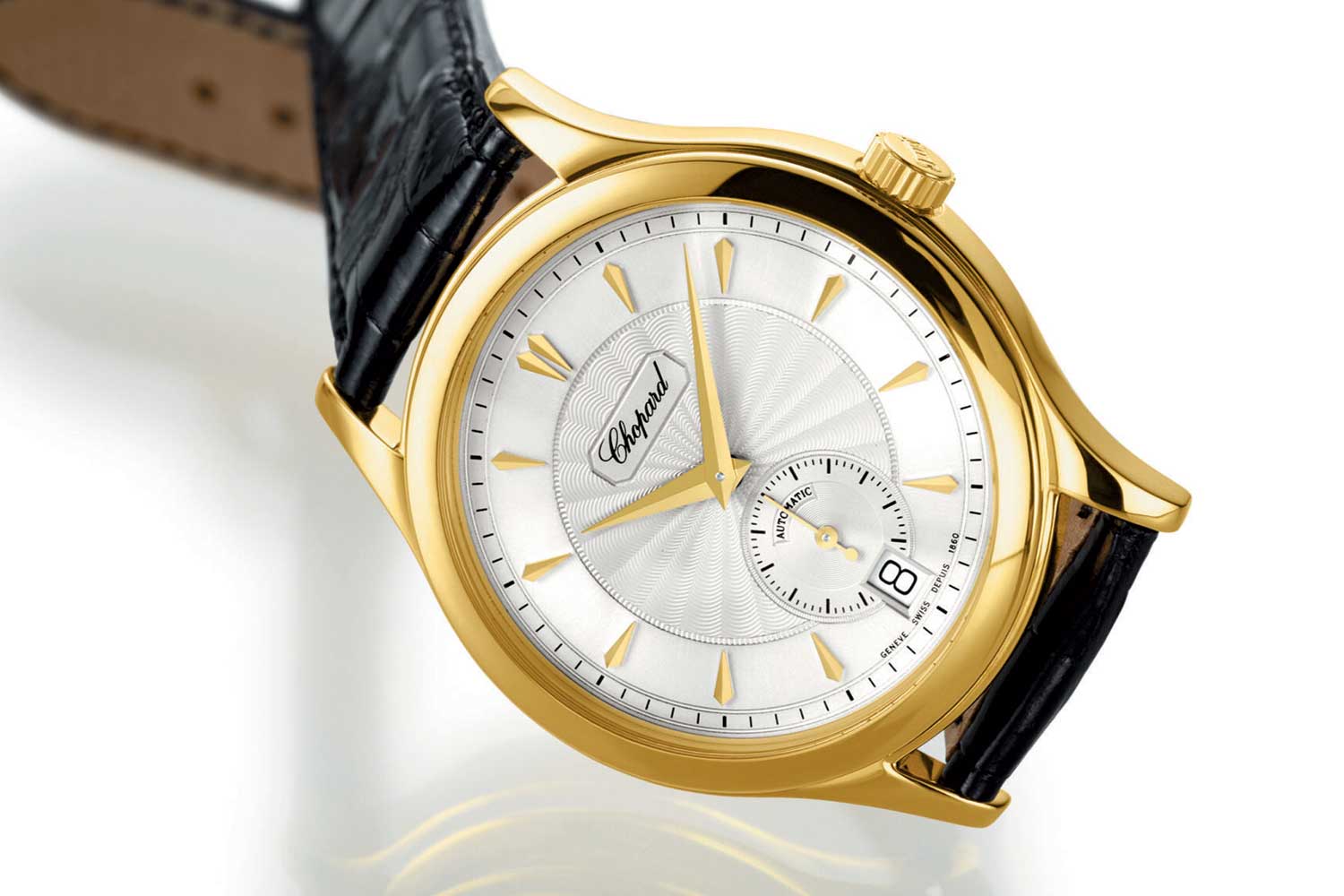
Chopard L.U,C, 1860 in yellow gold
Before the minute repeaters and grande sonnerie pieces, there was Strike One. What was that watch?
Karl-Friedrich: Strike One was our first step into the world of chiming watches. It was a sonnerie au passage — meaning it struck once every hour as the hour passed. It may sound simple, but it was already very complicated. It was a symbolic and elegant way of reminding you that time was passing.

Chopard L.U.C Strike One in pink gold, its first hour striker and a statement of intent that it would pursue the lofty goal of the minute repeater
Why did you decide to enter this direction of watchmaking?
Karl-Friedrich: I always had a kind of list in my mind — important watchmaking milestones I wanted Chopard to achieve. I did not always share the list with everyone. But one of those milestones was certainly to create a striking watch, and eventually a minute repeater. Strike One was the beginning.
Ten years later came the Full Strike. What made it different?
Karl-Friedrich: The idea behind Full Strike was to create a chiming watch that sounded truly different from anything else. I wanted a sound that was crystal clear. At one point I said to the team: imagine the sound of tapping a crystal glass at a dinner party. It immediately captures attention. People originally said it was impossible but we kept returning to the idea of sapphire crystal. The question became: how could we connect the watch glass itself to the sound-producing mechanism? The answer was to make the gongs and the sapphire crystal as one single piece. That became the heart of the Full Strike.
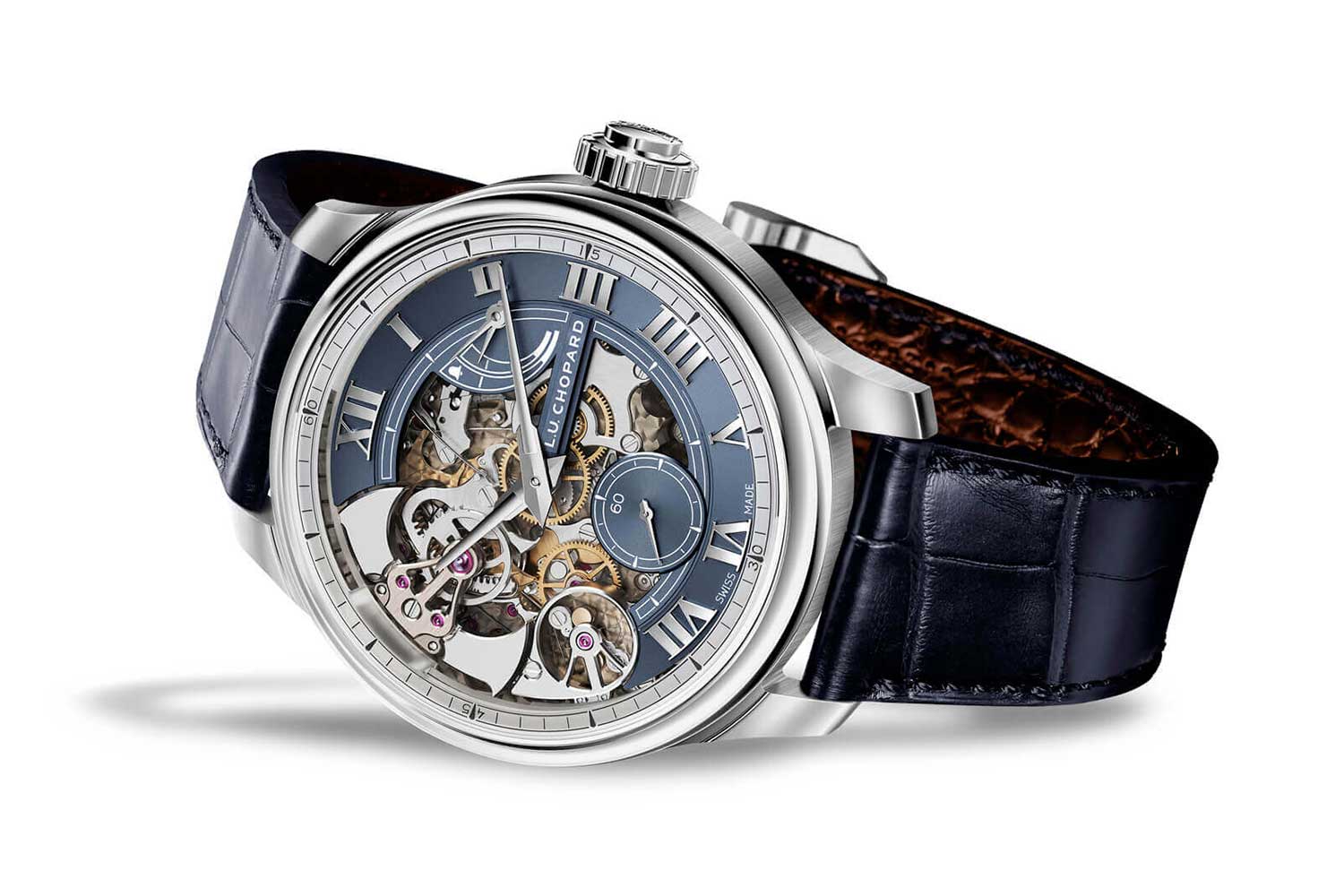
Chopard L.U.C Full Strike
Can you explain the sapphire crystal technology?
Karl-Friedrich: In most minute repeaters, the sound remains trapped inside the case. The material of the case — gold, platinum, titanium, steel — strongly influences how the sound travels. With our sapphire monobloc technology, the gongs and the crystal are one piece. The sound travels through the sapphire crystal and out of the watch. That means the case material matters much less. The sound is clearer, more direct and more transparent.
Karl-Fritz: When you hear it through speakers or on a screen, it sounds nice. But in real life, it is completely different. There is depth, texture, and a kind of purity. You can really hear the crystal.
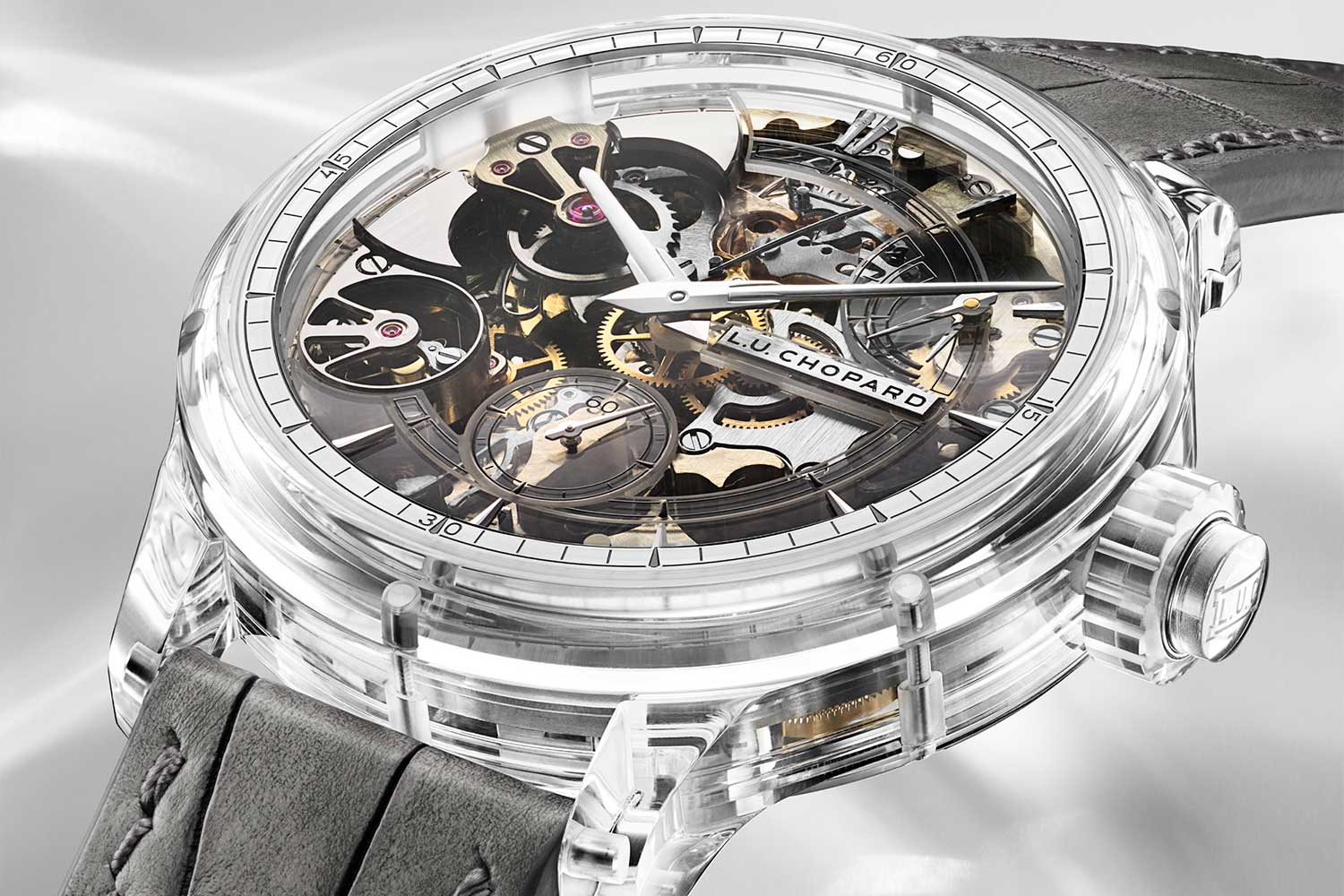
Chopard L.U.C Full Strike Sapphire
We often speak about tuning a violin or a piano. But can you really tune a watch?
Karl-Fritz: Yes, and that is one of the most fascinating parts. We worked with acoustic experts and tested the watches in extremely silent rooms, where you can hear your own heartbeat and even your blood moving. In those rooms, we analyzed the frequencies, the volume, the length of the sound, and the effect of every detail: the material, the position of the hammer, the size of the hammer, and the shape of the components. Every small change affects the final sound.
Karl-Friedrich: And remember, this is all happening inside a very small volume. You have hundreds of parts, all working together, all finished by hand. Some components are so tiny that if a watchmaker drops one on the floor, it may never be found again.
The Full Strike later won the Aiguille d’Or at the 2017 Grand Prix d’Horlogerie de Genève. What do you remember from that evening?
Karl-Friedrich: It was one of the great moments of my career. I was extremely proud of the team. They had spent thousands of hours developing that watch. At the time, I was actually part of the jury. When the final discussion began, I suggested that I leave the room, because I realized the watch might be under consideration.
Karl-Fritz: I was not in the room. I was still studying for exams, watching from my laptop at home. But I can tell you, the family WhatsApp group was going crazy.

Karl-Friedrich Scheufele and Caroline Scheufele won the Aiguille d’Or at the 2017 Grand Prix d’Horlogerie de Genève (Image: GPHG)
You also consulted musicians, including the Capuçon brothers. What did they bring to the project?
Karl-Friedrich: They helped us think about sound as musicians do. We wanted to understand not only volume, but quality — resonance, emotion, harmony. Their advice helped us refine the way the watch sounded. It was about inching toward something better, step by step.
So the watch is not only engineered. It is interpreted, almost like music.
Karl-Fritz: Yes. And that is why the length of the sound matters. In music, you want a note to remain in the air, to fade beautifully. The same is true for a minute repeater. The silence after the sound is part of the emotion.
The next major chapter is the Grand Strike. What does it represent?
Karl-Fritz: It is the most complicated watch Chopard Manufacture has ever created. It was developed as a preview of the manufacture’s 30th anniversary and represents a huge step forward.
Karl-Friedrich: The Grand Strike is a grande sonnerie. It can strike the time automatically in grande sonnerie mode or petite sonnerie mode. It also includes a silence mode, so you can turn the chime off when needed — for example, in a concert, a cinema, or a meeting. And, of course, it still includes a minute repeater function, so you can hear the time on demand. We decided to leave the dial open-worked because the mechanical parts are so beautiful. The watch does not need to hide them. The movement itself becomes the visual expression.
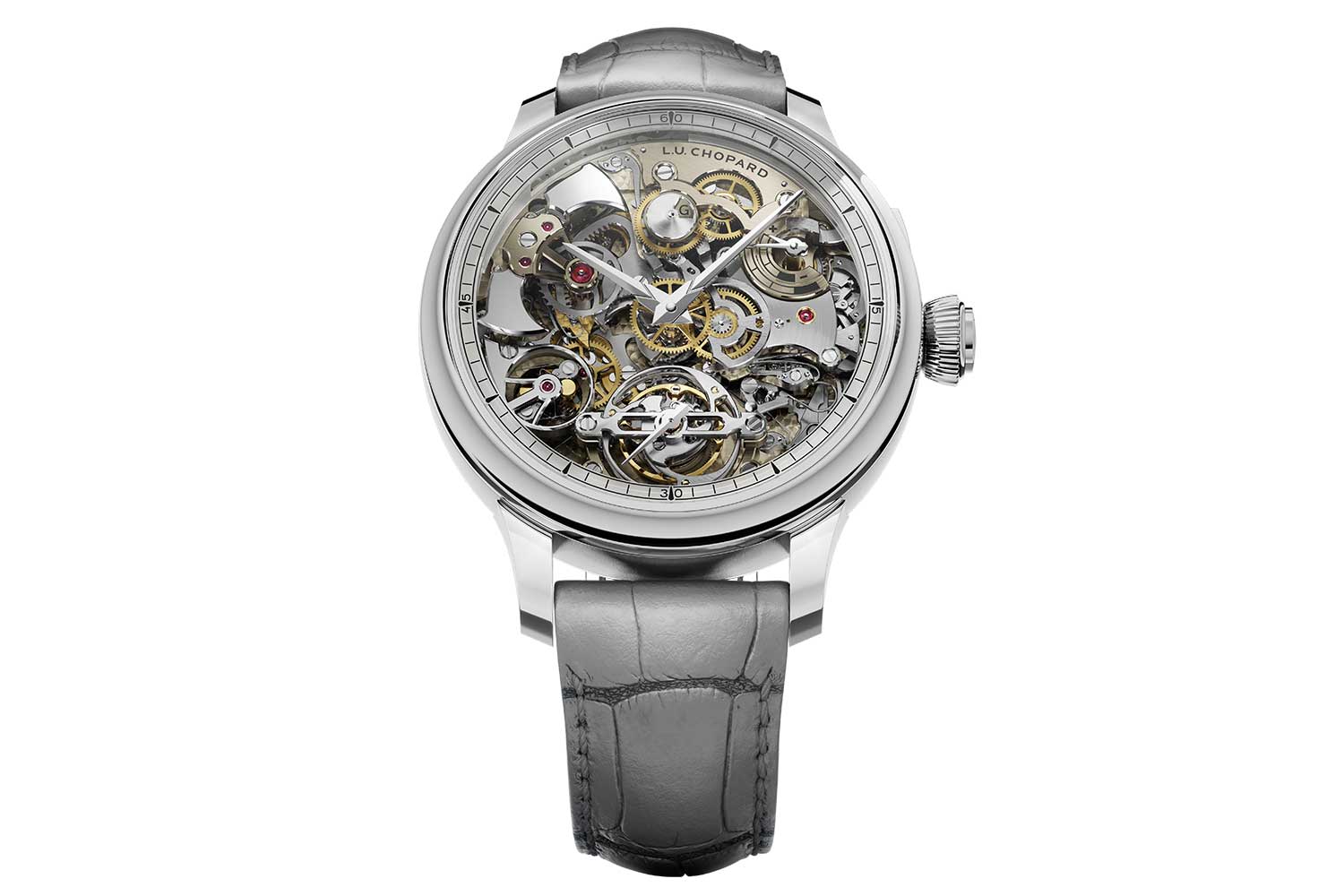
Chopard L.U.C Grand Strike
Exactly how complex is the Grand Strike?
Karl-Friedrich: The movement has 686 parts, and we filed 10 patents for it. It takes around six weeks just to assemble the movement — and that is only assembly. It does not include the production, finishing, testing, or adjustment of the parts.
Karl-Fritz: And with 686 parts, the challenge is not only to make the watch function. It also has to be wearable. The first test cases were basically large chunks of metal. Interesting, but not exactly elegant. The challenge was to transform all of that complexity into something that sits beautifully on the wrist.

Caliber L.U.C 08.03-L
After all these years, what still fascinates you about chiming watches?
Karl-Friedrich: They combine everything: history, engineering, craftsmanship, sound and emotion. A chiming watch is one of the rare objects that allows you to experience time through more than one sense.
Karl-Fritz: And it is never only about complication for the sake of complication. The purpose is emotional. A chiming watch makes time intimate. It gives time a voice.
Karl-Friedrich: Exactly. And when the sound is right, it is not just information. It is music.
Chopard
You may also like
News
Last Week In Watches: Rolex Revives the Padellone, Hublot Goes Full Koons
Sep 21, 2026
News
Last Week In Watches: Rolex Revives the Padellone, Hublot Goes Full Koons
Sep 21, 2026
Editorial
Happily Ever After with Chopard Happy Diamonds Heritage
Sep 15, 2026
Editorial
Happily Ever After with Chopard Happy Diamonds Heritage
Sep 15, 2026
limited
Chopard L.U.C Quattro Revolution Re-edition
May 28, 2026
limited
Chopard L.U.C Quattro Revolution Re-edition
May 28, 2026