Patek Philippe World Time: Romancing The World
Auctions
Patek Philippe World Time: Romancing The World

When it comes to Patek Philippe at auction, perpetual calendars, minute repeaters and chronographs have long been the undisputed collector favorites. And yet it’s a world timer that has made auction season headlines most recently.
The latest to join the leaderboard is the Patek Philippe Ref. 2523 “South America” Two-Crown World Time in 18K yellow gold, which hammered for a mind-blowing CHF 7,961,000 (about USD 10.2 million) at Phillips’ Geneva Watch Auction: XXIII in May 2026. Initial estimates had pegged it above CHF 5 million, but in the heat of the auction, the sky was clearly the limit. Accordingly, it became the second vintage Patek Philippe wristwatch — and only the third vintage wristwatch in auction history — to breach the USD 10 million mark. (The first vintage Patek Philippe wristwatch to surpass that milestone was the stainless steel Ref. 1518, which sold in 2016 for CHF 11,002,000, or about USD 11.1 million, and again in 2025 for CHF 14,190,000, or approximately USD 17.6 million, setting a new record for a vintage Patek Philippe wristwatch.)
Before this, the record holder for Ref. 2523 was the double-signed Gobbi Milano two-crown Ref. 2523 in pink gold with a stunning royal blue enamel dial, better known as the “Gobbi Blue.” It went for USD 8.97 million in 2019 at Christie’s Hong Kong fall auction, a world record for the reference at the time and a mere million shy of the 10-million-dollar mark. Then Covid happened, but that proved no deterrent. In 2020 during lockdown, 2,500 online bidders from 83 different countries participated in Phillips’ Geneva Auction XIII. Watched by another 10,000 viewers online, the Ref. 2523 with “Eurasia” dial from 1953 emerged as the top lot, doubling its pre-sale estimate to achieve an eye-watering USD 7.819 million. Three years later, another Ref. 2523, this time with a cloisonné enamel map of North America, was the top lot at Christie’s Hong Kong Watches spring auction, with a realized price of USD 8.546 million.
-
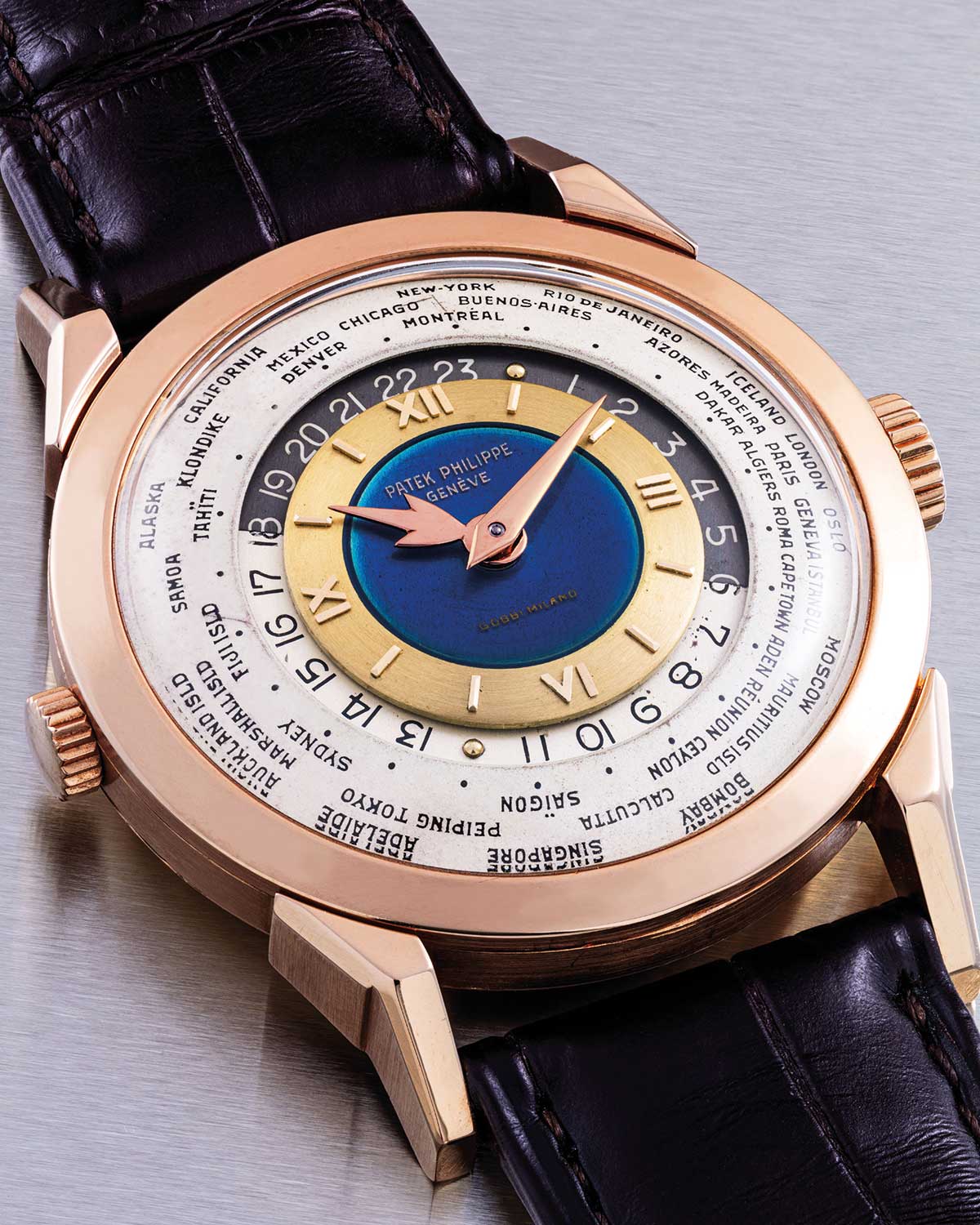
- Ref. 2523 in pink gold with blue enamel dial (Image: Christie’s Hong Kong)
-
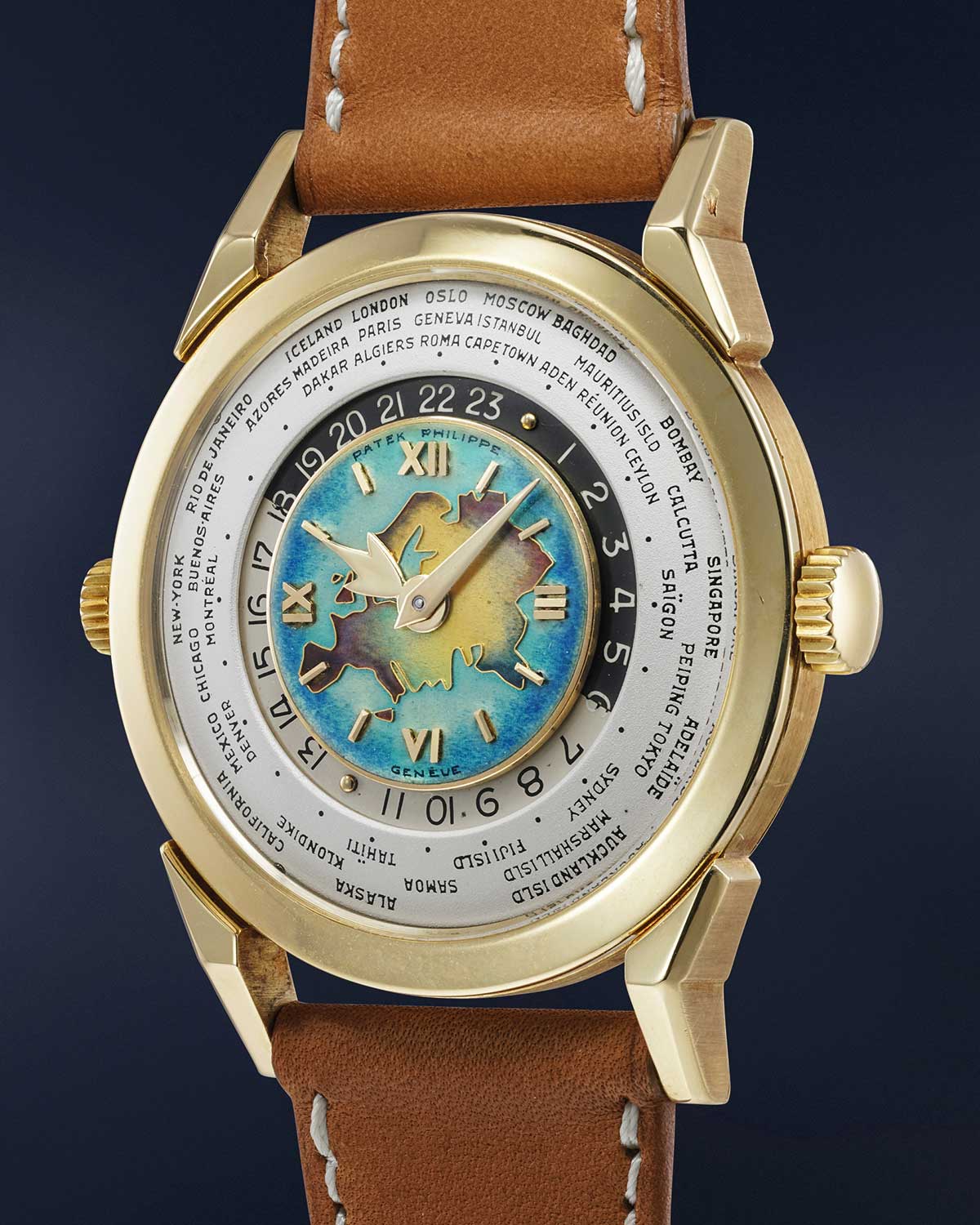
- Ref. 2523 with a “Eurasia” dial, aka “Silk Route” (Image: Phillips)
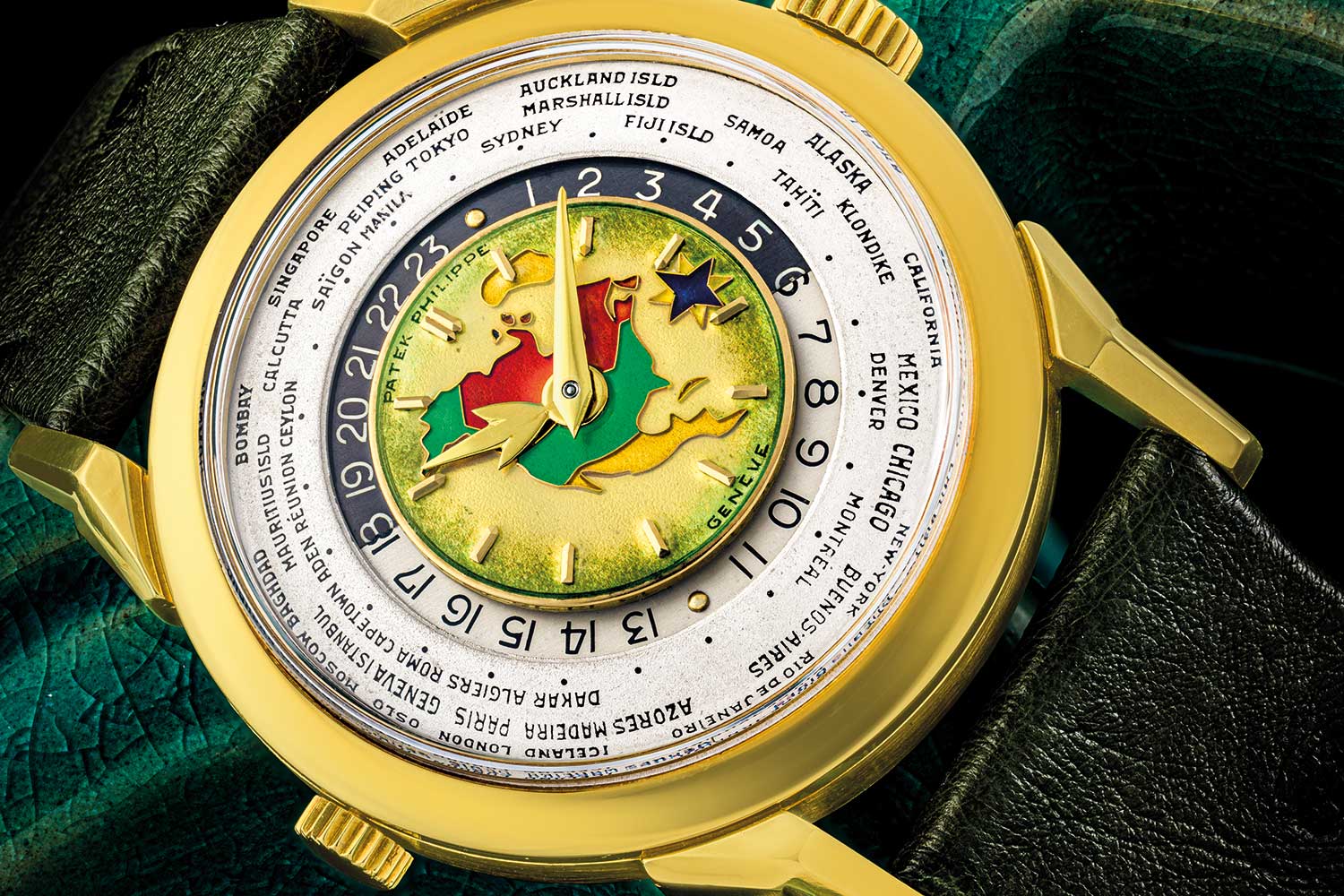
Patek Philippe Ref. 2523 “North America” Two-Crown World Time (Image: Christie’s Hong Kong)
Says John Reardon, Patek expert and founder of Collectability, “The World Time sits very high in the pantheon of Patek Philippe complicated watches. It may not be at the level technically as a perpetual calendar chronograph but looking at auction prices for vintage models, one would never know. It represents the best of Patek Philippe in innovation, elegance, rarity, and of course the romance of all the cities on the dials.”
According to market intelligence platform EveryWatch, the best performing Patek Philippe World Time is this year’s heavy hitter, the Ref. 2523 “South America,” which has shown a nearly 900 percent increase in value, from USD 1 million in 1999 to USD 10.2 million in 2026. “Patek Philippe’s auction performance is solid due to decades of active promotion, historical investment in auctions, continuous innovation with complex watches, and a strong collector community that values their legacy,” says EveryWatch founder Giovanni Prigigallo.
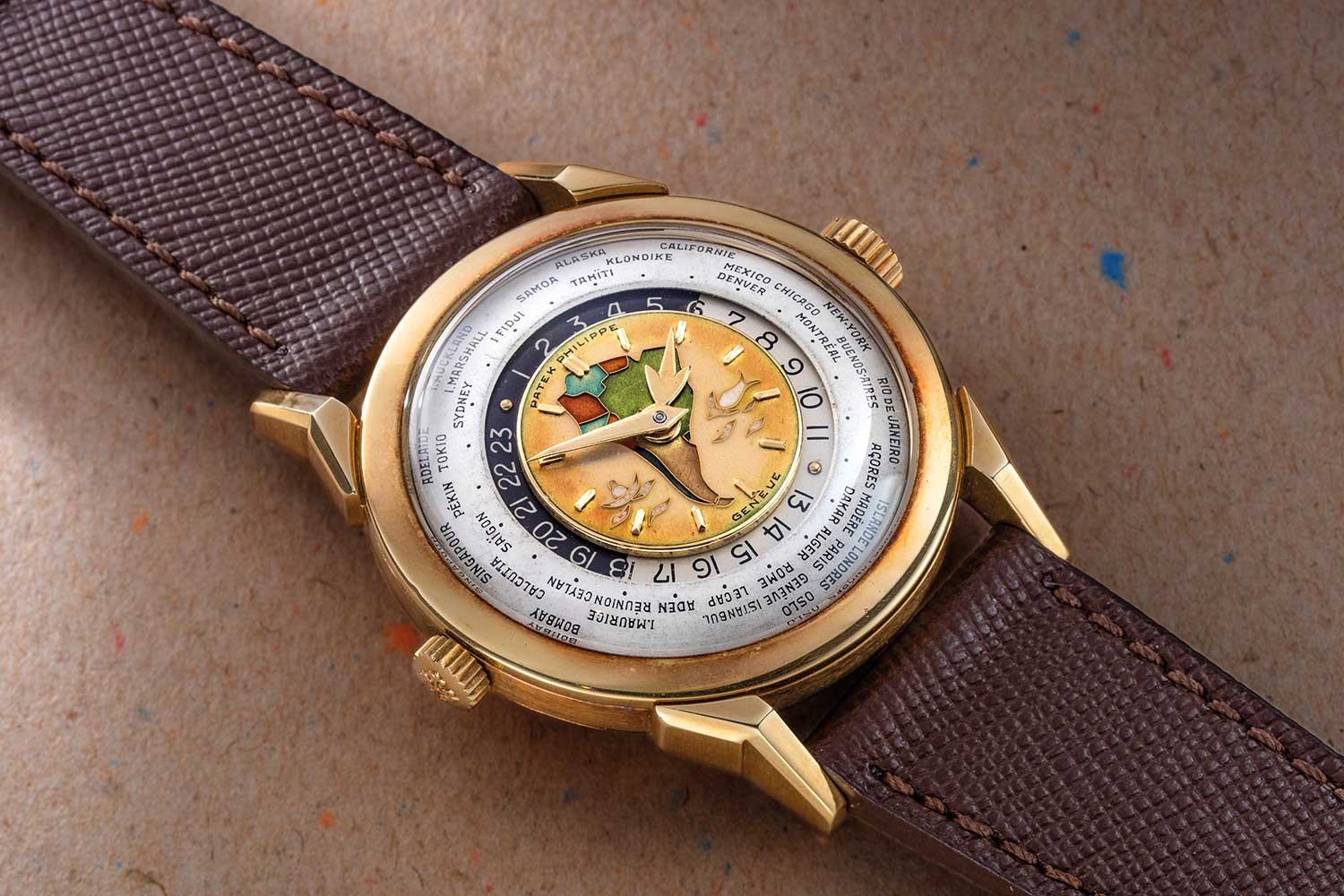
Patek Philippe Ref. 2523 “South America” Two-Crown World Time (©Revolution/Sidney Teo)
“World Time watches are a more connoisseur-driven segment, where craftsmanship and nuanced details are as important as brand prestige,” explains Sharon Chan, International Director, Asia, Bonhams Watches. “For World Time models, dial execution, especially cloisonné enamel, plays a decisive role, often driving a substantial difference in value.”
She says, “A handful of Patek Philippe references consistently stand out for their collectibility and historical importance… What makes these references special is the blend of technical innovation and artistry. The seamless world time mechanism, paired with distinctive dial execution and low production numbers, gives the complication both intellectual appeal and strong collector desirability.” Amongst these, of course, is none other than the Ref. 2523, which Chan calls “the undisputed grail of the World Time.”
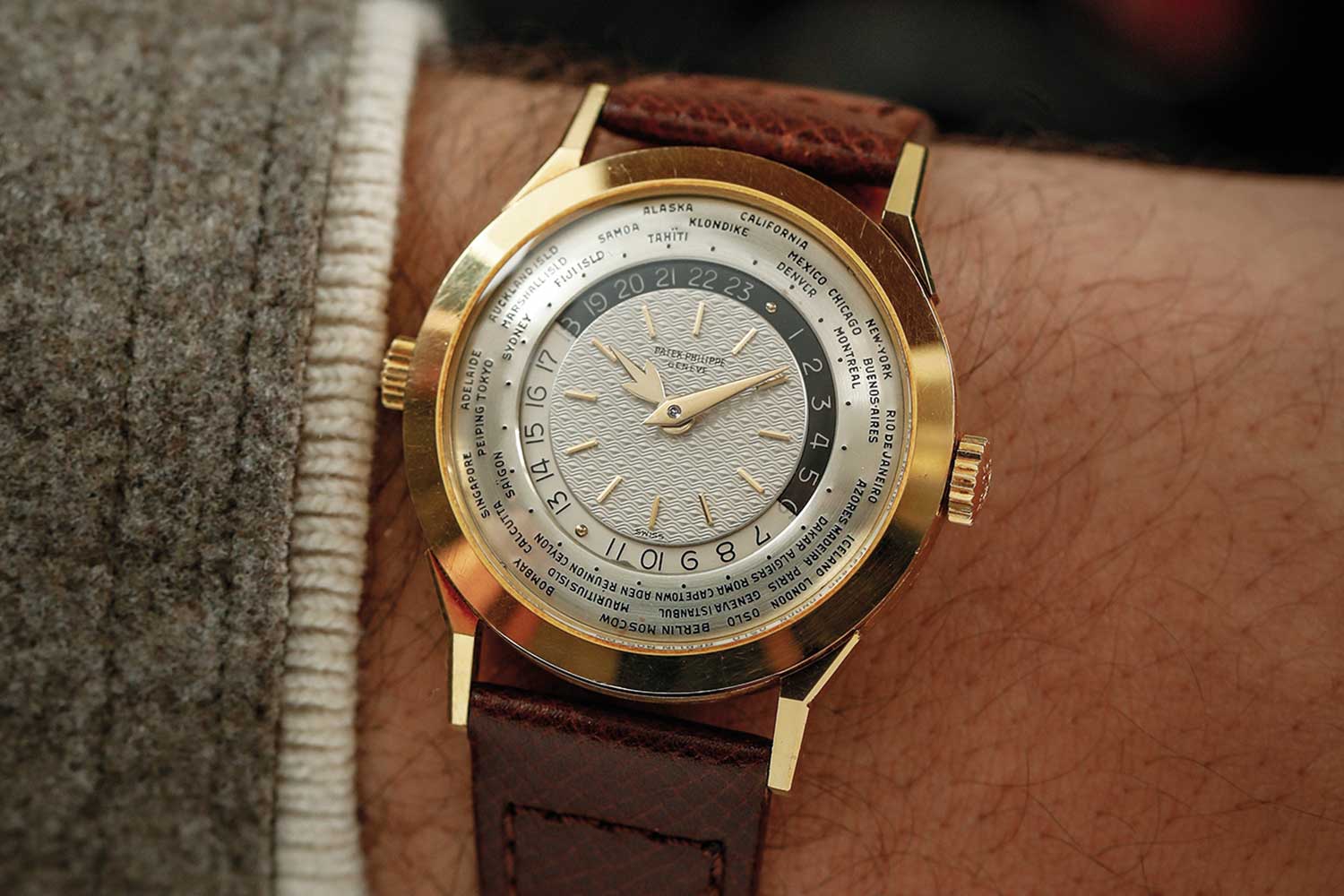
Ref. 2523-1, a variation of the two-crown reference (Image: Phillips)
Reardon adds, “Modern World Time watches are also highly collectible, particularly the enamel-dial pieces such as the 5131 and 5231, and of course the minute-repeating 5531.”
But world timers do not always perform above estimates, Prigigallo cautions. If price and ROI were the sole measure and guide to affection, then look elsewhere. Perpetual calendar chronographs such as Ref. 1518 and Ref. 249 typically outperform the world timers, he says.
Indeed, the true appeal of the world timer lies elsewhere.
The World on a Dial
The Patek Philippe World Time is a watch of its time, yet also one defiantly contrary to it.
The year was 1931. Jet travel was still two decades away and the jet set was not yet a thing. Instead, the privileged class traveled by ocean liner and rail, while their not-so-fortunate cohort made do with slower passage or not at all. But it had already been several decades since the Greenwich Meridian was adopted as the global reference time for the world’s 24 time zones, an idea first mooted in the mid-19th century and championed by Scottish Canadian engineer Sandford Fleming in the 1870s. Across the globe, countries were slowly embracing the discipline of standard time zones. In Europe, Louis Cottier, a watchmaker from Carouge, just outside of Geneva, had followed in his father’s footsteps and worked on a novel way of telling time in all of the world’s 24 time zones and major cities. He called it “Heures Universelles,” and in 1931, Cottier patented it.
Before Cottier’s Heures Universelles, telling time in more than one time zone and country was a most awkward undertaking. It required, variously, mental sums, tables and charts, multiple pocket watches, or simply a display of wall clocks showing time in different cities as one might find in post offices and train stations. There were also double-time pocket watches or so-called captain watches, but these typically showed two different times on two subdials, and one is probably none the wiser for time in more exotic locales such as, say, Samoa and Rio de Janeiro. Or Bombay and Pekin. Should one require it, of course.
Cottier’s system was revolutionary at the time and incredibly intuitive to this day. It relied on three concentric rings: the dial with 12 hour markers and bearing the hour and minute hands, an inner 24-hour ring that rotates counterclockwise slowly, one turn a day, and an outer city ring with the names of 24 cities marked on it, each representing a different time zone. To tell time in your home city and around the world, simply set the time and position your home city at 12 o’clock. In his early examples, the city ring is fixed and the task of setting the home city falls on a watchmaker. Later examples would feature rotating city rings, either on a turning bezel or on the dial to be adjusted via a second crown. Home time is told by the hands, while city time corresponds to the indication on the 24-hour ring. The two tones on the 24-hour ring show day and night for the various cities.
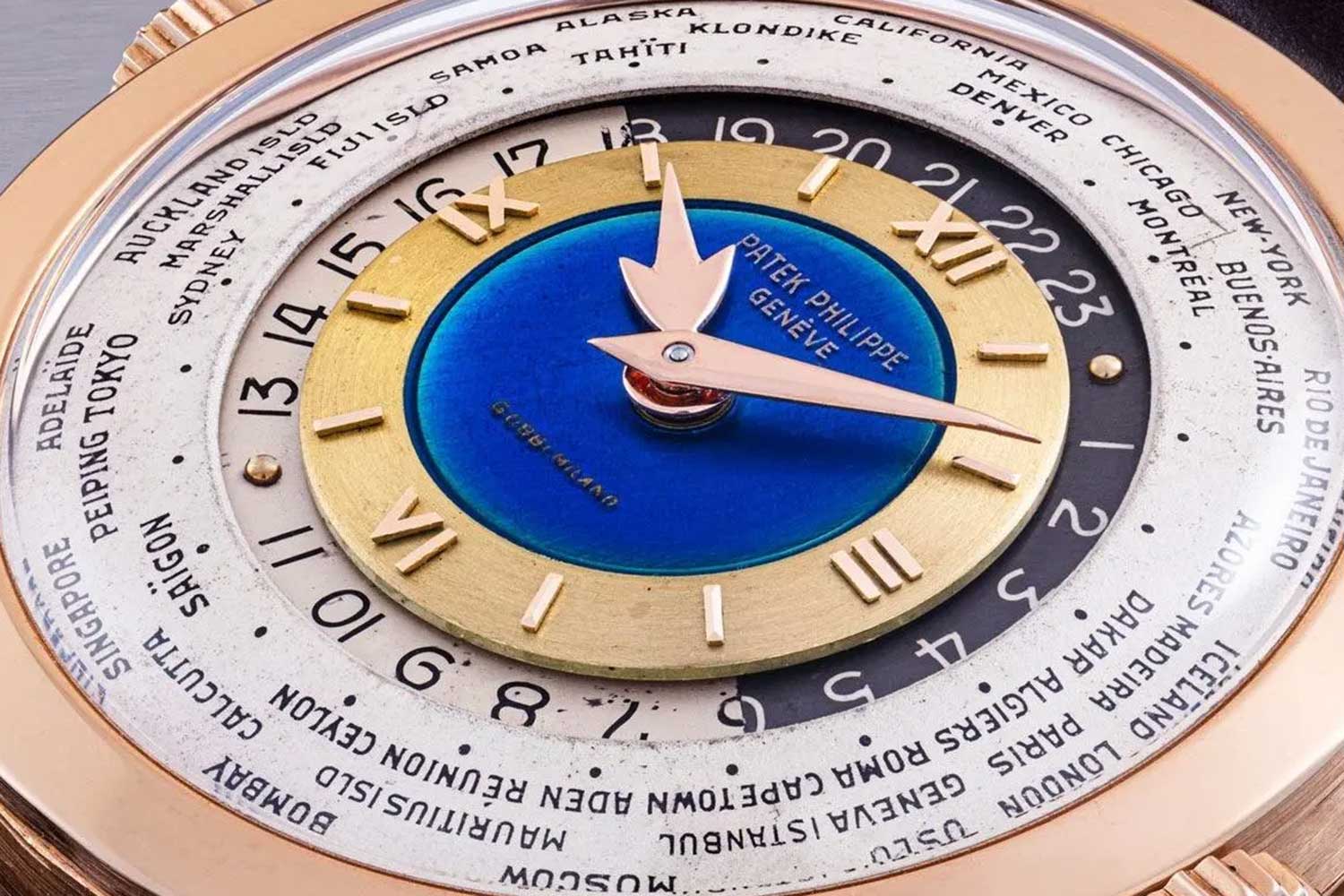
The two tones on the 24-hour ring show day and night for the various cities (Image: Christie’s Hong Kong)
The first world-time pocket watch was made by Cottier that same year. It was for Baszanger, a Geneva jeweler in the same district where Cottier had his workshop. A year later, he began making pocket watches bearing his Heures Universelles system for Vacheron Constantin. But it was Patek Philippe that would give Cottier his grandest stage, transforming his invention into one of the most distinctive poetic signatures of the house. In 1937, Patek Philippe launched its Heures Universelles watches featuring Cottier’s world-time system, and the rest as they say, is legend. Well, almost.
That year, Patek Philippe released the Ref. 96 HU housed in the familiar Calatrava case launched a few years earlier in 1932 and the rectangular-shaped Ref. 515 HU in rose gold, both featuring a rotating 24-hour disk and distinctive handmade gold hands by none other than Cottier himself. “HU,” of course, stands for Heures Universelles, and to this day designates all of Patek Philippe’s World Time references. They also bear the names of 28 world cities on the dial; from London and Berlin in Europe to Chicago and Rio de Janeiro in the Americas, and Tokyo and Singapore in Asia. Cottier also worked on the Ref. 605 HU, a pocket watch that was most elegantly christened “World Time Dress Watch” by Patek Philippe. Reardon considers this his ultimate Patek Philippe World Time, with or without a cloisonné enamel dial. “It has everything: historical importance, Cottier’s ingenious world-time system, a beautiful case, and a dial that is essentially miniature art.”
-
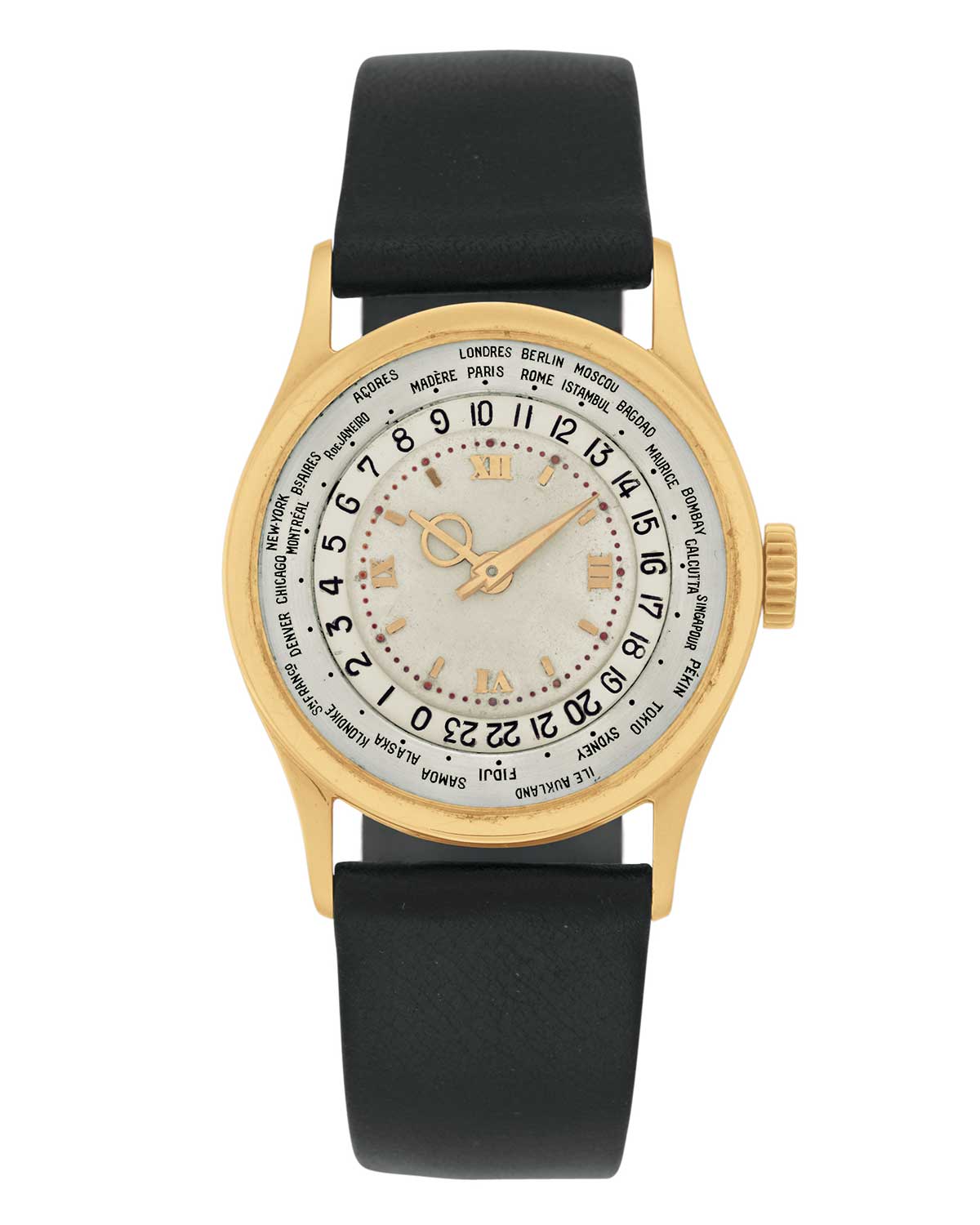
- Patek Philippe Ref. 96 HU (Image: Phillips)
-
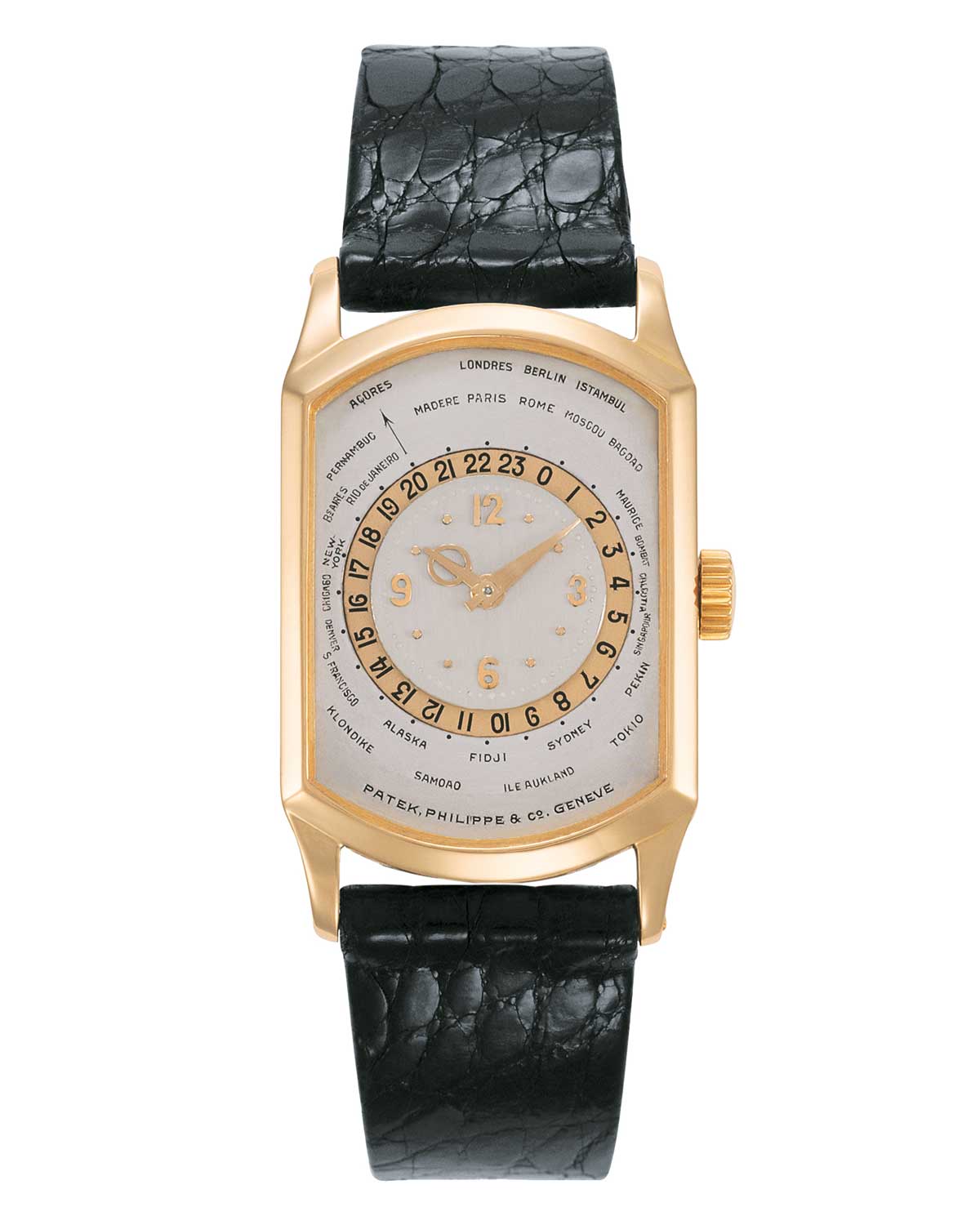
- Ref. 515, the first World Time reference from Patek Philippe (Image: Phillips)
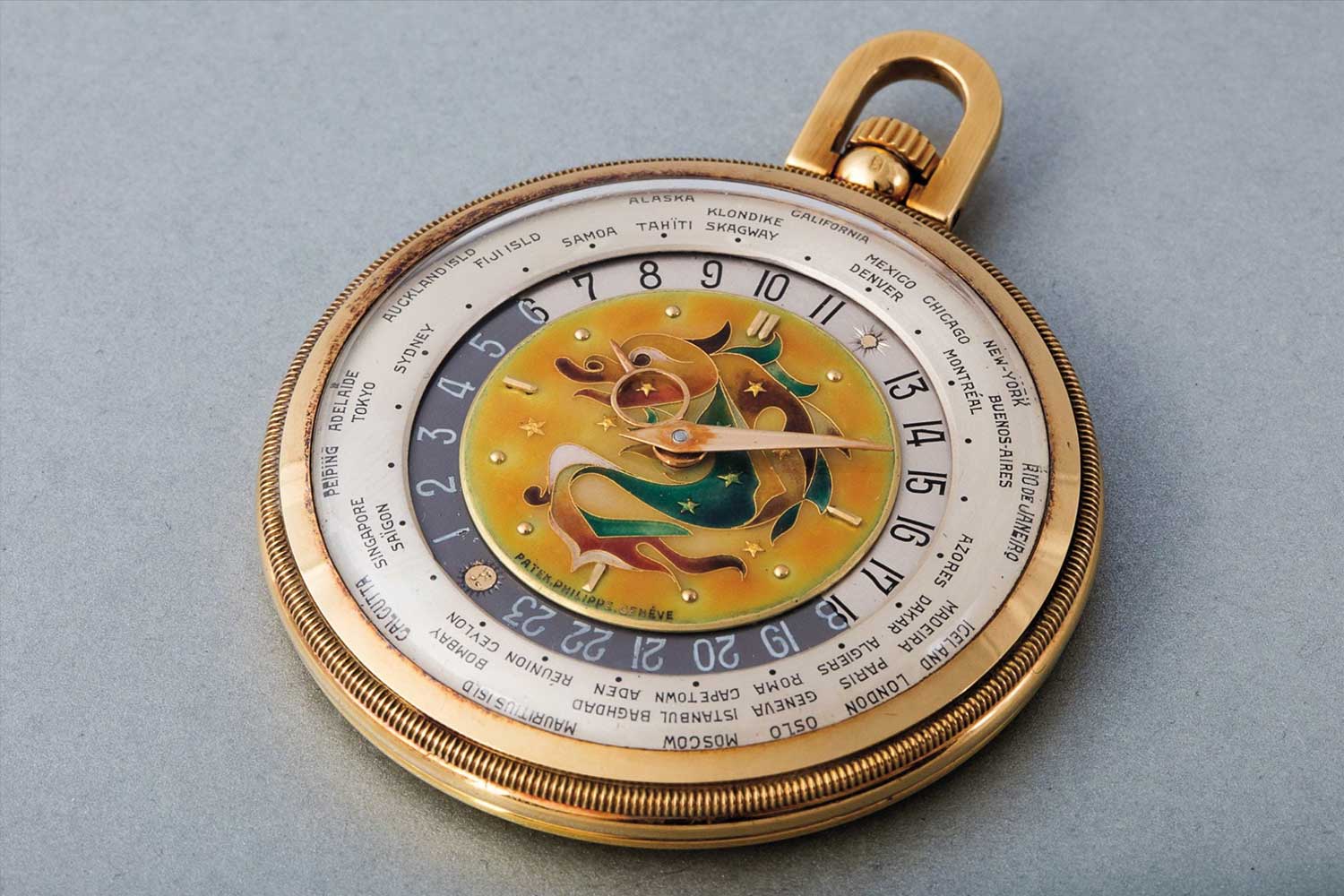
An extremely rare Ref. 605 HU with a cloisonne enamel dial depicting a dragon (Image: Phillips)
But in the beginning, Patek Philippe World Time dials were silver and fairly austere. It was only postwar that the stunning cloisonné enamel dials central to the mythology of vintage Patek Philippe World Time watches emerged, starting with both the Ref. 605 HU and Ref. 1415 HU. Nonetheless, the early examples in the years leading up to World War II laid a crucial foundation stone in the lore of the Patek Philippe World Time. At a time when the world was increasing fractured and borders were tightened or simply closed, Patek Philippe went against prevailing sentiment by presenting a world symbolically reunited on the dial. It was a dream of world travel and global unity when, ironically, these were at their most precarious.
And so, on the cusp of war in Europe in 1939, Patek Philippe released the Ref. 1415 with its beautiful teardrop lugs, in yellow gold, rose gold and platinum. Unlike its predecessors where the bezel was fixed, the Ref. 1415 had an outer rotating bezel where the names of the cities were displayed, beginning with 28 cities in early iterations and up to 41 cities over the course of its production till 1954.
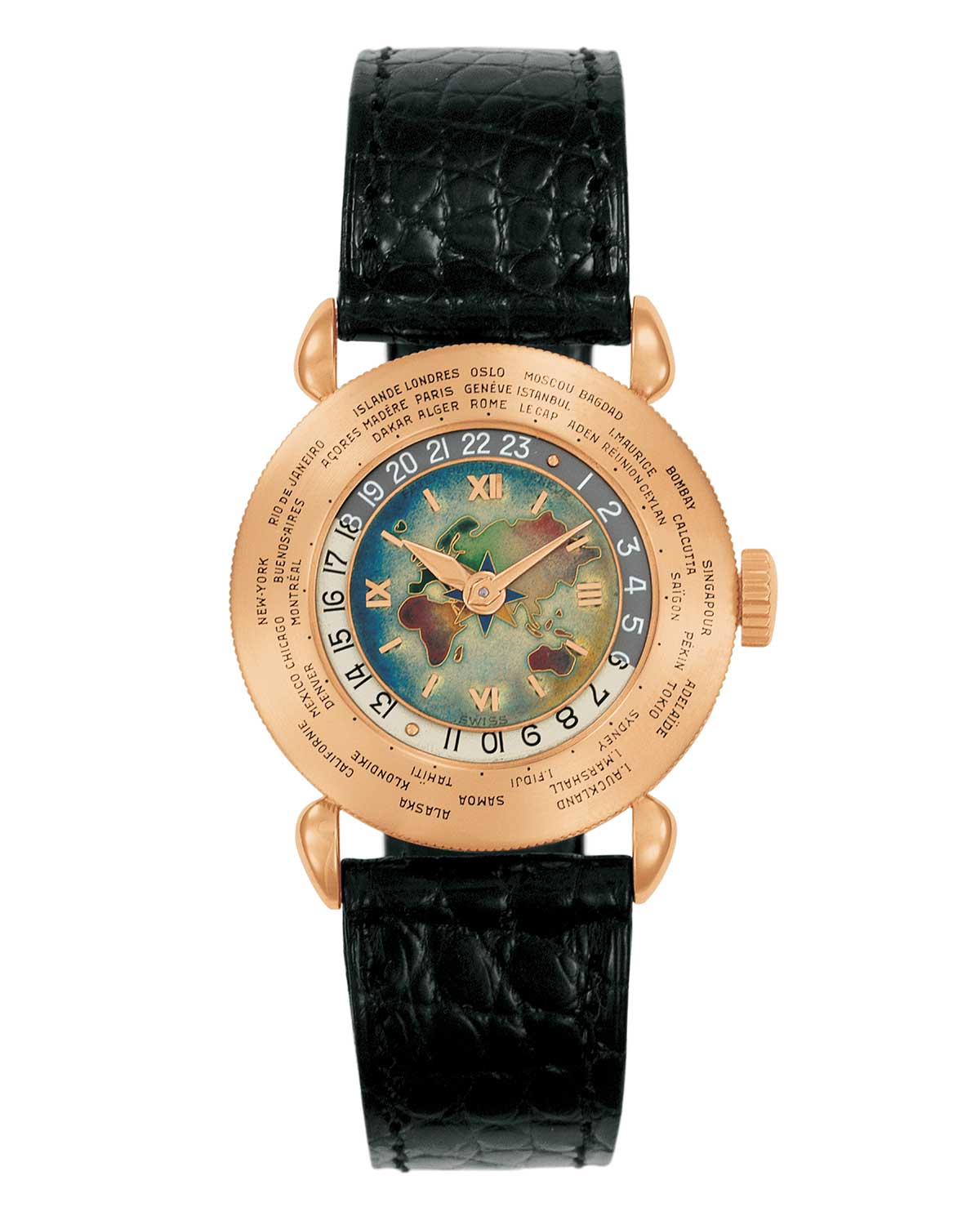
A 1948 Ref. 1415 with cloisonne enamel dial depicting the eastern hemisphere (Image: Phillips)
During the war years and for more than a decade after, Patek Philippe was extremely illustrious, producing some of its most celebrated references such as Ref. 1518, Ref. 1526 and Ref. 1463, aka the “Tasti Tondi.” But it did not produce any more world-time references until 1952.
The Magic Number
In watch circles, arcane reference numbers carry talismanic power, and doubly so when they belong to the likes of Patek Philippe. When it comes to the world timer, the numbers for incantation with eyes closed and hands raised to the higher gods are, of course, 1415 and 2523.
The Reference 1415 is Patek’s first serial production world timer and, alongside the Ref. 605 HU, one of the first to bear the coveted cloisonné enamel dials. But it is Ref. 2523, released a decade after the war, that would go on to stoke collector fervor.
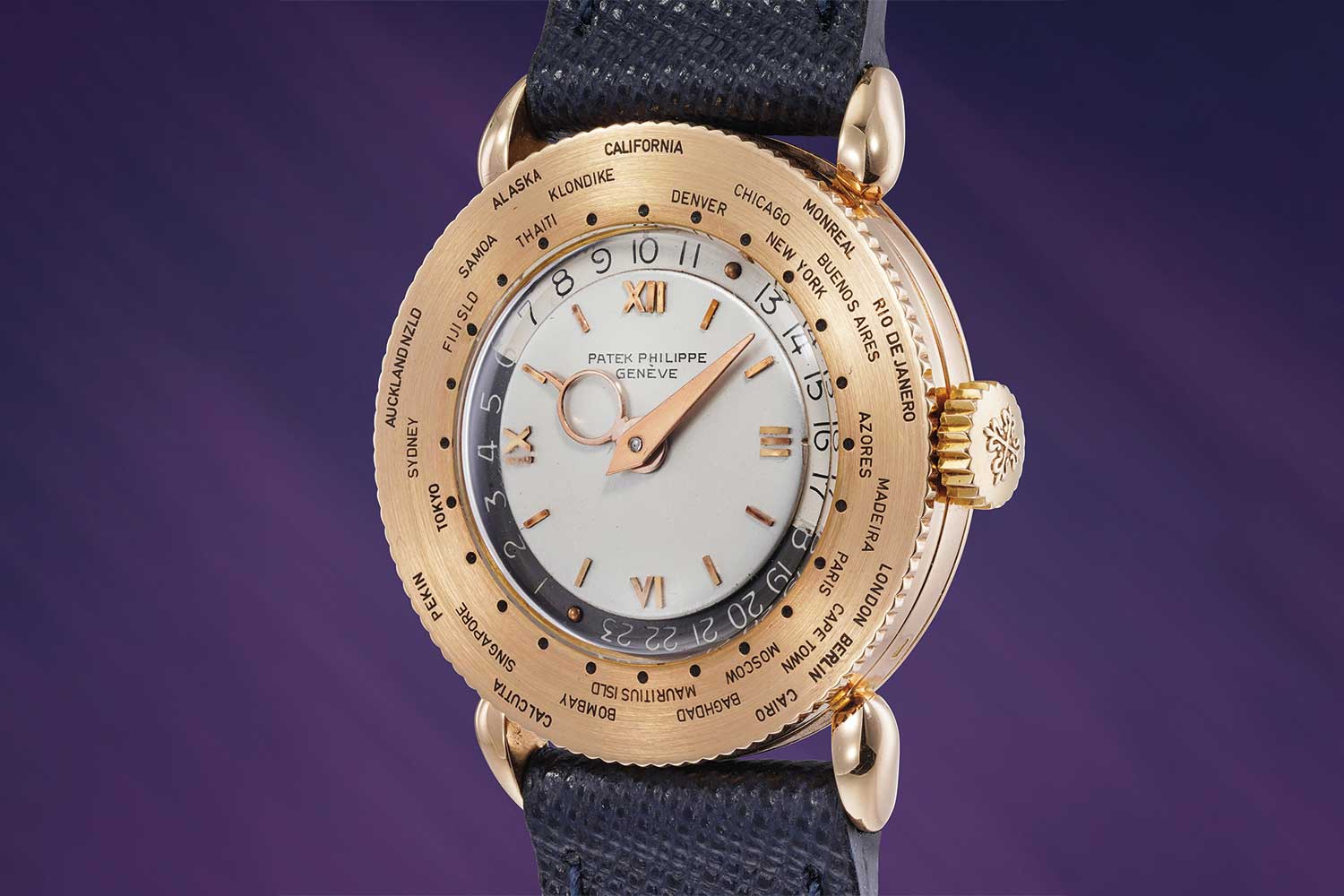
Ref. 1415, Patek’s first serially produced world timer (Image: Phillips)
“The most desirable World Time has to be the Patek Ref. 2523 both for its rarity and historical significance,” says Thomas Perazzi, Phillips’ Head of Watches, Asia. “The importance of this model is well recognized by the brand itself: three examples are housed in the Patek Philippe museum. That, more or less, equals to 10 percent of the total production, making this model the one with the highest ratio of examples present in the museum versus examples made, among serially produced references, though ‘serially’ is more than a euphemism, considering they were mostly handmade by Louis Cottier.”
But here’s a twist. When it was first released, Ref. 2523 received a lukewarm response. The watch was once again out of step with its time. Even in the early 1950s, jet travel was still very much in its infancy and world time remained a romantic conceit rather than practical consideration, even for Patek Philippe’s elite clientele. Instead, dual time zone watches were more popular. At 35.5mm, the Ref. 2523 was also considered large and oversized, compared to the svelte 30.5mm Ref. 96.
According to Phillips Watches Specialist Marcello de Marco in a 2024 essay, the lackluster reception could possibly be why Patek Philippe issued “a remarkable range of dials for this reference, maybe as an effort to lure in clients with different tastes.”
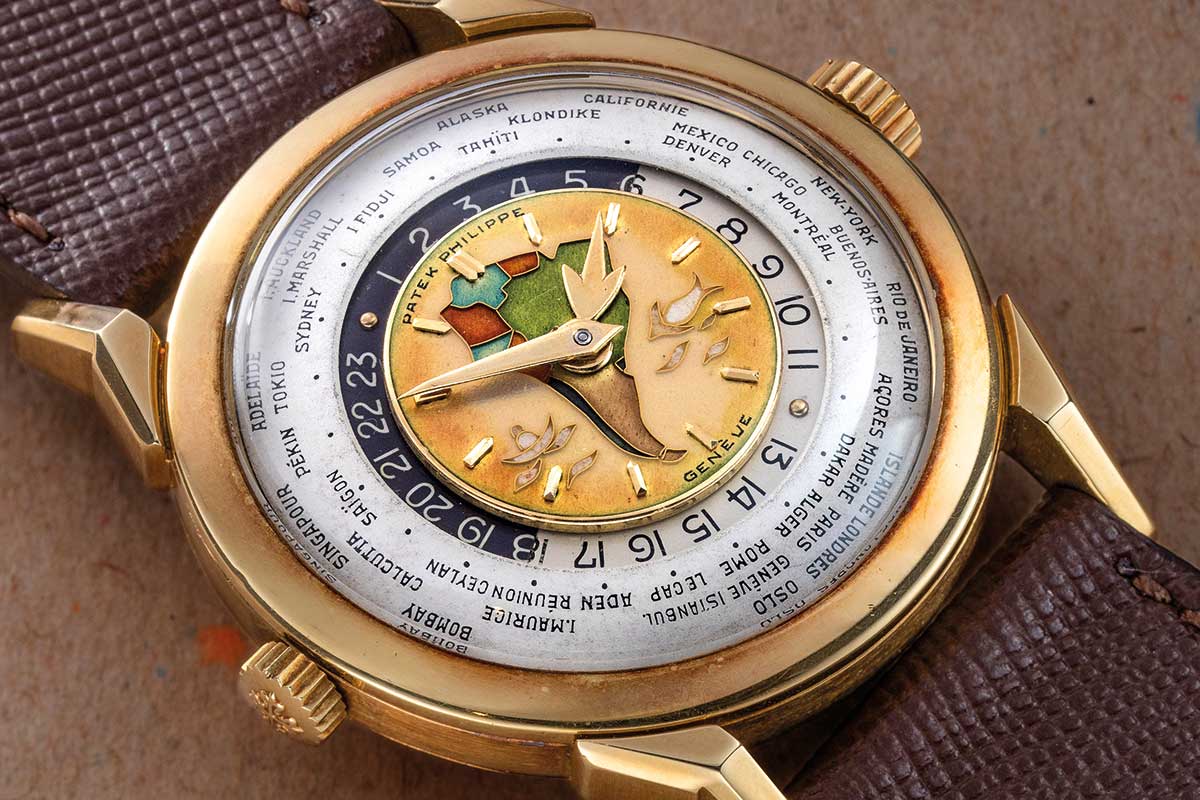
Visually, the Ref. 2523 stood out from its predecessors. It had sharp faceted lugs that were distinct and angular. Instead of on a rotating bezel, the city names now sat on a city ring on the dial, to be adjusted via a second crown that protruded on the left at 9 o’clock. As de Marco pointed out, Ref 2523 came in a variety of dials — plain and silvered, with engine-turned guilloché and the most desirable of all, cloisonné enamel.
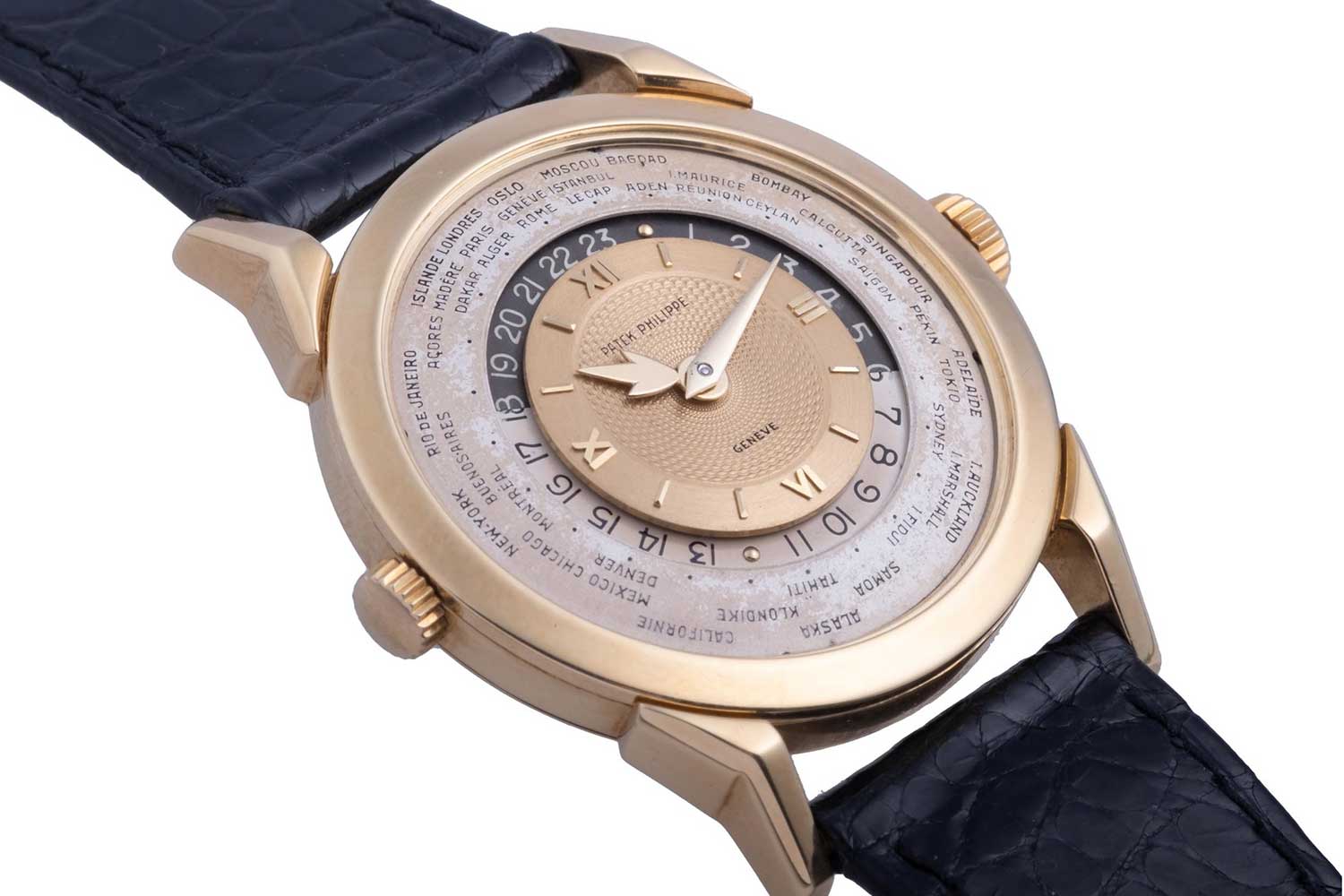
Ref. 2523 in 18K yellow gold with gold guilloche center and two crowns (Image: Antiquorum)
The term cloisonné comes from the French word “cloison,” which means “to partition.” On cloisonné enamel dials, fine silver or gold wires are shaped by hand to create a design on the dial, forming delicate compartments or cloisons. On the Ref. 2523, these were meticulously shaped into intricate maps of the world: North America, “Eurasia” and South America. They are then carefully filled with finely powdered glass in different colors and fired repeatedly at temperatures exceeding 800ºC, melting the glass into glorious hues. The process is repeated several times until the dial is alive with color and depth.

On cloisonné enamel dials, fine silver or gold wires are shaped by hand and carefully filled with finely powdered glass in different colors, then fired repeatedly at temperatures exceeding 800ºC. (Image: Phillips)
During its extremely short production period between 1952 to 1957, there were an estimated 26 examples of Ref. 2523 made. Only roughly 11 of them bore the exquisite cloisonné enamel dials featuring the maps of the world in intensely rich and vivid hues. But in 1957, Patek Philippe famously halted the production of its world timers. It took more than 40 years before the world saw a new world-time reference, the Ref. 5110 in 2000.
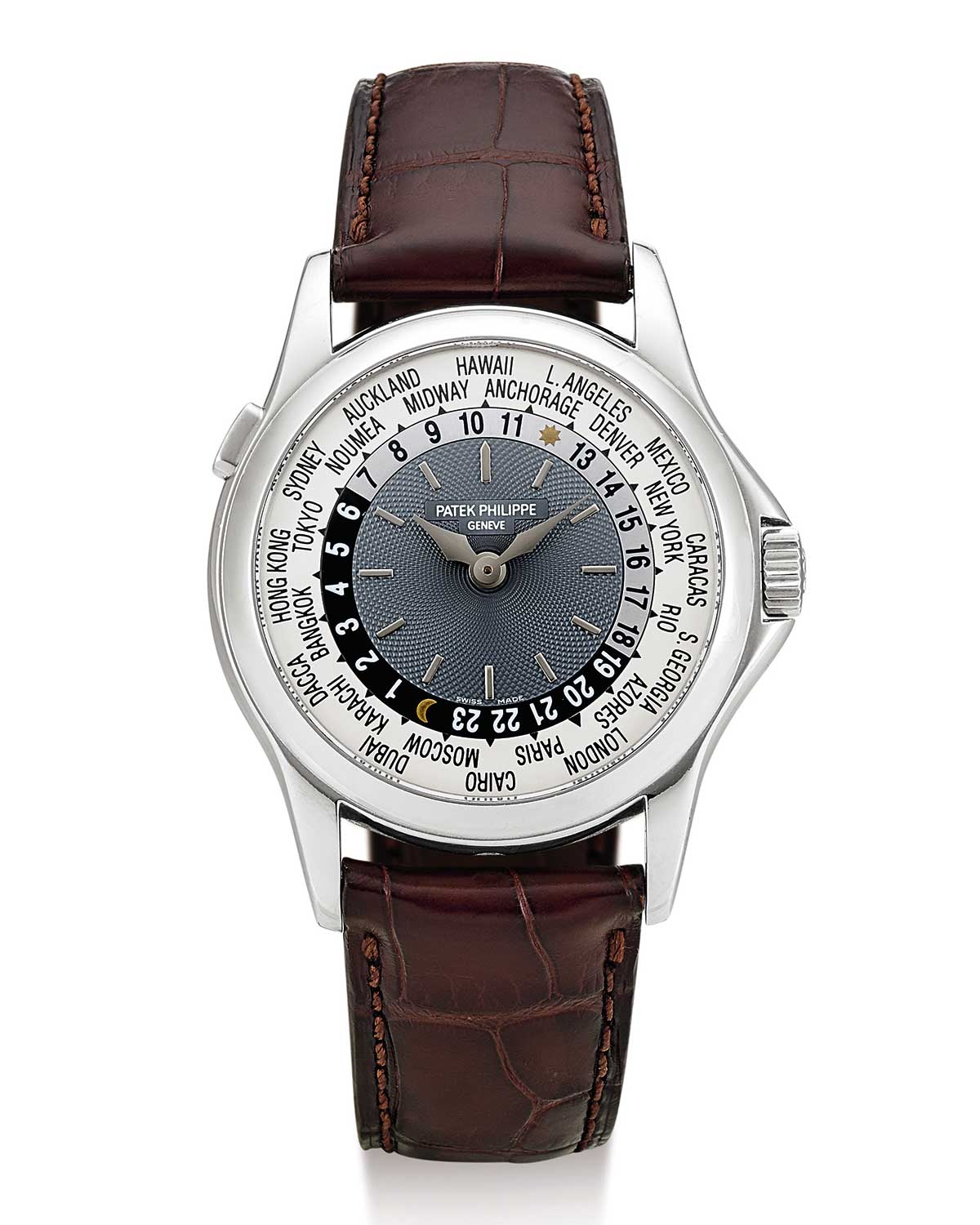
Ref. 5110, released more than 40 years after Ref. 2523 (Image: Phillips)
The Romance of Vintage
And so, absence makes the heart grow fonder. The long hiatus added to the mystique of the Patek Philippe World Time, especially that of its earliest incarnations. Their scarcity on the secondary markets, given their extremely limited production numbers to begin with, made these early references all the more desirable. Then there is the striking beauty of their dials, vividly immortalized in enamel for more than half a century, and the lore of an extraordinary time in history. Together, they make for a most compelling proposition.
Perazzi agrees, “Patek Philippe’s World Time timepieces are among the most recognizable watches in their entire lineage.”

Patek Philippe Ref. 2523 “Eurasia” (Image: Phillips)
But the romance of the World Time is far greater than the sum of its parts. Reardon sums it up best, “I love the World Time because it captures the poetry of travel. It puts the entire world on the wrist in a way that is practical, beautiful and emotionally resonant.” To misquote the poet, oh to see the world not in a grain of sand, but on the dial of a Patek World Time!
Patek Philippe

You may also like
News
Last Week in Watches: Patek Philippe Takes Milan, G-Shock Turns to Blue Sapphire
Oct 5, 2026
News
Last Week in Watches: Patek Philippe Takes Milan, G-Shock Turns to Blue Sapphire
Oct 5, 2026
News
Patek Philippe’s Rare Handcrafts Take an Italian Grand Tour
Oct 1, 2026
News
Patek Philippe’s Rare Handcrafts Take an Italian Grand Tour
Oct 1, 2026
Editorial
Patek Philippe Debuts 6 New Gondolo Ladies First Watches in Milan
Oct 1, 2026
Editorial
Patek Philippe Debuts 6 New Gondolo Ladies First Watches in Milan
Oct 1, 2026