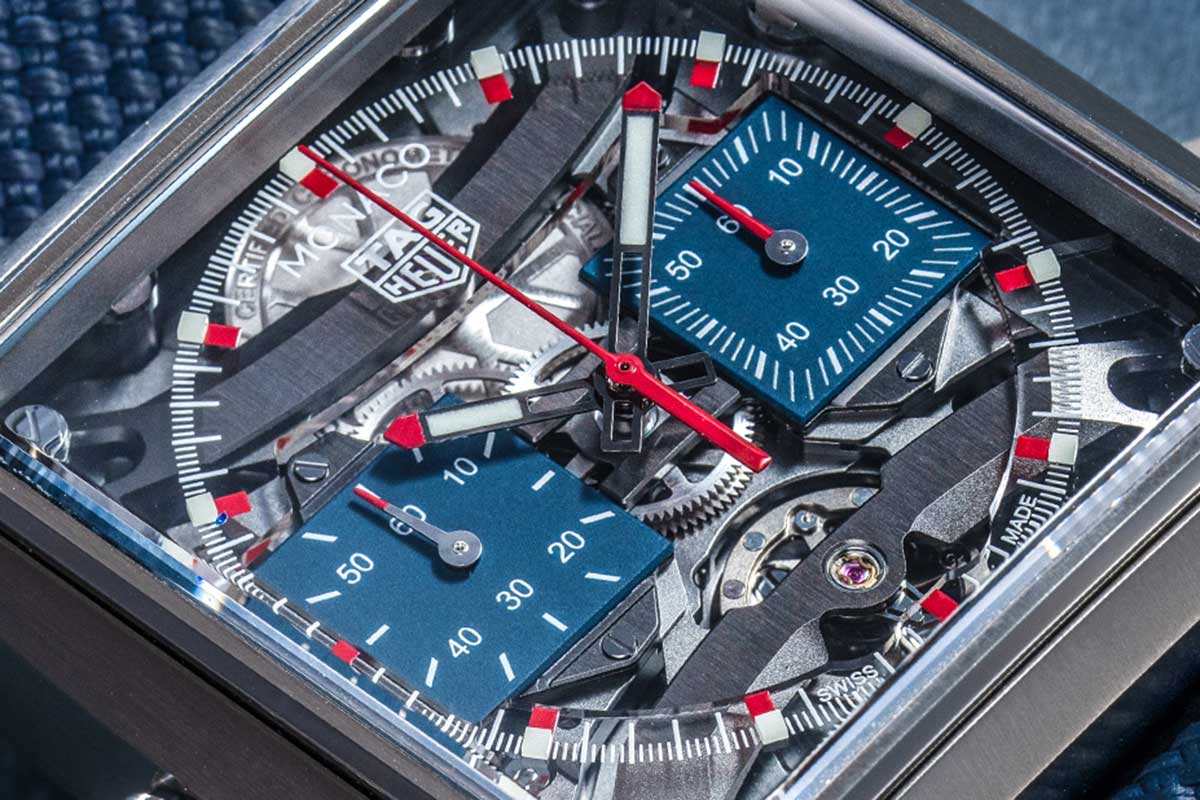
On to the Next Lap with the TAG Heuer Monaco
Editorial
On to the Next Lap with the TAG Heuer Monaco

Summary
The scene: Monaco, sometime in the 1960s. It was race day. The crowd was glamorous and the air was electric. The winding streets of Monte Carlo in the Principality of Monaco were the stage for Formula 1 drivers and their open-wheel racing machines in what was widely known as one of the most demanding circuits in the Formula 1 tour. With minimal run-off area in streets tightly lined with buildings and people, separated from the racetrack only via thin steel Armco guardrails, the bumpy public roads and fast, tight corners meant that danger lurked everywhere. A split-second hesitation or mistake could send the car straight into a stone wall, into the harbor, or worse… into innocent spectators. Extremely tight, dangerous and spectacular, it was the ultimate driver’s circuit, one that demanded absolute precision and daring. Several decades later, three-time world champion Nelson Piquet would liken it to “riding a bicycle around your living room.”
In 1969, that living room was more treacherous than ever, and proved the undoing for nine cars out of 16 that started the race. Only seven drivers made it to the checkered flag in a race that ran for 80 laps around the unforgiving streets of Monte Carlo. Attrition began early. Jackie Stewart retired on lap 22 with a broken half shaft, as did Jean-Pierre Beltoise. Chris Amon’s Ferrari 312, meanwhile, sputtered into engine failure, forcing him to retire from the race, as did several other cars that faced gearbox failures and engine blowups.
Certainly, none of these were on Jack Heuer’s mind when he christened his new watch Heuer Monaco a few months earlier on March 3, 1969. But Jack had wanted a link with motorsport for his new watch, which he described as an “outstandingly innovative and eye-catching product, something bordering on the avant-garde” in his autobiography, The Times of My Life. He had already signed on Swiss racing driver Jo Siffert for an annual fee of CHF 25,000 to wear the Heuer logo patch on his overalls and a Heuer chrono on his wrist, and put a red Heuer sticker on his racing car.
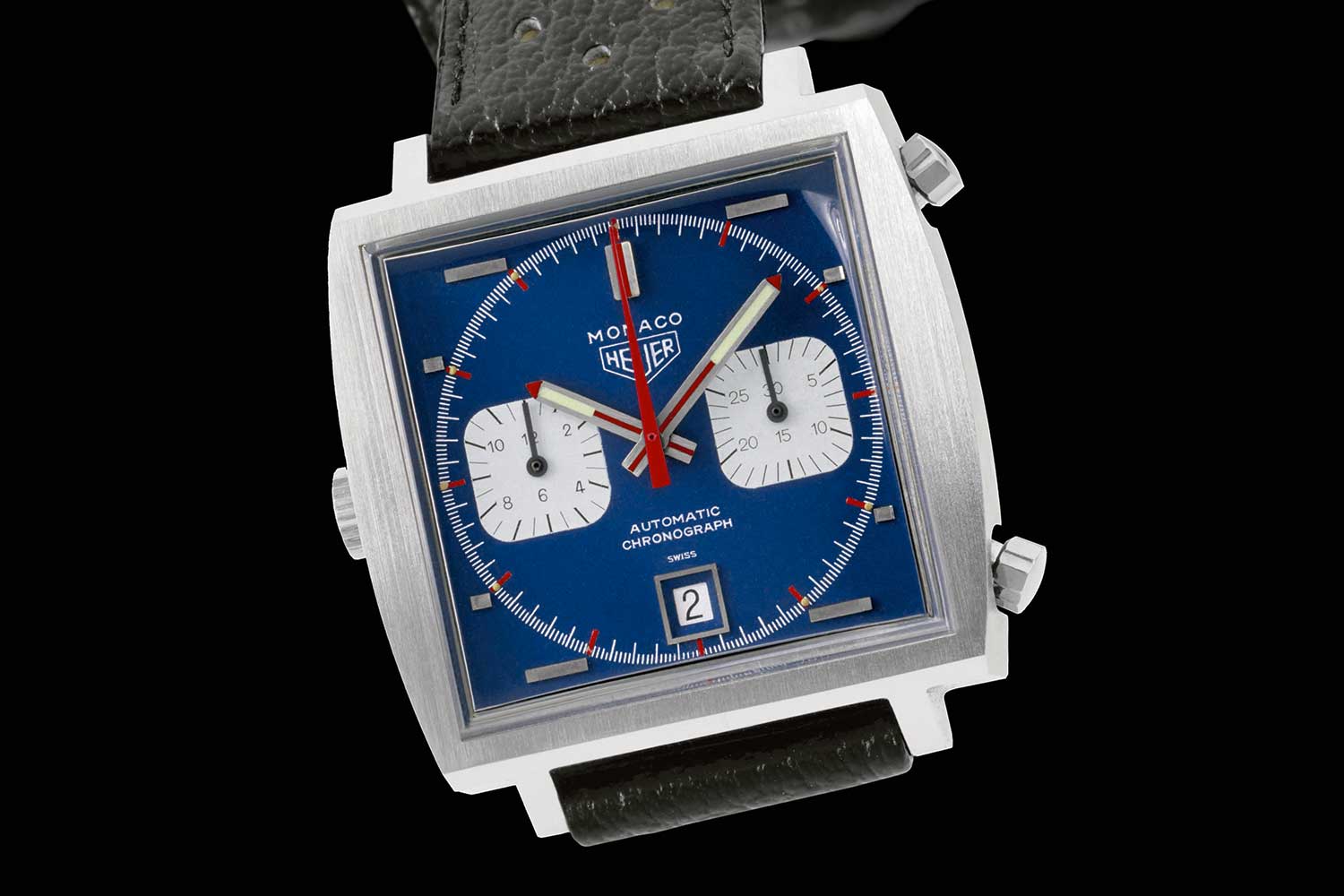
TAG Heuer Monaco 1969
What better than the most romantic, most challenging and most spectacular motor race of them all?
The Fabled Ref. 1133B
The original Heuer Monaco was everything that Jack had envisioned and, above all, innovative on all fronts. It notched up several firsts, beginning with the new square case developed by Piquerez, one of Heuer’s watch case suppliers.
While square cases were not rare per se, they were mostly used for dress watches at the time as it was a challenge to make them fully water resistant. Piquerez, however, has managed the impossible with square gaskets and seal pumps, and patented his invention. When Jack found out, he immediately secured an exclusive deal for the square case design. Since the 1940s, the company had decided to only produce water resistant chronographs, as even the merest drop of water in the case damages the movement, which would be costly to repair. Piquerez’ case was therefore “the perfect housing” for his new avant-garde chronograph wristwatch. And indeed, with its sharp angles and sleek lines, it was the first fully water resistant square chronograph and, therefore, radically different from other staid pancake-round chronographs on the market. Of course, not everyone liked the new angular shape, but no matter. What was more important was the brand-new automatic movement inside, the top-secret project codenamed Project 99.
It was a joint development with Breitling, Hamilton-Büren and chronograph specialist Dubois-Dépraz to develop a self-winding wrist chronograph, hopefully the first of its kind. At the time, interest in self-winding watches was surging and the race was on to solve what Jack described as “one of the last remaining major problems in modern watchmaking.” In the end, Zenith inched past the post with a working prototype of its El Primero movement mere weeks ahead in January 1969, but no matter. According to Jack, by April that year, at the Watch and Jewelry Fair in Basel, both Heuer and Breitling had 40 working samples each of Calibre 11, as it was now known, ahead of Zenith, which displayed only one or two.
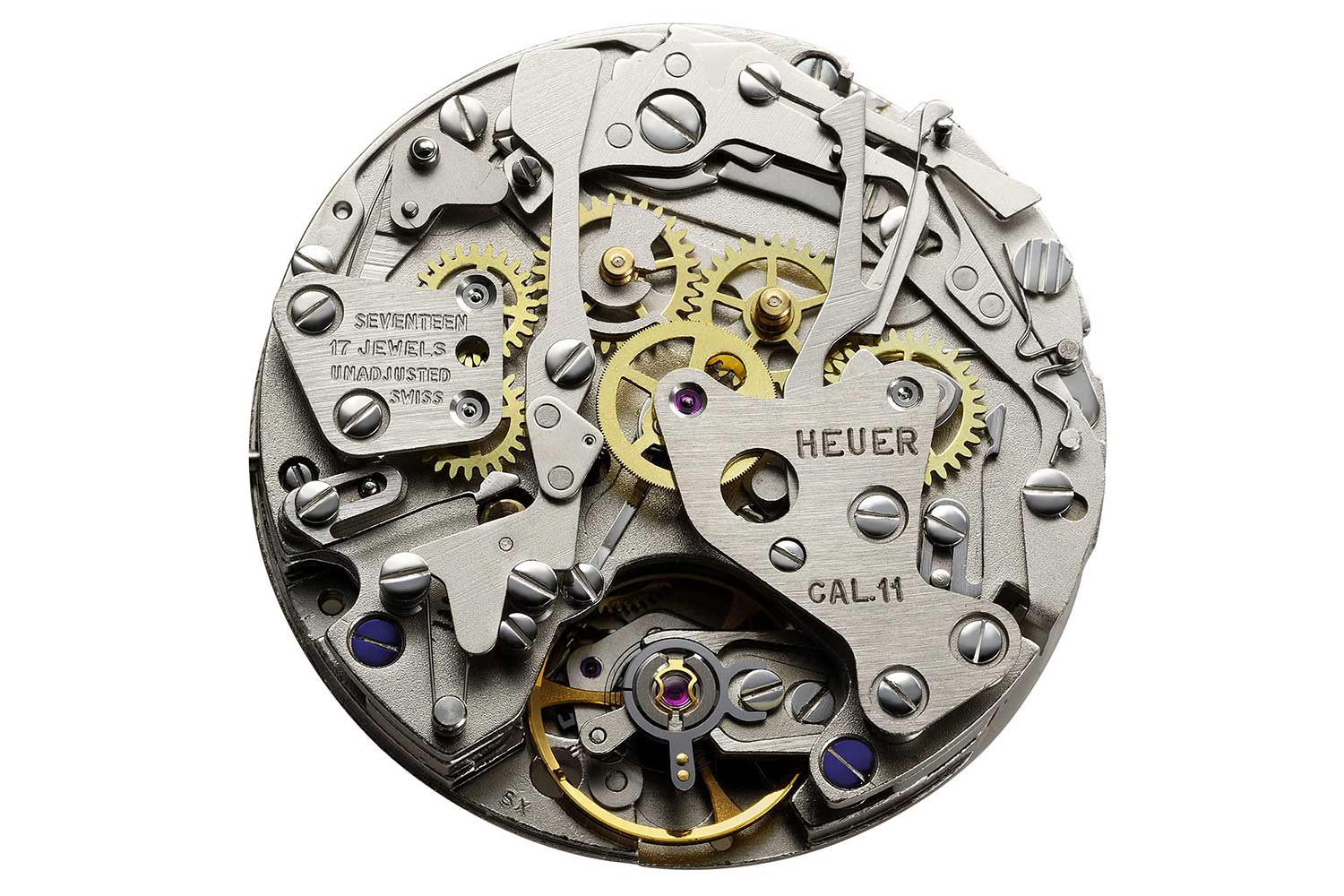
Movement Caliber 11
At the time, the Calibre 11 boosted an unusual architecture. Its base movement was the micro-rotor automatic calibre made by Büren, beating at 19,800vph with 42 hours of power reserve. Mounted on top of it was the chronograph module by Dubois-Dépraz, which offered a bi-compax display with 30-minute and 12-hour subdials at 3 and 9 o’clock respectively, and no running seconds subdial. The date sat at 6 o’clock and, most unusually, because of the modular construction, the winding crown sat on the left side of the case.
Heuer seized on this idiosyncrasy and turned it into a unique selling proposition: “This chronograph does not need winding every day because it is automatic.” As Jack recounted in his autobiography, “This statement made a lot of sense and we have used it in one form or another ever since.”
The very first model was the Ref. 1133B, a 39mm watch with a metallic blue sunburst dial, square-tipped hands filled with blue tritium, and red accents alongside a fiery red chronograph hand. The word “Chronomatic” originally appeared above the Heuer shield at 12 o’clock, referring to the name used by the Project 99 consortium for the new automatic chronograph movement. This was later replaced by the words “Automatic Chronograph” for clarity and moved to 6 o’clock.
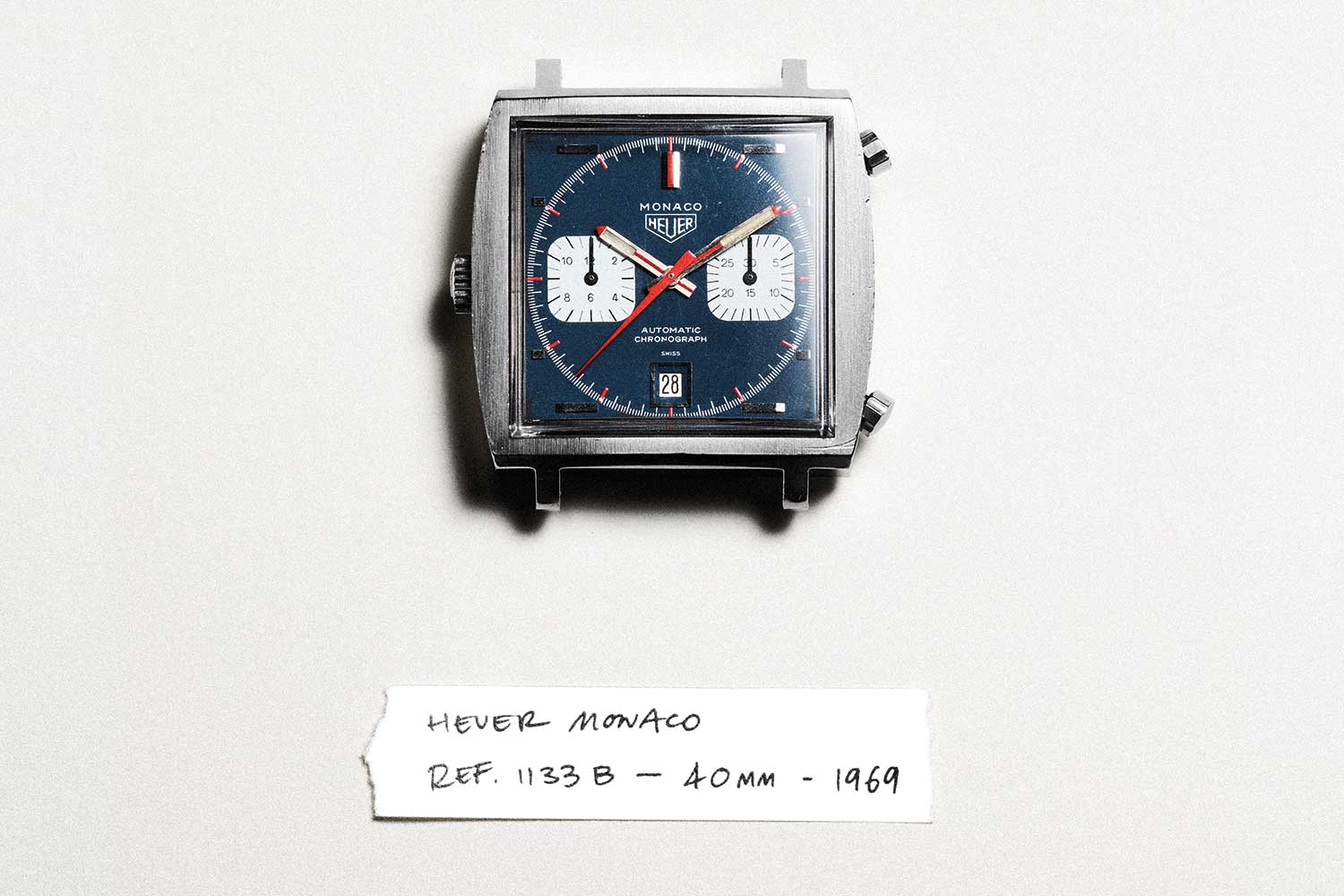
The fabled Ref. 1133B. Pictured here is the second generation, which has the words “Automatic Chronograph” at 6 o’clock, in place of the original “Chronomatic” at 12 o’clock
In 1970, Steve McQueen wore the Heuer logo patch on his racing suit for his 1971 film Le Mans, after noticing it on his friend Jo Siffert, the Swiss Formula 1 driver and Heuer ambassador. McQueen also picked the Ref. 1133B to wear for his character Michael Delaney, the moody, intense racing driver haunted by a crash, for whom “racing is life.” This version of the reference was very subtly different from the original with its matte blue dial and arrow-tipped hands accented with red. It had stood out to McQueen for its unusual shape, considerable size and striking color. The rest, however, is not quite history. Not yet, anyway.
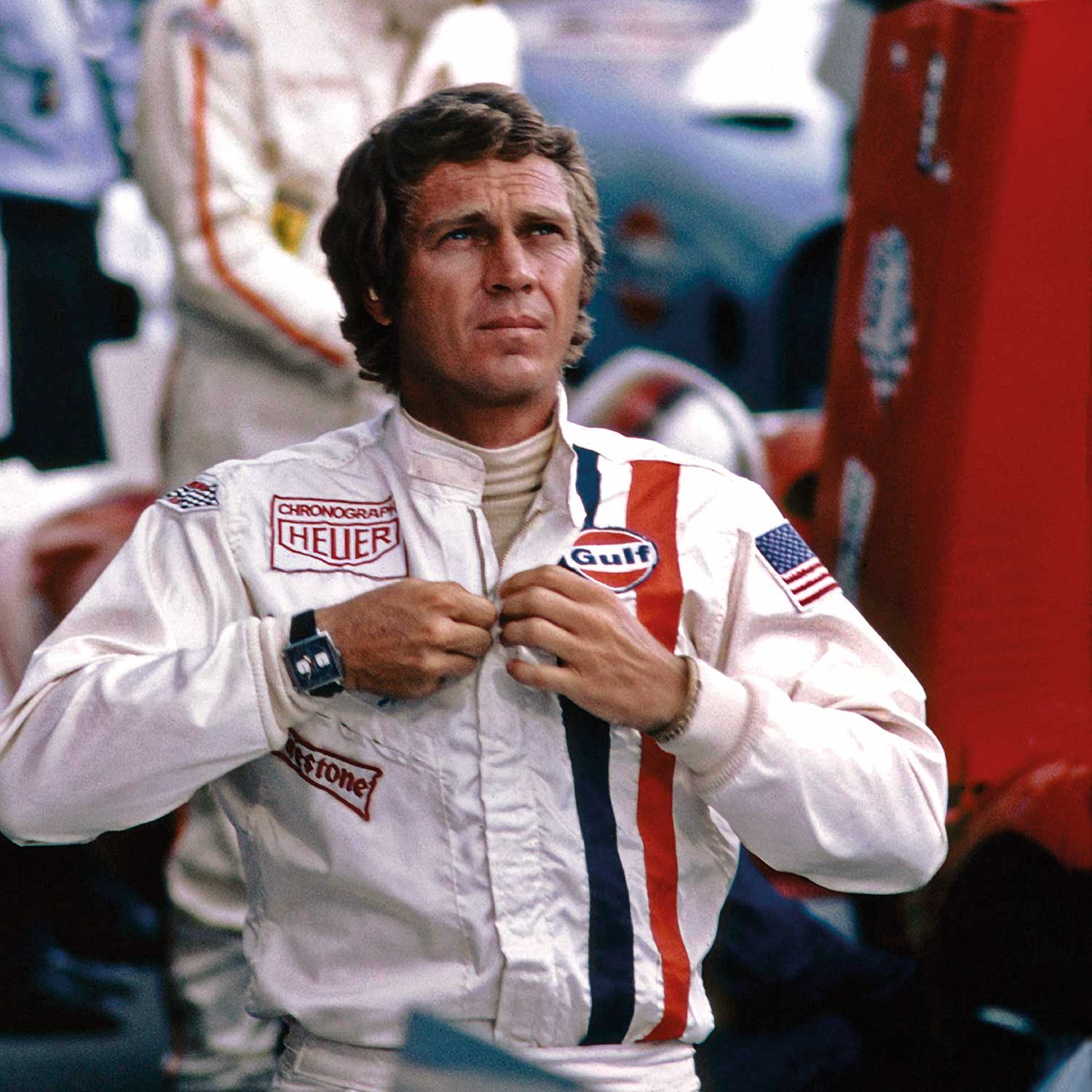
Screen legend Steve McQueen in his 1971 film Le Mans, wearing the Ref. 1133B
But by then, the scene had been set and while the Heuer Monaco, like the company and Jack, would face the vagaries of fortune in the years that followed, its DNA for precision, cutting-edge innovation and avant-garde design, along with its motorsports association were forever sealed.
The Unmistakable Spirit of the TAG Heuer Monaco
The Heuer Monaco disappeared from the brand’s catalog during the global and industry upheaval of the ’70s and ’80s, and Heuer became TAG Heuer in 1985. Then in 1997, TAG Heuer decided to reintroduce the TAG Heuer Monaco with a modern reissue of the original model, alongside a stunning campaign that featured McQueen posthumously, based on two archival stills from Le Mans that have since become iconic. Blonde-haired, striking blue eyes, moody and irradicably cool in his driver’s overalls; no wonder everyone wanted a Monaco. The reissue was a phenomenal success and some three decades after its initial launch, the TAG Heuer Monaco was back and set to become better than ever.
Crucially, in the years leading up to its return and well beyond, Heuer, and later when it became TAG Heuer, stayed true to the genesis of the TAG Heuer Monaco throughout, building on the three defining traits that have become inseparable from it: the unmistakable square case, its spirit of innovation and the enduring connection with motorsports.
Throughout the years, there were many famous iterations and references. In the 1970s, the stainless steel case was given a black coat for the Reference 74033N, paired with a matte black dial and bold orange chronograph hands, and fitted with the manual winding Valjoux 7740. Only a few hundred watches were produced but they proved wildly successful, becoming one of the most collectible Heuers today. Fans named it the “Dark Lord” for its stunningly black and bold aesthetics, a moniker that stuck. That, in turn, inspired the “Dark Lord” Special Edition released in 2022 during — you guessed it — the Formula 1 Monaco Grand Prix.
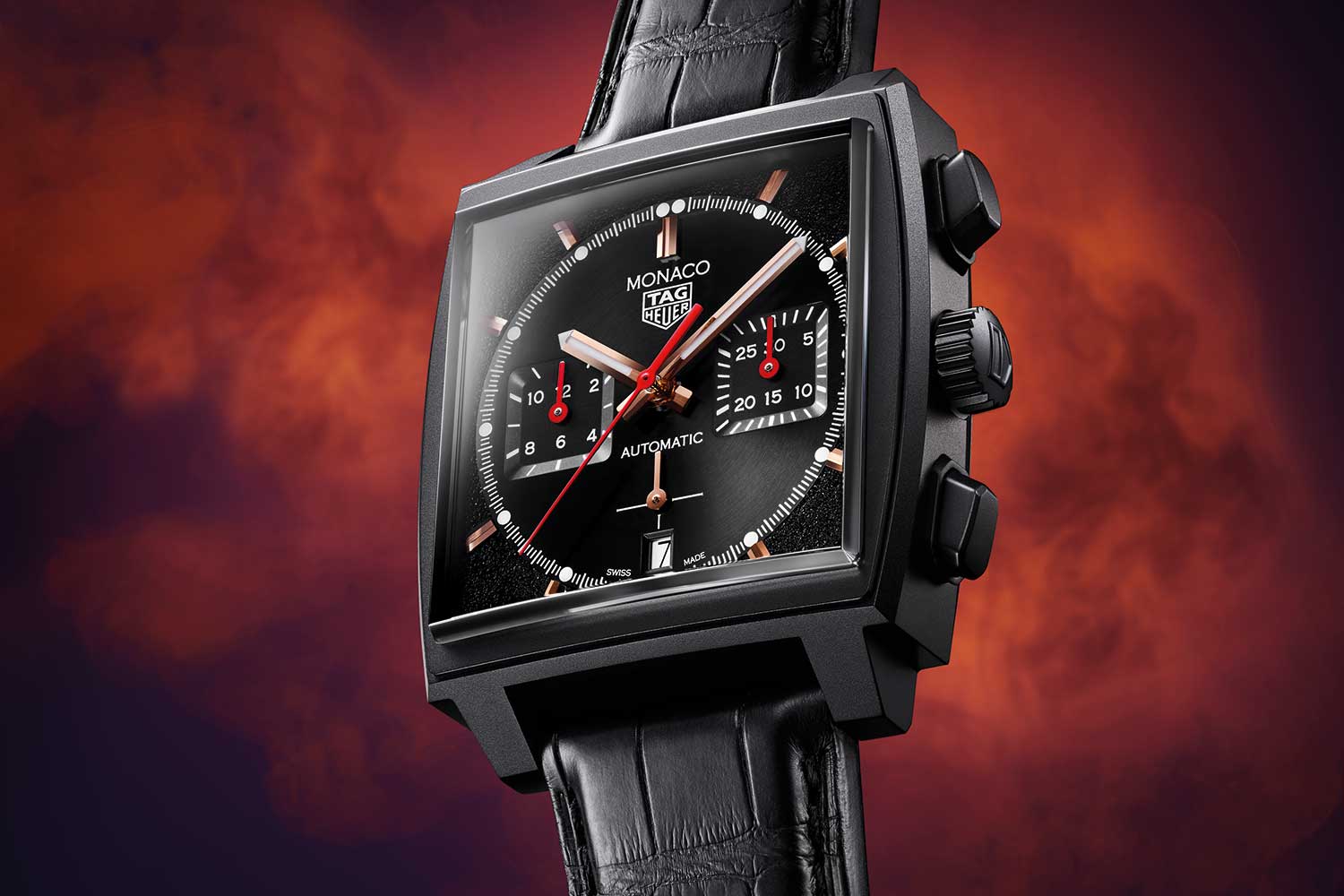
2022’s iteration of the “Dark Lord,” released at the Monaco Grand Prix that year
Another special reference was the 1533B released in 1972, which presented an unusual dial layout with no hour totalizer, a chronograph minutes counter at 3 o’clock and a small running seconds hand at 10 o’clock. That same year, Heuer also offered a manual version, Reference 73633, pairing a Valjoux 7736 movement with a blue or gray dial with the Automatic Chronograph moniker removed. More significantly, the crown is now moved to the right, making this the first right-crown Heuer Monaco and setting the precedence that later became the norm for the TAG Heuer Monaco family.
-
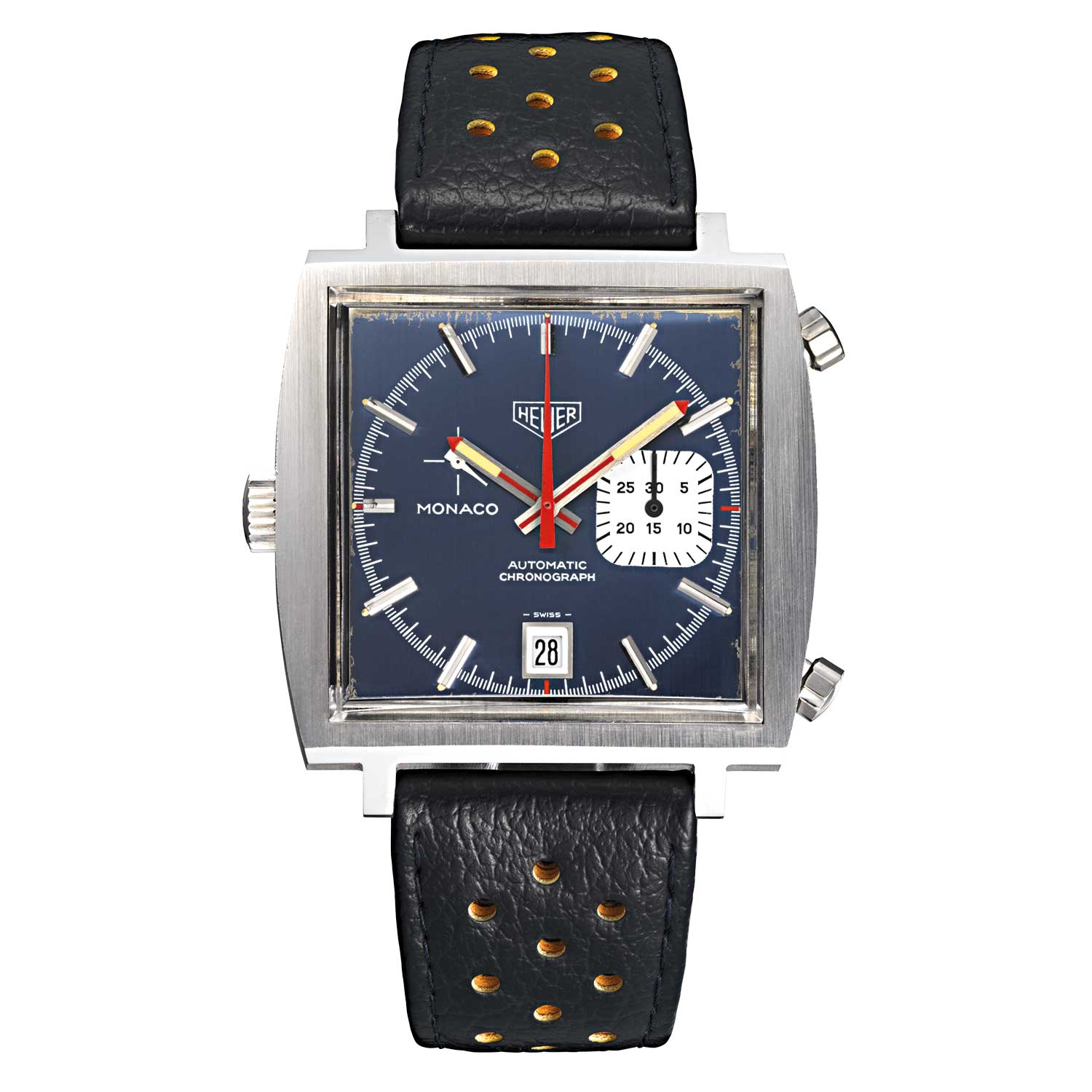
- The distinctive Ref. 1533B released in 1972, with its unusual dial layout
-
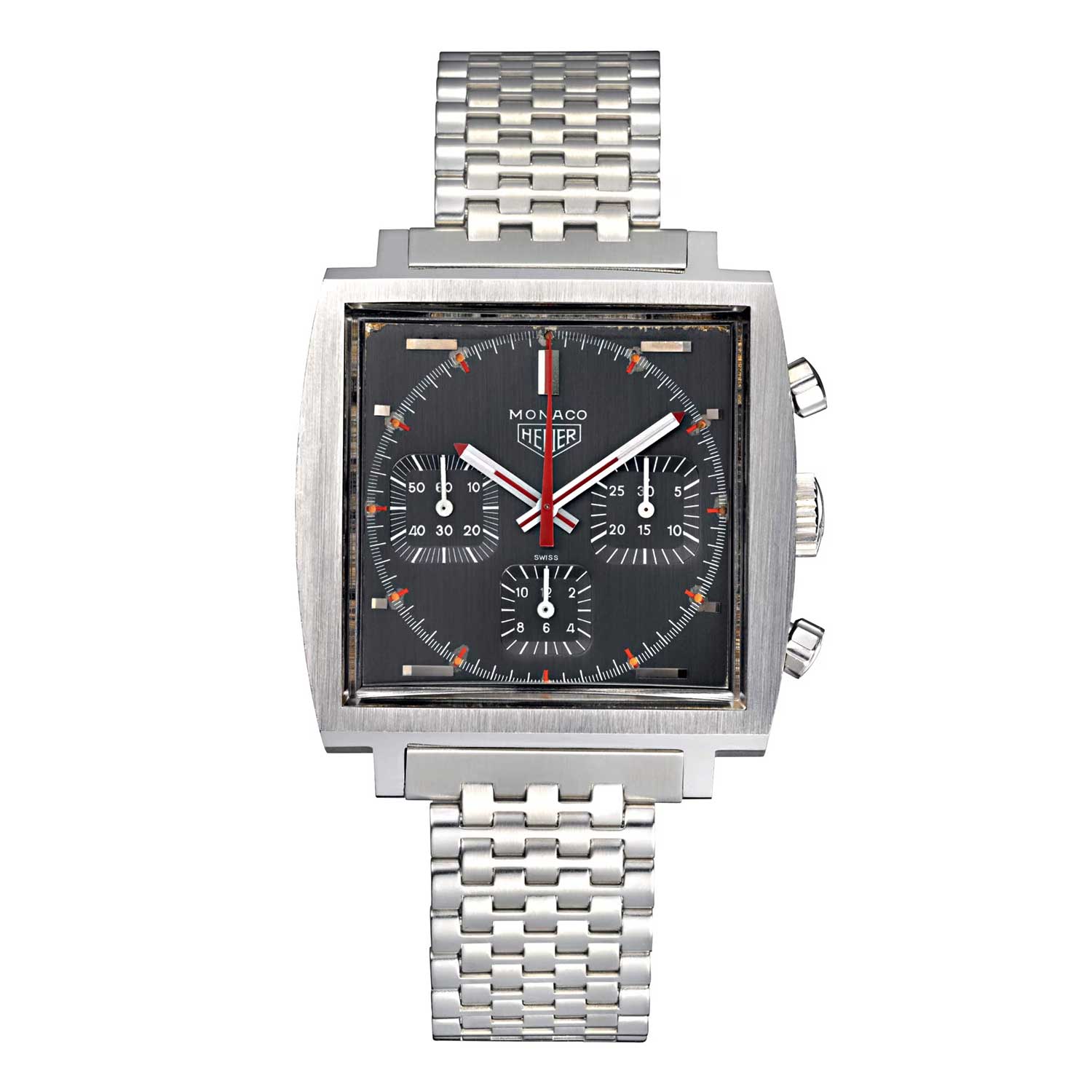
- TAG Heuer Monaco Ref. 73633
As the years passed, the design of the TAG Heuer Monaco evolved in tandem, but always staying true to its unique iconic shape. Sapphire glass replaced the original Plexiglas, and edges were variously curved and smoothed, and sharpened again. Dials went from metallic to matte, and later to forged carbon. In 2023, the TAG Heuer Monaco went skeleton for the very first time with not one, but three different examples in sandblasted titanium in red, blue and turquoise. Sizes, however, remained mostly at 39mm, though thanks to its unique angular shape, the TAG Heuer Monaco retained its decided wrist presence through the decades.
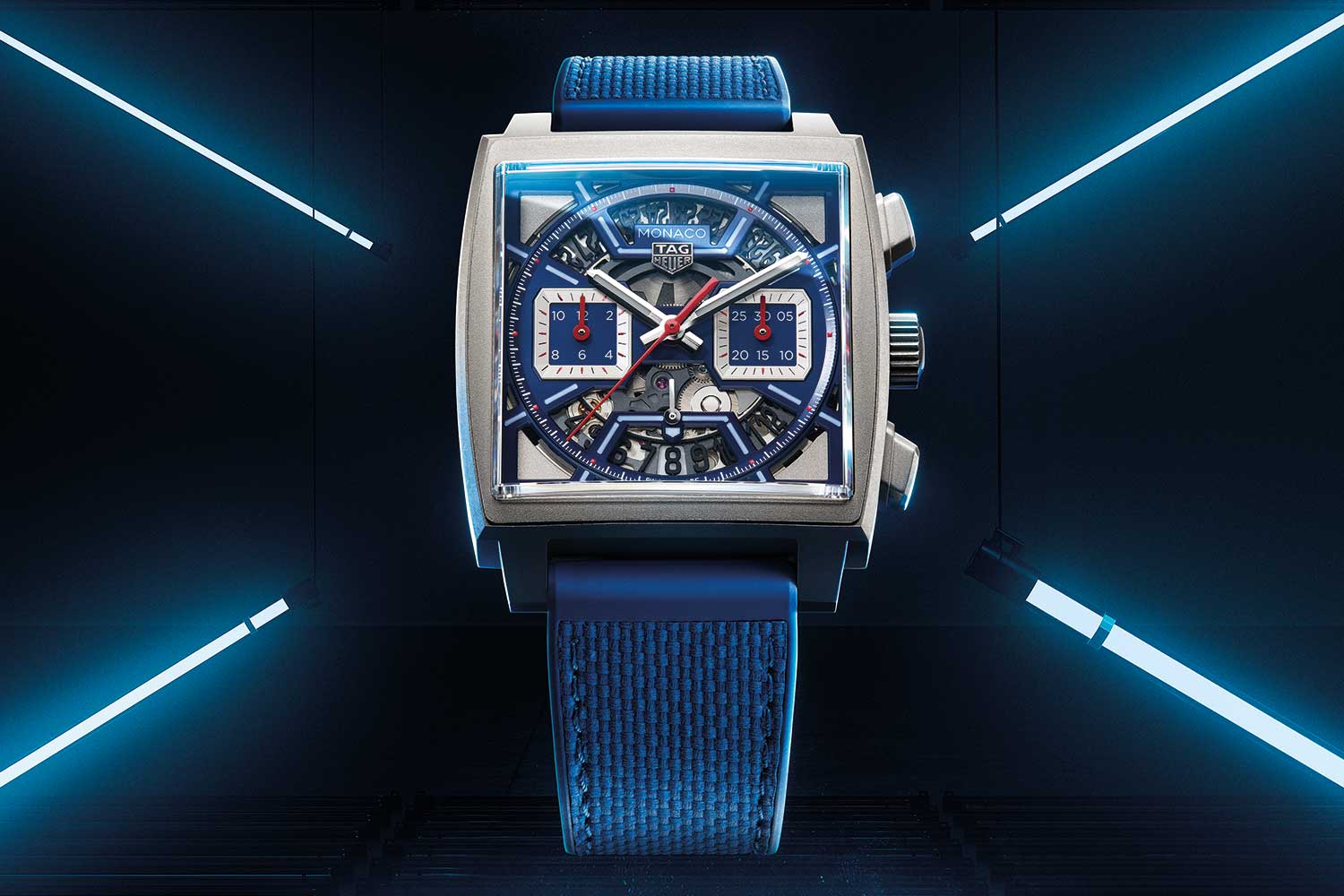
TAG Heuer Monaco Chronograph with skeletonized dial, released in 2023 in three colorways — red, blue and turquoise
In 2005, TAG Heuer released the CW9110 “TAG Heuer Monaco Sixty-Nine” with a reversible case, powered by a manual ETA 7001 movement on one side and a digital quartz module with chronograph functions on the other side. Another key release that year was the CW2118, nicknamed “Gulf” for the famous Gulf Oil racing stripes on John Wyer Racing cars. The latter was one of the most famous endurance racing teams that dominated Le Mans in the 1960s and ’70s, and was immortalized accordingly in McQueen’s film. The CW2118 was an instant hit and became a classic in TAG Heuer Monaco lore, spinning off six different Gulf editions between 2007 and 2025. The latest was the particularly fetching CAW218G in lightweight titanium with silver grained dial and emblematic blue and orange stripes, powered by the iconic Calibre 11, at once a tribute to McQueen and Jack’s vision of a revolutionary avant-garde chronograph for the racetracks.
-
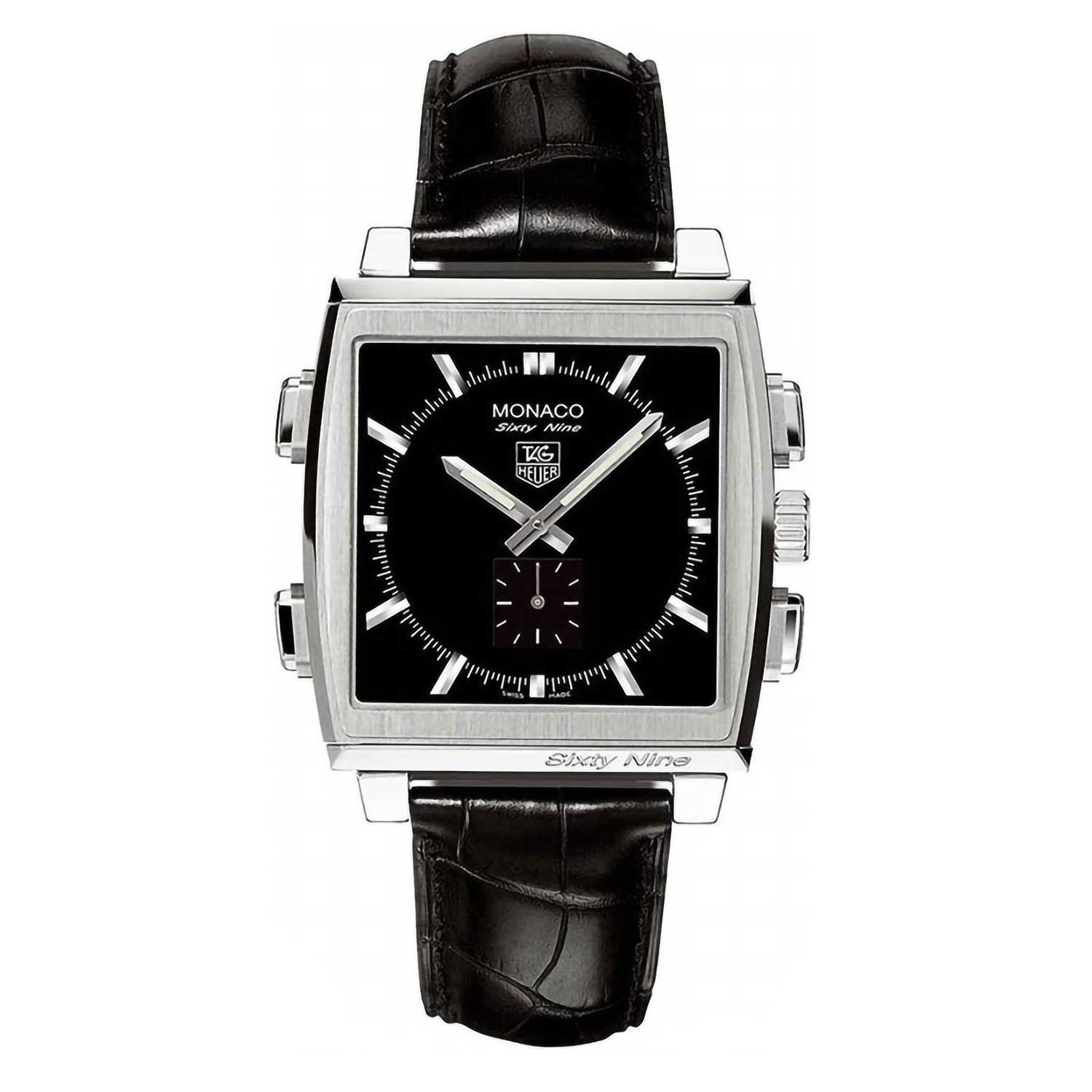
- Ref. CW9110, “TAG Heuer Monaco Sixty-Nine”
-
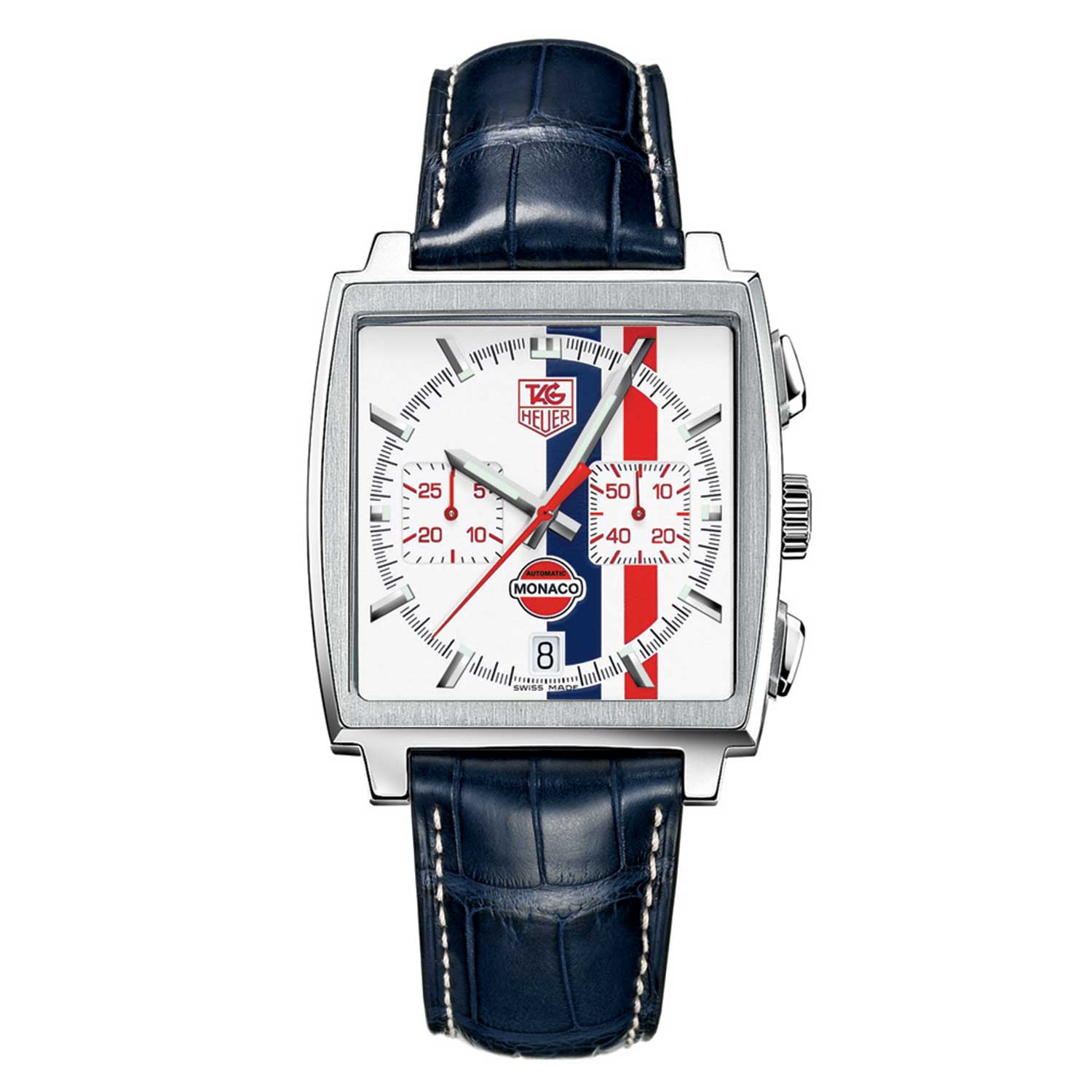
- Ref. CW2118, nicknamed “Gulf”
In recent years, TAG Heuer reinforced its presence on the F1 grid, thanks to one of Formula 1’s brightest stars, Max Verstappen. The four-time world champion wore TAG Heuer Monaco watches, from his “Dark Lord” Special Edition customized with his race number “1” on the dial and caseback, to his pièce unique TAG Heuer Monaco Split-Seconds Chronograph marked with four stars to commemorate his world championships.
Something Vintage, Something New
This year, TAG Heuer pays tribute to this illustrious heritage with three new iterations of the TAG Heuer Monaco Chronograph that draw directly from the original. The most obvious cue is the left-hand crown echoing the hallmark of 1133. The dial layout, too, is a nod to the past with date at 6 o’clock, and two square registers at 3 and 9 o’clock. But in place of the 30-minute and 12-hour subdials in the original, here the 30-minute chronograph counter sits at 3 o’clock and small seconds is told off the indicator at 9 o’clock.
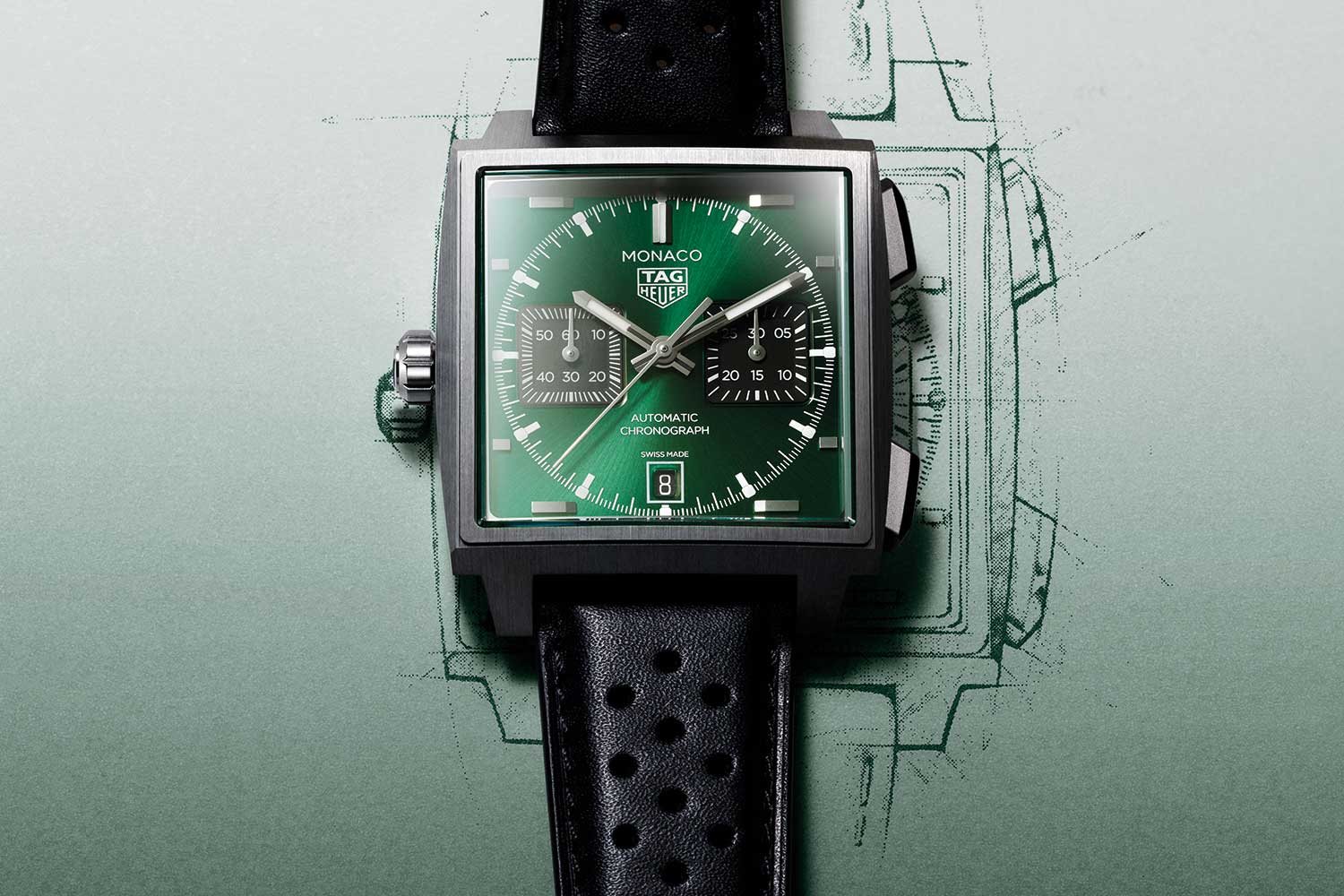
This year’s new TAG Heuer Monaco Chronograph pieces pay tribute to the Ref. 1133 with a distinctive left-hand crown
Instead of stainless steel as in the original, the 2026 references have a material advantage with their Grade 5 titanium upgrade, which means they wear lighter on the wrist. In place of the straight square lugs of its predecessors, here the lugs are tapered for a more ergonomic fit and the straps are integrated higher in the caseband. While the iconic square case is retained, its edges are sharpened and more angular, but with gently curved sides for a more contemporary aesthetics. The bezel is a mix of brushed and polished surfaces, and is also closer to a true square in shape, not rectangular, paired with a sloping case top. The sapphire crystal, too, is lower and closer to a square in shape. The caseback, meanwhile, echoes the original design, with gently curved edges that draw towards the circle in the center, only here, the sapphire glass display proudly showcases the new movement inside, whereas the original 1133 had a closed back.
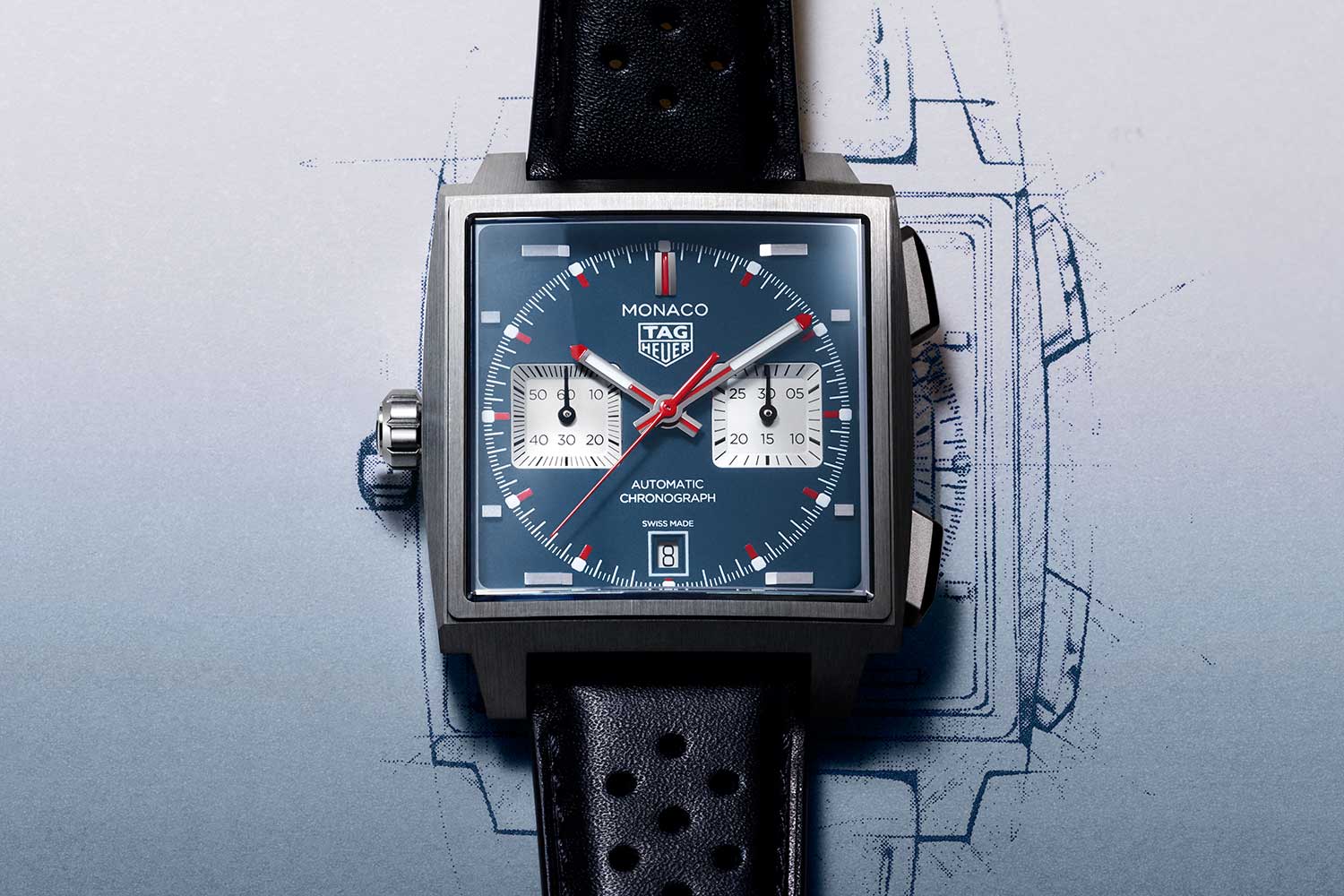
TAG Heuer Monaco Chronograph
The Calibre TH20-11 that powers the new models references the original Calibre 11 with its configuration, hence the “11” in its name. It is, of course, based on the Calibre TH20-00 that was launched in 2023, and which is itself an evolution of TAG Heuer’s in-house chronograph movement, the Calibre Heuer 02. While the core movement architecture stays the same, the TH20-00 introduced a bi-directional winding rotor, thus improving winding efficiency. Its oscillating weight is sculpted in the form of the TAG Heuer shield, visible via the sapphire caseback. As with the Heuer 02, both the TH20-00 and the TH20-11 beat at 4Hz with a lengthy 80-hour power reserve, which means their watches will run over the weekend uninterrupted. But the latter two offer more than double the warranty, from two years to five years, an incredible improvement and statement of its durability.
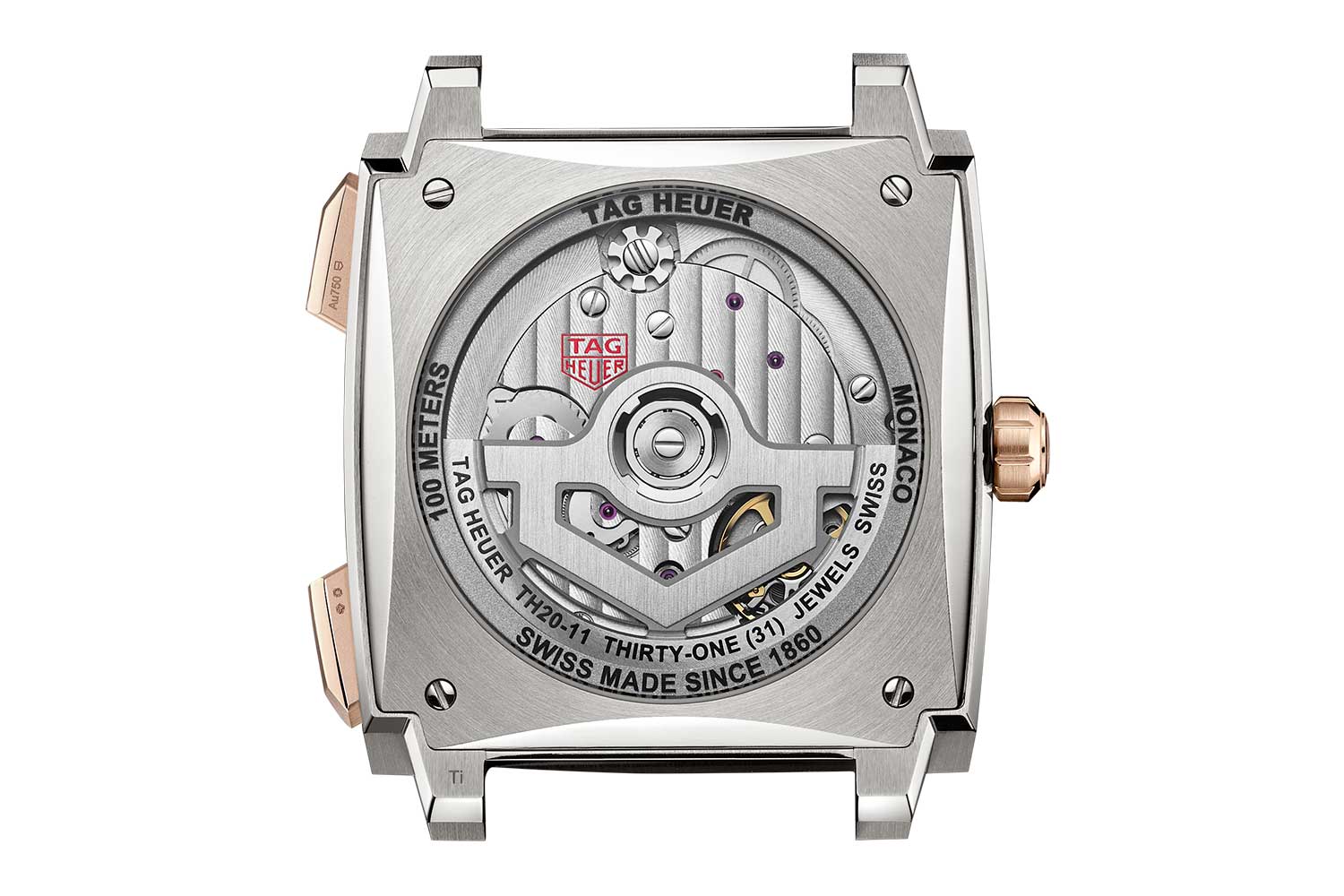
Calibre TH20-11
Three colorways are offered for the 2026 novelties — British Racing Green, two-tone black and rose gold, and, last but not least, signature TAG Heuer Monaco Blue, a nod to the OG. Together, they demonstrate how the TAG Heuer Monaco continues to honor its historic design while quietly advancing the mechanics beneath the dial.
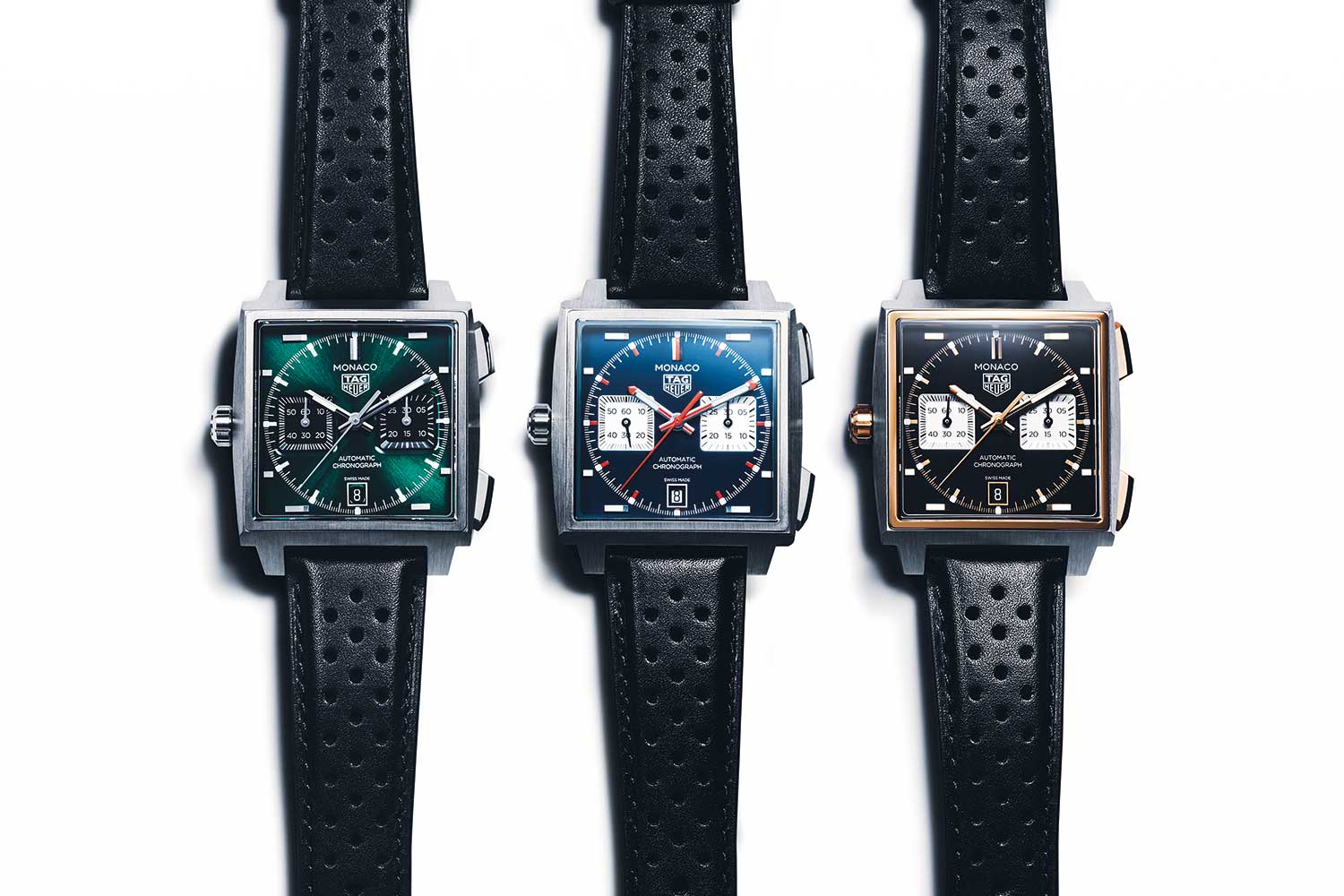
Available in three colorways — green, black and classic TAG Heuer Monaco Blue
Tech Specs: TAG Heuer Monaco Chronograph
References CDW2150.FC8360 (black opaline); CDW2180.FC8360 (green sunray); CDW2181.FC8360 (blue opaline)
Movement Self-winding Calibre TH20-11; 80-hour power reserve
Functions Hours, minutes, small seconds, chronograph and date
Case 39mm; Grade 5 titanium, with 18K 5N rose gold accents (black-dial model); water resistant to 100m
Dial Black opaline, sunray-brushed green or blue opaline; rose-gold-plated or rhodium-plated applied indexes with Super-LumiNova plots
Strap Black perforated calfskin; Grade 5 titanium folding clasp
Price CHF 8,800 in full titanium; CHF 12,300 in titanium with rose gold accents
A Case for Innovation
In the evolution of the TAG Heuer Monaco, the brand stayed true to Jack’s vision of an “avant-garde” and “revolutionary” timepiece on the watchmaking front. Throughout its history, the TAG Heuer Monaco case has borne some of the brand’s most significant technical innovations, beginning with the Calibre 11, Heuer’s first automatic chronograph movement.
Perhaps the angular and broader dimensions of the square case lend themselves well to experimentation. Certainly, it was literally the case for the radical TAG Heuer Monaco V4 Concept that was unveiled at Baselworld 2004, which replaced gear trains with belts and ceramic ball bearings in place of synthetic rubies. Jean-François Ruchonnet was inspired by racecar engines in his design; in fact, the watch was named V4 as its layout resembled that of a Formula 1 V4 engine. Two pairs of barrels were mounted in parallel and connected by belts that were a wafer-thin 0.5mm, with a linear winding mass in place of a rotor, and linked by a V-shaped bridge, all beautifully showcased through a sapphire caseback.
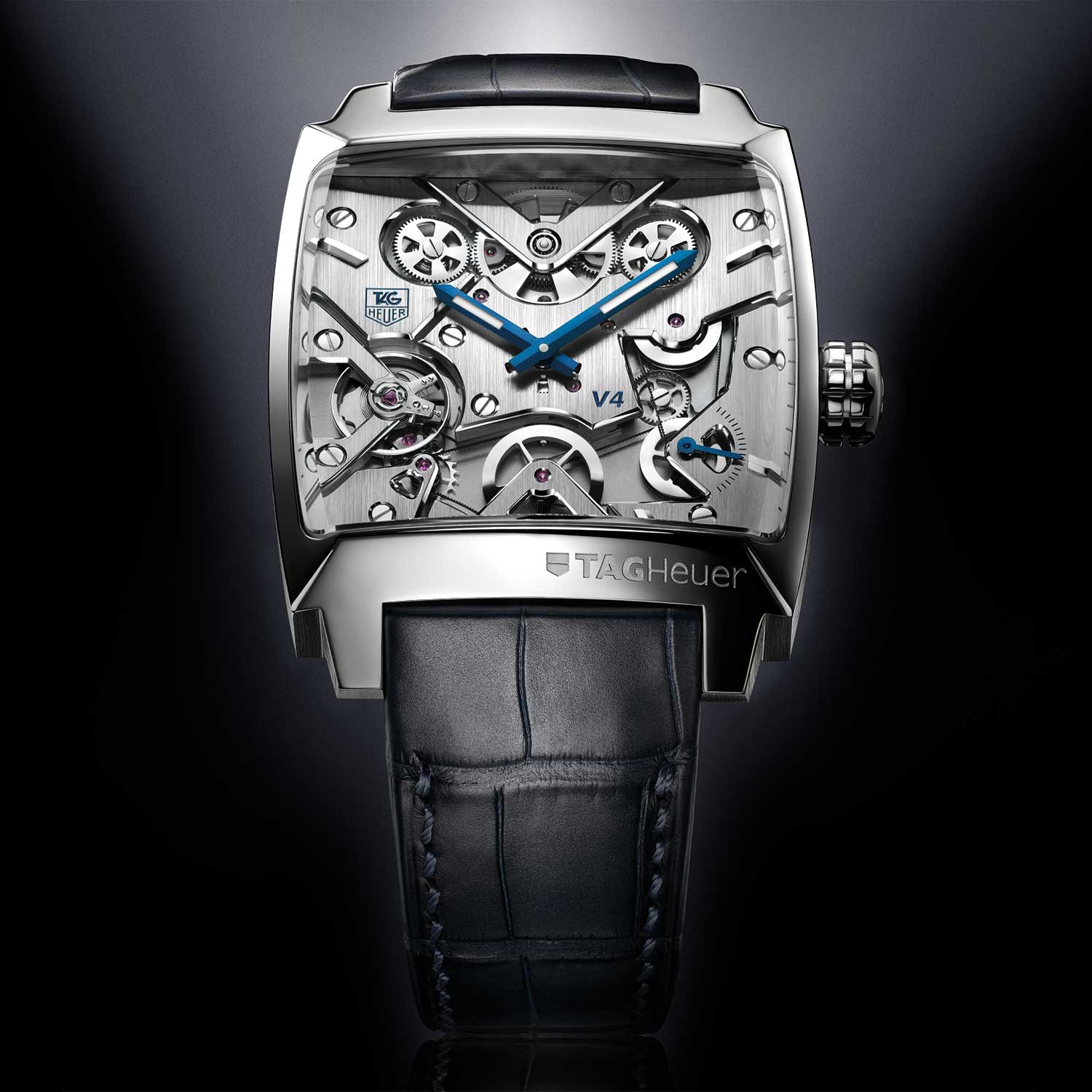
The 150-piece limited edition TAG Heuer Monaco V4 released in 2009
The V4 Concept was made reality in 2009, when TAG Heuer released the 150-piece platinum edition, making it the first belt-driven mechanical watch on the market. There were several iterations thereafter, including rose gold (2010) and titanium (2011) models, with a tourbillon regulator (2014), and finally, a Phantom model (2015) with an all-black aesthetics, thanks to the use of Carbon Matrix Composite, aka CMC.
That same year in 2009, TAG Heuer released the TAG Heuer Monaco Twenty-Four, featuring an innovative Advanced Dynamic Absorber system where the Calibre 36 is suspended and held in place by four steel tubes, which helps to absorb external shocks and internal vibrations.
Indeed, the noughties proved an extremely fertile period for TAG Heuer. In 2005, a year after presenting the V4 Concept, TAG Heuer turned to exploring high-frequency movements and unveiled the Carrera Calibre 360, a dual-regulating system including a super high-frequency chronograph movement that ramps up to a blistering 360,000vph to measure time to 1/100th of a second. In 2011, it presented the Mikrograph, which unlike the 360, was a fully integrated chronograph movement with two separate balance wheels and two escapements, that measures time to the same 1/100th of a second precision. While TAG Heuer used the TAG Heuer Carrera as a platform for these revolutionary movements, it did not neglect its most iconic family.
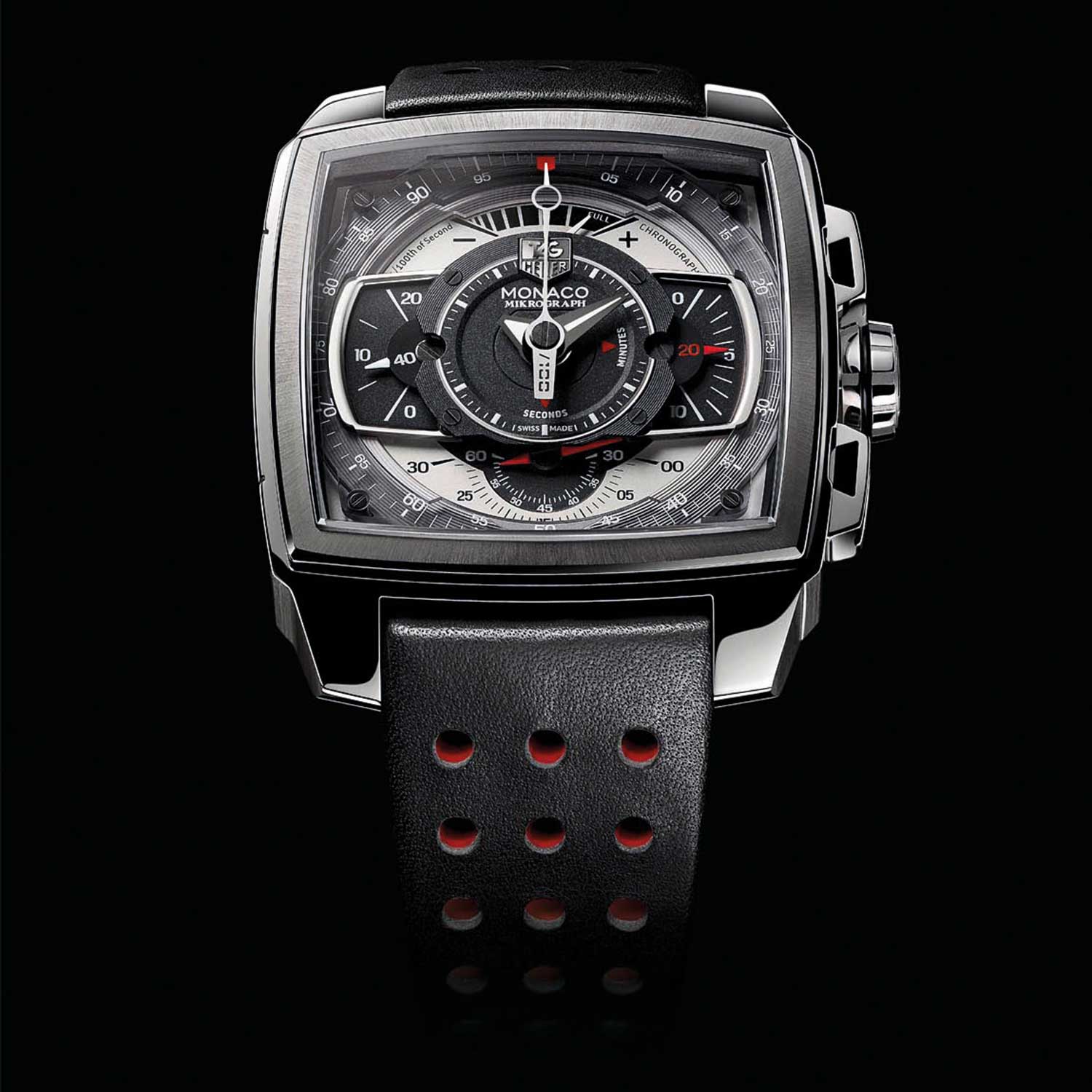
The one and only TAG Heuer Monaco Mikrograph, created in 2011
The Calibre 360 was showcased in the TAG Heuer Monaco Calibre 360 LS Concept Chronograph in 2006, where in addition to the oversized 1/100th of a second chronograph counter taking center stage at 6 o’clock, a 15-minute chronograph counter at 9 o’clock, and a 100-minute chronograph power reserve indicator at 12 o’clock, there was also a linear running seconds counter at 3. “LS” in the watch name stands for Linear System. The watch won the IF Design Award in 2007 but only a very small number was eventually produced. The Mikrograph, too, made an appearance in the TAG Heuer Monaco case albeit in a special pièce unique created for Only Watch in 2011 with a black lacquer dial.
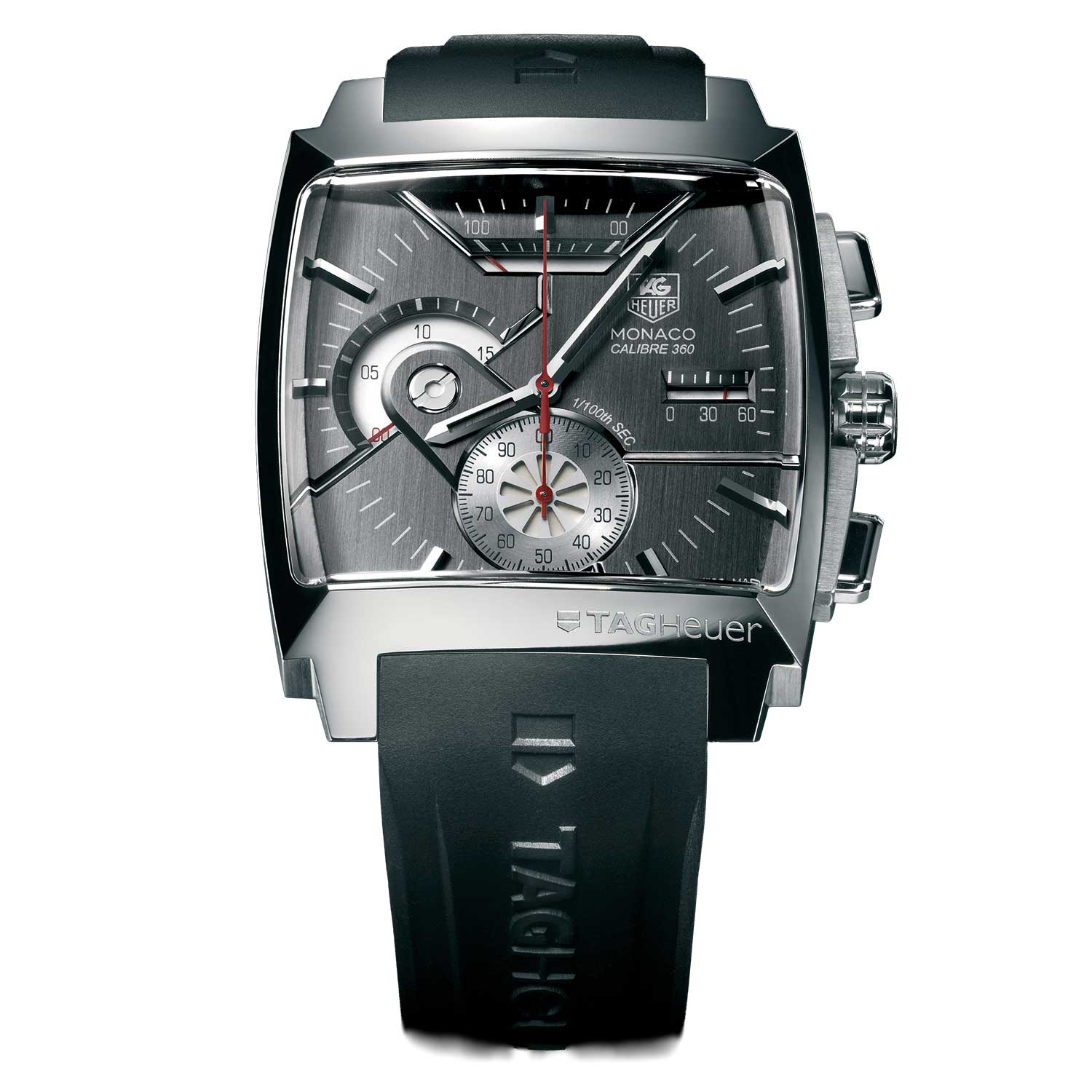
TAG Heuer Monaco Calibre 360 LS Concept Chronograph
It was not until 2023 that TAG Heuer gave a sneak preview of grand plans in store for the TAG Heuer Monaco, again at Only Watch. It was a TAG Heuer Monaco Split-Seconds Chronograph for Only Watch in ultra-light texturized titanium, the next stage in TAG Heuer’s pursuit of precision. In 2024, it was launched as a regular production model and importantly, it was TAG Heuer’s first ever mechanical split-seconds chronograph wristwatch. Powering it was the all-new Calibre TH81-00, the brand’s first split-seconds movement conceptualized by Haute Horlogerie & Movements Strategy Director Carole Forestier-Kasapi and designed in partnership with Vaucher Manufacture Fleurier. With the baseplate and bridges crafted out of titanium and gorgeously showcased via the sapphire dial and caseback, this was also one of the lightest movements from TAG Heuer, weighing in at just 30g. It beats at 5Hz and offers up to 65 hours of power reserve depending on chronograph use.
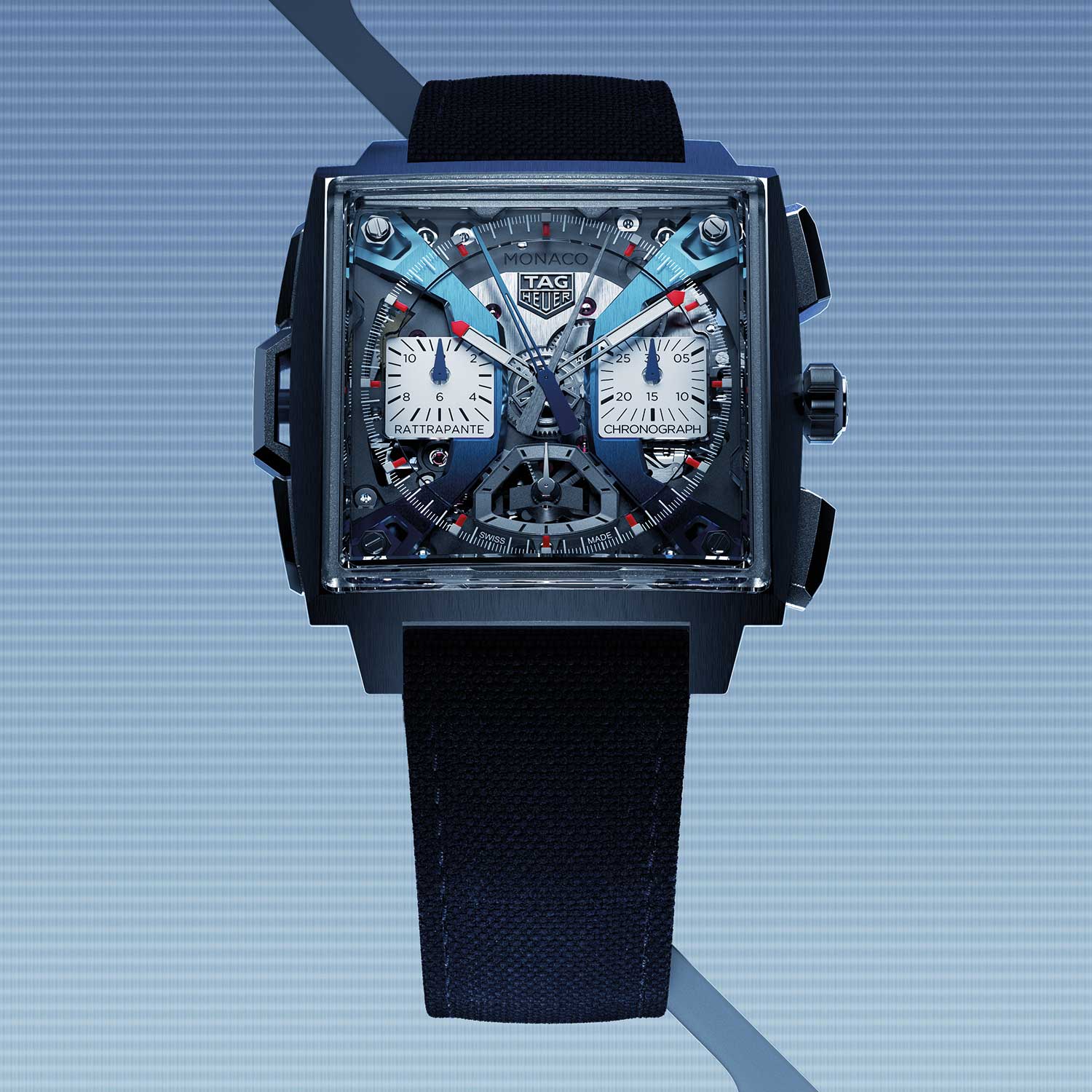
TAG Heuer Monaco Split-Seconds Chronograph powered by the Calibre TH81-00
At launch, two versions were presented, one in red and the other blue, both housed in 41mm lightweight Grade 5 titanium TAG Heuer Monaco cases. Last year, to mark the return of TAG Heuer to Formula 1 as its official timekeeper, the brand released the stunning TAG Heuer Monaco Split-Seconds Chronograph Formula 1®, featuring a red transparent dial upgrade in a white ceramic case, limited to just 10 pieces. This was followed later in the year by the TAG Heuer Monaco Split-Seconds Chronograph Air 1, which taps on Selective Laser Melting, or SLM, a manufacturing technique used in aerospace industries for precision parts. In place of contemporary case making where CNC machines are used to carve out a block of material, here, powdered metal (in this instance, titanium) is melted and fused with laser, and built layer after layer for a precise exoskeletal Grade 5 titanium case with 18K 2N yellow gold lattices, one that weighs in at a scant 85g.
The TAG Heuer Monaco Evergraph
Building on the technical experimentation of the TAG Heuer Monaco Flyback Chronograph TH-Carbonspring with its carbon hairspring, the brand now pushes the envelope once again with its latest TAG Heuer Monaco release for 2026 — the TAG Heuer Monaco Evergraph powered by the new and revolutionary square-shaped TH80-00 movement. Read our deep dive on the Calibre TH80-00 here.
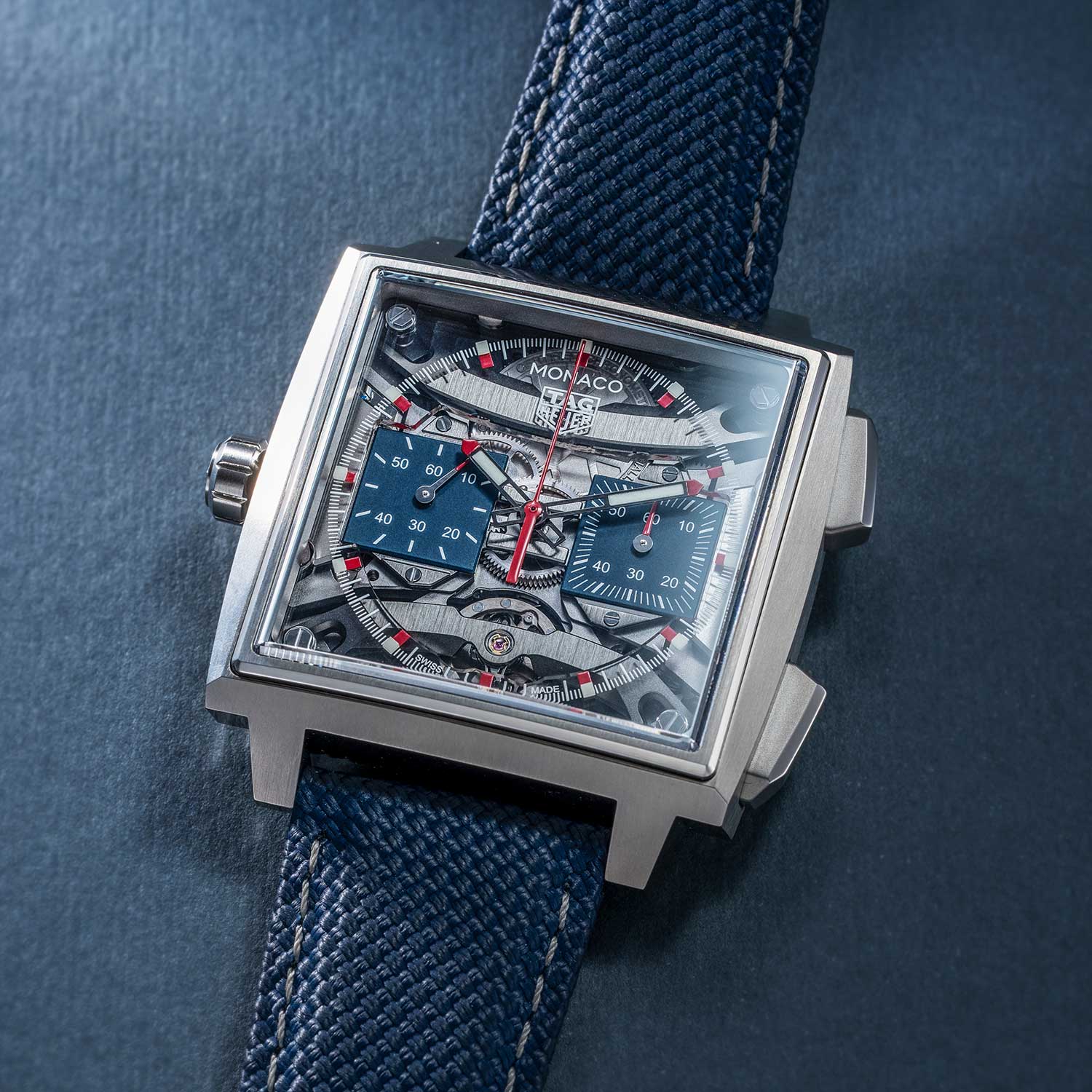
The TAG Heuer Monaco Evergraph, housed in the distinctive square case and featuring the revolutionary Calibre TH80-00 (©Revolution)
The Calibre TH80-00 itself is a project several years in the making and tapped on the extensive research and development at the TAG Heuer LAB, the think tank of scientists, engineers and innovators created by TAG Heuer in 2016. Vaucher Manufacture Fleurier, which was also involved in the makings of the Calibres TH81-00 and TH81-01, is also central to this project.
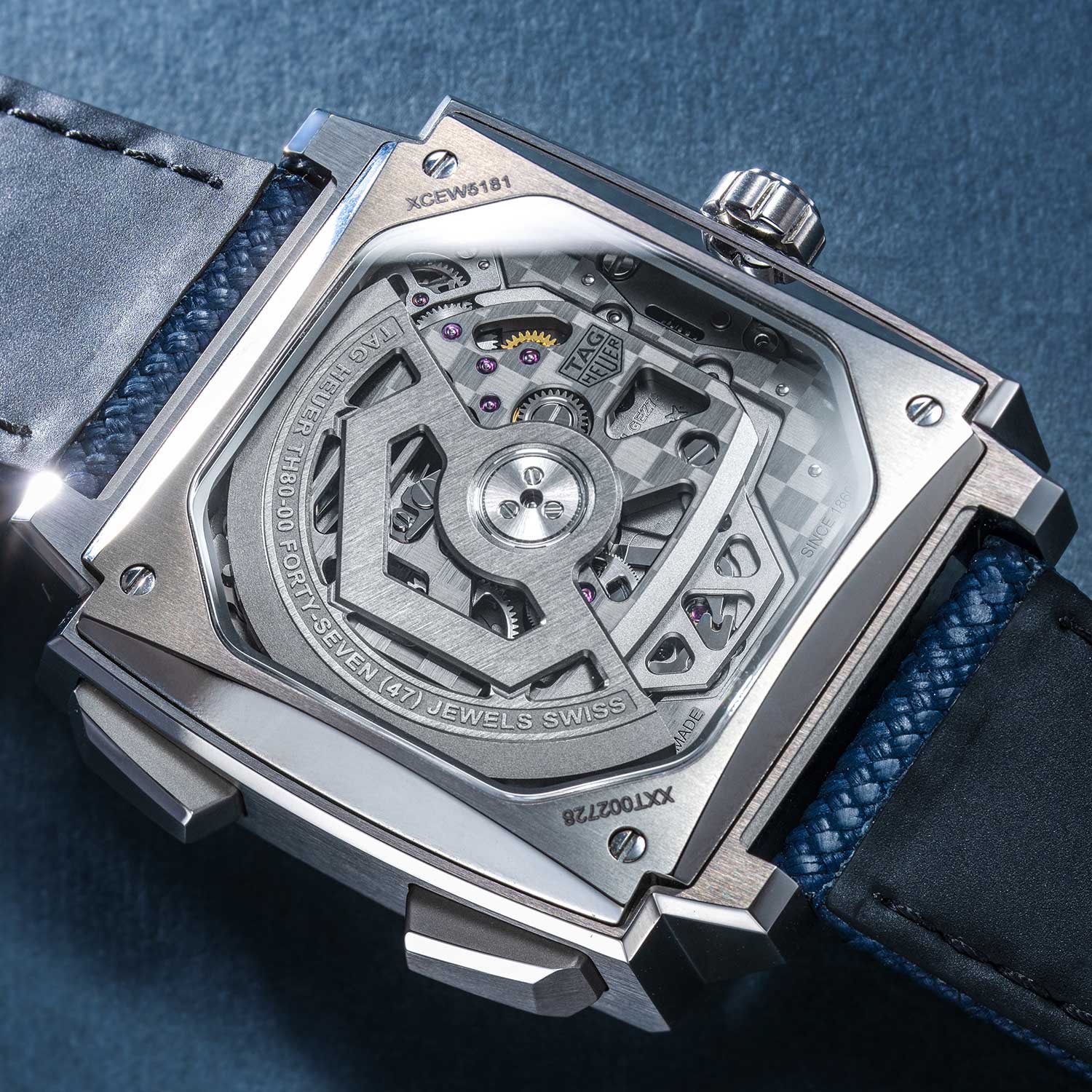
TAG Heuer Monaco Evergraph (©Revolution)
At the heart of the Calibre TH80-00 is the unique compliant chronograph mechanism developed by the TAG Heuer LAB, one that reimagines the chronograph function and actuation for a smoother, flawless transition between functions. In place of levers and springs traditionally used in the start, stop and reset functions of the chronograph are two flexible bistable components produced using high-precision LIGA technology. One governs start and stop, and the other, reset. Thanks to the precise tuning of the mechanism, the pushers activate smoothly and there is no lag or deviation to the performance of the chronograph over time. In real terms, it translates to a five-year warranty, as no lubrication and less servicing is required.
The movement is also equipped with the TH-Carbonspring oscillator, itself the result of lengthy research to develop a resilient non-metallic hairspring for optimum magnetic resistance and precision. It beats at 5Hz, measuring time to 1/10th of a second, with a power reserve of 70 hours.
The movement bears an inverted construction, which means that the barrel, gear train and TH-Carbonspring balance and escapement are clearly visible on the transparent acrylic glass dial-side of the TAG Heuer Monaco Evergraph. Two fine-brushed, sandblasted bridges hold the barrel and escapement in place at 12 o’clock and 6 o’clock respectively, referencing their split-seconds counterparts in the Calibre TH81-00 at 9 o’clock and 3 o’clock. They also make up a visual symmetry that’s enhanced by the two subdials at 3 and 9 o’clock.
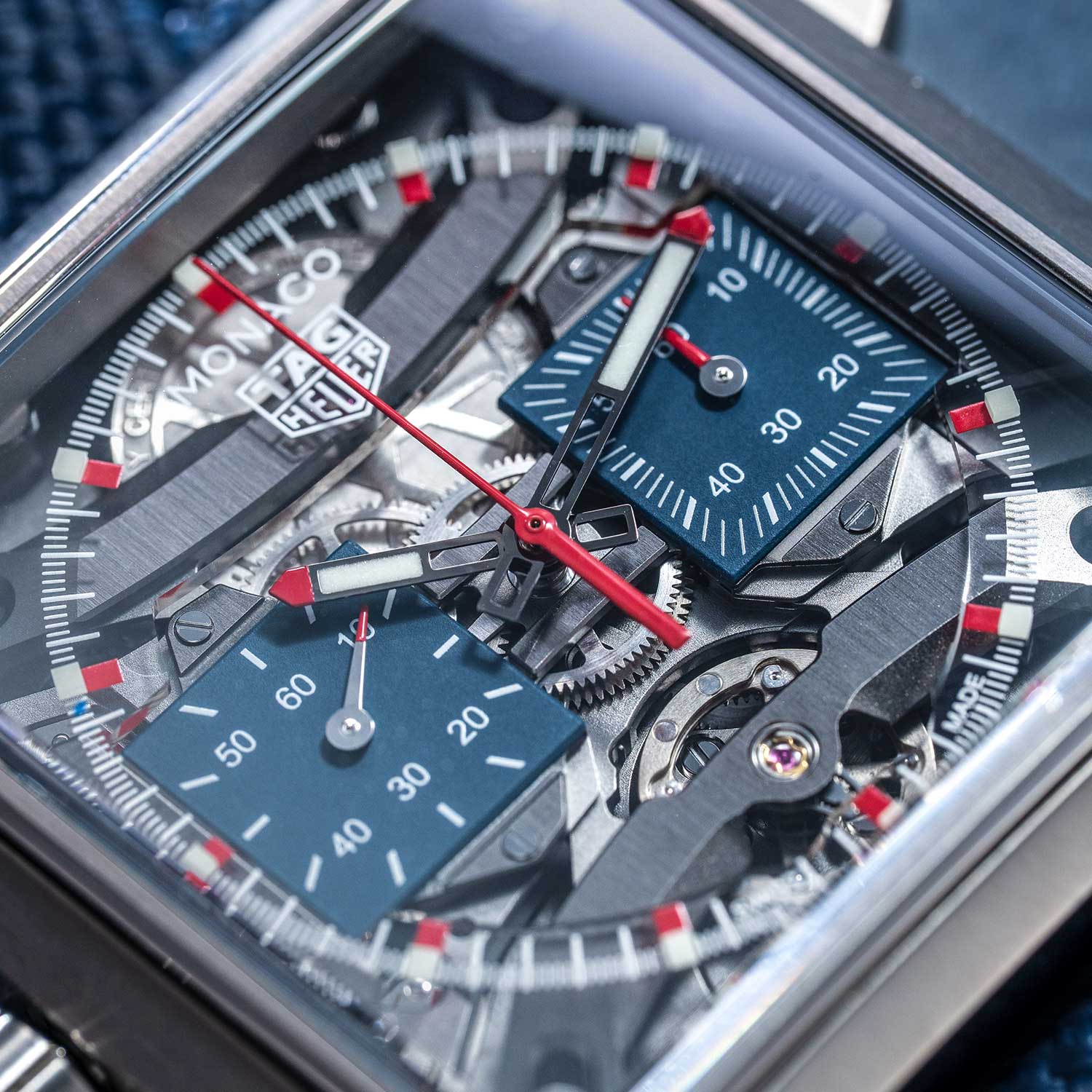
TAG Heuer Monaco Evergraph (©Revolution)
Like the other releases this year, the TAG Heuer Monaco Evergraph pays tribute to the Calibre 11 and the Ref. 1133 with a left-hand crown. Even the tapered silhouette of the case draws from the original watch, albeit with improved ergonomics and elongated pushers. The large exhibition caseback, meanwhile, shows off the signature finishes with the checkered flag motif and oscillating weight in the shape of the TAG Heuer shield.
There are two executions of the TAG Heuer Monaco Evergraph, both in 40mm: in titanium with blue accents referencing the iconic Ref 1133, and a stealthy black DLC-coated titanium version, complete with black DLC-coated bridges and bold red accents that channels TAG Heuer’s racing DNA.
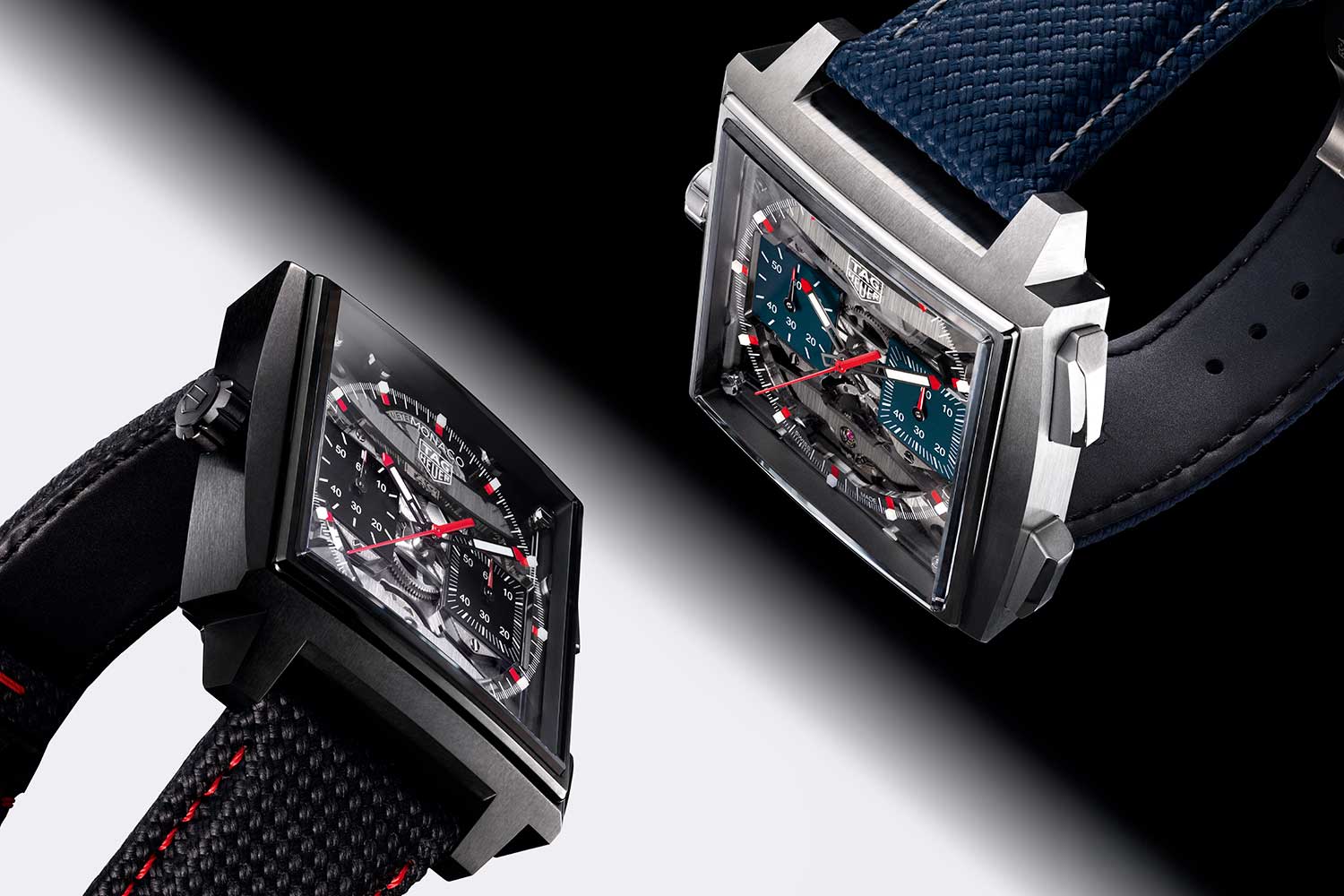
TAG Heuer Monaco Evergraph in titanium with blue accents referencing the iconic Ref 1133, and a stealthy black DLC-coated titanium version
More than half a century after its debut, the TAG Heuer Monaco stays true to its origins in both design and spirit, as evident in these latest 2026 releases. The TAG Heuer Monaco Evergraph, in particular, is a striking example of how it continues to evolve in tandem with TAG Heuer’s watchmaking ambitions and search for chronometric precision. Indeed, even as the new-generation TAG Heuer Monaco Chronograph honors its racing connections and is reimagined for a new generation, the TAG Heuer Monaco Evergraph races ahead in its quest to master time.
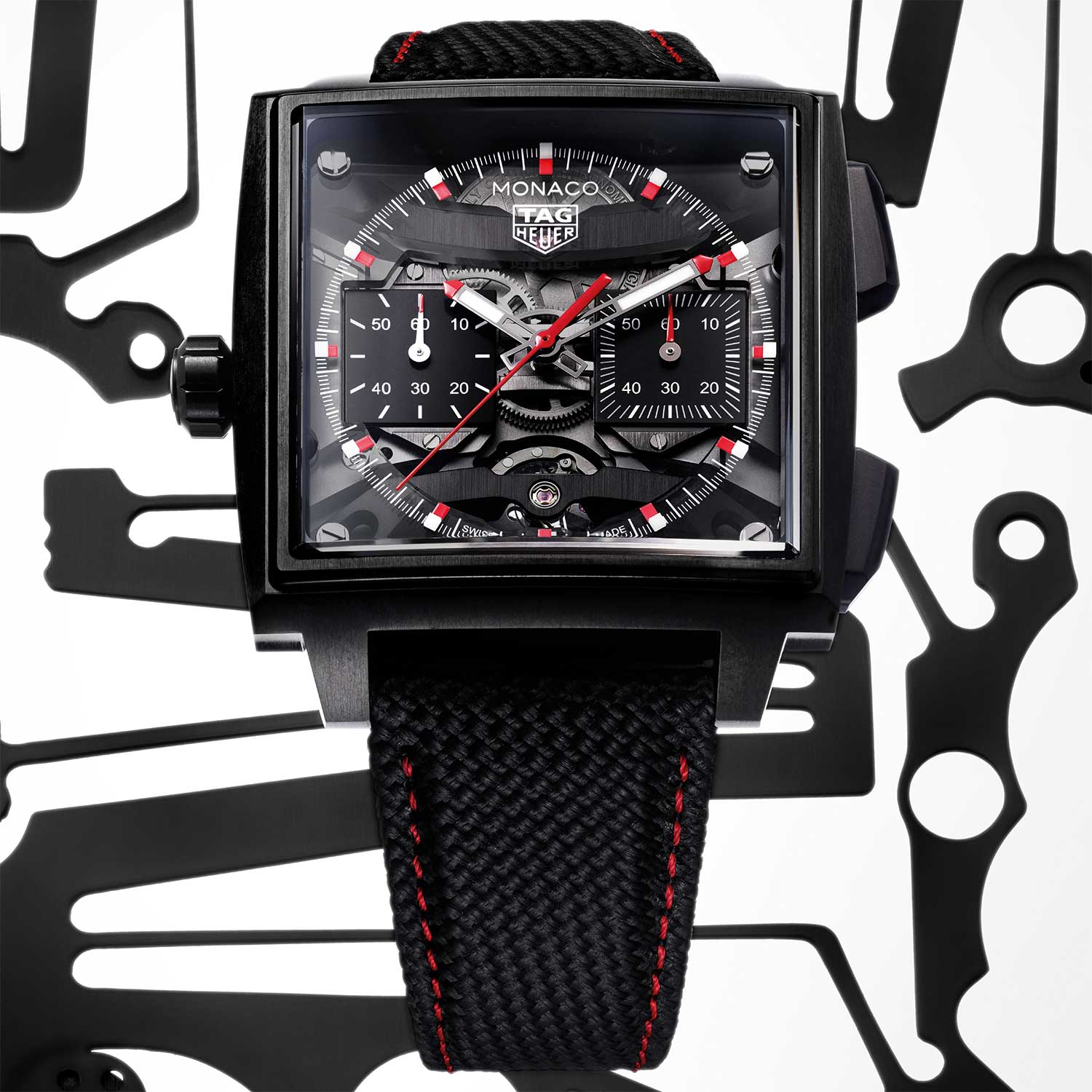
The next stage in the evolution of TAG Heuer’s iconic collection — the TAG Heuer Monaco Evergraph
For Formula 1 fans, and indeed in the public imagination, Monte Carlo has long been the most romantic, most challenging and most spectacular motor race of them all. And like its namesake, the story of the TAG Heuer Monaco, too, is one of romance on the grid, of rising to the challenges of keeping time, and lastly but perhaps most of all, of spectacular innovations.
Tech SpecS: TAG Heuer Monaco Evergraph
References CEW5180.FT8122 (black); CEW5181.FT8123 (blue)
Movement Self-winding Calibre TH80-00, equipped with TH-Carbonspring oscillator; 70-hour power reserve
Functions Hours, minutes, small seconds and chronograph
Case 40mm; black DLC-coated Grade 5 titanium or Grade 5 titanium; water resistant to 100m
Dial Transparent acrylic glass; black or blue opaline counters and lacquered indexes with Super-LumiNova plots
Strap Black or blue rubber with textile embossing and red or gray stitching; black DLC-coated Grade 5 titanium or Grade 5 titanium folding clasp
Price CHF 23,000
TAG Heuer

You may also like
News
Last Week in Watches: MB&F Revives LM1, Hublot Revisits 1980
Oct 19, 2026
News
Last Week in Watches: MB&F Revives LM1, Hublot Revisits 1980
Oct 19, 2026
Editorial
Last Week In Watches: TAG Heuer Carrera, JLC Grande Sonnerie, Louis Vuitton Spin Time and more
Sep 15, 2026
Editorial
Last Week In Watches: TAG Heuer Carrera, JLC Grande Sonnerie, Louis Vuitton Spin Time and more
Sep 15, 2026

Editorial
The Cult of Cool: TAG Heuer Carrera Chronograph x Team Ikuzawa
Jul 30, 2026
Editorial
The Cult of Cool: TAG Heuer Carrera Chronograph x Team Ikuzawa
Jul 30, 2026