Naoya Hida × The Armoury Type 4A-2 “Floating Feathers”
Editorial
Naoya Hida × The Armoury Type 4A-2 “Floating Feathers”

Naoya Hida’s 2026 releases arrived on April 30 in a way that felt consistent with everything that has come before. Ten models in total, seven of them new, each one making a small adjustment rather than trying to redraw the whole picture. Case sizes changed slightly. Crystals were altered. A new dial material appeared. Everything felt evolutional. Then, almost immediately after, something else appeared alongside it: the Type 4A-2 “Floating Feathers” — the third collaboration between Hida and New York-based The Armoury.
The Armoury itself is not a conventional watch retailer. Founded in Hong Kong in 2010 by Mark Cho and Alan See, it started with tailoring, working with a small number of makers and building a reputation around fit, material and how things are actually put together. Watches came later, but the approach did not really change.
The connection with Naoya Hida goes back to the beginning. Cho first saw the watches through early coverage and made a point of visiting Hida in Tokyo not long after. “I bought the watch almost immediately,” he says. “It was the fifth watch he ever sold.” One of Cho’s clients bought another soon after, and Cho began to think there might be a more formal relationship to build. Over time, that became a retail partnership, and then something more personal.
By the time the first collaboration was discussed, The Armoury had already been working with Hida for a year or two. “We did a lot of renders and we gave concepts,” Cho says. “Then, between us, we reasoned out the ideas.” The first two projects stayed close to Hida’s established language, concentrating on typography and dial layout. This one moves in a new direction.
“The point of collaboration is to push brands into territories that they haven’t explored before,” Cho says. In this case, that meant moving away from engraving as a functional element and using it to make an image.
The design side at The Armoury now involves Cho and Elliot Hammer, who has worked with him across various projects for years. “We work on all the designs together on the watch side,” Cho says. Hammer frames it slightly differently. “Mark has a good eye for shape and how watches should be worn,” he says. “I have a technical appreciation of how things are made… and about the aesthetics of the dial. I’m usually looking for a bit of a concept.”
As Feathers Softly Fall
“Floating Feathers” began with that conceptual approach, but not with feathers. It began with birds. Cho had been looking at art dials depicting natural subjects, while Hammer was pushing for what he calls “a picture dial.” The first rendition centered on ravens, partly inspired by the Japanese photographer Masahisa Fukase. “Mark and I are both into this photographer, and I was determined that we had to do ravens,” Hammer says.
But the bird itself did not translate. “When you engrave a bird in monochrome on a dial, it doesn’t come out super well. You need color,” Cho says. The early attempts were too literal and lacked the sought-after depth. Hammer is blunt about it: “They were just outlines of birds… they didn’t look good.” The image had to be reduced.
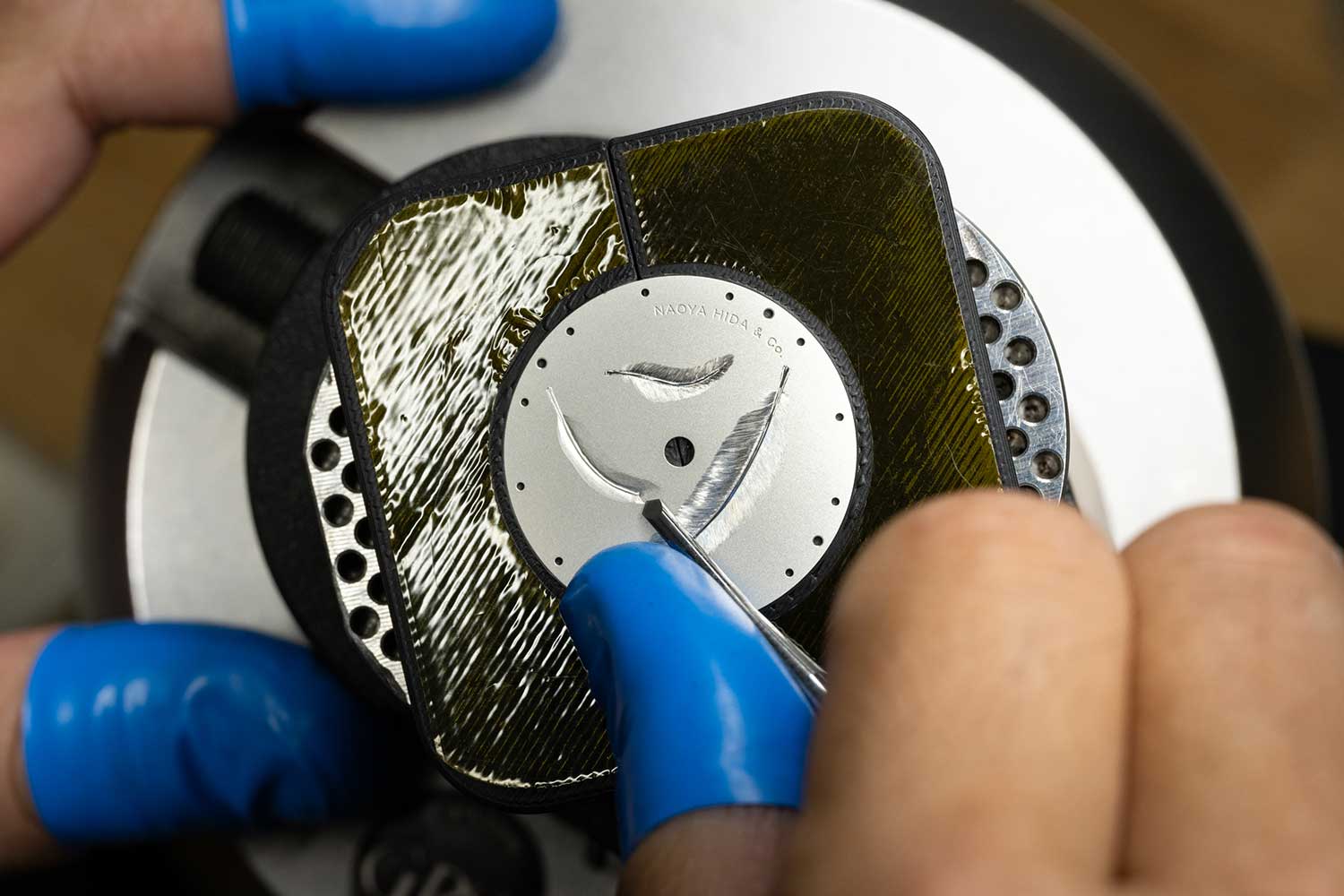
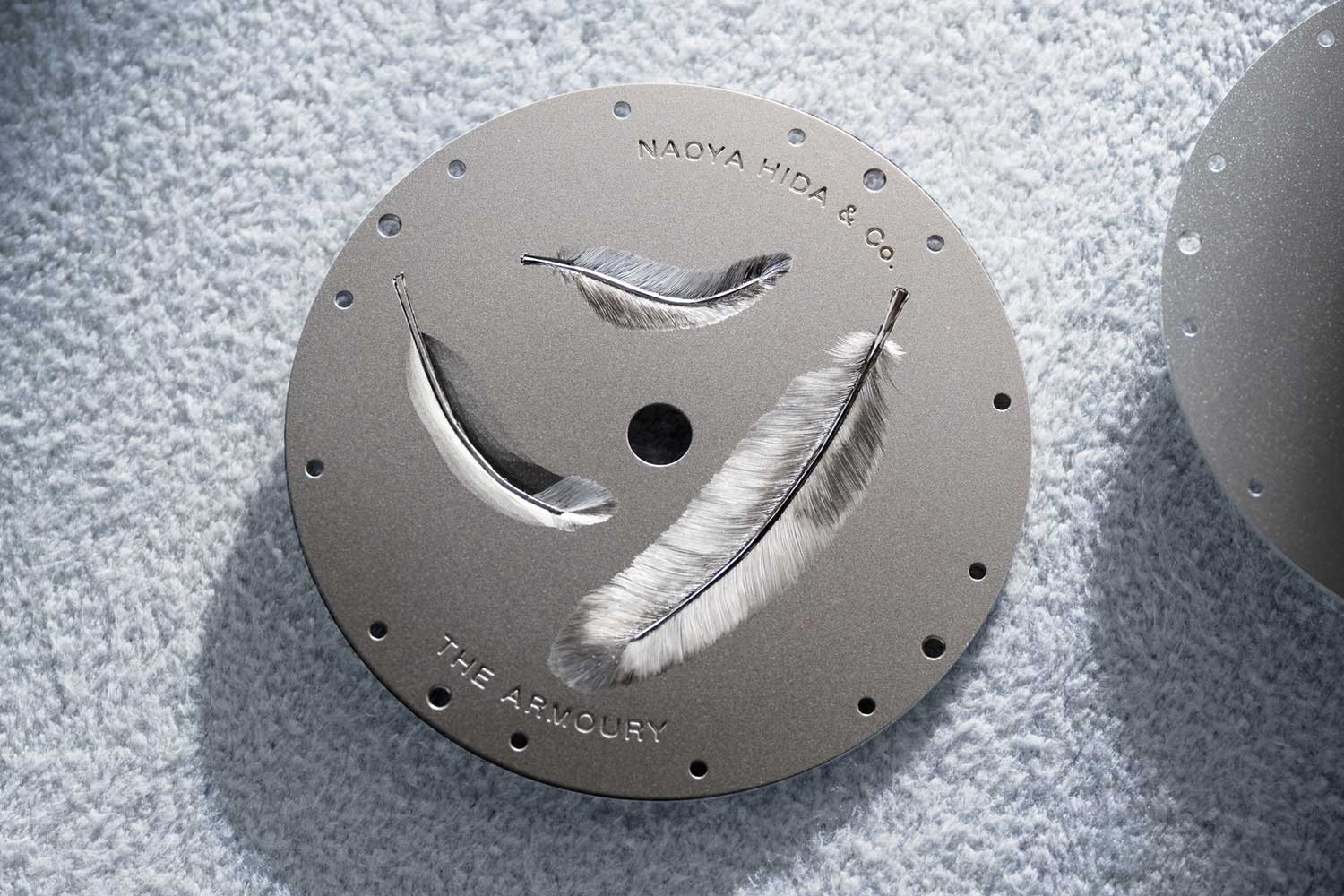
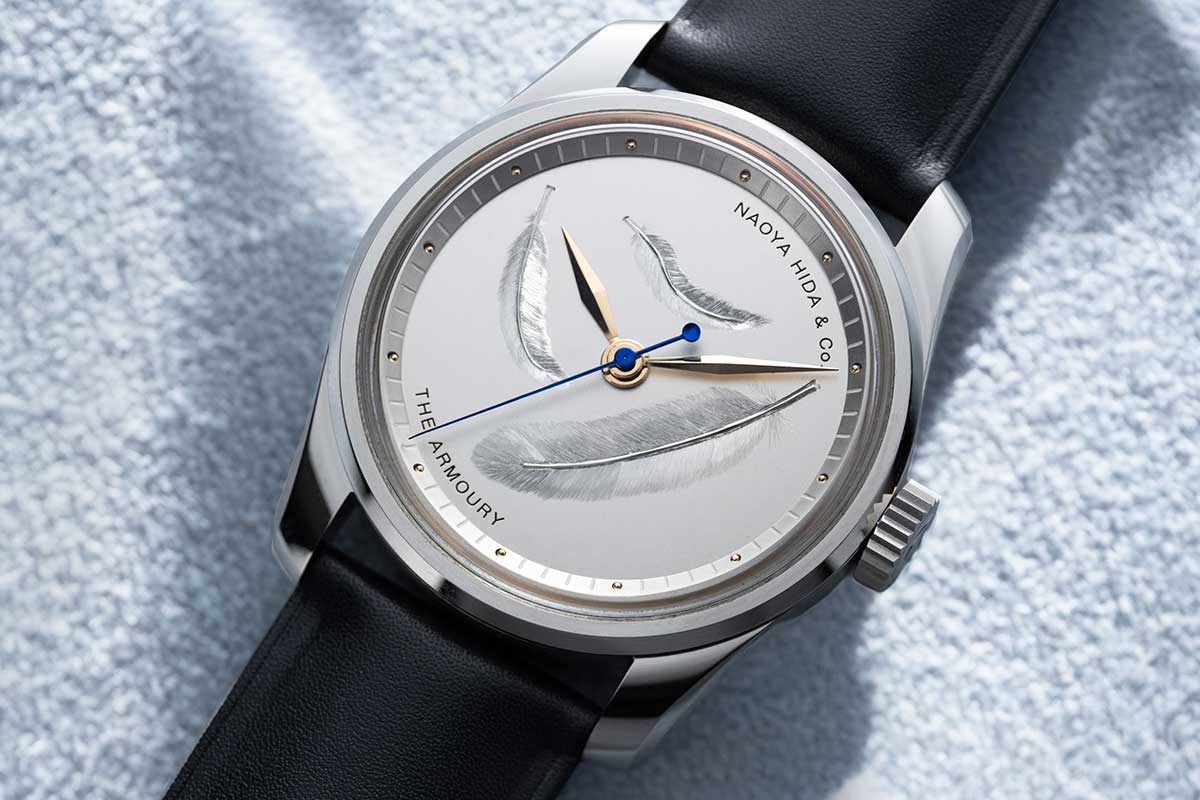
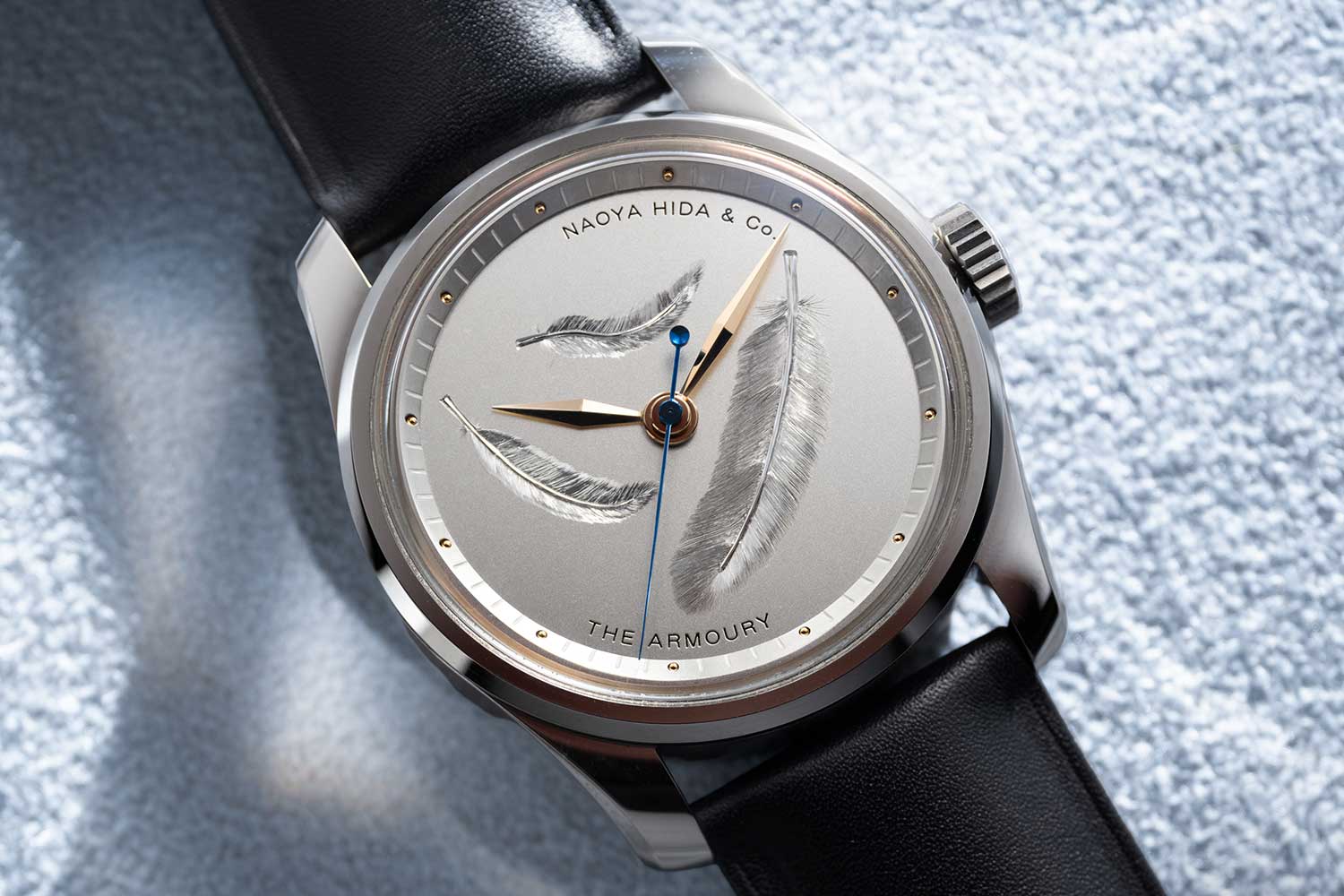
A feather held more possibility. It carried the structure and texture without needing the full subject. Hammer says the final motif is intended as raven feathers, though that detail is not stated in the official material. One feather was tested first, but it lacked presence. Cho describes it as beautiful, but static. “We wanted to make it feel like it had a bit more movement to it,” he says. “So it was three feathers in a sort of falling, floating arrangement.”
Hammer explains the same decision in compositional terms: “Three just felt a bit more dynamic because it makes a triangle shape… having a triangle inside a circle of the watch added to the sense of movement. When you think about it, a watch is always in motion, but you don’t always see it if there is no seconds hand. So it’s nice to represent it in a more abstract way.”
The dial is cut from Argentium silver and executed by Japanese master engraver Keisuke Kano. Each feather is built up through repeated cuts, roughly 20 strokes per millimeter. The number sounds abstract until you consider what it means in practice. The engraving is not just a line on a surface. The feather is shaped into it. Hammer describes the final structure as “cut in like a valley with a cliff in the middle,” with the surface sloping down towards the feather’s shaft.
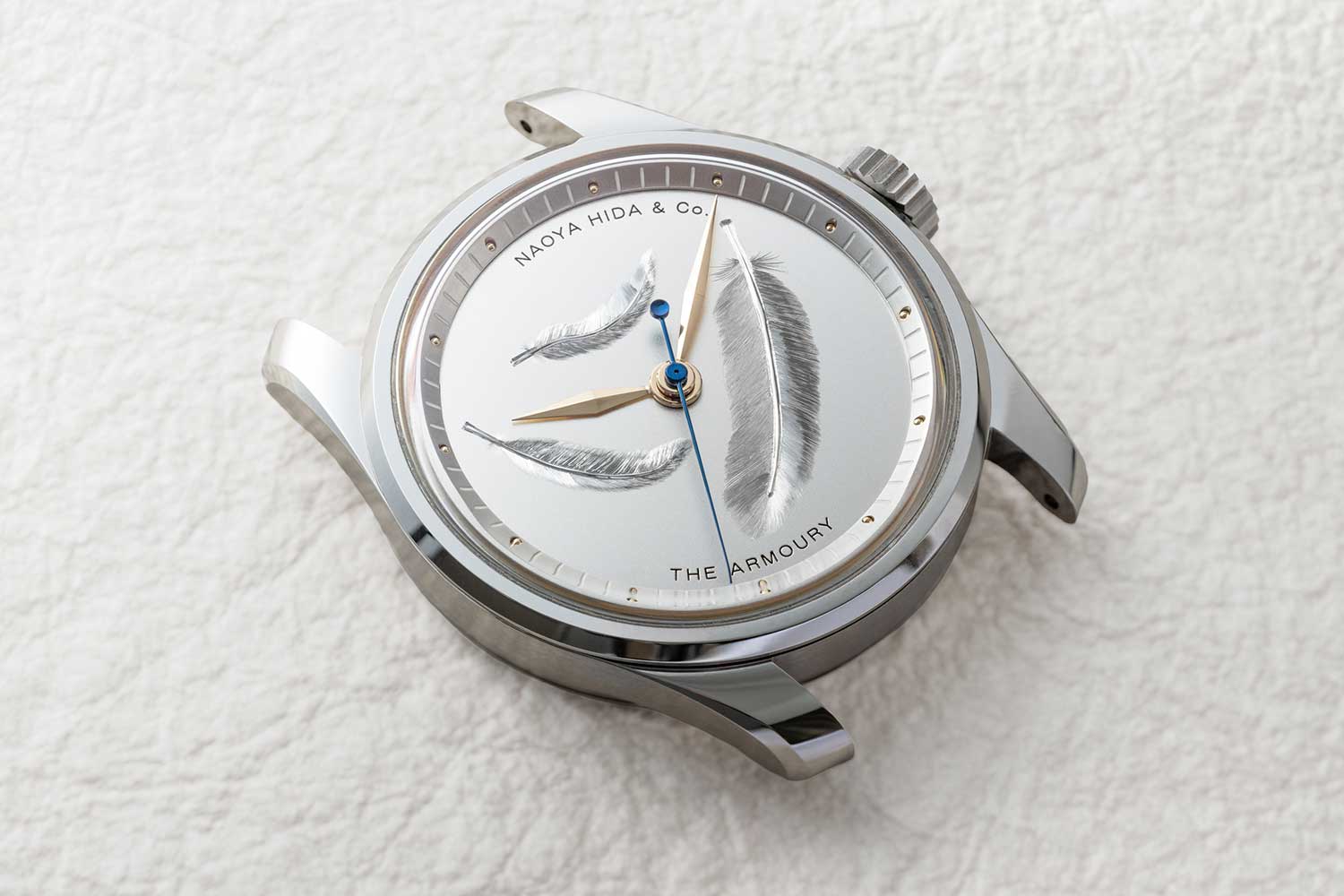
That change in angle is what allows the dial to catch light differently as it moves. Intended from the start, reflection is at the core of this dial. “If you take away all the engineering, the most important thing is light,” Hammer says. “Light defines the shape of the case… and the legibility of it as well.”
Cho approached the same issue from the material side. Freshly cut silver was too bright. “When you cut silver, it leaves a very clean and shiny surface,” he says. “But it was actually a little bit too shiny.” The solution was to bead-blast the dial again, lightly, “just a teeny, teeny bit,” to soften it. The effect is subtle, but it changes how the dial reads.
The Art of Enough
The rest of the watch retains its maker’s trademarks. The Type 4 case is 36mm, compact and familiar within the Hida world. The gold markers and hands remain precise and legible and keep the watch grounded. That was important to Cho. “I want it to be usable as a watch too,” he says. “Sometimes you get art dials that are way too decorated. It’s impossible to use them all the time.” The monochrome palette, the gold markers and the clear hand-set keep it within that boundary.
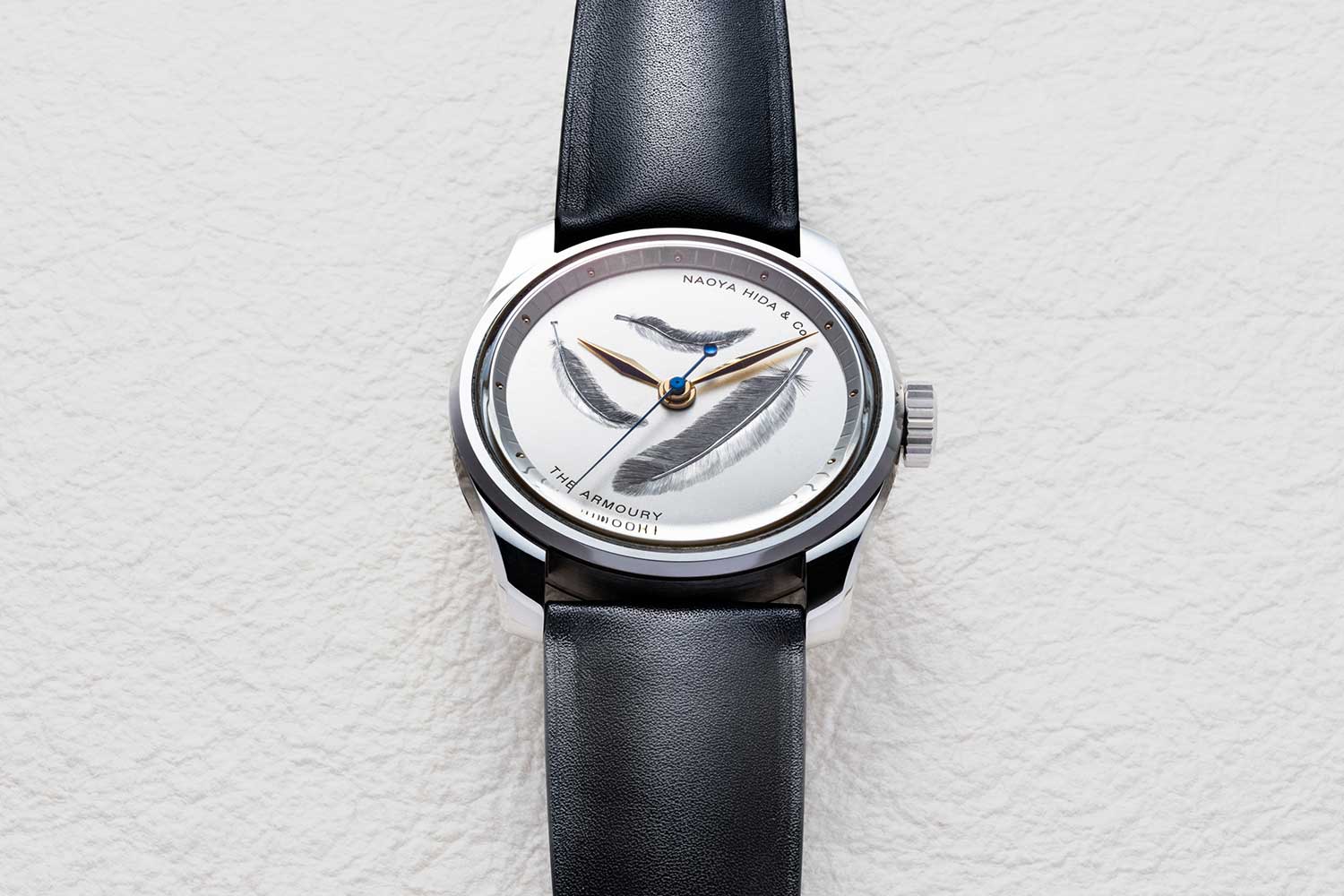
The collaboration works because, while Hida is open to new ideas, he knows when too much is too much. Cho describes him as having “amazing taste” and “a great eye for things,” but also someone who knows where to stop. “He’s always got his eye on keeping the brand consistent… but he’s very open to the things that we bring to him.” The aim is to find “common ground” and produce “something that both brands might not do on their own but could do together.”
Hammer puts it in slightly different terms. The creatives can sketch and propose, but “Hida has to actually physically make this thing.” That gap between idea and execution is where the project is resolved.
Production will be limited to 10 pieces this year and a further 10 in 2027, offered by application through The Armoury. Registration runs from May 17 to 20, after which allocations are decided . At USD 33,000, it sits above the core time-only models, but not at the very top of the range. The audience is likely to be relatively specific. Existing Hida collectors will recognize what has been added here, but also what has not changed. Beyond that, it likely appeals to those who are prepared to spend time with it and are comfortable with something that gets better every time you look at it.
Tech Specs: Naoya Hida × The Armoury Type 4A-2 “Floating Feathers”
Movement Manual winding Caliber 3020CS (reworked from ETA 7750); 45-hour power reserve
Functions Hours, minutes and seconds
Case 36mm × 11mm (42.9mm lug-to-lug); 904L stainless steel; water resistant to 50m
Dial Argentium silver, bead-blasted, with hand-engraved feather motif by Keisuke Kano; 60 individually applied 18K yellow gold minute markers
Strap Charcoal gray calf leather by Jean Rousseau; 904L stainless steel pin buckle
Price USD 33,000
Availability Limited to 10 pieces in 2026, with a further 10 pieces planned for 2027; applications will be accepted through The Armoury, both in-store and online, from May 17 to 20
Naoya Hida & Co
You may also like
News
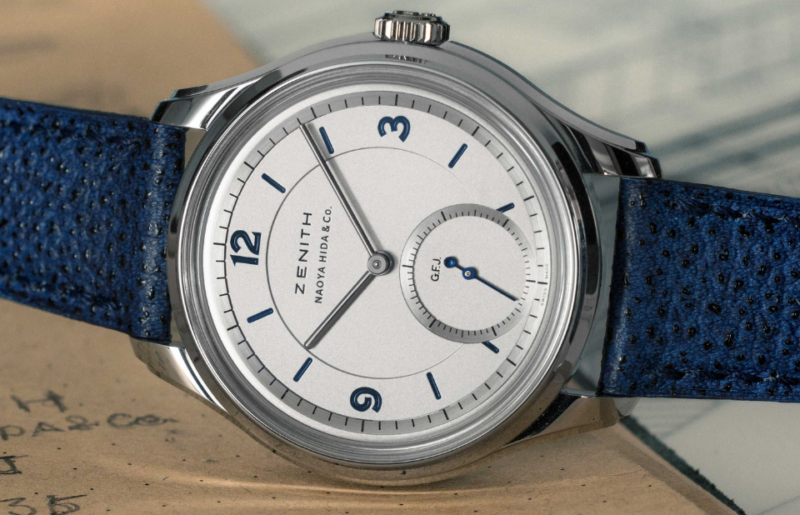
Zenith’s Calibre 135 Gets The Naoya Hida & Co. Treatment
Jun 2, 2026
News
Zenith’s Calibre 135 Gets The Naoya Hida & Co. Treatment
Jun 2, 2026
Editorial
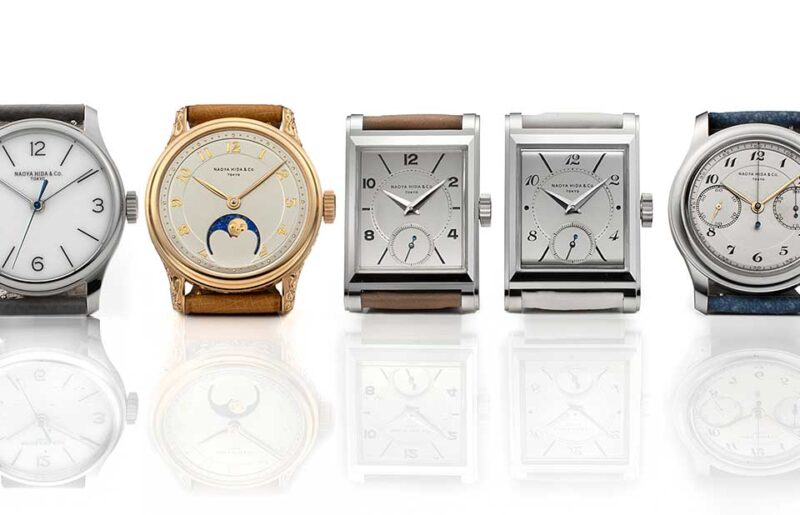
Naoya Hida’s 2026 Releases, Including Updated Favourites and a Brand New Chronograph
May 4, 2026
Editorial
Naoya Hida’s 2026 Releases, Including Updated Favourites and a Brand New Chronograph
May 4, 2026
News
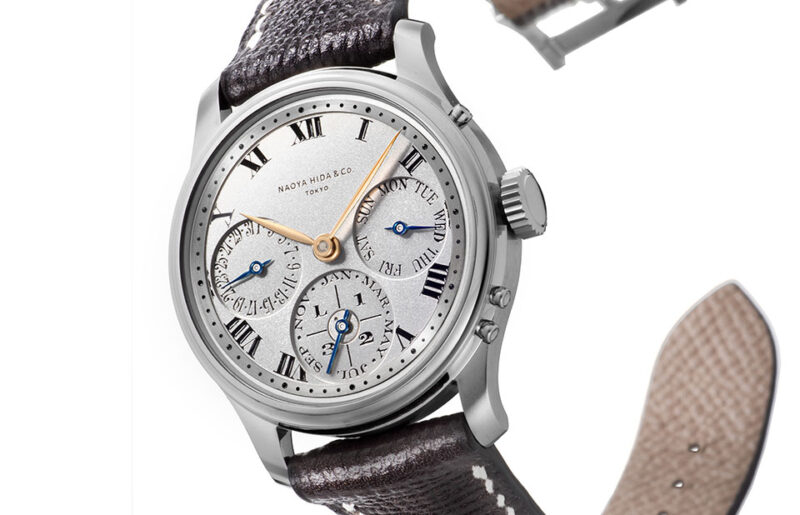
Naoya Hida Unveils New Perpetual Calendar In 2025 Lineup
May 15, 2025
News
Naoya Hida Unveils New Perpetual Calendar In 2025 Lineup
May 15, 2025