Leica’s Watches are Ready For Their Close-Up
Interviews
Leica’s Watches are Ready For Their Close-Up

Let’s start at the beginning. What is Leica trying to become in watchmaking that the industry doesn’t already have?
Let me start with a historical anecdote. Ernst Leitz I, the founder of Leica, traveled to Neuchâtel in Switzerland when he was around 20 years old. As you know, that region is essentially the heartland of watchmaking. He joined the watchmaker Matthäus Hipp and trained there for almost two years.
During that time he learned precision engineering and the discipline required to manufacture highly accurate mechanical instruments. When he returned to his home in Wetzlar, Germany that knowledge became part of Leica’s DNA. I am quite convinced that without that early exposure to watchmaking Leica would not be where it is today.
If you look at the Leica M6 camera, you can actually see components that resemble parts you might find in a clock. It is essentially a manually operated timekeeping instrument — measuring exposure with precision from fractions of a second to a full second. So in a sense, our story already has a natural connection to the world of mechanical timekeeping.
What we are doing now is broadening the Leica product portfolio slightly without moving too far away from the brand’s core identity. Leica has always been associated with cameras and photography, and rightly so. But it is also unhealthy for any company to rely entirely on a single product segment. So we are taking small, credible steps and watches fit into that strategy, alongside other categories such as eyewear and video projectors, which still relate closely to optics and precision engineering.
We have credible historical links and a natural conceptual bridge: photography captures time, while watches measure it. Launching with the ZM 1 and ZM 2 in 2022 — watches with a hand-wound manufacture caliber — was already a significant step. That does not mean we will only pursue manufacture movements in the future, because realistically we do not have the resources for that. But it was important to establish ourselves at a serious level from the start.
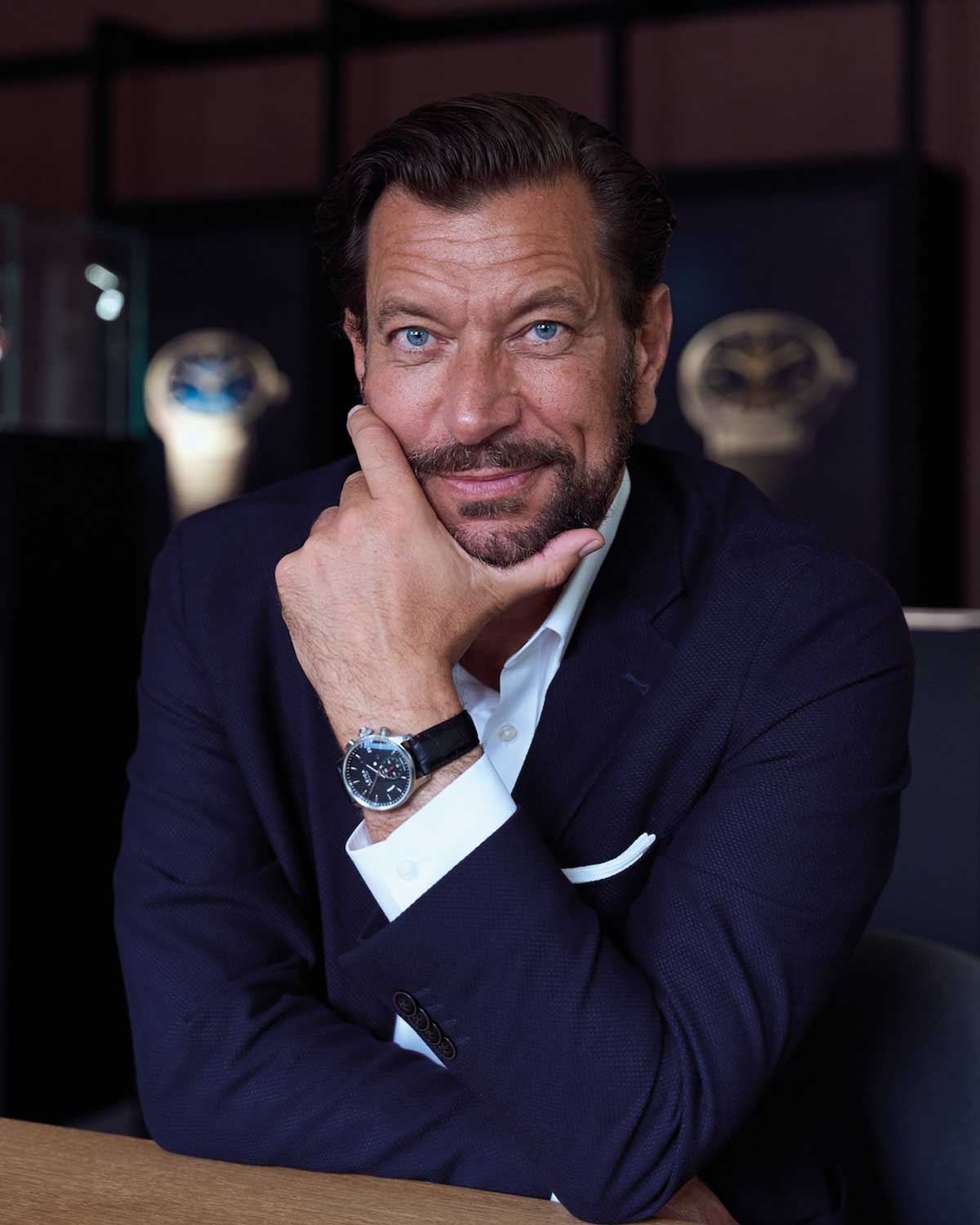
Managing Director of Leica Watches, Henrik Ekdahl
Leica sits at the very top of camera manufacturing. Did entering watchmaking feel risky, given that you can’t afford to dilute that reputation?
Finding the right balance is a challenge. For example, if we one day decide to participate in Watches and Wonders, we have to ask how we should present ourselves. Should we appear as Leica or should we present ourselves in a way that reflects our current position in watchmaking? There is a huge difference between those two approaches.
The key is to remain self-confident without becoming arrogant. Leica is an extraordinary brand in photography. But in watchmaking we are in many ways a start-up. That strong Leica reputation is both a strength and a burden. If another new brand introduced the ZM 1 and ZM 2, it might receive immediate praise. When Leica does it, people ask: why are you doing this? Shouldn’t you stick to cameras? Interestingly, those comments have decreased significantly over the past year. It feels like the industry is starting to accept that we are serious about this project. But it takes decades to establish credibility. We launched our first watches just over three years ago.
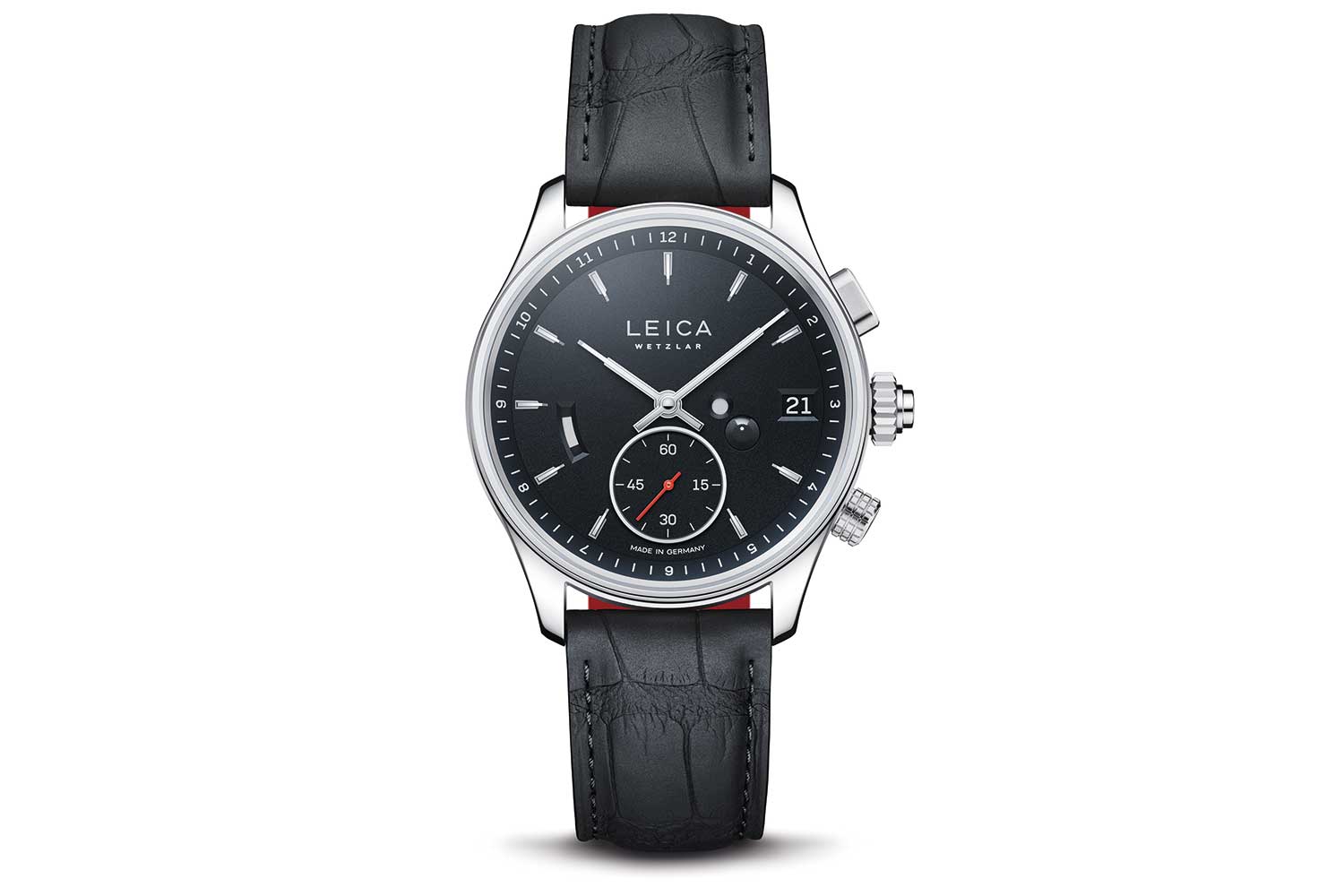
On the Leica ZM 2, the power reserve indicator and push crown echo components of an analog camera
There were essentially two possible approaches to introducing watches. One would have been to start in the lower price segments, using third-party movements and gradually building credibility over time. The other approach — the one that was chosen — was to develop our own manufacture movement and begin with a technically ambitious watch. This positioned the project closer to the level of excellence people associate with Leica cameras. That said, Leica should continue to be recognized primarily as a camera manufacturer. I would not want that to change.
There are several ways to measure success. Of course, revenue and profitability are important. But credibility and acceptance are equally critical. Above all, we must ensure that the watch project never damages the Leica brand. Instead, our goal is to gradually add value to the brand. At the moment, the watch business is still relatively small. If you ask someone on the street what Leica is known for, they will immediately say cameras. But as long as the watches reinforce the brand rather than weaken it, we are on the right path.
Leica has spoken about becoming a respected “small-scale, high-end watch brand with German roots.” What does that look like in practice?
It means doing things differently. We are not interested in paying Hollywood celebrities large sums to wear our watches temporarily. Instead we prefer ambassadors who have a genuine connection to the Leica universe — photographers, filmmakers and people who work with images. For example, we recently premiered Reclamation, a short black-and-white film by photographer Brandon Ruffin that features our ZM 2 Monochrom. It reflects the aesthetic world Leica comes from.
The watches themselves also need to contain elements that connect back to our cameras. We are not trying to build a camera for the wrist, but subtle references are important. On the ZM 2, for instance, the power reserve indicator recalls the shutter mechanism of an analog camera. The push crown echoes the feeling of pressing a shutter release. With the ZM 11 and ZM 12, we explored the interaction of light and shadow on the dial — inspired by photography. Over time we also want to deepen our involvement in watchmaking and increase the value creation within the product. But we will do that gradually.
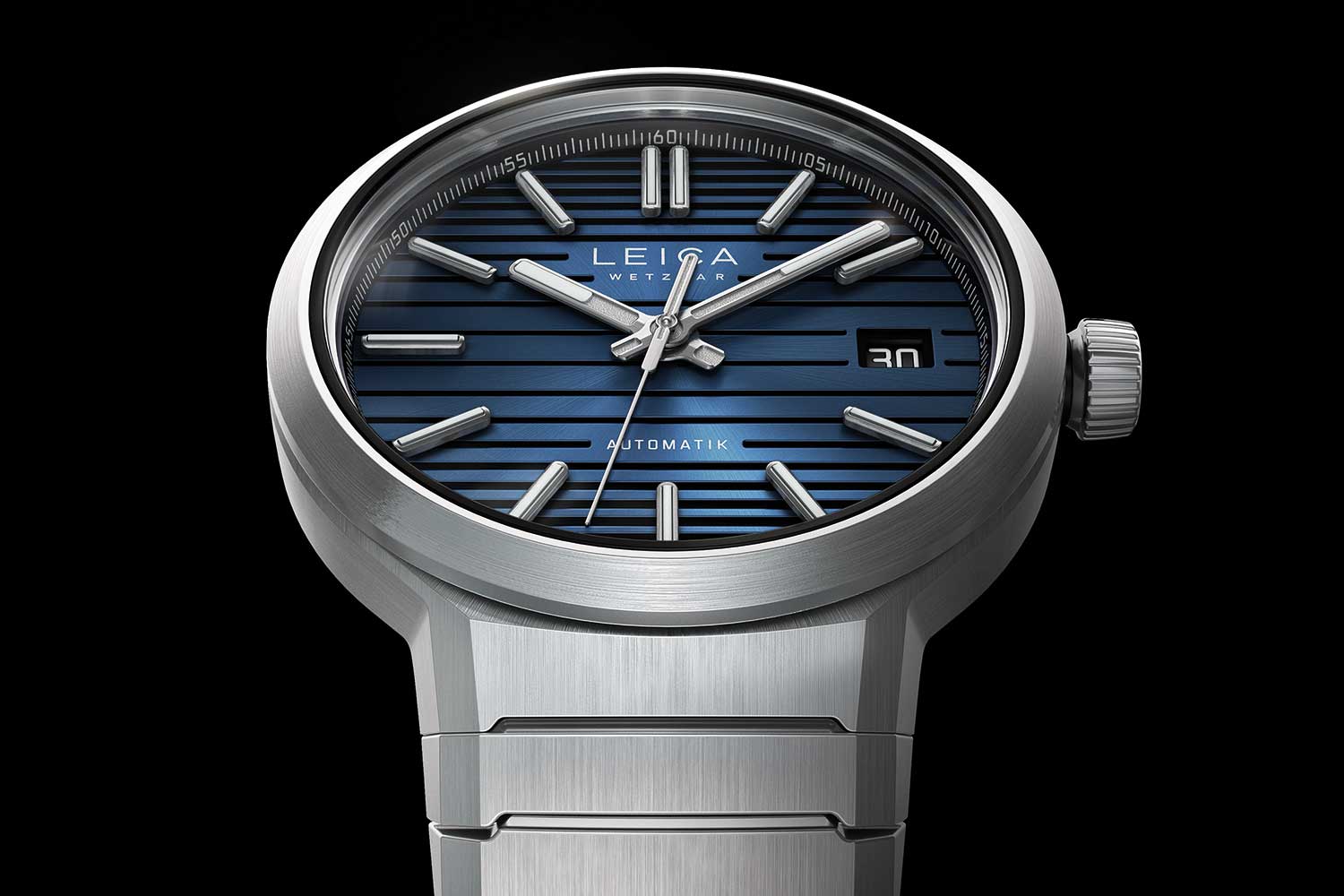
The 41mm Leica ZM 11
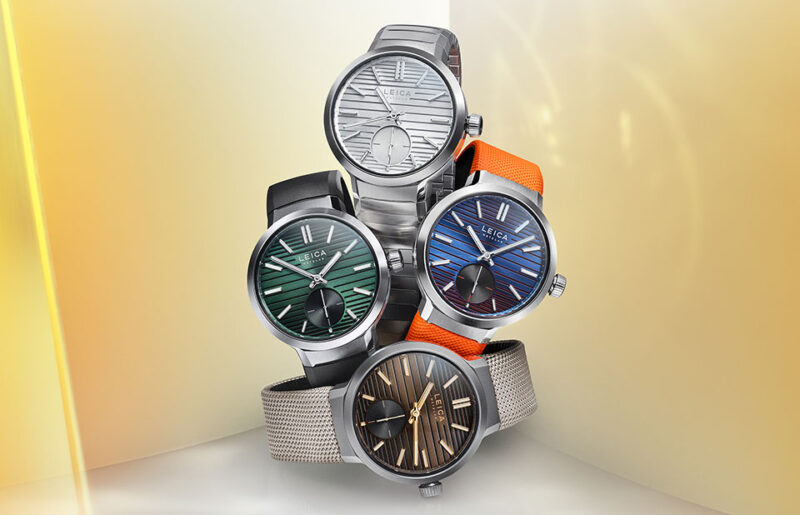
The collection currently consists of two distinct families — the technically ambitious manual-winding ZM 1 and ZM 2, and the more accessible self-winding ZM 11 and ZM 12.
Yes, and both lines will remain. The ZM 1 and ZM 2 appeal more to enthusiasts who are deeply interested in movements and mechanical features. The ZM 11 and ZM 12 are everyday watches — still distinctive, but more approachable.
The dial designs are a good example. The layered construction creates shifting colors depending on how the light hits the surface. I often ask people around the world whether they have seen dials like this before, and so far the answer is always no. Color is interesting for us. Black-and-white photography is central to our identity, but color photography is equally important. So we explore both. The watch should never become a gadget or a “pop” object, but color has its place. Interestingly, the best-selling ZM 12 at the moment is the most colorful version — the blue and orange model.
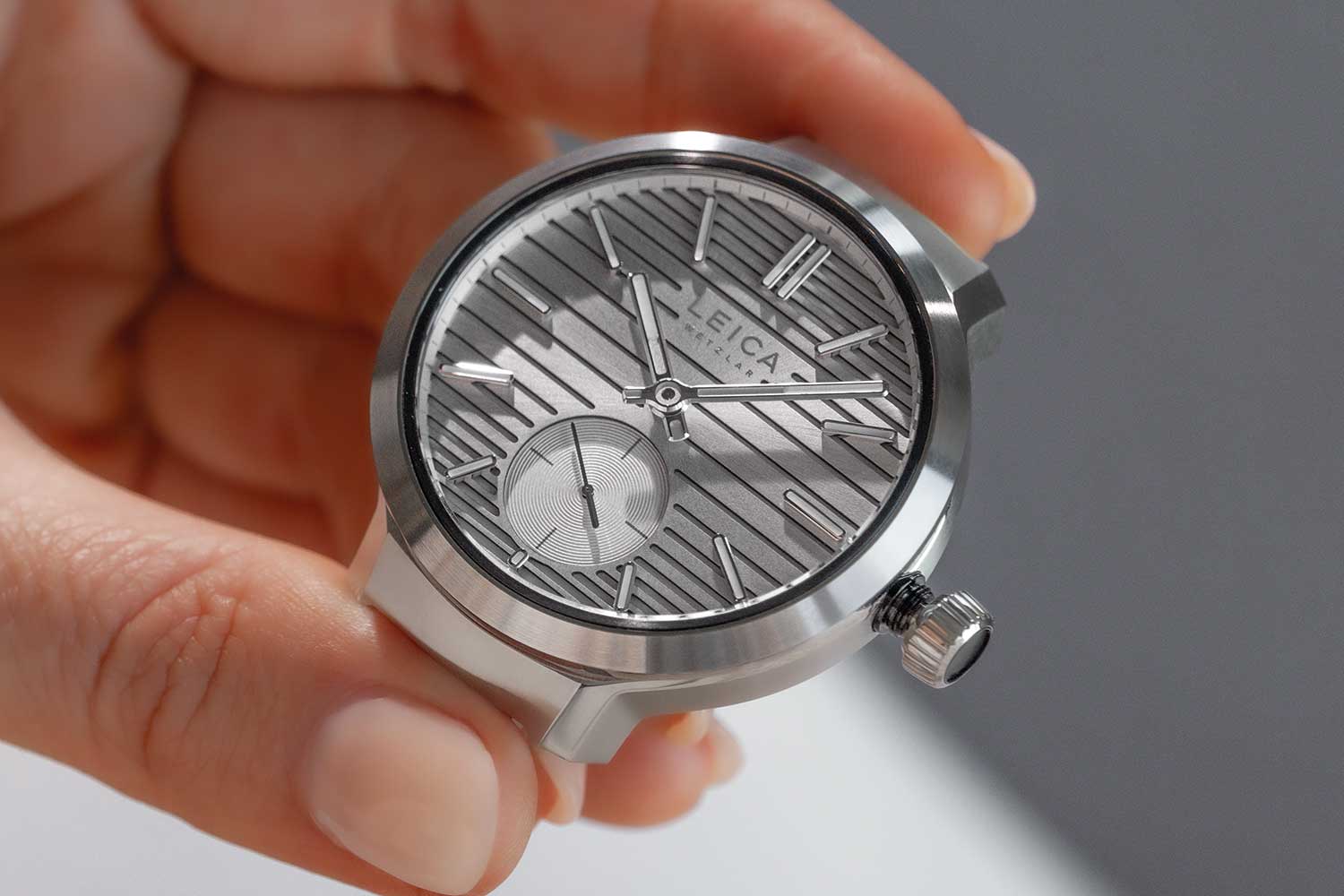
The 39mm Leica ZM 12 eschews a date indication and adds a small seconds
The ZM 12 is essentially a more reduced interpretation. The ZM 11 has a remarkable dial and a strong visual presence. But we wanted a version that was slightly smaller, more refined and perhaps easier to wear for a broader audience. The ZM 11 is 41mm. The ZM 12 is 39mm and removes the date and central seconds in favor of a small seconds display. It becomes a little more elegant, whereas the ZM 11 feels slightly sportier.
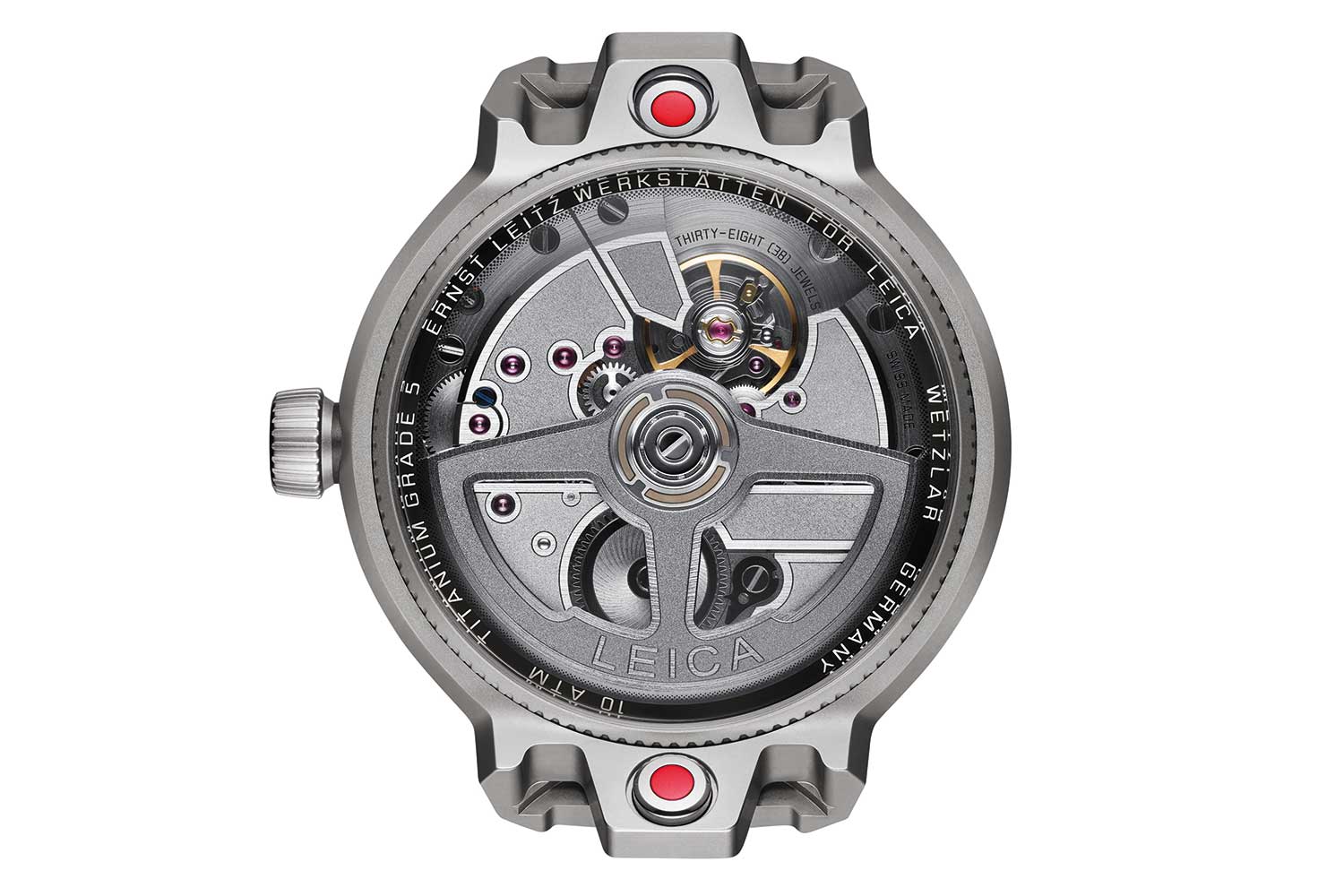
Caseback and movement of the ZM 12
Where do you see Leica Watches going next — particularly in terms of manufacturing and the brand’s German roots?
Ideally we would produce everything in Wetzlar, including all of the movements, but that is simply not the reality today. Leica already works with international suppliers in many parts of the business. For example, we have had a factory in Portugal for more than 50 years producing excellent products for us. So working with different partners around the world is not something new for Leica.
In watchmaking, Switzerland remains extremely important because it provides the entire ecosystem you need: movements, dials, hands and the specialized expertise. So for us the watches currently involve both German and Swiss production. I know watch collectors often focus strongly on labels such as “Swiss Made” or “Made in Germany,” but for Leica the more meaningful idea is really something closer to “Made by Leica.” What matters is that the watch reflects Leica standards and Leica thinking, regardless of exactly where every component comes from.
Looking ahead, one of our priorities is to increase Leica’s own contribution to the watches — what I like to call value creation. We are looking at ways of doing more ourselves and strengthening the credibility of the watch project. That does not necessarily mean producing our own movements in-house, but it does mean deepening our involvement in the product.
At the same time we are also looking at diversifying the portfolio a little. The idea is to expand the collection carefully so that we can reach more customers than we do today, but always in small and credible steps.
Looking ahead 10 years, what do you hope to achieve with Leica watches?
I hope that by then Leica is clearly recognized and respected as a watch brand as well as a camera brand. The watch division should represent a larger share of the company’s business, but always as a complementary part of the Leica universe rather than its defining identity. We may not be leading the industry in creating entirely new movements. But I hope we will be doing much more ourselves and contributing something meaningful to modern watchmaking.
Leica