J.N. Shapiro Introduces the Infinity Weave Series Radiant
News
J.N. Shapiro Introduces the Infinity Weave Series Radiant

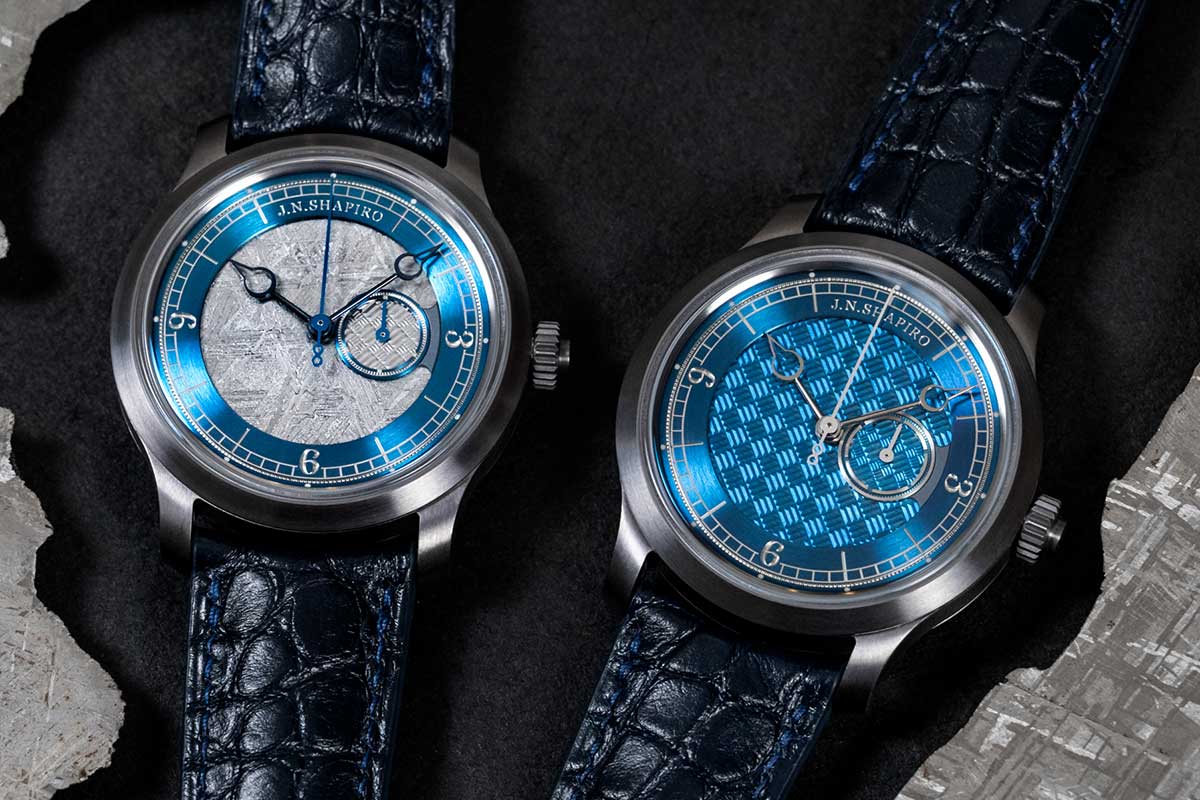
The Radiant is the latest addition to Joshua Shapiro’s Infinity Weave series, the collection that first brought him recognition among collectors. It is the first chronograph of the series and traces its origins to a limited edition created for the Boston-based collectors’ group Escapement last year, but reimagined in a more ambitious palette of tantalum, zirconium and meteorite.
Yet the materials are only part of the equation. Shapiro has always struck me as someone with an appetite for very hard problems, and the Infinity Weave guilloché pattern – a basketweave within a basketweave – is case in point. Under a 3× loupe, the pattern is impossible to make out. Exactly how he manages to cut grooves of such minuteness and precision is a mystery to me and probably requires somewhere in the neighbourhood of 20× magnification to execute.
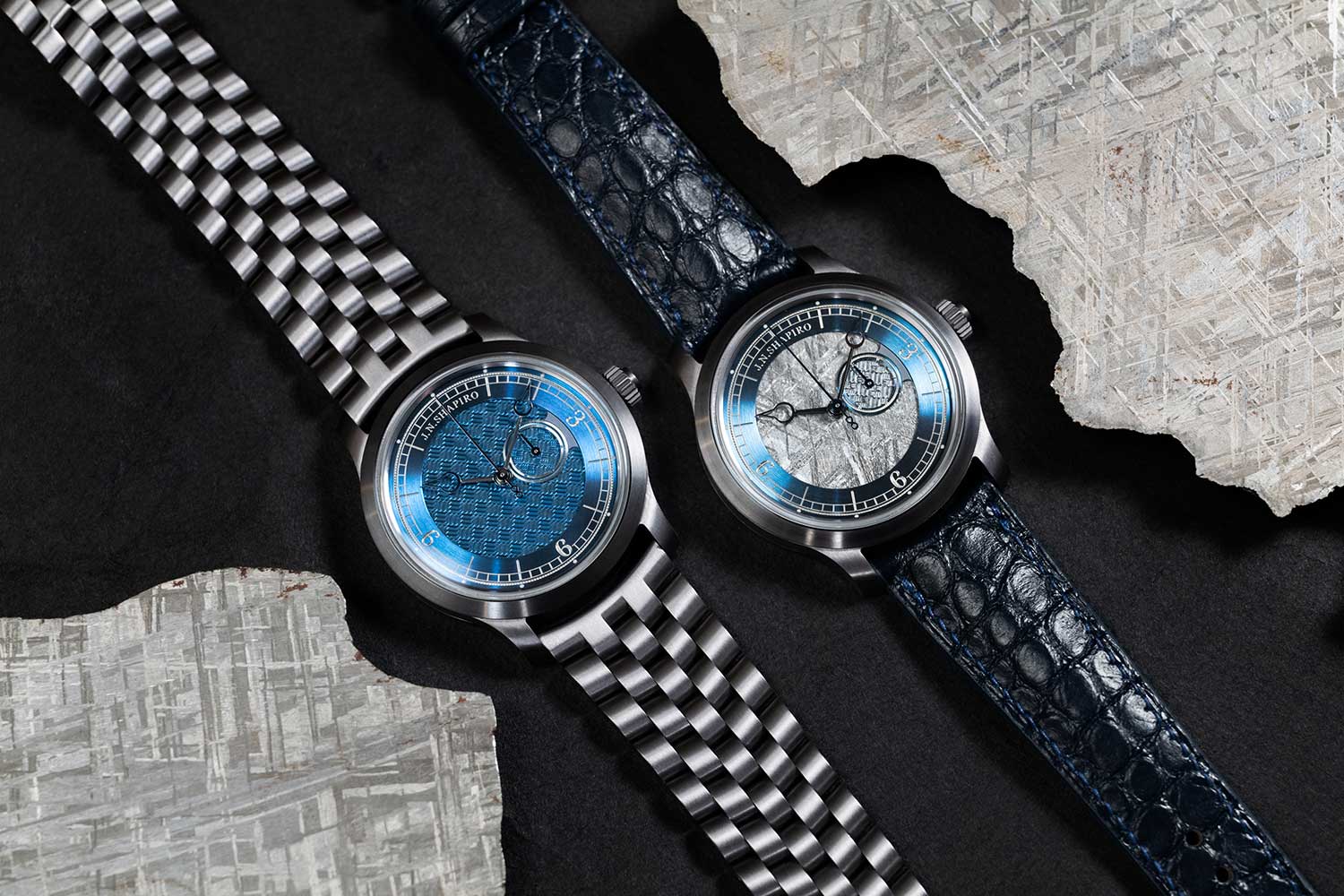
Apart from the case being made from tantalum, a material known to raise the ire of machinists, the Radiant is offered either with a meteorite dial featuring an engine-turned minute totaliser and a blued zirconium chapter ring, or with a fully engine-turned dial in blued zirconium. In both instances, the engraving work is executed on materials far less accommodating than traditional silver or gold.
J.N. Shapiro Infinity Weave Series Radiant
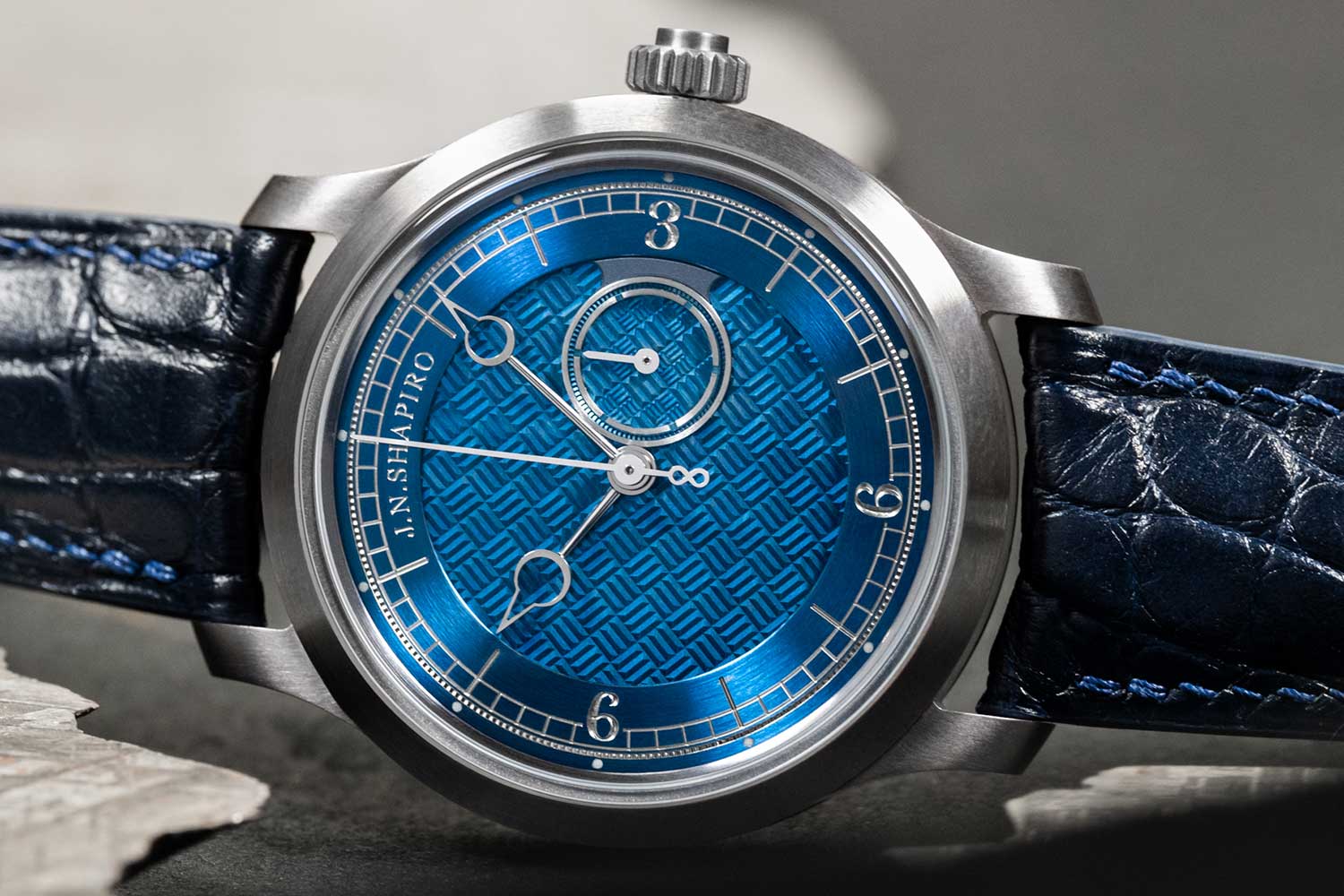
The zirconium version features a fully engine-turned dial in blued zirconium
The Radiant takes its name from both light and radiation, a nod to the aerospace industry that surrounds J.N. Shapiro’s workshop in Southern California. The company operates from a 7,000-square-foot facility in Torrance, at the heart of one of America’s largest aerospace corridors, home to companies such as SpaceX, Boeing, Northrop Grumman and NASA’s Jet Propulsion Laboratory. Tantalum and zirconium both have aerospace applications, while meteorite is, quite literally, a material from space.
The tantalum case is made in-house and measures 38mm x 9.6mm including crystal. Tantalum is a beautiful metal, with a greyish-blue luster, a density comparable to that of gold and a legendary resistance to corrosion. It is inert to most acids, including aqua regia, Latin for ‘royal water’ – a mixture of concentrated nitric and hydrochloric acids named for its ability to dissolve noble metals like gold and platinum. Yet the same properties that make it attractive in a watch also make it fiendishly difficult to work with. Described in a 1989 Jaeger-LeCoultre press release as “diabolical”, it is unforgiving on cutting tools. Shapiro once said that a single endmill could last for 20 cases in stainless steel but only a third of a single case in tantalum. He is one of the few to have mastered the material, and for the Radiant he is also offering the option of a five-link tantalum bracelet.
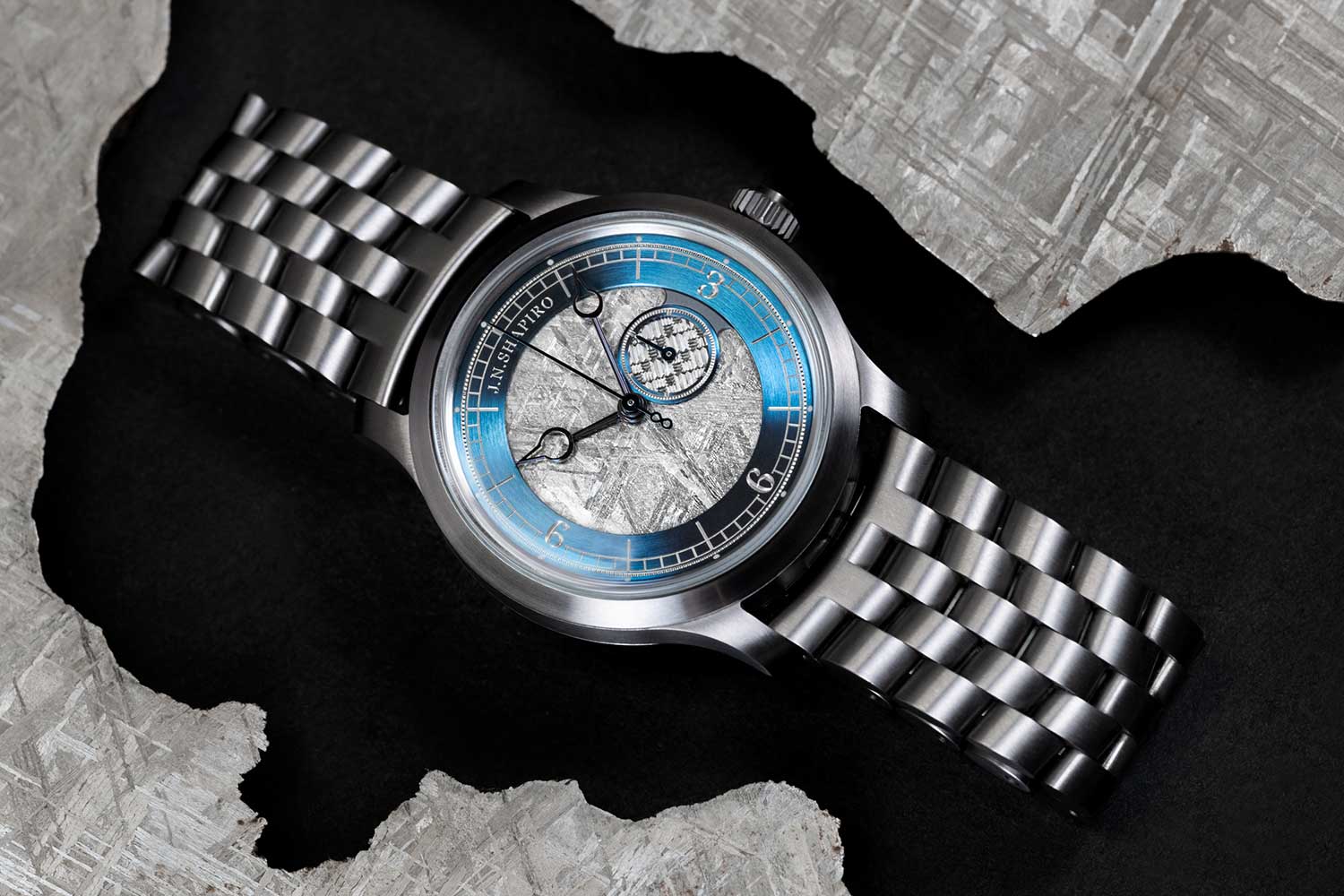
Another version with a meteorite dial featuring an engine-turned minute totaliser and a blued zirconium chapter ring
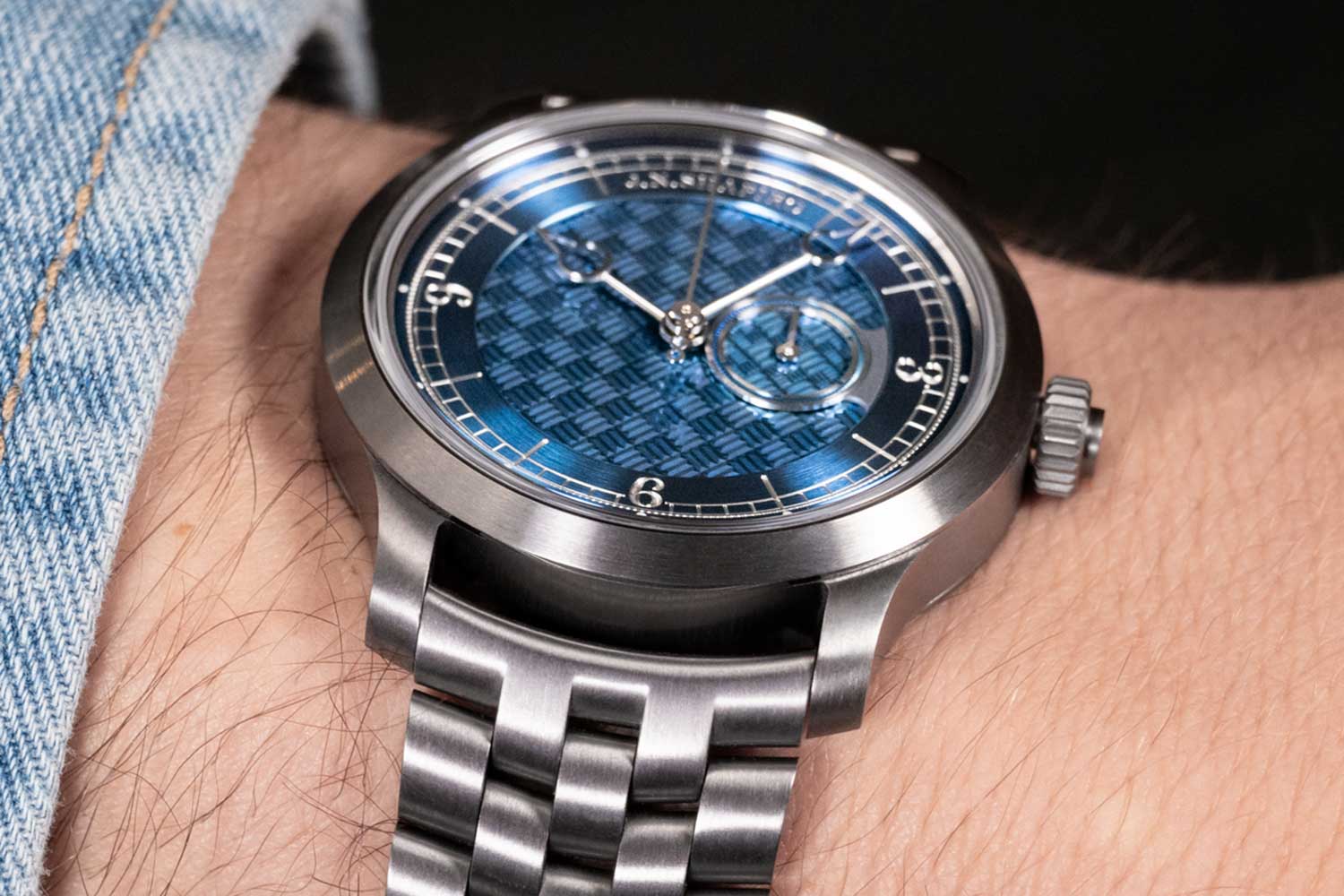
The tantalum case is made in-house and measures 38mm x 9.6mm including crystal
Both versions feature Shapiro’s signature Infinity Weave pattern on the minute totaliser. The traditional basketweave, turned on a straight-line engine, is regarded as the most demanding guilloché pattern to execute owing to the series of repetitive advances required after each cut. The Infinity Weave takes the concept further by incorporating a second basketweave within the first. The miniature baskets are interrupted cuts, meaning each has to be engraved individually without encroaching on the larger baskets that surround it. The pattern required custom pattern bars, which he developed himself.
On the meteorite version, the dial is made from Gibeon meteorite, which he sources through auctions and private collections. Supplies have become increasingly limited, making suitable material both difficult and expensive to obtain.
Engraving meteorite is much less predictable than engraving conventional dial metals. Gibeon meteorite is primarily composed of iron and nickel, each of which behaves differently under the cutting tool. The iron engraves readily enough, but harder nickel-rich areas are challenging and can appear without warning. Material selection becomes almost as important as the engraving itself. Cracks and non-metallic inclusions must be avoided, as any embedded rock cannot be cut at all.
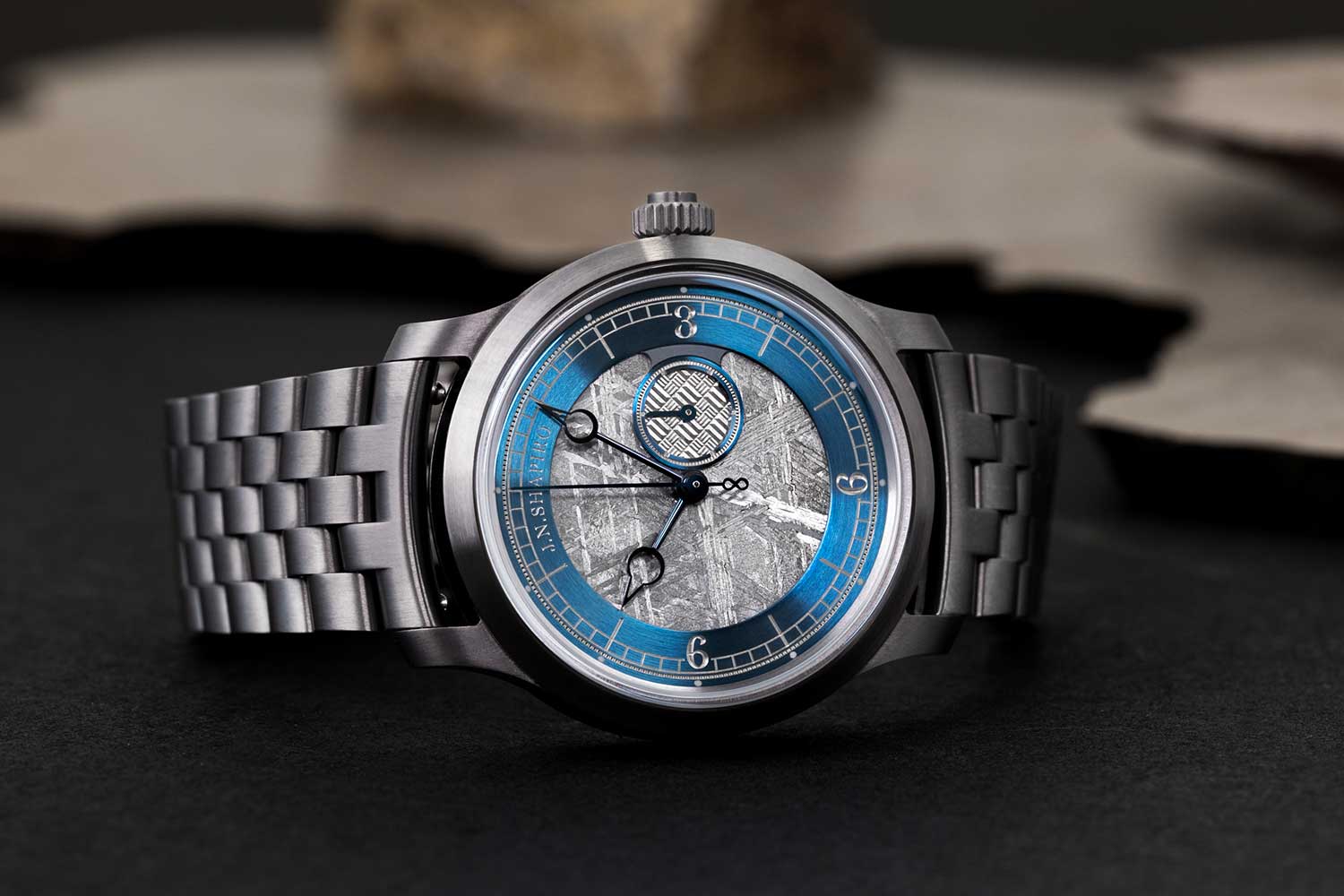
The meteorite 30-minute totaliser features his signature Infinity Weave pattern
Another characteristic of Shapiro’s work is his preference for colour derived from the material itself rather than from paint or plating. His silver guilloché dials, for instance, are finished through depletion gilding instead of electroplating. Here, both versions of the Radiant feature a zirconium chapter ring that is heat treated to produce its electric blue colour before the numerals and indices are engraved. The zirconium version extends this treatment to the entire dial and matching minute register. Engraving on blued zirconium is more demanding than it sounds. Because the colour is obtained by a thin oxide layer, any mistake during engraving can’t simply be polished out and corrected. The engraving is executed on what is essentially the finished surface, leaving little room for error.
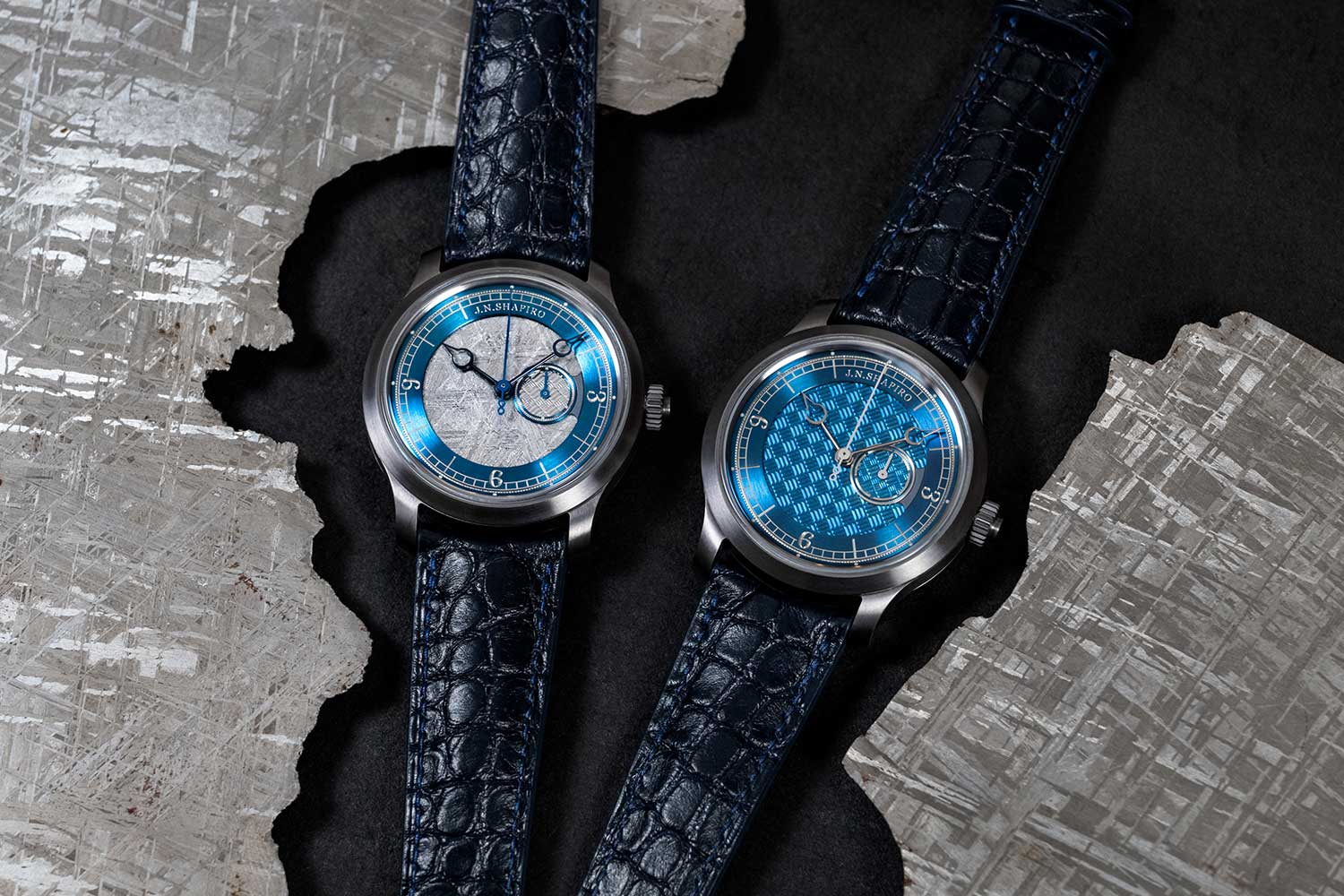
J.N. Shapiro Infinity Weave Series Radiant
Both versions feature his signature, impressively rounded hands with open tips, in polished steel on the zirconium version and blued on the meteorite version.
Inside is the manual winding La Joux-Perret 5000-4 monopusher chronograph calibre, derived from a movement originally developed by Techniques Horlogères Appliquées (THA), the movement specialist founded by Denis Flageollet, F. P. Journe and Vianney Halter in 1989. One of the more characteristic features of the calibre is the use of an oscillating pinion. Made up of an arbour with a pinion on each end, this method of engagement remains the most practical way to connect the going train, which sits in the mainplate of the movement, to the chronograph train above. It eliminates the need for a traditional drive and clutch wheel used in a classic horizontal clutch system, which reduces the load on the going train and allows the calibre to be more compact. At the same time, the fine leaves help ensure a smooth engagement, minimising the tendency of the chronograph seconds hand to jump when started.
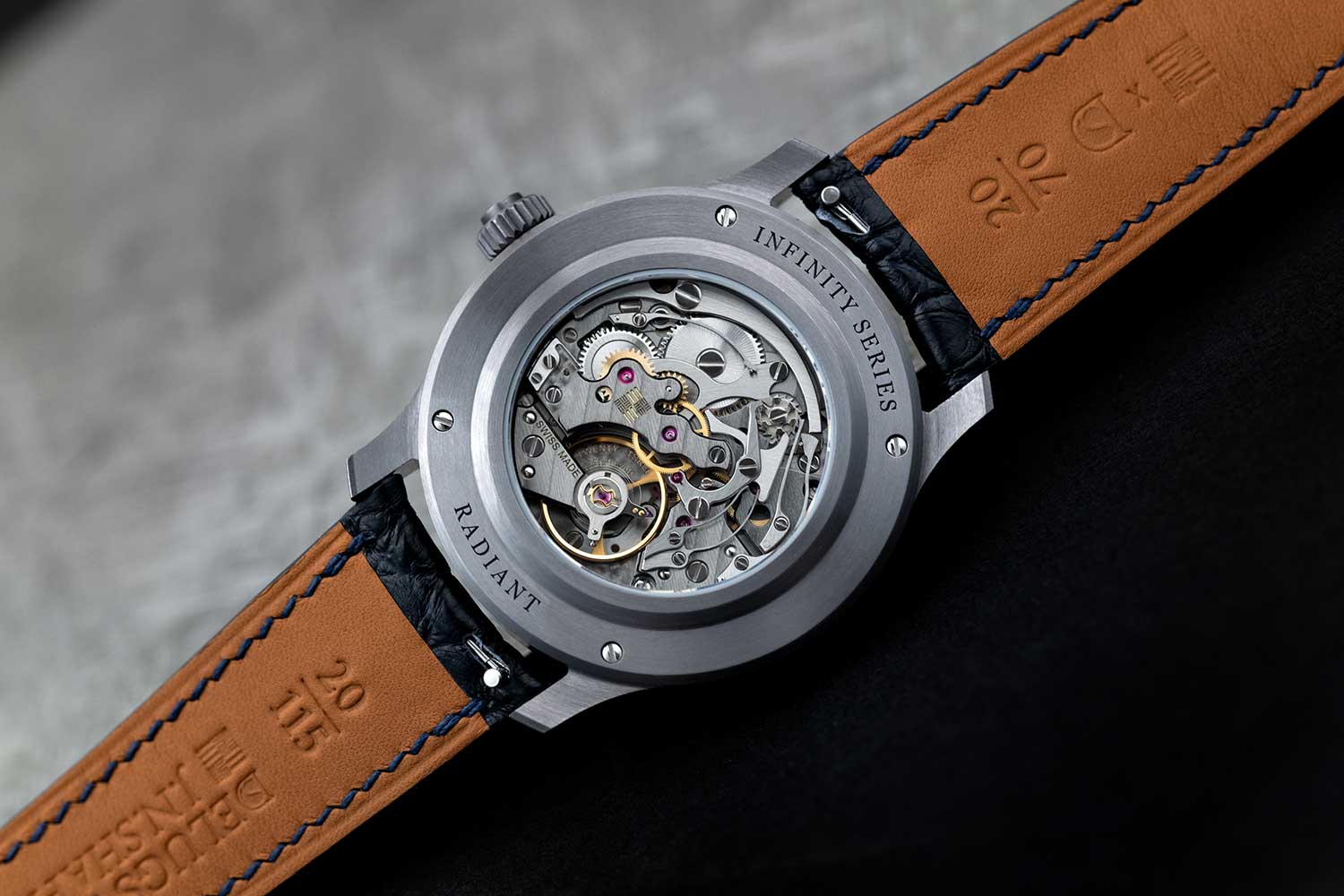
Manually wound La Joux-Perret Calibre 5000-4
Production of the Radiant will begin with an initial batch of 75 pieces and a price of US$35,900. Given the high concentration of specialised craftsmanship, from the guilloché to the machining of the case itself, the figure is highly competitive among watches powered by the same calibre.
Tech Specs: J.N. Shapiro Infinity Weave Series Radiant
Movement Manually wound La Joux-Perret Calibre 5000-4; 38-hour power reserve; 21,600vph or 3Hz
Functions Hours, minutes, chronograph with 30-minute chronograph counter
Case 38mm diameter × 9.6mm height (8.2 mm without crystal); 43.9mm lug-to-lug; tantalum; water-resistant to 50m
Dial Gibeon meteorite dial with engine-turned subdial, blued zirconium chapter ring and blued hands; or fully engine-turned blued zirconium dial with matching chapter ring and polished steel hands
Strap Leather strap; optional AHA five-link tantalum bracelet
Price US$35,900 excluding taxes and duties; optional tantalum bracelet US$12,950
Availability Initial production run of 75 pieces; deliveries beginning Q2 2026.
J.N. Shapiro