How Spacewalks Shaped Konstantin Chaykin’s SC02C
Editorial
How Spacewalks Shaped Konstantin Chaykin’s SC02C

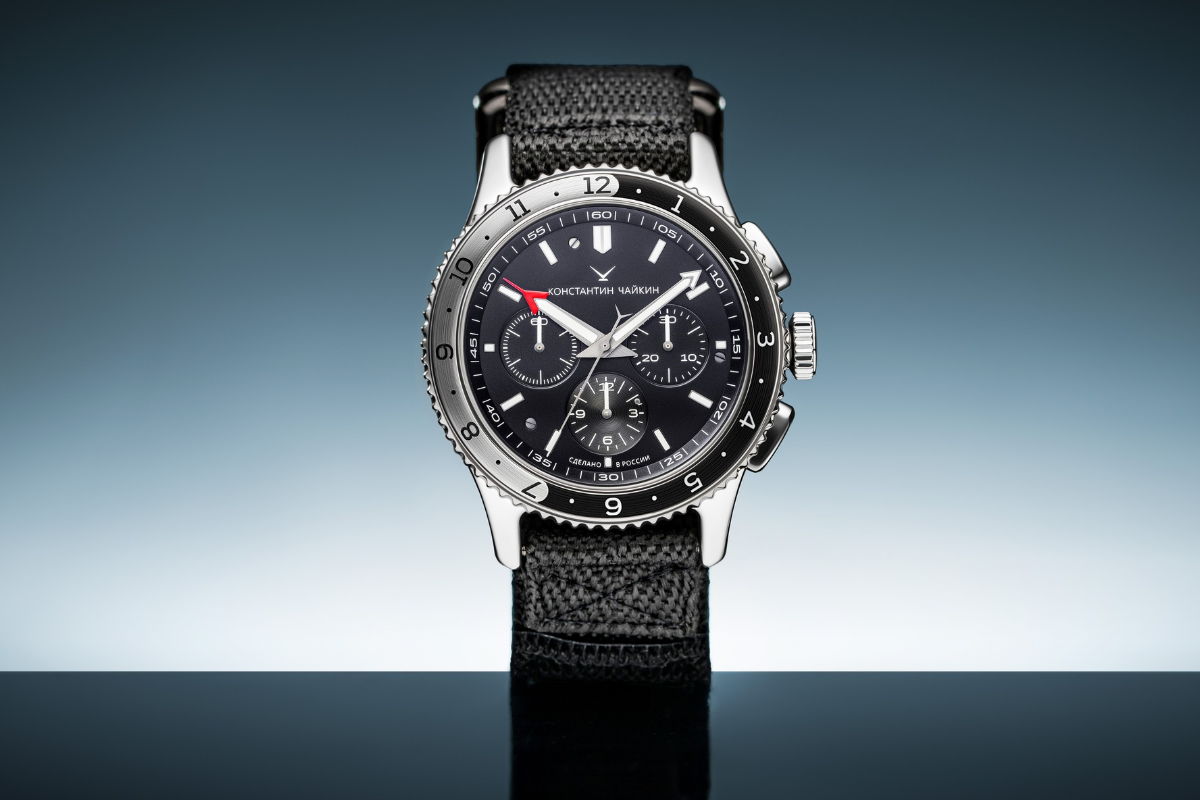
Shown earlier this year during Geneva Watch Days, Konstantin Chaykin’s SC02C comes with two straps – one sized for everyday wear; and the other long enough to fasten over the thick cuffs of a space suit.The second strap offers a clue to the proper brief behind what, at first glance, looks like a fairly traditional three-subdial chronograph inspired by the moon watches that have arrived since man touched zero gravity.
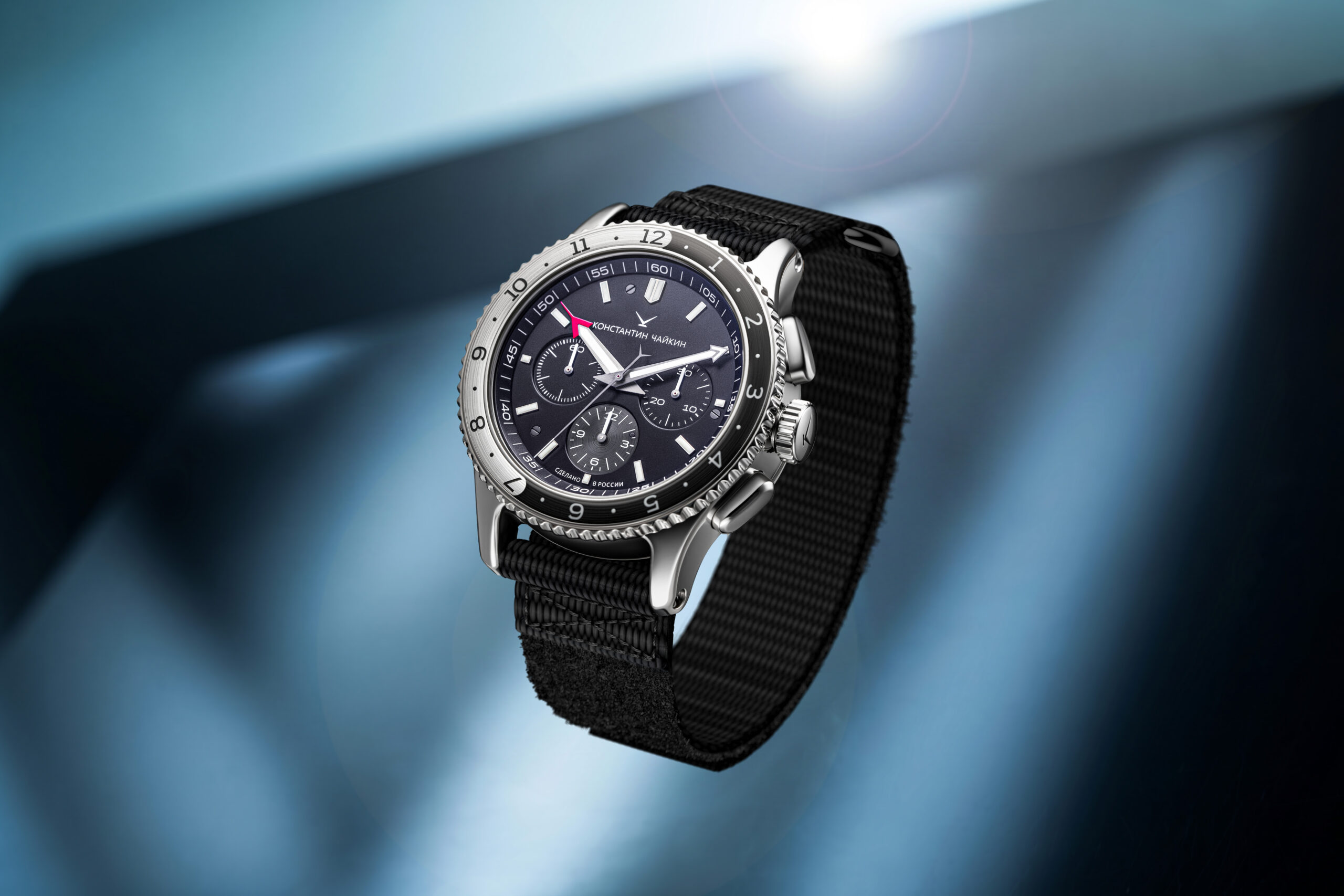
The SC02C grew out of a full-fledged research program with the Roscosmos that put experimental watches on the outside of the International Space Station. The program began in 2018, and its watches have since accompanied four spacewalks. Most recently, in May 2026, cosmonauts Sergey Kud-Sverchkov and Sergey Mikaev wore the new generation Chaykin chronographs over their Orlan-MKS suits for more than six hours. The SC02C brings this tried and tested design to a limited edition of 28 pieces.
We spoke to Konstantin Chaykin about how an idea for a Russian space watch became a working instrument, and the different trials and tribulations that tested him along the way.

The brief from Roscosmos
How did the conversation with Roscosmos begin in 2018, and what was the brief for a watch that could be worn during a spacewalk?
It all began with a question: “Could you develop a Russian watch for Roscosmos cosmonauts?” The project and its technical brief gradually took shape from there.
Through discussions with cosmonauts, we identified the key functions. We wanted to create a watch with several important complications: a date display, a second time zone showing UTC — the time standard used aboard the ISS — and a chronograph with seconds, minutes and hours indications.
In addition to the standard hour counter, we needed another counter that could record not just 12 or 24 hours, but several days. We settled on a four-day counter as the starting point for the first generation of Space Conqueror.
That was when work on the first-generation watches began.
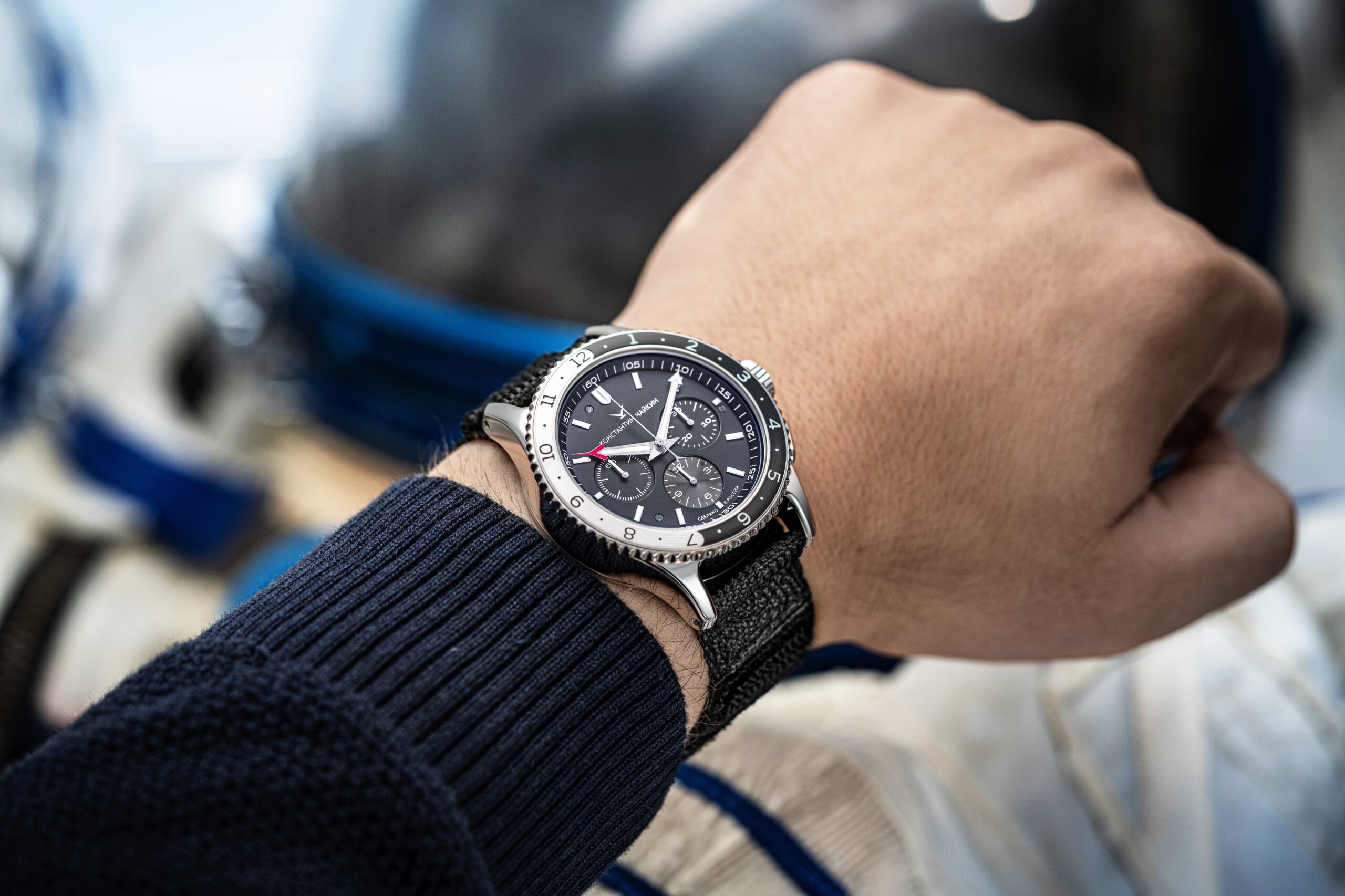
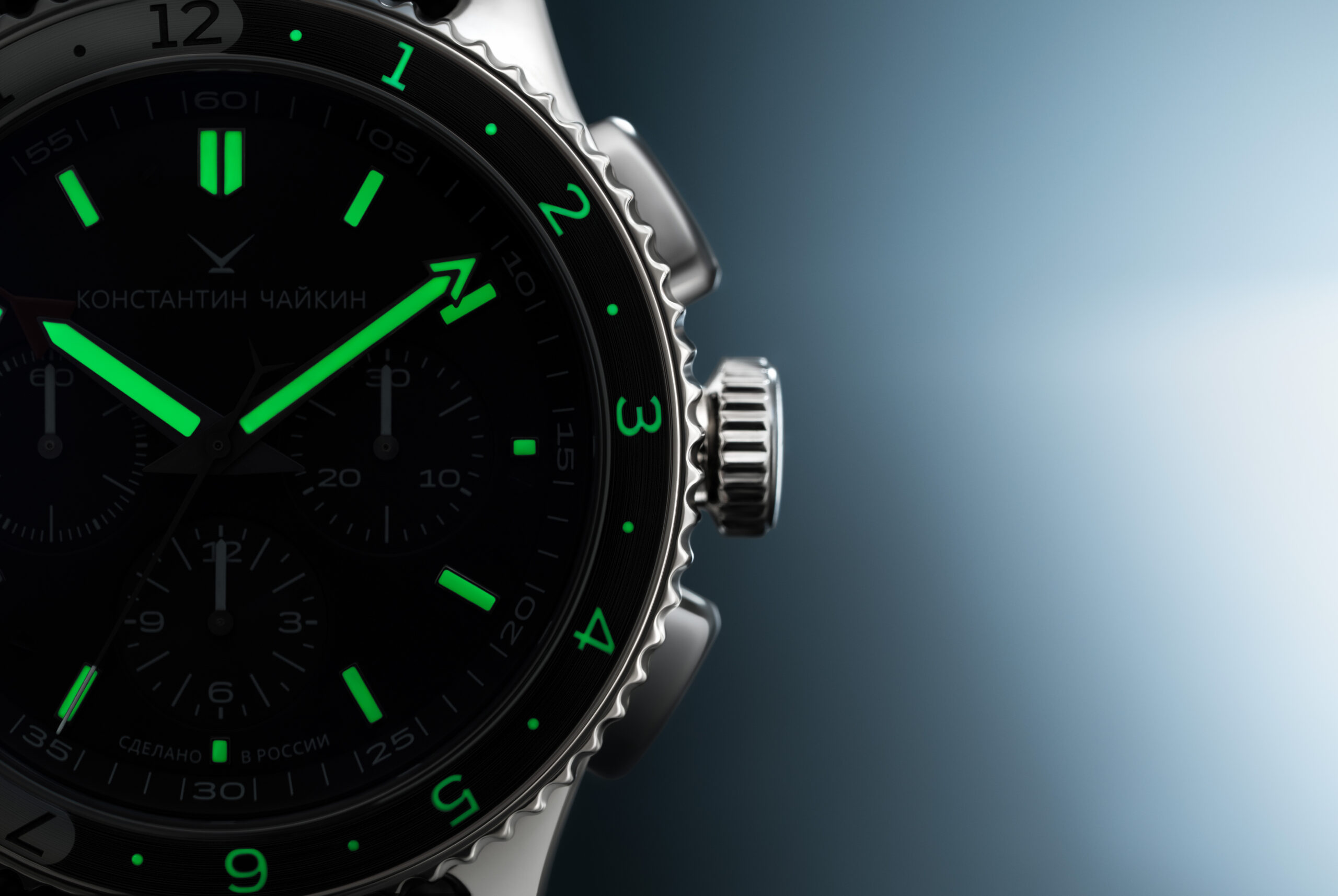
The SC02C we see now has a different set of priorities from the Space Conqueror though. It leaves out the requested date, second time zone and four-day counter as discussed on the original brief. Instead, it has a clearer black dial with large markers, three registers and a red-tipped hour hand. Its chronograph measures up to 12 hours, while the rotating 12-hour bezel provides a second way to keep track of an extended interval. Align its “12” marker with the hour hand and elapsed time can be easily read from the bezel, independently of the chronograph.
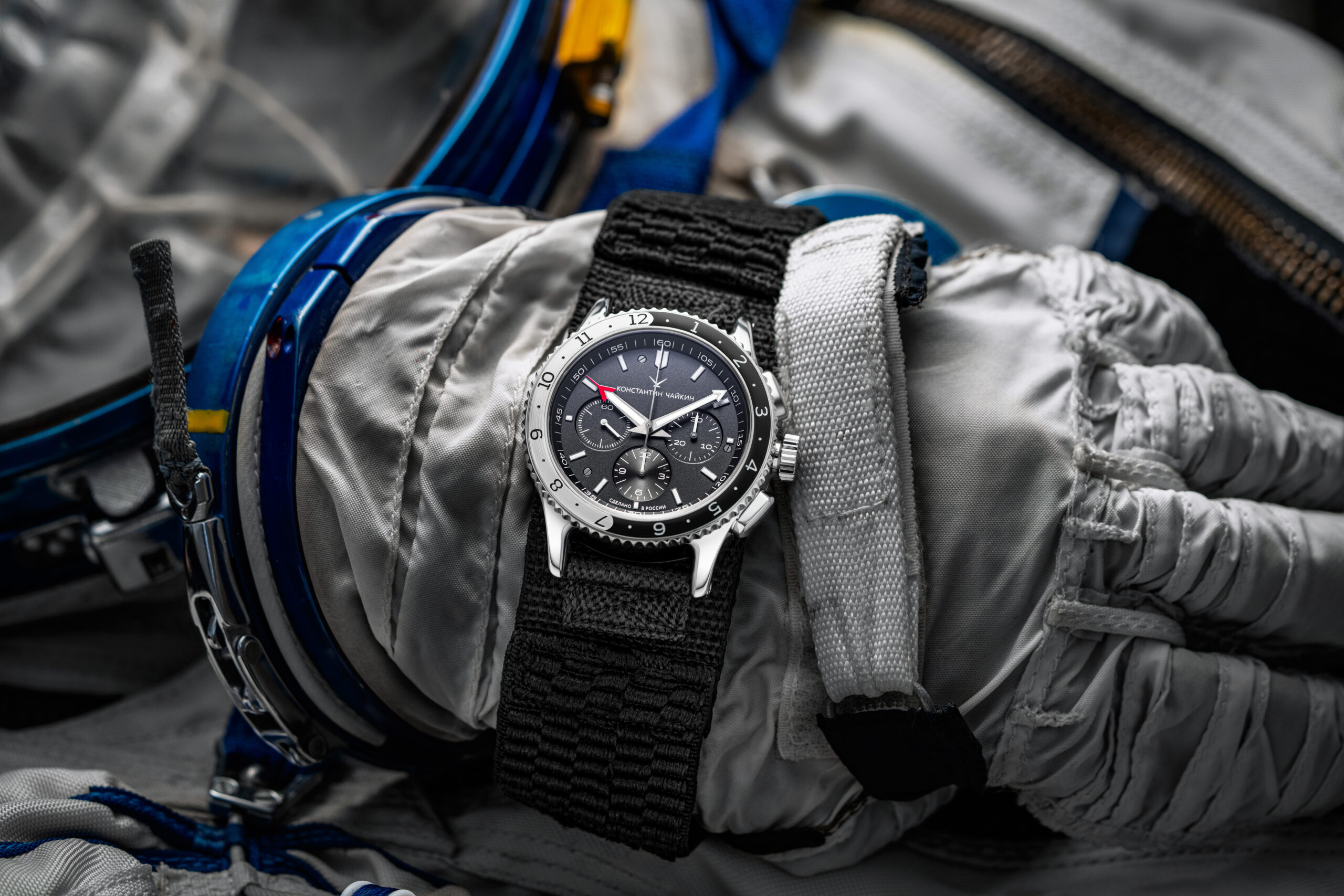
There’s a practical reason going for this backup. As Chaykin explains, a cosmonaut outside the station follows a detailed schedule and receives timing information by radio from Mission Control. A watch over the suit offers another way to check how long the spacewalk has lasted if communication is interrupted. With a finite oxygen supply, knowing the elapsed time can be critical. He likens the watch to a mechanical marine chronometer still carried aboard Russian vessels – a dependable alternative when other systems are unavailable.
Lessons from the spacewalks
The earlier developed watches served as test instruments as much as timekeepers. Chaykin says the team assessed how readily cosmonauts could use them during extravehicular activity and recorded the temperature at the watch strap on the surface of the spacesuit.
Testing also brought some changes visible on the SC02C. A domed crystal gave way to a flat one instead with more anti-reflective coating, the dial was simplified, and glare from the bezel was reduced. Cosmonauts have little to no time to study a dial while working outside the station so Chaykin had to design a less crowded display that would make it easier for users to pick up and play.
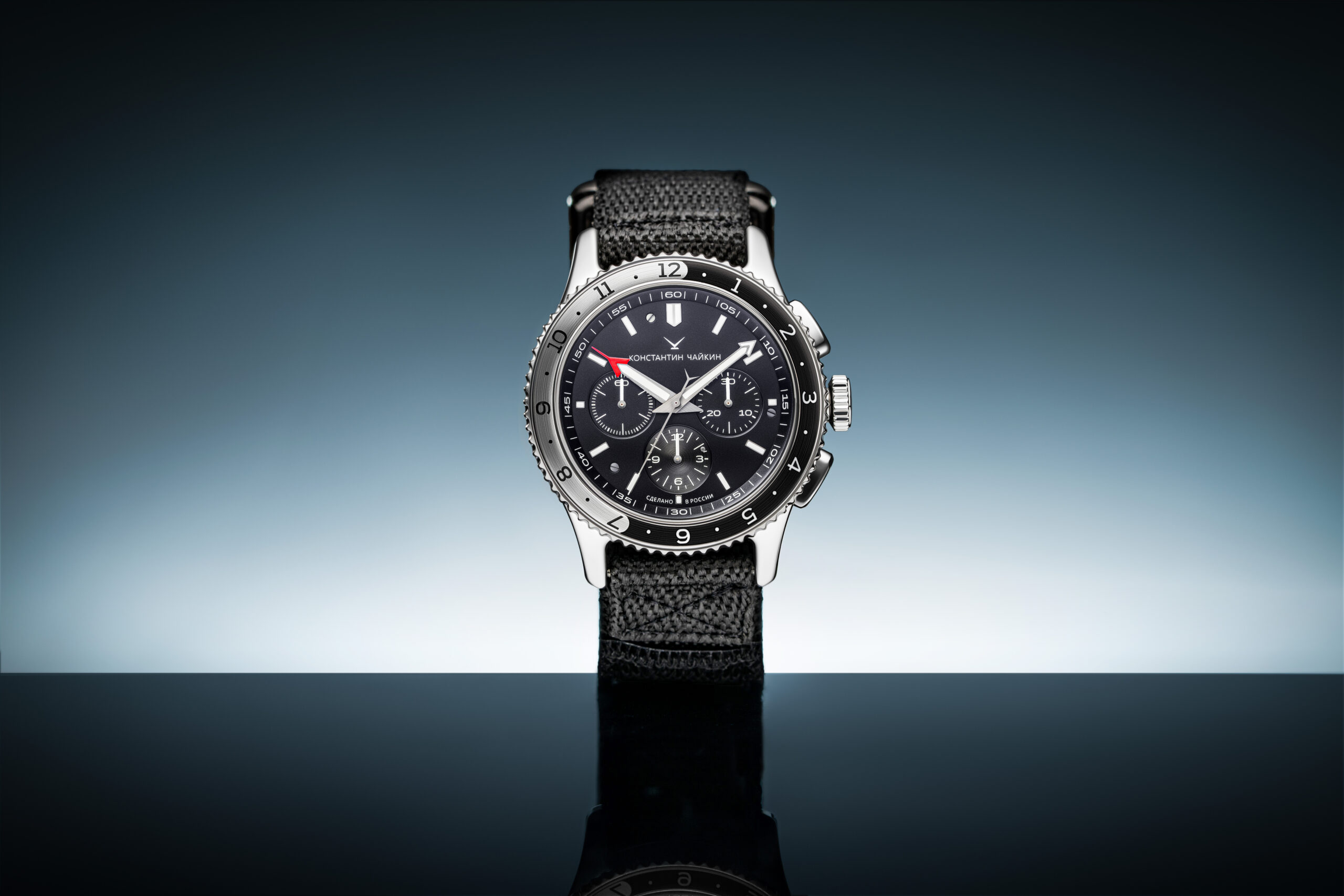
The case has its own demands. When a sealed watch goes from atmospheric pressure into a vacuum, the gas pressure inside pushes outwards against the crystal. The SC02C uses what Chaykin calls a reverse dovetail mounting to hold its flat sapphire crystal in place under that pressure difference to prevent the crystal from being forced out the case. Its steel case is designed for high true vacuum, with rounded surfaces intended to avoid damaging the spacesuit. The watch also has an anti-magnetic cover and strap pins secured against accidental loosening.
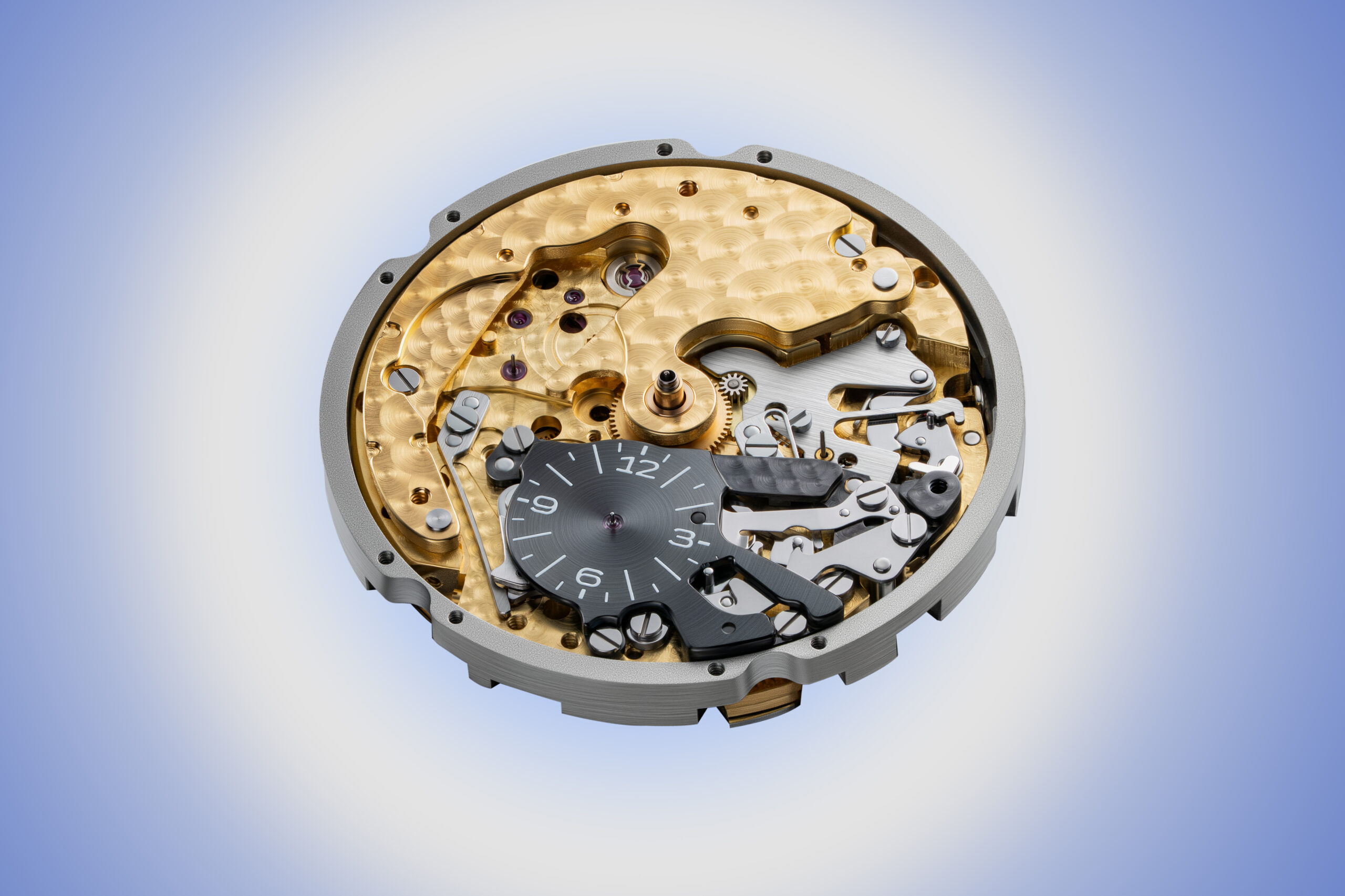
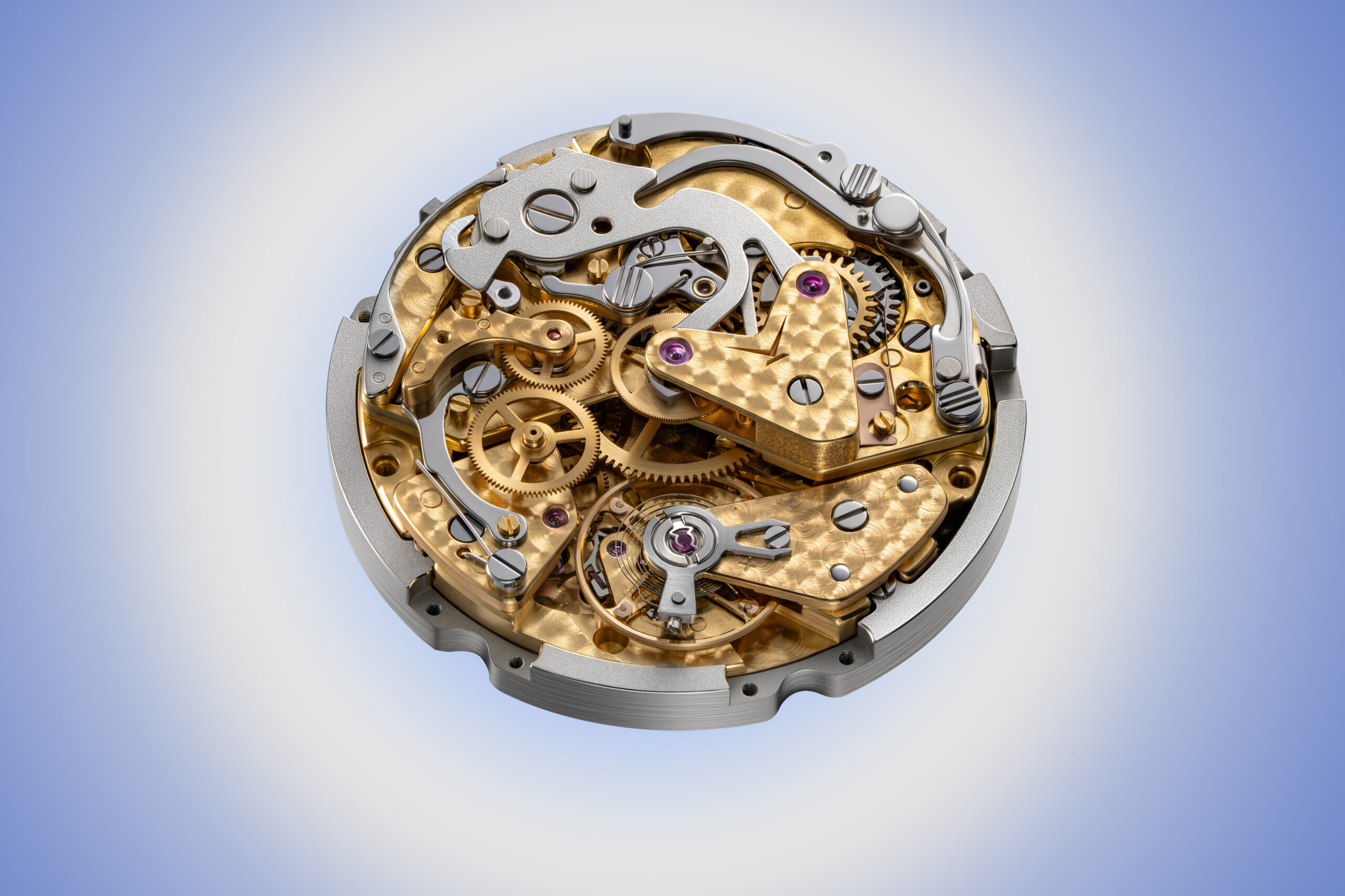
Powering the SC02C is the handwound caliber K.20-5, based on the legendary Russian Poljot 3133. Chaykin’s manufacture makes 60 components for the modified movement, including parts for the 12-hour chronograph counter. It has a stop-seconds function too for precise setting, a balance adjusted by weights, and a damping ring to help protect it from any external loads. Choosing a handwound movement was also a decision made after the team had tested automatic winding in a weightless atmosphere.
Your account of the earlier prototypes mentions testing automatic winding in weightlessness, while the SC02C is hand-wound. What led to that change?
As I mentioned, we confirmed that automatic winding works in weightlessness. Nevertheless, I think the same logic applies here as with the Speedmaster. In my view, if an automatic watch has no power reserve indicator, it is not always clear how fully wound it is.
We therefore decided to keep the construction as simple and reliable as possible. We dispensed with automatic winding: before a spacewalk, the watch is wound fully by hand, until the crown reaches a firm stop. The cosmonaut begins extravehicular activity with a fully wound movement.
This may be less convenient in use, but I believe it is a sensible decision: the instrument must operate reliably and fulfil its function.
The watch made for collectors
The SC02C measures 44mm across and 14.5mm thick, with a 45-hour power reserve. Its steel case is water resistant to 10 ATM and is specified to withstand high vacuum down to one-millionth of normal atmospheric pressure.
This production model is very closely related to the watches actually worn outside the ISS, according to Chaykin, although the experimental pieces and the watches offered to collectors have their own distinct differences.
How close is the production SC02C to the watches worn in May? Which components or specifications changed for civilian wear, and is every production watch put through the same laboratory tests?
The case size has been reduced by half a millimeter, and the movement finishing has been improved. Otherwise, the specifications are broadly the same as those of the watches used during spacewalks. Every production watch will undergo the full program of laboratory testing.
The full program of lab testing include centrifuge and vibration tests, impact, thermal cycling, exposure to a solar simulator, as well as sealing and vacuum resistance checks. Chaykin says the team measured both timekeeping and chronograph performance during the May spacewalk. He shared that the numerical results are confidential, though the watches have fulfilled their intended purpose.
Chaykin also plans to hear from the 28 owners as they wear their watches. He is particularly interested in feedback on shock resistance and how the chronograph pushers and other components hold up in use. For him, the civilian model is another opportunity to learn from the design.
A longer fascination with space
The SC02C has a working brief, but Chaykin’s interest in space began long before the Roscosmos entered the picture. It also gave rise to his previous Lunokhod and Mars Conqueror watches. When we asked where this fascination began, he went back to a childhood supply of books.
What first sparked your interest in space? Is there a particular memory, mission or discovery you trace it back to?
It all started with science fiction. In 1986, my father went to Vietnam for a year and brought back two huge suitcases full of Soviet books. At that time, they were in extremely short supply in the Soviet Union.
The collection included a lot of Soviet and space sci-fi—Tolstoy, Belyaev, Yefremov, Bulychev, and other authors. I used to devour those books, reading with a flashlight under the blanket. That was how the space theme entered my life, later inspiring the creation of the Lunokhod and Mars watches, as well as my other pieces of watchmaking art.
This childhood fascination is easy to see in the practical expression that is the SC02C, and the prototypes that preceded it. Chaykin says he is already working on another watch intended to operate on one of Earth’s neighboring planets, though he has not identified the planet or explain how the watch will work.
He describes the prospect of his space projects in personal terms:
“Even if I cannot fly into space myself, my watches will be there. They are a piece of me, the fruit of my labor. Knowing that they are out there, beyond Earth, continuing to travel—that is deeply moving and important to me.”
Konstantin Chaykin

You may also like
News
Last Week in Watches: Patek Philippe Takes Milan, G-Shock Turns to Blue Sapphire
Oct 5, 2026
News
Last Week in Watches: Patek Philippe Takes Milan, G-Shock Turns to Blue Sapphire
Oct 5, 2026
News
Last Week in Watches: Moser Goes Off-Grid, the Vacheron Constantin Overseas Turns 30
Sep 28, 2026
News
Last Week in Watches: Moser Goes Off-Grid, the Vacheron Constantin Overseas Turns 30
Sep 28, 2026
Editorial
Konstantin Chaykin’s Hungry Wolf
Sep 3, 2026
Editorial
Konstantin Chaykin’s Hungry Wolf
Sep 3, 2026