Audemars Piguet at Watches and Wonders 2026: Atelier des Établisseurs
News
Audemars Piguet at Watches and Wonders 2026: Atelier des Établisseurs

Earlier this year, during Audemars Piguet’s annual Social Club, the brand set out a stall with new releases that included versions of the Royal Oak but equally leaned into lineages and objects that sat slightly outside the orbit of that signature model. The pieces raised the question of what else the manufacture wants to be known for? Under the stewardship of CEO Ilaria Resta, that question is being answered with unusual directness. Heritage is not being treated as a static archive but as a working system.
The Atelier des Établisseurs is the clearest expression of that shift so far. It takes its cue from the 18th-century établissage model and rebuilds it as a contemporary structure. The point is not to recreate the past but to reintroduce its logic: small numbers, distributed expertise, and the idea that a watch can be the sum of named contributions rather than a single industrial process. The three opening pieces make that explicit, each effectively a coordination exercise between jewellers, engravers, lapidarists, movement designers, and watchmakers, often working beyond the manufacture’s walls.
The Opening Trilogy:
The watches don’t define the limits of the project. Instead, they show what becomes possible when commercial constraints are reduced:
The Galets
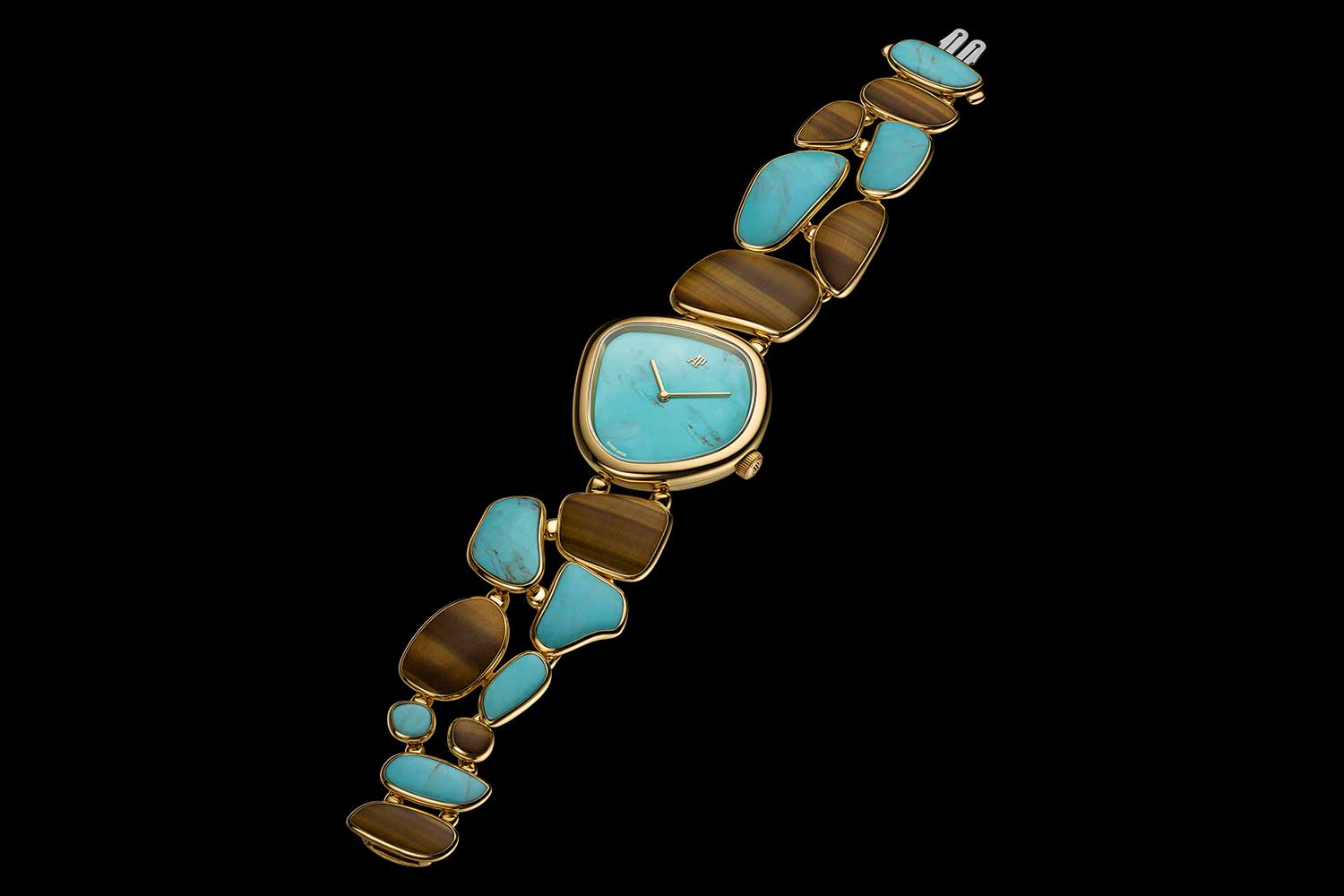
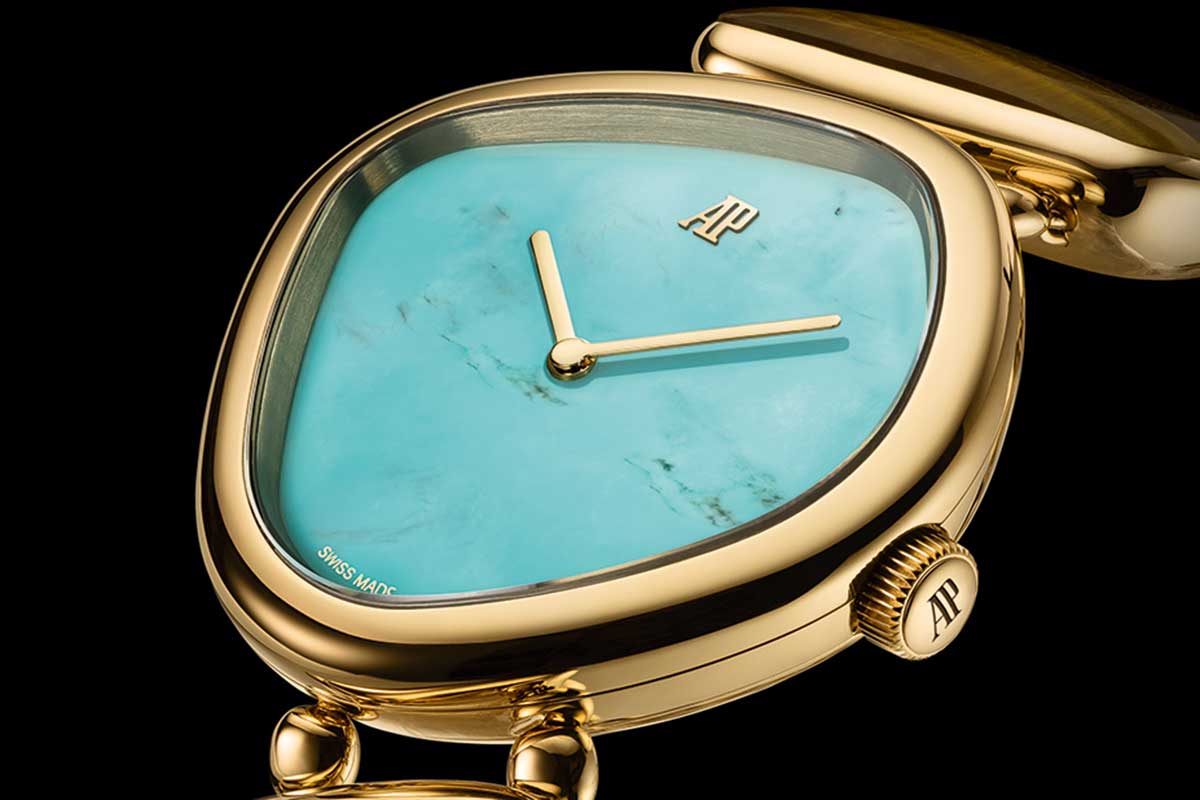
The Audemars Piguet ‘Galets’ features a bracelet of irregular turquoise and tiger’s eye stone links, conceived as a fluid jewellery object
Inspired by the 1972 Arabella model, this is the most contained of the trio consisting of a small, pebble-shaped gold watch built around a stone dial and a bracelet made of irregular, stone-set links that move like loose objects rather than fixed components. The watch reads as jewellery first, but the shaped Caliber 3098 inside, featuring bridges grained by hand, has been adapted to follow the case, and the assembly is handled by a single watchmaker.
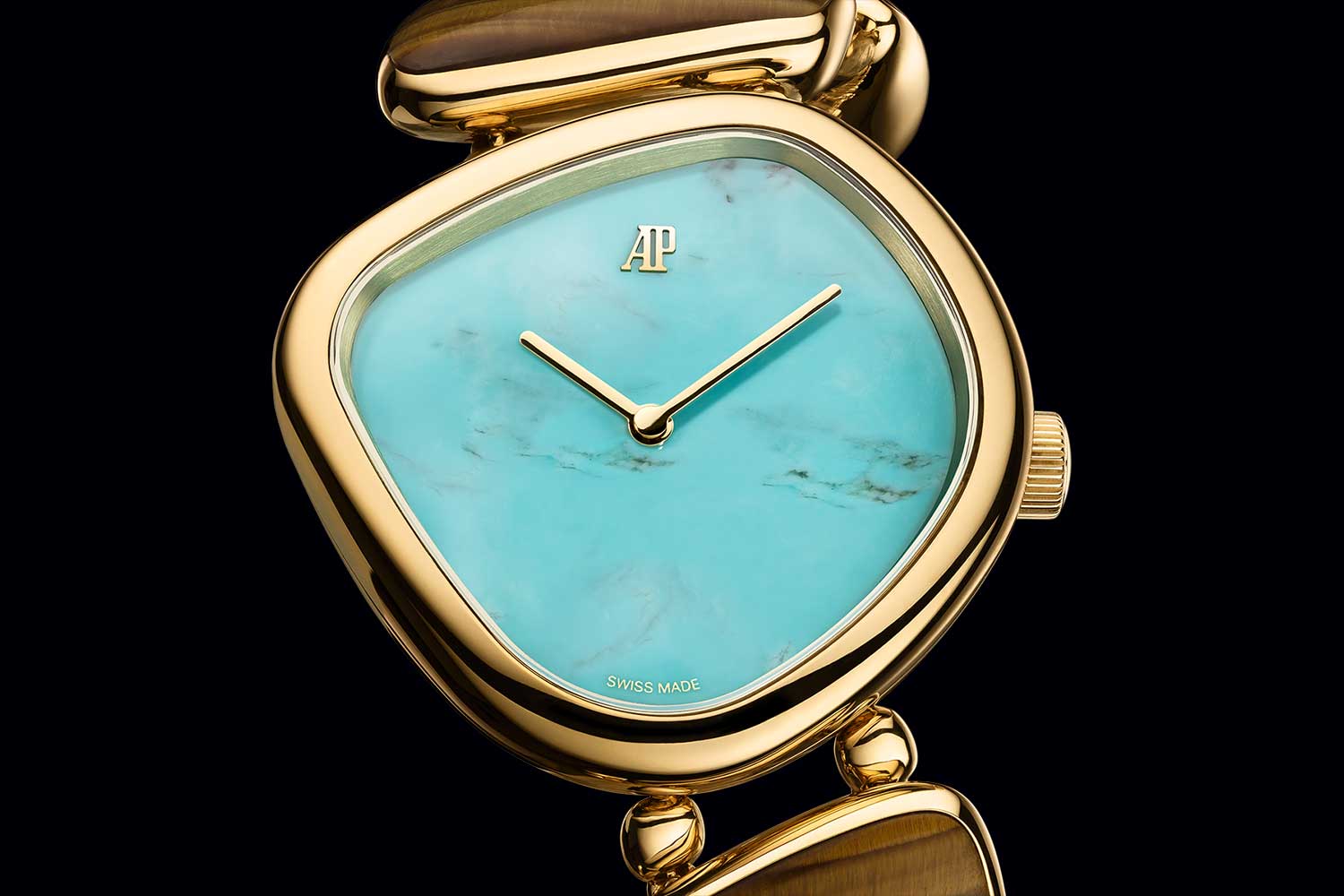
Audemars Piguet Atelier des Établisseurs ‘Galets’ in yellow gold with turquoise stone dial, showcasing the collection’s jewellery-led design language
The Nomade
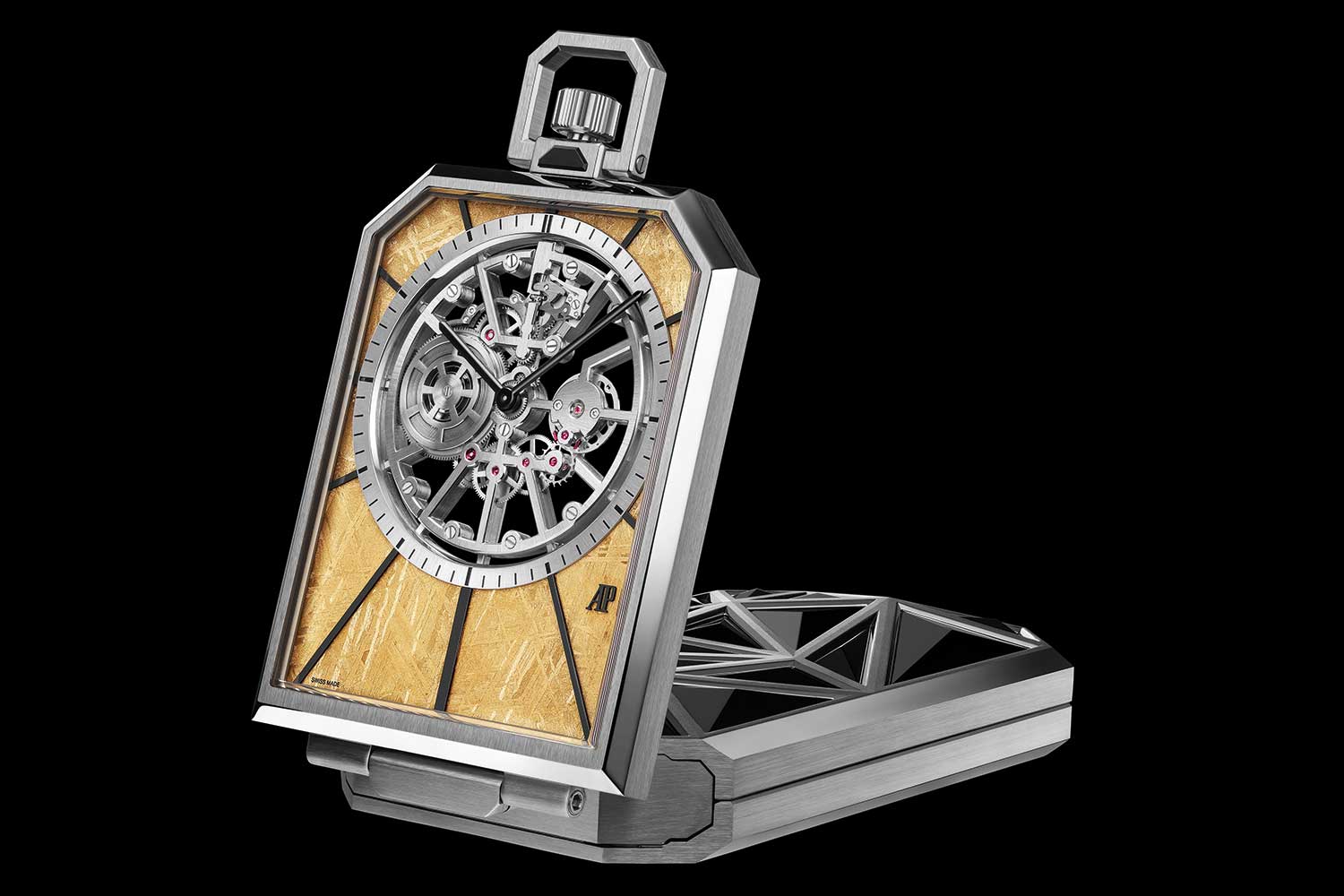
Audemars Piguet Atelier des Établisseurs ‘Nomade’, a transformable timepiece featuring a skeletonised calibre and architectural case design
The Nomade shifts the format entirely. It is designed to move between states and can be worn, carried, or placed on a table top. It features the Calibre 7501, skeletonised using a traditional hacksaw technique that Audemars Piguet has preserved since the 1930s. Here, the structure itself indicates the time rather than relying on a conventional dial. The case, which combines a metal framework and precisely cut stones, makes as much of a statement as the calibre.
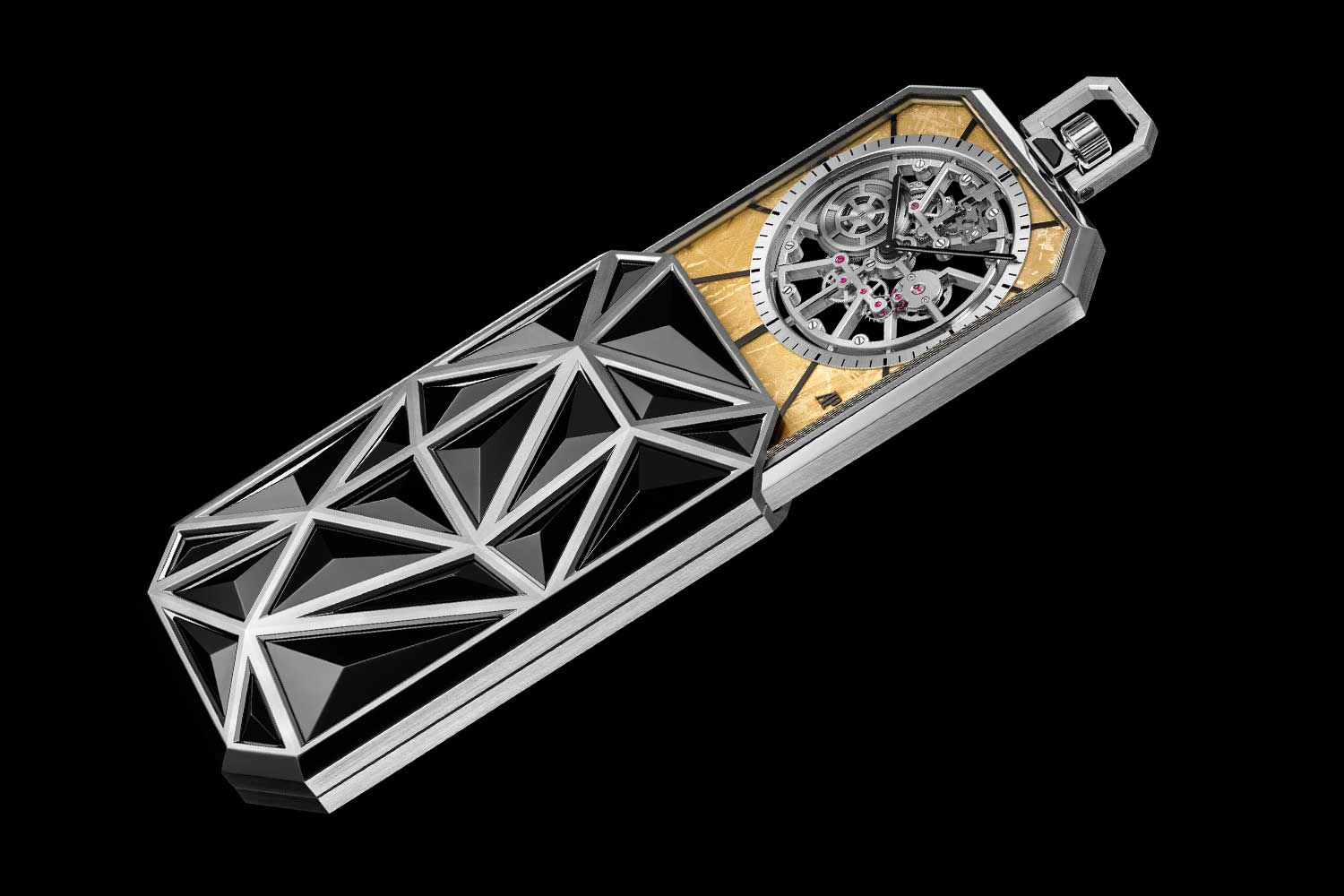
The ‘Nomade’ shifts between object and timepiece, with a faceted, sculptural case that conceals its skeletonised movement
The Peacock
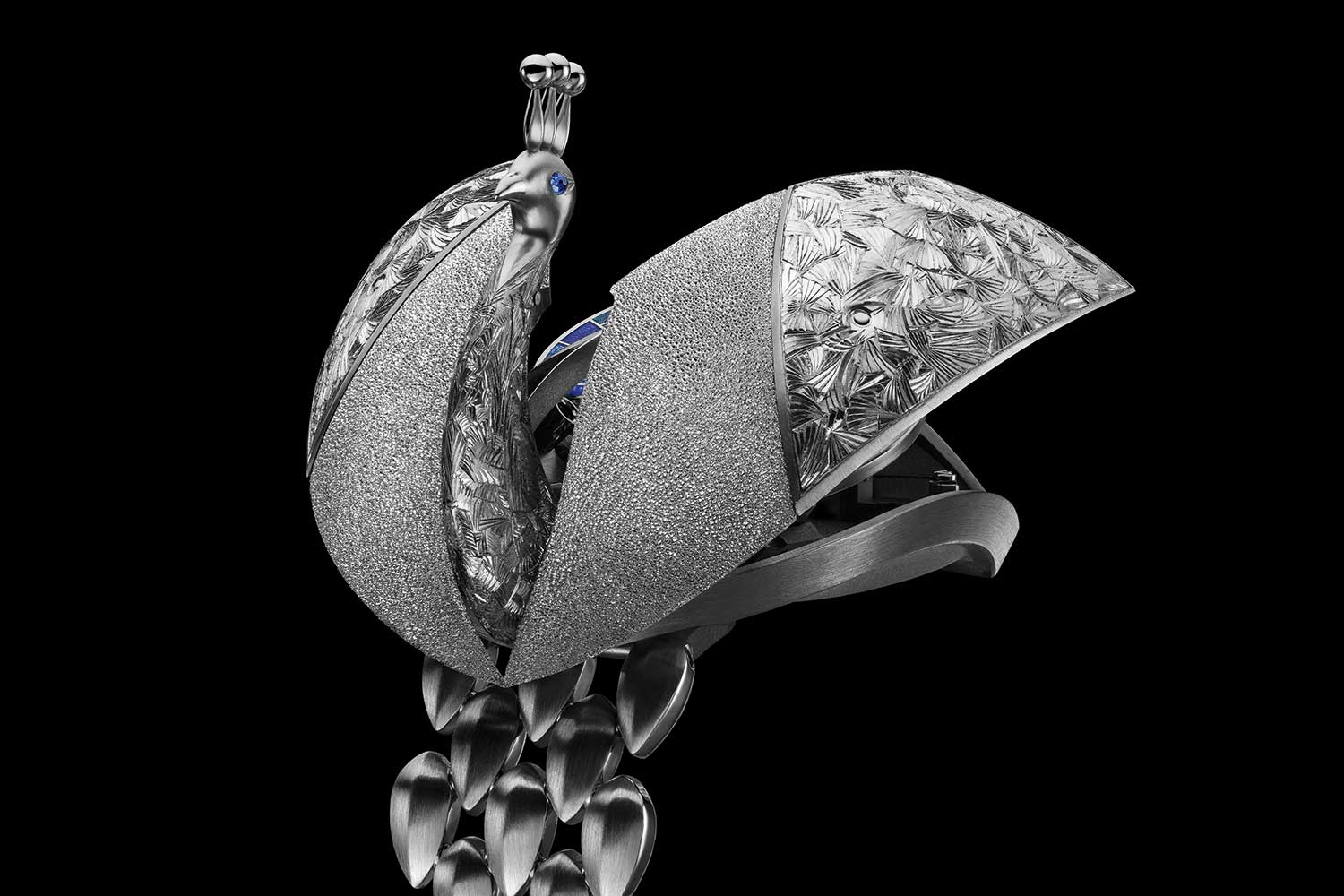
Hand-engraved feathers and textured surfaces bring the peacock form to life, concealing the time display within
This piece takes a dive into automaton territory. A secret watch, the entire shape opens to reveal a small enamelled peacock and a discreet hour display, where engraving, enamelling, and gem-setting take precedence. The mechanism was conceived by Giulio Papi and features a dragging hour display set against a sunburst-decorated movement.
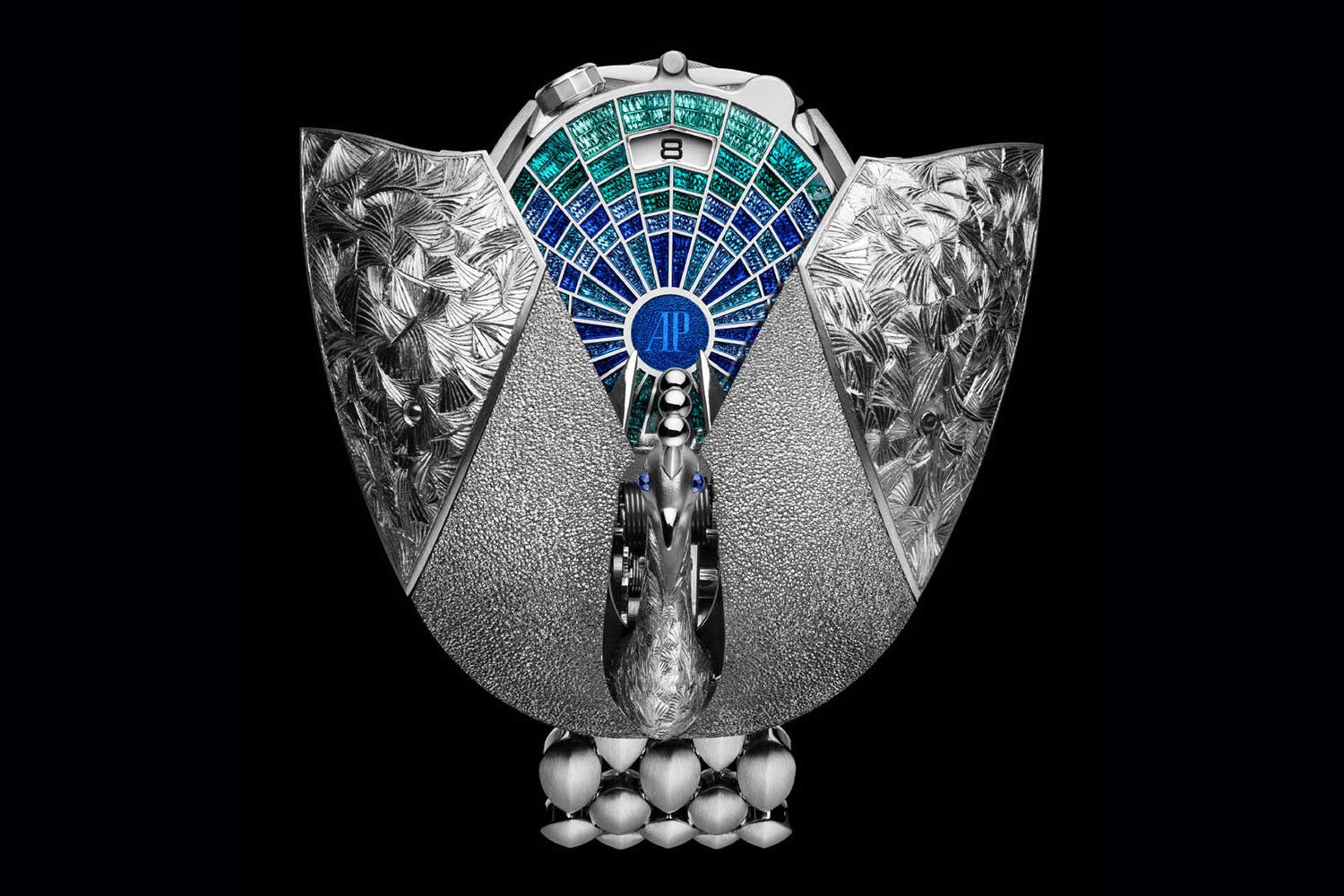
Audemars Piguet ‘The Peacock’, an haute joaillerie automaton watch that reveals a radiant gemstone dial framed by intricately engraved wings
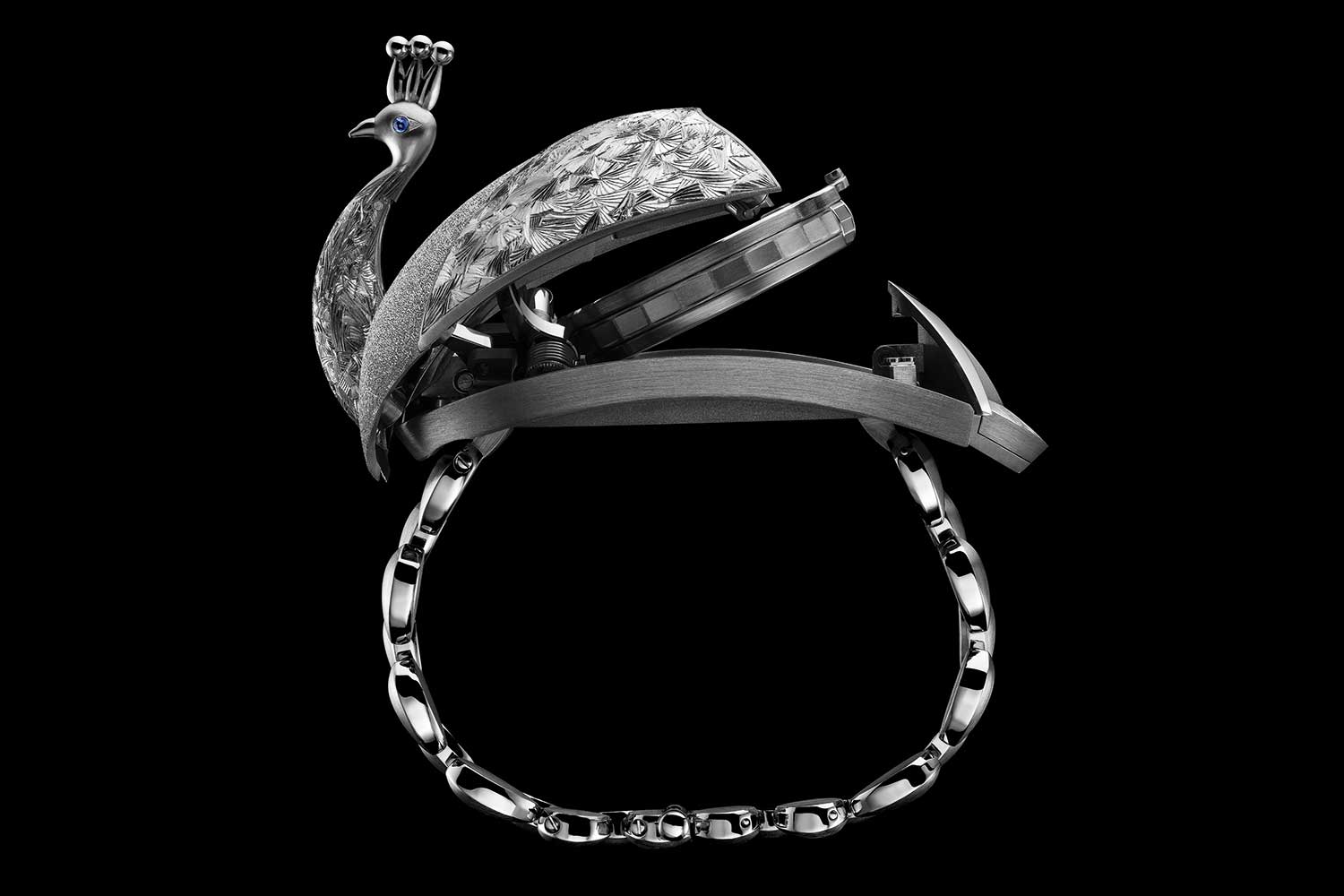
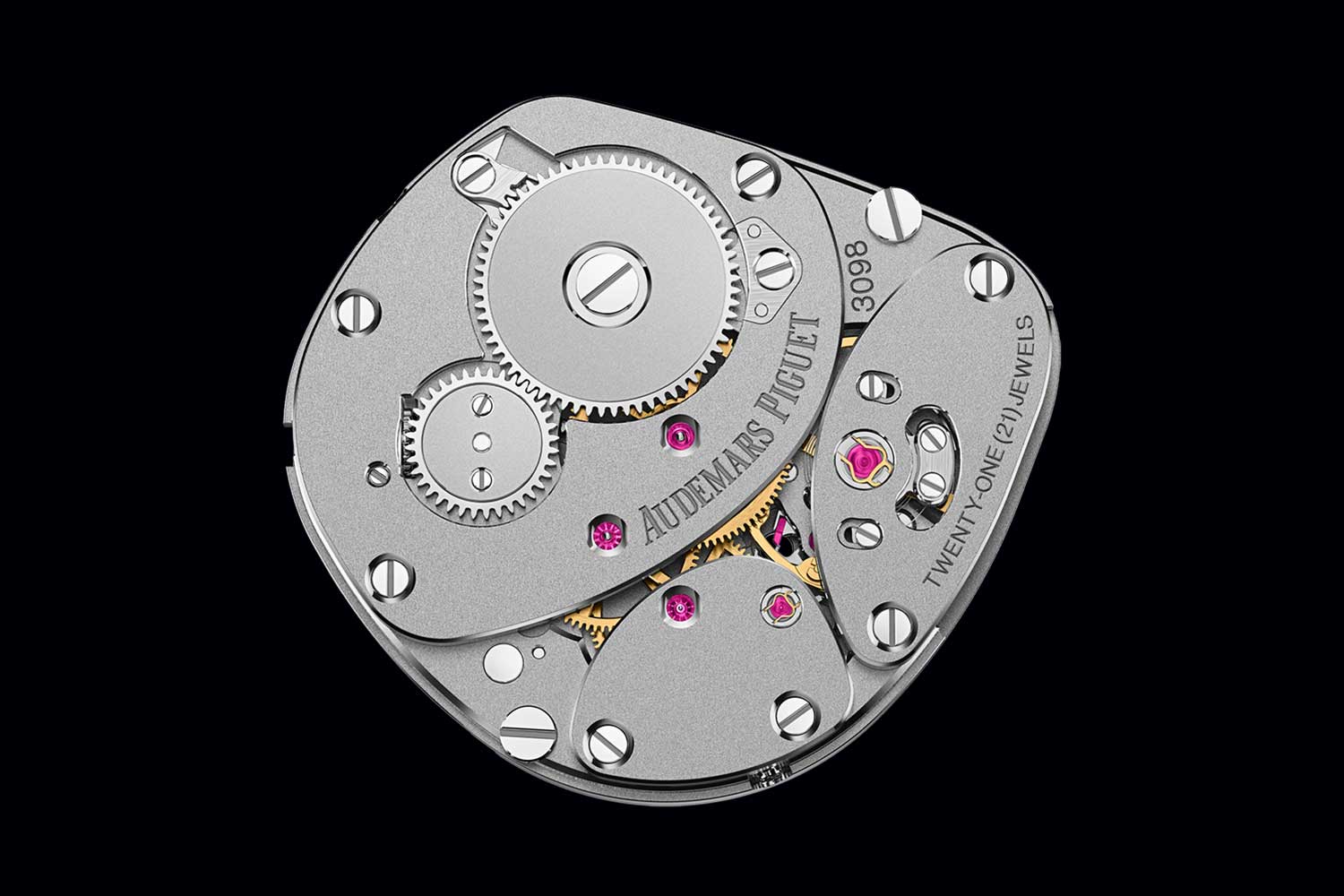
The manually wound calibre at the heart of ‘The Peacock’ powers both timekeeping and its intricate automaton animation
This program places Audemars Piguet in a lineage of projects that foreground the individual. MB&F has built its identity around collaborators credited as co-authors. Its predecessor, Harry Winston’s Opus series handed the reins to independent makers and let them sign the result. Louis Vuitton’s recent programme of collaborations with Kari Voutilainen, Rexhep Rexhepi and, most recently, De Bethune, has led to some of the most innovative timepieces of recent years.
What AP is doing is adjacent but not identical. The emphasis here is less on external names and more on reconstructing a way of working. Naming artisans is part of it, but so is showing how a watch comes together when responsibilities are deliberately split and then recomposed. The lists of contributors attached to each piece are unusually long for a major brand, and that is intentional.
There is also a strategic layer. While RE[Master] revisits specific references and updates them with current techniques, Atelier des Établisseurs operates differently. It draws on categories, crafts, and methods that sit in the archive, but without tying itself to a single historic model. That gives AP room to talk about its past without repeating it.
Taken together with the January releases, the direction becomes clearer. Audemars Piguet is not stepping away from the Royal Oak, but it is building a parallel story where the brand is defined by a wider body of work. The Atelier des Établisseurs is a mechanism for doing that, linking contemporary output to an earlier, less centralised form of watchmaking, and in doing so expanding what “heritage” means in practice.
Audemars Piguet

You may also like
News
Last Week In Watches: Rolex Revives the Padellone, Hublot Goes Full Koons
Sep 21, 2026
News
Last Week In Watches: Rolex Revives the Padellone, Hublot Goes Full Koons
Sep 21, 2026
Editorial
Padel Is Now Watchmaking’s Newest Court of Play
May 18, 2026
Editorial
Padel Is Now Watchmaking’s Newest Court of Play
May 18, 2026
Editorial
The Audemars Piguet x Swatch Royal Pop Was Never Going To Be A Simple Royal Oak
May 13, 2026
Editorial
The Audemars Piguet x Swatch Royal Pop Was Never Going To Be A Simple Royal Oak
May 13, 2026