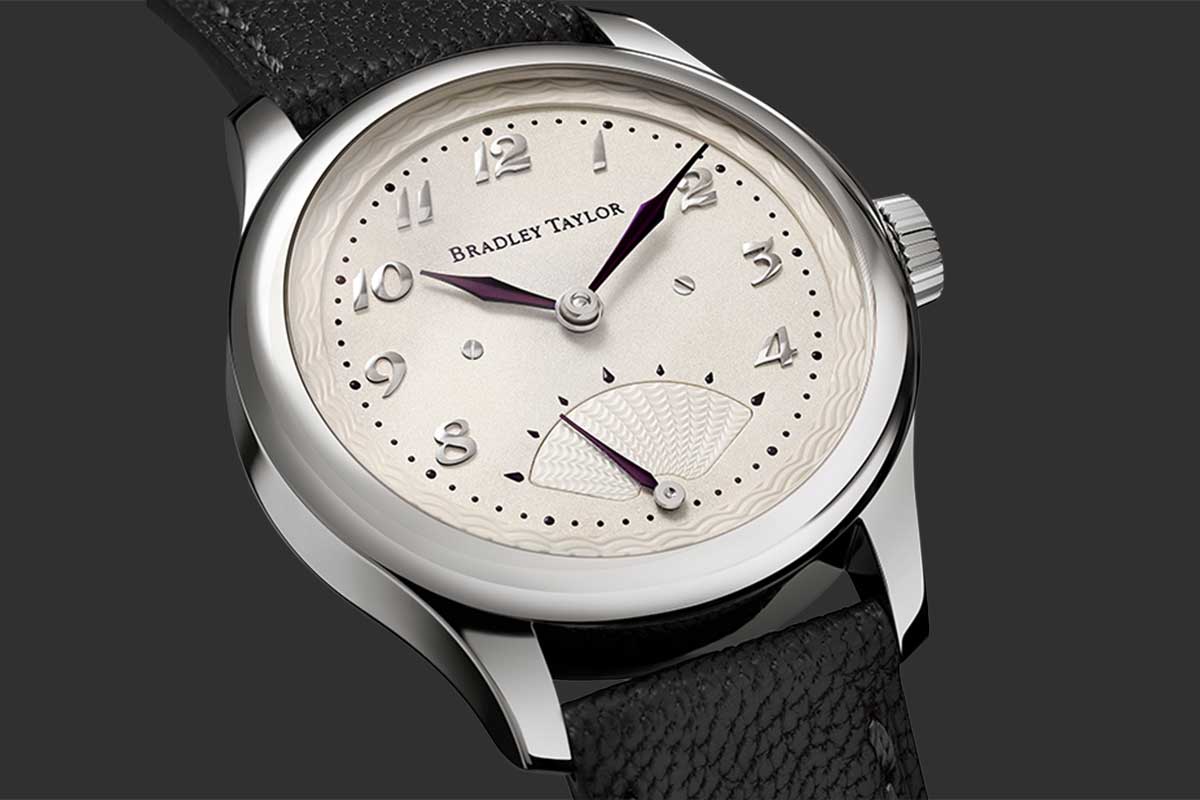
Canadian Watchmaker Bradley Taylor Introduces the Ardea
Editorial
Canadian Watchmaker Bradley Taylor Introduces the Ardea

There is no shortage of high-quality time-only watches in the present market, many of which seize every opportunity to dazzle the eye. But there is something to be said about those that do not arise from a desire to impress, but instead from the simple pursuit of excellence and mastery of the work itself. This is the case with the Ardea by Canadian watchmaker Bradley Taylor.
Born in Toronto, Taylor trained at the Korpela & Hofs Watchmaking Competence Centre in Le Locle under Henrik Korpela. He then went on to work in after-sales service in Geneva, earning a Patek Philippe Level II certification and gaining experience in servicing and restoration before setting out independently. Today he works alone in a 1,000 sq ft workshop in North Vancouver. He made his debut in 2021 with the Paragon, followed by the Lutria a year later. Both were time-only watches with engine-turned dials and a highly refined version of Vaucher’s micro-rotor movement.
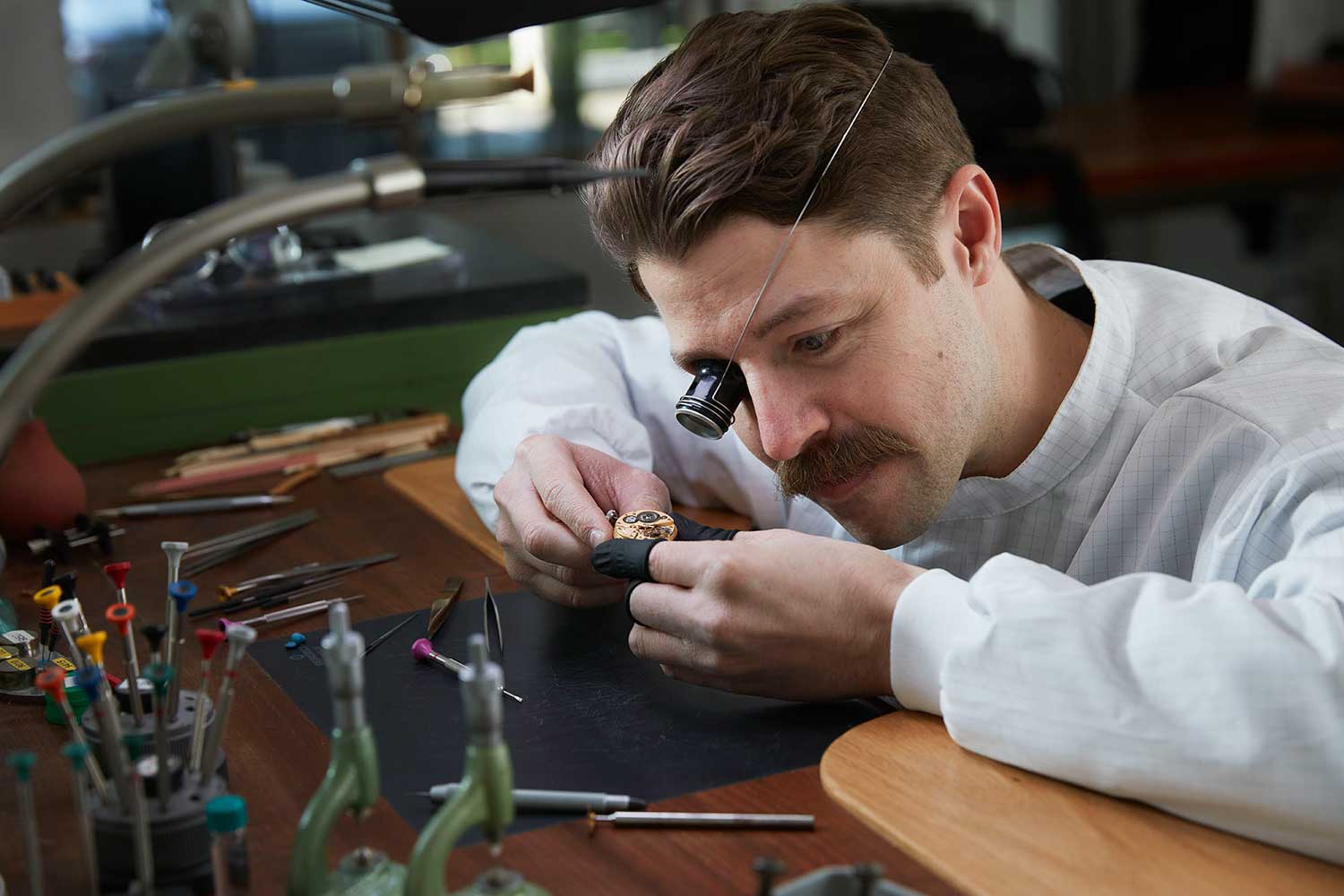
Bradley Taylor in his North Vancouver workshop
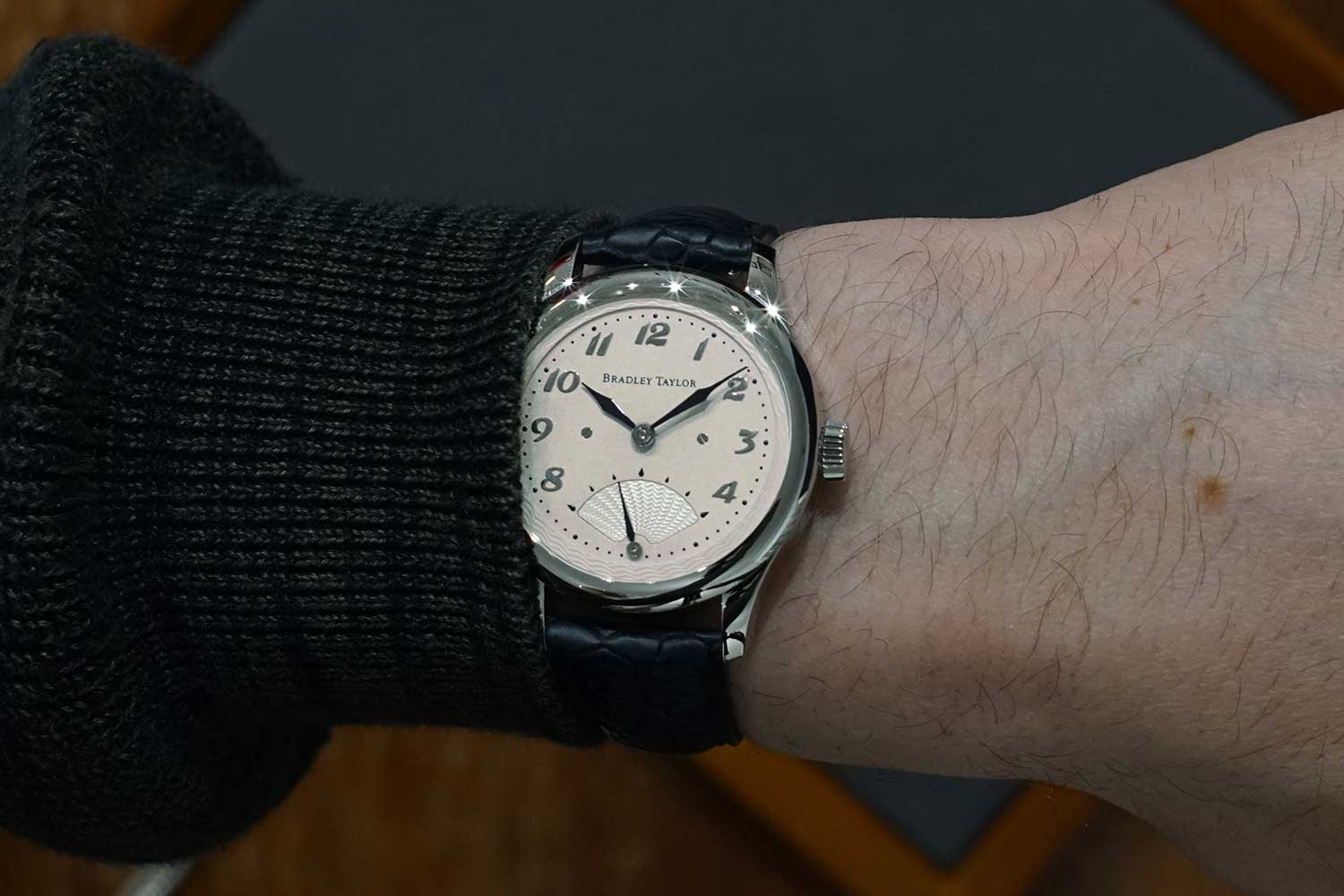
The Ardea is limited to 50 pieces in total, offered in either steel or platinum and measures 37.8mm x 10.9mm. It is distinguished by a handmade silver dial and a finely decorated movement with a retrograde seconds, developed in-house over four years. Named for its 4.75mm thickness, the Calibre 475RS is based on the architecture of the famed Omega 30T2 but virtually every part was manufactured from scratch by Taylor himself including main plate, bridges, train wheels and free-sprung balance wheel.
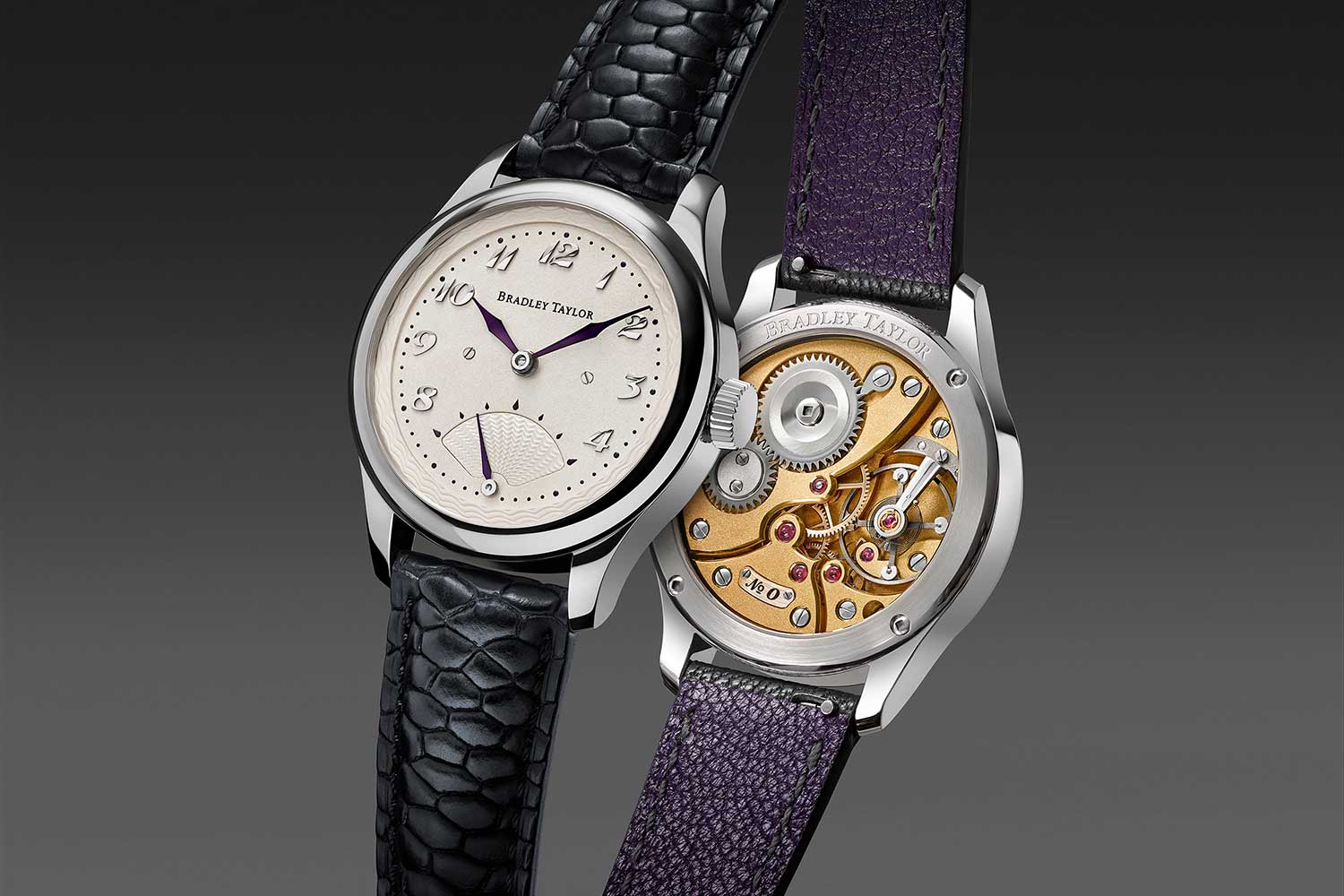
Bradley Taylor Ardea
The Omega 30T2 family is renowned for its extremely robust gear train and ease of service, as it was designed with unusually clear priorities. These were precision-made, hand-wound movements built for accuracy, durability and straightforward maintenance, intended to function reliably over a lifetime rather than to serve as any form of luxury statement we have grown accustomed to. Faced with that kind of self-sufficiency, Taylor saw little reason to redesign it. In fact, relying on proven, highly robust train ratios is a perfectly respectable approach that brings to mind that of many other watchmakers, including Philippe Dufour, whose Simplicity was based on the Valjoux VZSS.
In place of the usual sub-seconds, Taylor added a 60-second retrograde mechanism. It consists of a snail cam, rack and return spring, which convert continuous rotation into a controlled rise and an abrupt release. Resting against the surface of the cam is a feeler at the end of a rack, which is essentially a pivoted lever with teeth along one edge. A light spring keeps the feeler pressed against the cam at all times. As the cam turns and its radius increases, it pushes the feeler outward in a smooth, progressive motion. Because the rack is meshed with a pinion connected to the seconds hand, the outward movement is translated into the steady sweep of the hand across its scale. As the feeler reaches the highest point of the cam and drops suddenly back to its starting radius, the return spring, now fully tensioned, pulls the rack back to its original position in a single motion. Because the rack is still engaged with the pinion, the movement sends the hand snapping back to zero.
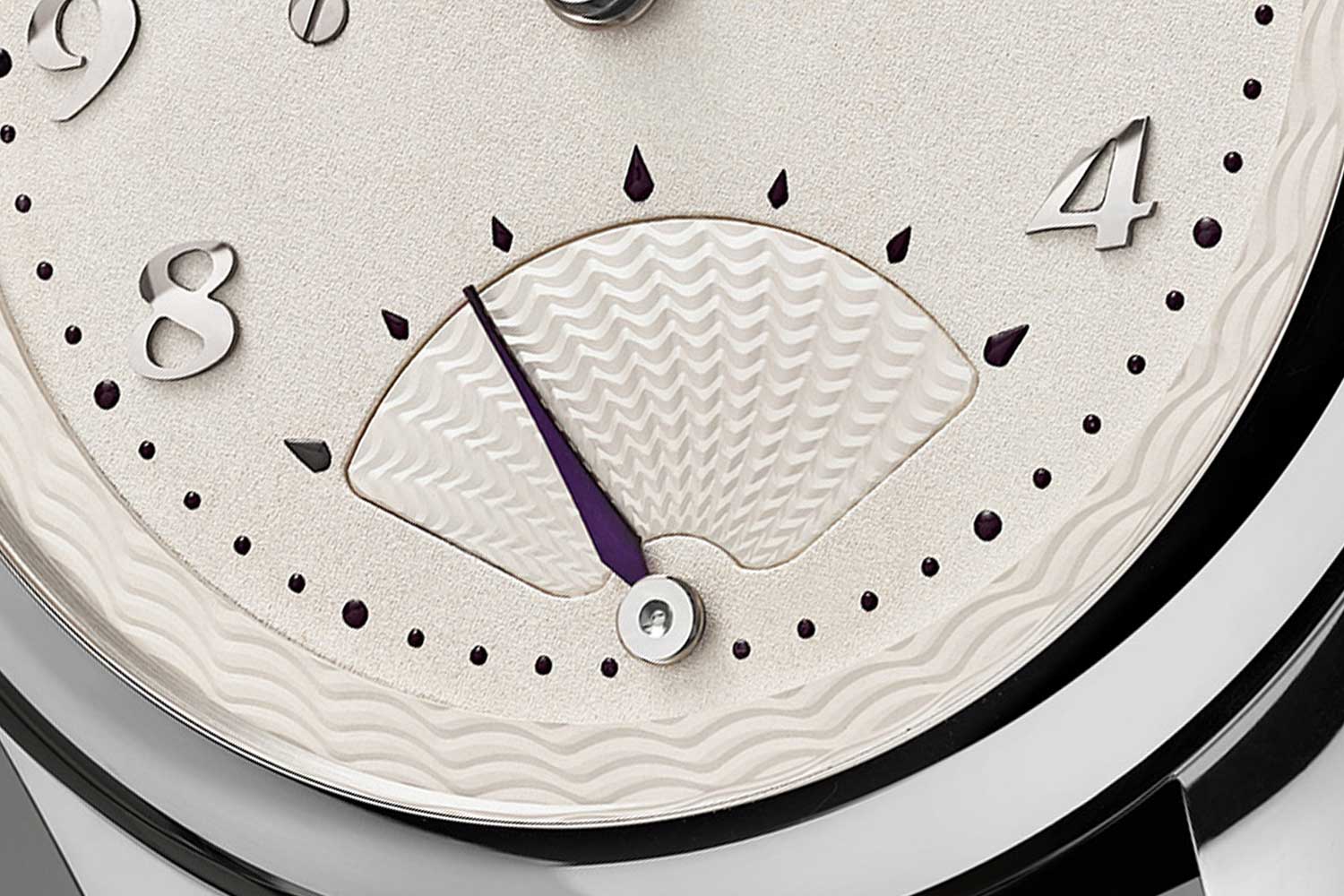
While straightforward in principle, it demands precise execution to function properly and reliably. The seconds hand must return to zero virtually instantaneously, without hesitation or overshoot. Operating essentially as a one-man R&D team, Taylor spent a year testing the mechanism to ensure that the wear from the 1,440 daily reset cycles remains negligible and consistent with long-term reliability.
The movement was enlarged slightly to 31mm. Jewels were added to the barrel arbour to improve winding efficiency and reduce friction. There is also a stop-seconds function, which is one of those features that, at this level, you tend to expect and whose absence in watches of this vein can be glaring. The large balance is free-sprung, made in-house from grade 5 titanium, with platinum inertial weights set into the rim. It’s paired with a Breguet overcoil hairspring.
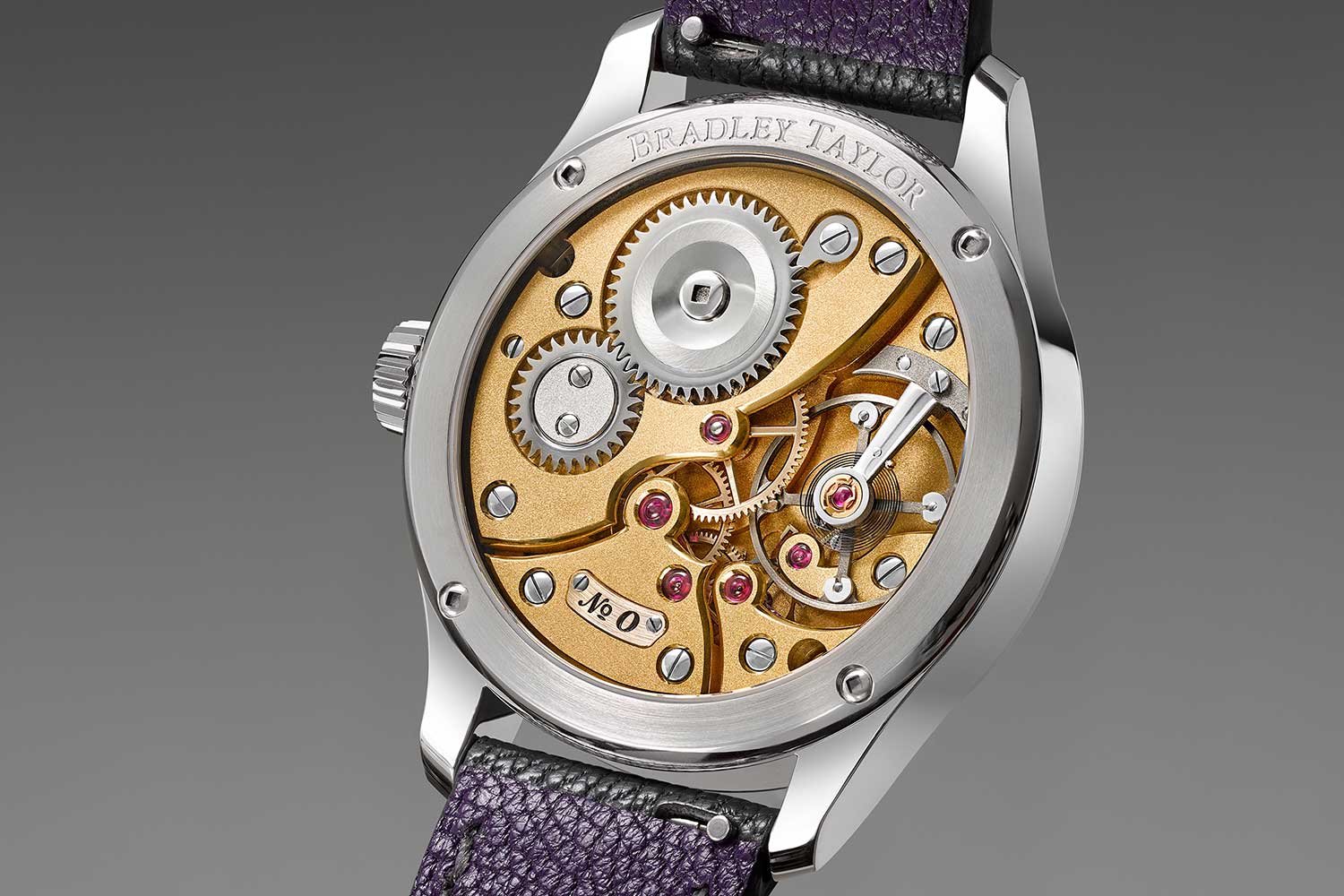
The train wheels are made from solid 14K gold, each finished by hand over the course of a full day, and the result speaks for itself. Each wheel has wide polished bevels along the spokes, along with sharp internal corners. Other highlights include the polished wolf’s teeth on the crown and ratchet wheels, the domed screwheads and the slim, rounded balance cock. Even the top surfaces of the train jewels were polished round by hand.
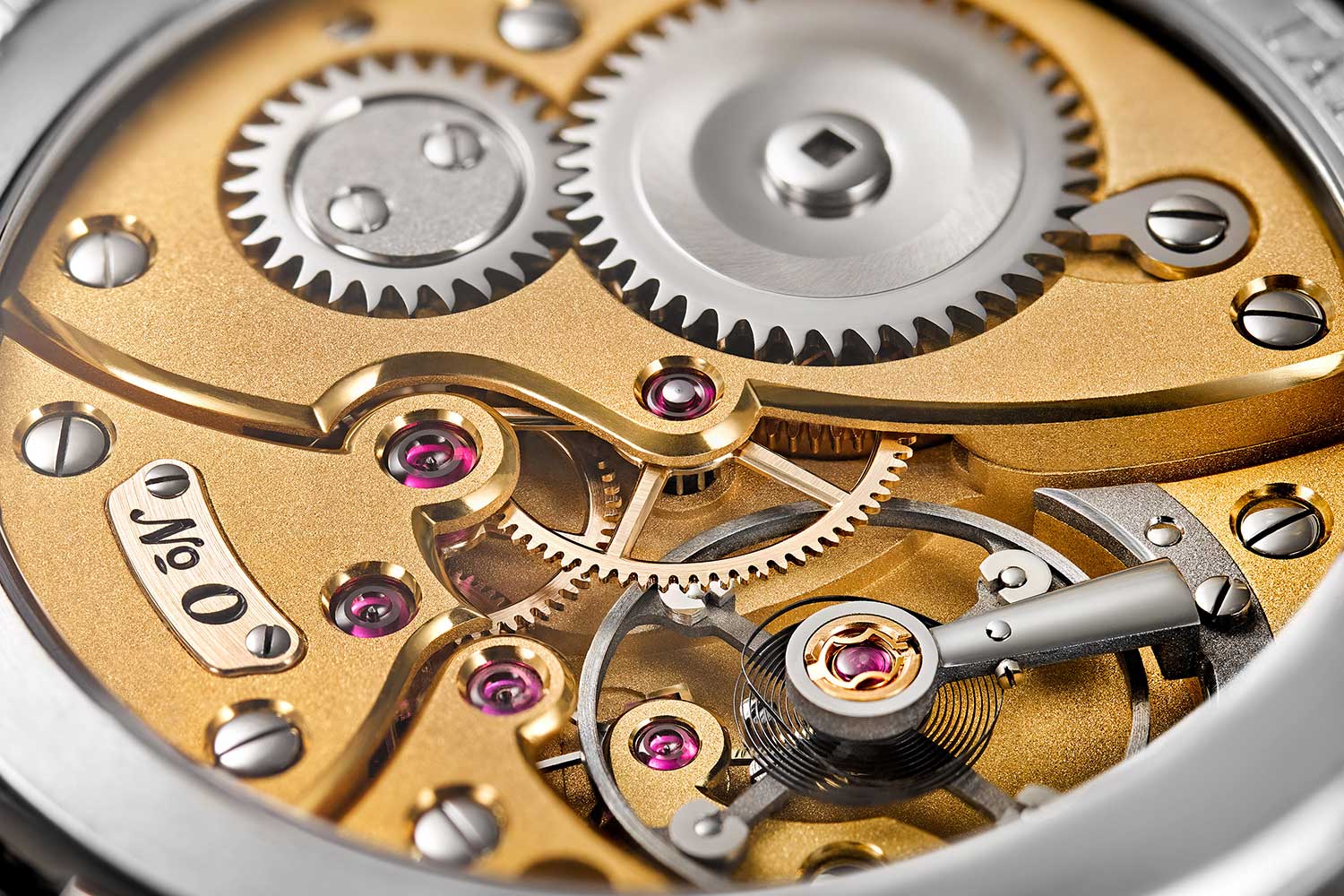
The anglage on the bridges is equally immaculate. Taylor had spent some time learning the craft from Philippe Narbel. At this level, no rotary tools or polishing wheels commonly employed at large brands are used. While such methods also fall into the category of hand applied, the quality is visibly different.
Taylor first applies the frosting to the surfaces of the bridges, which are then protected with lacquer. Thereafter, the shape of the bevel is formed using a needle file, establishing its width and angle. It is then refined using abrasive paper on wood, working progressively from around 15 micron down to 3 micron to remove file marks while preserving the line. Final polishing is carried out with gentian wood charged with diamond paste, first at 3 micron and then 1 micron, bringing the surface to a mirror finish. The bridges and mainplate are subsequently electroplated in gold.
One unusual detail is that the case back and ratchet wheel are held in place by square head screws. The design, first patented by Canadian inventor P. L. Robertson in 1908, offers better resistance to driver slippage than Phillips or slot-headed screws. They are formed using EDM, where material is eroded by controlled electrical sparks. Custom copper electrodes and dedicated tooling were developed to produce the sharp, precise geometry required.
The silver dial is equally beautiful. It comprises of three main parts – an outer guilloché border, main dial, and a guilloché seconds sector. The border and the seconds sector were engine-turned on a restored 120-year-old rose engine. While there are several ways to achieve a silvery white finish, most commonly galvanic treatment, Taylor went with the traditional way – by depletion gilding, also known as Breguet frosting. The silver is heated to raise a thin oxide layer on the surface, which is then removed with a sulphuric acid mixture. The process is repeated several times to purify the silver, leaving behind a clean, silvery white finish with a fine matte texture that recalls frost. The dial is then protected with Zapon lacquer.
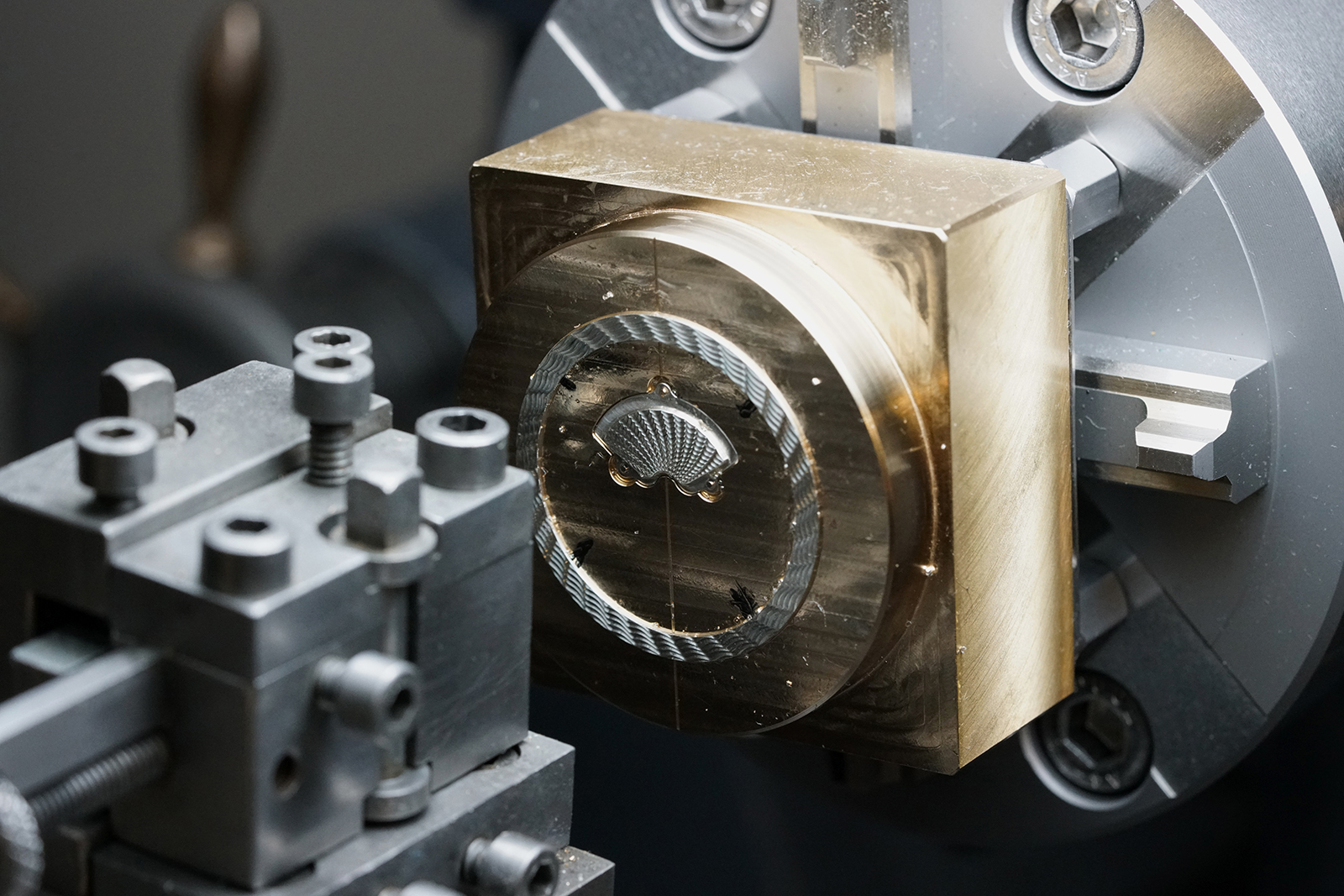
The outer border and seconds sector mounted on a chuck of a restored century-old rose engine
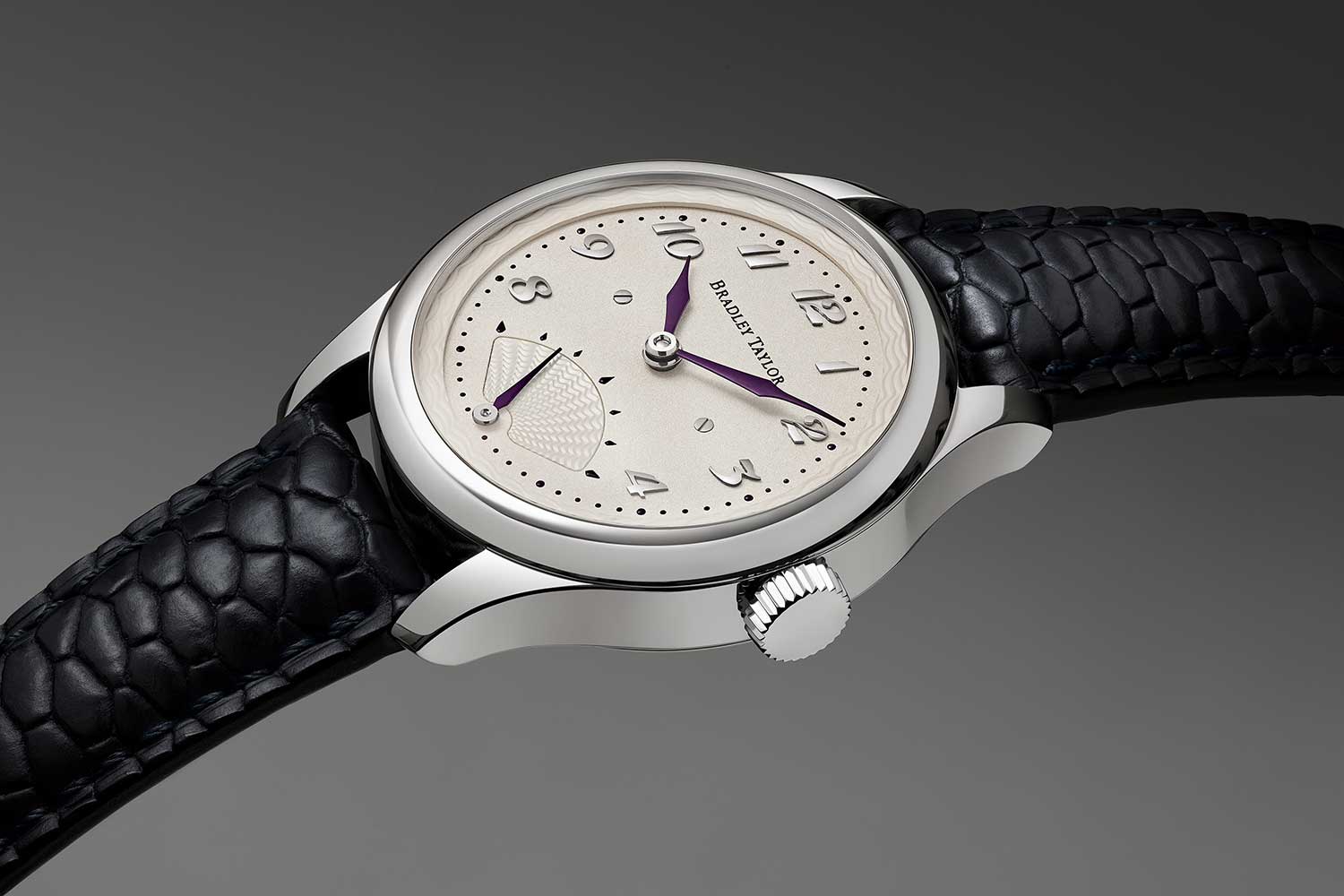
The text and markings are pad-printed on a Tampoprint machine that Taylor had restored. The Breguet numerals, on the other hand, are in platinum, which is notoriously difficult to machine and no less demanding to polish. It work-hardens quickly and has a tendency to cling to cutting tools, which makes execution at this scale particularly challenging. Each numeral is finished by hand with bombé polishing, giving it a gently rounded surface. Notably, the numerals are rendered in a custom typeface by Ian Brignell, a Canadian typographer who has designed logos and typefaces for some of the world’s largest brands, including the Paramount Pictures wordmark. The hands are purpled, which adds a lovely pop of colour, and their hubs are bevelled and polished.
Personally, I find the dial and dial work very compelling. While it might seem modest next to the more overtly expressive work of other independents, there is a sense of purpose and dignity in letting the quality of materials and execution speak for themselves, and a sense, on the part of the viewer, of having to know what you’re looking at.
The prototype case was made by Taylor himself but the series will be produced by a small casemaker. Naturally, it is intimidating to machine a large piece of platinum and requires a dedicated machine, but in the long run, he hopes to bring case-making in-house.
Price is USD 62,000 in steel and USD 82,500 in platinum, which is compelling given that it is, essentially, an unstinting display of craft by one man and a clear demonstration that when the fundamentals are done properly with a relentless attention to detail, the result takes care of itself.
Tech Specs: Bradley Taylor Ardea
Movement Manual-winding Caliber 475RS; 40-hour power reserve; 2.5Hz or 18,000vph
Functions Hours, minutes and 60-second retrograde; hacking seconds
Case 37.8mm x 10.9mm; stainless steel or platinum; water-resistant to 50m
Dial 925 Sterling silver with engine-turned border and seconds sector; solid platinum Breguet numerals
Strap Beavertail or customer preference, handmade by Terry Shen, Toronto
Availability Limited to 50 pieces in total; at a rate of 5 to 10 pieces per year
Price USD 62,000 (steel) and USD 82,500 (platinum)
Bradley Taylor