A Closer Look: Rolex Cosmograph Daytona with Enamel Dial
Reviews
A Closer Look: Rolex Cosmograph Daytona with Enamel Dial

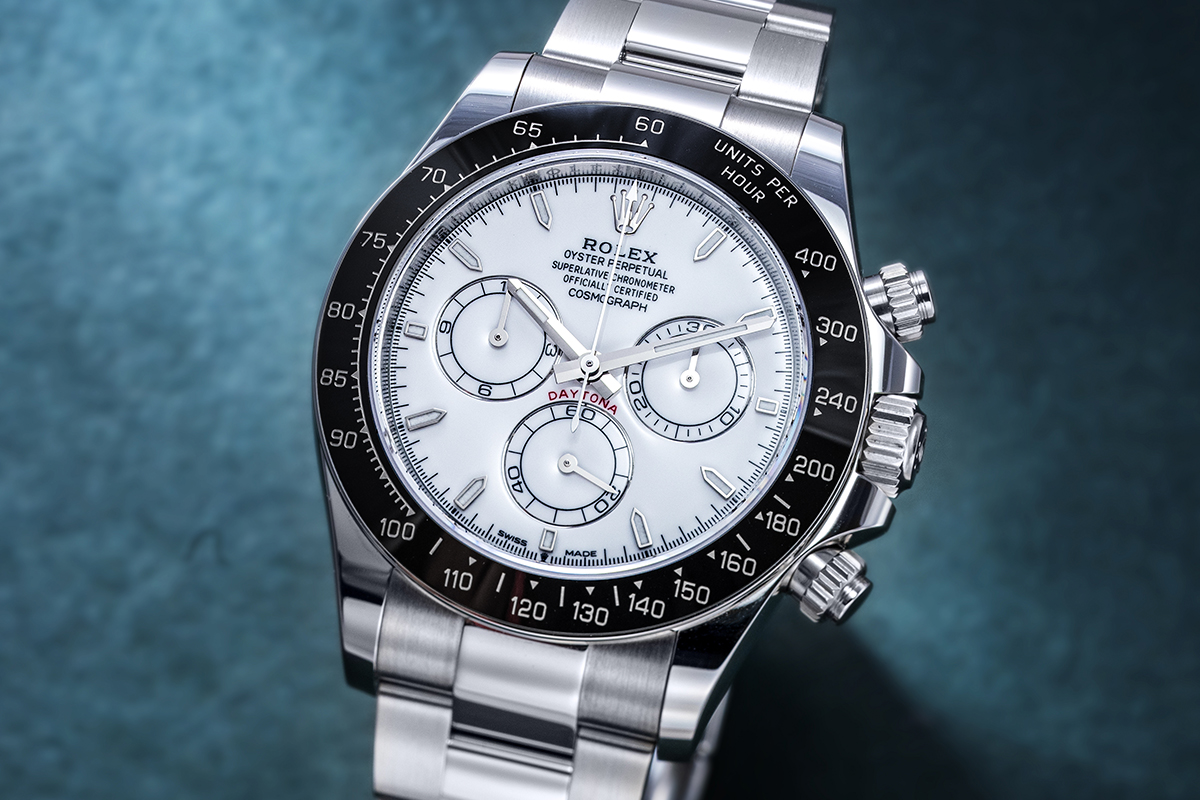
A new Daytona is always big news. Still, few could have imagined something this unusual. An off-catalogue stainless steel Daytona with a grand feu enamel dial, arriving three years after the model line’s 60th anniversary. It feels less like a one off surprise and more like Rolex continuing to celebrate its signature racing chronograph, and understandably, everyone is paying attention. It is arguably the biggest watch from a major brand at the fair this year.
There is also a reason it appears now. 2026 marks the 100th anniversary of the Oyster case, part of what Rolex frames as a hundred years of innovation. In that sense, this Daytona is not just another variation. It quietly introduces, or at least hints at, several new directions from the brand. That is precisely what makes it special. Special enough, in fact, to sit outside the catalogue.
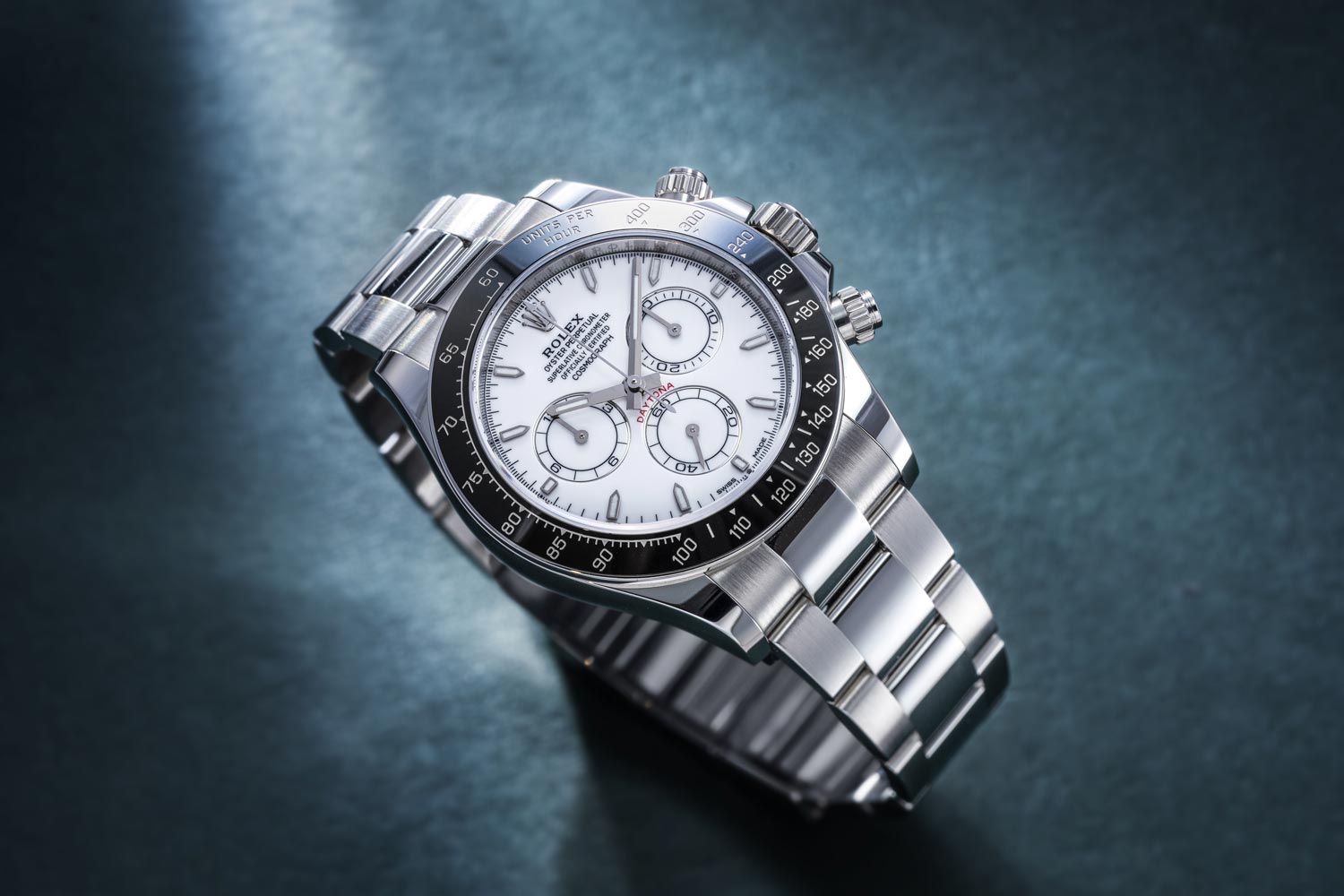
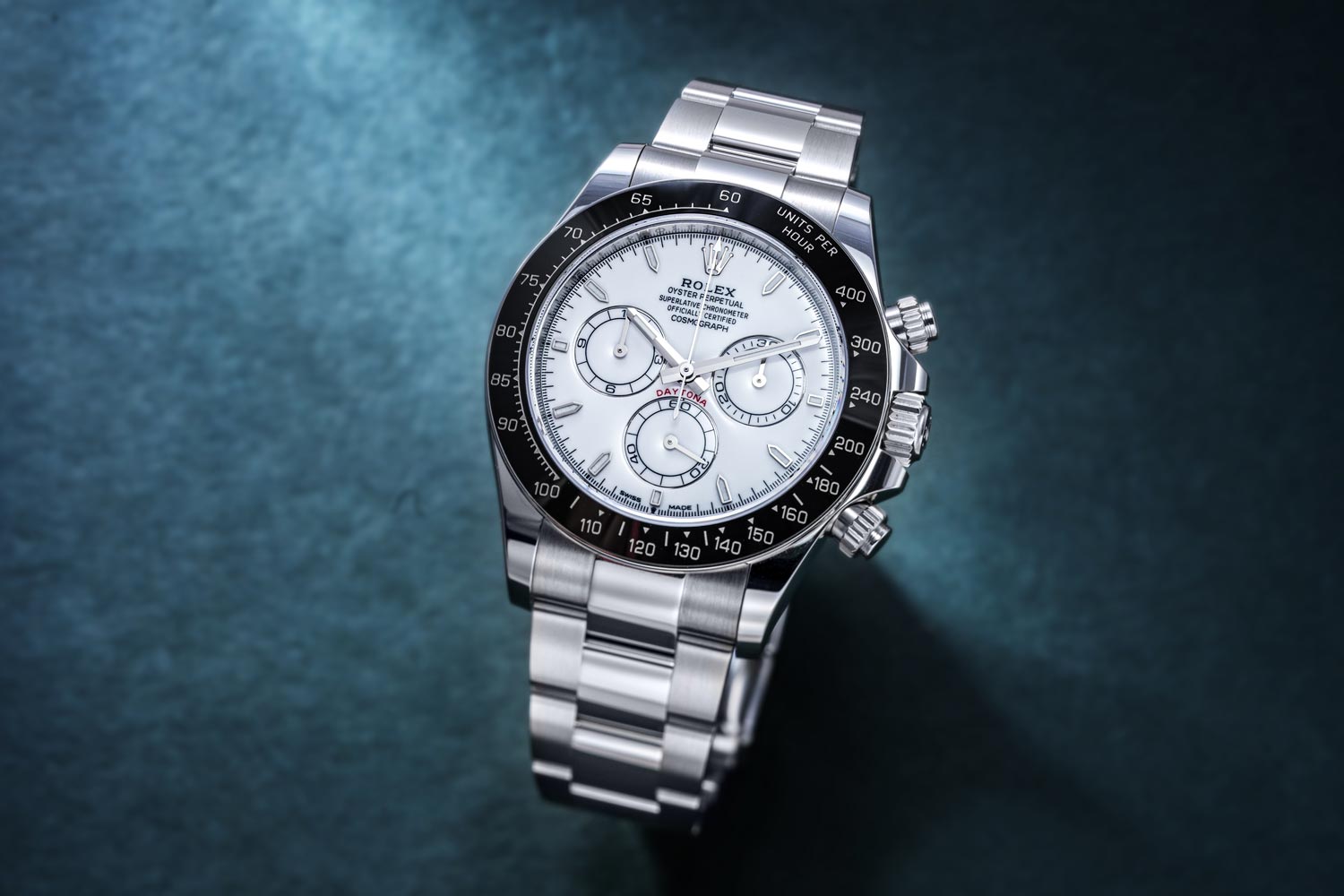
The off-catalogue Rolex Daytona ref. 126502. (Image: Revolution ©)
Rolex and enamel today
It is a well known strategy of Rolex, the biggest mechanical watchmaker in Switzerland, to move towards increasingly controllable, industrialised production methods, so that the more than one million watches it produces each year can maintain excellent quality when they leave the factory, and over time. It is, in fact, a remarkable feat to operate at this scale while preserving such consistency. That is why, over the past decade, Rolex has reduced its use of materials that are not perfectly controllable or repeatable, such as leather straps. The Day-Date family once offered leather straps, but today it is entirely paired with precious metal bracelets.
But in recent years, there has been a noticeable shift in this strategy. We are starting to see more elements that require handwork, that involve uncertainty, and that potentially carry higher rejection rates. For example, the guilloché dial on the platinum Perpetual 1908 from 2024 and the champlevé enamel dial on the Day-Date “Emotion” from 2023.
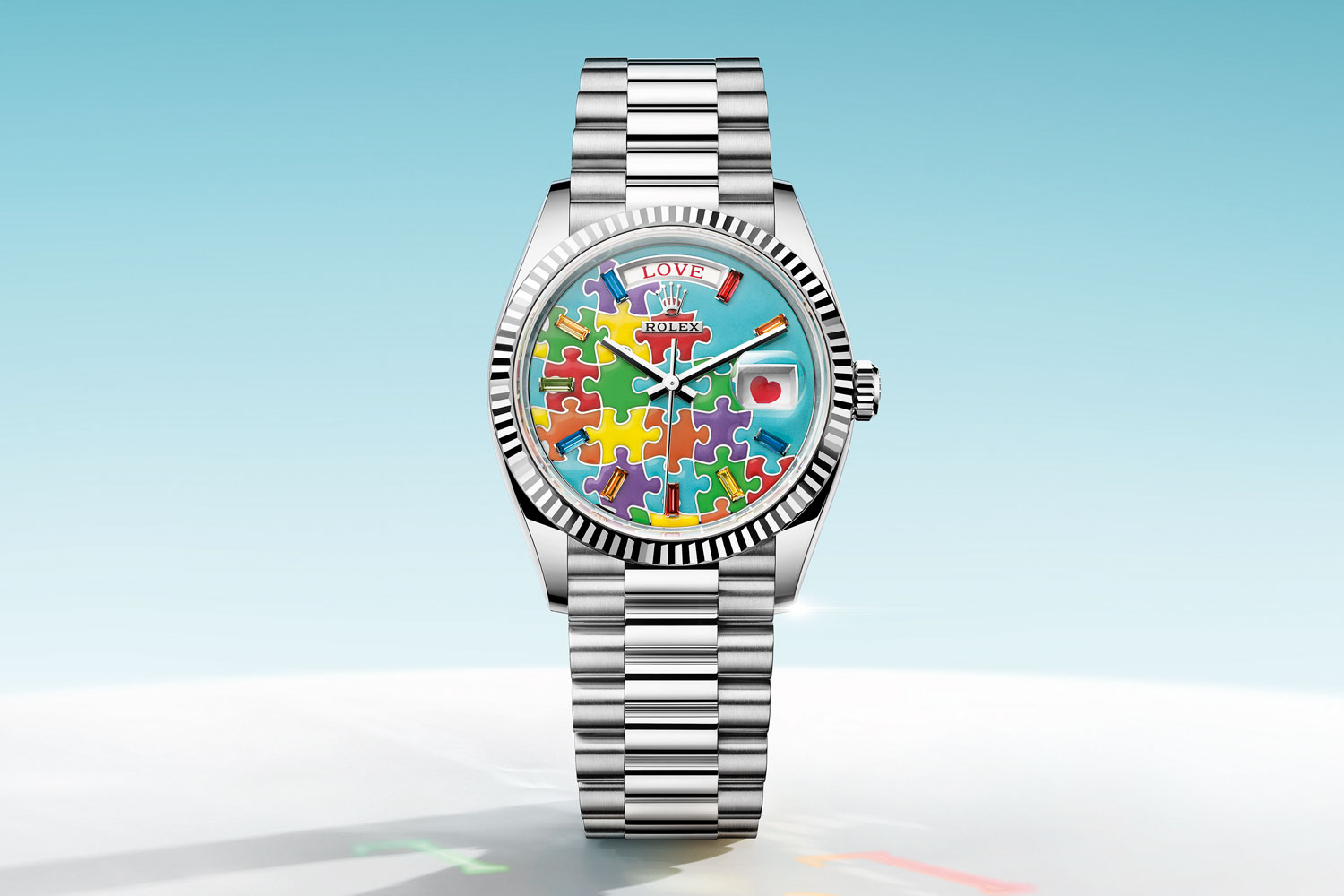
The Day-Date 36 in white gold with a cloisonné enamel dial from 2023. (Image: Rolex)
What this suggests is that Rolex is not only focused on perfecting modern materials like ceramic and metal alloys, but is also working on advancing traditional crafts to bring them into its production environment. For example, Rolex developed a new method for producing enamel dials and filed a patent for its Day-Date in 2023. The patent, published as WO2025132931A1, addresses a stable way to drill through enamel dials to create holes for attaching markers, as traditional methods can heat up the metal base too much and cause the enamel to crack. Rolex instead uses a femtosecond laser that allows a one step cut through both enamel and metal safely. In the patent, Rolex explains that traditional lasers require different parameters for enamel and the metal base, whereas the femtosecond laser, which delivers energy in ultra short bursts that remove material before heat builds up, can work in a single configuration. This allows Rolex to produce enamel dials in a more controlled and repeatable manner.
A new approach to grand feu enamel
This year’s enamel dial, however, is again something different from what we have seen before. It is grand feu enamel instead of champlevé, and most distinctively, the enamel is fired not on a metal base, as is traditional, but on a ceramic base. The firing takes place at high temperature (around 800 degrees Celsius, according to Rolex), which qualifies it as grand feu enamel (more on enamelling in this in-depth article). This was also hinted at in the aforementioned patent, where ceramic is mentioned as a possible base material alongside gold alloys.
In fact, every visible surface on the dial is a separate piece of enamel. The three sub dials are each individual enamel component, while the main dial is another single piece. These four pieces are then assembled onto a brass base to form the complete dial. This construction allows for distinct and sharp borders between the different elements. Rolex even adds metal frames around the sub dials, which act as subtle bevels and visual highlights.
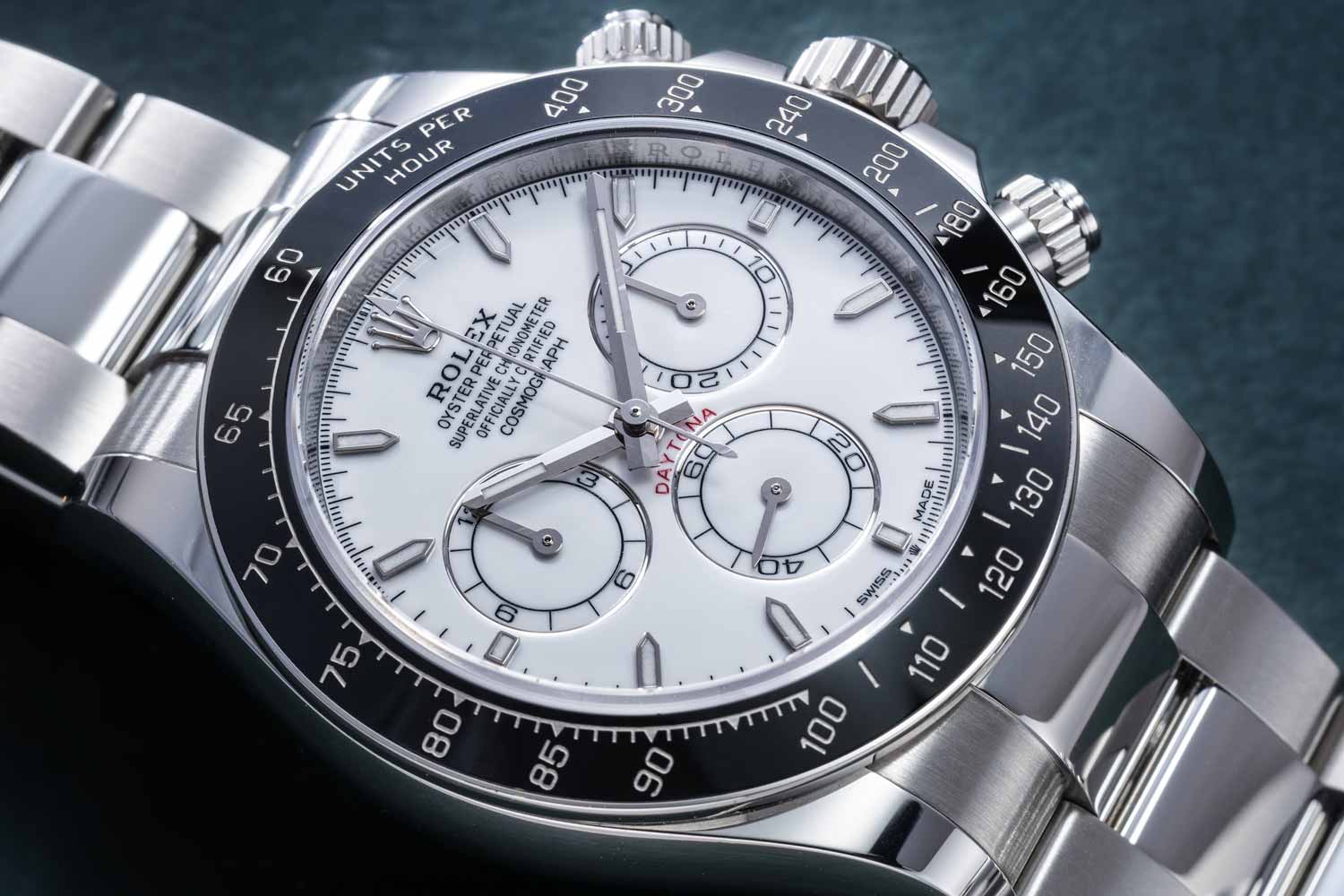
Black and white works well here, lifted by a red dial accent as the cherry on top. (Image: Revolution ©)
As a sidenote, this recalls an historical material shift outside watchmaking. In China, enamel techniques first arrived as cloisonné on metal. But during the reign of the Kangxi Emperor, enamel painting was applied directly onto porcelain, creating what is now known as falangcai. These imperial wares remain exceptionally rare today, with the finest examples achieving prices in the tens of millions at auction – one example sold at Sotheby’s for over USD 25 million in 2023.
And what we are seeing now is not without precedent in watchmaking. Another major brand, Breguet, has been using enamel on ceramic for years. For example, the blue enamel dial introduced on the Classique 5177 in 2019 is one such case. What I notice, at least from photos, is that enamel on ceramic often appears very even, with fewer small imperfections such as bubbles that are sometimes seen.
That could be due to a few factors, but one possibility is that ceramic generally has a lower thermal expansion than metals like gold or brass, and remains more dimensionally stable at high firing temperatures. This can help reduce stress during enamel firing, although the final result still depends heavily on enamel formulation and firing control.

The finely enamelled imperial falangcai “swallow” bowl, circa early 18th century, sold for HKD 198,220,000 in 2023. (Image: Sotheby’s)
Now that the entire dial is white, it is easily differentiated from the other steel Daytona with a white dial, which features thick black rings on the three registers, often nicknamed the “Panda”. This aesthetic has been around since the debut of the modern automatic Daytona ref. 16520 in 1988. Even in the later ref. 116520, there are frames around the sub registers, although in silver rather than black. Since 2016, the black rings have returned.
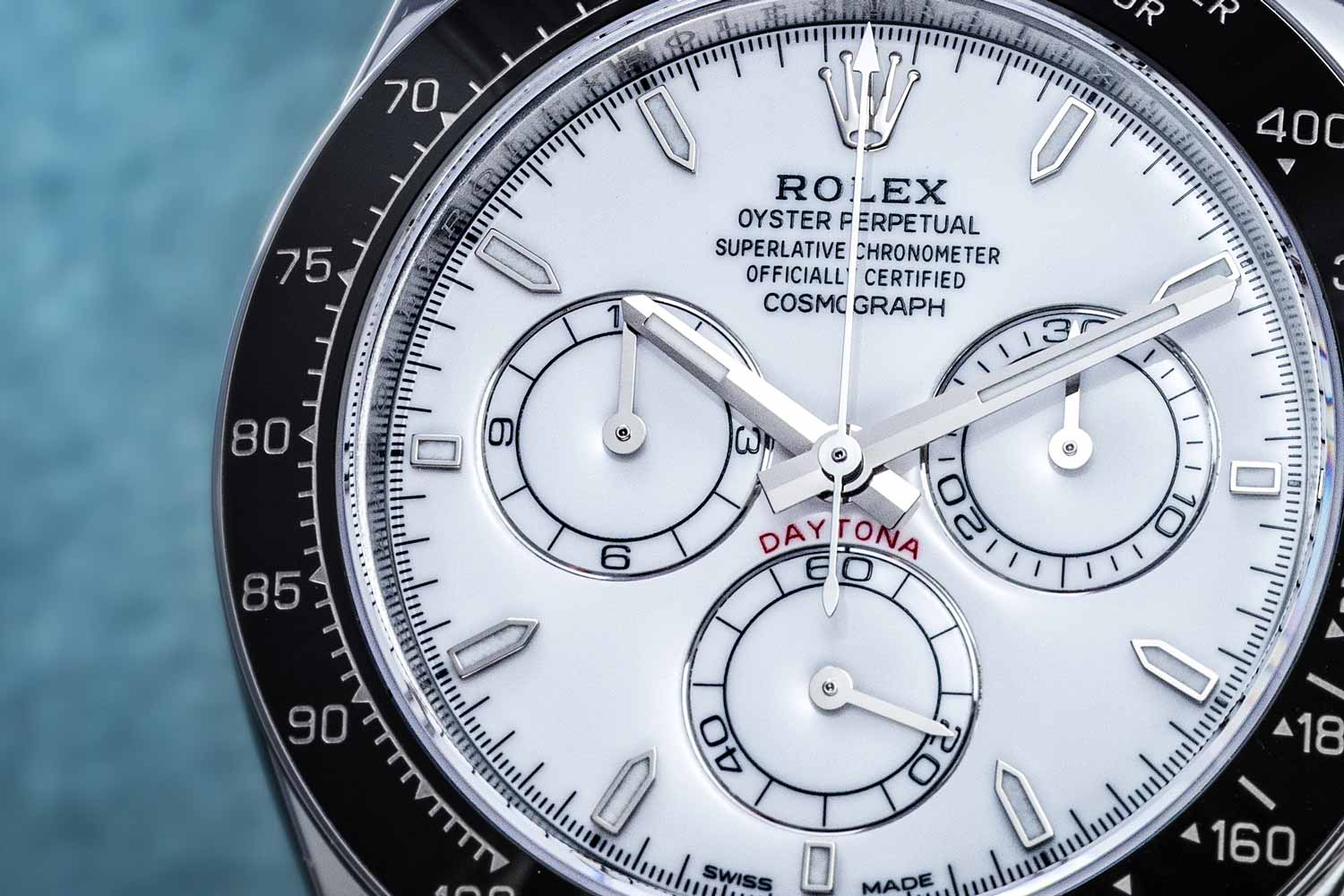
Rolex’s dial printing is crisp as usual. (Image: Revolution ©)
In other words, a single colour dial on a steel Daytona is something that has long disappeared. One would have to go back to the 1970s to find the very rare Daytona ref. 6263 with what collectors later nicknamed the “Albino” dial, entirely silver with no contrasting elements. This new steel Daytona feels like a homage to that piece, and in some ways reinforces the credibility of those original examples that surfaced on the market in the 1990s.
Ceramic bezel with tungsten carbide coating
Not only is the dial a nod to the past, the bezel is as well. Look closely and there is a pleasant surprise, especially around the six o’clock side. All the numerals are printed upright, rather than inverted as seen on modern Daytonas. This is again a reference to earlier models, though not too far back. The last time a steel Daytona featured this style was in 2016, when Rolex discontinued the ref. 116520 with a steel bezel and replaced it with the ref. 116500LN, which introduced a Cerachrom bezel with inverted numerals.
Here, however, the biggest surprise is not the printing, but the bezel itself. It is an entirely new Cerachrom bezel, different in both colour and production. Instead of black, it appears in an anthracite tone, with a subtle metallic sheen that is noticeably different from other ceramic bezels in the Rolex lineup.
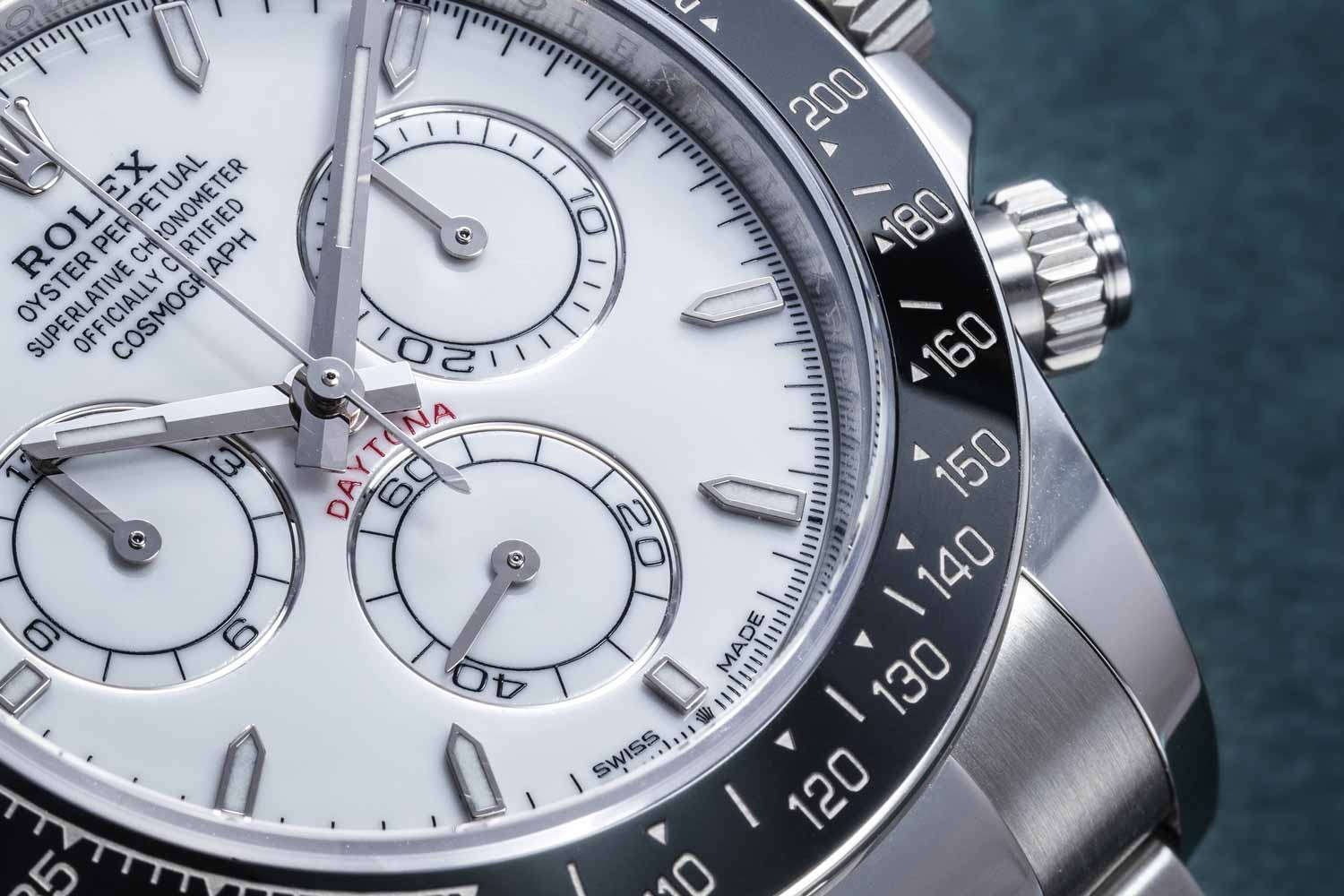
The bezel reads as black at first glance, but takes on a grey tone under certain lighting. (Image: Revolution ©)
So what was behind this new bezel? Rolex describes it as a “specific type of ceramic composed of zirconia enriched with tungsten carbide, for which a patent application was filed”. We did some digging and found a relevant patent published in December 2024, WO2024246277A1, which describes Rolex’s latest ceramic bezel innovation.
The patent’s objective is to create a ceramic bezel with a hard surface “to withstand external attacks”. This is achieved not by changing the ceramic composition itself, but by applying a hard coating on top of it. In the patent’s words, this coating can be “tungsten carbide and cobalt-chromium or based on tungsten carbide and iron-chromium”. In the case of the new Daytona, it is tungsten carbide that is used as the coating material.
In the case of tungsten carbide, the coating is applied via thermal spraying, particularly at high temperature, which may be greater than or equal to 800 degrees Celsius. Throughout the spraying process, the powder size is adjusted for each layer composition and application, in order to obtain a hard layer that is less porous, and through spraying multiple layers it is possible to obtain a thick layer.
We can start to see a broader pattern in how Rolex approaches its ceramic bezels. When it introduced the Daytona ref. 126500 in 2023, it added a metal outer ring to frame the bezel. That’s because while ceramic is highly scratch resistant, it is fragile, just like porcelain.
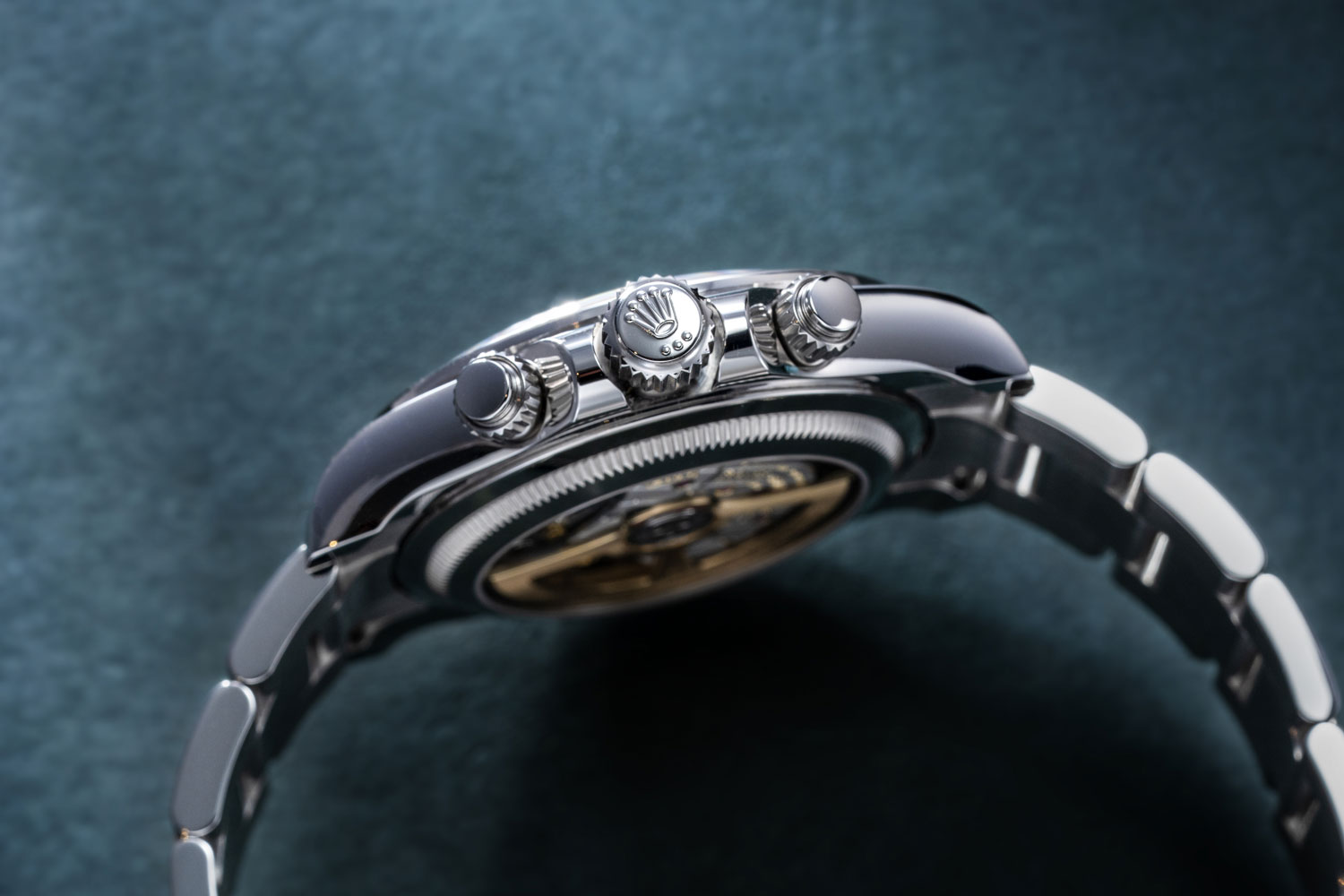
The steel ring on the bezel is clearly visible here. (Image: Revolution ©)
Now, Rolex appears to be further enhancing the durability of ceramic through surface engineering. But since ceramic’s surface is already extremely hard, there must be another reason for this innovation.
Indeed, as the patent itself explains, the objective is twofold. It aims to create a component with a hard, resistant surface that does not scratch easily, while also achieving an attractive and durable appearance that remains stable over time, something that, according to the patent, had not previously been achieved.
Perhaps the second objective is the more interesting one here. Even in its press materials, Rolex highlights that the new Cerachrom bezel has a “striking metallic gleam”, clearly positioning it as a desired visual effect.
It is quite interesting to see the extent Rolex is willing to go to refine what many already consider a near perfect material. To most, ceramic is already about as good as it gets. Yet here, Rolex develops and patents a process to subtly alter its look and feel, in a way that might only be noticed by the most attentive enthusiasts.
That said, this is exactly where these details begin to matter. The addition of a metallic gleam brings a touch of warmth back to the watch, echoing the feel of older models with metal bezels, rather than the colder, more clinical appearance typically associated with ceramic.
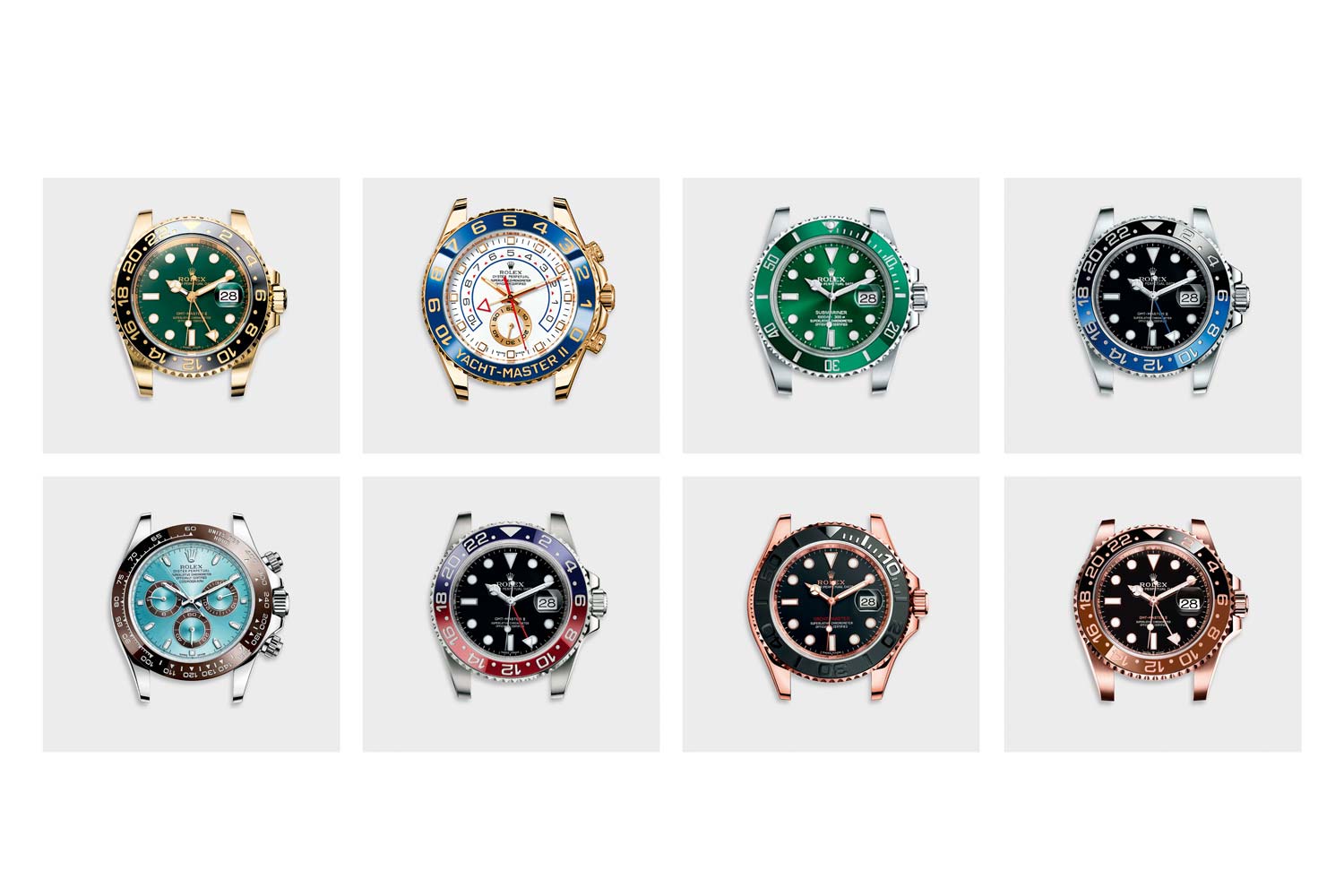
Earlier Rolex models with Cerachrom bezels, before the introduction of the latest coated version. (Image: Revolution ©)
Rolesium, steel meets platinum
Now we have a new dial and a new bezel. What else is new? On this steel Daytona, or more precisely, this Rolesium Daytona, there are two additional elements worth noting.
First, steel is here paired with platinum in the case, in what Rolex terms Rolesium, as opposed to the more familiar Rolesor, which combines steel with gold, whether yellow, white, or rose. The platinum, however, is used very minimally, only on the frame around the bezel and on the caseback.
Minimal, because the caseback is not a solid slab but a ring fitted with a sapphire window. That is the second surprise, as for the first time on a largely steel Daytona, there is a see-through caseback, revealing the cal. 4131, here fitted with a solid gold rotor, something that is usually only reserved for full gold or platinum Daytonas.
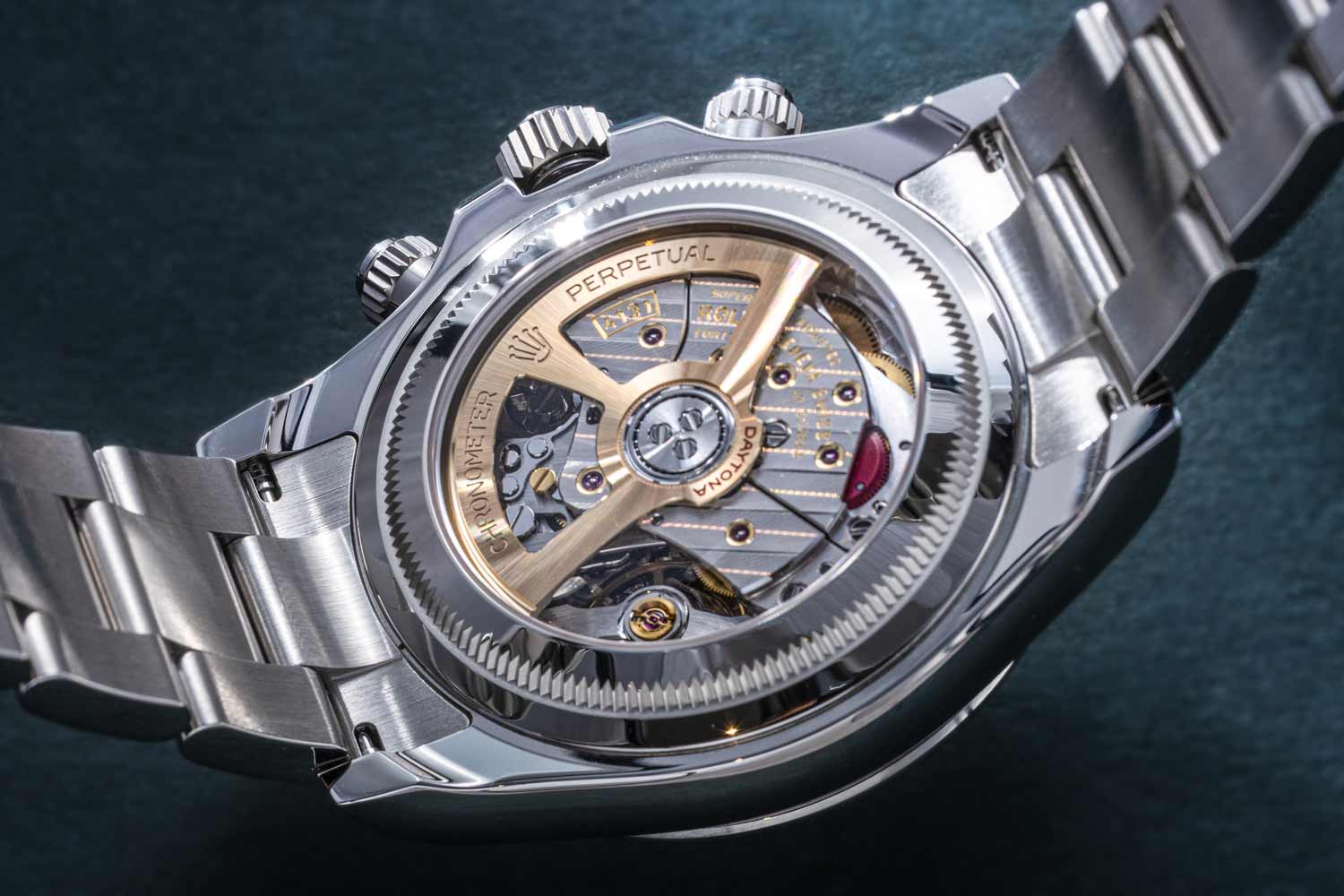
The first exhibition caseback on a (largely) steel Daytona. (Image: Revolution ©)
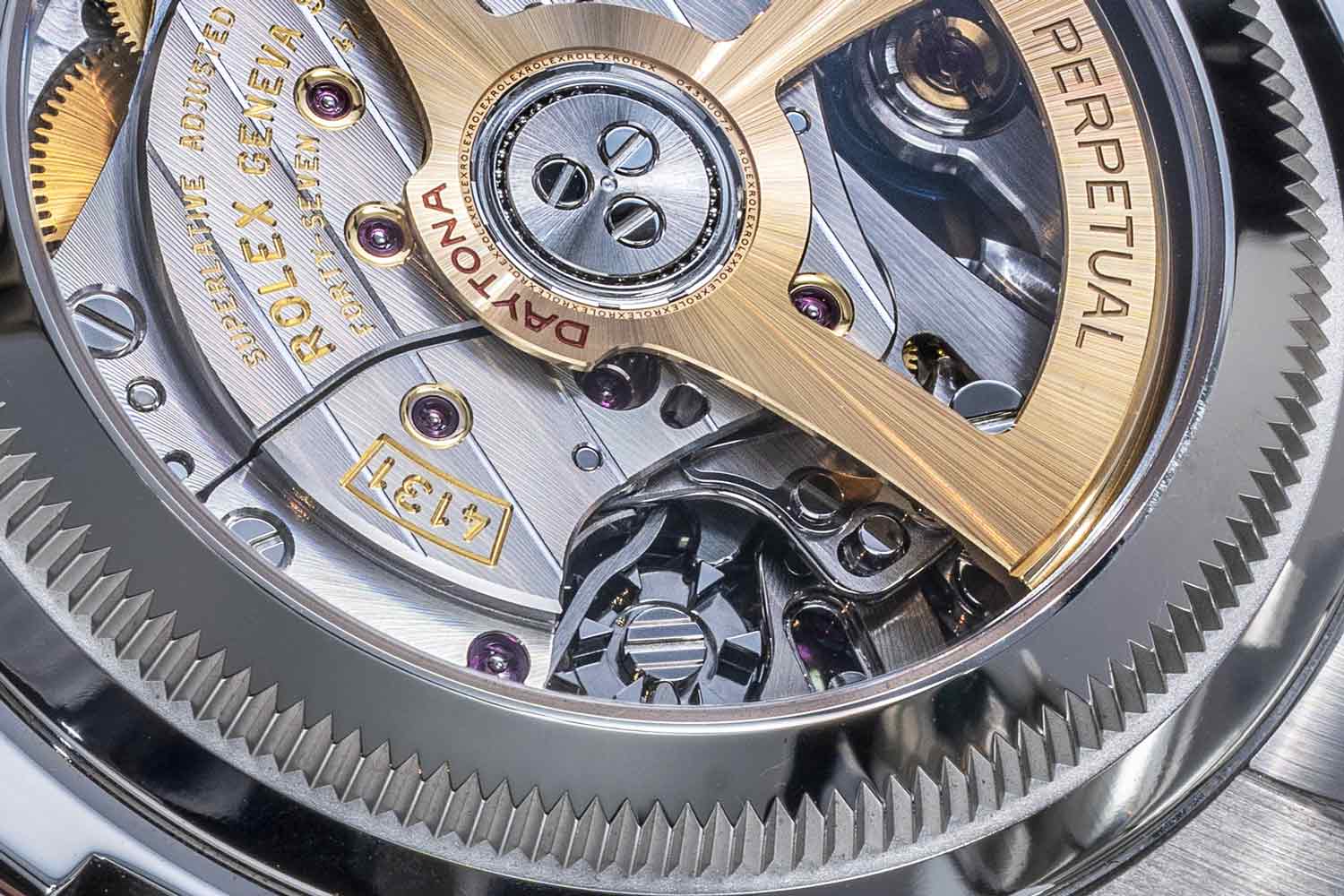
Attractive rounded bevels on the steel bridges near the column wheel. (Image: Revolution ©)
Concluding thoughts
The new Daytona is full of intriguing details, from the enamel dial to the anthracite ceramic bezel and the see-through caseback, all of which immediately position it as a very special Daytona to collect, especially given that production numbers will likely be lower than a regular steel Daytona, since it is an off-catalogue model. But it is also quite interesting to see Rolex announcing this openly to the world, as opposed to many past off-catalogue pieces, such as high jewellery models, which are typically shown only in closed rooms with security and strict no-photography policies.
This appears to serve a dual intention. One is to highlight the brand’s latest innovations and patents, which may eventually trickle down to other watches. The other is to openly acknowledge that it has produced this unique watch, one that carries a series of details that feel like a quiet preparation for a longer future, as it contains the high-potential traits that often allow certain watches to rise sharply in significance for collectors decades later.
Rolex
You may also like
Editorial
A Closer Look: Rolex Perpetual Padellone
Sep 22, 2026
Editorial
A Closer Look: Rolex Perpetual Padellone
Sep 22, 2026
News
Last Week In Watches: Rolex Revives the Padellone, Hublot Goes Full Koons
Sep 21, 2026
News
Last Week In Watches: Rolex Revives the Padellone, Hublot Goes Full Koons
Sep 21, 2026
Editorial
Rolex’s Future Is Complicated: The New Perpetual Padellone Family
Sep 16, 2026
Editorial
Rolex’s Future Is Complicated: The New Perpetual Padellone Family
Sep 16, 2026