
A Closer Look: Jaeger-LeCoultre Reverso Tribute Enamel “Shahnameh”
Reviews
A Closer Look: Jaeger-LeCoultre Reverso Tribute Enamel “Shahnameh”

The most talked-about Reverso – or any Jaeger-LeCoultre watch for that matter – this year may be the Reverso Tribute with a pink gold Milanese bracelet. Yet at the same time, the brand has quietly unveiled a quartet of top-tier, time-only Reversos that seem to have flown under the radar.
This is the Reverso Tribute Enamel “Shahnameh”, which appears minimalist with its hours-and-minutes-only display, lacking the usual small seconds sub-dial. Yet despite this simplicity, the guilloché dial hints it’s no ordinary Reverso, while the true highlight lies on the caseback – miniature enamel paintings that bring 500-year-old Persian art to life.

The quartet that is the highlight of Jaeger-LeCoultre’s 2025 Watches & Wonders debut. (Image: Revolution©)
A nod to the beginning
It’s probably well known that the Reverso family was born from the need for a protective watch case during polo matches. British officers playing polo in India helped make history in 1931 with this innovative design.
What is less commonly known is that from the very beginning, the empty back of the swiveling case served as a space for personalisation, from engraved coats of arms to miniature enamel paintings. During that time in India, the Maharajah of Karputala commissioned 50 Reverso watches, each with a miniature enamel portrait of his wife on the caseback, although those pieces are now lost. However, the manufacture’s museum preserves a later example: a 1936 model featuring a portrait of Maharani Kanchan Prava Devi, the queen of Tripura.

The 1936 model, now held in the brand’s museum. (Image: Jaeger-LeCoultre)
Today, Jaeger-LeCoultre continues the tradition of enamel painting on the Reverso, introducing clever new executions like the Eclipse model, which features a rolling shutter that covers or reveals the enamel artwork on the dial.
But enamel on the Reverso’s swiveling caseback stands apart from enamel on any other watch – and for one simple reason. By placing the artwork on the hidden caseback, the brand adds a layer of mystery and intimacy. The miniature enamel painting stays completely out of sight unless the wearer deliberately flips the case to reveal it. Even leaving the watch face down won’t give it away. This secret, finely crafted artwork worn quietly on the wrist offers a rare kind of personal satisfaction – a private treasure that only the owner knows.
This is exactly the case with the Reverso at hand. The front may seem simple, with just two hands and no extra complications, but flip the case over and you’ll find enamel paintings, intricate reproductions of Persian art from 500 years ago.
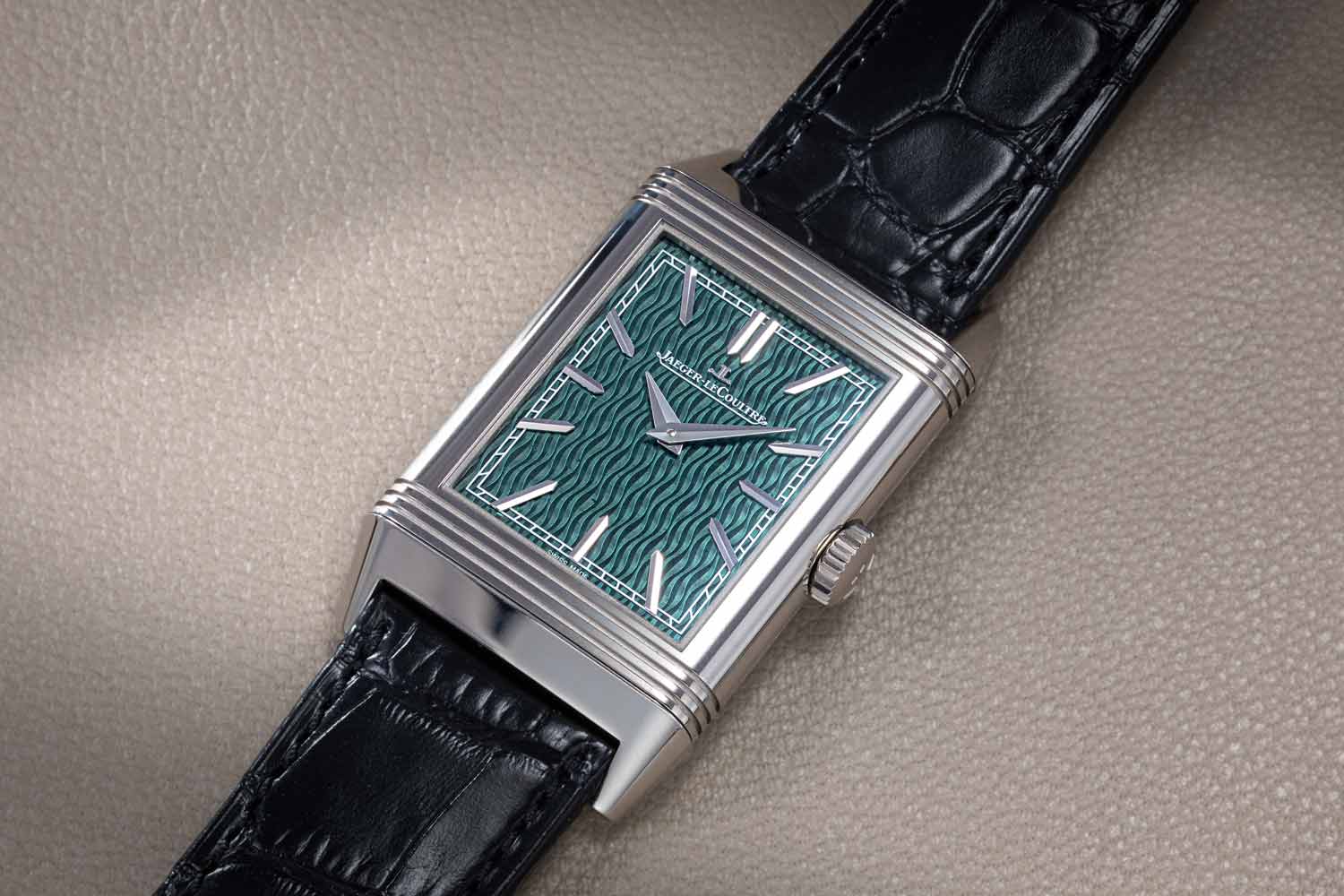
The understated front hides a magnificent back. (Image: Revolution©)
Recreating 500 years of Persian art
For this series, Jaeger-LeCoultre selected four paintings from the Shahnameh of Shah Tahmasp, an illustrated manuscript of Shahnameh, the great Iranian epic poem. The manuscript itself was written between 977 and 1010 CE, but the illustrations came much later, in 1568. Today, the original artworks are scattered across different museums, so the inspiration for this series comes from various places.
For example, Siyavush Plays Polo before Afrasiyab is now housed at the Metropolitan Museum of Art in New York. Fittingly, it depicts a polo match. The Reverso’s recreation of the scene is impressively vivid – not a one-to-one copy of the original, but an interpretation with subtle differences in colour and technique. This is especially clear in the starry night sky: the enameller chose a deeper shade of blue and added paillons, which are tiny pieces of 24k gold leaf, to make the motif shimmer. It’s a striking effect not found in the original painting, and a clever touch that elevates the enameling.
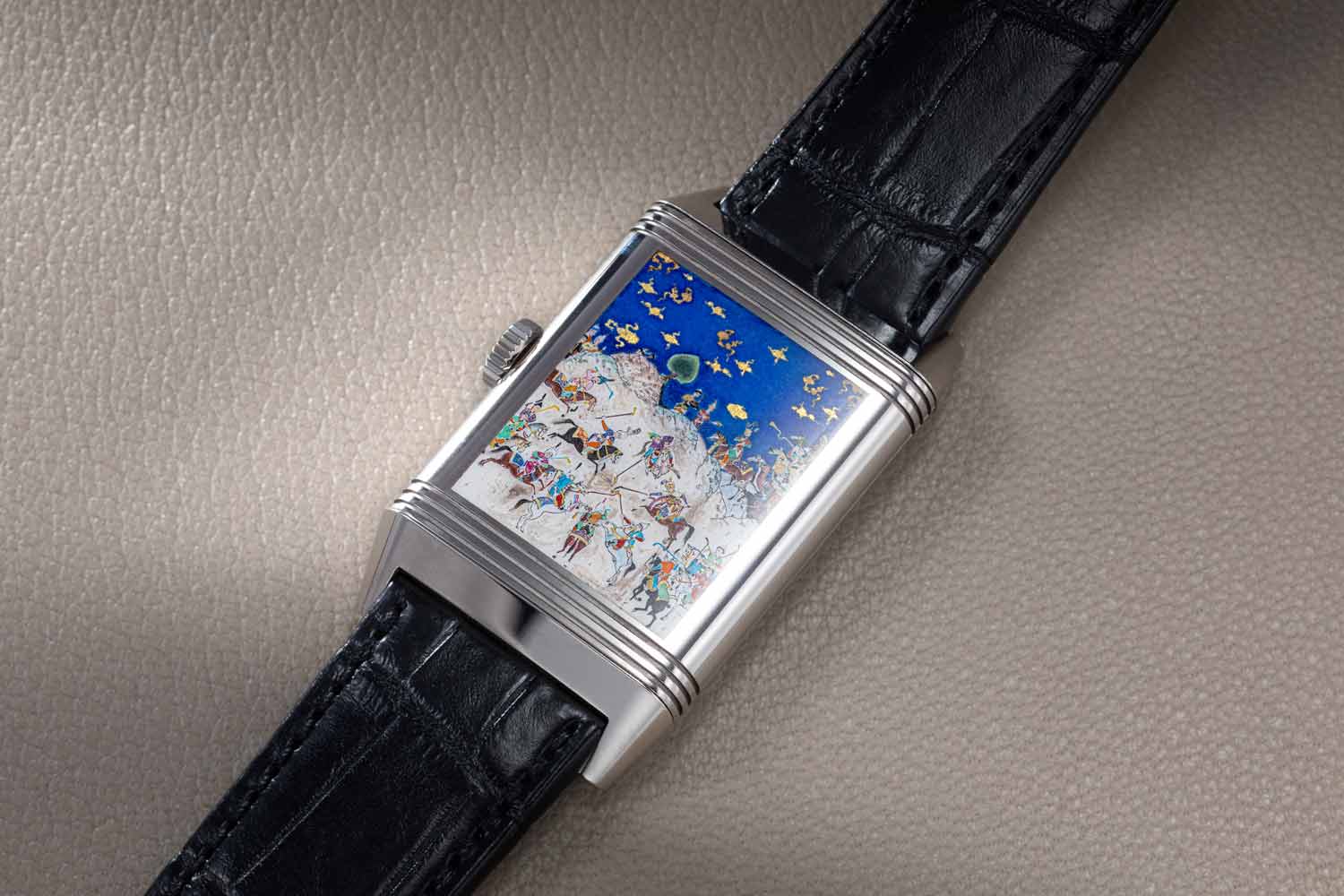
A polo scene on a watch that was created for polo. (Image: Revolution©)

The original painting, now in a New York museum collection. (Image: The Metropolitan Museum of Art)
Even though only one of the watches in the set features a polo scene, the entire quartet shares a unifying theme: each artwork depicts men on horseback. The next piece in the series is Saam Comes to Mount Alburz, inspired by a painting from the Museum für Islamische Kunst in Berlin. It tells the story of a father who, having once abandoned his son because the boy’s grey hair at birth seemed an ill omen, visits him years later.
In this interpretation, the creative liberties are even more apparent. The colours are bolder, almost otherworldly, to heighten the sense of myth. The entire sky is rendered in shimmering gold flakes, an artistic choice that makes the scene especially striking.

The colourful Saam Comes to Mount Alburz. (Image: Revolution©)
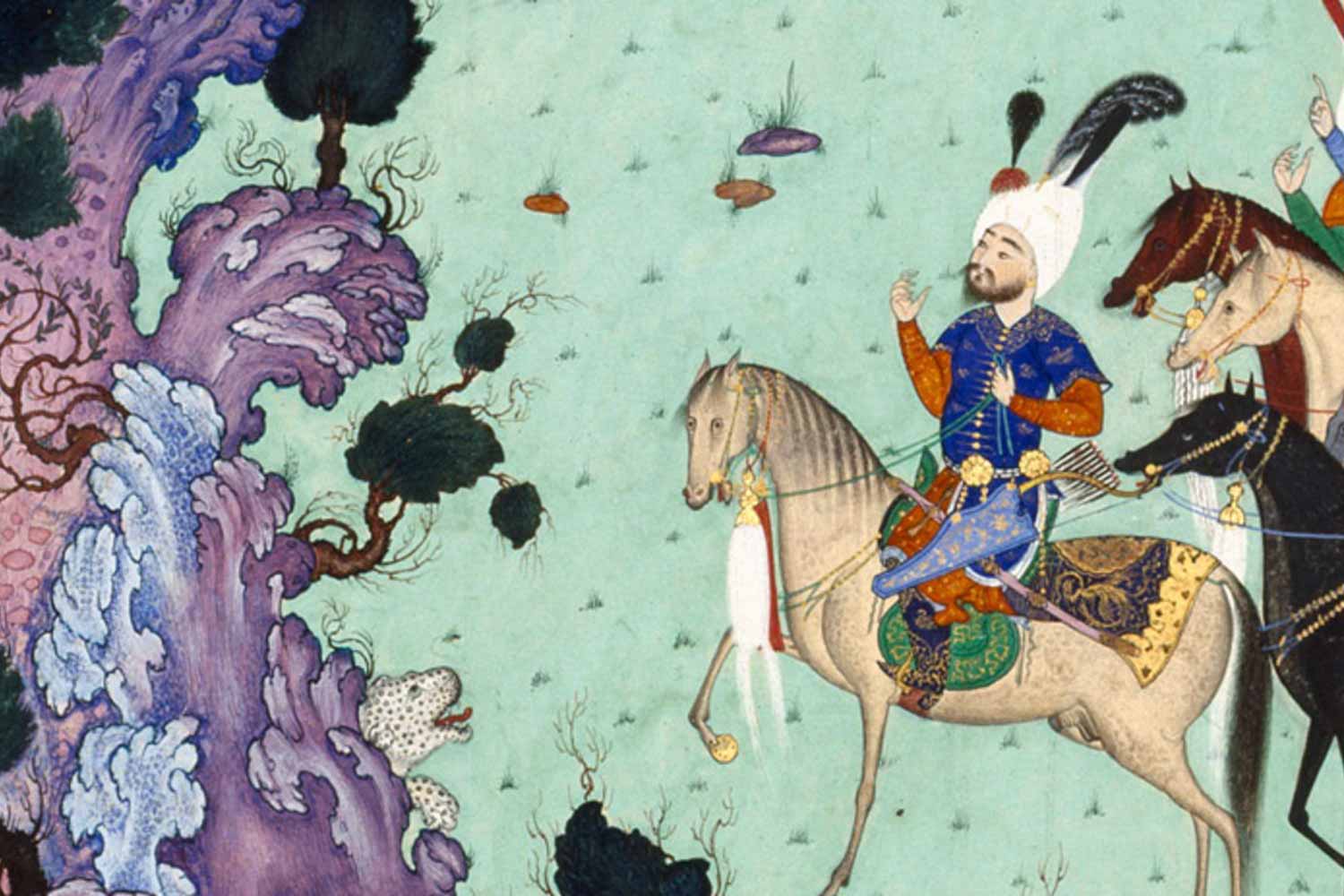
The original, from the Museum für Islamische Kunst. (Image: Staatliche Museen zu Berlin)
Next is Rustam Pursues Akvan, inspired by a work held at the Aga Khan Museum in Toronto. This scene depicts the Persian hero Rustam battling a demon disguised as an onager. The enamel interpretation aligns with the rest of the quartet’s style – vibrant and colorful – featuring a pinkish-purple background and a green bush. Notably, the green foliage shows greater variation in light and dark tones than the original, adding depth and detail.
The final piece in the quartet is Faridun Tests His Sons, also from the Aga Khan Museum. This painting tells the story of a Persian king who transforms into a fire-breathing dragon to test the courage and wisdom of his three sons. Like the others, the enamel uses more vivid colors than the original, with the sky rendered in full gold. However, the characters’ facial features and clothing details have been simplified, which may be seen as either a strength or a limitation.
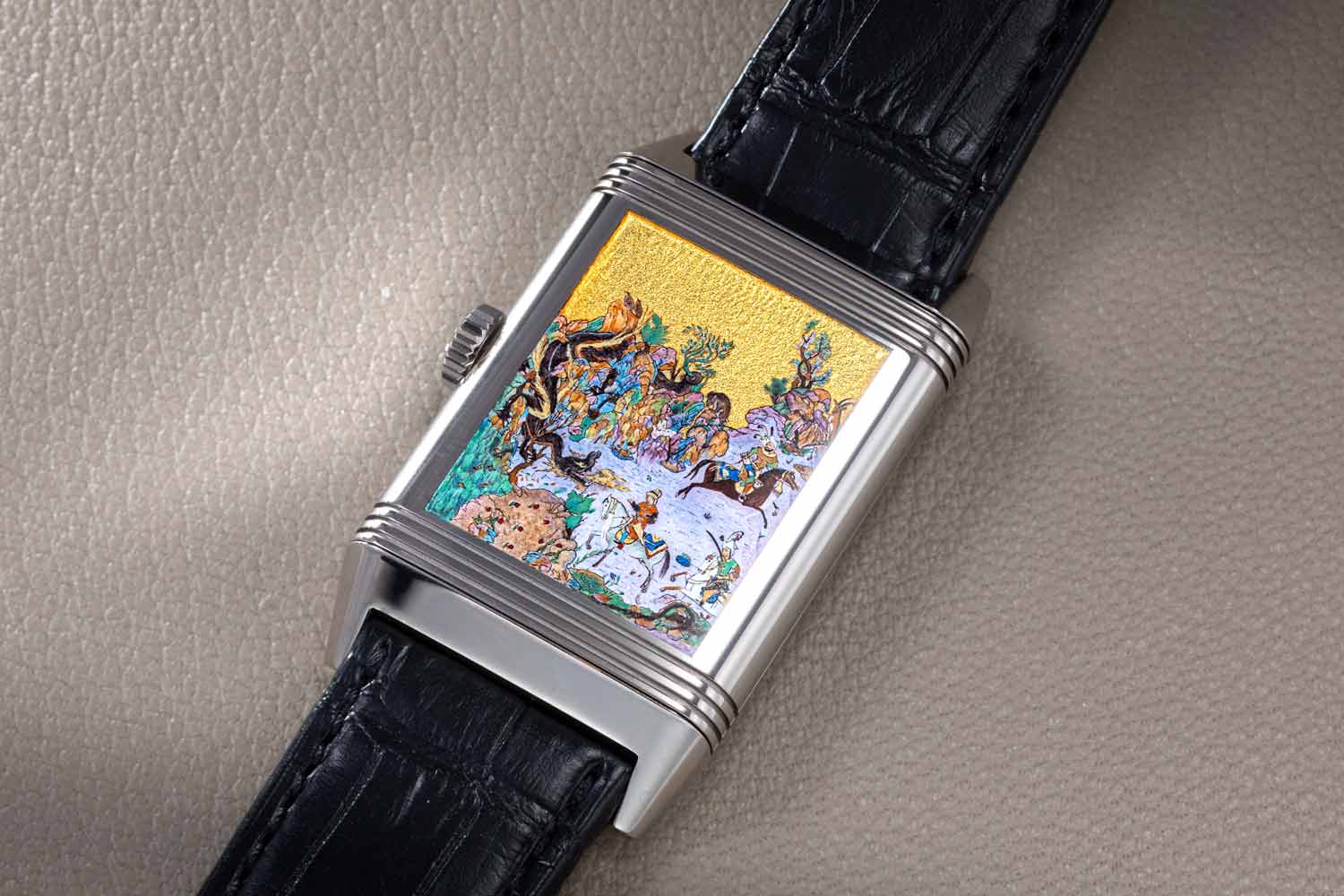
The epic king-turned-dragon putting his sons to the test. (Image: Revolution©)
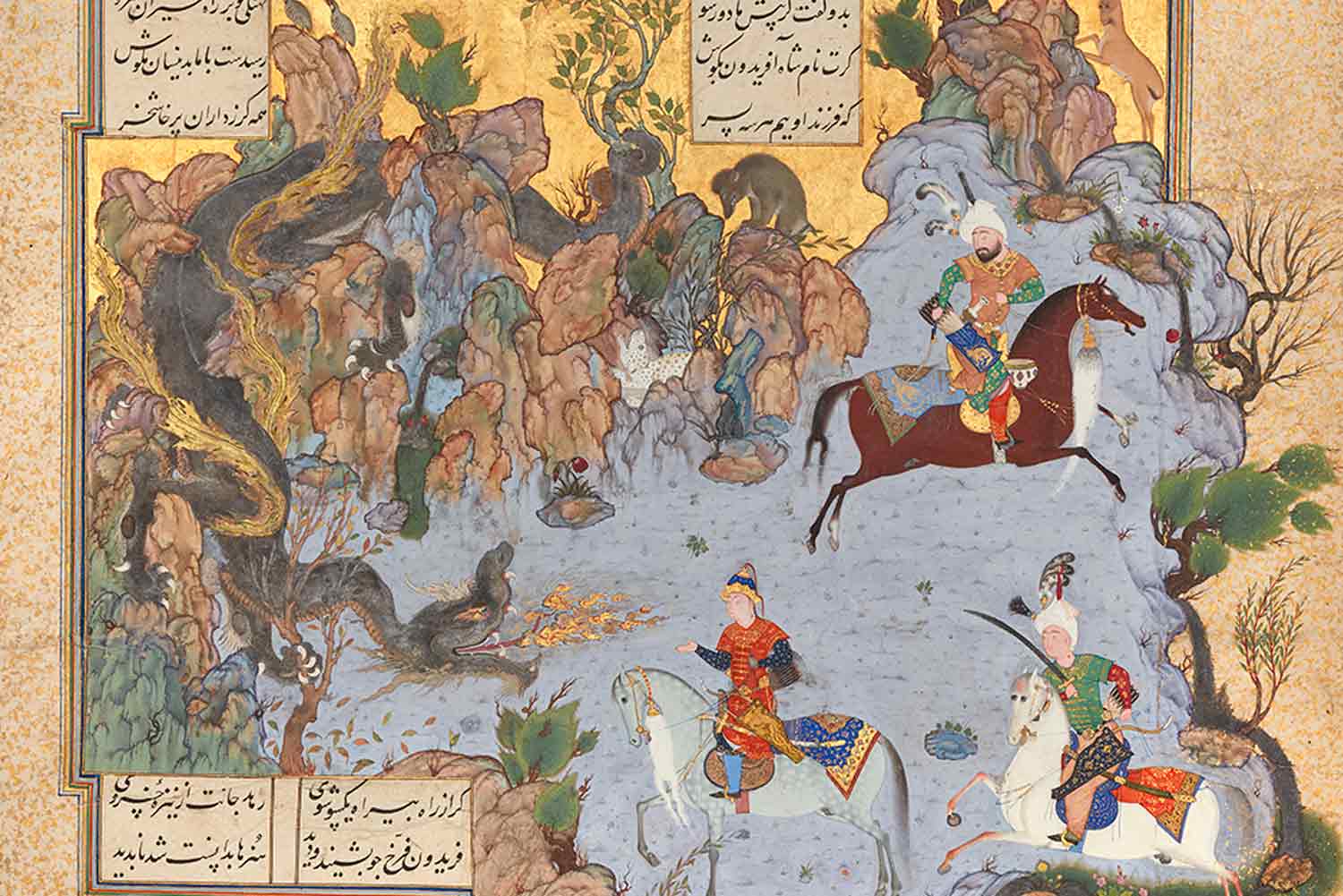
An excerpt from the original artwork. (Image: Aga Khan Museum)
Debating artistic reinterpretation
Why this difference? A closer look reveals a faint mottled texture across all four enamel paintings, resembling aged parchment or worn paper. This effect doesn’t appear in the original artworks but was deliberately applied to the watch dials. The softened details harmonize with this aged look, creating a cohesive visual style.
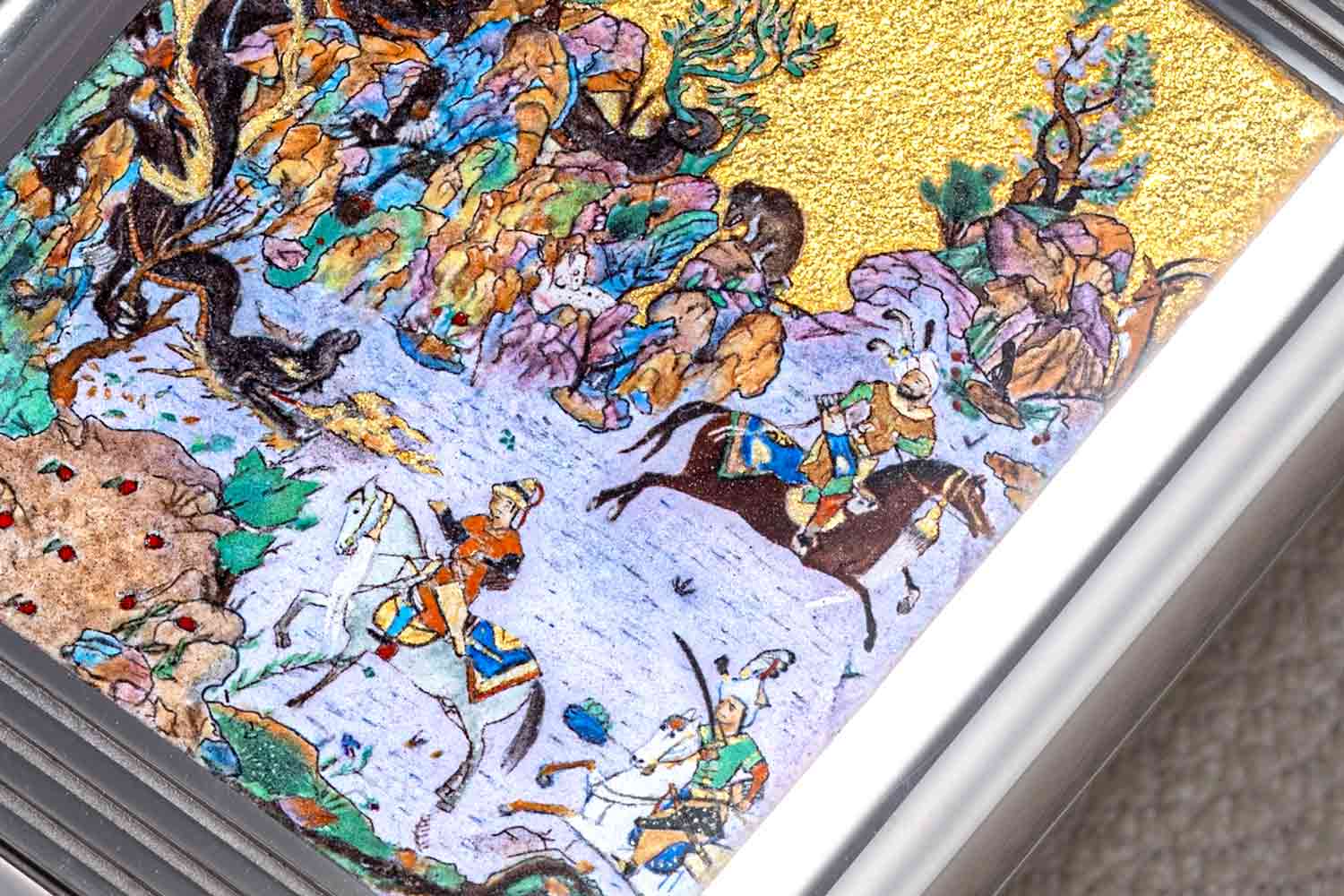
Getting up close with Faridun Tests His Sons. (Image: Revolution©)
Some might argue that a more faithful reproduction with finer detail would be preferable – and that’s a reasonable perspective. However, it’s important to remember that the originals measure roughly 28 by 24 centimeters, while the enamel dials are just about two centimeters across. Reproducing every detail on such a small surface would be a significant, if not impossible, challenge.
From another angle, paying homage to a historic work doesn’t always require exact replication. While a perfect copy demonstrates technical skill, it can lack originality and artistic interpretation. What truly matters is capturing the essence and spirit of the original, making thoughtful choices during reinterpretation.
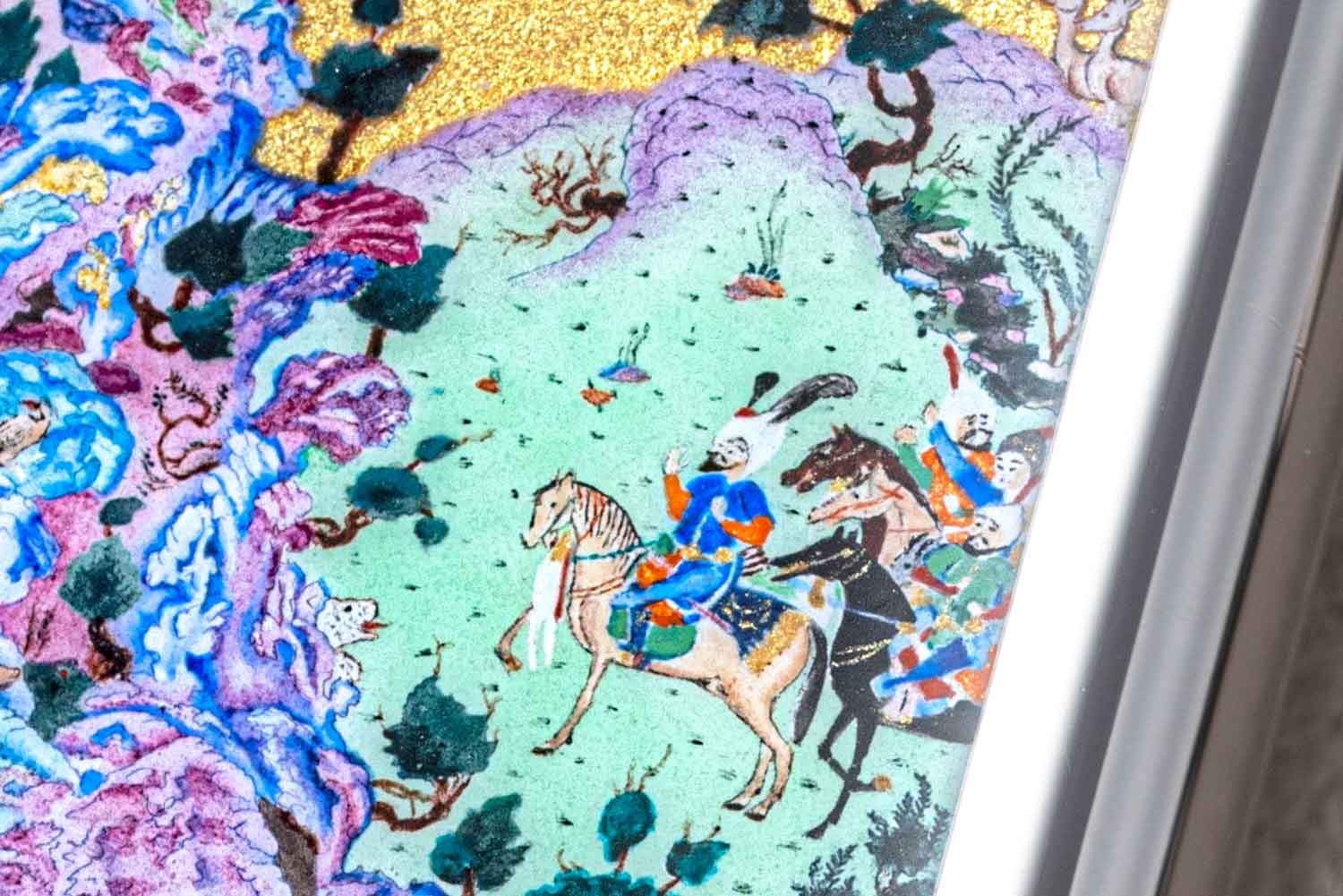
Zooming in on Saam Comes to Mount Alburz. (Image: Revolution©)
As the Song dynasty scholar, poet, and calligrapher Su Shi (also known as Su Dongpo) observed, appreciating a painting is like studying the finest horses in the world – true artistry lies in capturing their spirit and vitality. Merely reproducing surface details, such as bridles and manes, without conveying their energy results in a lifeless and uninspired work.
In this light, these miniature paintings may not be exact one-to-one recreations, but they succeed in producing a rich, complex, and mythical impression, particularly impressive given their tiny size.
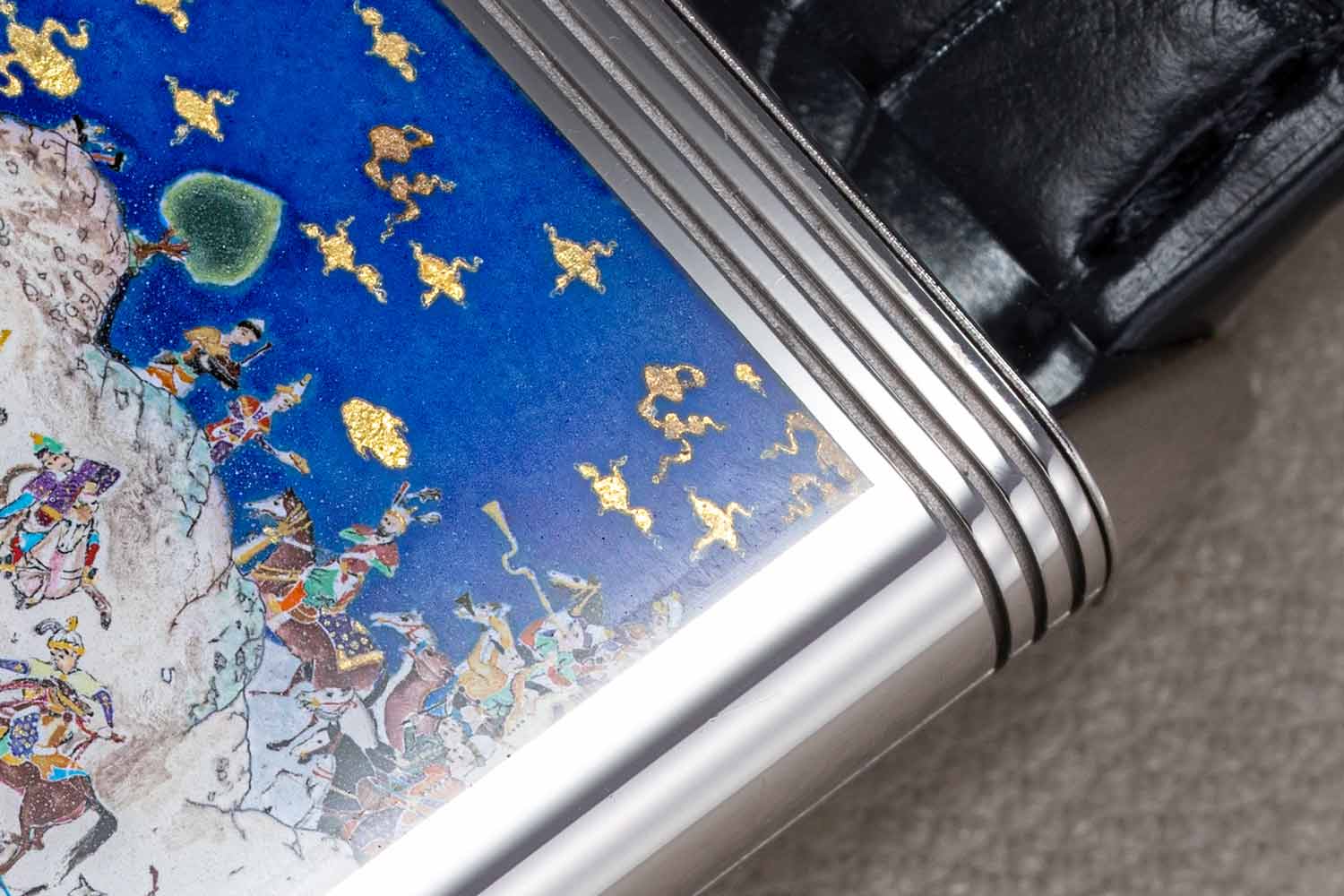
The clever use of paillonné enamel adds shimmer to Siyavush Plays Polo. (Image: Revolution©)
A dial that stands on its own
Moving beyond the remarkable miniature enamel painting on the caseback, let’s turn to the front, arguably the more important side since it’s the face you’ll see most of the time while wearing the watch. Fortunately, it doesn’t disappoint.
In fact, I find it especially attractive and eye-catching. The appeal lies in its simplicity: just hours and minutes, without a seconds hand, whether central or sub-seconds. This sparseness creates a romantic, classical air. The open space also draws attention to the dial’s guilloché decoration. While guilloché dials are common today, this one stands out thanks to its pattern and color. It strikes the perfect balance – intricate but never showy – and the colors are remarkably fresh and vibrant.
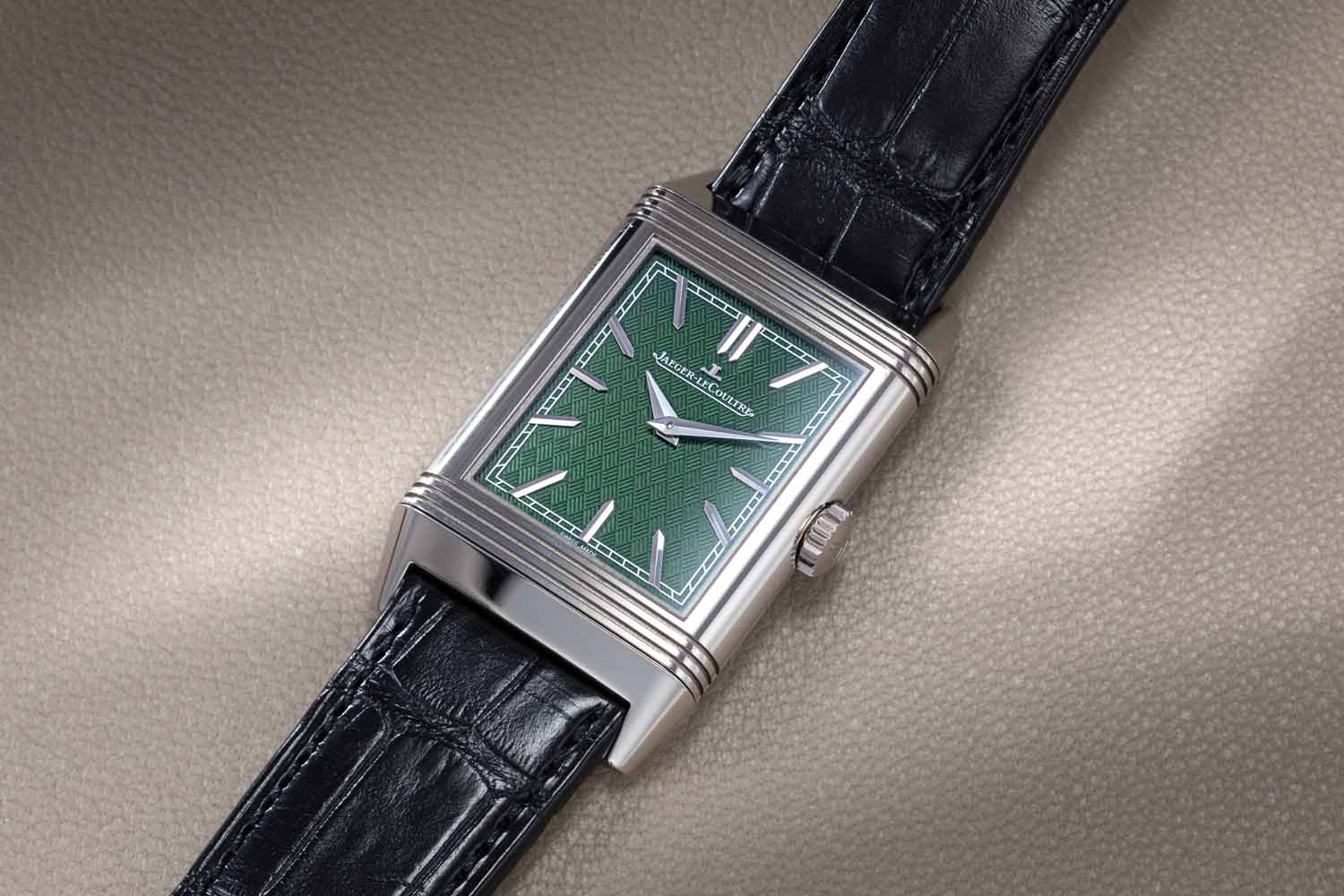
The lozenge guilloché dial gracing the front of Rustam Pursues Akvan. (Image: Revolution©)
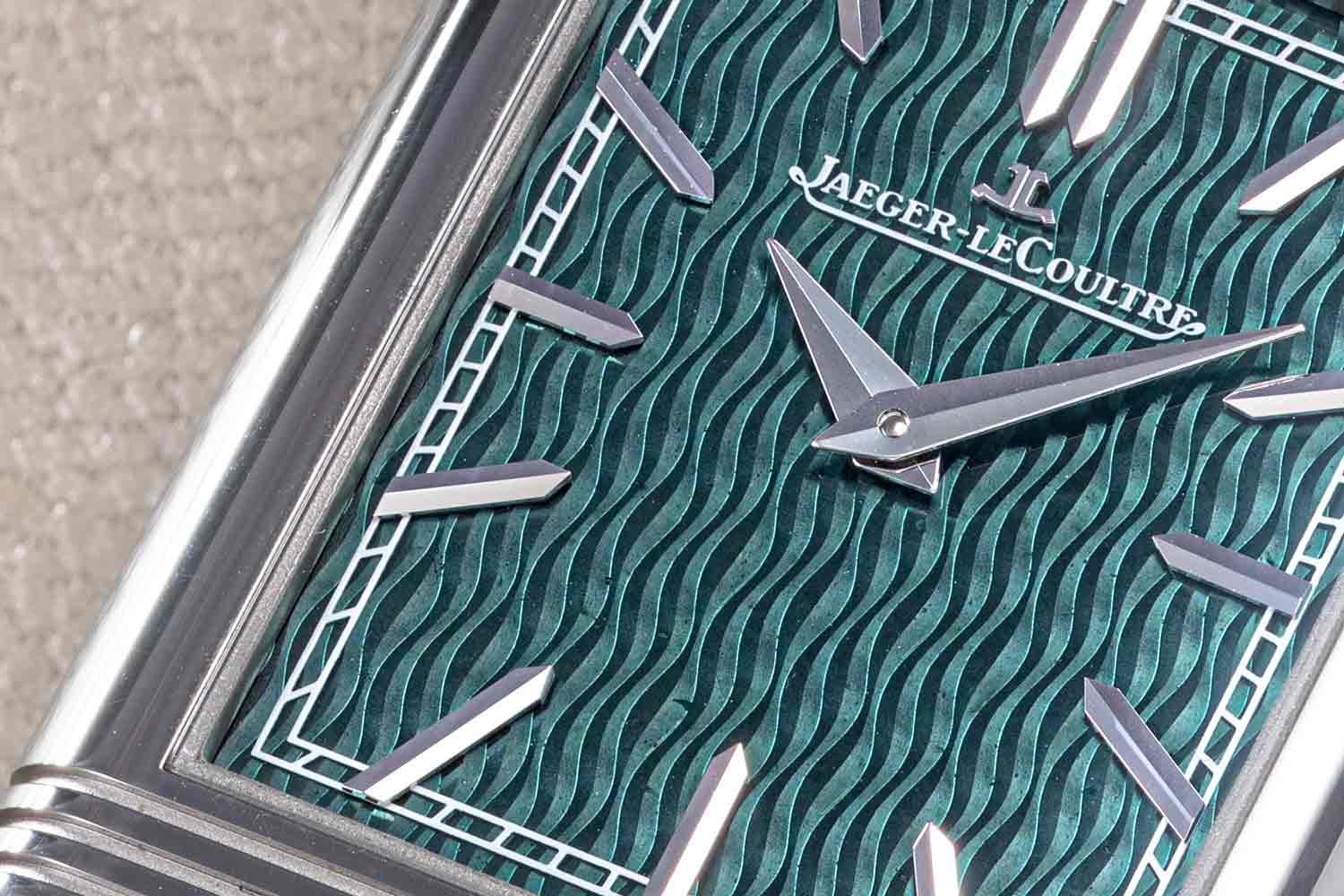
Also green, but with a wave pattern – this is the front of Saam Comes to Alburz. (Image: Revolution©)
This quality comes from a special technique applied to the guilloché dial. No expense was spared: translucent grand feu enamel is fired at high temperatures directly onto the guilloché. This combination, known as flinqué enamel, results in a bright, lustrous dial with impressive depth and clarity.
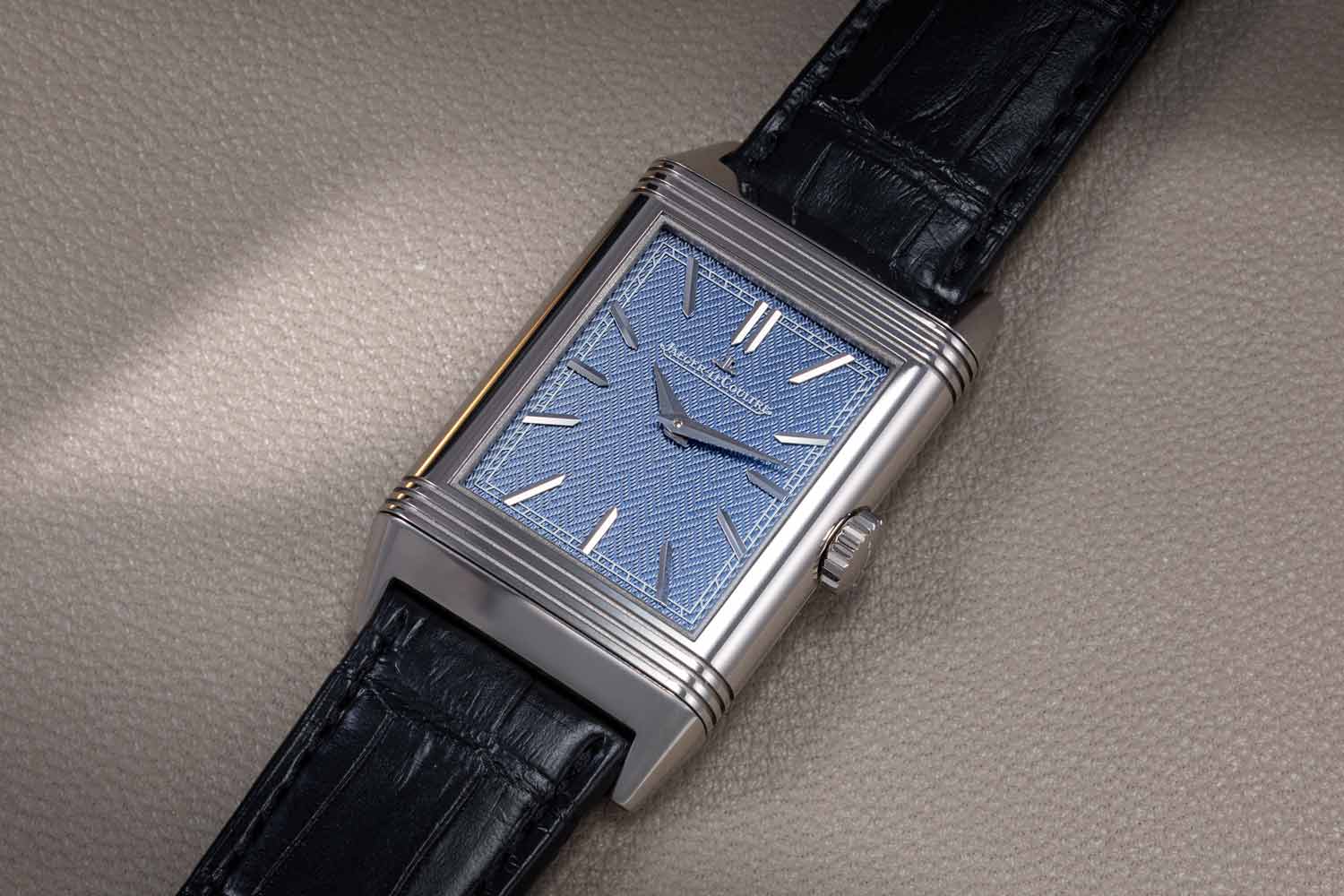
The herringbone guilloché pattern on the dial of Faridun Tests His Sons. (Image: Revolution©)
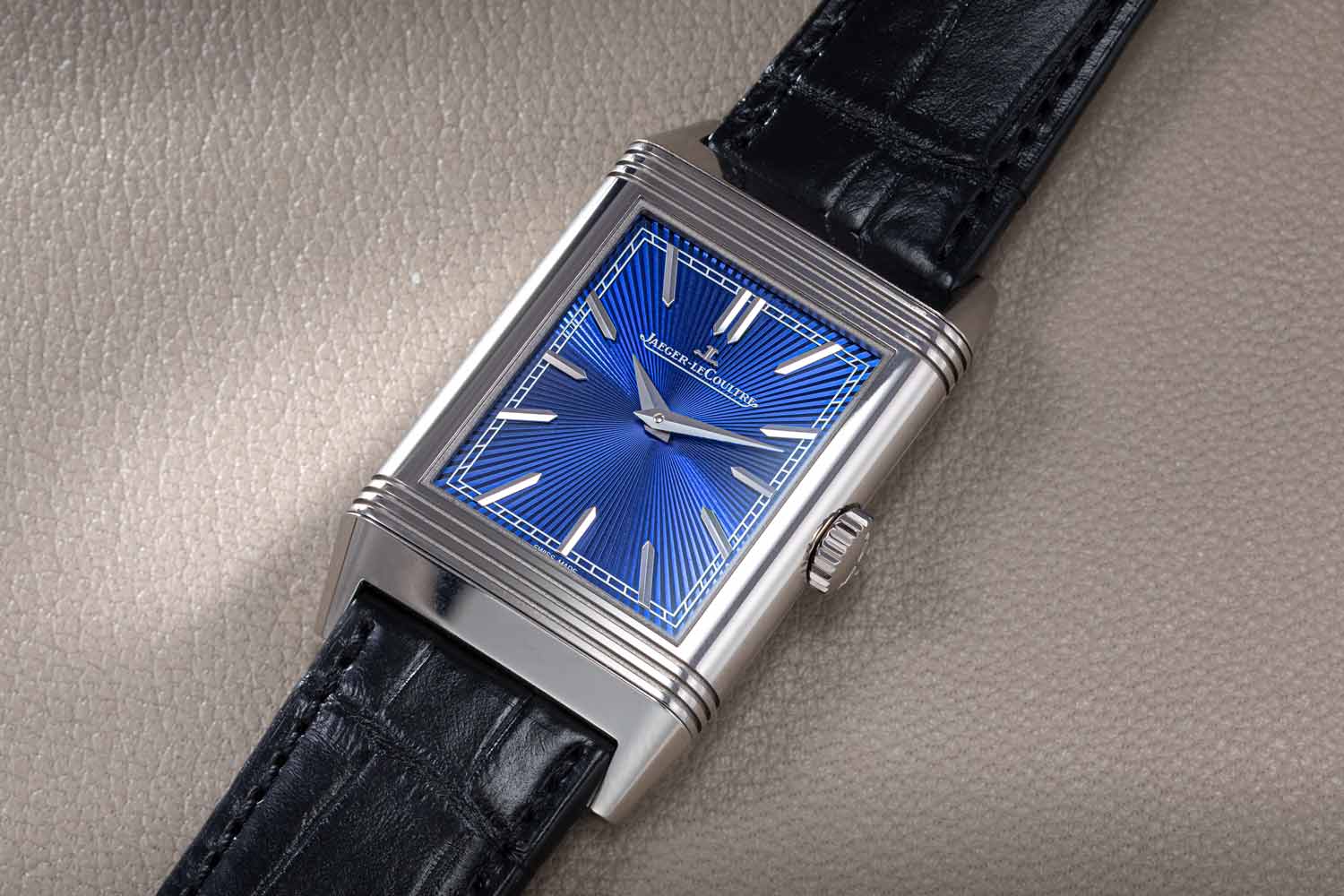
And finally, the sunray guilloché dial of Siyavush Plays Polo. (Image: Revolution©)
Hand-winding tradition
Inside the watch is the cal. 822, a compact, oval-shaped manual-winding movement. This movement has been the standard for most modern Reversos since the 1990s, which explains its relatively modest power reserve of 42 hours. Although hidden between the guilloché dial and the miniature painting on the caseback, the movement itself is quite attractive, featuring a bridge layout reminiscent of classical pocket watches – a design detail rarely seen in today’s wristwatches.
Tech Specs: Jaeger-LeCoultre Reverso Tribute Enamel “Shahnameh”
Reference: Q39334S1 (Siyavush Plays Polo before Afrasiyab); Q39334S2 (Faridun Tests His Sons); Q39334S3 (Saam Comes to Mount Alburz); Q39334S4 (Rustam Pursues Akvan)
Movement: Cal. 822; manual winding; 42 hours power reserve
Functions: Hours and minutes
Case: 45.6 mm x 27.4 mm x 9.73 mm; 18k white gold; water resistant to 30 m
Strap: Black alligator leather with white gold folding clasp
Limited edition: 10 pieces each
Price: USD 142,000
Jaeger-LeCoultre

You may also like
Editorial
Last Week In Watches: TAG Heuer Carrera, JLC Grande Sonnerie, Louis Vuitton Spin Time and more
Sep 15, 2026
Editorial
Last Week In Watches: TAG Heuer Carrera, JLC Grande Sonnerie, Louis Vuitton Spin Time and more
Sep 15, 2026

Interviews
Jérôme Lambert, CEO of Jaeger-LeCoultre, explains the new Master Control Collection
Aug 14, 2026
Interviews
Jérôme Lambert, CEO of Jaeger-LeCoultre, explains the new Master Control Collection
Aug 14, 2026
Editorial
Instruments of individuality in the Patrick Parrish Collection
May 25, 2026
Editorial
Instruments of individuality in the Patrick Parrish Collection
May 25, 2026