A Closer Look at the Newly Refreshed Grand Seiko Evolution 9 Collection
Editorial
A Closer Look at the Newly Refreshed Grand Seiko Evolution 9 Collection

Grand Seiko recently announced a significant refresh of its core Evolution 9, with nine new references that bring improved tapered bracelets, tool-free micro-adjust clasps and, for the Spring Drive models, the U.F.A. caliber 9RB2.
The Evolution 9 was originally introduced for Grand Seiko’s 60th anniversary in 2020 as a modern interpretation of the design language first fully expressed by the 44GS in 1967. The original Grand Seiko style, often referred to as Taro Tanaka’s Grammar of Design, was considerably more prescriptive than the familiar shorthand of sharp surfaces and Zaratsu polishing. Grand Seiko describes it as three governing principles expressed through nine design elements. The three principles were that the watch should be constructed primarily from flat surfaces and two-dimensional curves, with three-dimensional curves generally avoided; that the flat surfaces of the case, dial and hands should be as wide as possible; and that, as a rule, those surfaces should be distortion-free and mirror polished.
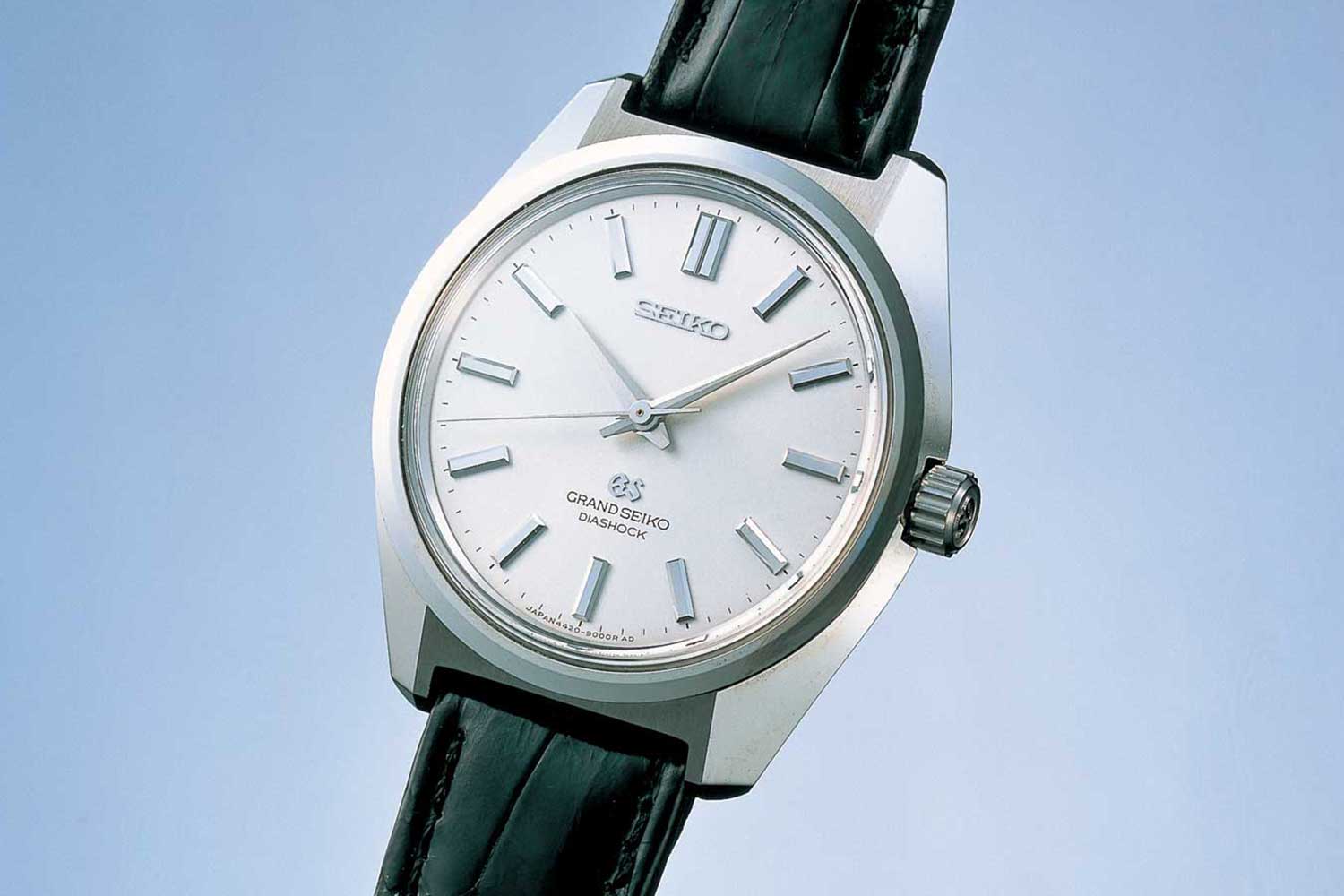
1967: Grand Seiko 44GS (Image: Grand Seiko)
The Evolution 9 preserves the underlying ideas but rewrites the design code around modern automatic watches. Its three principles are an evolution in aesthetics, legibility and wearing comfort. What was most clearly retained is the preference for planes and flat surfaces, the use of distortion-free Zaratsu polishing, the flat dial, the multifaceted hands and indexes, the emphatic 12 o’clock marker, the curved case-side profile and, above all, the basic idea of producing strong visual definition through contrasting surfaces. But the Evolution 9 modifies several parts of the old grammar. The biggest aesthetic change is that it reduces the amount of mirror polishing and greatly expands the use of hairline finishing. Designer Kiyotaka Sakai says this was deliberate. Rather than setting polished planes directly against one another as on the 44GS, he used larger brushed surfaces so that the remaining mirror-polished surfaces would stand out more strongly.
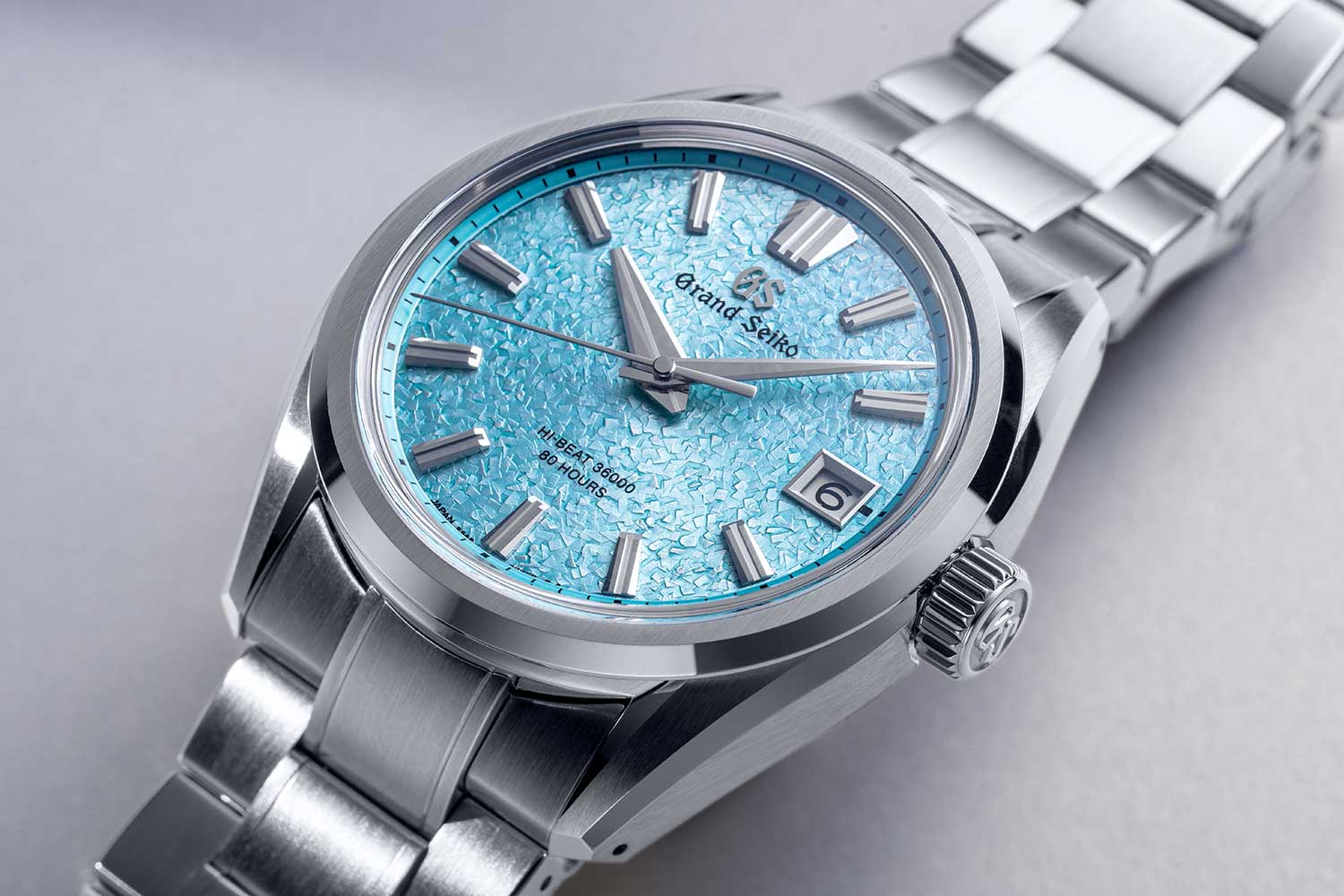
Grand Seiko Evolution 9 Hi-Beat SLGH035 Genbi Valley (©Revolution)
The case architecture also evolved for ergonomic reasons. The 44GS was built around a slim hand-wound movement. The Evolution 9 lowers the center of gravity, so the mass sits closer to the wrist and widens the bracelet to spread the weight and prevent the watch from shifting. The hands and markers are broader, more strongly faceted and more three-dimensional than before, with the indexes cut as wide as the dial allows and a grooved center that splits each one into distinct planes of light and dark.
A New Generation of Evolution 9
The nine new watches are divided into four mechanical Hi-Beat models and five Spring Drive models. The mechanical quartet retains the caliber 9SA5 and consists of the White Birch SLGH031, Night Birch SLGH029, Green Birch SLGH033 and Genbi Valley SLGH035. The more substantial change occurs on the Spring Drive side, where the five-day caliber 9RA2 gives way to the three-day U.F.A. caliber 9RB2. These comprise the White Birch SLGB009, Atera Valley SLGB011, Lake Suwa SLGB013, the new 37mm Lake Suwa SLGB015 and the new Moonlit Lake Suwa SLGB007.
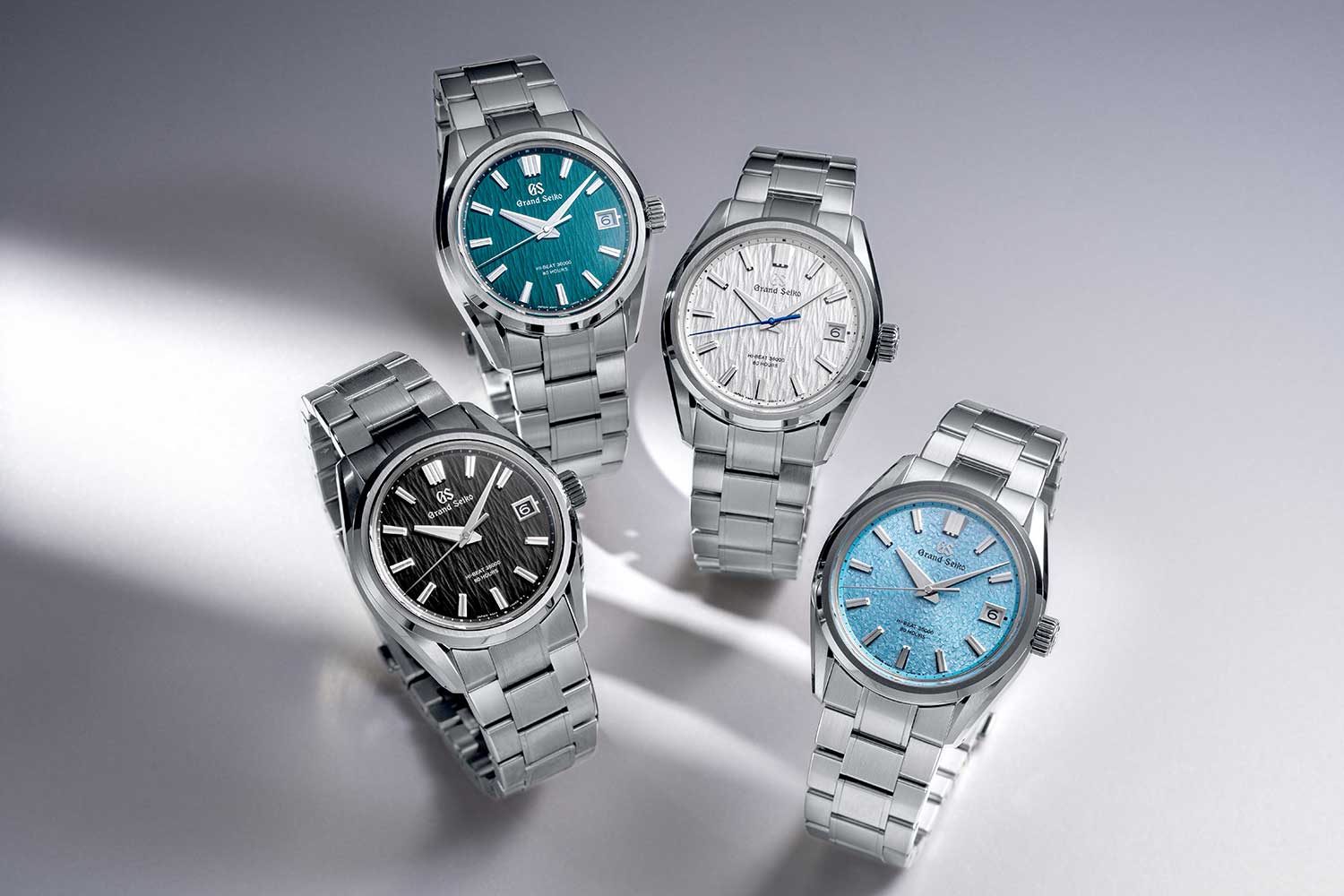
Grand Seiko Evolution 9 Hi-Beat Collections (©Revolution)
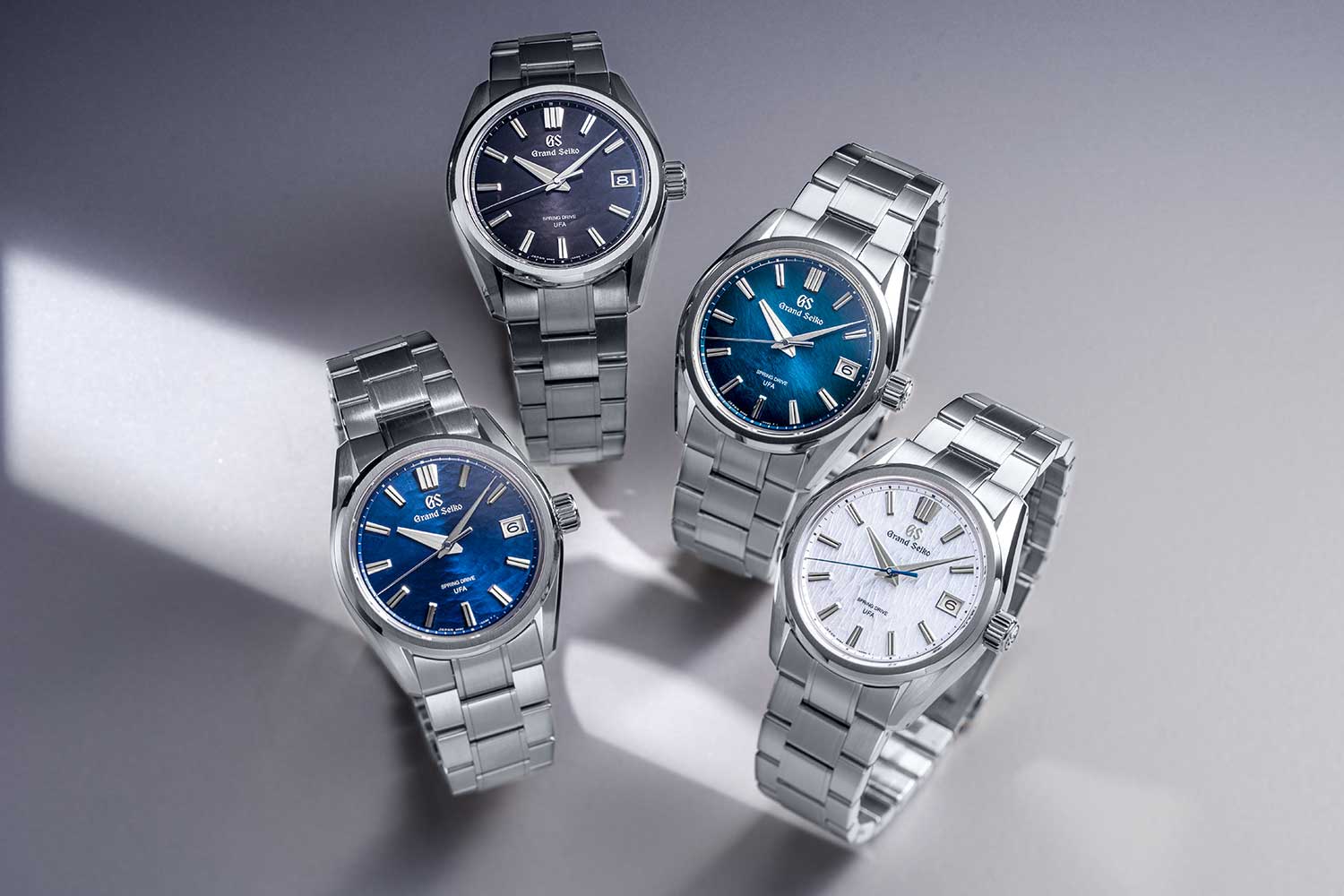
Grand Seiko Evolution 9 Spring Drive U.F.A. Collections (©Revolution)
Seven of the nine are now in Ever-Brilliant Steel, Grand Seiko’s highly corrosion-resistant stainless steel alloy, which has a noticeably brighter, whiter appearance than conventional stainless steel. It has a PREN, or Pitting Resistance Equivalent Number, of over 40, compared with around 25 for conventional 316L stainless steel and around 35 for 904L. In practical terms, PREN indicates how resistant a steel is to localized pitting corrosion, particularly from exposure to chlorides such as salt water.
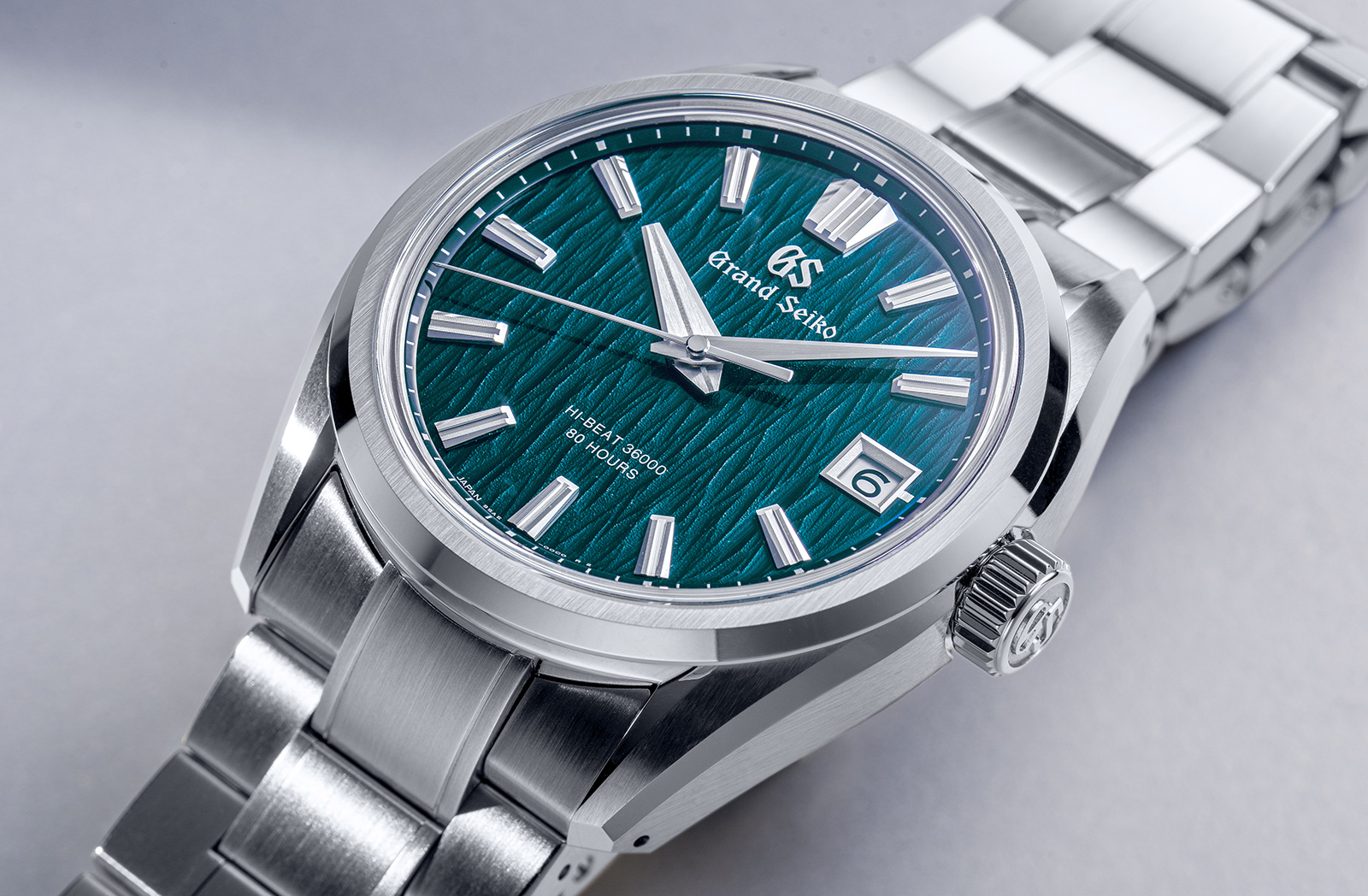
Grand Seiko Evolution 9 Hi-Beat Green Birch SLGH033 in Ever-Brilliant Steel
The remaining two watches are the Night Birch SLGH029 and Moonlit Lake Suwa SLGB007, both in High-Intensity Titanium, an alloy that is harder and more scratch-resistant than conventional titanium and stainless steel while keeping titanium’s lightness and corrosion resistance. Crucially for Grand Seiko, it can also take a highly polished finish, allowing Zaratsu-polished surfaces to be executed in titanium.
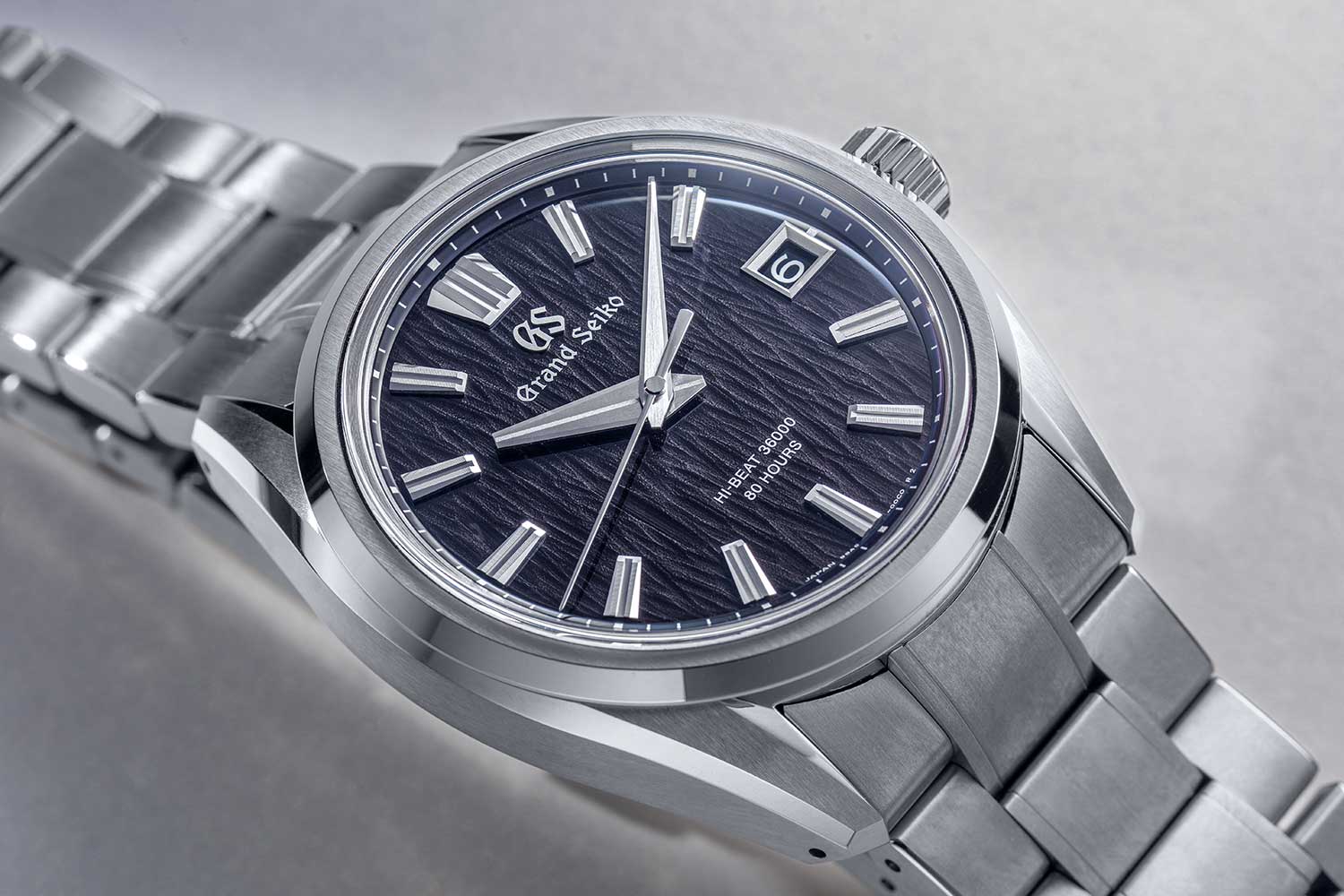
Grand Seiko Evolution 9 Hi-Beat SLGH029 Night Birch (©Revolution)
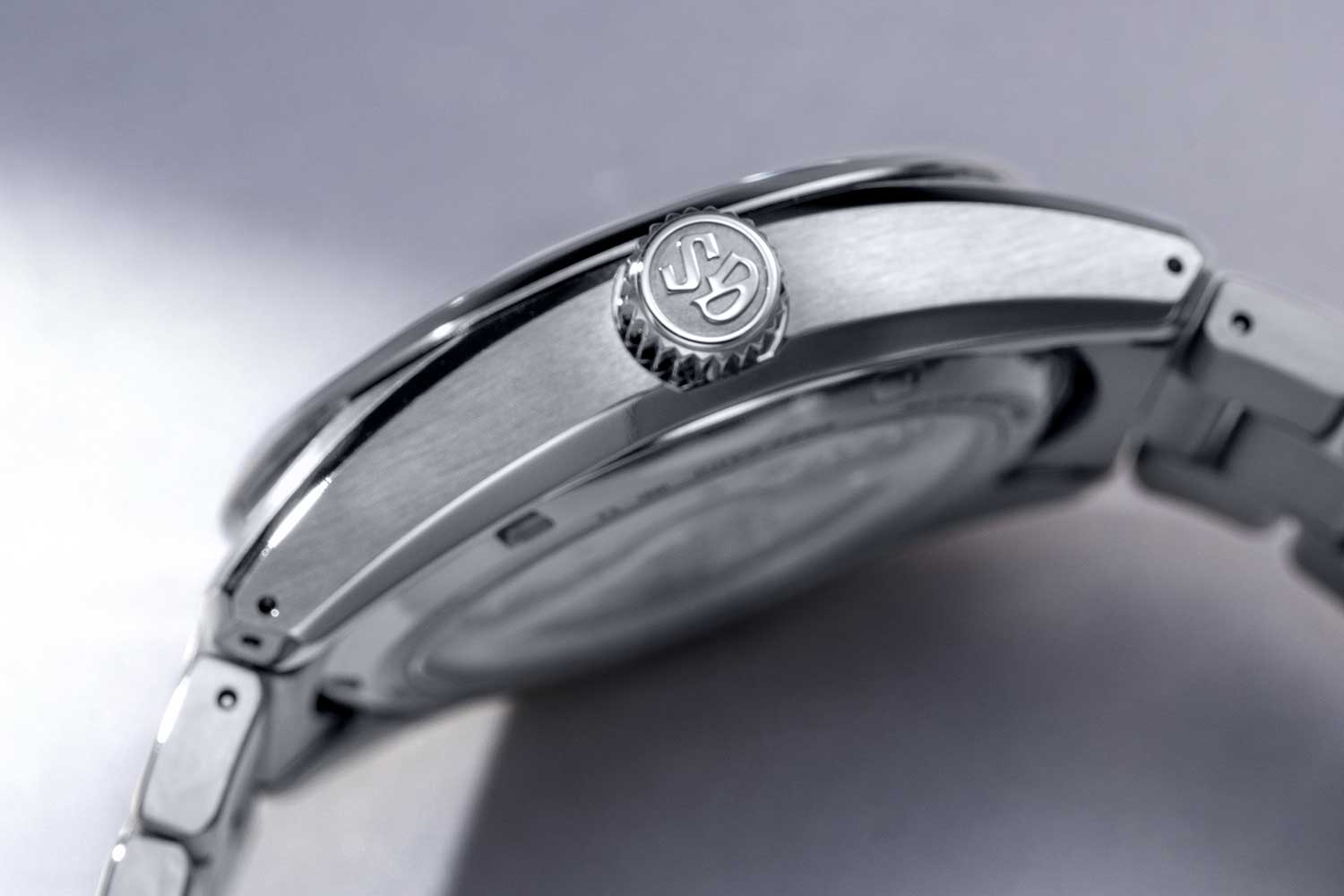
(©Revolution)
The bracelet is the most important practical improvement. It now tapers from 22mm to 18mm on the 40mm watches, and from 20mm to 16mm on the 37mm Lake Suwa. Importantly, the bracelet terminates in a new clasp that offers three positions of tool-free adjustment across a total range of 6mm. Adjustment is made by raising and pressing the bracelet end to disengage a spring-loaded pin from a series of grooves inside the clasp, after which the bracelet can be slid to the desired position and released to lock it in place. The mechanism itself is compact and neatly engineered, with a resin contact surface intended to reduce friction and wear inside the clasp. The greater taper reduces bulk on the underside and makes the bracelet feel more natural on the wrist, while the micro-adjustable clasp solves a practical problem that had become increasingly conspicuous as competitors improved their own bracelets.
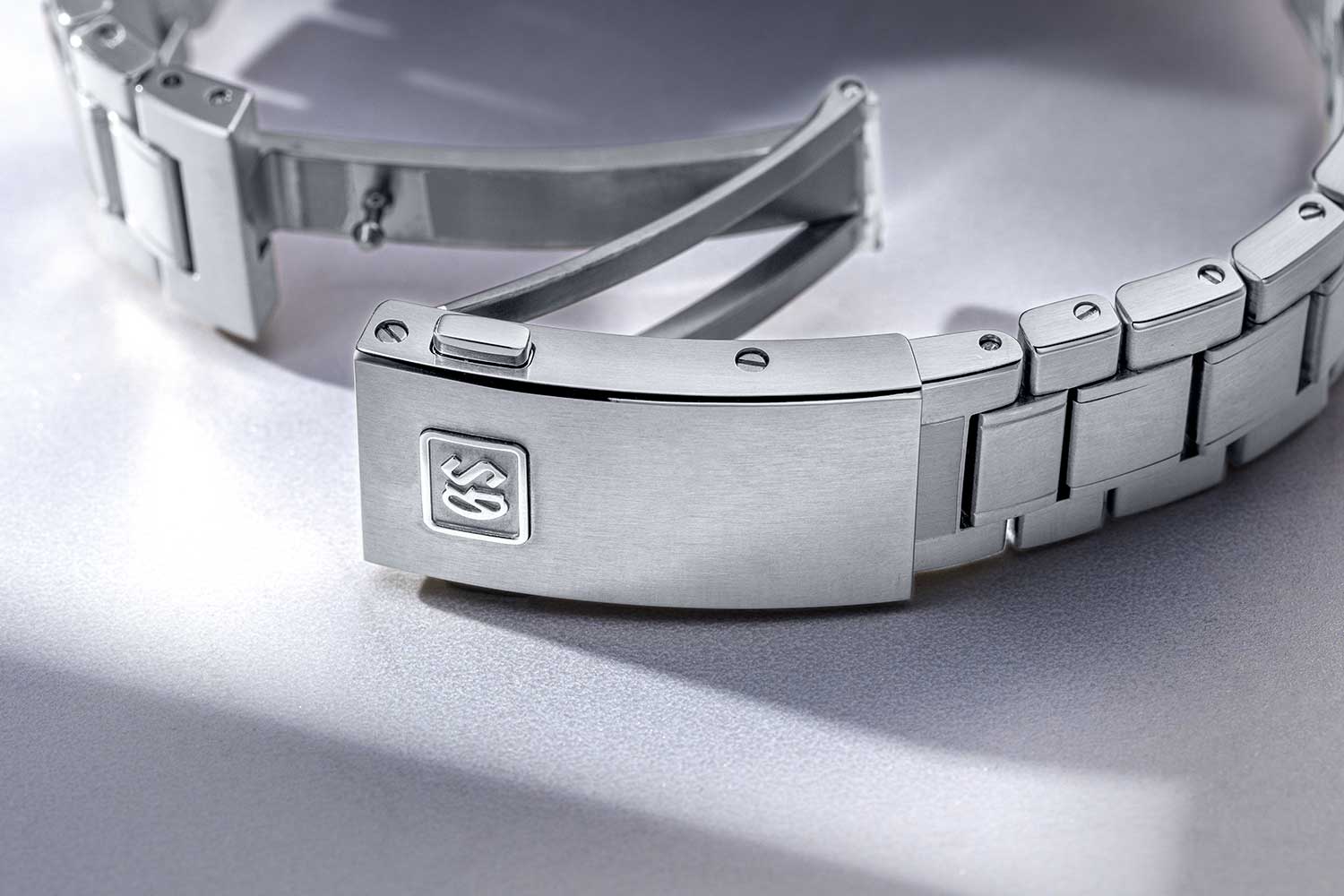
(©Revolution)
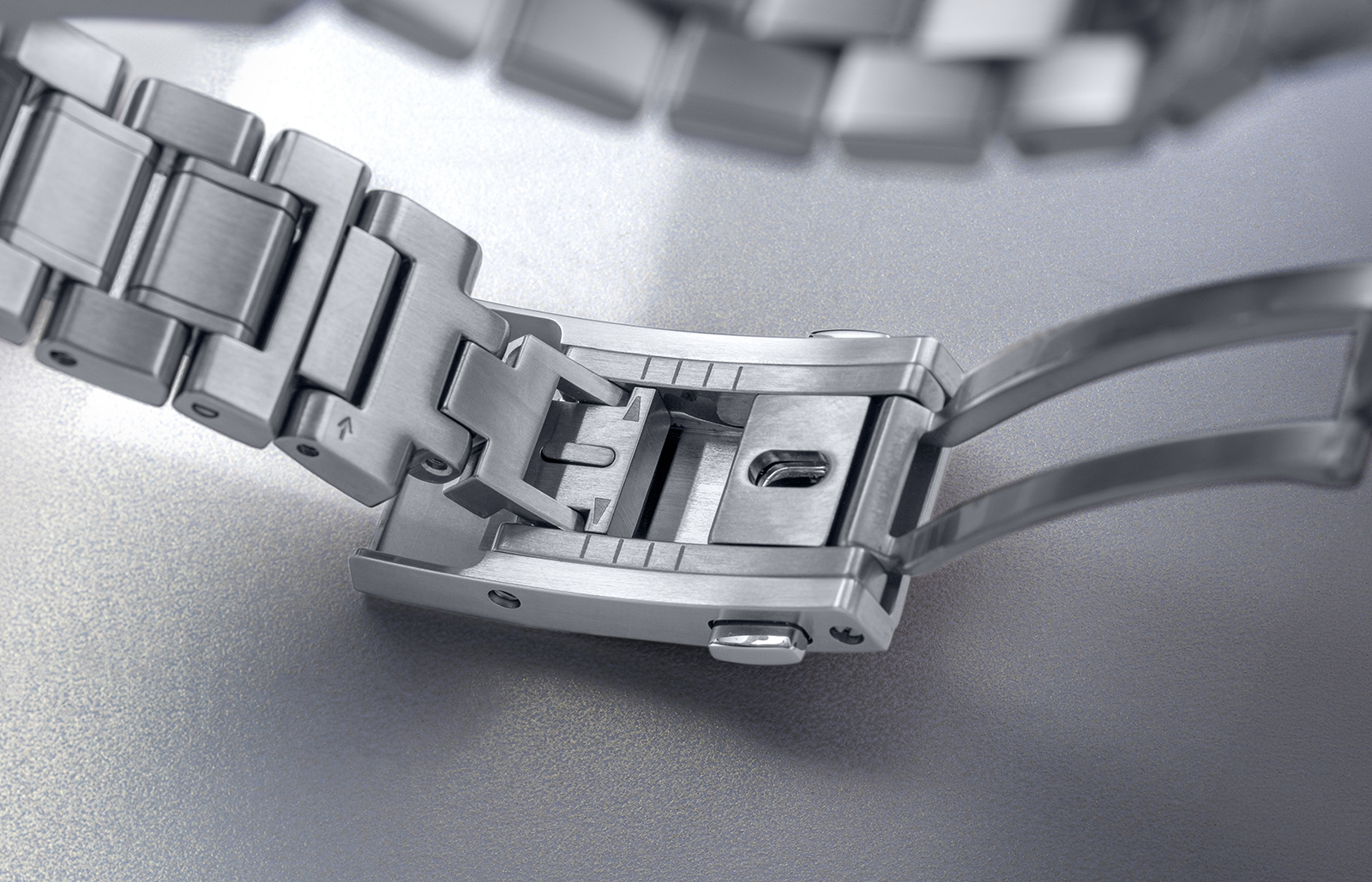
Grand Seiko’s new clasp uses a spring-loaded engagement pin that locks into three adjustment positions across a total range of 6mm, with a resin sliding surface designed to reduce friction and wear (©Revolution)
Faces of Nature
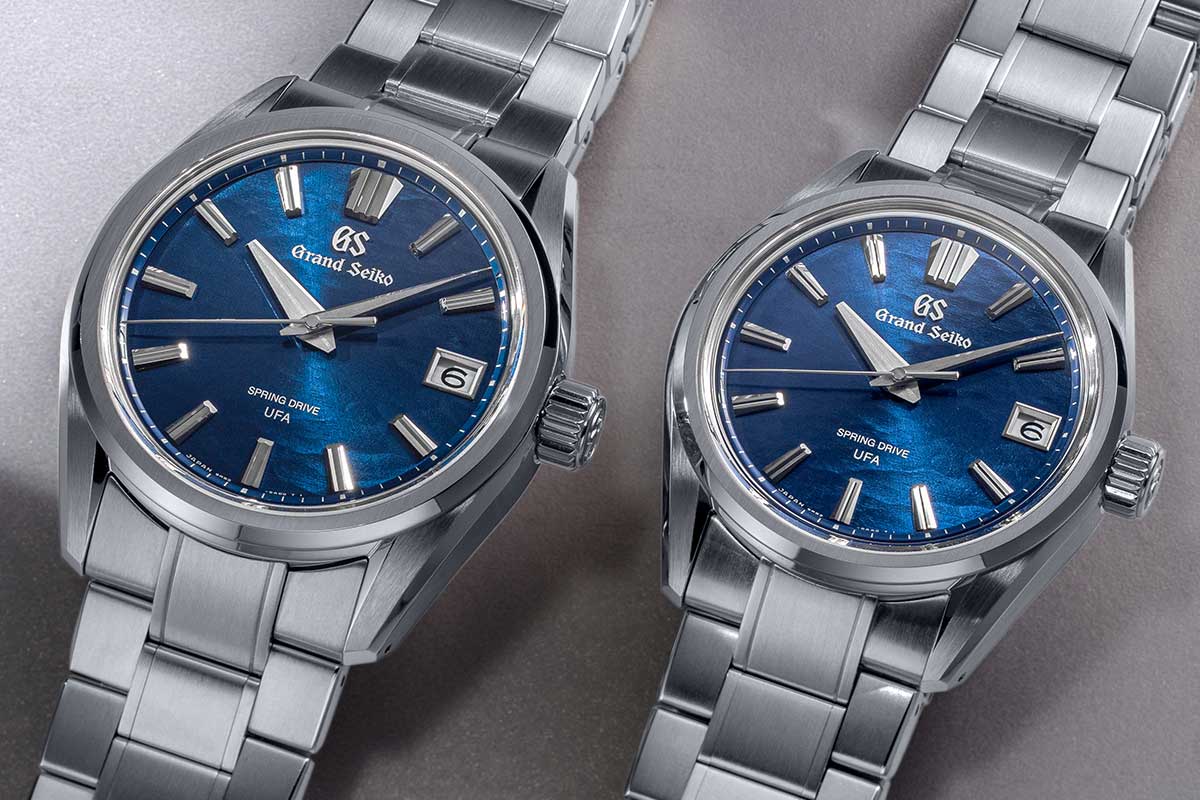
Of the nine watches, the 37mm Lake Suwa SLGB015 is probably the one many enthusiasts will be most excited about, and it doesn’t disappoint. Both Lake Suwa dials are brighter than their predecessors, with a new sunray treatment that adds considerably more depth and animation to the dial. The earlier Lake Suwa had a more pronounced, almost topographical texture, with individual ripples clearly visible across its surface. Here the pattern is softer and the blue more luminous, moving from deep navy to brilliant blue as the dial catches light. Then there is the all-new Moonlit Lake Suwa SLGB007, which uses the same pattern with a black sunray finish that reveals subtle brown undertones under light.
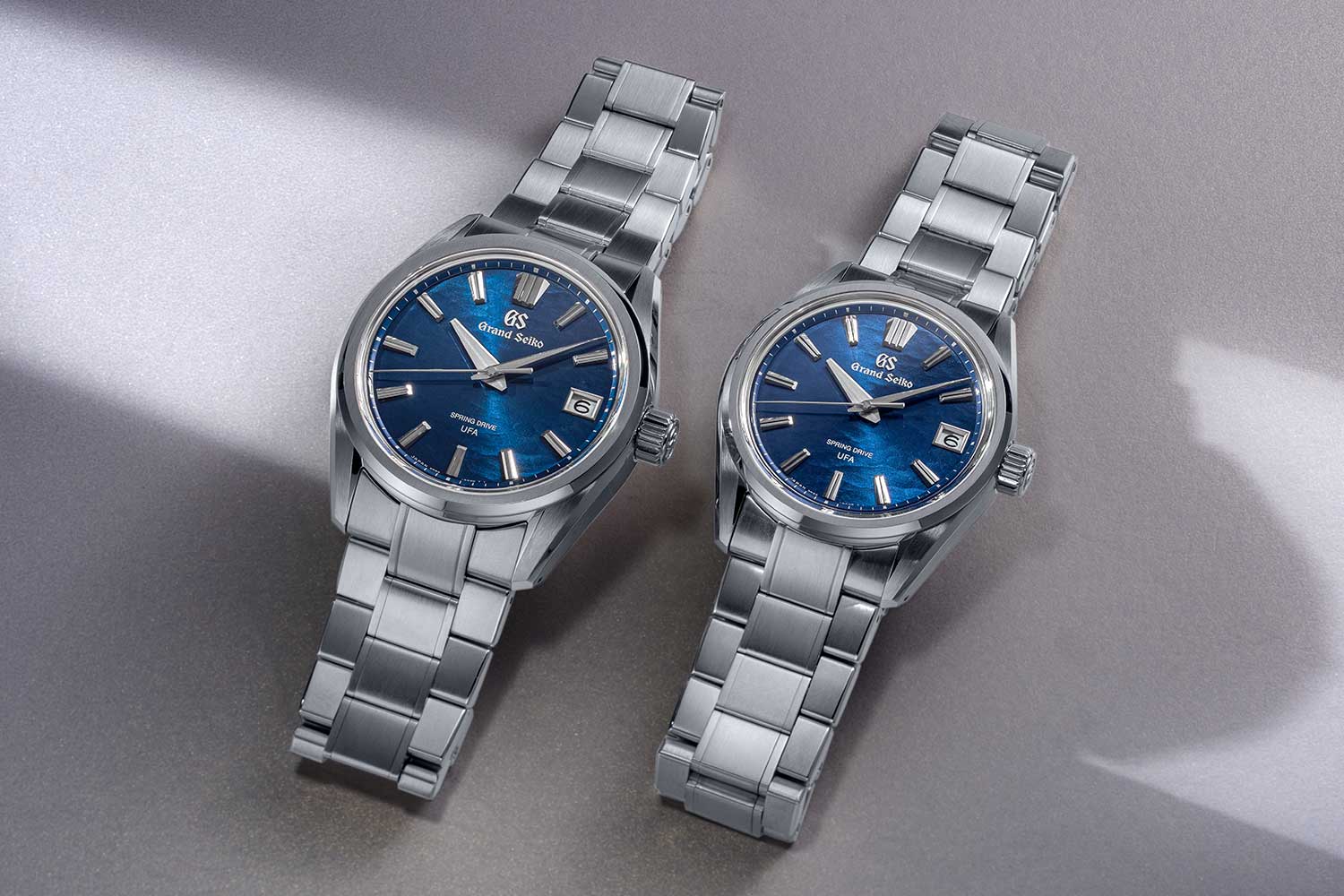
Grand Seiko Evolution 9 Spring Drive U.F.A. SLGB013 (left) and SLGB015 (right) Lake Suwa (©Revolution)
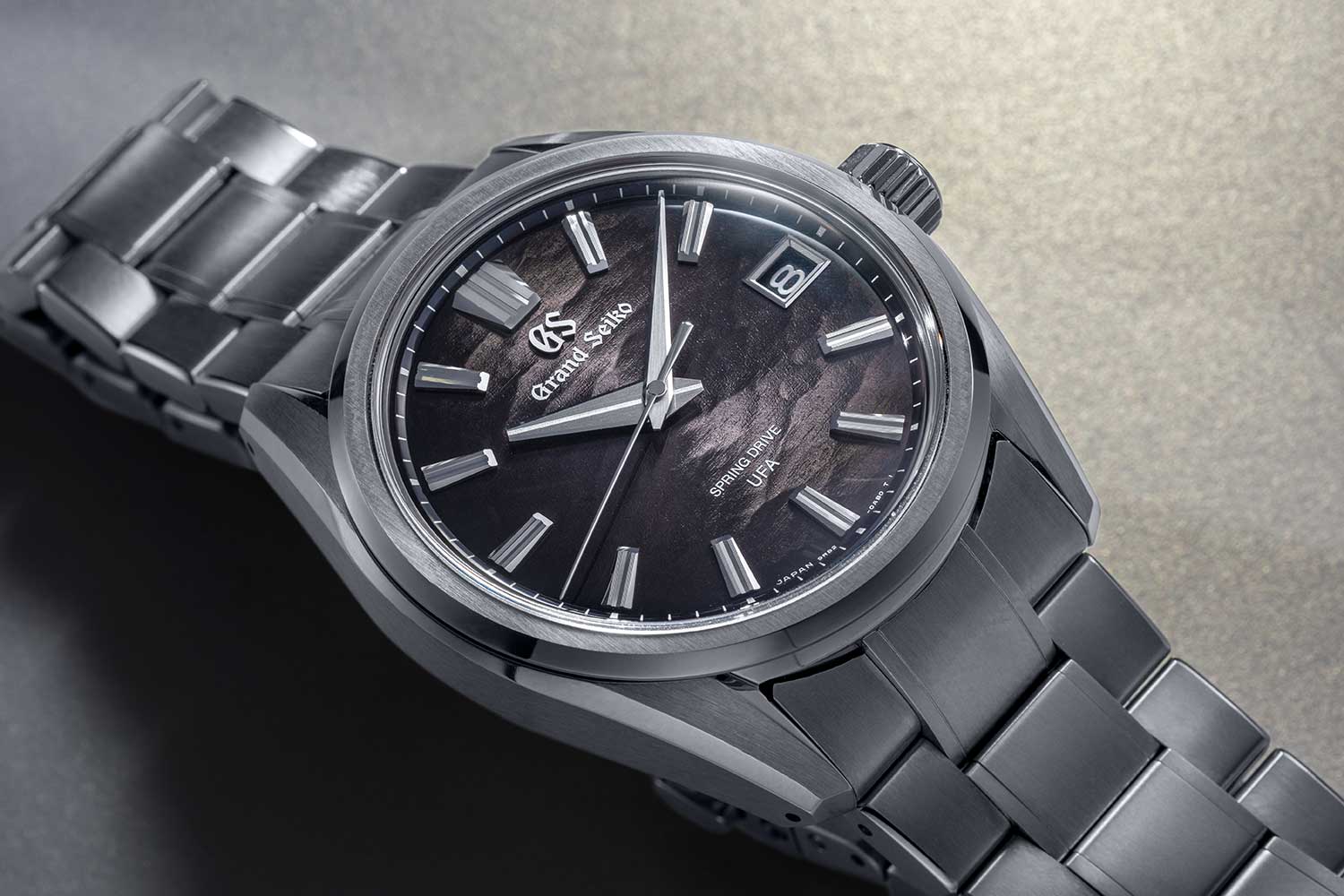
Grand Seiko Evolution 9 Spring Drive U.F.A. SLGB007 Moonlit Lake Suwa (©Revolution)
To further distinguish between the Spring Drive and mechanical ‘White Birchʼ models, the Spring Drive SLGB009 has also been given a sunray finish, while their bark patterns remain slightly different. The Genbi Valley dial has also been reworked. Its irregular pressed texture represents the rugged rock formations of the valley, carved over time by the Iwai River. The pattern first appeared in green on the limited edition SLGH021 in 2024 and returns here in a pale turquoise, intended to evoke the clear waters running through the gorge.
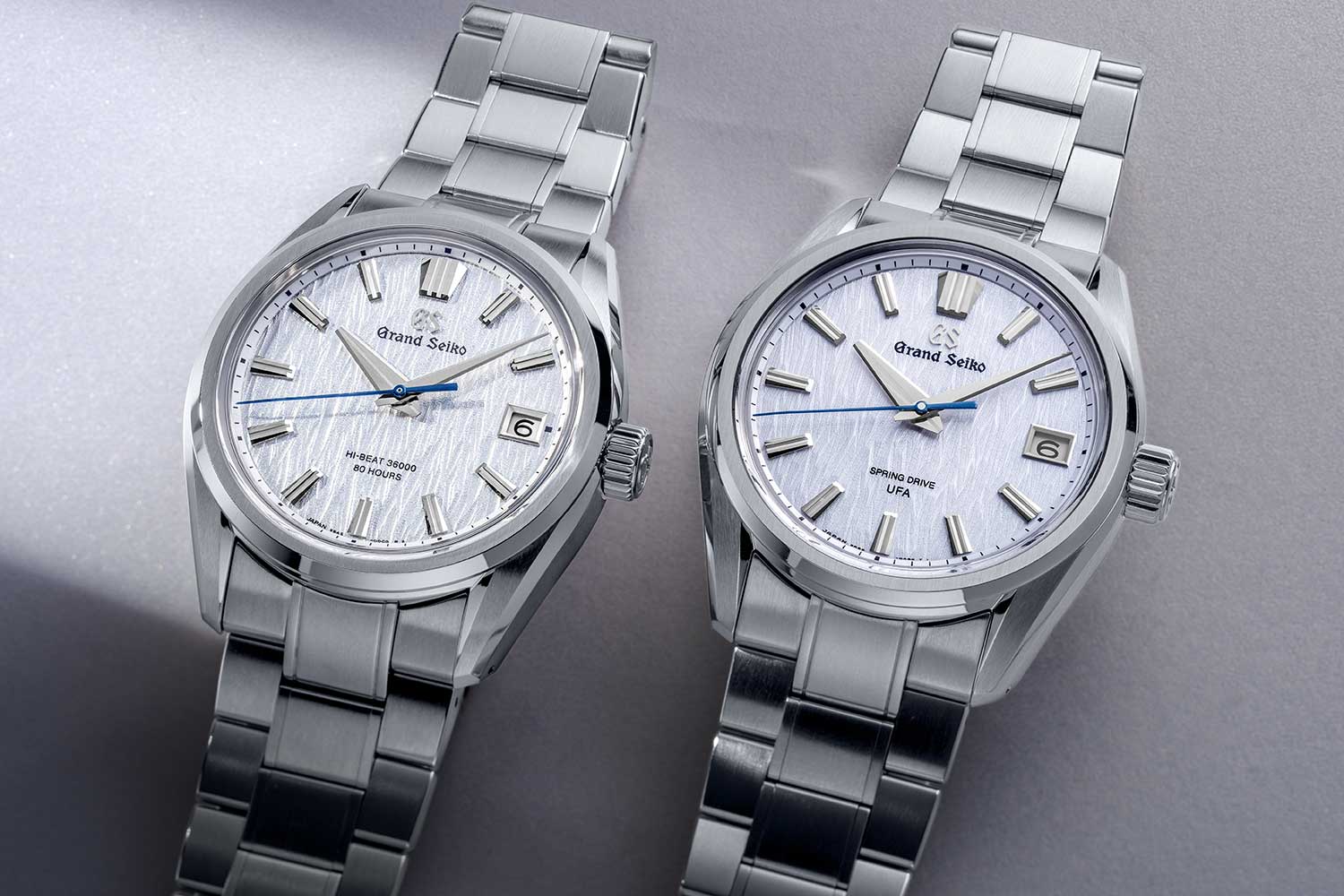
Grand Seiko Evolution 9 Hi-Beat SLGH031 White Birch and Spring Drive U.F.A. SLGB009 White Birch (©Revolution)
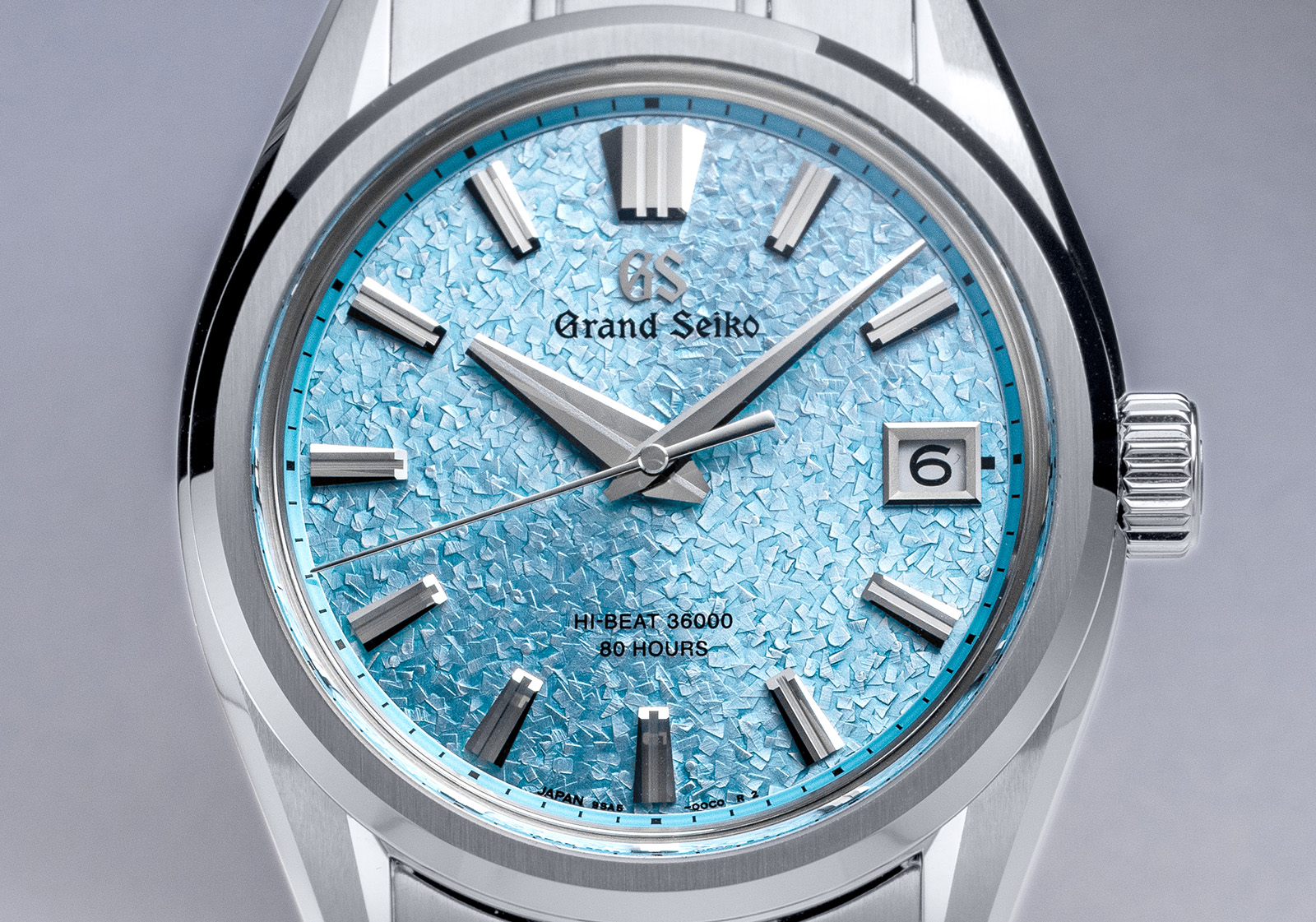
Grand Seiko Evolution 9 Hi-Beat SLGH035 Genbi Valley
In most of Grand Seiko’s nature-inspired dials, the pattern begins with stamping, which places much of the artistry in the stamping die used to create it. These dies are often worked by hand with tools such as hammers and routers. Natural surfaces are full of small irregularities, and these inconsistencies are essential to giving the finished pattern a convincing sense of movement and depth. Once the die is finished, the pattern is pressed into the dial blank. The stamped relief then passes through a series of finishing processes that can include plating, layers of paint, a clear coating and either a glossy or matte final treatment. Each stage affects how the underlying texture appears, how it reflects light and how its shades change from one viewing angle to another.
The Atera Valley dial is a particularly useful example, and one of the most successful of nature-inspired dials in Grand Seiko’s current catalogue, as it shows how texture and color can be combined to produce effects of remarkable nuance. The striations are fine and irregular, running from around 11 o’clock towards 4 o’clock like currents seen through crystalline waters. They do not form an immediately obvious repeating pattern, so the surface has an unusually natural quality. The color is equally hard to pin down. Depending on the angle and the light, it moves from a dark, almost black blue through deep blue-green to a vivid emerald, while the texture seems alternately to emerge from and disappear beneath the surface.
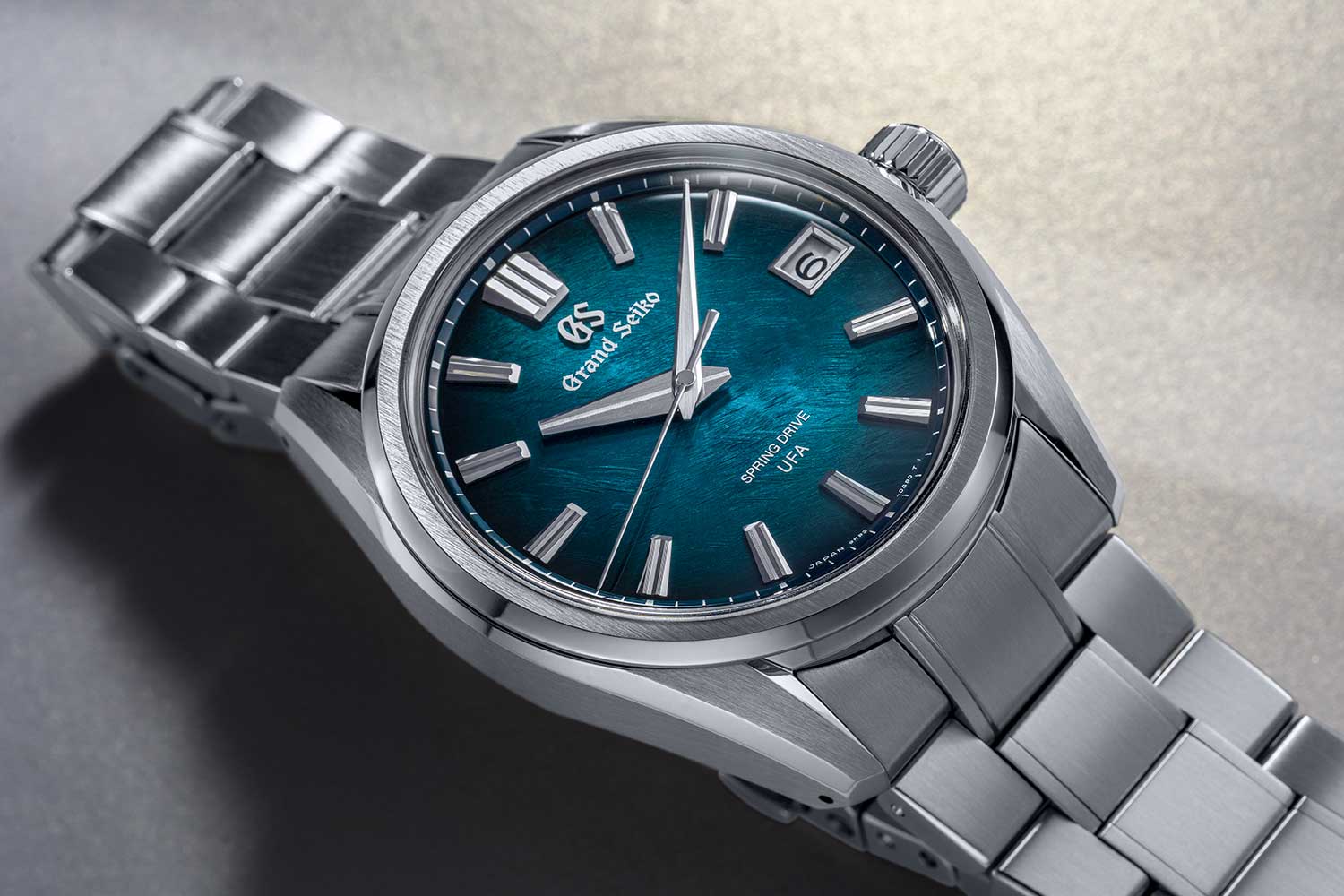
Grand Seiko Evolution 9 Spring Drive U.F.A. SLGB011 Atera Valley (©Revolution)
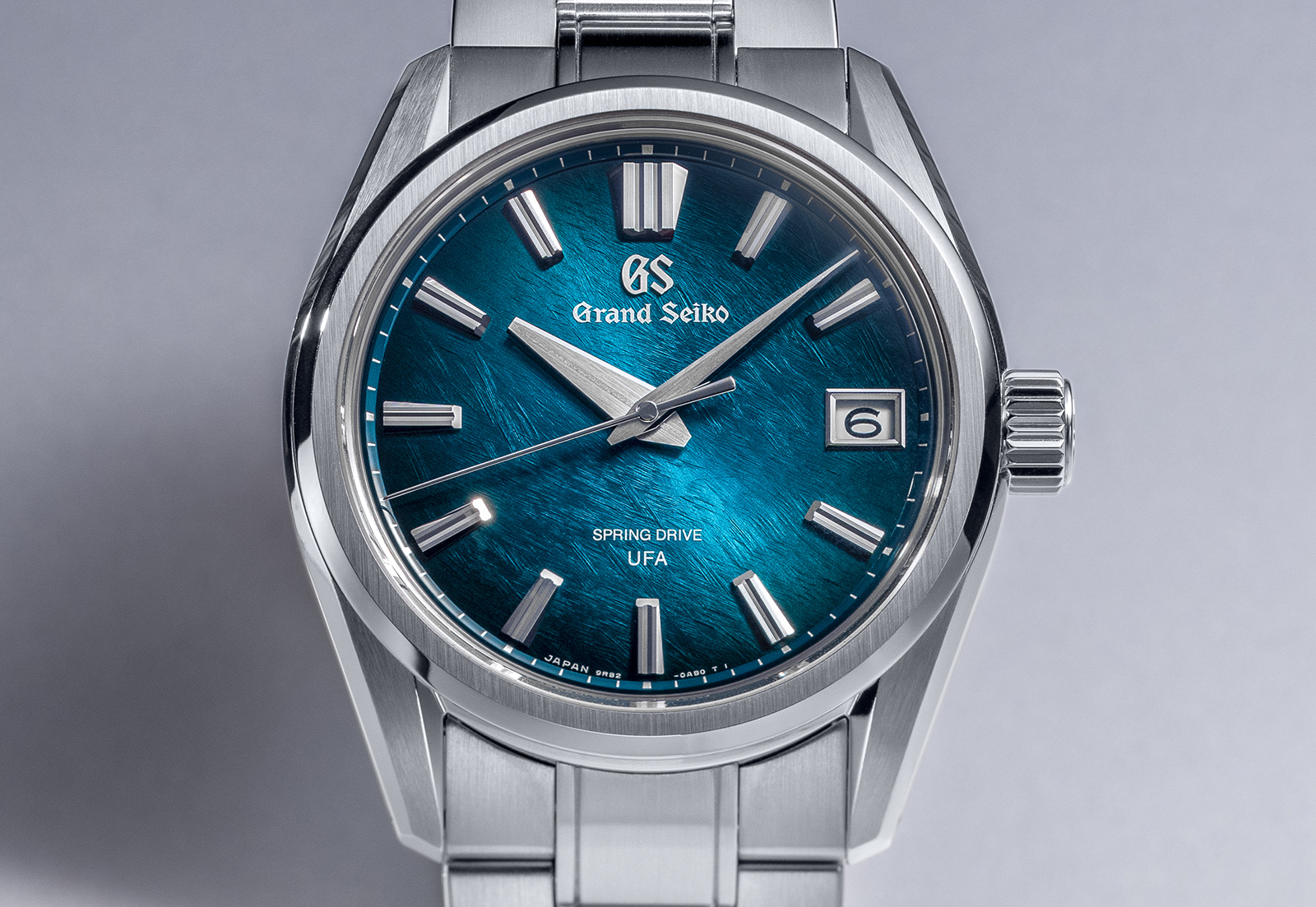
(©Revolution)
Grand Seiko’s craftsmen experimented with different tools, scraping broad and fine lines across a metal plate to evoke the stronger and gentler currents of the Atera River. Once the pattern was settled, it was transferred to a stamping die and pressed into the dial blank. The dial is then plated and sprayed with multiple layers of paint to create its emerald-green gradation. A clear coat is then applied and polished smooth.
If I had to pick one out of the lot, the 37mm Lake Suwa would be the obvious choice, and certainly the sensible one for my wrist. But the Atera Valley has enough visual magnetism to make sensible considerations seem rather academic.
Two Paths to Precision
The four mechanical models are powered by the caliber 9SA5 introduced in 2020, which remains one of Grand Seiko’s most technically ambitious mechanical movements. It combines a high frequency of 36,000vph with an 80-hour power reserve from two serially coupled barrels, made possible in part by the efficiency of the Dual Impulse Escapement.
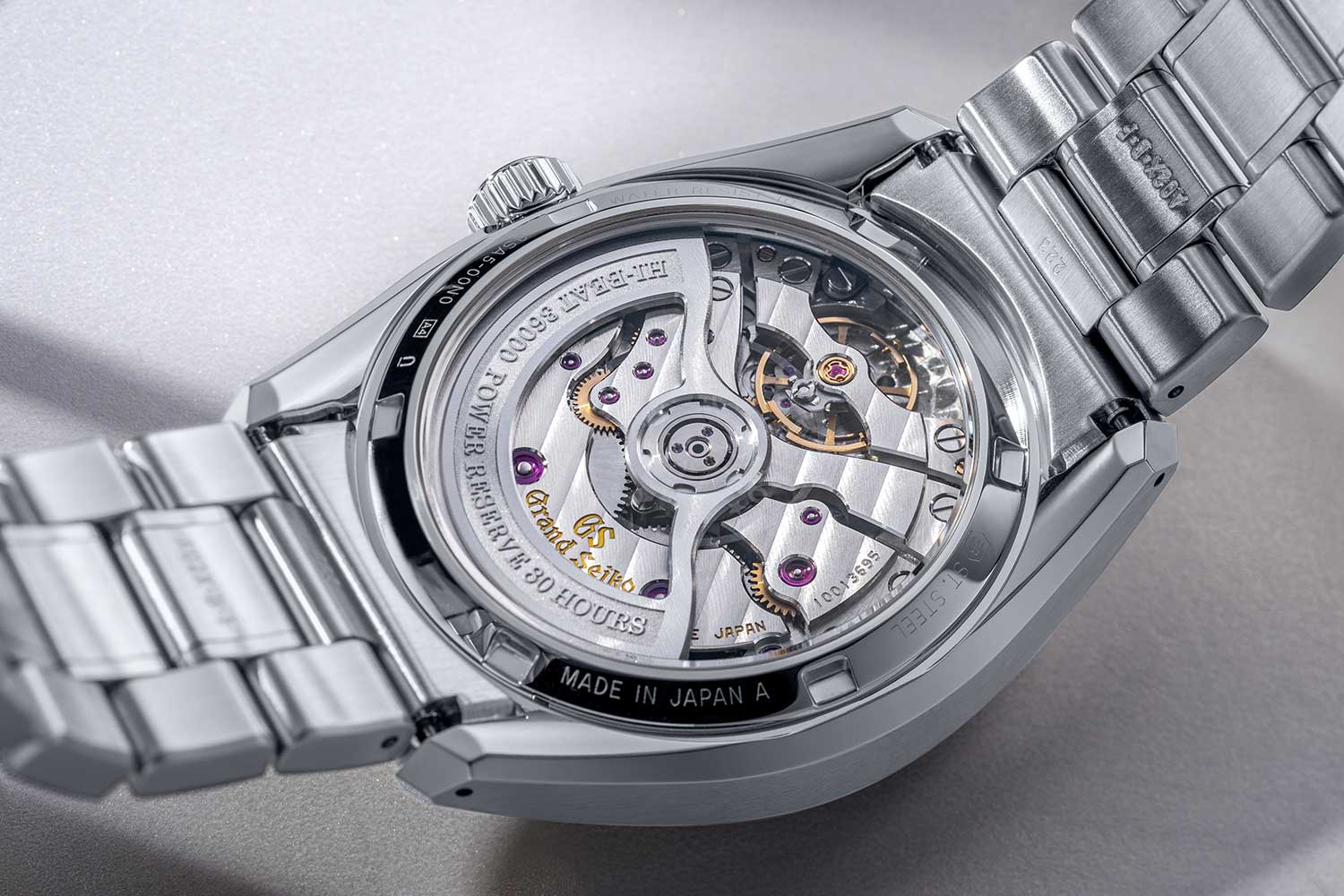
(©Revolution)
The latter is a hybrid escapement in which the balance receives one direct and one indirect impulse during each complete oscillation. In one direction, an escape wheel tooth impulses a jewel directly on the balance roller; on the return, impulse is transmitted through the pallet fork and roller jewel. The geometry of the roller is deliberately offset to compensate for the different efficiencies of these two impulse paths. The goal was to equalize their torque margins as mainspring torque declines. The escape wheel and pallet fork are produced by MEMS, allowing lightweight components with sufficiently low inertia for the 5 Hz frequency. The oscillator itself is free-sprung, supported by a full balance bridge and fitted with an overcoil hairspring.
The Spring Drive models undergo a more substantial change, replacing the five-day 9RA2 with the U.F.A. caliber 9RB2. The 9RA2 already incorporated active temperature compensation and housed its oscillator, IC and temperature sensor in a vacuum-sealed package. The U.F.A. hence achieves its extraordinary ±20 seconds per year through a series of refinements to an already highly sophisticated system. One of the remaining sources of error was residual stress within the quartz crystal after processing. As this stress is gradually released over time, the frequency of the oscillator can shift by minute amounts. For the 9RB2, the processing method of the quartz oscillator, the design of the IC within the package and the packaging process itself were all refined. The quartz resonator was shaped and oriented to reduce sensitivity to acceleration, while its mounting was designed to isolate the vibrating portion from stresses introduced when the resonator is bonded to its substrate, as well as those caused by changes in temperature. If further aging nevertheless produces a measurable rate shift after years of ownership, there is a regulation switch that gives the service technician a means of correcting it. The rotary switch changes the logical regulation applied by the IC, essentially a digital correction to the timing signal derived from the quartz oscillator. There are six positions, from −3 through ±0 to +2. Each position changes which conductive patterns on the circuit board are contacted, and the IC reads that combination as a specific correction value.
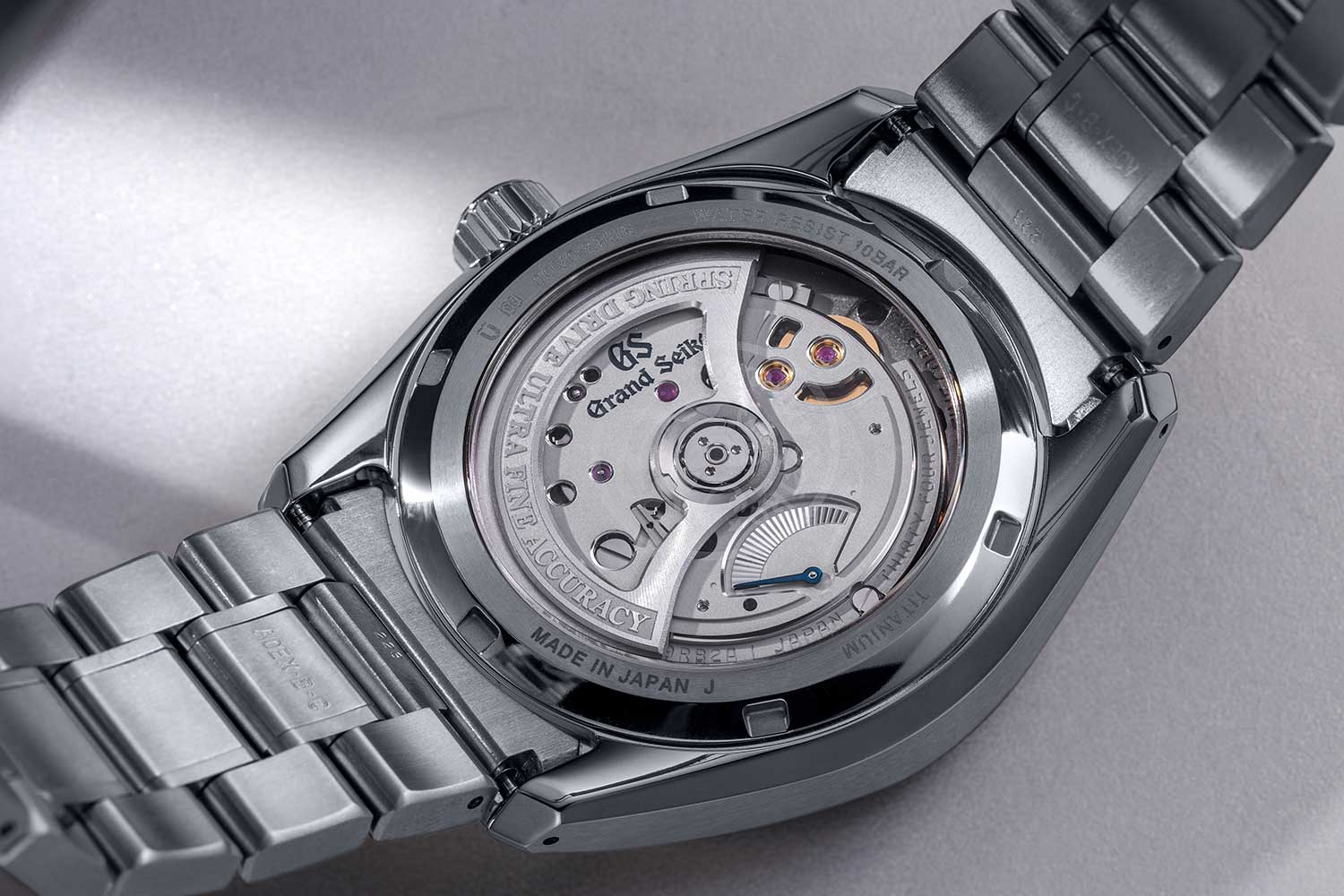
(©Revolution)
While the 9RA2 used two differently sized barrels coupled in series to deliver 120 hours of reserve, the 9RB2 uses a single barrel and runs for 72 hours, with increased mainspring torque and optimized gear teeth to improve transmission efficiency. The power reserve indicator remains on the back.
Prices for the new watches have risen only modestly. The mechanical White Birch, for instance, goes from US$9,800 to US$10,200, while the Spring Drive White Birch makes exactly the same jump. In both cases, it is an increase of just over four percent, which seems remarkably reasonable given the new bracelet and clasp, the upgrade from regular stainless steel to Ever-Brilliant Steel and, in the Spring Drive model, the substantially more accurate U.F.A. movement.
Tech Specs: Grand Seiko Evolution 9 Hi-Beat
References SLGH029 Night Birch; SLGH031 White Birch; SLGH033 Green Birch; SLGH035 Genbi Valley
Movement Self-winding Manufacture Caliber 9SA5; 80-hour power reserve; 36,000 vph (5 Hz)
Functions Hours, minutes, seconds; date
Case 40 mm × 11.7 mm; Ever-Brilliant Steel or High-Intensity Titanium; water-resistant to 100 m
Bracelet Bracelet with micro-adjust clasp
Availability From October 2026 at Grand Seiko boutiques and retailers
Price US$10,200 in Ever-Brilliant Steel; US$11,400 in High-Intensity Titanium, excluding taxes
Tech Specs: Grand Seiko Evolution 9 Spring Drive U.F.A.
References SLGB007 Moonlit Lake Suwa; SLGB009 White Birch; SLGB011 Atera Valley; SLGB013 Lake Suwa; SLGB015 Lake Suwa 37mm
Movement Self-winding Manufacture Caliber 9RB2 Spring Drive U.F.A.; 72-hour power reserve; 32,768 Hz quartz oscillator
Functions Hours, minutes, seconds; date; power reserve
Case 40 mm or 37 mm × 11.7 mm; Ever-Brilliant Steel or High-Intensity Titanium; sapphire crystal; water-resistant to 100 m
Bracelet Integrated bracelet with micro-adjust clasp
Availability From September 2026 at Grand Seiko boutiques and retailers
Price US$10,200 in Ever-Brilliant Steel; US$11,400 in High-Intensity Titanium, excluding taxes
Grand Seiko

You may also like
News
Shohei Ohtani and Grand Seiko: A Natural Partnership
Aug 28, 2026
News
Shohei Ohtani and Grand Seiko: A Natural Partnership
Aug 28, 2026
Editorial
Ultra Fine Deep Diver
Aug 7, 2026
Editorial
Ultra Fine Deep Diver
Aug 7, 2026
Editorial
Watches and Wonders 2026 Editor’s Pick: Matthew De Jesus, News Editor
May 3, 2026
Editorial
Watches and Wonders 2026 Editor’s Pick: Matthew De Jesus, News Editor
May 3, 2026