


The Man Who Made Time His Own: George Daniels and the Birth of Independent Watchmaking
Editorial
The Man Who Made Time His Own: George Daniels and the Birth of Independent Watchmaking

If they ever make a movie about the life of George Daniels with Benedict Cumberbatch in the role of our titular character, I hope it opens like this: Fade up from black. A vehicle rumbles like Mount Vesuvius on the verge of eruption, or, to borrow Jeremy Clarkson’s phrase, like “God gargling.” In a shot that pays homage to David Lean’s Lawrence of Arabia, from directly overhead, we see a 1929 4½-liter supercharged Bentley, its exhaust burbling away, positioned diagonally across the frame as a lone figure strides toward it.
Cut to a narrow country road somewhere in the green folds of Herefordshire, the kind of English lane where hedgerows scrape both wing mirrors at once if you’re foolhardy enough to bring anything wider than a horse. Thundering down this impossibly narrow corridor at a speed that would give a Le Mans safety marshal a cardiac arrest comes the 4½-liter Bentley, its bonnet strapped down like the rib cage of a bright red predator, the supercharger that Walter Owen Bentley detested shrieking like a Valkyrie mid-flight.
At the wheel is a man in his 60s with the forearms of someone who has spent five decades bending metal to his will, hunched low against the wind because the Blower offers its driver the approximate aerodynamic protection of a rowboat in a thunderstorm. This is George Daniels — the father of independent watchmaking. The same man who could spend 16 hours coaxing an independent double-wheel escapement to life is now bending physics, willing a two-ton supercharged missile at kamikaze speed, around a bend engineered for horse carts.
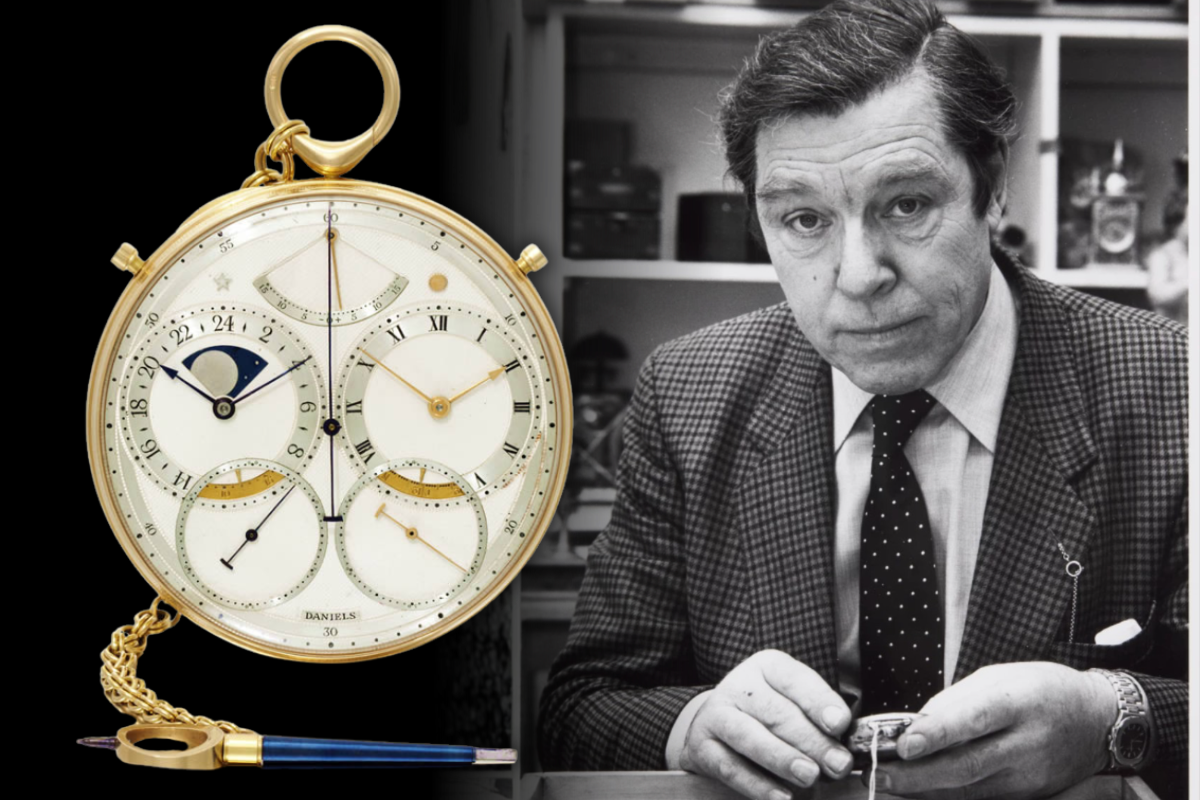
George Daniels, CBE, FBHI, FSA, AHCI (Image Credit: Phillips)
Here’s the thing we need to understand about George Daniels before we discuss the Co-Axial escapement, before we get into the independent double-wheel escapement, tourbillons and remontoirs, and the small tin box on his workbench that he called “the graveyard.” Daniels did not really distinguish between his cars and his watches. Both were mechanisms that spoke in their inchoate language to him. Both rewarded obsessive attention to tolerance, to friction, to the almost erotic satisfaction of two beautifully made surfaces moving against each other exactly as intended. He restored his first Bentley — a derelict 1924 3-liter bought for 100 pounds — while working four 16-hour days a week on watch repairs and devoting the fifth day entirely to the car. And when you understand that this was the same man who, working entirely alone on the Isle of Man, hand-filed every wheel, every pinion, every screw of a wristwatch from nothing but raw metal — the same man who invented the only fundamentally new escapement design to enter mass production in the 20th century — you begin to understand that George Daniels was not merely a watchmaker who happened to like old cars. More than a mechanical genius, he was, first and foremost, an artist of the greatest talent who happened to choose horology as his primary canvas. Everything else — the Bentleys, the motorcycles, the Leicas, even his beloved Breguets — was simply an extension of a mind that could not look at a mechanism without wanting to understand it, improve it and re-create it as reimagined through his brilliance.
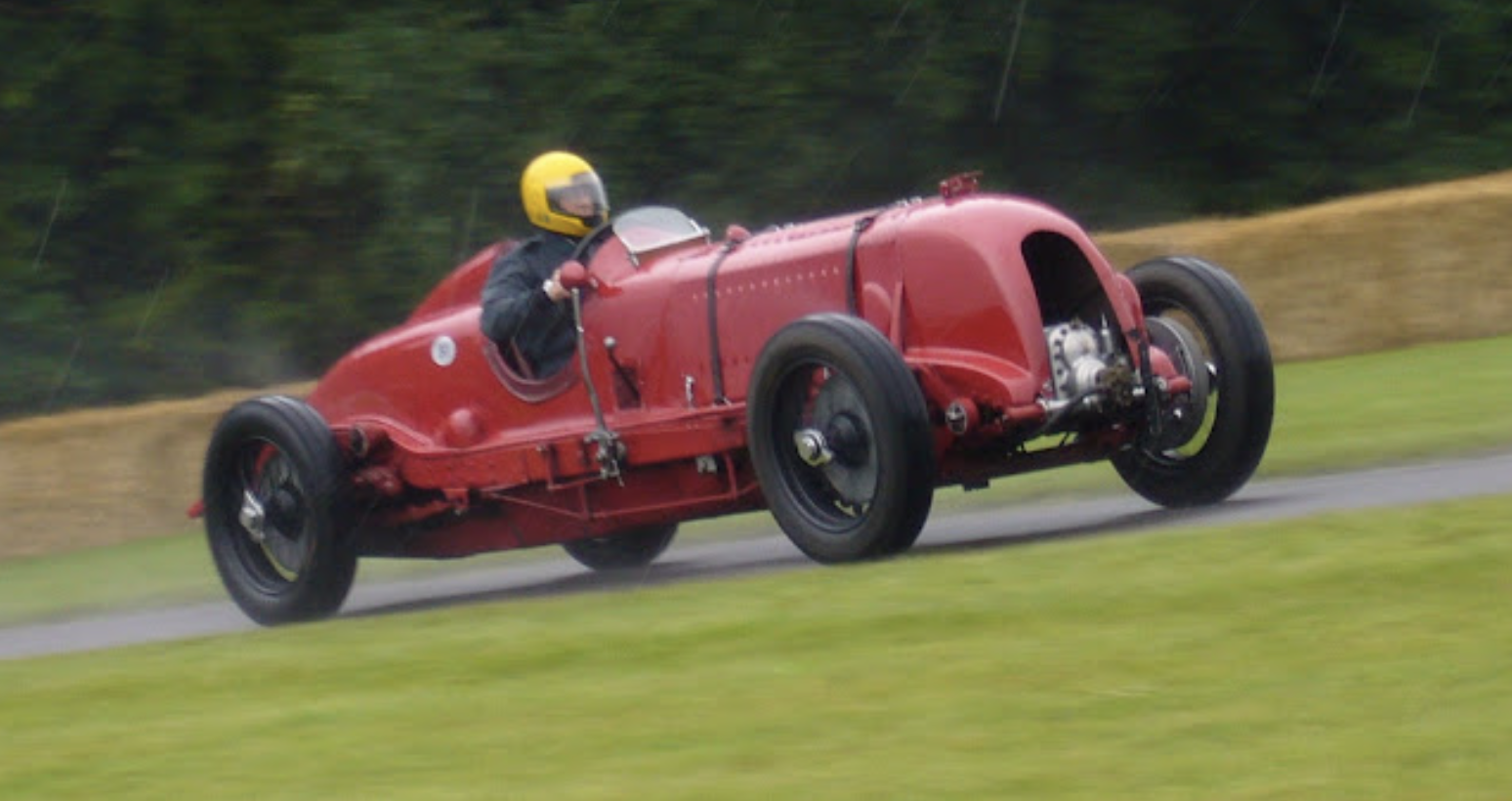
George Daniels in his Bentley at Goodwood (Image: Bentley Spotting)
This is the story of that mind. And because George Daniels essentially invented, single-handedly and out of utter self-reliance, the very concept of the modern independent watchmaker — the idea that one person, working with their own two hands, could design, engineer, decorate and assemble a complete watch to a standard that rivaled or exceeded anything the great manufactures could produce — this is also, in a very real sense, the story of how an entire category of watchmaking that we now take for granted, populated by names like Philippe Dufour, François-Paul Journe, Kari Voutilainen, Denis Flageollet, Rexhep Rexhepi and Daniels’ own protégé, Roger W. Smith, came to exist at all. He is the heroic archetype. His story is the monomyth that all others are based on.
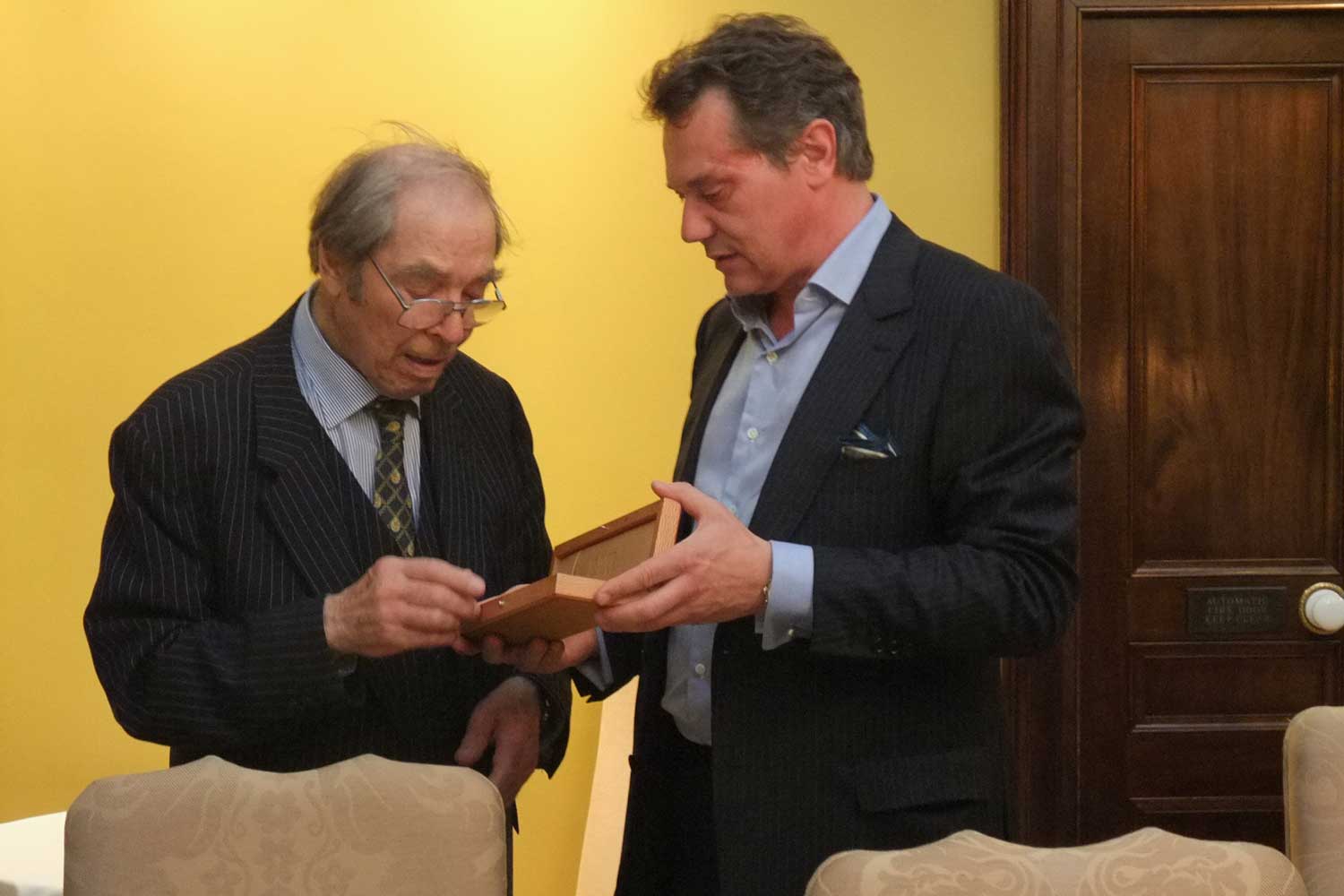
François-Paul Journe (right) honouring his mentor George Daniels (left) with a special Chronomètre Souverain during an intimate dinner organized by John and William Asprey in 2010
As François-Paul Journe once said of Daniels, “You were the pioneer; the first watchmaker who showed us the path to horology of Art, a non-utilitarian horology.”
One Chair
George Daniels was born in Edgware, north London, in August 1926, into a family so large and so poor that there was, by his own account, precisely one chair in the house. His early existence was positively Dickensian. Eleven children shared the family hovel with a father who repaired radios during the day and drank violently at night. Daniels was never close to either of his parents. He was not, strictly speaking, even officially born — there was no birth certificate, because his parents had not yet married when he arrived, something he only discovered decades later when he applied for a passport.

Edgware High Street viewed from the war memorial circa 1950 (Image: Maureen Schiller)
What the state had not acknowledged, the street eventually would. At five years old, George found a broken watch in his house. He pried it open with a bread knife. The mechanical system reached out and spoke to him. What he saw inside would determine the entire remaining 80 years of his life. “It was like seeing the center of the universe,” he told an interviewer decades later.
Young George Daniels left school at 14 and took a job in a mattress factory, repairing watches door-to-door in whatever hours remained. During his National Service in Suez in 1945, he kept up the trade among his fellow soldiers, earning enough on the side so that he scarcely touched his army pay for two and a half years — an early demonstration of the entrepreneurial instinct that would later see him build a career almost entirely outside the conventional Swiss and British trade structures. Demobbed with £50 to his name, he set up shop, teaching himself, component by component, how to make every single part of a watch by hand — a process now known, with the reverence it deserves, as the Daniels Method. He eventually formalized his self-taught knowledge through evening classes in horology at the Northampton Polytechnic Institute. The training was conducted under the direction of the British Horological Institute, which awarded his certificates in 1949, 1950 and 1952, while the Polytechnic, now City St George’s, University of London, would decades later would award him an Honorary Doctor of Science.
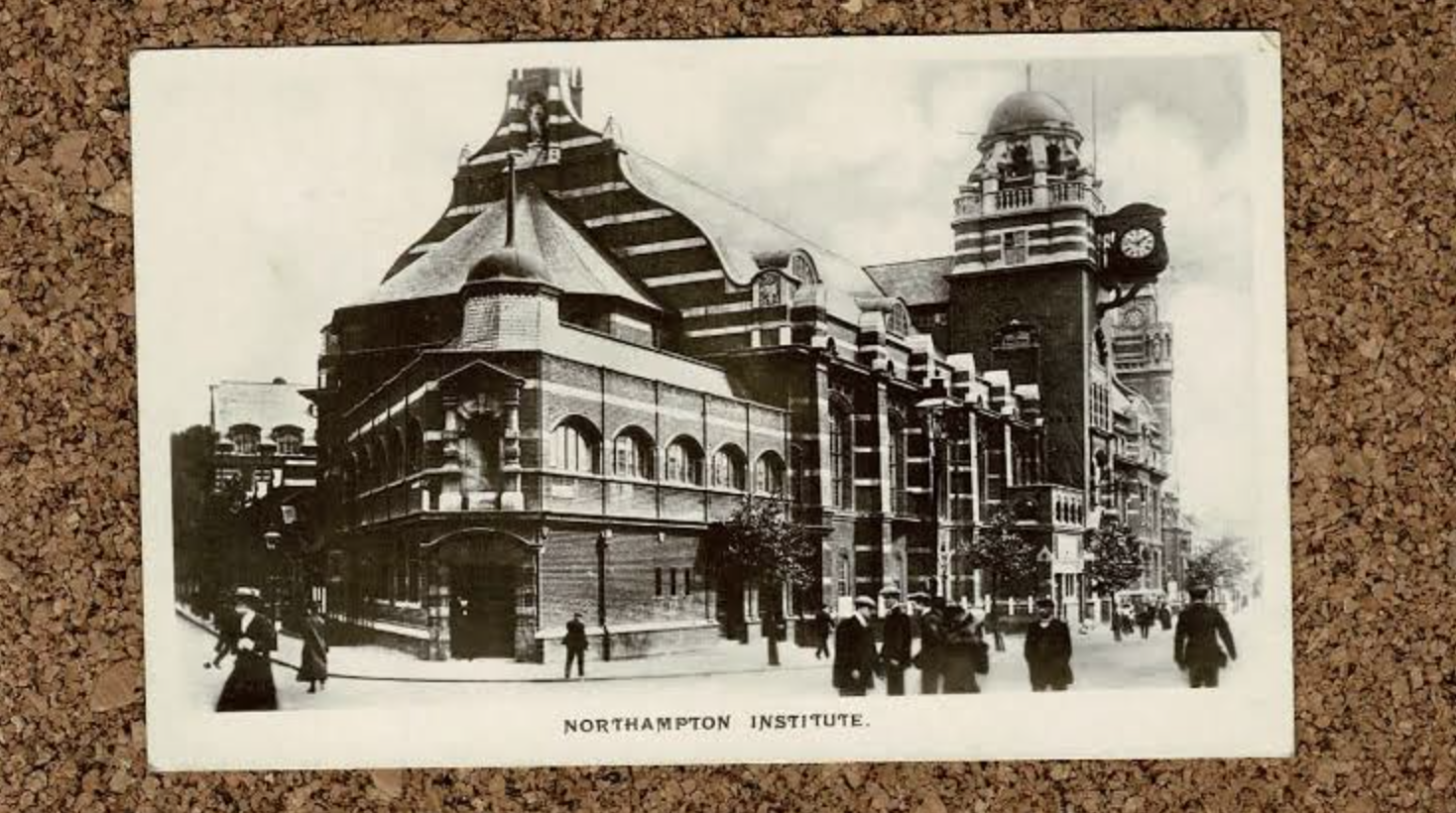
A postcard of the Northampton Polytechnic Institute (founded in 1894), now known as City St George’s, University of London following its 2024 merger with St George’s
There is a temptation, writing about a man who achieved what Daniels did, to sand down the rough edges of his early life into something tidy and inspirational — poor boy makes good, adversity breeds genius, and so on. Daniels himself resisted this kind of packaging. He was, by multiple accounts, guarded about his personal history, curt with journalists who pried, and privately still carrying the weight of a childhood he rarely discussed in warm terms. Shortly before she died at the age of 91, his mother wrote to apologize for what she called “the miserable home life” she had given him. Daniels kept the letter. But he did not, by most accounts, entirely forgive.
Sam Clutton and the Door Into Another World
Every great watchmaking story has its patron-saint encounter, the chance meeting that redirects a career from competent trade craft toward something approaching art. For Abraham-Louis Breguet, it was the Duc de Praslin. For Daniels, that figure was Cecil “Sam” Clutton, CBE — motoring enthusiast, antiquarian horologist, founder member of the Vintage Sports-Car Club and, crucially, a man who moved in circles Daniels had no natural access to. They met, tellingly, not through watches but through cars, bonding over their shared devotion to prewar engineering. It was Clutton who introduced Daniels to the world of serious antique-watch collecting, who first properly acquainted him with the work of A.-L. Breguet. In 1969, Daniels completed a handmade watch for his own pleasure and later decided to find a buyer; Clutton subsequently purchased it for £1,900 — a sum that would, decades later, fetch over 200,000 pounds when the piece resurfaced at auction in the United States.
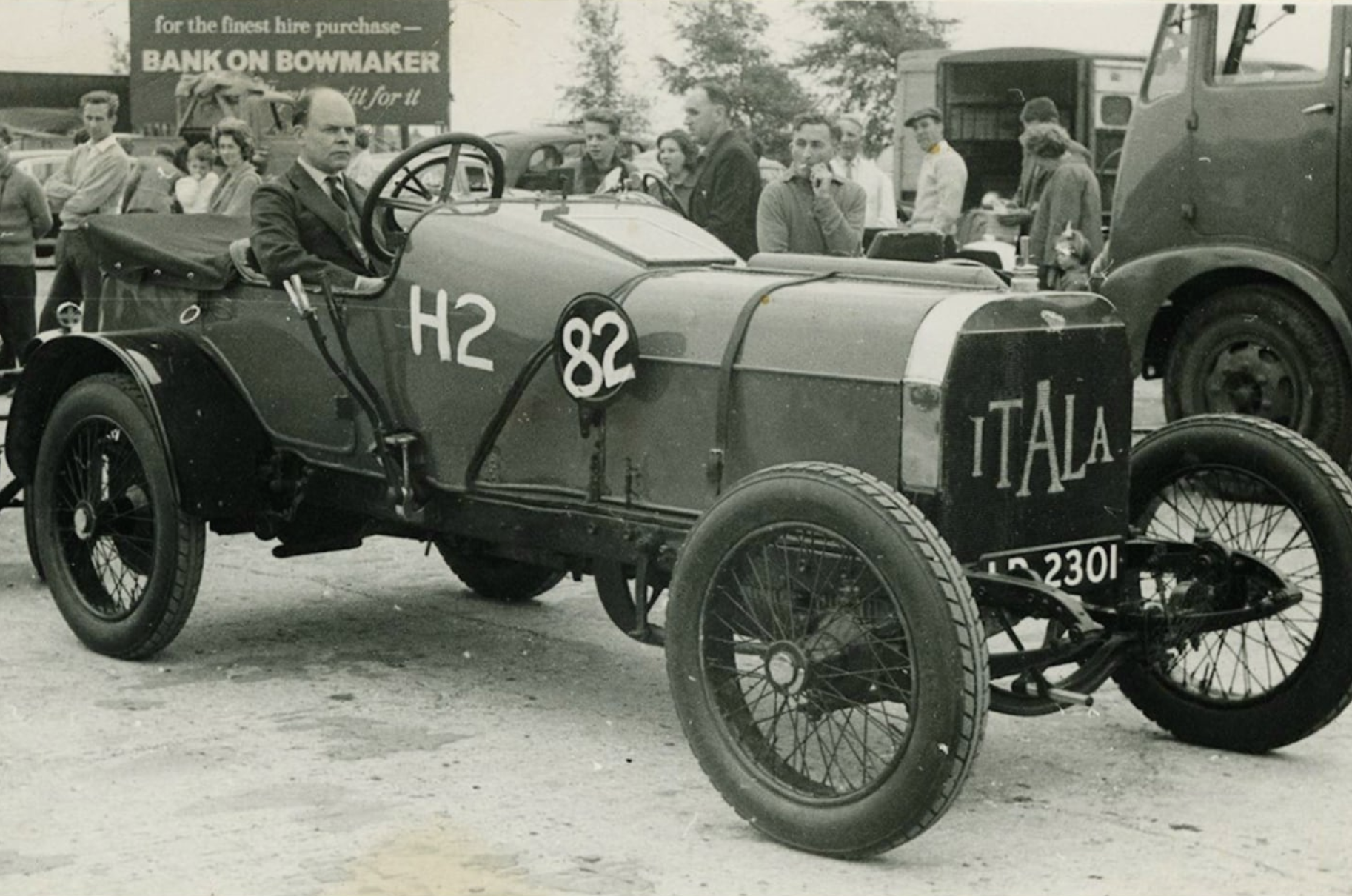
Cecil “Sam” Clutton sitting at the wheel of the Itala (Image: Bonhams)
It is difficult to overstate how unlikely Daniels’ path was at this moment in horological history. This was an era in which no individual watchmaker, anywhere in the world, was making complete watches entirely by hand from raw materials. The great houses of Switzerland relied, as they always had, on the établissage system created by Daniel JeanRichard, on constellations of specialists: a caser here, a dial maker there, an escapement specialist somewhere else, all coordinated by a maison that assembled and signed the finished product. Daniels’ proposition — that one man, a lone wolf with sufficient obsession and sufficient hours at the bench, could master all 30-plus discrete crafts required to build a watch from nothing — was, at the time, without modern precedent. Over a 60-year career he would handmake just 25 watches this way, each one consuming roughly a year and upward of 2,500 hours of work. His protégé, Roger W. Smith, would later put it plainly: Daniels was, quite simply, the first person in the modern era to handcraft a complete watch alone, from start to finish, to a museum standard.
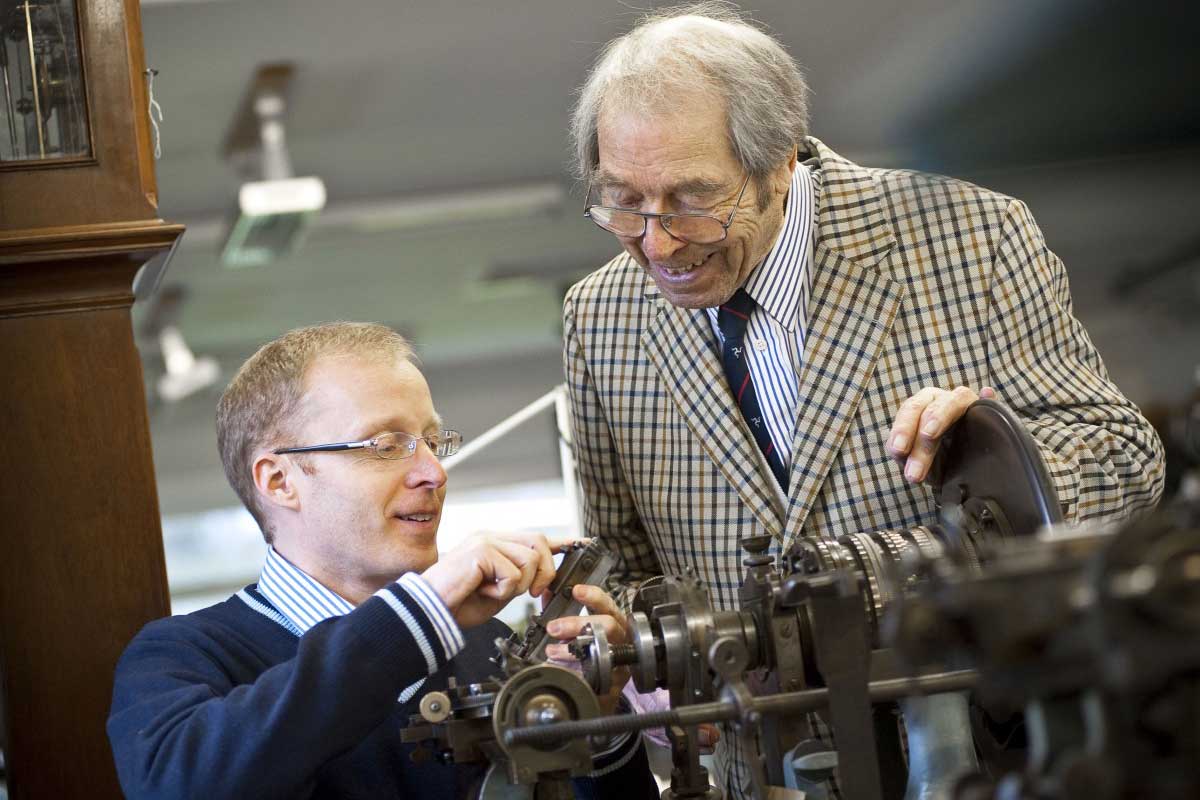
George Daniels and his protégé, Roger W. Smith
Financial success eventually allowed Daniels to relocate to the Isle of Man purportedly — a decision that reveals, charmingly, that genius and pragmatism are not mutually exclusive. It was on that windswept island, in a workshop overlooking his garden, filled with the same vintage machine tools he’d once thought necessary for replicating Breguet’s own methods before realizing modern jig borers and lathes would serve him better, that Daniels produced the body of work that would change watchmaking twice over.

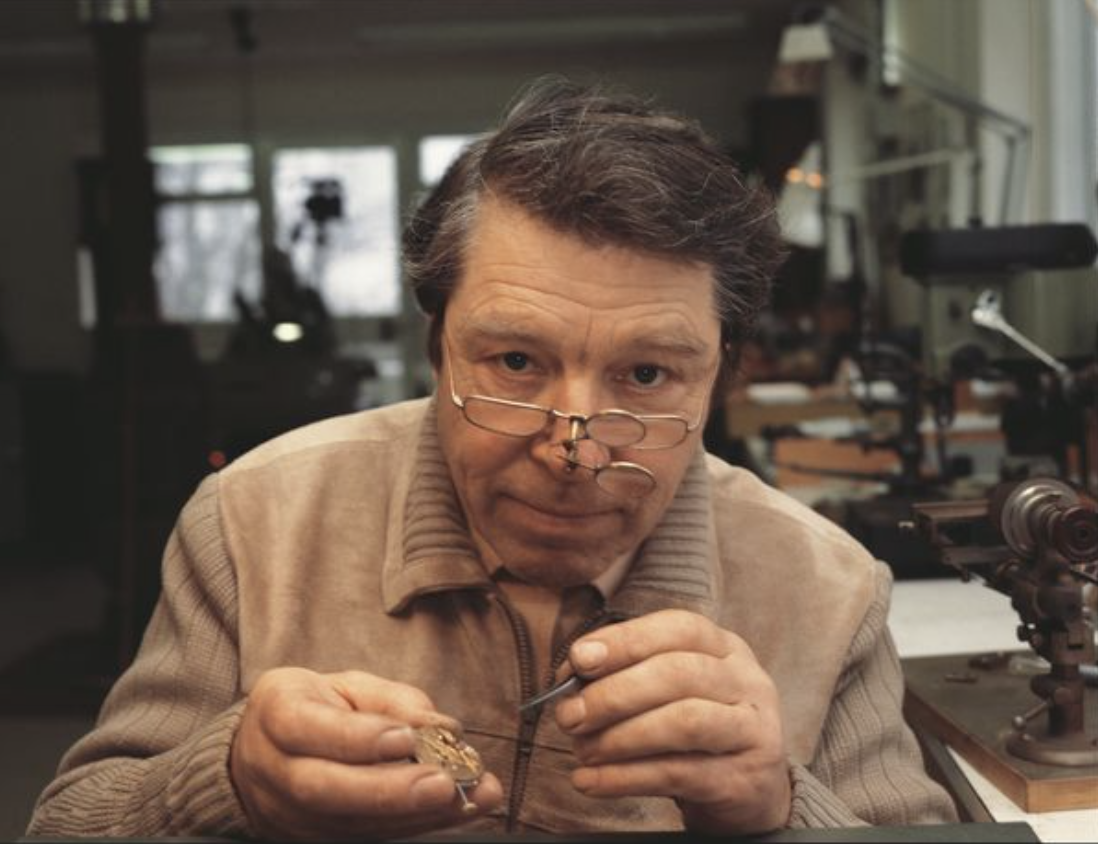
George Daniels in his Isle of Man workshop just four years before he passed away (Image: Quill & Pad)
The Ghost of Abraham-Louis Breguet
You cannot tell the story of George Daniels without first telling the story of his obsession with a man who had been dead for over a century before Daniels was born. Abraham-Louis Breguet was, to Daniels, less a historical figure to be studied than a kind of horological deity to be communed with — a watchmaker whose combination of mechanical daring and restrained intellectual aesthetics represented everything Daniels believed the craft should aspire to. Daniels eventually wrote The Art of Breguet, a richly illustrated study containing over 100 line drawings of Breguet’s technical innovations, each accompanied by Daniels’ own forensic analysis. It remains the definitive English-language study of Breguet’s work.
-
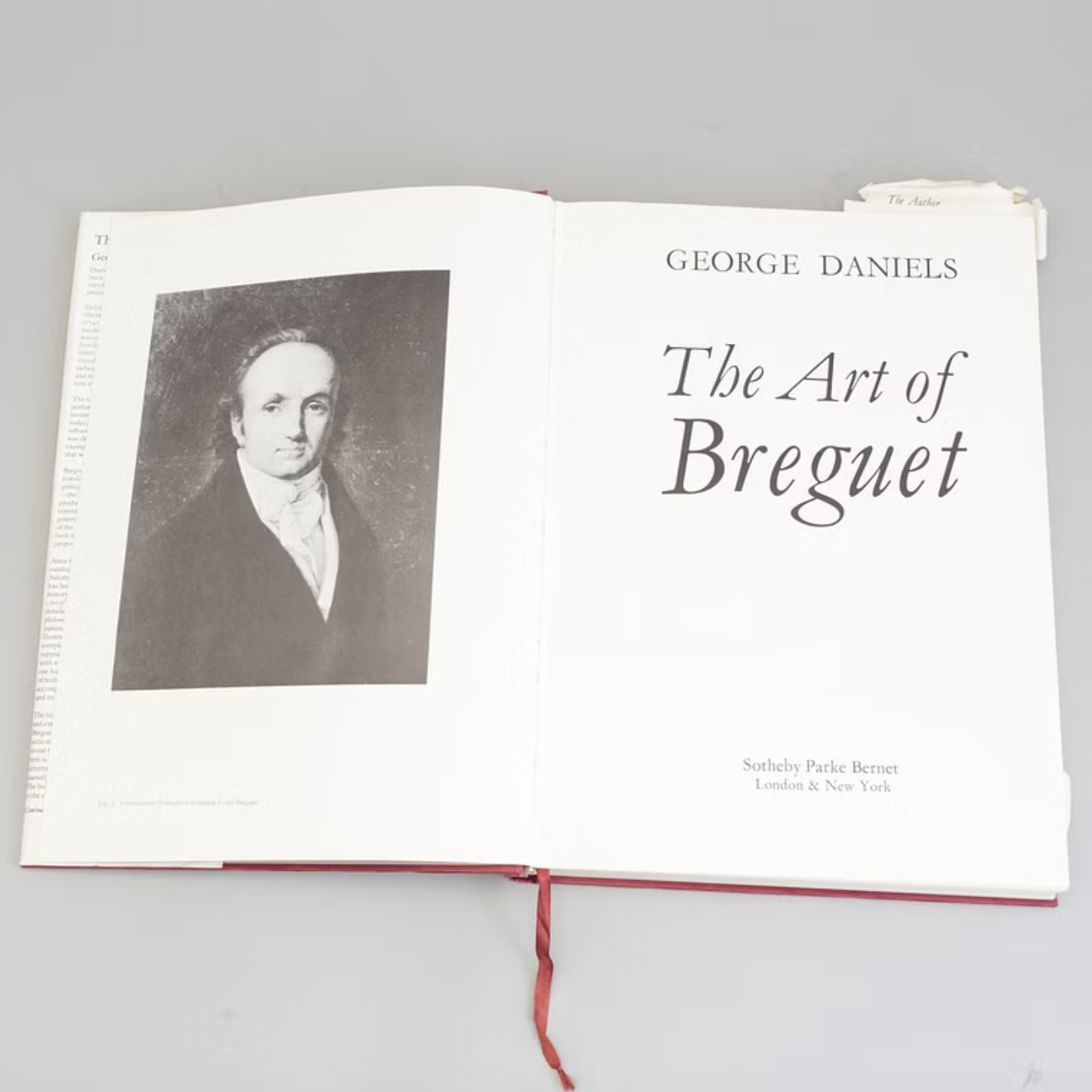
- “The Art of Breguet” by George Daniels (Image: Bukowskis)
-
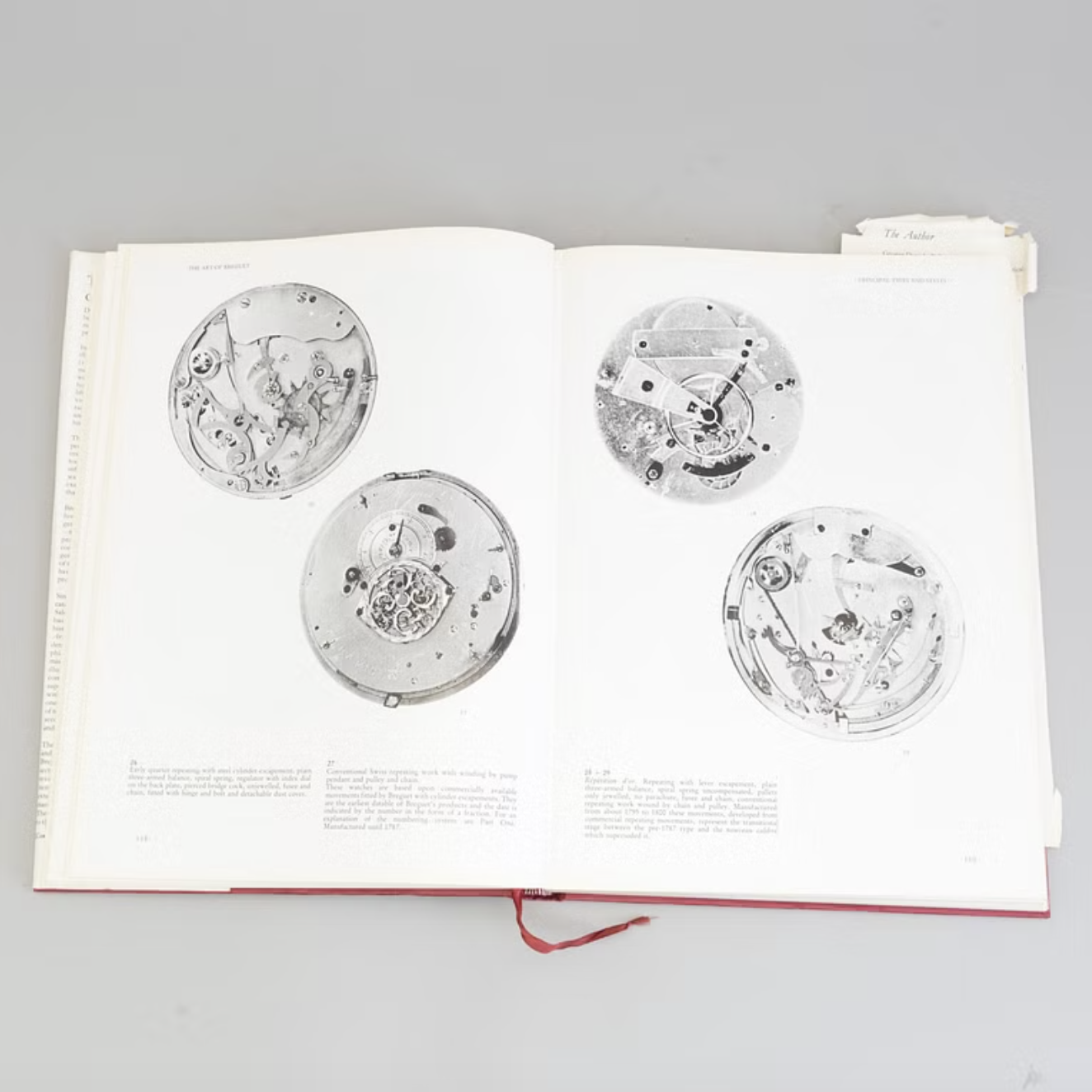
- A detailed look at some of Breguet’s movements (Image: Bukowskis)
It has been said, not without justification, that Daniels was “the Breguet of the 20th century,” and it’s a comparison Daniels would likely have accepted with characteristic lack of false modesty.
But Breguet was not merely an intellectual influence for Daniels — he was the direct technical wellspring for what would become the most important unrealized idea of Daniels’ career, and the direct precursor to the idea that ultimately made his name a byword for horological genius. In 1789, Breguet had developed something called the échappement naturel, or “natural escapement” — an elegant attempt to eliminate the sliding friction that plagues every conventional lever escapement, achieved through the use of twin escape wheels. It was, by any measure, a brilliant idea. It was also, given the manufacturing tolerances available to an 18th-century workshop, essentially unworkable at scale. Breguet’s natural escapement never reached serial production. It sat, for nearly two centuries, as a beautiful unsolved problem — precisely the kind of unsolved problem that a mind like George Daniels’ could not leave alone.
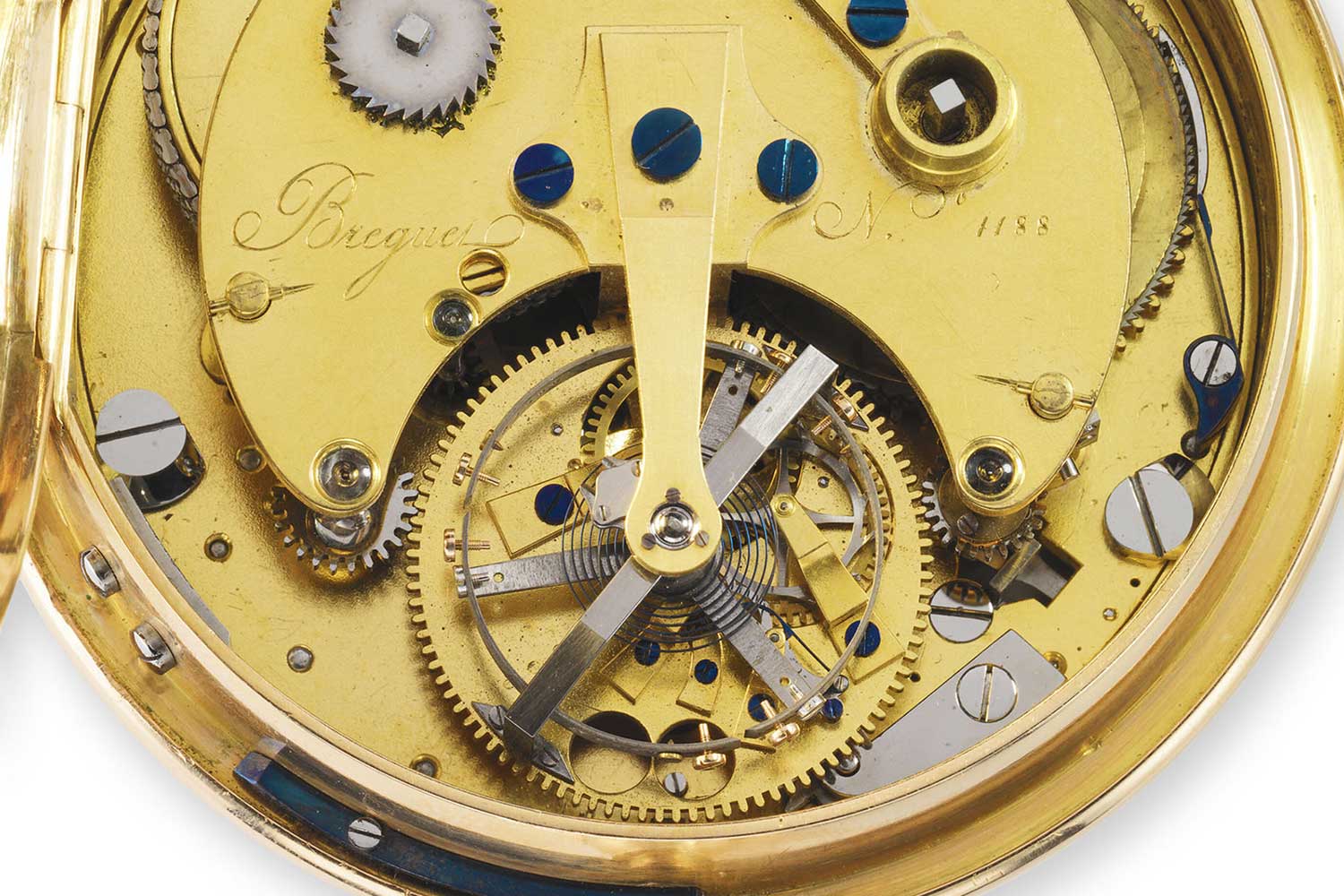
Breguet No. 1188 with a four minute tourbillon and a natural escapement-The larger 12-tooth escape wheel is driven by a wheel beneath which drives a pinion. The pinion in turn drives the second escape wheel with three teeth
Bentleys, Motorcycles, and the Discipline of Beautiful Machines
Before we return to the workshop, let’s spend a moment in the garage, because to understand Daniels’ watchmaking you must first understand his relationship to machinery in the broadest sense, and nowhere was that relationship more vivid, more visceral, or more joyfully undignified than in his lifelong love affair with vintage Bentleys.
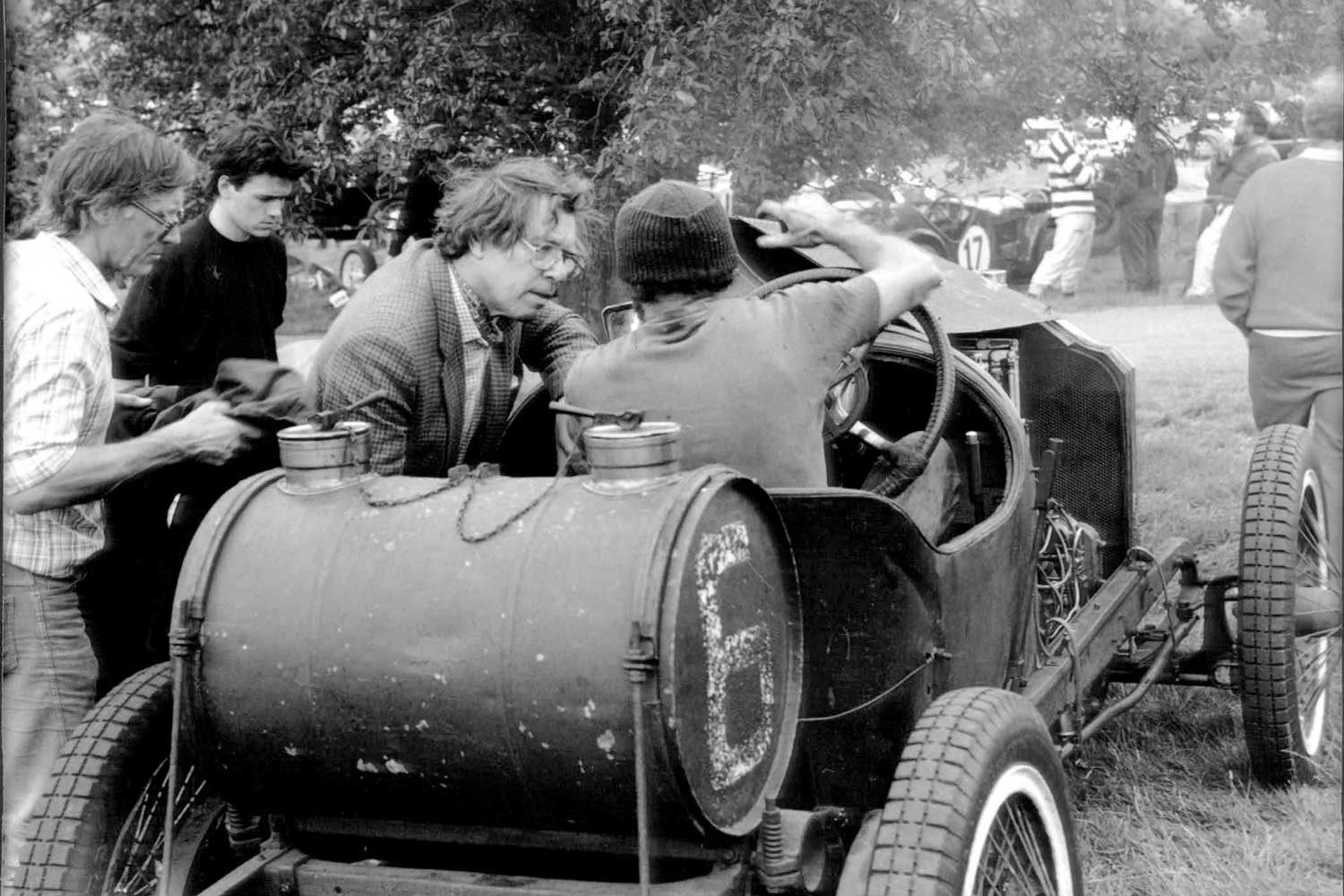
George Daniels at Prescott Hill
His first car, bought in 1951, was a 1932 MG J2 that broke its crankshaft within two hours of purchase — an inauspicious start that Daniels himself credited with launching his career as, in his words, “an amateur motor mechanic.” Five years later came the derelict 1924 3-liter Bentley with Gurney Nutting coachwork, purchased for the princely sum of 100 pounds and restored, single-handedly, over a punishing schedule that saw Daniels split his working week between watches and the car in the ratio of four days to one. It was this Bentley that opened the door to an entire social world Daniels had never had access to as a working-class watch repairer in Penge — the Vintage Sports-Car Club, which he joined in 1959 and remained a member of for the rest of his life, and the Bentley Drivers Club, whose track days brought him into contact with, as mentioned, Sam Clutton, the man who would, in short order, introduce him to the world of Breguet and antique-watch collecting. It is one of the great quiet ironies of 20th-century horology that George Daniels’ entire subsequent career — the Co-Axial escapement, the tourbillons, the deep study of Breguet — traces back, using retrograde analysis, to a broken crankshaft.

Daniels driving his “blower” Bentley at Prescott Hill
His collection would eventually grow to include a 1954 Bentley R-Type Continental that he kept for 26 years, a 1908 Grand Prix Itala nicknamed “Floretta” that had once belonged to Clutton himself, and, for everyday errands around the Isle of Man — including, Daniels was fond of admitting, runs to the local chip shop — a 1974 Jaguar E-Type. But his favorite, by his own written testimony in his autobiography, All in Good Time, was none of the marquee pieces. It was a temperamental 1907 Daimler TP 45 that had once belonged to the fourth Earl of Craven. “Allowing for its idiosyncratic behavior and its occasional bouts of sulking,” Daniels wrote of the car, he considered it, with its hissing carburetor and exposed valve gear, the perfect vehicle for the most enjoyable kind of motoring: meandering through France with nothing more urgent to do than eat and drink.
He raced these cars, too, competitively and well into old age, until the Royal Automobile Club — in Daniels’ own wry account — deemed him a touch too senior for the paddock. He collected motorcycles with the same connoisseur’s eye he brought to everything else, amassing a small stable that included two BMW R90S sports tourers made between 1973–76, a pair of MV Agusta 750 Americas that were essentially road-registered race machines, and a 1959 Norton International in full clubman trim. And in a detail that tells you everything about how thoroughly Daniels’ passions cross-pollinated one another, his work co-authoring the definitive book Watches with Sam Clutton led him into yet another collecting obsession — Leica cameras, purchased originally for the book’s photography, eventually amassed to a collection of 27 examples.
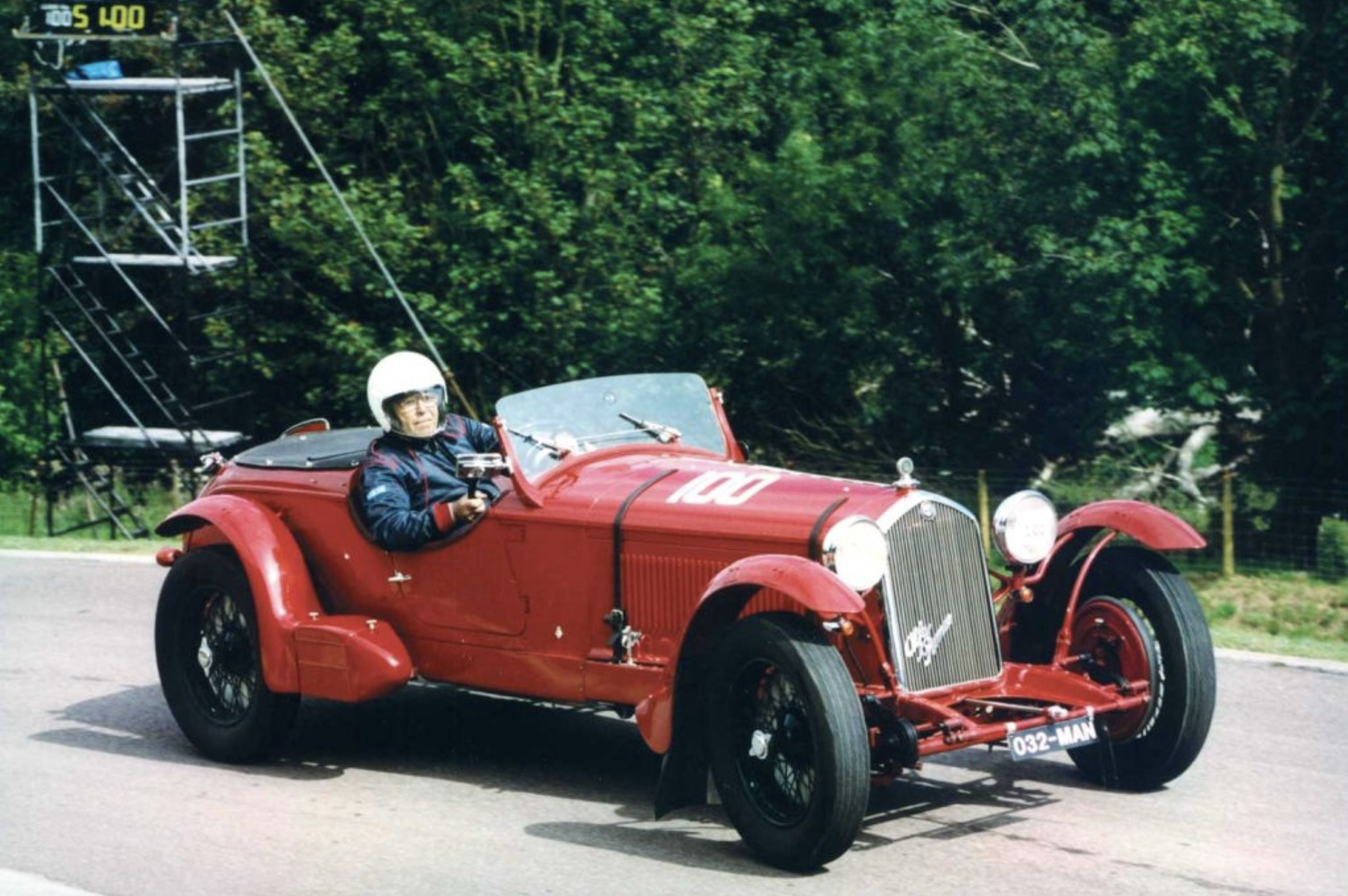
Daniels in his 1932 Alfa Romeo 8C 2300
It was through this world of engines and enthusiasts that Daniels formed one of the most important friendships of his life, with a young local-authority surveyor named David Newman, who would go on to spend 50 years at Daniels’ side and eventually chair the George Daniels Educational Trust. Their friendship, too, began over a garage-planning inquiry and a shared love of vintage cars, and produced one of the great absurdist anecdotes of Daniels’ life: the afternoon the two men manually pushed a naked Bentley chassis through the streets of South Norwood, past a police station and over a railway bridge, drawing a football crowd’s worth of bemused spectators, in order to install the half-finished car in Daniels’ new garage.
The Independent Double-Wheel Escapement: A Stroke of Genius
The first of Daniels’ two great escapement inventions is the one history remembers rather less than the second, but which mattered enormously to Daniels himself, and which represents his most direct, unfiltered act of homage to Breguet.
In the mid-1970s, working with the help of a fellow English watchmaker of extraordinary but under-recognized talent named Derek Pratt, Daniels set out to solve, once and for all, the problem Breguet had identified but never cracked: an escapement free of the sliding friction that degrades a conventional lever escapement’s accuracy over time. His solution, developed initially at the request of the American industrialist and collector Seth Atwood (founder of the Rockford Time Museum), who wanted a timepiece with, in Roger Smith’s later description, “an escapement like no other seen before,” was the independent double-wheel escapement — a mechanism featuring two escape wheels, each driven by its own entirely separate barrel and going train, meeting at a detent with almost frictionless tangential contact.
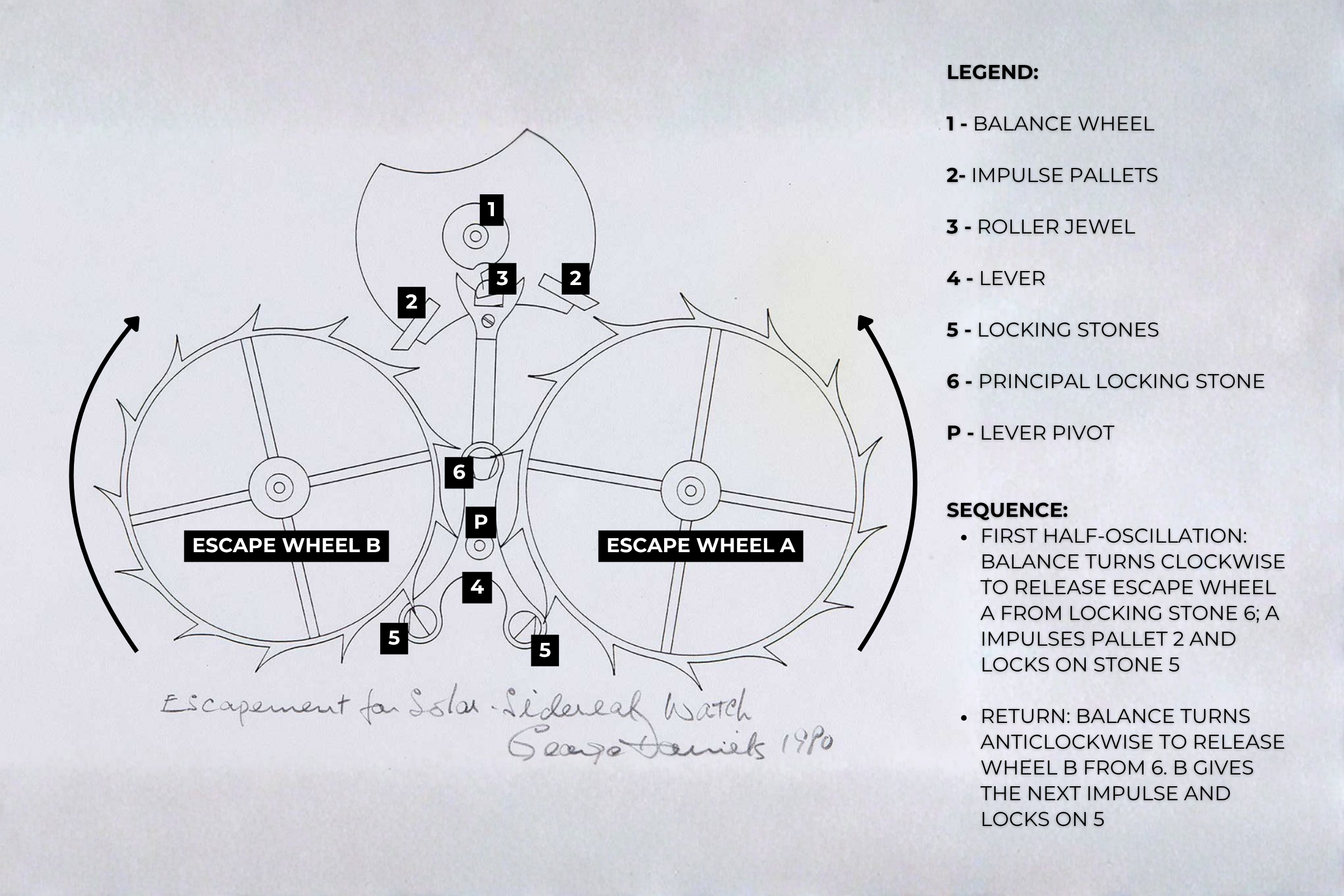
The sequence of the double-wheel chronometer escapement based on George Daniels’ diagram from 1980
Picture two identical escape wheels running side by side, each with its own gear train and its own mainspring barrel, rather than the usual single train feeding a single escape wheel. Positioned between the two escape wheels is a small pivoting detent, and it is the balance wheel, swinging back and forth, that decides which of the two wheels is released at any given moment. As the balance swings one way, it releases wheel A, which rotates just enough to nudge the balance via a jewel — a clean, rolling push rather than a scrape. As the balance swings back, wheel A is locked again and wheel B is released to the equivalent push in the opposite direction. Because the wheels never touch the balance’s own impulse jewel in the sliding, scrubbing way a conventional lever escapement does — the contact is tangential, more a handshake than a shove — friction very nearly disappears from the equation entirely. The price of this elegance is duplication: you need two barrels, two full going trains and twice the real estate, which is precisely why the mechanism was so much happier living inside a spacious pocket watch than a wristwatch.
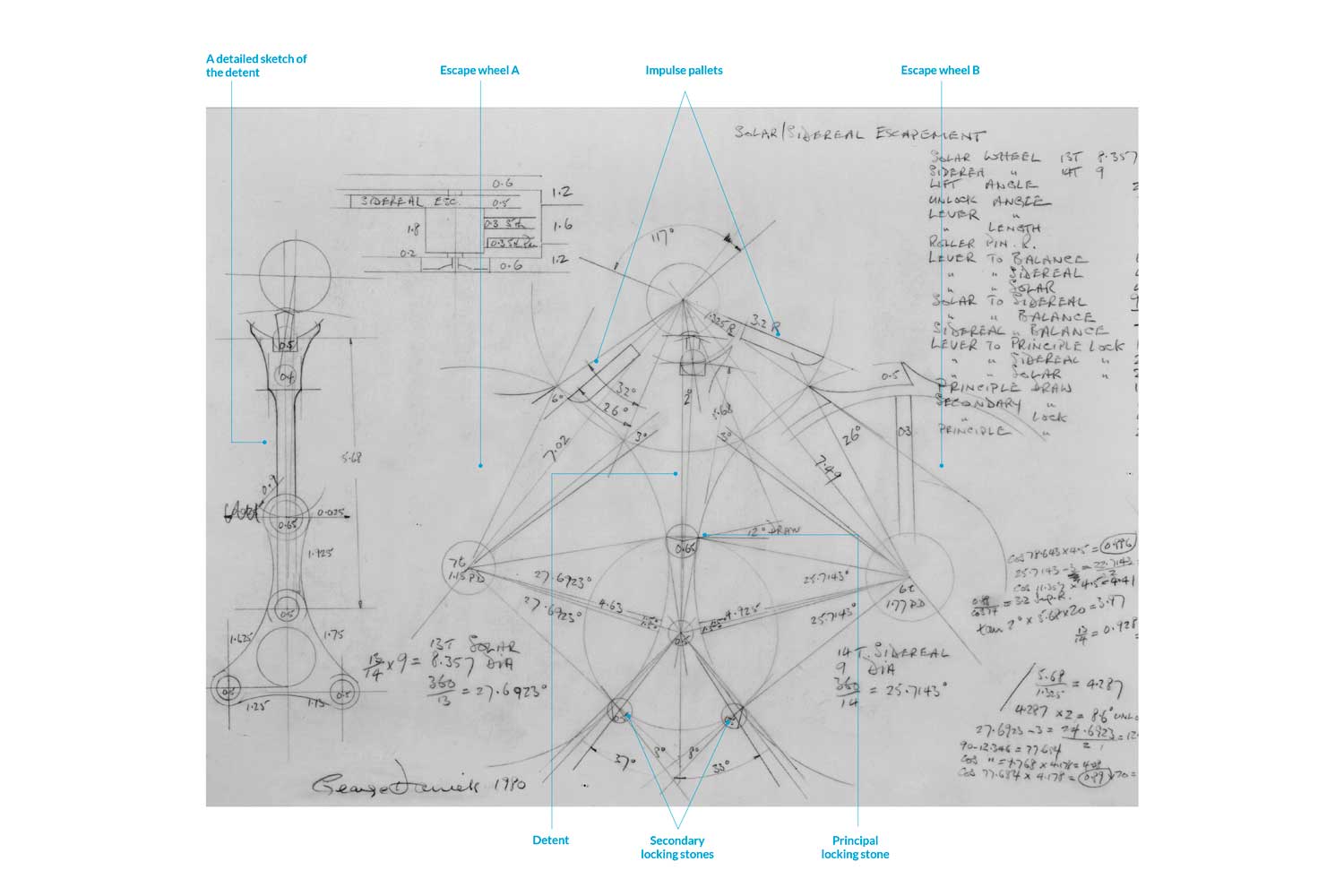
George Daniels’ sketch of the double-wheel chronometer escapement
It was, by any measure, an elegant and audacious piece of engineering, and it directly solved the practical problem — play between the escape wheels — that had plagued Breguet’s original natural escapement two centuries earlier. Daniels completed the Atwood commission in 1976. Sam Clutton, deeply impressed, promptly ordered an identical example for himself, which now resides in the British Museum. Daniels would go on to build the mechanism into several more watches, most famously into his own personal masterpieces, the pair of pocket watches he called the Space Traveler and Space Traveler II — extraordinary instruments capable of displaying both mean solar time and sidereal time simultaneously off twin, independently calculated going trains, created in tribute to the 1969 Moon landing and intended, as Daniels liked to joke, for use on “your package tour to Mars.”
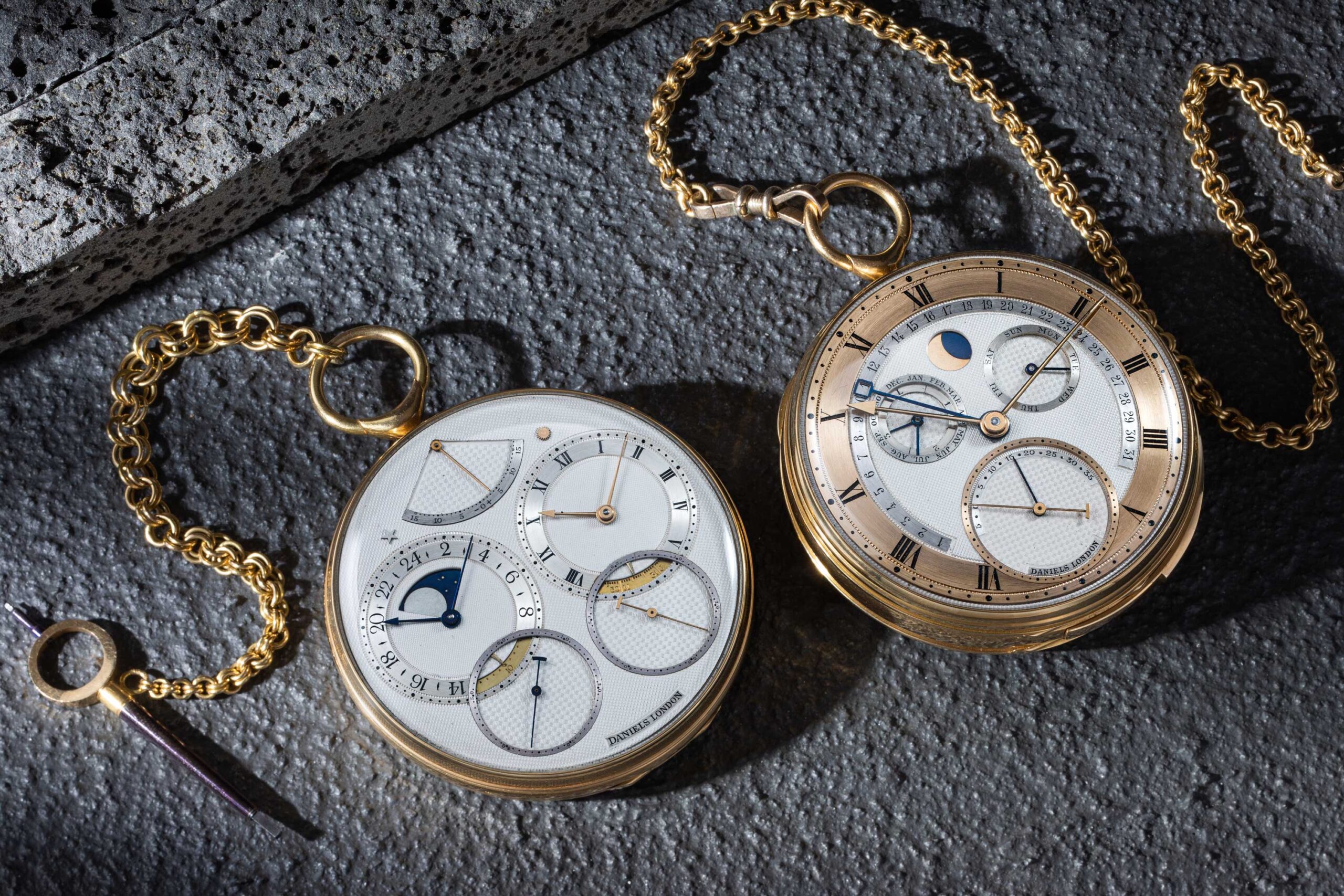
George Daniels Space Traveller (1982) and Grand Complication (1987) (Image: The Hour Glass)
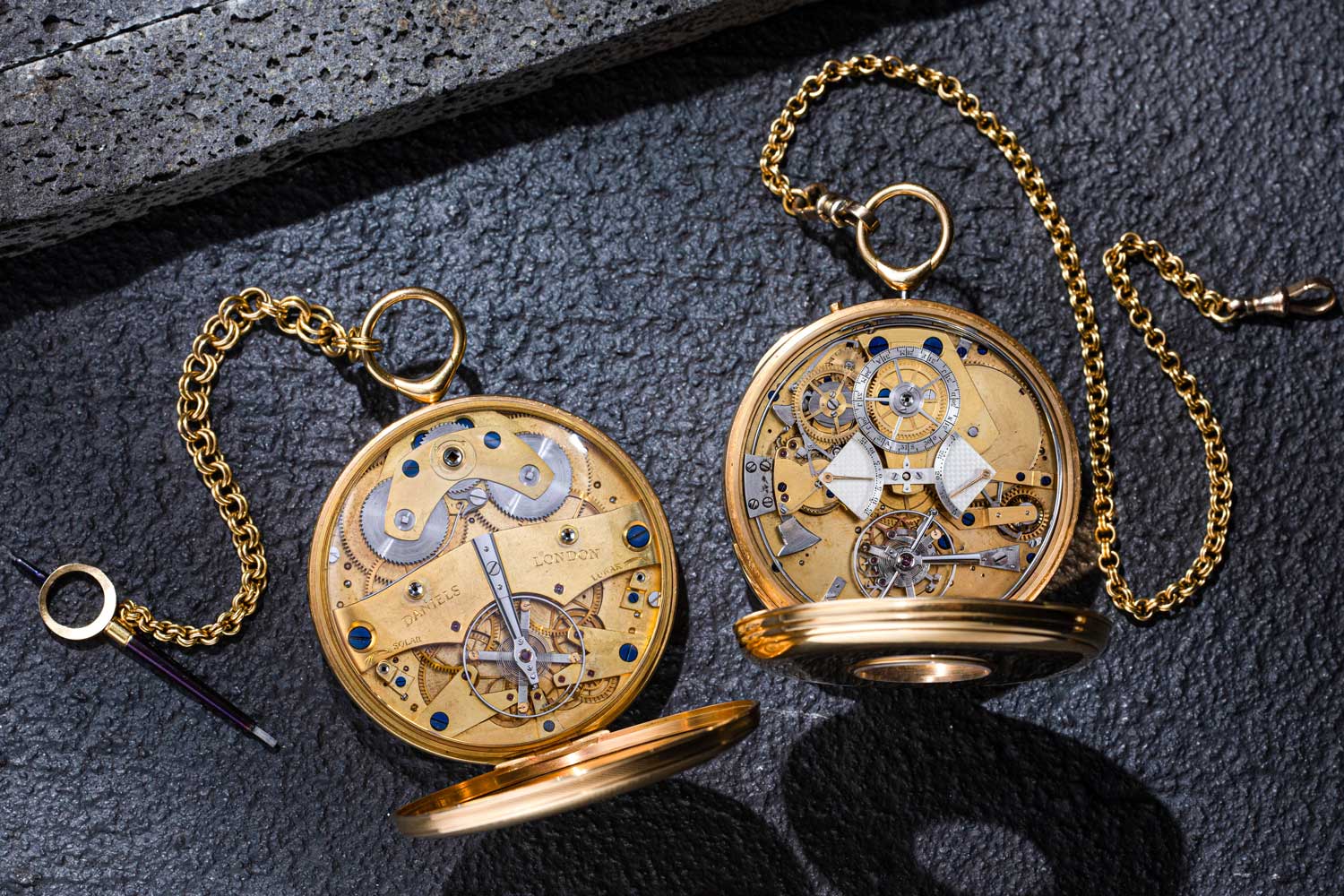
Casebacks of the George Daniels Space Traveller (1982) and Grand Complication (1987) (Image: The Hour Glass)
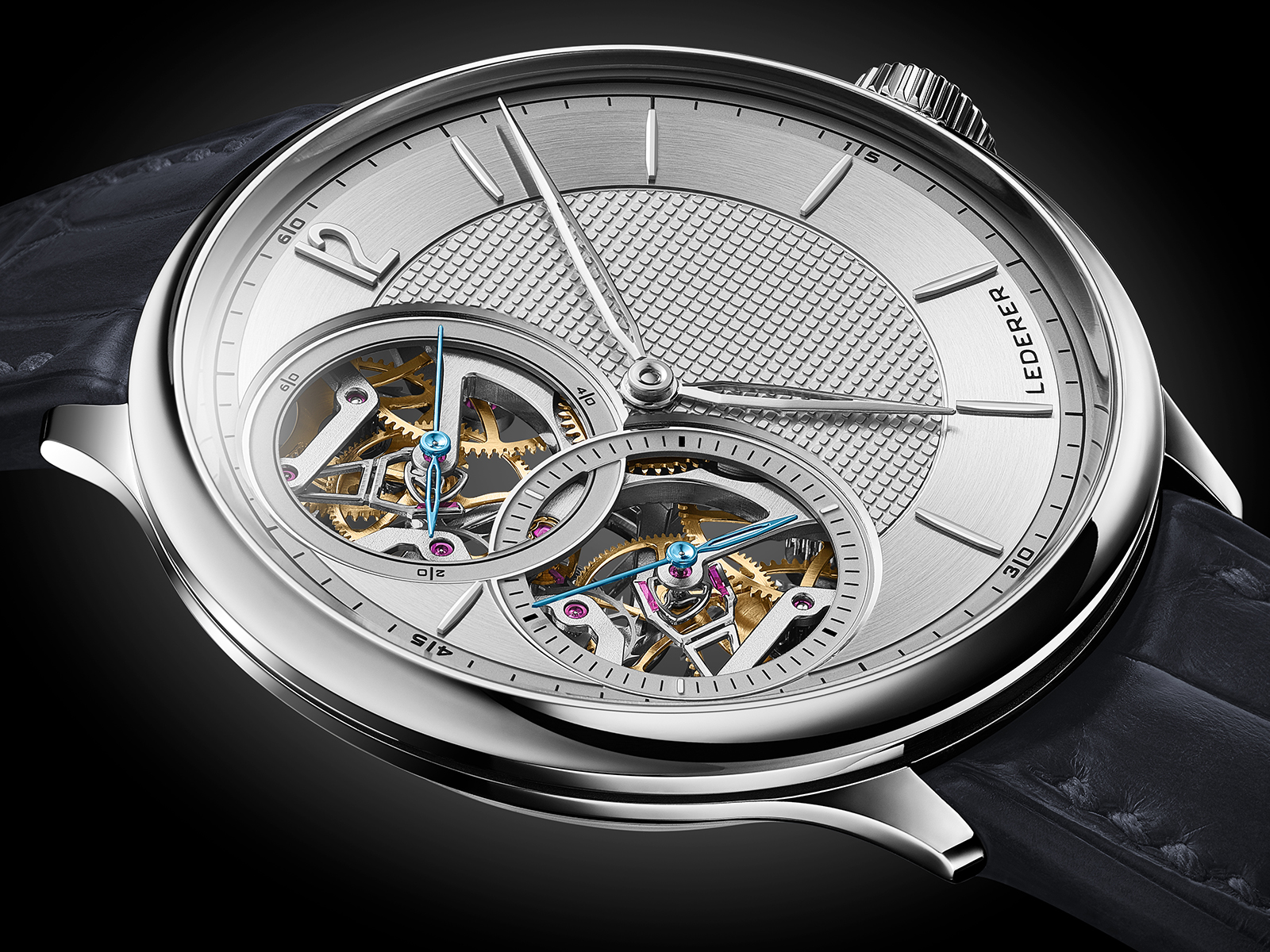
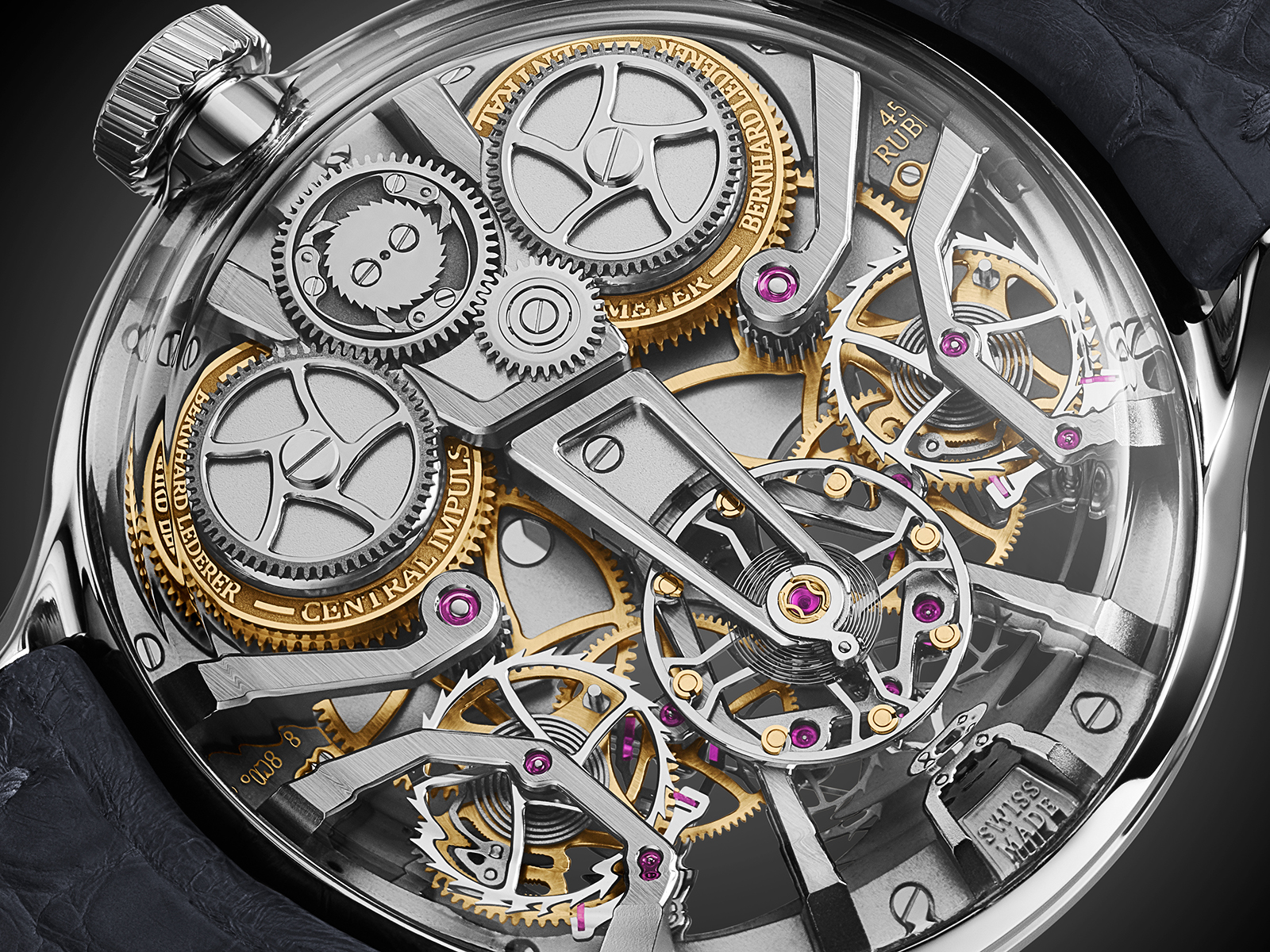
But here is the crucial thing to understand about the independent double-wheel escapement, and it’s a point that separates Daniels the romantic from Daniels the industrialist: he came to regard it, for all its beauty, as a dead-end. The requirement for two entirely separate going trains made the mechanism bulky, complex to manufacture, and — fatally, for Daniels’ larger ambitions — essentially impossible to miniaturize into a wristwatch, or to combine with a tourbillon, since the geometry simply didn’t allow it. It would take his friend Derek Pratt, working independently, to eventually achieve a tourbillon fitted with a double-wheel escapement (replete with double remontoirs d’égalité), and it would take until 2018 — nearly 40 years after Daniels first conceived the mechanism, and seven years after his death — for the English firm Charles Frodsham to succeed in miniaturizing the independent double-wheel escapement into a wristwatch at all, with their Double Impulse Chronometer. In 2021, German independent watchmaker Bernhard Lederer would introduce his Central Impulse Chronometer focused around Daniels’ independent double-wheel escapement with the addition of two remontoirs d’égalité, one for each train. He would win the Grand Prix d’Horlogerie de Genève’s Innovation Prize that year for this watch. Daniels himself never built one for the wrist. He had already moved on to the far more consequential idea.
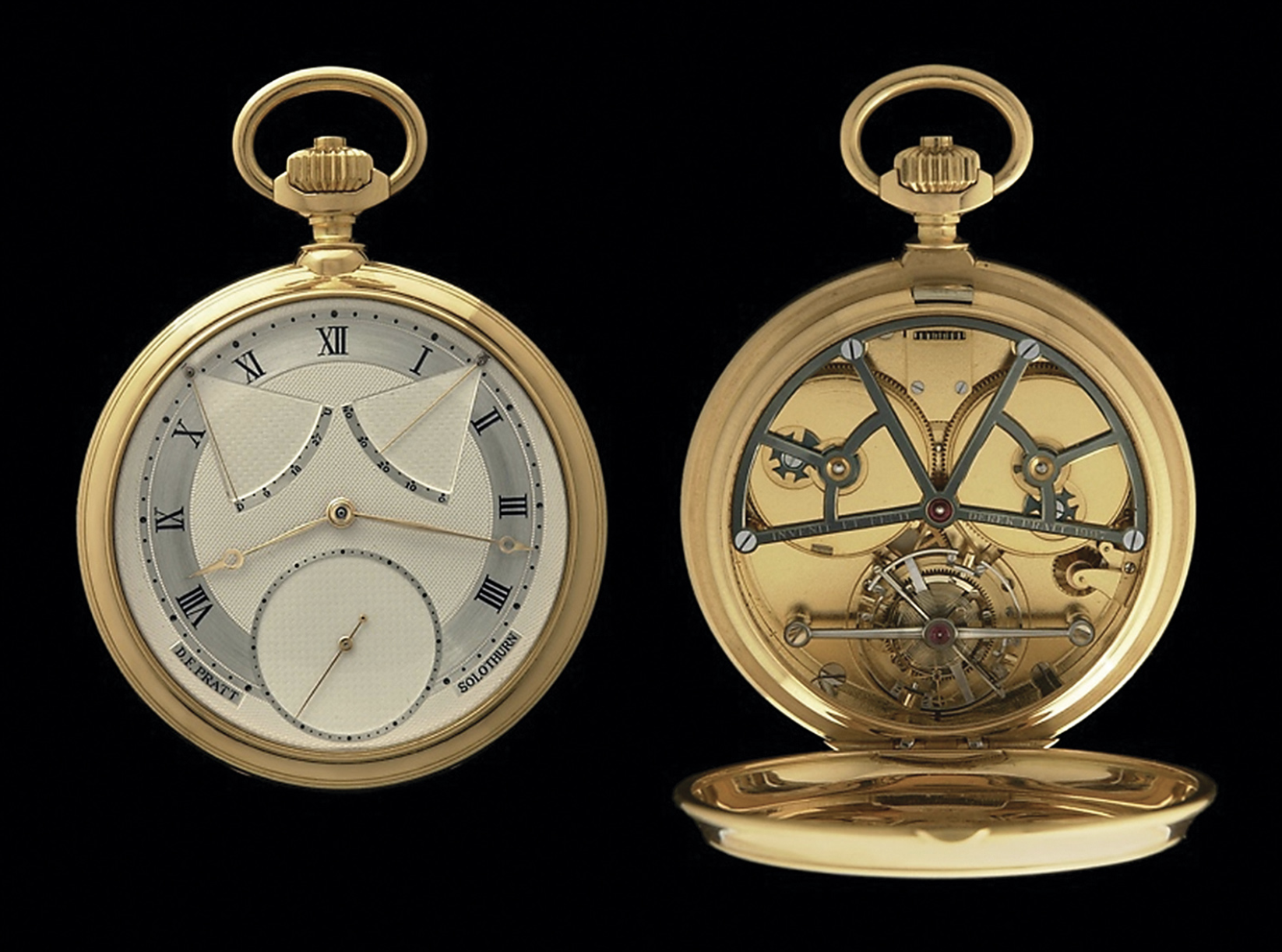
Derek Pratt’s Double-Wheel Remontoir Tourbillon
-
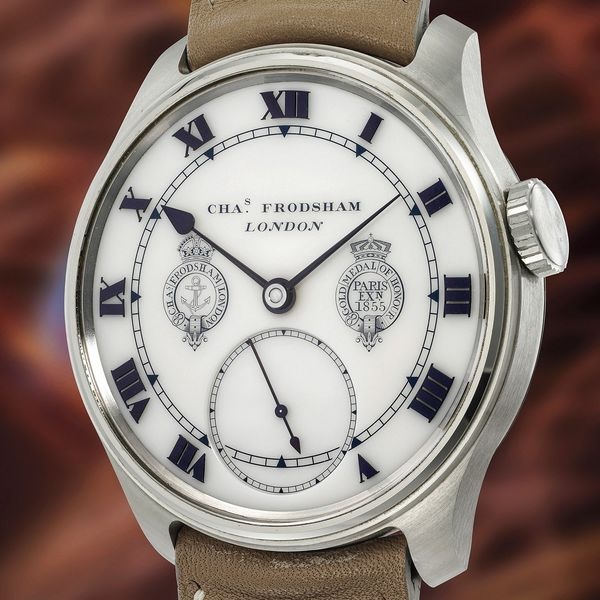
- A 2019 Charles Frodsham Double Impulse Chronometer in stainless steel (Image: Phillips)
-
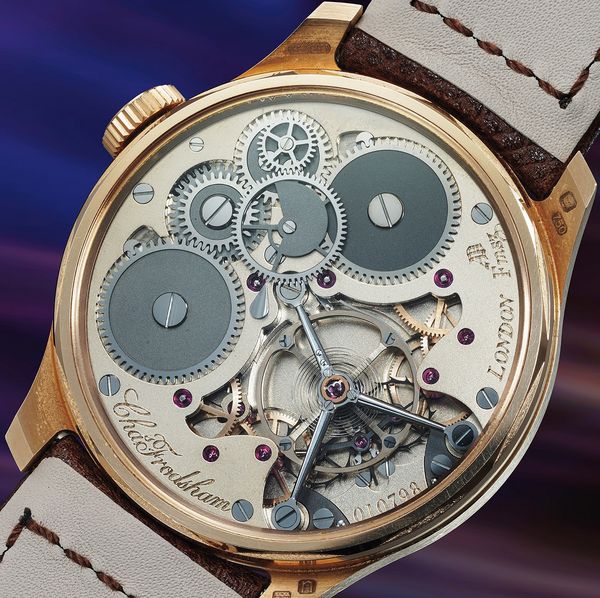
- The independent double-wheel escapement on the Charles Frodsham Double Impulse Chronometer (Image: Phillips)
-
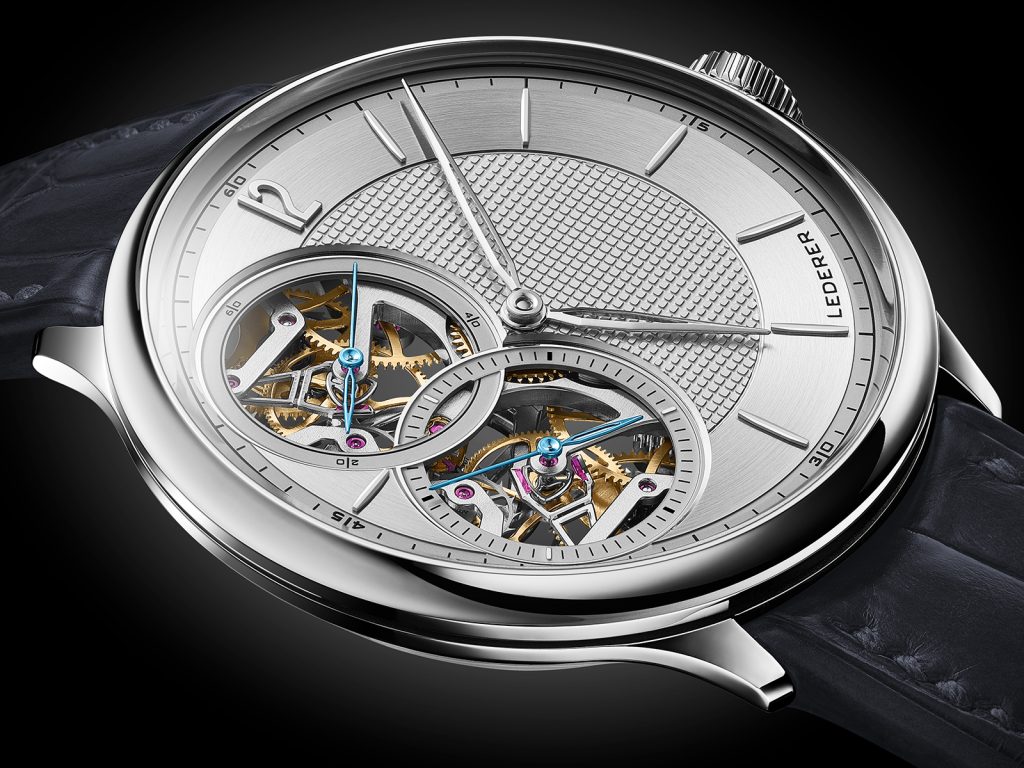
- Bernhard Lederer’s Central Impulse Chronometer
-
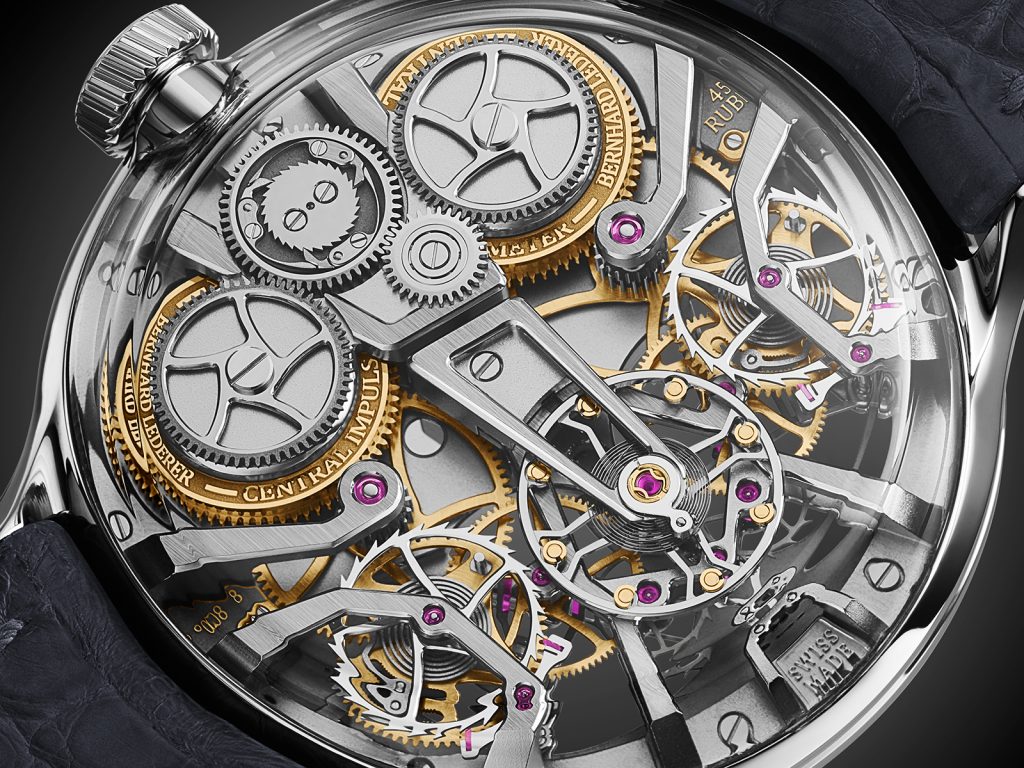
- Caseback of Lederer’s Central Impulse Chronometer
Derek Pratt: The Friend Who Deserved More
It’s worth pausing here on Derek Pratt, because his name does not appear on the dials of the watches that made George Daniels famous, and yet by the testimony of the people who knew both men best, he was indispensable to the invention that did. Pratt was, in the words of David Newman, “George’s greatest horological friend” — a gifted engineer, a fellow motorcyclist and car man, who shared with Daniels not just a technical vocabulary but an entire temperament. The two watchmakers spent countless hours on the phone and at each other’s workbenches — Daniels visiting Pratt’s seaside house, and Pratt occasionally crossing to the Isle of Man — trading ideas, testing prototypes, refining what would eventually become the Co-Axial escapement.

Derek Pratt
And by Newman’s own careful, loyal, but unmistakably candid account, Pratt did a great deal of the prototyping work on the Co-Axial — “a lot of work,” in Newman’s words — for which Daniels, in Newman’s judgment, never quite gave him sufficient credit. It’s a bittersweet footnote to one of horology’s great triumphs: the two men remained close until Pratt’s death, an event Newman describes as having devastated Daniels, but the public narrative of the Co-Axial escapement has always run, understandably but perhaps not entirely fairly, through Daniels alone. If you want to understand George Daniels as a complete human being rather than a horological deity, this friendship — its warmth, its imbalance, its quiet guilt — is as good a place to look as any.
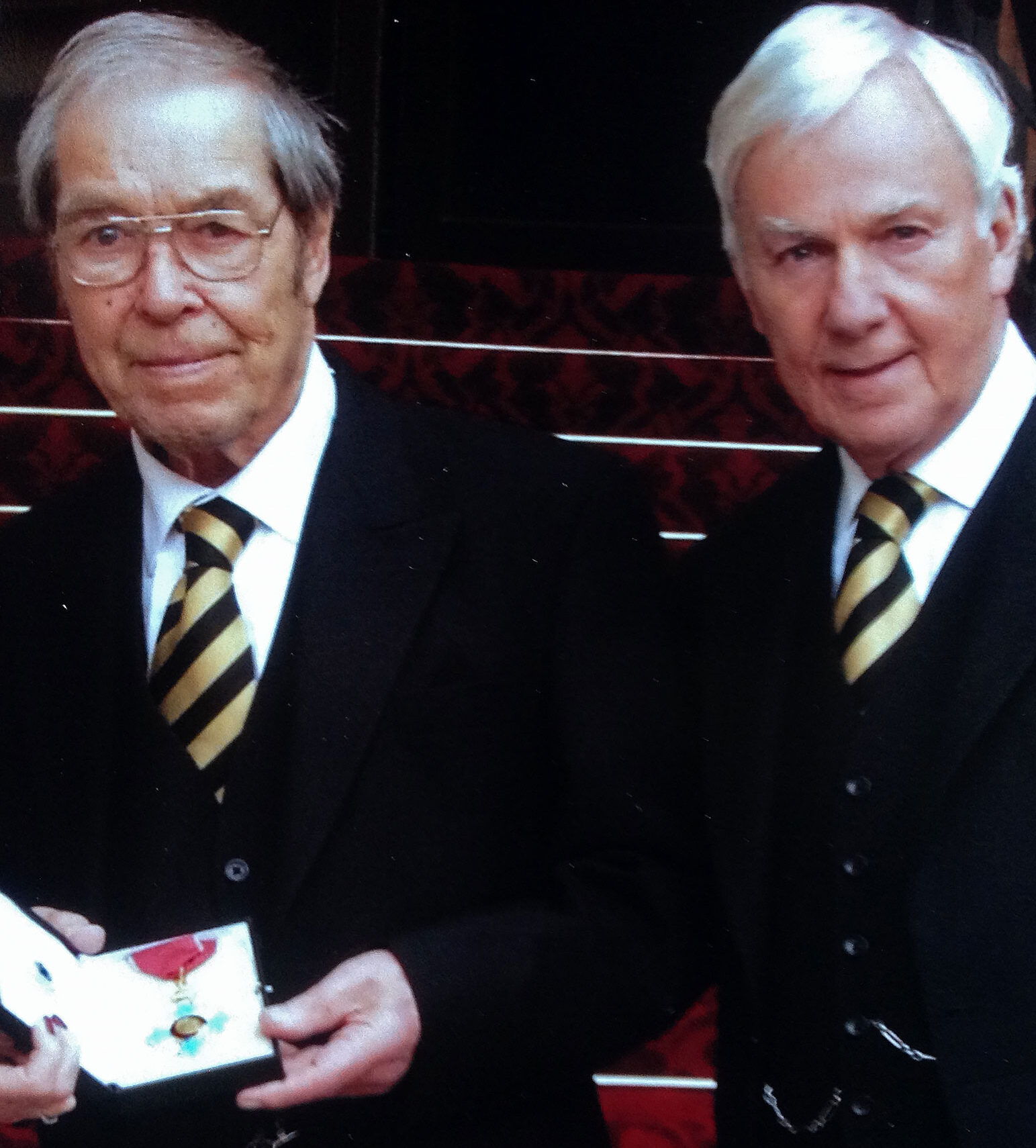
George Daniels with David Newman when he received his CBE in 2010. (Image: David Newman)
The Co-Axial Escapement: 24 Years from Idea to Wrist
Daniels first conceived the Co-Axial escapement in 1975, and it stands, without exaggeration, as the most significant advance in portable mechanical timekeeping since Thomas Mudge patented the detached lever escapement in 1754. Where the independent double-wheel escapement solved Breguet’s friction problem through brute-force duplication of the going train, the Co-Axial solved it through altogether more elegant means: an intermediate wheel and two co-axially mounted escape wheels sharing a single axis, separating the locking function from the impulse function so that the radial “push” delivered to the balance wheel no longer relies on the pallet stones sliding across the escape wheel’s teeth. Less sliding friction means less need for lubrication, which means less degradation over time, which means — in principle, and eventually in practice — a mechanical watch that keeps better time for longer between services than anything the industry had produced in two and a half centuries.

George Daniels’ Co-Axial escapement (Image: Wikipedia). The larger escape wheel delivers impulse directly to the balance, while the smaller wheel transmits impulse to the lever pallet. In this instance, the balance is rotating counterclockwise to unlock a tooth on the larger escape wheel. Thereafter, the smaller escape wheel supplies an impulse to the balance via the lever.
In the simplest possible terms: a conventional Swiss lever escapement asks a single escape wheel to do two jobs at once — lock the wheel to stop it, and then, a fraction of a second later, push the balance wheel to keep it swinging — and it does both jobs through the same sliding, scraping contact between the pallet stones and the wheel’s teeth, which is precisely where all that friction and wear comes from. Daniels’ solution was to split those two jobs apart entirely. His escapement uses two escape wheels sharing a single axle — hence “co-axial” — plus an additional intermediate wheel. One tier still handles the brief locking action, largely unavoidable in any escapement, but the actual impulse — the push that keeps the balance wheel oscillating — is delivered separately, directly to a jewel on the balance’s own roller, as a radial push rather than a sideways slide. Because the sliding, scrubbing motion that generates the bulk of an escapement’s friction has been engineered almost entirely out of the equation, the mechanism needs far less lubrication, and what lubrication remains degrades far more slowly — which is the entire reason a modern Omega Co-Axial movement can go years longer between services than its lever-escapement ancestors.
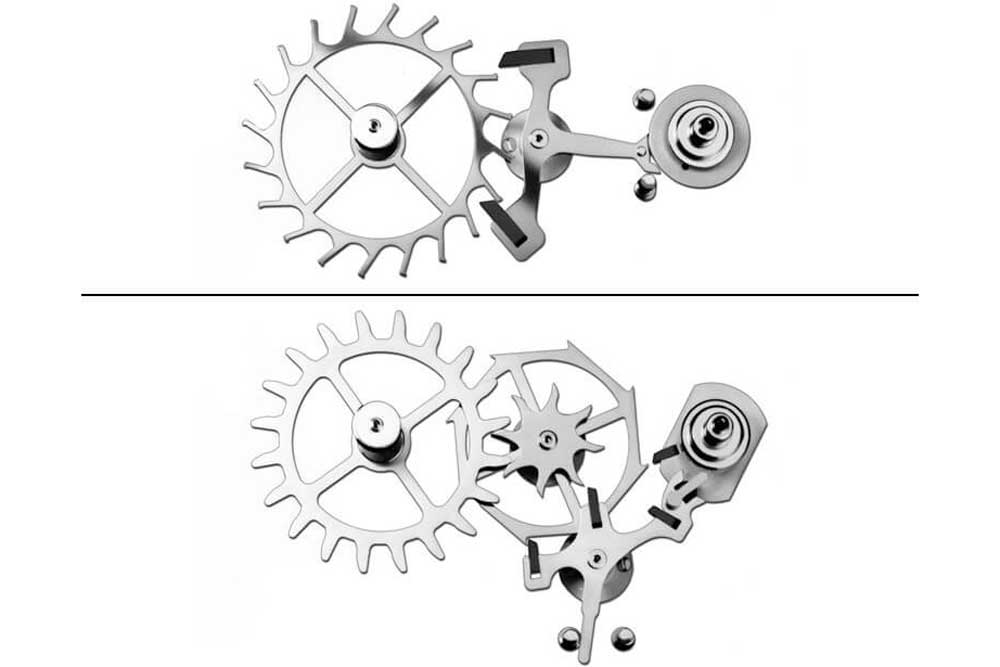
Swiss lever escapement (top) and Co-Axial escapement (bottom)
Daniels tested the concept first in a pocket watch, then adapted it for the wrist using, in one of the more charmingly improvised chapters of this story, a stock Omega Speedmaster “Mark 4.5” fitted with a Lemania-based Caliber 5100 as his guinea pig. He then did something that, in hindsight, is almost impossible to imagine given how the story ends: he tried, for years, to sell the idea to the Swiss establishment but was turned away, repeatedly, by brands who saw no reason to disrupt a lever escapement architecture that had served the industry perfectly well since the 18th century.
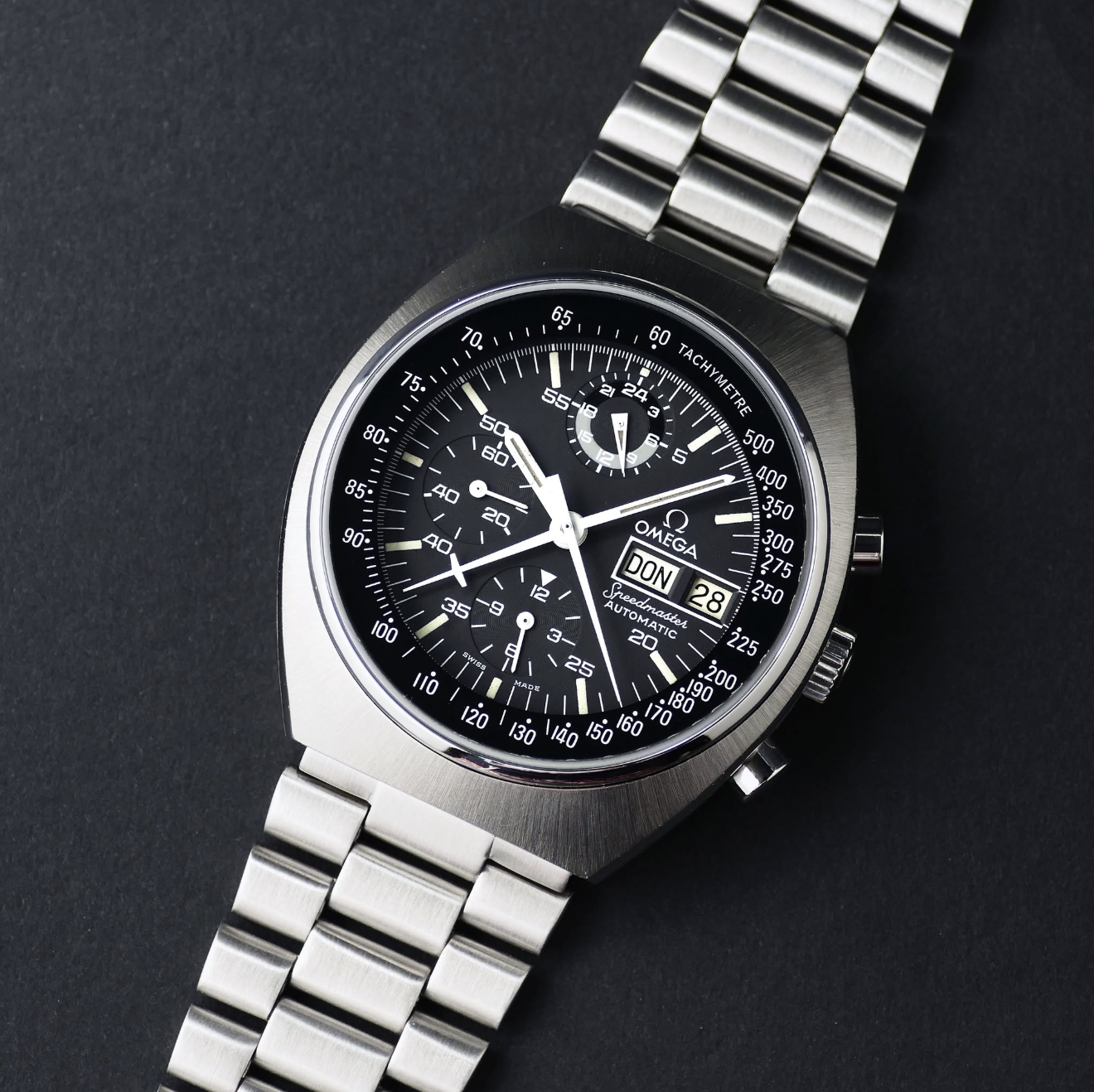
Omega Speedmaster Mark 4.5 fitted with the Omega cal. 1045 aka Lemania 5100
Patek Philippe would eventually give him the opportunity to build a Co-Axial wristwatch as early as 1981 or 1982 — a piece Daniels wore for 10 years of quiet testing but the road to industrialization began in 1993, when ETA engineer Kilian Eisenegger persuaded technical director Beat Gilomen to let him adapt the escapement to the 2892A2 caliber.
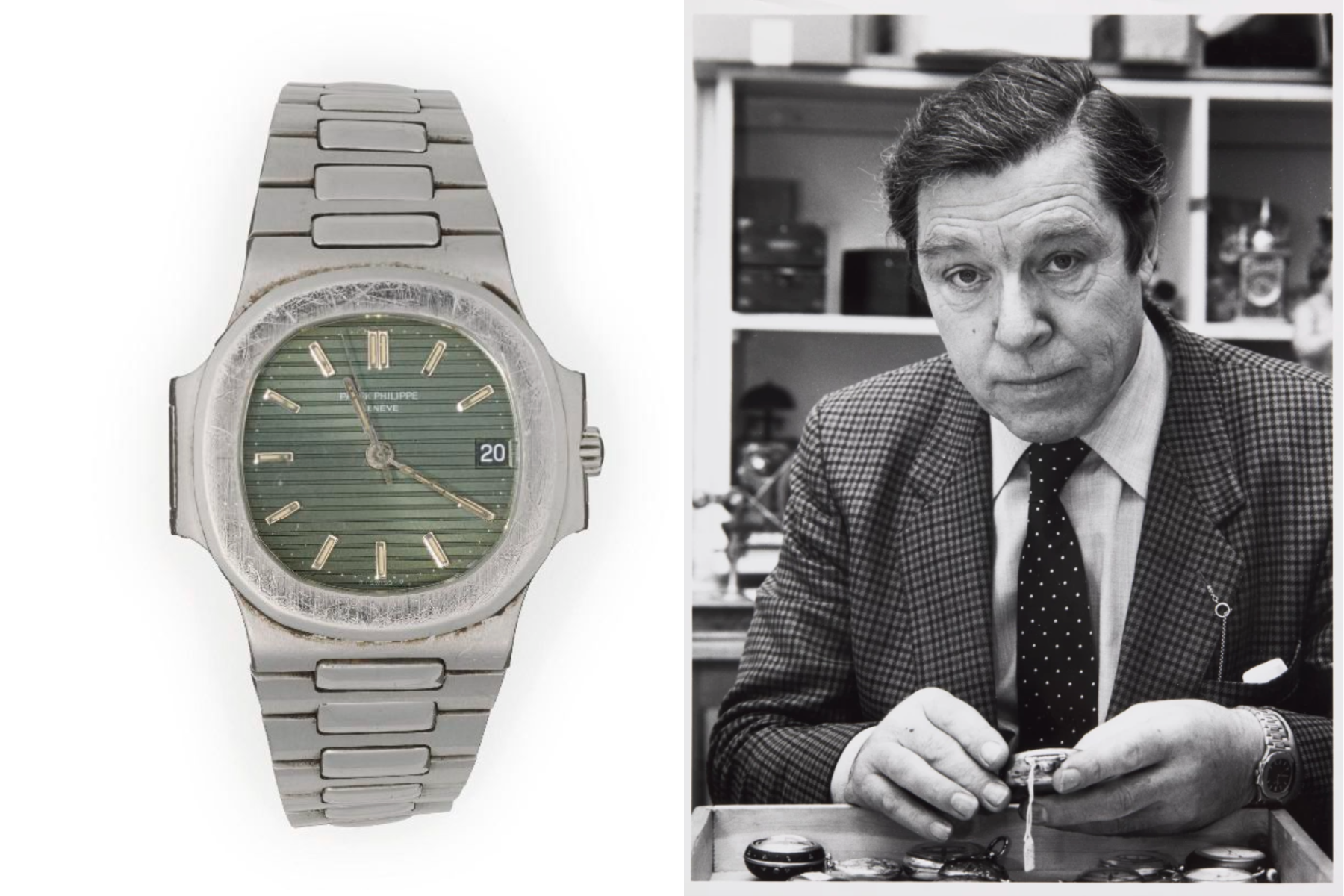
Prototype Nautilus wristwatch in a stainless steel case by Patek Phillippe, with co-axial escapement fitted by George Daniels (Image: Science Museum Group)
After several years of development and testing, Omega introduced the Co-Axial escapement on the modified 2892A2 caliber, the 2500 in 1999. It was housed in a limited edition Omega De Ville Chronometer. That same year, Daniels also launched the 18K gold Millennium wristwatch, built using 50 Omega ébauches supplied for the purpose. Omega bought the technology outright rather than license it, and today the Co-Axial escapement, refined and re-refined across a quarter century of Omega calibers, is the mechanical signature of the brand’s entire high-end output, found in what is very likely well over a million watches by now.

Omega launched its co-axial escapement during 1999 developed by inventor George Daniels
George Daniels’ Millennium Wristwatch (Image: Sotheby’s)
The early teething problems were real — sharp-edged pallet stones and escape wheel teeth caused premature wear in the first ETA-based Co-Axial calibers, and Omega spent years quietly refining the geometry. But the fundamental premise that Daniels had solved a problem the industry’s greatest names had failed to solve since the Enlightenment, has never seriously been in dispute. What is easy to forget, given how thoroughly the Co-Axial escapement is now associated with the polished marketing apparatus of a major Swiss manufacture, is that it was conceived, developed and prototyped by one obstinate Englishman working largely alone in a workshop on an island in the Irish Sea, refusing for the better part of two decades to accept that nobody wanted what he was certain the entire industry needed.
Tourbillons, Remontoirs, and an Unfinished Final Testament
If the Co-Axial escapement was Daniels’ gift to industrial-scale watchmaking, his handful of personal tourbillon creations were his gift to himself — and to the tiny circle of collectors wealthy and patient enough to commission one. Across his career, Daniels built tourbillon pocket watches of extraordinary sophistication, including a one-minute tourbillon with retrograde hour hand made for the collector Edward Hornby in 1970, which would go on to fetch USD 1.66 million at auction decades later. But it was in his final decade of active bench work that Daniels produced the pieces that best demonstrate just how far his ambitions had traveled from the schoolboy who found a broken watch at home.

A Tourbillon Pocket Watch with twin barrel one minute tourbillon pocket watch, Earnshaw spring detent chronometer escapement and retrograde hour hand, handmade for Edward Hornby (Image: Phillips)
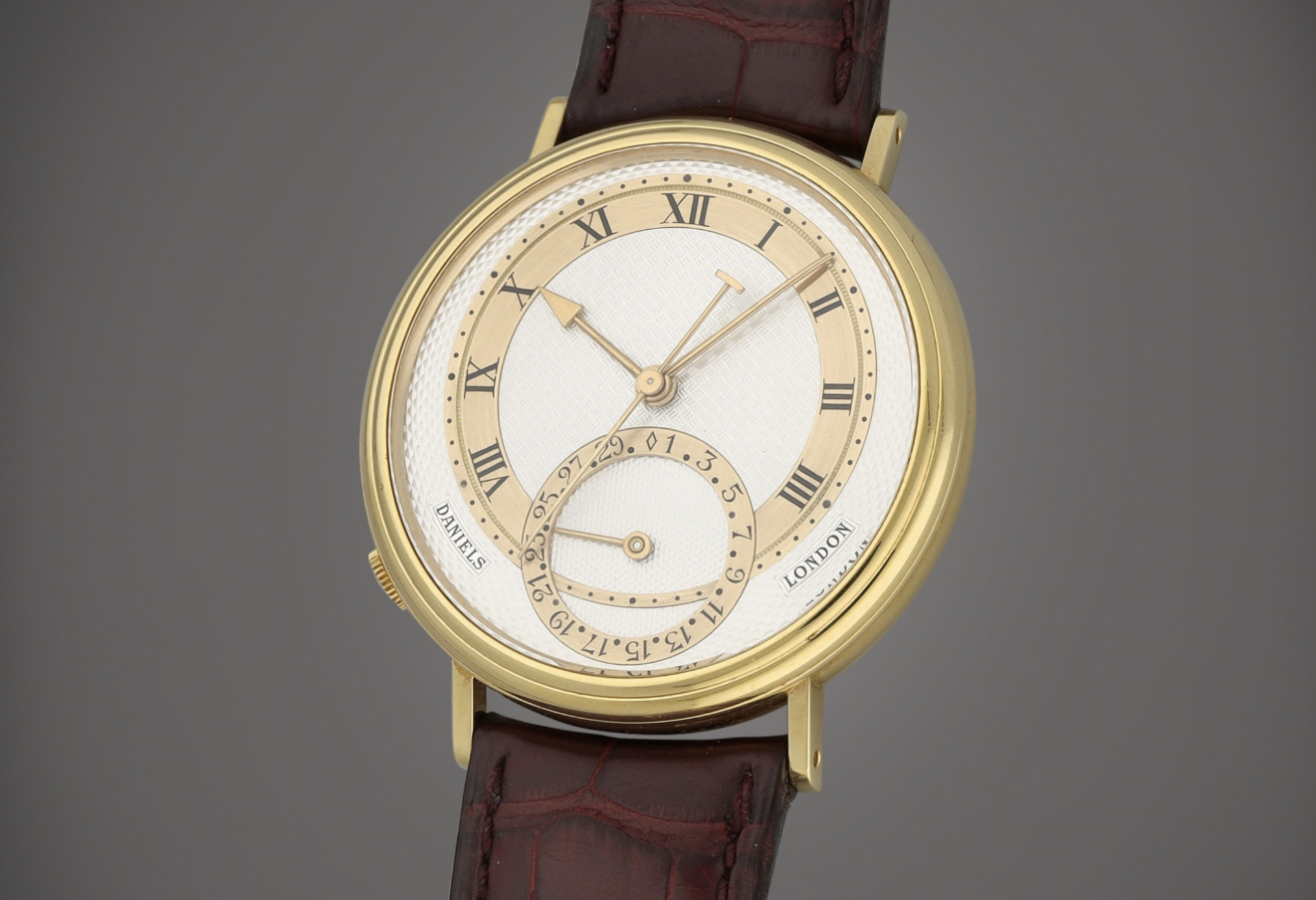
It is also worth pausing over the beauty of Daniels’ watches, because their aesthetic qualities are sometimes overshadowed in accounts concerned chiefly with their technical interest. For all their heft, the finest have an almost ethereal quality, with slender hands, finely engine-turned silver dials composed with an instinctive sense of proportion. Many watchmakers have since adopted a similar visual language, and some have followed his methods of craft, but remarkably few have reproduced the elegance of his watches.
In 1991 and 1992, respectively, Daniels completed the only two wristwatches he ever built entirely with his own hands, without Roger Smith’s collaboration: the Four Minute Tourbillon and the Spring Case Tourbillon. The latter, a 42mm yellow gold piece with a Breguet-inflected dial of hand-turned guilloché subdials, incorporated a genuinely ingenious case architecture — an outer shell and a spring-hinged inner element that would snap open at the touch of a button to reveal the caseback and its tourbillon aperture, without ever removing the watch from the wrist. Daniels was apparently so pleased with the result that he wore it as his personal watch for over a decade, until it eventually passed into private hands and, in November 2022, made its long-awaited auction debut at Phillips in Geneva, alongside a Daniels Anniversary and Millennium watch in the very same sale — the first time three Daniels wristwatches had ever appeared together at auction.
-
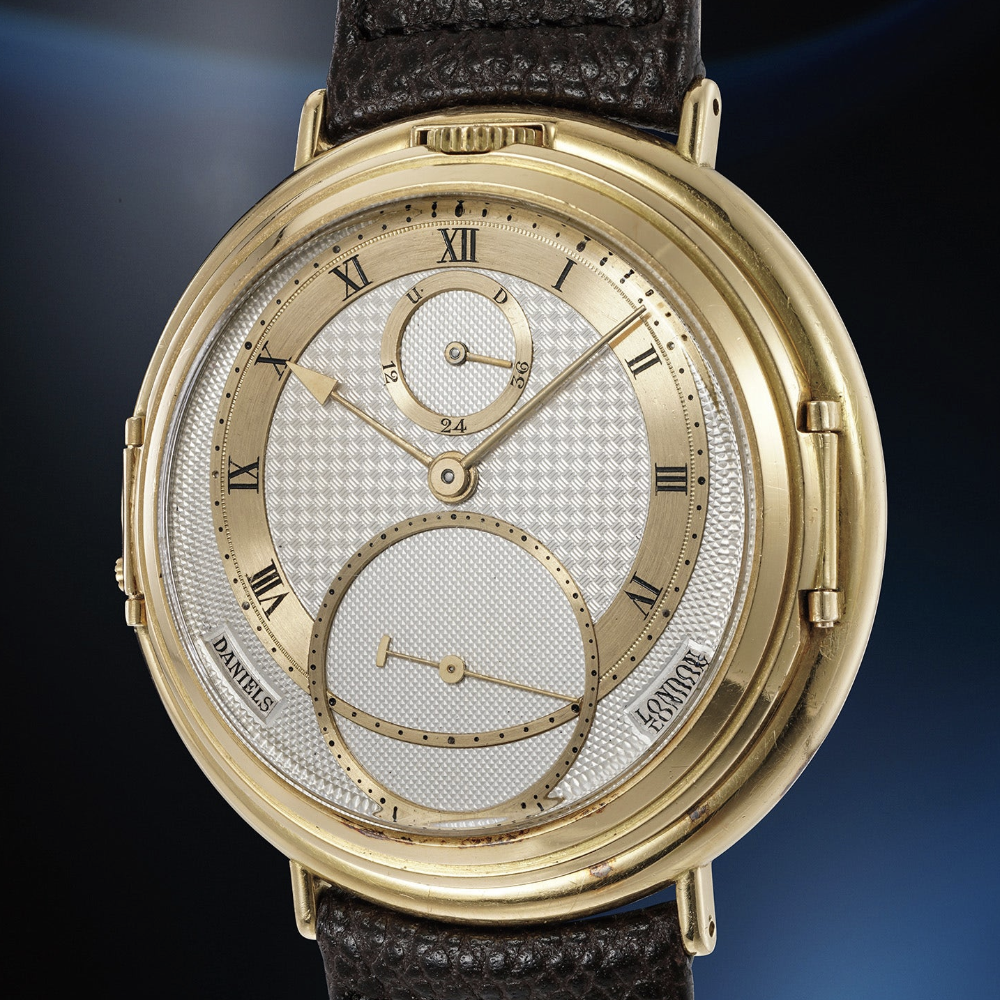
- George Daniels’ Spring Case Tourbillon (Image: Phillips)
-
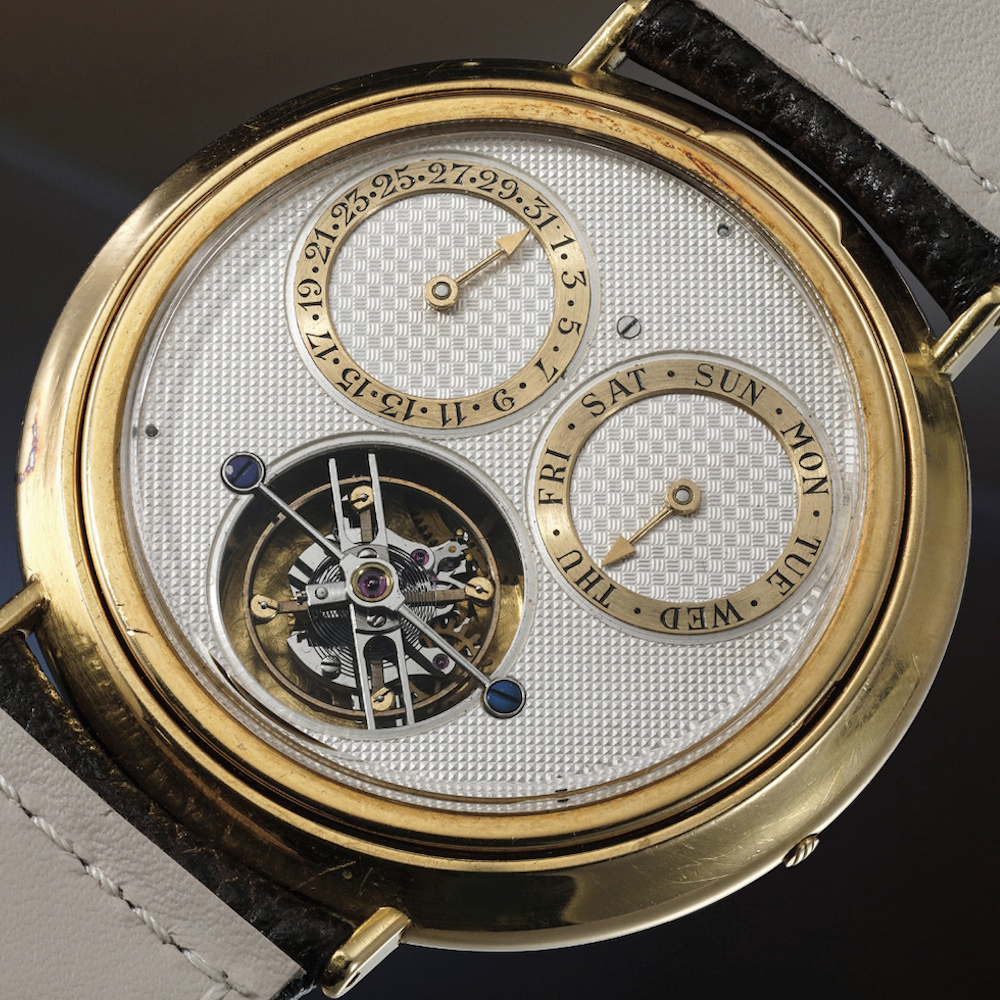
- The caseback shows the day and date displays, as well as its tourbillon aperture (Image: Phillips)
-
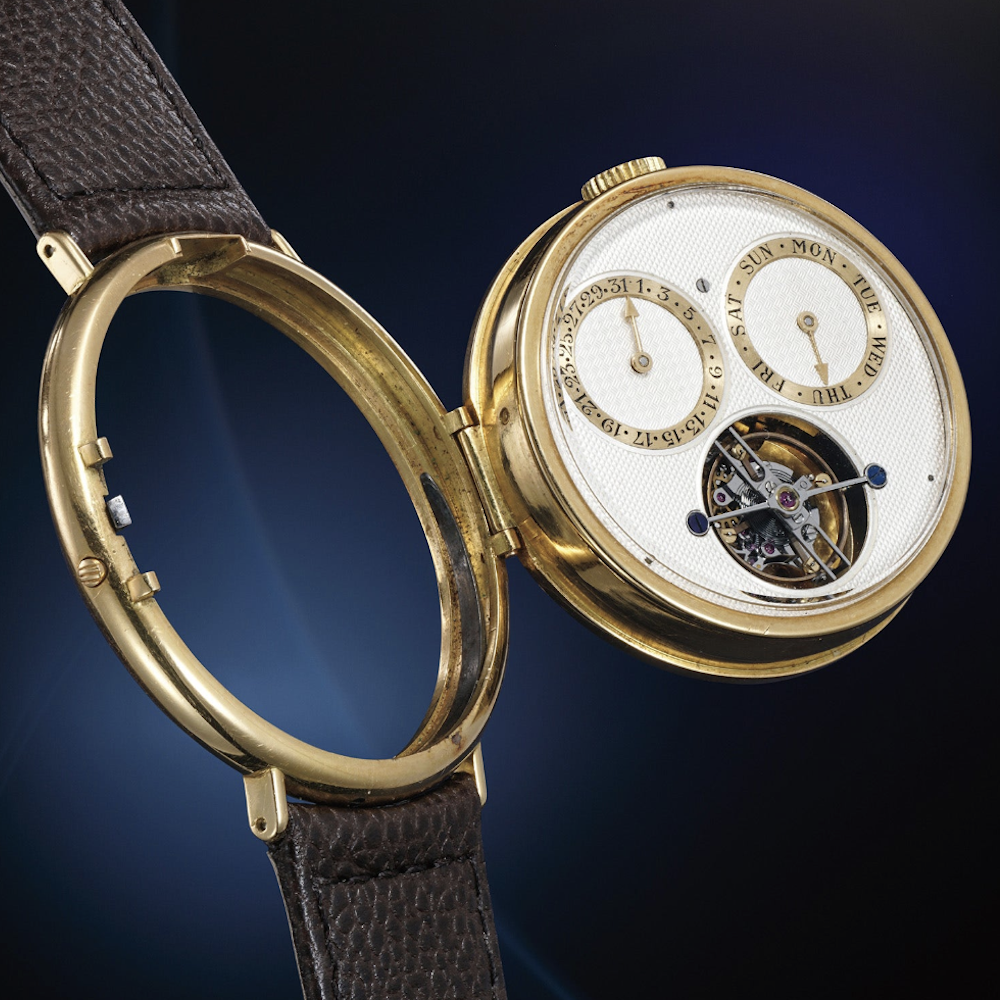
- Its outer shell has a spring-hinged inner element that would snap open at the touch of a button to reveal the caseback (Image: Phillips)
-
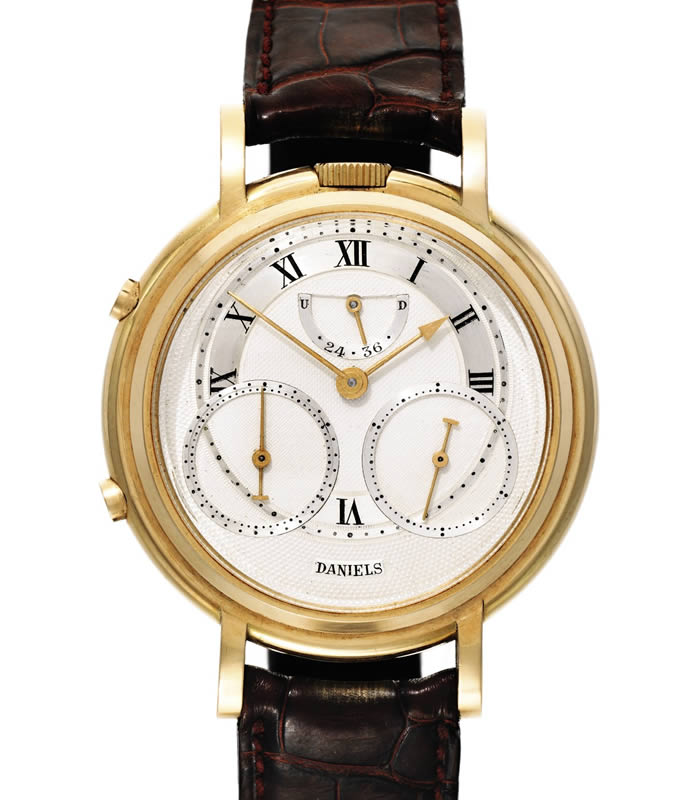
- George Daniels’ Four Minute Tourbillon wristwatch
-
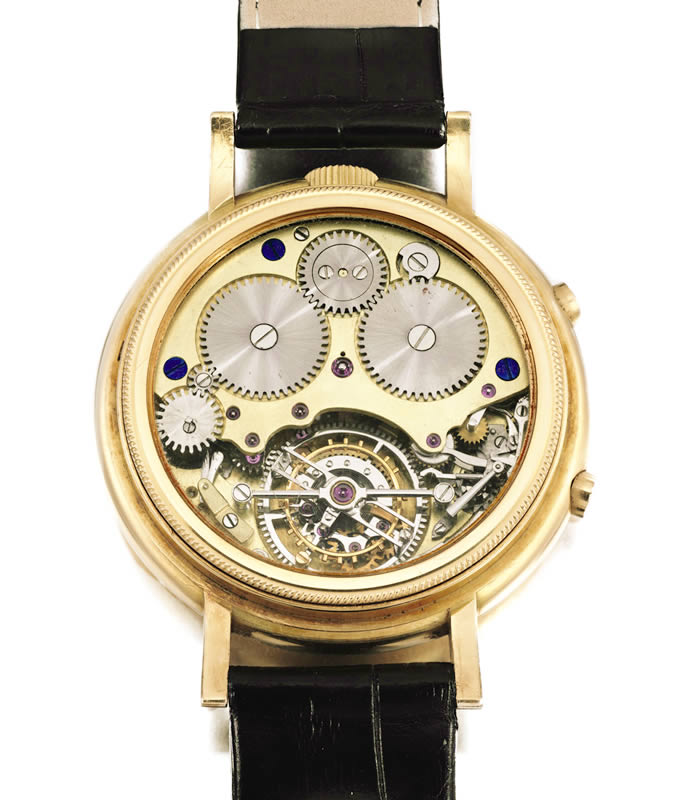
- It has Daniels’ slim co-axial escapement and compact chronograph mechanism
Perhaps the most poignant of all Daniels’ tourbillon work, though, is the watch he never finished. At the time of his death in 2011, Daniels had spent over a decade, on and off since 1998, developing a pocket watch movement that would combine, for the first time in his career, a one-minute tourbillon, the Co-Axial escapement and a 15-second remontoir d’égalité — a small coiled-spring constant-force mechanism that Daniels himself described, in his book Watchmaking, as “by far the best method of smoothing the power supply,” conceding in the same breath that it was “complex and costly to make” and, strictly speaking, “quite unnecessary” — which, he added, “merely adds to its charm.” It is, in many ways, the perfect Daniels sentence: an admission that the whole project was mechanically excessive, delivered with the total confidence of a man who built his entire career on excess of exactly this kind.

Daniels’ unfinished one-minute tourbillon, Co-Axial escapement and 15-second remontoir d’égalité (Image: Science Museum)
The movement was left incomplete, missing its balance wheel and hairspring, when Daniels’ health finally overtook him. Because Daniels famously worked without detailed drawings — “everything was created in his mind’s eye and then developed as he built the watch.” There is in existence a single comparable, dated 1975 and known as the “Elsom II” pocket watch, featuring the same tourbillon-and-remontoir architecture with a spring-detent escapement rather than the Co-Axial.

George Daniels’ “Elsom II” tourbillon remontoir pocket watch created in 1975. It features a silver engine-turned dial with sectors for the Equation of Time and the state of winding

It has a one-minute tourbillon with a 15-second remontoir, twin barrels with an annual calendar disc and an equation cam mounted on the barrel bridge, a screw differential for the power reserve and a reversed spring detent escapement
A Private Life, Guarded to the End
For all his public swagger — and Daniels possessed plenty of it, once memorably telling an interviewer, when asked about his reputation as the world’s greatest living horologist, that he had “thought about it very carefully” and “came to the conclusion that it was true” — his private life remained a subject he discussed with visible reluctance, and sometimes not honestly at all. He married Juliet Marryat, daughter of one of his clients, in 1964. The marriage ended in divorce, and Daniels, by his own written admission in his autobiography, was “not a good husband or father,” a confession made all the more striking by his single-minded devotion to horology and to racing classic cars during those years. He and Juliet had a daughter, Sarah-Jane. When a journalist visiting his Isle of Man home in 2010 asked whether he had children, Daniels simply said no — only for the reporter to later discover Sarah-Jane’s existence and, upon calling to ask why he hadn’t mentioned her, receive the blunt reply that he was “not very pleased with her” and no longer counted her as part of his life. It is a hard, uncomfortable detail to sit alongside the warmth so many friends describe in him, and it belongs in any honest account of the man rather than a hagiography of the watchmaker.
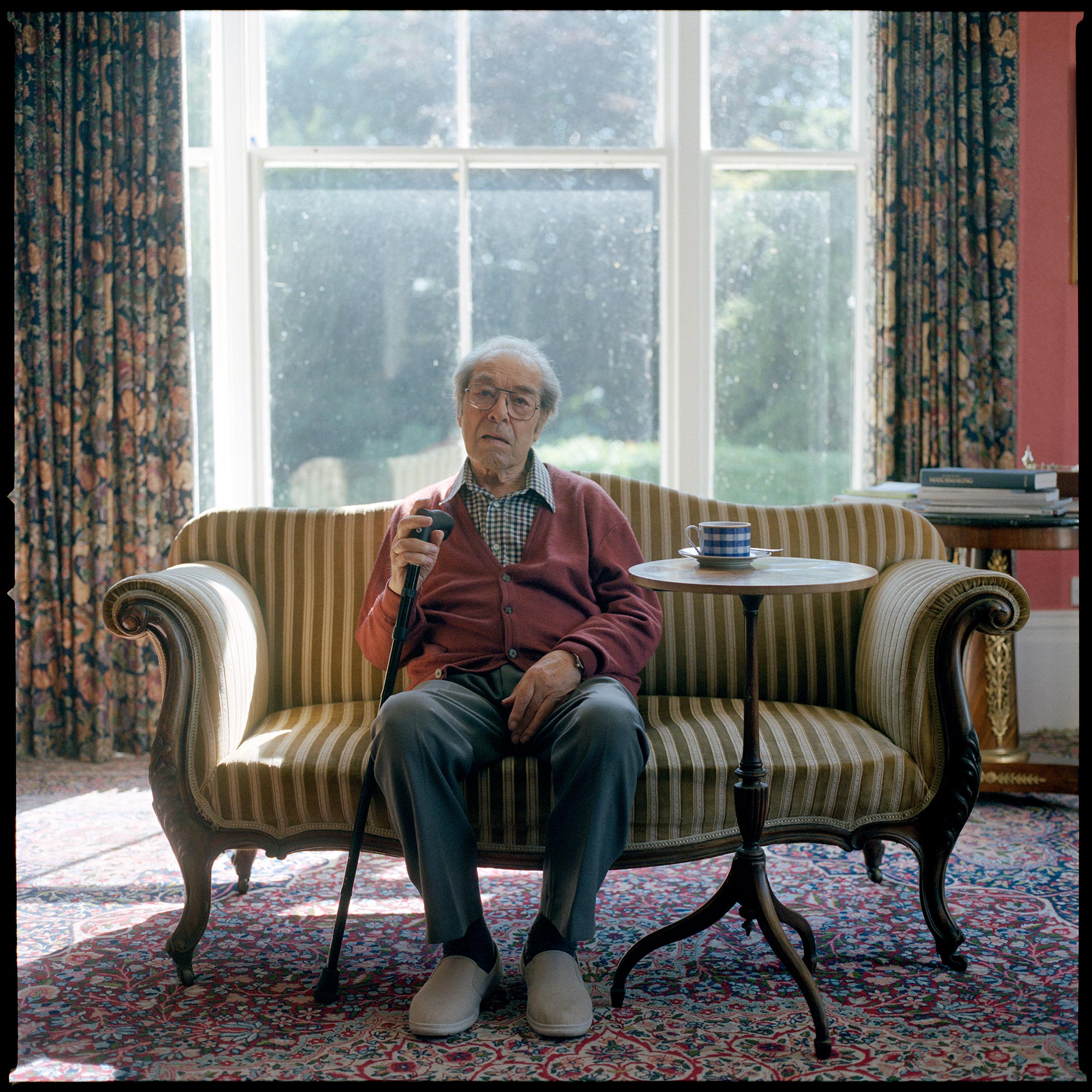
George Daniels in his home, 2011 (Image: Olivia Arthur)
He lived, in his final years, largely alone on the Isle of Man — a bachelor’s existence softened by his cars, his workshop, and a tight circle of genuinely devoted friends, chief among them David Newman, whose own wife served as godmother to Sarah-Jane. Those closest to him describe a man of exacting, sometimes exhausting standards: he insisted on ring spanners rather than adjustable ones when working on his Bentleys, for fear of burring a nut’s edges; he disliked strangers presuming familiarity by calling him “George” rather than “Mr. Daniels” or “Dr. Daniels”; he kept, on his workbench, a small tin box nicknamed “the graveyard,” into which he discarded any handmade component that failed to meet his own standard, regardless of the months of labor it represented. And as his health declined in his final years, that same friend group — Newman and Roger Smith chief among them — would sometimes find themselves searching the Isle of Man for a forgetful Daniels who had wandered off still wearing a Space Traveler or Grand Complication worth several million pounds.
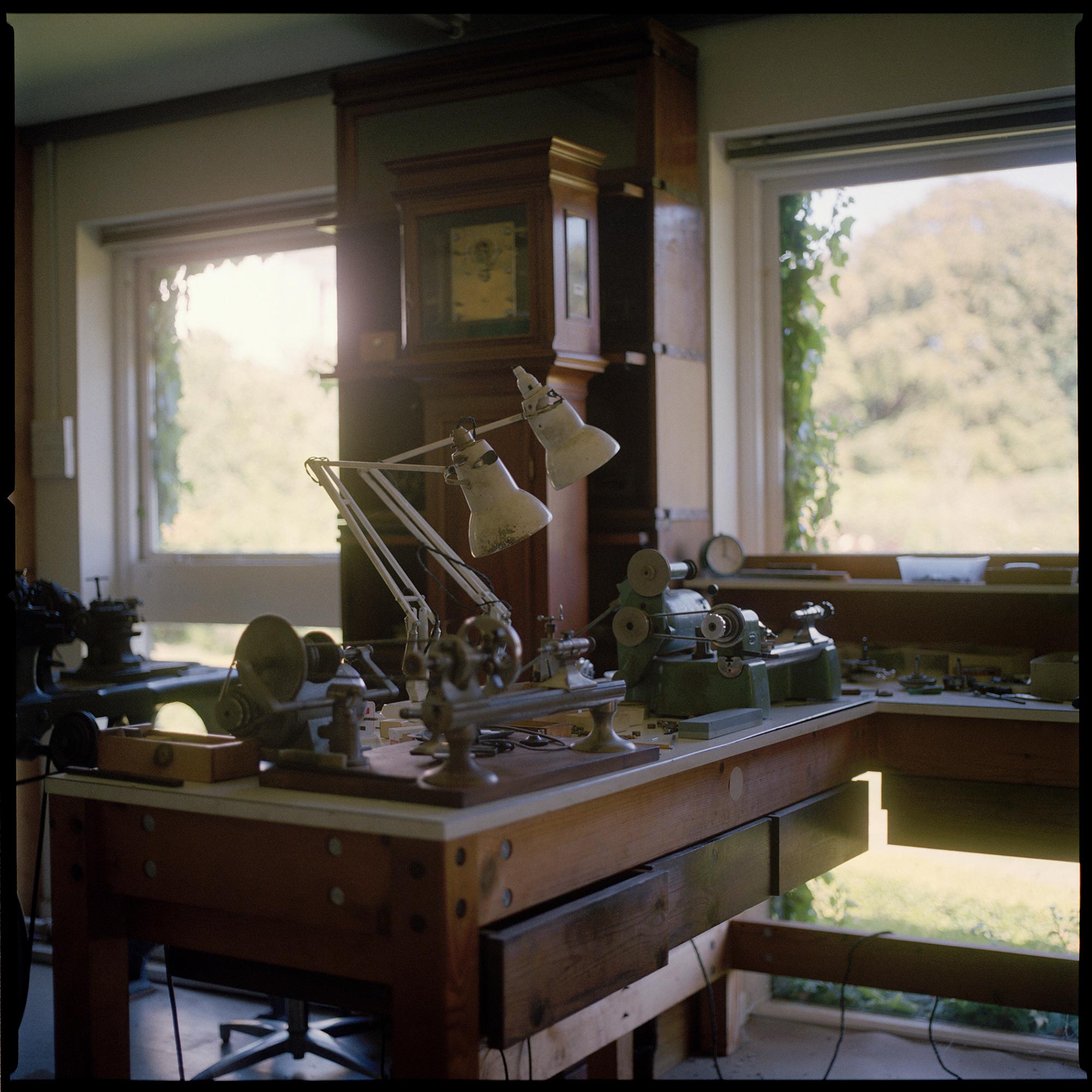
Daniels’ Isle of Man workbench (Image: Olivia Arthur)
He worked, by every account, until nearly the very end, at the bench at the crack of dawn and reluctant to leave it at night. He died on the Isle of Man on October 21, 2011, at the age of 85. His funeral cortège crossed the island’s mountain road in a procession of his own vintage cars, with François-Paul Journe among the mourners who made the trip. By his own estate’s account, his collections — the Bentleys, the watches, the Leicas, the clocks, the paintings — realized over GBP 25 million at auction, all of it channeled into the George Daniels Educational Trust, which continues to fund horological, engineering and medical students to this day.
It is tempting, and not entirely wrong, to remember George Daniels primarily as an inventor — the man who gave the world the Co-Axial escapement, currently ticking away inside what is likely well over a million Omega watches, and whose independent double-wheel escapement, four decades after he set it aside, finally found its way into a wristwatch through Charles Frodsham and Bernhard Lederer. But the invention that may matter most, in the long run, is not mechanical at all. It’s the example Daniels set simply by proving, across 26 watches entirely built by hand and 60 years at the bench, that a single obsessive individual — with no factory, no atelier of specialists, no corporate backing, could produce complete, complicated timepieces with artistry that stood in comparison with anything Switzerland’s grandest houses could muster.
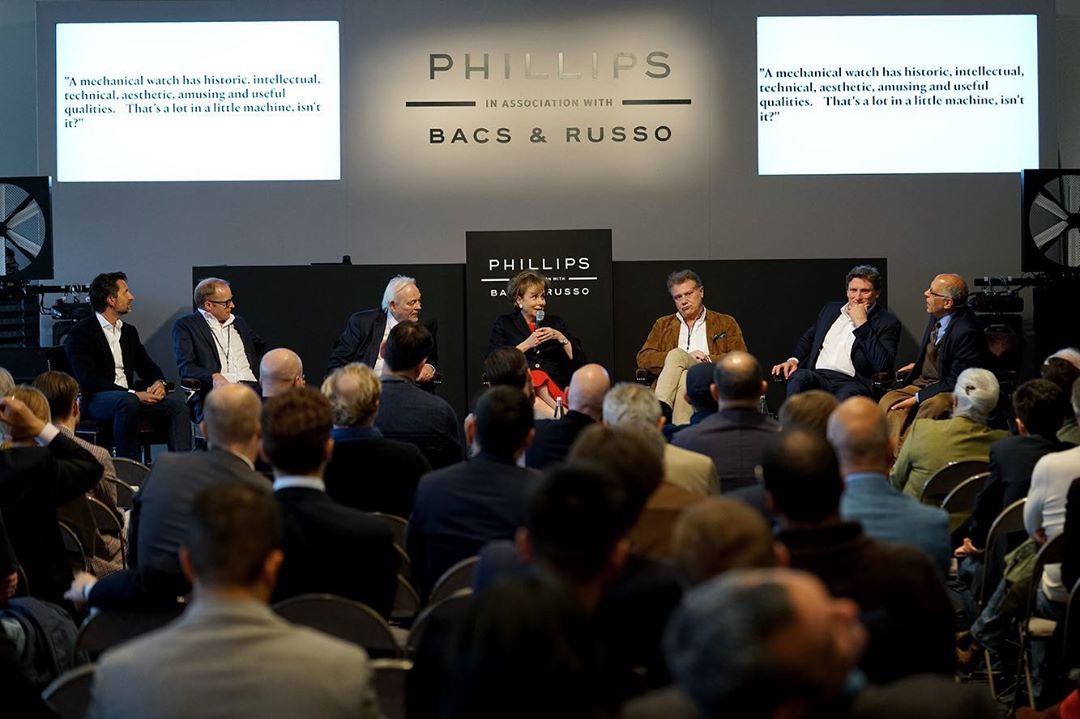
A crowded floor at the Independents’ Day: The Legacy of George Daniels: Paying tribute to independent watchmaking, panel session on the eve of Phillips Watches’ 2019 spring auction in Geneva (Image: Phillips)
That is the example Philippe Dufour followed. It is the example François-Paul Journe followed, and it’s no accident that Journe gifted Daniels a unique Chronomètre Souverain in 2010, a piece that would itself later sell for nearly USD 1.5 million at auction for its extraordinary patrimony. It is the example that shaped Roger W. Smith, who arrived on the Isle of Man as a young apprentice and over two decades later, became the rightful heir to the Daniels workshop, its tools and its philosophy — and who today builds his own watches, using the Co-Axial escapement Daniels bequeathed to him. If you meet Bernhard Lederer, ask him to tell you the story of hitchhiking in the rain from Germany to London just to buy a copy of Watchmaking by Daniels. It tells you everything about the influence the great man had on every independent watchmaker that followed in his footsteps. His archetype underwrites the entire modern category of independent watchmaking as we understand it today — a category that didn’t exist, before George Daniels decided that the only person he fully trusted to build a watch to his own standard was himself.
You may also like
Editorial
The Impossibly Smooth Ressence Type 10 DN (Dark Knight)
Oct 21, 2026
Editorial
The Impossibly Smooth Ressence Type 10 DN (Dark Knight)
Oct 21, 2026
Editorial
Master of Control: Robert Pattinson
Oct 21, 2026
Editorial
Master of Control: Robert Pattinson
Oct 21, 2026
Editorial
The Family Business Rewritten
Oct 20, 2026
Editorial
The Family Business Rewritten
Oct 20, 2026