



How Singapore Became A Powerhouse In The Global Watch Industry
Editorial
How Singapore Became A Powerhouse In The Global Watch Industry

Summary
Sixty years ago, Singapore was thrusted into independence amid civil unrest, economic uncertainty, and ethnic division. Today, it’s one of the world’s wealthiest, safest, and most connected nations, and its presence in the global watch economy is outsized and undeniable.
According to the Federation of the Swiss Watch Industry (FH), Singapore consistently ranks among the top ten export markets for Swiss timepieces. As the sixth-largest export destination for Swiss watches, Singapore recorded US $1.84 billion worth of Swiss timepieces (and clocks) shipped in 2024. That’s impressive for a nation of just six million people — tiny compared to China’s 1.4 billion population and the roughly 331 million in the U.S. Even more impressively, the city-state tops Julius Baer’s Global Wealth and Lifestyle Report 2024 as the most expensive city in the world for high-net-worth individuals (HNWIs). With a US$2.8 billion goods trade deficit in favor of the United States in 2024, Singapore has secured a favorable 10% duty under U.S. President Trump’s newly announced reciprocal tariff system, a rate far lower than those faced by Switzerland (39%) and neighboring country Thailand (19%).

Swiss Watch Exports by market value (2024) for the top six global markets
How does Singapore’s independence story shape its global reputation?
Since 1965, Singapore’s meteoric rise from third-world to first-world has been a story of pragmatism, ambition, and strategic diplomacy. It overcame colonialism, war, and expulsion from Malaysia to become a model of economic transformation. As fellow Singaporeans would tell you, dear reader, it is my belief that that same tenacity drives its positioning in the luxury world.
You see, Singapore’s success is rooted in its founding values. Visionaries like Lee Kuan Yew, Goh Keng Swee, and S. Rajaratnam laid the foundation for a stable, corruption-free economy built on meritocracy and openness to global trade. Indeed, Singapore’s strength lies in both infrastructure and cultural appetite. The city boasts one of the world’s most vibrant retail ecosystems, led by influential multi-brand retailers and mono-brand boutiques that give Swiss maisons unparalleled access to Southeast Asia’s most discerning buyers. Add to that a watch-educated clientele who appreciate fine craftsmanship — and are willing to invest in it — and you get a market that punches far above its weight.
Homegrown retailers like The Hour Glass, Cortina Watch, and Sincere Fine Watches played a key role, pioneering experiential retail concepts and forging early relationships with independent brands — Urwerk, De Bethune, Christiaan van der Klaauw, to name a few — that are now industry darlings. Their foresight helped transform Singapore into a launchpad for global debuts and high-profile collaborations, making it an indispensable market for both heritage maisons and contemporary watchmakers alike.

The first-ever IAMWATCH fair organized by The Hour Glass exceeded expectations, leaving a lasting impression on both attendees and the broader horological community
-

- Patek Philippe Ref. 20145M-001 “Singapore Skyline” dome clock for Cortina Watch
-

- Lang & Heyne Friedrich III Remontoir, a special tribute to Sincere Fine Watches’ 70 years
When the newly elected Cabinet took office in 1959, one of its first orders of business was to replace the British Union Jack, which had flown over the island for 140 years. Then Deputy Prime Minister Dr Toh Chin Chye led the charge, reviewing international flags to avoid confusion. Ironically, he was initially hesitant about using red and white at all — red above white was Indonesia’s, and white above red belonged to Poland. But the colours stuck, and so did their meaning: red for universal brotherhood, white for purity and virtue, with a crescent moon for a rising nation and five stars for democracy, peace, progress, justice, and equality. The flag was later adopted officially as Singapore’s National Flag upon her independence in 1965.
I’ll admit it (very sheepishly): For a long time, Singapore-themed watch designs didn’t quite move the needle for me. My feebly creative mind determined that two stark colours didn’t exactly scream cool. But thankfully, that’s changed. Today, those same colours are worn with pride and reimagined with sophistication. From the limited-edition Patek Philippe Dome clocks created exclusively for Singapore to community-driven collaborations — and more recently, Bvlgari’s SG60 Worldtimer and Audemars Piguet’s unique Code 11.59 by Audemars Piguet piece for the National Museum of Singapore, both in commemoration of the nation’s 60th year of independence — the red-and-white palette has finally come into its own.

Omega Seamaster Exclusive Boutique Singapore Limited Edition (Image: Revolution ©)
Read: These Are The Most Iconic Singapore-Exclusive Timepieces Over The Years, And Then Some
Singapore: A capital of watch culture
Recent years have seen a wave of milestone events staged in Singapore. In 2019, Patek Philippe brought its Watch Art Grand Exhibition to Marina Bay Sands, becoming the exhibition’s fifth iteration and marked a milestone as the first to be staged in Asia. Spanning 1,800sqm, it became the largest exhibition Patek Philippe had ever mounted (until Tokyo in 2023). It also broke attendance records, drawing approximately 68,000 visitors over 16 days.

The Singapore historical room housed artist Emmanuelle Moureaux’s ceiling installation, which comprised 11,500 paper frangipani flowers in a hundred hues, a tribute to Singapore’s national identity and the precision of Patek Philippe’s artisans
A dedicated “Singapore Room” paid tribute to the city-state’s bicentennial year, offering a cultural bridge between Patek Philippe’s Genevan roots and Singapore’s own rich history and biodiversity. The space featured more than 10 intricately curated rooms, along with extravagant art installations that included “100 Colors in the Spirit of Majulah Singapura,” by Tokyo-based French artist Emmanuelle Moureaux.
For the first time outside Geneva, over 100 rare timepieces from the Patek Philippe Museum were brought to Singapore, housed in a dedicated Museum Room. The collection — amassed over four decades by the Stern family, including Honorary President Philippe Stern and current President Thierry Stern — offered a remarkable look at horological milestones: from early portable clocks and the world’s first wristwatch to royal commissions and early world timers.
-
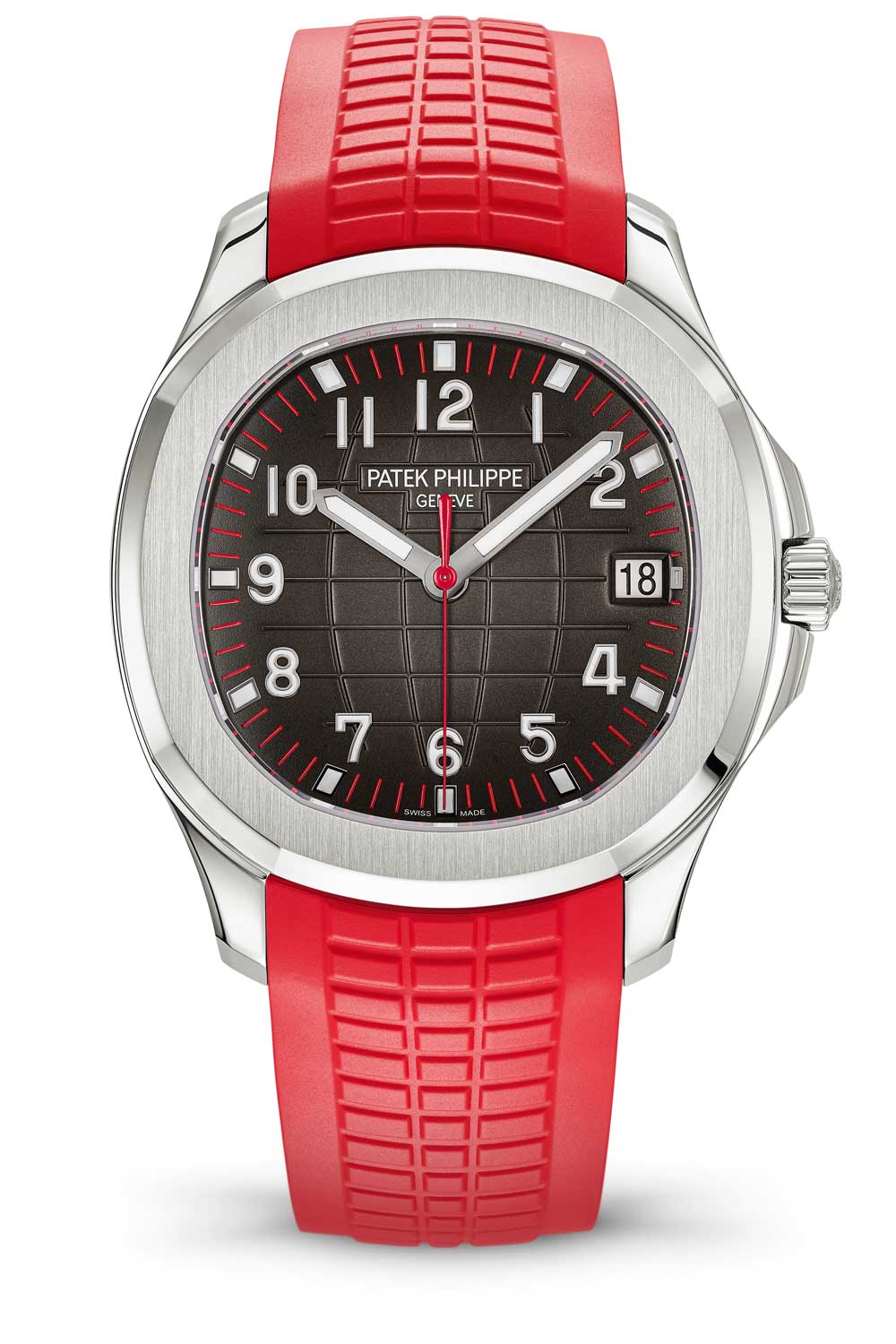
- Patek Philippe Ref. 5167 Aquanaut Singapore 2019 Special Edition
-
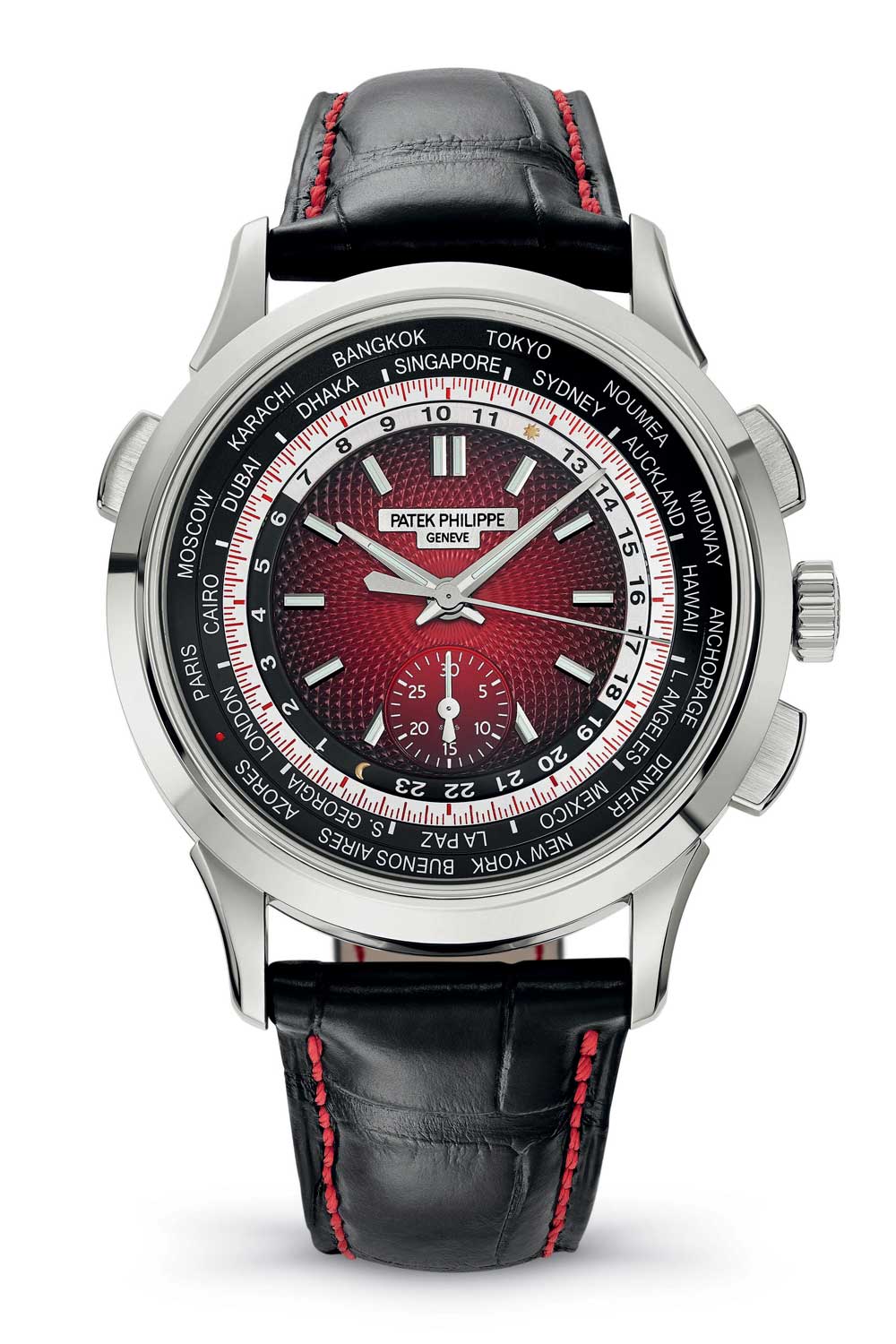
- Patek Philippe Ref. 5930 World Time Chronograph Singapore 2019 Special Edition
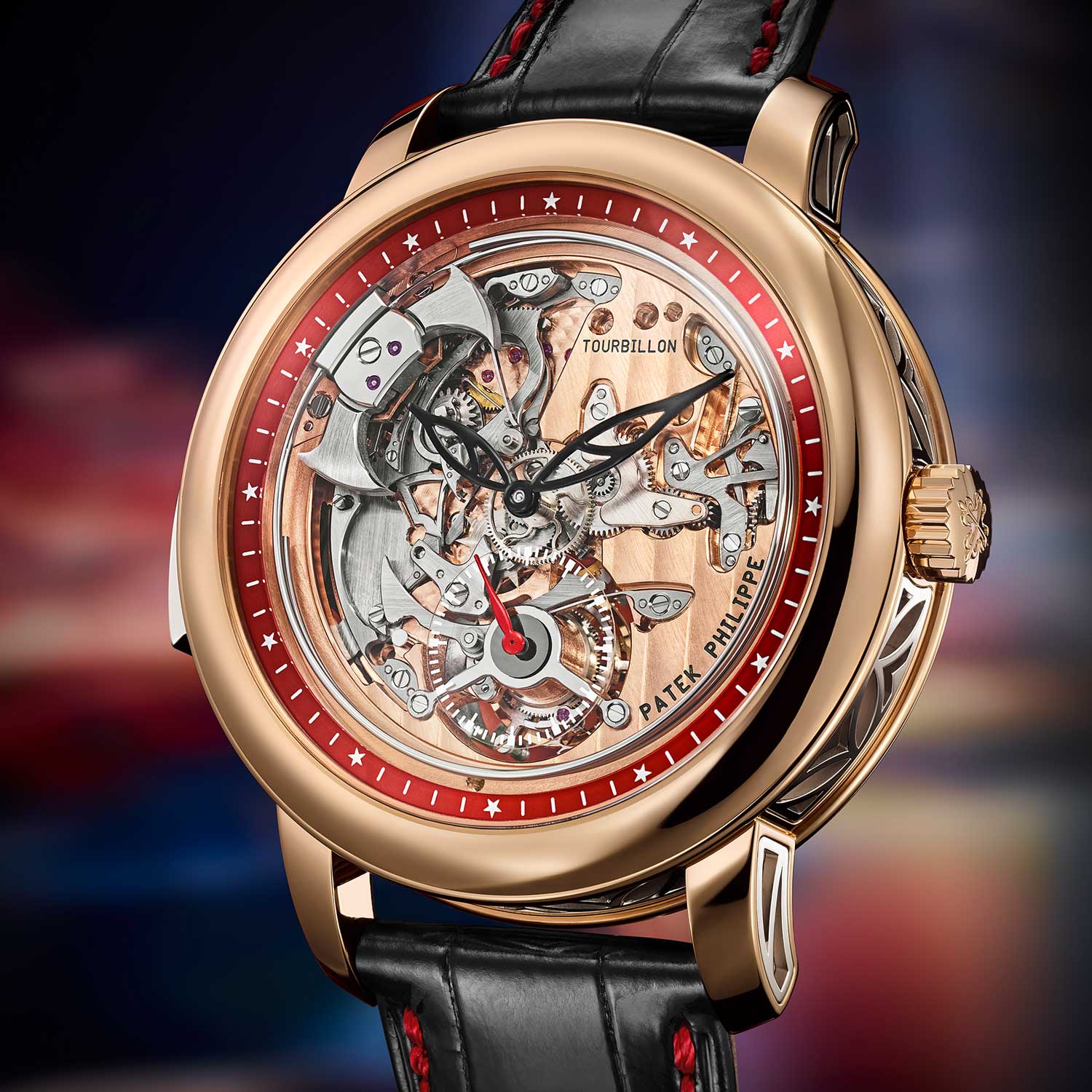
Patek Philippe Ref. 5303R Grand Complication in Rose Gold introduced on the occasion of the Watch Art Grand Exhibition held in Singapore (September 2019)
Singapore made history as the first Asian city to host LVMH Watch Week in 2023. The event brought together leading maisons — Bvlgari, TAG Heuer, Hublot, and Zenith — to present their latest timepieces to an international audience of press, retailers, and collectors. This marked a strategic move by the group to engage more deeply with the fast-growing Southeast Asian luxury market, which has seen a surge in watch demand post-pandemic.
In 2024, Jaeger-LeCoultre selected Singapore as the sole Asian destination for the third chapter of The Collectibles, showcasing 11 restored vintage timepieces for the country’s thriving community of serious collectors.
Cartier, too, recently marked its 30th anniversary in Singapore with the third (and final) chapter of Nature Sauvage, held at the Former Command House, making Singapore only the third city in the world to host a chapter in this immersive showcase, after Vienna and Shanghai. Six artistic universes merged animal forms with Peranakan influences, a nod to Singapore’s rich cultural identity and heritage of design.

The Former Command House in Singapore was the residence of the General Officer Commanding of Malaya during the British colonial period
-

- Cartier Echina necklace in white gold with emeralds, sapphires, and diamonds
-

- Cartier Panthère Canopée Necklace in white gold with sapphires, emeralds, diamonds, and onyxes
Meanwhile, Audemars Piguet unveiled its flagship AP House for Southeast Asia at the Raffles Hotel, transforming the landmark’s historic billiard hall into a dedicated space that immerses guests in the full universe of the Manufacture. It was also here that Audemars Piguet opened the doors to the world’s first-ever AP Café.

In the refurnished Bar & Billiard Room, a massive dining table and beautiful bar occupies the main hall

The Night Room, one of AP House’s private salons, reflects celestial and astronomical complications
-

- Golden Roesti topped with crème fraiche and caviar
-

- White pepper king crab, avocado and caviar
Now when it comes to the Singapore Grand Prix, the government and race promoters spend about S$100 million annually to host F1, with the state covering 60% of costs. But the return is strong — the event, which currently has a contract until 2028, attracts more than 550,000 international visitors and generates around S$2 billion (US$1.5 billion) in tourism revenue. The international broadcast reaches an audience that makes up about 40%, while on the ground, principal team sponsors like IWC, Richard Mille, and TAG Heuer play host to VIP guests, where curated experiences and special edition race timepieces await collectors.

Audemars Piguet’s Royal Oak Offshore Formula 1 Limited Edition Carbon Titanium for the 2008 Singapore Grand Prix featured forged carbon for its case middle

Hublot x Ferrari Big Bang Singapore Edition (2013)
Singapore, Revolution’s HQ
When Revolution magazine debuted in 2005, Singapore was indeed just outside the top five in Swiss watch exports by market value. The FH ranks Singapore at eighth place that year, with exports valued at CHF 480 million, marking a 9.3% increase from the previous year. Singapore’s influence was growing, but the city-state was still considered an emerging player on the global watch scene. Fast forward nearly two decades, and Singapore has become a driving force in shaping what modern collecting looks like in the 21st century.
We have proudly chronicled — and in many ways, championed — this transformation. With our headquarters strategically positioned at the epicenter of Southeast Asia’s horological rise, the magazine has remained attuned to both global trends and the distinctive pulse of the local market. Upon discussing Singapore’s horological success, Revolution Founder Wei Koh said, “Something successful in Singapore would be successful in the world.” A little red dot on the map we remain to be, but we’ve got the best seats in the house watching a new generation of collectors elevate Singapore’s position as a global tastemaker in watch culture.

You may also like
Editorial
The Cartier Roadster: On The Road Again
Oct 9, 2026
Editorial
The Cartier Roadster: On The Road Again
Oct 9, 2026
Editorial
The Long View with Alex Rosenfield, Urban Jürgensen
Oct 8, 2026
Editorial
The Long View with Alex Rosenfield, Urban Jürgensen
Oct 8, 2026
Editorial
The Jacob & Co Palatial Flying Tourbillon Minute Repeater Goes Back to the Beginning
Oct 7, 2026
Editorial
The Jacob & Co Palatial Flying Tourbillon Minute Repeater Goes Back to the Beginning
Oct 7, 2026