Rolex at Watches and Wonders 2026: Daytona Enamel, Jubilee Gold Day-Date , Centenary Oyster Perpetual, and the Return of Yatch-Master II
News
Rolex at Watches and Wonders 2026: Daytona Enamel, Jubilee Gold Day-Date , Centenary Oyster Perpetual, and the Return of Yatch-Master II

The teaser for Rolex’s new releases arrived a few days ahead of the official unveiling. It did not say much, but it did not need to. One line was enough: a century of innovation. The count begins in 1926, when Rolex introduced the Oyster case with its waterproof construction, a turning point not just for the brand, but for watchmaking as a whole.
So what does Rolex present for the centenary? A series of unexpected moves. First, a new Daytona in steel appears with a white enamel dial paired with a grey Cerachrom bezel. Then comes the debut of a new alloy, Jubilee Gold, on the Day-Date 40. The Oyster Perpetual family receives an anniversary update ranging from a playful, colourful Jubilee dial to the return of long missing two-tone and full gold configurations. Its larger sibling, the Datejust, moves into more unusual territory with a gradient dial. Finally, the Yacht-Master II returns with a new dial and an updated movement.
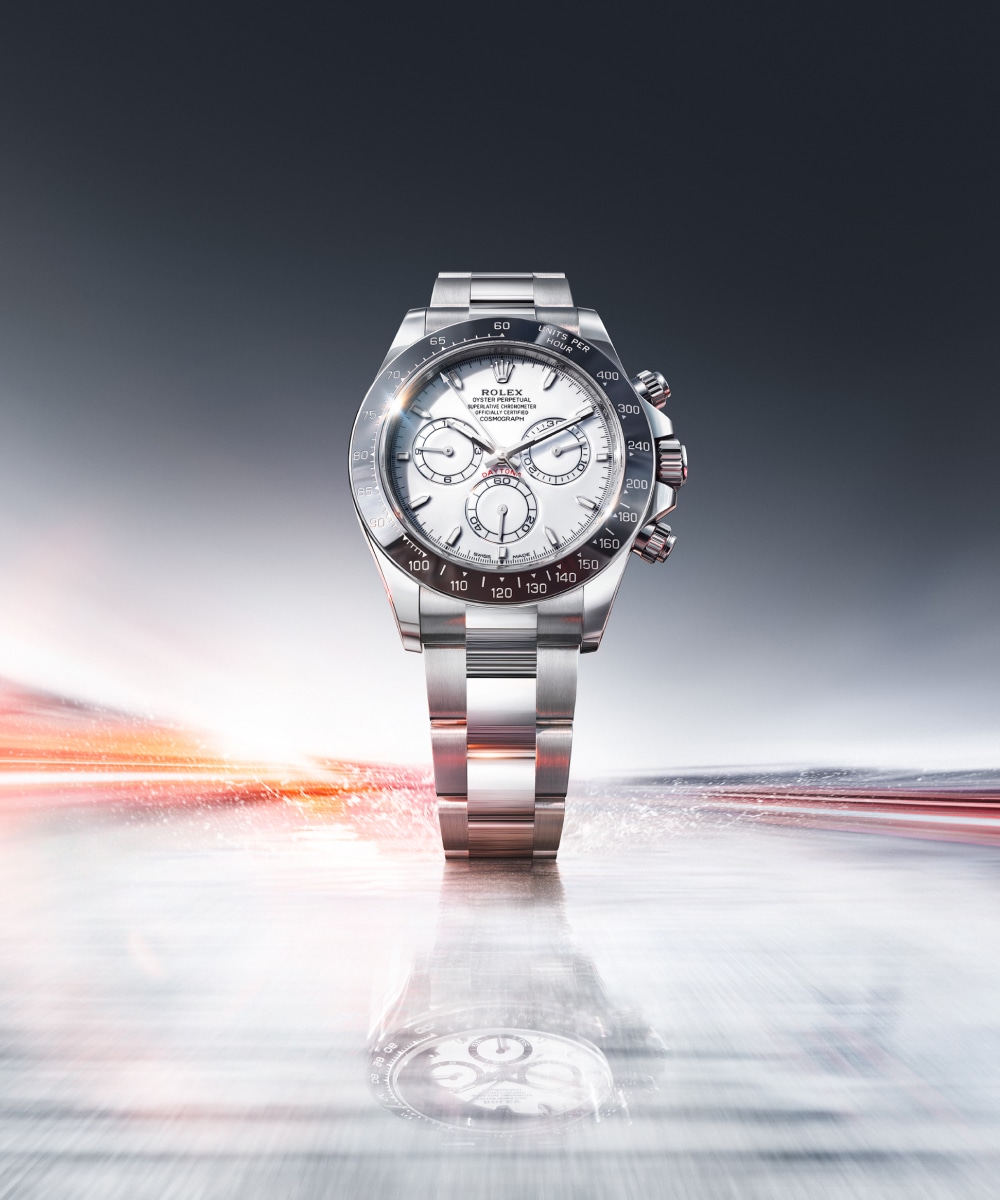
Cosmograph Daytona Ref. 126502 with white grand feu enamel dial and anthracite ceramic bezel
Cosmograph Daytona with Enamel Dial Ref. 126502
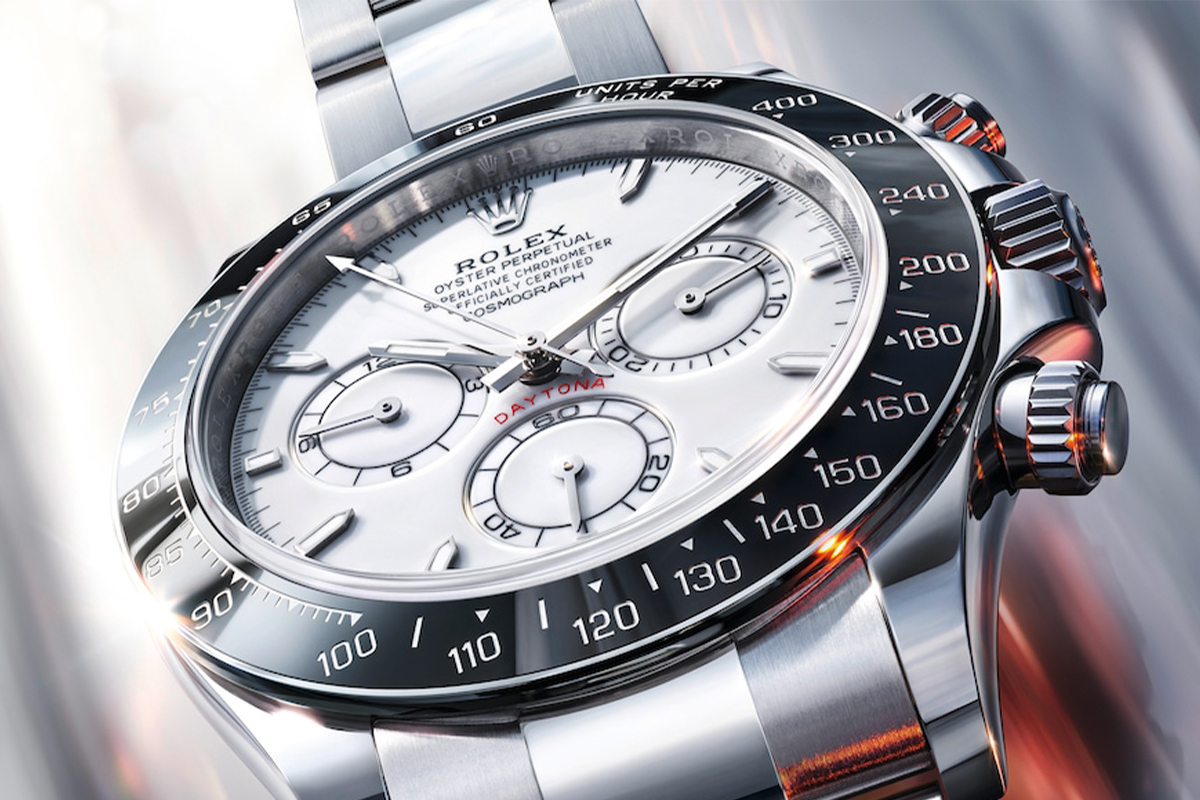
In what Rolex positions as one of its two Exceptional Watches for the year, the brand introduces a new Daytona with a white grand feu enamel dial. This is significant. Rolex has always favoured highly controlled, industrialised production, and has rarely leaned into processes such as enamelling, which are inherently artisanal and less predictable. Here, the grand feu enamel is executed slightly differently, with enamel powder fired on a ceramic base rather than directly on metal, before being applied onto a brass disc. There are four pieces in total, one for the main dial and three for the subdials.
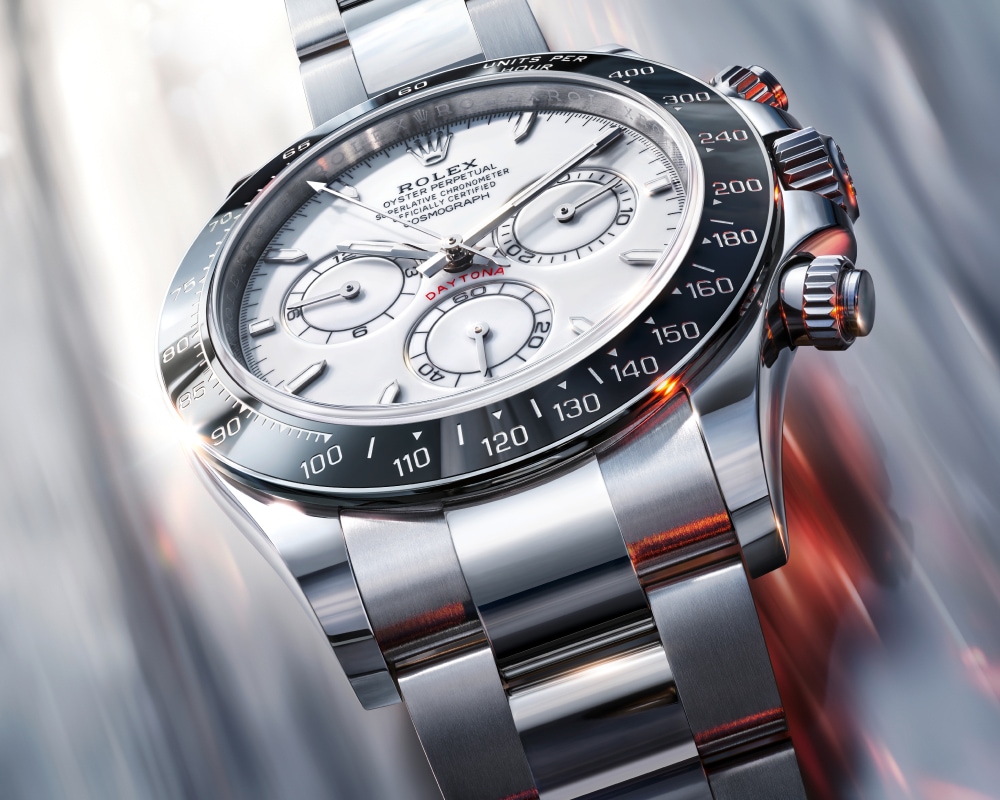
The enamel dial introduces a different depth and surface character to the Daytona
Yet here it is. And perhaps even more unusual, the enamel dial appears not on a precious metal piece, but on a steel watch. More precisely, a steel case paired with a platinum bezel and caseback, the latter revealing the movement through sapphire crystal, a new combination for the Daytona line.
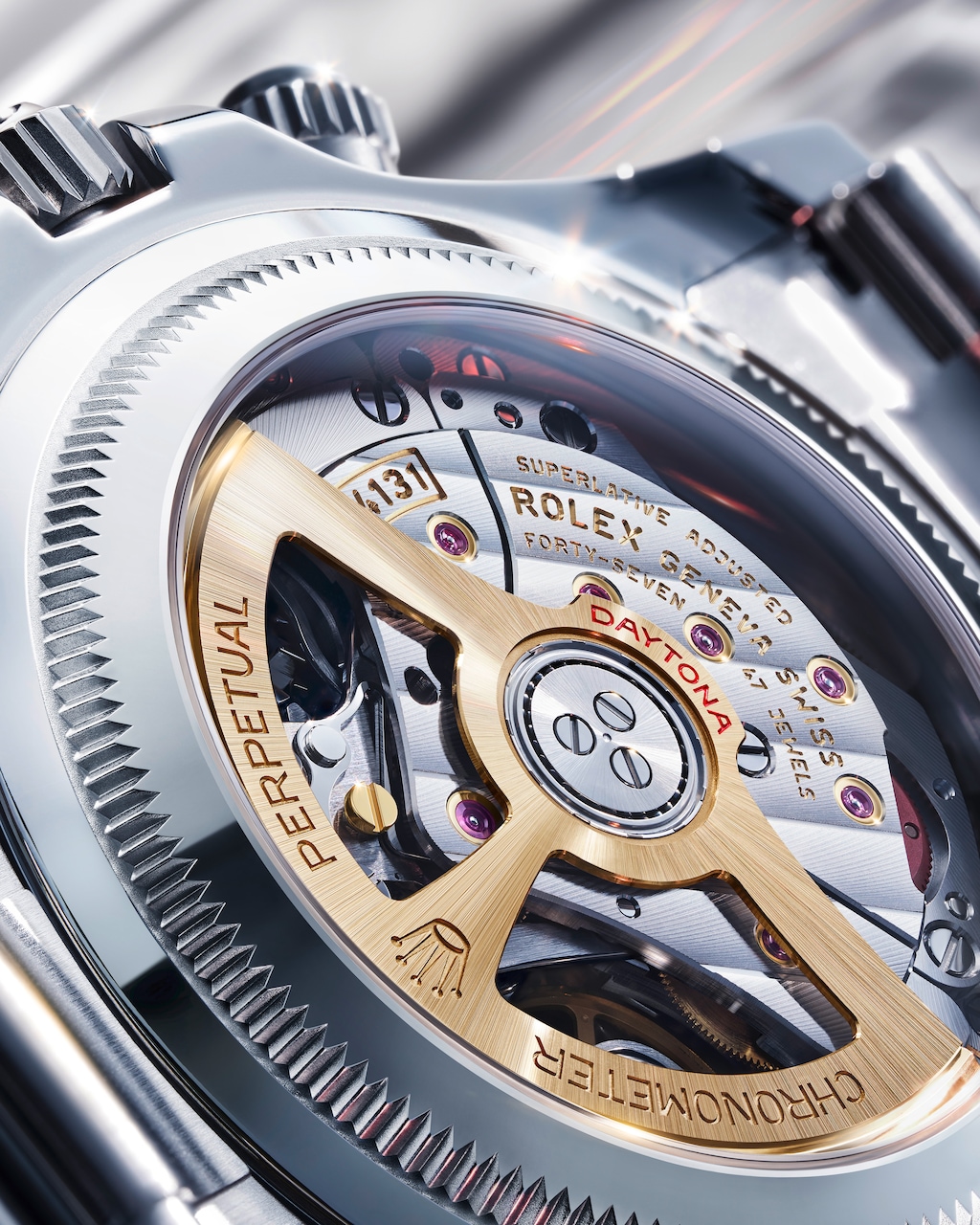
The calibre 4131, visible through a sapphire caseback, marks a rare configuration for the Daytona
The bezel itself departs from the familiar black Cerachrom, instead rendered in an anthracite tone with a metallic sheen that shifts with the light. Notably, the tachymeter scale is also different, with all numerals oriented upright rather than inverted at six o’clock as on other modern Daytonas.
Finally, it is worth noting that while this new ref. 126502 is introduced publicly, it is not part of Rolex’s standard catalogue. This places it firmly in the category of a low-production, off-catalogue model.
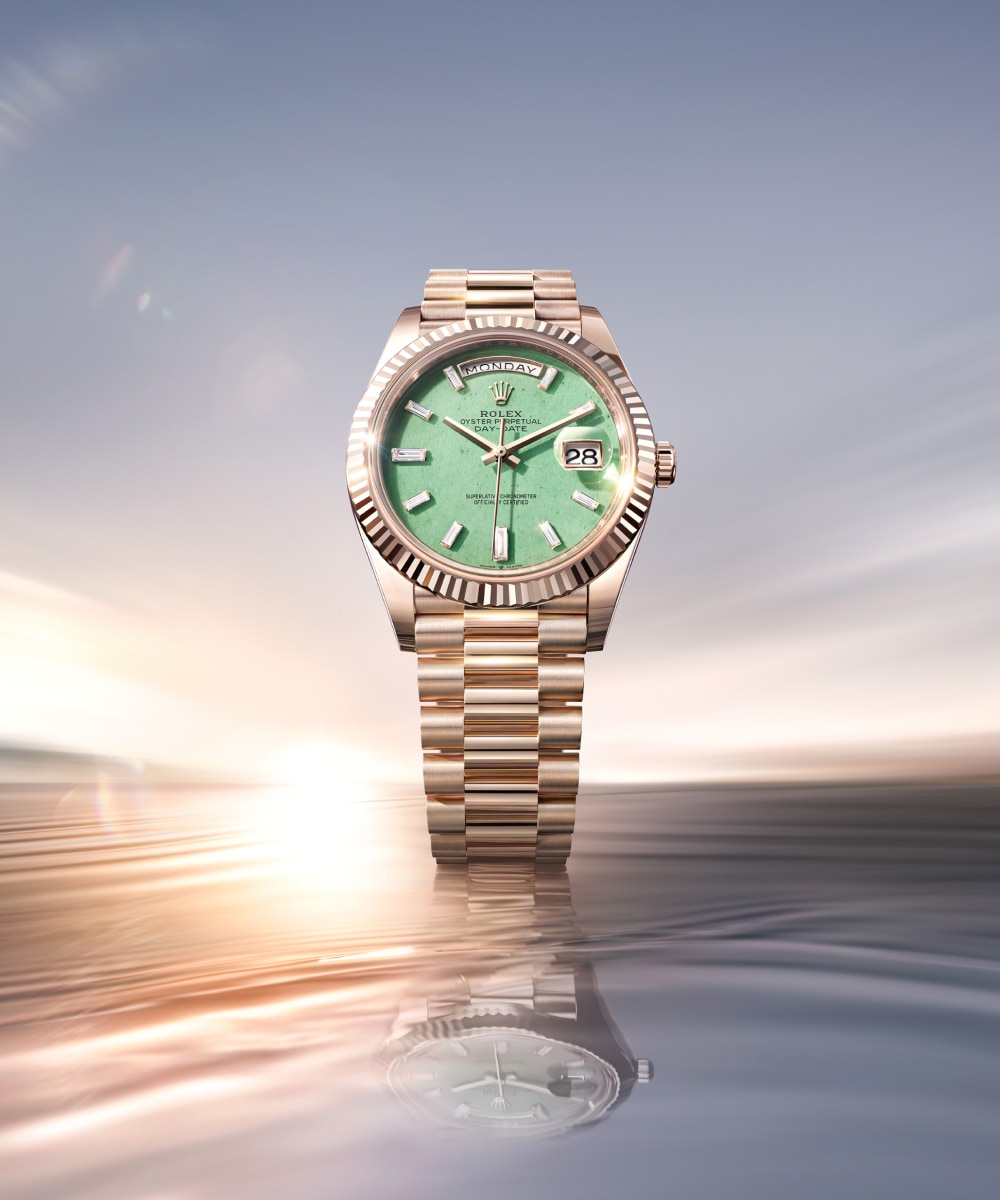
Day-Date 40 Ref. 228235 in Everose gold with green dial
Day-Date 40 in Jubilee Gold Ref. 228235
The other Exceptional Watch Rolex names for the year is the Day-Date 40, introducing a new alloy dubbed Jubilee Gold. It carries the presence of yellow gold, but with a softer edge. In Rolex’s own words, it brings together tender yellow, warm grey and soft pink in a single material.
What we are seeing here is Rolex’s response to a broader shift. The appetite for precious metal remains strong, but tastes have moved away from the more assertive character of traditional yellow or rose gold. Many brands have explored their own blends and alloys to address this. Jubilee Gold is Rolex’s answer, developed entirely in-house, as expected, and controlled down to its final tone.
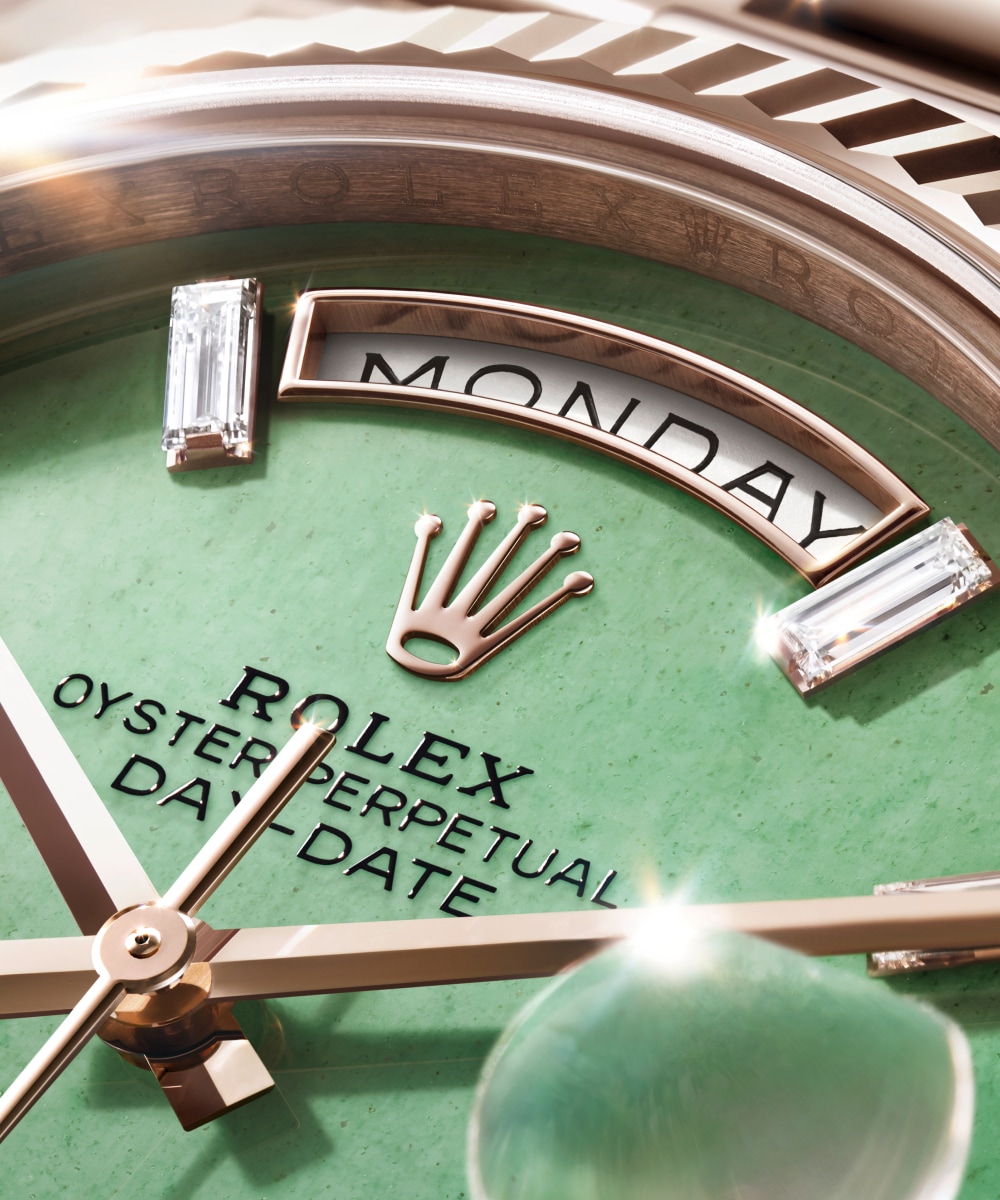
The dial introduces a new texture and colour pairing within the Day-Date line
To mark its debut, Rolex pairs it with a light green aventurine dial. Not the usual glass-based kind, but natural stone, with a pale green tone scattered with fine grey inclusions. And because this is an Exceptional Day-Date, it does not hold back. Baguette-cut diamond indices complete the watch. And like the Daytona above, this new ref. 228235 is also an off-catalogue model.
-
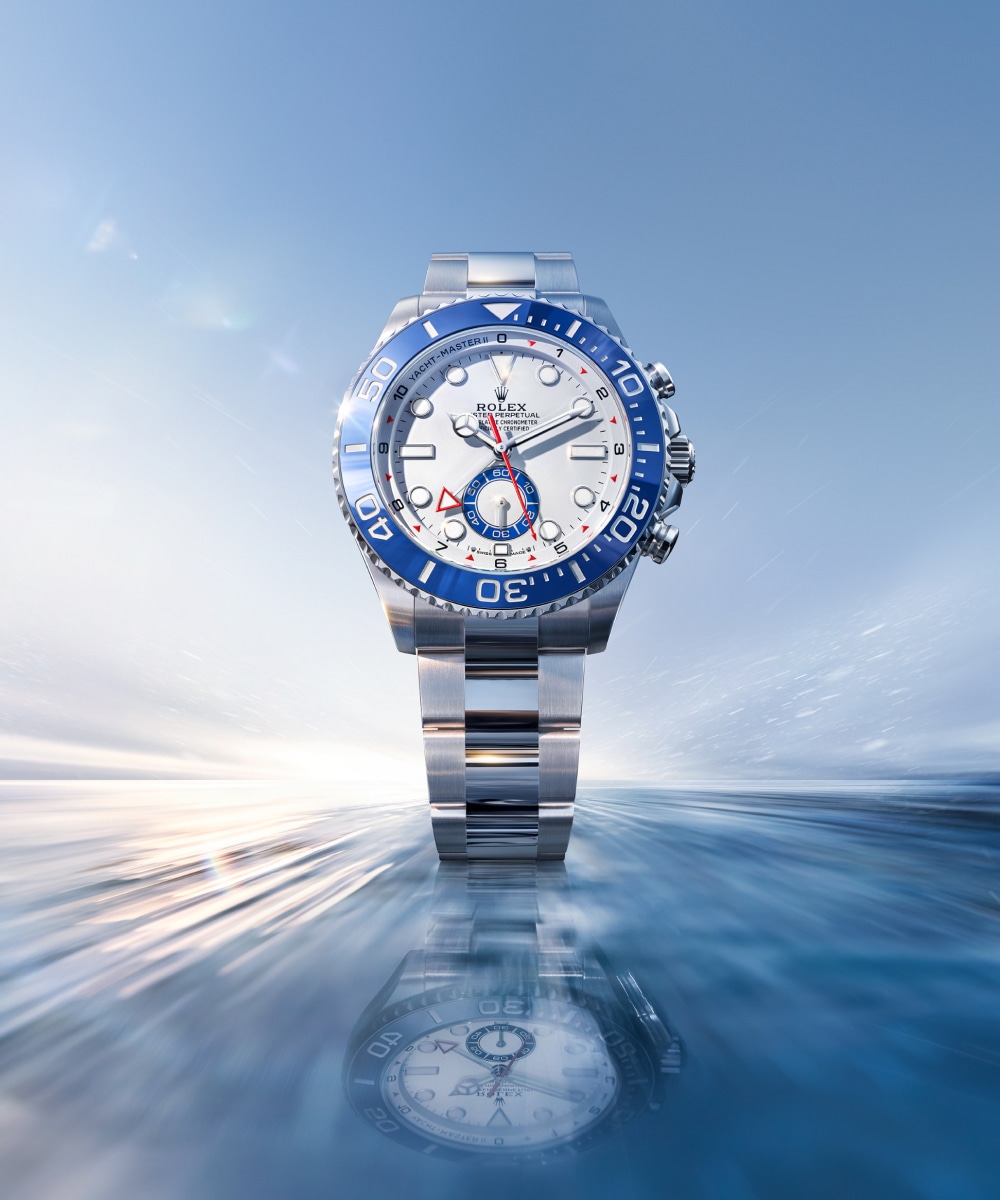
- Yacht-Master II Ref. 126680 in Oystersteel with blue Cerachrom bezel
-
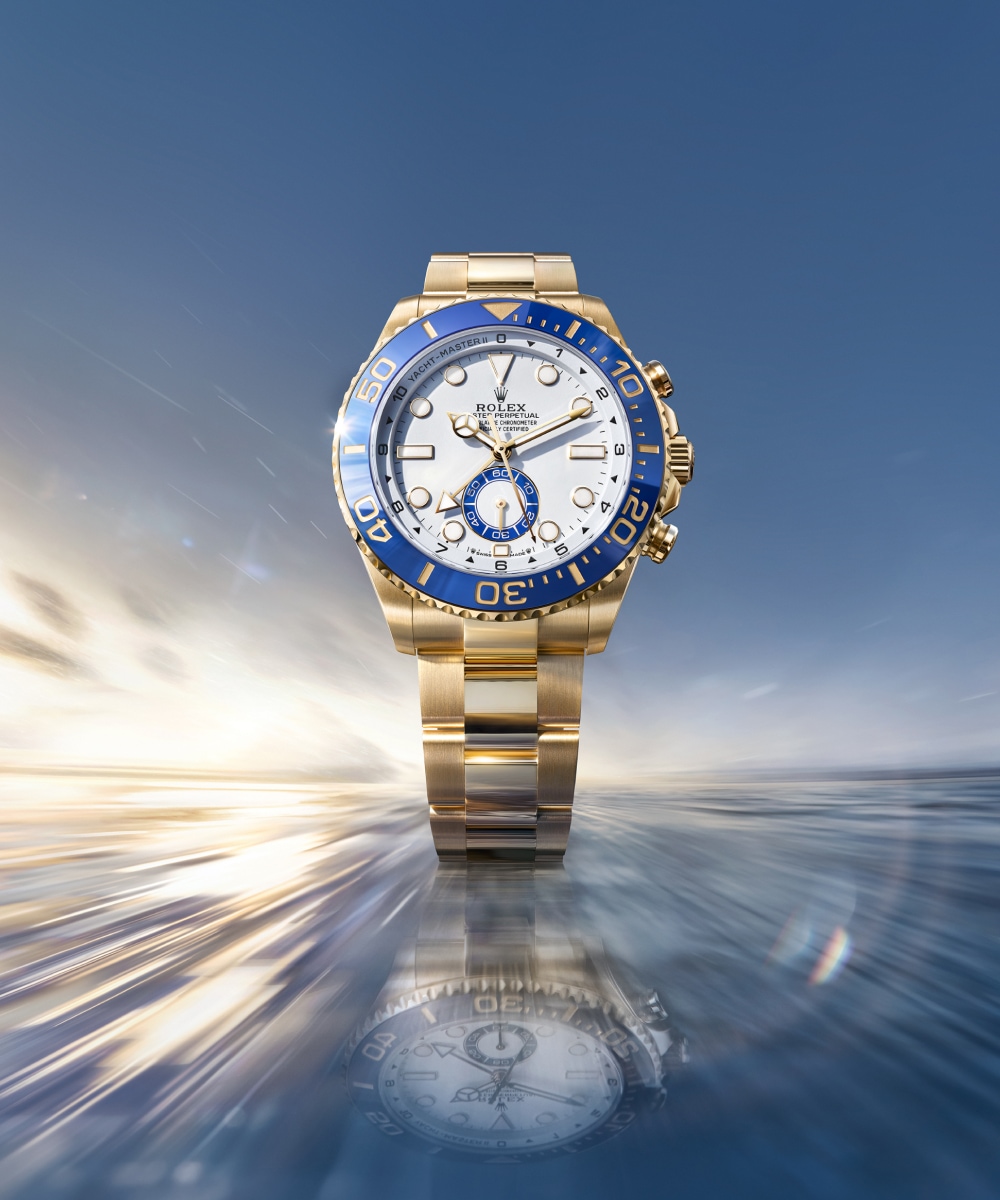
- Yacht-Master II Ref. 126688 in 18 ct yellow gold with blue Cerachrom bezel
Yacht-Master II Ref. 126680
After being discontinued in 2024, one of Rolex’s most complicated watches, the Yacht-Master II, now returns to the catalogue. It makes a significant comeback with a new dial and a new movement.
The new dial is immediately more balanced compared to the previous generation, with rounded hour markers that bring it closer to a classic Rolex aesthetic. Inside, the updated cal. 4162 now incorporates the Chronergy escapement, aligning it with Rolex’s current generation of movements.
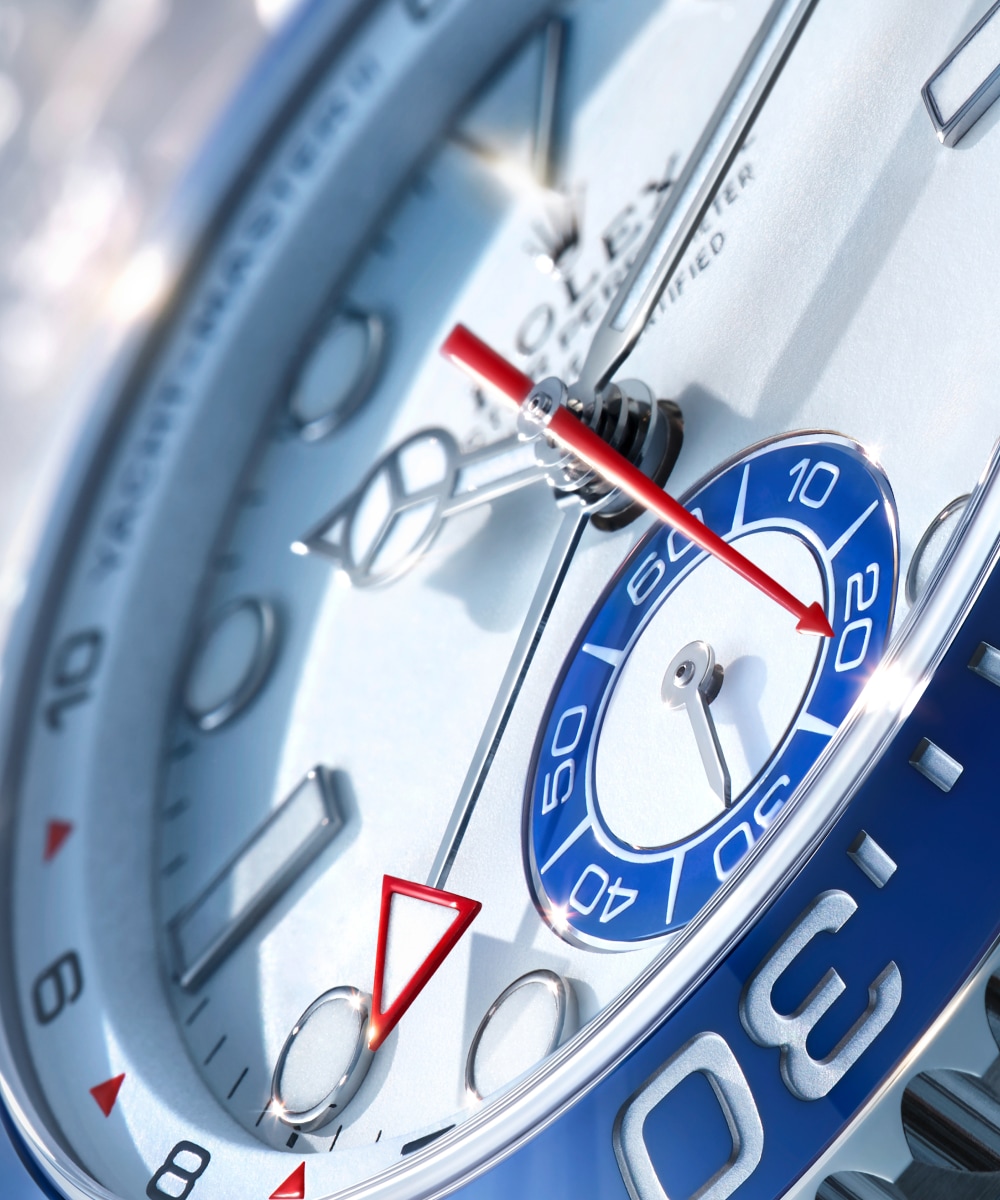
The programmable regatta countdown is controlled via the Ring Command bezel
But the most important change sits in the mechanics. The movement has been fully reengineered. The Ring Command system, where the bezel was used to set the countdown, is gone. Instead, all adjustments are now handled via the pushers. In Rolex’s words, this makes the system easier and more intuitive to use, and the brand has filed a patent for the new programmable mechanism.
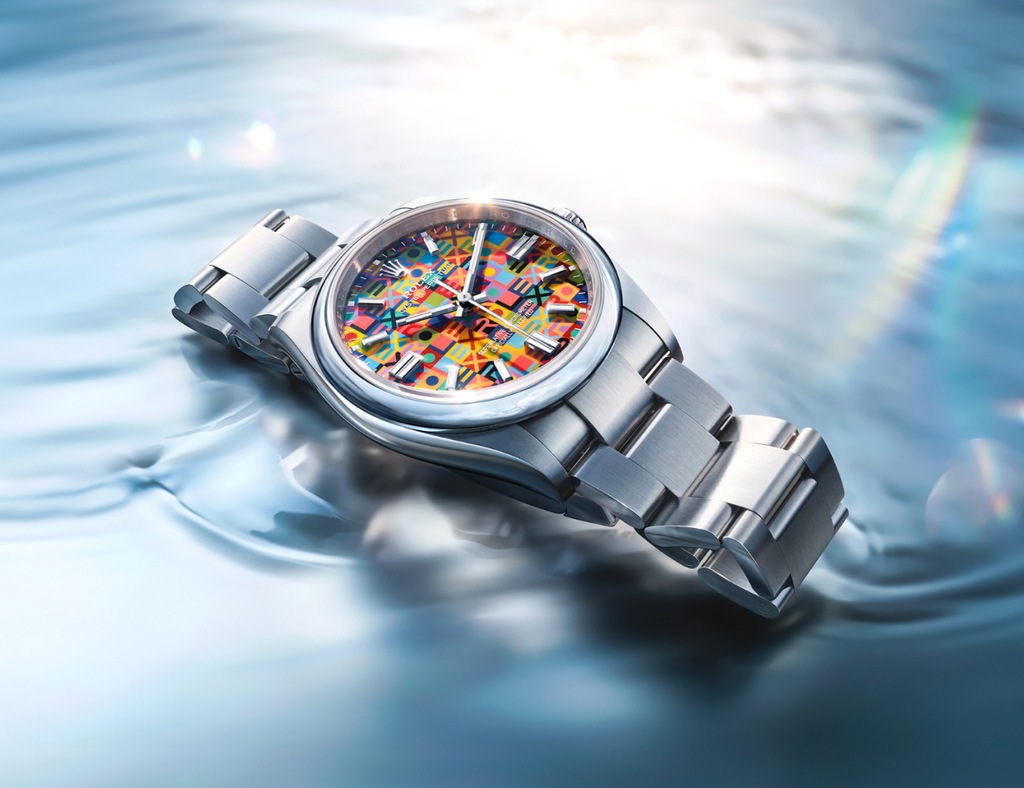
Rolex Oyster Perpetual 36 with Jubilee dial Ref. 126000
Oyster Perpetual Jubilee Dial
It is ironic that Rolex discontinued the “Celebration” dial on the Oyster Perpetual just a year before the centenary, but of course that only means something new was coming. Enter the Jubilee dial.
It is strikingly colourful, with rainbow tones built around the familiar Jubilee motif once seen on the Datejust and traceable back to the 1970s. Here, it returns in a new form, rendered in lacquer rather than print or enamel. The dial is available on all sizes except the 28 mm and 34 mm variants.
The execution is more complex than it first appears. Each colour is applied individually, layer by layer, rather than in a single pass. It becomes another demonstration of Rolex’s control over dial making, much like the enamel dial introduced above.
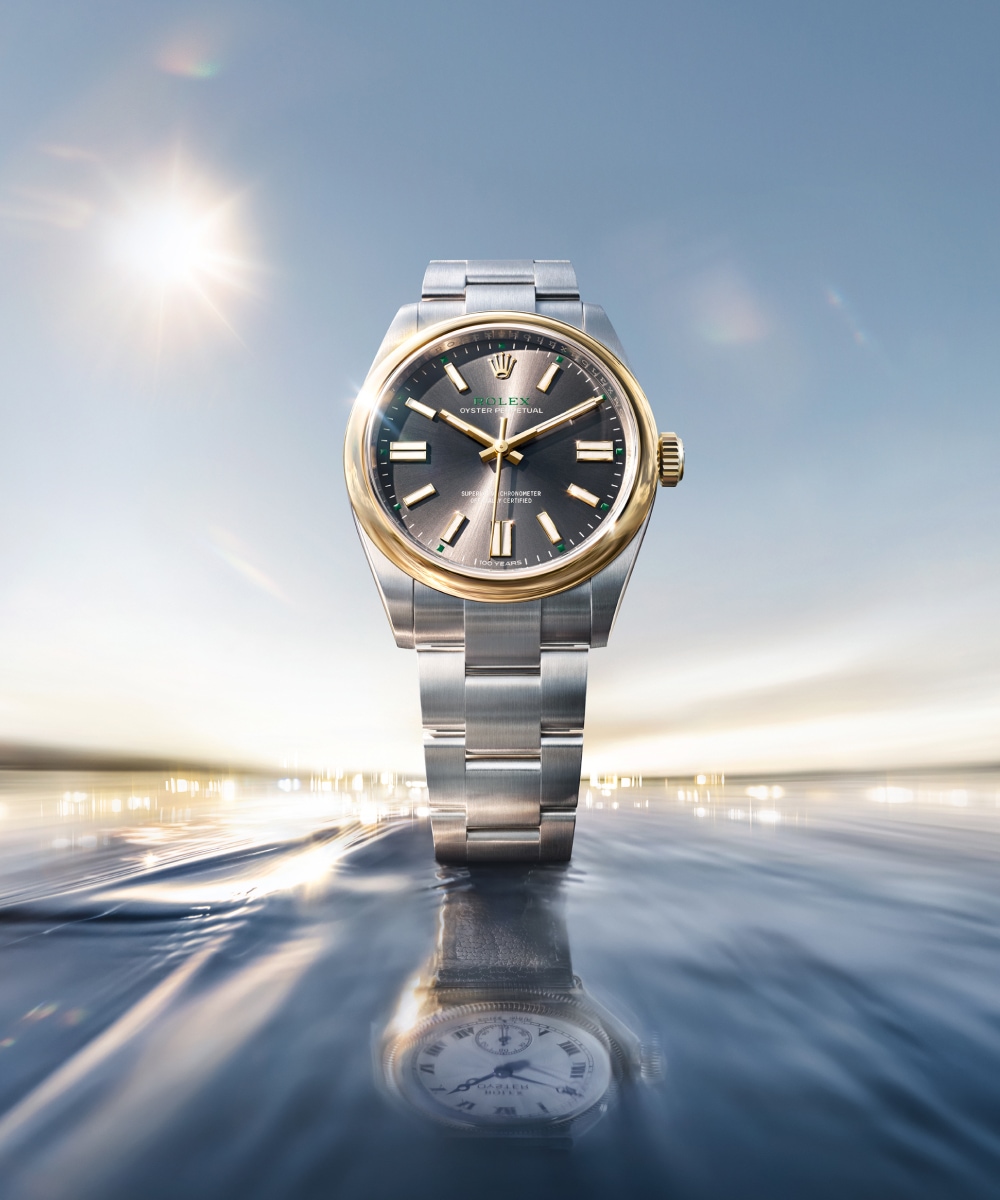
Oyster Perpetual 41 in Oystersteel and yellow gold, Ref. 134303
Two-tone Oyster Perpetual
Long absent from the catalogue, two-tone returns to Rolex’s simplest time-only line, the Oyster Perpetual. This is not a standard aesthetic update like the Datejust. It is introduced specifically to mark 100 years of the Oyster family, and the details make that clear.
Most notably, the dial replaces “Swiss Made” with “100 years” at six o’clock. The winding crown is also engraved with the “100” inscription, reinforcing the centenary message in an unusually direct and declarative way for the brand.
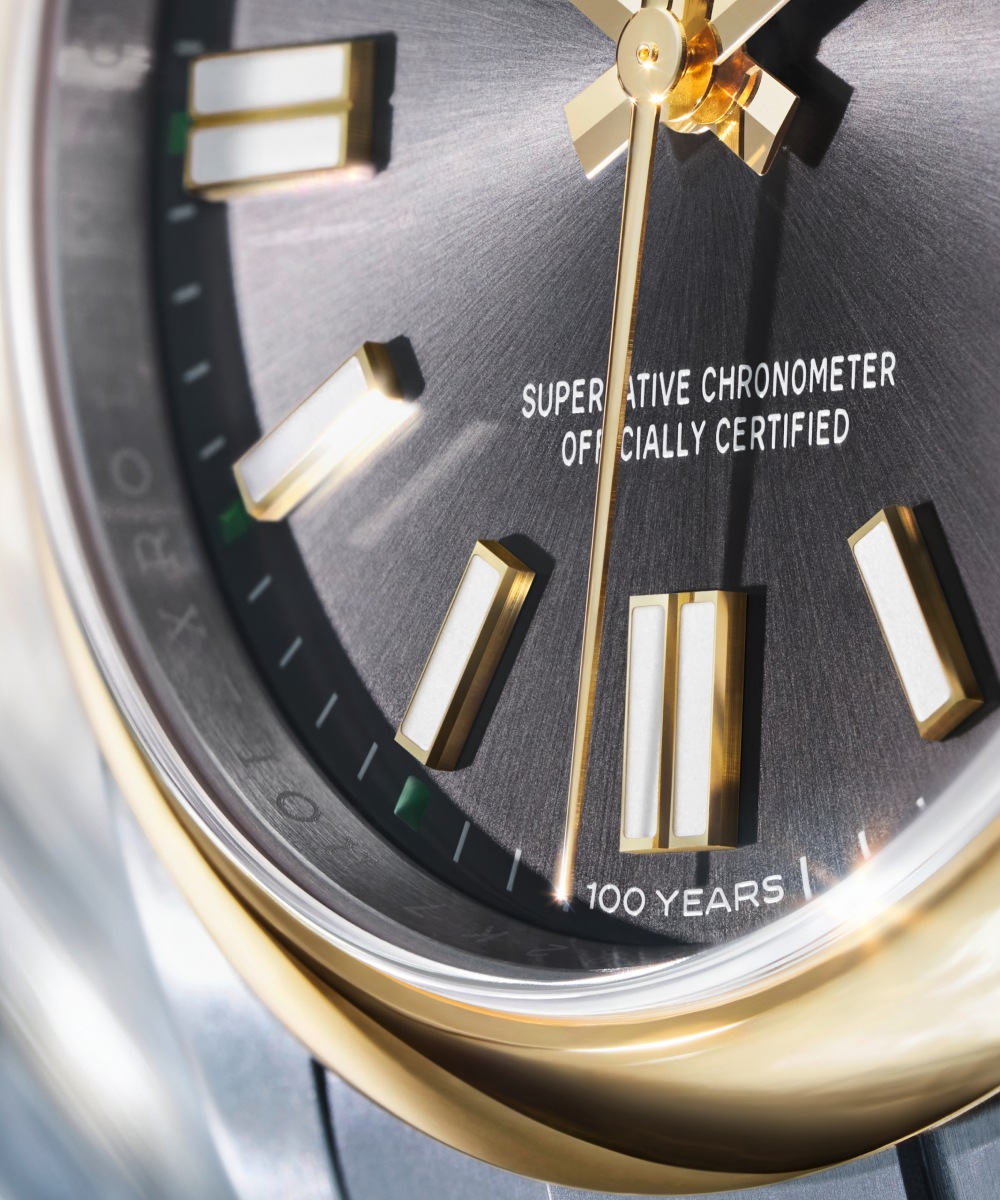
Detail of the Rolex Oyster Perpetual 41 dial featuring gold hour markers and “100 years” inscription
So far, this new two-tone execution is limited to yellow gold and Oystersteel. It is paired with a slate dial, accented by Rolex green on the minute track and the brand signature at 12 o’clock. The configuration is available across most sizes, except the 28 mm and 34 mm variants.
-
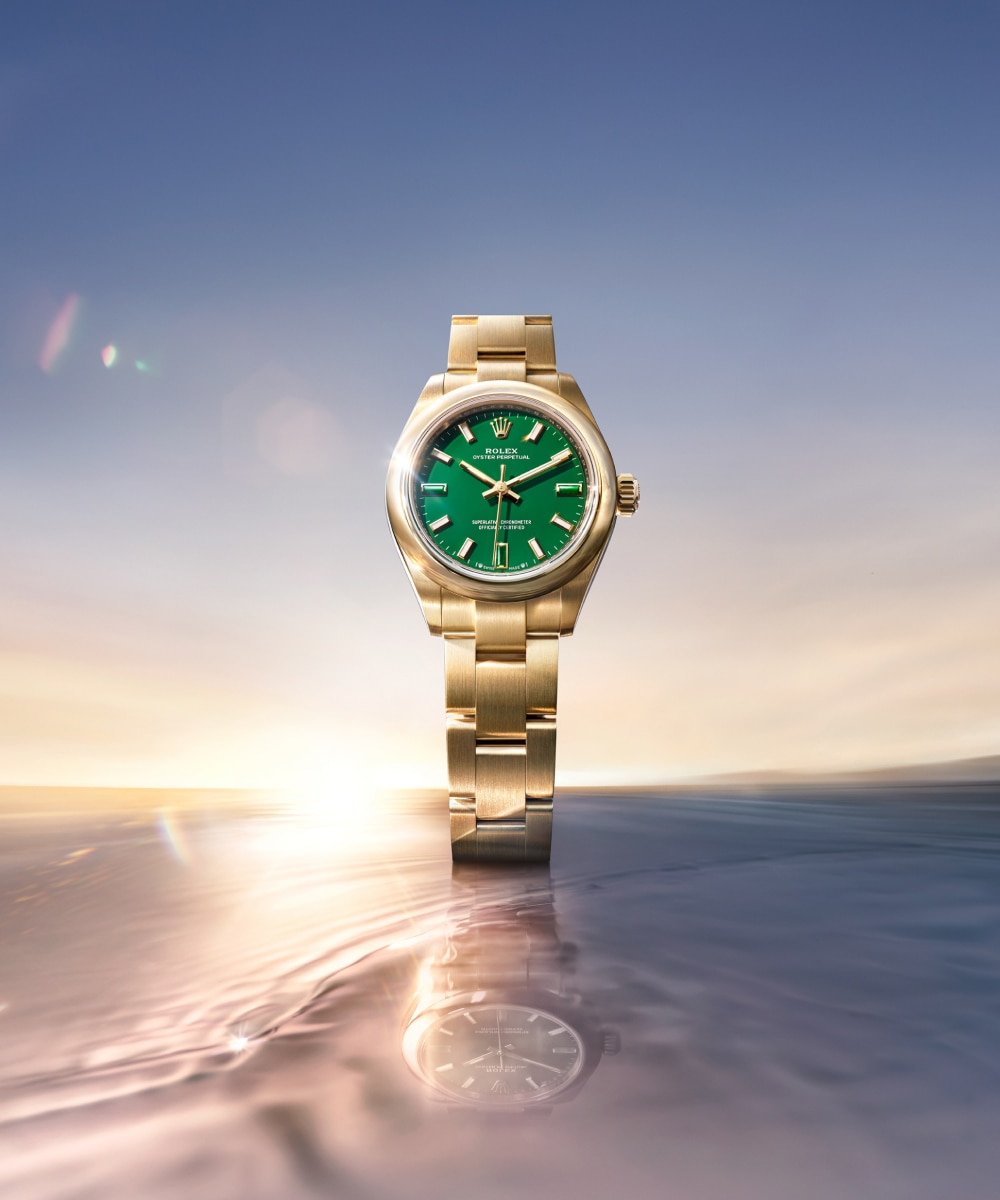
- Rolex Oyster Perpetual in 18 ct yellow gold with green dial, combining a classic Rolex color with a solid gold Oyster case
-
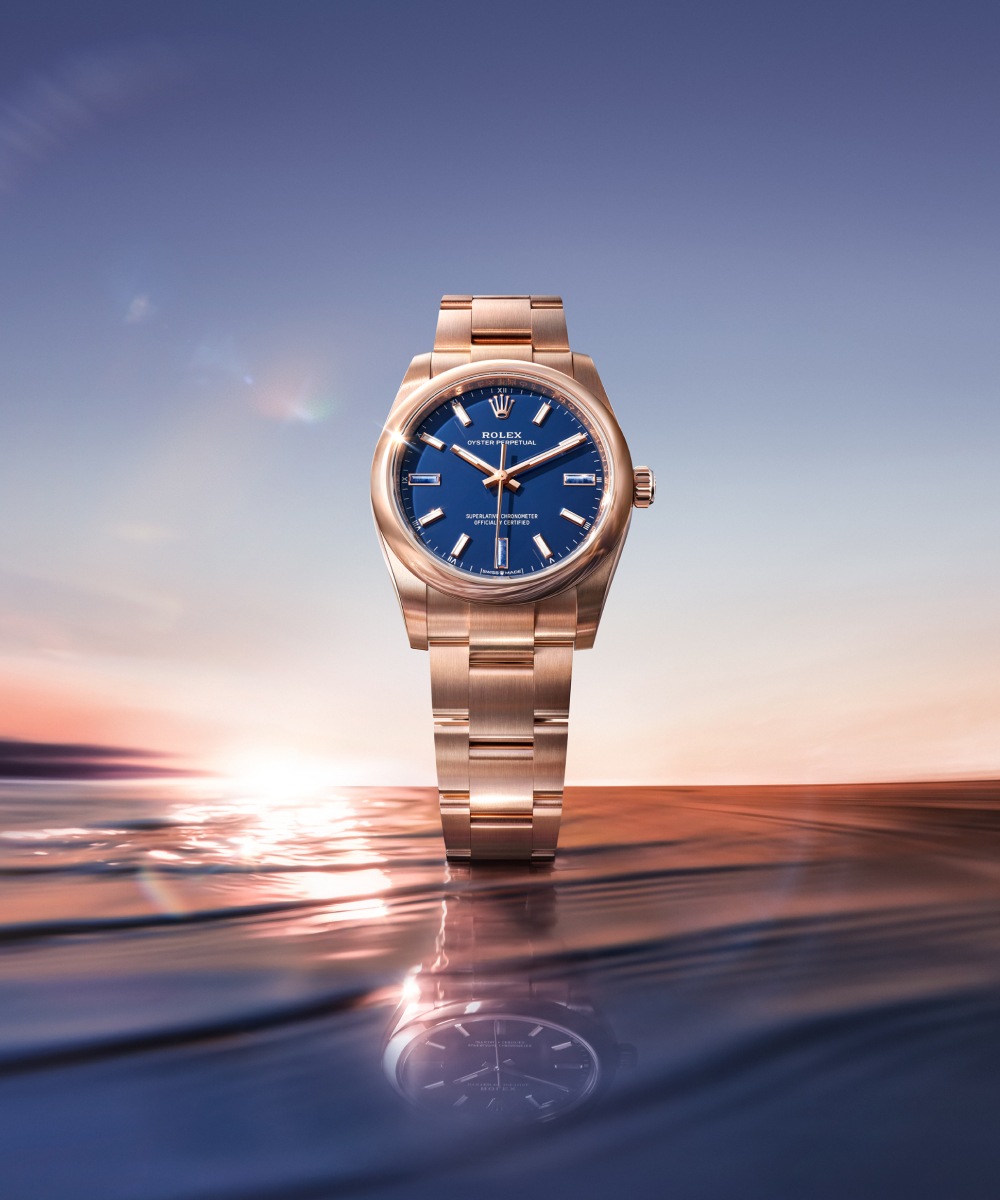
- Rolex Oyster Perpetual in 18 ct Everose gold with blue dial, marking the first time this signature color appears in a full gold Oyster Perpetual
Solid Gold Oyster Perpetual
Not just two-tone, solid gold returns to the Oyster Perpetual family as well, completing what feels like the missing 28 mm and 34 mm pieces of the puzzle.
There are several new dial executions, but the standout is a blue lacquer dial paired with natural stone hour markers at the quarter positions, a first for Rolex. This appears on the 34 mm version in Everose gold.
Another notable variant is a green lacquer dial combined with heliotrope stone markers, also a first for the brand in this configuration. This is paired with a yellow gold case on the 28 mm version.
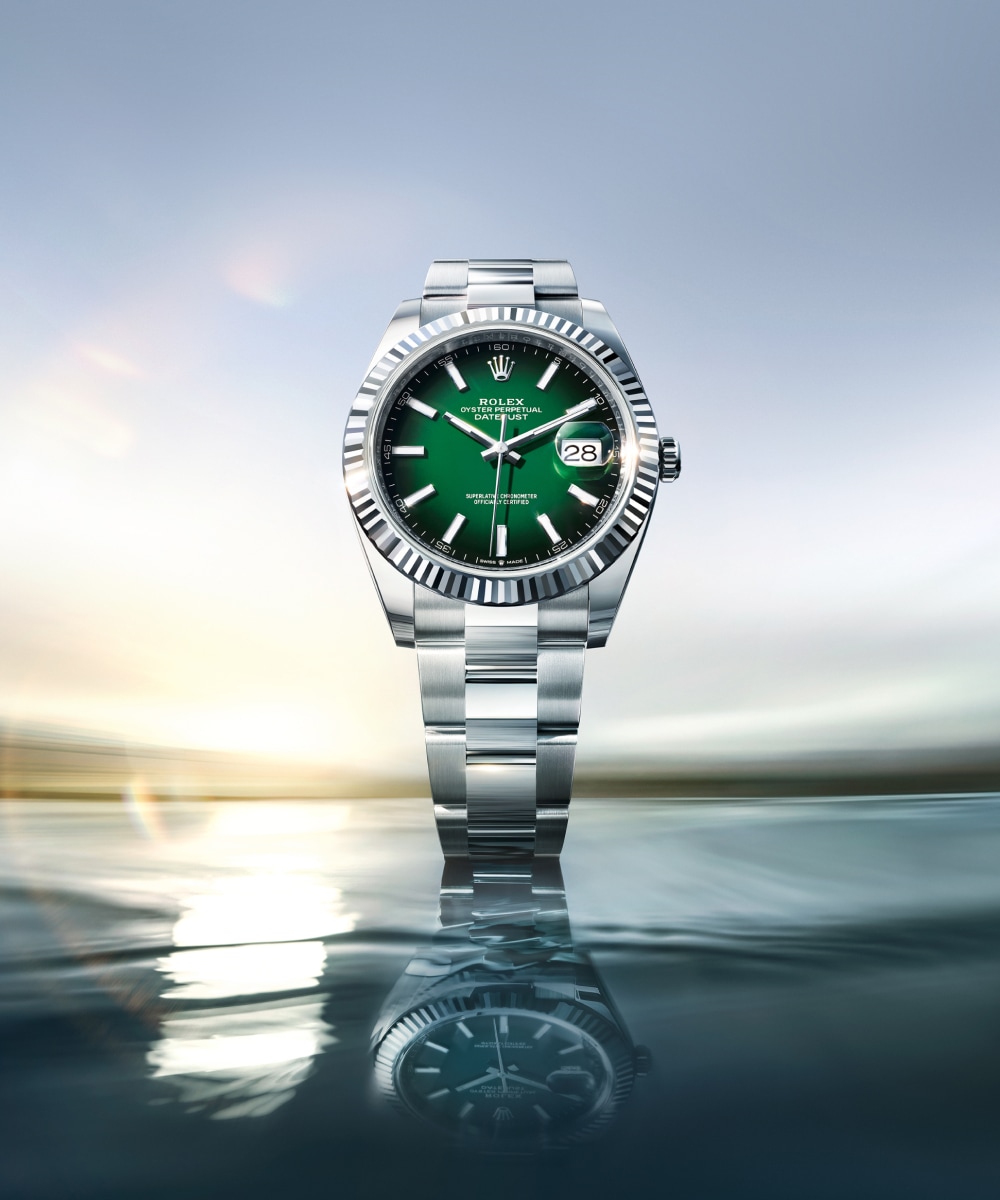
Rolex Datejust 41 Ref. M126334-0033 in Oystersteel with white gold fluted bezel and green ombré dial
Datejust with Green Ombré Dial
On the topic of lacquer dials, the Datejust family also receives a new green execution. It is not just a green lacquer surface, but a gradient dial created in stages: first a green lacquer base, followed by black lacquer sprayed in a circular motion towards the edges to form the fade.
This new dial is available on the 41 mm and 36 mm versions.
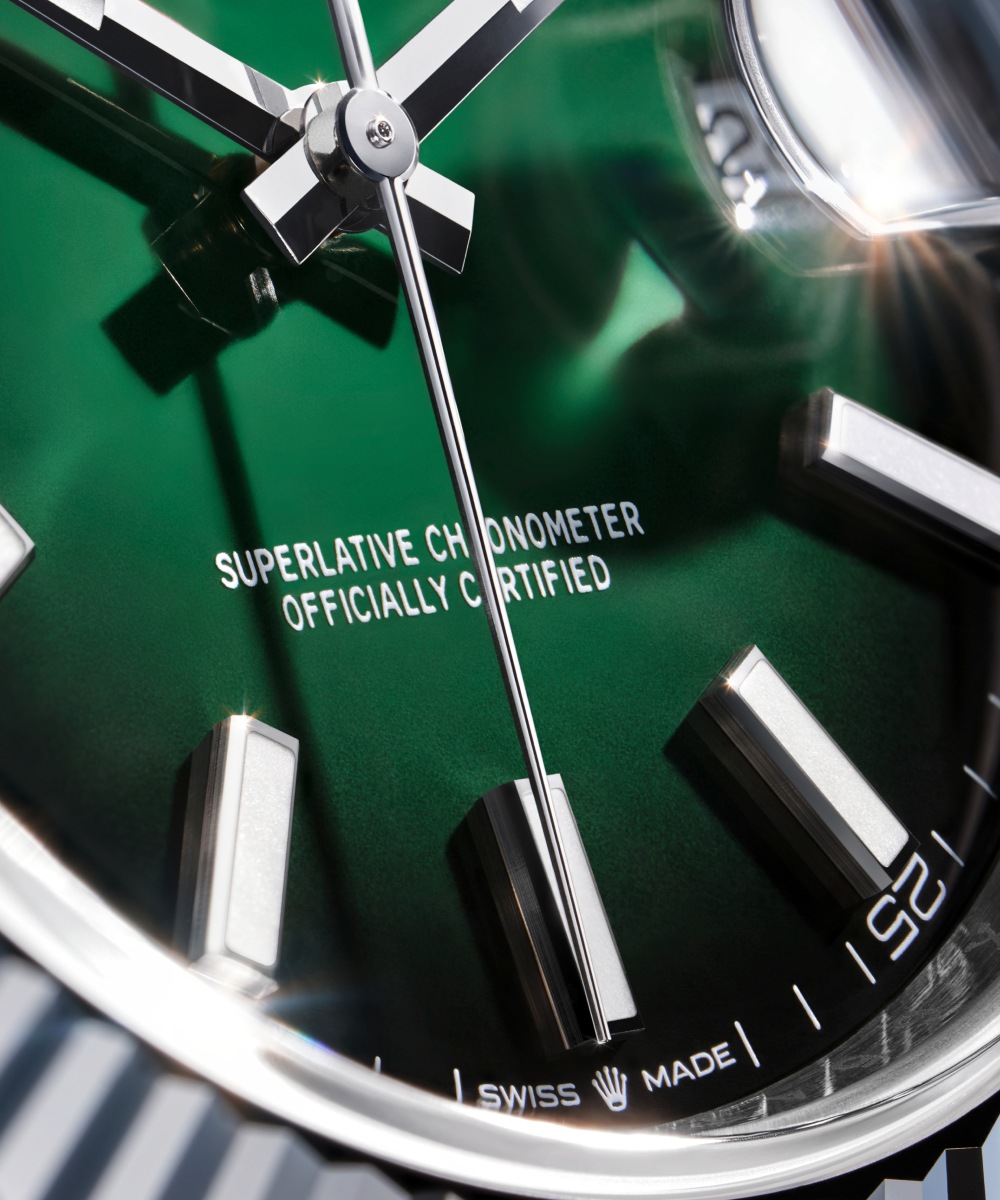
Detail of the Rolex Datejust green ombré dial with signature sunray finish and gradient effect
Notably, it is offered in full steel configurations and without diamond markers, a departure from previous gradient Datejust executions, which were typically paired with diamond indices and fluted gold bezels.
Rolex
You may also like
Editorial
A Closer Look: Rolex Perpetual Padellone
Sep 22, 2026
Editorial
A Closer Look: Rolex Perpetual Padellone
Sep 22, 2026
News
Last Week In Watches: Rolex Revives the Padellone, Hublot Goes Full Koons
Sep 21, 2026
News
Last Week In Watches: Rolex Revives the Padellone, Hublot Goes Full Koons
Sep 21, 2026
Editorial
Rolex’s Future Is Complicated: The New Perpetual Padellone Family
Sep 16, 2026
Editorial
Rolex’s Future Is Complicated: The New Perpetual Padellone Family
Sep 16, 2026