Revolution Awards 2025: Best Striking Watch — Chopard L.U.C Grand Strike
Editorial
Revolution Awards 2025: Best Striking Watch — Chopard L.U.C Grand Strike

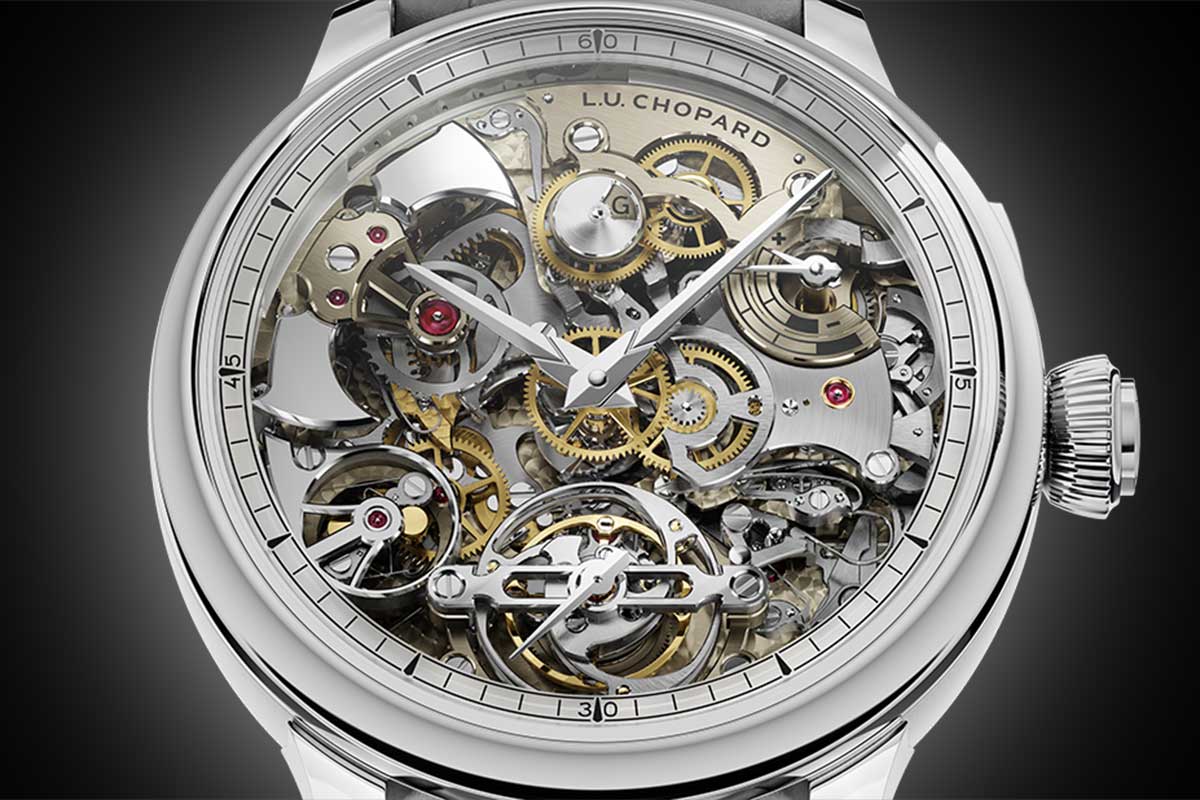
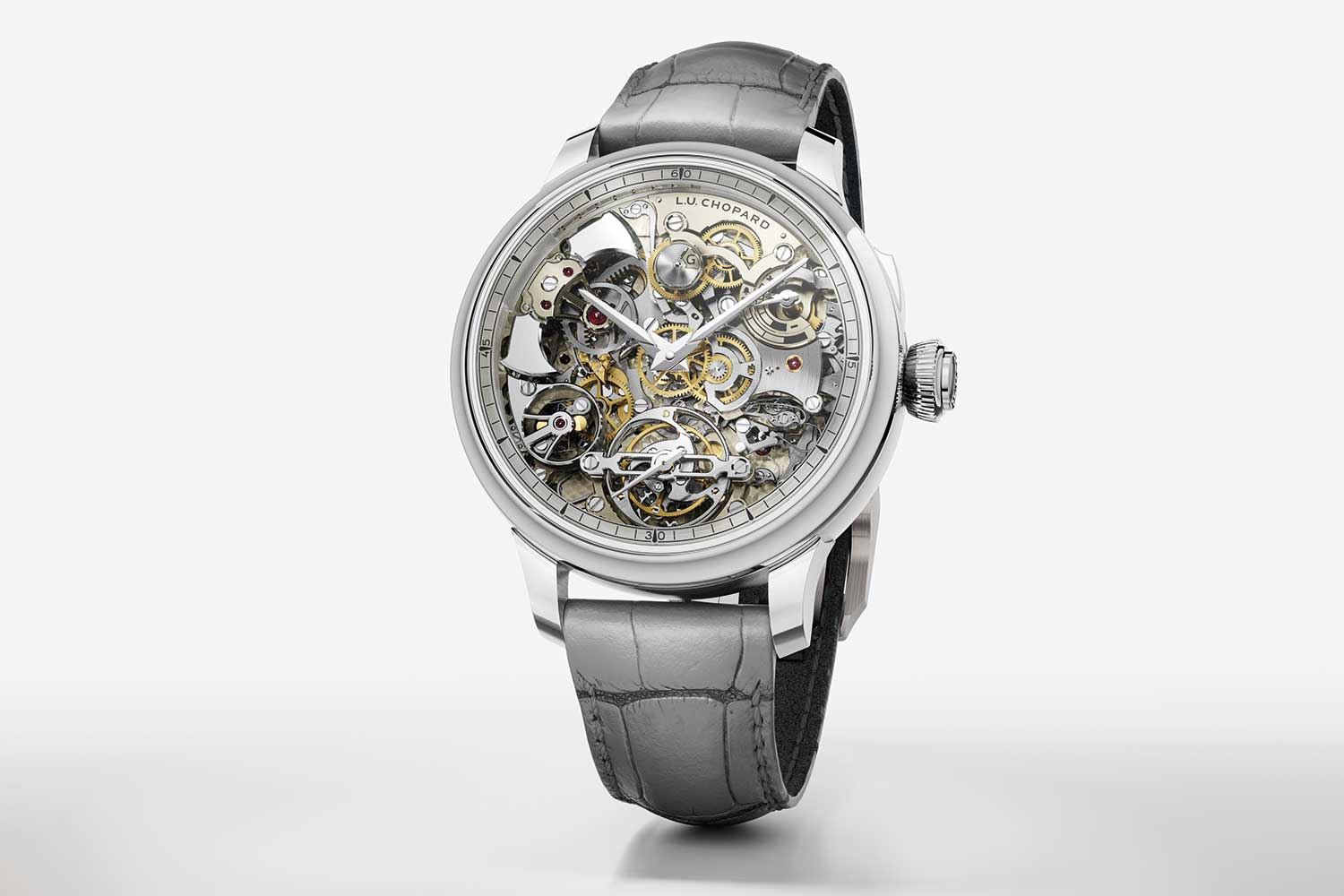
The case for awarding Best Striking Watch to the Chopard L.U.C Grand Strike rests simply on its completeness. It is acoustically peerless, mechanically exhaustive yet elegant and fundamentally distinct from a conventional grande sonnerie. Every layer is competently executed and resolved in full, from the strike works and strike train, to the coupling, the acoustic system and the all-important safety mechanisms.
Chopard L.U.C Grand Strike
The Grand Strike inherits several qualities that already set the Full Strike apart, beginning with its acoustic system. The gongs, their heel and the crystal are machined from a single block of sapphire, without bonding agents or interfaces. This continuity allows vibrations to propagate without interruption, eliminating losses normally introduced at junctions. The result is a chime of exceptional clarity, projection and consistency.
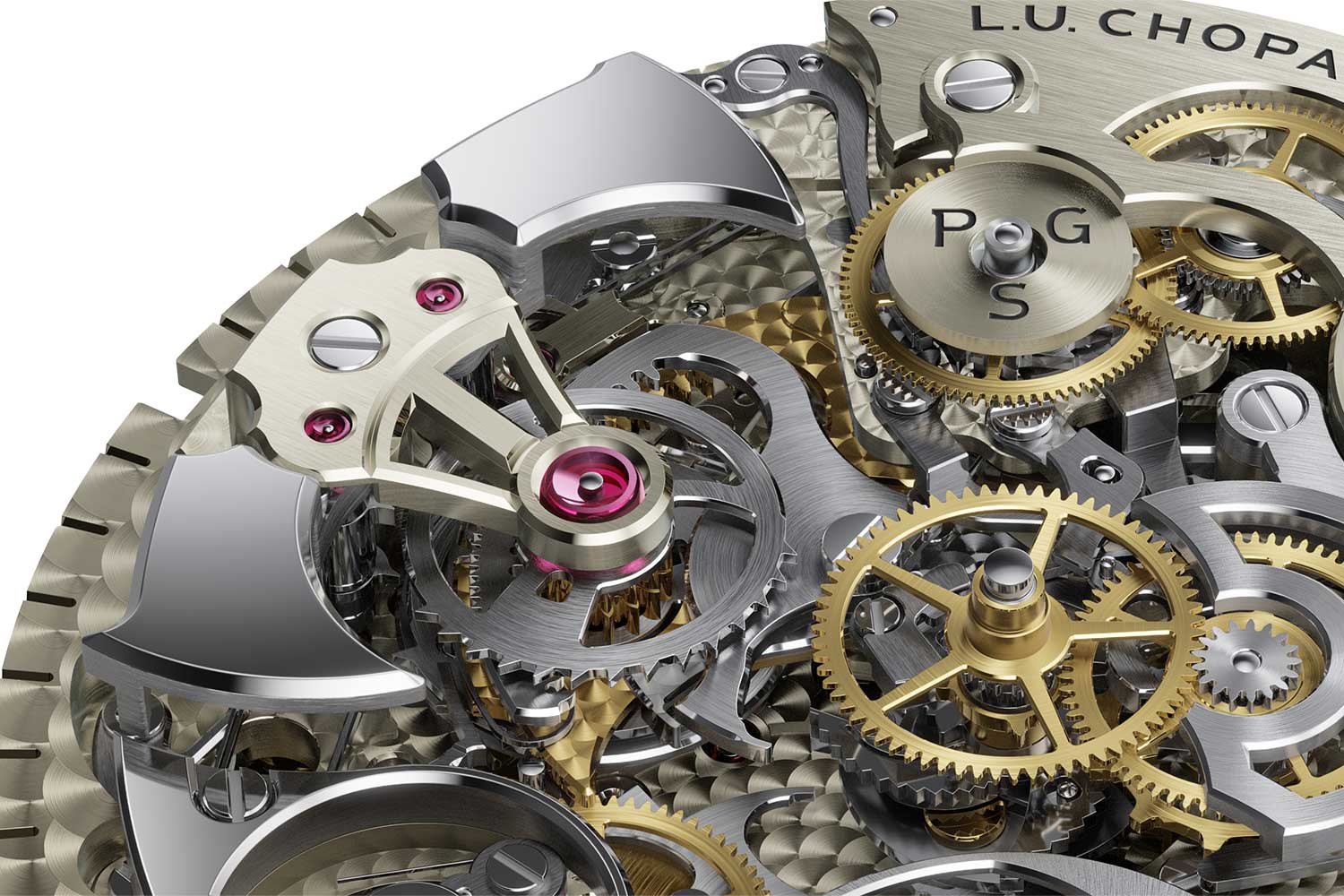
Equally distinctive is the architecture of the strike works themselves. Hammer pallets lifted are by three co-axial striking wheels — hour, quarter and minute ratchets — mounted on a single arbor and driven by the strike train. Each ratchet is paired with its own pinion, which meshes with its corresponding rack. During sampling, the racks back-drive the ratchets through these pinions as they fall against their snails, moving through short arcs that keep the mechanism compact.
The hammer pallets are lifted by large, sector-shaped racks
This ratchet system also eliminates the silent interval typical of conventional repeaters. The hour and quarter ratchets are directly linked. The hour ratchet carries an internal stepped surface corresponding to 0 through 3 quarters. A spring-loaded hook mounted on the quarter ratchet bears against this surface. During striking, the hook remains captive until the hour sequence finishes, at which point the geometry forces it to pivot and transfer motion immediately to the quarter ratchet. The transition occurs without delay, independent of the number of hour blows. A similar logic governs the transition to minutes. A pawl links the quarter and minute racks so that the minute rack is drawn forward as soon as the quarters conclude, producing a continuous and measured cadence.
Because the racks do not lift the hammers directly, the strike train differs from traditional chiming layouts. The strike barrel must be temporarily isolated during sampling. This is achieved by a clutch placed between the barrel and the ratchet staff. When engaged, torque flows to the ratchets and lifts the hammers; when disengaged, the racks can fall freely and set the ratchets without resistance. A dedicated blocking lever arrests the strike train near the regulator, holding it fully stationary during sampling. When the quarter rack falls, it pushes the blocking lever clear, allowing the train to run. An isolation lever prevents re-engagement during striking, and at the end of the sequence a pin on the hour rack resets the system, locking the train once more. By separating coupling from blocking, barrel torque is never borne by the clutch, allowing smooth re-engagement and efficient acceleration from rest.

The grand strike activation lever
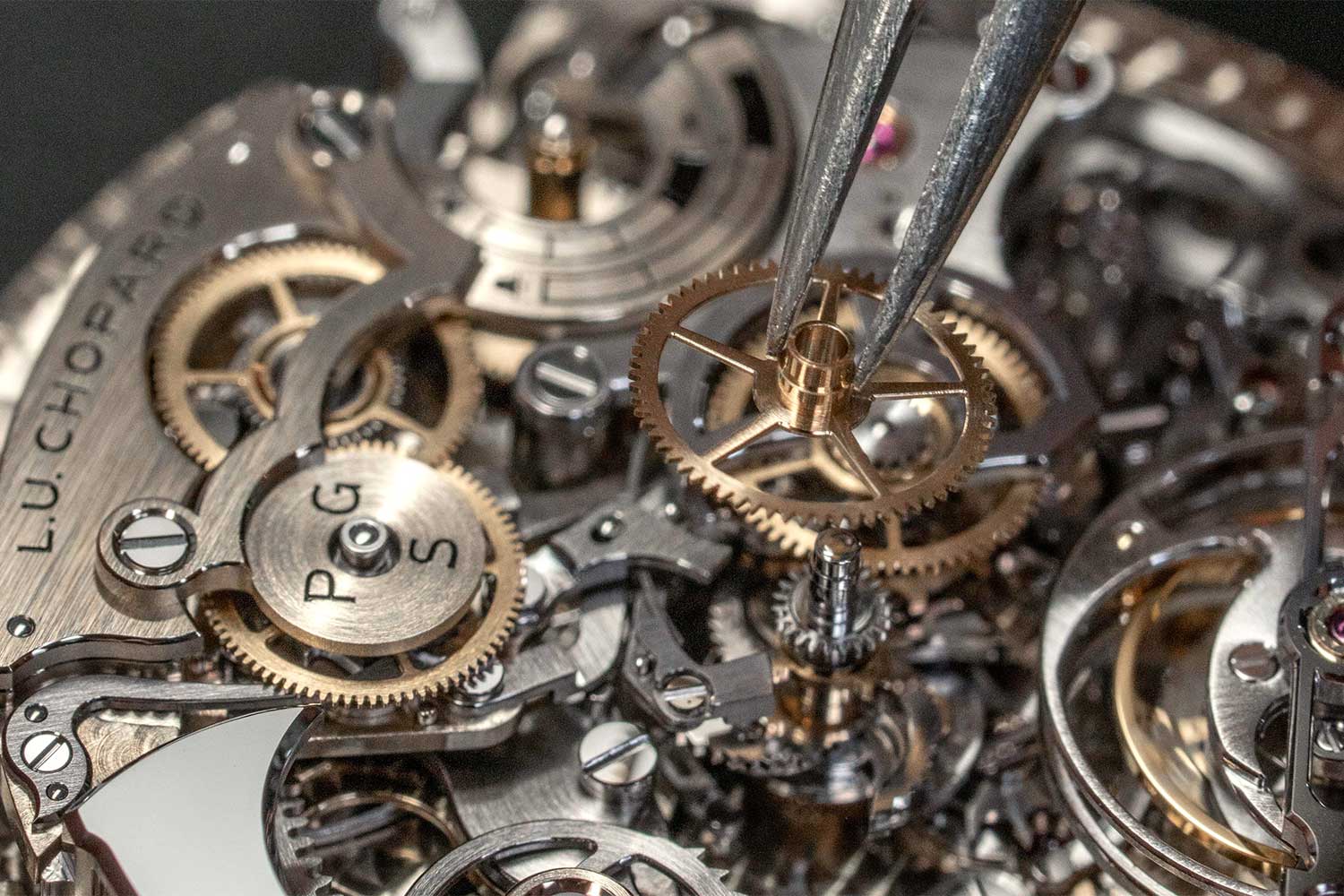
Fitting the hours train
Manual release is governed by a bistable system comprising a drive lever with a retractable beak, a release lever and a safety lever. Pressing the pusher frees the clutch rocker, initiates sampling and guarantees a single, complete strike. Additional safeguards prevent activation when strike power is insufficient or while the hands are being set, blocking the release path mechanically.
What most fundamentally distinguishes a grande sonnerie from a minute repeater is a mechanism that governs when the watch will strike and what it will strike. While a standard grande sonnerie relies on a ratchet-based indexing system with clicks to govern the modes, the Grand Strikes uses a column wheel. It acts a central coordinating organ that synchronizes multiple isolating levers within the striking mechanism. Rather than merely permitting or blocking individual actions, it defines discrete mechanical states and governs the interaction between automatic release, hour suppression and safety functions as a unified system. By repositioning all related levers simultaneously, it prevents partial engagement, excludes conflicting commands and manages transitions between modes in a controlled manner.
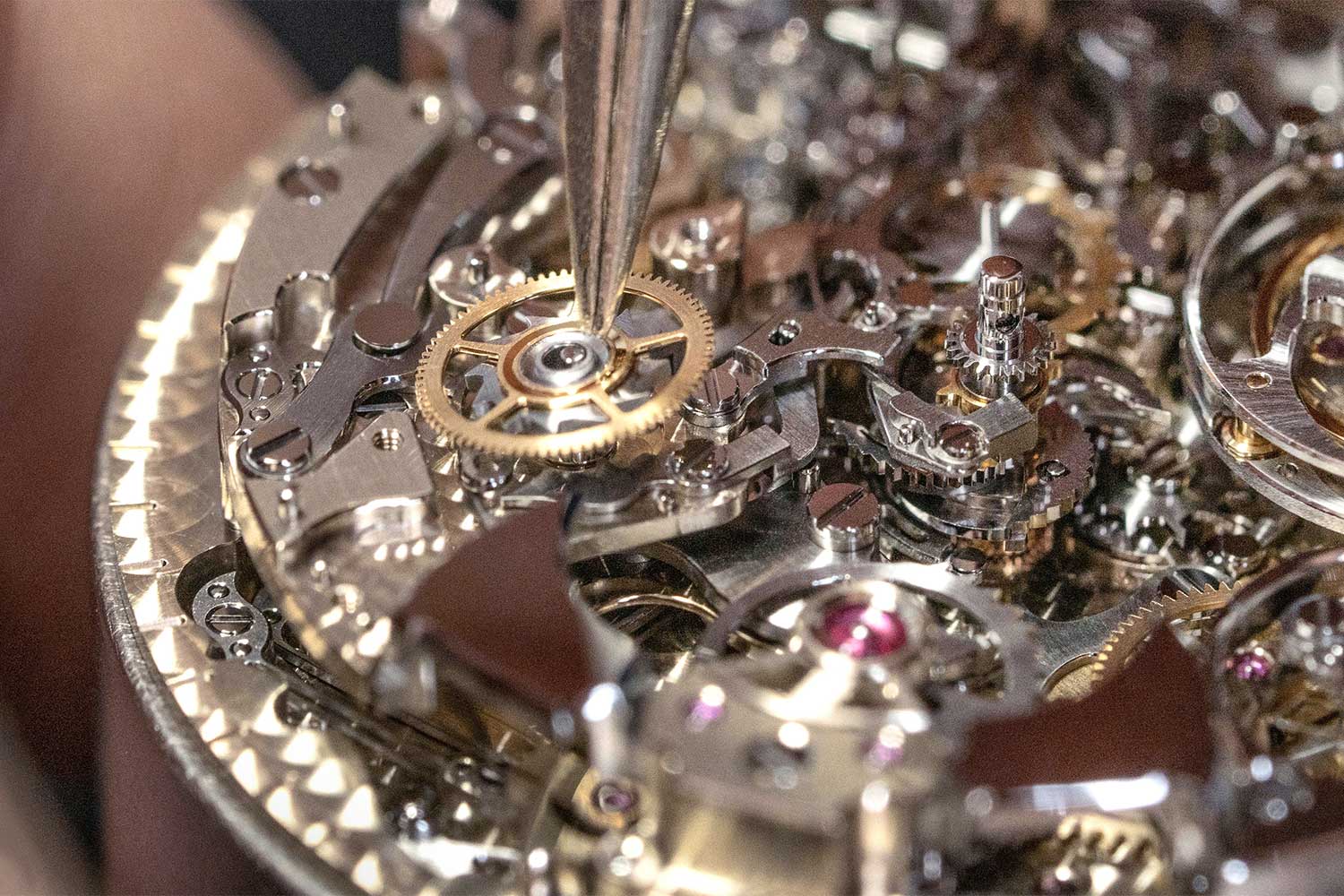
Fitting the mode-selector cam
Taken as a whole, the Grand Strike exhibits a level of completeness that can’t be found anywhere else in chiming watches. Sampling, release, coupling and striking are separated, coordinated and protected at every stage with each risk addressed directly. It is this coherence — acoustically and mechanically — that makes the Grand Strike not only elegant in execution but demonstrably superior as a striking watch. Additionally, in line with Chopard’s usual standards, it is equipped with a 4Hz tourbillon and is COSC-certified in the most demanding petite sonnerie mode.
Chopard

You may also like

Editorial
Holiday Horology: Something Old, Something New, Something Special — Felix Scholz, Revolution Australia Editor-in-Chief
Dec 20, 2025
Editorial
Holiday Horology: Something Old, Something New, Something Special — Felix Scholz, Revolution Australia Editor-in-Chief
Dec 20, 2025

Editorial
The Revolutionary List – 24 Technically Brilliant Watches: the Chopard L.U.C Grand Strike
Dec 12, 2025
Editorial
The Revolutionary List – 24 Technically Brilliant Watches: the Chopard L.U.C Grand Strike
Dec 12, 2025

Editorial
The Revolutionary List – 26 Inspirational Leaders: Karl-Friedrich Scheufele
Dec 1, 2025
Editorial
The Revolutionary List – 26 Inspirational Leaders: Karl-Friedrich Scheufele
Dec 1, 2025