Petermann Bédat Introduces the 2914 Chronograph Monopusher
News
Petermann Bédat Introduces the 2914 Chronograph Monopusher

Independent watchmaker Petermann Bédat made its name with its inaugural watch, the 1967 Deadbeat Seconds. It soon followed up with an even more complicated split-seconds monopusher chronograph, executed to an equally high standard. The watch stands out even among the increasingly crowded field of high-end independent watchmakers.
Now, at the IAMWATCH event in Singapore, the duo has introduced a new watch: its first pure-play chronograph, the 2914 Chronograph Monopusher. Surprisingly, the new watch is even smaller than the earlier split-seconds model, with an unusually traditional 36.5 mm platinum case, and is limited to 20 pieces.
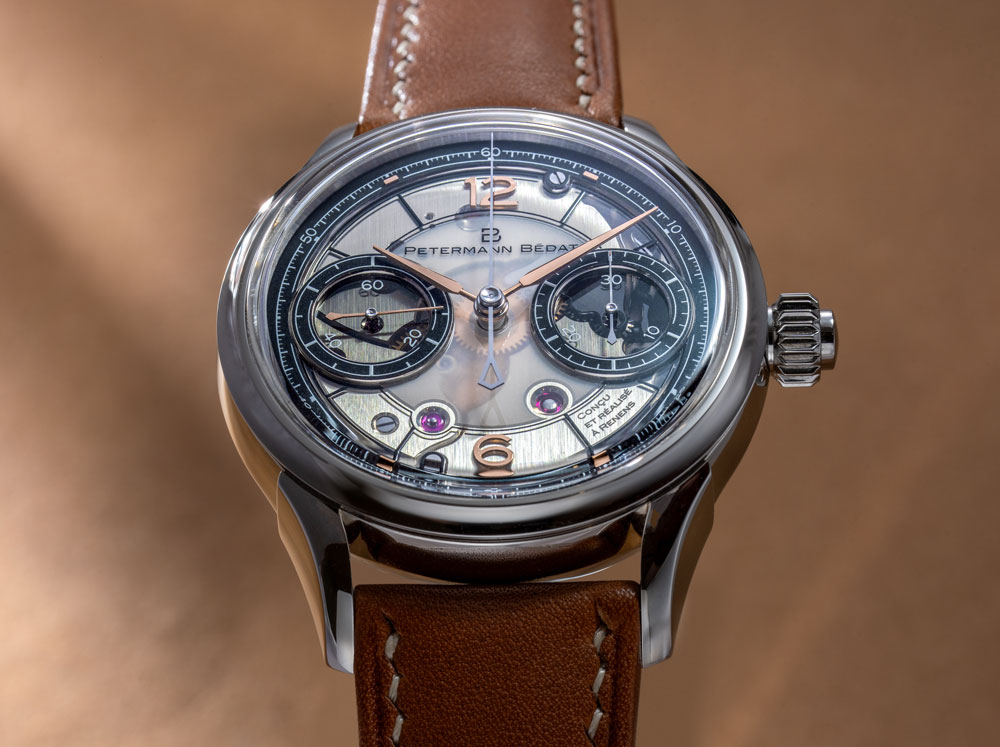
An unusual 36.5 mm modern chronograph.
Pure-play chronograph
The 2941 Split-Seconds Chronograph, launched in 2023, was an impressive watch. Few independent watchmakers attempt the split-seconds chronograph genre, let alone one with an instantaneous jumping minute counter. But some collectors have been yearning for a pure-play chronograph without the extra complications. Three years later, the duo has finally delivered with the 2914 Chronograph Monopusher.
What really surprises is the size of the new watch. The original split-seconds chronograph was already relatively classical at 38.5 mm, but the latest model goes a step further with a 36.5 mm case, returning to the proportions of watches from the 20th century. This is small even by today’s standards, amid the current trend for smaller watches. The platinum case makes it all the more appealing – despite its small size, the watch will feel solid and reassuringly heavy in the hand.
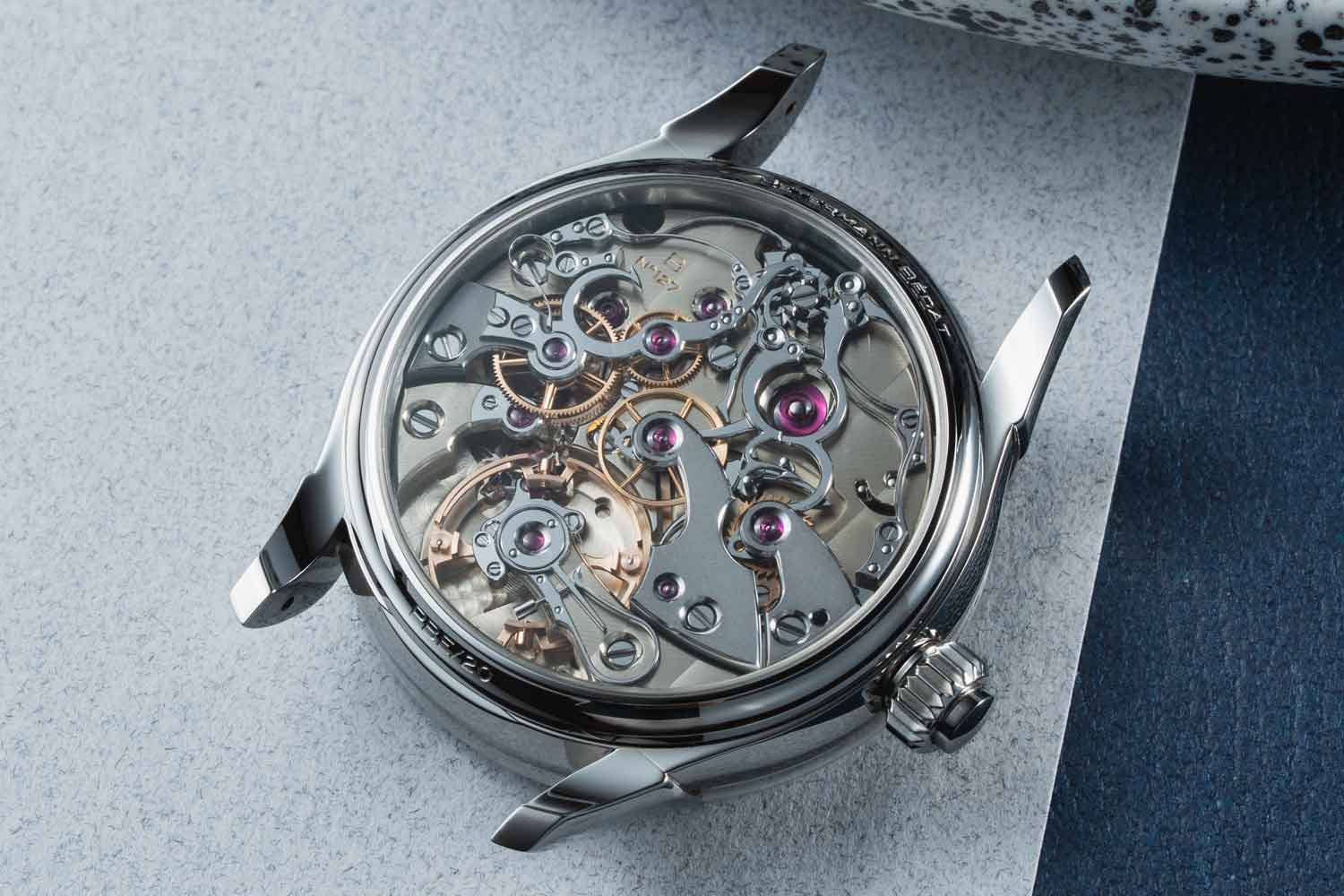
The new 2914 retains the best features of the 2941 Split-Seconds Chronograph, with a few changes. It remains a monopusher chronograph and keeps the jumping chronograph minute counter, so there is still plenty to appreciate mechanically. The only thing missing is the split-seconds mechanism. This is not necessarily a drawback, since it was an additional module hidden beneath the dial. Its removal has little visual impact on the new watch, and the movement looks much the same from the back, just as attractive as before.
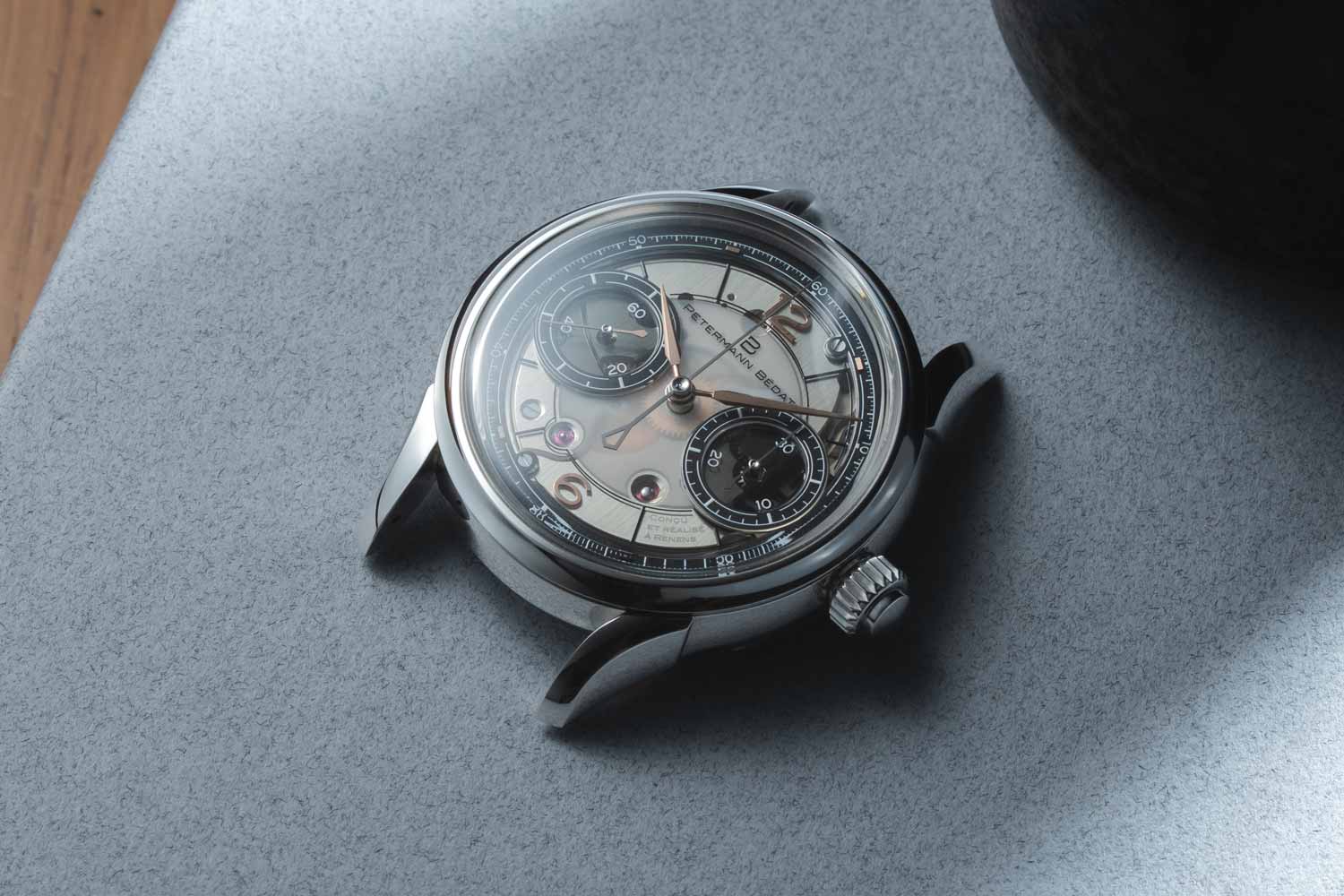
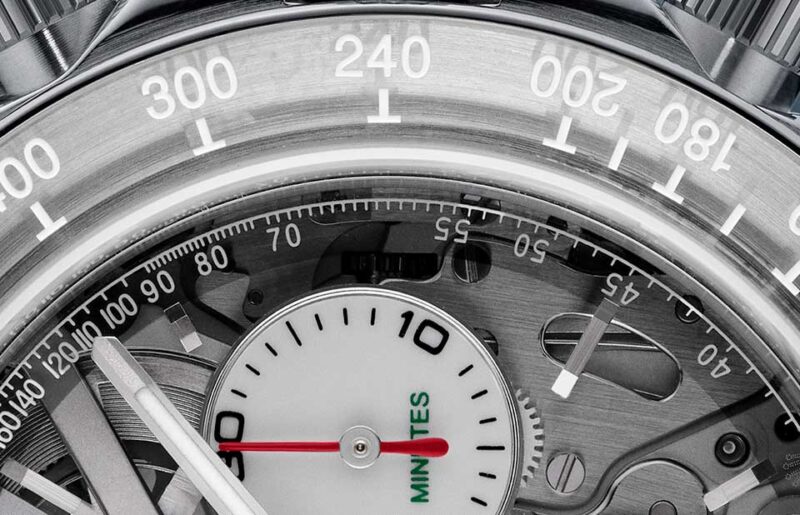
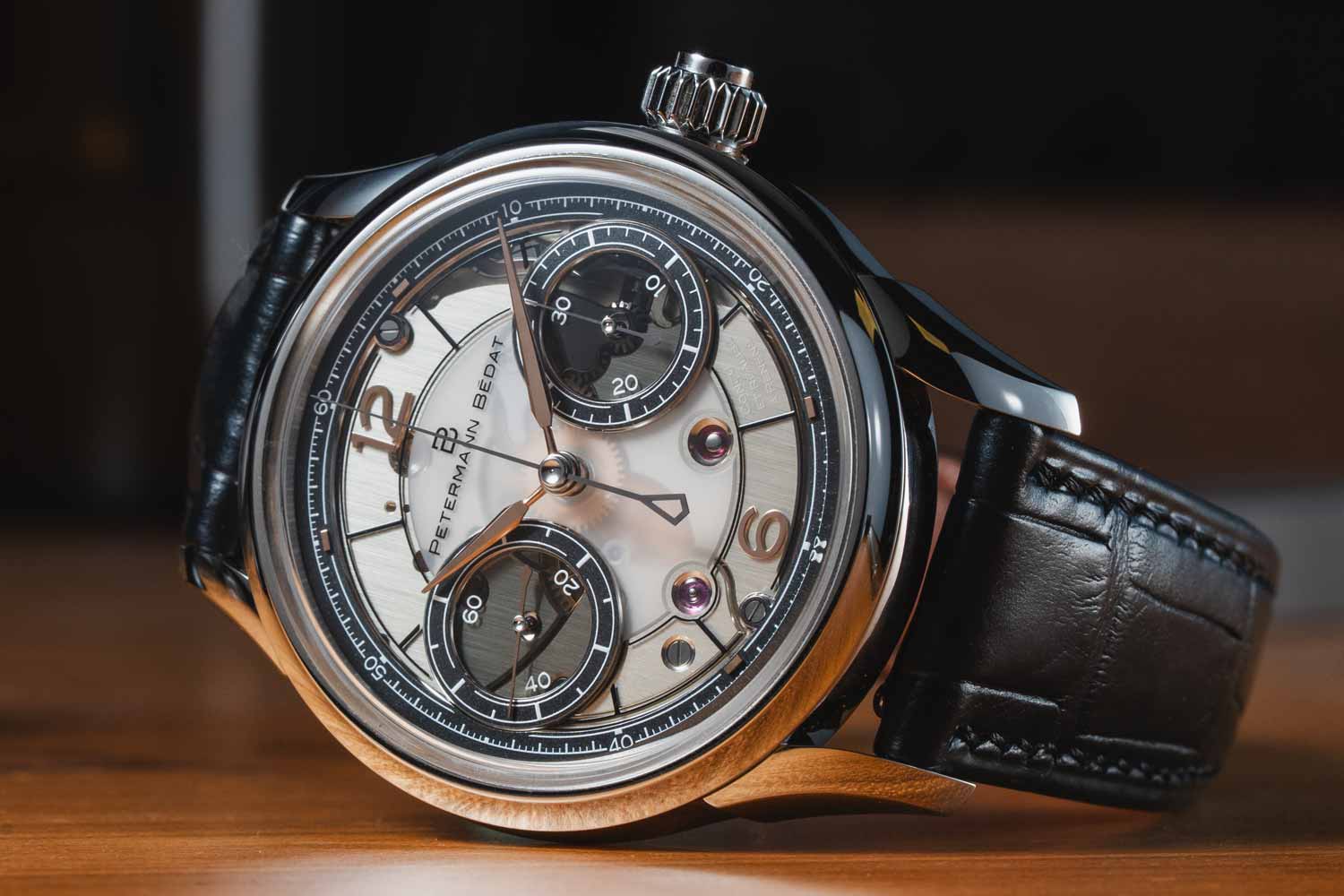
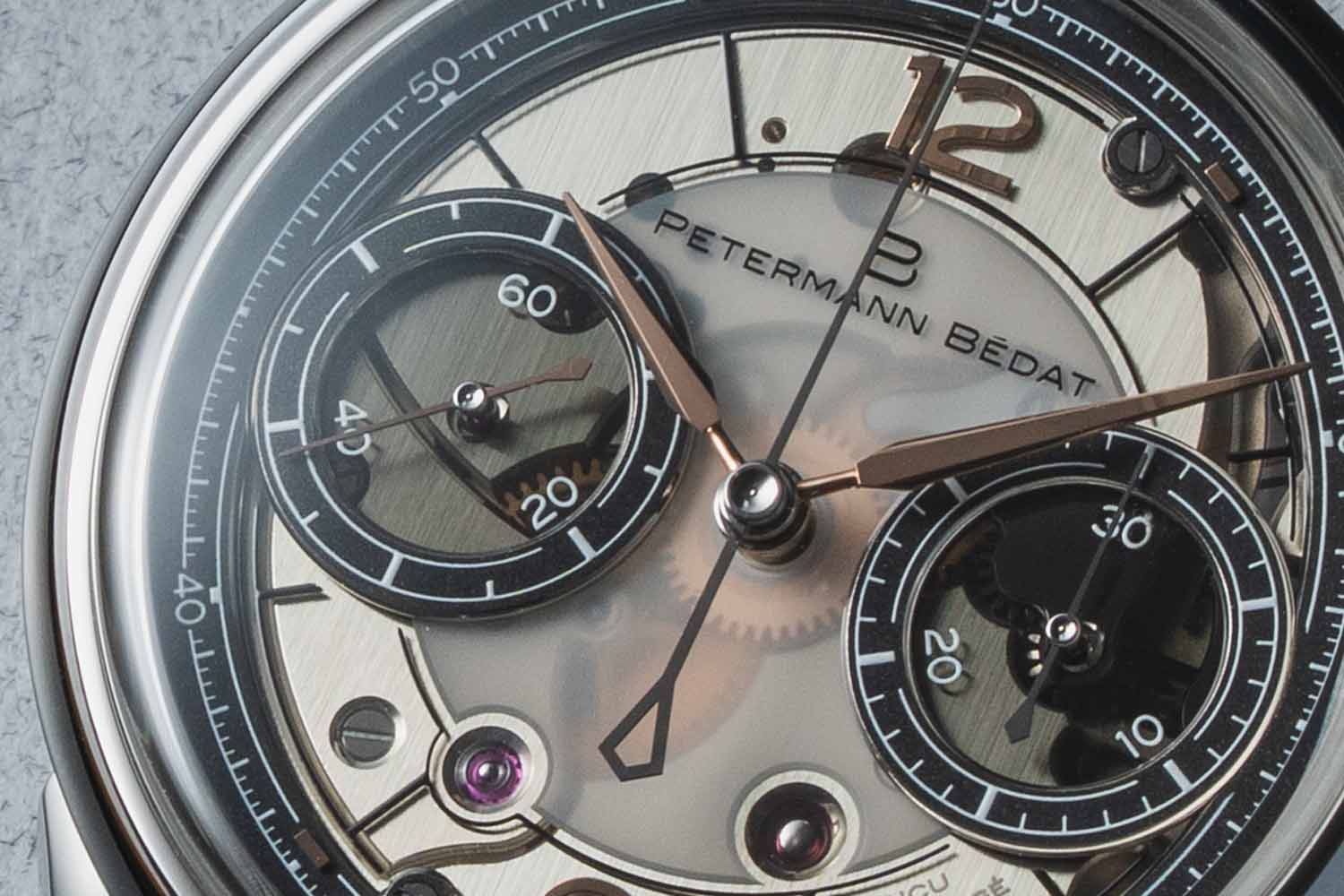
The dial has been refined, particularly in its proportions. Compared to the earlier chronograph, the 2914 has smaller sub-dials in solid, dark colours, which look more elegant than the slightly oversized counters of the previous version. As a result, the new dial is arguably more attractive, despite now being made of brushed steel rather than frosted platinum.
Petermann Bédat may be known for its clever movement construction and excellent finishing, but its design deserves just as much attention. Many new independent watchmakers struggle to get their dial designs right, but Petermann Bédat has found a design language that is original without straying too far from classical watchmaking. The semi-open dial and sapphire components are contemporary, yet the overall look remains familiar and elegant. That is no small feat.
Calibre 234
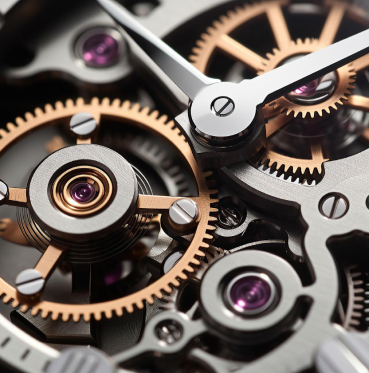
Inside the watch is calibre 234, the same base movement found in the earlier split-seconds chronograph. Perhaps reflecting the founders’ backgrounds at A. Lange & Söhne, its architecture draws some inspiration from the Datograph. It features long, slender steel springs and levers, with beautiful curves and finishing. Another nice touch is the arrowhead-shaped tails on some of the levers, inspired by vintage Minerva movements but with a twist.
As with the dial, the movement has a classical appearance but is entirely original in its execution. It doesn’t feel like a recreation of something from the past. One distinctly modern element is the oversized jewel on the mainspring barrel, a signature detail found across Petermann Bédat’s watches.
Interestingly, the movement has a slow frequency of 18,000 vibrations per hour, an unusual rate in the modern watch world but entirely apt for a chronograph with such an old-school character. The seconds track would be even more fitting if it had five divisions per second, as on the earlier split-seconds version, rather than the four currently marked. This would allow the chronograph seconds hand to tick in step with the track.
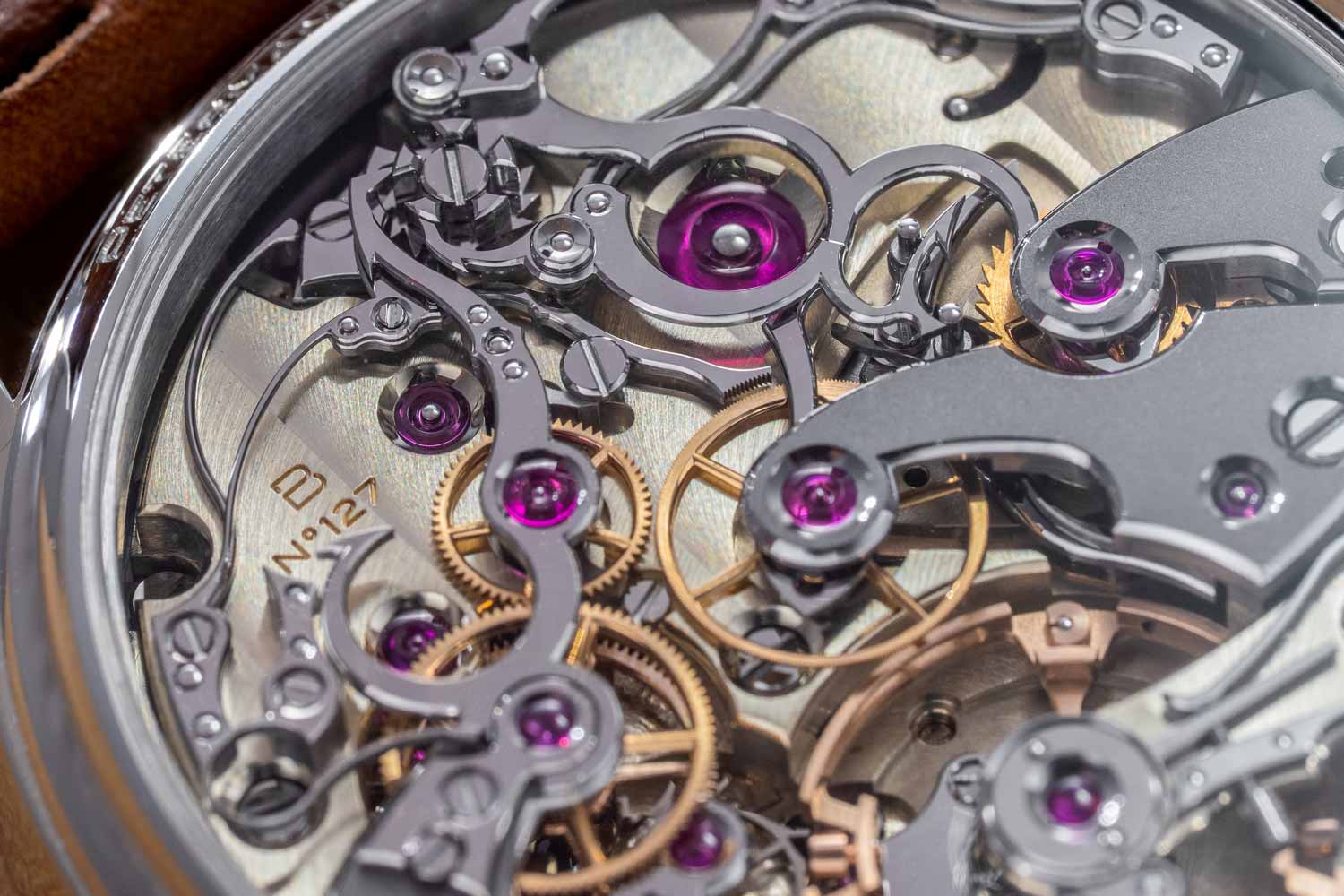
Gorgeous movement (Image: Revolution ©)
Tech Specs: 2914 Chronograph Monopusher
Reference: 2914
Movement: Calibre 234; manual winding; 56 hours power reserve; 18,000 vibrations per hour (2.5 Hz)
Functions: Hours, minutes, seconds, monopusher chronograph
Case: 36.5 mm x 9.9 mm; platinum; water resistant to 30m
Limited edition: 20 pieces in platinum
Price: CHF 180,000 (excluding taxes)
Petermann Bédat

You may also like

Reviews
A Closer Look: Petermann Bédat Reference 1825
Oct 15, 2025
Reviews
A Closer Look: Petermann Bédat Reference 1825
Oct 15, 2025

News
The Petermann Bédat X Auffret Paris Chronomètre d’Observatoire Ref: 1342 for Only Watch
Aug 10, 2023
News
The Petermann Bédat X Auffret Paris Chronomètre d’Observatoire Ref: 1342 for Only Watch
Aug 10, 2023

News
Petermann Bédat Introduces the Monopusher Split-Seconds Chronograph with Instantaneous Minutes Ref. 2941
Mar 23, 2023
News
Petermann Bédat Introduces the Monopusher Split-Seconds Chronograph with Instantaneous Minutes Ref. 2941
Mar 23, 2023