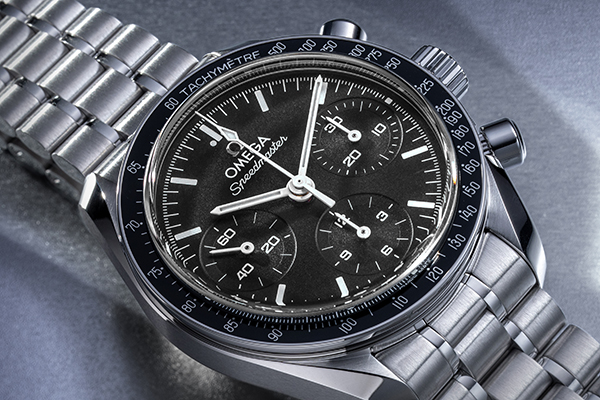
Omega brings the Speedmaster 38mm closer to its Moonwatch roots
Editorial
Omega brings the Speedmaster 38mm closer to its Moonwatch roots

Beyond what it represents as a symbol of one of the greatest, and certainly highest, human adventures, one of the reasons the Speedmaster has endured so widely is the extraordinary variety contained within the name. Each has offered a slightly different way into a watch that has somehow managed to unite enthusiasts despite the very different paths their collecting may take. Almost everyone comes to the Speedmaster at some point, but for every enthusiast who insists the Moonwatch is the only one that matters, there is another who prefers a commemorative, an automatic, a reduced case, a more exotic metal, or something altogether more colourful. The range today offers something for everyone.
The Speedmaster 38 has always occupied a quieter corner of the family. Introduced in 2017 as a more compact counterpart to the flag-bearer 42mm models, it had a precedent of sorts in the Speedmaster “Reduced”, the smaller automatic model produced from 1988 to 2010. But the Speedmaster 38mm was conceived rather differently, with oval subdials and a notably slimmer tachymeter bezel. Some versions were conceived with women in mind, particularly those set with diamonds, while others are more ecumenical in their appeal in this era of increasingly modest case dimensions. Omega has just made the proposition much more interesting with seven new references and a surprising set of revisions that bring the 38mm collection much closer visually to the Moonwatch.
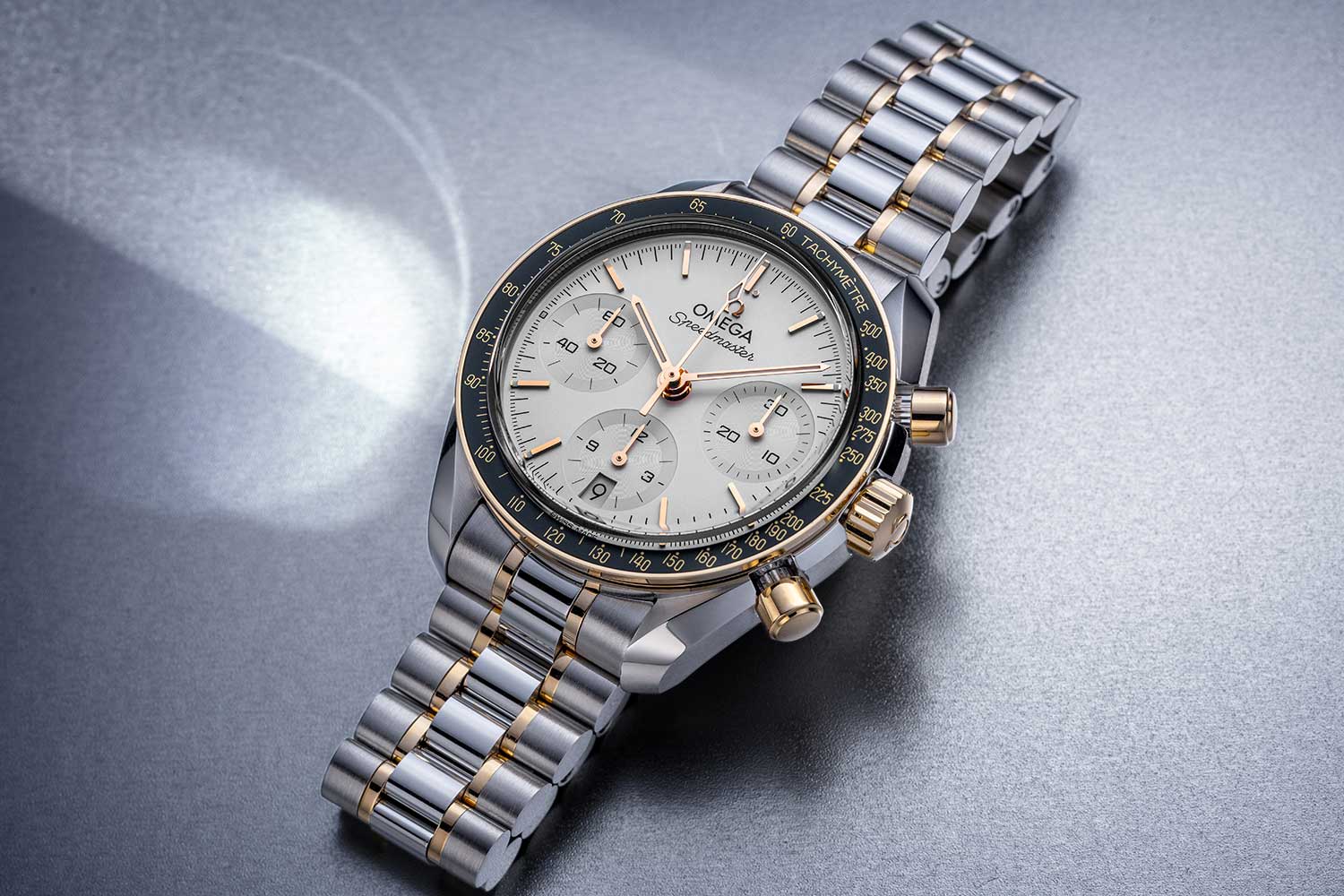
Omega Speedmaster 38 mm (©Revolution)
The updates first appeared in the Speedmaster 38mm Milano Cortina 2026, launched before the opening of the Olympic Winter Games, and that direction has now been applied across the collection. The most obvious change is the replacement of the oval subdials with conventional round registers. The former created room for gem-setting and gave the original 38mm its own identity, but they also distinguished it rather sharply from the rest of the Speedmaster family. Omega has also pared back the dial text, while the bezel has a broader insert, dispenses with the notches of the earlier 38mm and, importantly for the detail-obsessed, restores the familiar Dot Over Ninety.
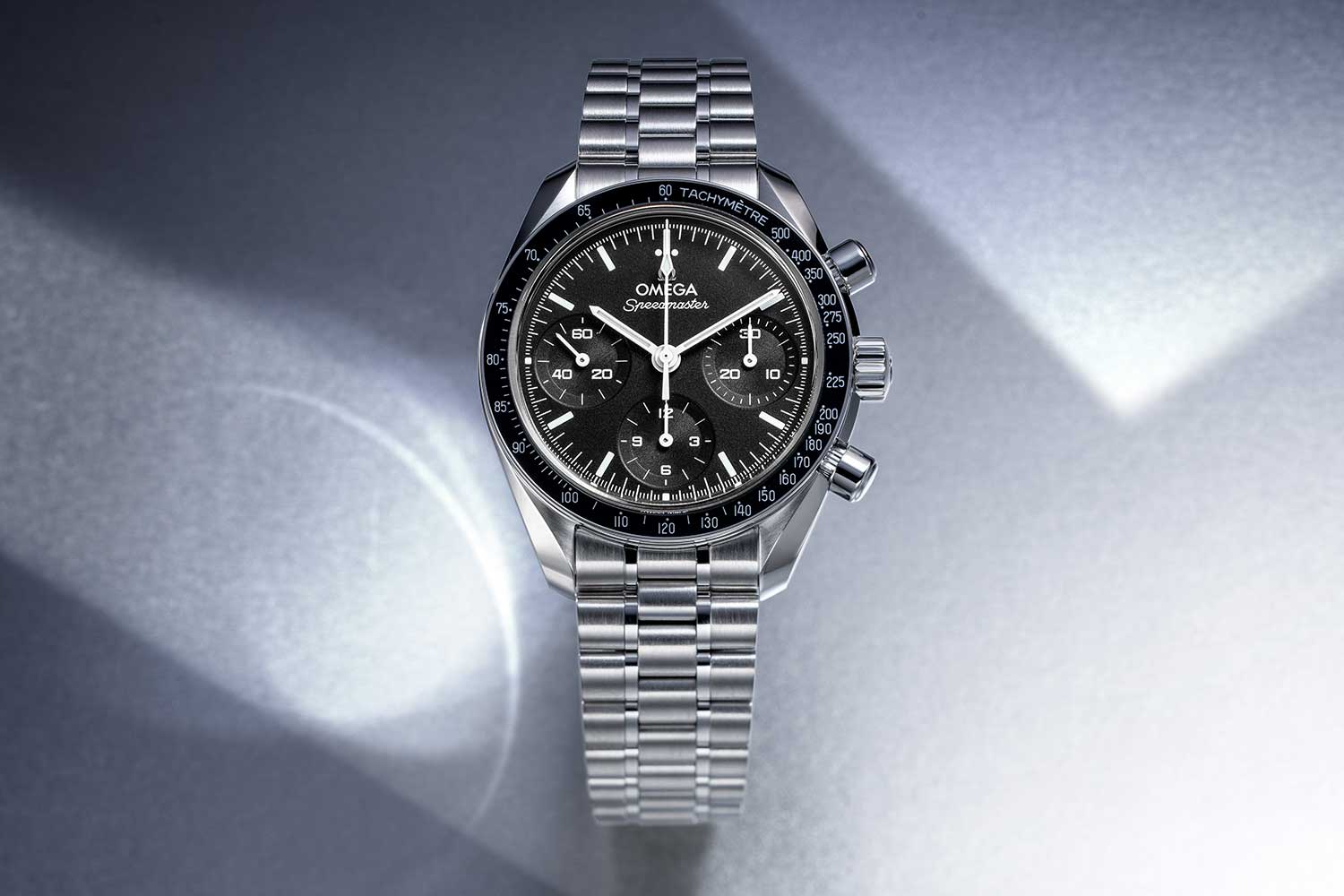
The new Speedmaster 38 mm adopts round subdials, pared-back dial text and a broader, notch-free tachymeter bezel with the familiar Dot Over Ninety, bringing it visually closer to the wider Speedmaster family (©Revolution)
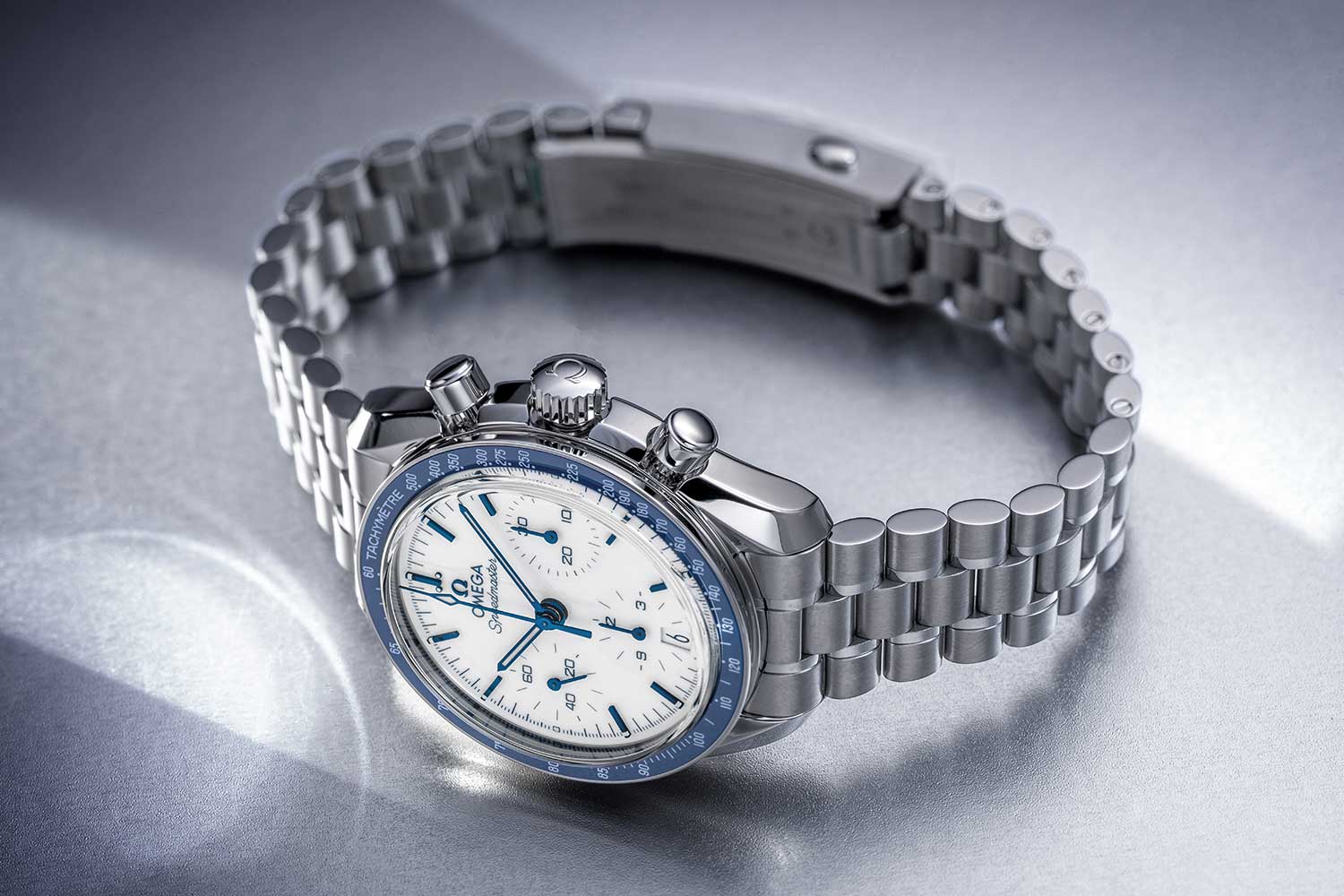
(©Revolution)
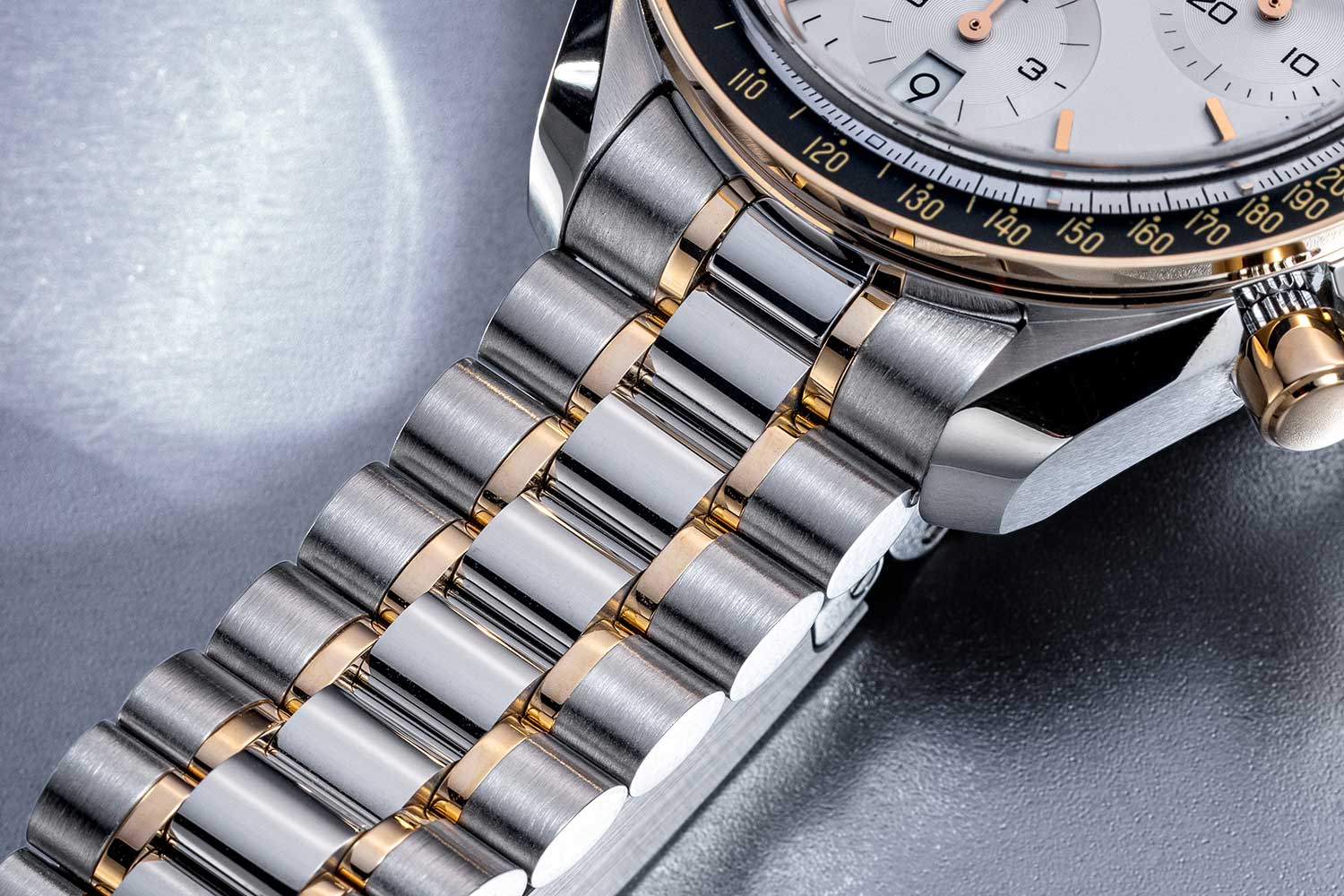
The case remains 38mm by 14.75mm, which is definitely on the thicker side, but something tells me that for those who simply can’t wear the 42mm models, the trade-off will be an easy one to accept. All seven references come on a five-link Moonwatch-style bracelet with micro-adjustment extension, although the treatment of the centre links varies from model to model, with polished or brushed surfaces depending on the execution.
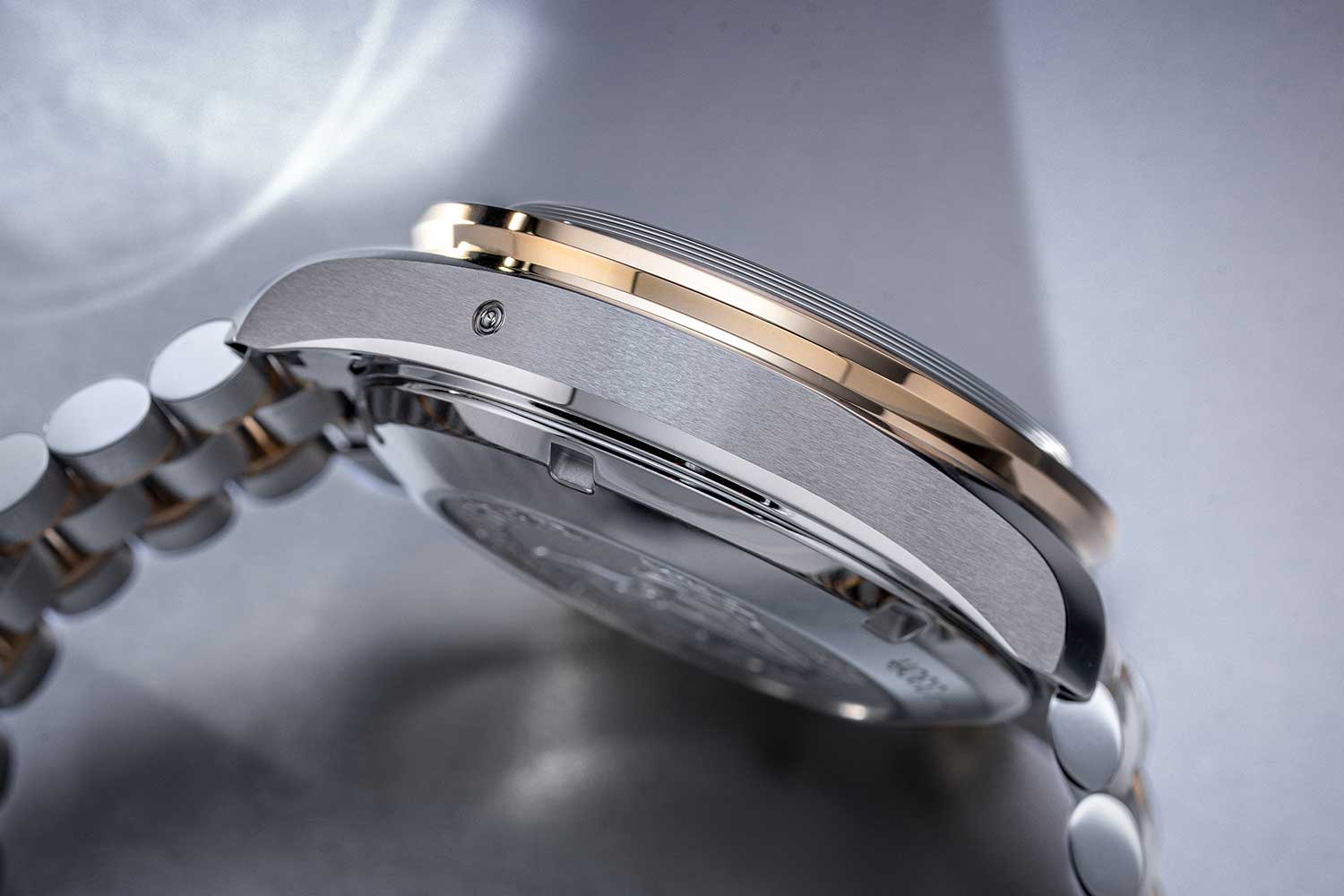
Omega Speedmaster 38 mm (©Revolution)
(©Revolution)
Mechanically, the collection is split between two self-winding Co-Axial calibres. Six references use the Calibre 3330 and retain the date at six o’clock, while the black dial model alone is powered by the Calibre 3332 that dispenses with the date altogether. That makes it the most overtly Moonwatch-like of the seven, both in layout and appearance.
Both movements use a column wheel, and the coupling system relies on an oscillating pinion. They are based on the ETA A08.L01, a column-wheel chronograph from ETA’s Valgranges family that was developed for Longines in 2009 and introduced as the Longines L688. The A08.L01 in turn descends from the ETA 7753, the 3-6-9 subdial variant of the Valjoux 7750. Omega adapted it to accommodate the Co-Axial escapement and, while neither movement is Master Chronometer certified, the hairspring, the component most vulnerable to magnetism, is made from silicon. As silicon is genuinely non-magnetic, it is effectively immune to the magnetic fields that have become an unavoidable part of everyday life.
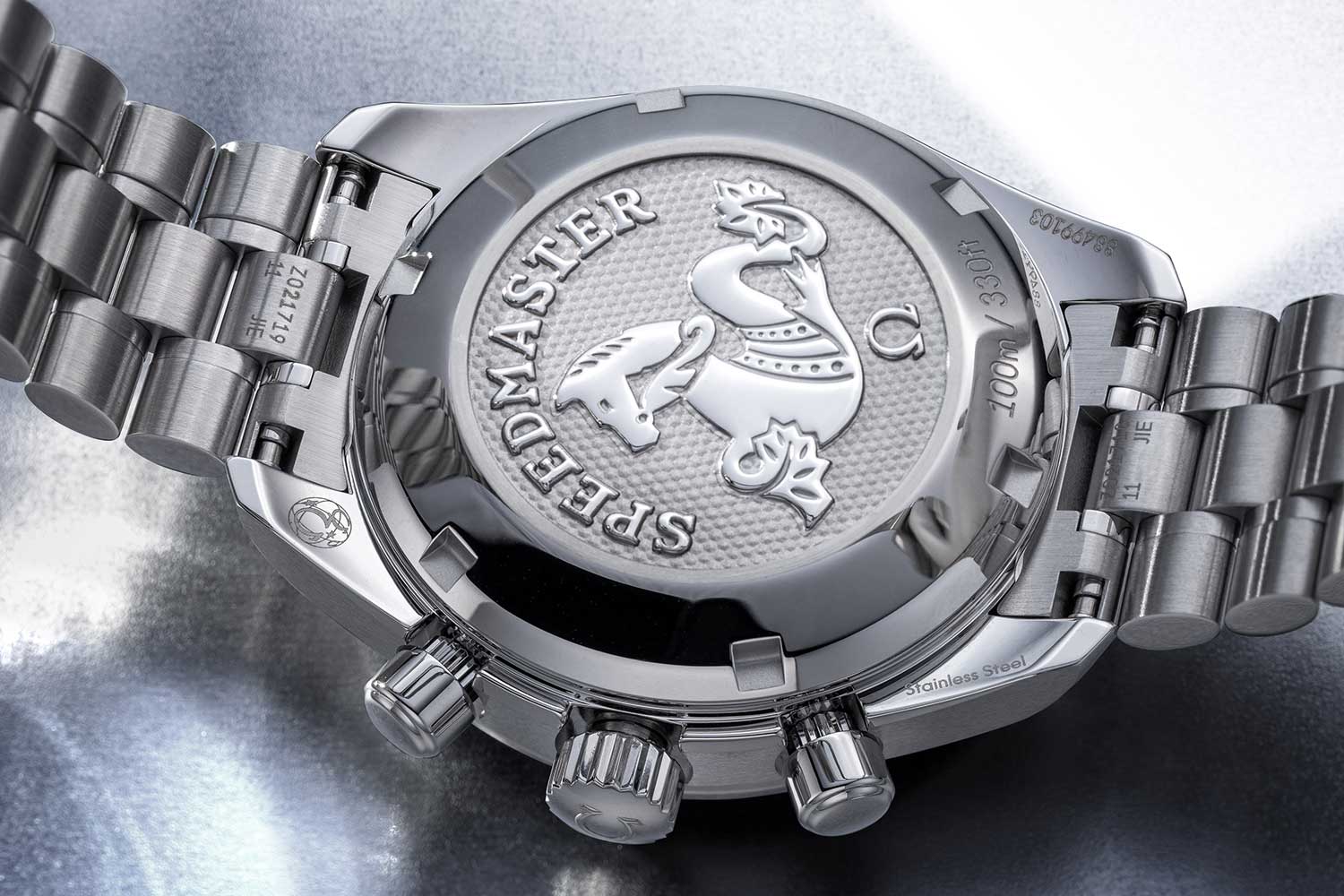
Solid caseback with the classic Hippocampus medallion (©Revolution)
The range comprises three steel models. The black dial version is the most traditional, with a black aluminium bezel insert, black varnished dial and white Super-LumiNova on the hands and indexes. Its bracelet combines three brushed rows with two narrower polished rows, and the absence of a date leaves the dial notably clean.
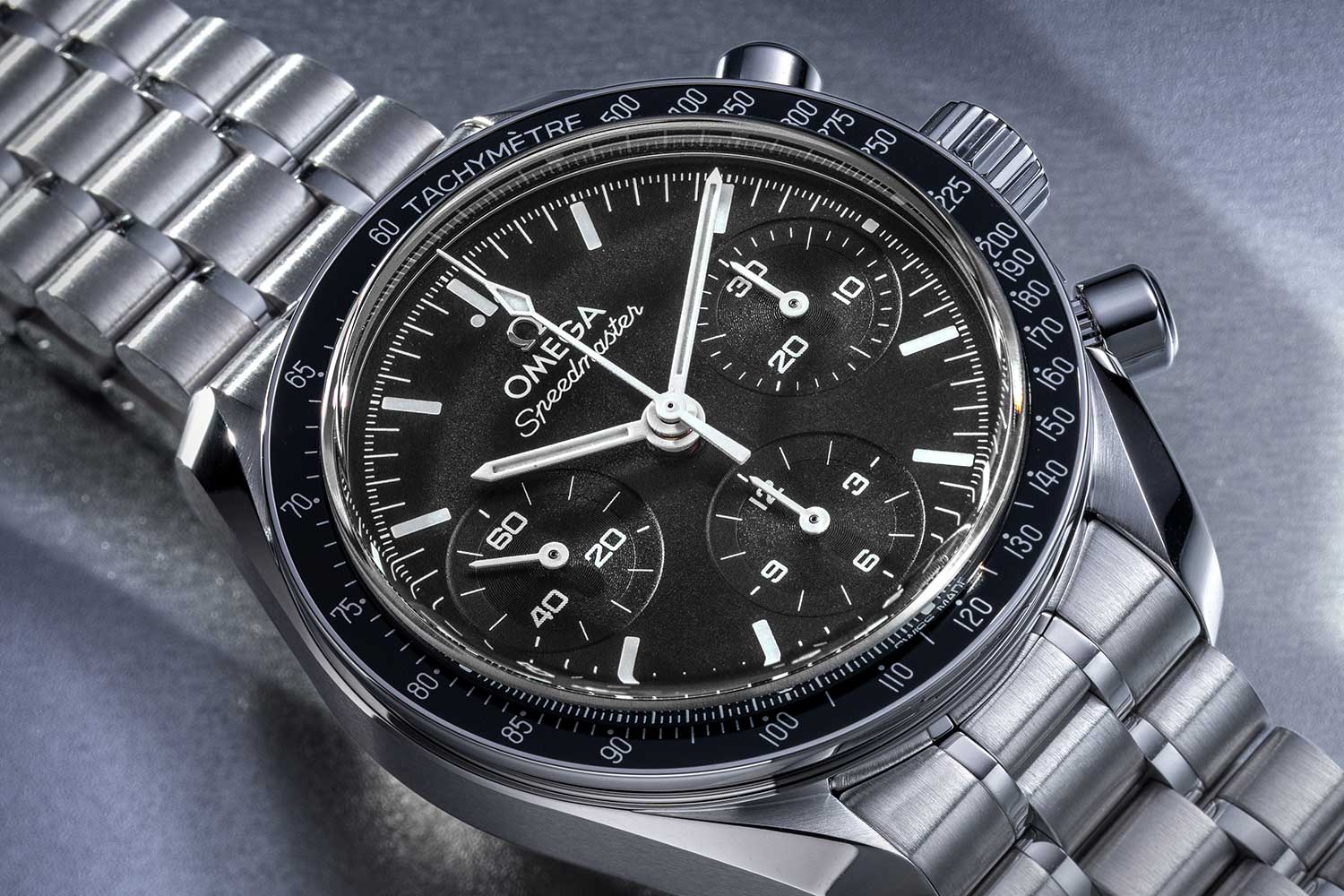
This model follows the familiar Moonwatch formula, with a steel case, matte black varnished dial and black aluminium bezel ring, sans date.(©Revolution)
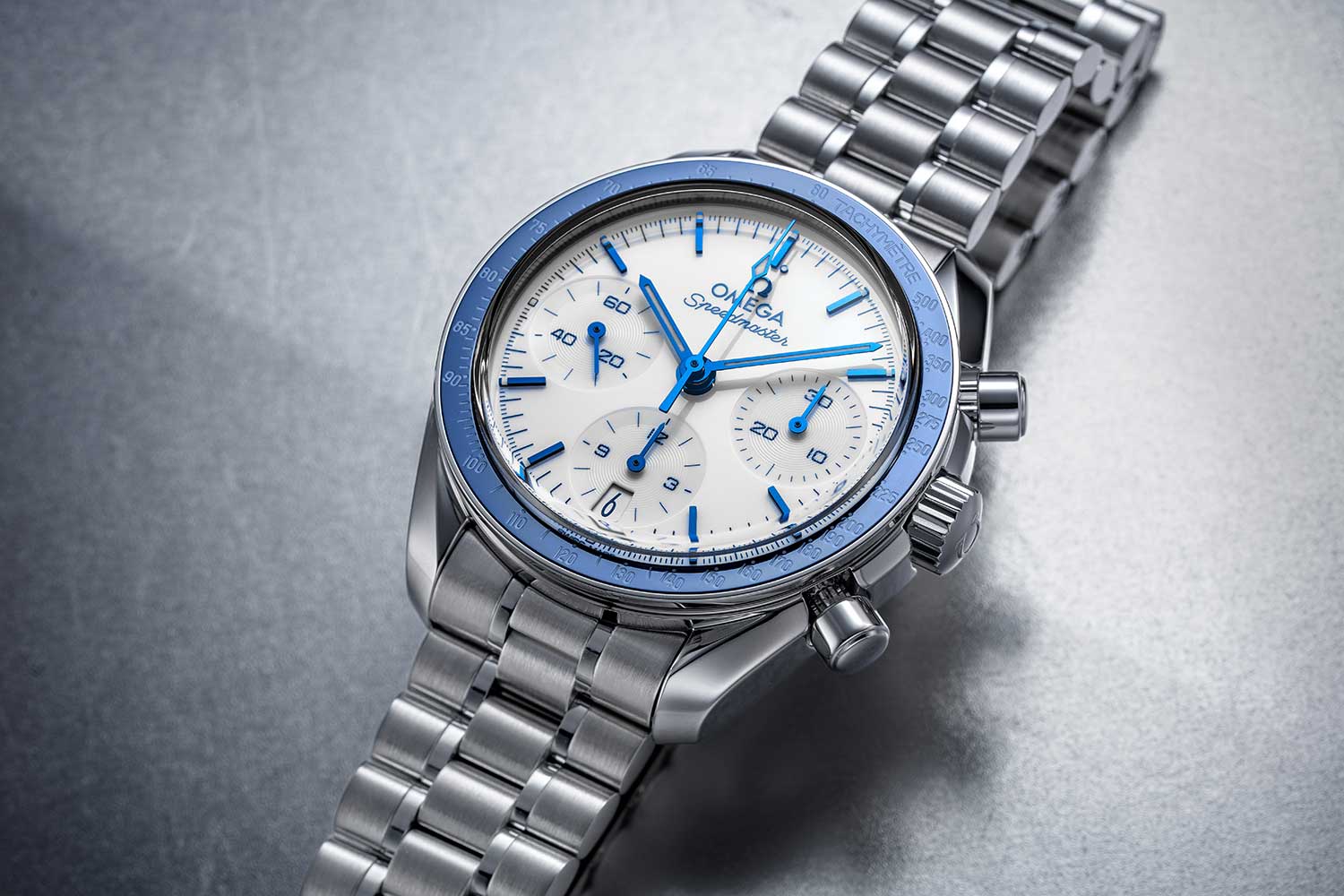
The white dial model takes a rather different approach. Here the bezel insert is blue ceramic with a white enamel tachymeter scale, while the white lacquered dial is paired with blue CVD-coated hands and indexes. Even the numerals in the date aperture are rendered in the same shade of blue, so the colour scheme is carried through more thoroughly. It is perhaps the most attractive reference for anyone who wants something distinct from the Moonwatch formula. The combination of white and blue also recalls the CK2998 limited edition of 2016, the Speedmaster “Silver Snoopy Award” 50th Anniversary and the Milano Cortina 2026 itself.
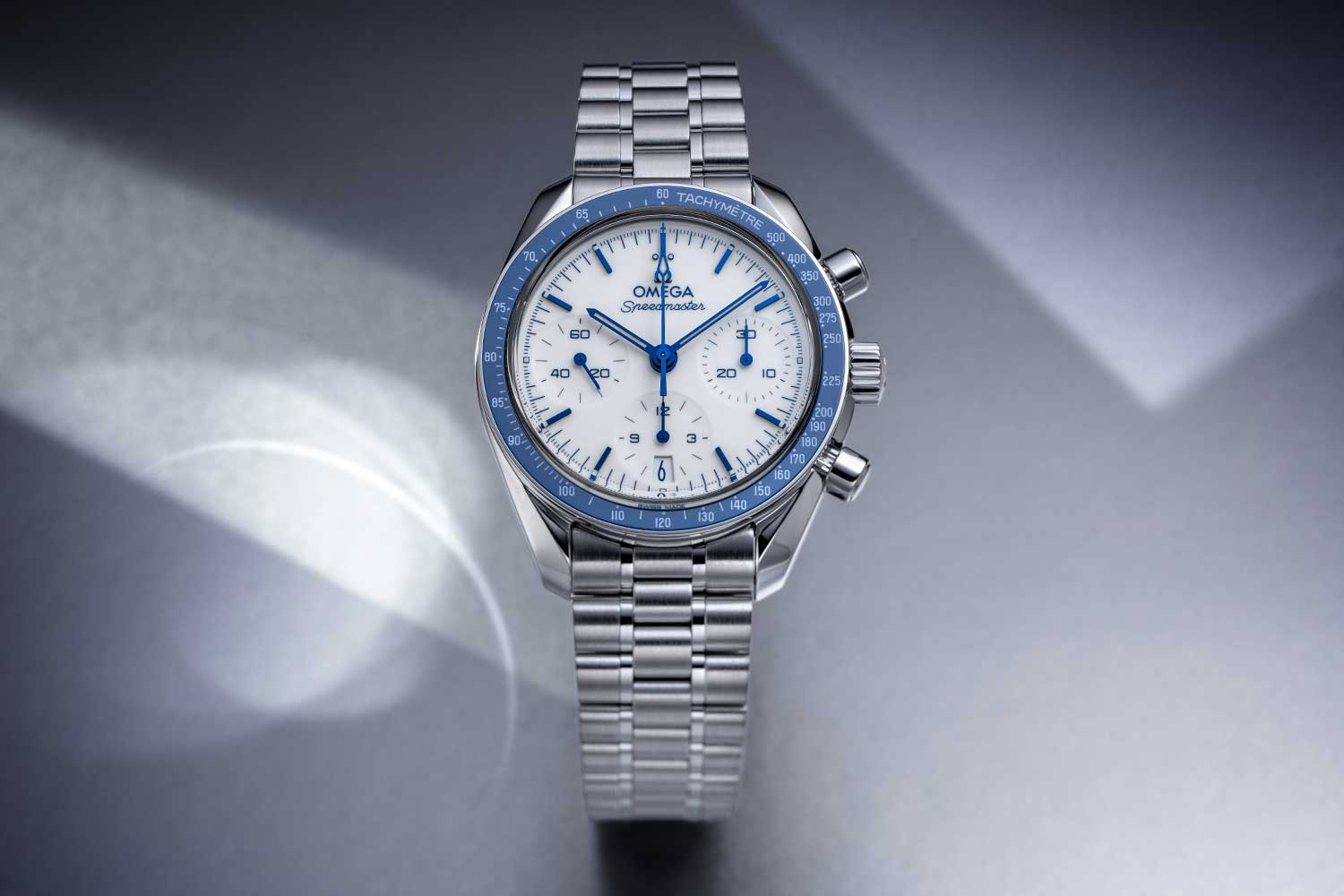
This steel model offers a fresh twist, with a white lacquered dial and a blue ceramic bezel insert with a white enamel tachymeter scale (© Revolution)
(©Revolution)
The third steel model has a grey aluminium bezel insert and an opaline silvery PVD dial, with Sedna Gold PVD used for the timekeeping hands and baton indexes. It is perhaps the least conventionally sporty of the three, with the warmer accents giving it a slightly more urbane character.
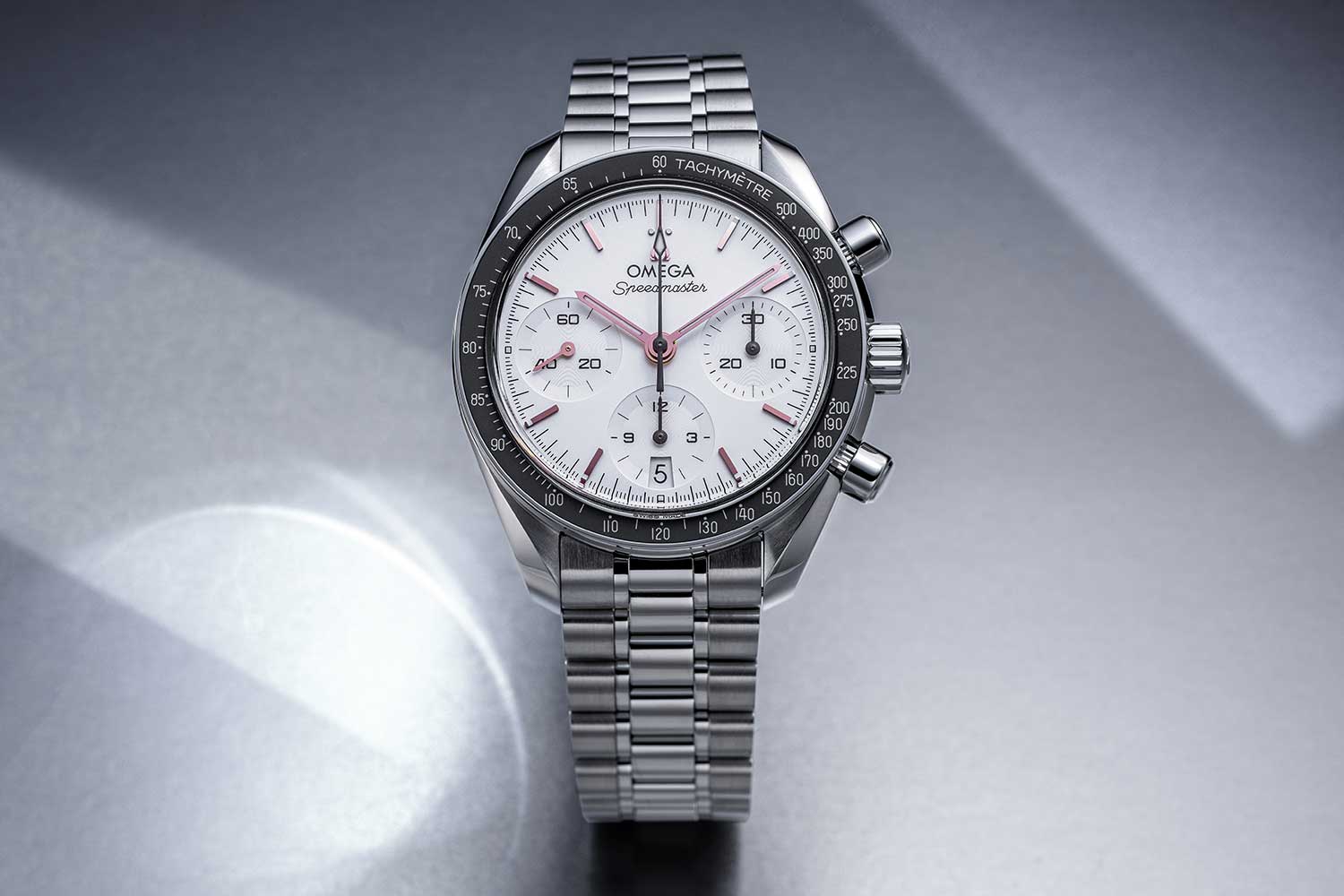
Omega Speedmaster 38 mm in steel with a silver dial, Sedna gold hands and indexes, along with a grey aluminium bezel ring (©Revolution)
Then there are the two bi-colour models. One combines stainless steel with Moonshine Gold bezel, pushers and crown and a green aluminium insert. Moonshine Gold is Omega’s proprietary 18K yellow gold alloy, introduced in 2019, with a paler hue than conventional yellow gold and the addition of palladium to improve colour stability over time. The polished Moonshine Gold bezel has a yellow gold tachymeter scale, while the silvery opaline PVD dial is matched with Moonshine Gold PVD hands and indexes. The smaller links of the bracelet are also made in Moonshine Gold.
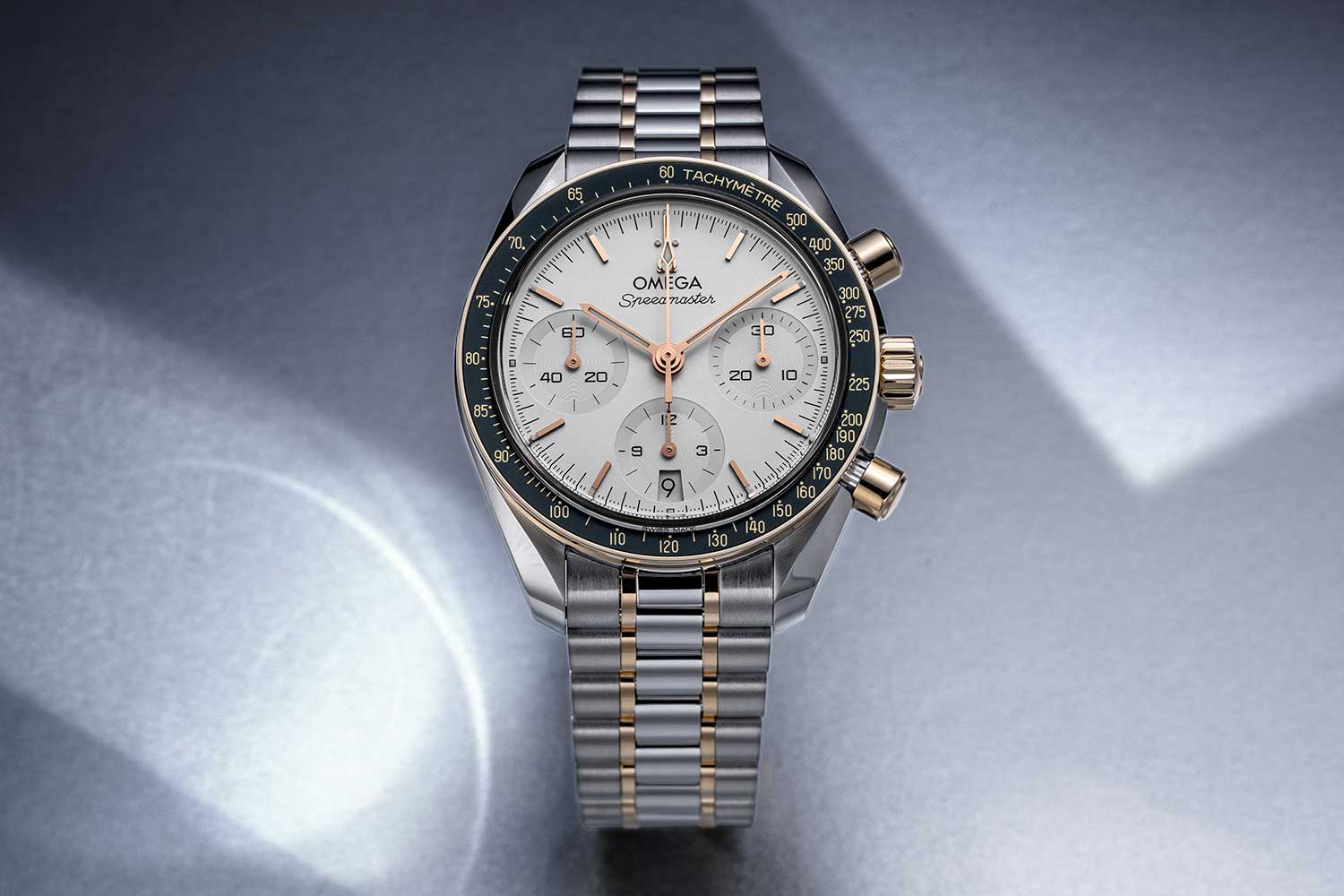
The first bi-color model combines a steel case with a Moonshine Gold bezel, crown and pushers (©Revolution)
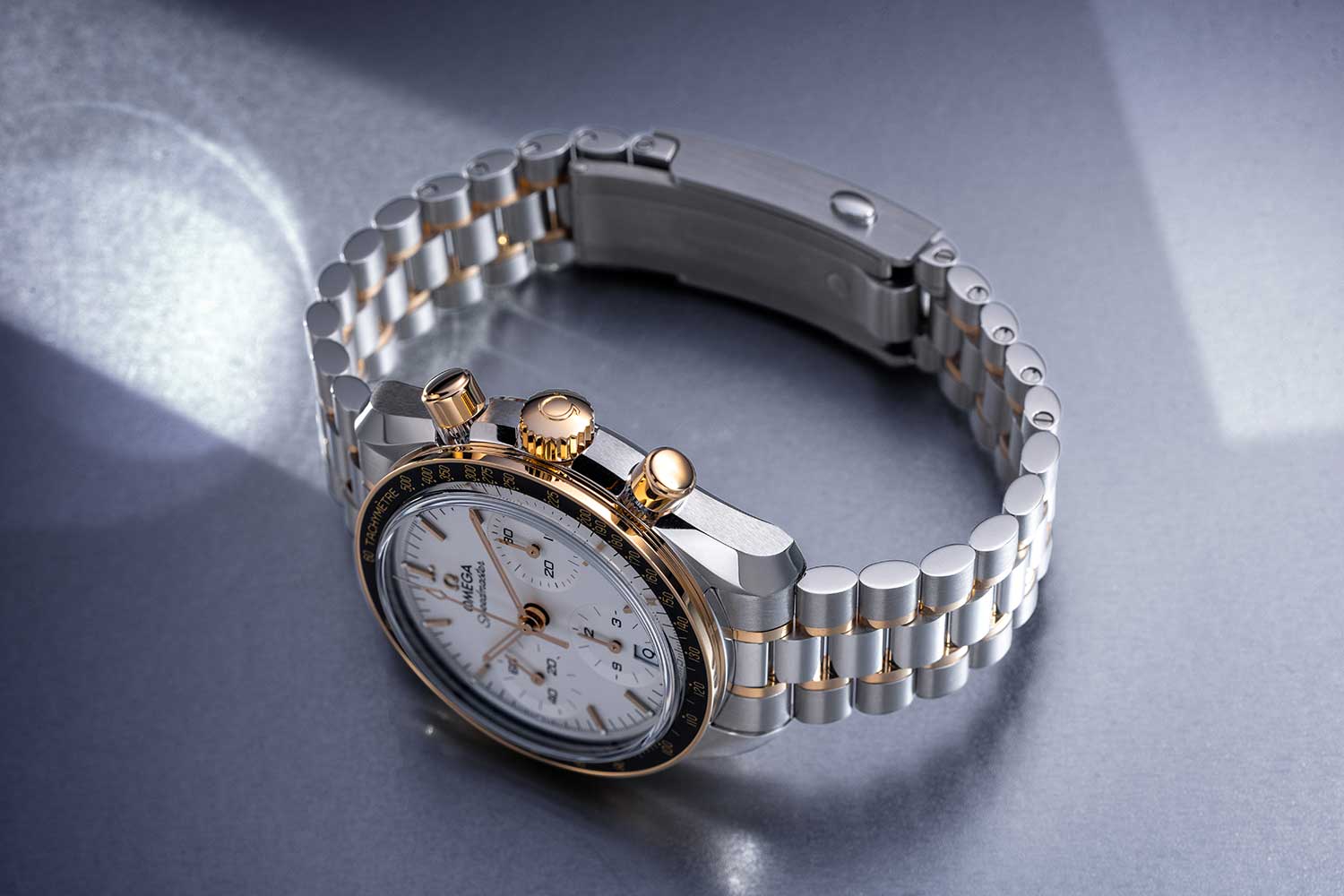
(©Revolution)
The second bi-colour reference revisits what Omega calls the “cappuccino”, a combination long associated with the Speedmaster 38mm. It pairs an ivory dial with brown PVD-coated subdials, framed by a polished Sedna Gold bezel with a brown aluminium insert, along with matching Sedna Gold crown and pushers. As with the Moonshine Gold model, the smaller bracelet links are executed in the corresponding precious metal, in this case Sedna Gold.
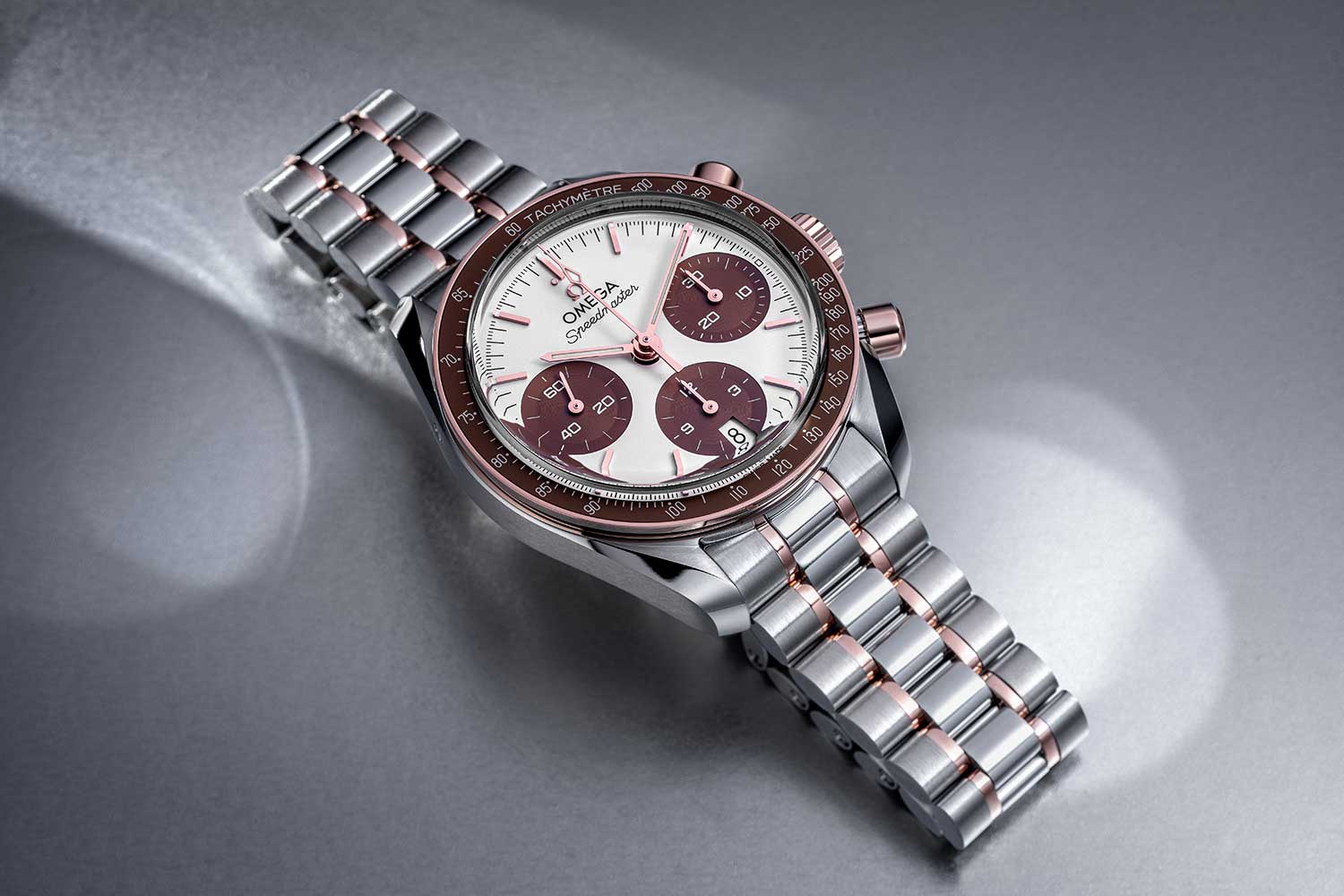
The second bi-colour model, known as the “Cappuccino”, pairs a steel case with a Sedna Gold bezel and brown aluminium insert, along with matching Sedna Gold crown and pushers (©Revolution)
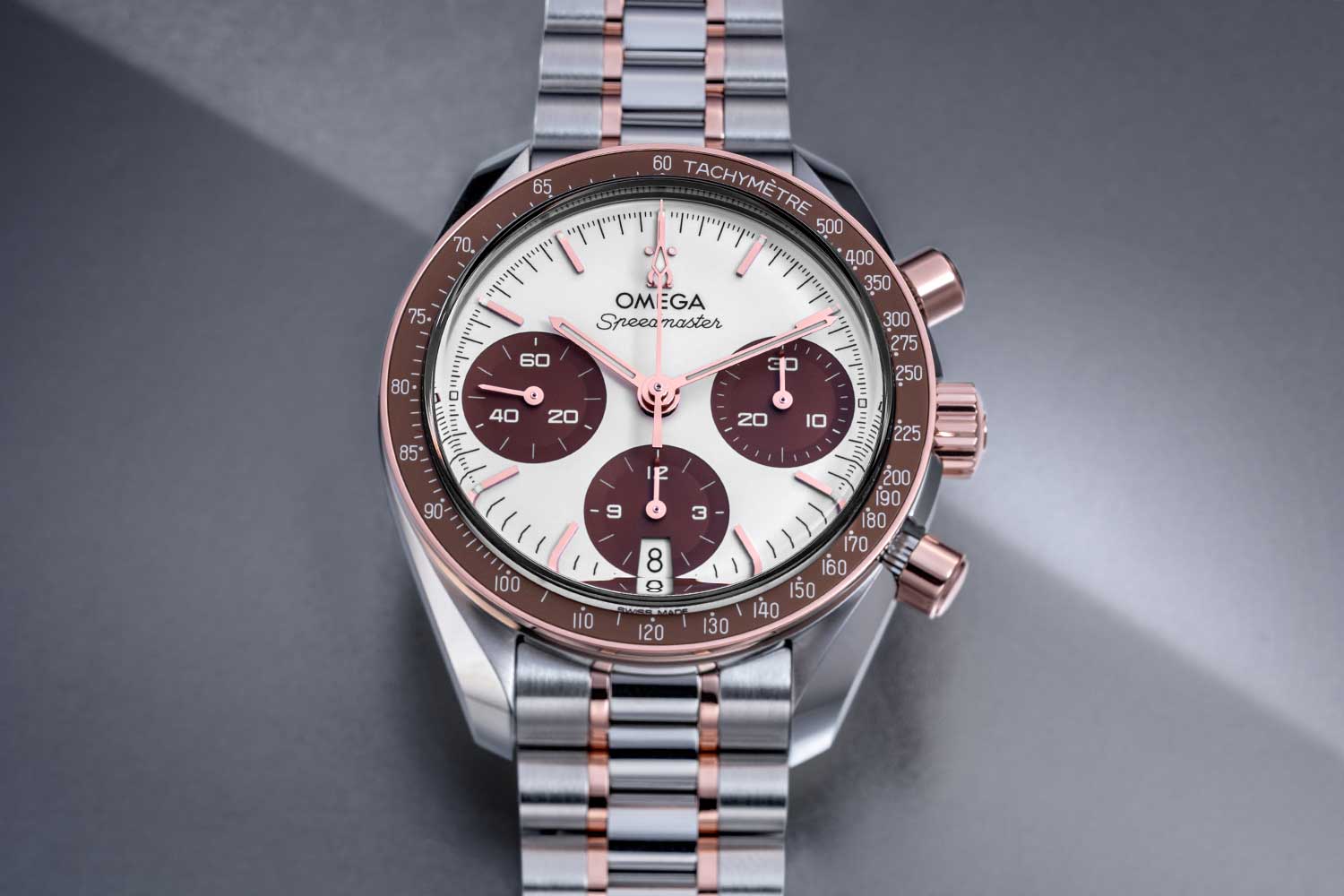
(©Revolution)
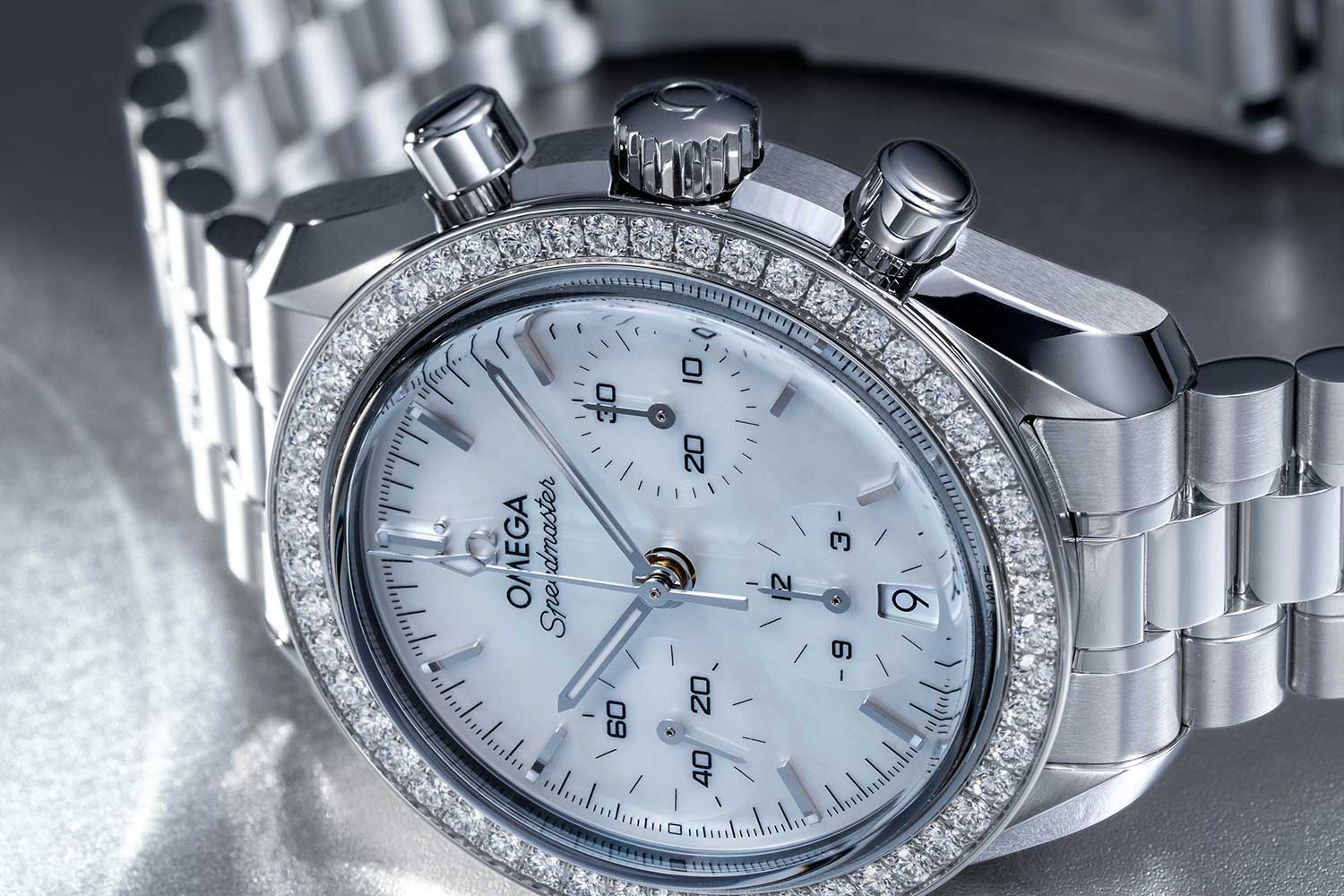
Finally, two diamond-set versions sit at the top of the range. Each has 52 diamonds set into the bezel for a total of 1.53 carats. One has an ice blue PVD-coated dial, while the other uses white mother-of-pearl. Both have rhodium-plated hands and baton indexes filled with white Super-LumiNova.
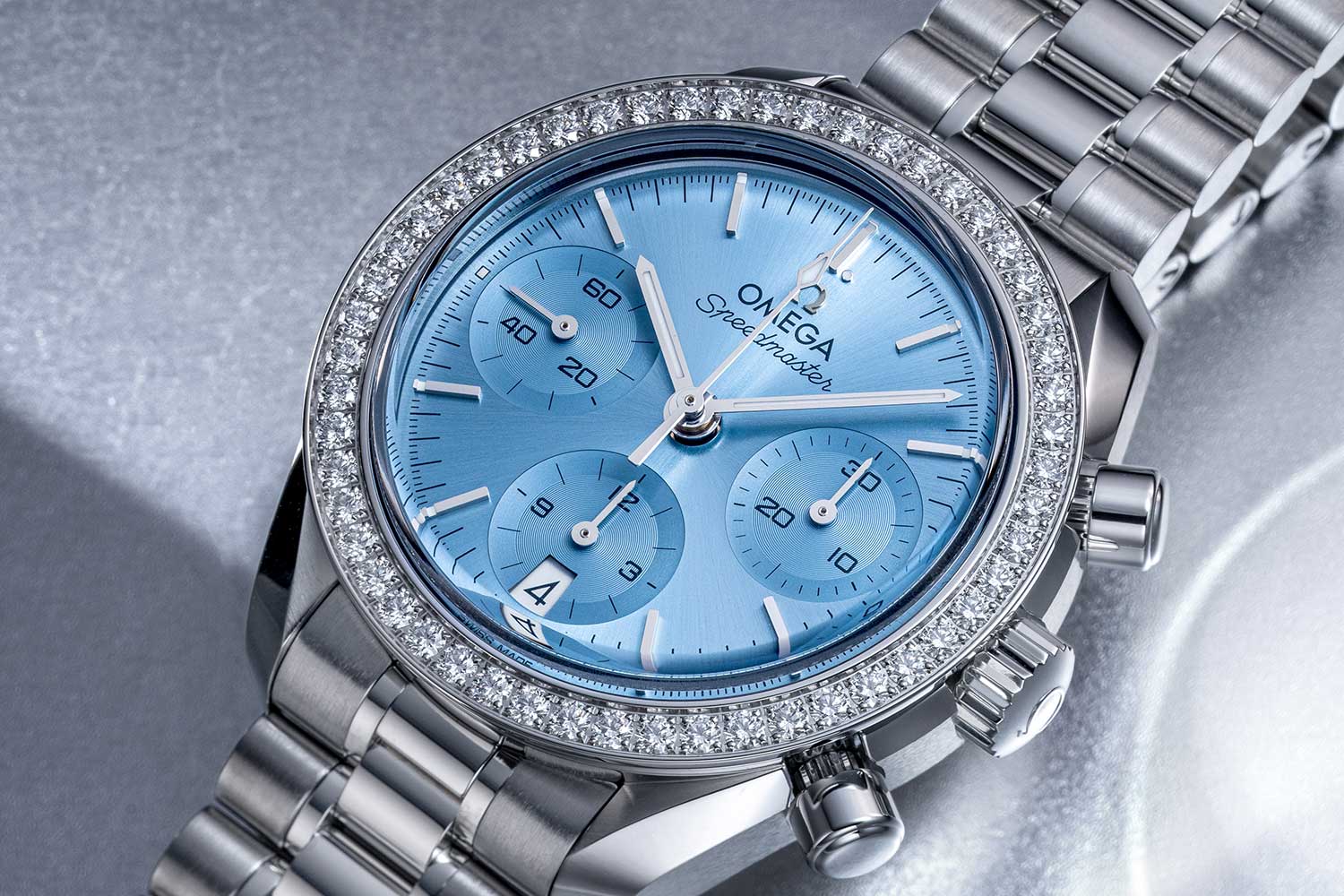
Omega Speedmaster 38 mm with a diamond-set bezel and ice-blue dial (©Revolution)
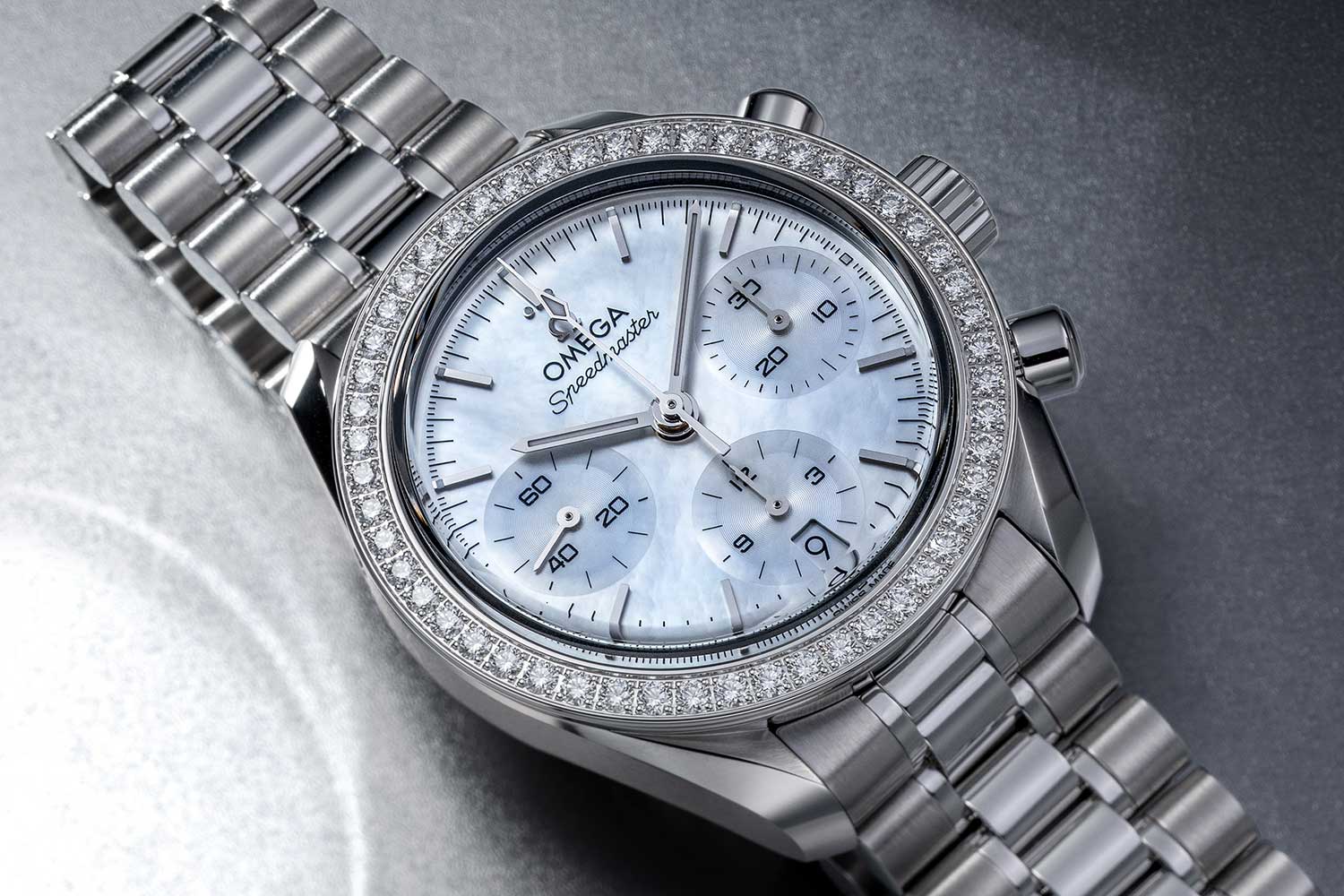
Omega Speedmaster 38 mm with a diamond-set bezel and mother-of-pearl dial (©Revolution)
(©Revolution)
I think this may well be the update that enthusiasts with smaller wrists did not quite know they were waiting for. Omega’s dial quality is exceptional, and it is especially evident in these watches. While it is tempting to wish for a Master Chronometer movement at this point, the Calibre 3330 has its own unique set of qualities. It combines one of the most robust gear trains in the world with one of the most important developments in modern watchmaking, the Co-Axial escapement, as well as a silicon hairspring. Outwardly, there is little question that the watch is now much more compelling, and the steel models in particular, priced from CHF 5,100 to CHF 5,500, are a superbly viable means of entry into the Speedmaster family.
Tech Specs:Omega Speedmaster 38 mm
Movement Self-winding Co-Axial Calibres 3330 or 3332; 52-hour power reserve; 4Hz
Functions Hours, minutes and small seconds; chronograph; date at 6 o’clock on Calibre 3330 models
Case 38mm × 14.75mm; stainless steel, steel and 18K Moonshine Gold, or steel and 18K Sedna Gold; two references with diamond-set bezels
Dial Black, white, silvery opaline, ivory, ice blue PVD or white mother-of-pearl
Strap Five-link Moonwatch-style bracelet in steel or matching bi-colour metal
Price CHF 5,100 (Steel with Black dial), CHF 5,500 (Steel with blue and white dial), CHF 5,200 (Steel with silver dial), CHF 9,100 (Bi-color), CHF 9,600 (Ice blue with diamonds), CHF 10,200 (MOP with diamonds)
Omega

You may also like
News
Last Week in Watches: Omega Plays Both Sides, Seiko Takes Panda Literally
Oct 12, 2026
News
Last Week in Watches: Omega Plays Both Sides, Seiko Takes Panda Literally
Oct 12, 2026
Editorial
Bond is Back: The New Omega Seamaster Bond Watches are Perfect for Heroes or Villains
Oct 5, 2026
Editorial
Bond is Back: The New Omega Seamaster Bond Watches are Perfect for Heroes or Villains
Oct 5, 2026
Editorial
Last Week in Watches: New Releases Ahead of Geneva Watch Days 2026
Aug 31, 2026
Editorial
Last Week in Watches: New Releases Ahead of Geneva Watch Days 2026
Aug 31, 2026