Living Color: The Life and Legacy of Alain Silberstein

Earlier this week we learned that Alain Silberstein, pioneering watch designer with unmistakable style, passed at the age of 76. The loss was made even more tragic as he was on the verge of launching a fresh suite of watches, a triumphant third act in a life and career as full of joy and drama as the watches that bear his name. And while the tone of this upcoming launch is irrevocably changed, its still the perfect time to examine his legacy in watches.
In 2021 I spoke to Alain Silberstein in the lead up to the debut of his collaboration with Grail Watch and Ressence. At the time, Silberstein’s star was once again ascending, thanks to a number of critically acclaimed collaborations which introduced his idiosyncratic style to a new generation of watch enthusiasts. His story is fascinating, an architect turned watch designer who experienced the highs and lows of an industry, characterised by his infectious enthusiasm and clear passion.
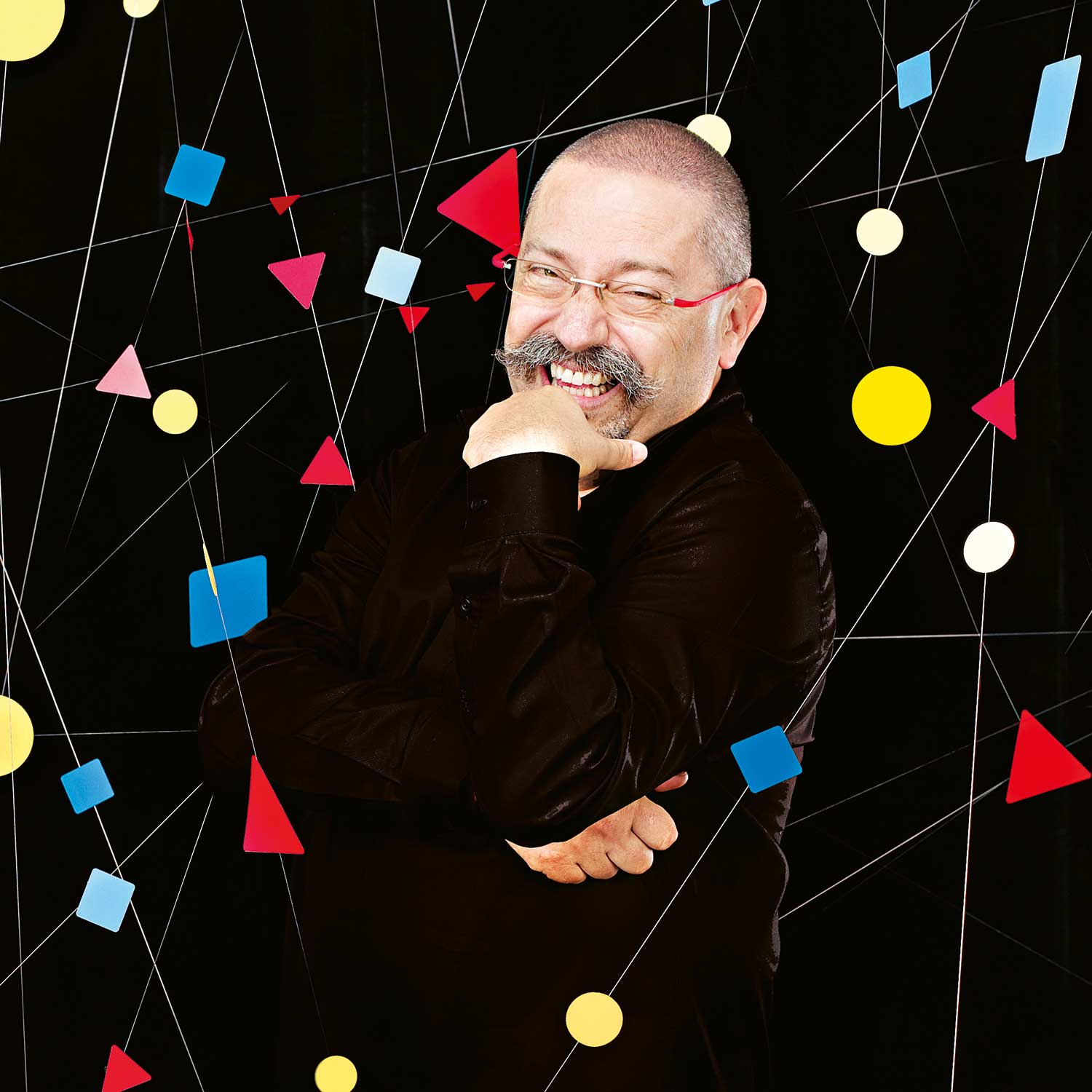
Alain Silberstein
This passion was ever-present in our conversation, so much so that it still stands out years later.
Much of our conversation was spent looking backwards and ruminating on his legacy, one full of ups and downs, but united by a through-line of bold primary colors. If you’re not overly familiar with the oeuvre of Silberstein, don’t worry, it isn’t hard to miss. The cylindrical cases and straight lugs have an architectural air to them, which is fitting as Silberstein billed himself as the “Architecte Horloger,” a nod to his professional training. And while the cases may be bold, they don’t hold a candle to the dials. The hands are simple geometric shapes in primary colors. There’s a sense of whimsy in the dials and indicators — for example, the day of the week indicator on the Krono Bauhaus is represented by an expressive face, with Monday being the saddest and Friday and the weekends the happiest. This light-hearted approach belies the seriousness of Silberstein’s work. The designer was a pioneer, not just in his use of form, color and material (Silberstein was making sapphire watches in the ’90s, long before Richard Mille et al.), but also in terms of having a single clear vision that defined his work. As we shall see, the seeds of this style were born when Silberstein was a young man, and it remained consistent throughout his life.
Minutes into my interview, I’m immediately struck by how open Alain is — this is not the guarded dance of a discussion with a corporate executive, with pre-approved questions and the like. It’s a broad, free-flowing conversation that moves from drawing inspiration from Australian petroglyphs to the challenges of after-sales service. But towards the end of my interview, after we’ve covered off his early years, the impact of his brand’s bankruptcy, and his return to watchmaking’s spotlight thanks to partnerships with MB&F and Louis Erard, one word comes up that clearly describes why Alain Silberstein has spent the better part of his life dedicated to his colorful craft. I asked Alain if he would describe his watchmaking journey as a roller-coaster, and he politely disagreed. “If I have to give only one word, it’s resilience. I never changed my style and design, and my vision about the art of watchmaking. Any experience, even the bad, you have to understand that something good could come from it.”
Silberstein Renaissance
For a while there, it looked like the watches of Alain Silberstein were the product of a very particular time and that his unique vision of colorful dials and bold cases was a quirk of ’80s and ’90s watchmaking. But, over the last decade, Silberstein found common ground with other freethinkers in the world of horology. MB&F partnered with Silberstein on the HM2.2 Black Box (in 2009) as well as the LM1 Silberstein (in 2016). Max Büsser, no stranger to walking his own path, is unequivocal on Silberstein’s impact, or rather what that impact should have been: “Alain’s work should have been a game changer in our industry, but unfortunately, most did not understand his work at the time. His group of die-hard aficionados, of which I have been for over 25 years, never grew large enough to impact the rest of the industry. As a single creator, he dreamt up more innovative concepts, whilst always staying faithful to his love of Bauhaus, than most large brands put together. It is heartwarming that finally the world is understanding that his unique style is so precious and so groundbreaking.” Given this context, it makes sense that a long-time advocate of creative partnerships, as Büsser is, would want to work with Silberstein. “All collaborations are about working with people I admire and about mixing our strong creative attitudes. A collab cannot be a business or economic goal if you want the result to be truly innovative and the journey to be harmonious. The goal has to be a great product — and I have realized over the years that the journey is as important as the result. What came out of our two collabs is, first of all, the immense pleasure of working with Alain, and secondly, great (and very limited) products that neither of us could have invented alone.”

Distinctive colors on the dial of this 2016 MB&F LM1 are unmistakably Silberstein
Büsser also has a theory as to why Silberstein’s unique approach has endured in recent times. “Many watch collectors I know are getting increasingly bored — new colored dials, new colored bezels, new sizes … all based on the good old pieces we all know so well already. How can they continue to feel much enthusiasm? Alain’s work is like an electric shock. A large part of his newly found legitimacy stems from the fact that he has been doing it for over 30 years! It’s unfortunate but if a young creator came up with this style today, many people wouldn’t be paying attention. History and consistency help you gather legitimacy.” Max Büsser’s sentiment is echoed by another of Silberstein’s collaborative partners, Manuel Emch of Louis Erard. When asked about the multi-generational appeal of Silberstein’s colorful watches, Emch said: “In a way, his designs are very technical, but at the same time, very playful, with a colorful approach. It is unique because watchmaking is all about [being] very serious when it comes to the habillage, the dials and hands. They’re always functional. There’s always this sort of functional reflection about it. And then Alain really brought this kind of post- Bauhaus Memphis style. It was very unique, very colorful, very geometric, and very playful.”
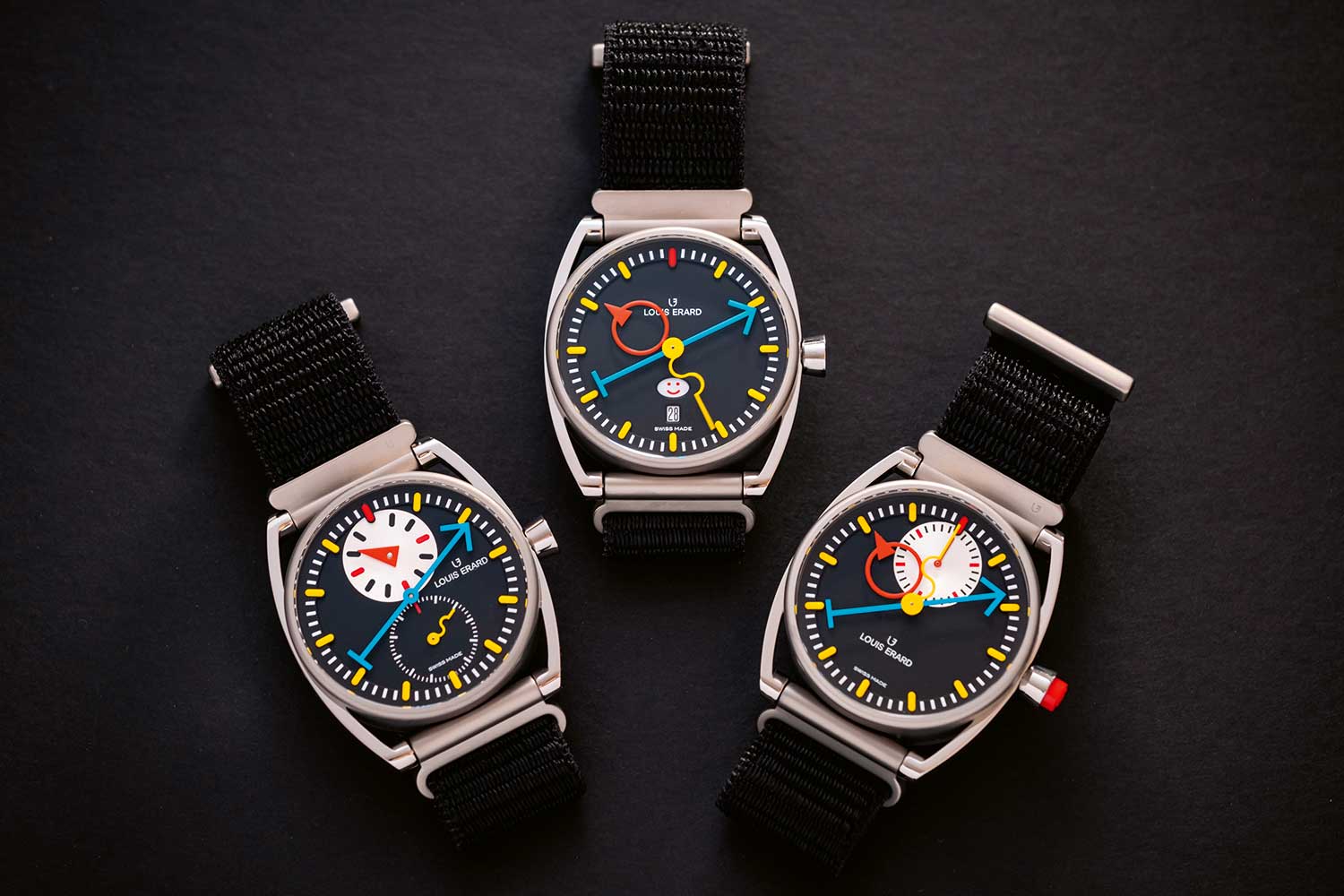
The critically acclaimed triptych of collaborative pieces designed by Silberstein and made by Louis Erard represents increased appreciation for the designer’s style and approach
Louis Erard proved to be one of the most significant supporters of Silberstein’s vision in recent years, the initial pair of regulator-style watches quickly evolved into a regular schedule of releases, with new color combinations and occasionally complications added into Louis Erard’s roster, even entering the brand’s hall of fame — collaborations that have earned a spot in the permanent collection, rightfully so.
Another important series of collaborative watches were the three editions made in partnership with Grail Watch. The first being the 2022 Ressence x Alain Silberstein Type 1 REV (Carpe Diem), which expanded the familiar iconography to include memento mori motifs.

2022 Ressence x Alain Silberstein Type 1 REV (Carpe Diem)
This was followed in 2023 by a trilogy of releases made in partnership with Bell & Ross, which paired Silberstein’s famous playful shapes with the equally iconic square of BR 03 case.

2023 by a trilogy of releases made in partnership with Bell & Ross
The final chapter in Silberstein’s Grail Watch story is perhaps the most ambitious, the Angelus x Alain Silberstein U11 Streamline Tourbillon saw just eight watches created which disconnected the tourbillon from the dial and placed both in a distinctive teardrop-shaped case.

Angelus x Alain Silberstein U11 Streamline Tourbillon
In addition to this, Silberstein also created other collaborative pieces over the course of his career, from Romaine Jerome (his first foray with Manuel Emch) back in 2015, and more recently, creations with Yema and Meistersinger, which evoked Silberstein’s signature style in very different packages.
One of Silberstein’s most impressive partnerships is not a watch at all, but rather a clock, made in partnership with Besançon-based clockmaker, Unitam. The Kontwaz Bauhaus 2 is an imposing clock, wall-mounted to standing, made with Silberstein’s typical regulator style display but on a scale that is truly larger than life.
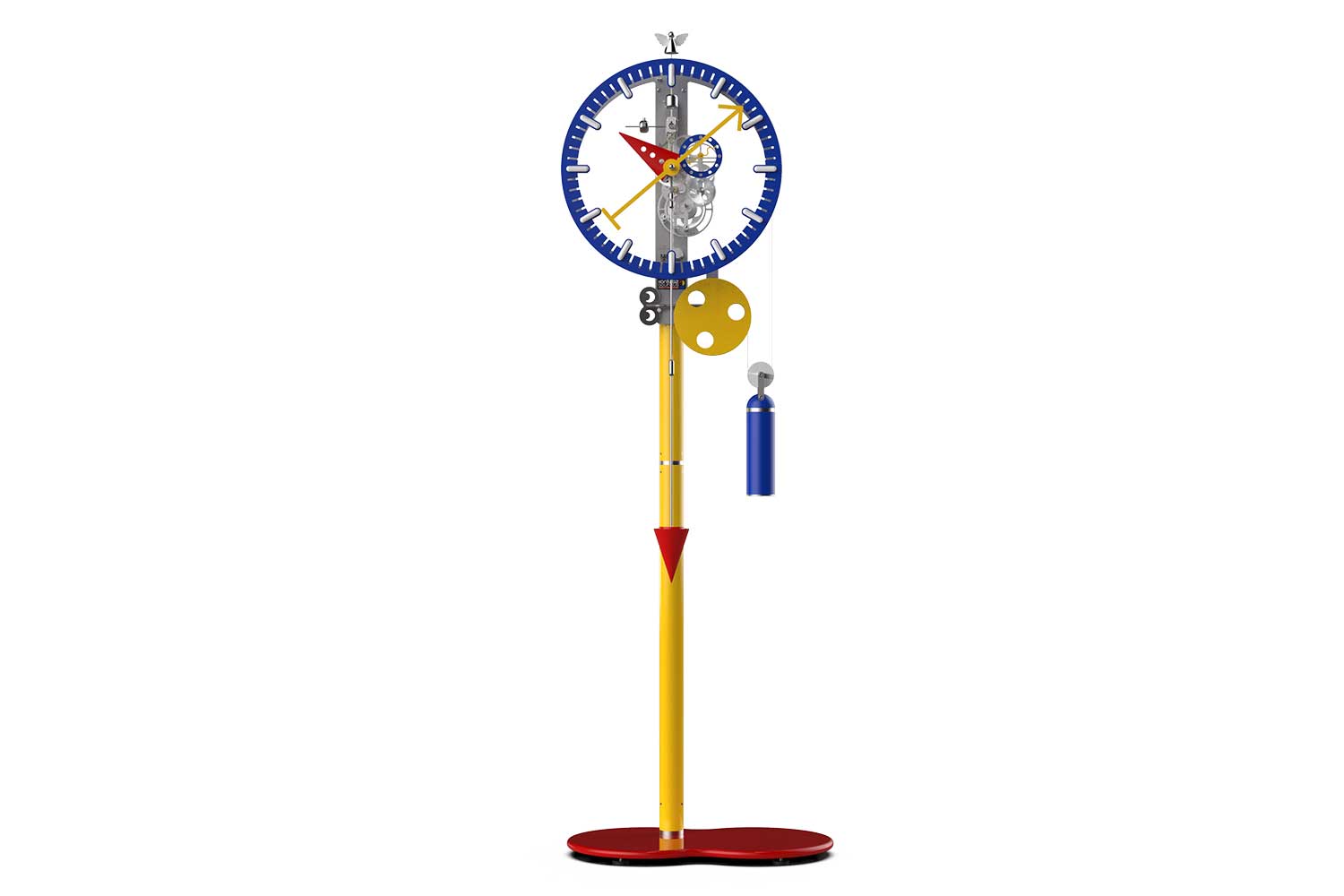
The Unitam KB2 standing clock with regulator
Alain Silberstein × Art Theory
At this point, it’s worth considering where Alain’s famously distinctive style was developed. You should not be surprised to learn that Silberstein’s seemingly fun and free use of color, shape and smiley face is based on serious art theory and academia. Often Silberstein’s work and design is referred to as Bauhaus, but as Silberstein explains, that’s only part of the story — and one that got twisted up over time: “Now, there’s a big misunderstanding related to Bauhaus. Bauhaus was a school of design in the early ’20s in Germany. Why am I always honoring the Bauhaus school of design in my craftsmanship? When I was an art student in Paris, I went to a prep school, where I met my wife. This school taught with the same curriculum as the Bauhaus school in Germany, based on the basic foundation of architecture, geometry, color, everything. This year was my founding year, and at that time, nobody talked about Bauhaus. It was only years after [that] I discovered that the teaching was the same as … the Bauhaus school. So, when I was first interviewed by journalists, they asked me about my influence, I always said Bauhaus. There is no Bauhaus style in design, no, [it is the] teaching style. This teaching gave me the ability to find myself, and this is why I named my first chronograph the Krono Bauhaus to honor the teaching I went through. Today … I feel more free to say that, in the long run, I’m very close to the Memphis Group design from the ’80s.”
-
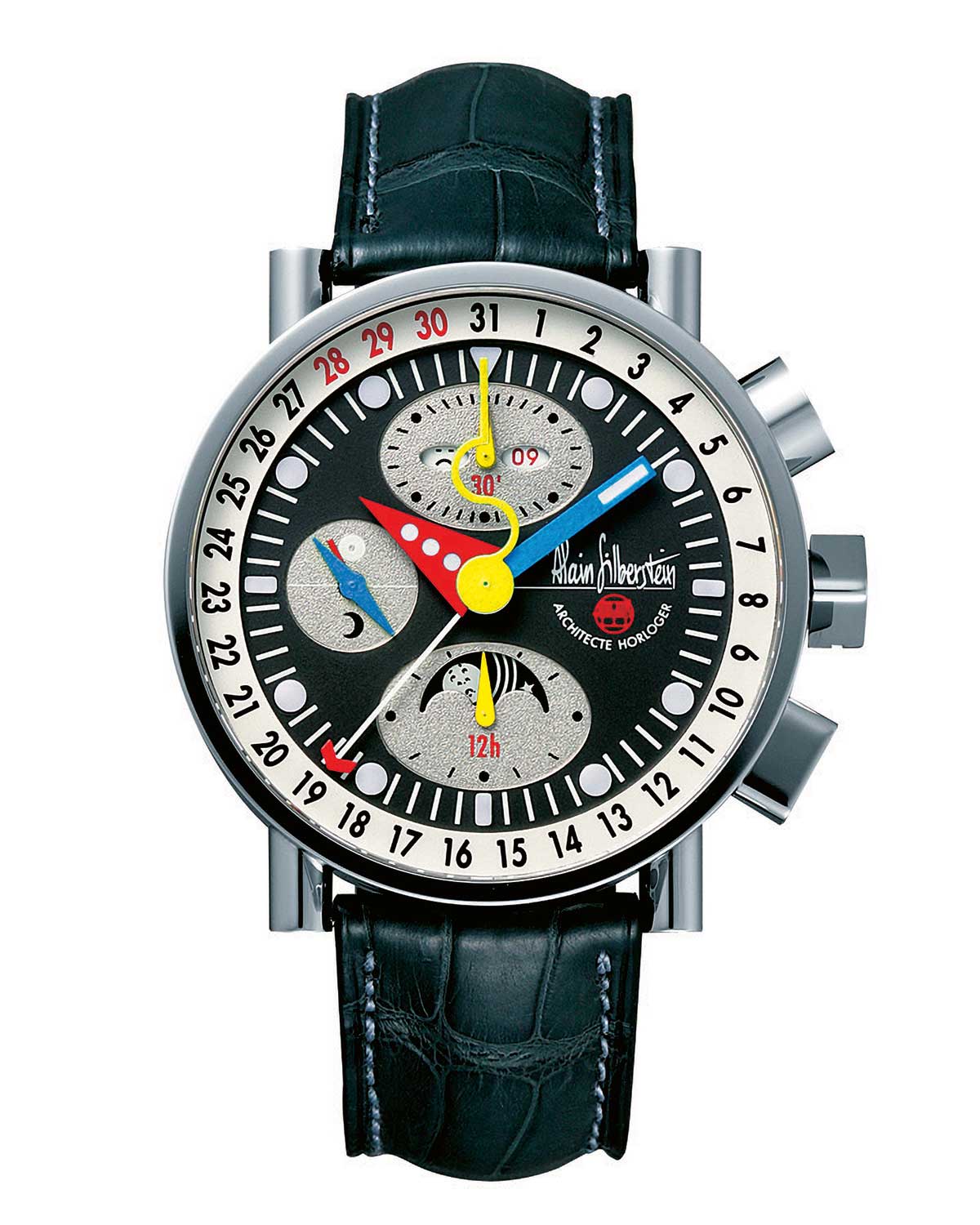
- The riot of color and complication that is the Krono Bauhaus is, perhaps, Alain Silberstein’s most famous design
-

- This openworked, sapphire-cased tourbillon was ahead of its time
One Bauhaus teacher, in particular, has had a lasting impact on Silberstein’s watchmaking — the Russian painter Wassily Kandinsky. “He was quite a visionary. He tried to find a relationship between primary geometric shapes, so a circle, square, triangle, and the primary colors, red, yellow and blue. So he gives his students a questionnaire with the three shapes and says, ‘please choose the color which will match with these shapes,’ with the hopes of getting some statistical relationship between color and shape. But in fact nobody listened. So I took the test myself, and I made my own choice of colors.” This is why, on Silberstein’s watches, seconds are yellow, hours are red and minutes are blue. What seems like whimsy actually has deep ties into serious art and color theory. The theoretical underpinnings of Alain Silberstein’s approach also meant that his watches didn’t chase trends, at least when it came to design, and over the decades, Silberstein has been a witness to great change within the watch industry. He debuted his brand at the tail end of the Quartz Revolution, unquestionably an exciting era for mechanical watchmaking, especially if you were an independent atelier who saw timepieces in a different light. And as mechanical watchmaking experienced its renaissance in the ’90s, that star of Silberstein rose and became a global brand, with particularly strong followings in sophisticated markets like Japan and Italy. But in 2012, after a decade of watchmaking obsessed with excess — an era Silberstein describes as “Baroque” — Alain Silberstein’s brand declared bankruptcy. The 10-year anniversary of this life-changing event is drawing close and, when I asked Alain about it, it is immediately apparent that the impacts of this time still weigh on him. Silberstein explains the atmosphere at that time, a time with an intense pressure to develop exclusive movements (it was around this time when anxiety around the availability of ETA ébauches was at its peak). On top of this, the watch Internet had not matured into the powerful force it is today. If these things were not the case, perhaps the story of Alain Silberstein the brand might be different, but it was not to be so. While it’s clear Silberstein has many feelings of failure about this time, his outlook remains positive. Resilience, and the power of something good to emerge from hardship, is the lesson Silberstein eventually took from the demise of his brand.
Silberstein Forever
Speaking about his return to the watchmaking spotlight, Silberstein notes that the seeds were planted even before his first brand shut up shop. Instrumental in this process was none other than MB&F. “We started collaborating in watchmaking before the closure of my company. I started with Max Büsser in 2009. So from time to time over the years, I made some other collaborations, and [the] LM1 I did — which took almost three years with Max — was an amazing success. Since then, the value of my brand on the secondary market has risen.” And, along with the value of Silberstein’s work, his reputation for a distinct and consistent approach to watch design grew. Manuel Emch spoke about the contemporay appeal of Silberstein’s style, “Just maybe, this is also what the market needs today. Today we talk all about the same products, which are always the same colors, shapes, materials. There is a similarity to the watches today, and somehow Alain is totally out of this, I would say, conventional tradition. He brings in this explosion of colors and shapes, and that makes him very different. And I think it’s refreshing, even if it’s something that he already did for the last 30 years, but it’s somehow refreshing and spot-on with the needs of today.” Silberstein’s collaborative efforts remain relevant, which is remarkable given how much his approach to watch design has stayed the same. And after speaking with the man, I can see that it isn’t just the love of primary colors and theory inspired whimsy that has remained constant. Resilient is the right word to use — Silberstein witnessed the at-times remarkable vicissitudes of the watch business with a particularly Gallic sense of aplomb, one served Silberstein well. It is this combination of stoicism and charm that go a long way to ensuring his legacy, like his watches, will endure.

Advertisement