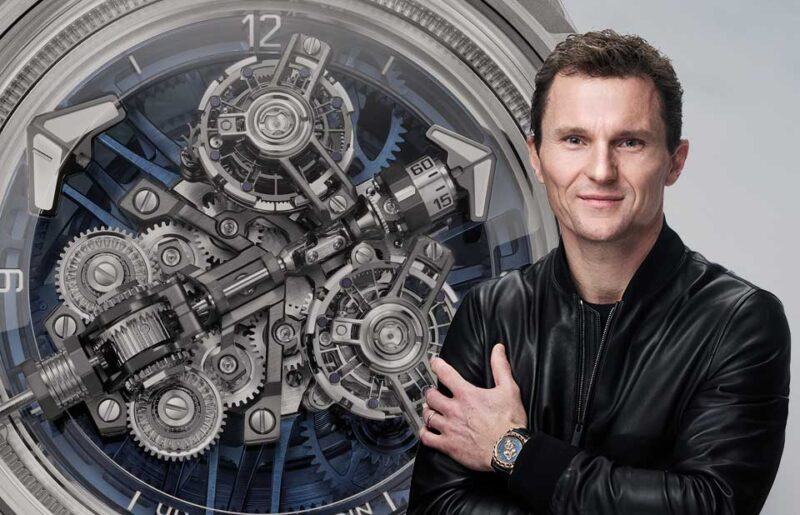
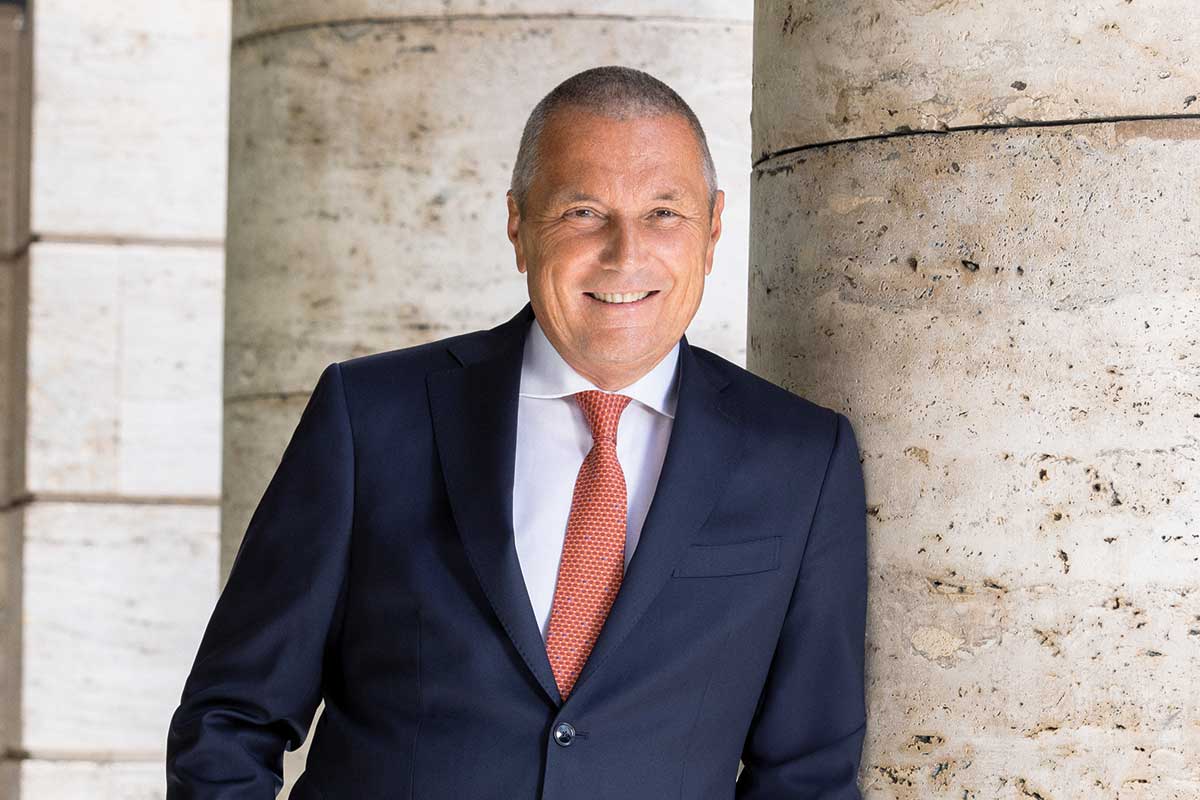
In conversation with Jean-Christophe Babin, President and Co-founder of Geneva Watch Days
Editorial
In conversation with Jean-Christophe Babin, President and Co-founder of Geneva Watch Days

Come September 2, Geneva Watch Days will return bigger and shine brighter.
That’s the plan Jean-Christophe Babin, President and Co-founder of Geneva Watch Days, has in mind. Conceived seven years ago at the height of the Covid pandemic and lockdown, the watch fair has since carved out a distinct identity and space for itself on the watch calendar with its diverse collection of brands and its casual festival format.
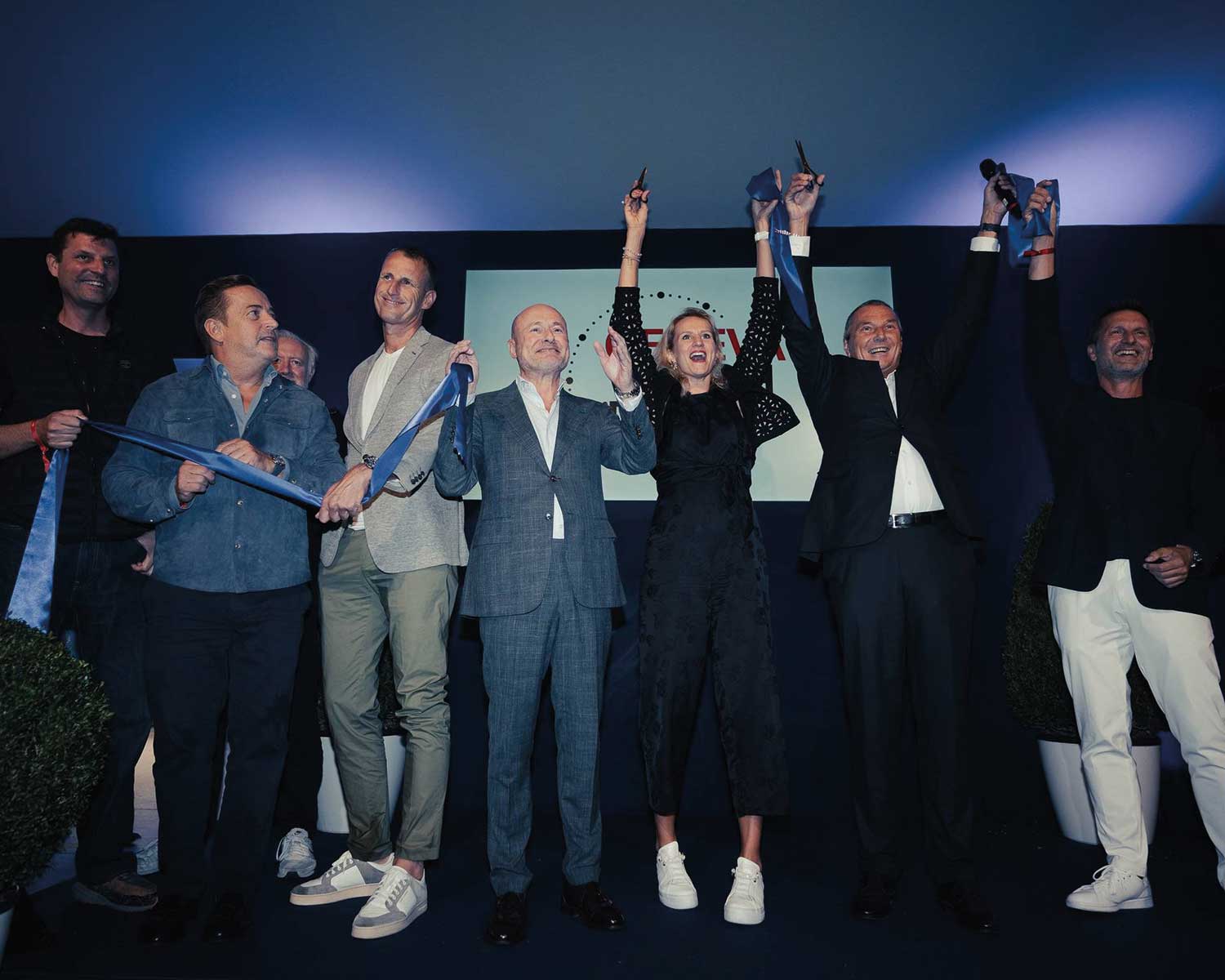
From the original eight brands — Breitling, Bvlgari, De Bethune, Girard-Perregaux, H. Moser & Cie., MB&F, Ulysse Nardin and Urwerk — this year’s edition will see some 71 participating companies across major luxury maisons, indies and microbrands. There will also be a host of brand-new activities designed to excite and engage, catering to seasoned collectors and long-time watch fam, as well as new and younger audiences. Beyond simply inviting young people to discover watches, the aim is to actually give them the opportunity to experience watchmaking. The Kids’ Club by the Musée International de l’Horlogerie, for instance, is specifically designed to make watchmaking accessible, fun and easy to understand for children between eight and 12 years old.
Signature events such as Power Breakfasts, meanwhile, remain one of the key highlights as they bring together senior executives from watchmaking and other industries around transversal topics. This year’s participants include Babin himself, Jonathan Brinbaum (Bvlgari), Patrick Pruniaux (Sowind Group), Niels Eggerding (Frederique Constant), Davide Cerrato (Bremont Watches) and Praneeth Raj Singh (Horologer Ming). There are the symposiums moderated by Revolution‘s Tracey Llewellyn and Constant Kwong, and featuring a lineup of industry heavyweights; a brunch quiz organized by the Fondation de la Haute Horlogerie (FHH); and an exhibition titled “Air, Earth, Fire, Water: 4 Elements in Time,” which is a guided themed showcase of over 130 timepieces from the participating brands.
In short, Geneva Watch Days 2026 promises to be a veritable festival for watch lovers, young and old, and Babin is clearly excited about it. Here, he discusses its evolution, its twin missions as an incubator and educator, and the highlights for this edition.
Tell us about 2026’s edition of Geneva Watch Days. What sets it apart from other watch fairs?
It’s definitely richer year after year, and it’s more than ever a global cultural event, more than a watch fair. All the other events and initiatives surrounding it are more cultural, above and beyond the watches. Even though they are all initiated by the watch category, we try to recreate something unique through the symposiums, the CEOs’ Breakfasts, the interactive activities, contests and auctions. And year after year, we work with the brands on new ideas to give further substance.
The number of participants is also stable; we don’t want to have too many brands because the quality of the experience will be compromised otherwise. But we have a larger pavilion every year, so that we can accommodate more [members of the] public, which has been one of our goals from the very beginning. As you know, since the first edition, the fair is free and open to the public every day. This year, we also have the support of incredible new partners, such as the City of Geneva and Geneva Tourism.
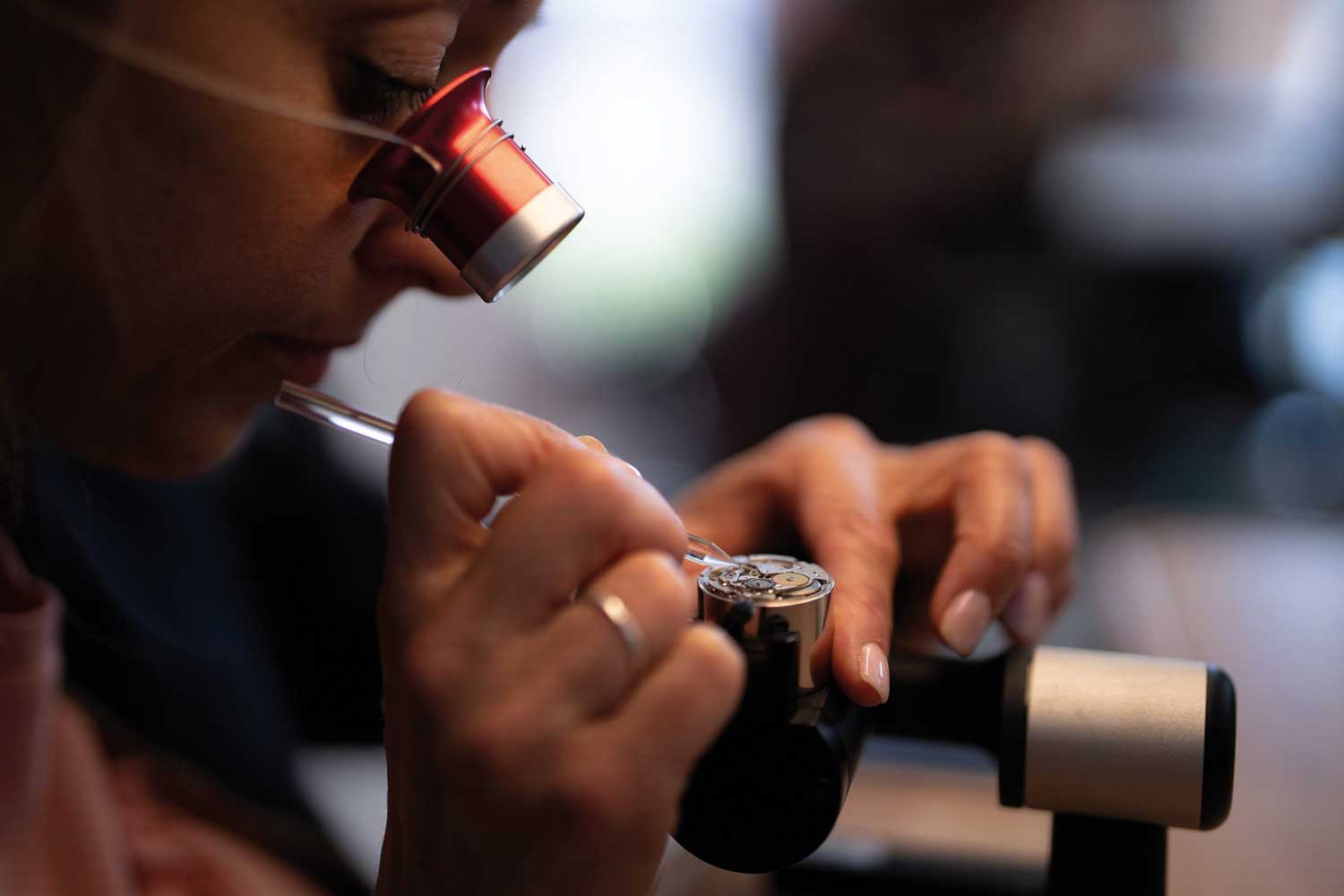
Geneva Watch Days is a cultural event; it’s really very educational. For example, we have “Time in Painting” with Konstantin Chaykin, where participants can explore how watchmaking creativity can be translated into art. We also have students from the Geneva Watchmaking School coaching visitors on the basics of movement regulation.
François-Henri Bennahmias will be sharing some of the industry’s secrets with young collectors, while the Musée International d’Horlogerie will introduce children to mechanical movements and how they are connected to the way we read time.
Geneva Watch Days is entirely free and open to the public from the day it started. How has this shaped its identity and made it so very different?
The free public opening has been perceived as extremely positive, not only by the public but also by the authorities and all the participants. But it’s not just that which makes us different, it’s the fact that the best of the new are exhibited in a multi-brand pavilion, where unlike for other watch events, you can really discover a few pieces from each of the brands.
Some you may know already, but there will be many you don’t necessarily know. We are a small brand incubator — we have young brands that are created recently or smaller brands that produce only a few hundred units to preserve exclusivity, which is very much to the liking, obviously, of the collectors. So you get a broad diversity, from mainstream players such as Breitling and Bvlgari, to older brands under revival such as Ferdinand Berthoud, and young brands that are stepping up. It’s a very good mix.
What is also interesting is that out of the 66 brands that were present at Watches and Wonders, only a handful are also participating in Geneva Watch Days. This means that every year, you have brands that will exhibit their expertise and creativity, which, without Geneva Watch Days, would not be possible.
The idea of Geneva Watch Days as an incubator for smaller brands is a compelling one. What does it mean for these brands in practical terms?
Many of these brands are not in Watch and Wonders because there is no space at the Palexpo. Any extra space that could be available comes at a price which is not compatible with the financial maturity of those brands.
Geneva Watch Days has always been extremely inclusive and respectful of the different sizes of the brands. We have different levels of pricing, not based on square meters but more related to the size of the brands. So even if you are still very small and don’t want to spend too much, you can be part of it, which is unique and very valuable for these brands. It’s obviously extremely exciting and a huge advantage because together they can do something that alone they could never do.
That’s an incredible boost for young and smaller brands. How do you manage that?
We don’t have an organization that is employing people on a yearly base, adding cost. All the people working for Geneva Watch Days are doing it on top of their main jobs. We do it because that’s the spirit behind the fair. It’s also nice because it’s not just one brand organizing it, but many brands delegating project teams to deal with the different elements like security, location, etc. It looks easy, but it takes time to make a program which is substantial.
Was this what you envisioned when you first mooted the idea of Geneva Watch Days in 2020 during the Covid pandemic?
In 2020, the initial ambition was to make sure that we would have at least one event during the Covid year. We had learnt that other big watch fairs were postponing their events to the year after, leaving many months without any kind of contact between watchmakers and stakeholders. It also means months without a spotlight on an industry that really needs one — because individually, most brands are too small to organize major events. And even if they could, it wouldn’t work as well as our event because you cannot go to 300 individual watch events per year.
So the fact that you can, in five days, meet and discover 71 brands, which are not the institutional and well-established brands — at least, many are not yet, but they are the brands of the future — works well for Geneva Watch Days.
This year, there is a concerted effort to reach out to younger audiences, not just young brands. How do you see this playing out?
When you are 20, a good watch is not necessarily your priority. One day, however, you may enter into this pleasure of possessing something manually crafted with passion. Obviously for us as an industry, the sooner we create occasions for the younger generations to meet, the better. Not everyone has 25 Swiss francs just to browse for one or two hours to look at some watches. Conversely, if it’s free, which Geneva Watch Days is, maybe they will say, “Oh, let’s have a look. It looks nice. I heard about it.”
This year, we have interactive sessions to help them better understand the complexity of watchmaking. It’s important that the younger audiences realize that mechanical watches are really very precious objects that are crafted not only with passion, but with a lot of expertise and skills. It’s not easy to gather 180 components, which would be the number of components of a classic simple hours, minutes and seconds movement, or anywhere between 800 to 1,000 components to make a chiming watch. Objectively, it’s very difficult.
This educational part is one of the priorities of the watchmaking industry, and it’s easier to do it collectively because we provide the audience with more reasons to visit and discover. People have a lot of different motivation centers of interest — whether it is a gift to a partner, or an upcoming dive trip — and the more we can connect those centers of interest in their life to the watch as a potential actor, the better it is for the watch industry. And then, of course, they will decide on a brand and a model, and we are back to the logic of competitive markets, but upstream, and this is the spirit of Geneva Watch Days. We are not competitors; we are a community.
How does this idea of community define Geneva Watch Days?
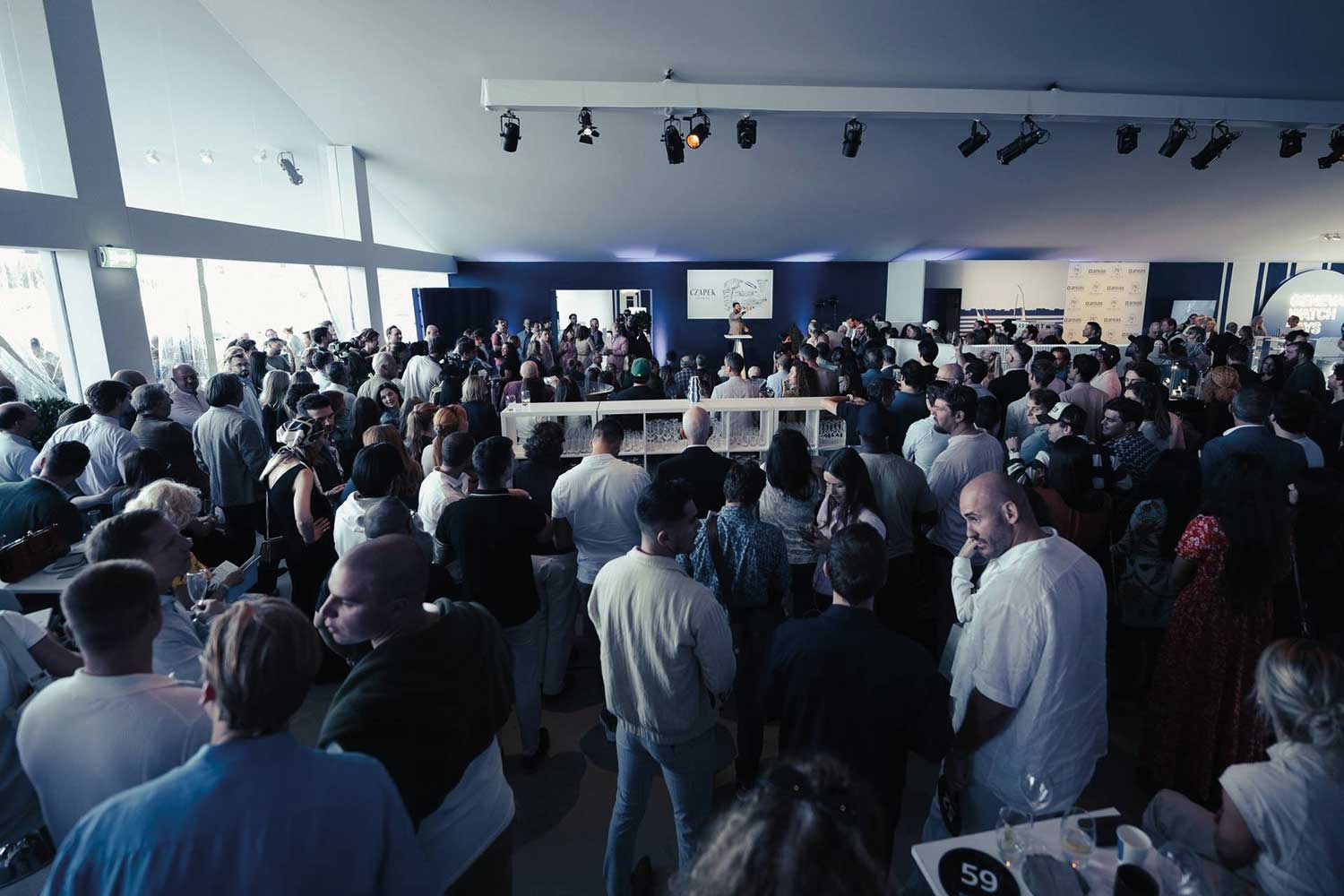
Well, our unity is our strength. Ours is the spirit of a community, not only of passionate people visiting us — the collectors, people who come for discovery, the media — but a community, I would say, which knows that together they are stronger and so, is not competing. An important part of the time at Geneva Watch Days is about sharing, discovering, learning, understanding, and not so much about selling.
Tell us about this year’s CaliberShip Challenge & Culture Club.
We wanted to make the experience much more interactive. The Culture Club will bring together the FHH, GPHG, The Watch Library, Horopedia, COSC and the Geneva Watchmaking School. Each will have its own lounge, with quizzes, games and experiences allowing visitors to discover different aspects of watchmaking.
The CaliberShip Challenge will have two phases this year: one focused on the regulation of a fine movement and another on magnetism. What I particularly like is that the participants will actually be coached by students, who will teach them the key fundamentals of these two subjects.
What is the biggest highlight for you at this year’s edition?
I think we have very strong participants at the symposiums and the CEOs’ Power Breakfasts. There are also more activities than ever, making it really a cultural and happy celebration of an industry that is a bit serious and formal. It is also showing the happiness of being a stakeholder in the watch industry.
What is your advice to visitors on the best way to get the most out of Geneva Watch Days?
Frankly speaking, I would say it’s to stay for four days. All the brands are interesting for different reasons. So ideally, if you could have time to see most of them, this is really the best way to enjoy it fully. You can try to see half of them in one single day, but because the philosophy of the event is on exchanging, interfacing and connecting, you can achieve this only if you have enough time to sit down, talk and try to understand the why.
This is why I advise people to set aside enough time to enjoy the many experiences we have.
For more information visit gva-watch-days.com
You may also like
Editorial
The Cartier Roadster: On The Road Again
Oct 9, 2026
Editorial
The Cartier Roadster: On The Road Again
Oct 9, 2026
Editorial
The Long View with Alex Rosenfield, Urban Jürgensen
Oct 8, 2026
Editorial
The Long View with Alex Rosenfield, Urban Jürgensen
Oct 8, 2026
Editorial
The Jacob & Co Palatial Flying Tourbillon Minute Repeater Goes Back to the Beginning
Oct 7, 2026
Editorial
The Jacob & Co Palatial Flying Tourbillon Minute Repeater Goes Back to the Beginning
Oct 7, 2026