Hublot Hits Rewind
Editorial
Hublot Hits Rewind

For the first two days of the 1980 Basel watch fair, Carlo Crocco had a problem. Having spent three years developing a gold watch with a rubber strap, relocated from Italy to Switzerland and established a company to manufacture it, he was finding it rather difficult to persuade anyone to come and have a look. Eventually, he and his wife went out to buy materials to write “rubber strap” in the display window. Perhaps that would encourage visitors to come in.

Carlo Crocco wearing the Hublot Classic Fusion White Gold
By the second or third day, people were talking about Hublot, and within months, members of Europe’s royal families were buying it. Constantine II of Greece purchased two, keeping one for himself and giving the other to his brother-in-law, King Juan Carlos of Spain. More royal customers followed, along with industrialists, business leaders and the fashionable international crowd that would become Hublot’s natural constituency.
It was quite an achievement for a new name in an industry that was, at the time, having a thoroughly miserable decade. Japanese quartz watches had taken a huge share of the market and established Swiss manufacturers were closing their doors. Crocco’s answer was a 36mm gold quartz watch with an almost completely plain black dial, 12 screws around the bezel and a rubber strap scented with vanilla.
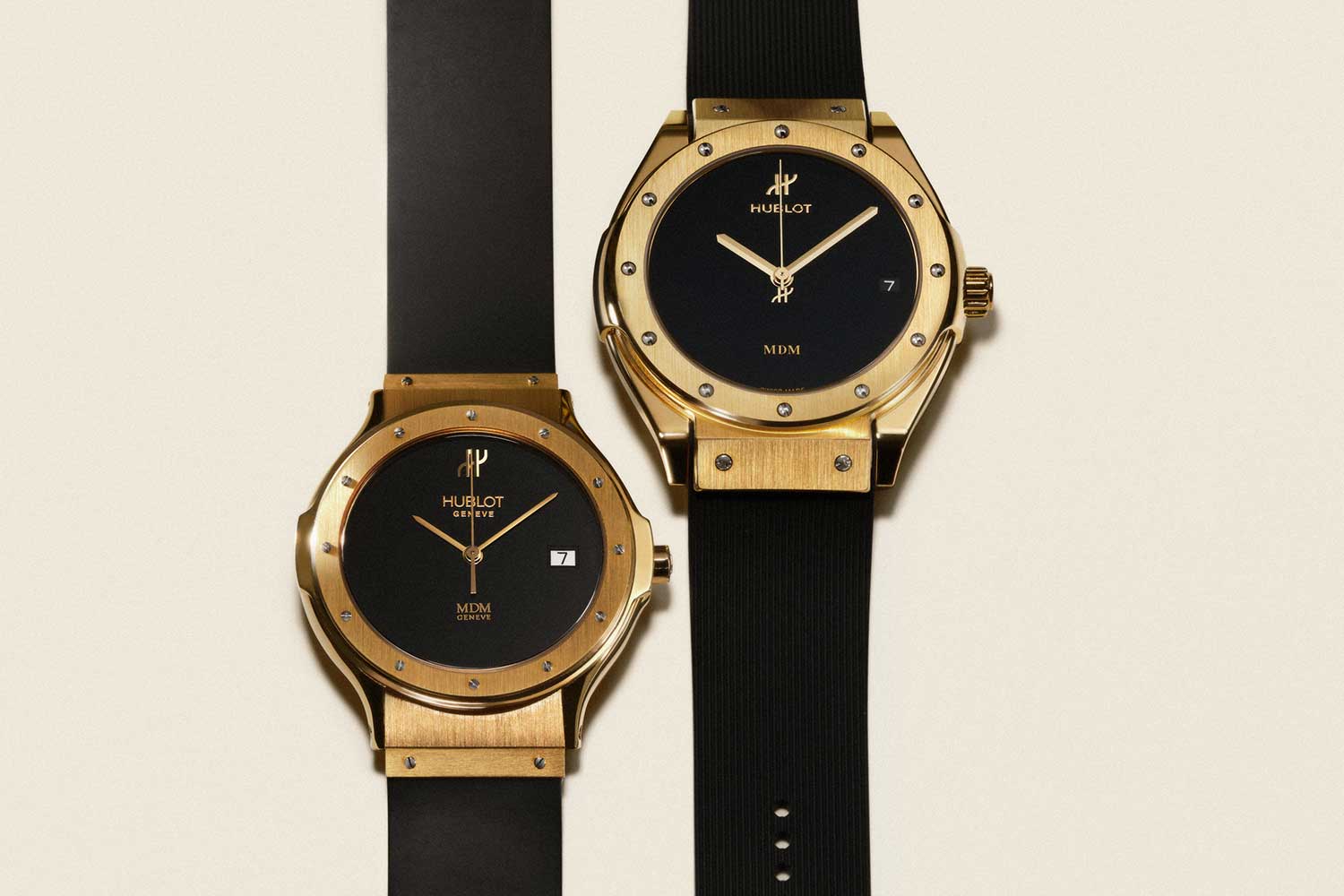
MDM Geneve’s original 1980 Hublot
Says Crocco, “I did not want to make just another beautiful gold watch; I wanted to introduce a new language. The idea was to combine the quality and seriousness of Swiss craftsmanship with a more contemporary, minimalist and creative design sensibility. Putting a gold watch on a rubber strap was radical at the time, but for me it was not provocation for its own sake — it was about harmony, comfort and modernity, in Italian style.”
The Origins of MDM Genève
Crocco had grown up in the Italian watch trade. His family distributed Swiss brands including Longines, and developed watches under the Breil and Vetta names. When he joined the business in 1969, he was given responsibility for affordable models aimed at younger customers. His ambitions, however, were rather more upmarket.
In the mid-1970s, he began developing a collection named Marie-Danielle after his wife. One watch, produced with Geneva case manufacturer Fuchs, had 12 small screws arranged around an otherwise unadorned case. A colleague suggested adapting the design into a sports watch and Crocco began experimenting with straps and bracelets.
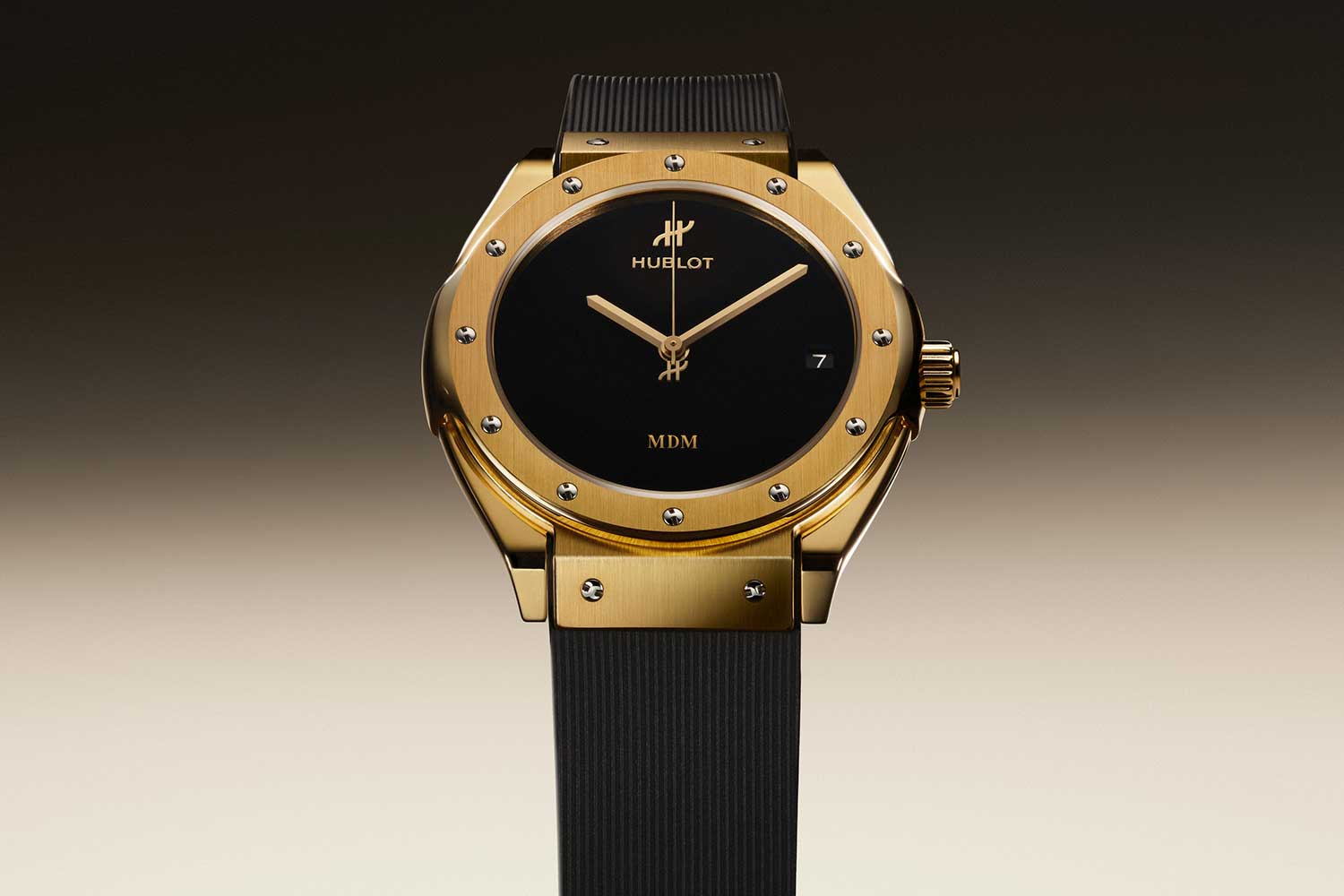
MDM Geneve’s original 1980 Hublot, the world’s first luxury sports chic watch on a rubber strap
Gold and steel were tried and rejected before the team arrived at rubber. Black against yellow gold looked good, but creating a strap suitable for an expensive watch proved unexpectedly complicated. Crocco worked with an Italian research center and specialists in rubber manufacturing, eventually producing a construction incorporating steel inserts. The vanilla scent was another unusual addition. All in, the strap took three years to perfect.
Even the name came about rather casually. Crocco had been discussing a model with a hinged protective cover with Swiss case maker Eric Bonnet, who thought it resembled a ship’s porthole, or “hublot” in French. The covered watch was never particularly popular, but the name was retained.
The company was initially called MDM Genève, the initials standing for Marie-Danielle Montre. As Hublot became successful, the name of the watch gradually eclipsed that of the company. And successful it certainly was. By the middle of the 1980s, Crocco was spending considerable time and money pursuing manufacturers who had decided to produce their own versions of his design.
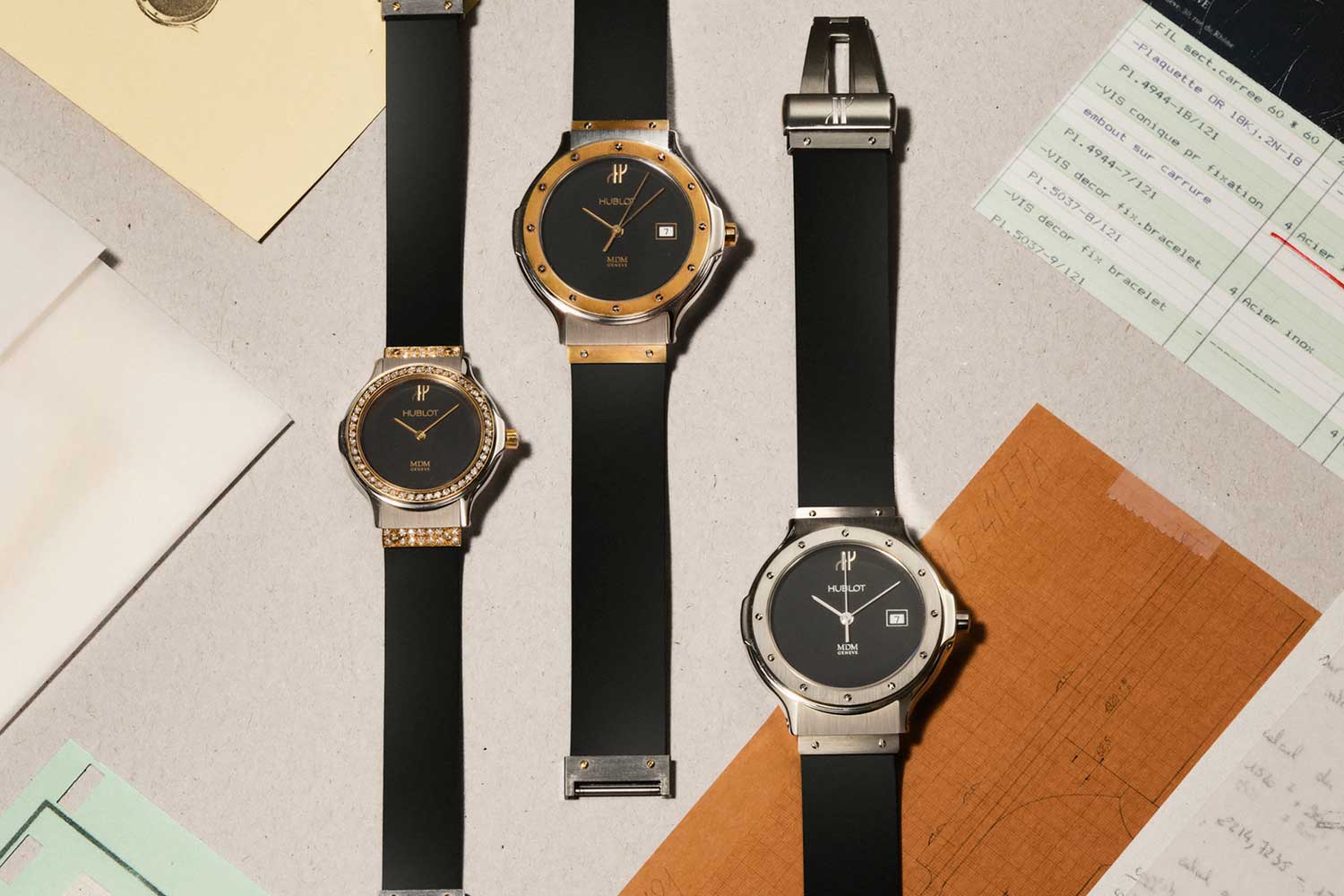
Vintage Hublot Classic
The Biver Era
For the next two decades, Hublot established itself as an unusual but recognizable presence in luxury watchmaking. Then Jean-Claude Biver arrived.
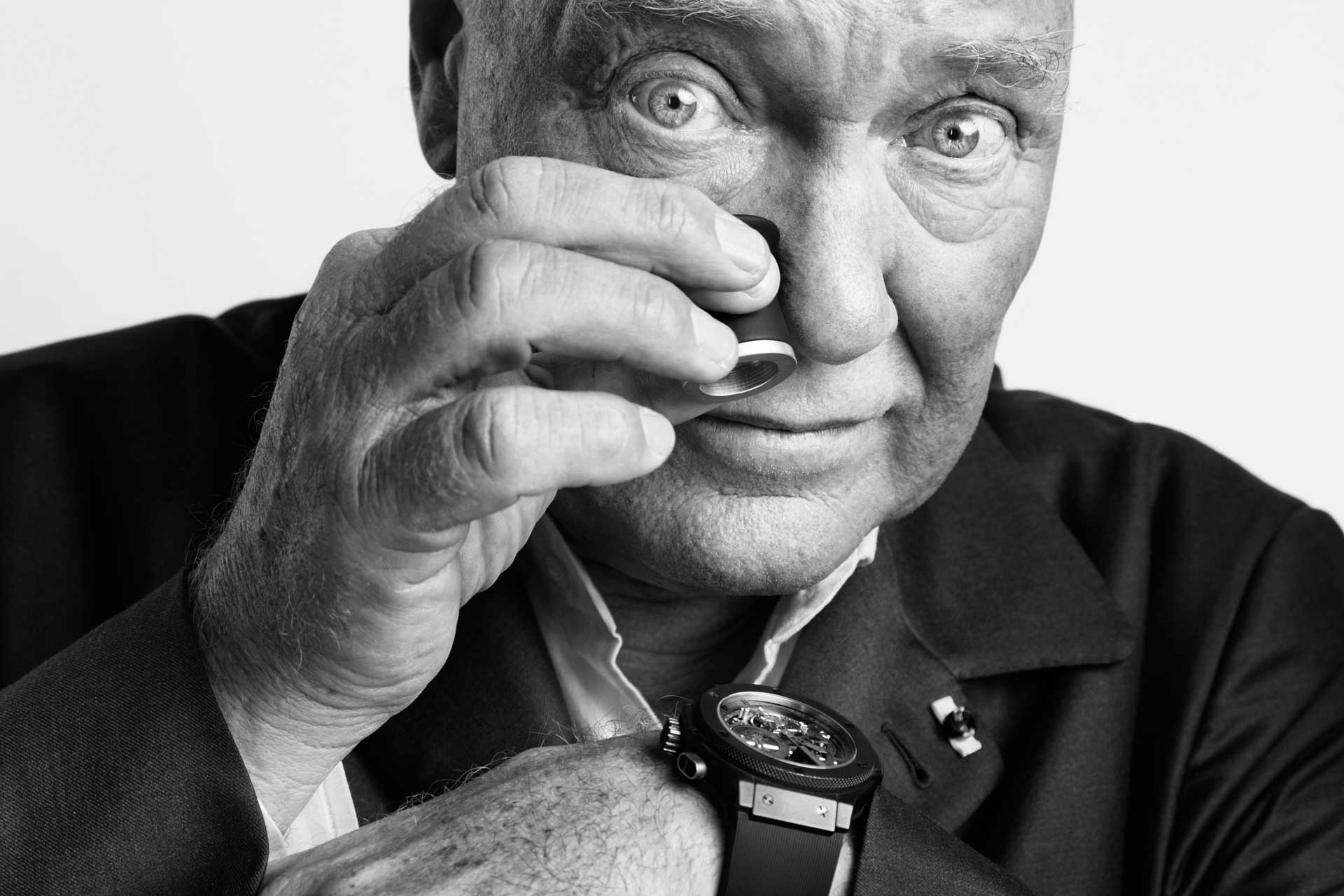
Jean-Claude Biver
Biver became involved with the company in 2004 and the following year introduced the Big Bang. He kept Crocco’s rubber strap, exposed screws and porthole-shaped bezel but increased the watch’s dimensions and introduced a more complex case construction. The discreet gold watch from 1980 was gone, but its replacement proved to be exactly what the industry wanted at the time. Hublot became, in Biver’s words, “a disrupter” — a commercial hit that was acquired by LVMH in 2008.
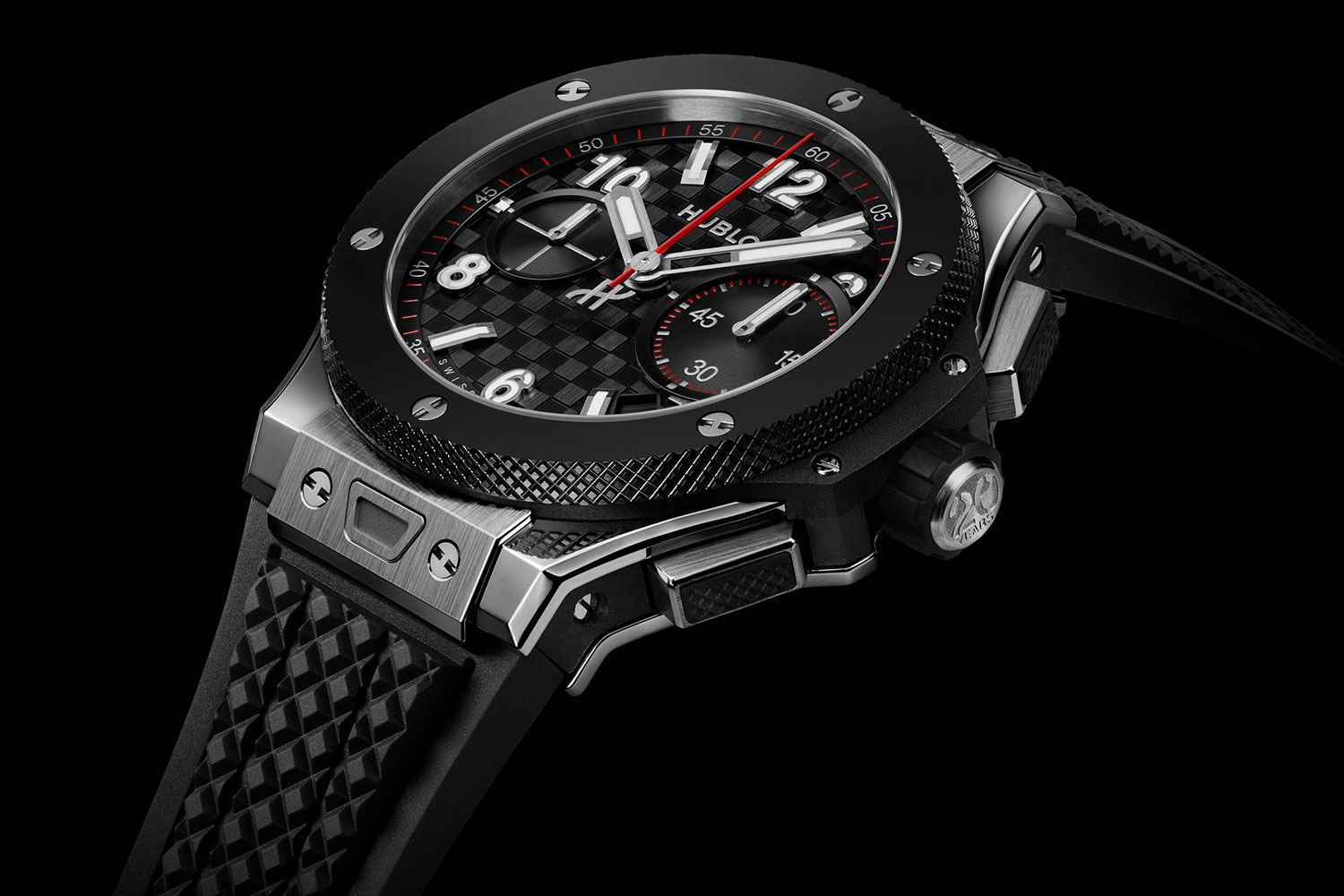
Hublot Big Bang
Although no longer involved in the company he founded, Crocco never stopped following its journey. “Entrusting Hublot to others was not easy, because when you create something from nothing, it remains deeply personal,” he says. “I followed the company with attention, even if from a distance, and naturally there were moments when I felt very aligned with what was being done, and others when I might have chosen differently.”
Although he stops short of listing the things he would have done differently, Crocco acknowledges the leaps the company has made from establishing its own manufacture in Nyon to developing its own movements, including the Unico chronograph and the Meca-10. Most exciting for him are the advancements in materials, producing combinations that were beyond imagination in 1980.
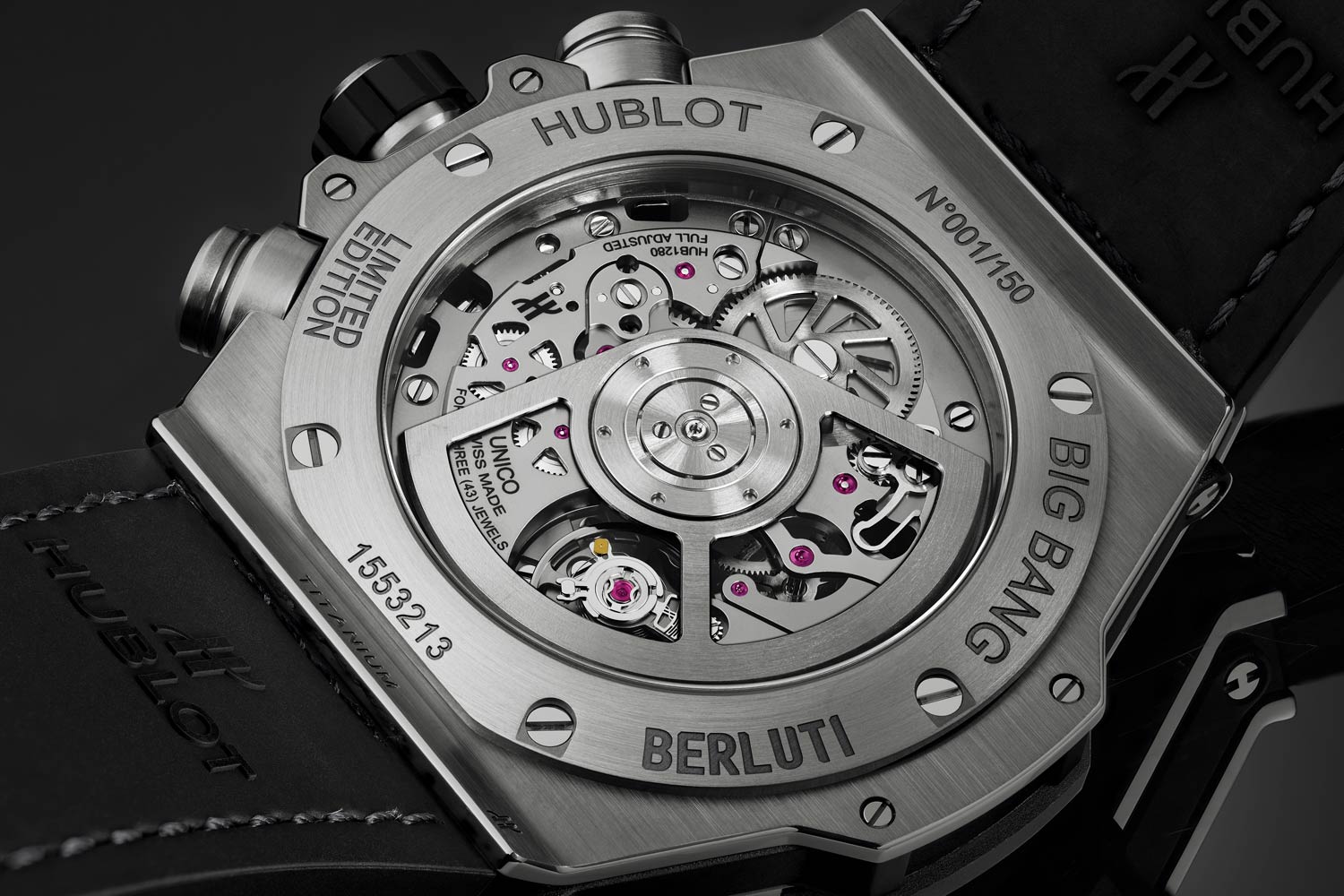
Hublot MHUB1280 Self-winding UNICO Manufacture chronograph Flyback movement with column wheel
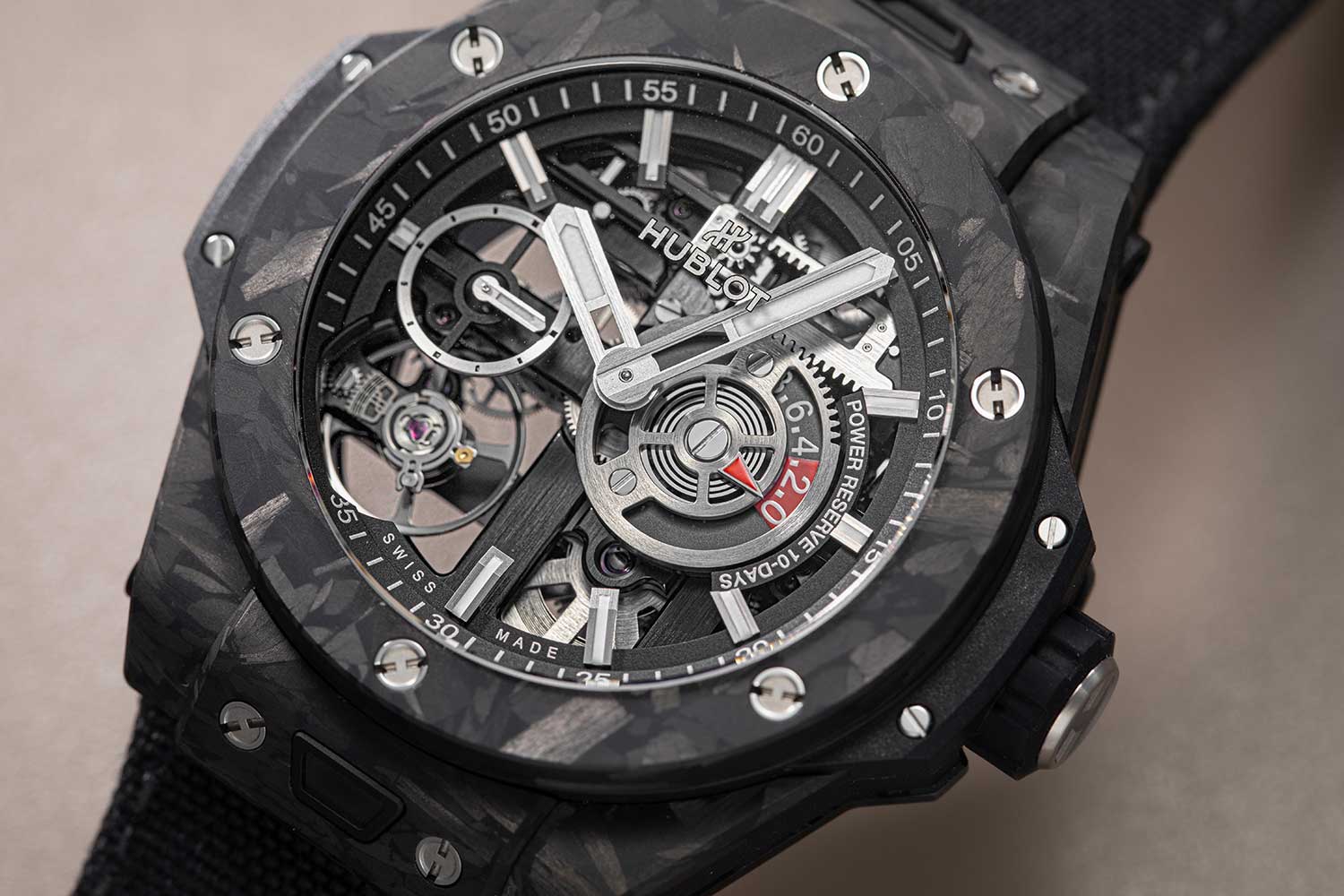
Hublot Big Bang MECA-10 (©Revolution)
“In some ways, Hublot today is what I hoped it could become, because the original idea proved strong enough to endure,” he says. “I am also glad to see the scale the brand has reached. Its global recognition and the way it developed into a true manufacture are things that belonged to another dimension from where I started.”
A Return to Hublot’s Founding Vision
When Julien Tornare took over as CEO in 2024, rumors already started to circulate that he was interested in the original Hublots from four decades earlier. While always respectful of the industry-defining Big Bang, Tornare, whose previous appointments included Zenith and Vacheron Constantin, began his tenure by studying the company’s history.
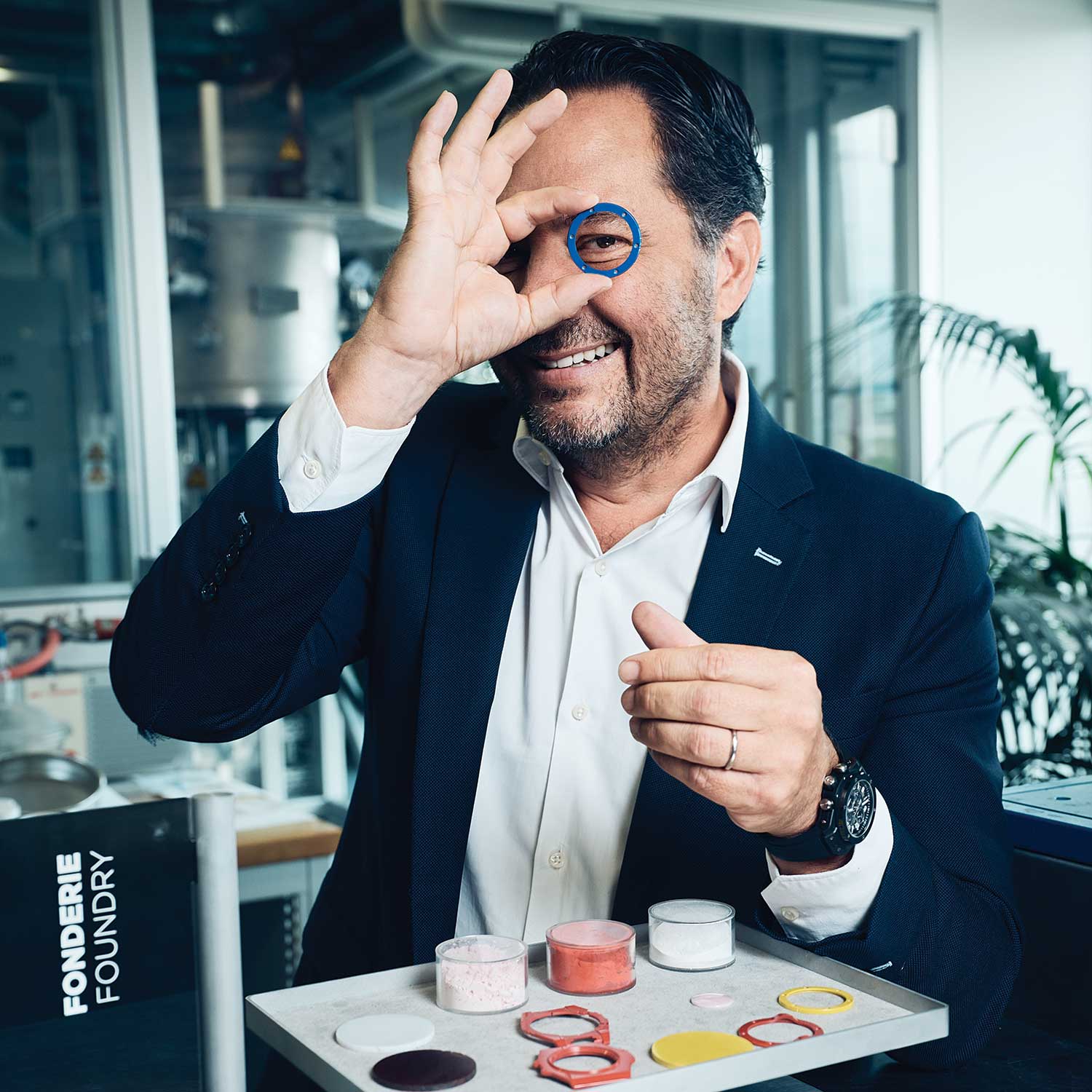
Julien Tornare, CEO of Hublot
According to Tornare: “The original Hublot reminds us that strength does not always come from complexity or excess.” The signature points that he identifies are simplicity, clarity, a recognizable silhouette and, of course, the clash of materials. “It shows that Hublot can be expressive and distinctive even when the design is minimal,” he explains.
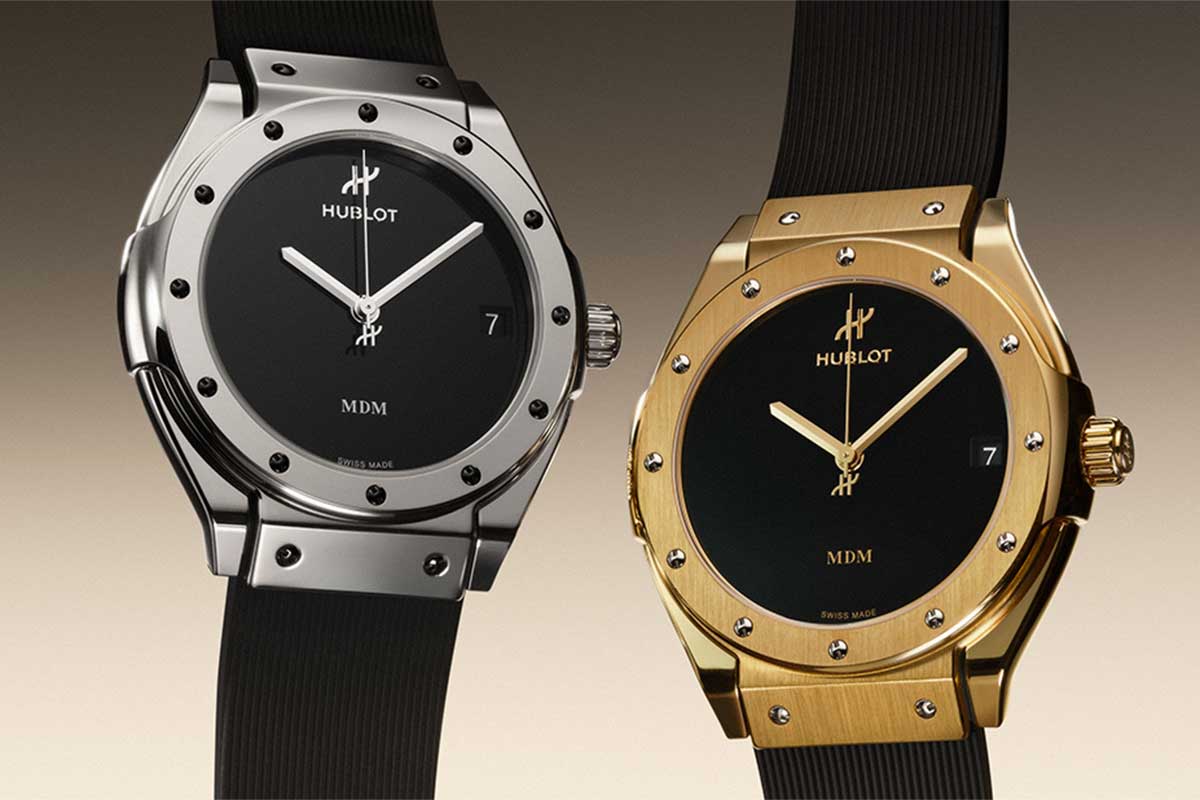
And so, 46 years after the original Hublot appeared at Basel, Tornare invited Crocco to work with the company again. The result is the Classic Fusion Tributo, a watch that could easily be mistaken for its 1980 predecessor at first glance.
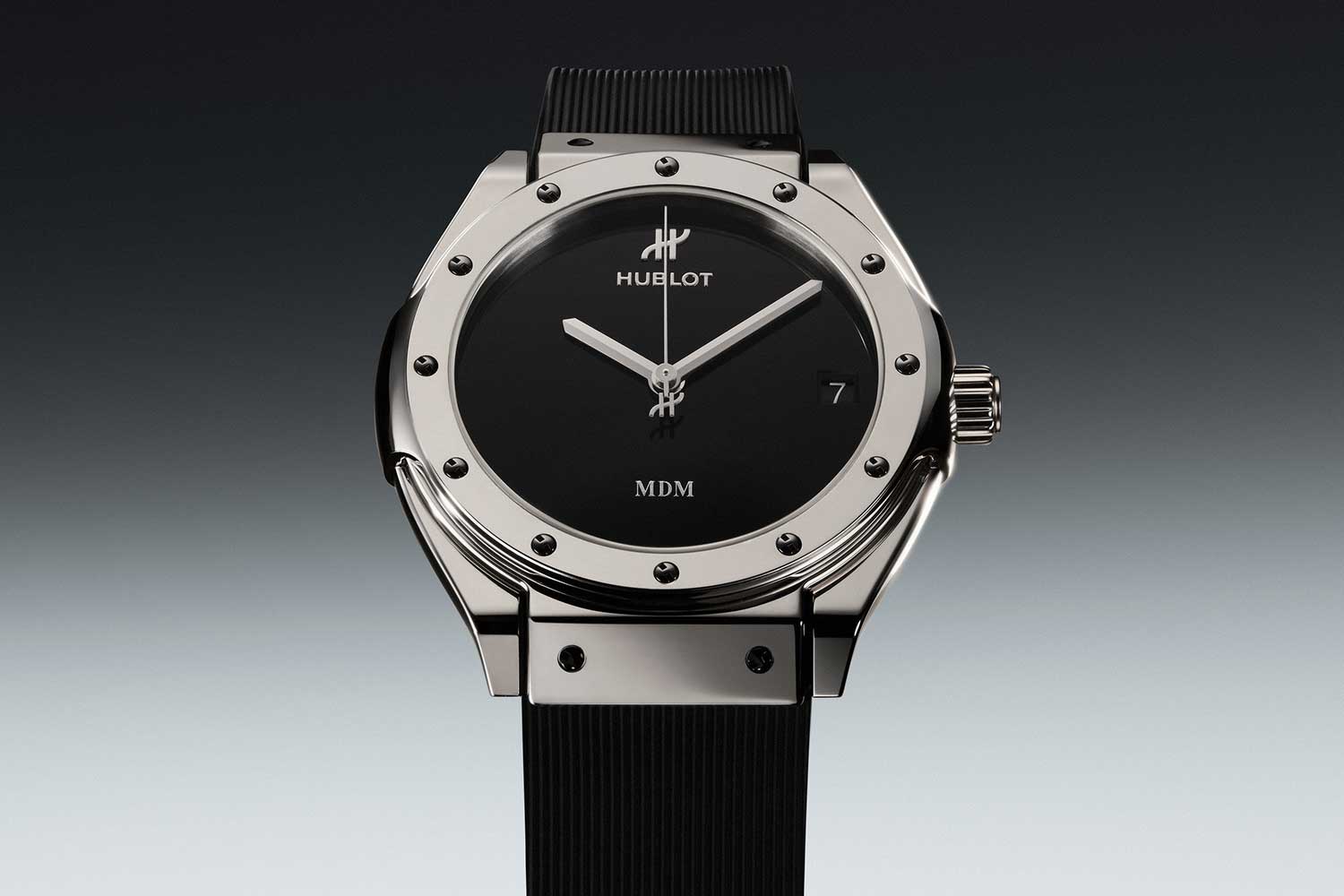
Hublot Classic Fusion Tributo
Crocco’s main concern was that as the 1980s watch had so few adornments in the first place, any changes could risk his original design. “I was especially attentive to preserving the elements that gave the watch its identity,” he says. “The purity of the dial, the balance of the case, the distinctive screws and, of course, the MDM signature. For Crocco, these are not superficial details and without them the real spirit of the original Hublot is lost.”
Hublot Classic Fusion Tributo
The new case measures 38mm, just 2mm larger than Crocco’s original, and is 9.5mm thick. The 12 slightly domed screws remain around the bezel, providing hour references on a dial without conventional indexes. The date is at 3 o’clock, and the rubber strap is attached directly to the exposed lugs, without the One Click changing system found on many contemporary Hublots.
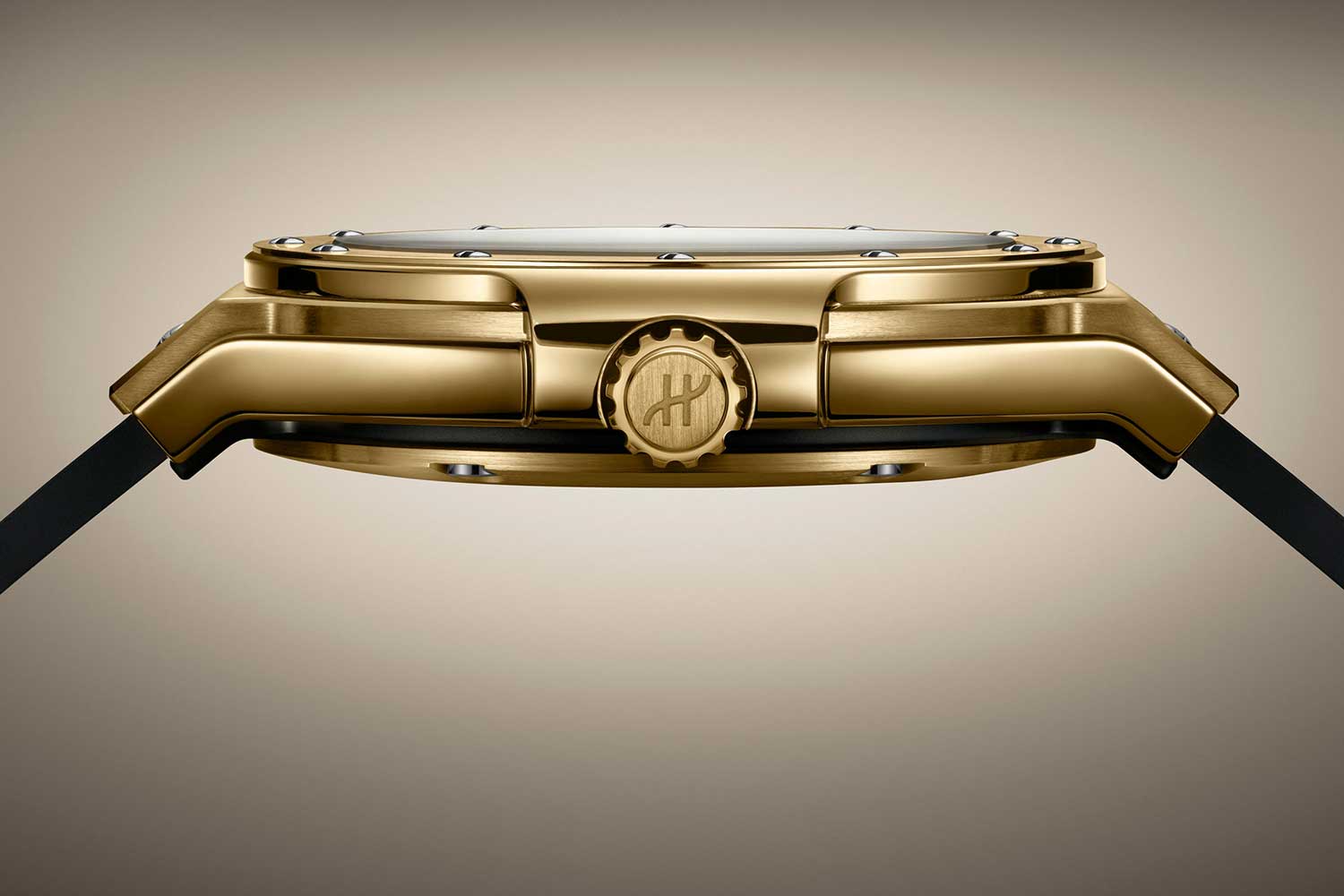
Hublot Classic Fusion Tributo
There are two versions. The yellow gold model is closest to the 1980 watch, with a matte black dial, gold hands and MDM initials at 6 o’clock. The white gold version has a polished black onyx dial and black-plated titanium bezel screws. Both are water resistant to 100 meters.
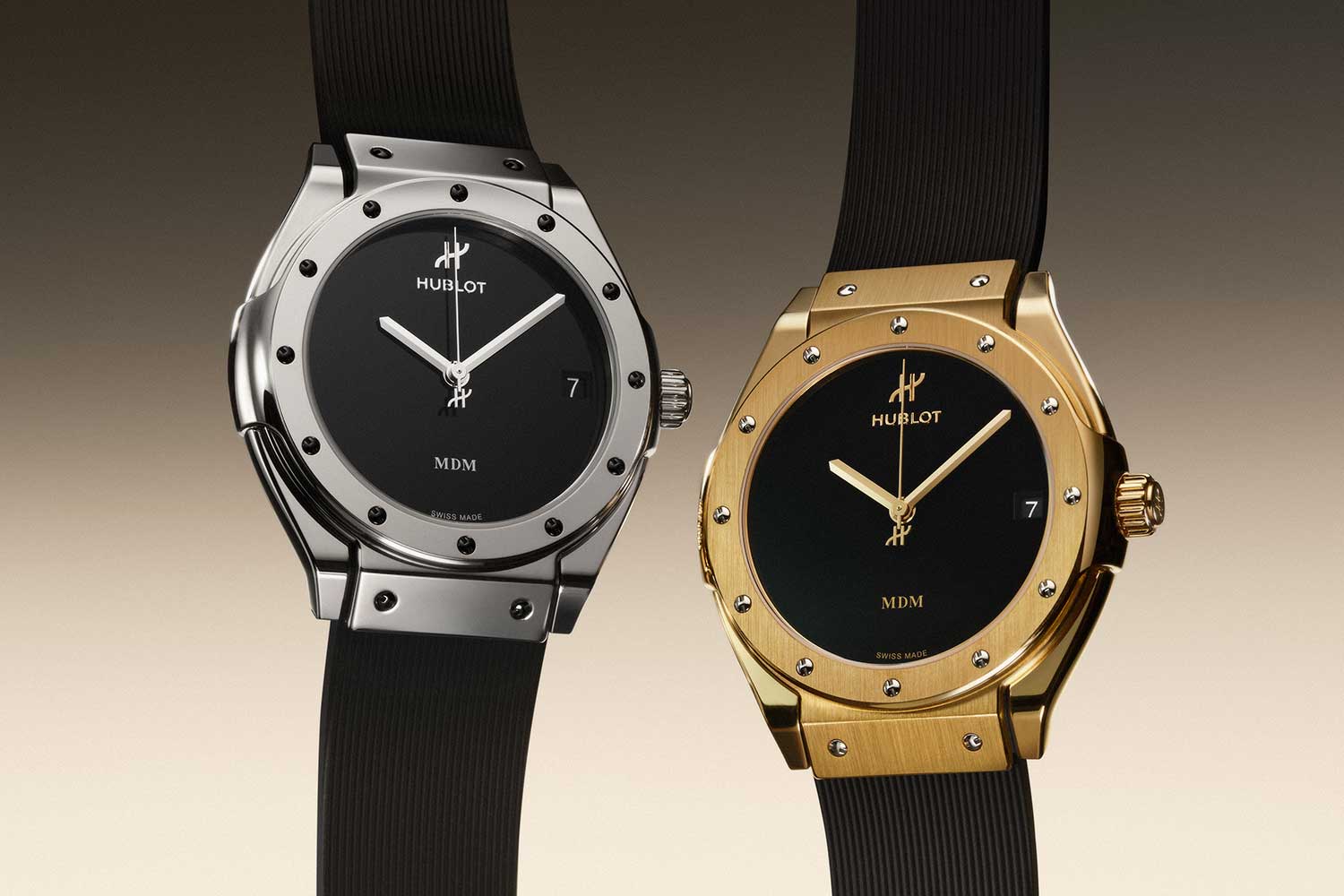
Hublot Classic Fusion Tributo
The original quartz movement has gone, replaced by Hublot’s automatic manufacture Caliber HUB1711, which has 185 components and a power reserve of approximately 60 hours. Through the sapphire caseback, an H-shaped rotor is visible, made from 22K gold in the yellow gold model and black tungsten in the white gold version.
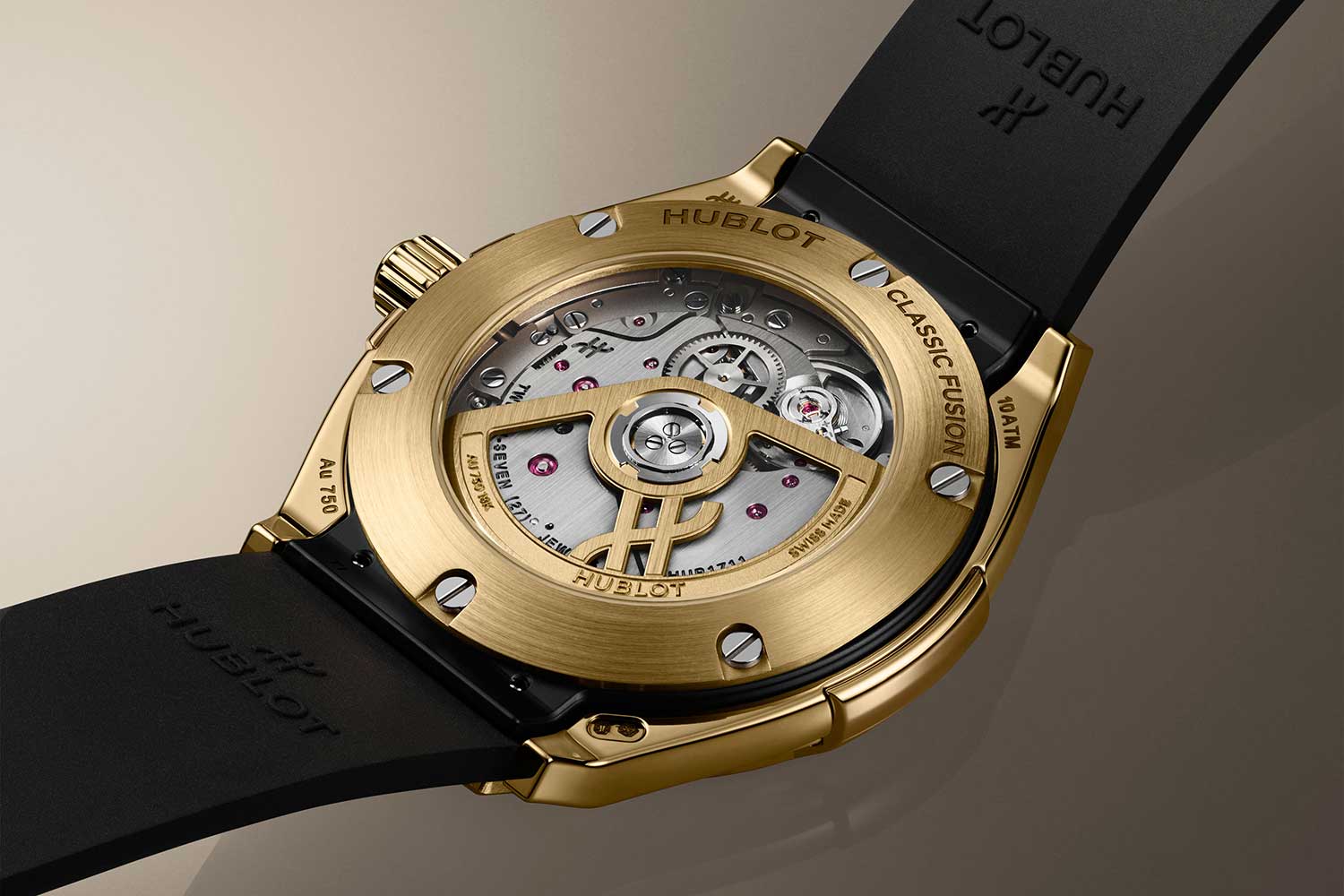
Respecting the original does not mean reproducing it blindly,” says Crocco. “A watch must still live in its own time. The goal is not to make a museum object, but to let the original idea remain alive. It’s great to see that an automatic movement is housed in this timepiece!”
The initials MDM have acquired another significance since Crocco’s early watchmaking days. In 1998, he established the Main Dans la Main Foundation, supporting vulnerable children and families through projects in India, Switzerland and Italy. Much of his time since leaving Hublot has been devoted to the foundation, whose activities include therapeutic farms for children with mental health conditions or autism. Hublot is donating CHF 100,000 to the organization to mark the launch.
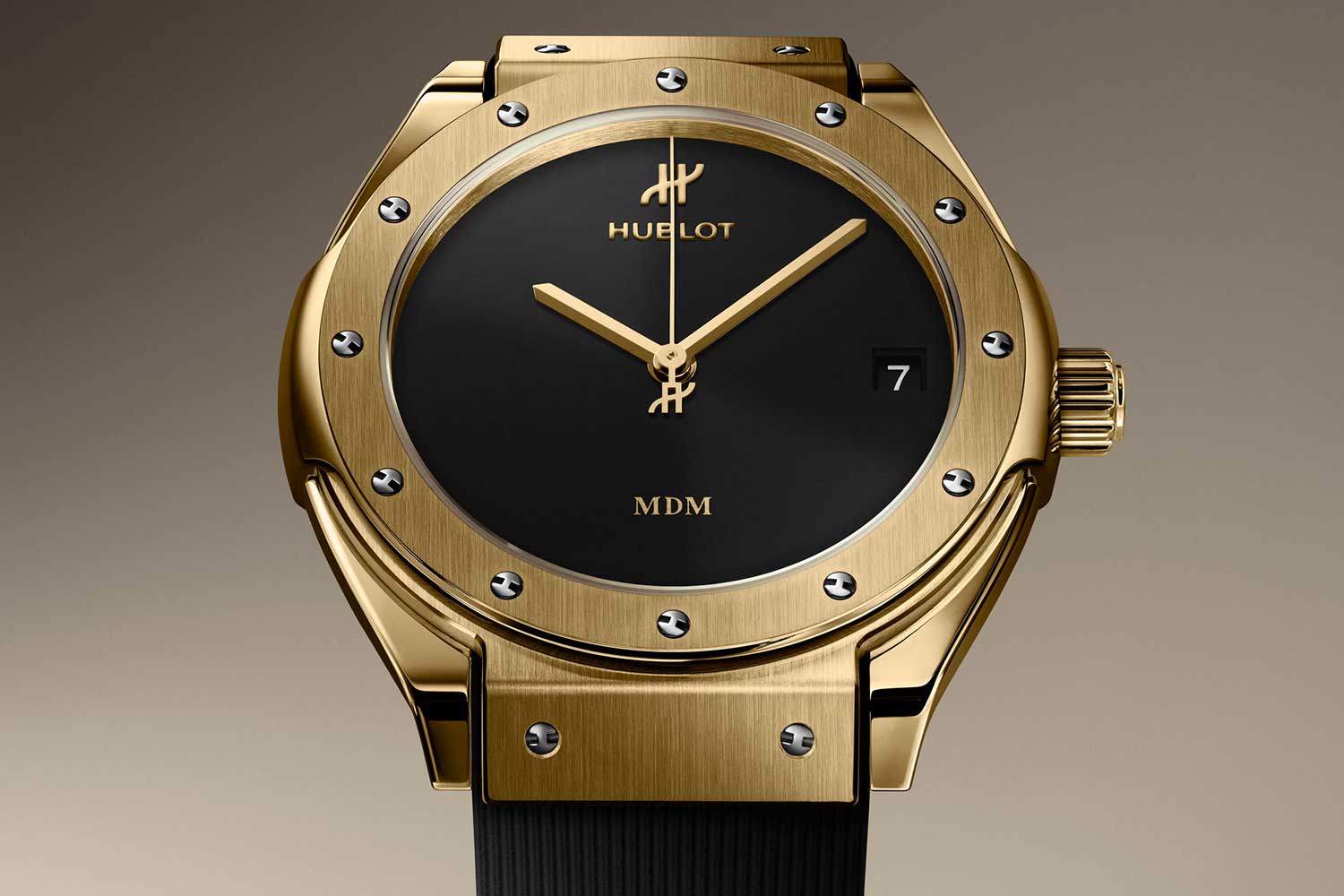
Hublot Classic Fusion Tributo
“Seeing the initials MDM on a Hublot has a very personal meaning for me,” says Crocco. “At the beginning, they referred to Marie-Danielle, my wife, so they were already tied to something intimate and important in my life. Later, they also came to stand for Main Dans la Main, the foundation I created for children. So those three letters carry both a personal story and a human commitment. To see them associated again with a Hublot is deeply meaningful.”
Tornare is already considering what else might be found in the company’s early history, saying that although he will never abandon the more avant-garde side of Hublot, he also wants to remember the subtlety and minimalism that existed in the beginning.
As for Crocco, there seems little doubt which version of the Tributo he would choose. “Yes, I am happy with the new piece. I find it very successful, and in yellow gold especially, I think it is perfect.”
The man who once struggled to attract visitors to his stand at Basel has returned to find the company he founded producing an almost identical-looking watch nearly half a century later. This time, one suspects, there will be no need to draw attention to the rubber strap.
Tech Specs: Hublot Classic Fusion Tributo
References 262.VX.1130.RX.MDM (yellow gold); 262.WX.6870.RX.MDM (white gold)
Movement Self-winding Manufacture Caliber HUB1711, with 22K yellow gold or black tungsten oscillating weight; 60-hour power reserve
Functions Hours, minutes, seconds and date
Case 38mm × 9.5mm; polished and satin-finished 18K yellow or white gold; matching gold bezel with polished or black-plated titanium H-shaped screws; water resistant to 100m
Dial Matte black (yellow gold) or black onyx (white gold), both with MDM signature at 6 o’clock
Strap Black lined rubber; deployant buckle in 18K gold, black-plated stainless steel and black-plated titanium
Price USD 30,900
Hublot
You may also like
News
Last Week In Watches: Rolex Revives the Padellone, Hublot Goes Full Koons
Sep 21, 2026
News
Last Week In Watches: Rolex Revives the Padellone, Hublot Goes Full Koons
Sep 21, 2026
Editorial
Balloon Dogs, Tourbillons And The Art Of Acceptance
Sep 16, 2026
Editorial
Balloon Dogs, Tourbillons And The Art Of Acceptance
Sep 16, 2026
Editorial
Last Week in Watches: New Releases Ahead of Geneva Watch Days 2026
Aug 31, 2026
Editorial
Last Week in Watches: New Releases Ahead of Geneva Watch Days 2026
Aug 31, 2026