HAUTLENCE: Changing Time
Editorial
HAUTLENCE: Changing Time

HAUTLENCE has been clear about its reverence for Swiss watchmaking since the very beginning. The name is an anagram of Neuchâtel, the historic watchmaking hub where the brand was founded in 2004. Its ambitions, however, were considerably less traditional. Co-founders Guillaume Tetu and Renaud de Retz had spent the preceding years discussing what they saw as a lack of imagination in watchmaking, and in particular the way watches actually displayed the hours and minutes. Tetu would later recall that, beyond independent pioneers such as Urwerk’s Felix Baumgartner and Vianney Halter, remarkably few brands were questioning the conventions of reading time. HAUTLENCE proposed to do exactly that.
“Since being founded in 2004 HAUTLENCE always played with jumping hours, mixing mechanics, architecture and art, today we are continuing to build around those key elements, form a high complication like the Sphere series to a refined elegance in the Kubera,” said Guillaume Tetu, Founder & Chairman, Hautlence.
-
- HAUTLENCE Sphere Series 4
-
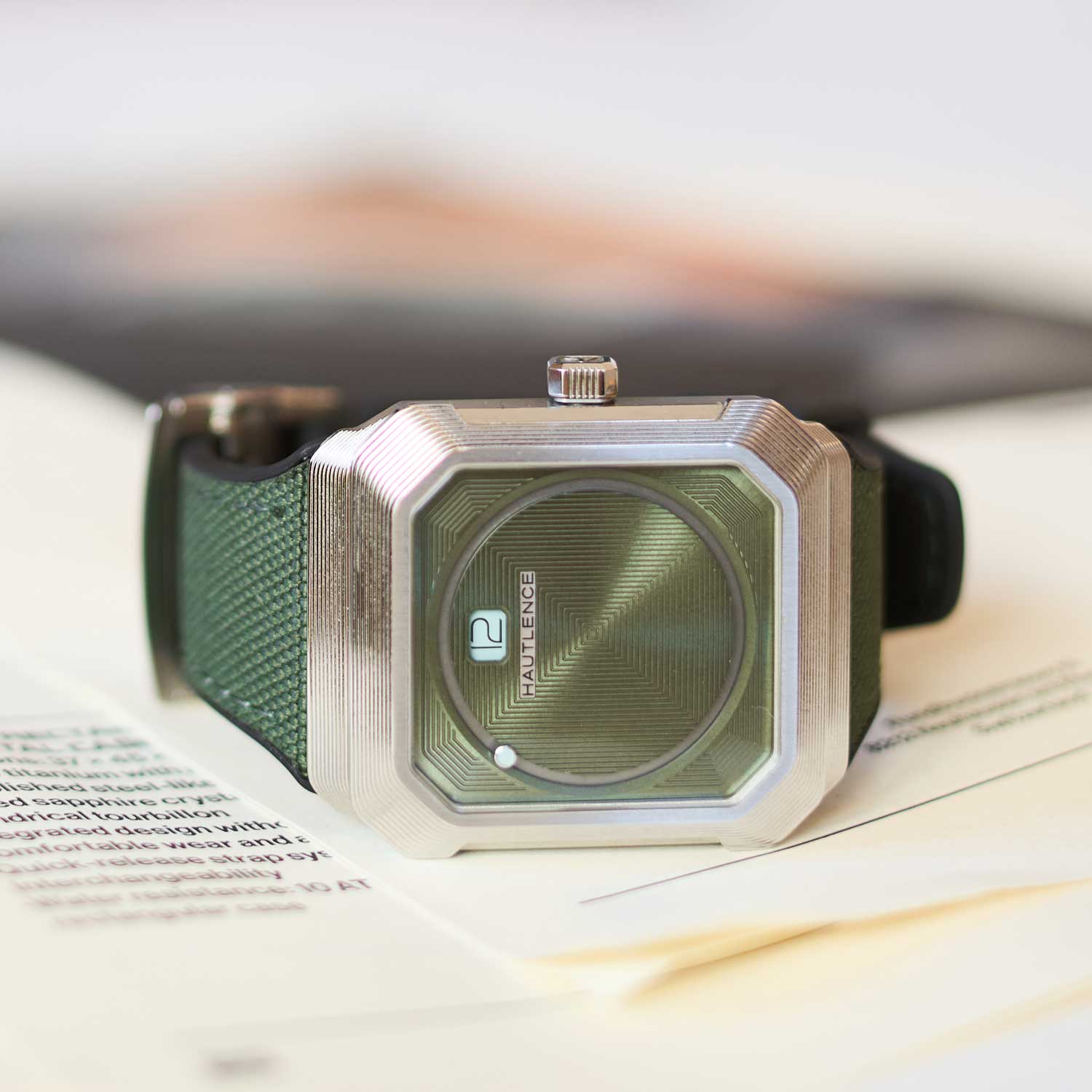
- HAUTLENCE Kubera Series 1
The first watch, the HL, appeared in 2005 and established many of the design and mechanical ideas that remain recognizable two decades later. The rounded rectangular case looked a bit like an old television screen. Instead of conventional central hands, hours appeared on a jumping disc while a retrograde minute hand swept across an arc before snapping back to zero at the end of each hour. Better still, much of the mechanism was exposed on the dial, including the connecting rods linking its functions. Time wasn’t simply being indicated. The process of indicating it had become the entertainment.
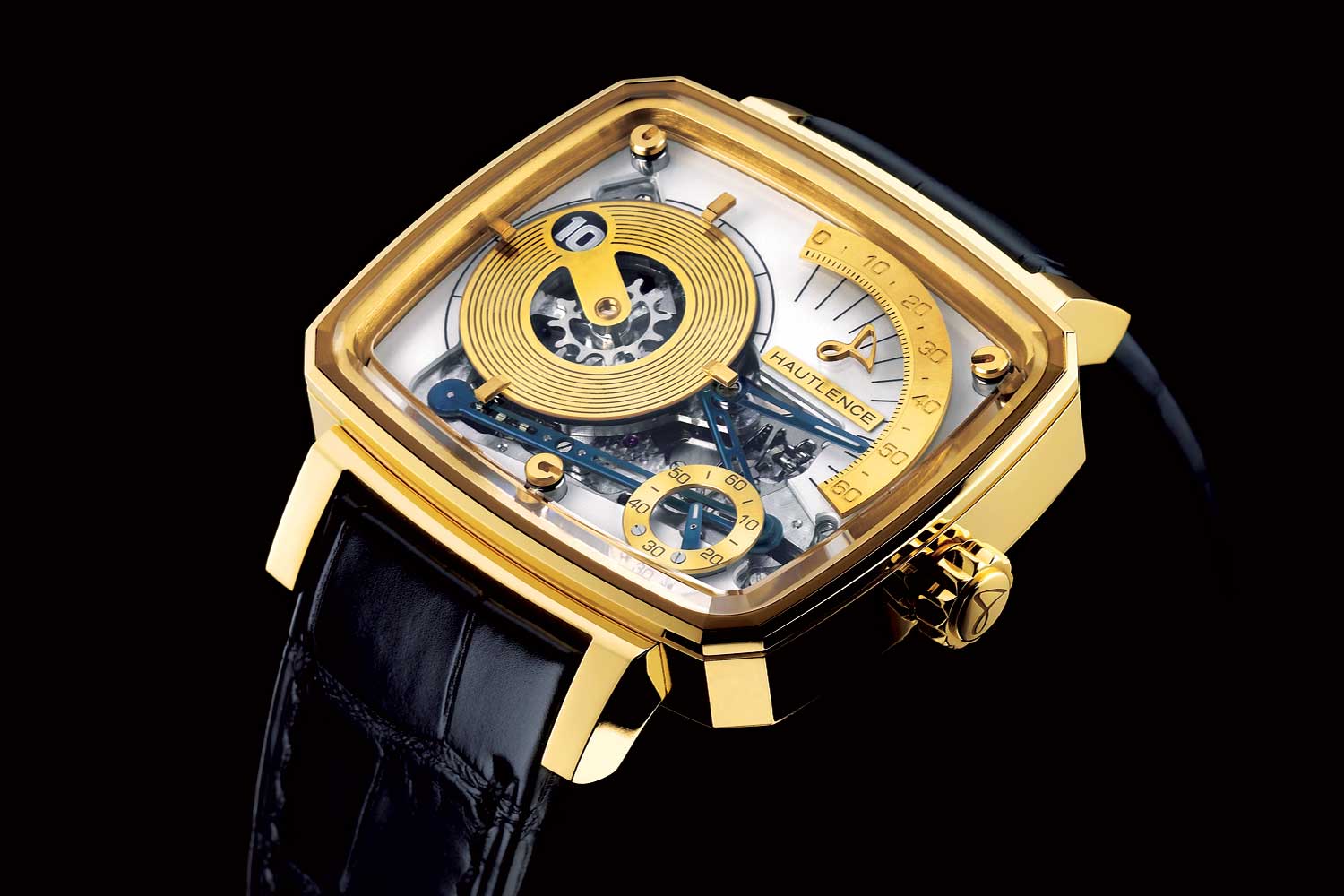
2005: HAUTLENCE HL
That idea proved fertile. The HLQ of 2009 added an instantaneous date to the jumping-hour and retrograde-minute arrangement, before the HL2.0 of 2011 pushed the concept considerably further. The hours traveled vertically on a chain-like series of articulated links while the movement itself became an animated part of the display. Retrograde indications, jumping displays, visible levers and unconventional case architecture were becoming HAUTLENCE signatures.
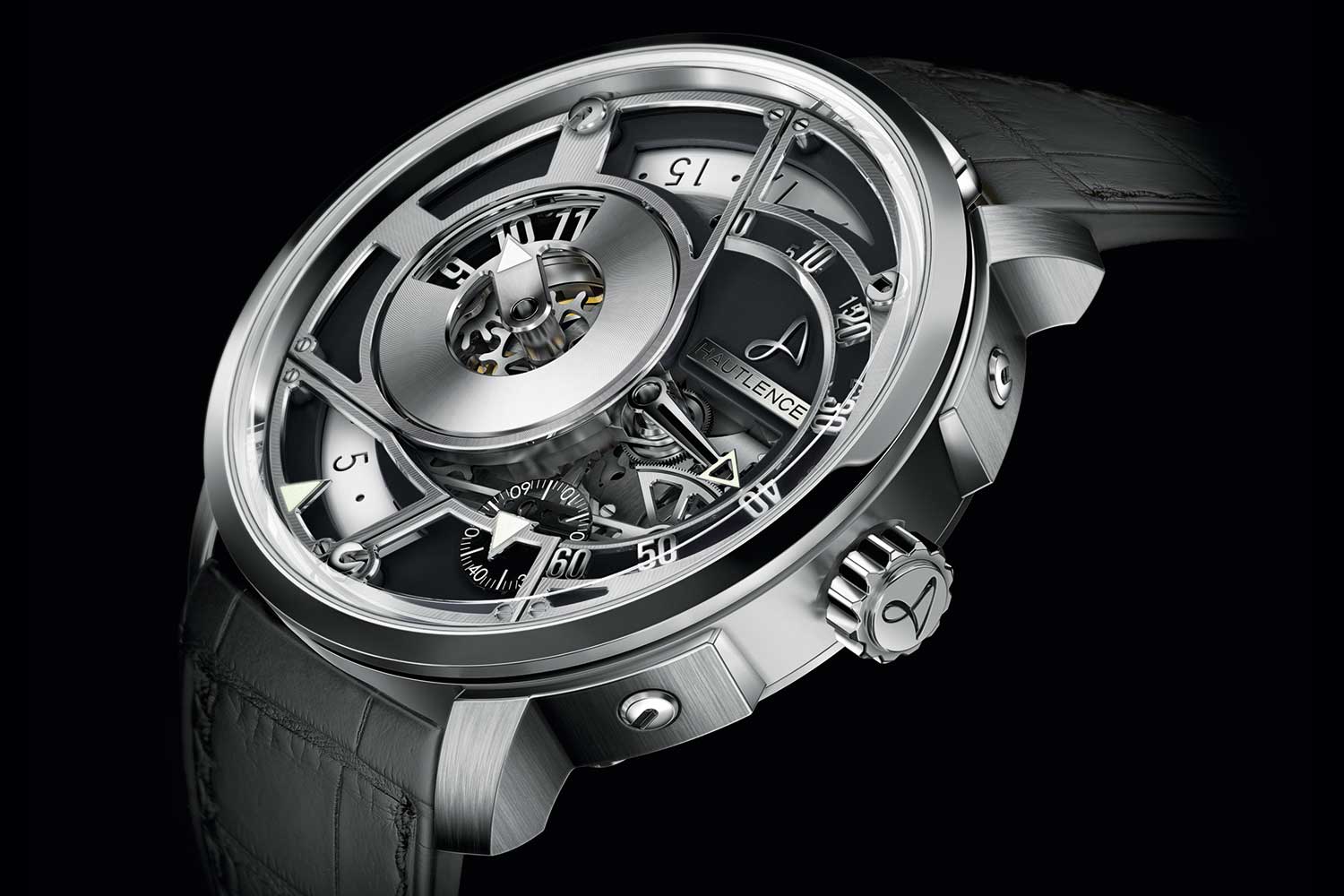
2009: HAUTLENCE HLQ
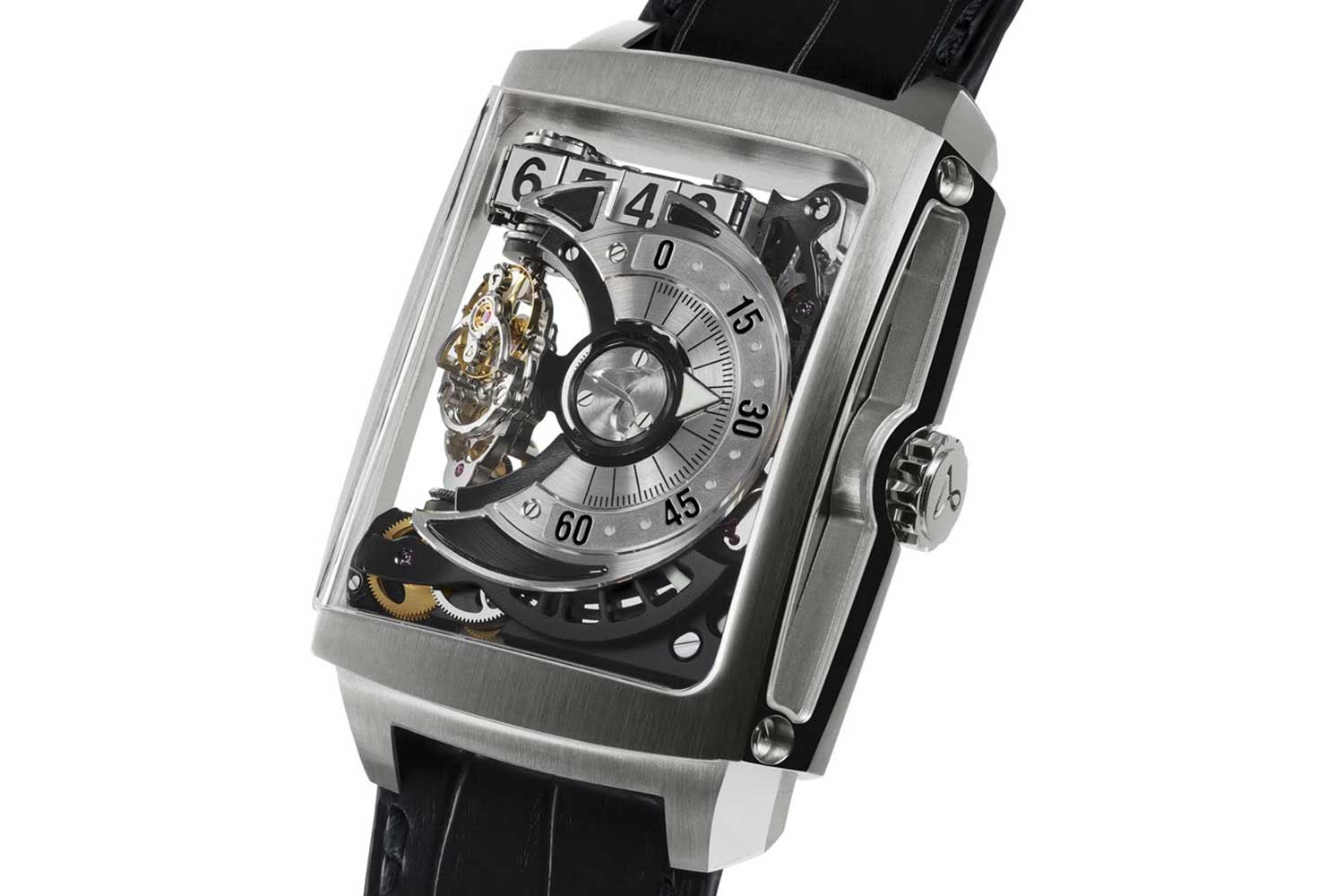
2011: HAUTLENCE HL2.0
In 2012, HAUTLENCE entered an important new phase when it became part of MELB Holding, the family watchmaking group headed by former Audemars Piguet CEO Georges-Henri Meylan. The move gave the brand access to greater resources, experience and a wider watchmaking network, while preserving the creative freedom that had defined it from the beginning. The group would also bring together H. Moser & Cie. and specialist component maker Precision Engineering AG.
HAUTLENCE continued to experiment. The Vortex developed the kinetic architecture of the HL2.0, while 2016’s Playground collection demonstrated just how loosely the company was prepared to interpret the idea of a wristwatch. The Labyrinth and the Pinball, which followed a year later, were mechanical games worn on the wrist that didn’t tell the time at all, playful reminders that a watch is not just for checking whether we’re late.
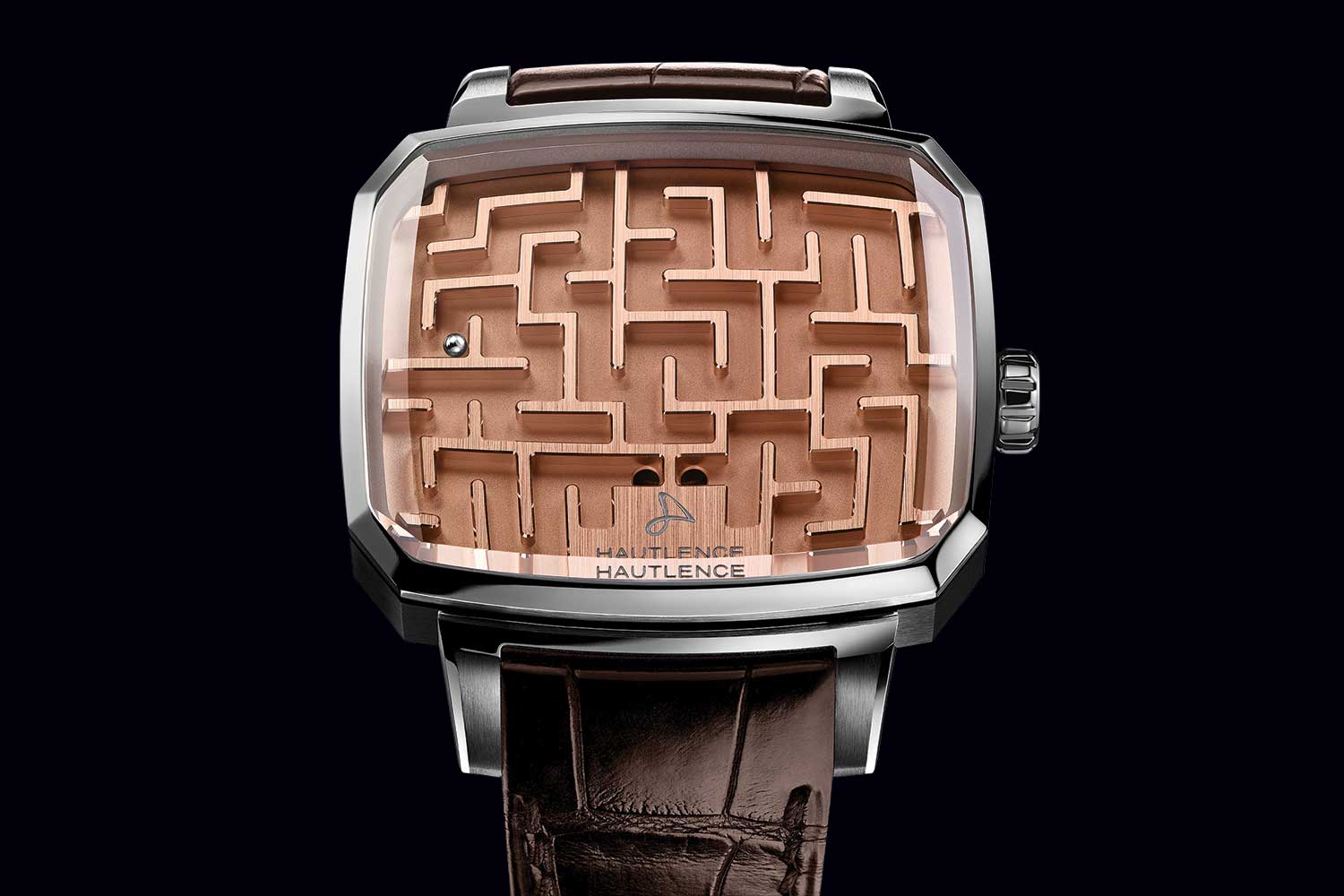
2016: HAUTLENCE Labyrinth
In 2019 came an idea that is particularly important to HAUTLENCE today. The HL Sphere transferred the jumping hours onto a rotating titanium globe floating at one side of the dial, with retrograde minutes opposite it. HAUTLENCE had spent well over a decade making time jump, return and travel in straight lines. Now time could rotate through three dimensions.
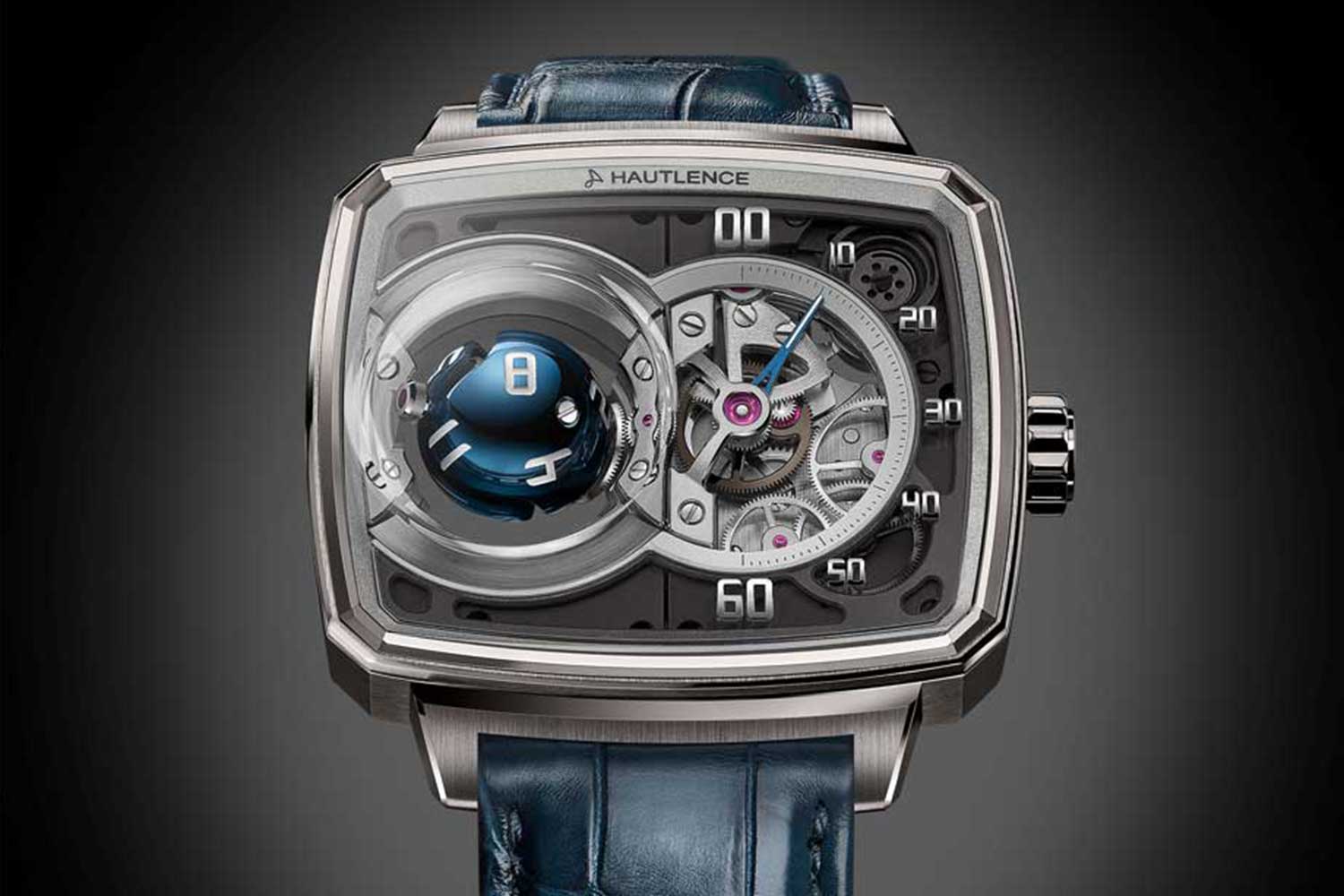
2019: HAUTLENCE HL Sphere
In 2020, HAUTLENCE began a new chapter away from its Neuchâtel roots, when MELB decided to consolidate the brand’s operations in the Schaffhausen area, bringing it closer to H. Moser & Cie. and Precision Engineering. Two years later, HAUTLENCE emerged with a more contemporary, sportier look and a new watch, the Linear Series 1. But the mechanics still drew on the brand’s past. Its linear jumping-hour display used an articulated linkage that echoed the machinery of the original HL.
The point was made even more emphatically for the company’s 20th anniversary in 2024. The HLXX returned directly to the ideas of the first HL, retaining its original movement, jumping hours and retrograde minutes in a newly proportioned titanium case. It was clear that the ideas HAUTLENCE began exploring in 2004 still had somewhere to go.
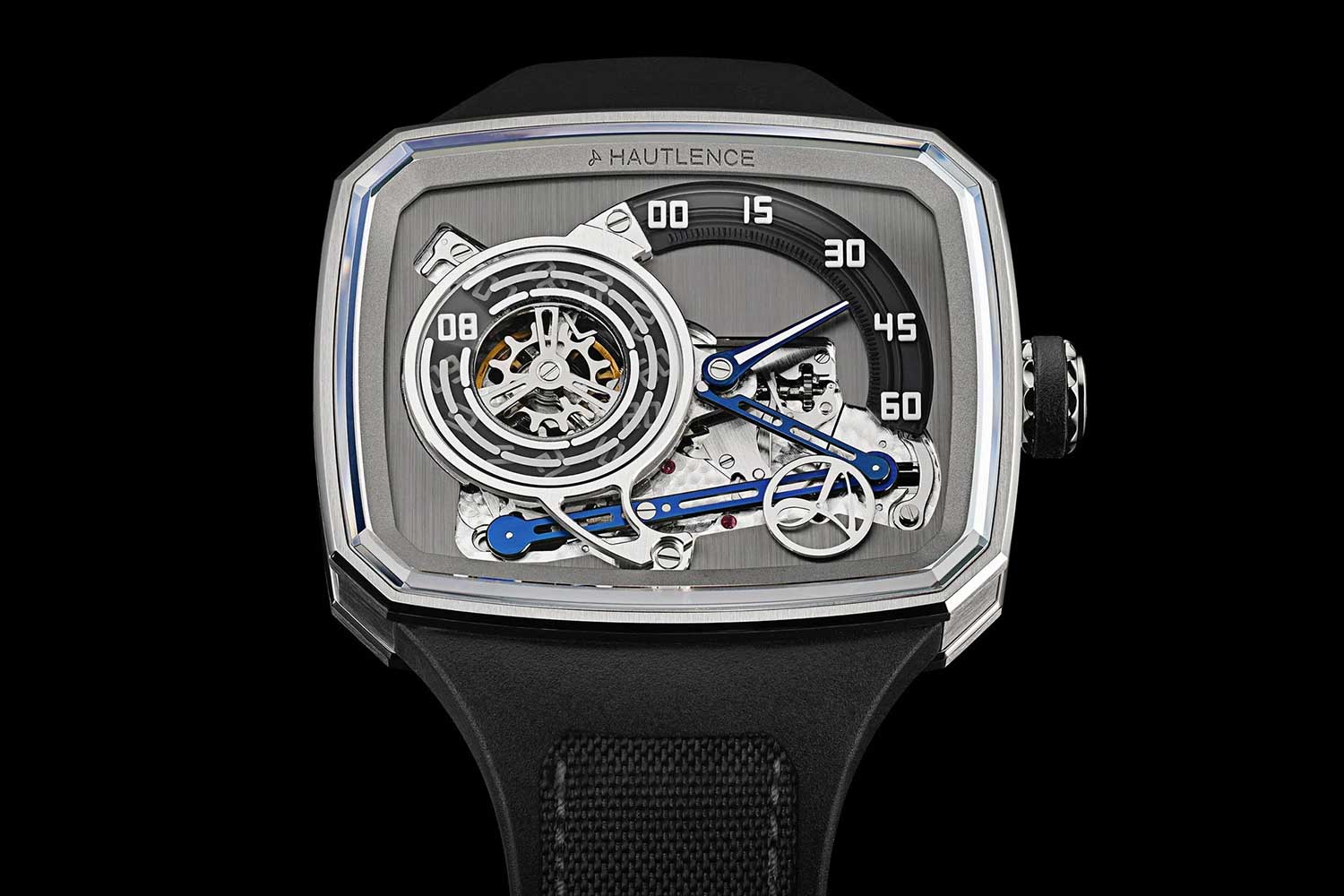
2024: HAUTLENCE HLXX
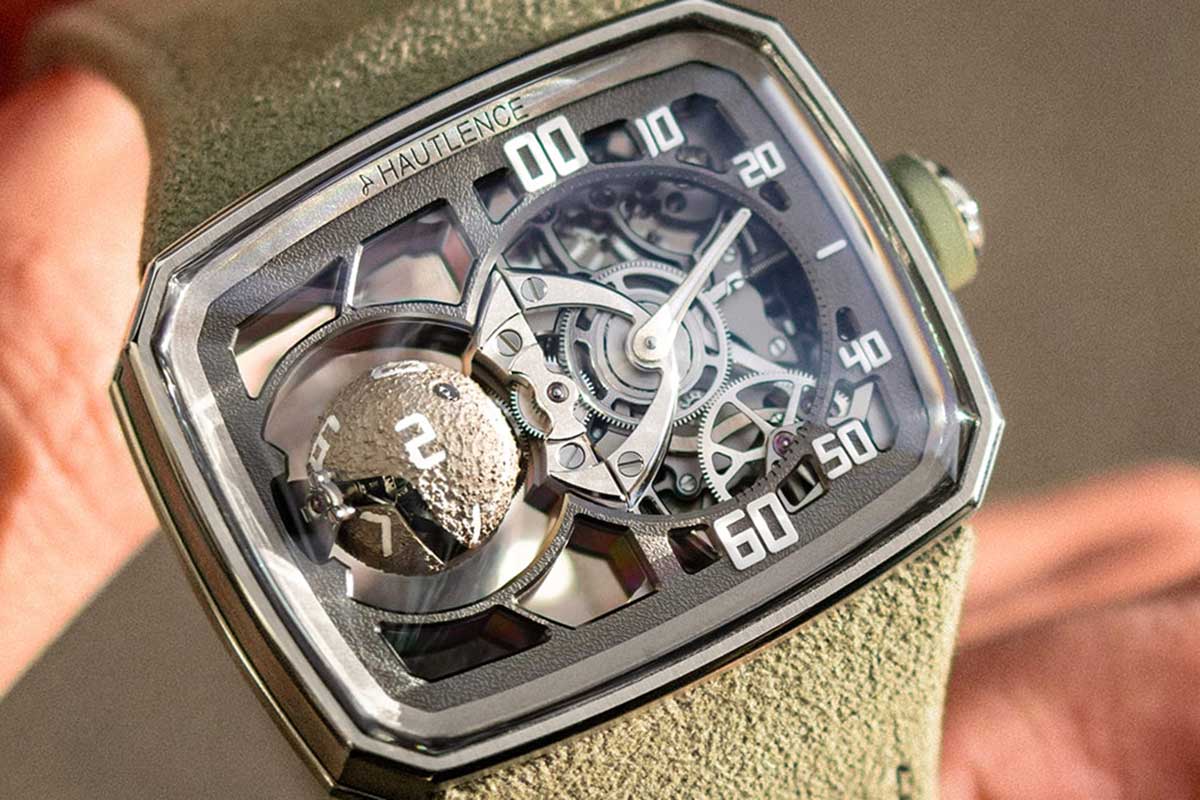
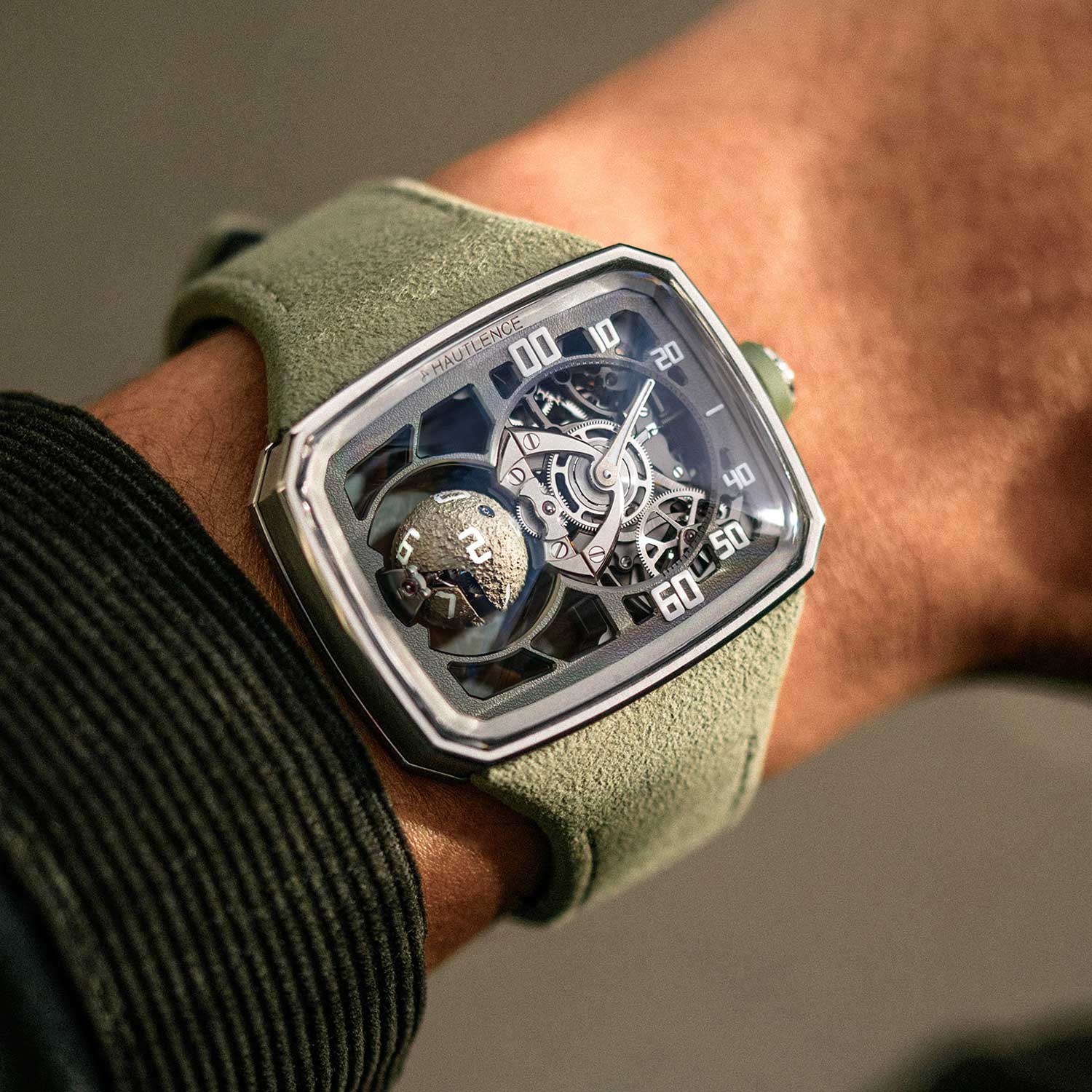
The Sphere Series 4 makes that continuity particularly obvious. On the left of its skeletonized display sits a sand-colored titanium sphere carrying the hour numerals. Rather than simply turning like a wheel, a system of four bevel gears and two crossed axes inclined at 21 degrees causes the sphere to rotate across three axes to show the hours.
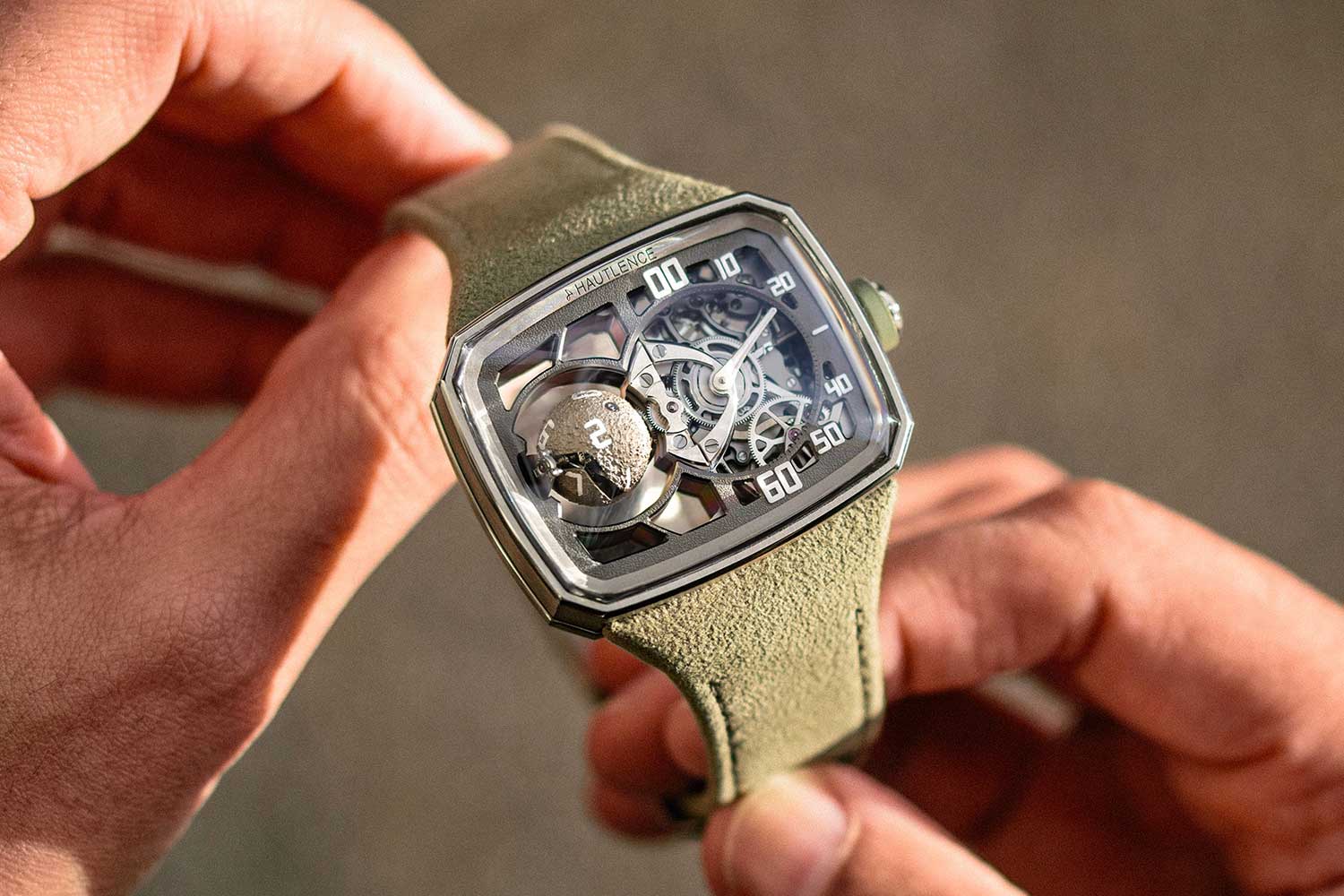
HAUTLENCE Sphere Series 4
Opposite it, the minutes follow a more familiar HAUTLENCE trick. A hand travels through a 180-degree arc before instantly returning to its starting point once the hour is complete. With most of the dial skeletonized, the mechanism isn’t hidden beneath decorative furniture. Wheels and bridges form the scenery around the spherical display, making the changing of the hour something to watch rather than simply something to read. Even the energy stored within the watch becomes part of the show as the skeletonized barrel drum and ratchet expose the tension of the mainspring, providing a visual indication of how much power remains.
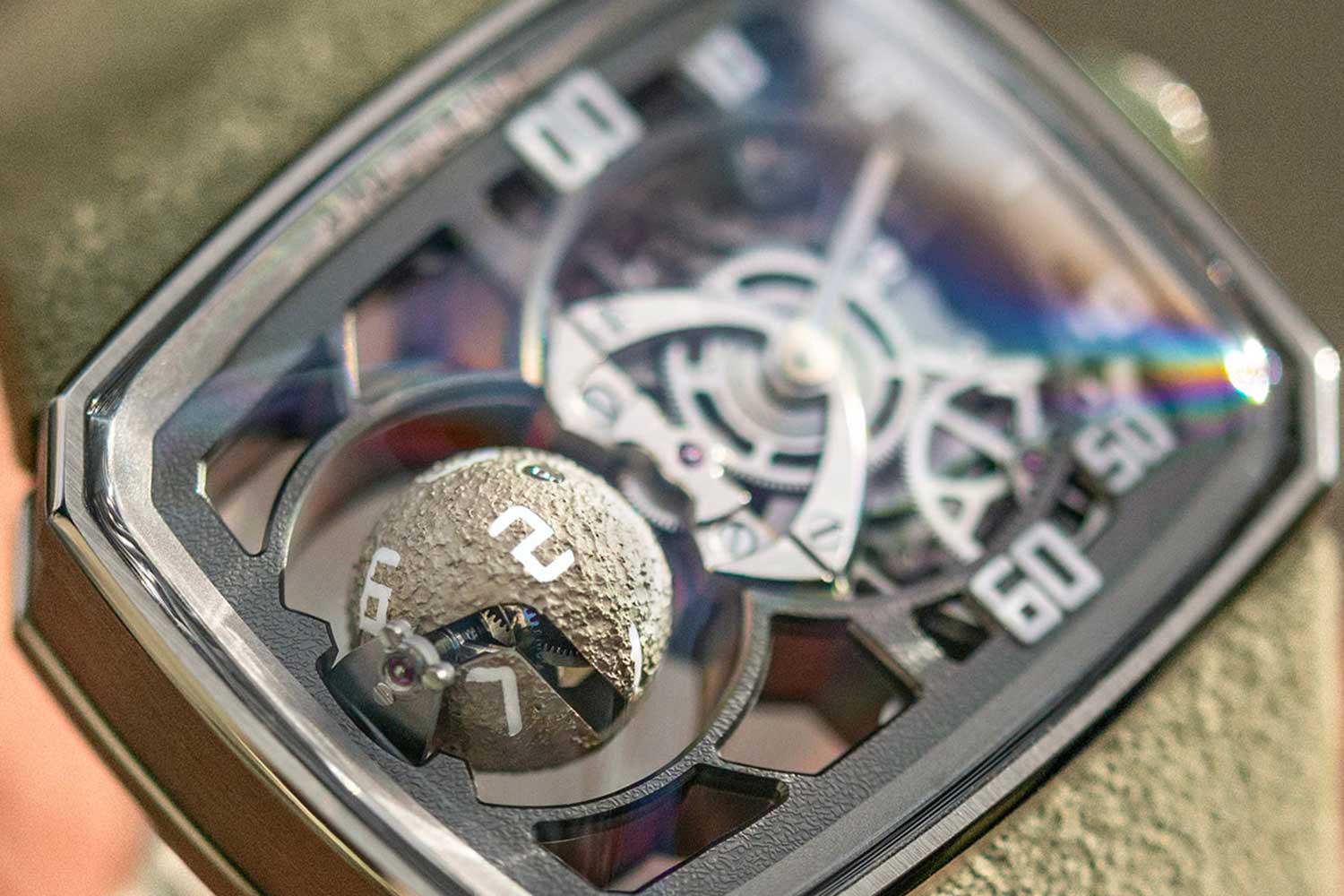
HAUTLENCE Sphere Series 4
The hand-wound A82 caliber is designed and assembled in HAUTLENCE’s workshops and has 72 hours of power reserve, while its hairspring comes from sister company Precision Engineering. The 37mm by 45mm Grade 5 titanium case and skeletonized movement cut the weight almost in half from 150 grams down to just 88, in the tauter, more integrated form developed during its latest chapter. Water resistance is a surprisingly useful 100 meters, and just 28 examples will be made.
The Kubera Series 1 expresses the same philosophy in a very different way. Where the Sphere exposes an abundance of machinery, Kubera initially appears almost minimal. Its steel case and integrated bracelet form a succession of stepped geometric layers, inspired by the fragmented planes of Cubism. Another reference was S.T. Dupont lighters, whose shaping showed how a functional object could be elevated into a luxury one. The olive-green dial repeats the idea inward, creating the impression of looking down through successive architectural levels. Even the bracelet continues the theme, its articulated links progressively diminishing in size as they flow away from the case, so the watch reads almost as a single piece of sculpted metal.
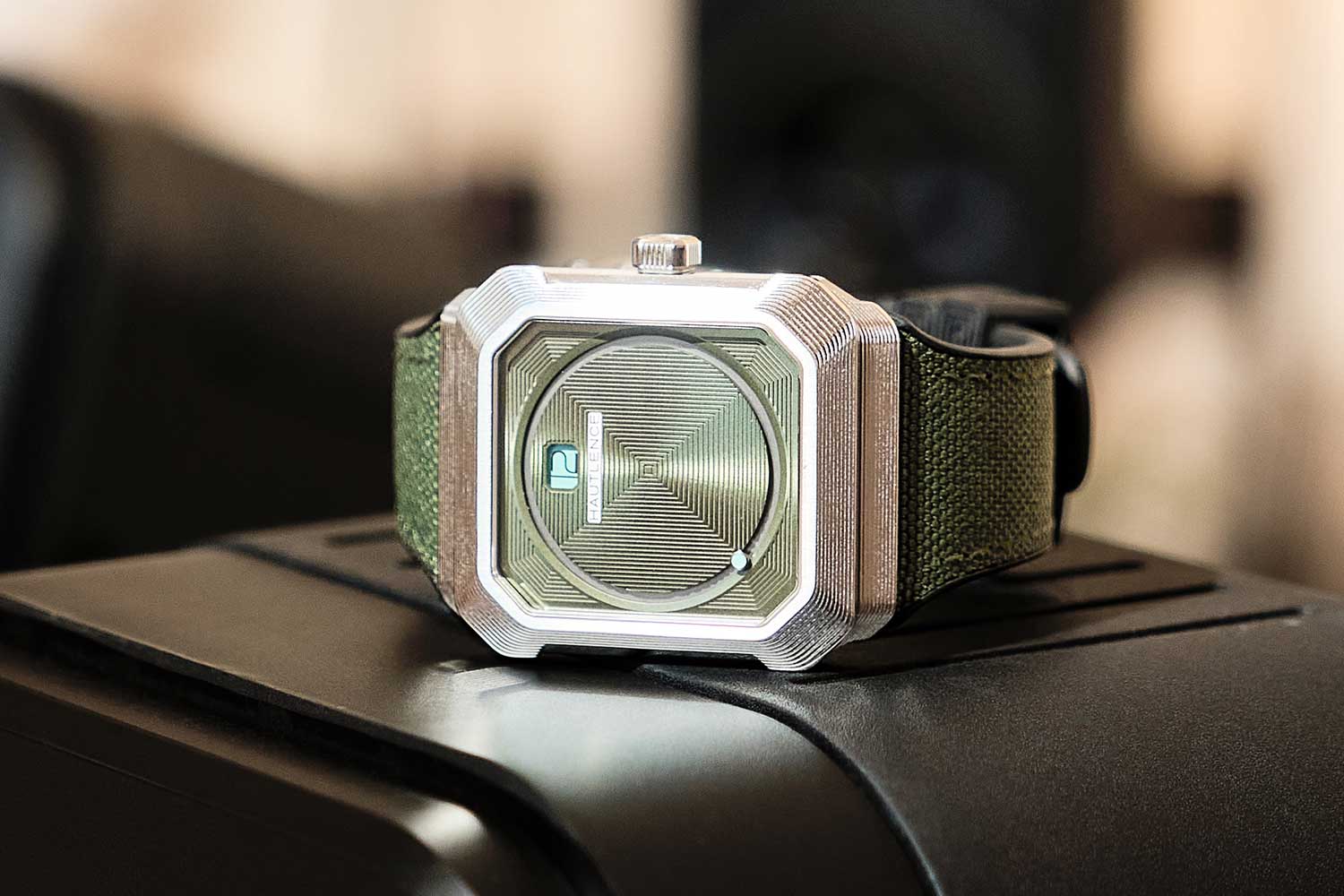
HAUTLENCE Kubera Series 1
Then you notice what’s missing: hands. The hour jumps instantaneously in a window and can jump forwards or backwards when you set the time, while a turquoise cursor travels around the circumference of the dial to indicate the minutes, guided by a track concealed beneath its surface. The minute indication is especially demanding: a dedicated gear train drives a peripheral ring from the centre of the movement, requiring an additional 36 components. Unlike a date ring, which advances between fixed positions, this ring moves continuously and must remain precisely positioned throughout the hour. That calls for careful control of friction, tolerances, stability and energy consumption. The construction also has two separate dial levels, each of which must be precisely positioned and stabilised.
It is an ingenious piece of misdirection. The mechanics are doing something complicated precisely so that the display can look exceptionally simple. The result is quieter than the Sphere but conceptually just as unusual. Instead of putting the machinery on stage, Kubera allows the indication itself to become the moving object.
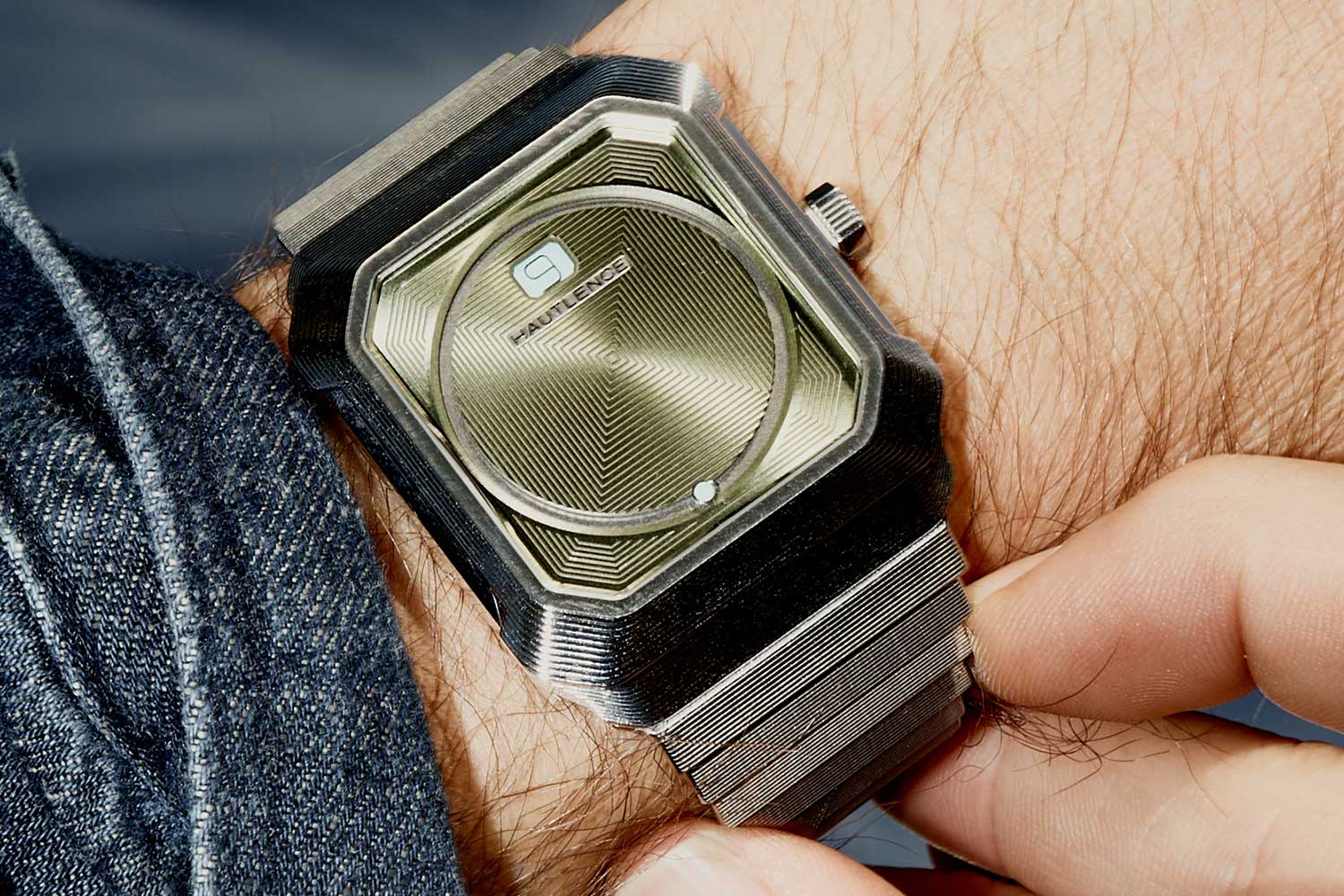
HAUTLENCE Kubera Series 1
Inside, HAUTLENCE has brought together expertise from two specialist movement makers. The self-winding B60 movement comes from Lajoux-Perret and features an anti-magnetic escapement, while the jumping-hour and peripheral-minute module was developed with complication specialist Agenhor. The result offers at least 70 hours of power reserve while allowing HAUTLENCE to concentrate on finding unusual ways for a mechanical watch to communicate the passing of time.
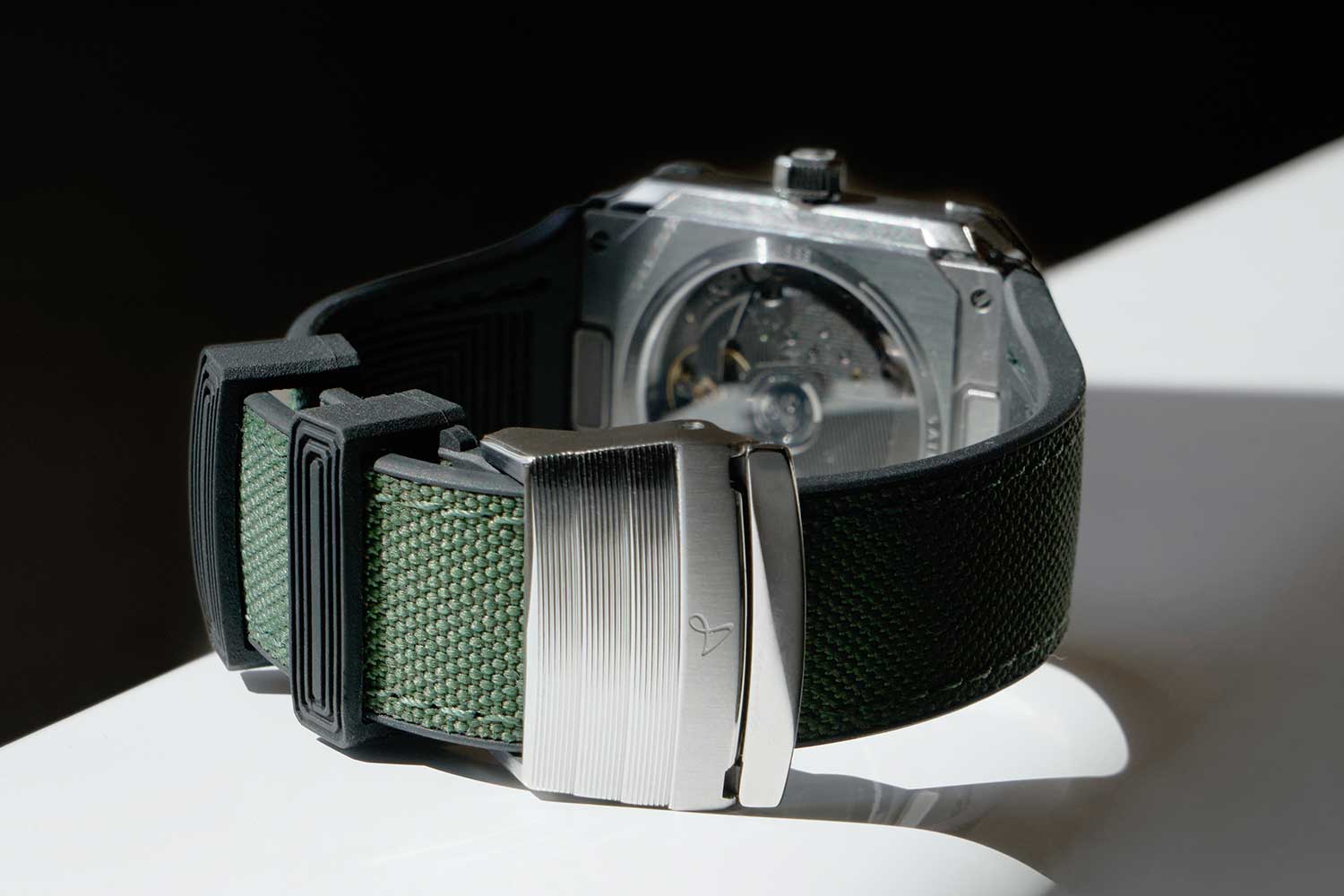
HAUTLENCE Kubera Series 1
“HAUTLENCE has never been interested in simply repeating what we have done before,” said Cedric Joos, Brand Manager, Hautlence. “We strive to keep breaking conventions, pushing the mechanics and the design further, and remaining as bold and edgy as the brand was from the very beginning.”
Sphere and Kubera look very different, but both follow ideas that HAUTLENCE explored with the first watch. The Sphere puts its mechanics on display, while the Kubera hides much of them beneath its architectural dial. More than 20 years on, HAUTLENCE is still finding new ways to change the way a mechanical watch tells the time, just as it set out to do in 2004.
Hautlence
You may also like

Video
First look: Hautlence at Geneva Watch Days 2022
Sep 1, 2022
Video
First look: Hautlence at Geneva Watch Days 2022
Sep 1, 2022

News
Baselworld 2019: Introducing the Hautlence HL Sphere
Mar 16, 2019
News
Baselworld 2019: Introducing the Hautlence HL Sphere
Mar 16, 2019

Reviews
As Clear as Crystal
Jul 7, 2017
Reviews
As Clear as Crystal
Jul 7, 2017