The Human Touch: ArtyA Unveils the Complexity Métiers d’Art
Editorial
The Human Touch: ArtyA Unveils the Complexity Métiers d’Art

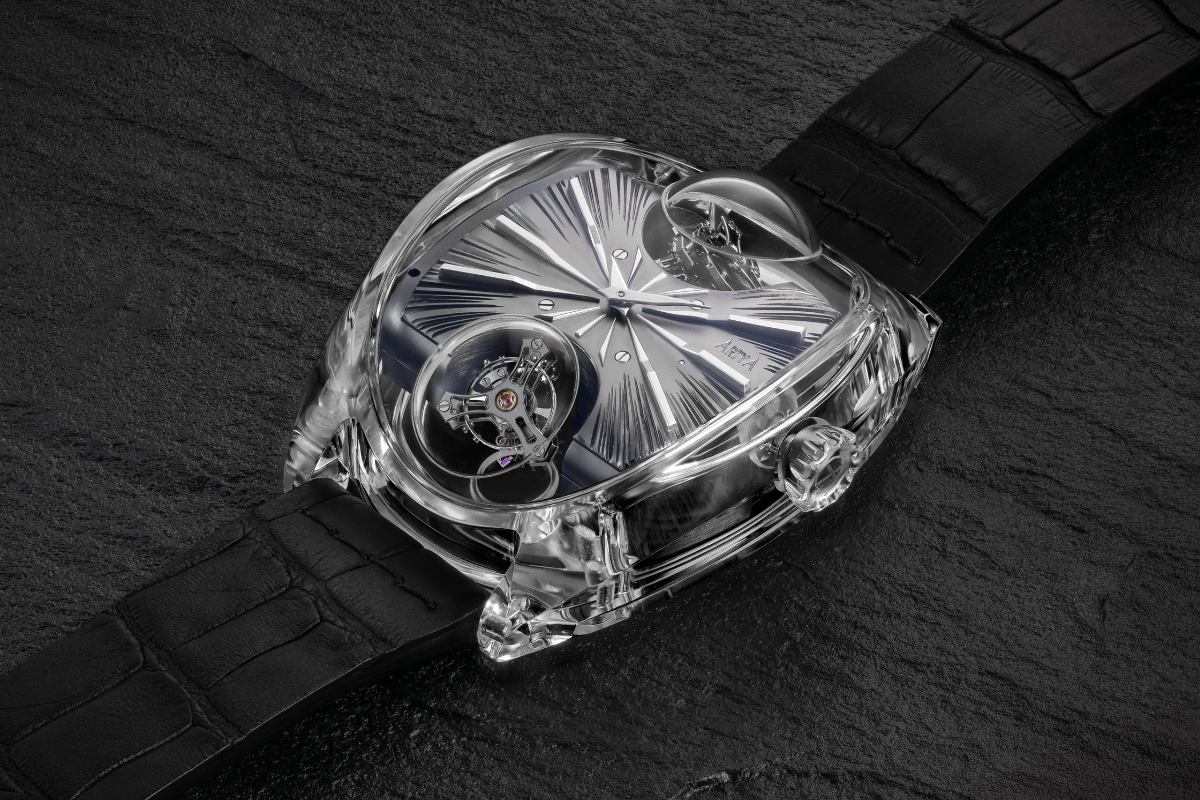
There are some watches that look so incredibly complex that they leave little, if any, room for escalation to make a part II. ArtyA’s Complexity seemed like one of them when we had a look during this year’s Watches & Wonders. The Complexity placed two inclined Cônillon tourbillons beneath two sapphire domes at 12 and 6 o’clock, linked them through a differential, then housed the entire show within a transparent case.
ArtyA, though, had another gear in reserve. The new Complexity Métiers d’Art retains the extraordinary design, while shifting the focus towards what the human hand can do. The watch’s dial and movement have been fully reworked using traditional decorative techniques, like hand engraving, hammering, shot blasting, perlage, and polished bevelling.
Two Inclined Tourbillons Working as One
Before getting into the finishing, it is worth revisiting how the original Complexity works.
In an inclined tourbillon, the balance axis sits at an angle to the axis of the rotating cage, causing it to trace a conical path every revolution. The perk here is that it allows the regulator to encounter a greater range of vertical positions than the conventional single-axis tourbillon.
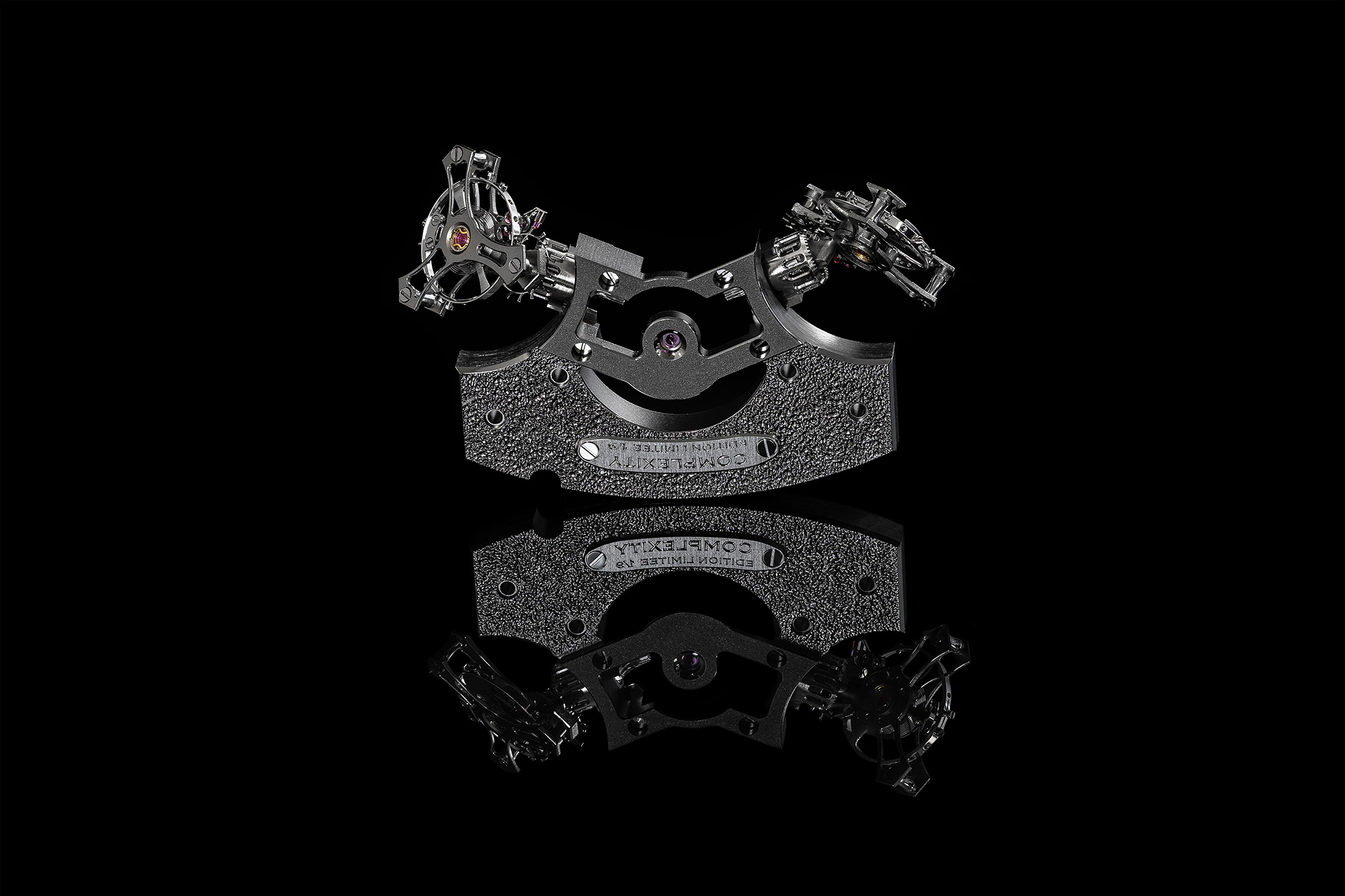
The Complexity uses two of these mechanisms opposite each other, at the 12 and 6 o’clock. Each cage completes one full rotation every 30 seconds, with the pair turning in different directions. None of the axes of the balances, cages or pallet forks are parallel, so it results in an almost kaleidoscopic-like motion on the display.
And between these tilted tourbillons sits a differential that divides energy from the barrel between the two regulators, while producing a mechanical average of their rates. In simpler terms, the two Cônillons are designed to regulate one another, helping to smooth out their individual variations as the wearer’s wrist move through different positions.
Finished by Hand
Now the original Complexity was already finely finished, using sandblasting to give the movement a clean appearance. The Métiers d’Art edition, though, completely turns it up a notch.
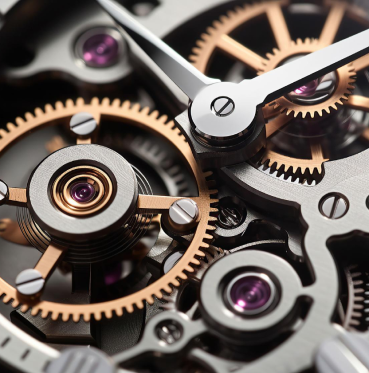
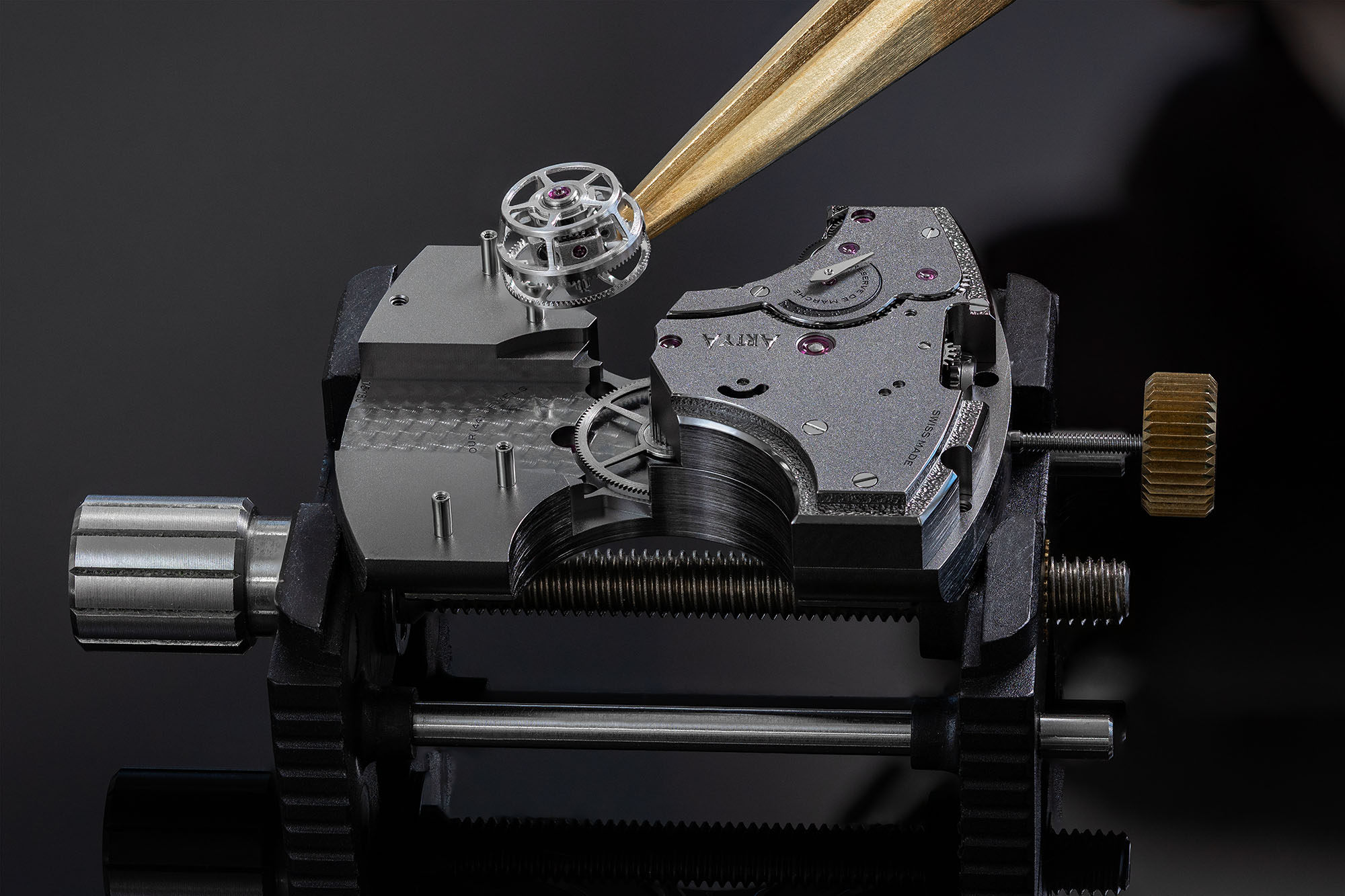
The upper surfaces of the bridges are shot blasted by hand, while their lower surfaces are manually hammered to create an irregular terrain of peaks and recesses. Every angle across the movement is beveled and polished by hand, with the flanks drawn using a cabron buff to produce their satin texture.
The mainplate itself is perlaged by hand around the differential section, drawing the eye towards this area. The center bridge is finished with a polished moulding that also frames the differential more clearly. A separate numbered Complexity plate is also engraved and beveled by hand on the movement side.
Black rhodium plating provides the backdrop for all of this work. The polished bevels and mouldings catch the light sharply against this dark surface, while the hammered and blasted areas provide a subtler contrast.
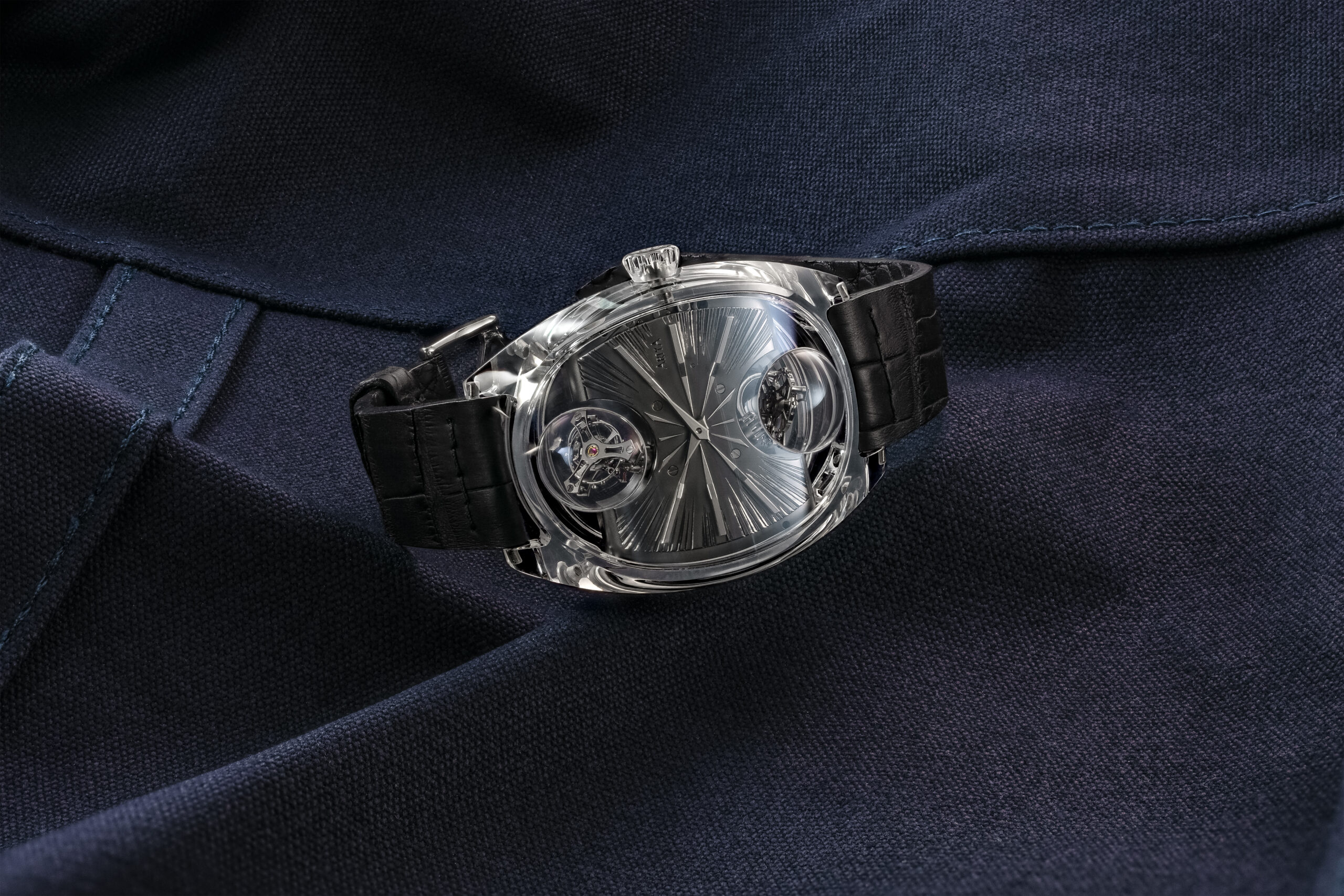
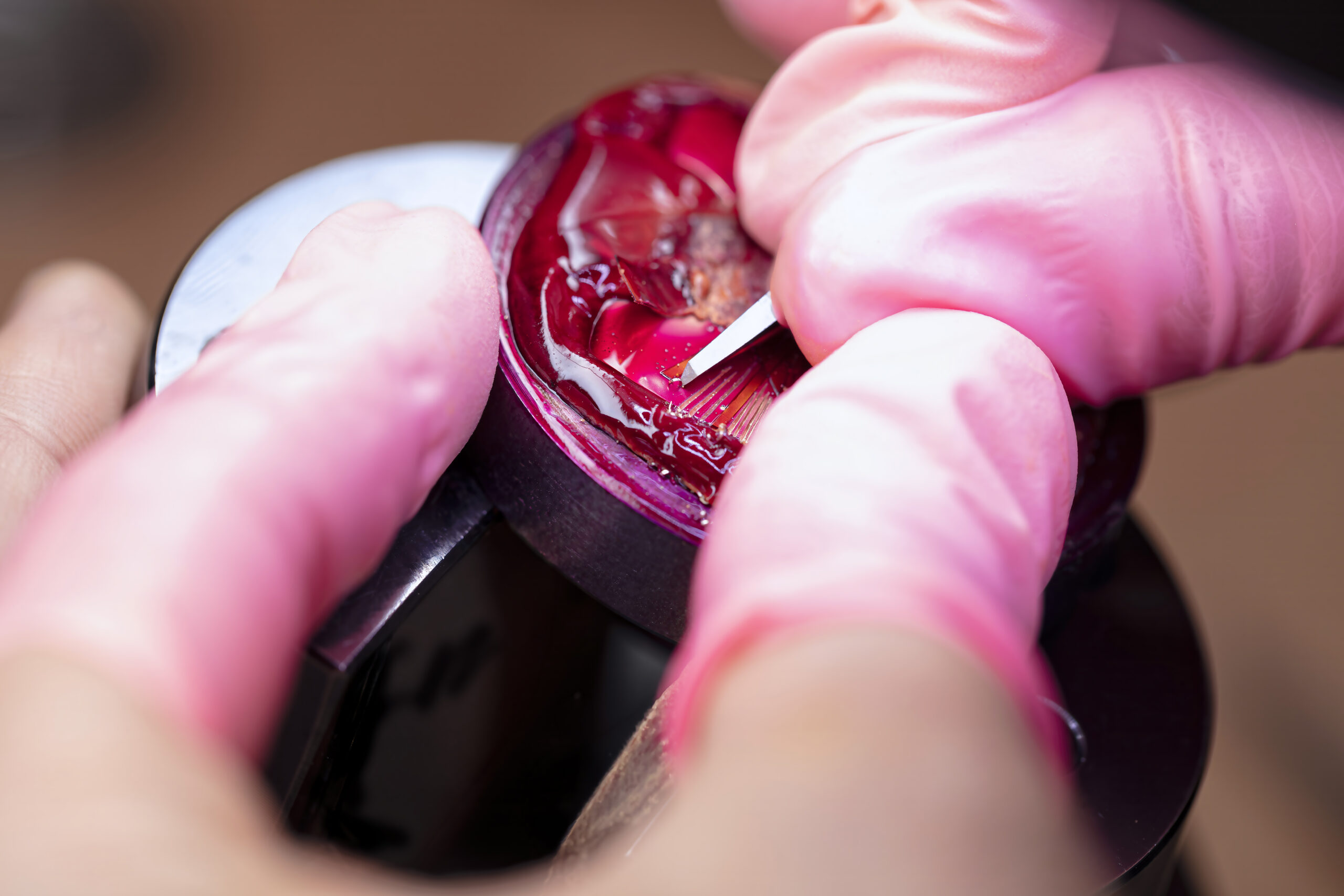
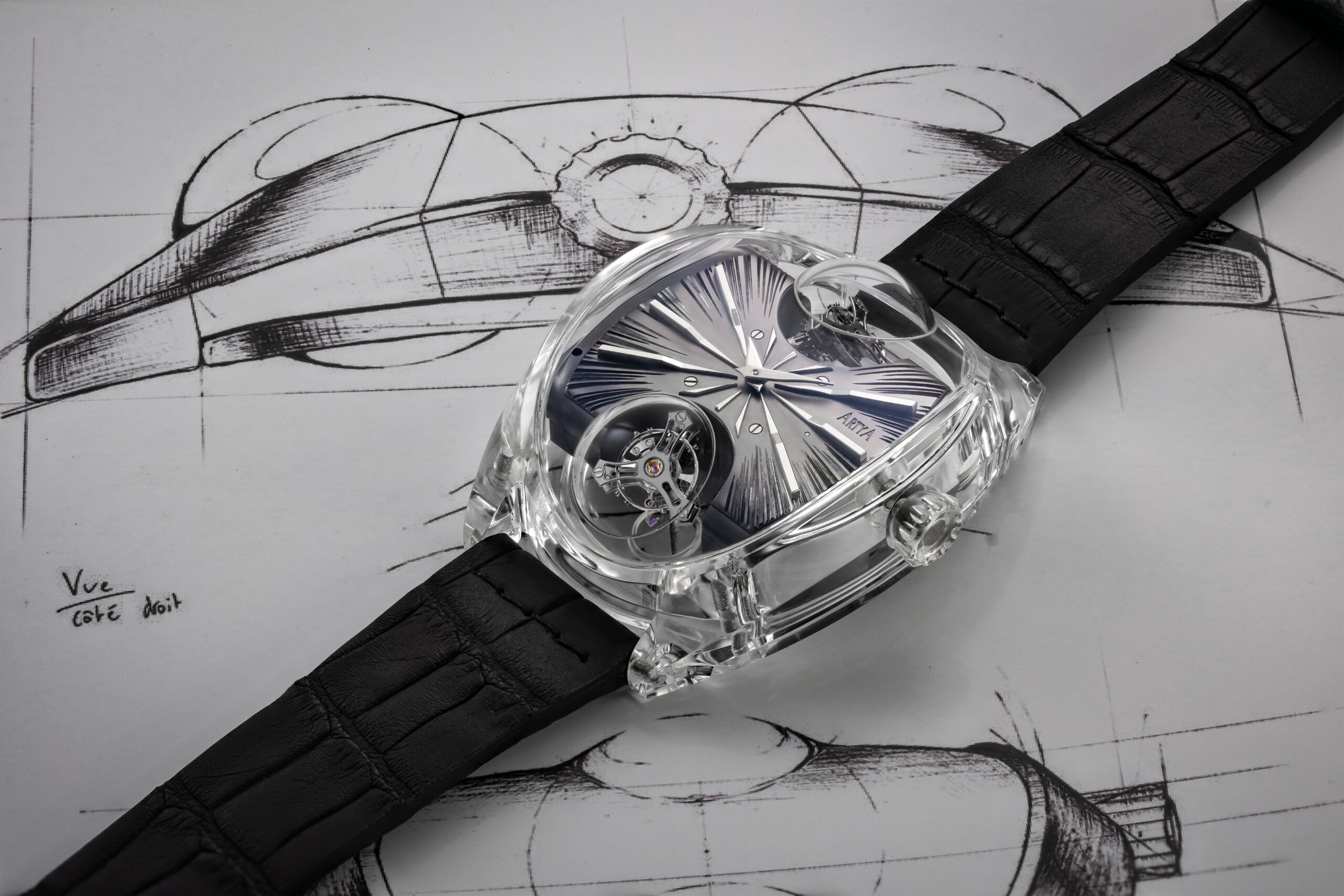
The dial itself also becomes a canvas for the engraver. It starts with a finely sandblasted base, followed by radiating scratches, all cut individually with a burin. These engravings all vary in depth, adding another layer of light play aside from the movement. The same level of meticulous work goes to the applied indexes as well, where their upper faces are sandblasted, while their bevels are polished by hand and the flanks worked with cabron buff.
The watch remains in the transparent sapphire case cut from a solid block of clear synthetic sapphire. The case measures 42mm x 48mm and follows an organic, triple concave form that binds around the wrist. Even the crown is cut from crystal. Both Cônillons get a dedicated optical dome directly above on the crystal, as a natural magnification.
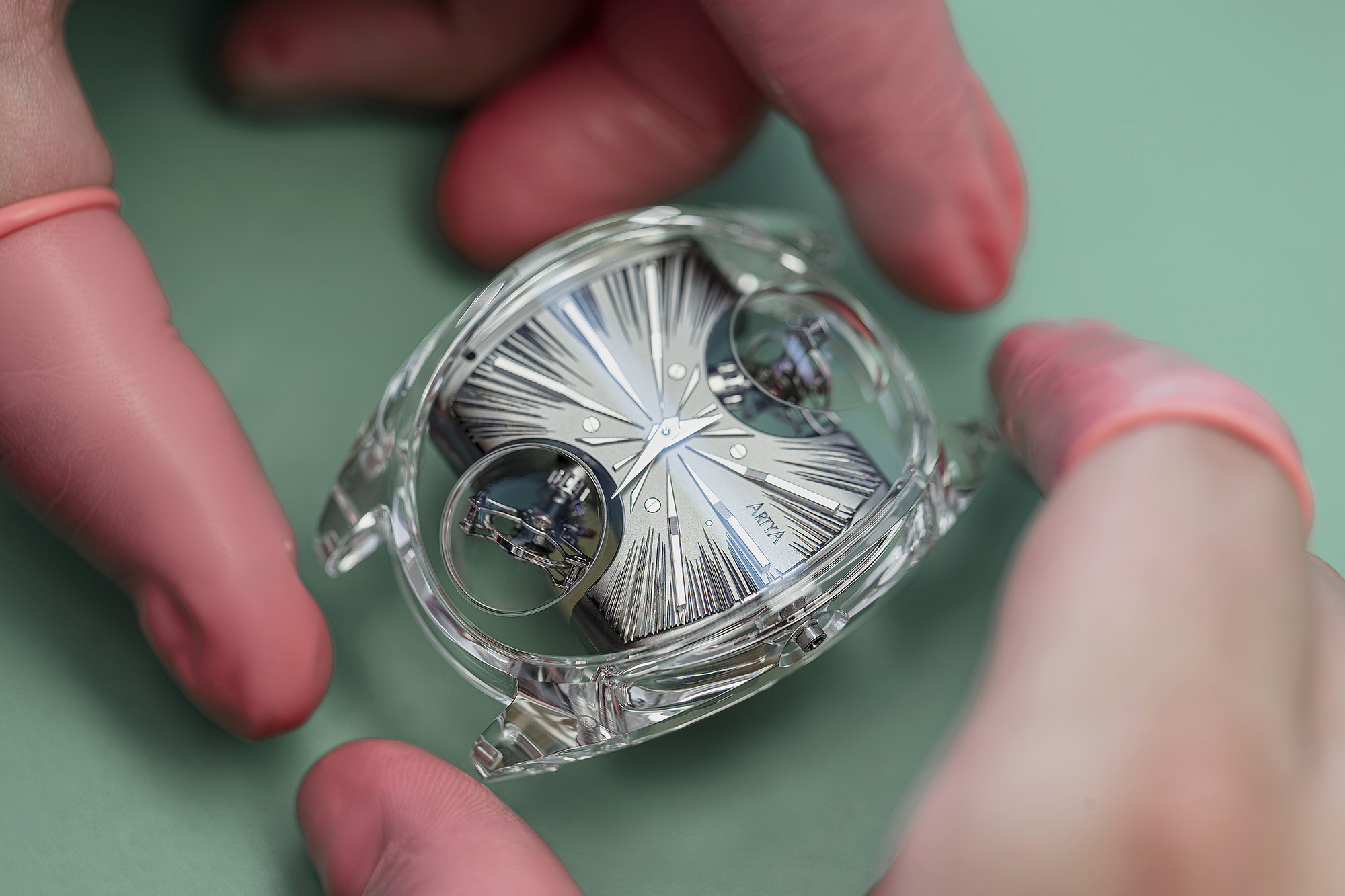
All in all, ArtyA dedicates a painstaking 120 hours of diamond machining followed by over 140 hours of polishing for each case. The Complexity-01 caliber was developed with high-complication movement specialist Purtec Sàrl in Vallorbe. The movement itself is visible from virtually every angle, and provides 50 hours of power reserve.
Technical Specifications: ArtyA Complexity Métiers d’Art
Movement Complexity-01, manual winding; double inclined Cônillon tourbillons with differential; 50-hour power reserve
Dial: Hand engraved over a finely sandblasted base; applied indexes with polished bevels, cabron-drawn flanks and sandblasted upper surfaces
Case: Transparent synthetic sapphire or pigeon-blood ruby; triple-concave middle; optical domes at 12 and six o’clock; 42 × 48 × 13mm
Strap: Integrated rubber strap with ArtyA folding clasp
Price: CHF 190,000 in sapphire; CHF 220,000 in pigeon-blood ruby
Availability Nine numbered pieces
Artya