Breguet Marks the 225th Anniversary of the Tourbillon with Four New Watches
Reviews
Breguet Marks the 225th Anniversary of the Tourbillon with Four New Watches

Breguet remains deeply present in modern watchmaking. Many of the mechanisms still recognised today trace back to Abraham-Louis Breguet himself: the pare-chute shock absorber, the overcoil hairspring, the constant-force escapement, and, ultimately, the tourbillon regulator.
What is equally remarkable is the background to these inventions. Breguet encountered major upheaval during his career and was forced to leave his workshop for a period. During the French Revolution, he left France for Switzerland, taking refuge in Neuchâtel and Le Locle. Away from his workshop, he did not abandon watchmaking. Instead, he used the time to reflect and refine ideas that had already begun to take shape.
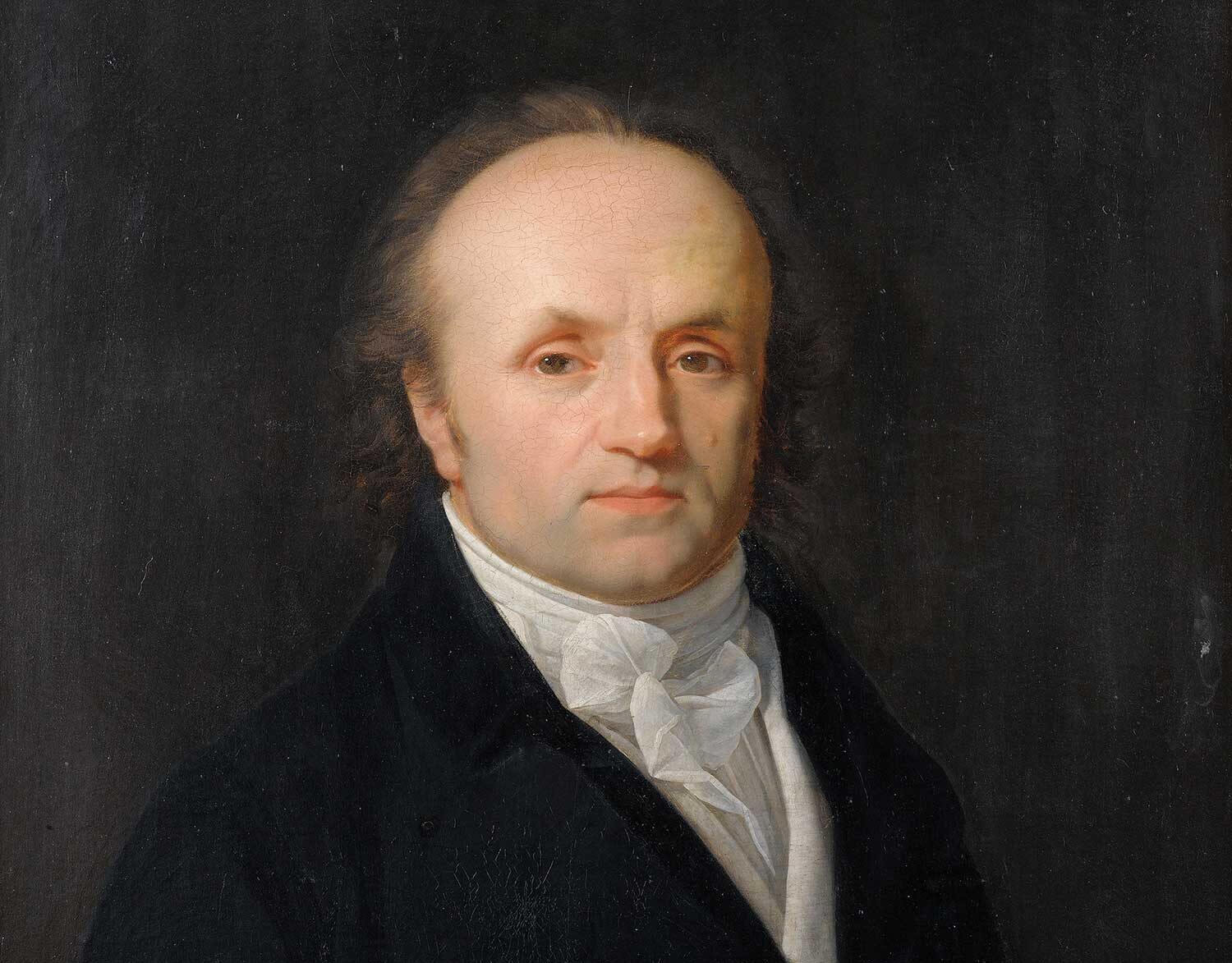
Portrait of Abraham-Louis Breguet, 1747–1823 (Image: ©Breguet Museum Collection)
When he returned to Paris in 1795, he began unveiling a series of inventions that would define his legacy: the constant-force escapement in 1798, and the tourbillon in 1801, both later granted patents.
This year marks the 225th anniversary of Breguet’s tourbillon patent, granted in 1801. It was an unprecedented mechanism, not only functional in addressing the problem of pocket watches carried in a vertical position inside a jacket, but also compelling in motion, with a rotating cage that exposes the regulating organ in continuous movement.
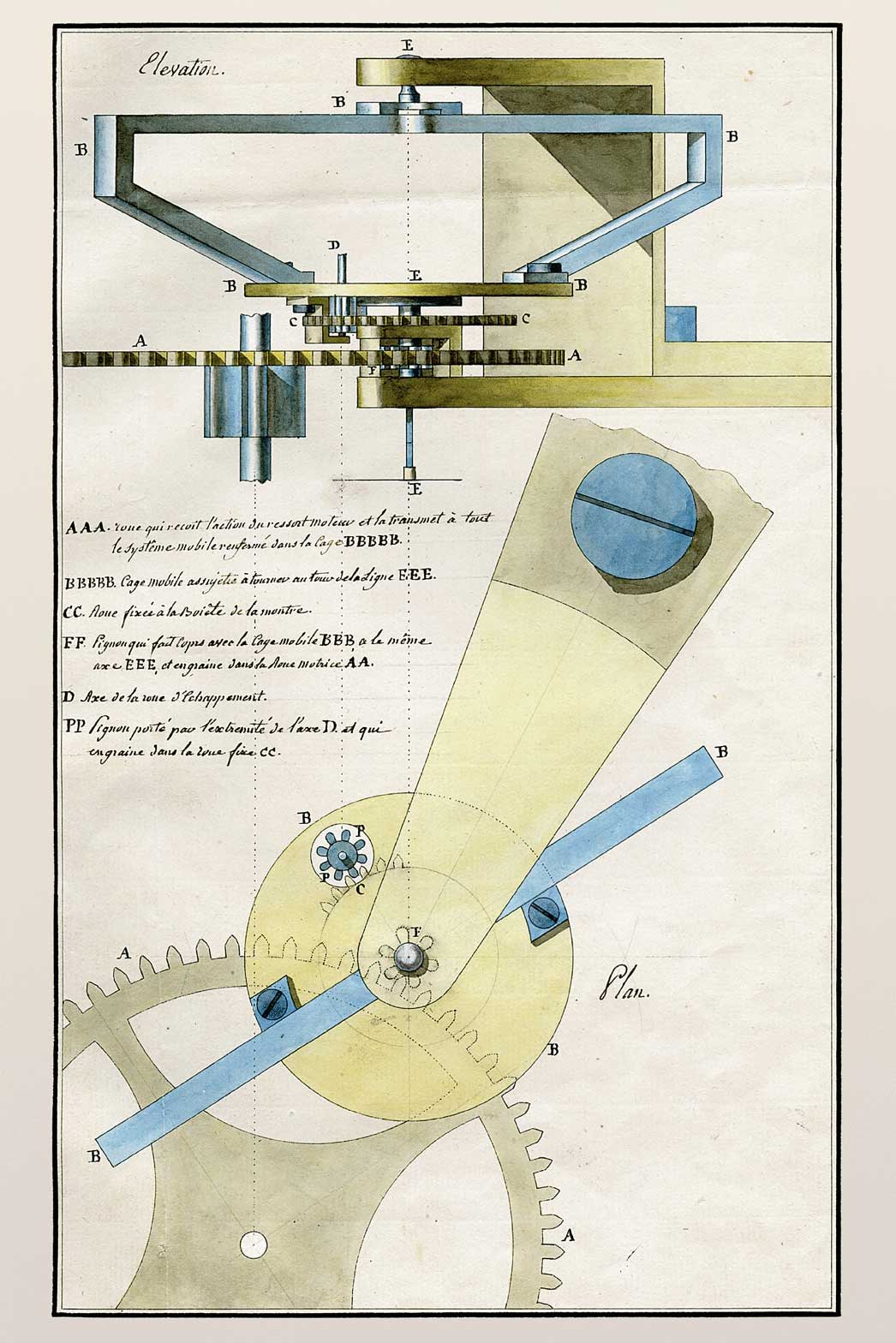
On June 26, 1801, in France, Abraham-Louis Breguet earned the rights for a patent which would last for a ten year period for a new type of regulator called the “Tourbillon” (Image: breguet.com)
To mark the occasion, Breguet has unveiled four tourbillon watches that showcase the very best of the brand. The collection spans a wide spectrum, from a compact dress watch to a highly complex instrument and even a sport‑oriented interpretation of the complication. What unites them is a distinctive anniversary palette in Bleu de France, paired with commemorative decoration that features enamel and engraving.
The line-up includes the Classique Tourbillon 7357 in a 35mm case, the Classique Tourbillon Sidéral 7255 with a flying tourbillon and mysterious display, the Tradition Tourbillon 7047 with its fusee-and-chain transmission, and finally the Marine Tourbillon Équation Marchante 5887, which combines a running equation of time with a celestial sky chart.
A throwback to the original tourbillon wristwatch
During the quartz crisis, Breguet’s workshop was undergoing a revival under the direction of watchmaker Daniel Roth, who would later become a well-known independent watchmaker, with backing from Chaumet, the jeweller then owning Breguet. In those years, the House worked to reestablish the codes of early Breguet watchmaking, drawing heavily from its pocket watch heritage, and this eventually culminated in the launch of the tourbillon wristwatch, Ref. 3350, in 1988.
Today, it is easy to forget how unusual the tourbillon still was in the 1980s. Only a handful of brands were making tourbillon wristwatches at the time, and even Patek Philippe, to say the least, would only introduce serial production versions in the early 1990s.
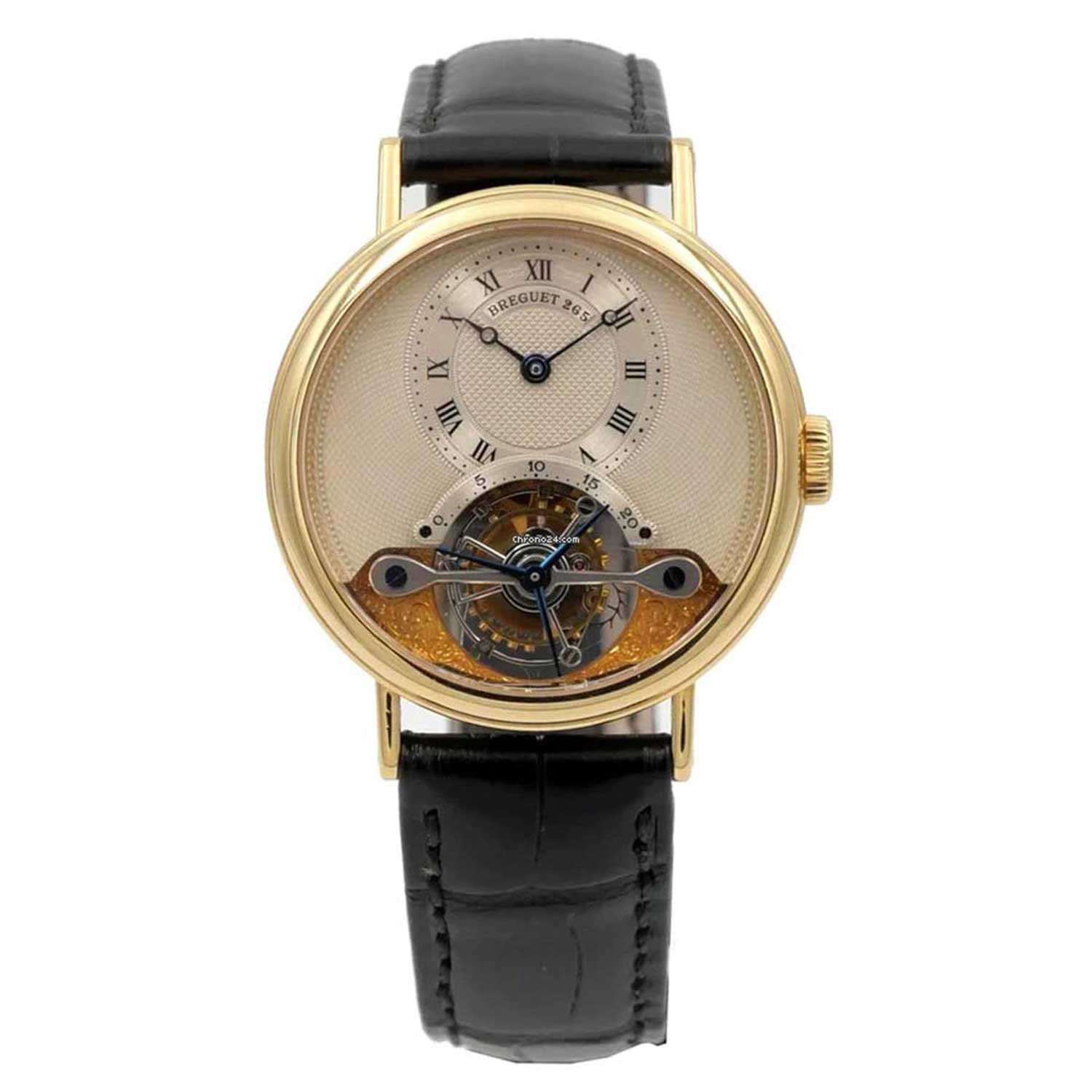
The original Breguet Tourbillon Ref. 3350, introduced in 1988 (Image: Chrono24.com)
The original Breguet Ref. 3350 was a beautiful, almost exquisite timepiece at just 35mm. The dial sat at 12 o’clock with the tourbillon at 6, linked by elegant bridges across the dial. It was decorated with guilloché and engraving, all packed into a relatively compact case, which is part of what makes it so special.
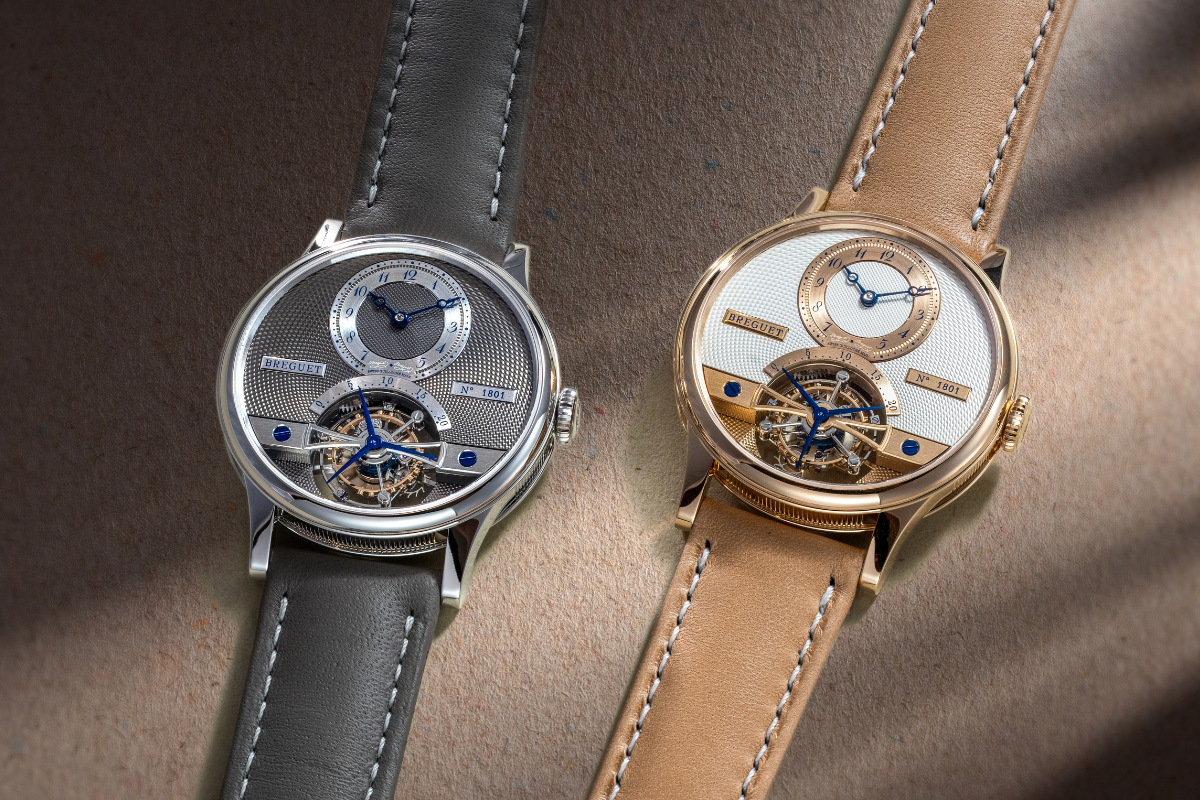
Today, Breguet is reviving its original vision with the Classique Tourbillon 7357. What makes this release particularly striking is its boldly compact size: just 35 mm, a full millimeter smaller than the late‑1980s original. With a case under 9 mm tall, it preserves those romantic, traditional proportions that are so rare to find today.
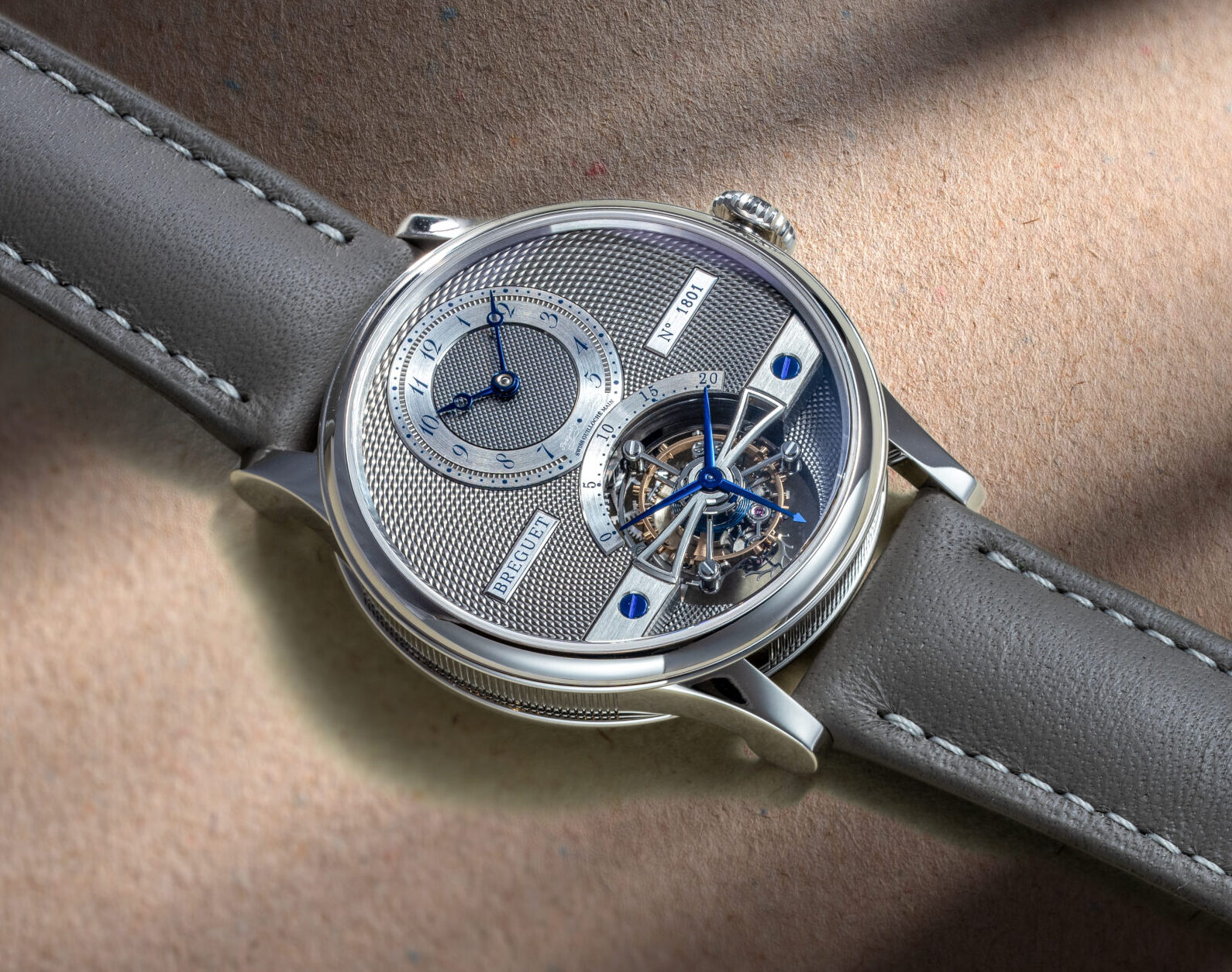
The new Classique Tourbillon 7357 in platinum (Image: Revolution ©)
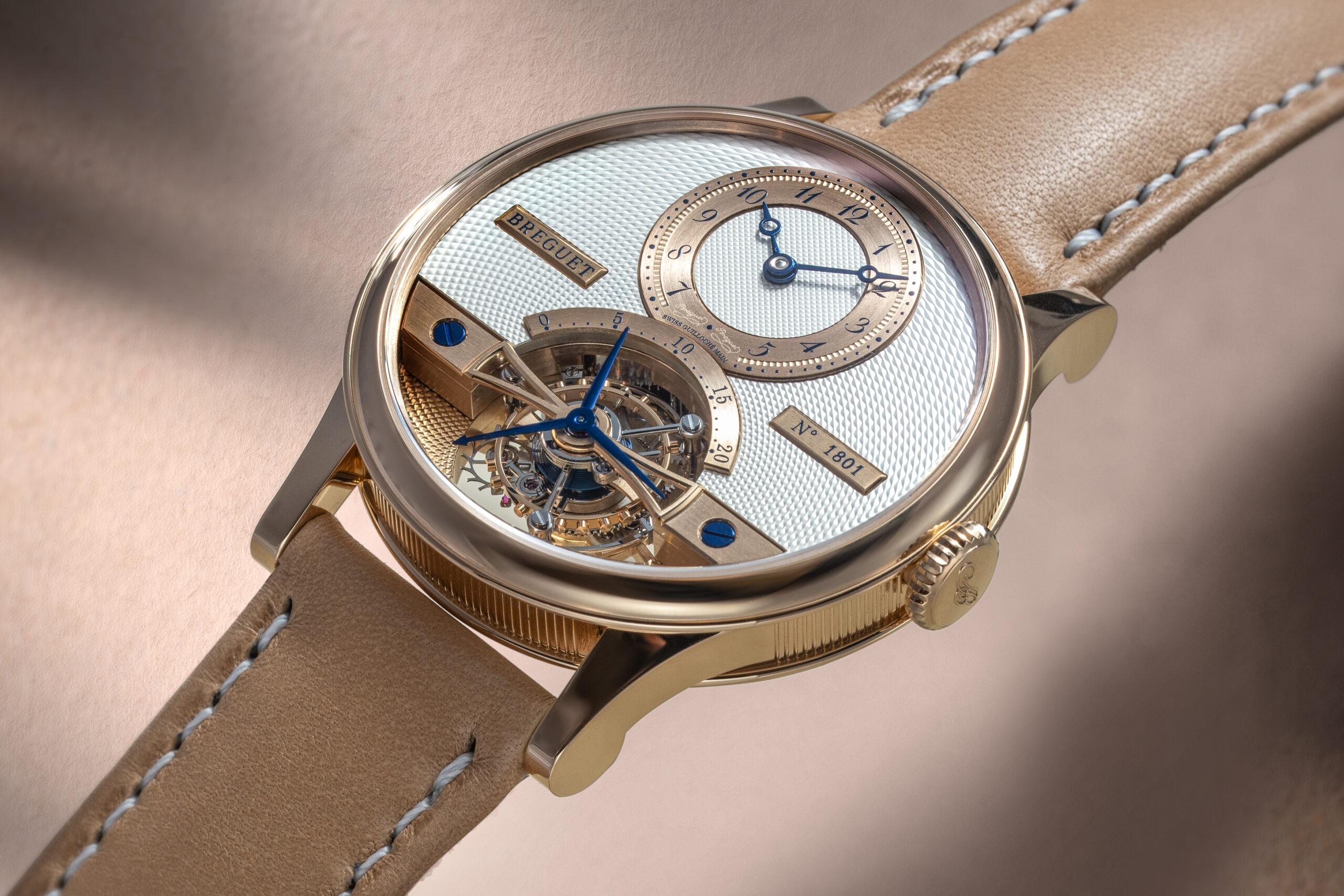
And in 18k Breguet gold (Image: Revolution ©)
Naturally, certain elements have been updated. The case is offered in platinum or, more strikingly, in Breguet gold, a proprietary alloy introduced for the brand’s 250th anniversary last year. The movement remains faithful in spirit yet modern in execution. Rooted in the historic Calibre 558, a Lemania base adapted for the tourbillon, the new Calibre 187B retains the slow, mesmerizing beat of 18,000 vibrations per hour. This creates a calming rhythm on the wrist, while performance has been enhanced with a 60‑hour power reserve and improved resistance to magnetism thanks to a silicon pallet lever.
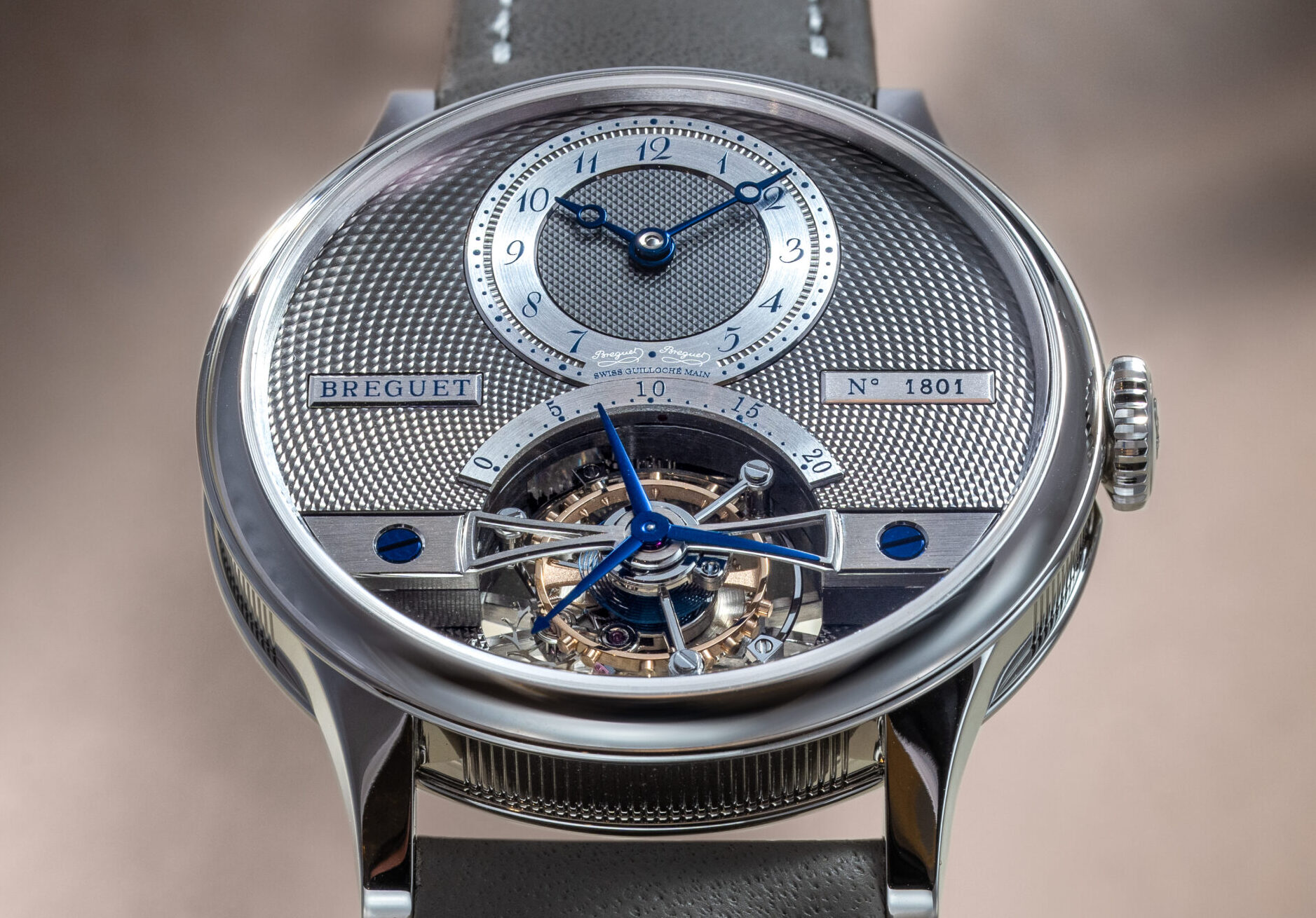
The dial is made of 18K Breguet gold with an anthracite electroplated finish (Image: Revolution ©)
But the highlight here is really the design. The multi-layer dial with its different plaques just works so well visually. At 6 o’clock, the open tourbillon is fully exposed, and through that opening you can see the bridges, the cage, and all the small components beautifully finished within a very tight space. It is quite something to look at in person.
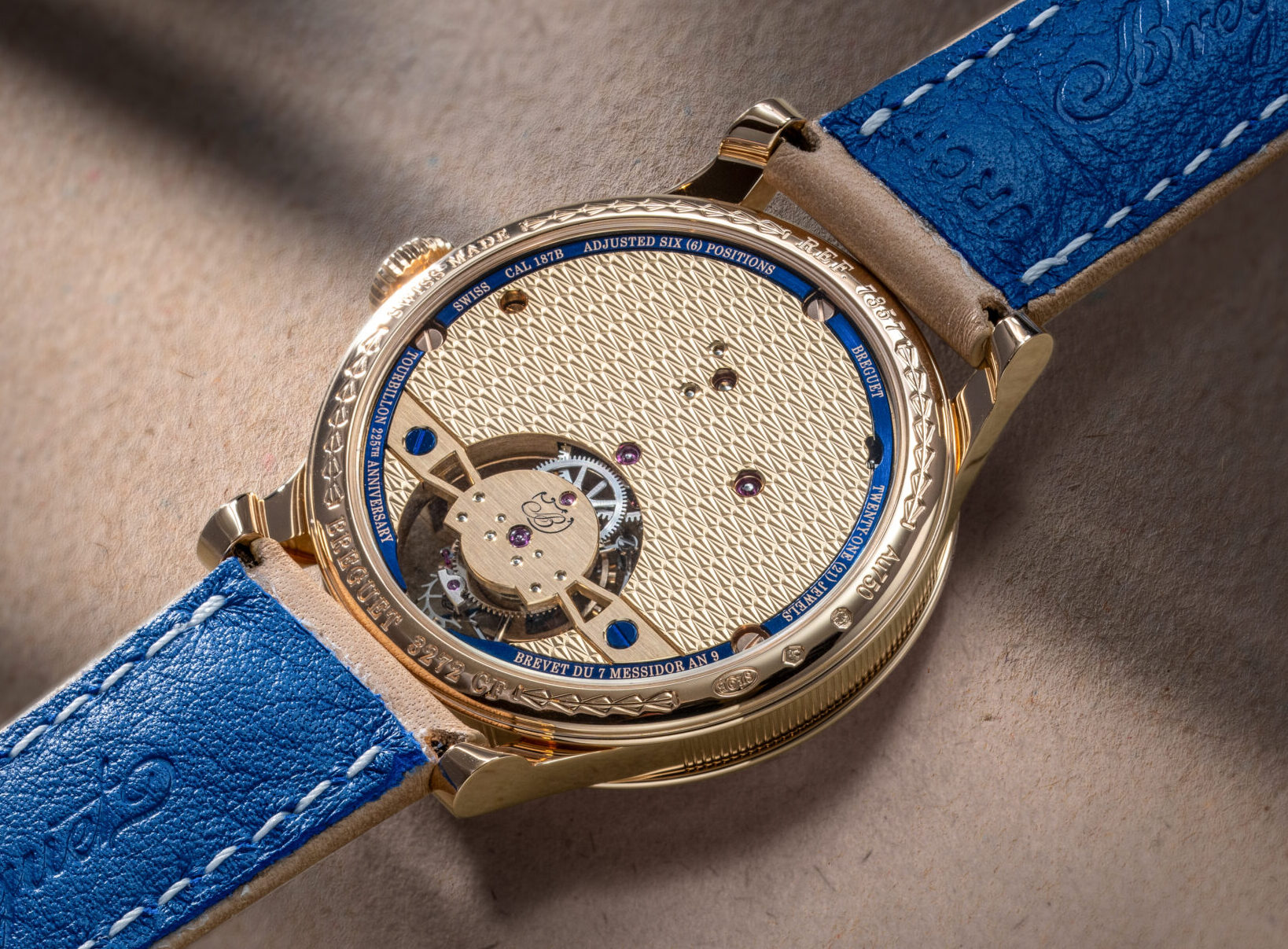
A modern guilloché movement in place of the original engraved caseback (Image: Revolution ©)
The back is also very nicely done, even though most of the attention goes to the front. The barleycorn guilloché on the movement plate is stunning, perhaps even more so than the dial in some ways, especially with the warmth of the Breguet gold and the fact that nothing interrupts the surface. It is framed by inlays in Bleu de France, with two lower appliqués paying tribute to Breguet and his invention, engraved with Brevet du 7 Messidor An 9 and Tourbillon 225e Anniversaire.
Tech Specs: Classique Tourbillon 7357
Movement: Manually wound cal. 187B tourbillon movement; 60-hour power reserve; 18,000vph or 2.5Hz;
Functions: Hours, minutes, and running seconds indicated by the one-minute tourbillon cage
Case: 35mm x 9.2mm; 950 platinum or 18K Breguet gold; water-resistant to 30m
Dial: 18K Breguet gold dial with Clous de Paris centre and barleycorn outer guilloché
Strap: Grey or beige calfskin strap depending on variant; folding clasp in platinum or gold
Mysterious floating tourbillon
Next up is a Classique Tourbillon with a twist. Here, the tourbillon is combined with one of watchmaking’s oldest visual illusions: the mysterious display. Look closely at the Classique Tourbillon Sidéral 7255 and the tourbillon appears to float within the aperture, seemingly disconnected from the rest of the movement.
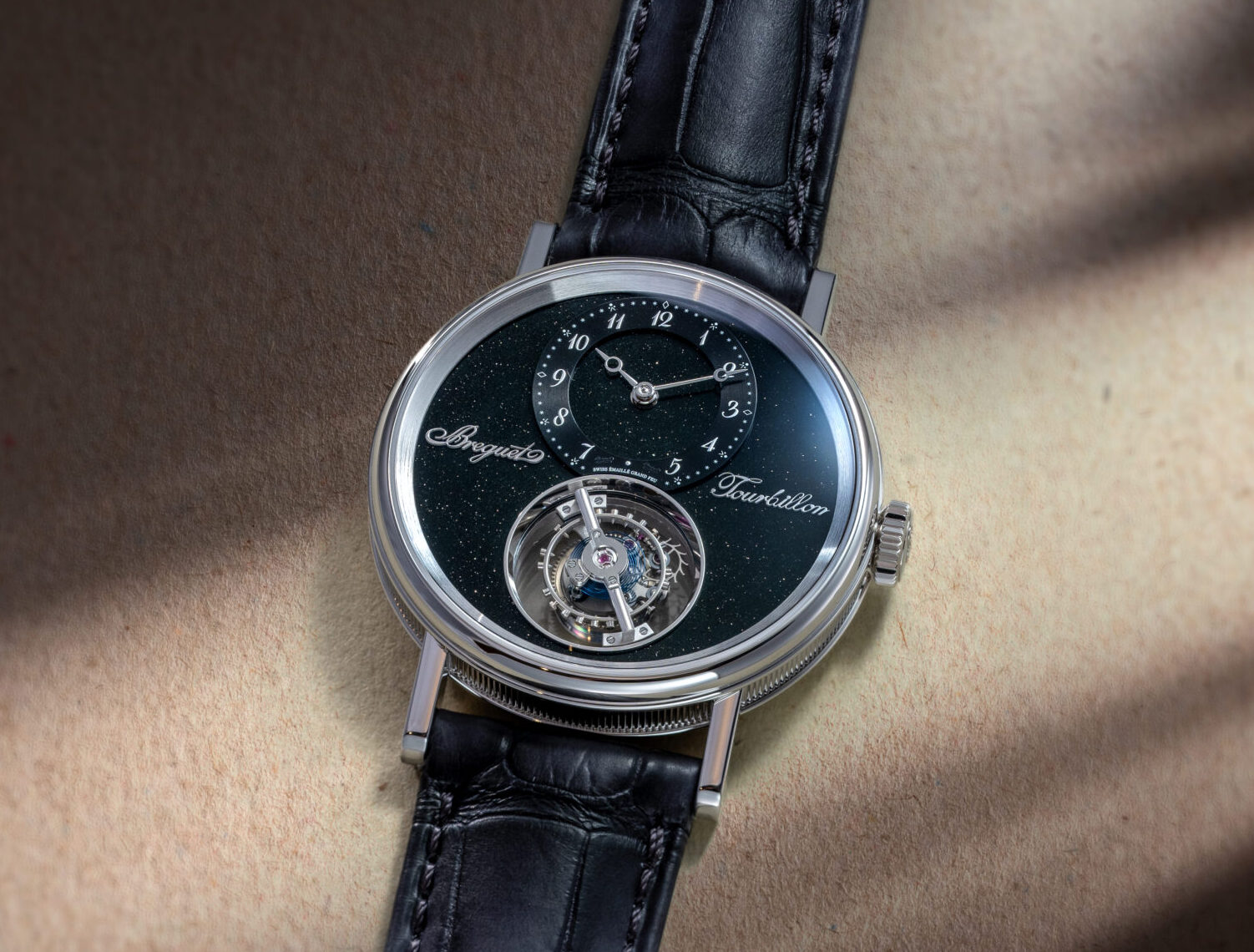
The new 38 mm Classique Tourbillon Sidéral 7255 (Image: Revolution ©)
That effect is achieved through two clever solutions. First, this is not a conventional tourbillon with an upper bridge. Instead, it is supported only from below, eliminating the bridge that would otherwise obscure the view, as seen on the 7537 above. Second, and more importantly, the gearing that drives the tourbillon is mounted on transparent sapphire discs. The outer edges of these discs are concealed beneath the dial, hiding the transmission system from view. What remains visible is a tourbillon that appears to float freely in space.
And it works remarkably well. A tourbillon is already captivating because it rotates continuously once every minute. Seeing one that appears to float while doing so is mesmerizing regardless of age or experience. It is a reminder of why the mysterious display has continued to fascinate audiences since its debut in the late nineteenth century.
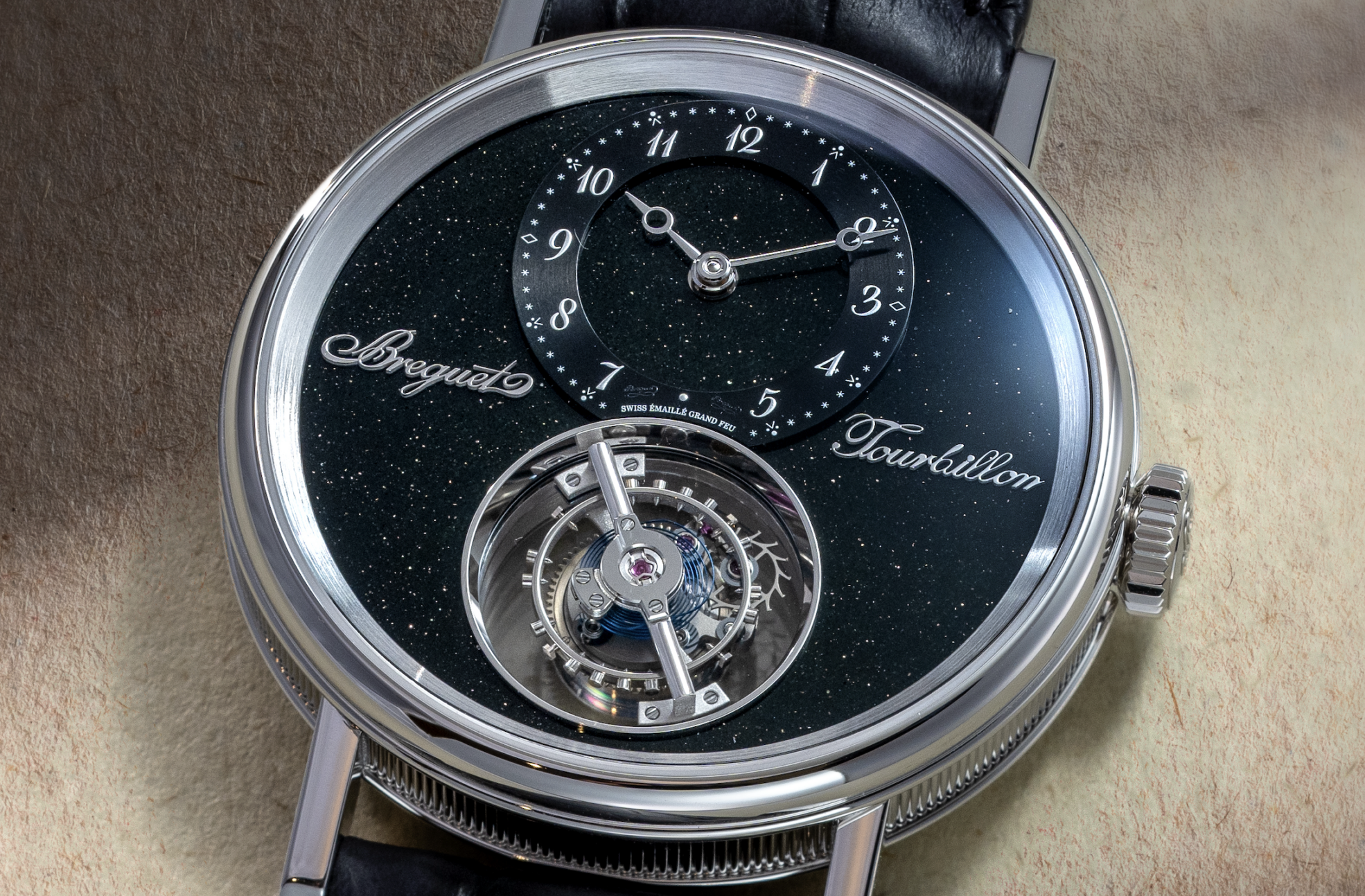
Flying tourbillon with a mysterious look (Image: Revolution ©)
To complement the effect, Breguet created a dark, sparkling dial unlike anything else in its current collection. The maison calls it aventurine enamel. In essence, aventurine glass is ground into a fine powder and mixed into the enamel paste before firing. The process is broadly similar to that used for a traditional enamel dial, except that the enamel itself incorporates aventurine particles. The dial is then fired at temperatures exceeding 800°C, qualifying it as a grand feu enamel dial.
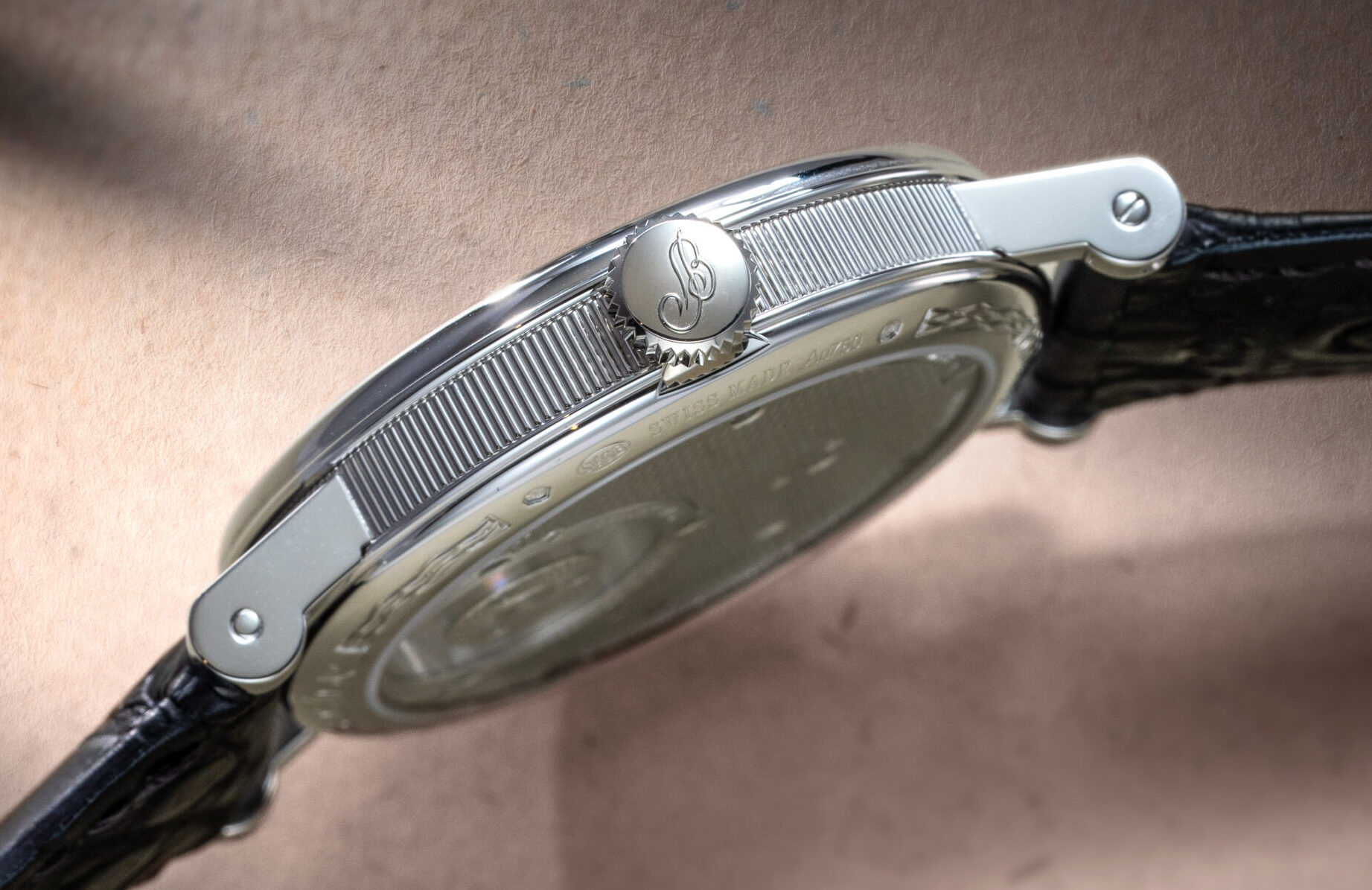
Fluted platinum case always looks subtly high class (Image: Revolution ©)
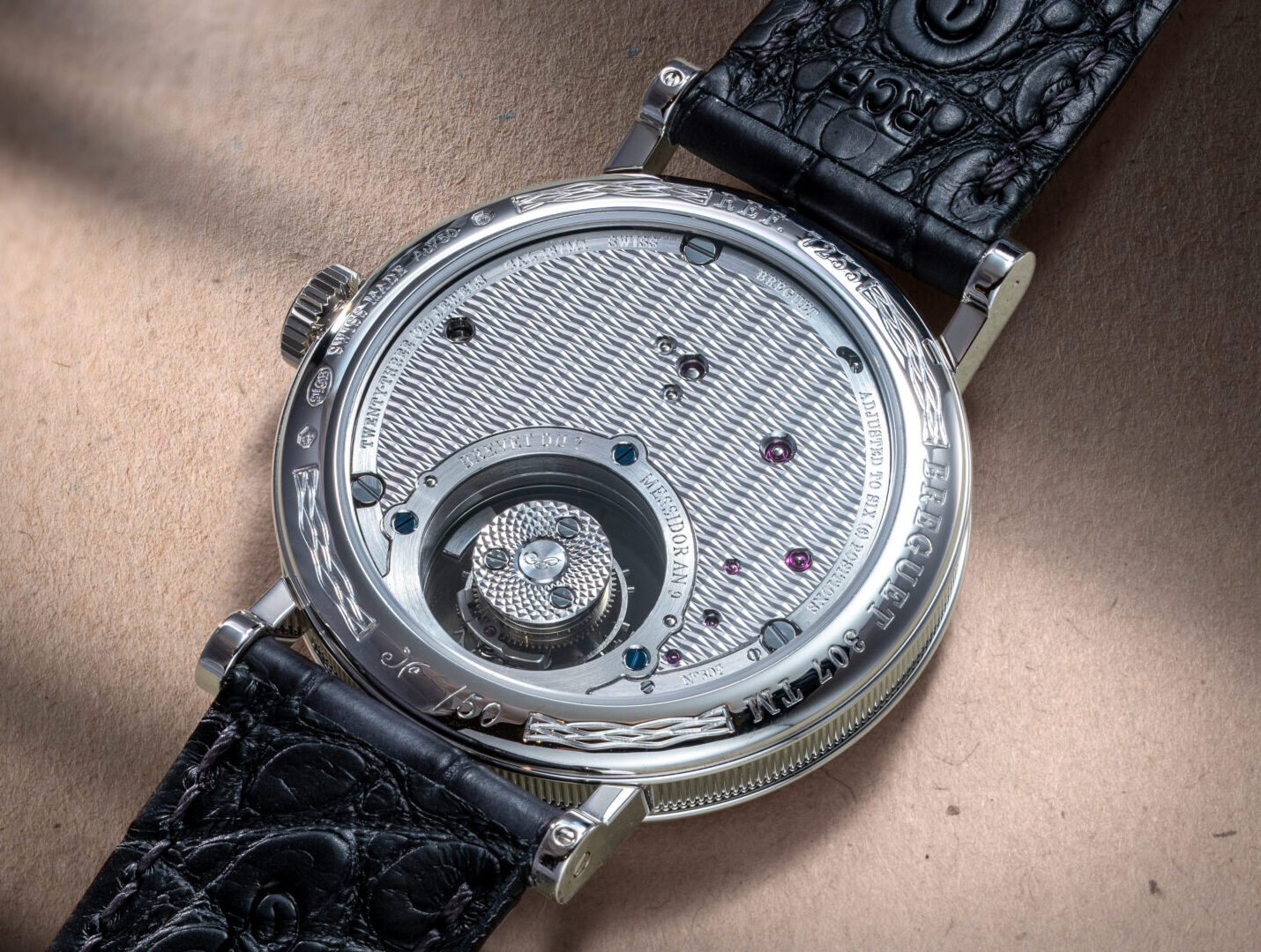
Guilloché to spice up the relatively sparse plate (Image: Revolution ©)
The effect is stunning. The sparkle is subtle, but that is precisely why it works. It complements the watch’s mysterious character perfectly. To complete the composition, Breguet pairs the dial with platinum. Its cool, silvery tone suits the celestial theme perfectly and reinforces the mysterious atmosphere of the watch.
Classique Tourbillon Sidéral 7255
Movement: Manually wound cal. 187M1 flying tourbillon movement; 50-hour power reserve; 18,000vph or 2.5Hz
Functions: Hours, minutes, and running seconds indicated by the flying tourbillon cage
Case: 38mm x 10.2mm; 950 platinum case; water-resistant to 30m
Dial: Black aventurine grand feu enamel dial
Strap: Alligator leather strap; platinum folding clasp
Availability: Limited edition of 50 pieces
Chain and fusee on top of tourbillon
Next up is a heavy hitter, and you can see it all just by looking at the dial. The tourbillon and chain-and-fusee are what define the Tradition Tourbillon 7047, two mechanisms that help improve timekeeping.
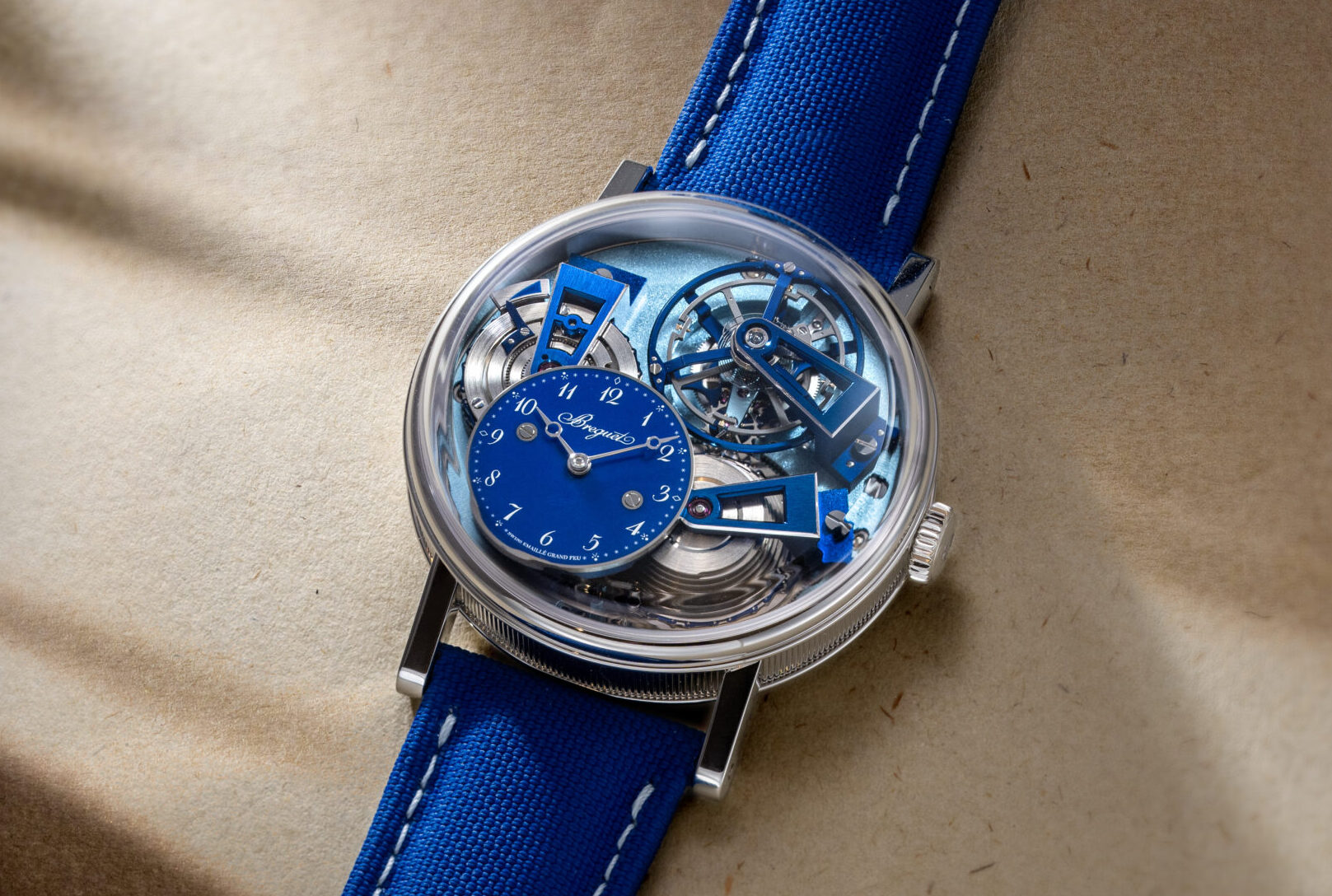
Fusée-and-chain paired with a tourbillon (Image: Revolution ©)
There is a lot to love about this watch, first of all it being part of the Tradition collection, which has come to define the success of modern‑day Breguet. This collection draws inspiration from historic Breguet pocket watches, and as a result the movement layout of those pocket watches is put on display here on the wrist, allowing you to admire both the dial and the mechanics at the same time.
At the very top of the line sits the 7047, equipped with both a tourbillon and a fusee and chain. The long chains winding over towering gears ensure that the torque delivered by the mainspring is transformed into an even flow down the gear train towards the tourbillon.
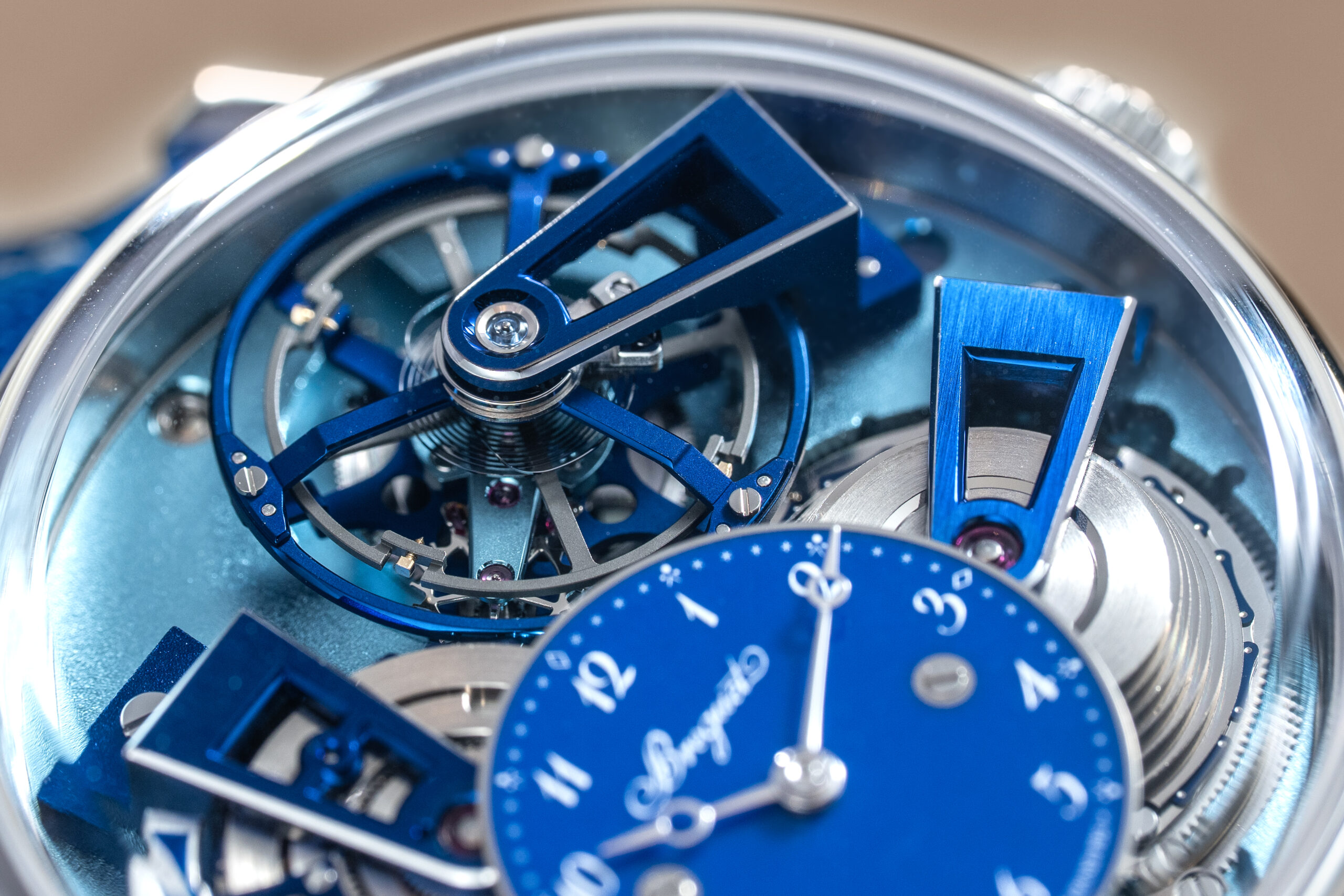
Silicon hairspring with an overcoil (Image: Revolution ©)
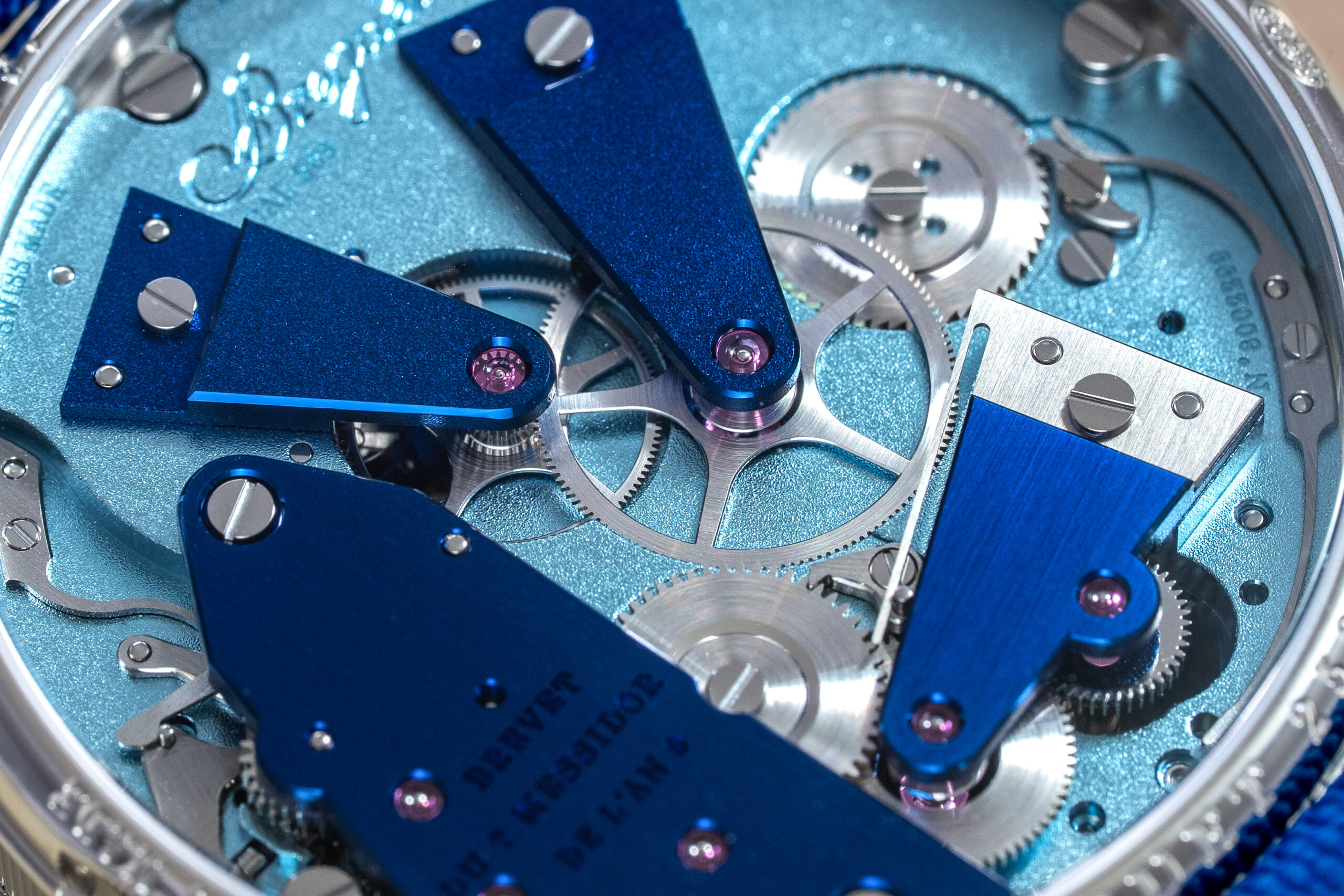
Beautiful two-tone finish (Image: Revolution ©)
What makes this iteration especially striking is a new color scheme that gives the Tradition a distinctly modern edge. The plates are finished in two shades of blue: one light like glacial ice, the other dark like the ocean. Sandblasting adds a shimmering texture that brings these colors to life. The dial, of course, is made of blue grand feu enamel. All in all, this is a very special and visually captivating version of the flagship Tradition 7047.
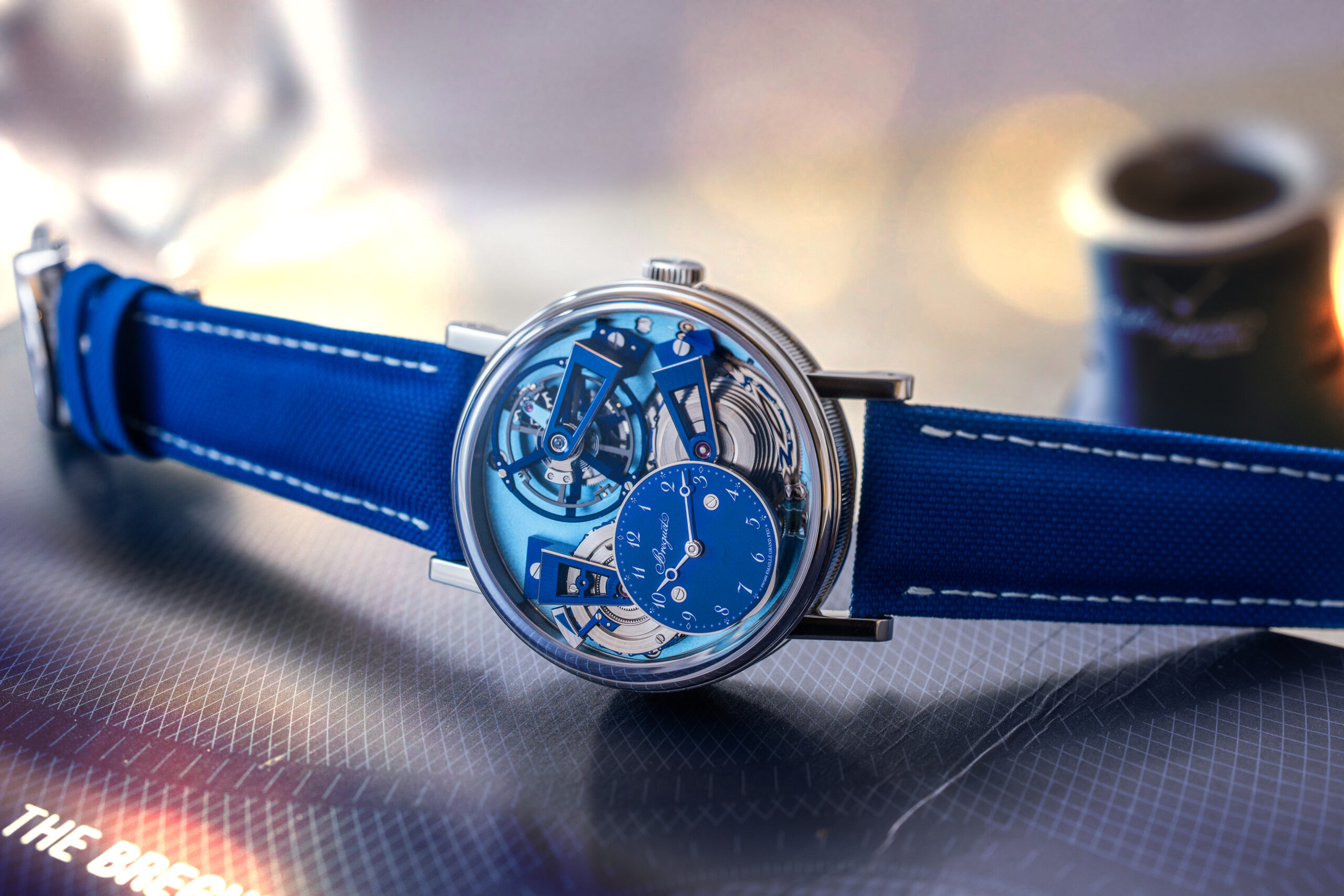
The heavy hitter of the quartet (Image: Revolution ©)
Tradition Tourbillon 7047
Movement: Manually wound cal. 569 tourbillon movement with fusee-and-chain transmission; 55-hour power reserve; 18,000vph or 2.5Hz
Functions: Hours, minutes, seconds on tourbillon cage; power reserve
Case: 41mm; 950 platinum case; fluted case; sapphire crystal; exhibition caseback; water-resistant to 30m
Dial: Bleu de France grand feu enamel dial
Strap: Bleu de France rubber strap; platinum folding clasp
Availability: Limited edition of 25 pieces
An incredible tourbillon sports watch
Last but not least is a surprising entry, a sports watch unlike the three more traditional pieces. The Marine Tourbillon Équation Marchante 5887 is far from ordinary. Despite its deceptively simple interface, it actually combines three impressive complications: a tourbillon, a perpetual calendar, and an equation of time display.
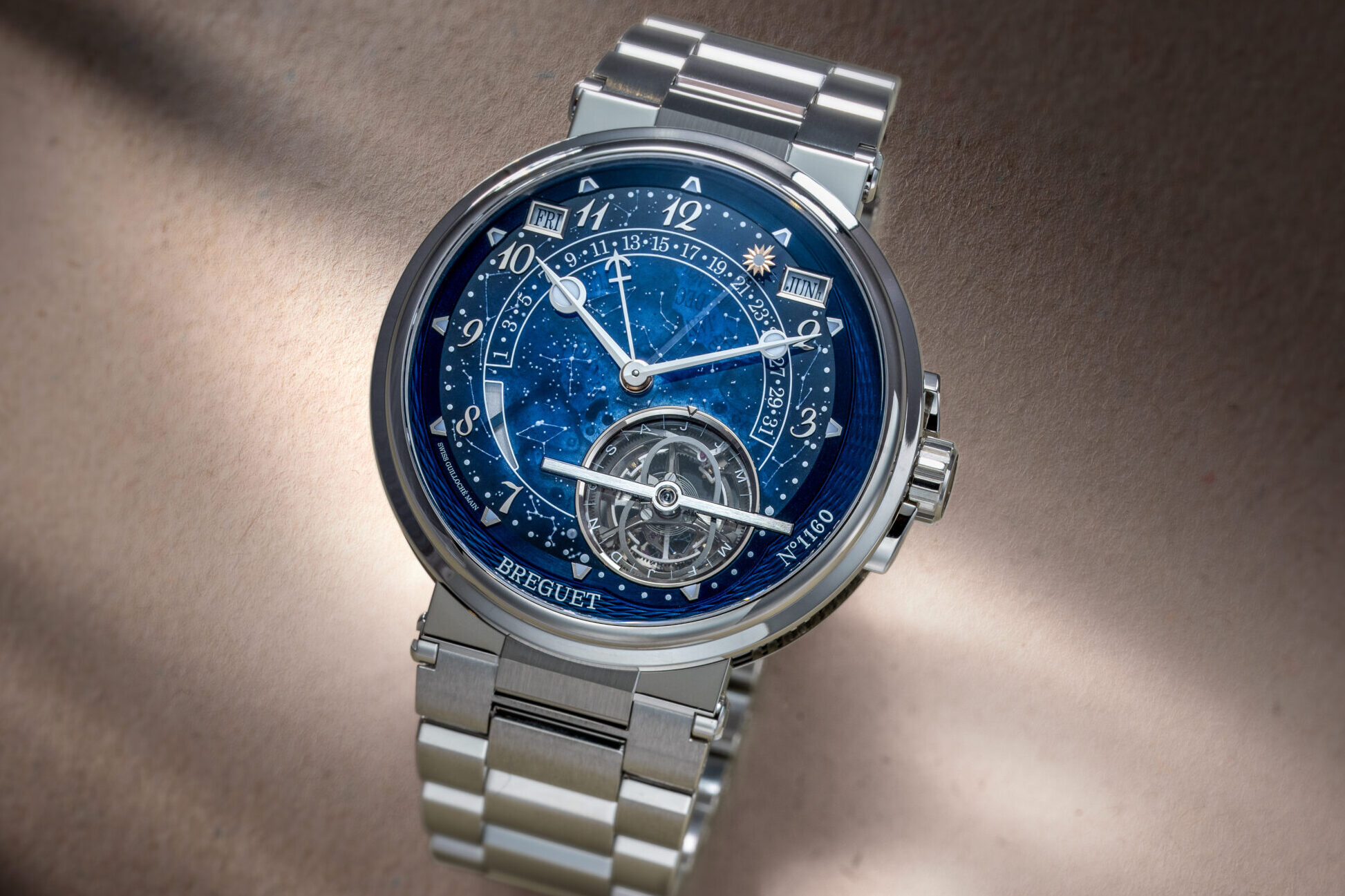
The new, and perhaps the best, iteration of the Marine Tourbillon Équation Marchante 5887 (Image: Revolution ©)
The Marine 5887 has long been part of Breguet’s Marine collection. In earlier versions, its understated dial concealed the complexity and magnificence within. Here, however, the anniversary Blue de France palette brings out the very best of the watch. The dial is executed in grand feu enamel with miniature painting depicting the night sky, complete with constellations and the moon, as seen from Paris on June 26, 1801, the day the patent for the tourbillon was granted. The hands add to the romance, shaped like stars and anchors, perfectly complementing the celestial theme. All the complications are proudly displayed on the front alongside the beautiful dial: the calendar, the equation of time, and the tourbillon.
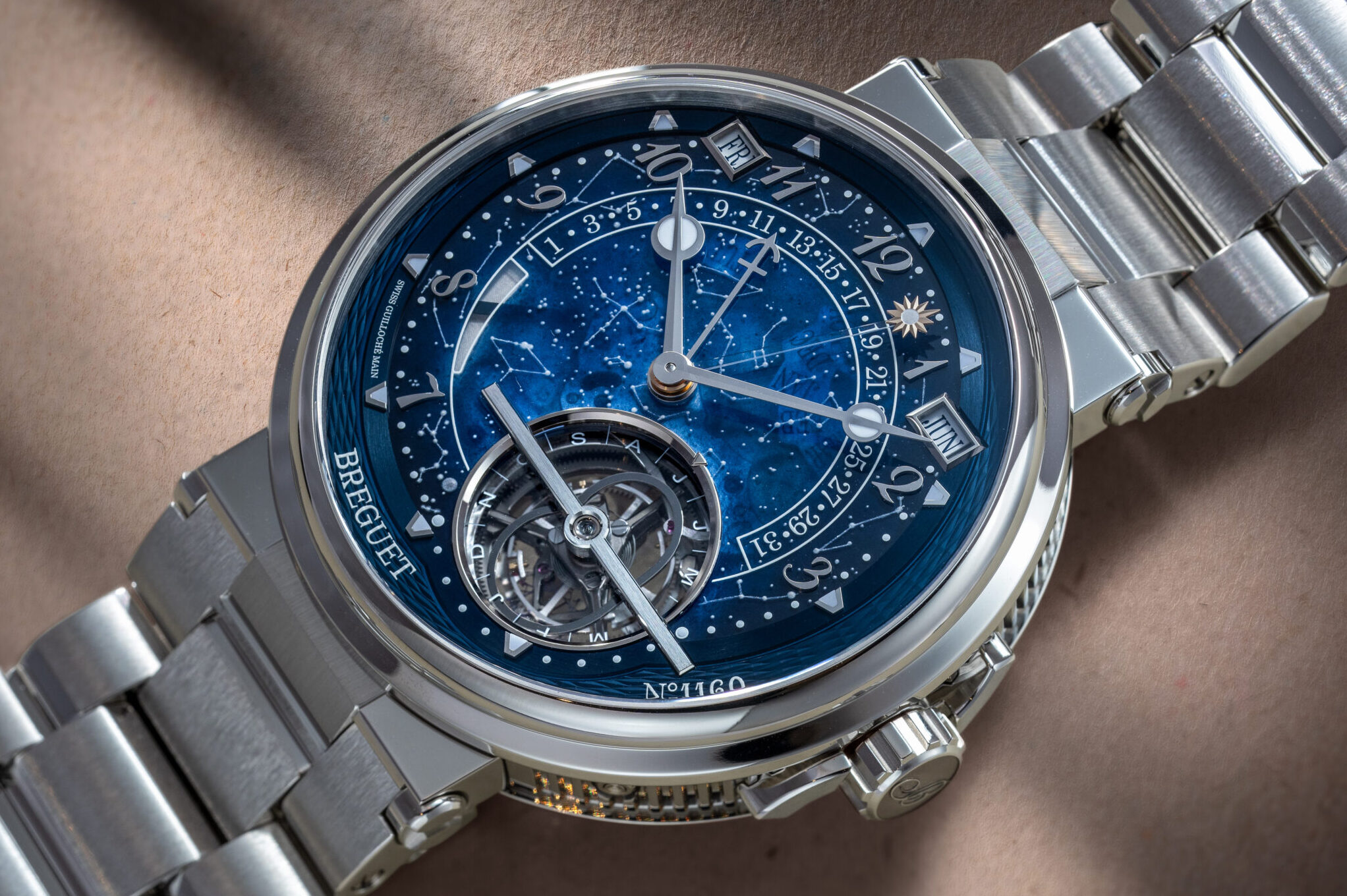
A dial that is both classical and modern (Image: Revolution ©)
The case back is equally impressive, featuring a hand engraved depiction of the eighteenth century ship Royal Louis, rendered in two tone Breguet gold and rhodium. This detail makes the Marine 5887 stand out as a sports watch unlike any other, reinforcing the Marine collection as a truly high end and luxurious option that can hold its own against the finest traditional men’s watches with grand complications.
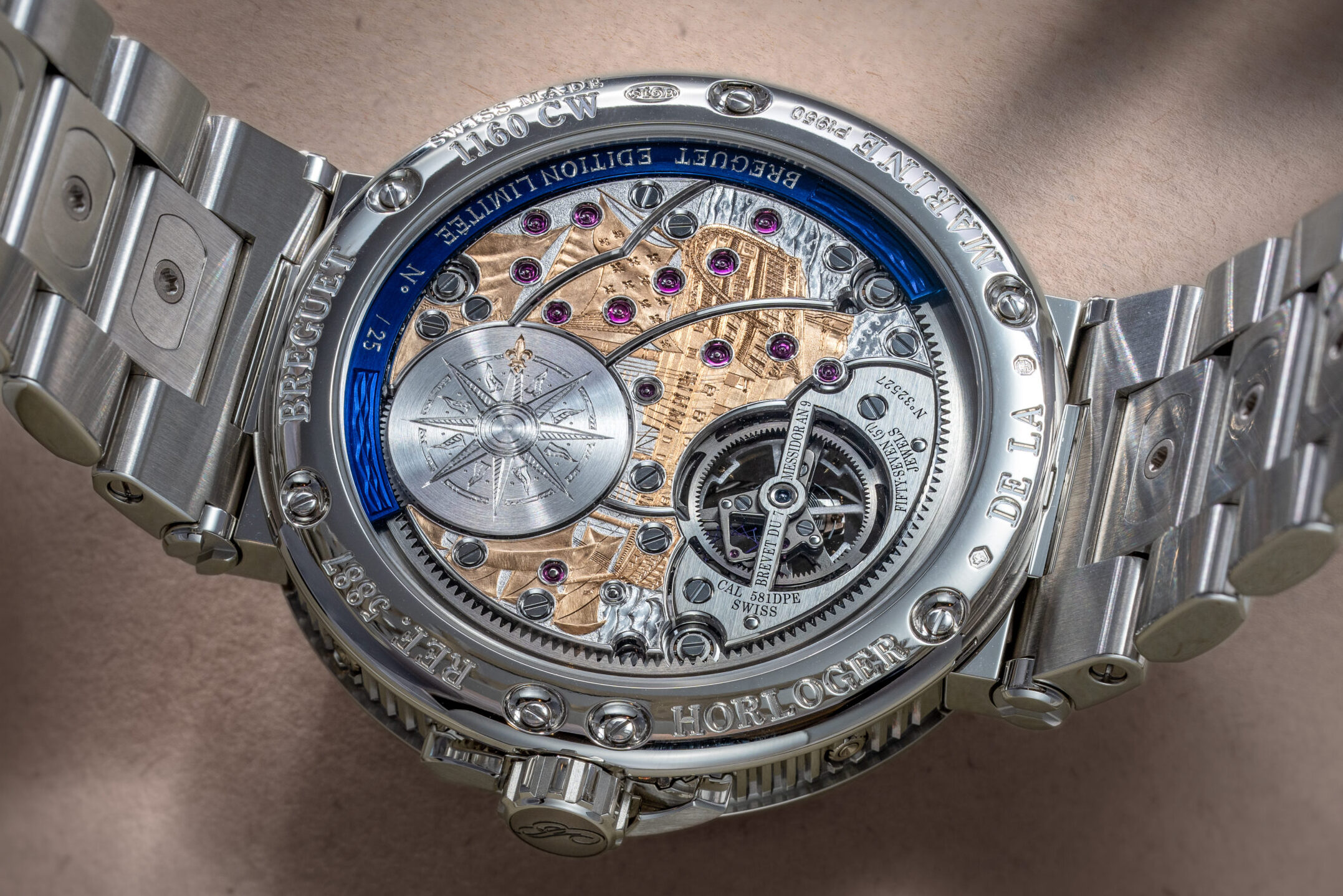
Hand-engraving on the movement (Image: Revolution ©)
Marine Tourbillon Équation Marchante 5887
Movement: Self-winding cal. 581DPE; 80-hour power reserve; 28,800vph or 4Hz
Functions: Hours, minutes, seconds on tourbillon cage; perpetual calendar; equation of time; power reserve
Case: 43.9mm × 11.8mm; 950 platinum case; water-resistant to 100m
Dial: Blue-gradient grand feu enamel dial; applied Arabic numerals; luminescent hands
Strap: Bleu de France rubber strap; platinum folding clasp
Availability: Limited edition of 25 pieces; optional personalised sky configuration
Breguet

You may also like
News
Last Week in Watches: Moser Goes Off-Grid, the Vacheron Constantin Overseas Turns 30
Sep 28, 2026
News
Last Week in Watches: Moser Goes Off-Grid, the Vacheron Constantin Overseas Turns 30
Sep 28, 2026
Editorial
Breguet Classique Chronométrie Ref. 7727: The World’s Most Accurate Mechanical Watch?
May 29, 2026
Editorial
Breguet Classique Chronométrie Ref. 7727: The World’s Most Accurate Mechanical Watch?
May 29, 2026
Editorial
Abraham-Louis Breguet: The Founder of Modern Horology
Apr 10, 2026
Editorial
Abraham-Louis Breguet: The Founder of Modern Horology
Apr 10, 2026