Why the Pocket Watch could be the Biggest Trend of 2026
Editorial
Why the Pocket Watch could be the Biggest Trend of 2026

Editor’s Note: Even before the just announced collaboration between Swatch and Audemars Piguet put the pocket watch firmly front of mind, it was clear the antiquated design was having a moment, as this story which originally appeared in Revolution USA #83 demonstrates.
What do pocket watches have in common with vinyl, typewriters, Keanu Reeves and interior design maximalism? Well, all of them are having a moment. Yes, all of them are frequently “a thing right now” — such is life in this world of cyclical trends — but as we enter the second quarter of the 21st century, they’re having even more of a moment than usual. And pocket watches even more so than their limelight-stealing competitors.
Exhibit A: a slew of recent releases, suggesting that brands are treating the pocket watch as more than simply a convenient prop in watchmaking’s ongoing search for a fresh narrative. While Patek Philippe has always created limited edition and unique pocket watches as part of its annual Rare Handcrafts collection, October last year saw Hublot unveil its 42mm MP-16 Arsham Droplet — a sci-fi-ish collaboration with American artist Daniel Arsham, which militated against any lingering notions of pocket watches being anachronistic nods to Victorian design codes. A more unashamedly traditional addition to the canon also came late last year, in the form of Breguet’s Grande Sonnerie — a piece whose bulbous cradle featured the maker’s first ever water-resistant minute repeater.
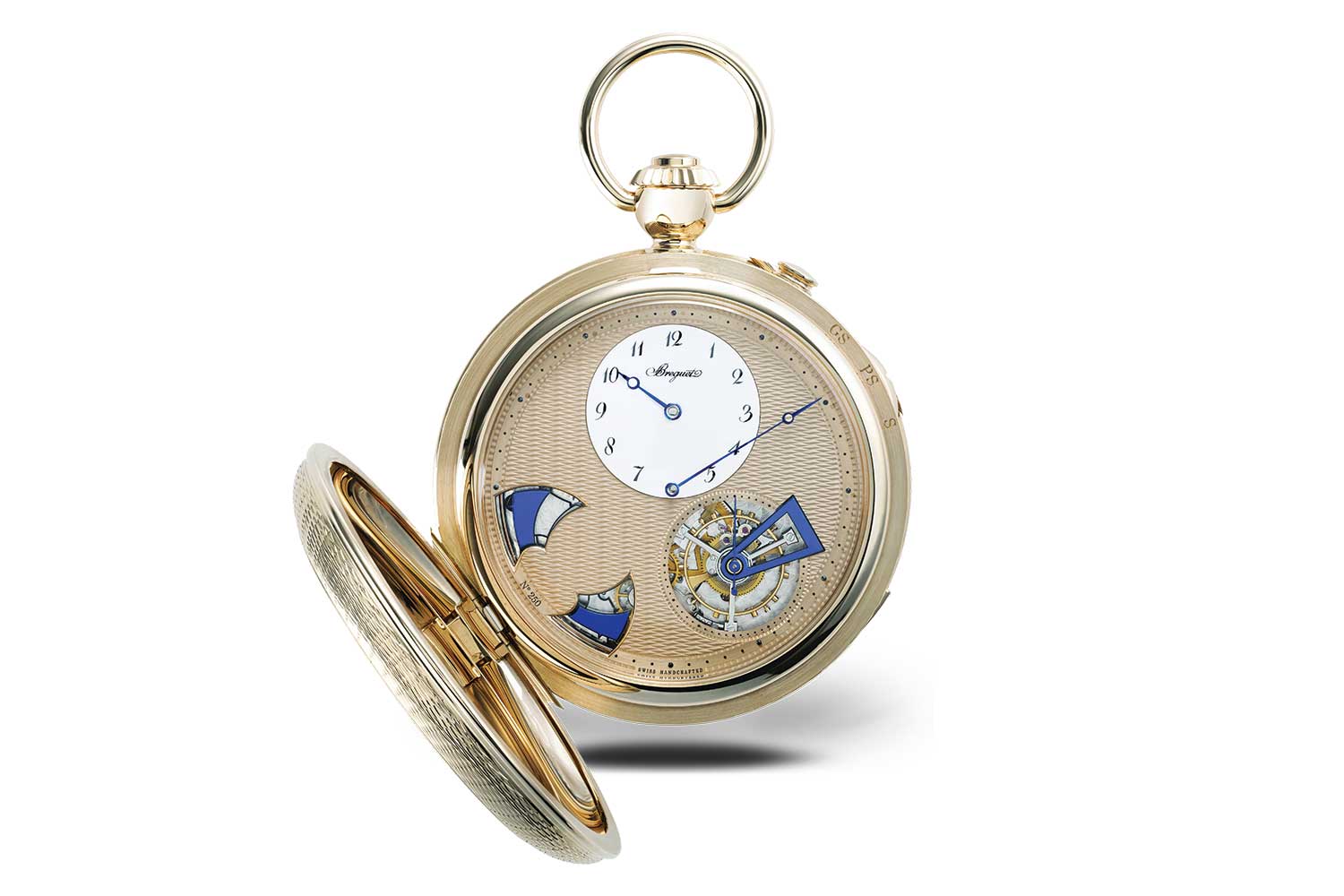
The Breguet Classique Grande Sonnerie Métiers d’Art 1905 is equipped with a grande and petite sonnerie, as well as a minute repeater with magnetic regulator
At Dubai Watch Week last November, independent Chinese brand Fam Al Hut also threw its hat into the ring, with a geometric marvel that is part pocket watch, part desk clock, whilst Christopher Ward recently teamed up with Studio Underd0g to create “the most luminous pocket watch ever made” (their words). Parmigiani’s Objets d’Art collection and Louis Vuitton’s Escale au Pont-Neuf and Escale en Amazonie are further examples of today’s heritage makers being convinced that there’s a healthy appetite amongst horophiles for timepieces sans bracelets or straps.
-
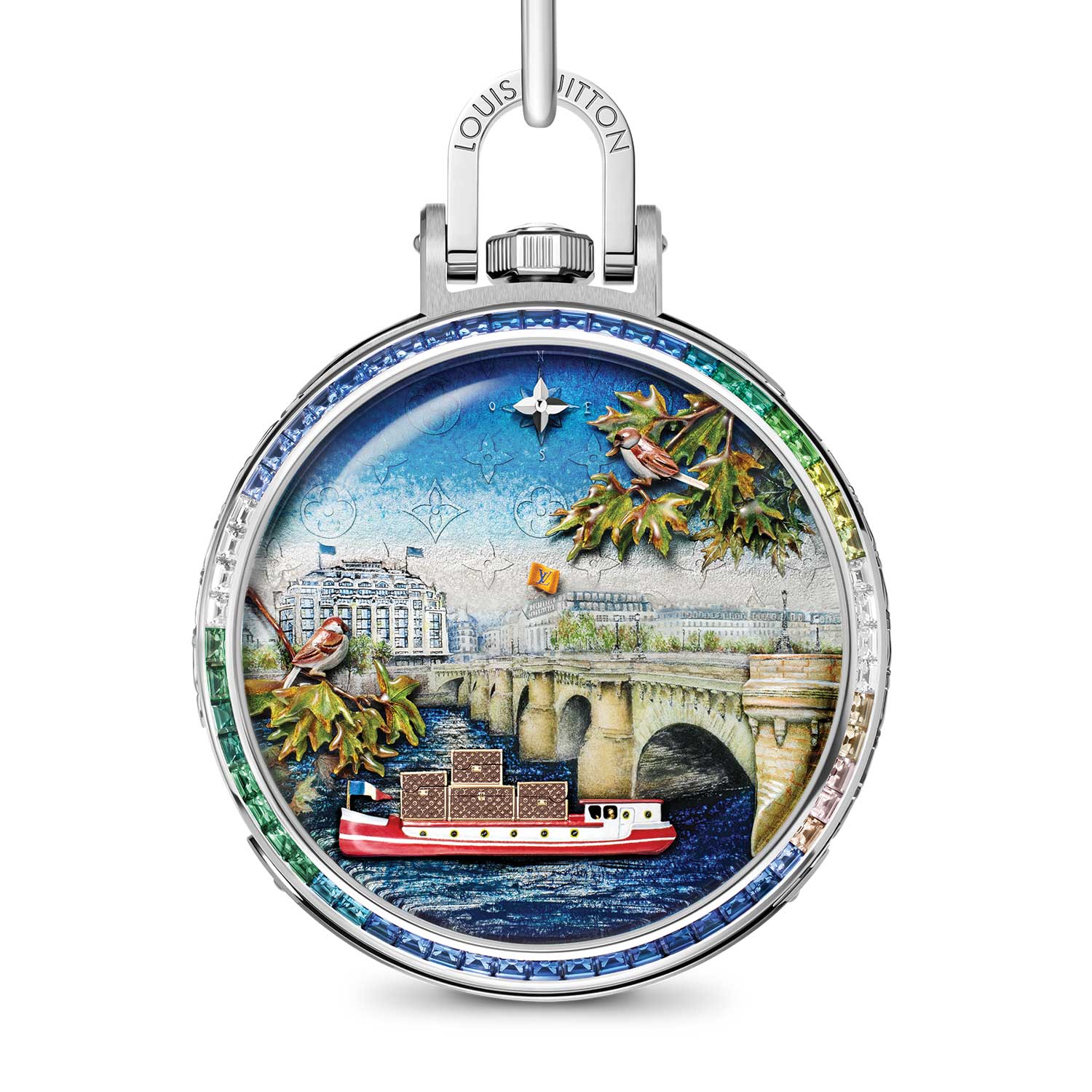
- Louis Vuitton’s Escale au Pont-Neuf pocket watch has some seven animations and 13 moving elements
-
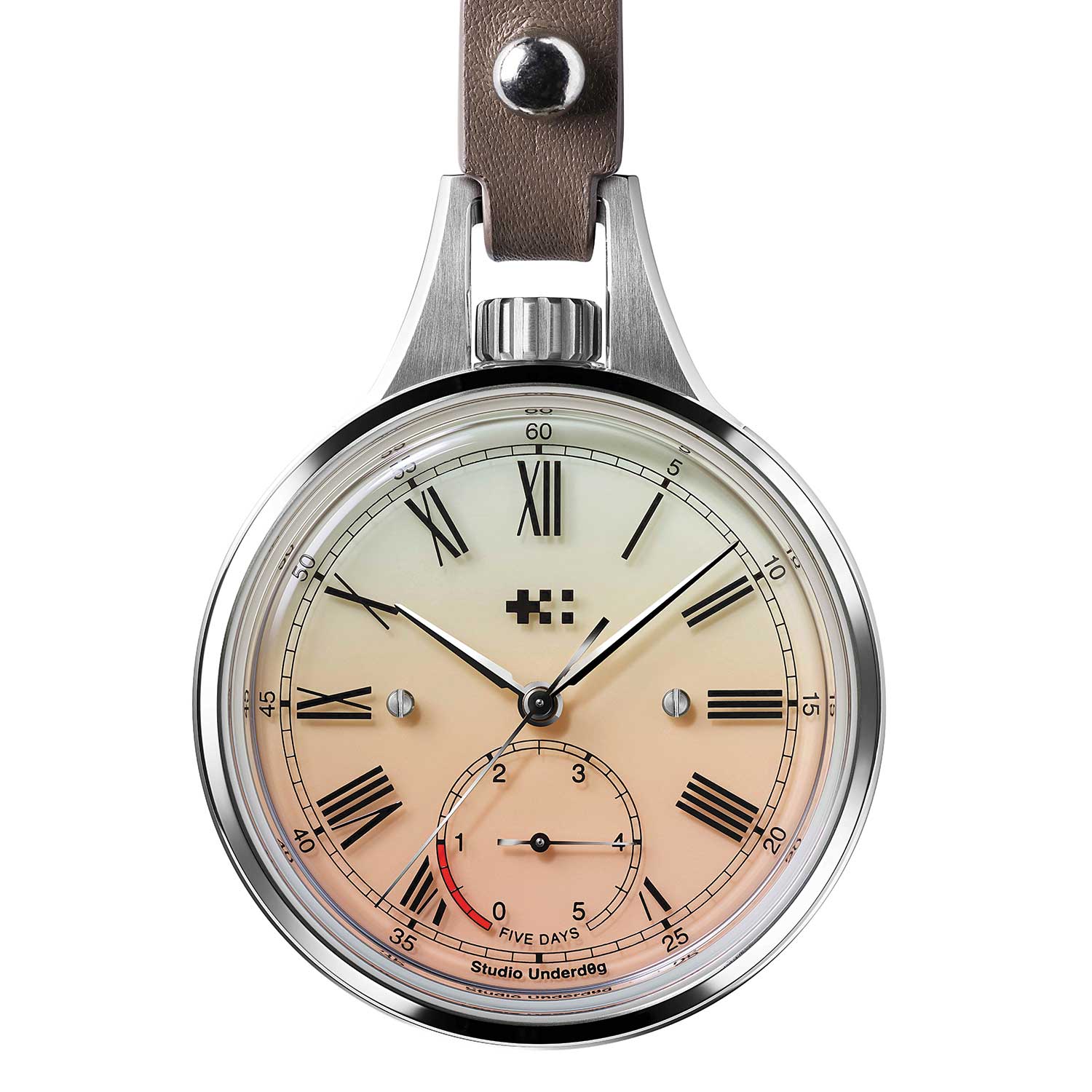
- All 100 pieces of the Christopher Ward × Studio Underd0g Alliance 02 pocket watch sold in less than 15 minutes of the launch in December 2025
Exhibit B: The collector’s market. If Phillips Watches’ whopping overall haul of USD 290 million at auctions in 2025 doesn’t hike the eyebrows, pocket watches’ contribution to that sum really should. One 1907 piece made by Coventry watchmaker J. Player & Sons — the tourbillon, split seconds chronograph, alarm, moonphase and thermometer contained within more than justifying its “Hyper Complication” tag — fetched CHF 2.2 million (around USD 2.8 million), setting records as the most valuable antique British pocket watch ever sold.
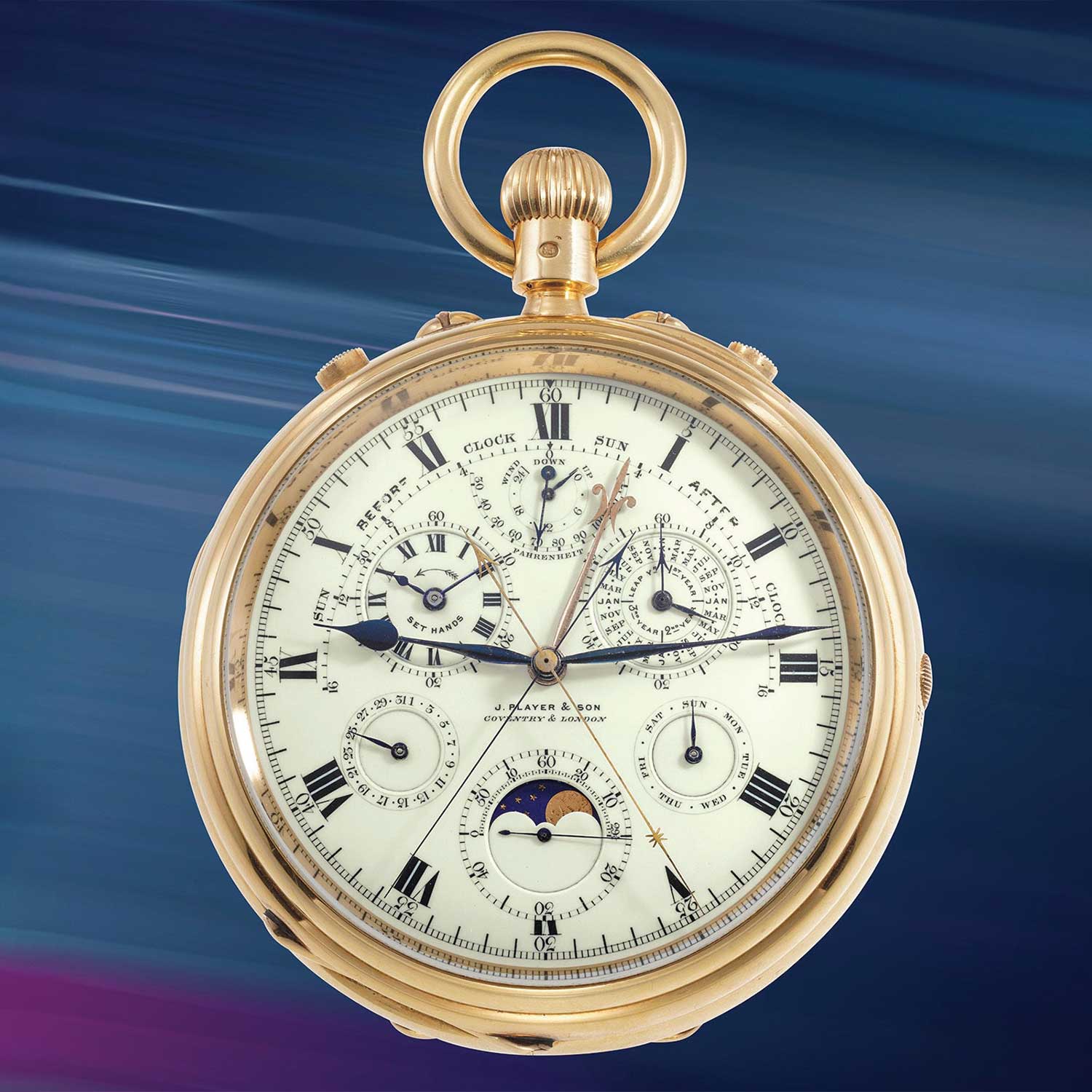
The 1907 J. Player & Sons “Hyper Complication” set a record for an antique British pocket watch with a hammer price of CHF 2.2 million
Elsewhere, an A. Lange & Söhne Grande Complication piece sold for CHF 1.2 million (over USD 1 million); a Charles Frodsham Split Seconds Minute Repeating Tourbillon piece went for CHF 406,400 (over USD 500,000); and “The Oval,” a game-changing tourbillon-led piece by Derek Pratt, lending his creative services to Danish brand Urban Jürgensen, yielded CHF 3.7 million (around USD 4.6 million) in late 2024.
-
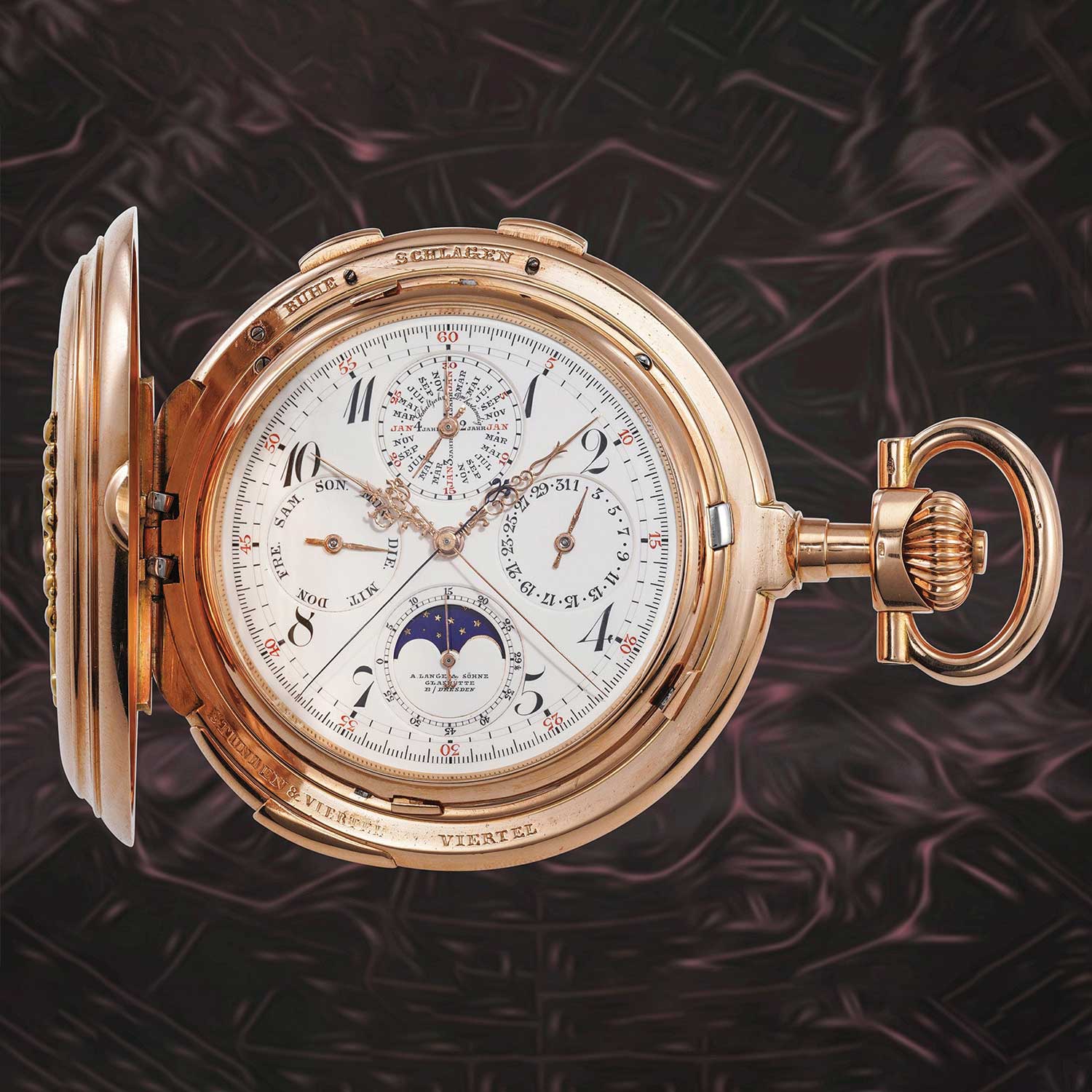
- A. Lange & Söhne Grande Complication in pink gold exceeded expectations, selling at the top of its high estimate at Phillips’ Geneva Watch Auction: XXI
-
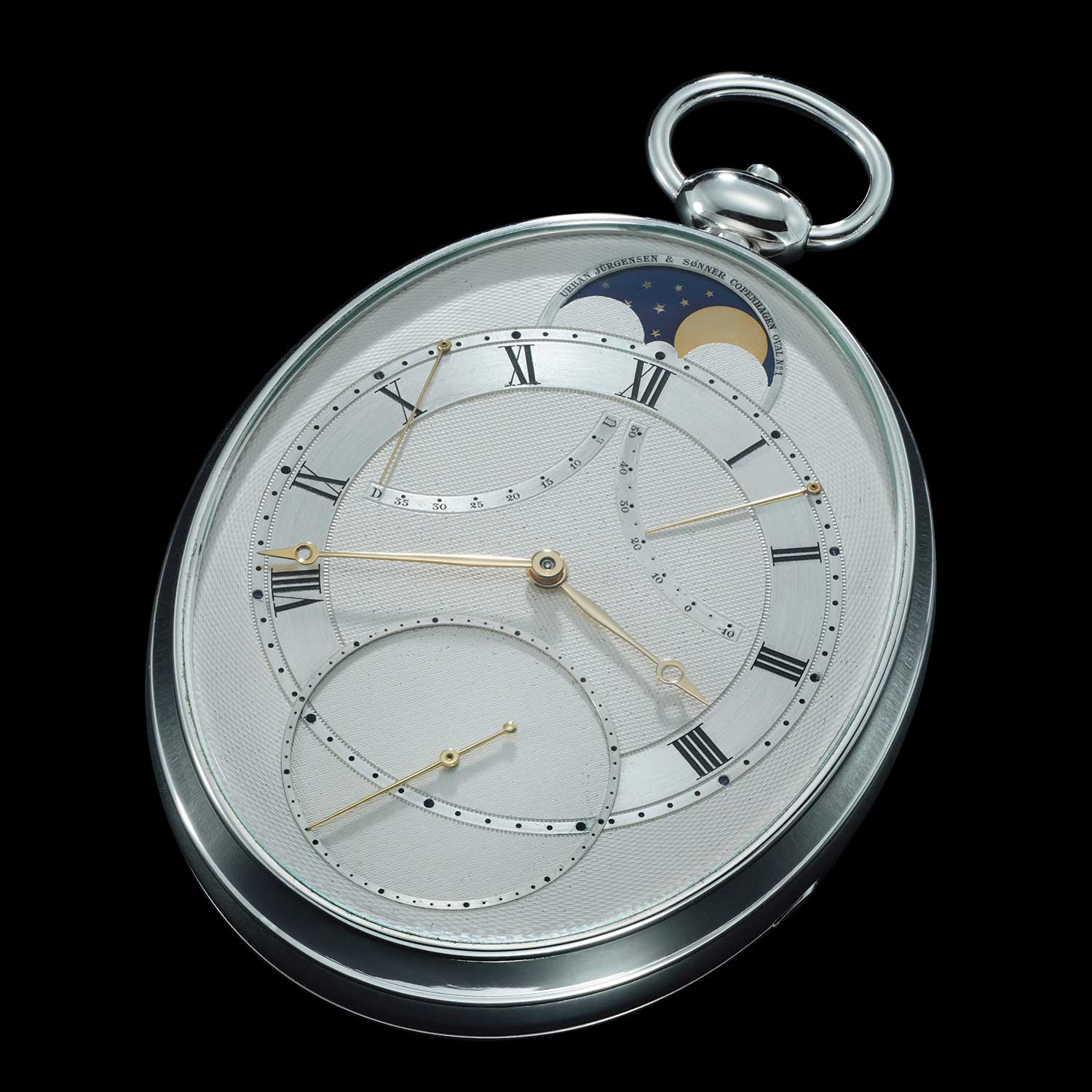
- The beautiful Oval pocket watch produced by master watchmaker Derek Pratt for Urban Jürgensen, sold for CHF 3 million at Phillips’ Geneva sale in November 2024
With such sales making the headlines, the current record for the most expensive timepiece ever sold at auction — the 24-function Patek Philippe Henry Graves Supercomplication, commissioned by New York banker Henry Graves Jr. in 1925 that sold for USD 24 million in 2014 — is there for the taking. And the mind both boggles and bristles when it comes to how much standout pieces, such as Vacheron Constantin’s 270th anniversary Ref. 57260 released in 2015, will be bid for in years to come.
“There’s a vibrant community of collectors waiting patiently for some of the greatest pocket watches ever made to reappear on the market,” says Paul Boutros, Phillips’ Deputy Chairman and Head of Watches, Americas. “A couple of major pocket watch collections have resurfaced, come back to the market, and they’re generating headlines for their world-record prices.”
Worth their weight in gold
As for why the secondary pocket watch market is so vibrant, a one-word answer does the job: discernment. “Elite collectors are always looking for the very best of any given era, the very best of any given brand, the very best of a type of watch,” says Boutros, “and pocket watches — in the era they were produced — were the very best timepieces money could buy. People appreciate the incredible amount of watchmaking skill that was required to make these pieces before any kind of computer-assisted design was available. It was done by pencil and paper and sheer ingenuity, taking advantage of material science and production techniques that were available to them at that time, with brands investing fortunes to make some of the best timepieces for the wealthiest buyers that existed in that world.”
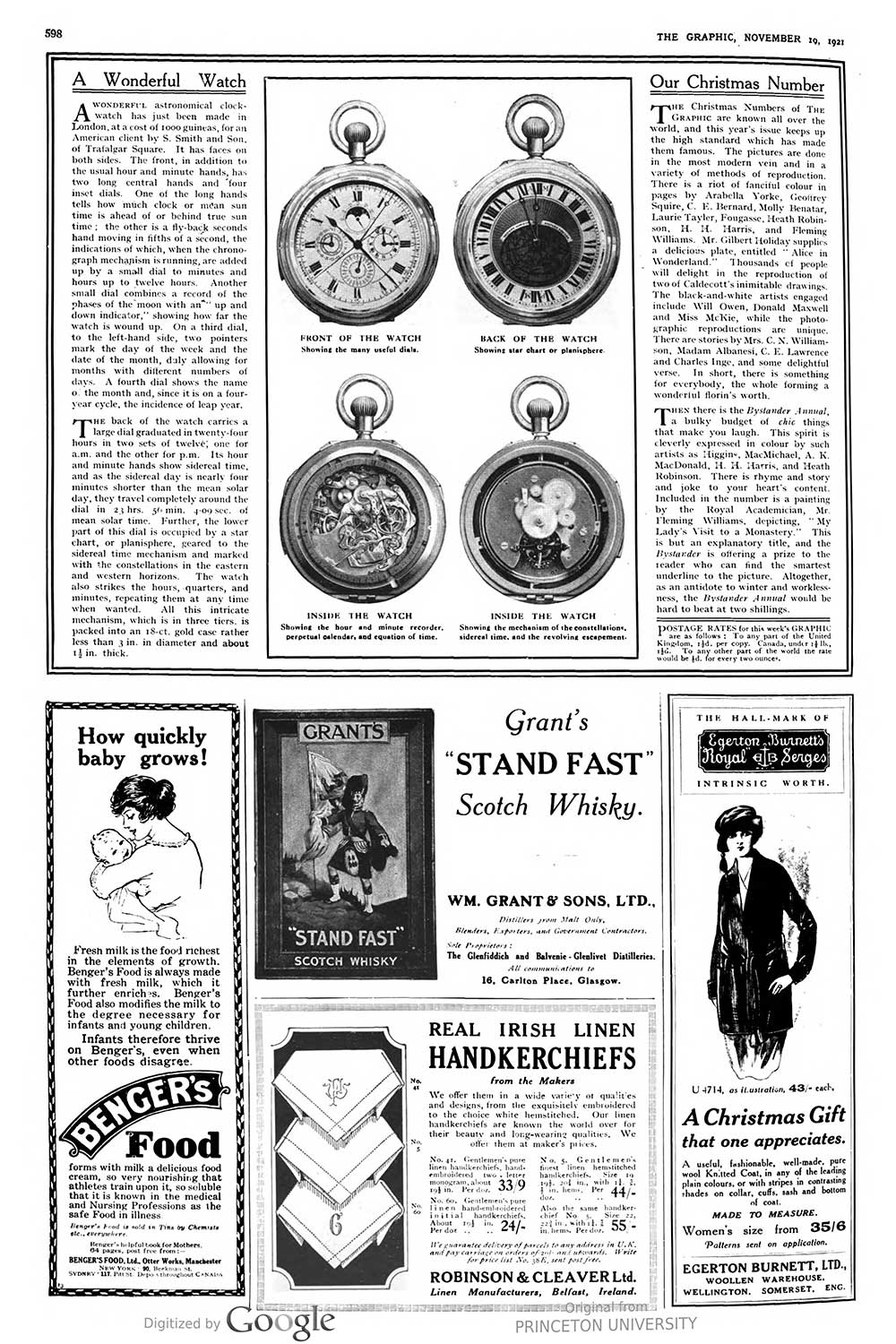
The creation of the Grosse Pièce was advertised in The Graphic, a London-based newspaper, in 1921
Heritage expectations not so much fulfilled, then, as served on a silk cushion. But whilst the ingenuity of the makers behind pocket watches from decades past mustn’t be overlooked, neither must the fact that they had a bigger space to ply their artisanal craft. With so many brands right now seemingly determined to replace the phrase “credit card” with “postage stamp” on future press material — any thinner, and some wristwatches from the past few years would need to be applied to the human appendage with a spray can — pieces in which movements have space to breathe are a refreshing antidote to an arguably indulgent strand of the zeitgeist.
An added bonus, meanwhile, is that the ingenuity contained within a pocket watch can be admired in a way that begs comparisons to watching a movie in a cinema versus watching it at home on a laptop. “You can admire all the movement details without a loupe — and that’s a major driver for many collectors,” says Boutros. “People who enjoy the theater, the art of watches, and the ability to show and tell friends as part of owning them really benefit from the sheer size. Especially if you’re showing your friends who have no idea about watches — with a pocket watch, it’s as plain as day how amazing these things look, and the quality can be immediately seen. You can also put it on your desk, and it can be right in front of you, and you can admire it in its large-format glory at all times.”
And it’s not just the micro-engineering that owners of pocket watches get to enjoy in HD: watches’ aesthetic credentials — the sweeping chamfered or engraved lines and other aspects of the decorative arts — are also larger, more domineering and more majestic to behold. “People appreciate the craftsmanship, skill and time that goes into decorating the few square inches of it,” Boutros points out. “A pocket watch is a canvas for art, just as it was in the 19th century.” Manufactures whose emphasis is on métiers d’art — we’re looking at you, Jaquet Droz — must be following the pocket watches trend with an eager eye.
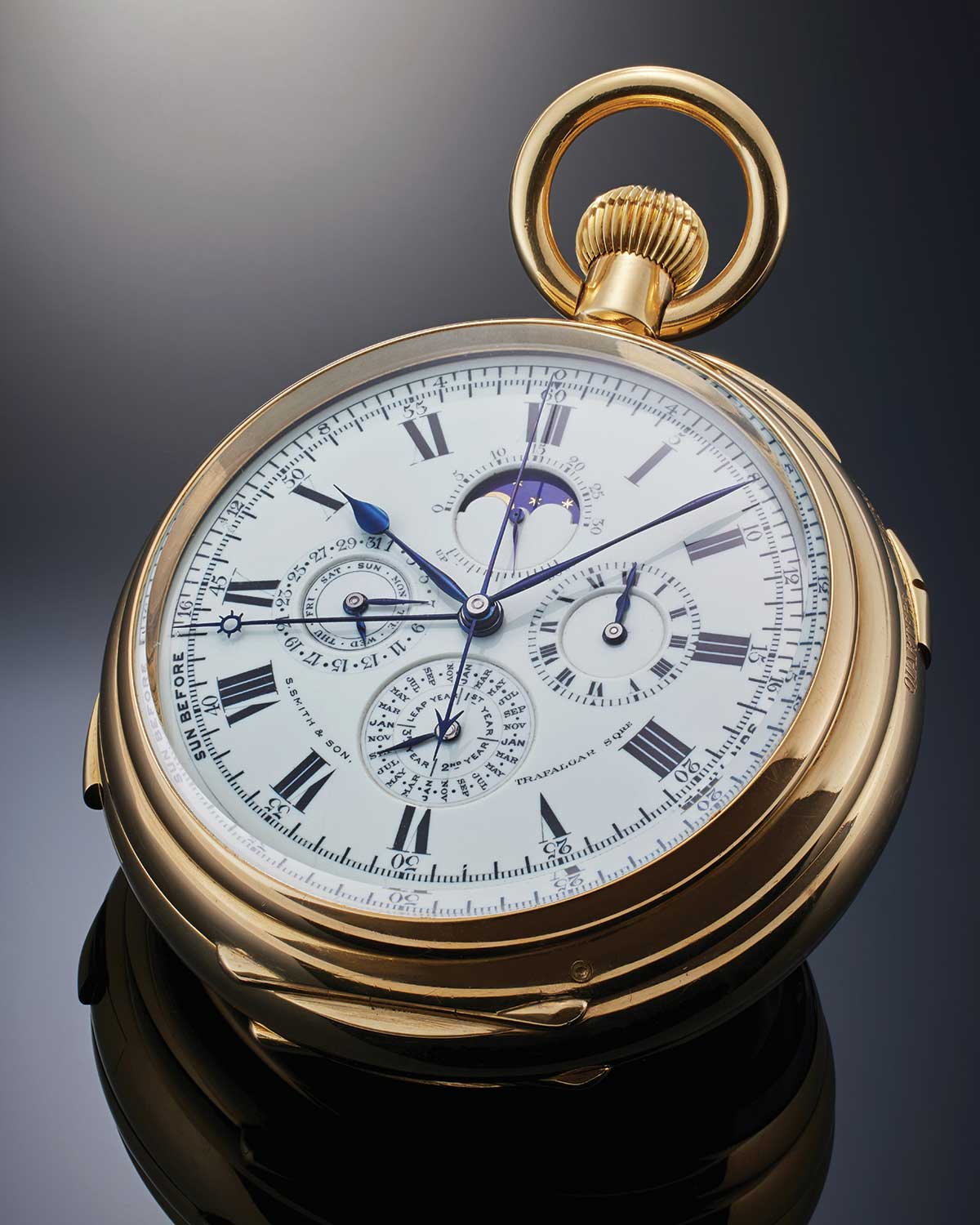
Shattering Audemars Piguet’s auction records, the “Grosse Pièce” No. 16869 fetched USD 7.7 million including premiums at Sotheby’s 2025 “Important Watches” sale
Dig deeper, and plenty more appealing elements to a pocket watch present themselves. Because they’re worn vertically, or sit atop a flat surface, they offer greater accuracy (the role of the tourbillon in all this is an entire museum project, not a paragraph in a magazine article — so let’s not go there). London-based watch broker David Duggan, meanwhile, points out that pocket watches right now — despite the occasional headline-grabbing auction purchase — represent excellent value for money. “I’ve been dealing in pocket watches 50 years, and it still amazes me how cheap they are, as opposed to a wristwatch,” he says, adding that younger buyers, in particular, are drawn to this. “In the last month we’ve sold two — one we had for nine years, and the other one we had for four years.”
Eric Wind — a former Christie’s specialist and founder of vintage watch dealer Wind Vintage — also cites the value-for-money factor, as well as the sheer tactility involved with owning a strapless, oversized timepiece. “It’s something quite magical even just to hold them, to wind them up,” he says. “The sound is different because it’s such a large engine, if you will, inside. Winding it, holding it, hearing the movement tick — the whole experience engages all of your senses much more than a wristwatch does.”
John Reardon of Patek Philippe specialist Collectability agrees. “I love the feel of holding one in my hand,” he says. “It’s such a tactile experience: the weight, the depth of beauty in an enamel dial, the mechanical brilliance of the movement. I’ve been fortunate to recently acquire a minute repeating pocket watch, and there are no words for the enjoyment of listening to the sonorous chime that the size of a pocket watch enables. I like to have one on my desk and also like to wear a pocket watch as a pendant on a necklace.”
How to own the look
It’s when we approach Exhibit C — pocket watches’ role in the style sphere — that the water becomes murkier. The 2025 Met Gala red carpet was a veritable pocket watch bonanza. Senegalese-Italian influencer Khaby Lame graced it with no less than 20 pocket watches pinned to his custom BOSS suit. The aptly named Harlem designer Dapper Dan opted for a vintage Cartier pocket watch. Jenna Ortega, Ayo Edebiri and Janelle Monáe, at the same event, all did their bit to ensure that the latest pocket watch revival isn’t just for those with the Y chromosome.
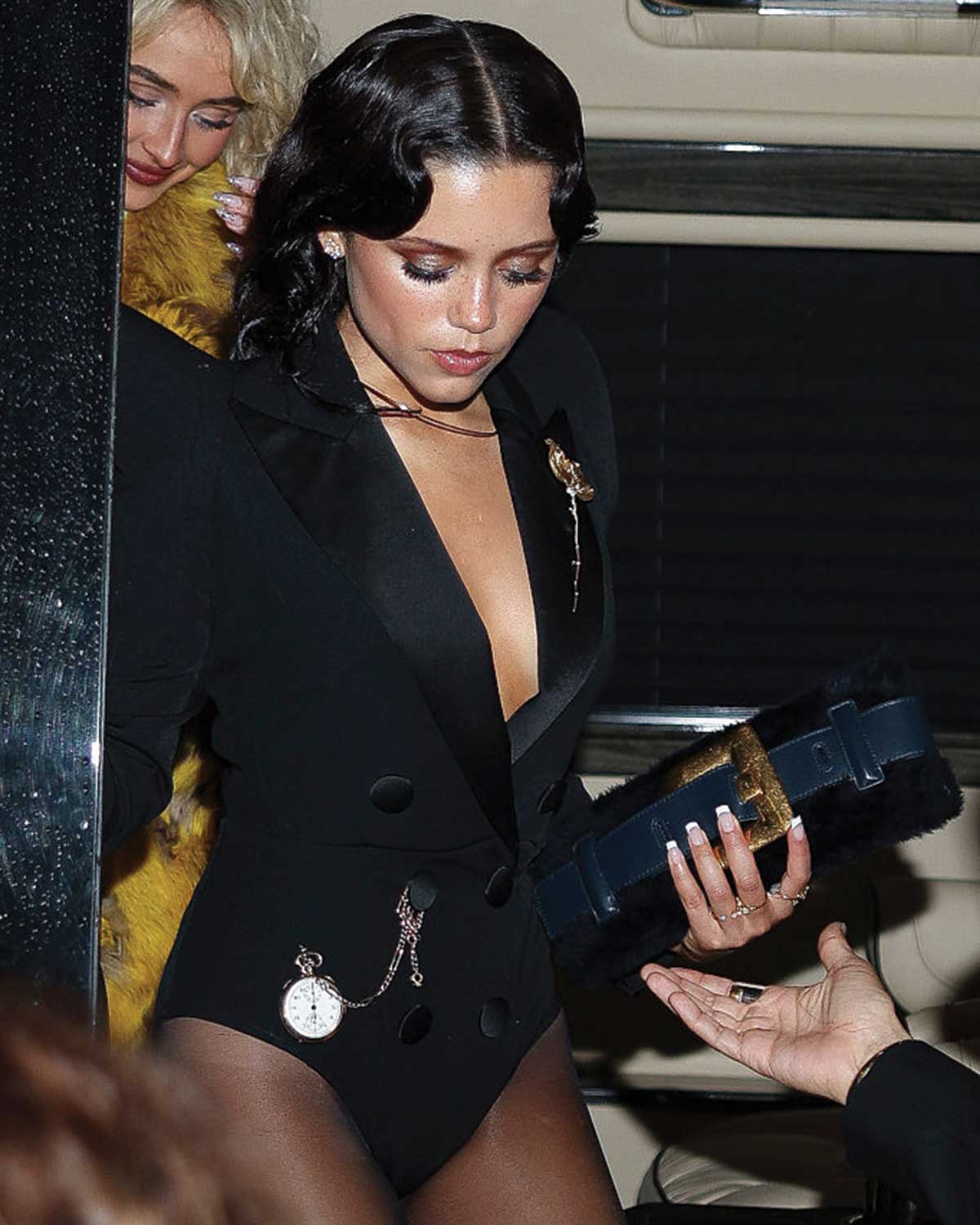
Jenna Ortega wearing a 14K gold Heuer pocket watch chronograph at the 2025 Met Gala afterparty (Image: GettyImage)
And yet, the jury’s out when it comes to pocket watches’ credentials as a sartorial statement for us ordinary mortals. Celebrating its 125th anniversary in 2019, Omega recreated its 19-ligne pocket watch caliber from 1894 using a mix of new and old components. In reference to a possible resurgence, the company employed the services of brand ambassador Eddie Redmayne to remind horophiles how elegant and stylish a pocket watch can be. Yet, almost six decades after Steve McQueen complemented a gray plaid suit with a Patek Philippe hunter-case pocket watch in The Thomas Crown Affair and (terrifyingly) 13 years since Peaky Blinders debuted on our screens, using a pocket watch as a sartorial embellishment seems freighted with the danger that you’re straying into the realms of try-hard, even effete, dandyism.
-
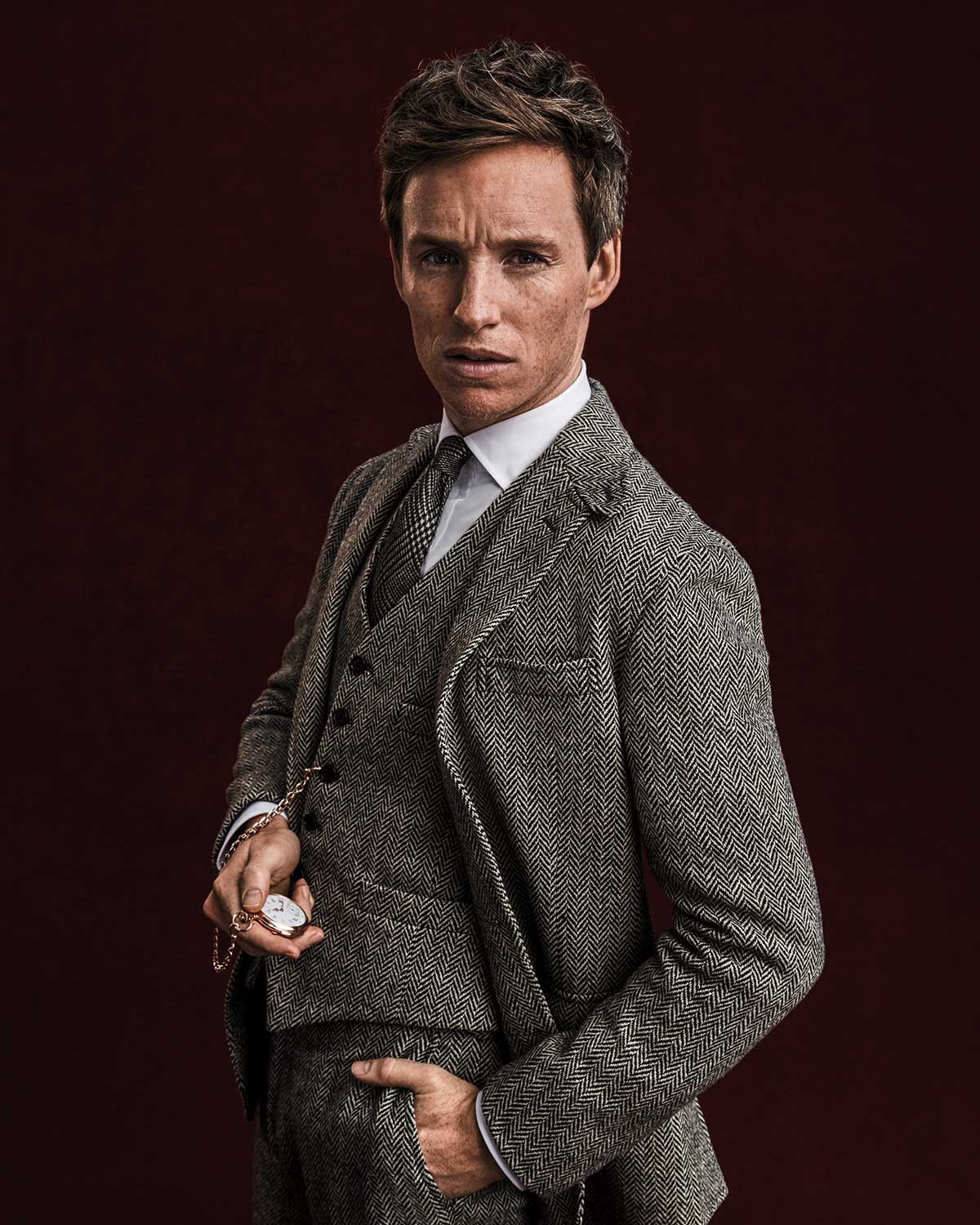
- Omega brand ambassador Eddie Redmayne with a 19-ligne pocket watch from 1894
-

- Cillian Murphyin Peaky Blinders: The Immortal Man
“A pocket watch still has a place in bespoke, but it works best when it’s thoughtfully worn,” is Savile Row tailor Richard Anderson’s take. “It shouldn’t feel fussy or just decorative. It’s about balance and proportion, the depth of the pocket, the length of the chain and how the weight sits against the cloth. It should sit naturally, without pulling or breaking the line of the jacket or waistcoat. Even with a modern suit, it can feel entirely current. Worn with a little restraint, it becomes part of the garment, rather than something added on. That goes for men and women alike, a quiet detail that looks effortless rather than trying too hard.”
Others suggest even more caution: among them is Tom Chamberlin, Editor-in-Chief of The Rake and host of the podcast The Luxury Dispatch. “I think they’re lovely museum pieces, respectful to the heritage of watchmaking and fun to have, but there’s no conceivable way they will make a comeback,” he says. “The wearer does play a big part — more classic dressers will probably see more function in the chain than the timepiece. I wear a lapel chain that currently has a 1950s lighter at the end of it, and this could just as easily be a pocket watch but no one would see it unless they ask, and I don’t think I would use it to tell the time.”
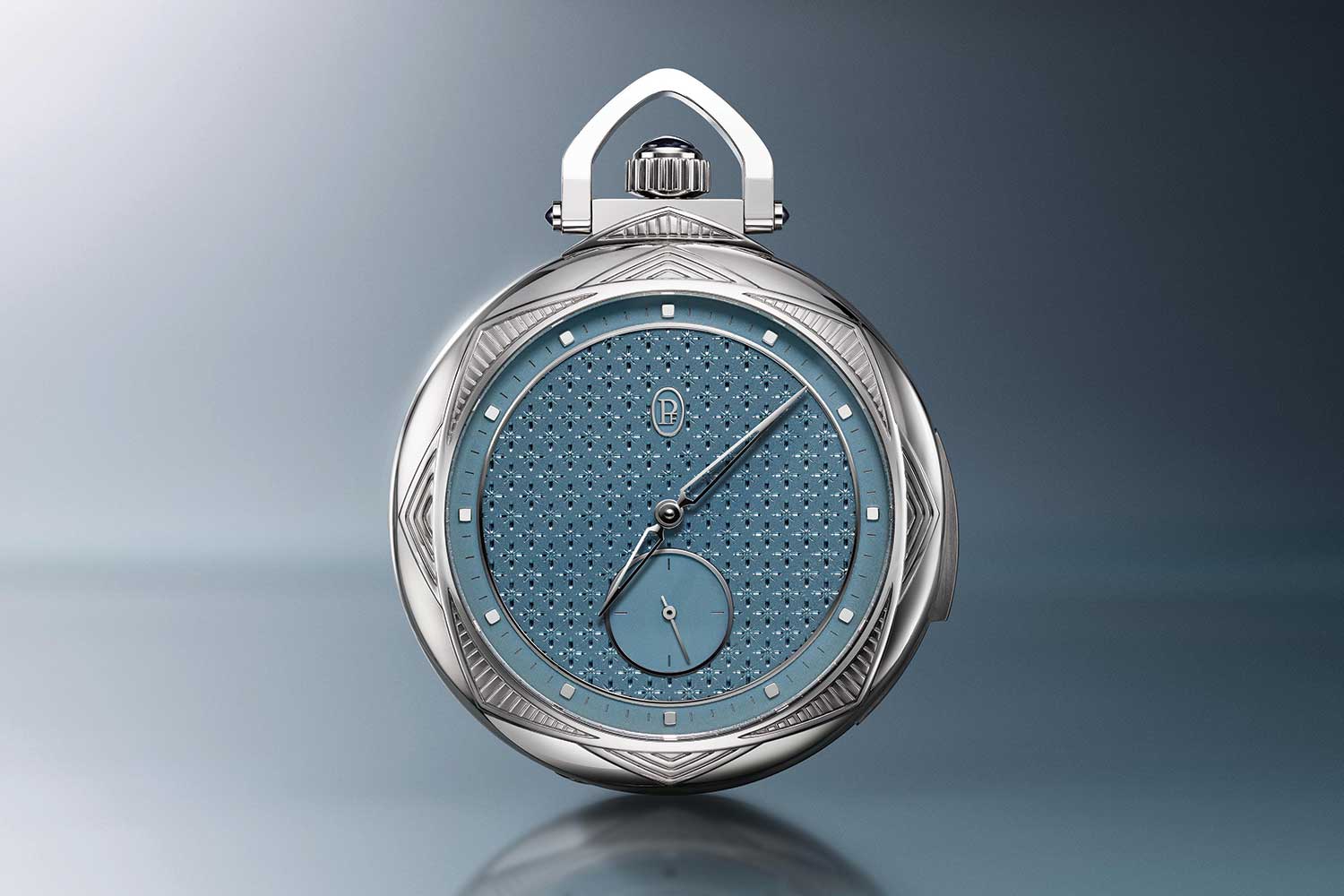
2025’s La Ravenale from Parmigiani Fleurier, a stunning Lépine pocket watch with a restored minute repeater caliber from the 1920s
Watch writer, photographer and content creator Justin Hast agrees. “They make for an irresistible cabinet for anyone who has any interest in design, elegance, history or storytelling,” he says, “but it’s not necessarily something you carry with you, certainly not if you’re under the age of 60. My uncle — a dandy, in accordance with the truest measures — wears one in his top pocket where he has a handkerchief, [its chain fastened] through the lapel. He feels the lower pocket is a bit done and dusted.”
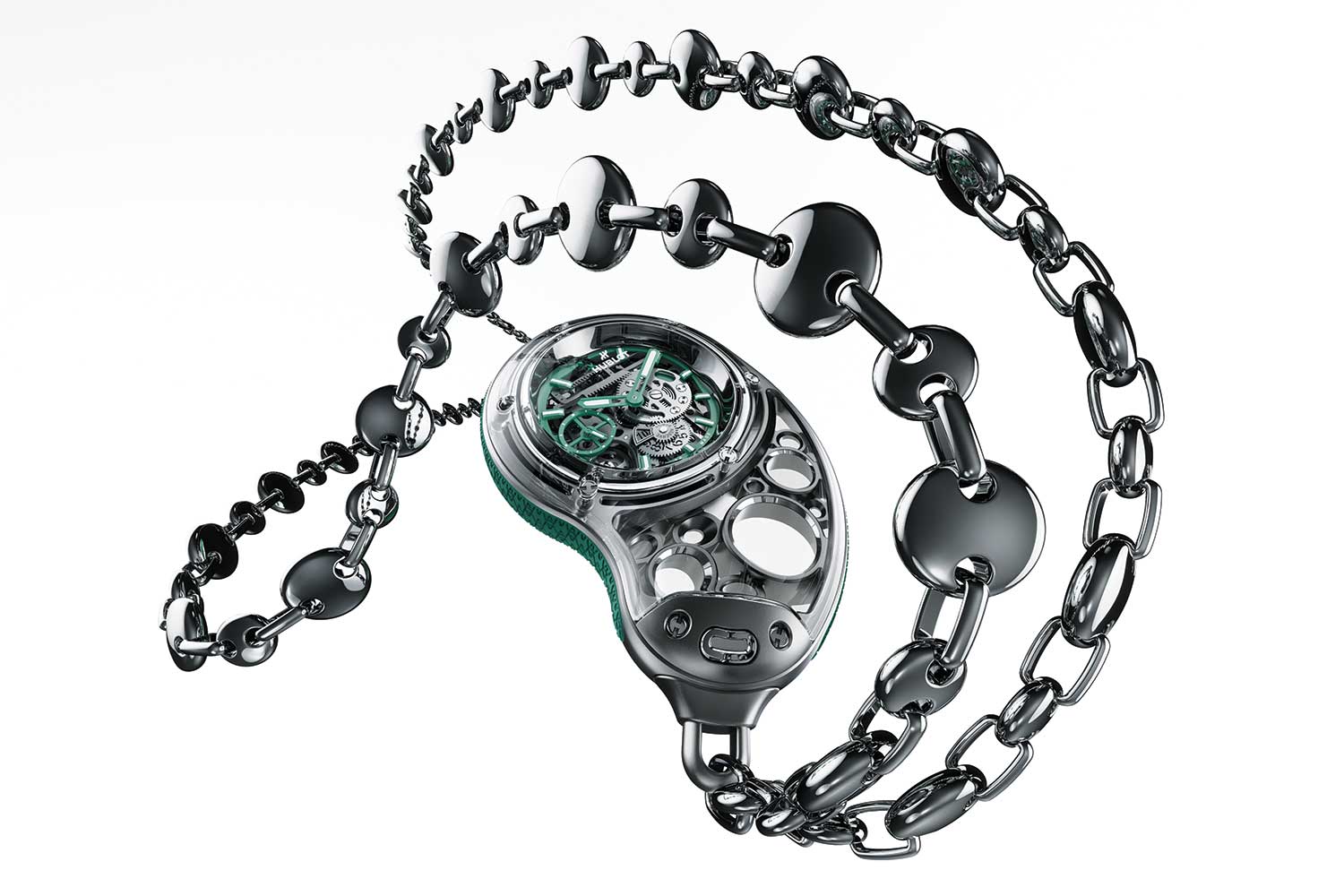
Hublot MP-16 Arsham Droplet, a sci-fi-inspired collaboration between Hublot and American artist Daniel Arsham
And yet, in the right circles, the theater of consultation, Hast says, never fails to impress one’s peers. “At Dubai Watch Week recently — where you’ve got some of the most incredible wristwatches in the world gathered — I had with me a huge gold Hermès World Timer pocket watch from the 1940s or ’50s I was collecting for a friend. The reaction I got from people pulling it out was like nothing else.”
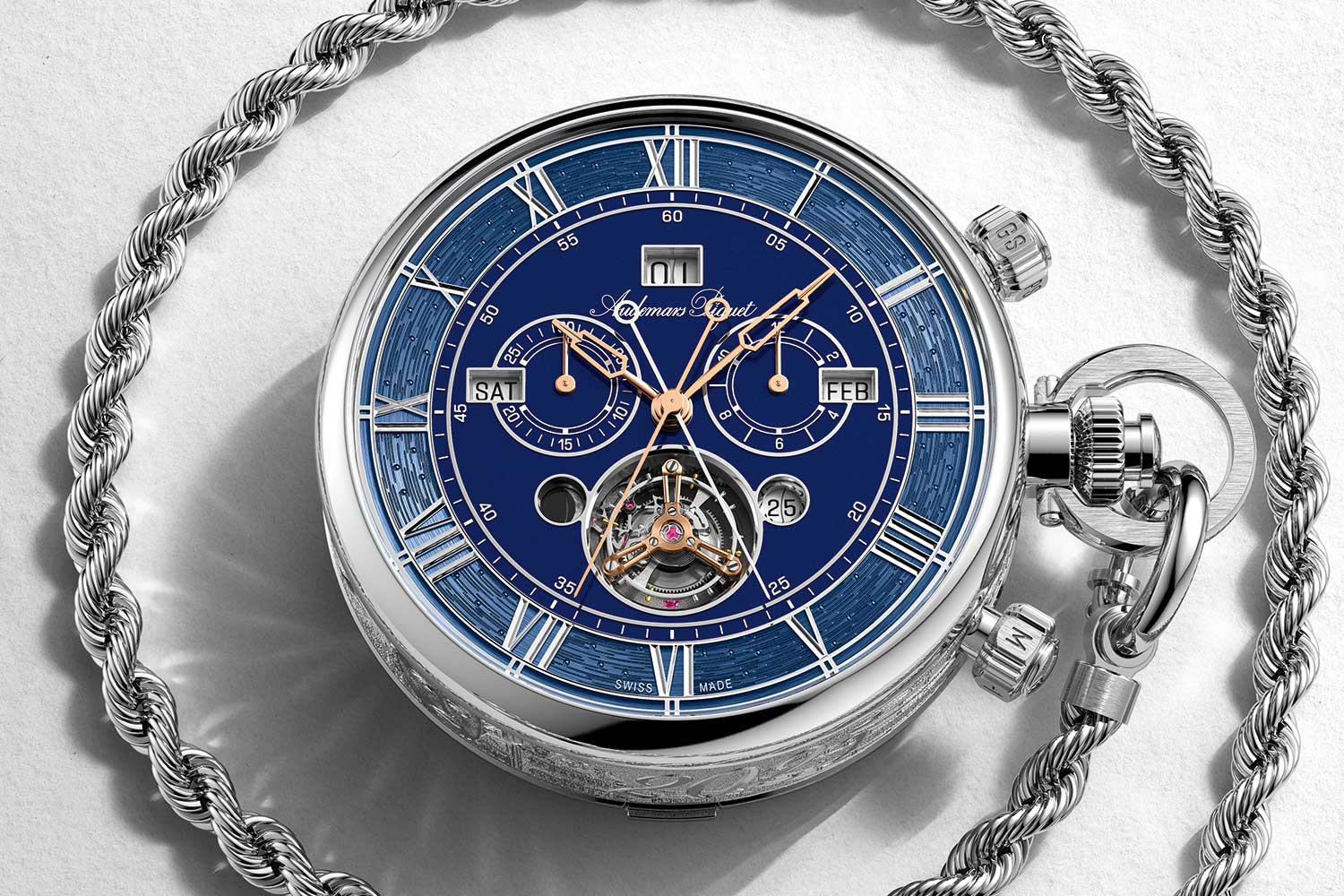
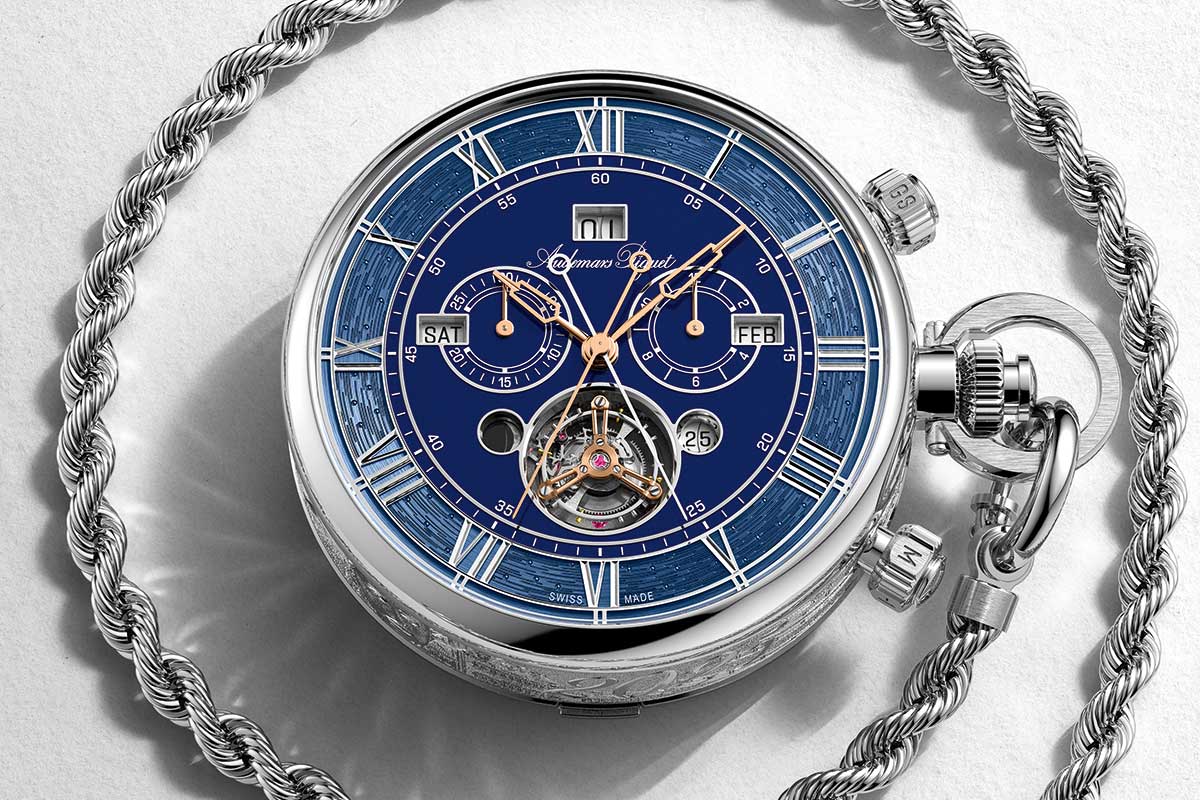
Audemars Piguet adds its take to the pocket watch renaissance with the newly released 150 Heritage Pocket Watch with Universal Calendar
But the consensus on regular usage in the day-to-day urban milieu is clear: this is an accessory belonging in the kind of ensemble that might also include a monocle, perforated driving gloves and a gold-tipped cane with which to disperse street urchins from one’s path (another prominent style authority consulted for this article used a rather terse term which might be politely rephrased as “a tad pretentious”).
My advice, then? Unless you’re famous, devilishly attractive, regularly invited to massive celeb-filled fund-raising events and preferably plan to deploy the piece as a pendant or necklace, enjoy pocket watches for their horological, rather than their sartorial, kudos. They’re better kept close to your heart in a figurative sense rather than a literal one.
You may also like
Editorial
The Angle of the Angels
Oct 2, 2026
Editorial
The Angle of the Angels
Oct 2, 2026
Editorial
King Seiko VANAC: A New Angle
Oct 2, 2026
Editorial
King Seiko VANAC: A New Angle
Oct 2, 2026

Editorial
Bangkok Watch Week Wraps Up Its Second Edition at Siam Paragon
Oct 2, 2026
Editorial
Bangkok Watch Week Wraps Up Its Second Edition at Siam Paragon
Oct 2, 2026