Tiffany & Co., celebrates another Jean Schlumberger icon with the launch of the jewellery-inspired Enamel Watch
News
Tiffany & Co., celebrates another Jean Schlumberger icon with the launch of the jewellery-inspired Enamel Watch

January’s LVMH Watch Week presented Tiffany & Co. with the opportunity to reveal a cross-section of its modern watchmaking – an area that has taken on a new life since the 2021 arrival of President and CEO Anthony Ledru and Vice President of Tiffany Horlogerie Nicolas Beau who between them have decades of experience in watches and jewelry at maisons including Chanel and Cartier. Among the pieces for women (although, as Beau proves with his own eclectic mix of wristwear, any Tiffany watch can be worn by any person) was one inspired directly by a bracelet design from the company’s archives.
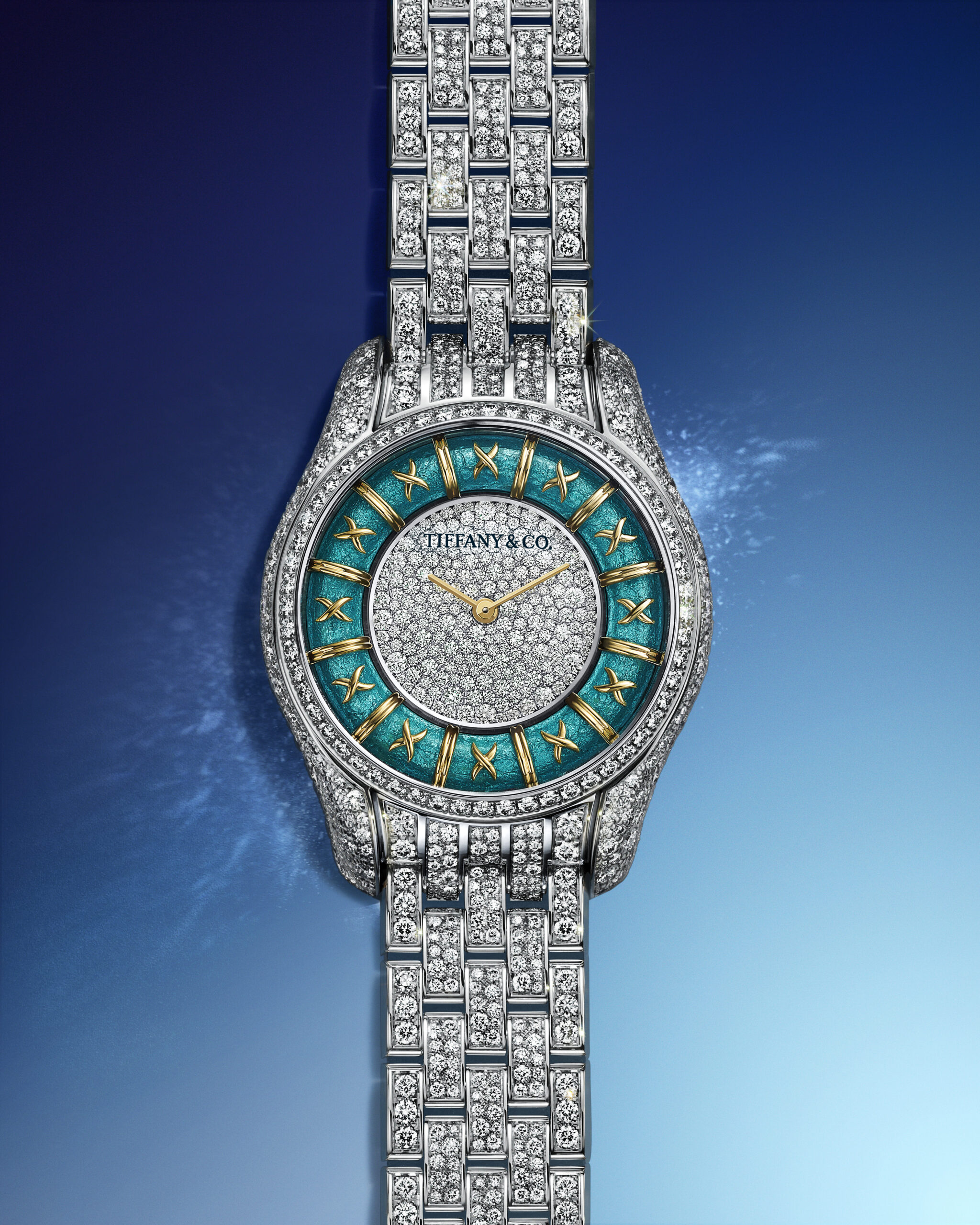
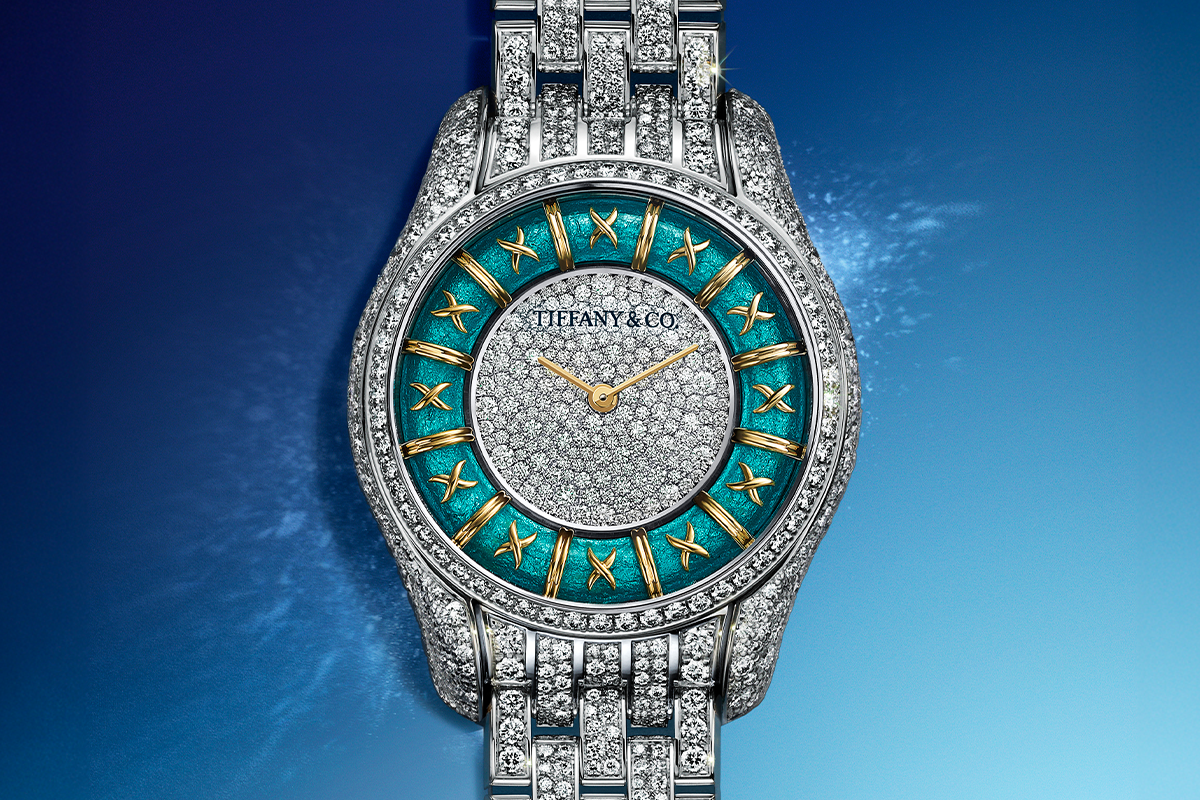
The Tiffany & Co. Enamel Watch in Tiffany Blue paillonné enamel, echoing Schlumberger’s bold Croisillon language in miniature
The Enamel Watch takes its cue from a design by famed French jeweler Jean Schlumberger, whose work for Tiffany from the 1950s onward reshaped how color, surface and decoration could be used to create unique fine jewelry. In 1962, Schlumberger revived paillonné enamel – a 19th-century technique that layers hand-cut gold or silver leaf beneath translucent enamel – and used it to striking effect in his Croisillon bangles that were never designed as delicate and discreet decorations, but rather to be worn stacked and visible with abandon befitting the visual language of the period.
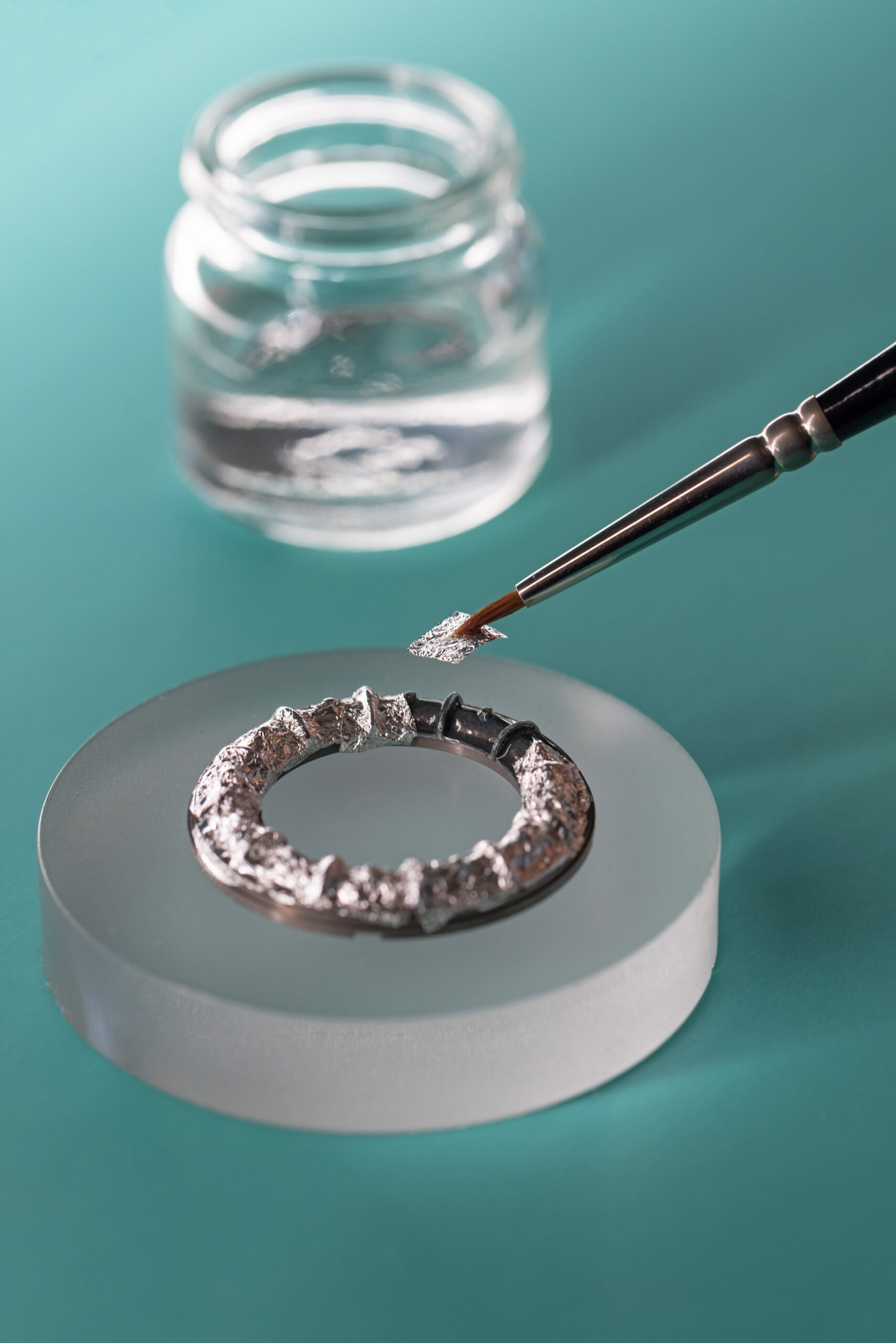
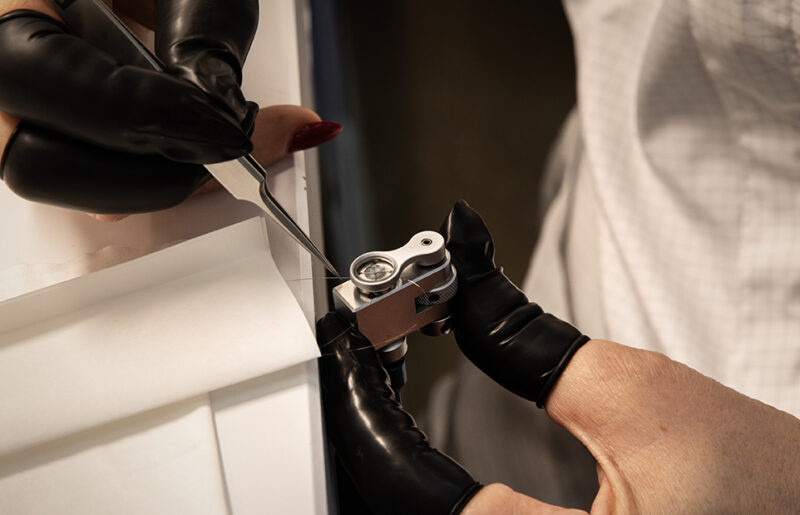
The paillonné technique begins with hand-cut silver leaf, laid beneath the enamel to create the shimmering depth Schlumberger revived in the 1960s
The Enamel Watch translates that idea directly onto a timepiece. Its dial is divided into two parts: a fixed, diamond-set centre and a rotating outer ring that miniaturises the Croisillon bangle. The 12 signature cross-stitches, rendered in yellow gold, are not fixed hour markers. Instead, they move freely with the wearer’s motion in a small step of visual disruption that feels entirely in keeping with Schlumberger’s taste for wit and misdirection.
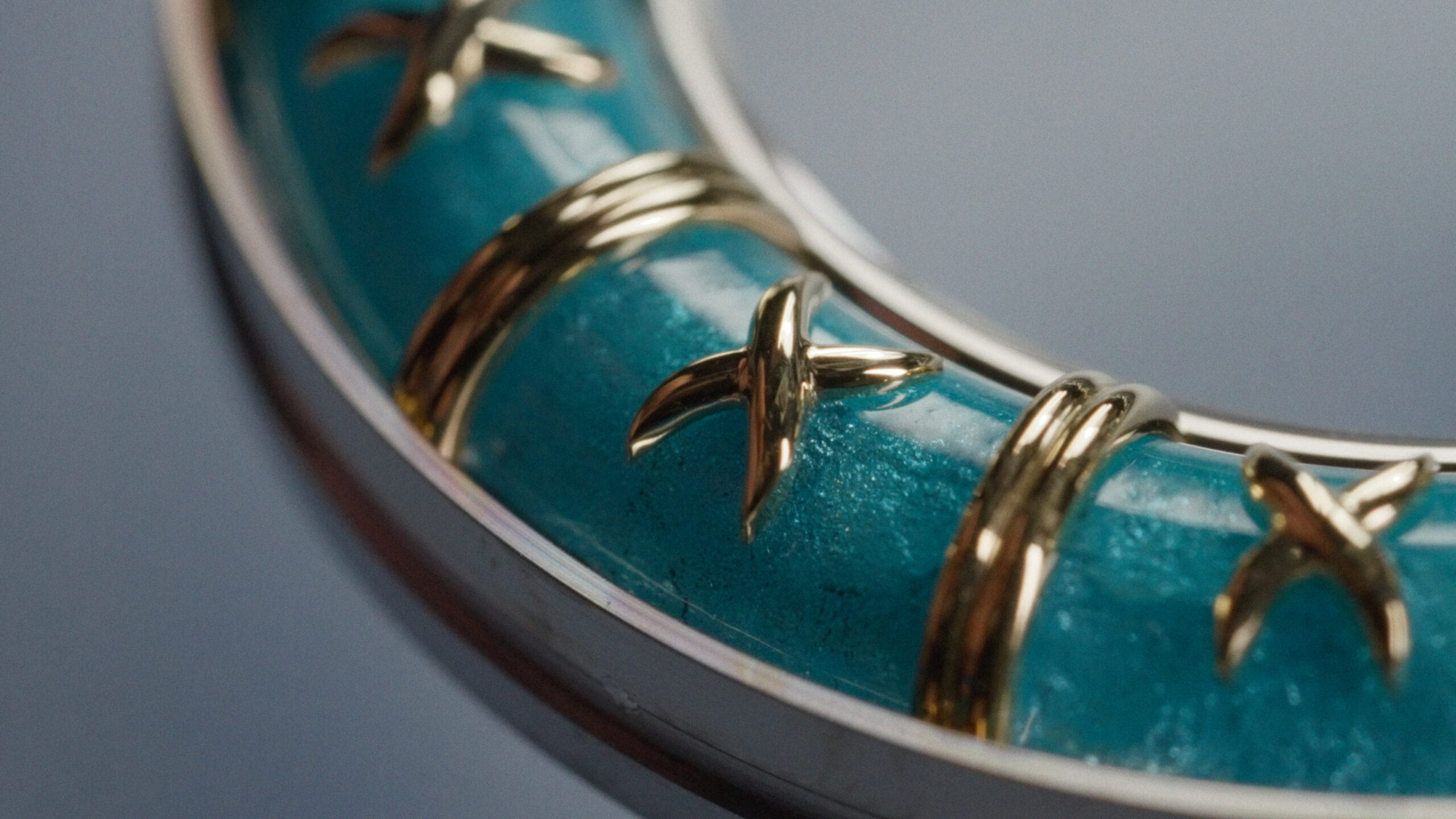
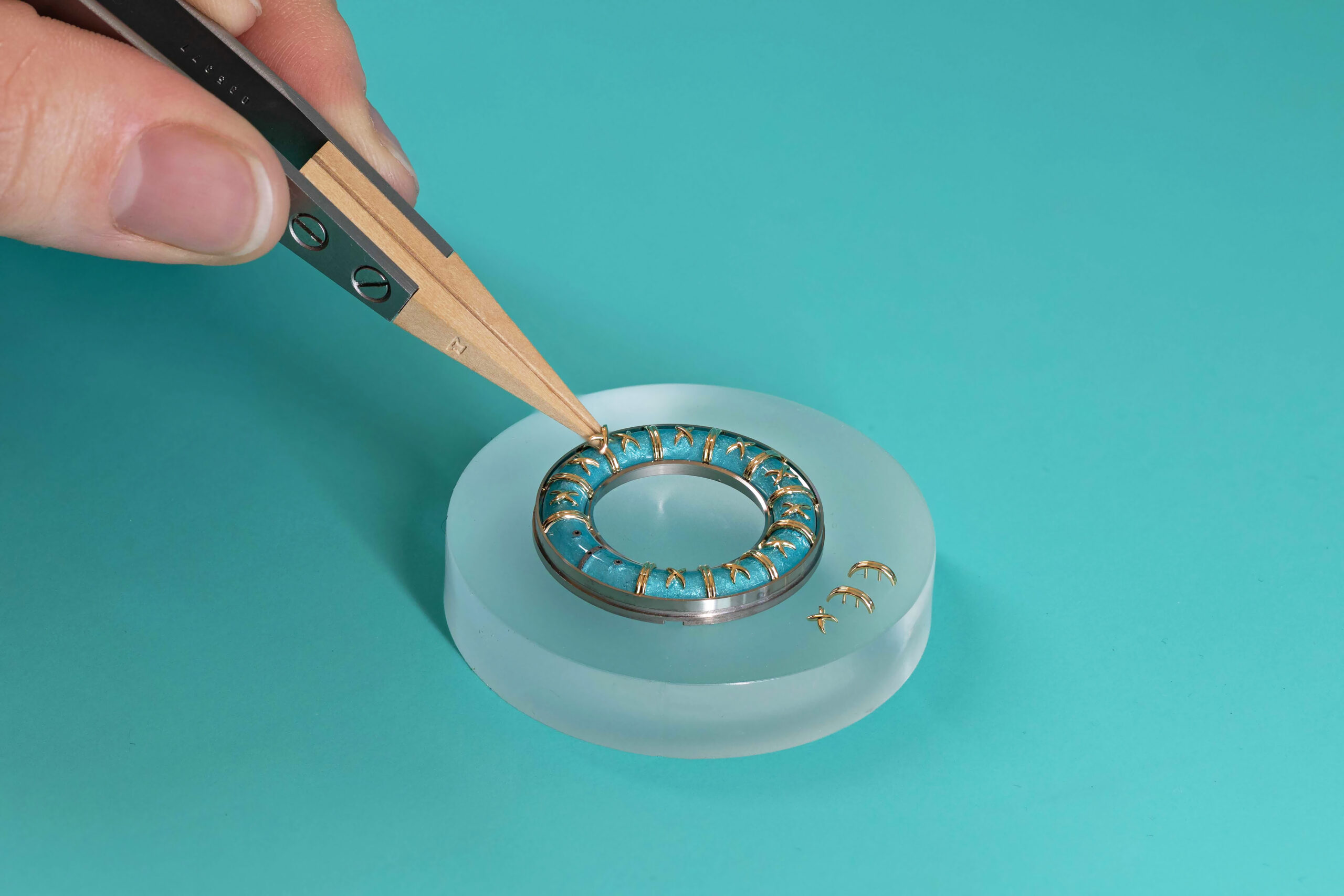
Twelve gold cross-stitches are set by hand onto the enamel ring, not as hour markers but as kinetic decorative elements
There is historical precedent here. Tiffany has been producing enamelled objects since the late 19th century, including watches, chatelaines and table clocks and paillonné enamel in particular occupies a narrow, rarefied space even within that tradition. The technique nearly disappeared by the mid-20th century and remains practised today by only a handful of specialists.
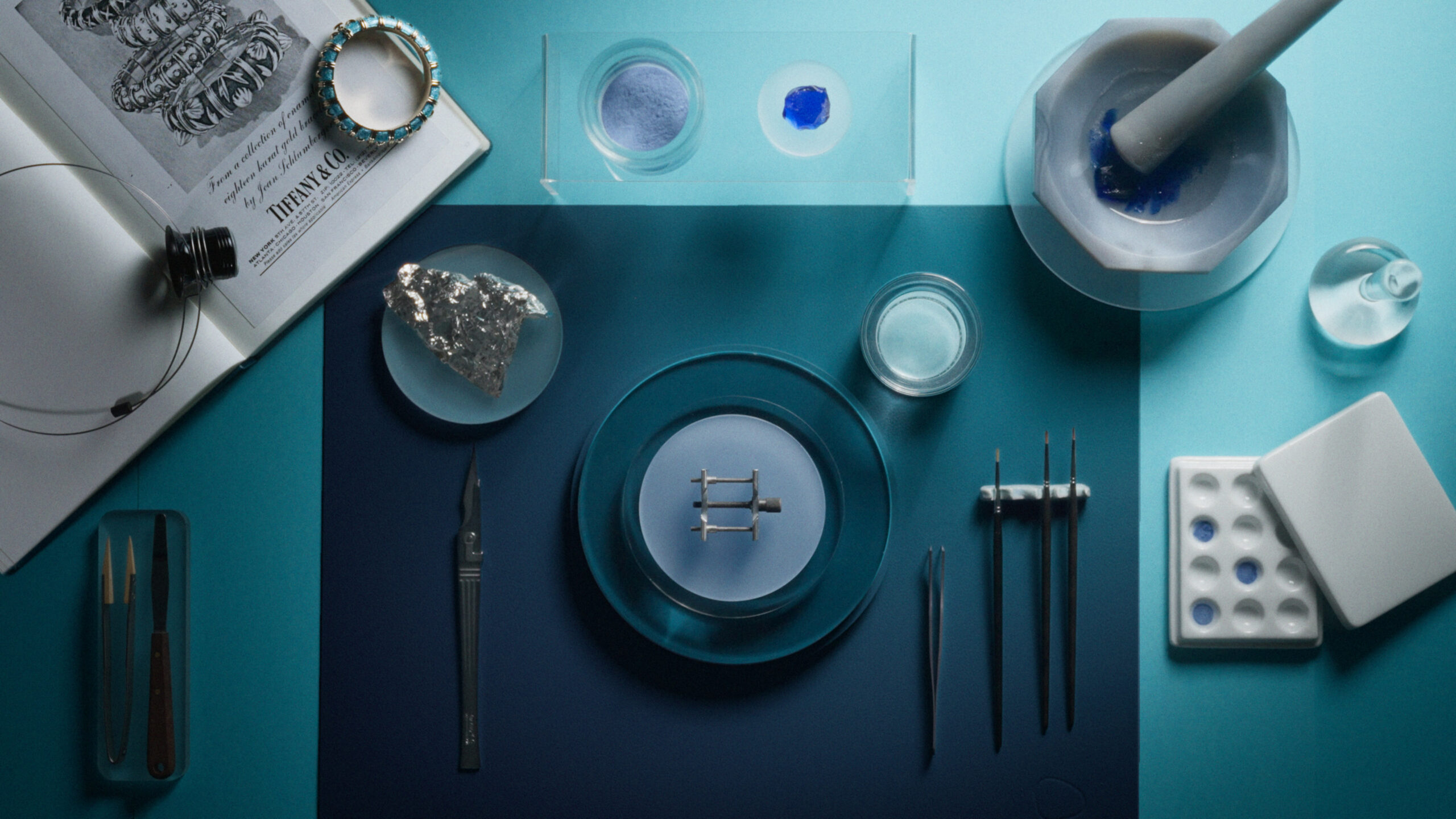
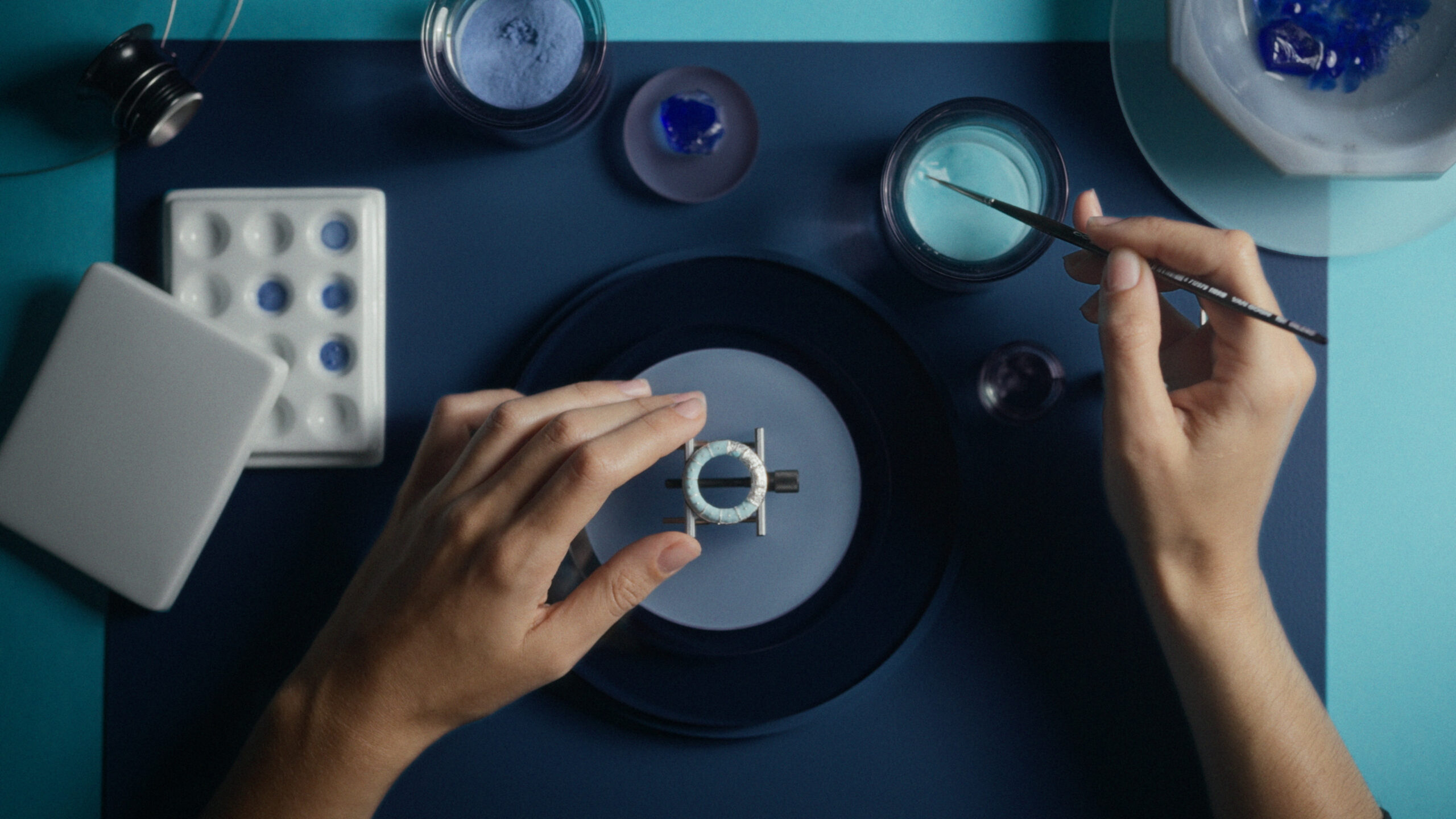
For this watch, the enamel ring alone requires around 55 hours of decoration, with the gold elements added afterward, and the firing process repeated multiple times to build a depth of color.
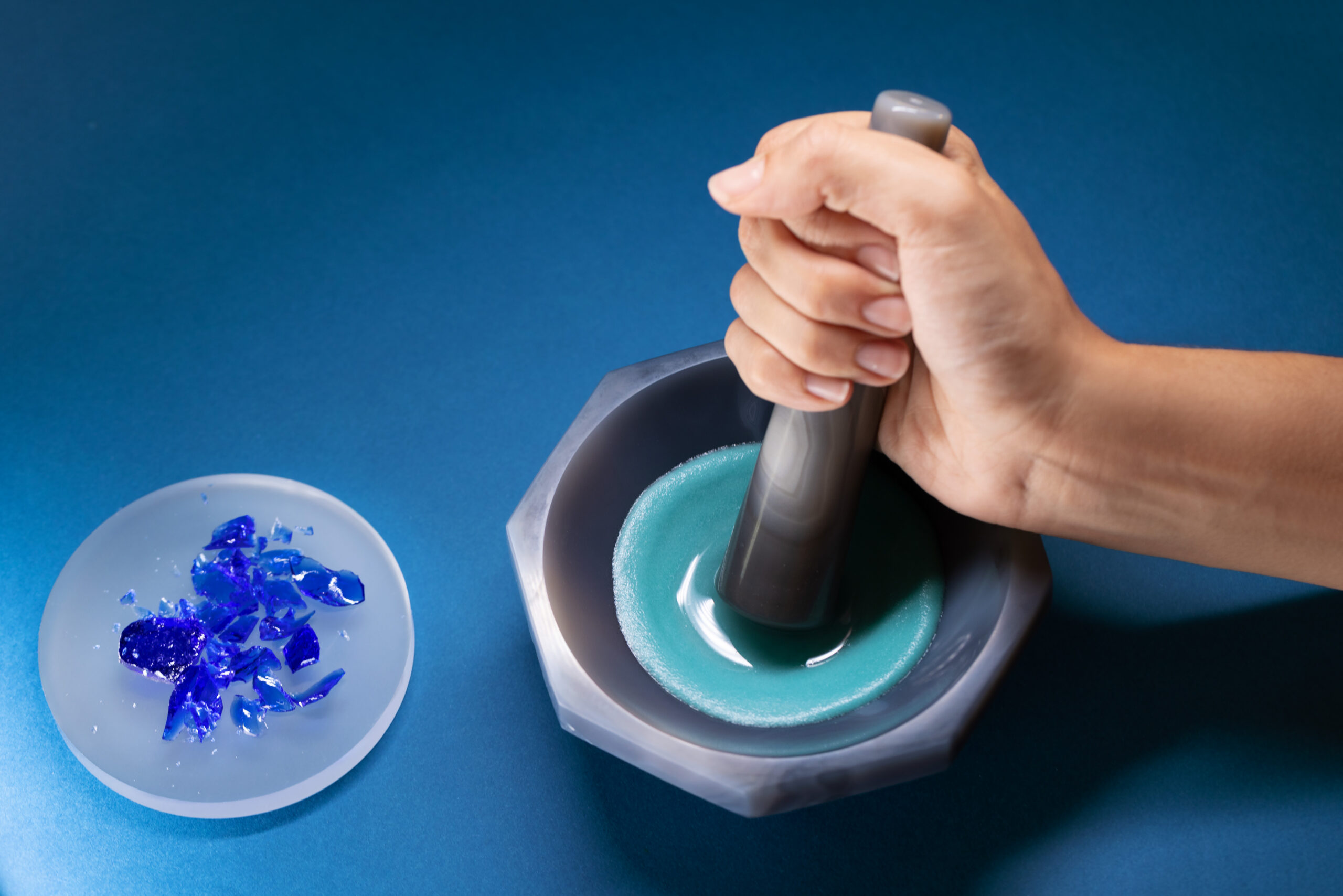
Raw enamel is ground and refined before application—a meticulous, almost meditative step in achieving Tiffany’s distinctive hue
Paillonné enamel is mastered by only a handful of artisans; the tools and pigments speak to a craft preserved through generations
Schlumberger’s designs also carried cultural weight. The Croisillon bangles were worn by some of the most photographed women of the era, including Jacqueline Kennedy Onassis, whose relationship with Tiffany helped cement the house’s position at the intersection of American social life and European craft. That lineage is relevant as it shows that this is not a watch borrowing decorative techniques from the wider industry, it is one placing timekeeping inside a jewellery language that predates most modern watch brands’ interest in the craft.
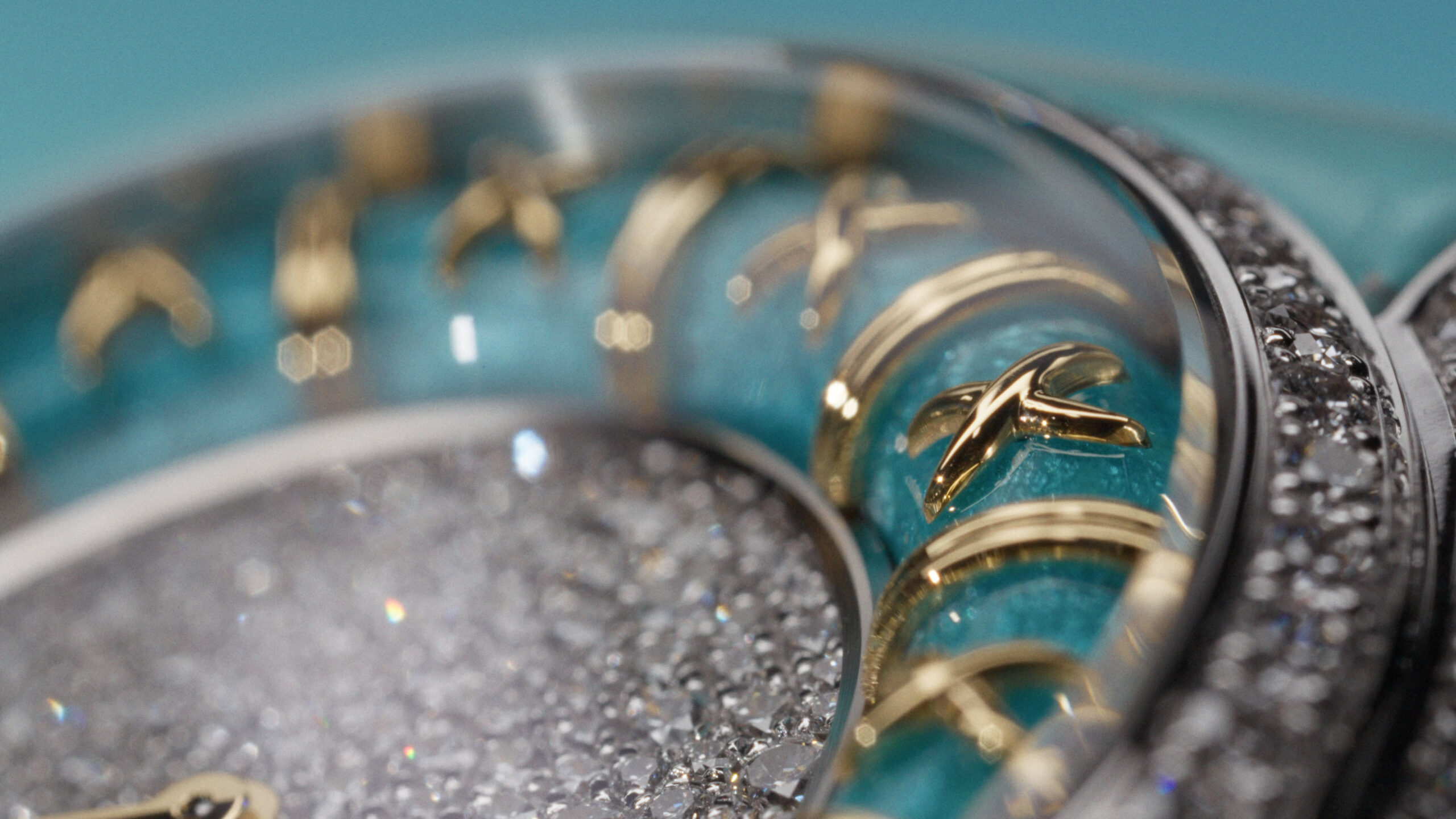
The finished enamel ring captures the dimensionality of the Croisillon bangle, translating Schlumberger’s aesthetic into motion
Mechanically, the choice of a high-precision quartz movement is pragmatic and consistent with the object’s purpose. This is a watch designed to deliver visual beauty through enamel, diamonds and gold rather than to showcase a caliber. The caseback push-button time adjustment keeps the silhouette clean, while the extensive diamond setting across case, dial and clasp underscores Tiffany’s confidence in its own métiers.
The Enamel Watch stands slightly apart from those of Tiffany’s LVMH stablemates. It is not a technical statement, nor is it a volume driver. Instead, it is a reminder that Tiffany’s watchmaking story does not begin with complications or manufacture status, but with objects made to be worn, admired and remembered.
-
- Tiffany & Co. Enamel Watch in White Gold with Tiffany Blue Paillonné Enamel and Full Pavé Diamond Bracelet
-
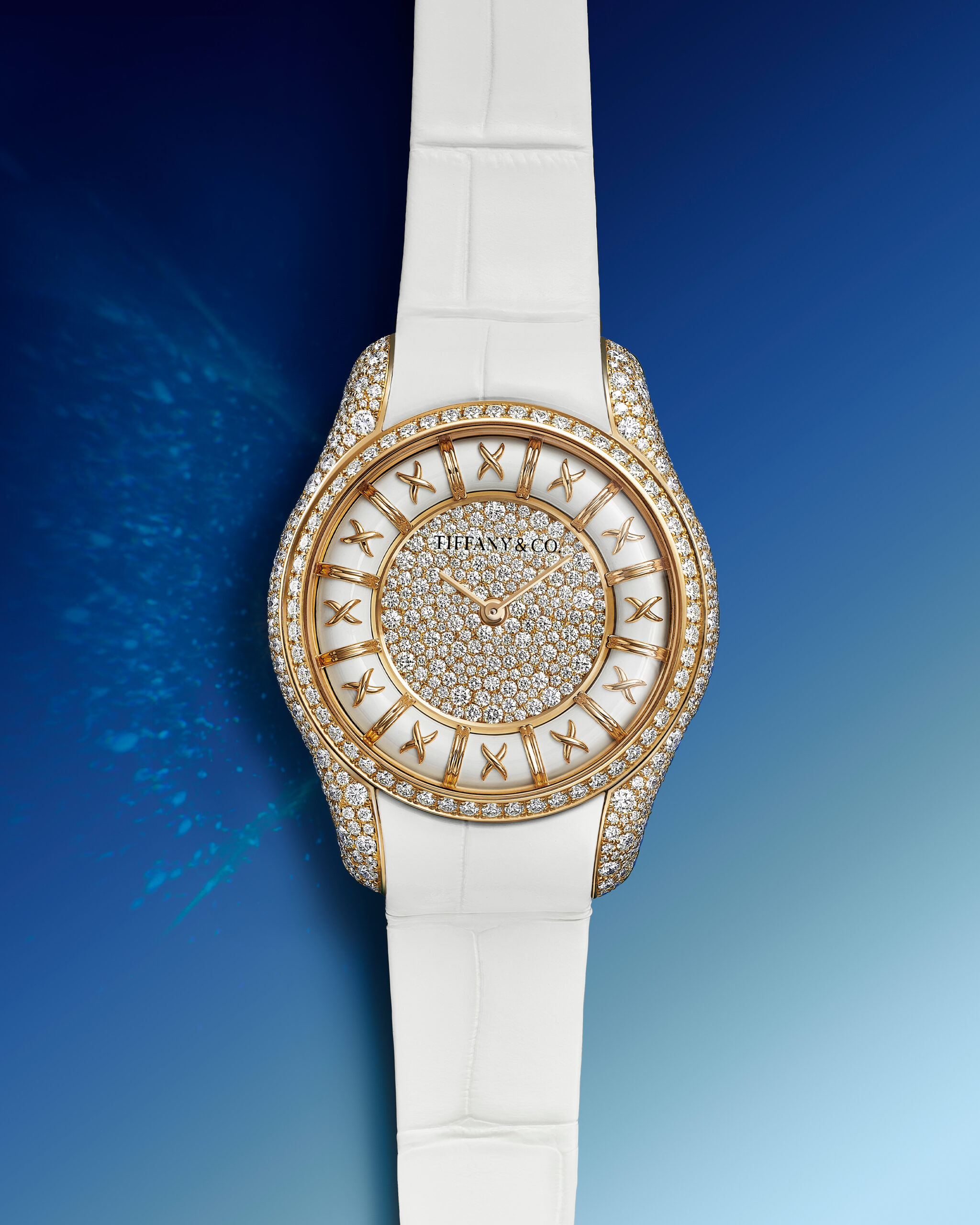
- Tiffany & Co. Enamel Watch in Yellow Gold with White Paillonné Enamel and Diamond-Set Case on a White Alligator Strap
Tech specs: Tiffany Enamel Watch
Movement Swiss-made high-precision quartz
Functions Hours, minutes
Case 36mm white or yellow gold, snow-set with 366 diamonds; sunburst engraving inspired by Schlumberger’s Floral Arrows, set with 14 diamonds
Dial Diamond-set central disc (204 diamonds); rotating outer ring in Tiffany Blue paillonné enamel or white enamel with yellow-gold cross-stitch motif
Strap Tiffany Blue or white alligator with diamond-set gold T-buckle; optional full-pavé white-gold bracelet
Price POA
Availability Limited production
Tiffany & Co.

You may also like
Editorial
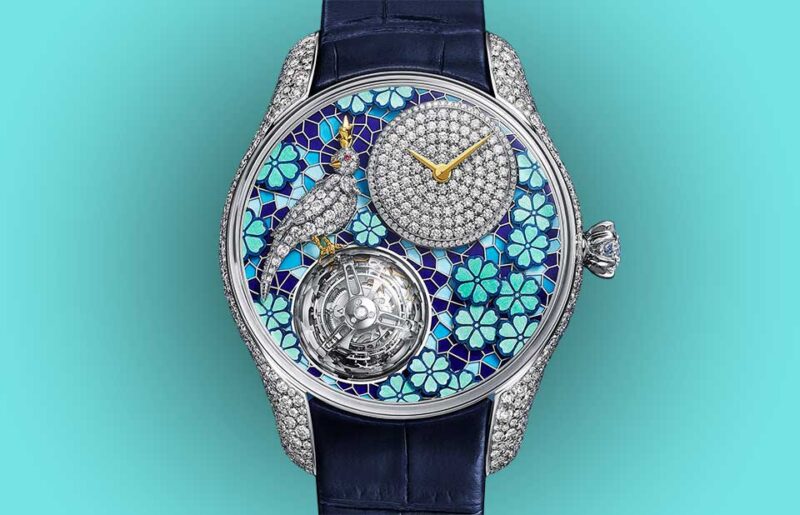
Revolution Awards 2025: High Jewellery — Tiffany & Co. Bird on a Flying Tourbillon – Azure Blossom
Jan 27, 2026
Editorial
Revolution Awards 2025: High Jewellery — Tiffany & Co. Bird on a Flying Tourbillon – Azure Blossom
Jan 27, 2026
Watch Fairs
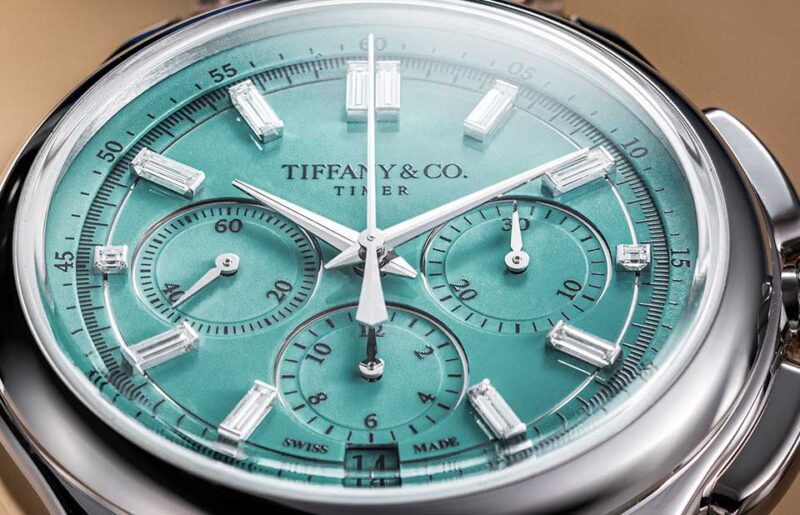
LVMH Watch Week 2026: The Tiffany Timer from Tiffany & Co.
Jan 19, 2026
Watch Fairs
LVMH Watch Week 2026: The Tiffany Timer from Tiffany & Co.
Jan 19, 2026
News
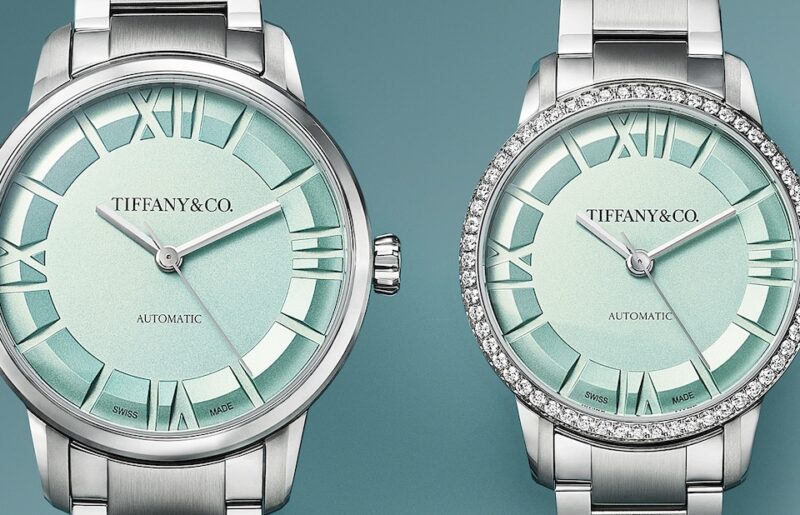
The Tiffany & Co. Atlas Watch is back, and Now it’s Automatic
Jul 7, 2025
News
The Tiffany & Co. Atlas Watch is back, and Now it’s Automatic
Jul 7, 2025