The Revolutionary List: 30 Pioneering Watches – the H. Moser & Cie. Perpetual 1
Editorial
The Revolutionary List: 30 Pioneering Watches – the H. Moser & Cie. Perpetual 1

This year, Revolution turns 20. Two decades of chronicling watches, people and ideas have given us a front-row seat to a remarkable story: how an age-old craft has both preserved its soul and reinvented itself for the 21st century. To celebrate, we’ve chosen over 100 names and milestones that, for us, define the era so far. From leaders to watches, you can see the whole list here.
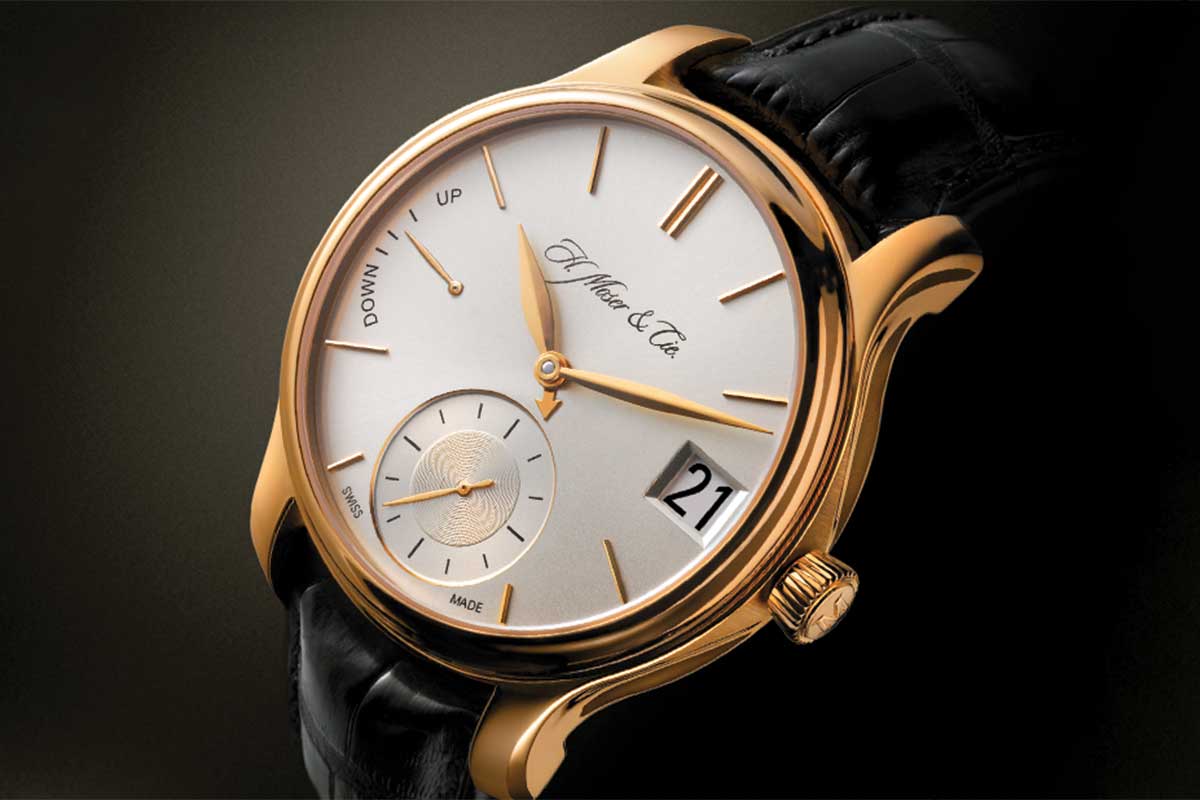
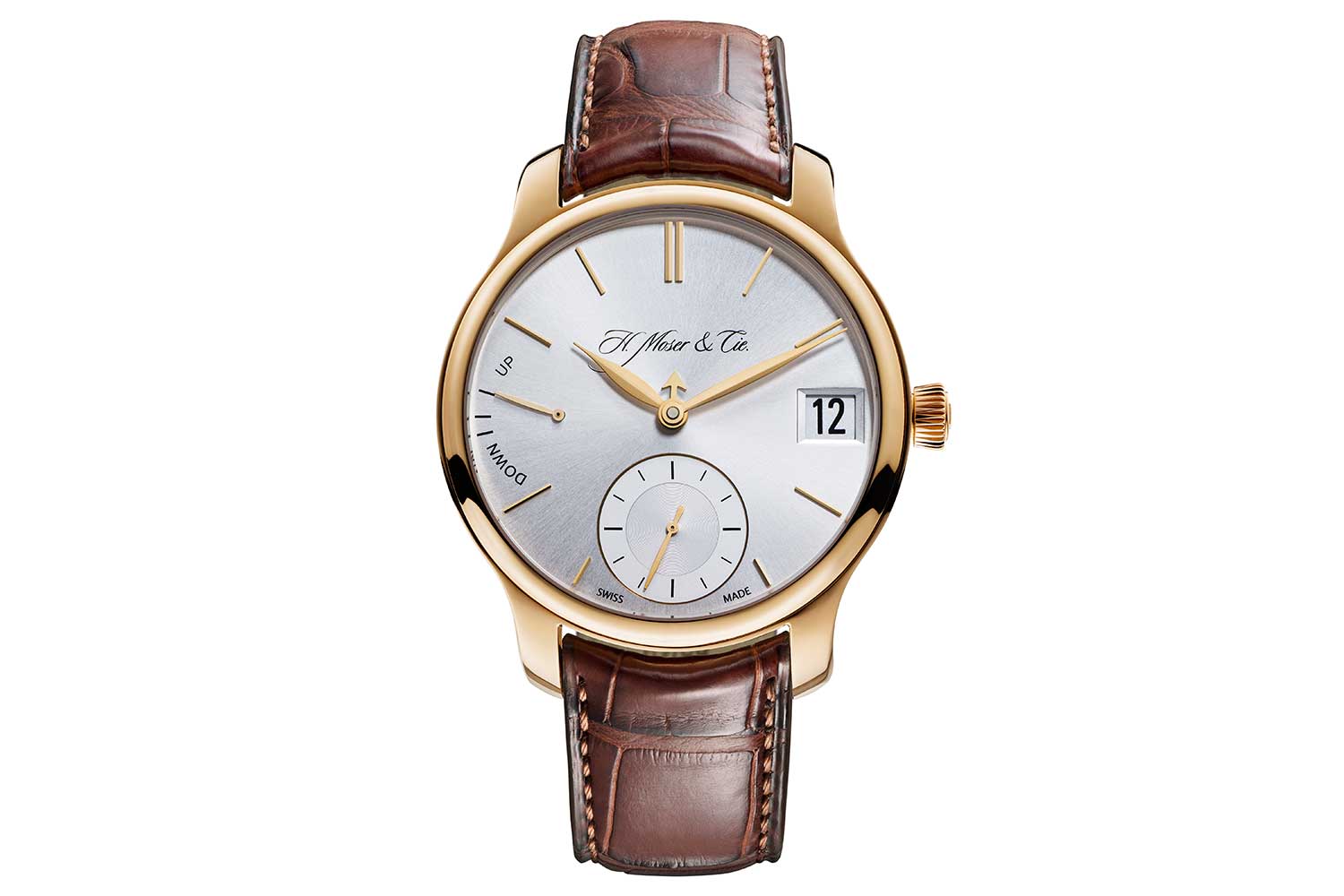
When H. Moser & Cie. first introduced its Perpetual 1 in 2005, it felt like a small, stubborn act of rebellion. Instead of the usual riot of subdials, pointers and small type that typically crowds calendar watches, Moser pared the complication back to essentials: a clean, open dial, and a single central pointer for months put an insistence on legibility. The effect was immediate: a perpetual calendar that reads like a dress watch but behaves like a grande complication.
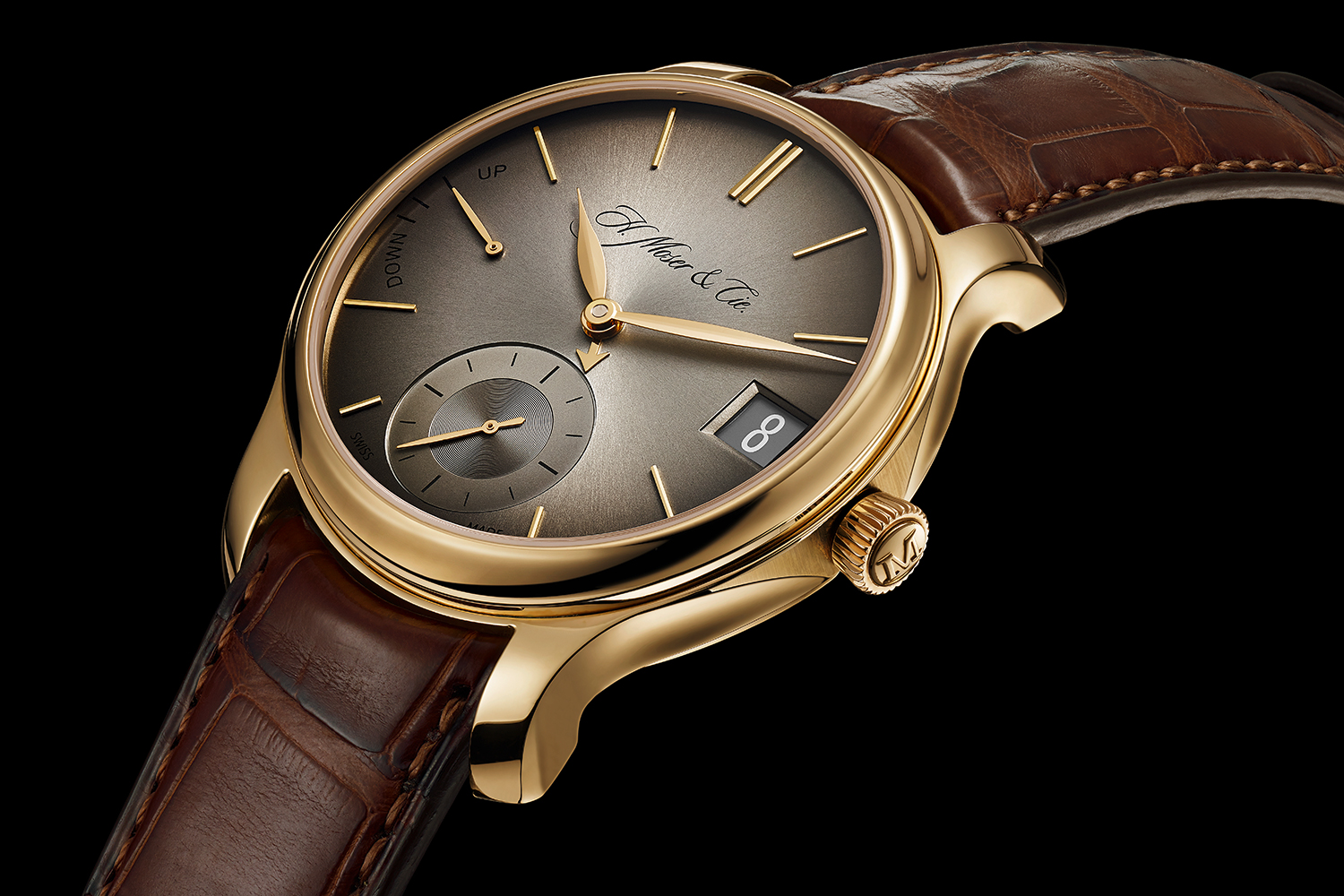
Historically, perpetual calendars have been busy affairs. A mechanical memory for the Gregorian calendar usually requires displays for day, date, month, leap year and moonphase, each demanding space and visual hierarchy. Moser’s approach flips that convention. By routing complexity under the dial and presenting only what the wearer needs to see, the Perpetual 1 (and later the Endeavour Perpetual Calendar iterations) reframed the QP as an exercise in restraint: the complication becomes invisible until you need it, leaving the dial to embrace the now-familiar fumé dial, pared-down markers (often no markers at all), and an emphasis on negative space.
H. Moser & Cie. Perpetual 1
The Perpetual 1 laid the foundation for Moser’s future designs. It debuted in a 40.8mm case with a curved sapphire caseback that, while designed for wrist comfort, also offered an engaging view of the in-house HMC 341 caliber — a large, 15-ligne movement beating at 18,000 vibrations per hour, conceived by Andreas Strehler for Moser. Its double-barrel construction delivers an impressive seven-day power reserve, a remarkable feat for a manually wound perpetual calendar. Its efforts led it to earn critical acclaim and the 2006 GPHG award in the complication category.
After all, H. Moser & Cie. has a story of reinvention. Founded in the 19th century and reborn in the 21st, the brand gained new momentum after its modern relaunch and later benefitted from stewardship under the Meylan family. Under their care, the maison doubled down on two ideas: high-quality in-house mechanics and a distinct visual voice that leans minimal rather than maximal.
Why is the Moser Perpetual Calendar revolutionary? Not because the brand invented the complication, but because it rethought what it should do for the wearer. Moser proved that technical sophistication and dial purity are not mutually exclusive. By incorporating intuitive adjustment systems (the Flash Calendar) and robust mechanics to make the perpetual calendar genuinely user-friendly, it remains the maison’s most celebrated example of a cleverly condensed perpetual calendar, so as to say, a function to be lived with. And that, for many collectors, is the very definition of progress.
H. Moser & Cie. Perpetual 1
Tech Specs: H. Moser & Cie. Perpetual 1
Movement: Manual winding HMC Caliber 341; seven-day power reserve
Functions: Hours and minutes; small seconds; perpetual calendar (with leap year indicator on movement-side)
Case: 40.8mm × 11.1mm; 18K rose gold, white gold or platinum; water resistant to 30m
Dial: Silvered, rhodium-plated, Ardoise slate, or black
Strap: Leather with folding clasp
H. Moser & CIE.
You may also like
Editorial
A Closer Look: H. Moser & Cie. Streamliner Perpetual Moon Concept Meteorite
Feb 25, 2026
Editorial
A Closer Look: H. Moser & Cie. Streamliner Perpetual Moon Concept Meteorite
Feb 25, 2026
Editorial
Inside the H. Moser & Cie. Manufacture in Schaffhausen
Feb 6, 2026
Editorial
Inside the H. Moser & Cie. Manufacture in Schaffhausen
Feb 6, 2026
Editorial
Independent spirits: Seddiqi’s 75th Anniversary limited editions
Nov 17, 2025
Editorial
Independent spirits: Seddiqi’s 75th Anniversary limited editions
Nov 17, 2025