
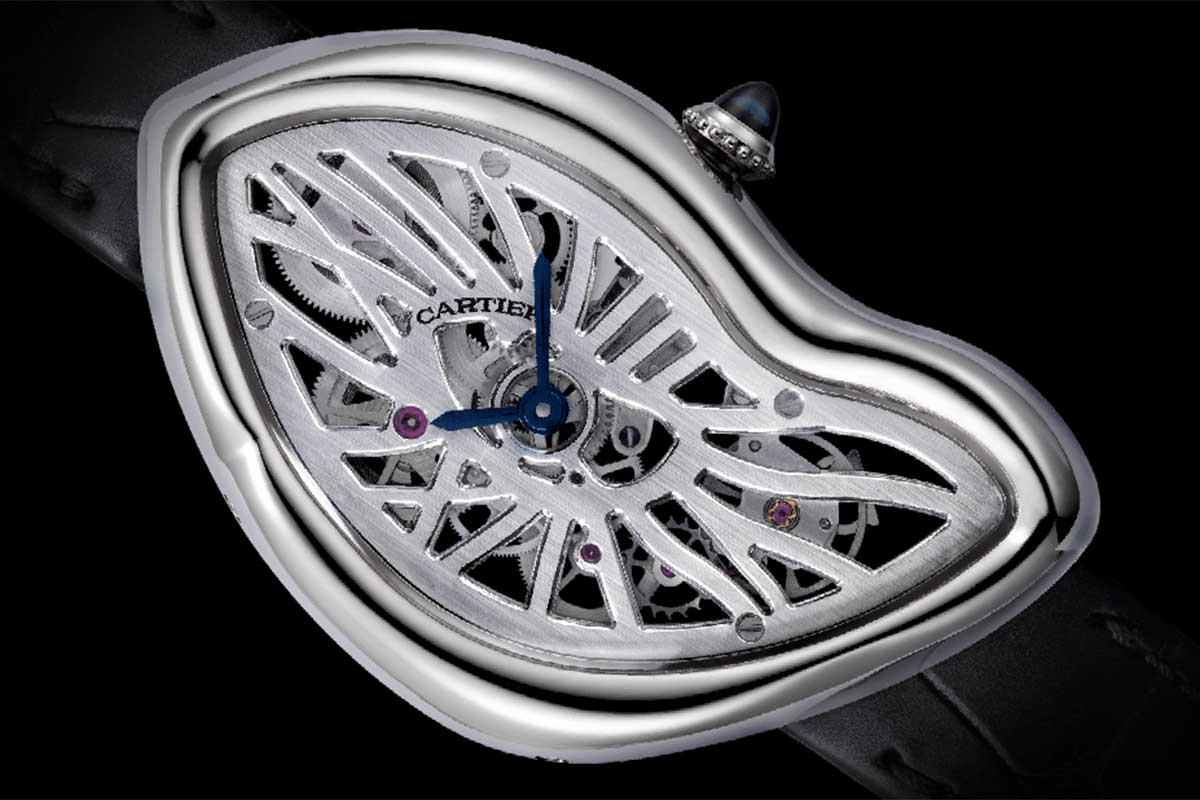
The Revolutionary List: 30 Pioneering Watches – the Cartier Crash Skeleton
Editorial
The Revolutionary List: 30 Pioneering Watches – the Cartier Crash Skeleton

This year, Revolution turns 20. Two decades of chronicling watches, people and ideas have given us a front-row seat to a remarkable story: how an age-old craft has both preserved its soul and reinvented itself for the 21st century. To celebrate, we’ve chosen over 100 names and milestones that, for us, define the era so far. From leaders to watches, you can see the whole list here.
The Cartier Crash Skeleton, unveiled in 2015, is one of those rare watches that redefined what it means for a timepiece to be both an object of design and a feat of horology. At first glance, it appears to be a surrealist jewel, a melted case pulled from a Dali painting. Look closer, and the achievement becomes clear: Cartier’s watchmakers did not simply place a standard movement into an unconventional shape; they built a caliber that mirrors the distorted geometry of the case itself.
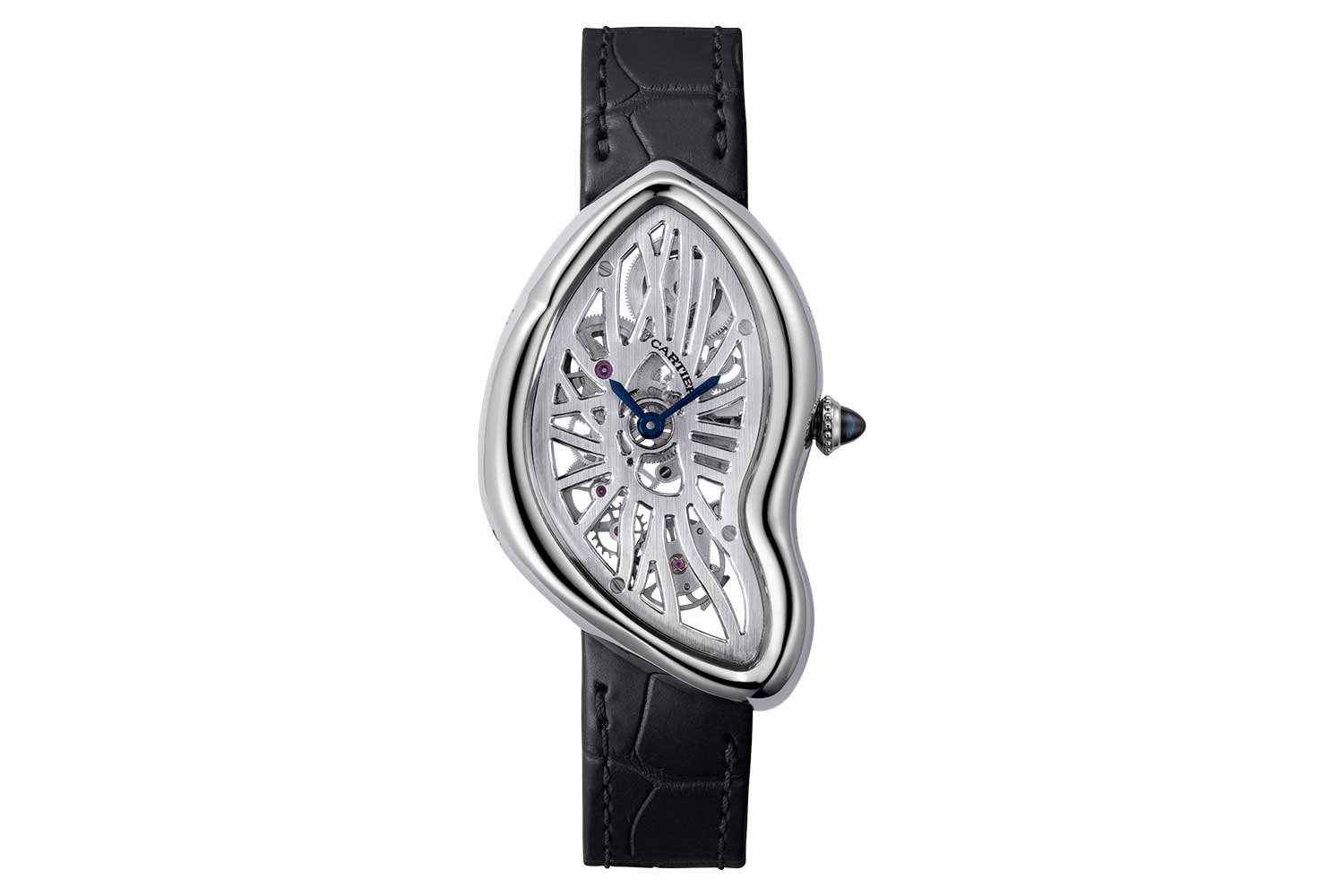
2015: Cartier Crash Skeleton
The original Crash was born in 1967 at Cartier’s London boutique, under Jean-Jacques Cartier and designer Rupert Emmerson. Its legend often references a deformed watch recovered from a car accident, though the reality was more deliberate. The case was meant to capture the avant-garde energy of Swinging London, but Jean-Jacques insisted it retain elegance. Eric Denton, then Cartier London’s Head Watchmaker, was tasked with fitting a conventional movement into the warped form. The process was painstaking, with dials repainted and adjusted until balance was achieved.
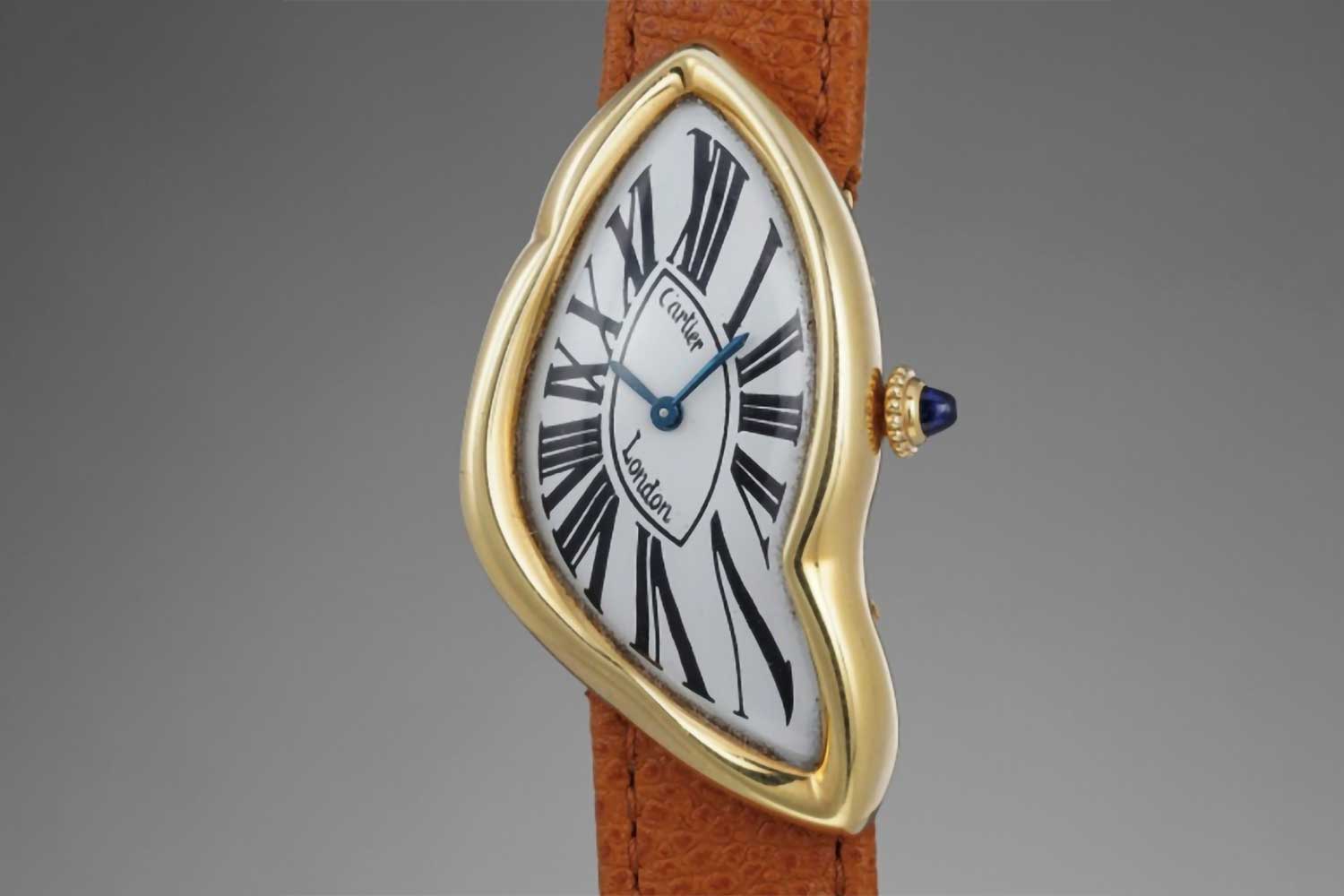
1967: The original Crash London
When Cartier returned to the Crash nearly 50 years later, it no longer accepted compromise. The Caliber 9618 MC was designed expressly for the Skeleton model, a hand-wound movement whose bridges double as elongated Roman numerals, warped in harmony with the case. Every component serves both mechanical and aesthetic roles, turning engineering into sculpture.
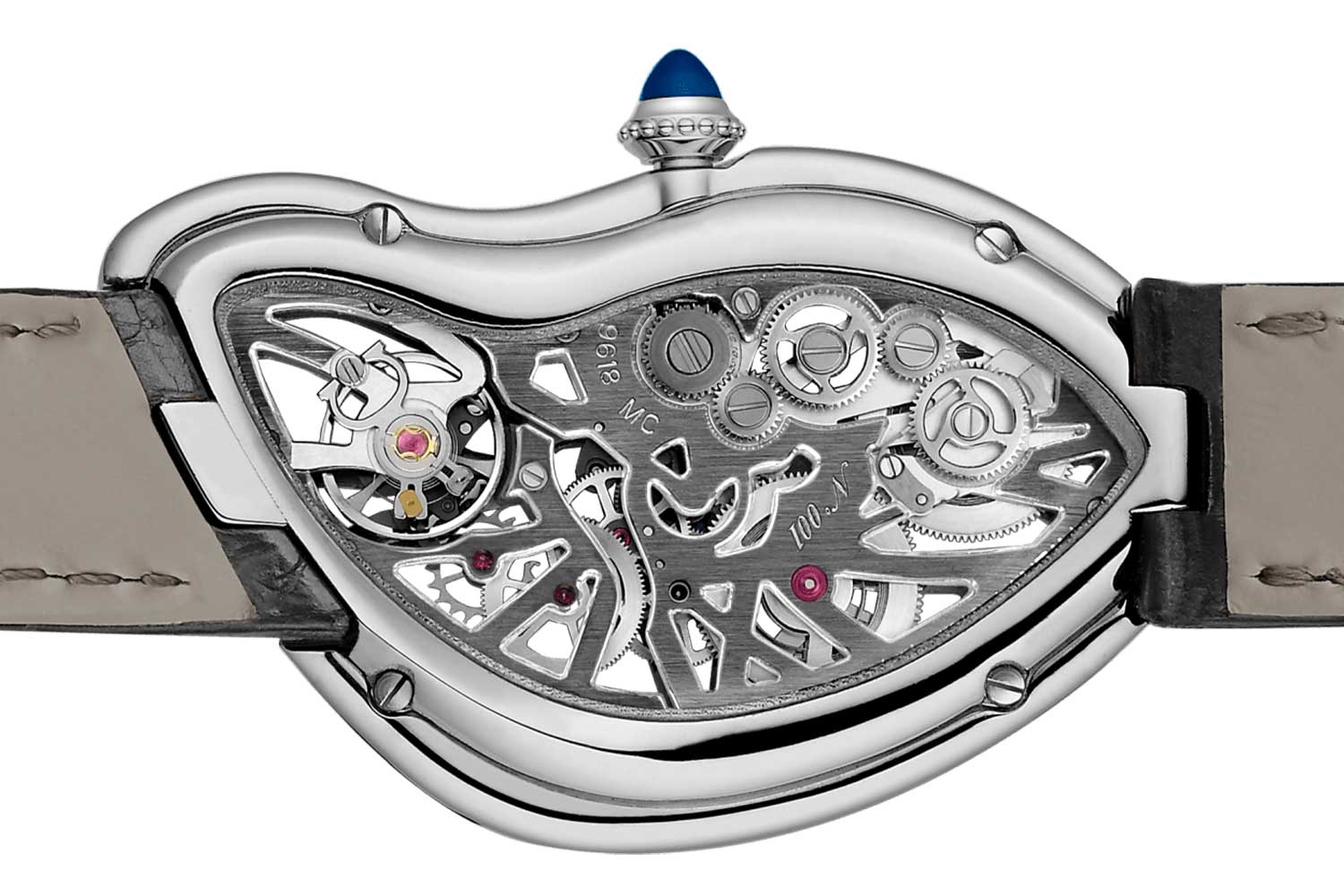
The Caliber 9618 MC was designed expressly for the Skeleton model
The technical achievement is matched by refinement. The platinum case measures 28.15mm by 45.32mm and is under 10mm thick. The 138-part movement, with 20 jewels, beats at 28,800 vibrations per hour, offering a three-day power reserve in a profile just 3.97mm deep. Limited to 67 pieces, it was joined by a pink gold version in 2016, equally rare.
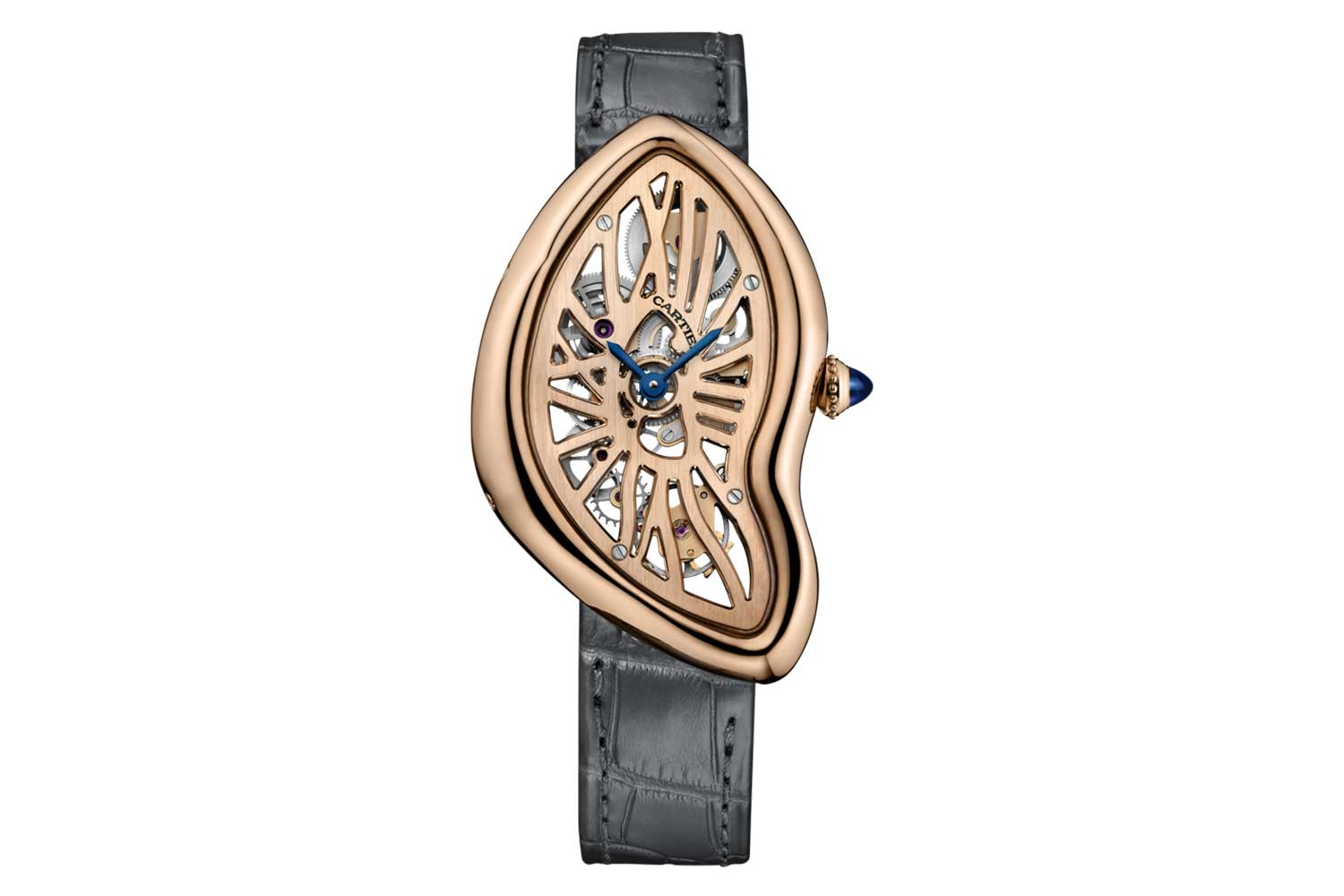
2016: Cartier Crash Skeleton in pink gold
What made the Crash Skeleton remarkable was not its eccentricity but its rigor. Skeleton watches are common in haute horlogerie, but almost always symmetrical. Cartier’s team was forced to start from scratch, drafting a caliber that could keep time while also bending to the case’s tapering lines. Each bridge had to carry mechanical loads while stretched into numerals. It was an engineering puzzle disguised as art, one that ignored convention.

2015: Cartier Crash Skeleton in Platinum and High Jewellery
The result was a watch that brought the spirit of the 1960s into the present without sliding into nostalgia. By reinventing the very architecture of a movement, Cartier proved the Crash was not just a curiosity of design history. It became a demonstration that even the maison’s most unconventional creation could be executed with the same discipline as Switzerland’s greatest icons.
Tech Specs: Cartier Crash Skeleton
Movement: Manual winding Caliber 9618 MC; three-day power reserve
Functions: Hours and minutes
Case: 28.15mm × 45.32mm × 9.62mm; platinum with dual-curved mineral glass; water resistant to 30m
Dial: Skeletonized bridges forming Roman numerals
Strap: Alligator leather; 18K white gold folding clasp
Cartier

You may also like
Editorial
Revolution Awards 2025: Best Jewelry Watch — Cartier Panthère de Cartier
Jan 27, 2026
Editorial
Revolution Awards 2025: Best Jewelry Watch — Cartier Panthère de Cartier
Jan 27, 2026
Editorial
Cartier’s Beautiful Baignoire
Jan 15, 2026
Editorial
Cartier’s Beautiful Baignoire
Jan 15, 2026
Editorial
Cartier’s Tank à Guichets: A window through time
Jan 12, 2026
Editorial
Cartier’s Tank à Guichets: A window through time
Jan 12, 2026