
The Revolutionary List: 25 Watchmakers and Construction – Felix Baumgartner & Martin Frei
Editorial
The Revolutionary List: 25 Watchmakers and Construction – Felix Baumgartner & Martin Frei

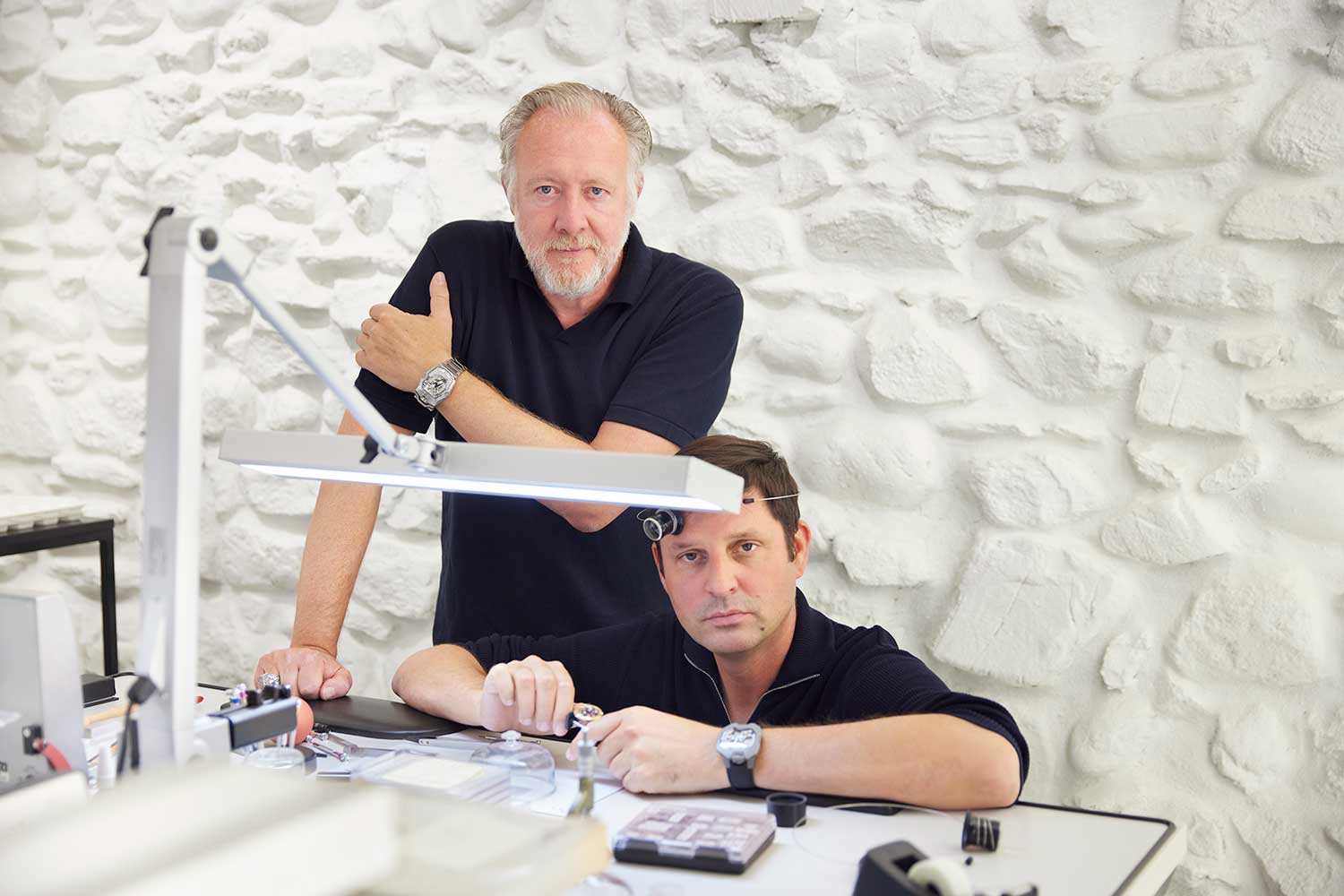
Felix Baumgartner grew up in Schaffhausen, the son of a watchmaker who specialized in restoration. By his twenties, he was already handling vintage IWC minute repeaters and Breguet pocket watches, learning how old masters thought about energy and resonance. Martin Frei’s path couldn’t have been more different: trained in art and film, he was working in graphic design and sculpture, steeped in science fiction and visual story telling. When the two met in the mid-1990s, the idea of building watches together seemed unlikely. Yet out of that collision came Urwerk.
Their first pieces, the UR-101 and UR-102, looked like time machines — featuring wandering-hour satellites gliding across semicircular dials, housed in cases milled by hand in Zurich. But it was the UR-103 in 2003 that really changed the conversation: a spaceship of a watch with satellite hours hidden beneath a sculptural shield, its display read like instruments on a cockpit panel.
-

- UR-101
-

- UR-102
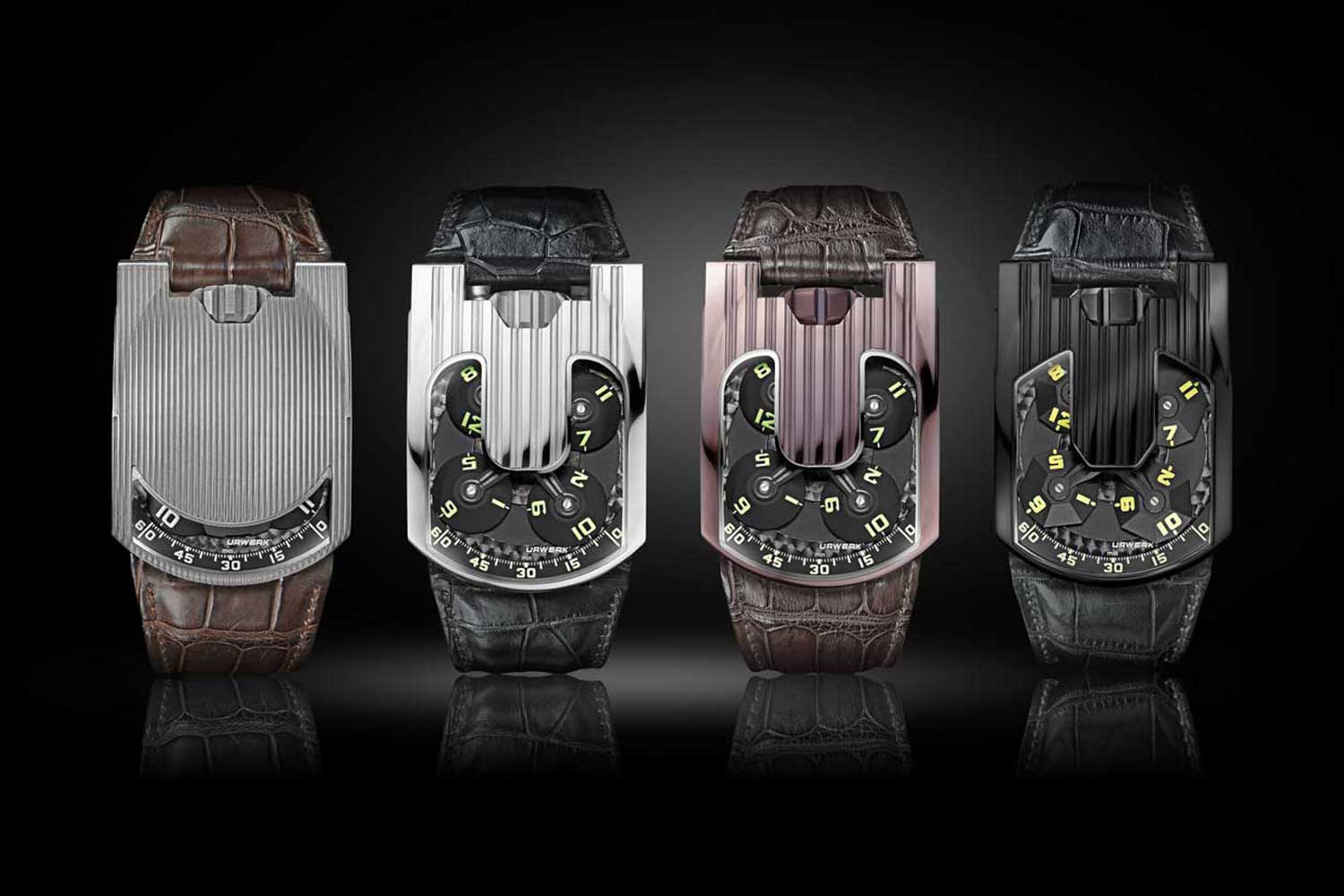
UR-103
Urwerk never stopped experimenting. The UR-210 introduced the “winding efficiency indicator, ”a gauge measuring how much energy the wearer generated. The oil-lubricated rollers of the UR-111Credefinedhowacrowncouldwork.Andthe AMC paired a wristwatch with an atomic clock — a 21st century echo of Breguet’s Sympathique clocks. For Baumgartner and Frei, independence has never been about working alone. It has meant building a language of watchmaking no one else dared to speak.

UR-210 (©Revolution)
Urwerk

You may also like
Editorial
The Revolutionary List: 30 Pioneering Watches – the URWERK UR-103
Dec 2, 2025
Editorial
The Revolutionary List: 30 Pioneering Watches – the URWERK UR-103
Dec 2, 2025

News
A Collision of Creativity: Ulysse Nardin X URWERK UR-FREAK
Nov 20, 2025
News
A Collision of Creativity: Ulysse Nardin X URWERK UR-FREAK
Nov 20, 2025

News
The Urwerk UR-100V Magic T Hunter Green Perfectly Sums Up The Brand In 2025
Feb 14, 2025
News
The Urwerk UR-100V Magic T Hunter Green Perfectly Sums Up The Brand In 2025
Feb 14, 2025