The Revolutionary List: 24 Technically Brilliant Watches – Patek Philippe Advanced Research
Editorial
The Revolutionary List: 24 Technically Brilliant Watches – Patek Philippe Advanced Research

Patek Philippe is best known for refining and perpetuating the classical grammar of watchmaking, but since 2005 it has maintained a platform for experimentation through the Advanced Research program. Its purpose has been to test how new materials and technology might be translated into practical gains in precision and long-term reliability.
The first four watches in the series, released between 2005 and 2011, chart a steady progression toward a complete silicon regulating organ. The starting point was the 100-piece Annual Calendar Ref. 5250 in 2005, fitted with a Silinvar escape wheel. Silinvar is a proprietary form of silicon, thermally treated to become dimensionally stable across temperature ranges. Two-thirds lighter than steel, harder, non-magnetic and resistant to corrosion, it lowered inertia and dispensed with lubrication.
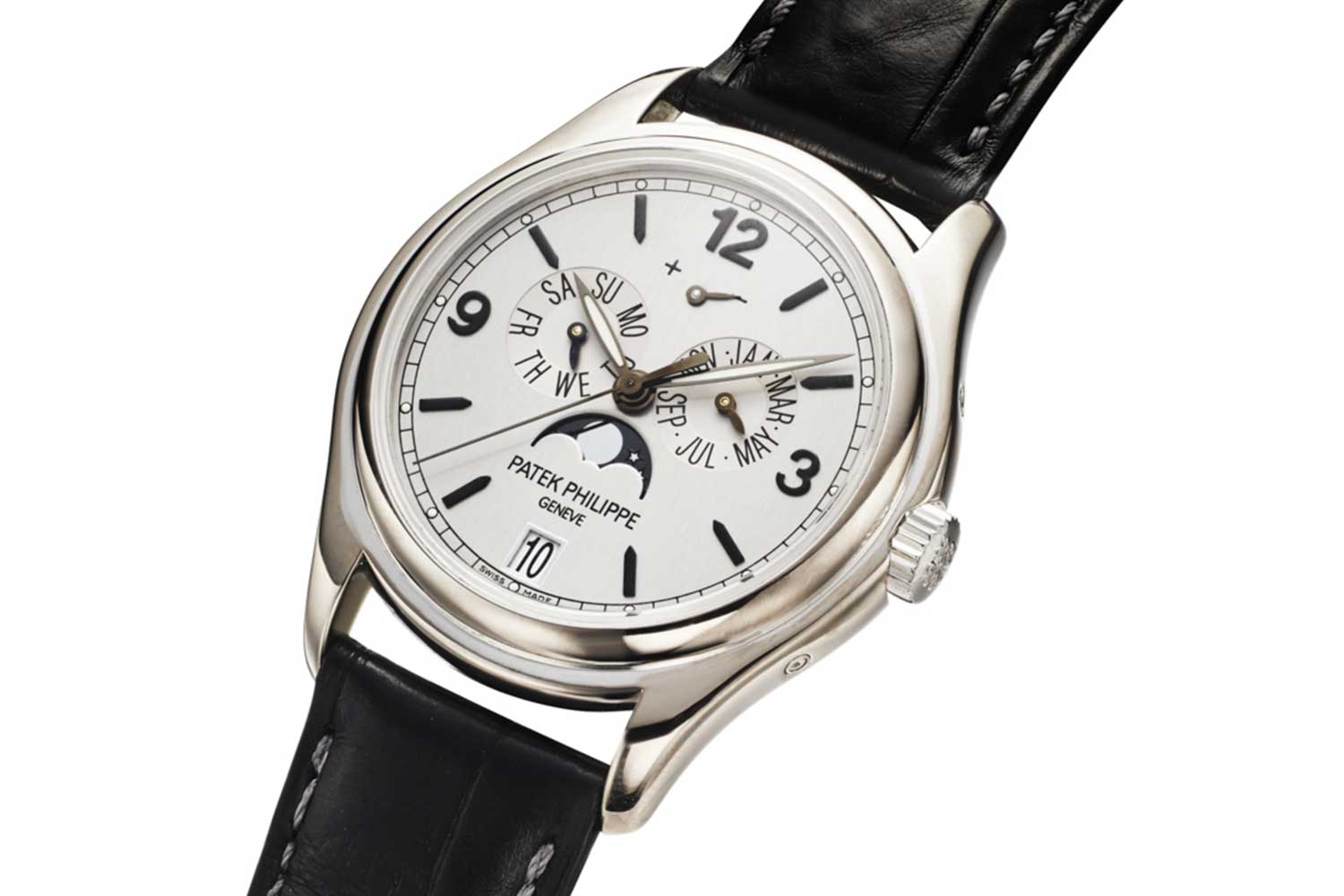
Ref. 5250G-001 “Advanced Research” Annual Calendar (Image: Antiquorum)
A year later, the 300-piece Ref. 5350 added the Spiromax balance spring, also made of Silinvar.
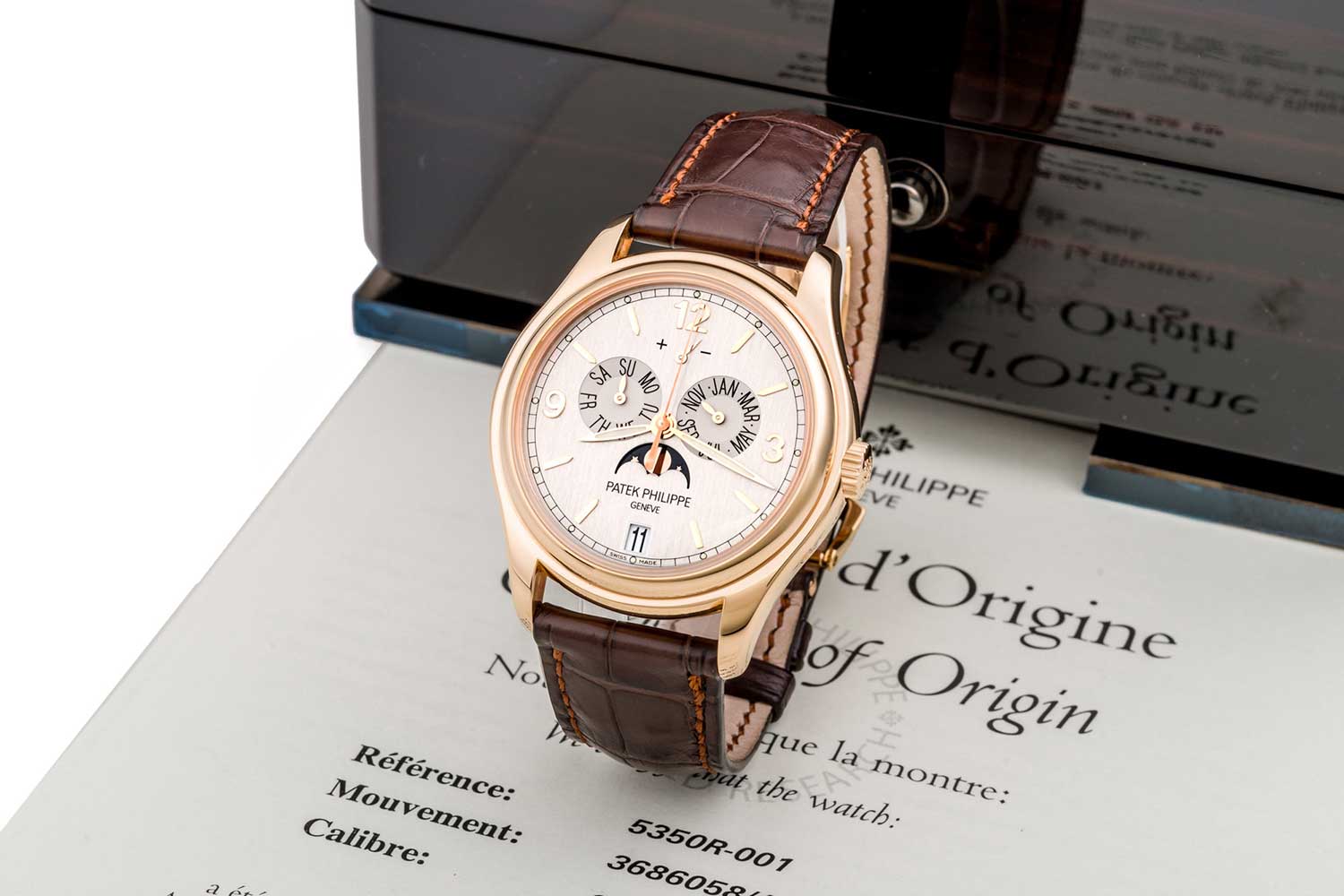
Ref. 5350R-001 “Advanced Research” Annual Calendar (Image: Antiquorum)
With all its above-mentioned properties, as well as being two-thirds lighter than Invar and thermally compensated, Silinvar is able to maintain constant elasticity over a wide temperature range. This was combined with a new corrective geometry, protected by three patents. Unlike the traditional Breguet overcoil, Spiromax relied on a flat profile with a specially shaped, thickened outer terminal which ensured concentric breathing without the need for an overcoil. This gave it the same isochronism as an overcoil while saving vertical space, an advantage in increasingly compact movements. It is also the only Advanced Research innovation to have been systematically adopted across Patek’s broader production.
The third step came in 2008 with the Ref. 5450, which introduced a silicon lever in place of the traditional ruby pallet fork. Combined with the earlier escape wheel and balance spring, it formed what Patek called the Pulsomax escapement. This reduces inertia and friction, boosting efficiencybyabout15percentwhileimprovingreliability and consistency over time.

Ref. 5450P-001 “Advanced Research” Annual Calendar (Image: Antiquorum)
The final piece arrived in 2011 with the 300-piece Perpetual Calendar Ref. 5550. Alongside Spiromax and Pulsomax, the watch introduced a new version of the firm’s long-standing Gyromax balance. First patented in 1951, the Gyromax allowed regulation through adjustable weights at the rim. The new GyromaxSi preserved that principle but executed it in silicon with a radically different geometry. Shaped more like a butterfly than a wheel, with four asymmetric gold poising weights and gold infills providing the effective mass, it improved aerodynamics and raised efficiency by a further 15 percent. The Pulsomax escapement also introduced a renewed geometry. Patek reshaped the escape wheel teeth and pallet faces so that the escapement would deliver energy more effectively and reduce parasitic losses. This meant shorter escape wheel teeth and longer pallet faces. This translated into an extended power reserve of the Caliber 240 from 48 to 70 hours. Together, the Spiromax spring, Pulsomax escapement and GyromaxSi balance formed what Patek termed the Oscillomax ensemble.
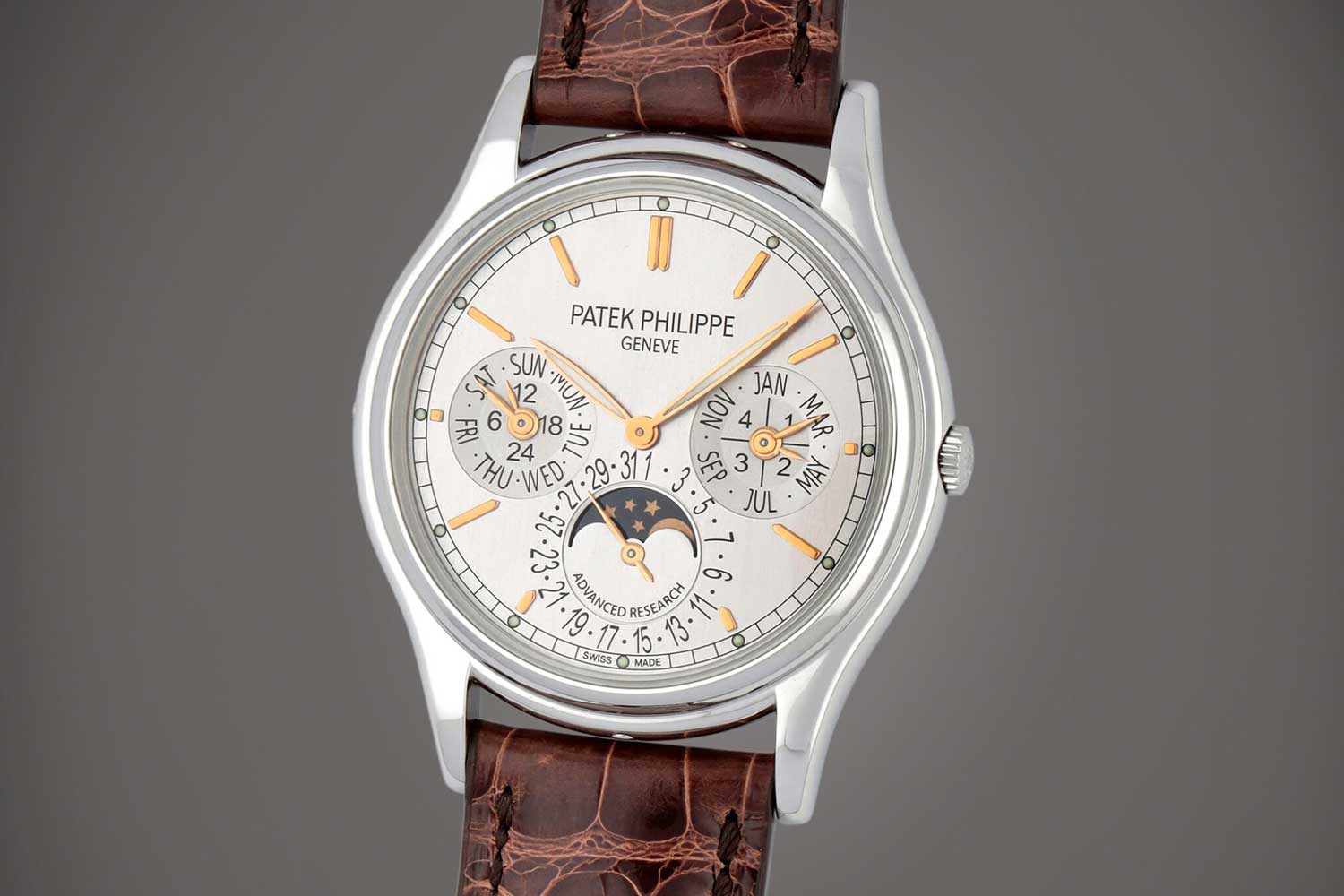
Ref. 5550P-001 “Advanced Research” Annual Calendar (Image: Antiquorum)
Then, in 2017, Patek Philippe introduced the Advanced Research Aquanaut Travel Time Ref. 5650G with an optimized Spiromax balance spring and a compliant mechanism for its second time zone adjustment. The balance spring was enhanced with an additional inner terminal curve, complementing the existing outer curve. This corrected the way the spring develops and recovers its torque. The result was improved isochronism, particularly in vertical positions, where gravitational effects are most pronounced. With both inner and outer terminal curves, the movement could be regulated to an accuracy of –1 to +2 seconds per day.
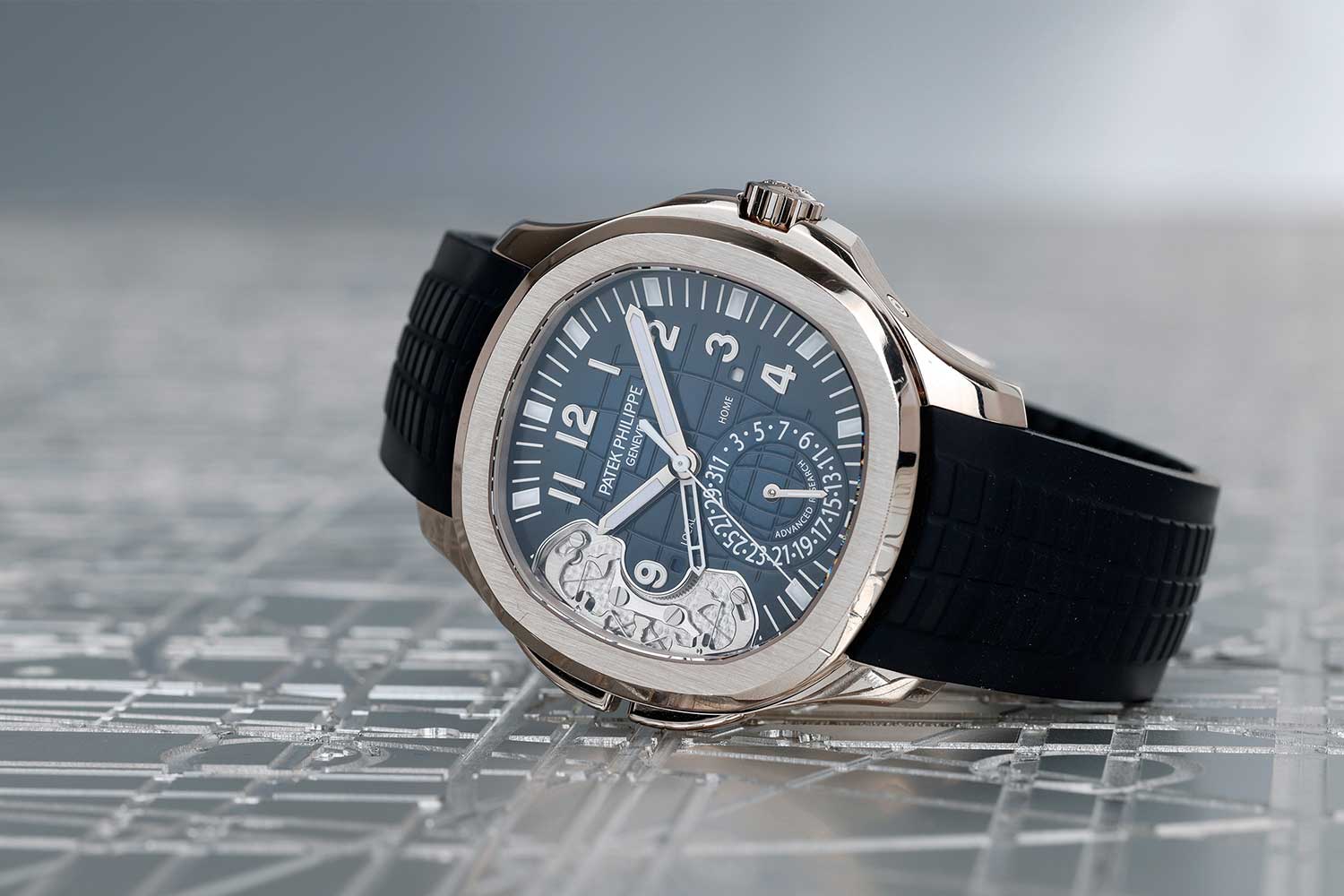
Ref. 5550P-001 “Advanced Research” Aquanaut Travel Time (Image: Sotheby’s)
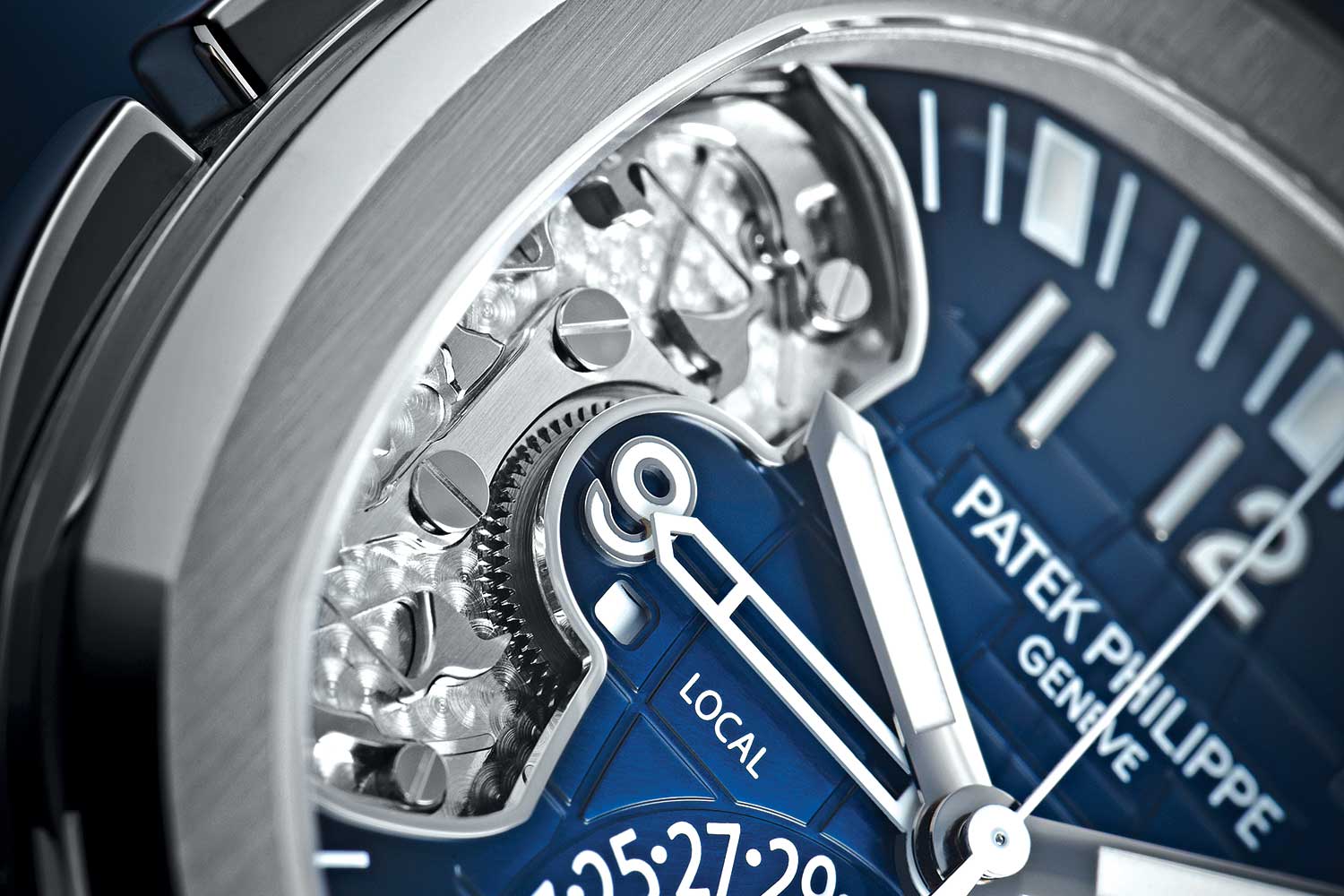
The second innovation was a compliant mechanism for the Travel Time function. Compliant mechanisms are valued for their ability to replace complex, multi-part components by utilizing the elasticity of flat springs, resulting in a single, jointless piece. In the case of the Advanced Research Aquanaut, the conventional Travel Time mechanism which normally consisted of 37 parts was reduced to only 12 parts. Levers, pawls and springs were replaced by a single integrated steel structure, with four cross-leaf steel springs— two dedicated to the corrector pushers and the remaining two for facilitating the advancement or retardation of an intermediate wheel connected to the local time hour wheel.
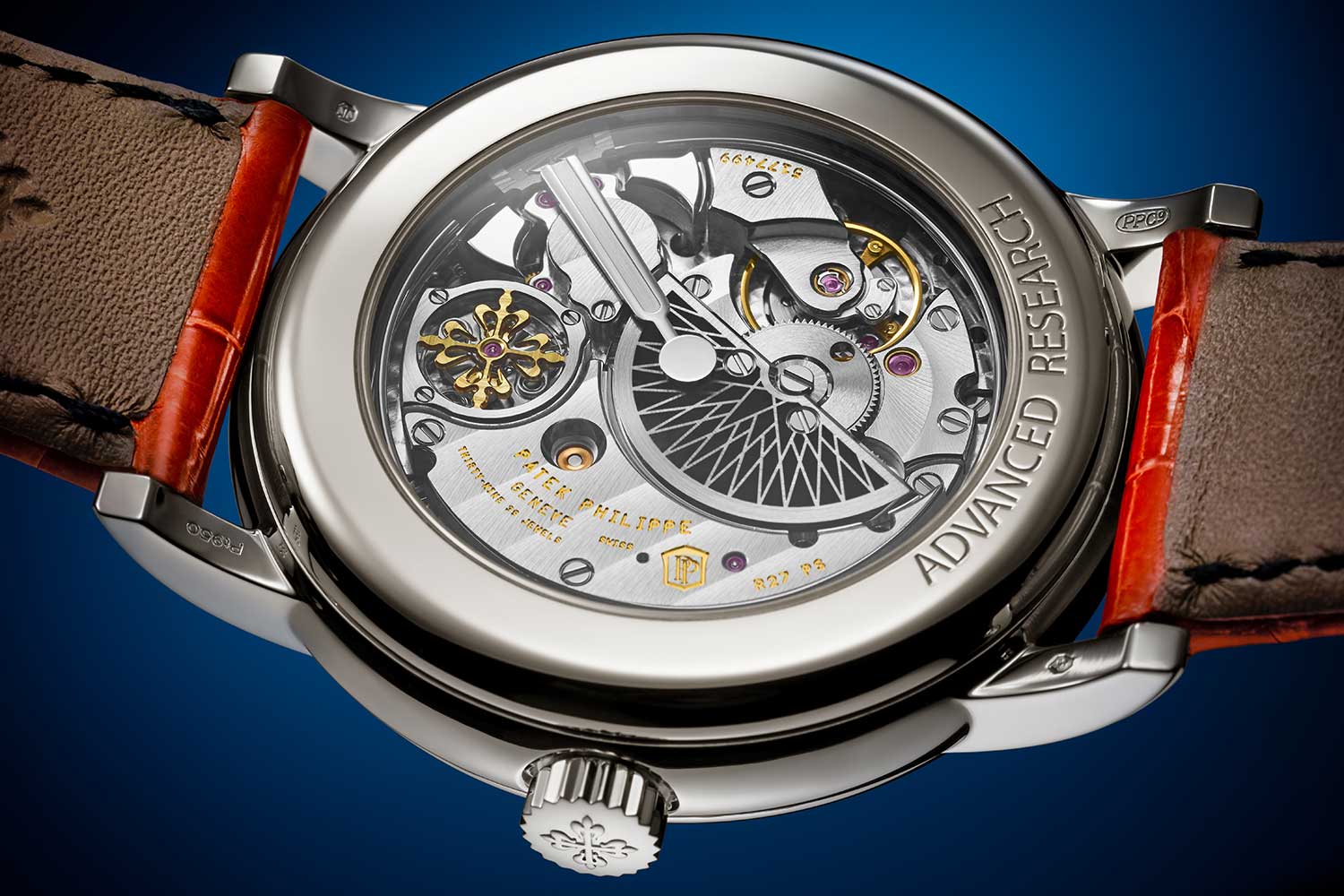
While Patek Phillippe is generally known for perfecting the art of a traditional minute repeater, the Advanced Research Fortissimo Ref. 5750P launched in 2021 marked a departure into genuine innovation. At its core is a tuning-fork-shaped sound lever fixed at the foot of the gongs, extending to the center of the movement where it connects to a 0.2mm thin sapphire crystal disk that vibrates freely when the gongs are struck. This sapphire disk vibrates freely when the gongs are struck. The sound is then channeled through four openings at 3, 6, 9 and 12 o’clock in a titanium movement ring, before exiting via a narrow slot between the caseback and caseband. To prevent parasitic vibrations from propagating into the movement, the foot of the gongs is isolated by an insulating rim made of a high-tech polymer. The hammers, unusually, were made of platinum rather than hardened steel to produce a softer strike without compromising sonority. The case itself was also in platinum, which tends to muffle sound but was chosen deliberately to demonstrate the effectiveness of the Fortissimo “ff” system
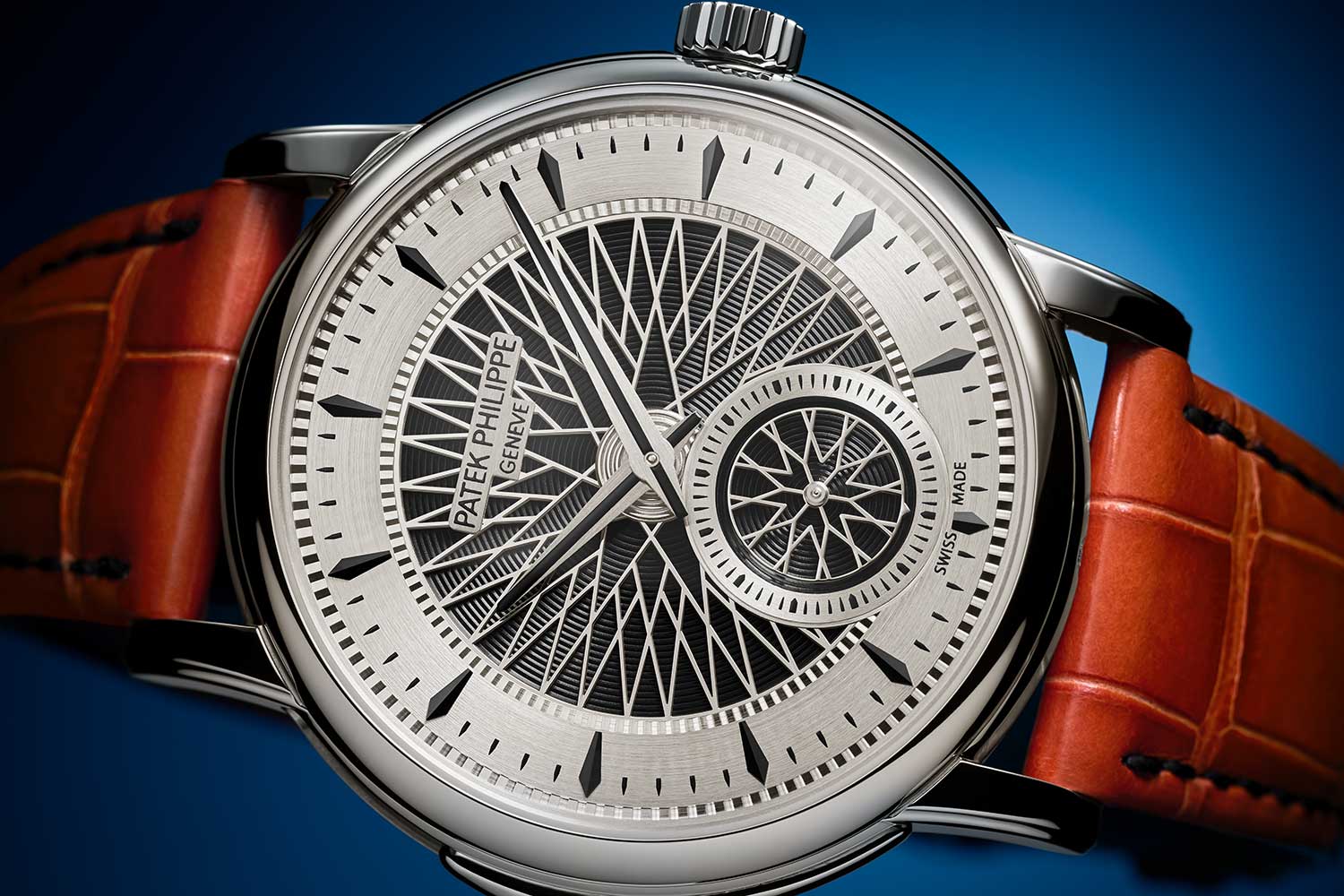
Ref. 5750P-001 “Advanced Research” Fortissimo
Patek Philippe Advanced Research Line UP
2005 – Ref. 5250G Annual Calendar introduces the Silinvar escape wheel
2006 – Ref. 5350R Annual Calendar adds the Spiromax balance spring, also fashioned from Silinvar
2008 – Ref. 5450P Annual Calendar represents Patek Philippe’s first use of a full silicon escapement in the form of the Pulsomax
2011 – Ref. 5550P Perpetual Calendar showcases the GyromaxSi balance. Together, the Spiromax balance spring, Pulsomax escapement and GyromaxSi balance form a full regulating organ that Patek calls the Oscillomax ensemble
2017 – Ref. 5650G Aquanaut Travel Time enhances and adapts the Spiromax balance wheel for Patek Philippe’s Travel Time mechanism
2021 – Ref. 5750P Fortissimo introduces the Fortissimo “ff” system, which mechanically amplifies the minute repeater using a sapphire resonator
Patek Philippe

You may also like

Editorial
Holiday Horology: Something Old, Something New, Something Special — Cheryl Chia, Technical Editor
Dec 17, 2025
Editorial
Holiday Horology: Something Old, Something New, Something Special — Cheryl Chia, Technical Editor
Dec 17, 2025

Editorial
The Revolutionary List: 30 Pioneering Watches – the Patek Philippe Grandmaster Chime Ref. 5175
Dec 2, 2025
Editorial
The Revolutionary List: 30 Pioneering Watches – the Patek Philippe Grandmaster Chime Ref. 5175
Dec 2, 2025

Editorial
The Revolutionary List – 26 Inspirational Leaders: Thierry Stern
Dec 1, 2025
Editorial
The Revolutionary List – 26 Inspirational Leaders: Thierry Stern
Dec 1, 2025