
The Return of the Accutron Hum
Editorial
The Return of the Accutron Hum

When Accutron introduced the world’s first tuning fork wristwatch in 1960, the reaction was immediate. The watch did not tick. It produced a steady electronic hum and a seconds hand that moved without interruption. To mid century consumers, it looked and sounded like something from the future. Within a few years it was being used in U.S. military instrumentation and early spaceflight hardware, and it became one of the defining products of the early Space Age.
Sixty five years later, the movement that made that hum possible has returned. Accutron has introduced the Spaceview 314, a new model powered by a hand assembled tuning fork calibre that has been recreated after decades in which the technology was considered functionally extinct.
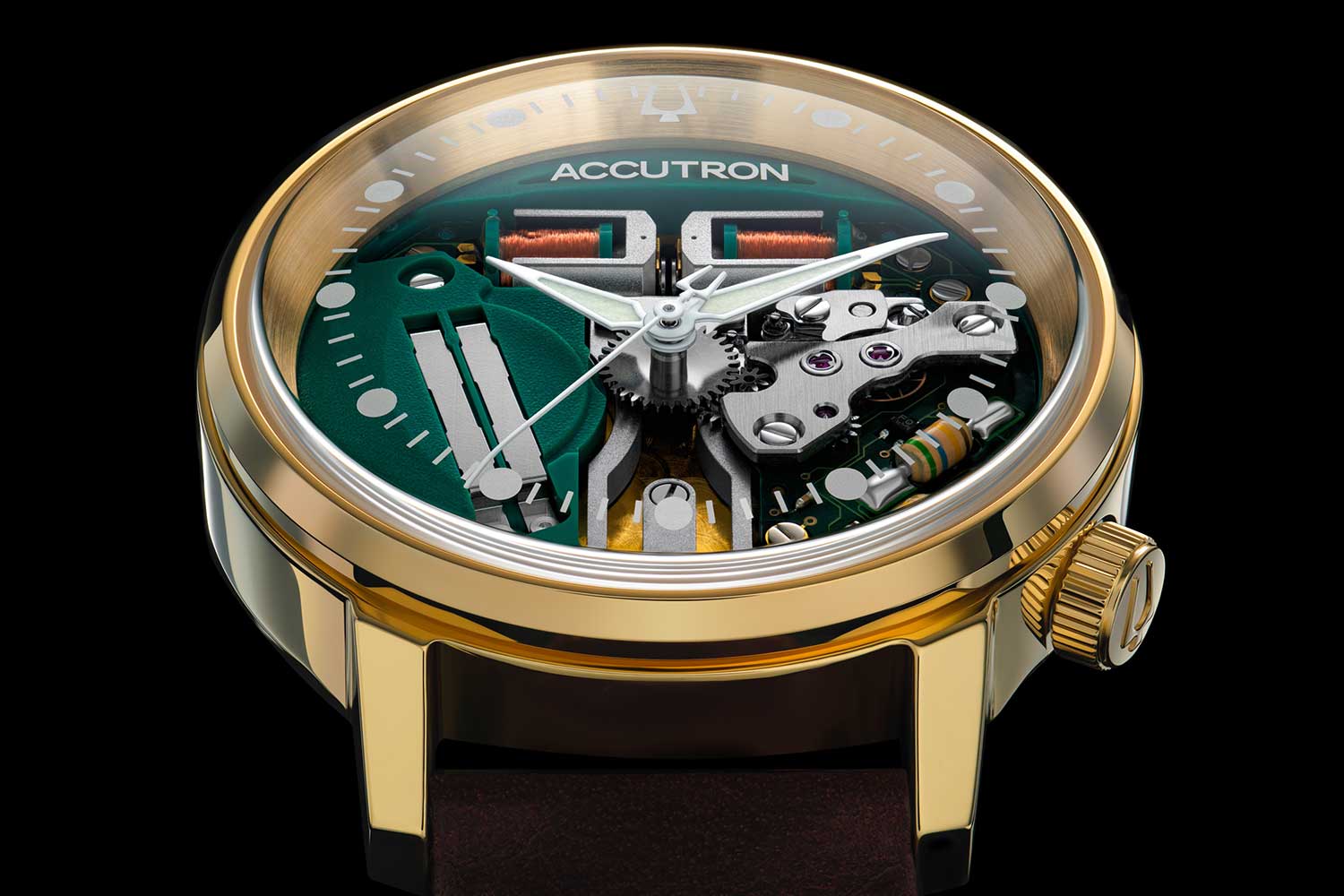
The Accutron Spaceview 314 in 18K Yellow Gold
A Breakthrough Born in the Space Race
To understand the significance of the revival, it helps to look back at the climate in which the original technology emerged. The year 1960 was a moment of rapid scientific advancement. NASA had been founded only two years earlier. Electronics were moving out of laboratories and into households. The idea of precision was tied to national progress, and innovations that pushed accuracy forward had cultural weight.

Mercury astronaut Leroy Gordon Cooper wearing an Accutron microsonic tuning fork GMT pilot watch
Accutron’s solution was to replace the traditional balance wheel with a tuning fork vibrating at 360 Hz and powered electronically. The approach was unconventional, and it resulted in accuracy of about two seconds a day. That level of performance was a leap forward at the time and led to widespread adoption in technical fields. Accutron timers were used in U.S. Air Force equipment, on research aircraft, and in timing systems connected to early space missions.

Accutron’s revolutionary technology inspired out-of-the-box messaging, shown in this 1962 advertisement (Image: Accutron)
A Technology That Disappeared
Despite its influence, the tuning fork movement did not survive the rise of quartz technology in the 1970s. The factories that produced the original calibres shut down or shifted to new processes. The machinery used to shape the forks was taken out of service. The coils and alloys that supported the 360 Hz oscillation were no longer manufactured, and the specialists who built and regulated the movements retired.
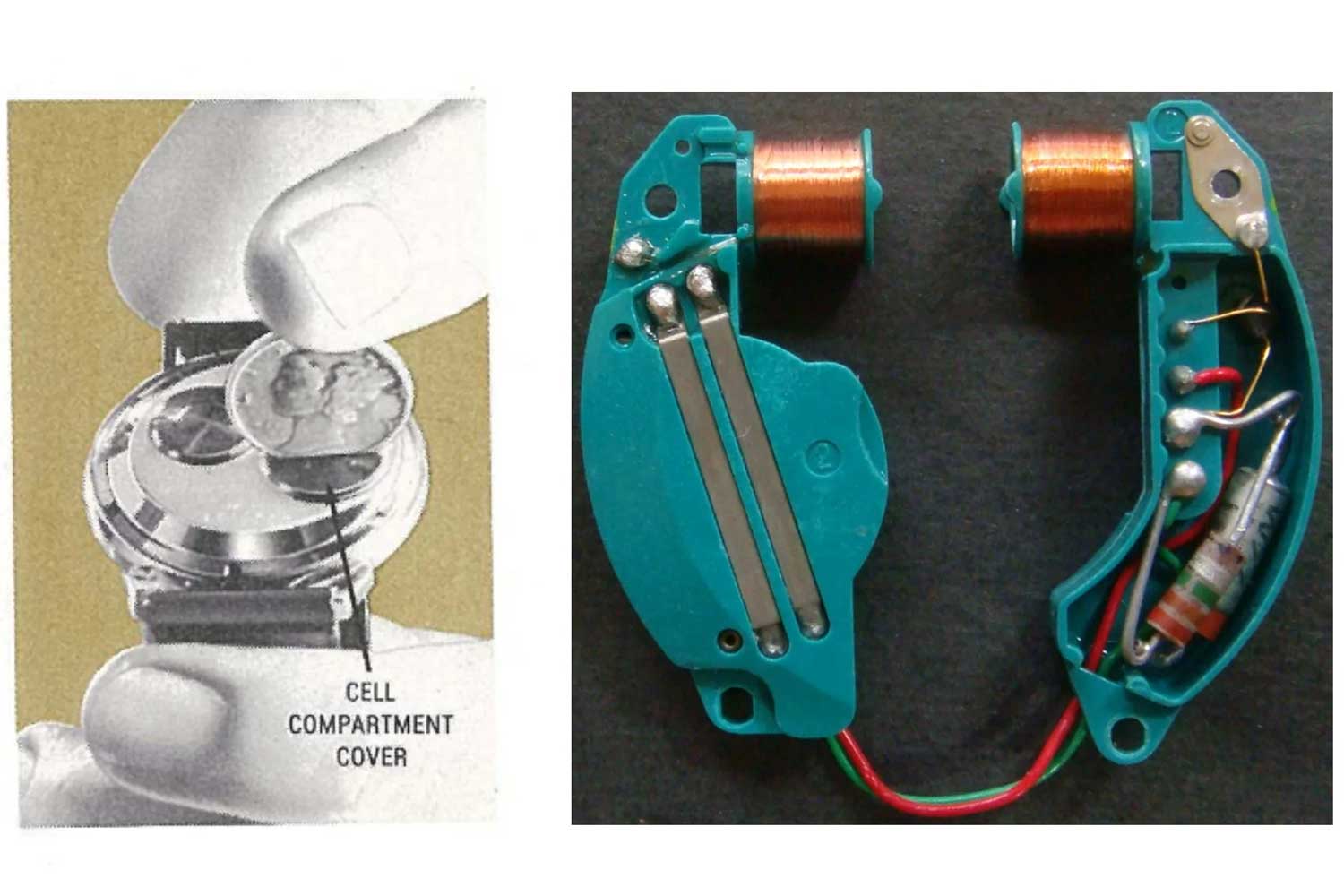
Very fine copper coils (about one-third the thickness of a human hair) wrap around the Accutron tuning fork, with an amazing 8,100 turns each – unspooled, each coil would measure over 90 yards (Image: Accutron)
By the late twentieth century, tuning fork watchmaking had become a closed chapter. Collectors could service vintage examples, but no company was manufacturing the technology at scale. Many experts believed that a true revival would be impractical, since the original ecosystem no longer existed.
Recreating the 360 Hz Movement
Accutron began investigating a possible return almost a decade ago. According to the brand, the project required rebuilding every aspect of the technology from the ground up. New alloys had to be identified to hold frequency without drift. Updated coil systems were developed to stabilize the oscillation. The geometry of the tuning fork was recreated using modern micro machining, and the movement architecture was redesigned to support better shock performance and more efficient power control.
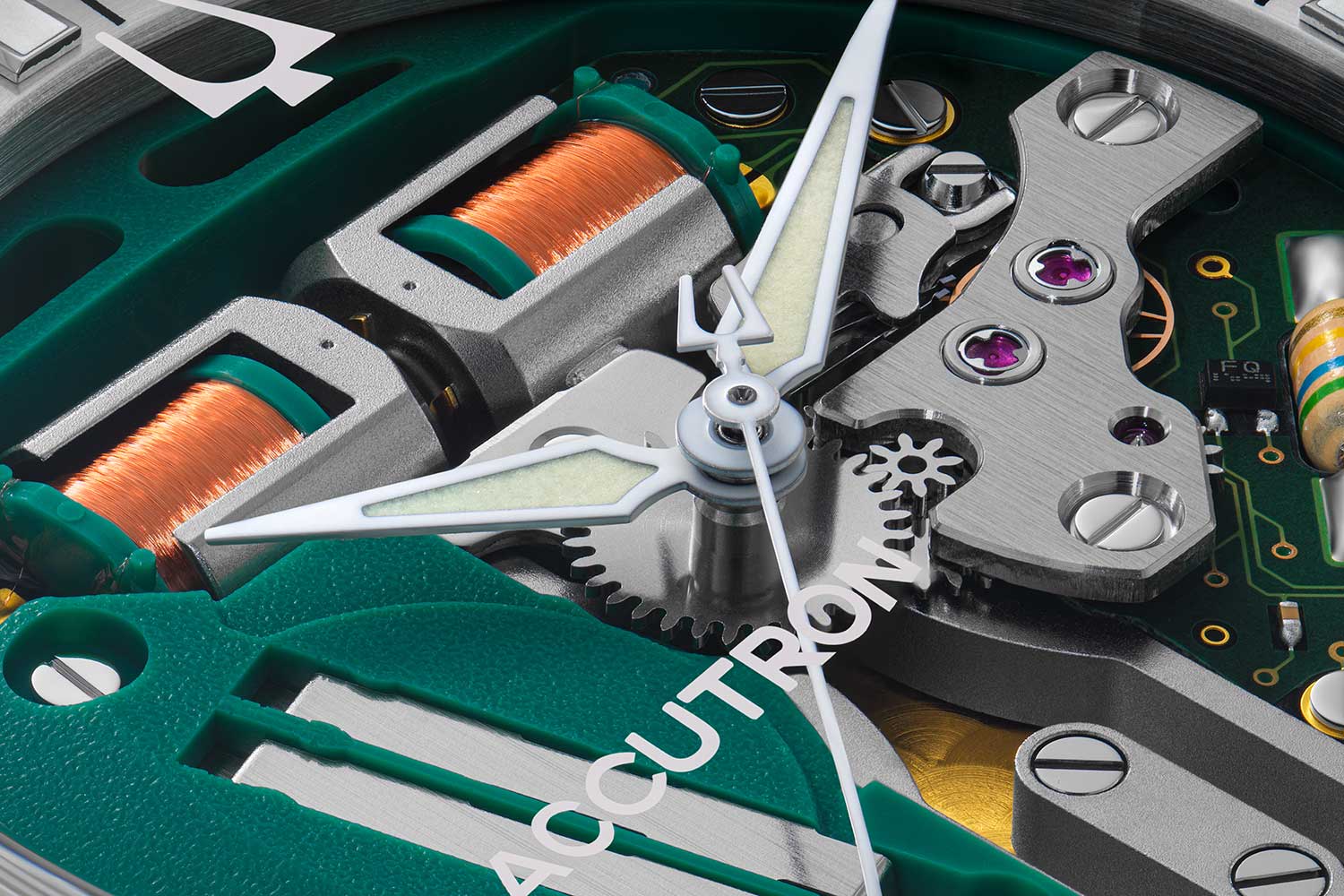
The upgraded tuning fork’s twin copper coils
The resulting movement, known as Calibre 314, is hand assembled and individually regulated. It produces the same 360 Hz vibration as the original, along with the continuous sweep seconds hand that visually defines tuning fork timekeeping.
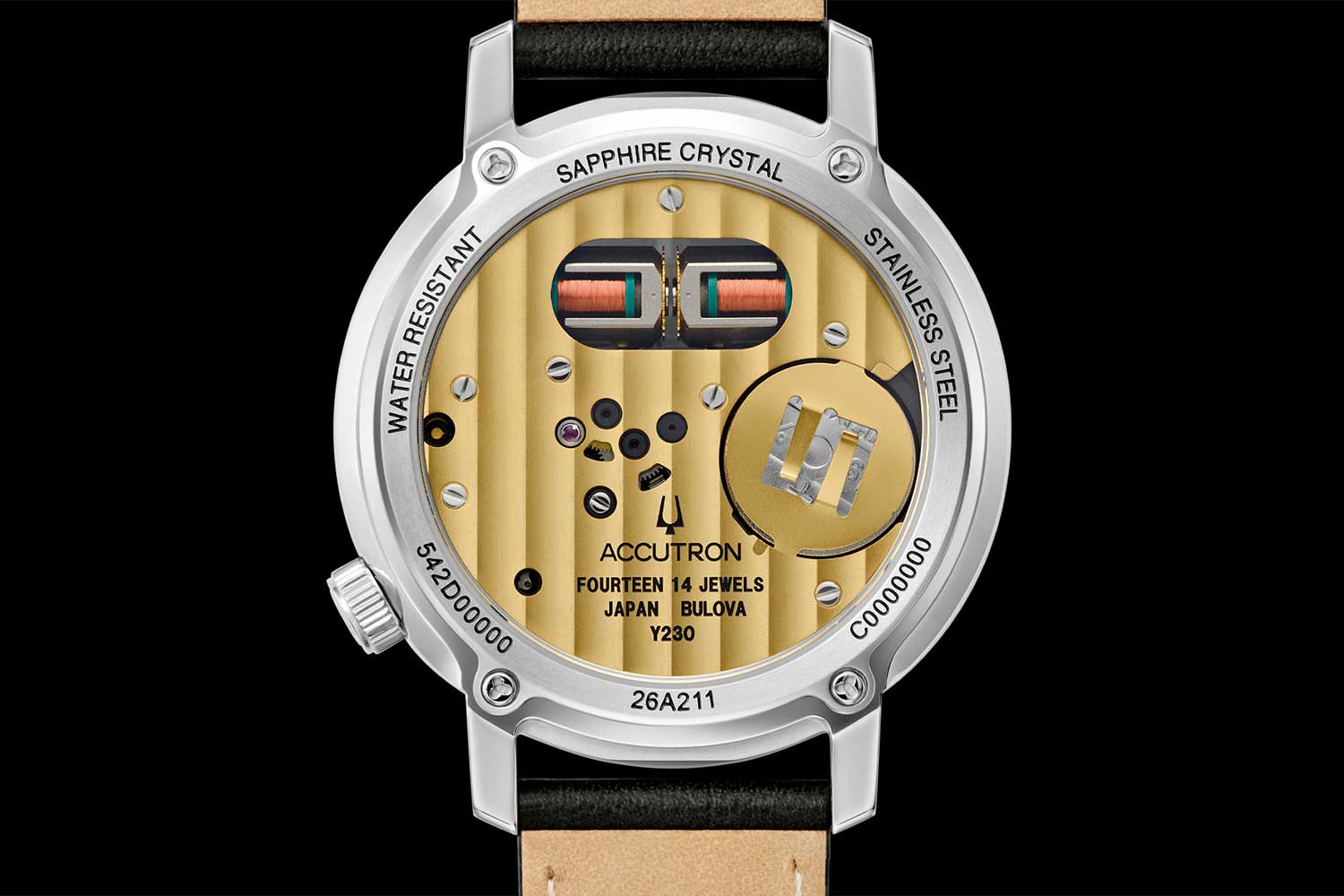
Caseback view of the Spaceview 314 showing the tuning fork’s copper coils and movement layout
Jeffrey Cohen, President of Citizen Watch America, which oversees Accutron, describes the development as an effort to honor a historic innovation while translating it into modern practice. In his words, “Accutron begins a new chapter that respects our past and expands what is possible today.”
A New Spaceview for a New Era
The Spaceview 314 is the first model to use the new calibre. Its design follows the philosophy of the 1960s Spaceview, which exposed the movement rather than hiding it behind a dial. That decision, originally made as a display tool for retailers, became a signature element of the brand and reflected a mid century belief that technology could be presented openly as an aesthetic choice.
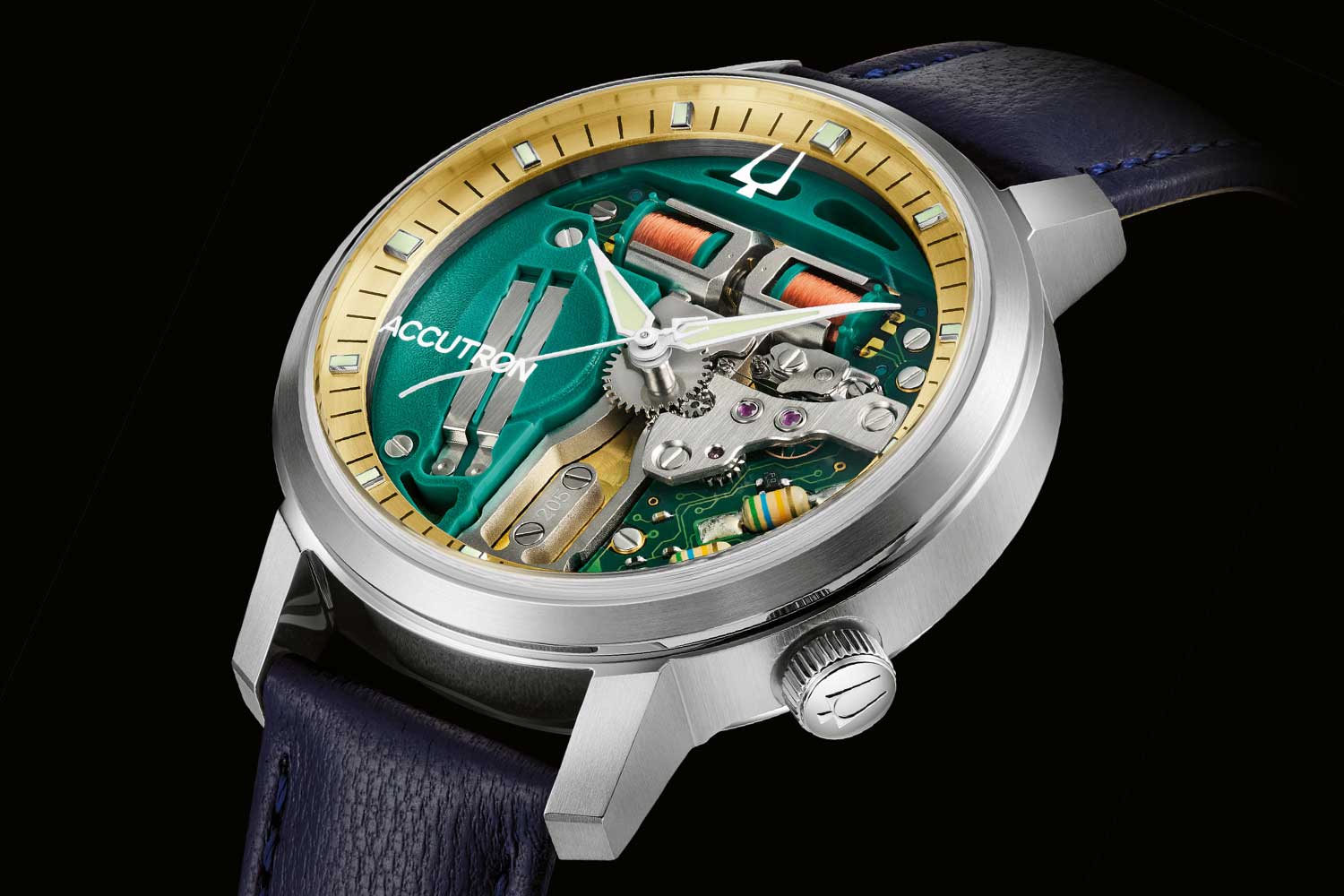
The Accutron Spaceview 314 in Grade 5 Titanium
The modern version continues that approach with an open worked dial that highlights the tuning fork, coils and bridges. Improvements in CNC machining and magnetic shielding allow the new watch to perform more consistently than its predecessors. Case options include stainless steel, Grade 5 titanium and eighteen karat yellow gold, each with a domed sapphire crystal and the model’s characteristic 4 o’clock crown.
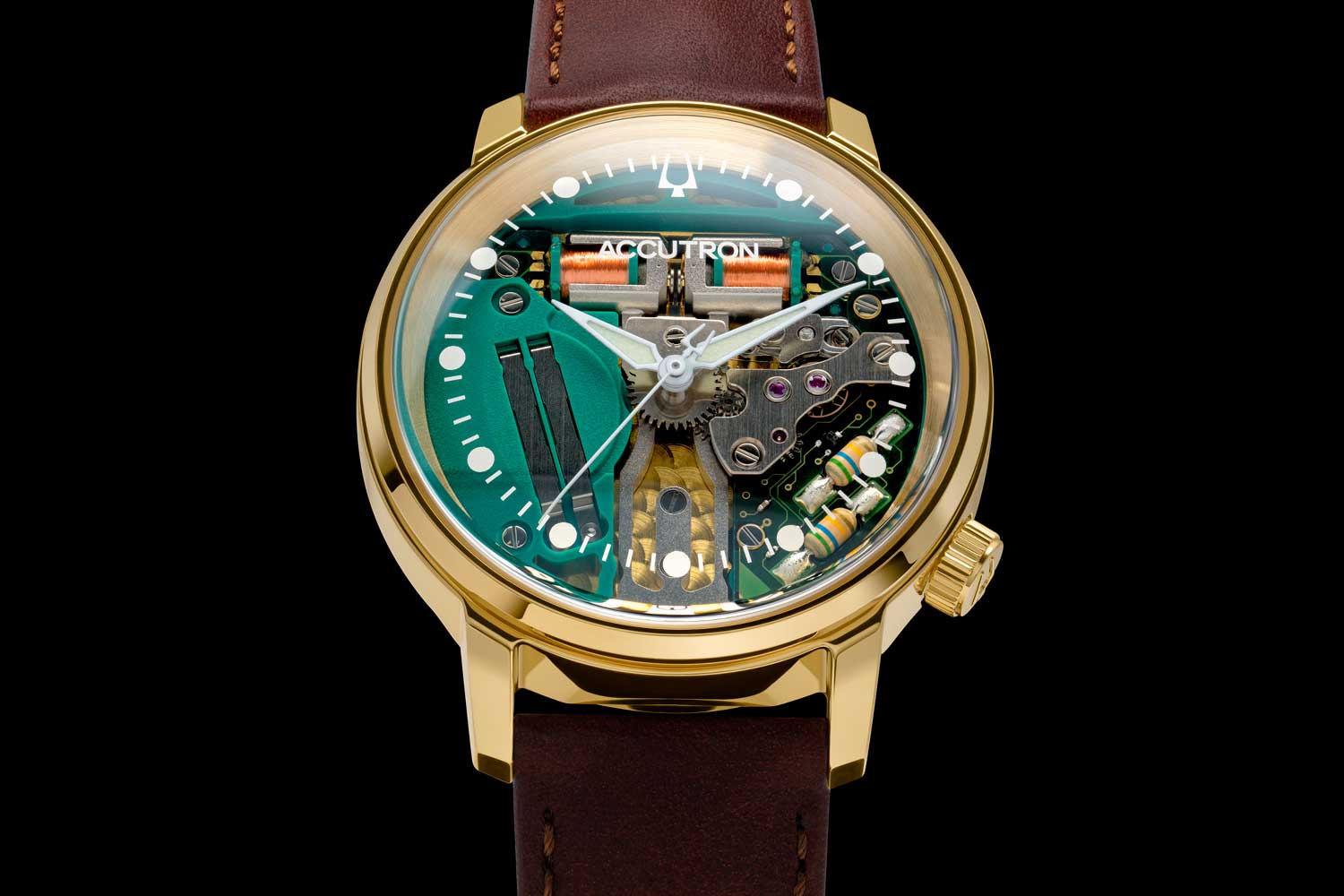
Visible mechanics through the domed sapphire crystal and a characteristic 4 o’clock crown
Limited by Design and by Expertise
Because the Calibre 314 requires specialized assembly and regulation, production will remain limited. Fewer than a dozen watchmakers are trained to build the movement, and the component tolerances restrict how many can be produced. This built in scarcity is part of what distinguishes the project in a modern market dominated by mechanical and quartz technologies.
A Revival with Historical Weight
Accutron is releasing a five part short film series that documents the development of the original 1960 movement and the effort to bring the technology back. The films underline how unusual it is for a watch company to revive a technology that vanished from the industry for more than forty years.
With the introduction of the Spaceview 314, Accutron has recreated not only a mechanical concept but also a small piece of Space Age engineering. For the first time in decades, the hum that once symbolized a new era of precision has returned to the wrist.
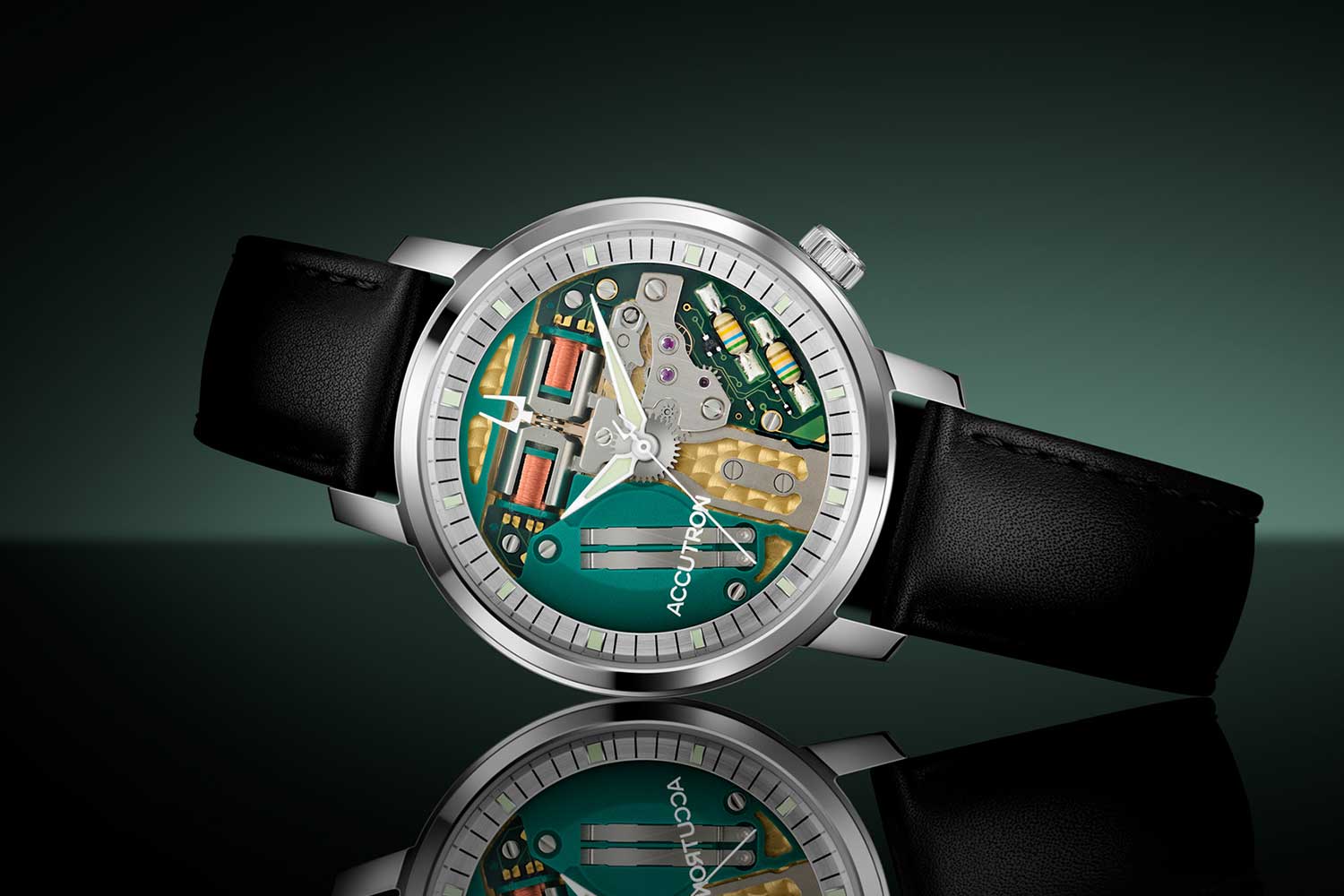
Accutron Spaceview 314 in Stainless Steel
Tech Specs: Accutron Spaceview 314
References: 26A211 / 26A212 (stainless steel) 26A213 (Grade 5 titanium) 27A206 (18k yellow gold)
Case: 39 mm in stainless steel, titanium or 18k gold; domed sapphire crystal; ergonomic 4 o’clock crown for improved comfort and a cleaner case profile.
Movement: Calibre 314 — proprietary 360 Hz tuning-fork calibre with modern stabilisation architecture, updated coils and enhanced magnetic shielding.
Functions: Hours, minutes and continuous-sweep seconds, driven directly by the tuning fork’s constant oscillation.
Dial: Open-worked Spaceview architecture with visible tuning fork, coils, bridges and tension springs. Applied markers and contrasting hands for clarity.
Water Resistance: 30 m
Straps: Italian leather, colour matched to each case variant, with pin buckle.
Price: USD 5,990 (Steel) / USD 6,200 (Titanium) / USD 31,500 (Gold)
Availability: 2025, with limited production due to hand-assembly of each movement
Accutron

You may also like
News
Accutron Revives Its Iconic Tuning Fork Movement in 2025
Jun 20, 2025
News
Accutron Revives Its Iconic Tuning Fork Movement in 2025
Jun 20, 2025

News
Accutron and Hudson Whiskey Announce Limited Edition Spaceview Evolution
Nov 5, 2024
News
Accutron and Hudson Whiskey Announce Limited Edition Spaceview Evolution
Nov 5, 2024

News
Accutron Astronaut “T” with True GMT Function and Available in Titanium
Oct 1, 2024
News
Accutron Astronaut “T” with True GMT Function and Available in Titanium
Oct 1, 2024