
The House of Bovet
Editorial
The House of Bovet

Six Grand Prix d’Horlogerie awards and, since 2006, a grand total of more than 70 prestigious accolades from around the world. The past few years, in particular, have been a glorious run for Bovet, with the release of the stunning Récital 28 Prowess 1 and the practical and intuitive Récital 30. Perhaps he had already envisioned all of this when he first took the reins of the House of Bovet, but what is clear is that Pascal Raffy is central to the success of Bovet today.
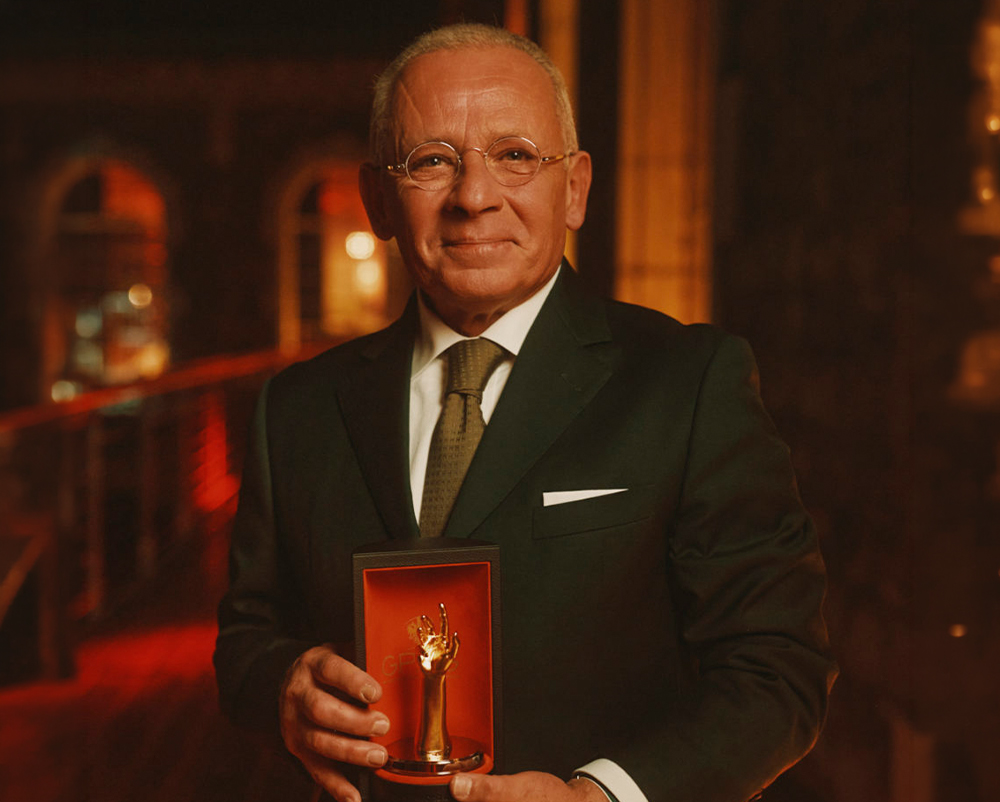
Pascal Raffy, President of Bovet 1822, winner of the Men’s Complication Watch Prize 2025
The story of Raffy and Bovet started in 2001. While the Quartz Crisis had become a distant memory by then, the watch industry was still in the messy throes of consolidation and rebuilding. Independent watchmakers had niche, not cult followings, and vertical integration was not yet an industry mantra. In collector circles, the decorative arts were admired and appreciated but hardly considered priority. Enter Raffy, who had just sold a successful pharmaceutical business and was looking for his second act, preferably in high watchmaking. He was a watch lover and a collector, and he was particularly drawn to traditional watchmaking and high complications. Amongst his collection then were a few prized Bovet pieces: the Mille Fleurs (Thousand Flowers, 1825), the Madonna and Child (1830), and the Easel Chronometer (1930), which would become the inspiration for Bovet’s 19Thirty collection and Amadeo system.
-
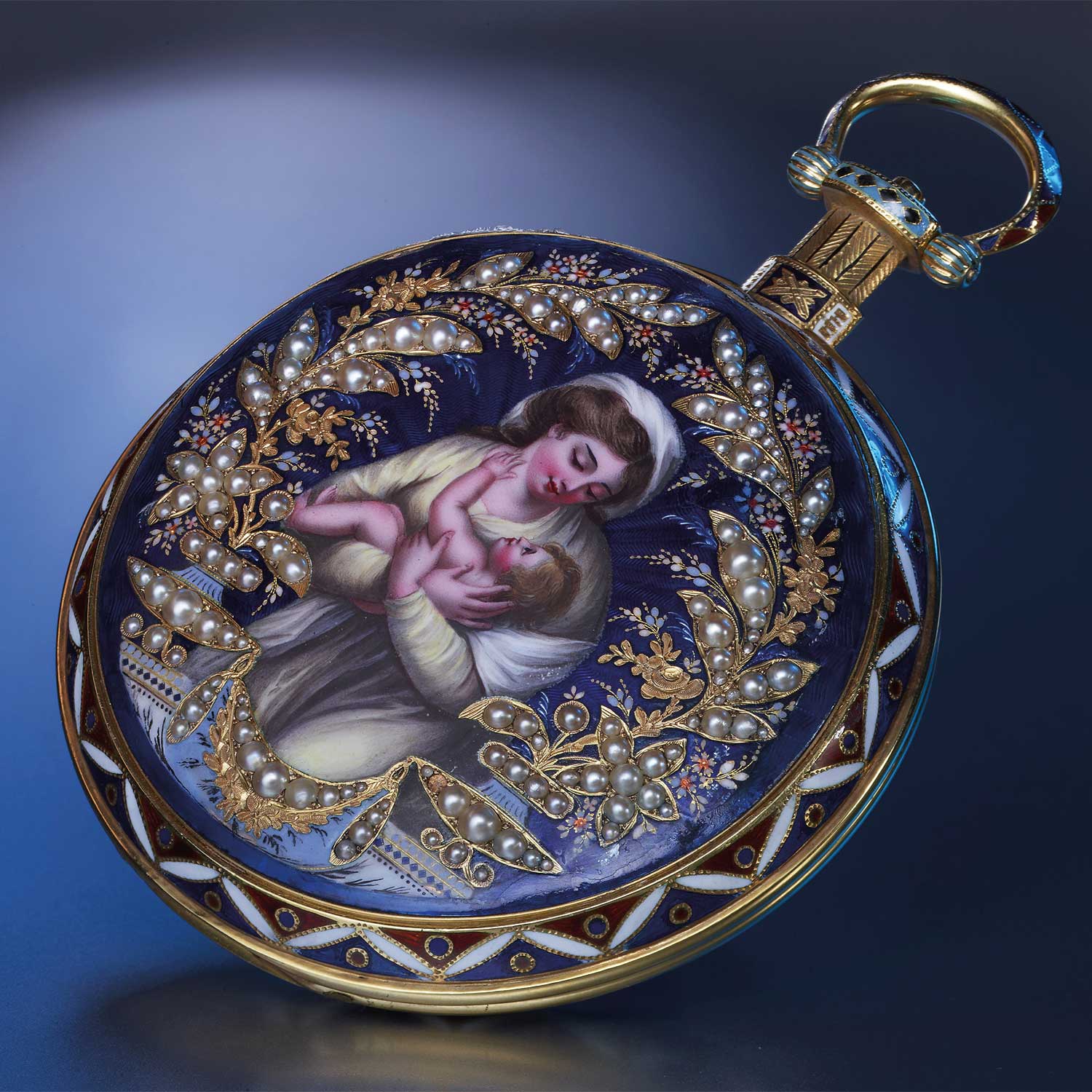
- Madonna and Child (from 1830)
-
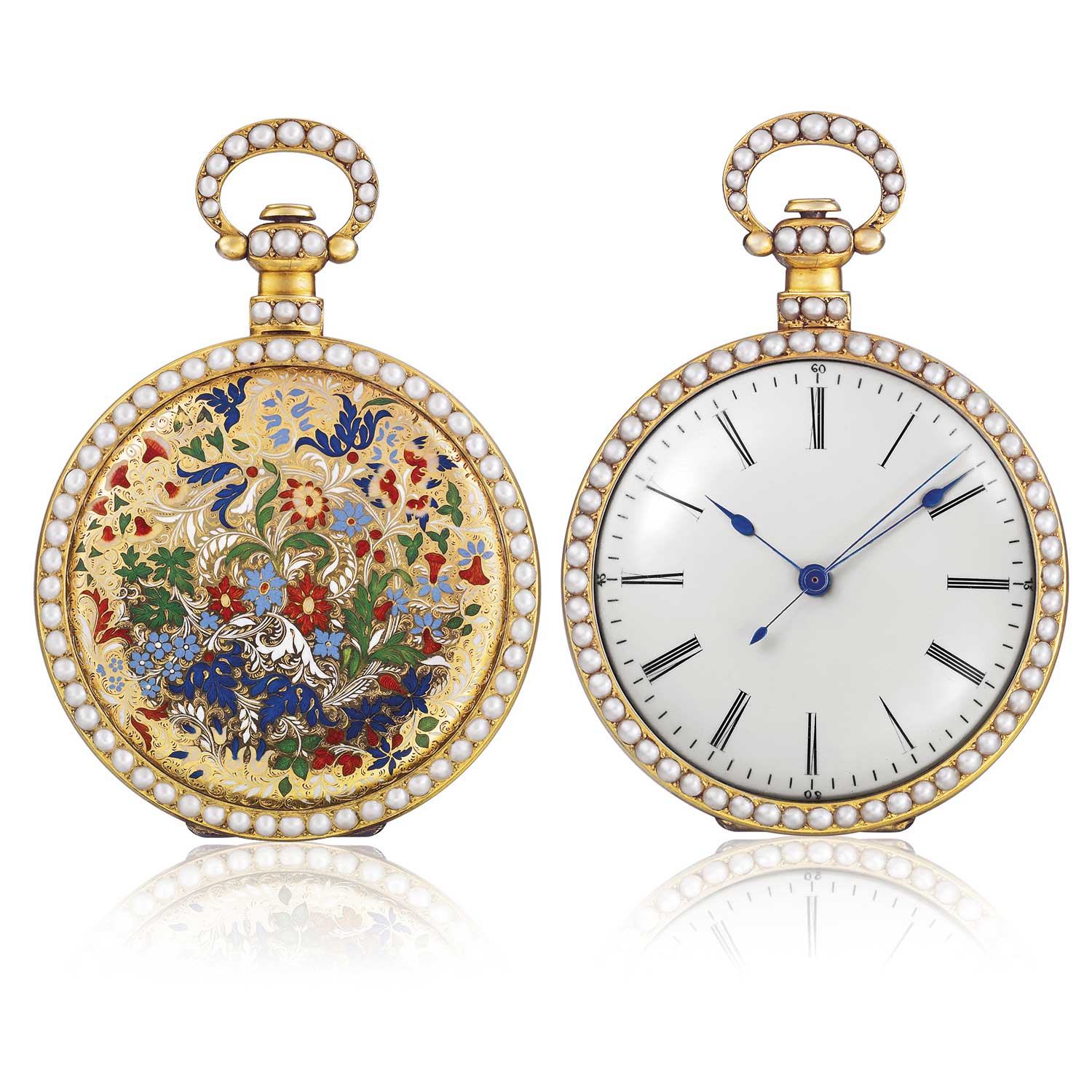
- Thousand Flowers /Mille Fleurs (from 1825)
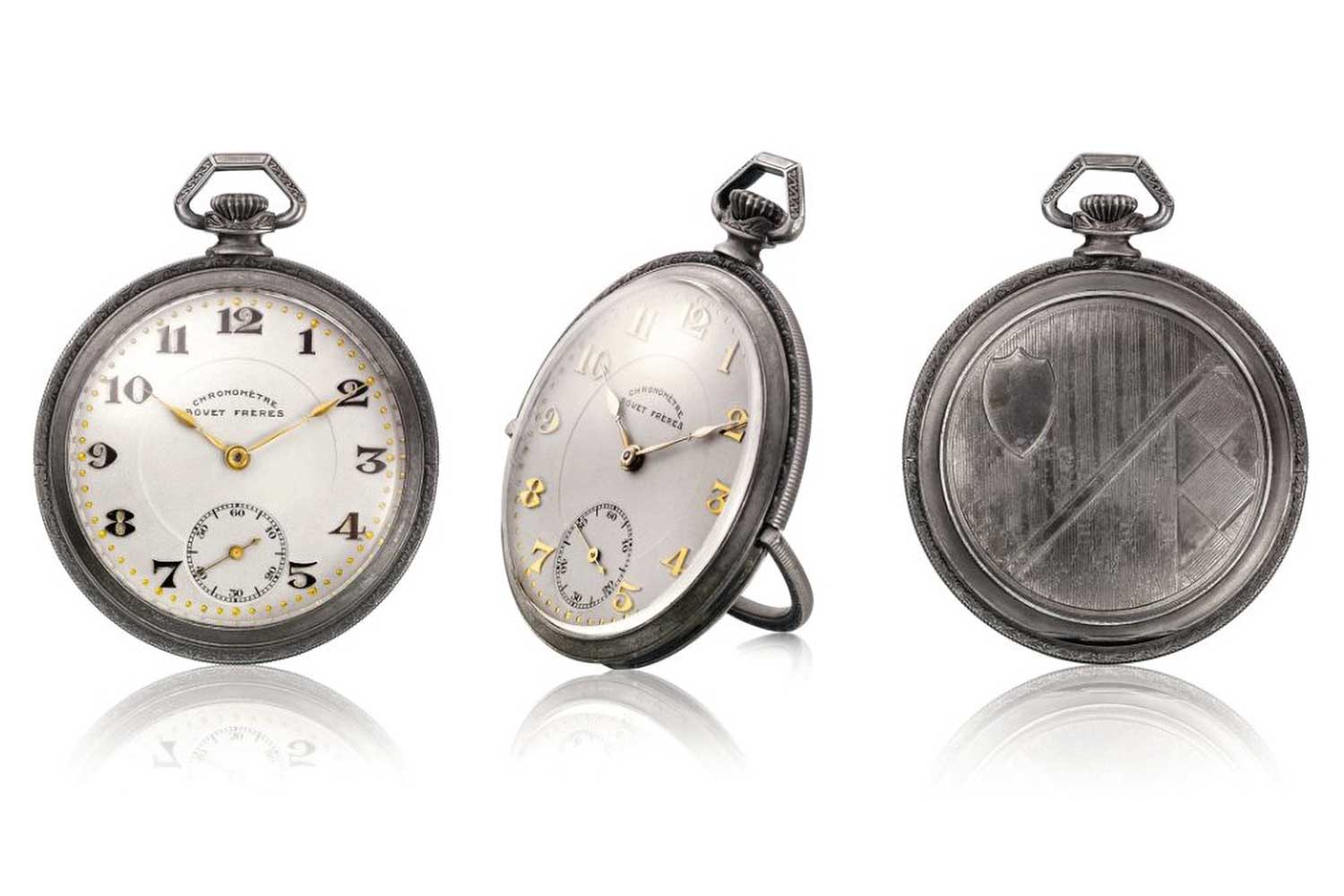
The Easel Chronometer from 1930 that was the inspiration for Bovet’s 19Thirty collection and the Amadeo system
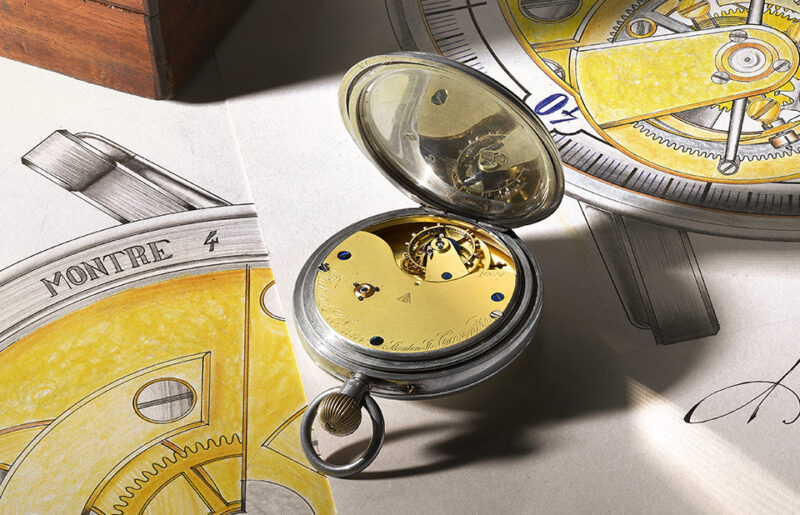
But Bovet then was a house much different from today. Founded by Edouard Bovet in 1822, it had been one of the most successful watchmaking houses in the 19th century and probably amongst the first to crack the Chinese market — extremely lucrative even in those early days. Bovet swiftly became known for exquisitely decorated pocket watches, often with intricate Fleurisanne engravings, precious cases set with pearls and fine miniature enamel portraits. In 1835, Henri-François Dubois-Bovet purchased a 14th-century castle, Château de Môtiers, overlooking Val-de-Travers and Fleurier.
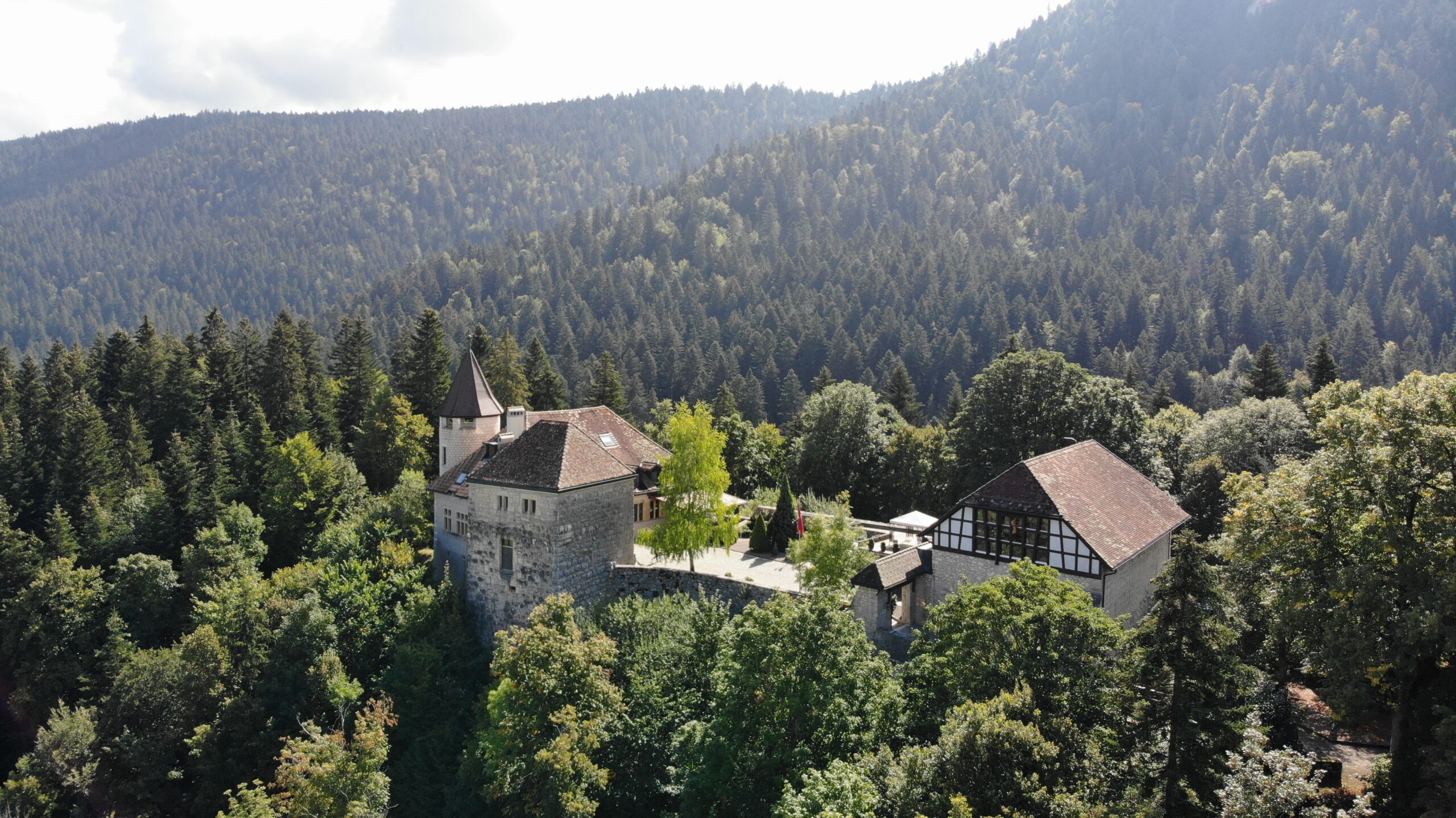
The 14th-century castle Château de Môtiers that is the nerve center of Bovet today
It was to be the family stead. But in 1888, the Bovet family sold the business and, in the decades that followed, the brand was passed from one owner to the next, and thus it slowly languished. The Opium Wars and the Quartz Crisis variously came and went, and with them the fortunes of the house, much like those of many in the watch industry. Raffy was just 24 years old when he first encountered Bovet in the books about watchmaking as an enthusiastic young collector. Over the years, he continued to admire its watches and the story of Edouard Bovet, who went boldly to where no European watchmakers ventured then.
Indeed, long before he became its steward and guardian, Raffy was already an ardent admirer. Eschewing trends, he was drawn to the house’s exquisite craft and artistry, beautifully showcased in its historical pieces bearing exquisite enamel paintings and Fleurisanne hand engraving. And so, in Bovet, he found his second act.
A House in Order
Raffy became the owner of Bovet in 2001. For him, it was the culmination of an admiration that began from his earliest days of collecting watches. “It was love at first sight,” he explains. “And I have always stood loyal to the House of Bovet, even while collecting other very nice timepieces from great houses. This is the genesis of my passion.”
Raffy was loyal to Bovet in more ways than one, as his vision for the house soon made clear. From the earliest days, he stayed close to the DNA of the brand, upholding the vision and aesthetics of the house. Bovet was to remain resolutely independent and focused on small-volume, ultra luxury timepieces combining high complications and traditional craftsmanship. In 2006, he took a very definitive step by purchasing an existing movement production facility in Tramelan, folding it into Bovet and creating a fully integrated manufacture. With that single strategic move, Bovet was now free from the vagaries of the supply chain and well equipped to pursue its own path.
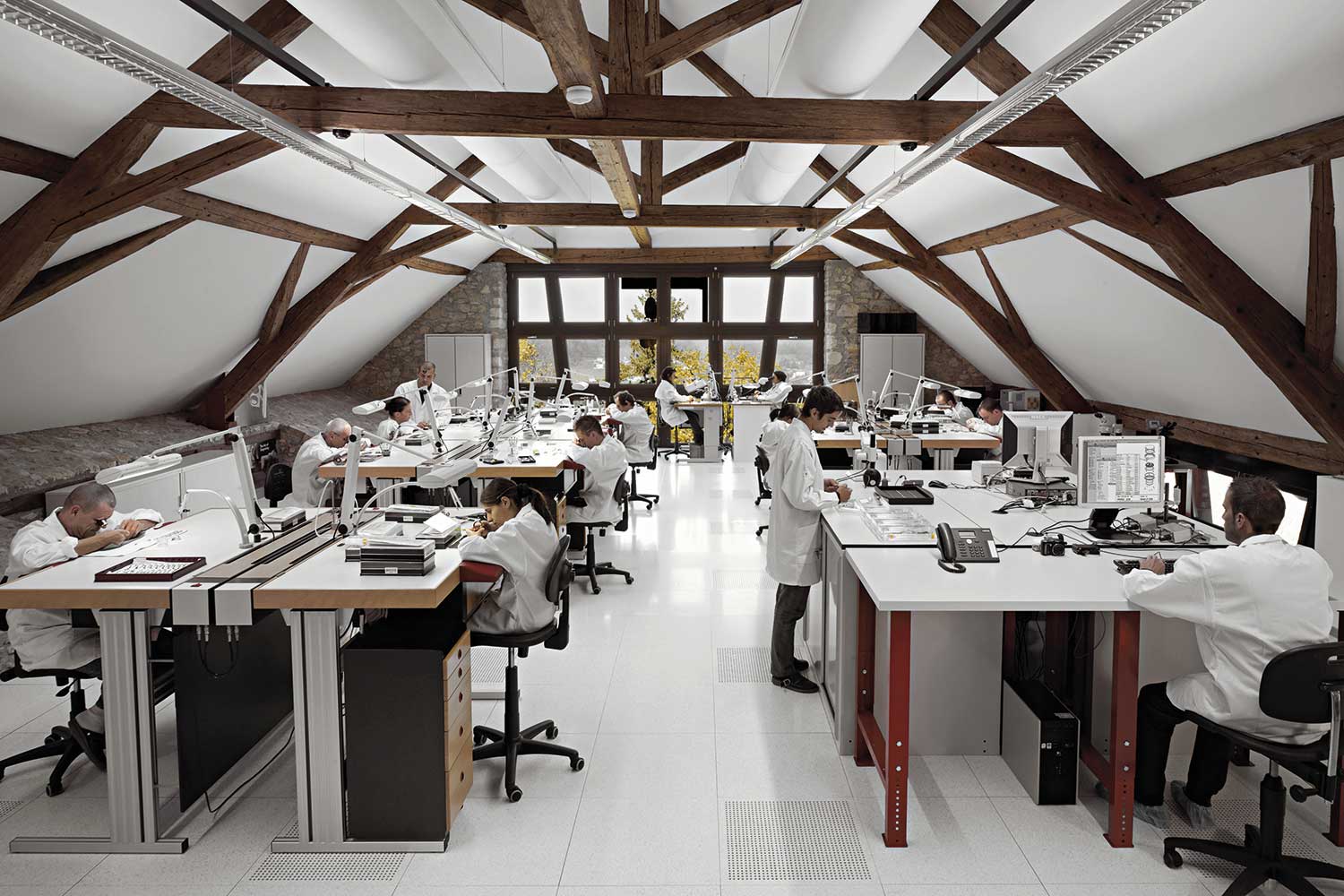
Bovet’s extended family of artisans and watchmakers at the fully integrated manufacture
Today, Bovet is one of the few independent houses with more than 95 percent of its watch parts produced in-house, including the hairspring — an extraordinary feat. That level of independence ensures autonomy and freedom, two significant advantages when it comes to charting the direction of the maison.
That same year, Raffy acquired the Château de Môtiers, which has been classified as a historical monument, from the Canton of Neuchâtel. Perhaps more than a symbolic reclaim, it was also his promise to stay true to the House of Bovet. Twenty years on, Raffy still lives by that same loyalty.
Raffy explains, “I have a moral dimension to stay loyal to what the house has been. If you fall in love with something, a human being; if you decided to collect an object with such a patrimony and a history through centuries, it is your moral duty not to delude the soul of the house, the message of the house. Since day one, I value Bovet’s uniqueness in design and mechanics, and I believe in defending its crafts, beautiful mechanics and innovation.”
His loyalty and perseverance paid off beautifully. In the years that followed, Bovet rebuilt its reputation as a serious contender in high horology and high complications. In 2010, the house patented the Amadeo system, which converts a wristwatch into a desk clock, pocket watch or pendant with no tools required. The year 2014 saw the launch of the manufacture’s first fully integrated, double-sided in-house movement that was designed to show time on both sides — the Fleurier Virtuoso II Caliber. Next came the Bovet Récital 18 Shooting Star in 2016, which introduced the unusual sloping case, with the bezel inclined at 12 o’clock and tapering down towards 6 o’clock, akin to the slope on a writing desk. It offered more space on the dial to better showcase the stunning three dimensional presentation of the world time housed within, alongside a tourbillon, moonphase, jump hour, retrograde minutes and power reserve. Together with the Amadeo, the sloping desk case, too, became a Bovet signature, making its appearance several times throughout the years.
-
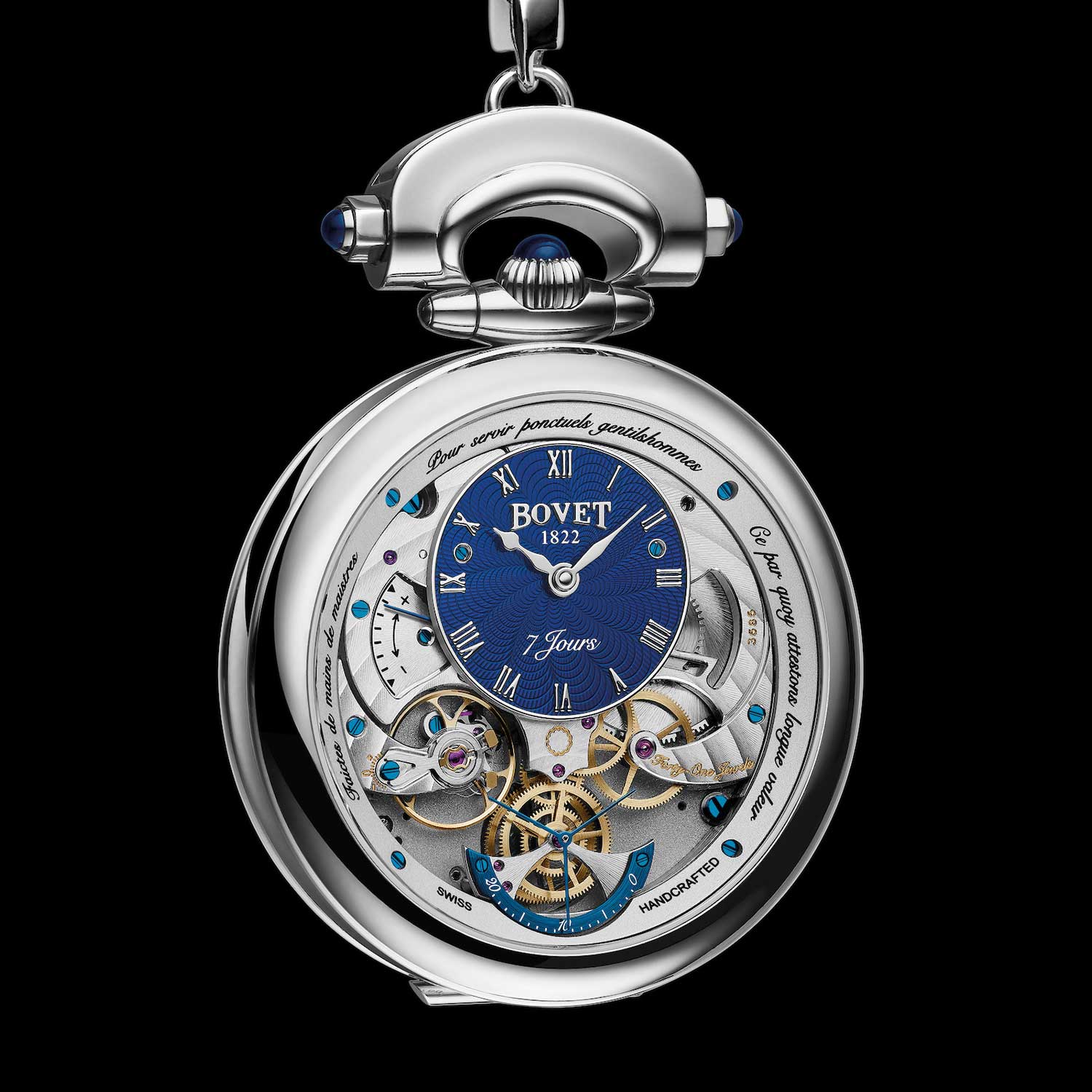
- Fleurier Virtuoso II Caliber Monsieur Bovet
-
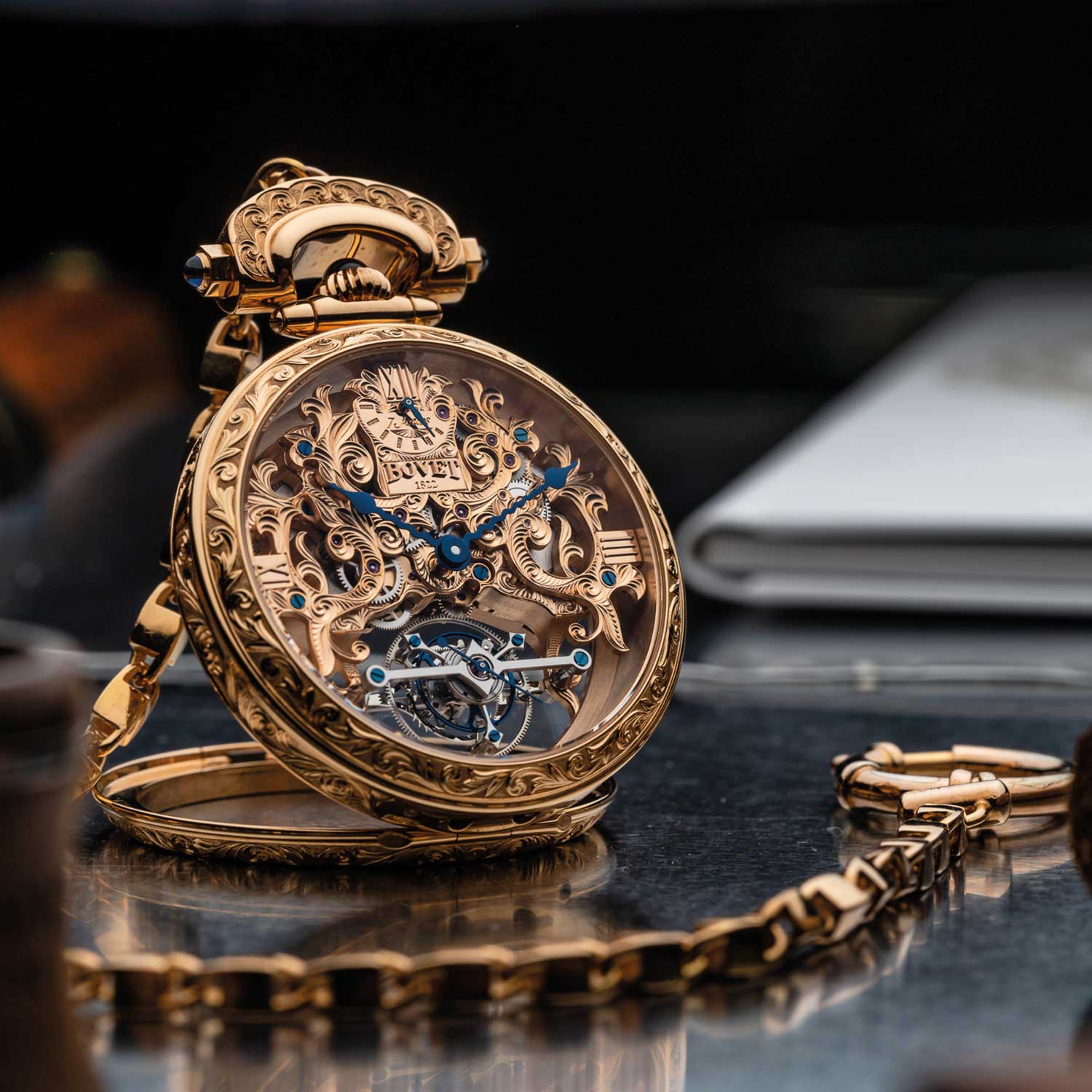
- Bovet Amadéo Tourbillon Squelette Seven Days
As watershed years go, 2018 was a very big year for Bovet. That November, the maison received the Aiguille d’Or in the Grand Prix d’Horlogerie de Genève (GPHG). It was the highest distinction awarded, the “Best in Show” across all categories, and effectively the greatest accolade in the modern watch world.
The watch that won was the ambitious Récital 22 Grand Récital, which combines a retrograde perpetual calendar, a tellurium and a patented double-sided flying tourbillon, with a lengthy power reserve of nine days on a single barrel. Housed in the signature sloping case, it is a stunning three-dimensional celebration of the movement. Above all, the win was a resounding validation of Raffy’s strategy towards vertical integration. From concept to free-sprung balance spring to finishing, the Récital 22 Grand Récital was all produced in-house at Bovet, with the exception of the mainspring and synthetic rubies on the movement.

Récital 22 Grand Récital (©Revolution)
This was the first of Bovet’s GPHG wins. In 2020, it won the Ladies’ Watch Prize for the Amadeo Fleurier Miss Audrey, which came in a dainty 36mm Amadeo convertible case paired with a striking guilloché dial inspired by the lotus flower, and named after Raffy’s eldest daughter. But the bigger win that year was the Récital 26 Brainstorm Chapter Two, which earned the Mechanical Exception Watch Prize. Housed in a transparent sapphire case, it features a three-dimensional architecture with an inclined double-faced tourbillon, a three dimensional moonphase and a second time zone indication.
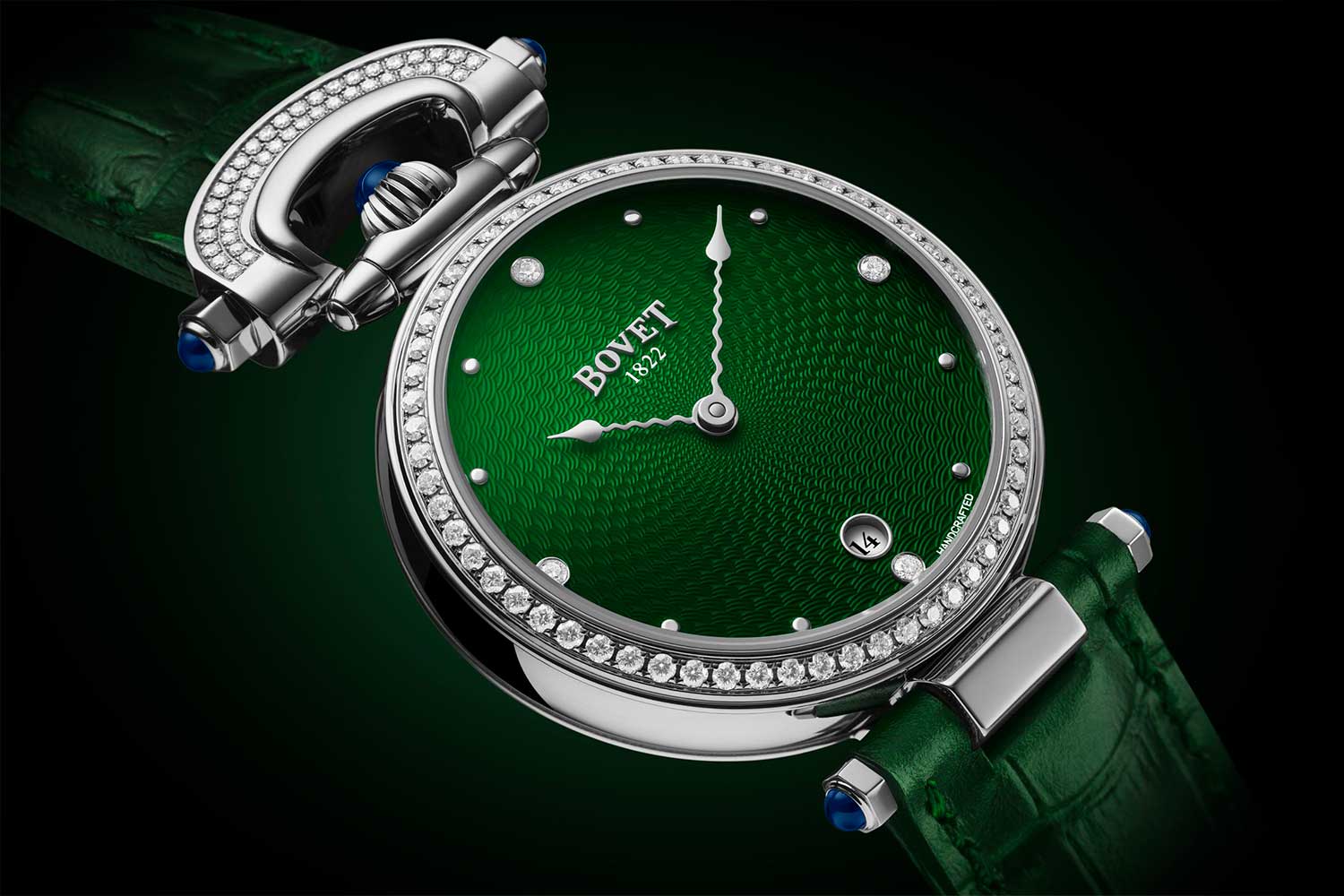
Amadeo Fleurier Miss Audrey
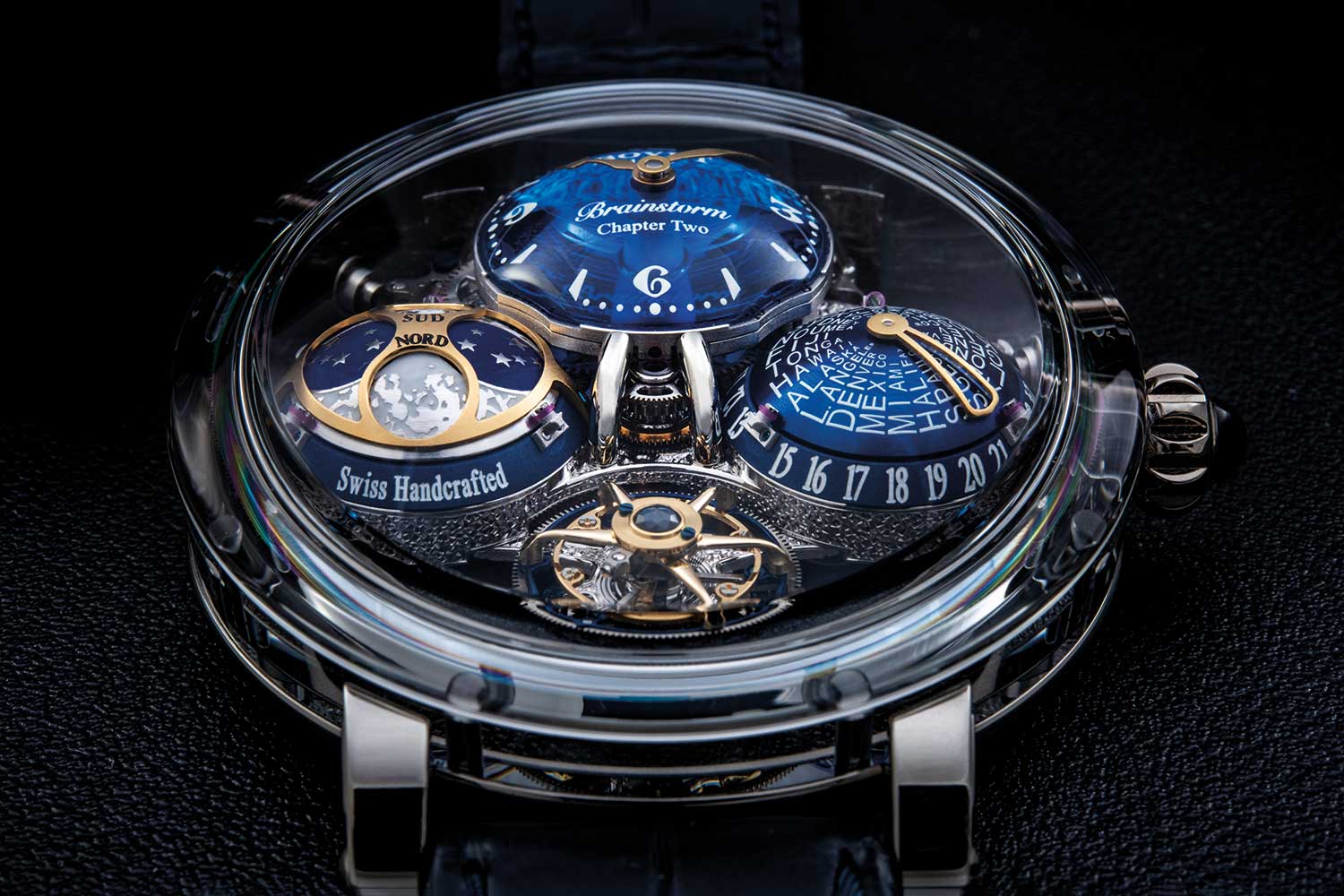
Récital 26 Brainstorm Chapter Two
Bovet followed that up in 2023 with the Récital 20 Astérium, which won the Calendar and Astronomy Watch Prize for its extraordinary showcase of time in its myriad guises, via sidereal calendar, annual calendar, equation of time, moonphase and solar time, with constellations and stars laser engraved on a night sky of translucent blue quartz on the dial and a patented double-face flying tourbillon.
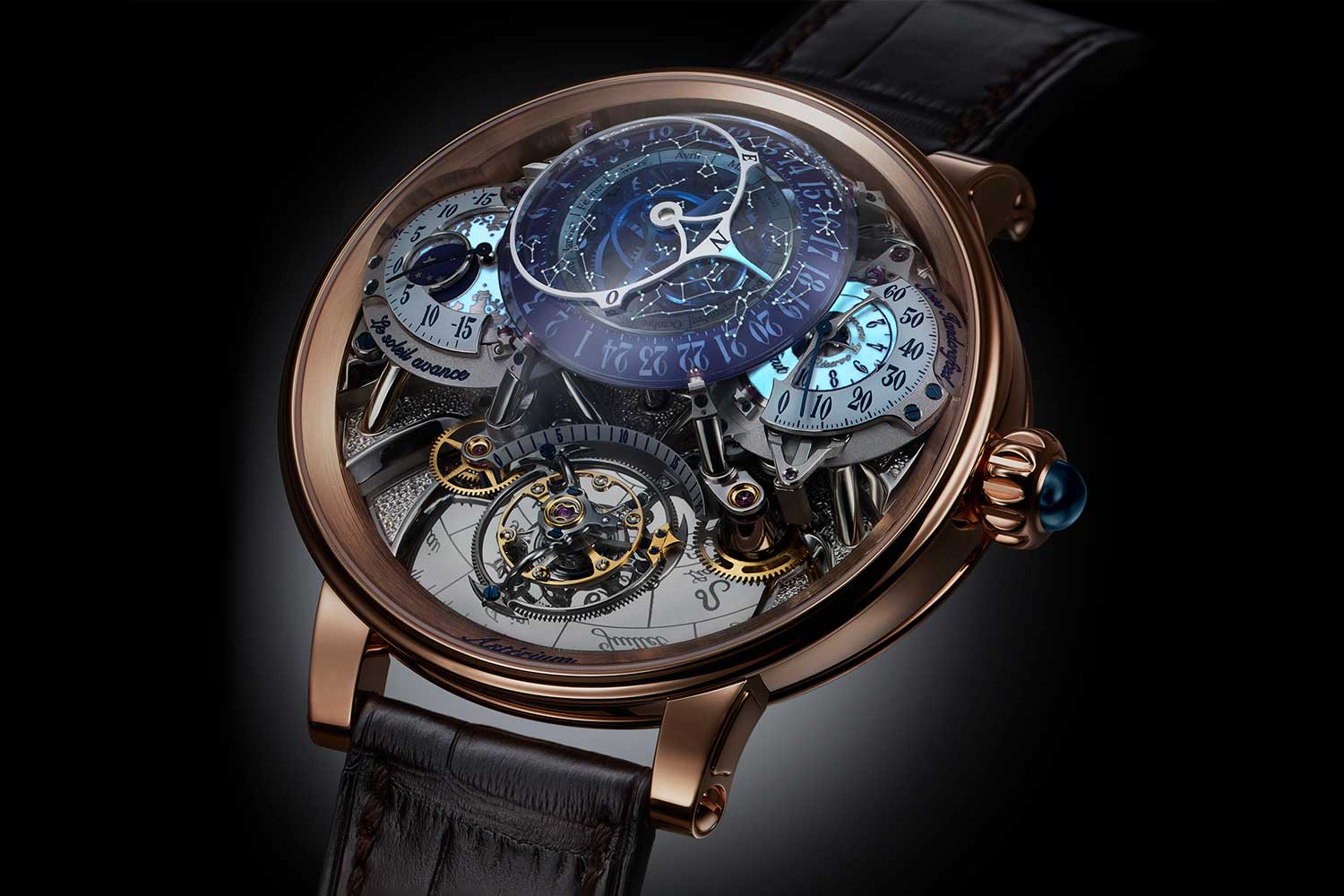
Récital 20 Astérium
In 2024, Bovet netted another Mechanical Exception Watch Prize with the Récital 28 Prowess 1, cementing its growing reputation as a force to be reckoned with in high horology. Combining 24 city rollers for world time, a perpetual calendar, a flying tourbillon and an exceptional 10-day power reserve, it is the first world timer that displays the correct time around the world in 25 different time zones simultaneously, including during Daylight Saving Time.
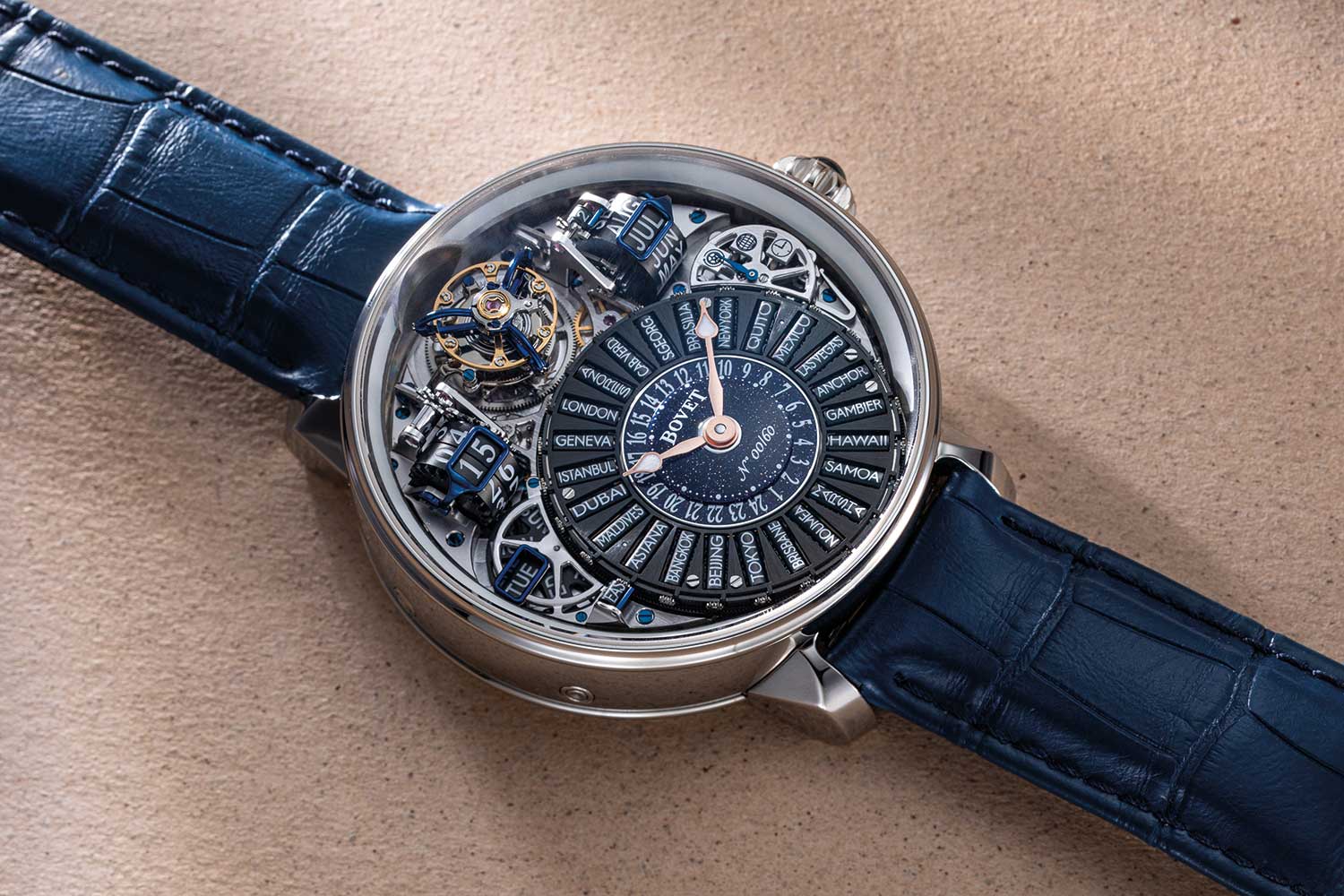
Récital 28 Prowess 1 (©Revolution)
Last year, Bovet completed its winning streak with the Bovet Récital 30 in the Men’s Complication Prize. Tapping on the world-time system first used in the Récital 28 Prowess 1, the Récital 30 is the ultimate world timer that adjusts for all four time periods of the year — Coordinated Universal Time (UTC), American Summer Time (AST), European and American Summer Time (EAS) and European Winter Time (EWT) — ensuring accuracy in all of the world’s 24 world time zones all year round, including Delhi, which has a 30-minute offset.
It has been 20 years since Raffy first took steps towards building an integrated manufacture, and his efforts are now yielding results, with momentum building steadily. “It takes a generation to put in due place a truly, truly, fully integrated house,” Raffy says with a smile. Indeed, his words ring true in more ways than one as the next generation of Raffy enters the House of Bovet.
Family Ties
When asked to name his three personal highlights in the Bovet collections, Pascal Raffy answers with a small laugh, “Monsieur Bovet, Miss Audrey and … the high complications up to Récital 30.”
The first two showcase Bovet’s patented Amadeo system; both timepieces can be easily transformed into wristwatch, pocket or pendant watch and table clock with a few swift taps. Both also bear exquisite dials showcasing Bovet’s expertise in métiers d’art. Monsieur Bovet, in addition, features a signature dual-sided display including the patented double coaxial seconds display, where the seconds can be read on both side of the movement, moving in opposite directions while sharing the same axis.
On Bovet’s impressive stable of high complications, Raffy says, “I’m very proud of them because they each truly brought something to watchmaking history.” Be it in craft and design, technical innovation or by sheer vision, each has indeed pushed the vanguard, furthering the cause of horology. In particular, the Récital 28 Prowess 1 holds a special place not just for its horological firepower, but because it was a source of inspiration for its successor, the Récital 30, thanks to his children. When he first showed them Prowess 1, his daughters Audrey and Alexandre suggested instead a more discreet watch for everyday wear. In place of the considerable 46mm girth of the Prowess 1, they wanted a smaller-sized watch that would address the very practical issue of Daylight Saving Time.
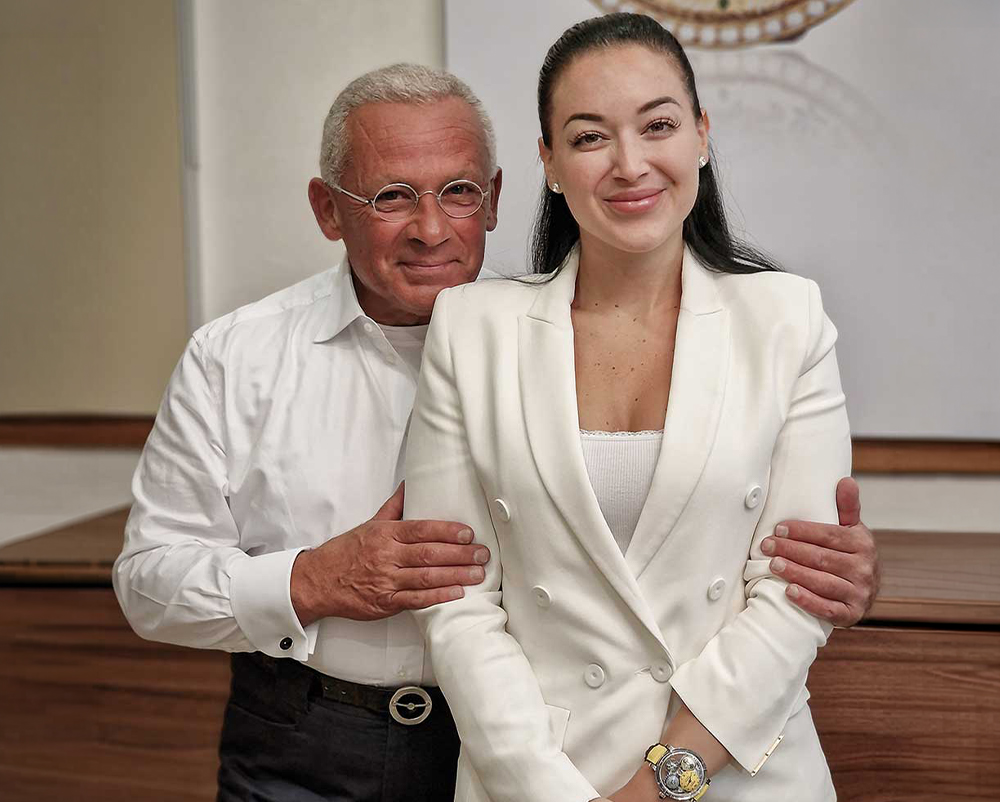
Pascal Raffy and Audrey, the next generation of Raffy to helm the House of Bovet
Raffy shares, “It stayed on my mind, as I think you can imagine… And then came the Récital 30, and they got involved in the design, colors and freshness. I’m very proud of that.”

Récital 30 (©Revolution)
For Raffy, the next step in his journey with the House of Bovet is to build a true family business, a legacy that passes on to the next generation. Already, Audrey has stepped up to the plate; she was just eight when Raffy took over Bovet and 24 when she joined the business. Today, she is the vice president of Bovet and its spokesperson.
“It’s very exciting as we have been on the front row of my father’s passion and drive,” she shares. “Obviously, it’s scary at the same time, because it’s a big responsibility.”
That sense of responsibility is one that the 34-year-old always carries with her. “Our main objective is to honor what my father has built over the past 25 years, to keep the identity, values and ethics that he has worked with and that he has transferred on to us,” she explains. “The main goal is hopefully to have Bovet and its legacy continue and endure, and pass on its values to our own children one day.”
But family extends beyond mere blood ties at Bovet. “It’s not a company, but it is a house,” Raffy emphasizes. “I don’t have employees; I have an extended family. Of course, it’s also a business, but you don’t exclusively run after money and profitability. The consideration is different. For me, it must be a house that I can give to my children and ask them to keep the path and follow the journey.”
It is a testament to his vision that more than half of the artisans working at Bovet in 2006 are still with the house today. That and the fact that Bovet produces 95 percent of its parts in-house, including the regulating organ and the hairspring.
Raffy promises that there are exciting times ahead for Bovet, in particular a project that he is working on with Audrey. “It will take three to four years,” he admits, “because it always takes time.”
“I don’t want to mix precipitation with speed,” he explains. “Yes, we all want to build and we all want to do great things, but if you want your artisans to follow your philosophy for uniqueness, exclusivity and the beautiful work, you need to stay loyal to what the house has been.”

Pascal Raffy
It is a philosophy that courses through all branches of the House of Bovet, informing all of its decisions including production. “Quantities is a real consideration at the level of our watchmaking today, in terms of aesthetics, finishings and mechanics,” Raffy elaborates. “I rather prefer that we craft 1,000 pieces per year with a great family of 80 artisans, than to do 5,000 and potentially dilute that uniqueness and having perhaps 300 human beings.”
Audrey supports her father’s vision wholeheartedly. In lieu of reinterpreting Bovet for a different or younger audience, she believes in holding steadfast to the codes of the house. “Our identity is our strength; this is what gives us direction,” she says. “I hope to be able to keep innovating like my father has done, keep appealing to the new generations while bringing in our history and heritage, and hopefully having these new audiences understand and appreciate them.”
Back to his upcoming project with his daughter. “It’s a great family for a great project and for love, for the most beautiful expression of time… and it will be amazing,” Raffy beams.
Bovet
You may also like
Editorial
Behind the Scenes at Bovet
Mar 13, 2026
Editorial
Behind the Scenes at Bovet
Mar 13, 2026
Editorial
Revolution Awards 2025: Best Worldtimer — Bovet Récital 30
Jan 27, 2026
Editorial
Revolution Awards 2025: Best Worldtimer — Bovet Récital 30
Jan 27, 2026
Editorial
The Art of Bovet
Dec 15, 2025
Editorial
The Art of Bovet
Dec 15, 2025