
Naissance d’une Montre 4 “Le Carrousel” and the Revival of Bonniksen
News
Naissance d’une Montre 4 “Le Carrousel” and the Revival of Bonniksen

The fourth chapter of the Naissance d’une Montre project has just been announced, and it is something quite special. The aim, as before, is to show what it means to make a watch by hand using only manual tools or manually operated lathes, and to do so without compromise. What distinguishes this latest instalment is that it brings back the name of Bonniksen and reintroduces a device that has largely sat at the margins of modern watchmaking – the carrousel.

Co-founders Maximin Chapuis and Jason Chevrolat.
The revived Bonniksen brand is based in La Chaux-de-Fonds and founded by Maximin Chapuis and Jason Chevrolat. Chapuis, a French watchmaker and a Freeman of The Worshipful Company of Clockmakers, is responsible for the technical direction. Chevrolat serves as CEO, with experience at Jean Dunand, Christophe Claret and Bovet, as well as a background in watchmaking consultancy.

from left, Jason Chevrolat, Michel Nydegger, CEO of Greubel Forsey, Maximin Chapuis, and David Bernard, director of the Time Æon Foundation.
Their first project is to realise what would be the first handmade wristwatch to incorporate a carrousel. Simply named Le Carrousel, it is undertaken with the support of Time Æon Foundation, established in 2005 by a small group of founding members which included Philippe Dufour, Robert Greubel, and Stephen Forsey with the aim of preserving and transmitting traditional, manual watchmaking methods.
The Inventor of the Carrousel
The name goes back to Bahne Bonniksen, a Danish watchmaker who moved to England in 1882 and established his workshop in Coventry, where he employed around 25 people. In 1892, he was granted a patent for the carrousel, conceived as a more practical and robust alternative to the tourbillon. It avoided the demanding precision that made tourbillons costly to produce, while retaining the same objective – consistent timekeeping across vertical positions.
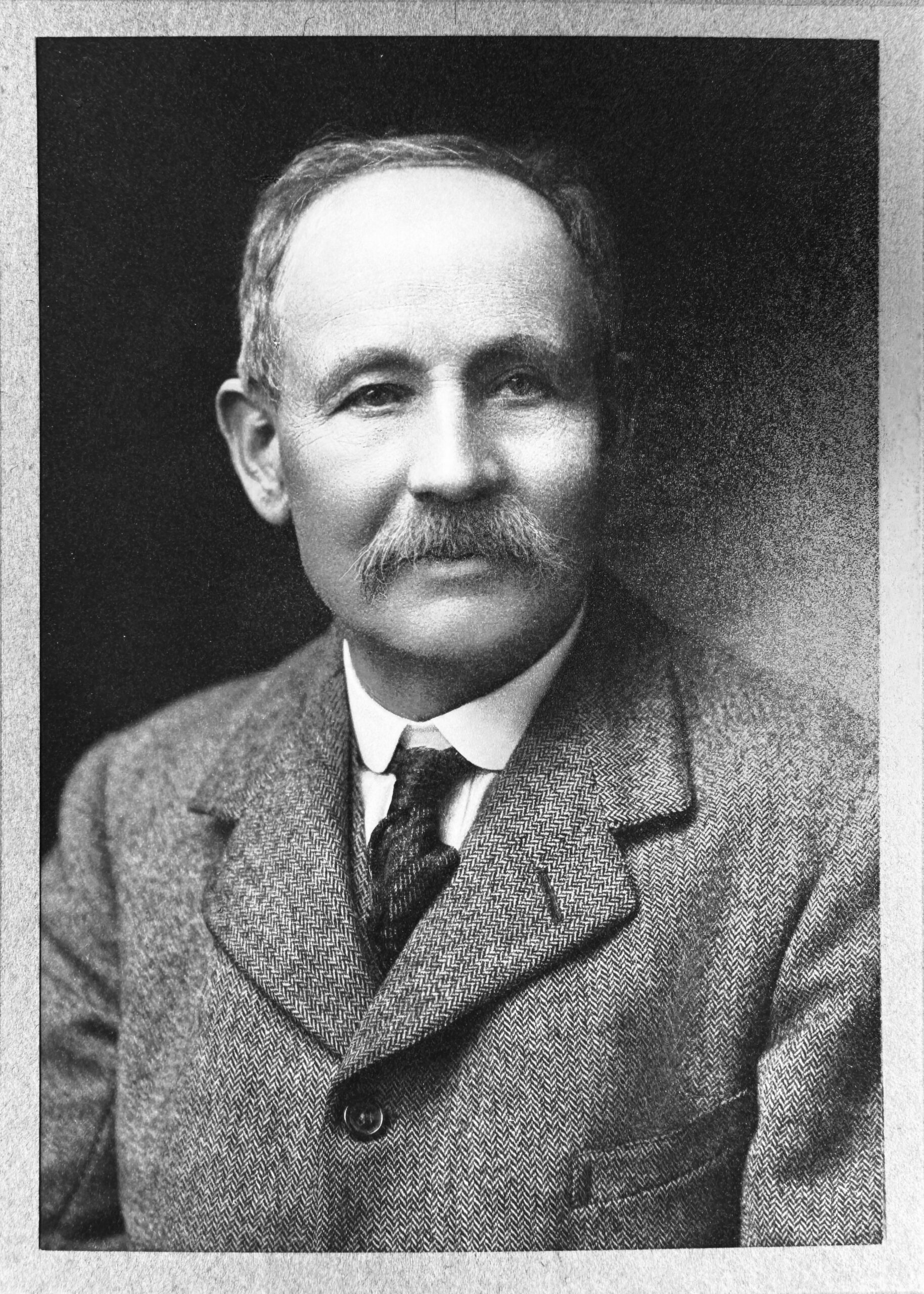
Bahne Bonniksen (1859 – 1935)
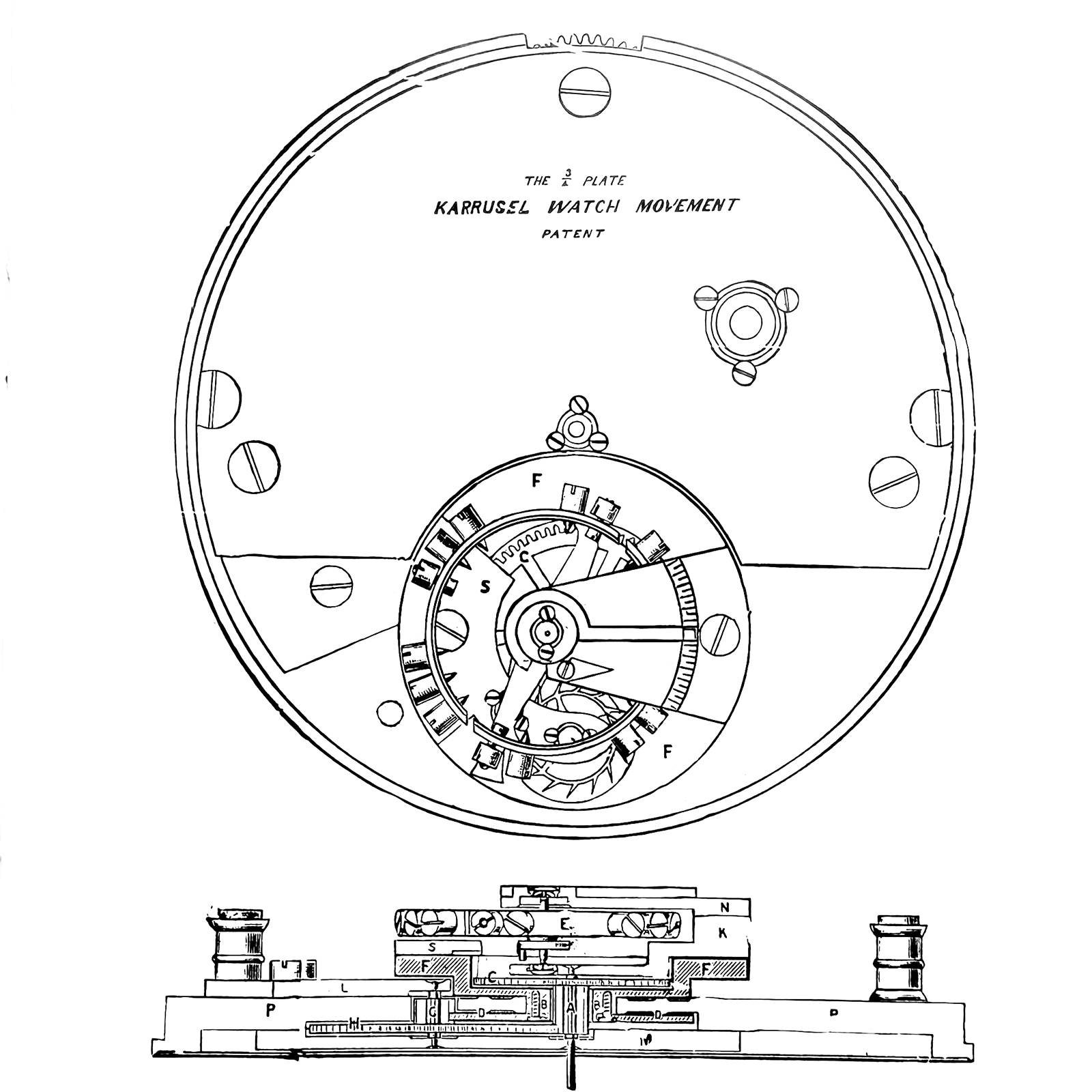
Bonniksen’s original carrousel movement with a three-quarter plate
What followed is often understated. The carrousel proved itself in practice. In the chronometer trials conducted at Kew Observatory, which were among the most demanding tests of portable timekeeping of the period, watches equipped with carrousels featured prominently among the highest-scoring entries. By the end of the 19th century, English makers, many of whom had taken up Bonniksen’s system, were consistently placing at the top of the rankings, with carrousels accounting for a significant share of the best results.
While both a tourbillon and a carrousel house the escape wheel and balance within a rotating cage, they differ in how power is transmitted to the escape wheel and to the cage itself. In a tourbillon, the fourth wheel is fixed to the mainplate and drives the rotation of the cage via its pinion. The escape wheel is mounted within the cage and meshes with the fixed fourth wheel, so that as the cage turns, the escape wheel both rotates on its own axis and orbits around the fourth wheel. In this arrangement, the energy delivered to the escapement is inseparable from the energy required to rotate the cage itself. Part of the torque from the train is hence continuously expended in overcoming the inertia and friction of the cage, and the regulating organ operates within that constraint.
The carrousel, on the other hand, separates these functions. The escape wheel is driven directly by the going train in a conventional manner, while the cage is driven independently by an auxiliary train, typically derived from the third wheel. As a result, the escapement receives its energy without being coupled to the rotational demands of the cage, which is maintained in motion through a separate transmission.
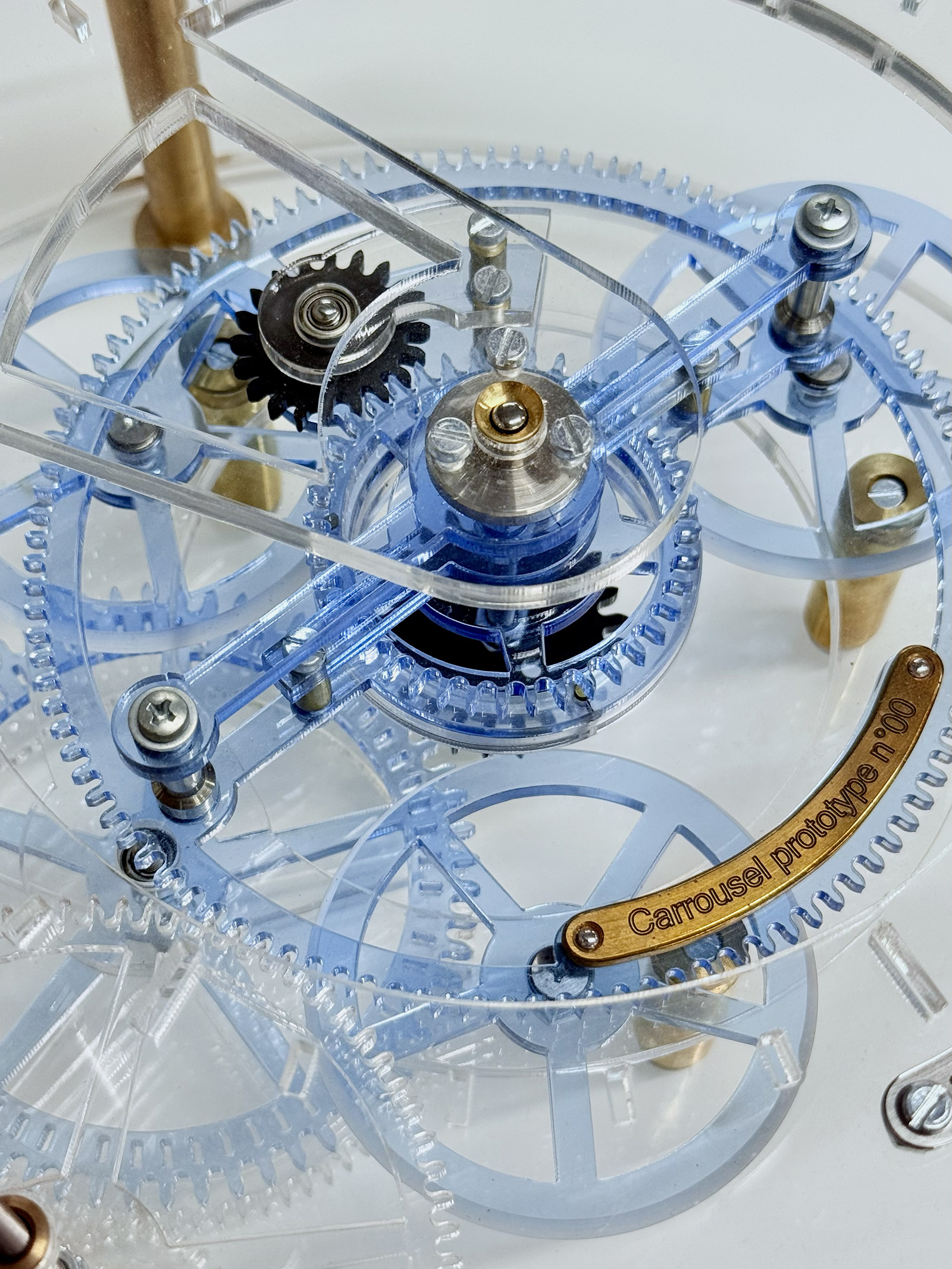
Instead of rotating around a fixed fourth wheel, it places the fourth wheel inside the cage itself. Hence, unlike the tourbillon, where the rotation of the cage is kinematically independent of the escapement, the carrousel links the two. The effective speed of the escape wheel depends on both its own rotation and that of the cage, so any change in carriage speed directly affects the frequency of the balance. Historically, watchmakers fixed the balance frequency and accepted the resulting, typically slow rotation of the carrousel – between 34 and 52.5 minutes per revolution – as a consequence of the gearing.
It is not a differential, but it behaves like one kinematically; the motion of the escapement is governed by the relative difference between the rotation of the cage and that of the train driving it, an idea captured symbolically in the brand’s “±” emblem.
Blancpain was the first to create a carrousel wristwatch in 2008, and later combined it with a tourbillon in 2013, producing what remains the most widely recognised example.
Naissance d’une Montre 4 – Le Carrousel
Chapuis and Chevrolat have devoted over 5,500 hours to researching, reconstructing, and refining the mechanism, drawing on insights from Bonniksen’s descendants and grounding their work in the traditions of English chronometry.
The Naissance d’une Montre 4 Le Carrousel is expected to come in under 40mm, but the restraint ends there. The movement is built with an inverted architecture with the three-quarter plate brought to the dial side. Time is shown on an offset hours and minutes sub-dial at 12 o’clock, read by a pair of modernised English pear-shaped hands, while a long central seconds hand sweeps across the dial. Beneath it all, the three-quarter plate is interrupted by an offset aperture through which the carrousel is revealed in full view, fully pivoted and turning once every 30 seconds.

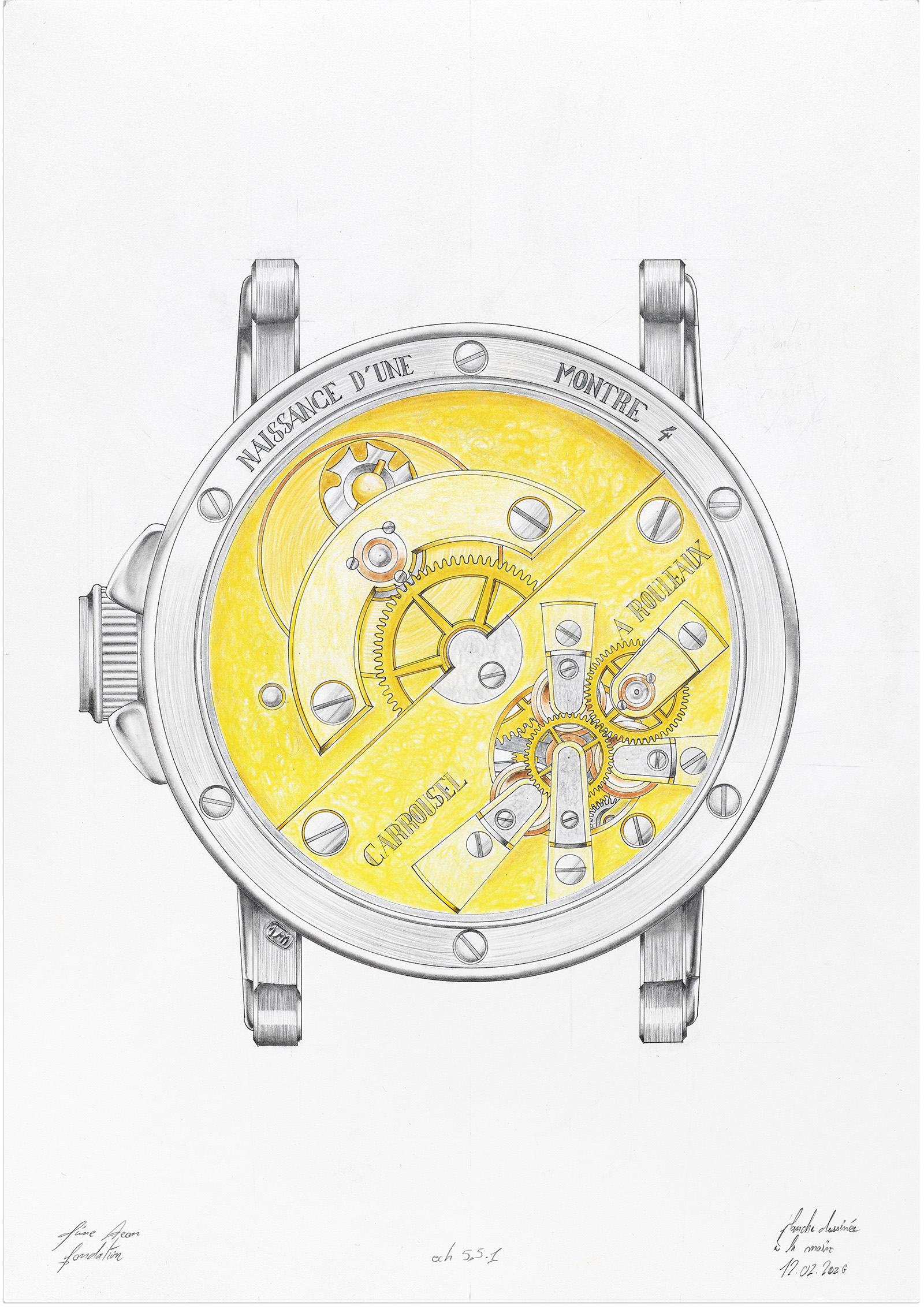
That rate of rotation is unusually fast for a carrousel, and it brings with it a different set of constraints. The carriage, now required to turn at twice or more the speed of traditional examples, is subject to markedly higher loads. To manage this, rollers are employed as auxiliary supports to relieve the pivots of radial load and reduce friction by introducing rolling contact.
The watch also employs a Maltese cross stopwork on the barrel, limiting both the maximum wind and the extent of unwinding so that torque is delivered within a stable working range and torque is delivered with greater consistency.
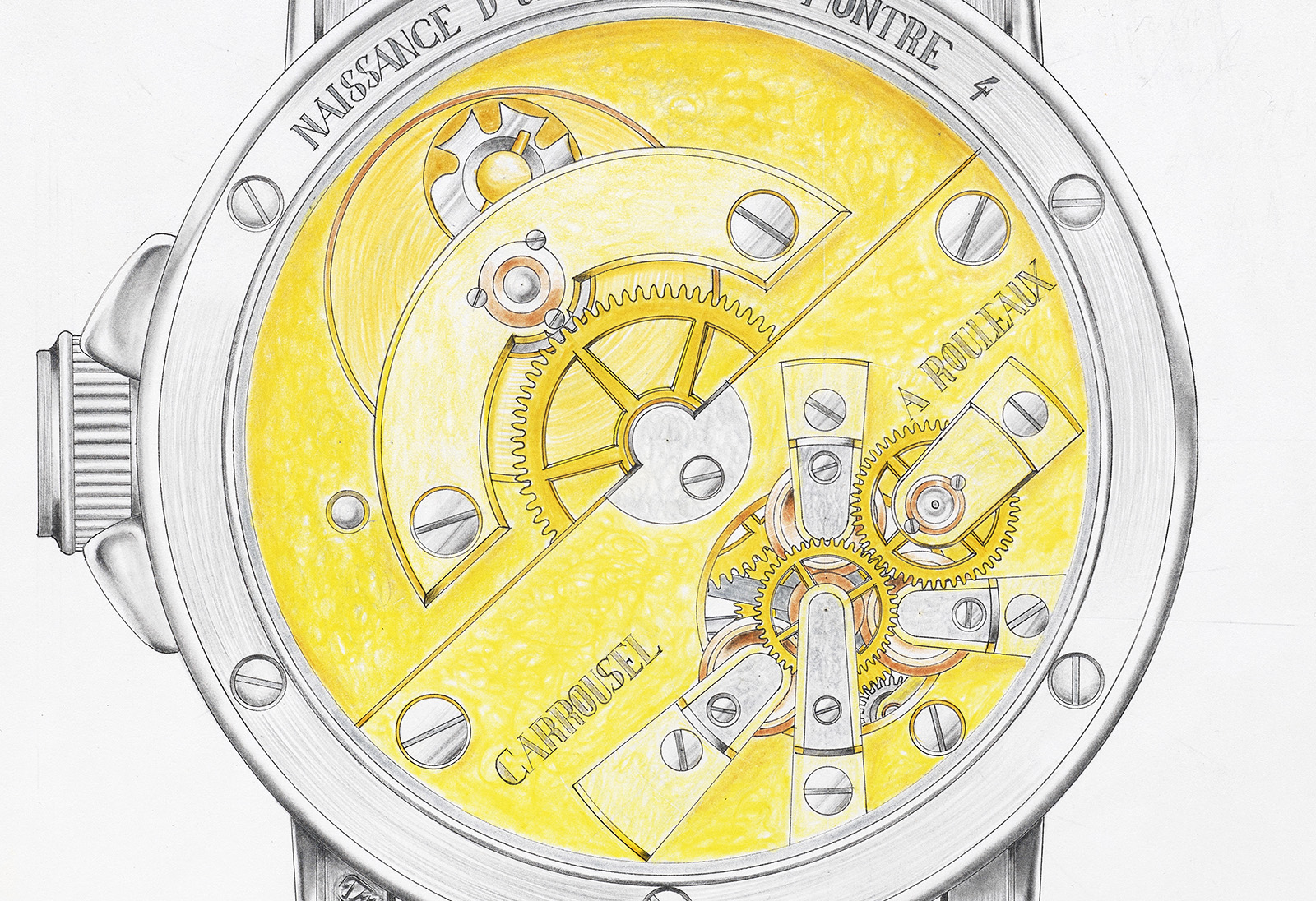
The high rotational speed of the carriage is managed by the use of rollers as auxiliary supports to relieve the pivots of radial load and reduce friction
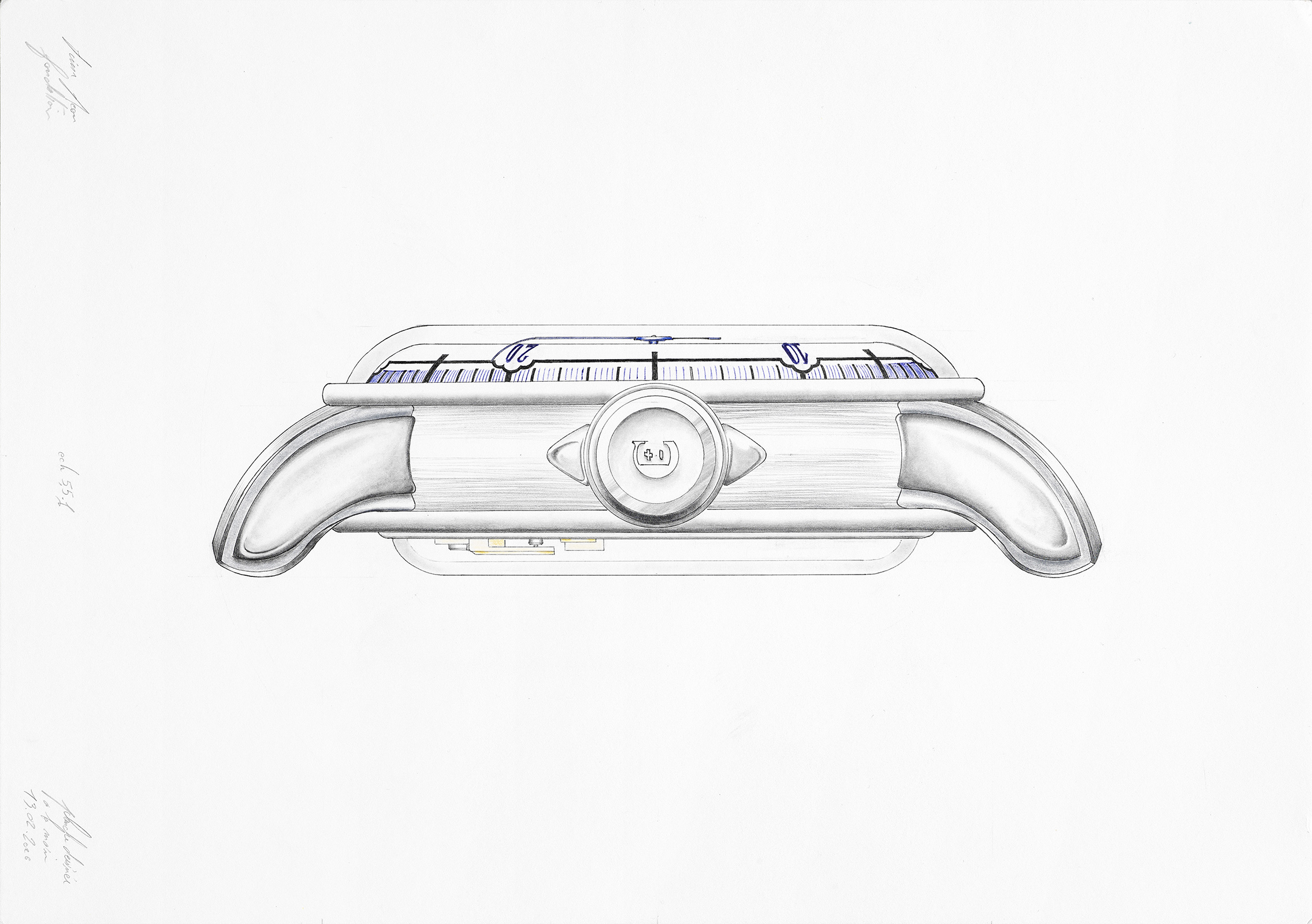
Case profile of the Naissance d’une Montre 4 Le Carrousel, with two domed crystals
No completion date has been given for Le Carrousel, but it is hardly surprising. Work done at the bench, without the shortcuts of automation, proceeds at its own pace, and for good reason.
Bonniksen