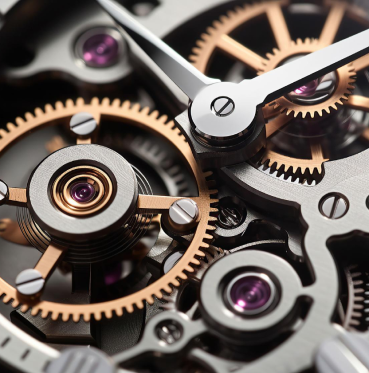

The Essence of Time: Bernhard Lederer and The Art of Escapement
Editorial
The Essence of Time: Bernhard Lederer and The Art of Escapement

There are watchmakers, there are grail watchmakers, and then there’s Bernhard Lederer. For more than four decades, this German-born master has quietly gone about doing what most in the industry dare not: chasing absolute perfection in the very heartbeat of a watch, courtesy of a fiendishly ambitious goal: namely perfecting the escapement. It’s the kind of obsession that has made him a watchmaker’s watchmaker, an icon amongst icons and a name that is reverentially whispered amongst those whose appreciation for watchmaking points true north towards the most venerated giants in the industry.
Yet Lederer, despite his horological ambitions, has never been interested in pursuing a mass appeal, and for that, the respect accorded to him by his contemporaries and admirers of his work seems only to run deeper.
From his early days repairing flea-market pocket watches to his formative encounter with George Daniels, his trajectory has been marked by a single-minded focus on invention. While most brands chase trends, Lederer has spent decades locked in a monogamous relationship with invention. At 25, while other aspiring watchmakers were tinkering with moonphases, he created a secular perpetual calendar accurate until the year 5200. That’s not a typo. 5200. The piece brought him to the attentions of the Académie Horlogère des Créateurs Indépendants (AHCI) where a chance encounter with George Daniels proved decisive. Daniels recognised the young German’s gift and offered advice that would shape his career: “Too many watchmakers simply repeat what has been done; what you are doing is something new. You should make wristwatches.” Lederer took those words to heart, and over the decades he has realised ideas that even his mentor could only dream of.
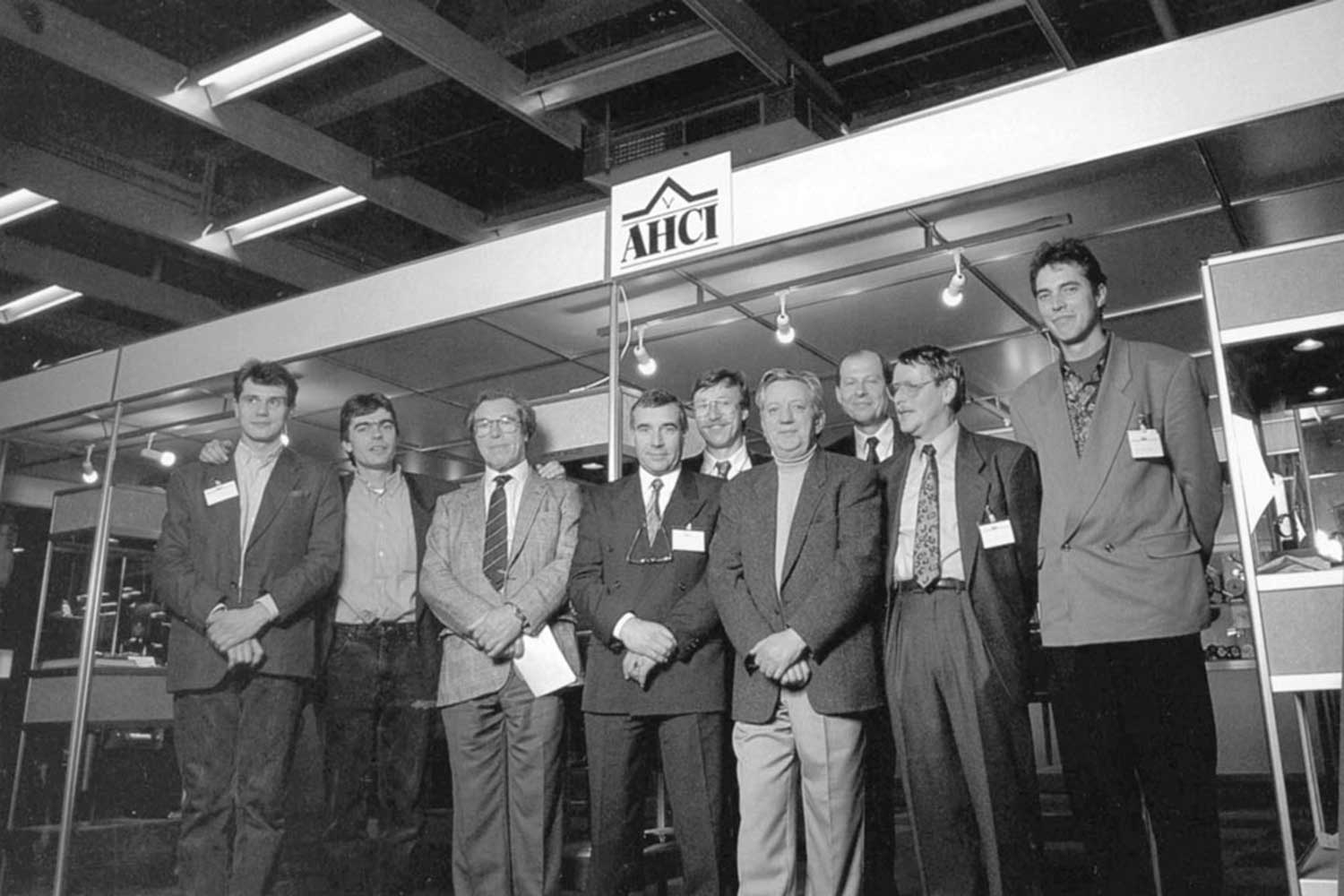
Bernhard Lederer has been a distinguished member of the prestigious Académie Horlogère des Créateurs Indépendants (AHCI) since 1985
Yet for all his fascination with escapements, the landscape for an independent watchmaker a few decades ago was very different from today. To sustain his work, Lederer founded the Manufacture de Haute Horlogerie et Micromécanique (MHM), a workshop that became a laboratory for other makers. He designed movements and watches for clients ranging from the German Navy to Swiss brands. Yet for Lederer, leaving a legacy in horology came above all else and he returned to watches bearing his own name, intent on pursuing the natural escapement that had haunted the dreams of Breguet and Daniels.
Escapements: The Final Boss
Here’s the thing: escapements are hard. Tourbillons are the well-known flag-bearer for complications, but it is escapements that have proved difficult, demanding and diva-like throughout the history of complicated watchmaking. For centuries, masters like Breguet dreamed of natural escapements with twin wheels, only to fall short. Daniel translated the idea into the Independent Double Wheel Escapement, that he successfully used in the Spacetraveller I and Spacetraveller II pocket watches. Lederer has made it his life’s work not just to realise those dreams in a wristwatch, but to improve them. His result was the Central Impulse Chronometer, a watch that brings together two rare ideas in one: Breguet’s natural escapement, with twin escape wheels driven by independent gear trains, and a pair of remontoirs d’égalité that deliver even torque to the escapement. In simple terms, a natural escapement is essentially a detent escapement that delivers direct impulses to the balance with no sliding friction, but with two escape wheels instead of one. Meshing twin escape wheels with a central detent, then, demands extreme precision. Lederer not only achieves Breguet’s vision, he adds Daniels’ double-gear-train concept and his own twin remontoirs, creating a movement that speaks as much to the history of horology as to its future.
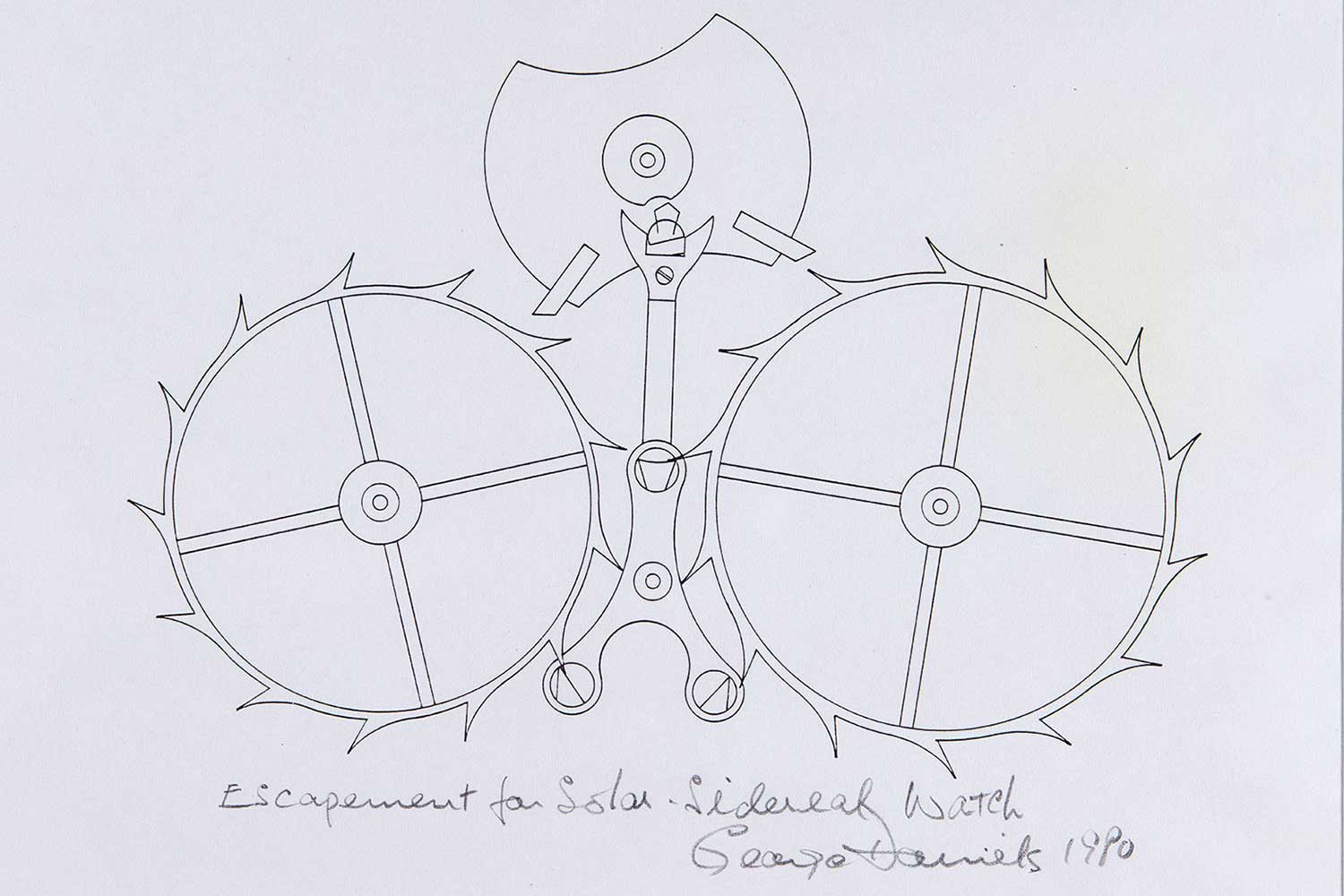
Drawing of George Daniels’ escapement
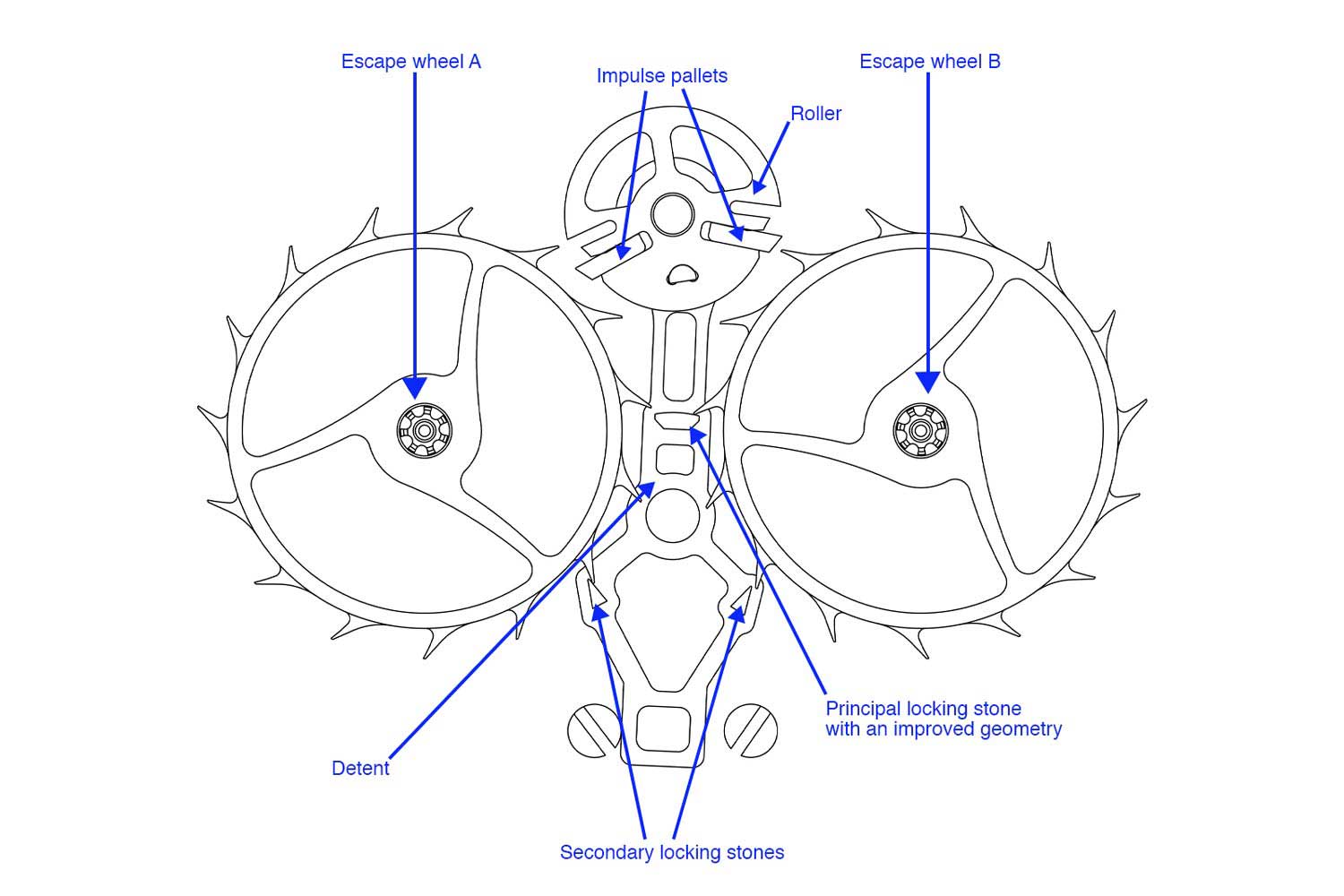
Bernhard Lederer’s version of the independent double-wheel escapement
By restoring historical watches for museums, auction houses, and watch collectors for many years, Lederer gained a deep insight into the diversity and richness of the watchmaking craft, particularly with regard to the beauty of escapements. Lederer wants to share his fascination with the various escapements, their very own sound patterns, and the uniqueness of the escapement symphony with other enthusiasts. To this end, he revises historically significant escapements and perfects them for use in wristwatches.

1986: Lederer’s diploma masterpiece, a table clock featuring a gravity escapement and a complete perpetual calendar. A masterpiece with a millenium calender for the coming 3’200 years and a moon phase and position require correction only once every 800 years
“Others may call them breakthroughs; for me they are natural steps on a lifelong path,” Lederer says. “Recognition belongs not to me but to the tradition that allows each generation to add one more stone to the edifice.”
That determination carried through to the creation of his manufacture in Saint-Blaise, Switzerland, now approaching its 20th year. Unlike the marketing-driven brands that dominate headlines, Lederer has always been about the road less travelled: designing movements from scratch, stress-testing them until they break, and rebuilding them better. No wonder that to acquire a timepiece created under his banner is considered a benchmark for collectors seeking the rarest expressions of chronometry.
His Central Impulse Chronometer (CIC) has become the stuff of legend: two escape wheels, twin gear trains, paired remontoirs d’égalité, COSC certification, and finishing that makes even hardened collectors catch their breath.
Lederer rightly received GPHG Innovation Prize in 2021, the Chronometry Prize in 2024, and even a Revolution Award for technical breakthrough. Not bad for someone who still thinks of his work as “the natural next step” rather than marketing-friendly “disruption.”
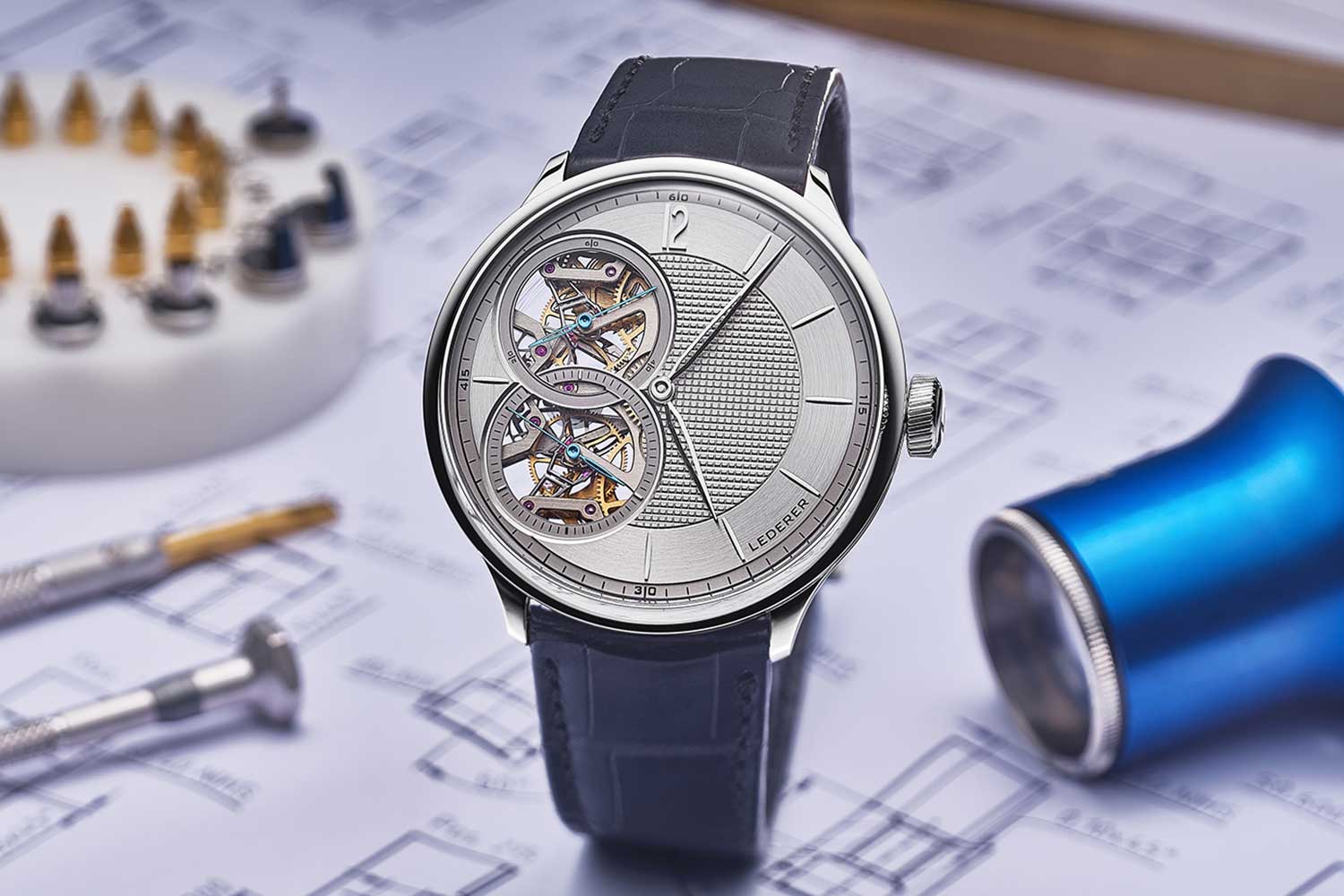
Central Impulse Chronometer, 2021
Ultimate Fomo
Group 4, Grouped objectIn an era where scarcity is often manufactured, Lederer’s rarity is the real deal, with per model quantities that are minuscule, often fewer than a dozen pieces. There are only a few boutiques, mainly word of mouth, and waiting lists for connoisseurs who get it: if you’re lucky enough to own one, you’re holding horological history. The FOMO is justified; a notable example being Majesty Tourbillon MT3, with its triple-cage orbital construction. It remains one of the most ambitious tourbillons ever made. MT3 was the first movement entirely developed in-house at the brand’s own manufacturing facility, established in 2005. It garnered significant recognition and was awarded for its technical innovation and groundbreaking design in 2007.
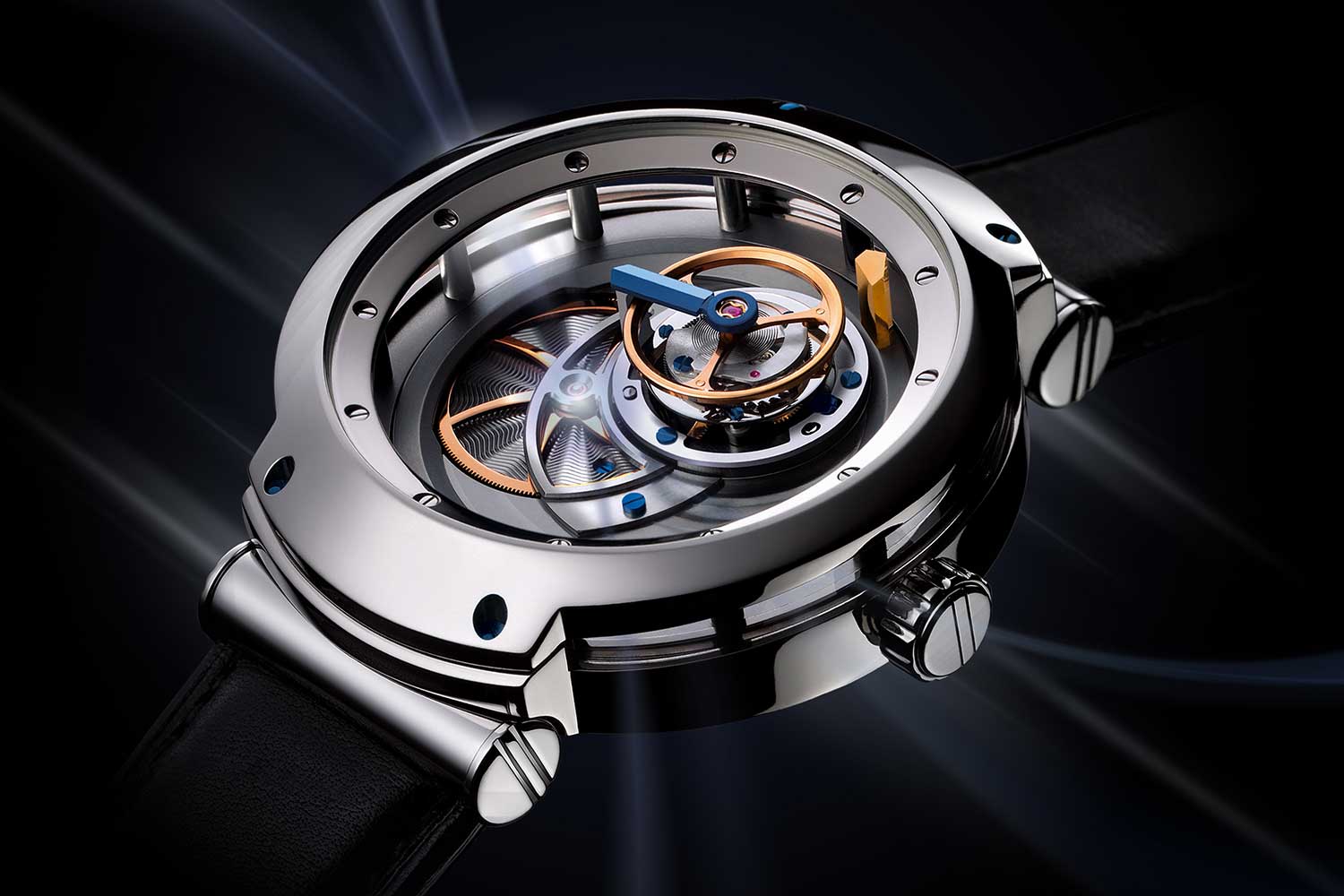
Majesty Tourbillon 3, 2006
At first glance it seemed like a single tourbillon, but the MT3 was in fact three in one, a kinetic sculpture of time. The first cage is a half-flying tourbillon that doubles as a running seconds display. That cage itself sits inside a second, which completes a full turn every hour to indicate the minutes. Both are then housed within a third cage that makes a full revolution every twelve hours, marking the passing of time itself. Seconds, minutes, and hours, all expressed through a single, endlessly turning mechanism.
“I felt I had connected heritage and invention in a balanced way,” Lederer recalled, noting that Alfred Helwig invented the first flying tourbillon a century ago. Only a handful of these watches exist, the result of Lederer’s insistence on doing as much as possible in-house. The Gagarin Tourbillon, created by Lederer in 2011, orbits the dial in 108 minutes in tribute to the duration of Yuri Gagarin’s flight, and shows Lederer’s ability to marry poetry with mechanics. If the MT3 and Gagarin Tourbillon were expressions of mechanical grandeur, the Central Impulse Chronometer distilled Lederer’s philosophy into its purest form: mechanical efficiency in its most elegant expression. The CIC, wearable at 39mm, proves that true breakthroughs don’t need to be big to make an impact.
Recognition and Responsibility
For someone who has always preferred the workbench to the spotlight, Lederer has amassed serious honours. Beyond his GPHG awards, he is a semi-finalist in the Louis Vuitton Watch Prize, and in 2025 invited onto the GPHG jury itself, an acknowledgment of his technical prowess. Memberships with AHCI, the Horological Society of New York, and the Fondation de la Haute Horlogerie underline his stature. Yet he remains committed to passing knowledge on, mentoring apprentices and ensuring that the art of high-precision escapements will outlive him.

Bernhard Lederer
Why Lederer Matters Now
Of course there is no shortage of independent watchmakers today. Some trade on design, others on marketing. Lederer is in a category of his own. His proposition is brutally simple: reworking the inventions of the great masters of the past, and extending the dreams of Breguet Harrison, Le Roy, Fasoldt, Riefler and the other greats. That’s why collectors whisper his name with reverence and why owning a Lederer is about being a part of a lineage going back centuries.
Lederer himself says, “These are not mere technical exercises; they are about the pursuit of excellence in the service of timekeeping.” That might be the understatement of the century. Lederer’s watches are technical milestones, cultural artefacts, and emotional touchstones all at once.

CIC 39 Racing Green
Owning one is to join a select group who actually understand where watchmaking is going and have the taste and luck to get in early. Because when Bernhard Lederer finally decides he’s done chasing perfection, the few watches out there will be all that’s left. And you’ll wish you hadn’t scrolled past.

Lederer Inverto Titanium
The newly released Inverto Titanium is simply the latest proof that Lederer’s creative well has no bottom. By quite literally turning his celebrated CIC 39 inside out, he transforms the movement—long considered the soul of a Lederer—into the face of the watch. It’s a poetic inversion: the very mechanics that define his pursuit of chronometric purity are now the visual centerpiece, framed by a concave titanium case that appears to bend light around the movement itself. With twin barrels, twin gear trains, and his signature double-wheel escapement laid bare, the Inverto is a declaration that the beauty of high watchmaking doesn’t reside in ornamentation but in the unfiltered truth of the mechanism. In typical Lederer fashion, it isn’t a limited edition, yet production will remain naturally—and painfully—scarce. Another chapter in a career defined not by spectacle, but by substance.
Bernhard Lederer
You may also like

Limited Edition
An Artistic Evolution
Dec 29, 2025
Limited Edition
An Artistic Evolution
Dec 29, 2025

Editorial
The Revolutionary List: 25 Watchmakers and Construction – Bernhard Lederer
Dec 15, 2025
Editorial
The Revolutionary List: 25 Watchmakers and Construction – Bernhard Lederer
Dec 15, 2025

Reviews
A Closer Look: Bernhard Lederer Central Impulse Chronometer 39mm
Apr 26, 2024
Reviews
A Closer Look: Bernhard Lederer Central Impulse Chronometer 39mm
Apr 26, 2024