Revolution Awards 2025: Best Handmade — Greubel Forsey Hand Made 2
Editorial
Revolution Awards 2025: Best Handmade — Greubel Forsey Hand Made 2

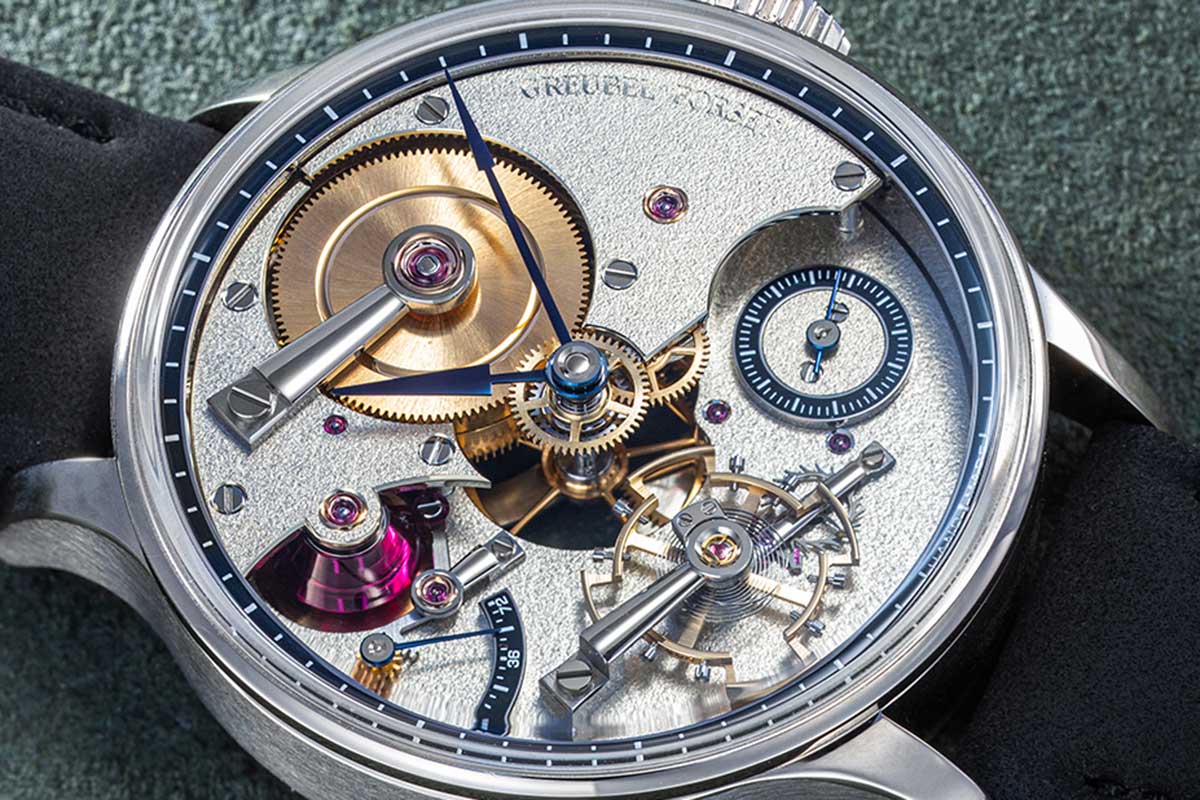
In watchmaking, the term “hand made” is often used casually to describe watches that are in reality hand-finished. Hand-making is something else entirely. It entails fabricating every component from raw stock by hand, while deliberately excluding modern industrial processes. This means hand turning, hand milling, sawing, filing, drilling, shaping and finishing carried out on traditional, manual tools or manually operated lathes at the bench. The consequence is a scale of labour that bears no comparison to a process that begins with CNC-machined parts and proceeds to hand finishing, assembly and adjustment. This award exists to recognise that distinction, and the Greubel Forsey Hand Made 2 is its most natural outcome.
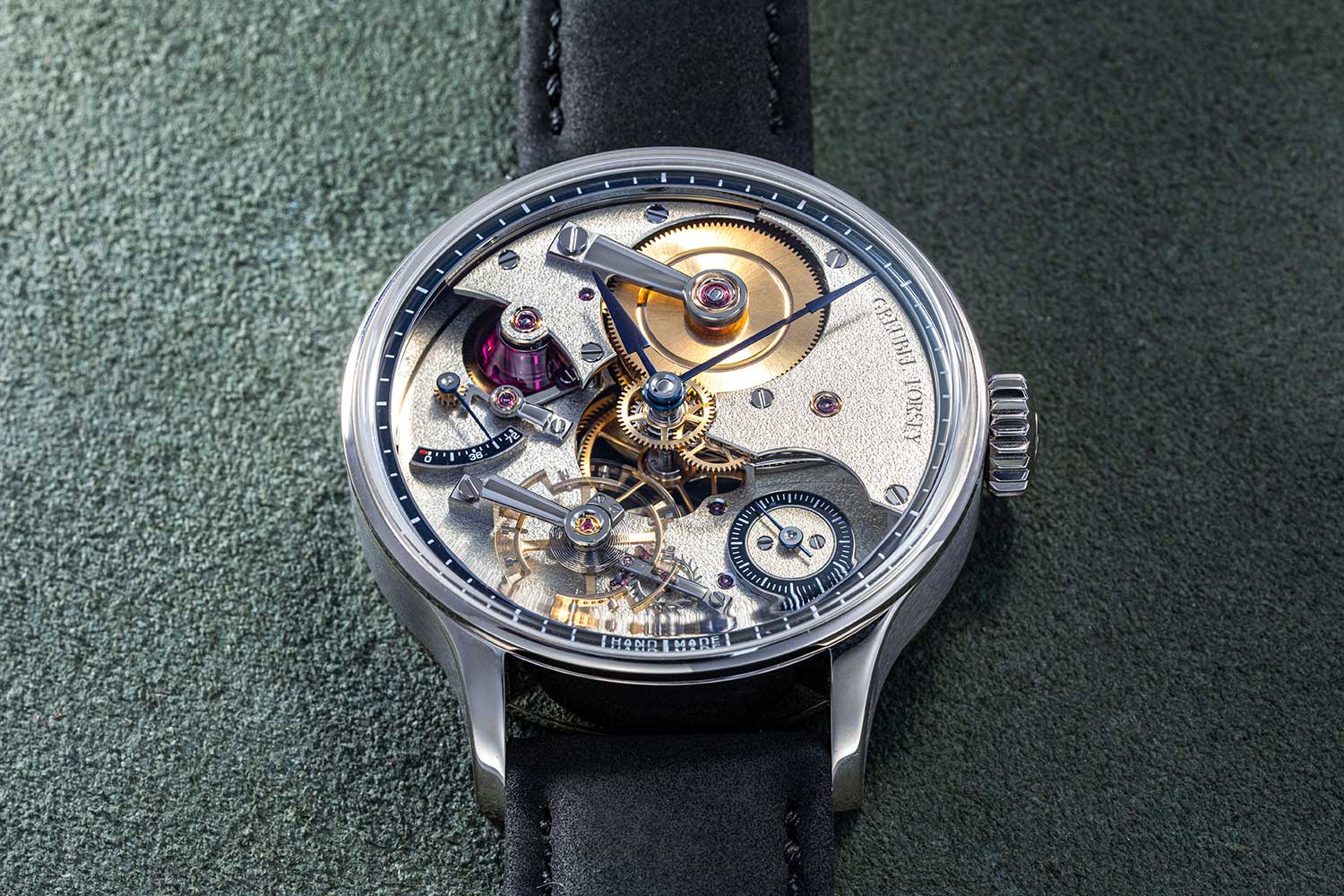
Greubel Forsey Hand Made 2 (©Revolution)
The origins of Greubel Forsey’s Hand Made watches can be traced back to the Time Æon Foundation, an initiative the brand helped champion as early as 2005 alongside figures including Philippe Dufour, Vianney Halter, and later Felix Baumgartner and Martin Frei. Conceived at a moment when traditional watchmaking competencies were visibly eroding, the foundation sought to preserve and transmit traditional skills and methods. Within Greubel Forsey, that commitment translated into exercising those capabilities in-house, giving rise first to the Hand Made 1 and subsequently the Hand Made 2.
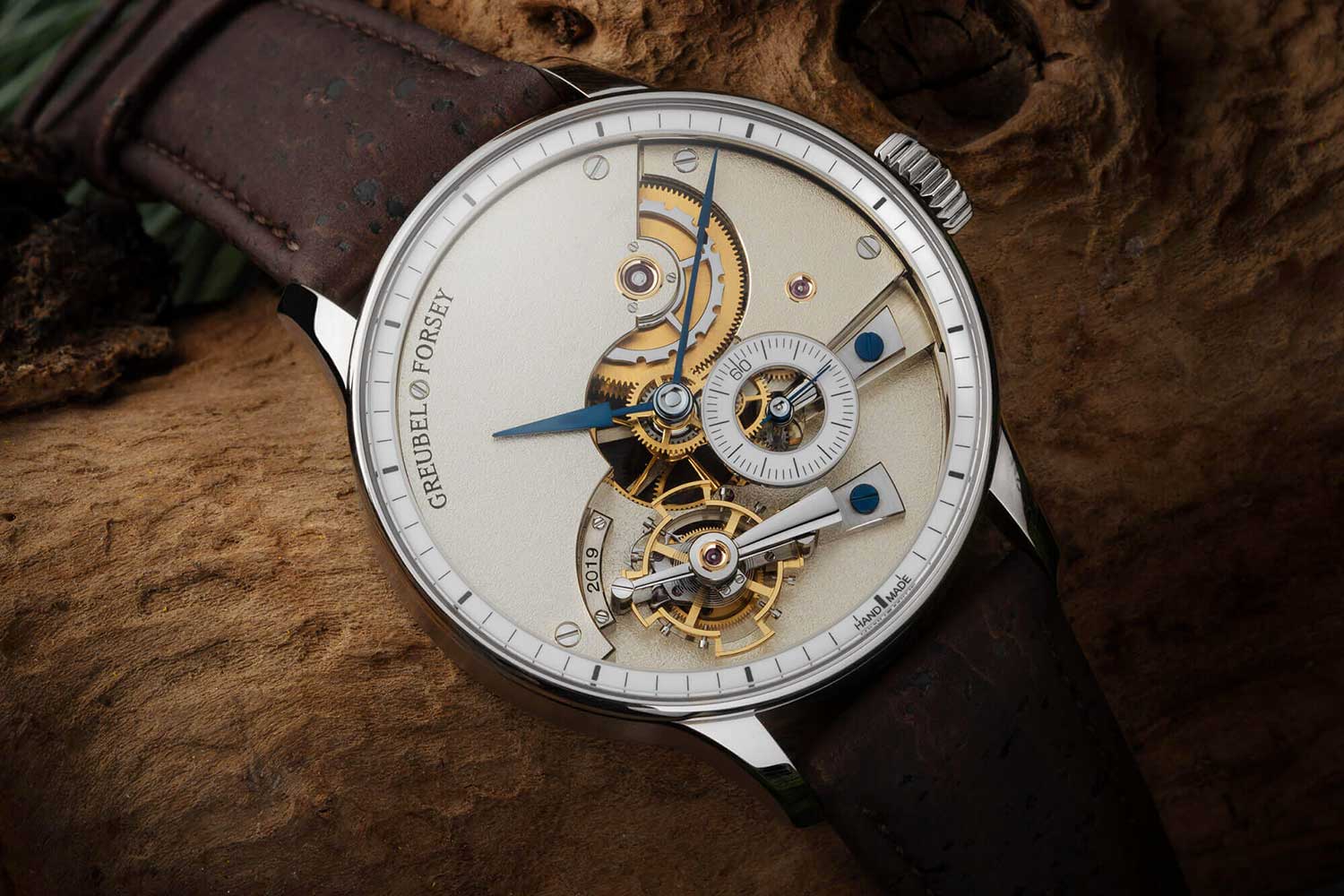
Greubel Forsey Hand Made 1
Where the Hand Made 1 was equipped with a tourbillon, the Hand Made 2 is a time-only watch with a power reserve indicator. Despite forgoing the complexity of a tourbillon, it adheres to the same uncompromising philosophy of manual fabrication: 96 percent of its components are made from scratch, with the remaining 4 percent limited to elements such as the sapphire crystals, mainspring, spring bars, most jewels and case gaskets.
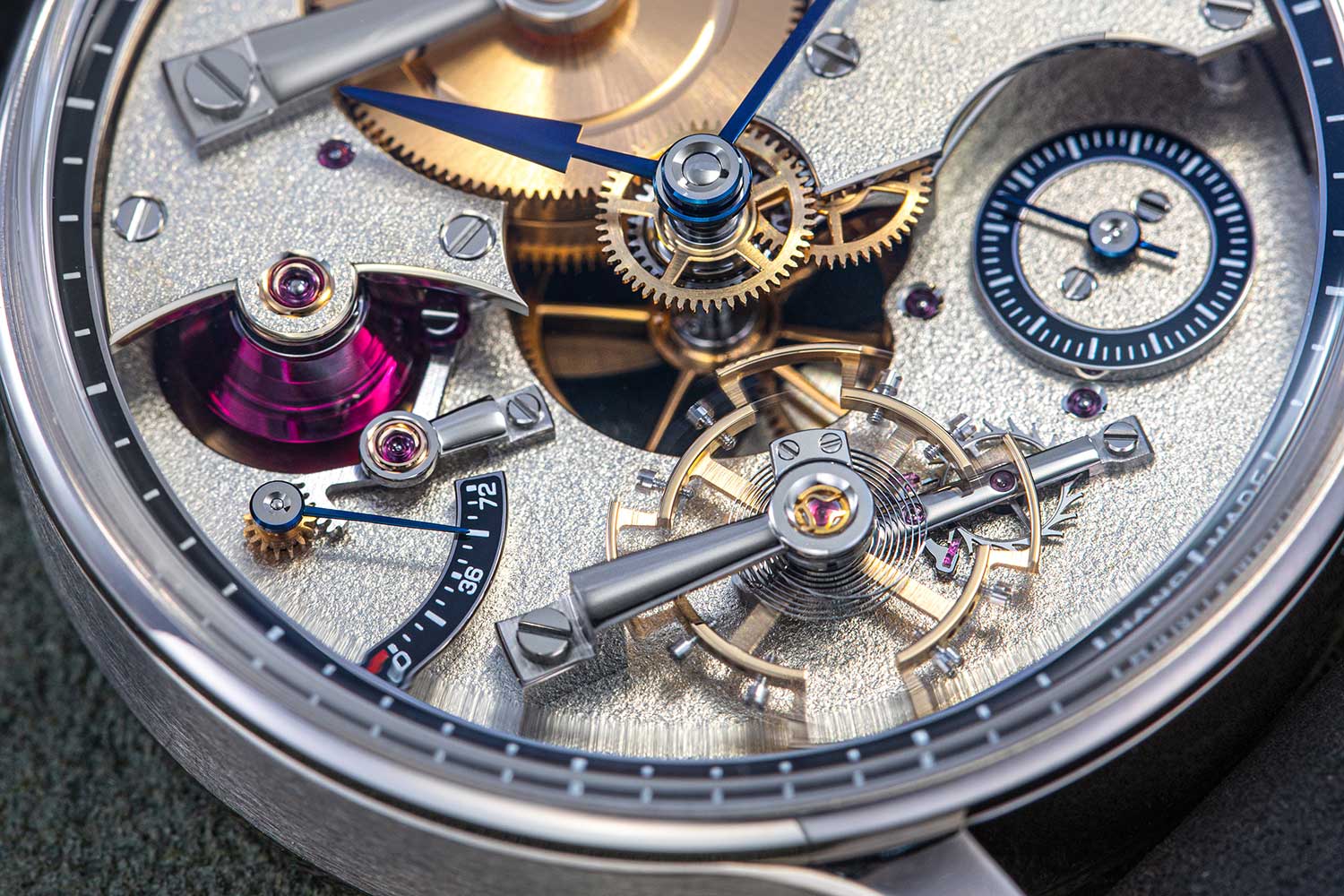
Closed up on the tourbillon and the power reserve indicator (©Revolution)
In practical terms, this approach demands approximately 5,000 hours of labour to complete the 270 components in the watch. A single screw alone requires around eight hours to produce. A wheel in the going train demands more than 600 times the man-hours of a standard industrially produced gear. Figures such as these are the inevitable result of a process that rejects industrial efficiency in favour of traditional method.
Notably, as with the Hand Made 1, the Hand Made 2 is not a limited edition but an integral part of Greubel Forsey’s long-term philosophy. As such, it stands today as virtually the only place in contemporary watchmaking where a genuinely handmade wristwatch can be acquired as an ongoing proposition rather than a finite, statement exercise.
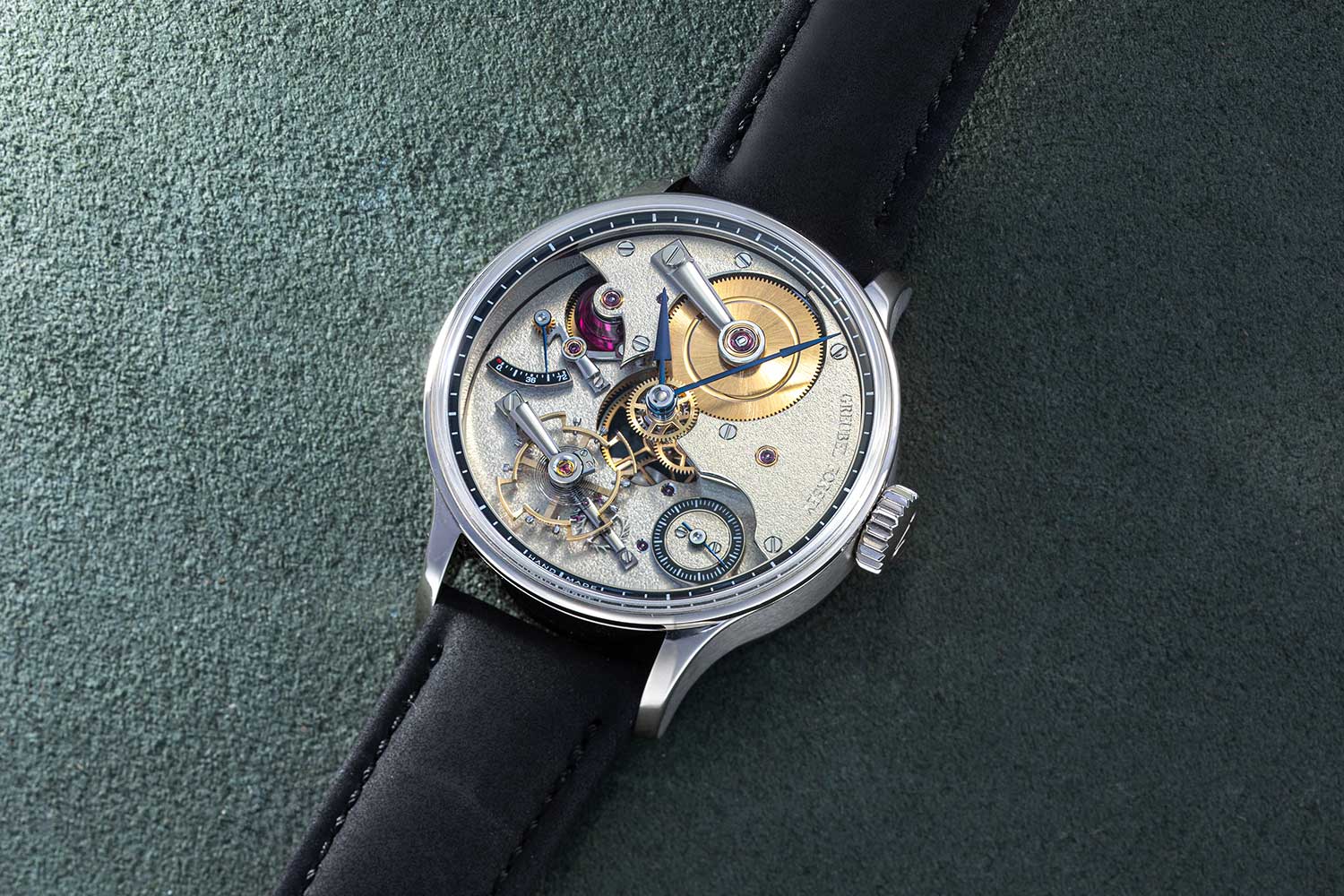
Greubel Forsey Hand Made 2 (©Revolution)
One of the most striking features of the movement is the massive jewel positioned adjacent to the barrel at 10 o’clock. Handcrafted in the form of a cone, it forms part of the traditional differential screw mechanism for the power reserve indicator. The manual cutting of jewels is today an exceptionally rare practice, having long since been supplanted by industrial methods and the routine sourcing of finished jewels from specialist suppliers.
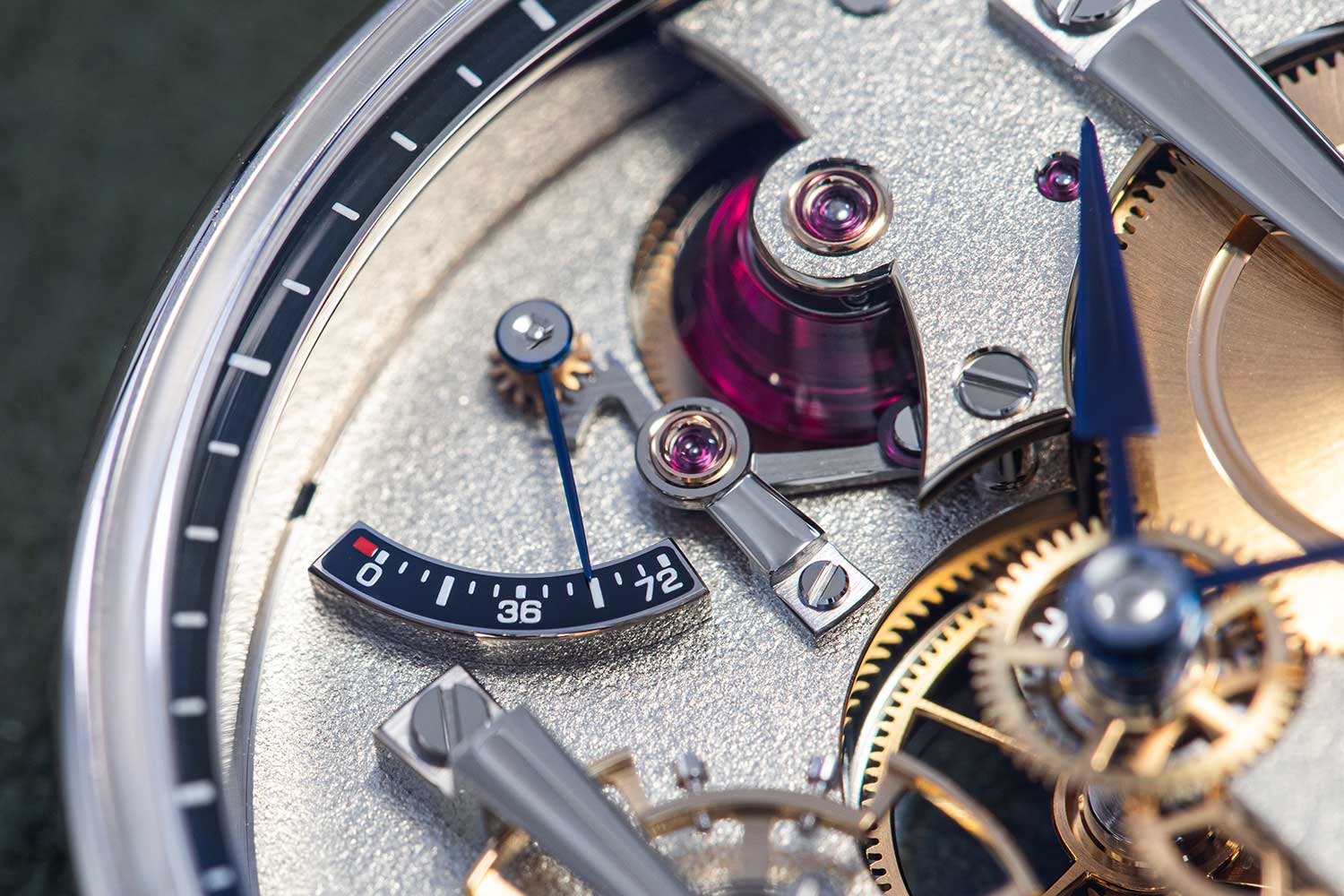
The massive jewel positioned adjacent to the barrel at 10 o’clock (©Revolution)
In the Hand Made 2, this jewel is shaped entirely by hand from a cylindrical blank using traditional lapidary techniques. The process relies on progressive abrasion with diamond pastes, constant control of geometry and an acceptance of material risk that modern watchmaking has largely engineered out. Unlike jewels used simply as bearings, this is an active part of a mechanism, directly governing the behaviour of the power reserve differential. Described by Greubel Forsey as a milestone, it is difficult to disagree, as it reintroduces material risk and uncertainty as intrinsic parts of making and a level of manual skill that few manufactures today are either equipped or inclined to assume.
Greubel Forsey
You may also like
Editorial
The Revolutionary List: 25 Watchmakers and Construction – Stephen Forsey & Robert Greubel
Dec 15, 2025
Editorial
The Revolutionary List: 25 Watchmakers and Construction – Stephen Forsey & Robert Greubel
Dec 15, 2025
Editorial
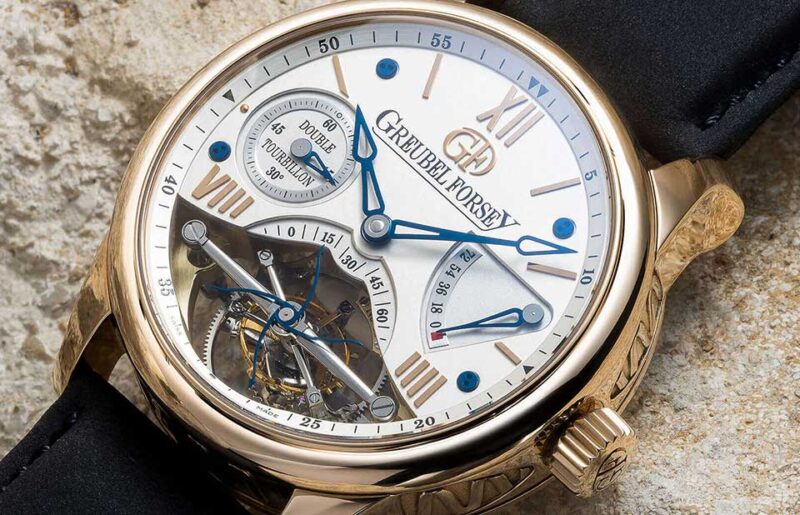
The Revolutionary List: 30 Pioneering Watches – the Greubel Forsey Double Tourbillon 30˚
Dec 2, 2025
Editorial
The Revolutionary List: 30 Pioneering Watches – the Greubel Forsey Double Tourbillon 30˚
Dec 2, 2025
Editorial
Aiming Higher: Greubel Forsey
Nov 19, 2025
Editorial
Aiming Higher: Greubel Forsey
Nov 19, 2025