Revolution Awards 2025: Best Astronomical Watch — Vacheron Constantin Les Cabinotiers Solaria Ultra Grande Complication La Première
Editorial
Revolution Awards 2025: Best Astronomical Watch — Vacheron Constantin Les Cabinotiers Solaria Ultra Grande Complication La Première

Vacheron Constantin’s Les Cabinotiers Solaria Ultra Grande Complication takes the 2025 Revolution Award for Best Astronomical Watch because it treats astronomy as pure mechanics. This is not a dial sprinkled with stars; it is a wrist-borne instrument that converts celestial phenomena into readable, mechanically computed indications. With 41 complications, it is also officially the most complicated wristwatch ever made, but the Solaria’s real achievement is how it makes the heavens legible across two faces.
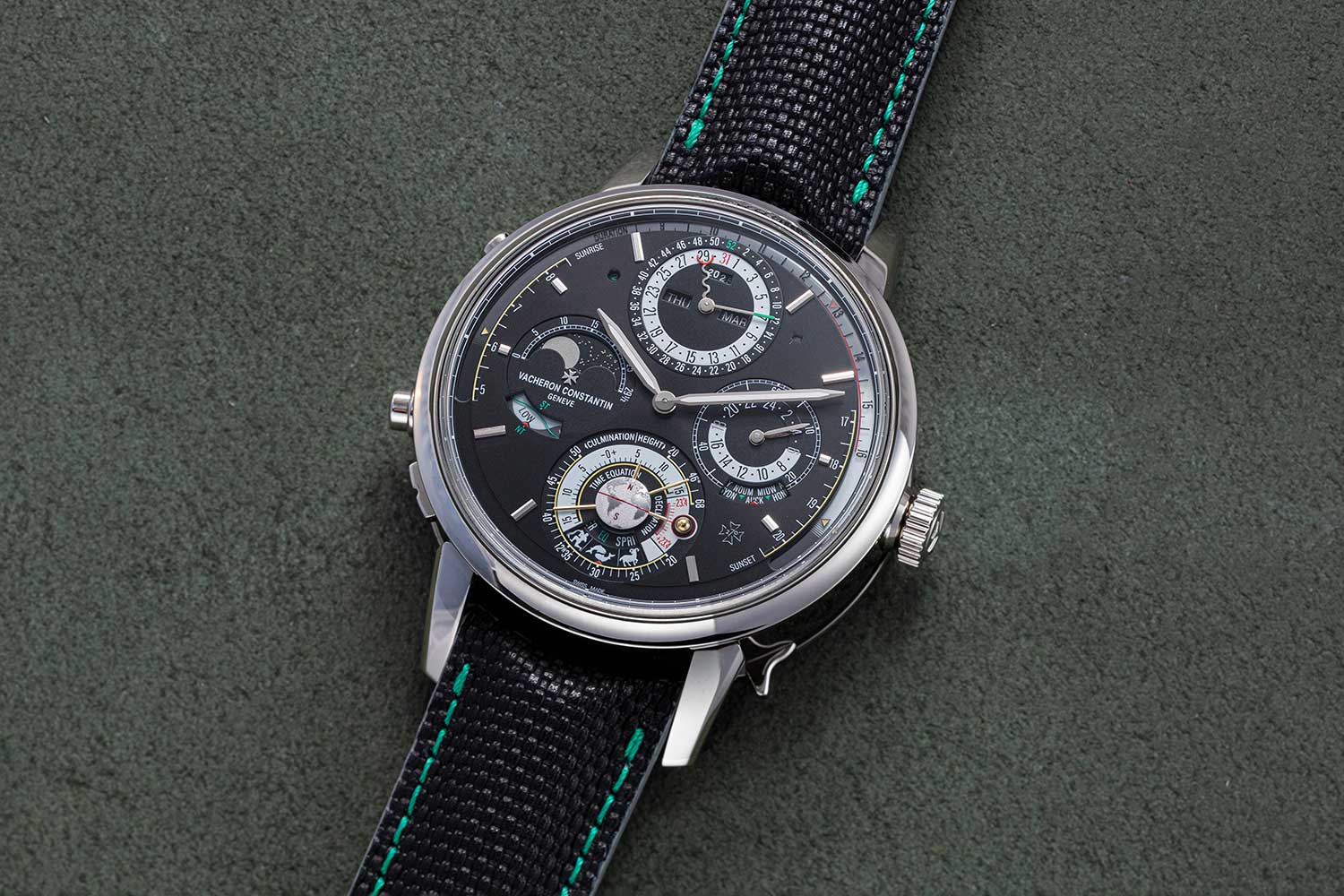
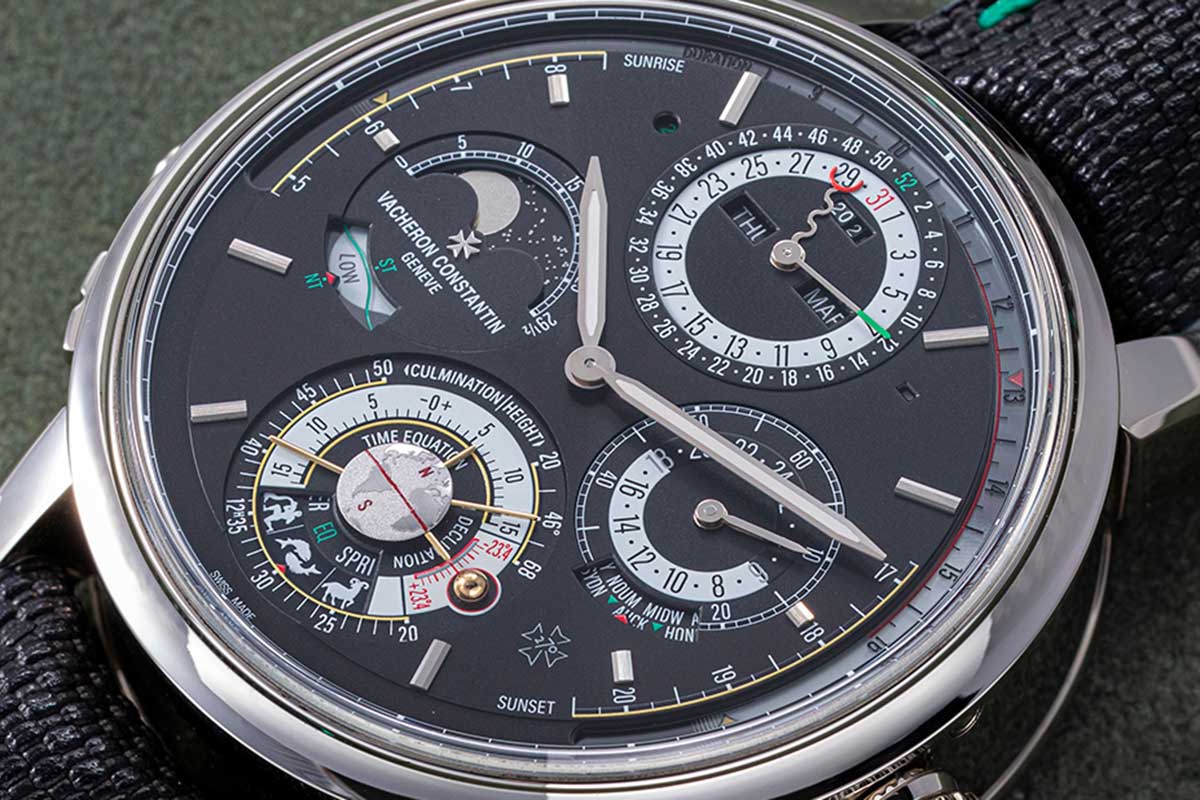
Vacheron Constantin Les Cabinotiers Solaria Ultra Grande Complication La Première (©Revolution)
At its core is Caliber 3655, comprised of 1,521 components and boasting five rare astronomical complications and a broader suite of astronomical displays that go galaxies beyond moonphase romance. Vacheron Constantin explicitly positions four of those rare functions as being tied to the Sun’s path across the sky, and the watch reflects that priority: the Solaria doesn’t simply indicate “day” and “night,” it models solar behavior in ways that demand real mechanical computation, and then presents it with an unusual degree of clarity for something of this density.
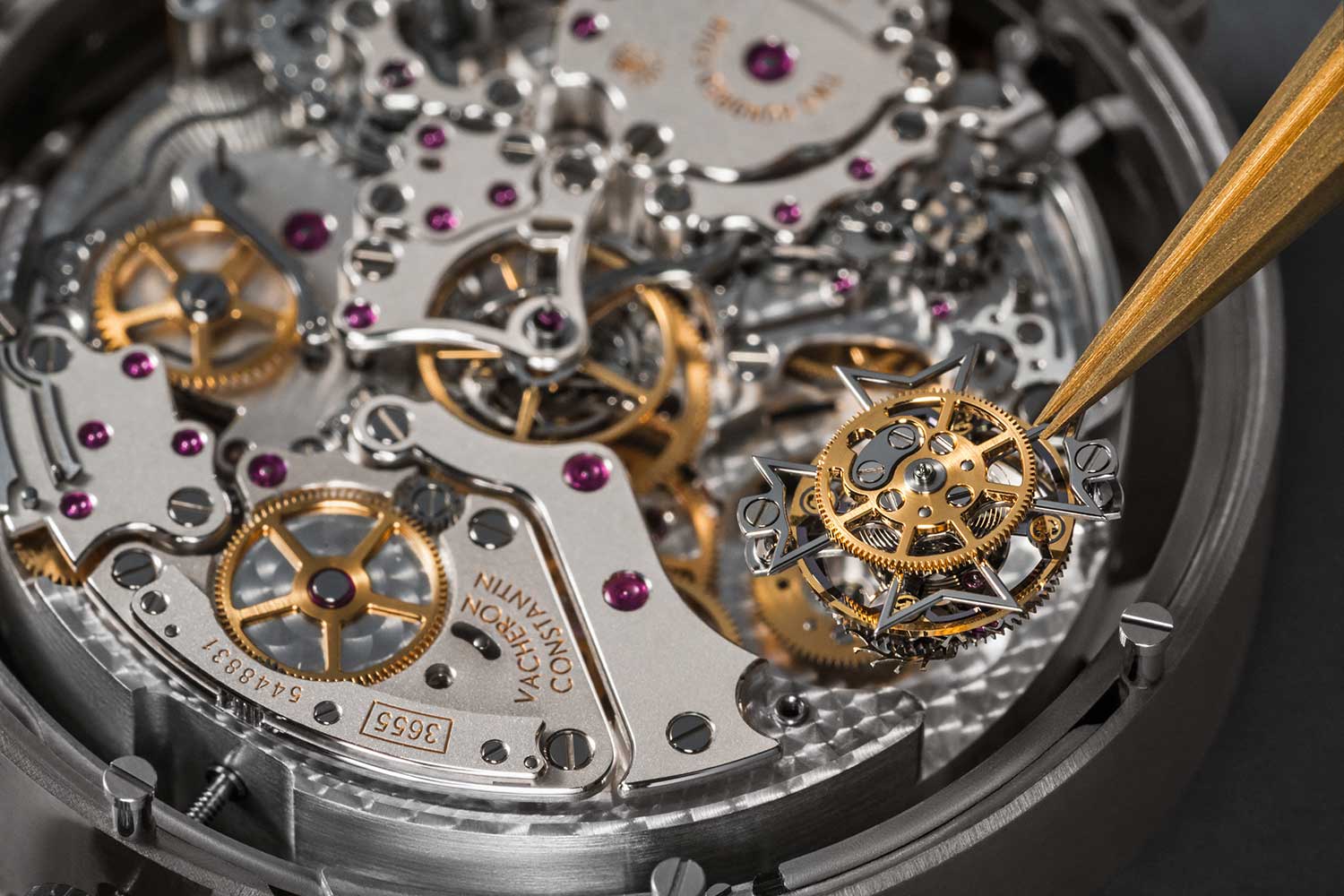
Calibre 3655
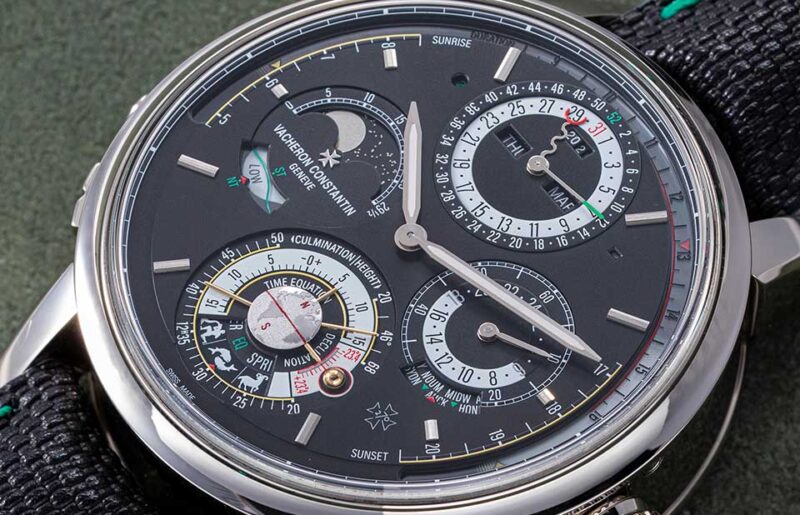
The front concentrates its “solar” intelligence at 6 o’clock. Here, the Solaria visualizes the Sun’s height above the horizon, the time of solar culmination (true solar noon), solar declination and the equation of time, translating the mismatch between mean solar time and apparent solar time into an indication that is, in mechanical watchmaking, the definition of celestial truth-telling. Around that, a zodiac and seasons display maps the annual passage of the Sun, including equinoxes and solstices, anchored by a miniature Earth dome and a Sun sphere whose relative position expresses declination in three dimensions. Encircling the dial, a sapphire ring adds sunrise and sunset times and day length, mechanically calibrated to a reference latitude, turning the watch into a daily, personal planetarium.
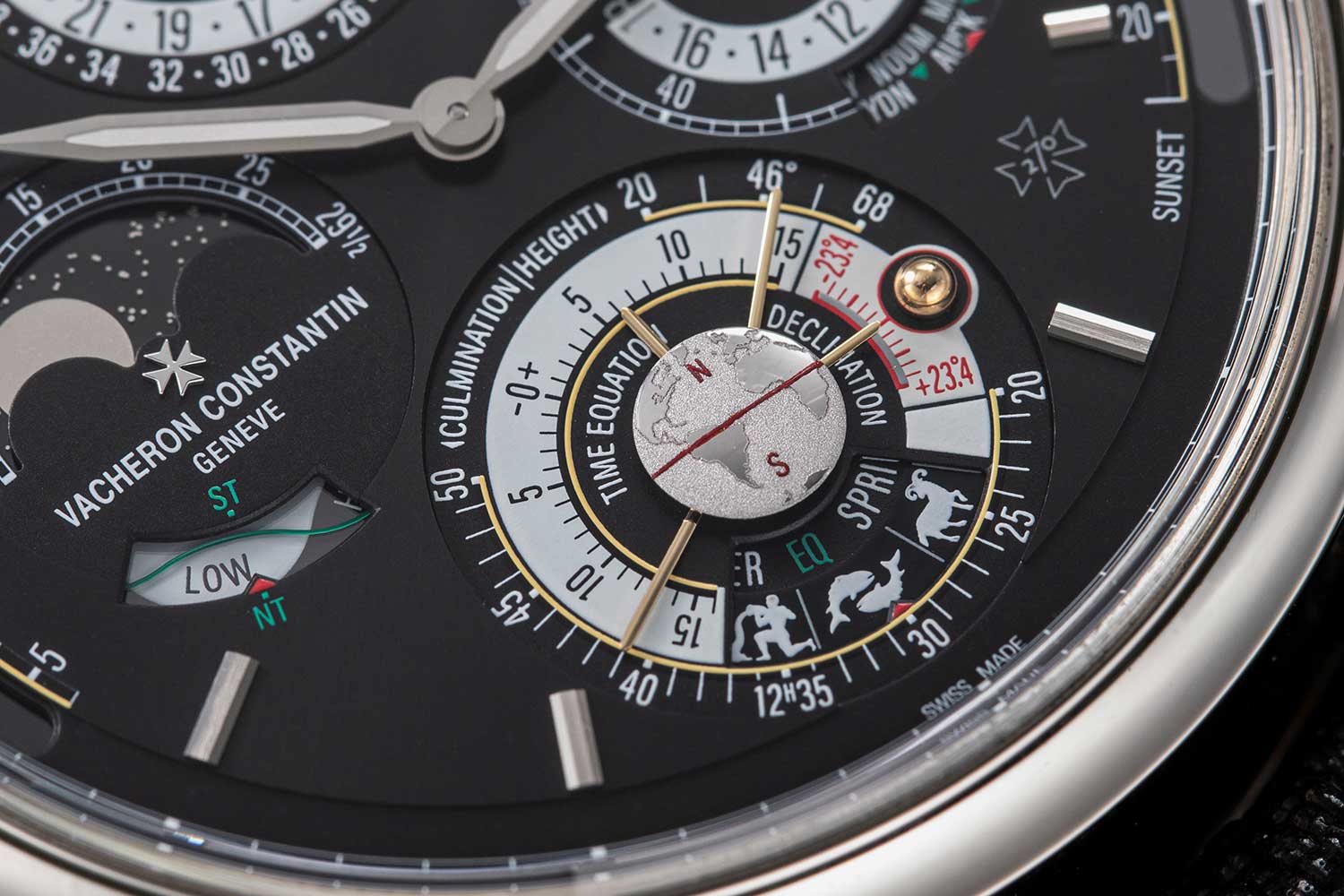
The “solar” intelligence at 6 o’clock (©Revolution)
Astronomy, of course, is not only solar. The Solaria folds lunar gravity into the narrative via a mareoscope that tracks spring and neap tides, a complication whose very existence reminds you that “celestial motion” has terrestrial consequences. Then, flip the watch, and the night sky takes over: a smoked sapphire star chart rotates on sidereal time (not civil time), so the display is pegged to the stars rather than the Sun. Most compellingly, Vacheron Constantin couples this celestial vault to a split seconds chronograph to create a world-premiere function: temporal tracking of celestial objects, allowing the wearer to calculate when a chosen star or constellation will appear centered in the observer’s field of vision. In other words, the chronograph becomes an astronomical predictor.
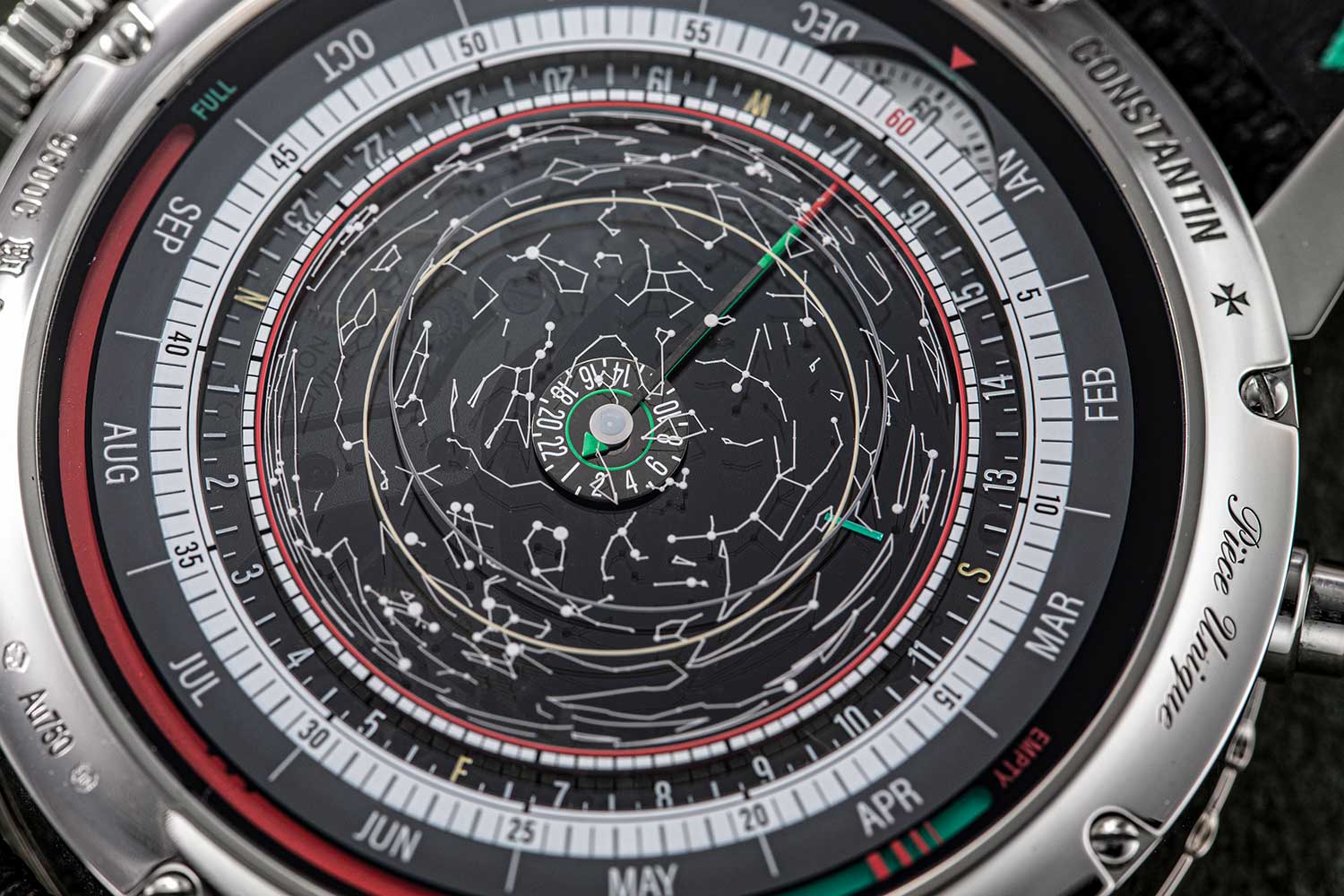
The smoked sapphire star chart rotates on sidereal time and the display is pegged to the stars (©Revolution)
All of this sits in a case that remains, frankly, improbable: 45mm in diameter and just 14.99mm thick, housing the 1,521 components, the result of eight years of development and protected by 13 patent applications. The Solaria wins Best Astronomical Watch because it embodies the category’s ideal balance: mechanical ingenuity in service of celestial interpretation.
Vacheron Constantin
You may also like
Editorial
Revolution Awards 2025: Brand of the Year — Breguet and Vacheron Constantin
Jan 27, 2026
Editorial
Revolution Awards 2025: Brand of the Year — Breguet and Vacheron Constantin
Jan 27, 2026

Editorial
Revolution Awards 2025: Leader of The Year — Laurent Perves
Jan 27, 2026
Editorial
Revolution Awards 2025: Leader of The Year — Laurent Perves
Jan 27, 2026
Editorial
The Revolutionary List: 30 Pioneering Watches – Vacheron Constantin
Dec 2, 2025
Editorial
The Revolutionary List: 30 Pioneering Watches – Vacheron Constantin
Dec 2, 2025