
A Closer Look: Patek Philippe Calatrava 6196P
A Closer Look: Patek Philippe Calatrava 6196P

At Watches & Wonders this year, new permutations of highly complicated timepieces ruled the roost at Patek Philippe, from the ice-blue Quadruple Complication Ref. 5308G to the sumptuous 5370R with a brown Grand Feu enamel dial to the smoked sapphire dial 6159G, and even an extraordinary green flinqué enamel edition of the 31-day desk clock first created for the 2021 Only Watch charity auction. Almost inevitably, one watch found itself somewhat lost amid such displays. In a room full of stars, the Calatrava remains exactly what it has always been – the purest expression of traditional watchmaking values.
Originally the Ref. 96, the Calatrava was born in 1932, the same year the Stern family acquired the company amid the Great Depression. It was a watch designed to steady the ship; elegant, functional, and importantly, sellable. The inaugural Ref. 96 measured just 31mm across, a size that by modern standards seems almost impossibly modest. Yet its impact on the design language of the brand, and indeed of modern dress watches as a whole, is anything but. The case had a low centre of gravity with lugs that are slim, lean and widely spaced apart and a flat, polished bezel while the dial was stripped of excess, with crisp faceted markers and dauphine hands. Together, they form a kind of visual shorthand for what a dress watch should be – balanced, understated, dignified and above all, enduring.
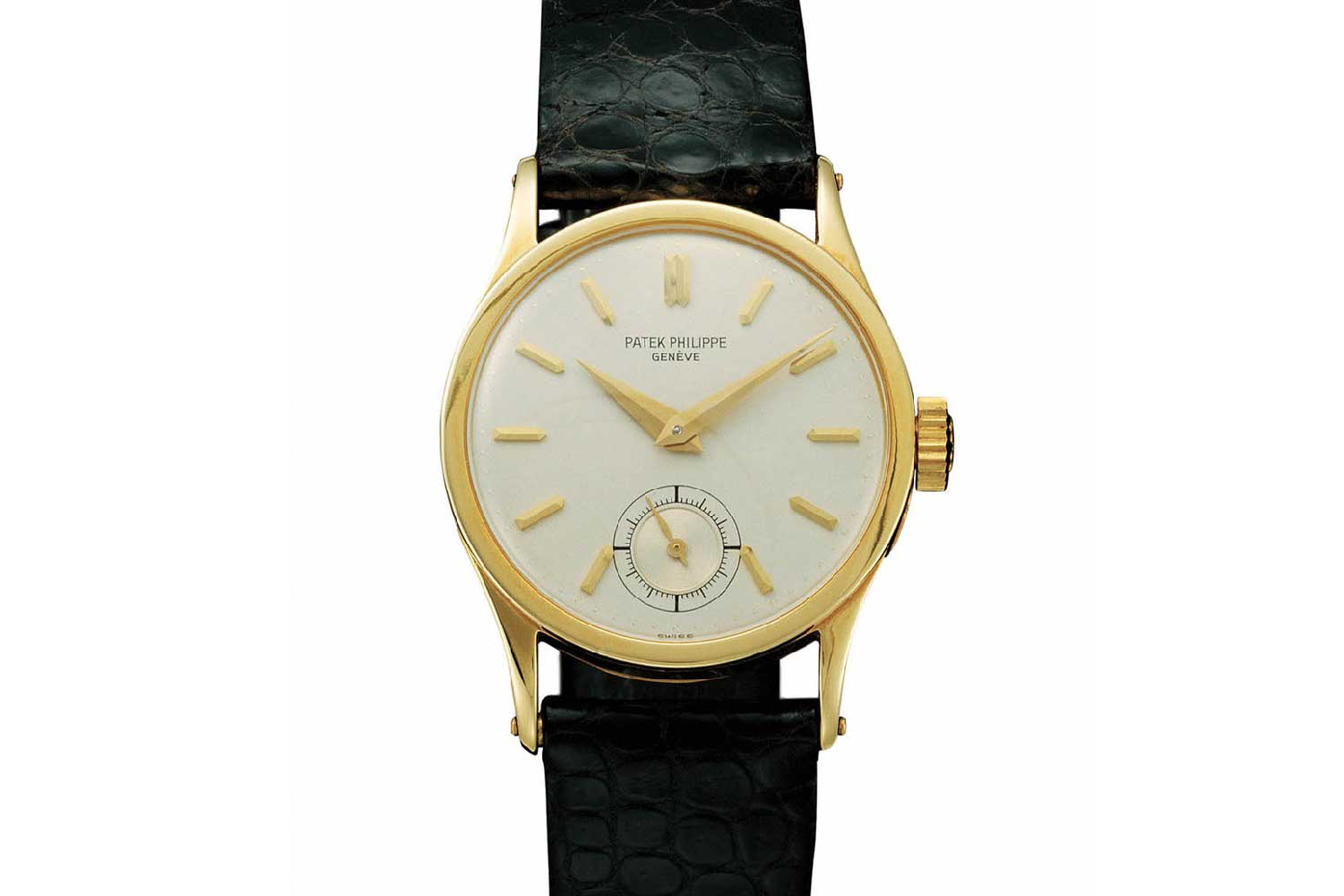
The original Calatrava ref. 96, 1932
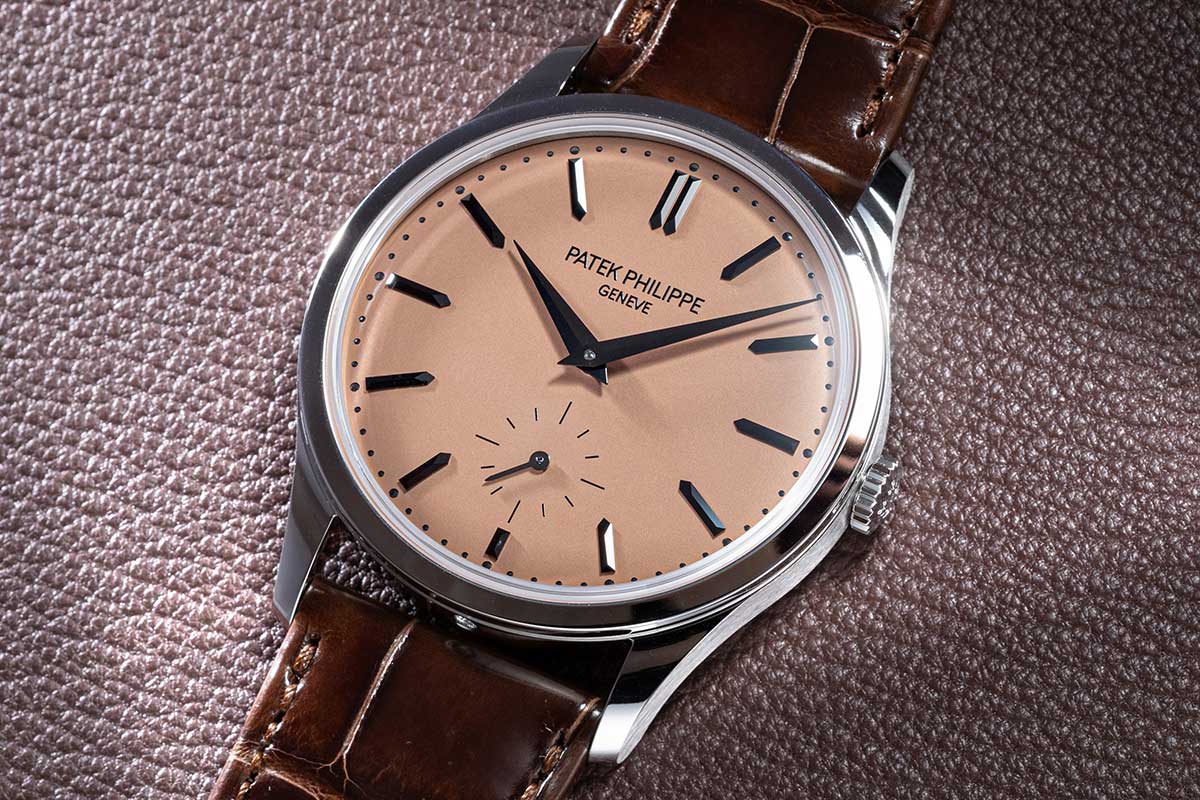
The Calatrava 6196P is a successor to the long discontinued Ref. 5169. It measures 38mm wide, down from the 39mm of the Ref. 6119 introduced in 2021. The change is slight, but it matters; the 6196P feels less demonstrative, more composed. While the Ref. 6119, itself a successor of the Ref. 5119, features a Clous de Paris bezel, the 6196P has a smooth, mirror-polished platinum bezel that trades texture for presence. Most notably, the 6196P is equipped with the superb manually wound Calibre 30-255 PS.
Classic Calatrava Dial
The 6196P is a study in simplicity but not at the expense of character. It is cased in platinum, a metal that, while unobtrusive, remains the most serious of choices for a dress watch. It is 38mm wide and 9.33mm, which makes it smaller but thicker than the Ref. 6119 at 8.08mm high. The case middle is noticeably different from the Ref. 6119. The latter has a slimmer case profile with more tapered, downturned lugs while the 6196P recalls the sturdier presence of the Ref. 5196. Its lugs are slightly broader and extend with less curvature, giving the watch a flatter, more grounded fit.
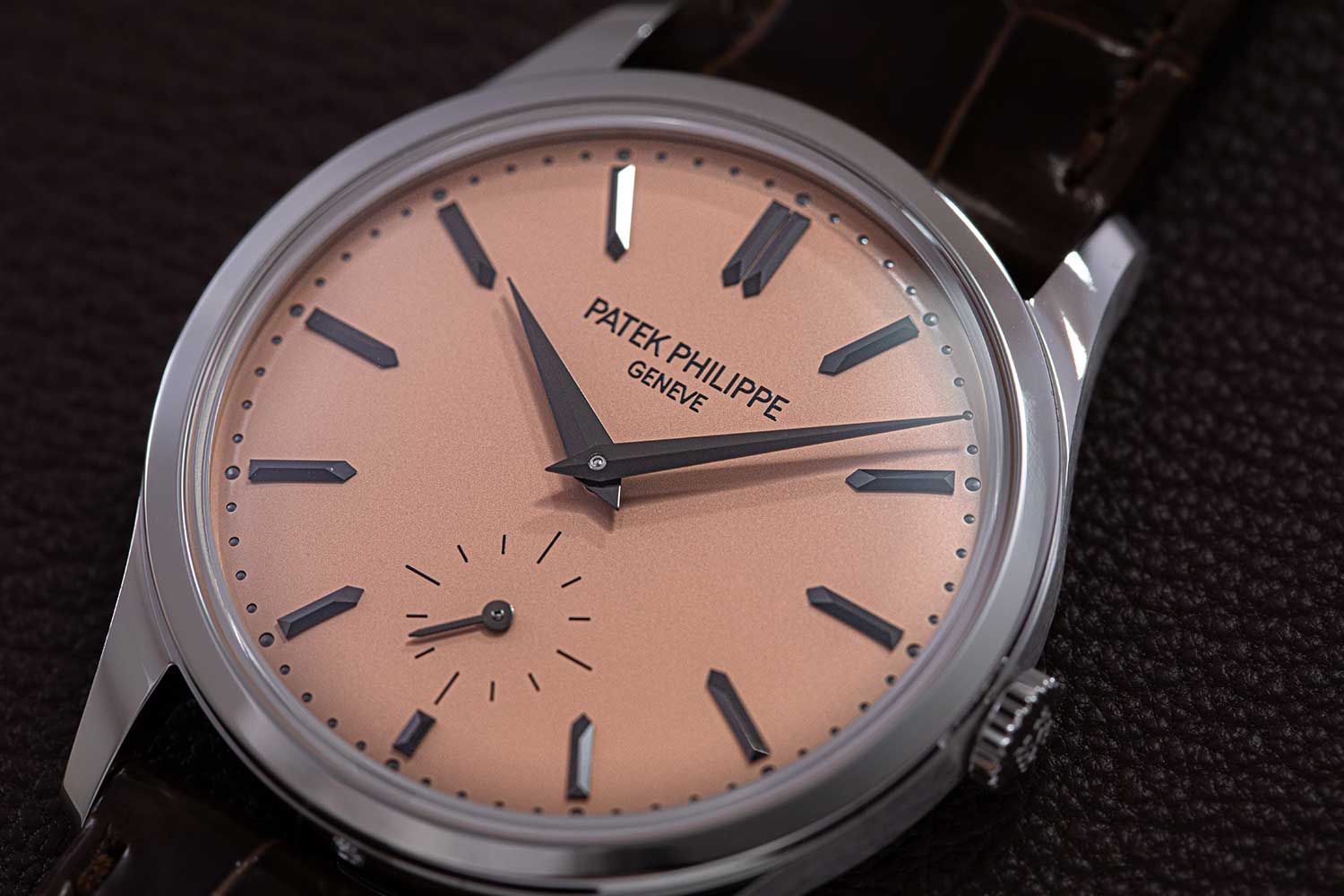
The Ref. 6196P with an opaline rose-gilt dial, a color once reserved for Patek’s most exclusive special-order pieces,. Image: Revolution©
Additionally, while the case of the Ref. 6119 was fully polished throughout, the top surfaces of the 6196P remain polished, but the case flanks are satin-brushed. Lastly, it has slim, flat bezel, which is a hallmark of the Calatrava.
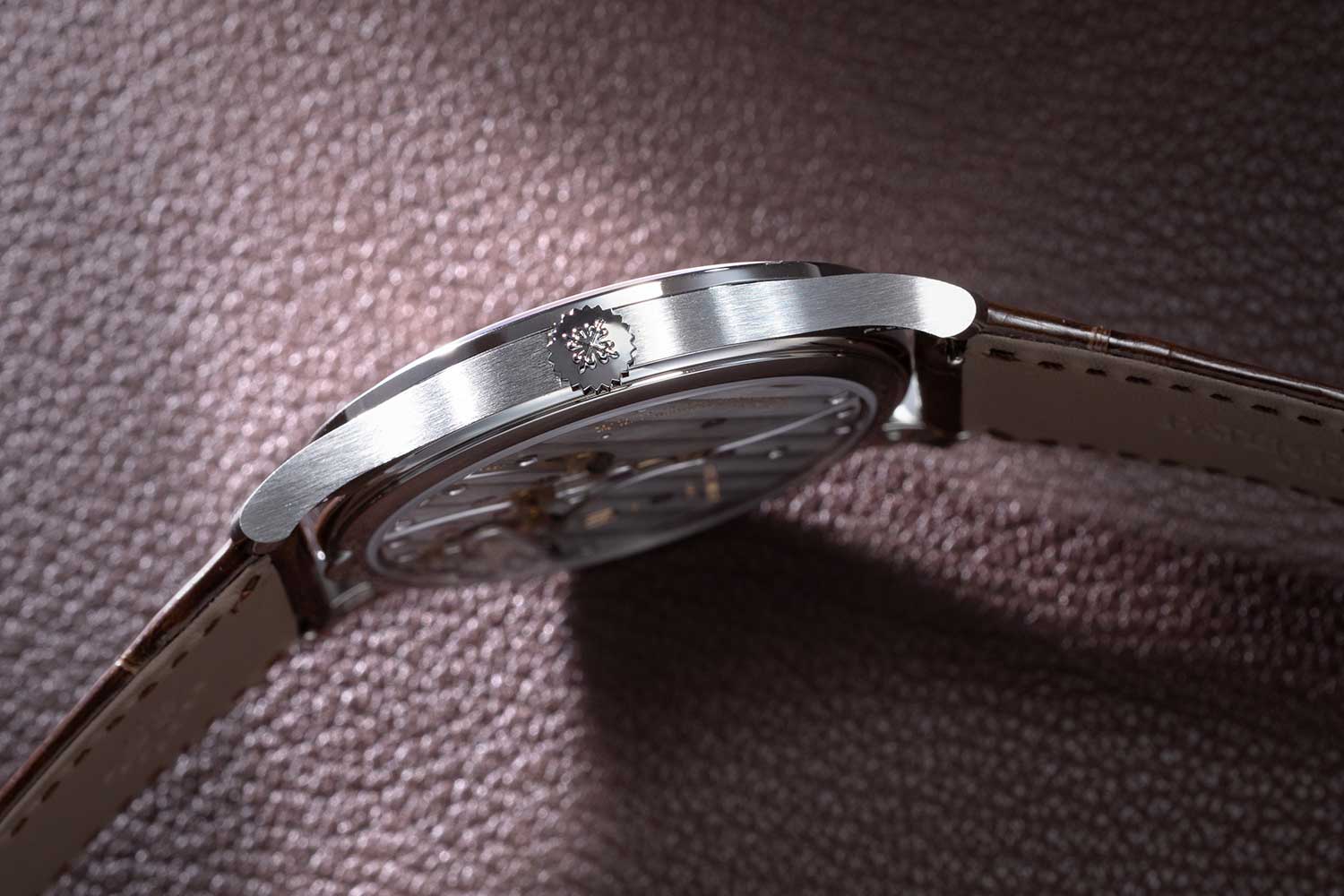
The platinum case is polished with satin-finished flanks, set with a brilliant-cut diamond at 6 o’clock. Image: Revolution©
The dial is rendered in a rose-gilt opaline tone, or salmon – a shade once associated with Patek’s most exclusive special-order pieces, commissioned by its most prominent collectors. In person, the surface has a matte sheen that feels almost velvety, giving it a softness that contrasts beautifully against the crisp faceting of the applied anthracite white gold markers. These are done in the classic obus style; they are pointed, assured and unapologetically Art Deco in silhouette. The applied dot markers for the minutes further anchor the design in mid-century formality, but there’s nothing stale about it. It lands squarely in the sweet spot – sophisticated, timeless, and quietly expressive.
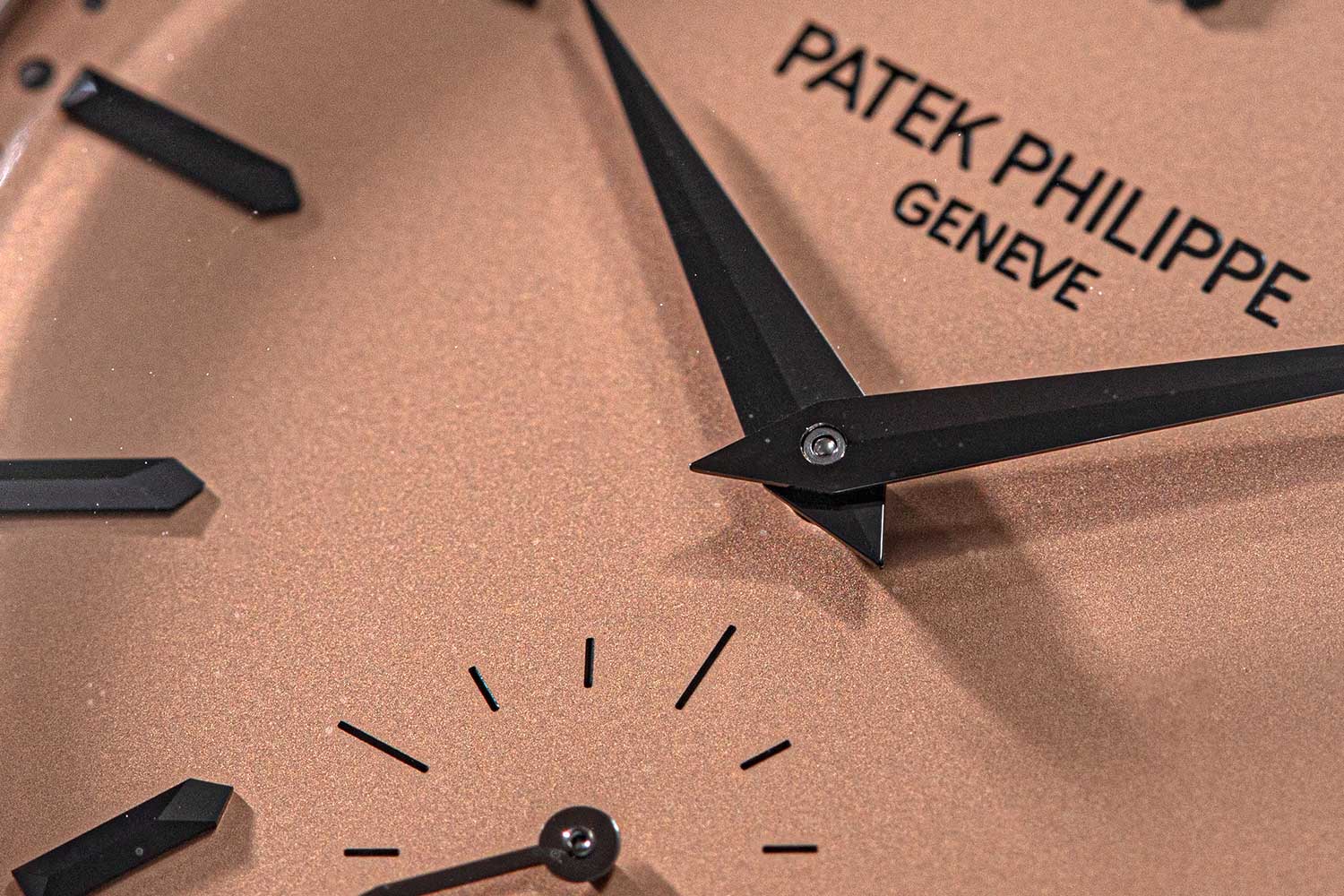
Faceted anthracite white gold “obus” hour markers and dauphine-style hands. Image: Revolution©
In a word, the dial is complete. It doesn’t leave you wanting more, nor does it try to impress by doing too much. Like the best designs in any field, it appears inevitable like this is how a Calatrava dial was always meant to look and how it always should.
Calibre 30-255 PS
The hand-wound Calibre 30-255 PS is among the best manually wound movements currently produced by a major brand and that, in itself, makes it highly unusual. It was tellingly developed with slimness, performance and beauty in mind. While independent watchmakers have long embraced high-torque mainsprings and high inertia balances in pursuit of chronometric stability, such an approach is rare among the grandes maisons especially in a time-only movement.
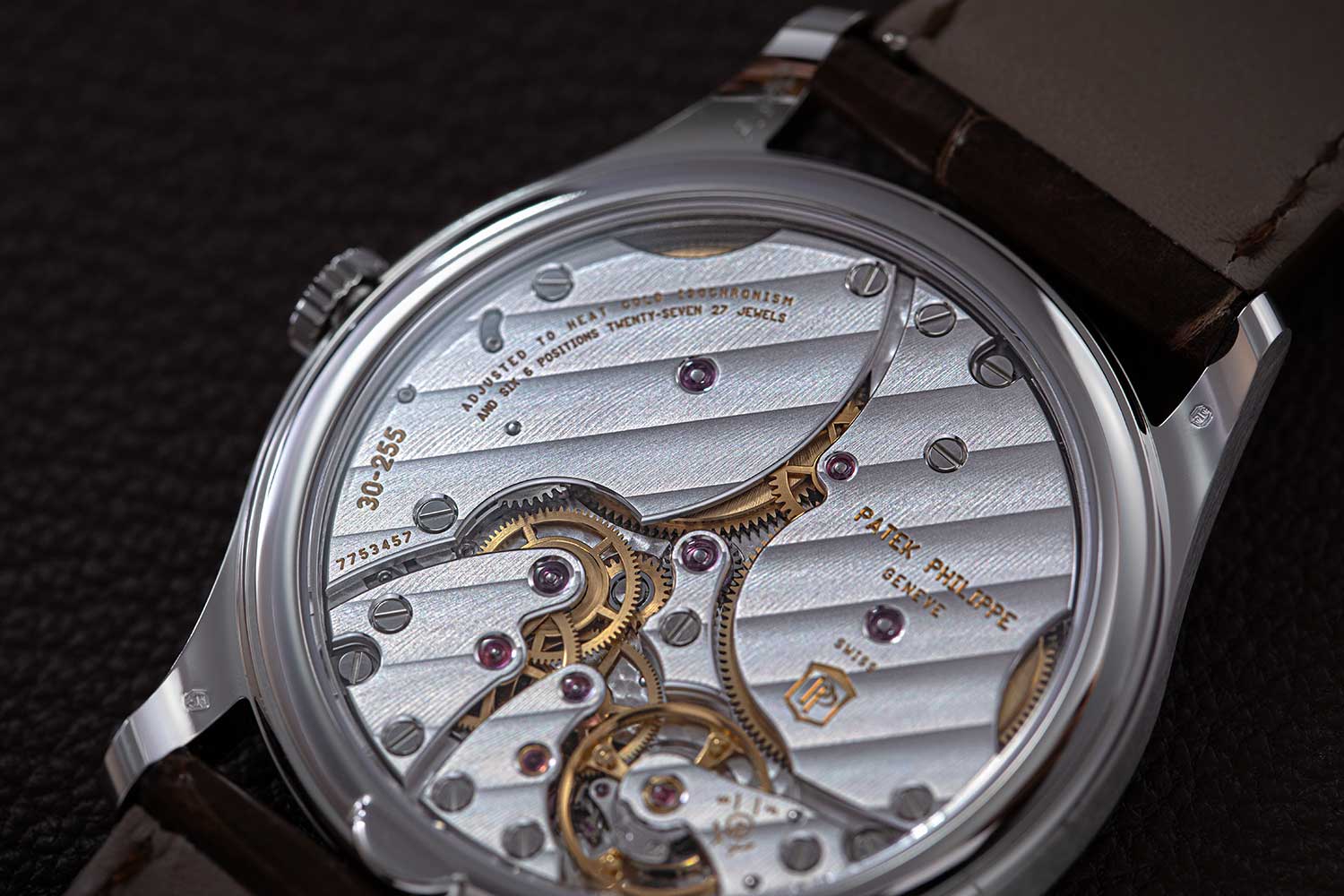
Ref. 6196P is a new manually-wound Calatrava with small seconds, equipped with the caliber 30-225 PS with a 65-hour power reserve. Image: Revolution©
Although wide in footprint, the calibre is densely constructed, with virtually every component serving a necessary function. There is no slack in the design. It features two mainspring barrels, arranged in parallel. Though the concept of twin barrels is common, the Calibre 30-255 PS marked the first time Patek Philippe has used them in a time-only movement. The two large mainsprings work together to deliver ample and steady torque, which is critical because the balance beats at the modern standard of 4Hz, or 28,800vph and moreover, has high inertia. In fact, at 10 mg/cm², it has twice the inertia of the Calibre 215, according to Patek Philippe, and the highest among its 4Hz movements.
While such high-inertia balances are usually paired with slower beat rates to conserve energy, the Calibre 30-255 PS can afford to run at 4Hz because of the high torque provided by its twin barrels. This pairing of high inertia with a high beat rate yields superior rate stability and theoretical precision.
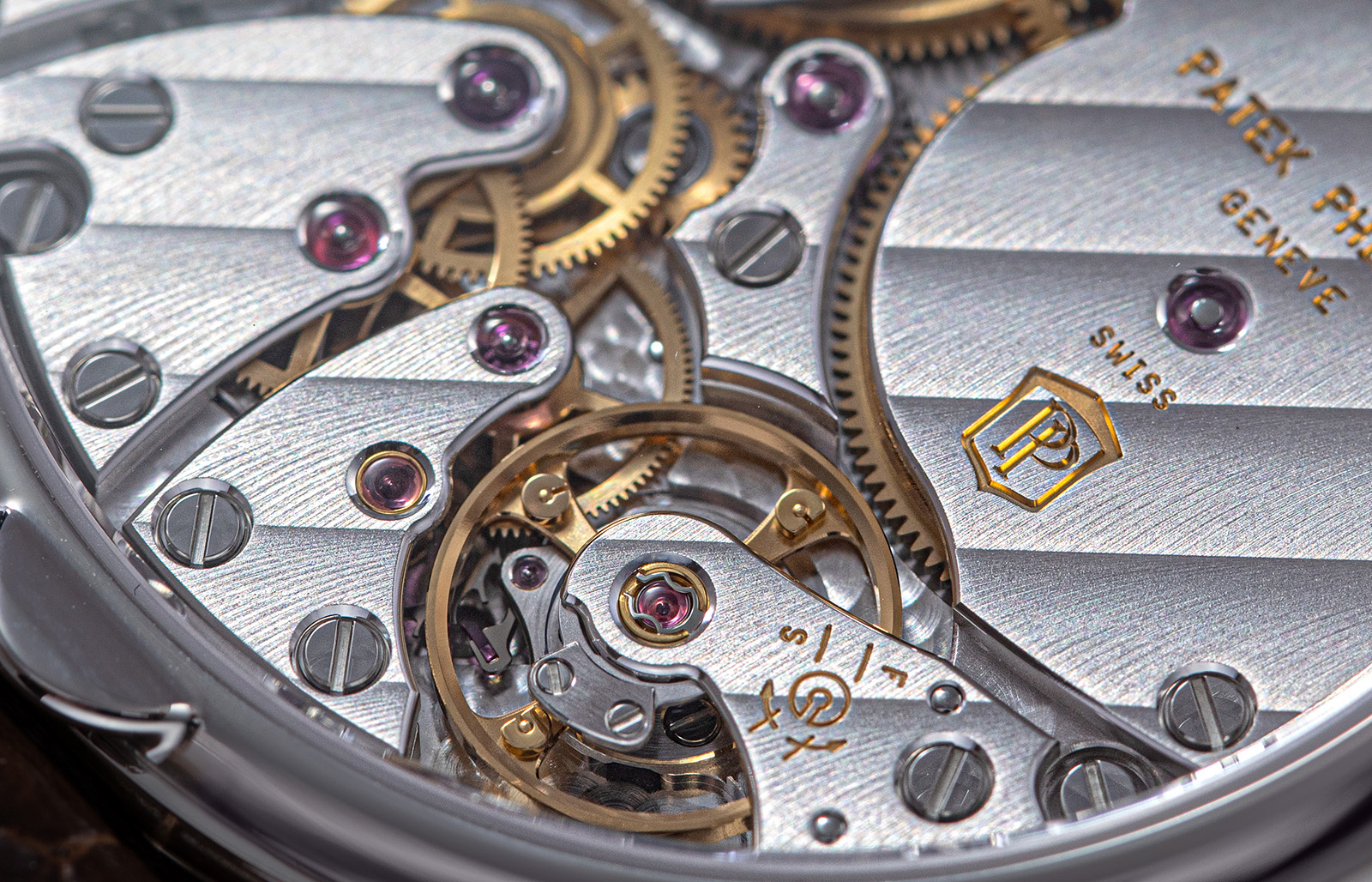
Caliber 30-225 PS. Image: Revolution©
The movement adopts a layout in which the ratchet wheels are concealed beneath the twin barrel bridges. In general, the slimmest arrangement – short of using a hanging barrel – is having an overbridge ratchet, where the ratchet wheel sits above the barrel bridge so the centre wheel can go between the barrel and ratchet. But a concealed ratchet arrangement generally has less wear compared to one where the pivot traverses the bridge and a ratchet wheel is located above it. It’s a subtle difference in architecture but one that reflects thoughtful engineering. Moreover, due to the horizontal layout, the barrels have to be linked via an intermediate winding wheel; having exposed ratchets would once again introduce additional height, as the intermediate wheel would require its own bridge above. As such, this arrangement represents best practice while also offering a cleaner, more elegant solution.
Despite its large diameter, the movement remains exceptionally thin, just 2.55mm, exactly the same as the Calibre 215. This slimness is achieved but by spreading the components laterally across the movement.
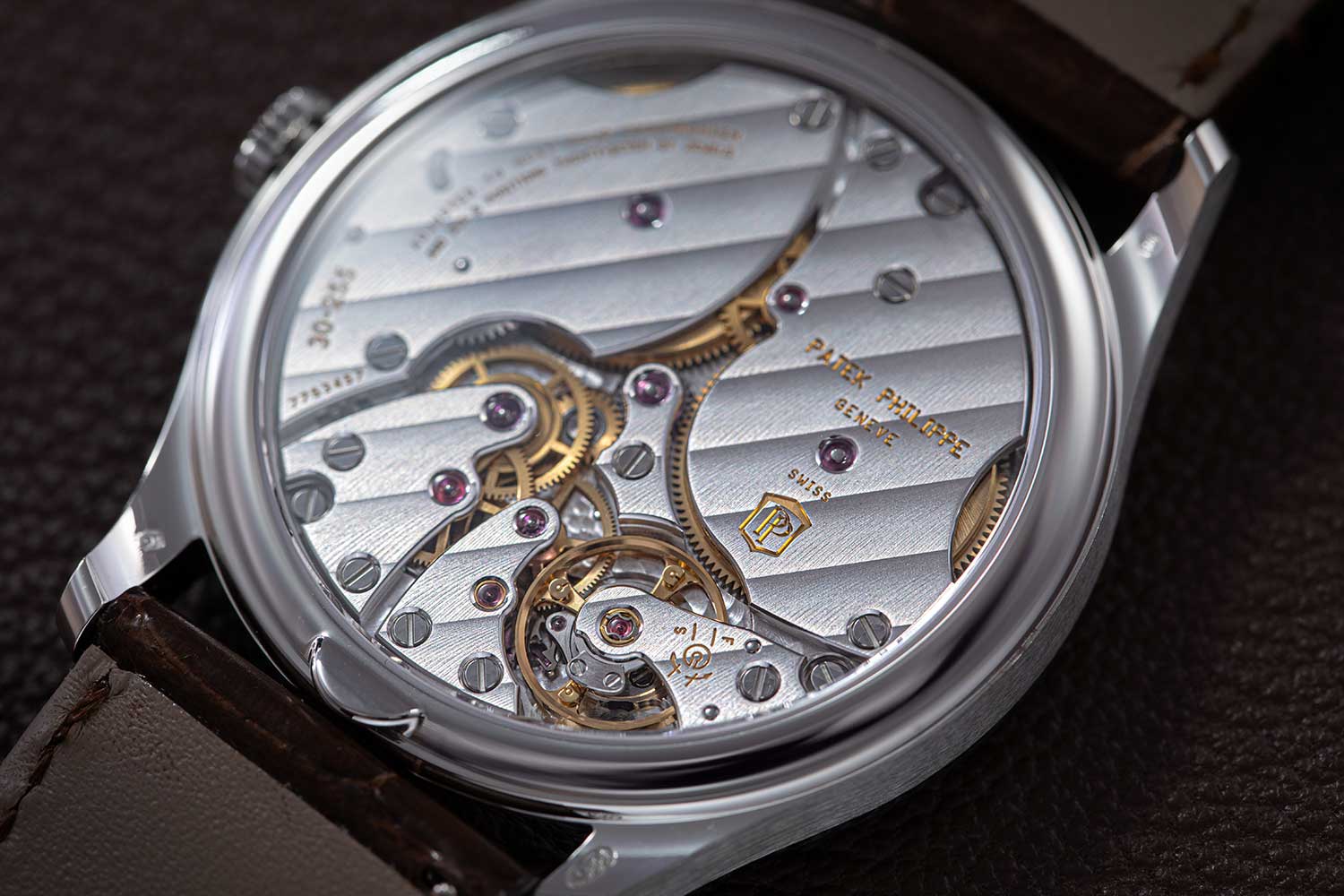
Caliber 30-225 PS. Image: Revolution©
Instead of directly driving a centre wheel, the twin barrels drive an intermediate pinion, eliminating vertical overlap. This allows the centre wheel to be positioned on the same plane as the ratchet wheels, contributing to a flatter overall movement. The high torque delivered by the dual barrels makes it possible to employ a higher gear ratio between the barrels and the centre pinion.
Moreover, this configuration helps to distribute the load more evenly across more wheels rather than being concentrated on just a few. As such, stress per wheel is reduced. It trades a modest increase in complexity for gains in durability and energy management which is entirely consistent with the broader mechanical logic of the calibre.
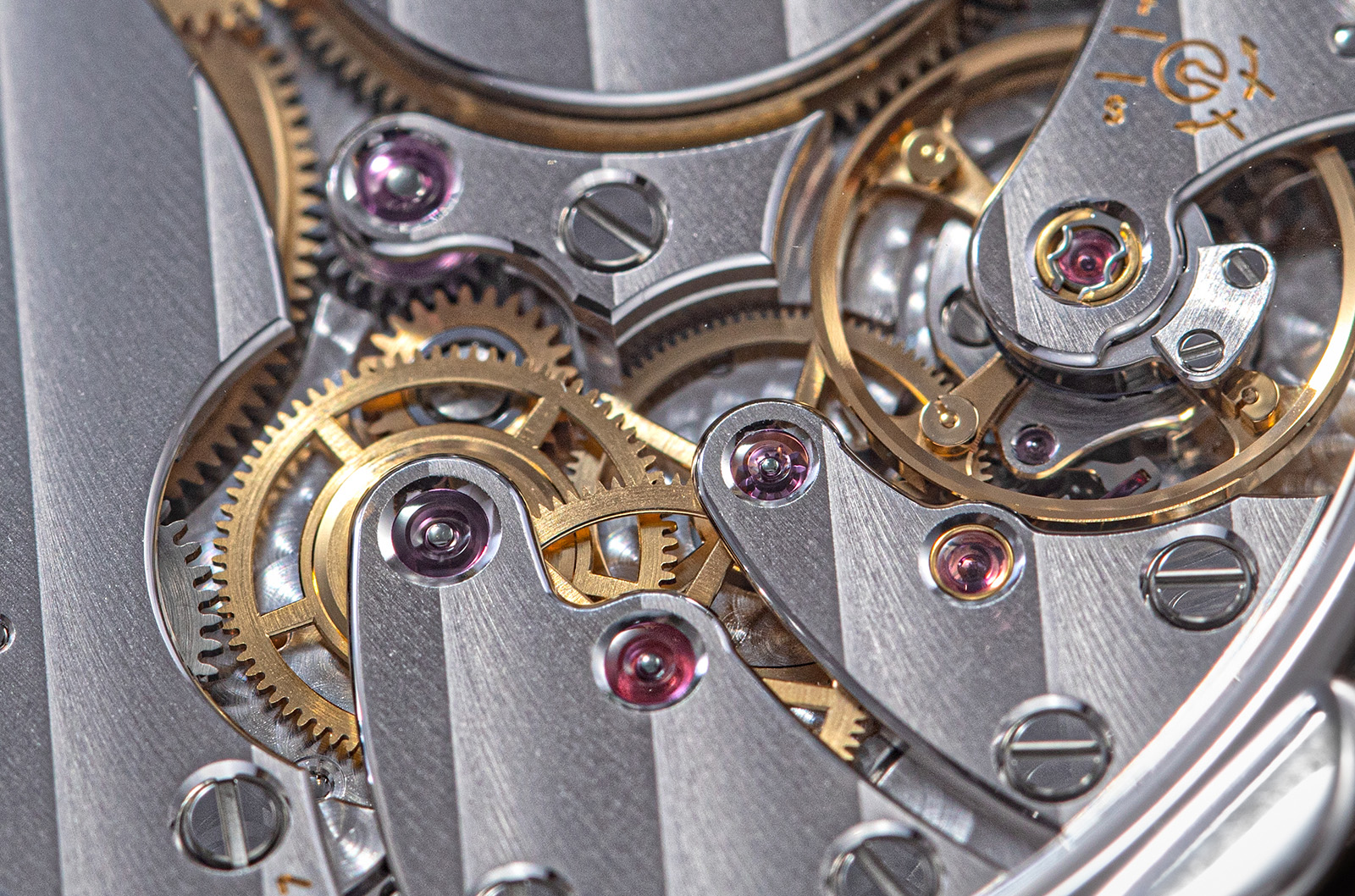
Calibre 30-255 PS (Revolution©)
The leftover space is used for the crown wheel and the stop seconds mechanism. The crown wheel is also hidden under the barrel bridge, only identifiable by a domed, polished pin, and the hacking lever hugs the perimeter of the gear train. This too is notable. Patek Philippe movements have historically not featured stop seconds function, but here it is subtly integrated. It is, in essence, a very complete movement.
Every aspect of its construction sets the stage for exceptional chronometric potential. The architecture is clearly engineered with stability and precision in mind from the use of twin barrels delivering high and consistent torque to the high-inertia balance wheel that resists perturbations from shock or wrist motion. These choices aren’t just theoretical advantages but foundational to stable timekeeping in real-world conditions.
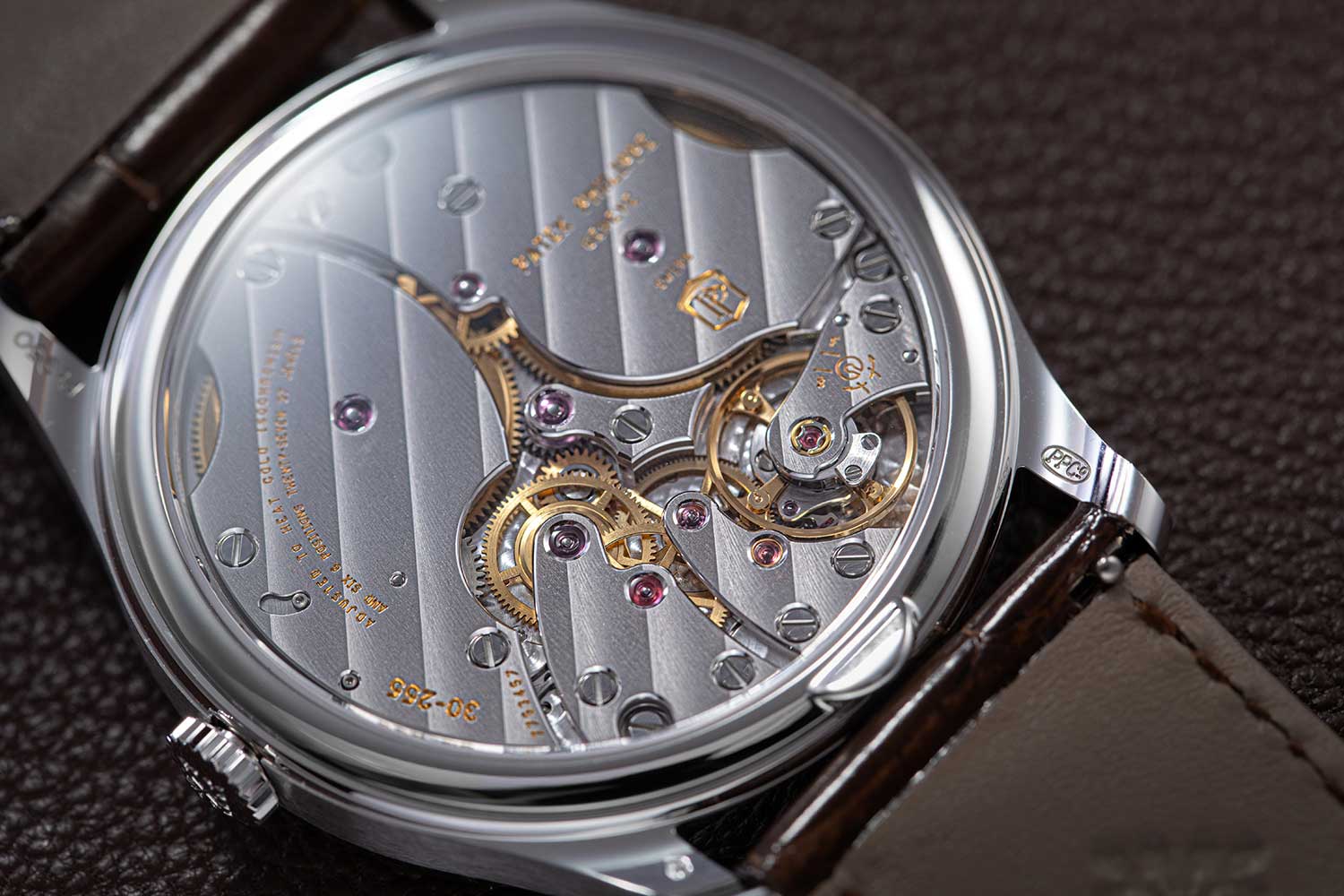
Calibre 30-255 PS (Revolution©)
On top of that, the bridge design is very beautiful. In fact, there are six bridges in total, which lend themselves to a greater degree of finishing. Each is gracefully contoured with flowing curves that recall the language of mid-20th century calibres.
In short, the 6196P represents the full package — a slim platinum Calatrava paired with a warm opaline rose-gilt dial, powered by the highly competent Calibre 30-255, which combines high torque with high inertia and a modern beat rate, while remaining thin, elegant and beautifully finished.
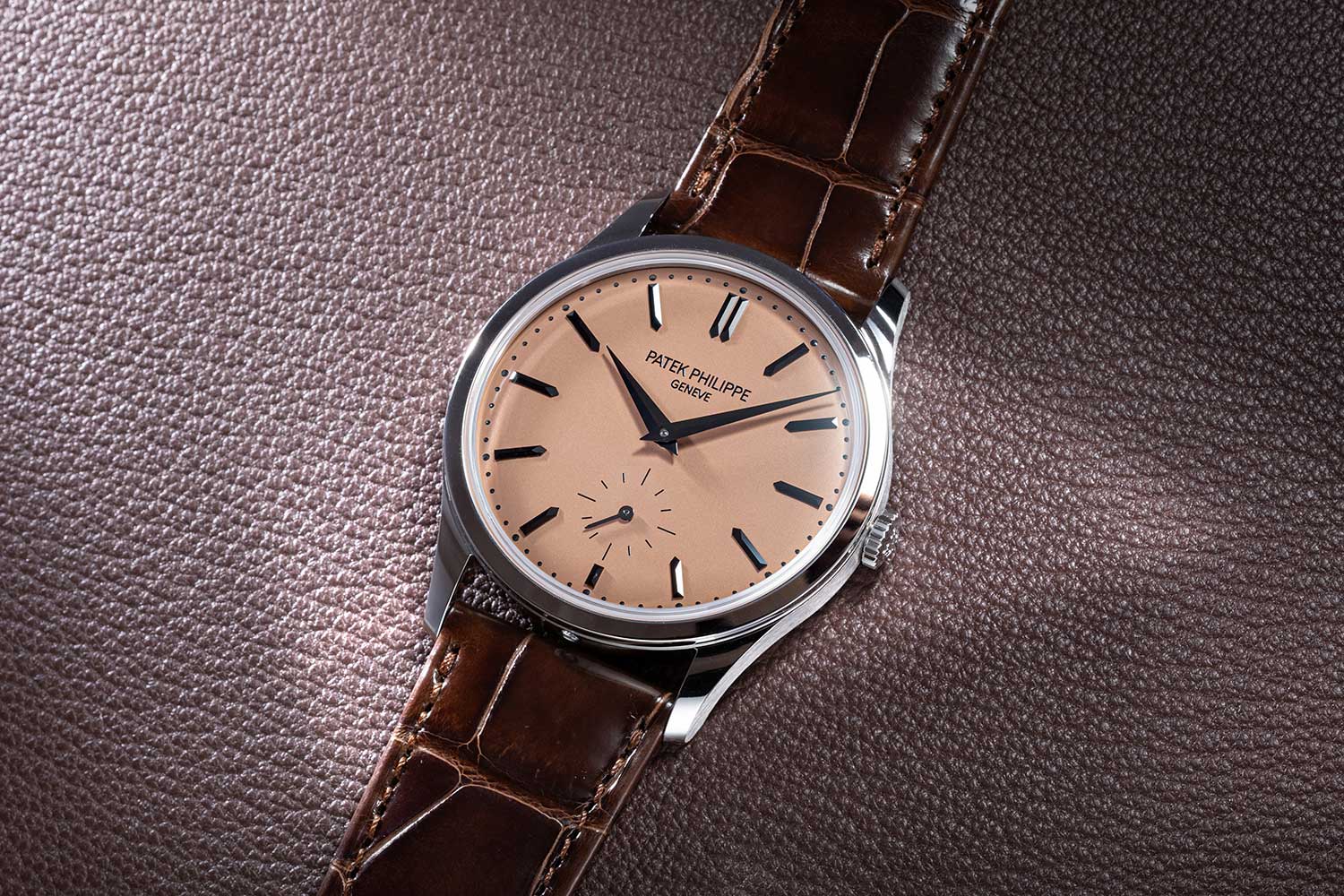
Patek Philippe Calatrava 6196P (Revolution©)
Tech Specs: Calatrava Ref. 6196P-001
Movement: Manual-winding 30-255 PS; 65-hour power reserve; 4Hz or 28,800vph
Functions: Hours and minutes; small seconds
Case: 38mm × 9.33mm; platinum; water-resistant to 30m
Dial: Rose gilt opaline
Strap: Chocolate brown alligator leather with platinum prong buckle
Price: CHF 40,000
Patek Philippe

You may also like

News
Watches & Wonders 2026 Looks Forward to Its Biggest Fair Yet
Feb 10, 2026
News
Watches & Wonders 2026 Looks Forward to Its Biggest Fair Yet
Feb 10, 2026

Editorial
Holiday Horology: Something Old, Something New, Something Special — Cheryl Chia, Technical Editor
Dec 17, 2025
Editorial
Holiday Horology: Something Old, Something New, Something Special — Cheryl Chia, Technical Editor
Dec 17, 2025

Editorial
The Revolutionary List: 24 Technically Brilliant Watches – Patek Philippe Advanced Research
Dec 12, 2025
Editorial
The Revolutionary List: 24 Technically Brilliant Watches – Patek Philippe Advanced Research
Dec 12, 2025