Patek Philippe’s Most Elegant Perpetual Calendar: The 3448
For Patek, its perpetual calendar wristwatches bear great significance to the maison, because while it is English watchmaker, Thomas Mudge who is largely attributed as the inventor of the complication, it is Patek Phillipe who gave the world its first perpetual calendar wristwatch in 1925. Since then Patek has produced no less that 30 references of the calendar complication, and this without even considering the chronographs and other super complications with integrated perpetual calendar functions.
Over the course of this development, Patek’s had to come up with ever new technical innovations that help realize the compilation more effectively and creative ways in which to display information on the dial side, such that the watch can be read by the wearer with the greater ease.
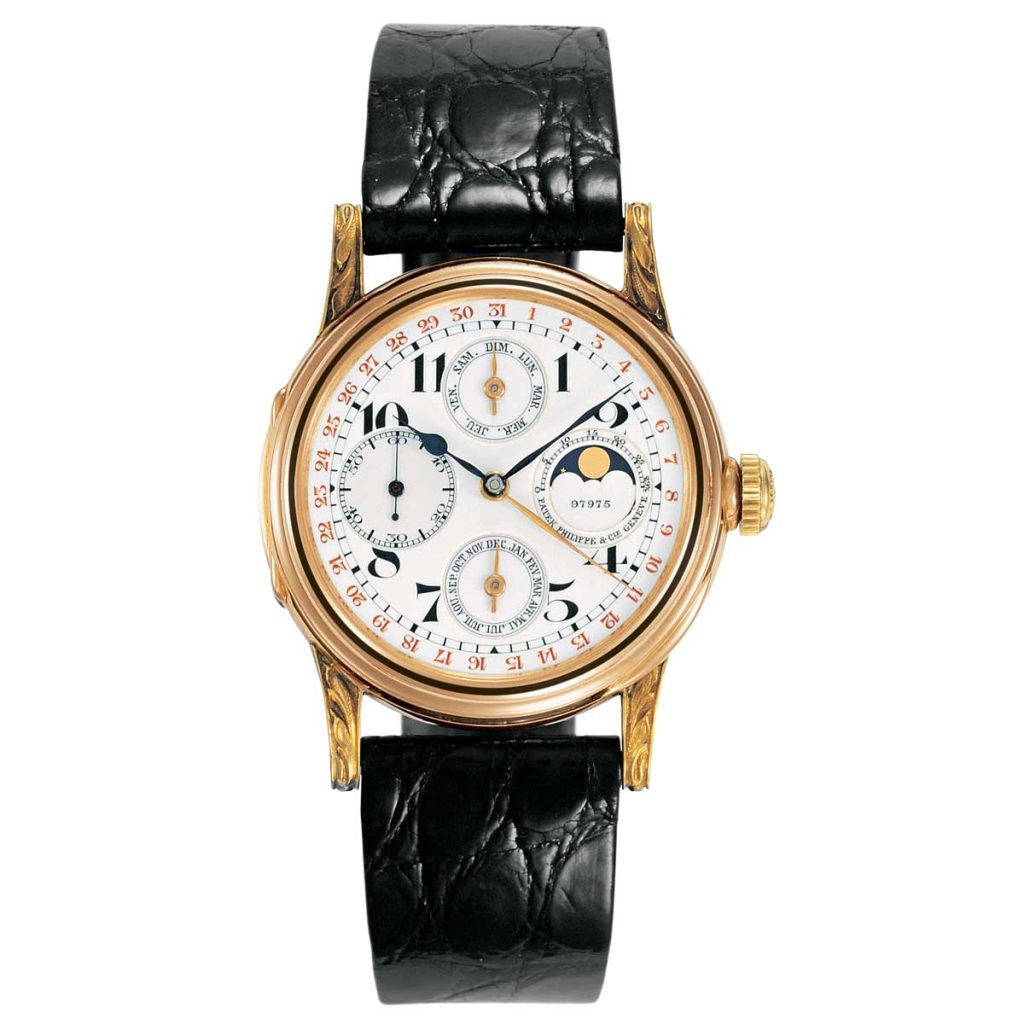
1925: No. 97 975 was Patek Philippe’s — and the world’s — first perpetual calendar wristwatch, this watch was 34.4mm
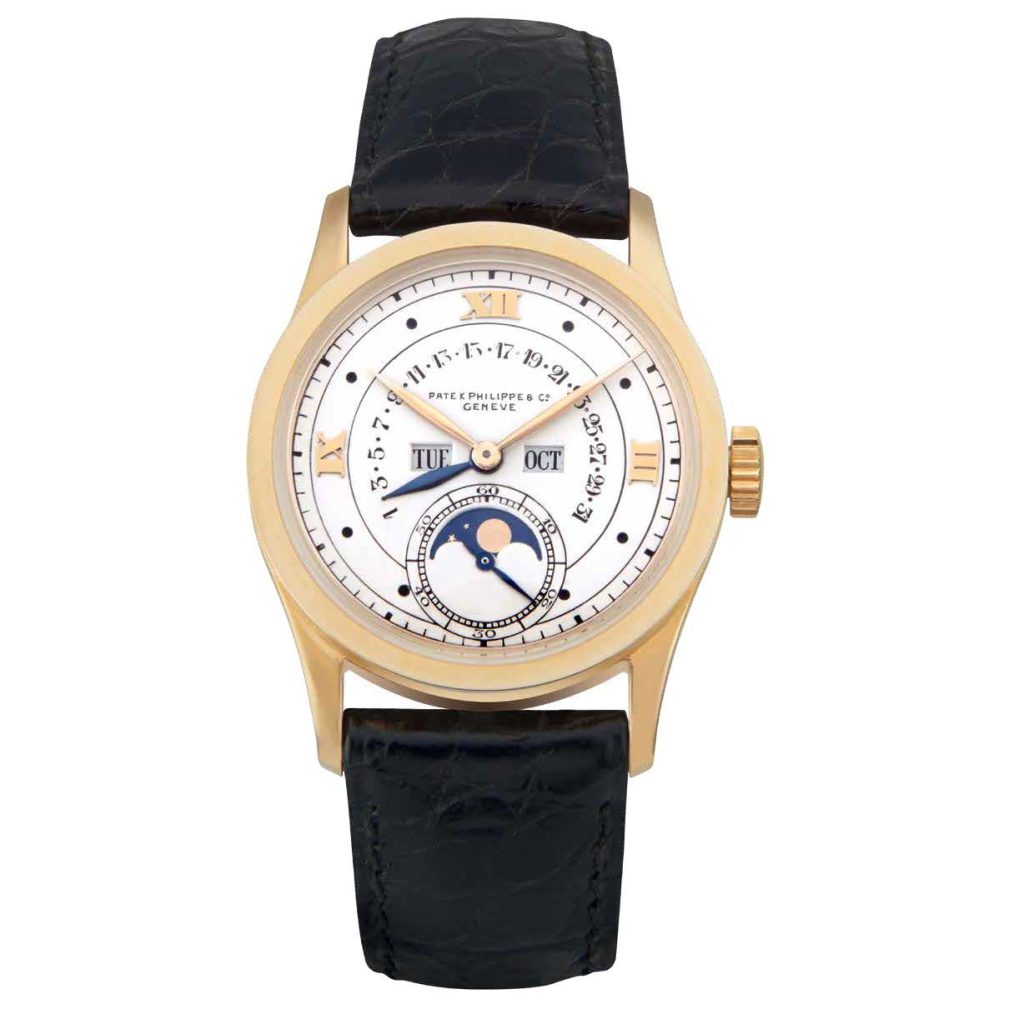
1937: Patek Philippe created another first with the Ref. 96 by fitting a retrograde perpetual calendar within a wristwatch, this watch was 30mm
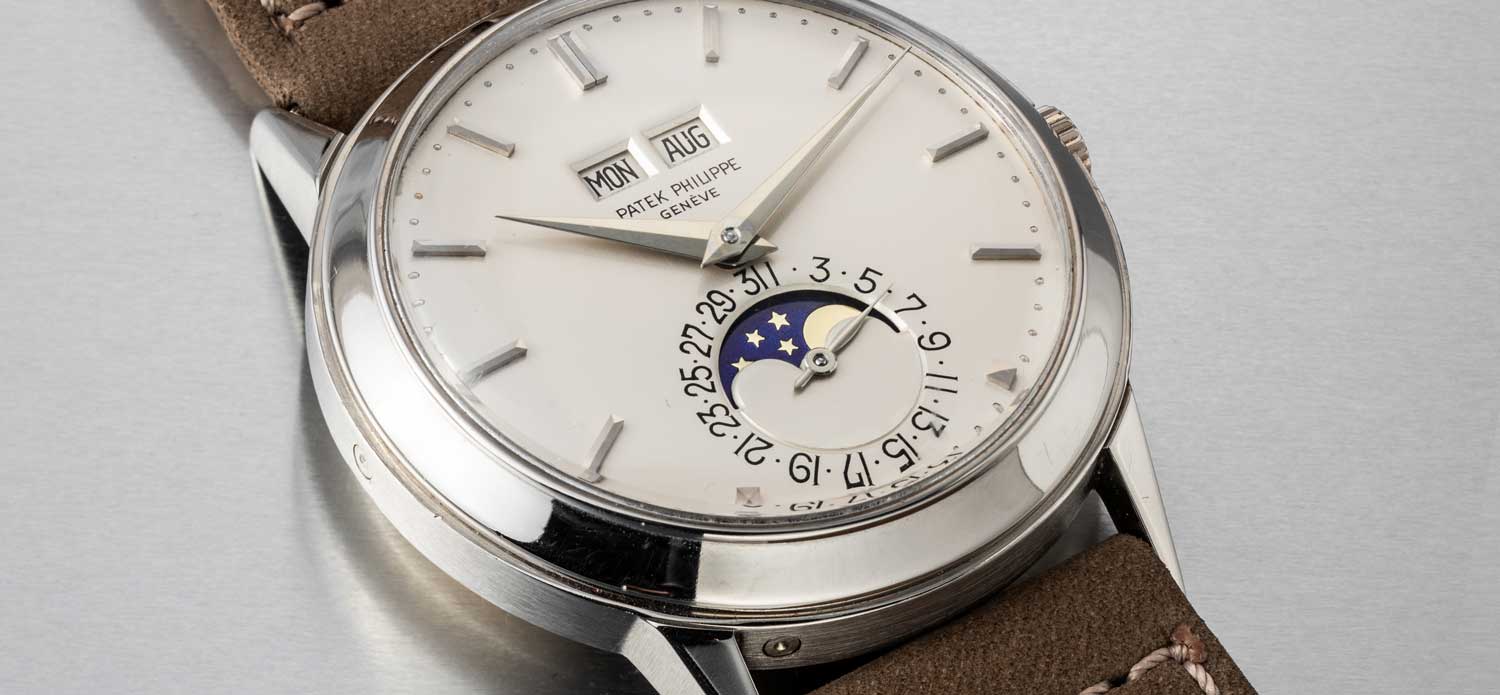
It is with the next generation of Patek’s perpetual calendar, the ref. 1526 of 1941 that we see a timeless design take shape with the day and month apertures placed side by side, just under the 12 o’clock hour marker. The date indicator, now a subdial placed around the moonphase indicator. This subdial also served as the watch’s small running seconds.
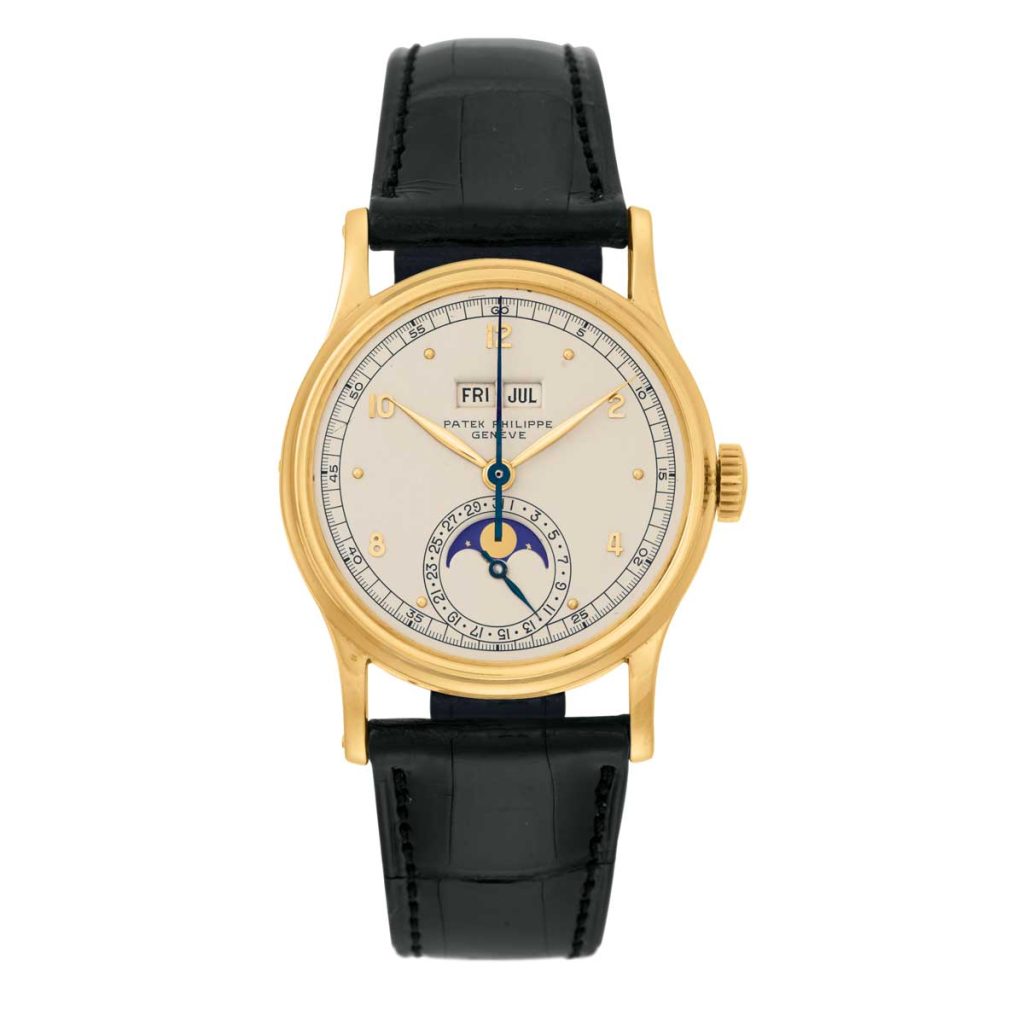
1941: Patek Philippe’s first series-produced perpetual calendar wristwatch, the Ref. 1526, also established the company’s signature dial layout of two apertures and a central subdial. This model was 34mm and fitted with the hand-wound calibre 12-120 QP
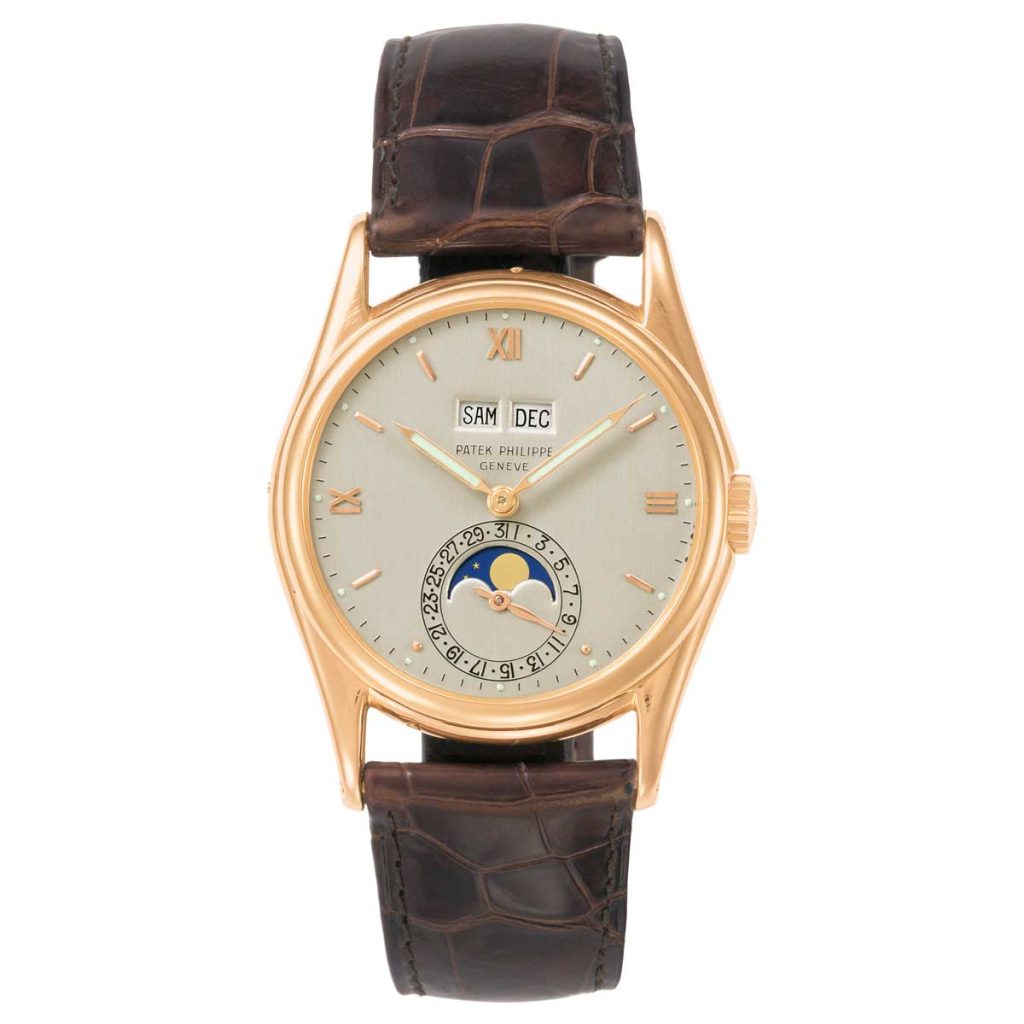
1943: The reference 1527 was powered by the calibre 12-120 QP
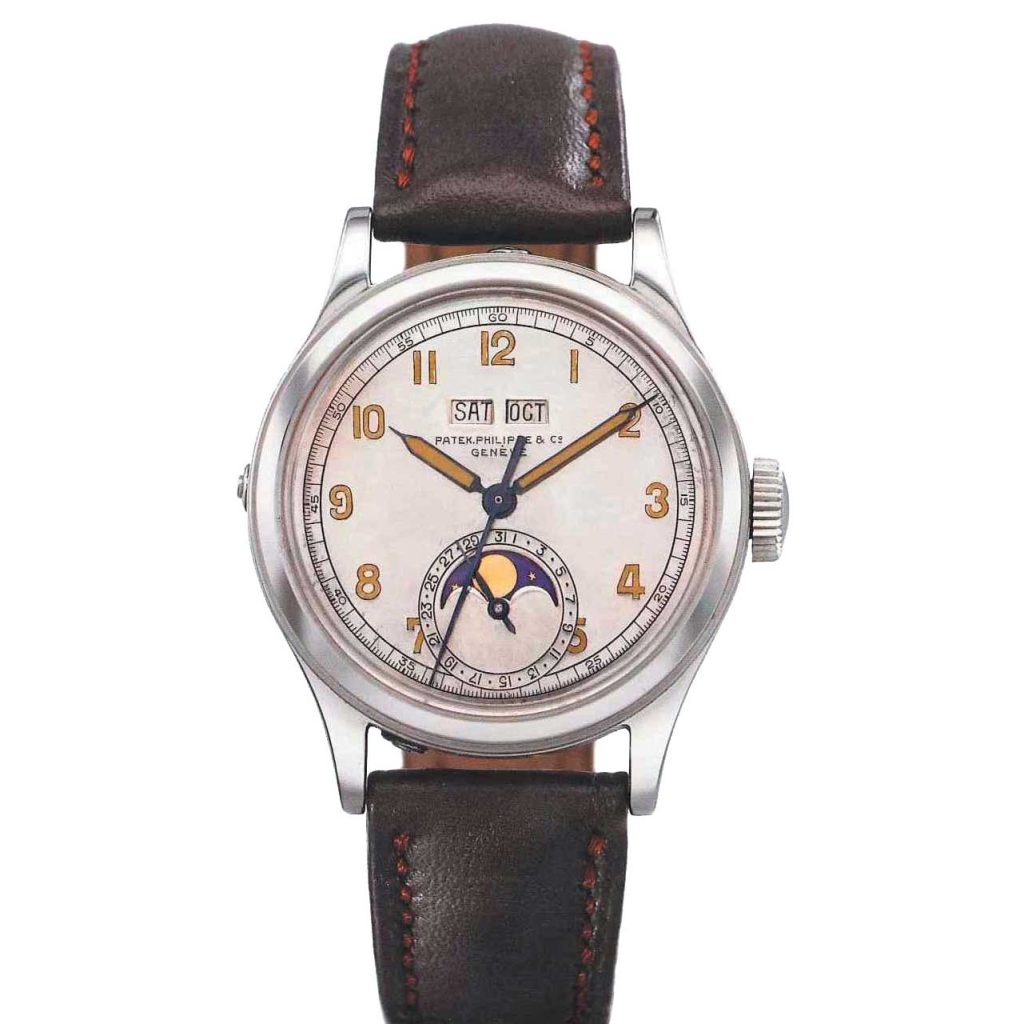
1944: The peculiar ref. 1591 with the movement 12 Calibre SC QP, Patek's first waterproof perpetual calendar; this was a piece unique
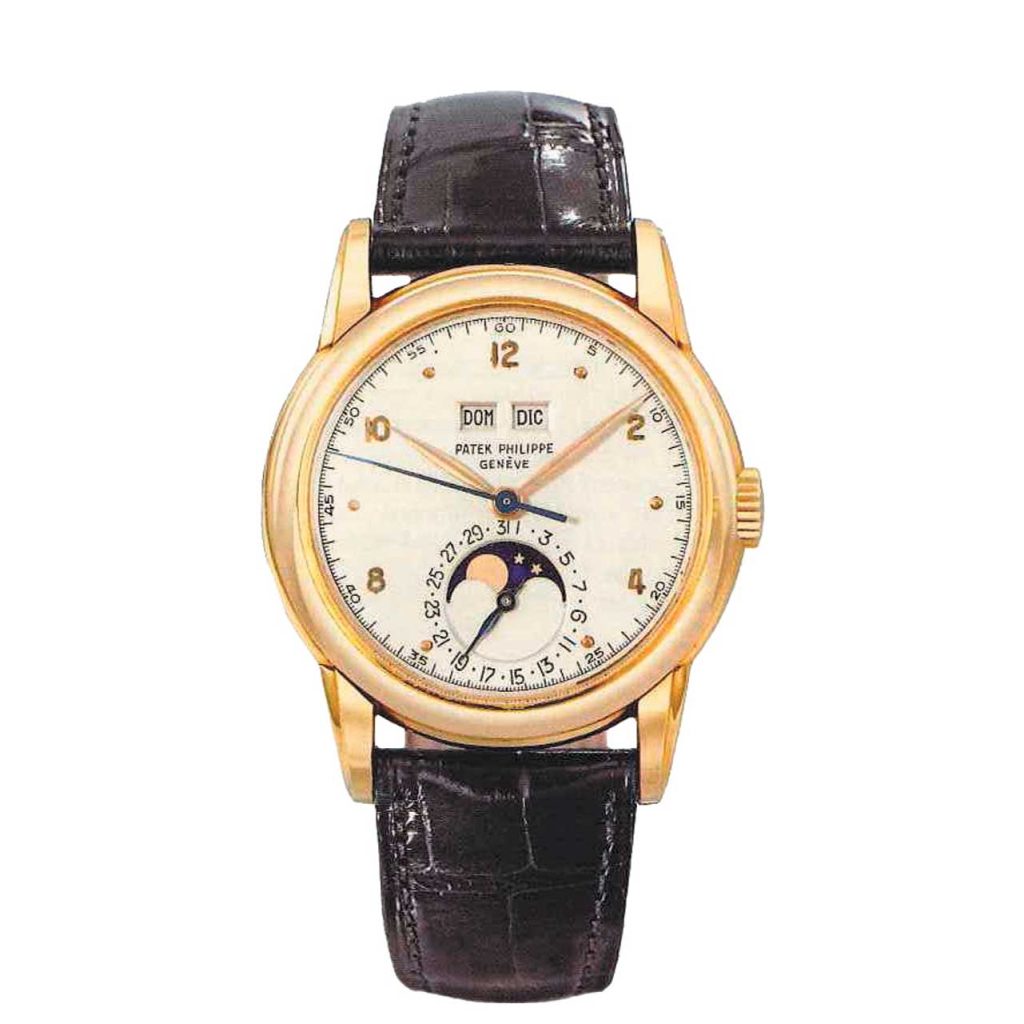
1951: Succeeding the 34mm Ref. 1526, the Ref. 2497, diameter 36.7 mm, newly fitted a center-seconds hand, a first for perpetual calendars. This manually wound model, with caliber 27 SC Q movement, was a contemporary of the Ref. 2499, diameter 37.7mm, the famous perpetual calendar with chronograph function
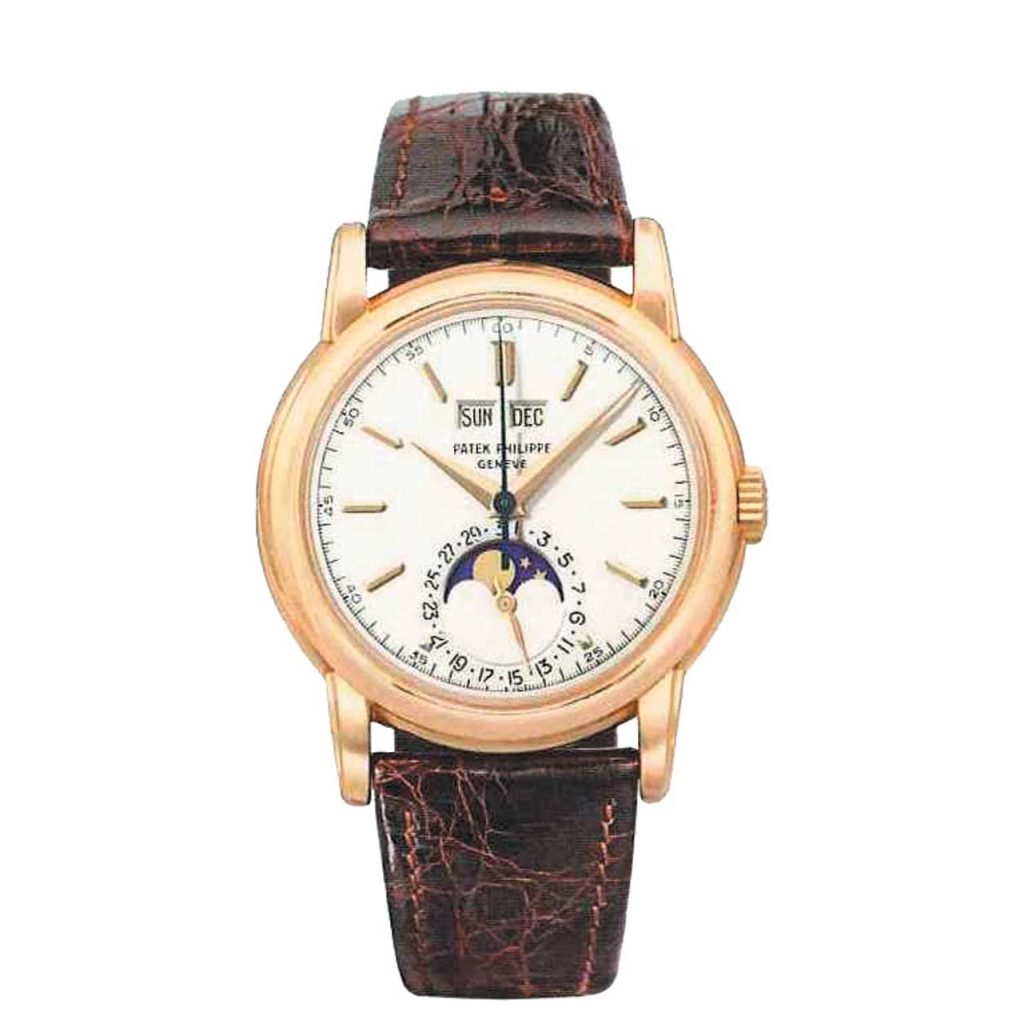
1955: Featuring applied facetted baton hour markers and prominent claw-shaped lugs — also seen on the 36.7mm Ref. 2497 — the manually wound Ref. 2438/1, diameter 37mm was fitted with the 27 SC Q movement
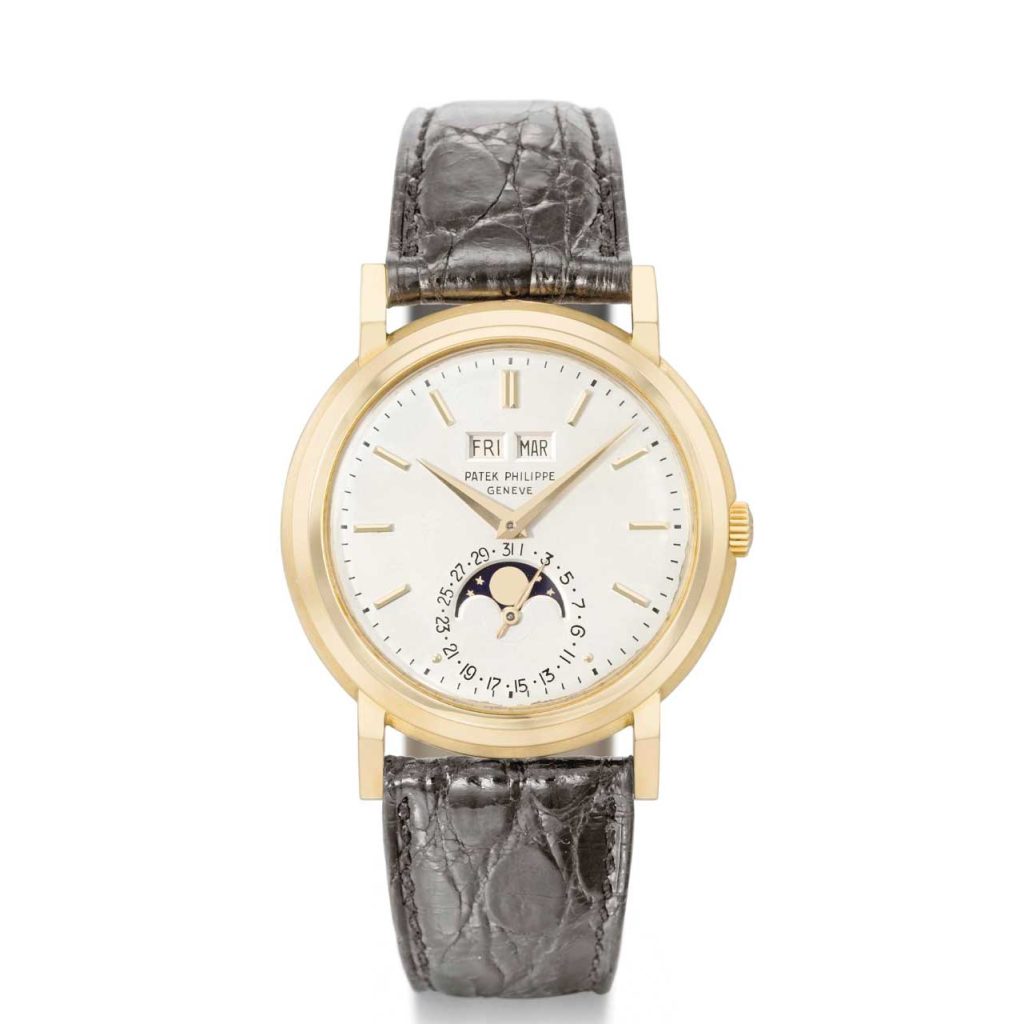
1961: Made for a year and in a limited run of just 3 pieces, the ref. 3449 is the rarest of Patek Philippe's perpetual calendars
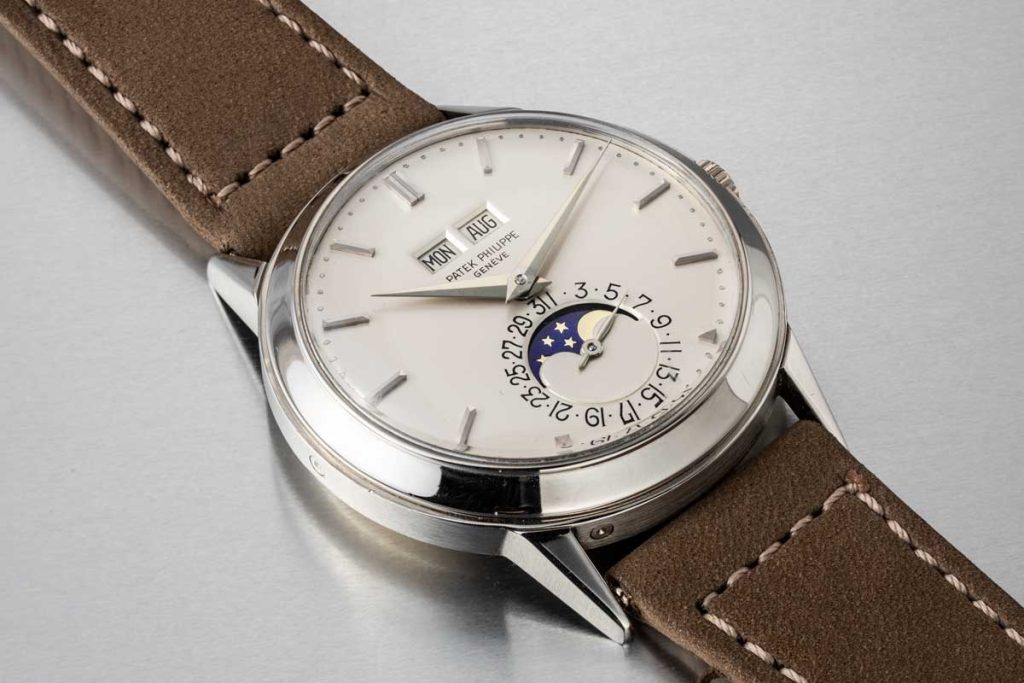
1962: A greatly admired piece from Patek Philippe's lineage of perpetual calendar watches, the ref. 3448 is powered by the the maison's first-ever self-winding perpetual calendar movement, the celebrated caliber 27-460 Q; the example shown here is Lot 384 at the Phillips Hong Kong Watch Auction: SEVEN from 1971 (Image © Revolution)
Auction house Phillips Watches’ research suggests that there were 586 examples made of the reference, mostly in yellow gold, the white gold version being the next most abundant; just two rose gold pieces known to the public auction market and two platinum pieces that were born as white gold instances, later upon the approval of Mr Stern, re-cased with platinum cases. An instance of a platinum piece sold with Phillips at their May 2018 Geneva auction for well over USD 1 million.
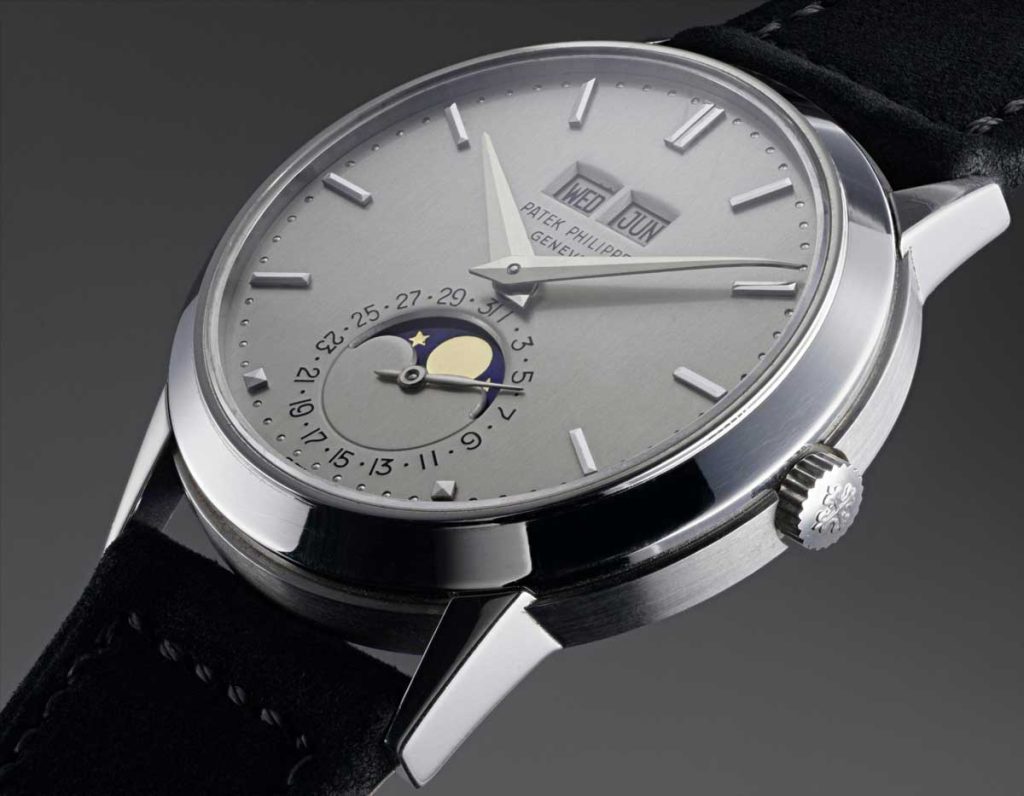
The platinum Patek Philippe 3448 that sold with Phillips at their May 2018 Geneva auction for well over USD 1 million (Image: phillipswatches.com)
The 3448 was eventually retired for the ref. 3450 and the 3563, both of which brought a leap indicator onto the dial. The 3563 in particular had a central seconds hand. But both references were in production for a mere 4 years, when in 1985 Patek introduced the fabled Calibre 240 Q and the ref. 3940, which took on subdials at 3 and 9 o’clock for the calendar indications.
In the meantime, the soul of the 3448 and its perpetual calendar layout lived on solely through Patek’s perpetual calendar chronographs, that is until in 2017, when the maison gave us the incredibly well received ref. 5320. But for those in search of the elegance, clarity and near perfection of the 3448, only a 3448 will do.
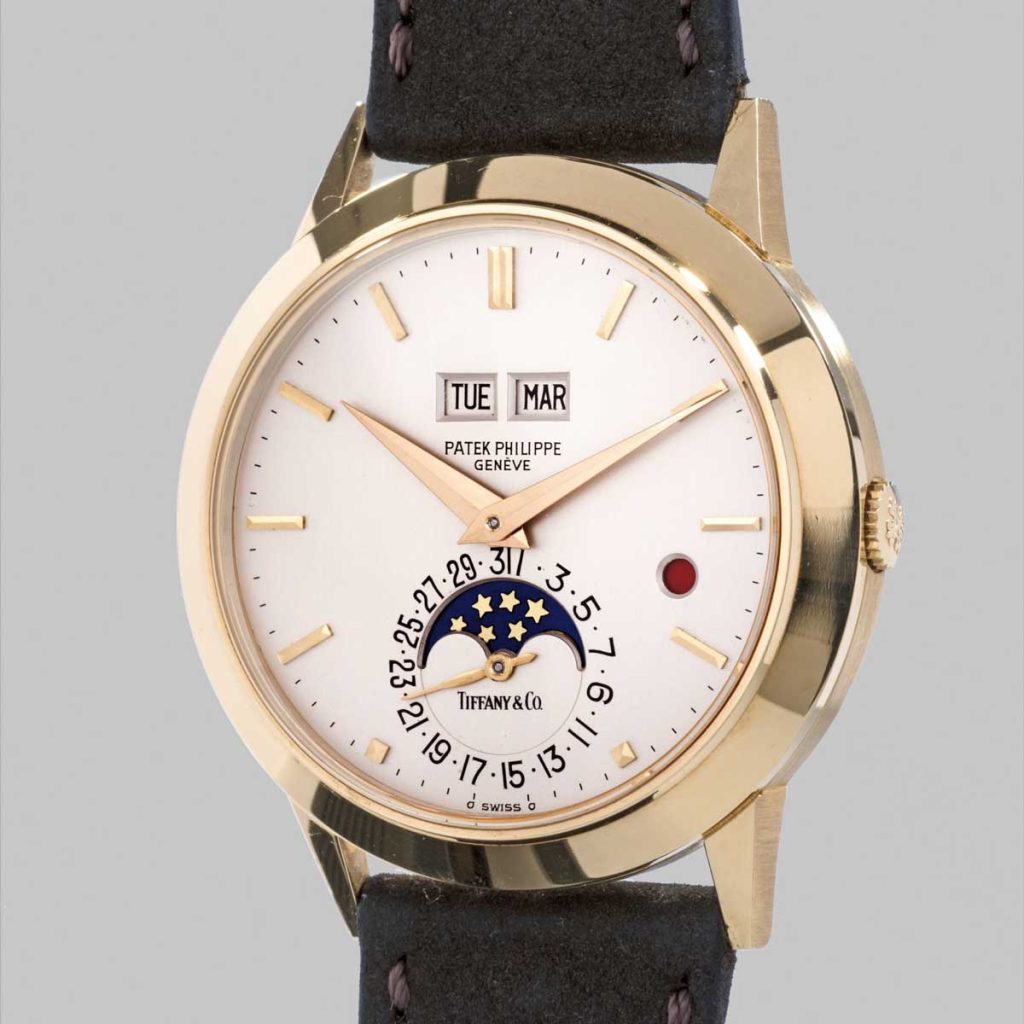
1981: The self-winding 37.5mm Ref. 3450 was instantly recognizable thanks to the “dot” leap-year indicator, the watch was powered by the calibre 27-460 Q that was phased out along with the watch in the mid-80s (Image: phillipswatches.com)
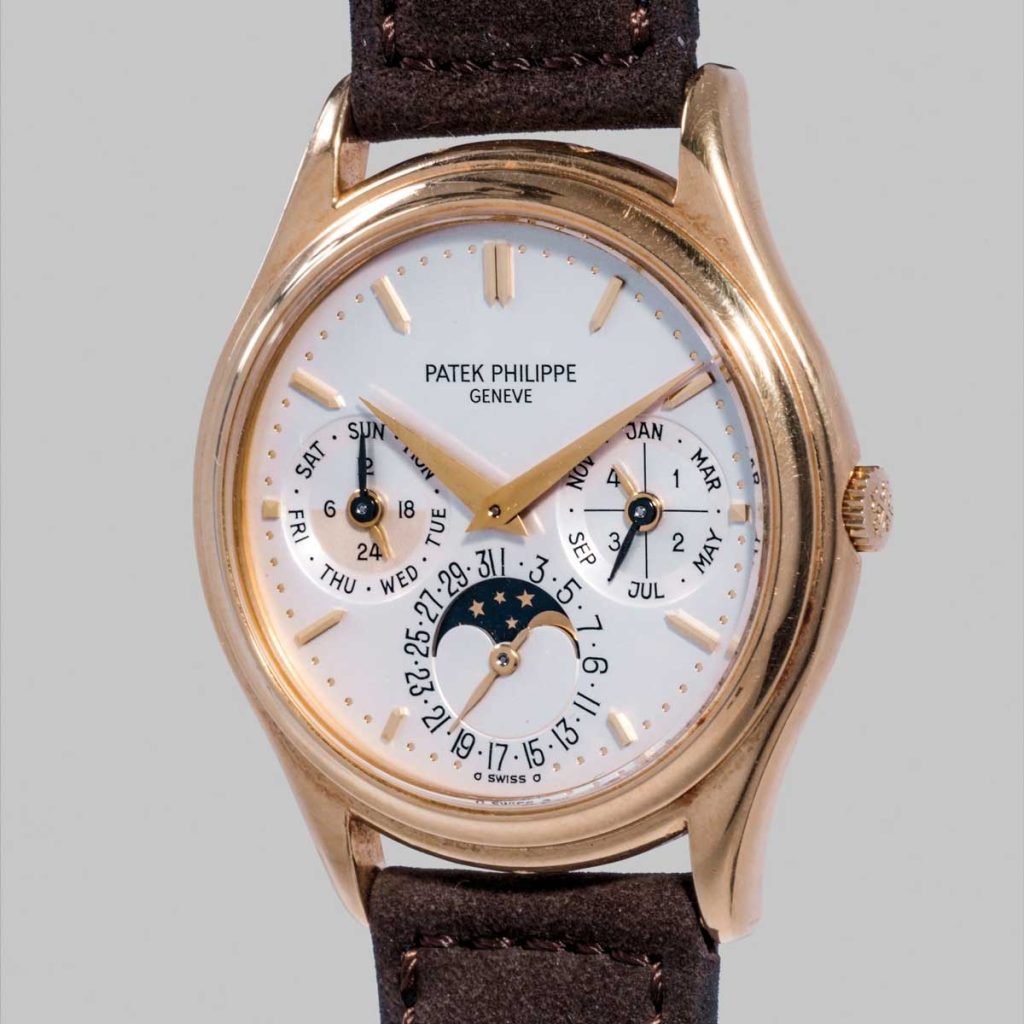
1985: Replacing the Ref. 3450, the 36 mm self-winding Ref. 3940 was equipped with the caliber 240 Q, which enabled an ultra-thin case. In dial layout, was now replaced by sub-dials at 3 and 9 o’clock for the calendar indications (Image: phillipswatches.com)
Consider Lot 834 (pictured here), at Phillips Hong Kong Watch Auction: SEVEN: a pristine, fresh to market ref. 3448 in white gold, consigned by the previous owner’s family, based in Tokyo. Hard enamel dial suggests this is from one of the earlier series. Phillips’ even managed to secure extracts from Patek’s archives, confirming the watch’s date of production and sale. There’s yet another great little detail that’s sure to get the most severe Patek collector weak in the knees: the large inverted date numerals around the moon.
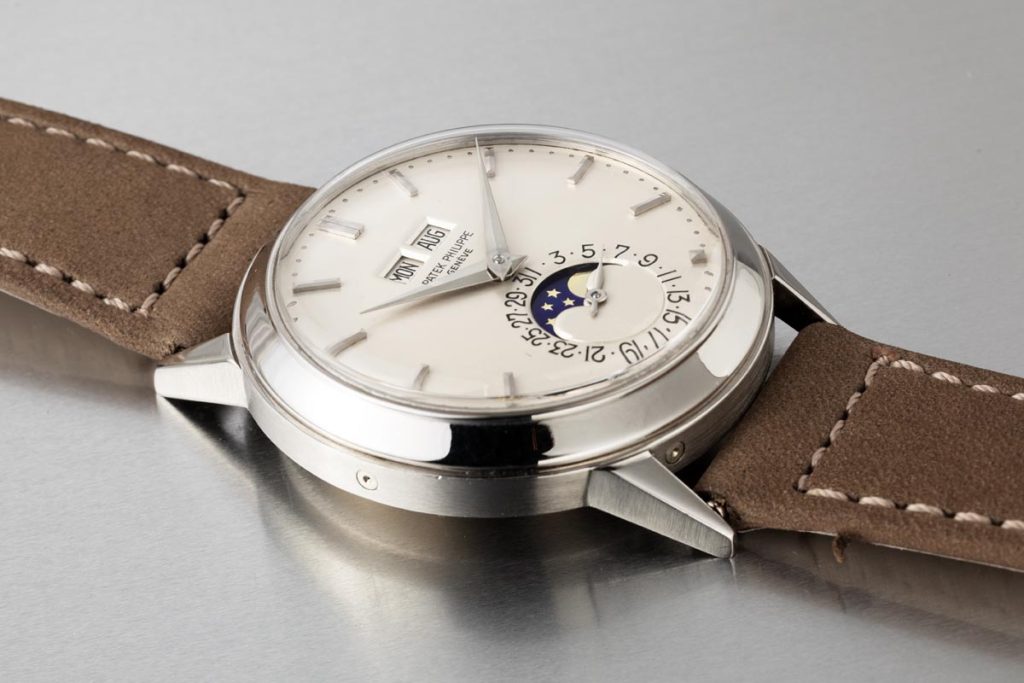
Case side of Lot 384, a 1971 ref. 3448 at the Phillips Hong Kong Watch Auction: SEVEN in white gold (Image © Revolution)
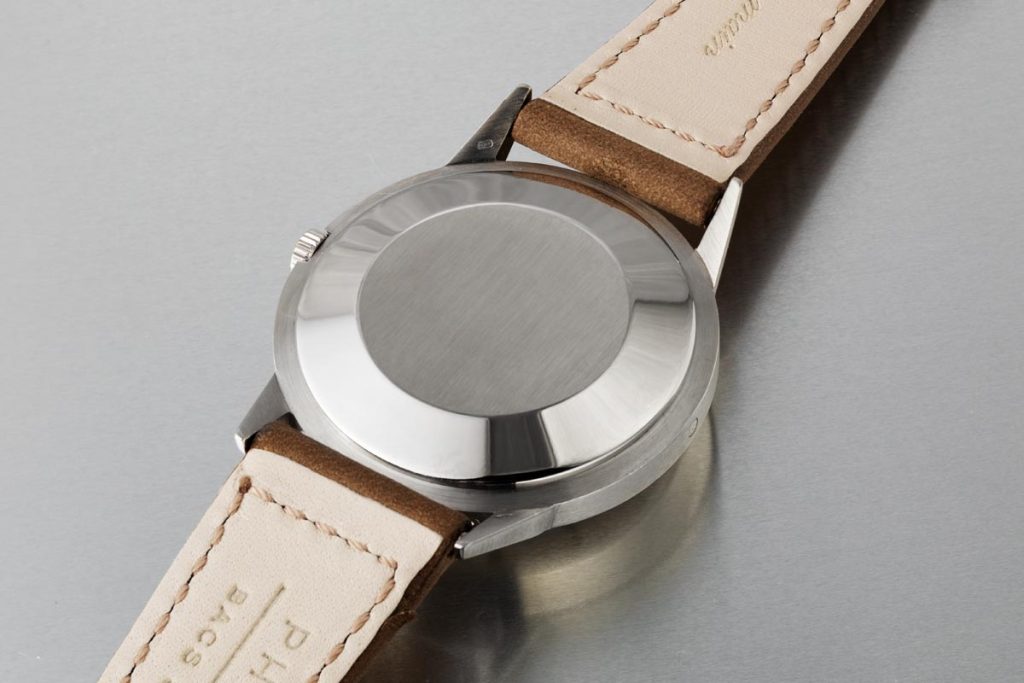
Case back of Lot 384, a 1971 ref. 3448 at the Phillips Hong Kong Watch Auction: SEVEN in white gold (Image © Revolution)
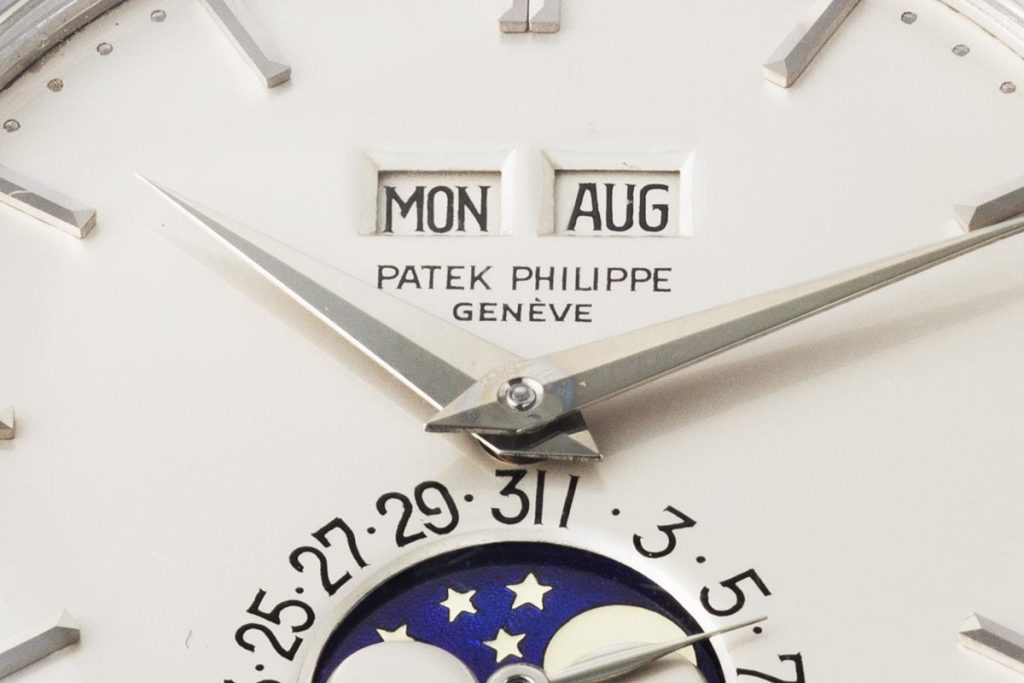
The iconic day and month apertures of the ref 3448, as seen on Lot 384, at the Phillips Hong Kong Watch Auction: SEVEN, a 1971 piece in white gold (Image © Revolution)
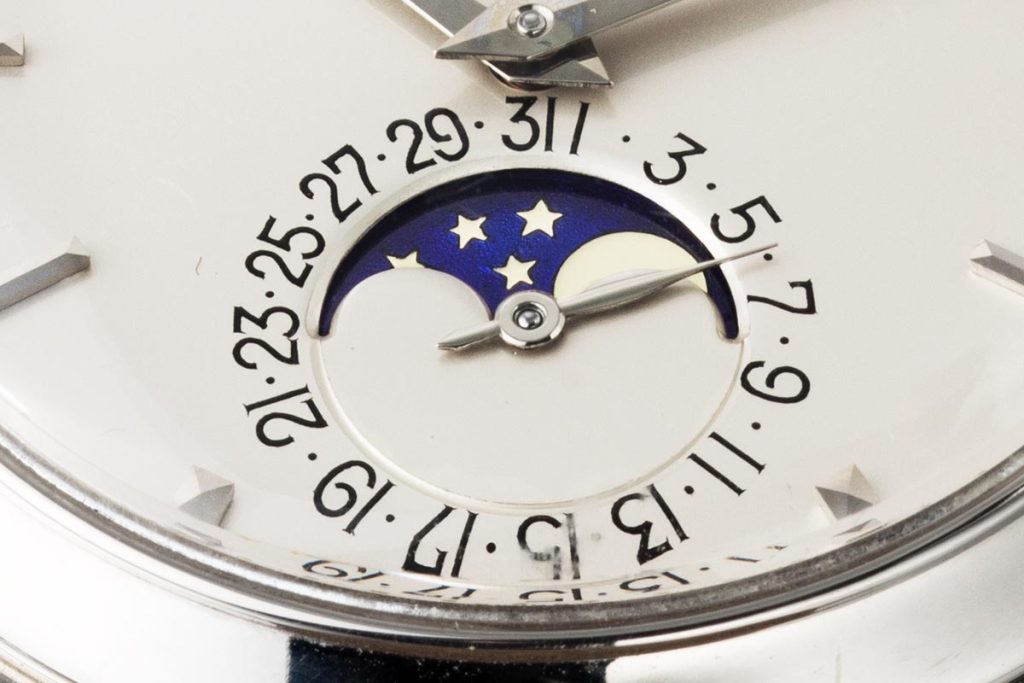
Inverted date numerals around the moonphase indicator of the ref 3448, Lot 384, at the Phillips Hong Kong Watch Auction: SEVEN, a 1971 piece in white gold (Image © Revolution)
If you miss out on the ones in Hong Kong, there’s another yellow gold piece up for sale at Phillips’ New York sale on December 5th: Lot 106. No inverted date ring in this instance, but a superb example sporting the later series dials that were printed. Estimate for this one’s at USD 80,000-120,000.
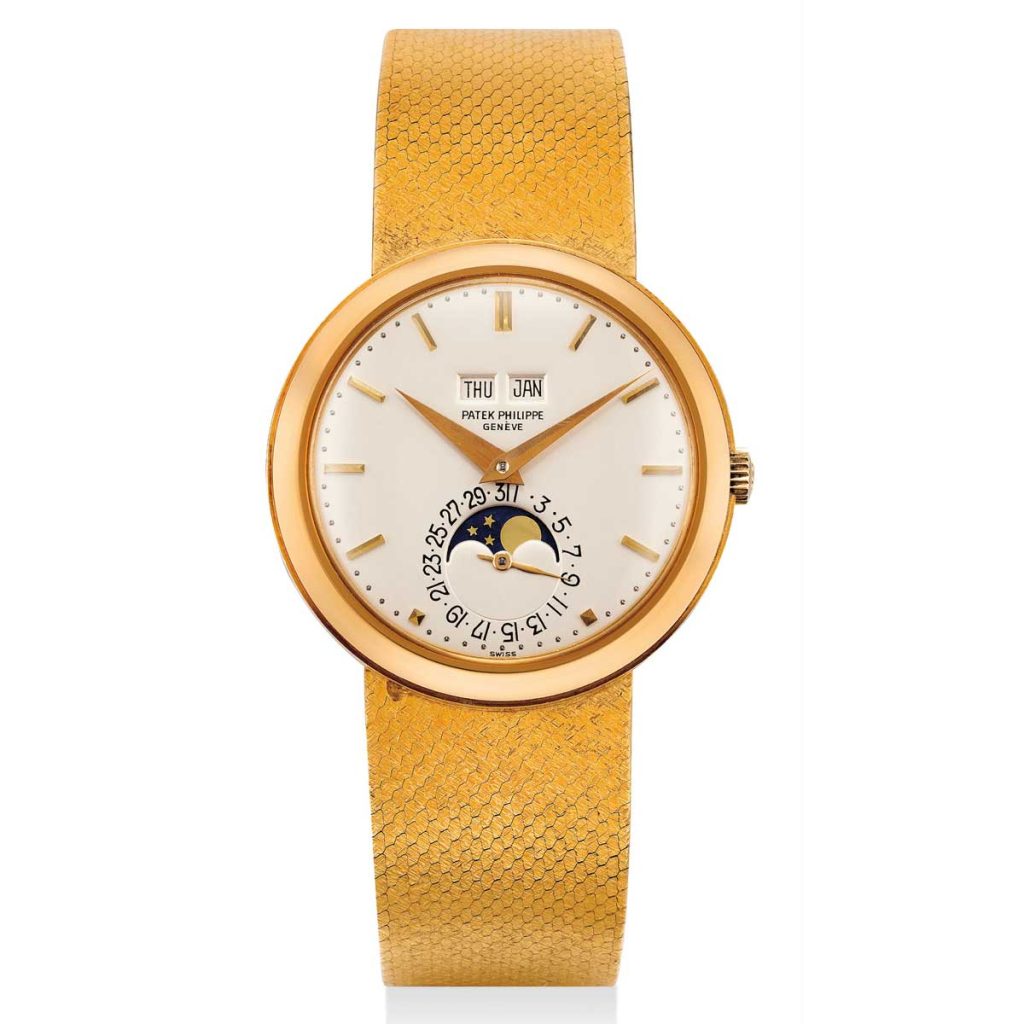
Lot 1058 at the the Phillips Hong Kong Watch Auction: SEVEN, a 1972 yellow gold ref. 3448 with a hard enamel dial and inverted date numerals around the moonphase indicator (Image: phillipswatches.com)
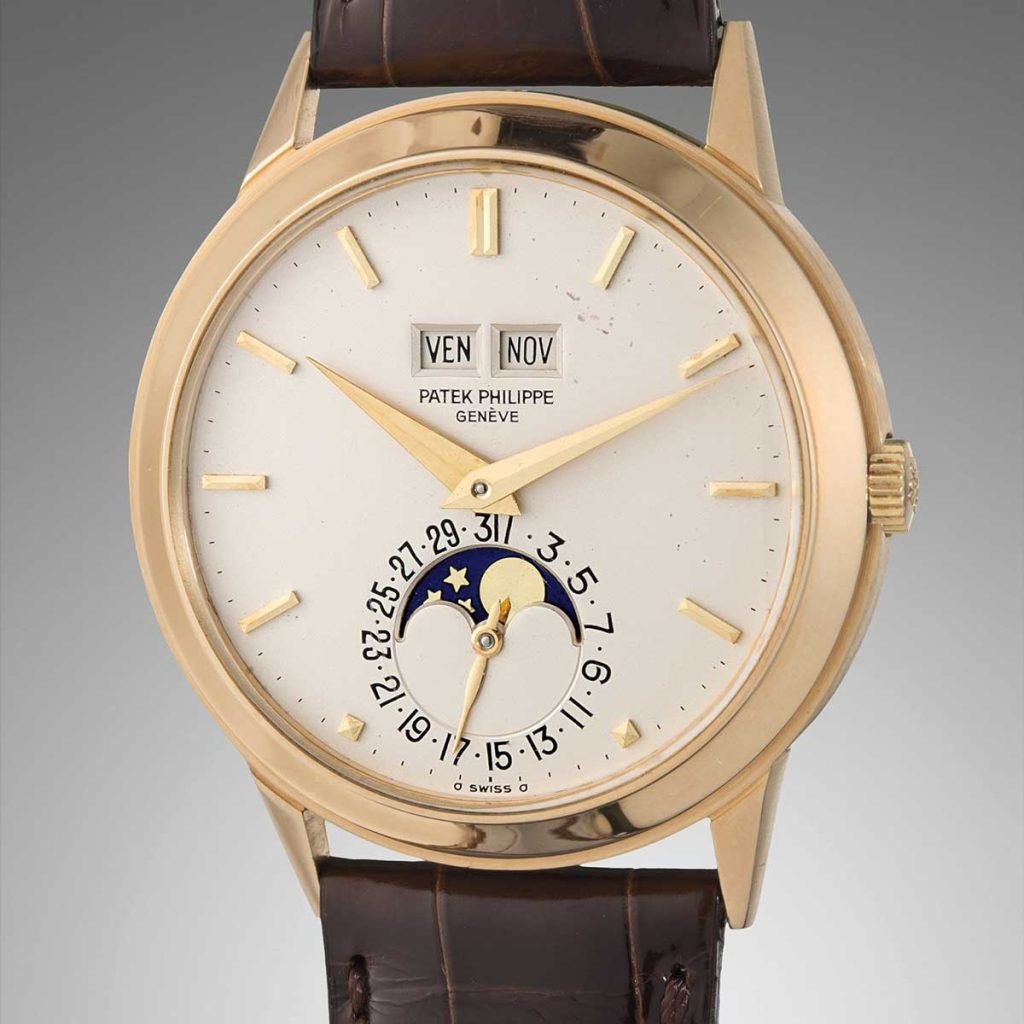
Lot 106 at the the Phillips December 2018 New York auction, a 1978 yellow gold ref. 3448 with a later printed dial (Image: phillipswatches.com)
Both lots are a first series example with Arabic and dot indices. Different from the second series, which further subdivides into A and B, no longer with Arabic numerals, the A series having faceted rectangular markers, and the B series faceted pointed rectangular markers. The watch in Hong Kong is from 1953 — the later one of the two, marked with an estimate of USD 154,000-308,000. The one in New York is from 1951, marked with an estimate of USD 250,000-350,000.
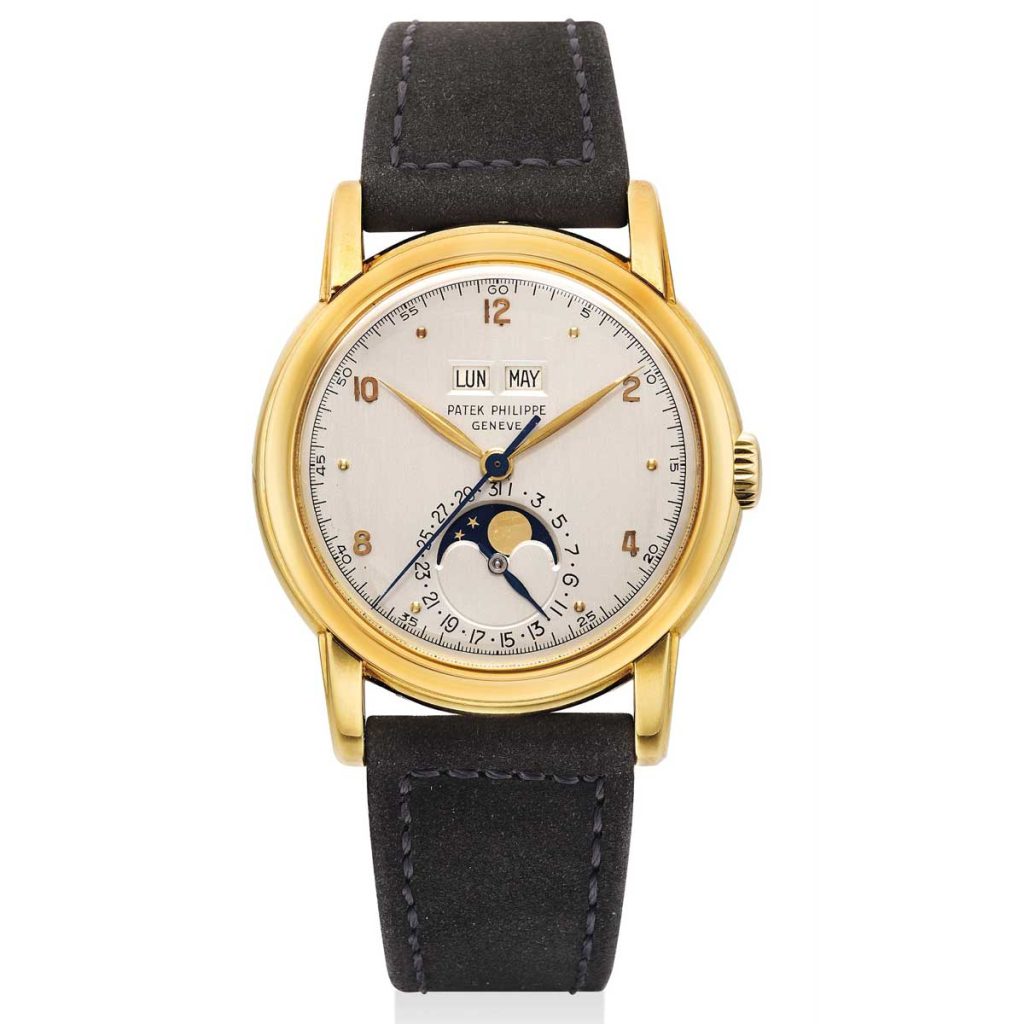
Lot 975 at the the Phillips Hong Kong Watch Auction: SEVEN, a 1953 yellow gold ref. 2497 with an early dial featuring Arabic numerals (Image: phillipswatches.com)
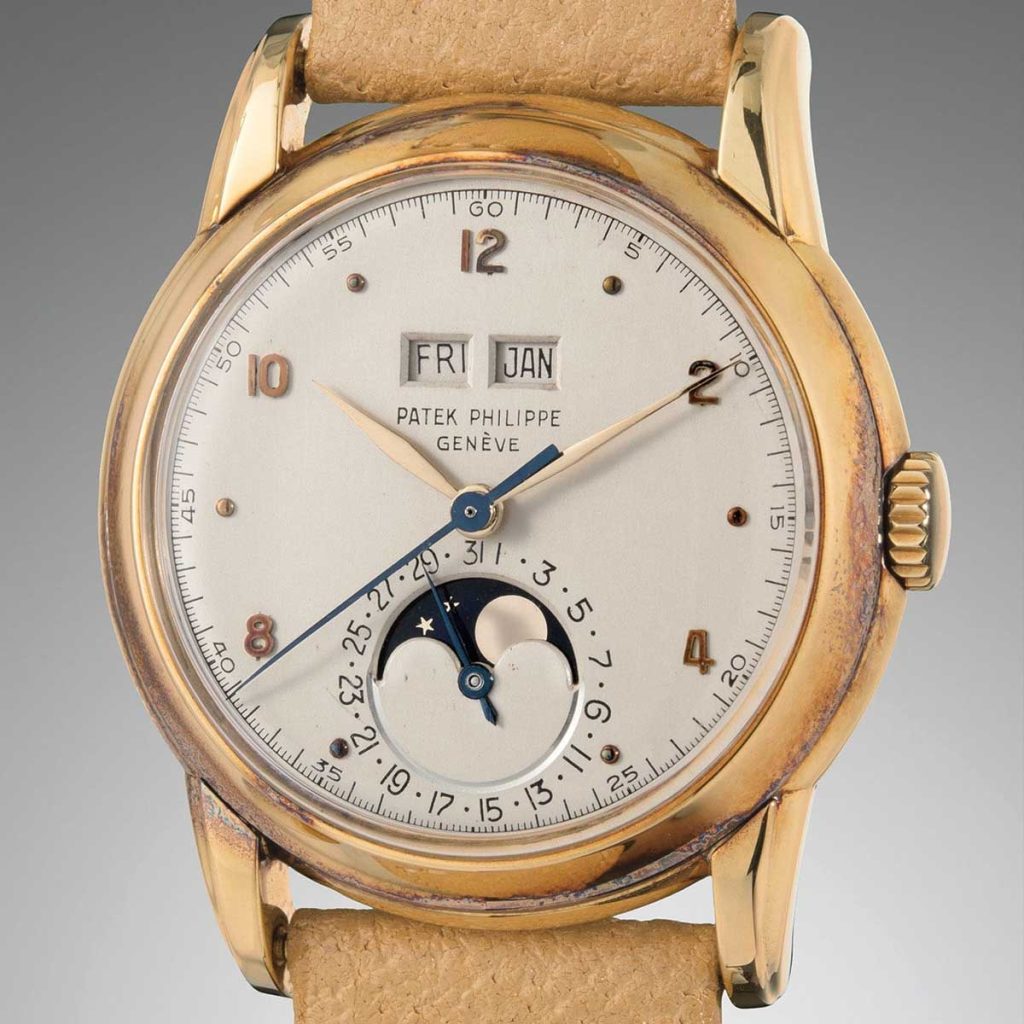
Lot 80 at the the Phillips December 2018 New York auction, a 1921 yellow gold ref. 2497 with an early dial featuring Arabic numerals (Image: phillipswatches.com)
Hong Kong Watch Auction: SEVEN
27 November 12pm HKT
Mandarin Oriental Hong Kong
5 Connaught Road, Central, Hong Kong (map)
New York Auction: STYLED. Timeless Watches & How to Wear Them
5 December 6pm EST
450 Park Avenue, New York (map)
Viewing 30 November – 5 December
Friday-Saturday 10am-6pm
Sunday 12pm-6pm
Monday-Tuesday 10am-6pm
Wednesday 10am-2pm

You may also like

News
Watches & Wonders 2026 Looks Forward to Its Biggest Fair Yet
Feb 10, 2026
News
Watches & Wonders 2026 Looks Forward to Its Biggest Fair Yet
Feb 10, 2026

Editorial
Holiday Horology: Something Old, Something New, Something Special — Cheryl Chia, Technical Editor
Dec 17, 2025
Editorial
Holiday Horology: Something Old, Something New, Something Special — Cheryl Chia, Technical Editor
Dec 17, 2025
Editorial
The Revolutionary List: 24 Technically Brilliant Watches – Patek Philippe Advanced Research
Dec 12, 2025
Editorial
The Revolutionary List: 24 Technically Brilliant Watches – Patek Philippe Advanced Research
Dec 12, 2025